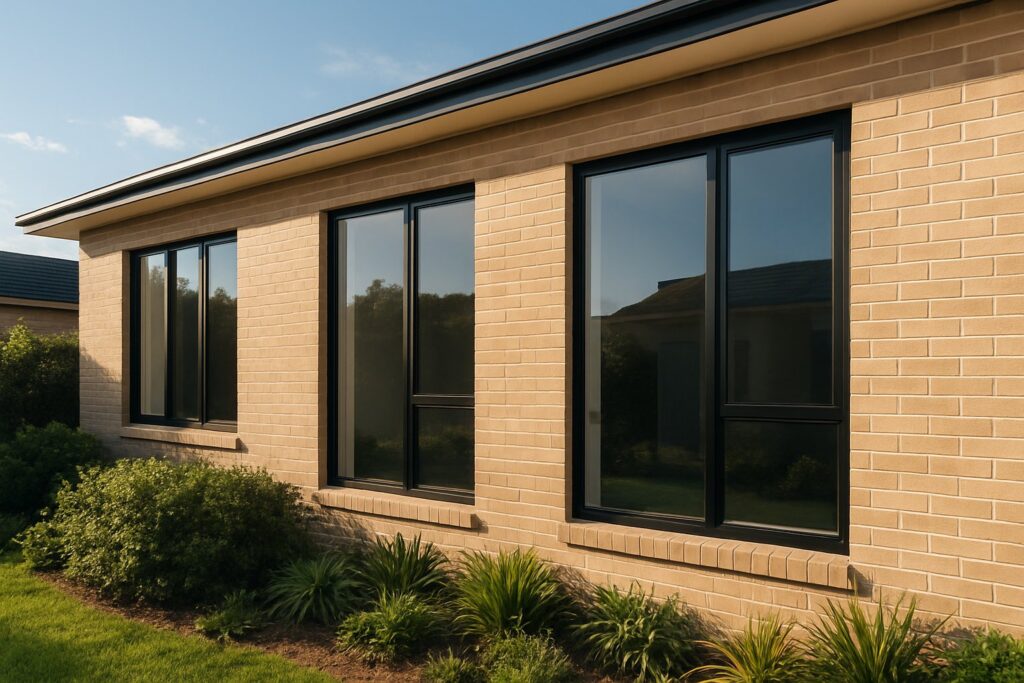
What Are Fixed Aluminium Windows and How Do They Work
Fixed aluminium windows are non-operable window units with aluminium frames permanently sealed into a wall opening. They do not open, close, slide, or tilt. There are no hinges, no tracks, no cranks, and no locking hardware. Glass is set directly into the aluminum window frame, creating a single, stationary panel designed purely for light, views, and insulation.
Sounds limiting? It is actually the opposite for many applications. Removing every moving part gives these windows a set of advantages that operable styles simply cannot match.
What Does Fixed Mean in Window Terminology
In window terminology, “fixed” means the glazing unit is permanently installed and cannot be opened by the occupant. The glass sits within the frame, the frame is sealed into the rough opening, and that is the end of the story. No sash moves, no mechanism engages. You get a continuous, unbroken pane of glass held in place by a slim aluminium profile.
This is different from a window that happens to be closed. A casement window that stays shut is still operable. A fixed panel was never designed to move in the first place, and that distinction matters for structural performance, sealing, and long-term durability.
How Fixed Aluminium Windows Differ From Operable Types
When you compare fixed panels against operable types like casement, sliding, awning, or double-hung aluminum windows, the differences go well beyond whether the window opens. Here is a clear breakdown:
- Airflow: Operable windows provide natural ventilation. Fixed panels provide none, relying on HVAC or adjacent operable units for air circulation.
- Emergency egress: Operable windows can serve as emergency exits when sized to code. Fixed windows cannot, which restricts where they are permitted as the sole glazing.
- Sealing and energy efficiency: Fixed units sit firmly in their frames with no gaps around moving sashes, delivering tighter insulation and lower air infiltration than any operable style.
- Frame profile and sightlines: Without operating hardware, alu windows in a fixed configuration achieve slimmer frame profiles and a higher glass-to-frame ratio, letting more light in and less frame show.
- Maintenance: No moving parts means nothing to lubricate, adjust, or repair. Fixed panels are the lowest-maintenance window type available.
That higher glass-to-frame ratio is a genuine design advantage. Slimline aluminium frames already outperform many alternatives in terms of sightline width, and removing the operating mechanism pushes that even further. The result is more daylight reaching deeper into a room and cleaner visual lines on the facade.
Where Fixed Panels Are Most Commonly Installed
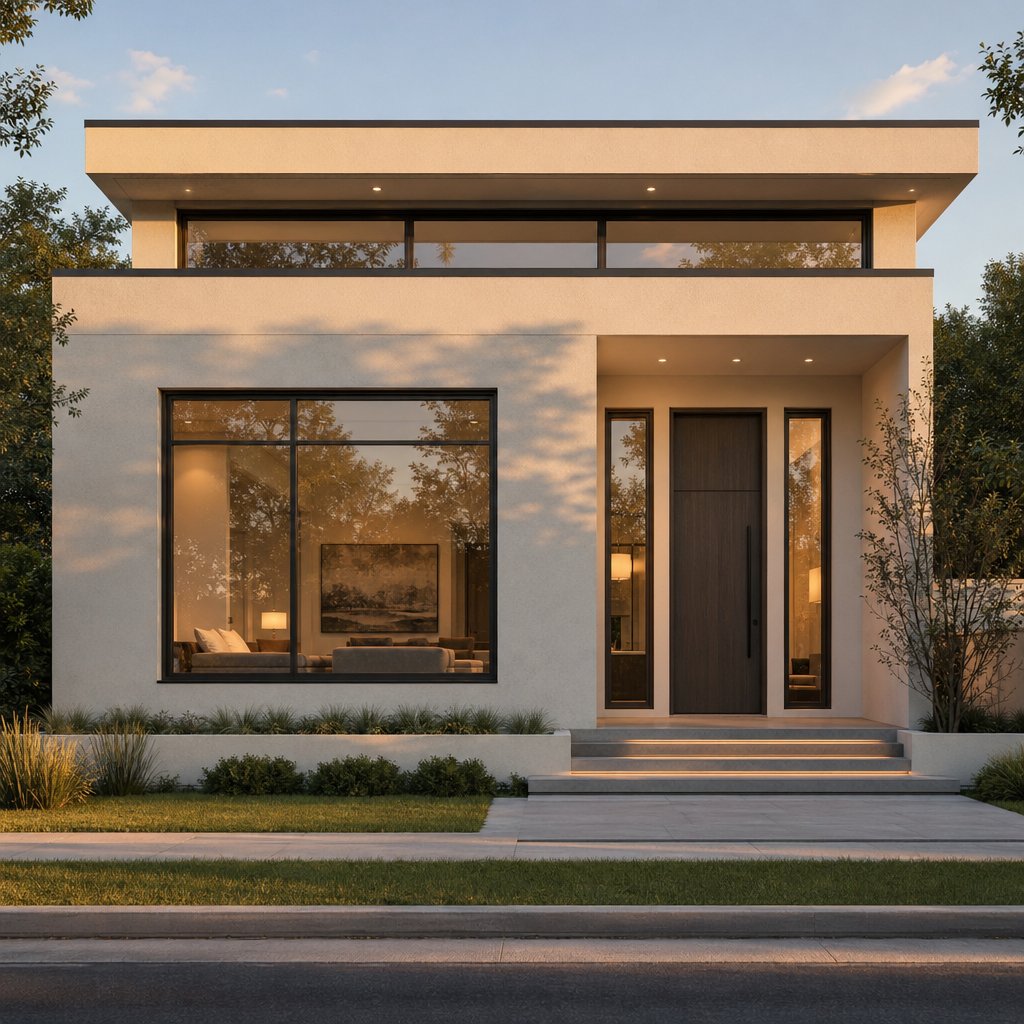
You will find fixed aluminium windows in locations where unobstructed views and maximum light matter more than ventilation. Think large picture walls in living rooms, high-rise facades where opening a window is impractical or unsafe, stairwells that need natural light but not airflow, transom panels above entry doors, sidelights flanking hallways, and architectural feature panels designed to make a visual statement.
They are also a popular choice when homeowners explore aluminum replacement windows during renovations, especially for upgrading older openings where the original window was rarely opened anyway. Replacing an underused operable unit with a fixed panel, or pairing aluminum clad windows in a combination frame, often delivers better thermal performance and a more contemporary look without sacrificing anything the household actually relied on.
Most online results for this topic lead straight to product catalogs and spec sheets. The goal here is different: a genuine, practical resource that helps you understand what these windows do, where they belong, and how to specify them correctly. The material comparison, thermal performance data, and code considerations covered ahead will give you the full picture before you ever request a quote.
When Fixed Windows Make More Sense Than Operable Alternatives
Knowing what a fixed window is and where it gets installed is one thing. Deciding whether it is the right call for your specific project is another. The answer usually comes down to a simple question: does this opening actually need to open?
Ideal Use Cases for Fixed Window Panels
A fixed panel earns its place whenever ventilation is already handled elsewhere in the room. Imagine a living area with ducted HVAC and a couple of operable casements on the side walls. The large front-facing opening does not need to open. It just needs to flood the space with daylight and frame the view. That is exactly where a fixed aluminum window outperforms every operable alternative, delivering a larger uninterrupted glass area with thinner sightlines because there is no hardware eating into the frame.
Security-sensitive locations are another strong fit. With no opening mechanism, there is nothing for an intruder to exploit. Ground-floor windows facing laneways, commercial shopfronts, and basement-level panels all benefit from this inherent resistance.
Weather exposure matters too. In coastal or high-wind zones, operable hardware is a liability. Seals around moving sashes degrade faster under salt air and driving rain. Fixed panels eliminate that weak point entirely, which is why they are a go-to choice for stairwells, two-storey voids, and any high or hard-to-reach location where access to the sash is rarely necessary.
Fixed windows deliver the best thermal and acoustic performance of any window type because they have no moving parts to create air gaps. Every seal is permanent, every joint is static, and the result is measurably lower air infiltration than even the best-performing operable unit.
Pairing Fixed Panels With Operable Units
In practice, most projects do not use fixed glazing in isolation. The real power of a fixed window shows up in combination and mulled configurations, where it is paired with operable units inside the same wall opening.
A classic example is the picture-and-flanker layout: a large fixed centre panel with casement windows on either side. The fixed pane carries the view and the light, while the casement or awning flankers handle ventilation exactly where it is needed. Another popular arrangement places an awning vent below a fixed picture panel, keeping airflow low and the sightline above unbroken.
These combinations work especially well with aluminium framing. Because the profiles are structurally rigid and naturally slim, the mullion between a fixed panel and an operable unit stays narrow, so the whole assembly reads as one cohesive glass wall rather than a patchwork of separate windows. Aluminum clad wood windows offer a similar pairing strategy for homeowners who want timber warmth on the interior with weather-resistant aluminium on the exterior, though the frame profiles tend to be slightly wider.
Trade-Offs to Consider Before Committing
Honesty matters here. A fixed window cannot provide natural ventilation, and it cannot serve as an emergency exit. Building codes, including the IRC Section R310, require at least one operable emergency escape and rescue opening in every sleeping room. That means a fixed panel can never be the sole window in a bedroom.
In living rooms, hallways, bathrooms with mechanical exhaust, and stairwells, fixed glazing is typically code-compliant as the only window. But in any room where egress or cross-ventilation is a regulatory requirement, you will need to pair it with an operable unit or choose a different style altogether.
The trade-off is straightforward: you gain superior insulation, slimmer frames, and lower maintenance, but you give up airflow and egress from that specific opening. Getting the balance right is a matter of understanding each room’s functional needs, and that starts with knowing how the frame material itself influences what is possible at larger sizes.
Aluminium vs Other Frame Materials for Fixed Windows
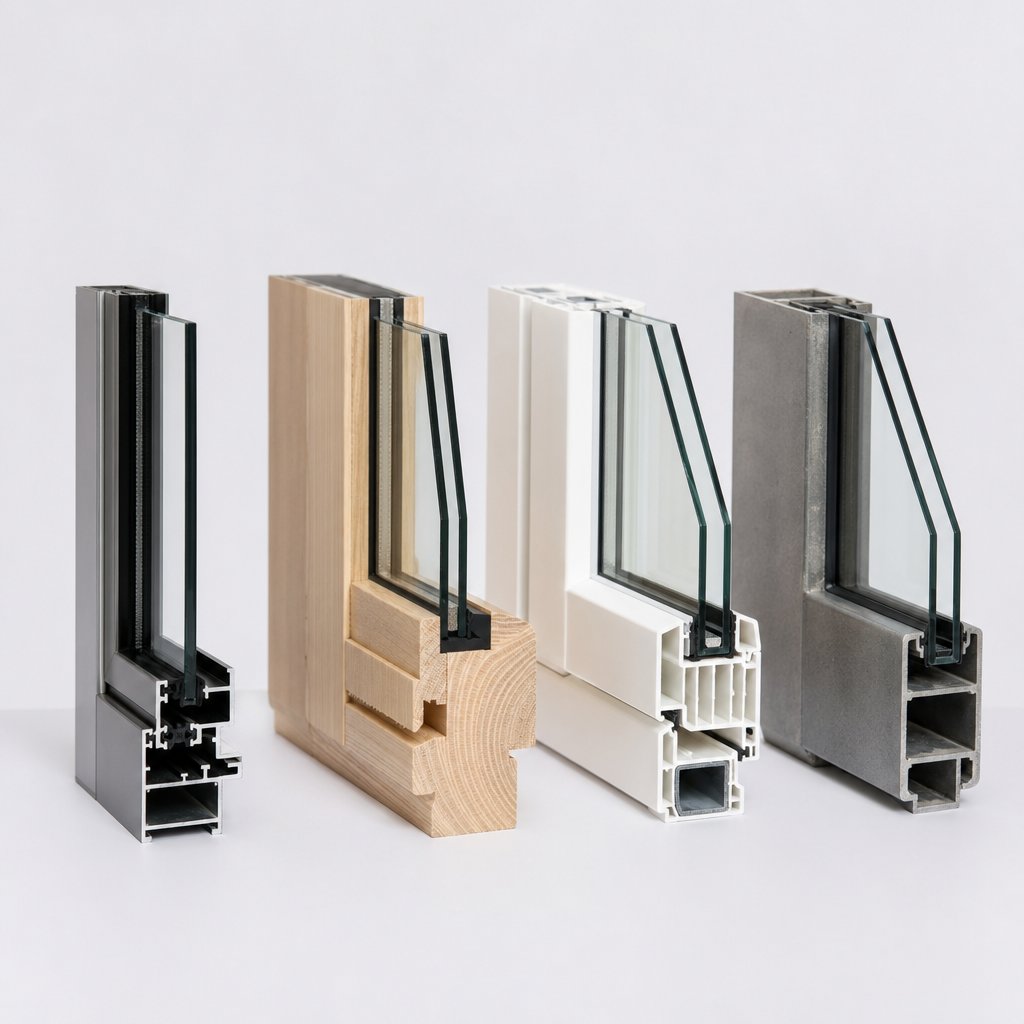
Frame material shapes everything about a fixed window: how slim the profile can be, how large the glass panel can go, how well it insulates, and how long it lasts. Aluminium is the dominant choice in this category, but it is not the only option. Vinyl, timber, fiberglass, and steel all compete for the same wall openings, and each brings a different set of strengths and compromises to a fixed panel application.
Aluminium Versus Vinyl and Timber for Fixed Panels
Vinyl frames are the most affordable window metal frame option on the market, and they insulate better than bare aluminium because PVC is a poor heat conductor. But vinyl is also the weakest structural material in this lineup. For small to mid-sized fixed panels, that weakness is manageable. Scale up to a large picture window, though, and vinyl frames need thicker profiles and internal reinforcement to avoid bowing under the weight of the glass. Those thicker profiles eat into the glass area, which defeats one of the main reasons you chose a fixed panel in the first place.
Timber tells a different story. Wood insulates naturally, looks warm, and suits heritage or traditional builds. A window clad in timber on the interior with aluminium on the exterior gives you the best of both worlds aesthetically. The trade-off is maintenance. Wood frames need regular painting or staining to prevent rot, warping, and pest damage. Wood window lifespans sit around 15 to 30 years depending on upkeep, while aluminium frames routinely outlast the building they are installed in.
Why Aluminium Supports Larger Glass Spans
This is where the engineering advantage becomes hard to ignore. Aluminium has a superior strength-to-weight ratio compared to vinyl, timber, and fiberglass. That structural rigidity allows a fixed aluminium frame to use thinner profiles while still supporting heavier, oversized glass panels without flexing or distorting over time.
For large-format glazing, think full-height picture windows, clerestory strips, or curtain-wall-style panels, aluminium is the go-to material because it keeps sightlines narrow and glass area maximized. Vinyl simply cannot match that at scale without bulking up the frame. Fiberglass comes closer, offering roughly eight to ten times the strength of vinyl, but aluminium still edges it out on profile slimness for equivalent structural loads.
The honest caveat? Aluminium conducts heat far more readily than vinyl or wood. Without a thermal break, an aluminium profile becomes a thermal bridge that undermines the glazing performance. That is exactly why thermal break technology exists, and it is covered in detail in the next section. With a quality polyamide thermal break in place, the conductivity gap narrows significantly.
Steel and Fiberglass as Alternative Frame Materials
Steel delivers the slimmest sightlines of any window metal frame material. If ultra-thin profiles and an industrial or heritage aesthetic are the priority, steel wins on looks. But it comes at a cost, literally and physically. Steel frames are heavy, expensive, and prone to rust or corrosion without careful finishing. They also conduct heat aggressively, much like aluminium but without the same lightweight handling advantage. For most residential fixed window projects, steel is a premium architectural statement rather than a practical default.
Fiberglass sits in an interesting middle ground. It is strong, dimensionally stable, low-maintenance, and expands at nearly the same rate as glass, which keeps seals tight over decades. Window clad options in fiberglass are growing in popularity, and the material works well for fixed panels in extreme climates. The downside is cost and availability. Fiberglass frames typically run higher than aluminium, and fewer manufacturers offer them in the range of configurations that aluminium suppliers provide, particularly for aluminum sliding windows and combination units where a fixed panel is mulled alongside operable sashes.
| Criteria | Aluminium | Vinyl / uPVC | Timber | Fiberglass | Steel |
|---|---|---|---|---|---|
| Frame Slimness | Very slim | Thick (needs reinforcement at size) | Moderate | Slim to moderate | Slimmest available |
| Structural Strength for Large Panels | Excellent | Poor without reinforcement | Moderate | Very good | Excellent |
| Thermal Performance | Moderate (with thermal break) | Good | Good (natural insulator) | Excellent | Poor |
| Maintenance Needs | Low | Very low | High (paint, seal, stain) | Very low | Moderate (rust prevention) |
| Corrosion Resistance | High (when coated or anodized) | High | Low (vulnerable to rot and pests) | High | Low (prone to rust) |
| Colour and Finish Options | Wide (powder coat, anodize, woodgrain) | Limited | Paintable and stainable | Paintable | Wide (powder coat) |
| Recyclability | Fully recyclable | Limited recyclability | Biodegradable | Difficult to recycle | Fully recyclable |
| Expected Lifespan | 40+ years (building lifetime) | 20 to 40 years | 15 to 30 years | 30 to 50+ years | 40+ years (with maintenance) |
| Relative Cost | Mid-range | Lowest | High | Mid to high | Highest |
Every material on this table can work for a fixed window. The question is which one matches your panel size, climate, budget, and aesthetic goals. For large-format fixed glazing where slim profiles and structural confidence matter most, aluminium consistently lands at the top of the shortlist. Its one genuine weakness, thermal conductivity, is exactly what the next layer of technology was designed to solve.
Thermal Break Technology and Energy Performance Explained
Aluminium is strong, lightweight, and recyclable, but it has one well-known weakness: it conducts heat roughly 1,000 times more readily than wood. Without intervention, a frame aluminium profile becomes a thermal bridge, a direct pathway for heat to travel between the inside and outside of your home, undermining whatever performance the glazing provides. Thermal break technology exists specifically to solve this problem.
What Thermal Break Technology Actually Does
Imagine your aluminum window profile split into two separate pieces: one facing the exterior, one facing the interior. Between them sits a strip of polyamide, a rigid, reinforced plastic with very low thermal conductivity. This polyamide barrier physically interrupts the metal-to-metal connection, so heat can no longer travel freely through the frame.
The result is an aluminium window that behaves more like a timber or fiberglass unit in terms of insulation, while keeping all the structural and aesthetic advantages that make aluminium the preferred choice for large fixed panels. You still get the slim sightlines and the strength to support oversized glass, but the frame itself is no longer working against your heating or cooling system.
In practical terms, a thermally broken fixed window frame reduces condensation on the interior surface, keeps the indoor side of the frame closer to room temperature, and lowers the energy your HVAC system needs to maintain comfort. For windows in aluminium, this single technology upgrade closes the gap on what was historically the material’s biggest drawback.
Understanding U-Value, SHGC, and VT Ratings
When you start comparing fixed window frames across suppliers, you will encounter a handful of performance metrics. They look technical, but each one answers a straightforward question about how the window handles heat and light. The National Fenestration Rating Council (NFRC) tests and certifies these ratings, giving you a reliable basis for comparison.
- U-value: The rate at which the window transmits non-solar heat. Lower numbers mean better insulation. Think of it as how quickly warmth escapes through the window on a cold night.
- Solar Heat Gain Coefficient (SHGC): The fraction of solar radiation that passes through the glass and enters your home as heat. A lower SHGC blocks more solar heat, which matters most in cooling-dominated climates.
- Visible Transmittance (VT): How much natural daylight the glazing lets through, rated from 0 to 1. Higher values mean a brighter room. For fixed panels chosen specifically for light and views, this number deserves close attention.
- Air Leakage (AL): The rate of air movement around the window under a specific pressure difference. Lower is tighter. This is where fixed panels genuinely shine.
- Condensation Resistance (CR): How well the window resists moisture forming on the interior surface. Higher ratings mean less condensation, which matters in humid climates and air-conditioned spaces.
Here is the detail that often gets overlooked: NFRC U-factor ratings represent the entire window assembly, frame and spacer included, not just the glass. That means the thermal break in your aluminium frame directly influences the U-value printed on the label. A fixed panel with a quality polyamide break will post a meaningfully better U-factor than the same aluminum window profile without one.
Fixed windows also hold a built-in advantage on air leakage. Operable windows rely on compression seals around moving sashes, and those seals degrade with use and age. Every time a casement or sliding sash cycles open and closed, the weatherstripping wears slightly. Fixed window frames have no moving sash at all. The seal is permanent, the joint is static, and the air infiltration rate stays consistently low for the life of the unit. It is one of the quieter reasons these panels outperform operable types in both thermal and acoustic testing.
How Climate Should Influence Your Specification
The right performance numbers depend entirely on where the window is going. A specification that works in Melbourne will not suit Darwin, and neither will match what a highland build in Tasmania demands.
In hot climates, your priority is keeping solar heat out while still letting daylight in. Look for a low SHGC paired with a high VT. This combination blocks unwanted heat gain without turning the room into a cave, reducing cooling loads while preserving the natural light that makes a fixed picture window worth installing.
In cold climates, the focus shifts to retaining interior warmth. A low U-value becomes the critical metric, and a thermally broken frame aluminium system is non-negotiable. You may actually want a moderately higher SHGC here, because passive solar heat gain through north-facing glass (in the Southern Hemisphere) can offset heating costs during winter.
Coastal areas introduce a third variable: corrosion. Salt air attacks unprotected metal, so alongside thermal performance, you need to verify that the aluminium frame carries a durable powder coat or marine-grade anodized finish. The best thermal break in the world will not help if the frame itself deteriorates under salt exposure.
Getting these numbers right at the specification stage saves real money over the life of the window. And once the frame and its thermal performance are sorted, the next decision, choosing the right glazing to sit inside that frame, determines how much of that performance potential you actually capture.
Glazing Options That Maximize Fixed Window Performance
A thermally broken aluminum window frame sets the stage, but the glass it holds does the heavy lifting. Glazing accounts for the vast majority of a window’s surface area, so the type, thickness, and coating you choose will determine how much heat passes through, how much light enters, and how safe the panel is under stress. For aluminium windows in a fixed configuration, the options are broader than you might expect.
Single, Double, and Triple Glazing Compared
Single glazing is exactly what it sounds like: one pane of glass, no cavity, no insulating layer. You will still find it in heritage restorations, non-conditioned outbuildings, and internal partitions where thermal performance is not a concern. For any modern conditioned space, though, single glazing is essentially obsolete. It offers minimal insulation, poor acoustic control, and no meaningful resistance to heat transfer.
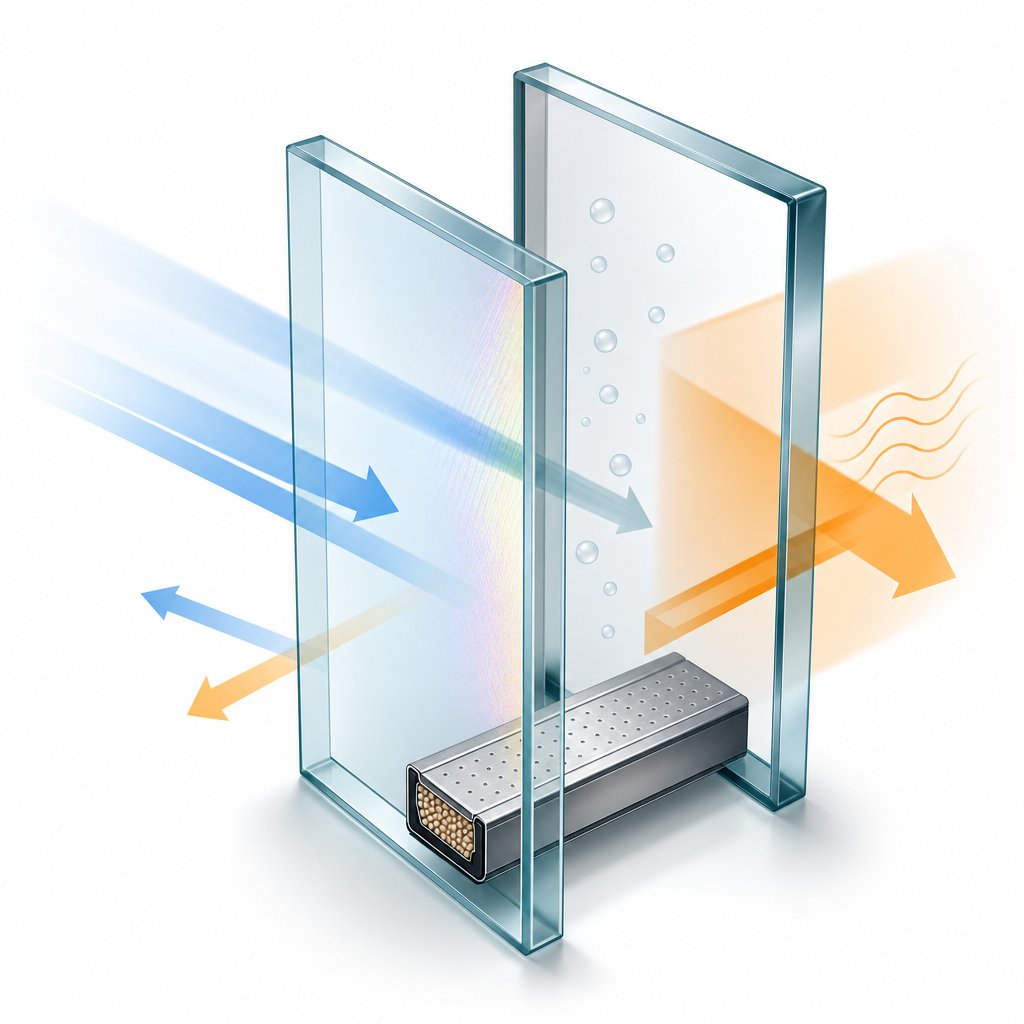
Double glazing is the current standard for residential and commercial builds. Two panes of glass are separated by a sealed cavity, typically 12 to 16 mm wide, filled with an insulating gas. That trapped gas layer dramatically reduces conductive and convective heat transfer compared to a single pane. When you hear someone refer to an insulated glass unit, or IGU, this is usually what they mean.
Triple glazing adds a third pane and a second gas-filled cavity. The thermal and acoustic performance jump is significant, but so is the weight. A triple-glazed IGU can weigh roughly 50% more than its double-glazed equivalent. This is where the pairing with aluminium really matters. Aluminum frame windows have the structural rigidity to support that extra load without bowing or distorting, something vinyl frames struggle with at larger sizes. And because a fixed panel bears only static weight, with no operating hardware cycling open and closed, the frame handles the heavier unit with ease over decades.
| Criteria | Single Glazing | Double Glazing | Triple Glazing |
|---|---|---|---|
| Thermal Performance | Poor (U-value ~5.8) | Good (U-value ~1.6 to 2.6) | Excellent (U-value ~0.8 to 1.4) |
| Acoustic Insulation | Minimal | Good | Very good |
| Panel Weight | Light | Moderate | Heavy |
| Relative Cost | Lowest | Mid-range | Highest |
| Best-Use Scenario | Heritage, non-conditioned spaces, internal partitions | Standard residential and commercial builds | High-performance homes, extreme climates, noise-sensitive locations |
Low-E Coatings and Gas Fills Demystified
You will see “Low-E” on nearly every modern glazing specification. What is it, really? A Low-E coating is a microscopically thin metallic layer applied to one surface of the glass. It reflects infrared heat, the kind you feel radiating from a hot surface, while still allowing visible light to pass through with alu clear transparency. The effect is a window that lets daylight flood in without letting thermal energy follow it.
Where the coating sits on the glass matters. In a standard double-glazed IGU, there are four glass surfaces numbered from outside to inside. Placing the Low-E coating on surface two (the inner face of the outer pane) prioritises blocking incoming solar heat, which suits cooling-dominated climates. Placing it on surface three (the outer face of the inner pane) prioritises reflecting interior warmth back into the room, which suits heating-dominated climates. Some high-performance units use coatings on multiple surfaces for year-round balance.
The gas sealed between the panes plays a supporting role. Argon is the industry standard: it is denser than air, non-toxic, and reduces convective heat transfer inside the cavity at a reasonable cost. Krypton is the premium alternative, offering even better insulation in a thinner cavity, which can be useful when you want triple-glazing performance without an excessively thick IGU. Both gases are inert and stable over the life of a properly sealed unit.
Safety Glass Requirements for Large Fixed Panels
Large fixed panels introduce a safety consideration that smaller operable windows often avoid. When glass is installed at low heights, near floor level, or in high-traffic areas, building codes typically require safety glazing to protect occupants from injury if the panel breaks.
Two types dominate. Toughened (tempered) glass is heat-treated to be roughly four to five times stronger than standard annealed glass. If it does break, it shatters into small, relatively harmless granules rather than dangerous shards. Laminated glass takes a different approach: two or more panes are bonded together with a tough interlayer, usually polyvinyl butyral (PVB). If the glass cracks, the interlayer holds the fragments in place, maintaining the barrier.
For large fixed aluminium windows, laminated glass is often the preferred choice. It provides impact resistance in high-wind zones, meets safety glass requirements for panels near walking surfaces, and adds a meaningful acoustic insulation benefit as a bonus. In areas prone to severe weather or where the aluminum window frame sits close to ground level, laminated safety glass is frequently a code requirement rather than an optional upgrade.
The glazing you select locks in the performance ceiling for the entire window. Get it right, and a fixed panel becomes one of the highest-performing elements in your building envelope. The next consideration is making sure the panel itself is sized, shaped, and configured to suit the opening it is destined for.
Sizing, Design, and Configuration Possibilities
Choosing the right glazing is only half the equation. The size, shape, and configuration of the panel itself determine whether a fixed window looks intentional and integrated or awkward and out of proportion. This is where aluminium window frames give designers more room to play than any other material in the category.
Standard and Custom Sizing Considerations
Most manufacturers offer standard fixed panel sizes that cover common residential openings, typically ranging from around 600 mm wide up to 1,800 mm or more. These stock sizes keep costs down and lead times short. But the real appeal of fixed aluminium panels is what happens when you go beyond standard.
Custom sizing is driven by four main factors: the dimensions of the wall opening, the load capacity of the structural header above it, the aesthetic proportions the architect or homeowner wants to achieve, and the weight of the glass the frame needs to support. Aluminium’s rigidity allows individual fixed panels to span larger openings than vinyl or timber, which is why you see it specified for oversized picture windows and floor-to-ceiling glazing. That said, practical limits still exist. Glass manufacturing sizes cap out around 2,800 mm by 4,800 mm for thicker toughened panes, and transport logistics can restrict what actually makes it to site in one piece. The surrounding wall also needs to be engineered to carry the load, especially for full-height panels where the header spans a wide opening.
Popular Design Configurations for Fixed Panels
Fixed glazing is not a one-shape solution. Architects and builders use it across a range of configurations, each serving a different purpose in the facade. Here are the most common:
- Picture window: A single large fixed panel designed to maximise views and natural light, typically the centrepiece of a living area or feature wall.
- Transom panel: A horizontal fixed unit installed above a door or operable window, adding height and daylight without increasing the opening’s operational complexity.
- Sidelight: A narrow vertical fixed panel flanking an entry door on one or both sides, framing the doorway with additional light and visual interest.
- Clerestory strip: A band of fixed glazing positioned high on the wall near the roofline, bringing light deep into open-plan spaces while preserving wall area below for furniture and storage.
- Curtain-wall-style fixed glazing: Full-height, multi-panel assemblies that create a glass wall effect, commonly used in contemporary homes and commercial facades where maximum transparency is the goal.
These configurations often work best when fixed panels are mulled alongside operable units in the same frame assembly. A clerestory strip above a row of awning vents, or a picture window flanked by casement sashes, gives you both the unbroken glass area and the ventilation a room needs. The slim profiles of window aluminium windows keep the mullion between fixed and operable sections narrow, so the whole assembly reads as a single, cohesive element rather than a collection of separate units.
Frame Finishes and Color Options
One of the reasons aluminium dominates modern architectural projects is the sheer range of finishes available. Unlike vinyl, which is limited to a handful of colours, a metal window frame in aluminium can be finished to match virtually any design palette.
Powder coating is the most popular option. A dry powder is electrostatically applied to the aluminium surface and cured at high temperature, creating a tough, uniform film typically 50 to 125 microns thick. The result is excellent resistance to weather, UV, and fading, with a colour range that spans everything from matte black and charcoal to whites, greys, and bold custom tones. Quality powder coatings carry certifications like AAMA 2604 or AAMA 2605 for demanding environments, including coastal locations.
Anodizing takes a different approach. Rather than applying a coating on top of the aluminium, an electrolytic process grows a hard oxide layer directly from the metal surface. Anodized finishes deliver a distinctive metallic appearance in silver, bronze, or dark tones, with very high scratch resistance and excellent corrosion protection. They are a strong choice for marine environments or projects where a natural metallic aesthetic suits the design intent.
Woodgrain laminates offer a third path. A printed film is bonded to the aluminium profile, replicating the look of timber without the maintenance burden. This finish is increasingly popular on projects where homeowners want the warmth of wood on the interior face of their aluminium window frames while keeping the durability and slim sightlines that aluminium provides on the exterior.
The finish you choose affects more than appearance. In harsh or coastal environments, stepping up to a super-durable powder coat or a thicker anodized layer can meaningfully extend the life of the frame. It is worth discussing exposure conditions with your supplier before locking in a colour, because the right finish paired with the right specification keeps the window looking sharp for decades rather than years.
With sizing, configuration, and finish decisions mapped out, the next layer of detail sits in the rules that govern where these panels can go and how they need to be installed to meet code.
Building Codes, Installation, and Compliance Essentials
A perfectly sized, beautifully finished fixed panel means nothing if it ends up in the wrong location or gets installed incorrectly. Building codes and installation practices are the unglamorous side of window specification, but they are also where costly mistakes happen. Getting these details right protects both the occupants and the building envelope for decades.
Egress Rules and Where Fixed Windows Are Permitted
Every residential building code shares one non-negotiable rule when it comes to sleeping areas: each bedroom must have at least one operable window that meets minimum size requirements for emergency escape. The California Building Code, for example, requires a minimum net clear opening of 5.7 square feet, with at least 24 inches of height and 20 inches of width, and the sill no higher than 44 inches from the floor. The International Residential Code carries similar provisions. A fixed window frame, by definition, cannot open, so it can never satisfy these egress requirements.
Fixed windows cannot serve as the sole window in bedrooms. Building codes universally require at least one operable egress window in every sleeping room to provide an emergency escape route.
That restriction sounds limiting, but it still leaves a long list of locations where fixed panels are fully code-compliant as the only glazing. Living rooms, dining areas, hallways, stairwells, above-door transoms, and bathrooms with mechanical ventilation can all rely on fixed aluminium windows without triggering egress concerns. In bedrooms, you can still use a fixed panel as a secondary window, paired with an operable unit that meets the egress threshold.
Fire safety adds another layer. In certain locations, such as near property boundaries or in bushfire-prone zones, building codes may require fire-rated glazing. This typically means using wired glass, ceramic glass, or specially rated intumescent interlayers within the fixed panel. Your local authority will specify the fire resistance level required based on the building’s proximity to boundaries and its classification.
Installation Essentials for Fixed Aluminium Frames
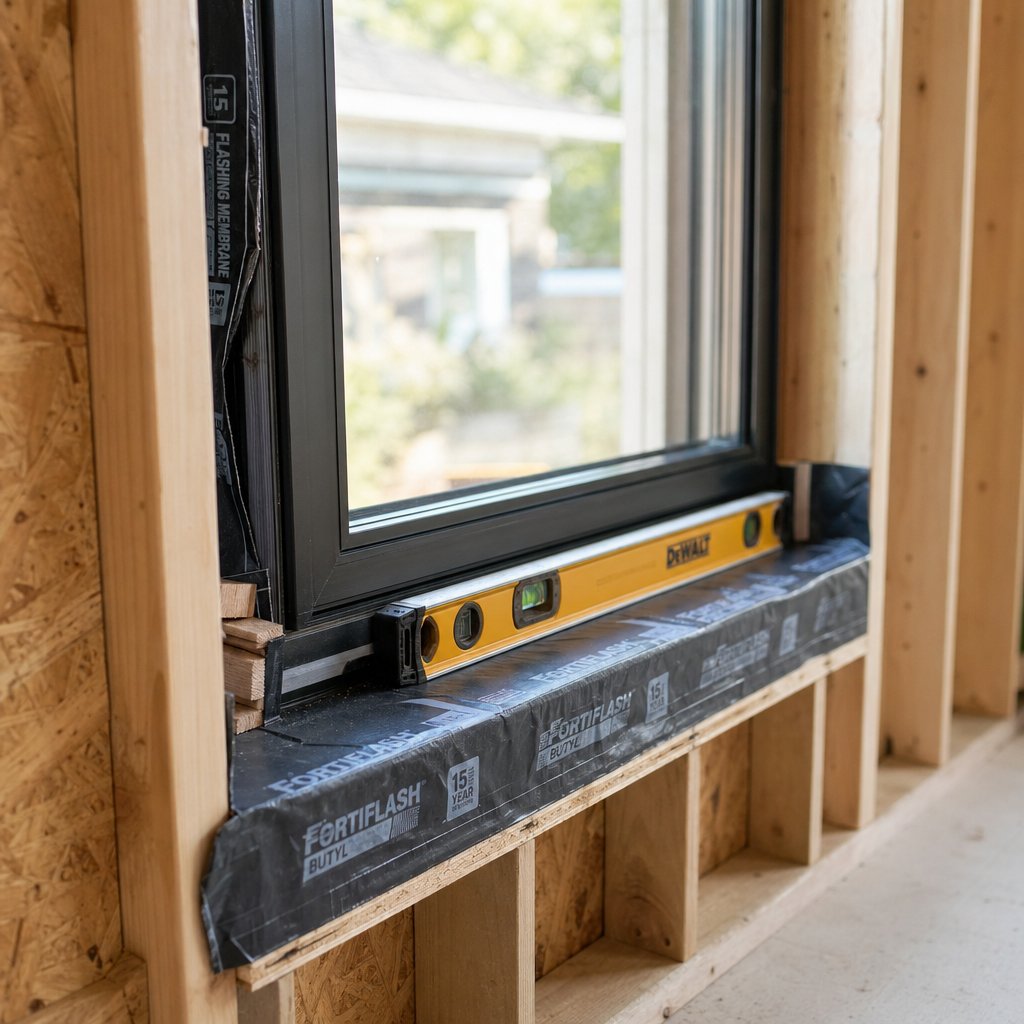
A fixed aluminium window is only as good as the installation behind it. The process starts with the rough opening, the framed hole in the wall that receives the window. This opening needs to be square, level, and sized correctly, typically 10 to 15 mm larger than the window frame on each side to allow for shimming and adjustment.
Shimming and levelling come next. Shims are placed between the fixed window frame and the rough opening to ensure the unit sits perfectly plumb and square. Even a few millimetres of racking can stress the glass, compromise the seal, and create visible gaps in the finished trim.
Flashing and waterproofing are where many installations go wrong. Research into aluminum window frames and sill flashing consistently identifies inadequate sill detailing as a primary cause of water intrusion. The sill flashing must integrate with the building’s weather-resistant barrier, directing any water that reaches the frame back to the exterior rather than into the wall cavity. End dams, back dams, and properly lapped membrane layers are all critical. Water that enters the wall below a poorly flashed aluminium window can go undetected for months, causing rot in timber framing, corrosion in steel studs, and mould growth behind interior linings.
Sealant selection matters too. Aluminium expands and contracts with temperature changes at a different rate than the surrounding wall materials. A rigid sealant will crack and separate over time. The right choice is a flexible, UV-stable sealant compatible with both the aluminium frame and the substrate, typically a high-quality silicone or polyurethane product rated for exterior fenestration use.
Two installation methods apply depending on the project type. In new construction, the aluminium window is fastened directly into the rough opening through a nailing fin or mounting flange during the framing stage, before cladding goes on. This allows the flashing to be fully integrated into the wall wrap. In retrofit or replacement projects, the new window is fitted into an existing opening, often over or inside the old frame. Retrofit installations demand extra care with waterproofing because the original flashing layers may be damaged, missing, or incompatible with the new frame profile.
Compliance Standards and Certification to Look For
In Australia, two standards govern the performance and safety of every aluminium window installed in an external wall. AS 2047 covers windows and external glazed doors, setting mandatory minimum requirements for structural adequacy, water penetration resistance, air infiltration, and operating force. It includes compliance with AS 1288, which addresses glass selection and installation, covering everything from safety glazing requirements to wind load calculations and human impact considerations.
Products tested to AS 2047 undergo a series of verified assessments: deflection testing under positive and negative wind pressures, water penetration resistance at rated pressures, air infiltration measurement, and ultimate strength testing to confirm the frame will not fail under extreme loads. Compliant products carry certification labels. If an aluminium window arrives on site without AS 2047 and AS 1288 labelling, the Australian Glass and Window Association advice is straightforward: do not use it.
For projects outside Australia, equivalent standards apply. The NFRC label in North America, CE marking in Europe, and various national codes each set their own testing and certification benchmarks. Regardless of jurisdiction, the principle is the same: verify that the product has been independently tested and certified before it goes into the wall. A compliant fixed window frame is not just a regulatory checkbox. It is your assurance that the unit will perform as rated for wind, water, air, and structural load over its full service life.
With code compliance and installation quality locked down, the practical questions shift to what happens after the window is in place: how much upkeep it needs, how long it lasts, and what drives the final cost.
Maintenance, Lifespan, and Cost Factors Worth Knowing
A fixed aluminium window that is properly specified, certified, and installed should quietly do its job for decades. But how many decades, exactly? And what does it actually cost to own one over that time? These are the practical questions that product catalogs rarely answer, so let’s break them down honestly.
Why Fixed Panels Need Less Maintenance Than Any Other Type
Every operable window has parts that wear out. Hinges stiffen, locks loosen, sliding tracks collect grit, and weatherstripping compresses over thousands of open-close cycles. Even an alum sliding window, one of the simpler operable designs, needs periodic track cleaning and roller replacement to keep moving smoothly. Fixed panels skip all of that. There are no moving parts, no hardware to lubricate, and no seals around a cycling sash that degrade with use.
The aluminium frame itself is naturally resistant to rot, warping, and insect damage, three issues that plague timber frames and shorten their useful life. A quality powder-coated finish adds another layer of protection. Industry data from suppliers like Ya Ji Aluminum indicates that standard powder coatings maintain their appearance for 15 to 20 years, while super-durable formulations rated to AAMA 2604 or AAMA 2605 standards push well beyond that in harsh environments.
Cleaning is straightforward. Wipe the frames with a soft cloth, warm water, and a mild pH-neutral detergent. For the glass, any standard glass cleaner works. The one thing to avoid is abrasive pads, steel wool, or acid-based cleaners, as these can scratch or corrode the protective coating. Fam Aluminium recommends a quarterly check for dirt buildup in corners and drainage channels, with a full inspection of the coating and glazing seals once a year. For a fixed panel, that annual check takes minutes rather than the extended hardware servicing an operable unit demands.
Expected Lifespan of Aluminium Window Frames
Aluminium is one of the longest-lasting frame materials available. When properly installed and maintained with basic cleaning, aluminium frames routinely deliver a service life of 40 years or more, and many outlast the building they sit in. Compare that to vinyl at 20 to 40 years and timber at 15 to 30 years depending on upkeep, and the longevity advantage is clear.
The frame finish plays a role in that lifespan. Anodized aluminium develops a hard oxide layer that resists corrosion exceptionally well, making it a strong choice for coastal projects where salt air accelerates surface degradation. Powder-coated frames offer a wider palette of aluminium window frame colors, from matte black aluminum windows and charcoal to whites, bronzes, and custom tones, while still providing decades of weather resistance when the coating quality matches the exposure conditions.
Fixed panels have an additional longevity edge over operable types. Without moving parts to wear, loosen, or fail, there is simply less that can go wrong mechanically. The glazing seals remain under consistent, static compression rather than being stressed by repeated sash movement, which helps them maintain their integrity longer. The result is a window that holds its thermal and acoustic performance ratings well into its fourth and fifth decade of service.
What Drives the Cost of Fixed Aluminium Windows
Pricing a fixed aluminium window is not as simple as picking a number off a chart. Several variables stack on top of each other, and understanding their relative impact helps you make smarter trade-offs during specification. Here they are, ranked from the factor that moves the price the most to the one that moves it least:
- Window size and whether it is custom or standard: Oversized panels require more material, heavier glass, and sometimes custom extrusion dies. This is consistently the single biggest cost driver.
- Glazing type: Stepping from double to triple glazing, adding Low-E coatings, or specifying laminated safety glass each adds meaningful cost. A triple-glazed, Low-E, argon-filled IGU can cost 30% or more above a basic double-glazed unit.
- Thermal break presence and grade: A thermally broken profile costs more than a standard aluminium extrusion, but it is essential for energy compliance in most climate zones. Higher-performance polyamide breaks add further cost.
- Frame finish and colour: Standard powder coat colours are the most economical. Premium aluminium window frame colors, dual-colour finishes (different inside and out), anodizing, and woodgrain laminates all carry price premiums.
- Configuration complexity: A standalone fixed panel is the simplest and cheapest unit to fabricate. Mulled combinations with operable flankers, curved profiles, or non-rectangular shapes increase fabrication time and cost.
In terms of relative positioning, aluminium typically sits in the mid-range: more expensive than vinyl, which remains the most affordable frame material, but less expensive than timber or steel. For homeowners, renovators, and builders searching for aluminium windows near me, the final installed price will also reflect local labour rates, site access, and whether the project is new construction or retrofit.
Suppliers like MEICHEN offer Australian-standard-compliant aluminium window systems across multiple configurations and budgets, making it easier to compare options for fixed panels alongside operable types within a single product range. Exploring a consolidated collection like that can simplify the quoting process, especially when your project mixes fixed, sliding, and casement units in the same build.
Cost, lifespan, and maintenance are the numbers side of the decision. The final step is pulling every consideration together, from code compliance and climate to glazing and finish, into a clear selection process that keeps you from making the mistakes most first-time specifiers stumble into.
How to Choose the Right Fixed Aluminium Window for Your Project
You have the technical knowledge now. Frame materials, thermal breaks, glazing types, code requirements, finishes, and cost drivers have all been laid out. The challenge is pulling those threads into a single, clear decision path that keeps your project on track and your budget intact. Whether you are replacing old aluminum windows in a renovation or specifying new panels for a ground-up build, the process below works the same way.
A Step-by-Step Selection Process
- Define the window’s purpose. Is this opening primarily for natural light, a framed view, an architectural feature, or a combination? If ventilation is not needed from this specific opening, a fixed panel is likely the right call. If airflow matters, consider a mulled configuration pairing a fixed centre panel with aluminum casement window flankers or awning vents.
- Confirm code compliance for the intended location. Check whether the room requires an operable egress window. Bedrooms always do. Living areas, hallways, stairwells, and bathrooms with mechanical ventilation typically do not. Verify with your local building authority before locking in the design.
- Choose glazing to match your climate. Hot regions need low SHGC and high VT. Cold regions need low U-value and a quality thermal break. Coastal sites need corrosion-resistant finishes on top of solid thermal performance. Triple glazing suits extreme climates and noise-sensitive locations; double glazing covers most standard builds.
- Select the frame finish and colour. Match the finish to both the design vision and the exposure conditions. Standard powder coat works for sheltered sites. Super-durable coatings or anodizing are worth the premium in coastal or high-UV environments.
- Verify supplier certification. In Australia, every fixed panel installed in an external wall should carry AS 2047 and AS 1288 compliance. Ask for test reports and certification labels before placing an order. Uncertified products are a risk you do not need to take.
Common Mistakes to Avoid When Specifying Fixed Windows
Even experienced builders trip over the same handful of errors. Knowing what they are ahead of time saves rework, delays, and unnecessary expense.
- Specifying fixed panels where egress is required. This is the most common and most consequential mistake. A fixed window in a bedroom without a compliant operable unit alongside it will fail inspection.
- Choosing single glazing for conditioned spaces. Single-pane glass belongs in heritage restorations and non-conditioned outbuildings, not in a living room or office connected to HVAC.
- Neglecting thermal breaks in extreme climates. A bare aluminium profile without a polyamide break becomes a thermal bridge that undermines everything the glazing provides. In any climate with significant heating or cooling loads, a thermal break is essential.
- Overlooking flashing and waterproofing details during installation. The best window in the world will fail if water gets behind the frame. Sill flashing, end dams, and proper membrane integration are non-negotiable.
- Ordering aluminium window frame kits without confirming sizing tolerances. Custom panels need precise rough opening measurements. A few millimetres of error can mean shimming problems, compromised seals, or a return to the fabricator.
What to Look for in a Quality Window Supplier
The supplier you choose matters as much as the product itself. A reliable partner should offer product certification to AS 2047 and AS 1288, a broad range of sizing and configuration options covering fixed, sliding, and casement types, thermal break availability across the product line, flexible glazing choices from double to triple with Low-E and safety glass options, and responsive after-sale support for warranty and technical queries.
For homeowners, renovators, builders, and developers ready to explore their options, MEICHEN’s aluminium windows collection is a practical starting point. Their range covers multiple aluminium window configurations suited to different project needs and budgets, all built to Australian standards. Comparing fixed panels alongside operable types within a single, certified product hub simplifies specification and keeps your project moving forward with confidence.
Frequently Asked Questions About Fixed Aluminium Windows
1. Can fixed aluminium windows be used in bedrooms?
Fixed aluminium windows cannot be the sole window in a bedroom. Building codes, including the International Residential Code and Australian standards, require at least one operable egress window in every sleeping room for emergency escape. However, you can install a fixed panel as a secondary window in a bedroom alongside a compliant operable unit that meets minimum opening size requirements, typically 5.7 square feet of net clear opening in the US or equivalent dimensions under local codes.
2. Are fixed aluminium windows more energy efficient than operable windows?
Yes, fixed aluminium windows consistently outperform operable types on energy efficiency. Because they have no moving sash, there are no compression seals that degrade over time from repeated opening and closing. The result is permanently lower air infiltration rates and tighter insulation. When paired with a polyamide thermal break and double or triple glazing with Low-E coatings, a fixed aluminium panel can achieve U-values comparable to timber or fiberglass frames while maintaining the slim sightlines and structural strength aluminium is known for.
3. What is a thermal break in an aluminium window and why does it matter?
A thermal break is an insulating barrier, typically made from reinforced polyamide, inserted between the interior and exterior sections of an aluminium frame. It interrupts the metal-to-metal connection that would otherwise allow heat to transfer rapidly through the profile. Without a thermal break, aluminium conducts heat roughly 1,000 times faster than wood, turning the frame into a thermal bridge that undermines glazing performance. With a quality thermal break installed, condensation is reduced, indoor comfort improves, and HVAC energy consumption drops measurably.
4. How long do fixed aluminium window frames last?
Aluminium window frames routinely deliver a service life of 40 years or more, and many outlast the building they are installed in. Fixed panels have an additional longevity advantage over operable types because there are no moving parts to wear, loosen, or fail. The glazing seals remain under consistent static compression rather than being stressed by sash movement. Lifespan also depends on the frame finish: anodized aluminium offers exceptional corrosion resistance for coastal environments, while quality powder coatings maintain appearance for 15 to 20 years or longer with basic cleaning.
5. What factors affect the cost of fixed aluminium windows?
The biggest cost driver is window size and whether the panel is standard or custom. Oversized units require more material, heavier glass, and sometimes custom extrusion dies. Glazing type ranks second, as stepping from double to triple glazing or adding Low-E coatings and laminated safety glass increases the price significantly. Thermal break grade, frame finish and colour selection, and configuration complexity round out the list. Overall, aluminium sits in the mid-range for pricing, more affordable than timber or steel but above vinyl. Suppliers like MEICHEN (meichenwindows.com.au/aluminium-windows/) offer Australian-standard-compliant systems across multiple configurations and budgets, making it easier to compare options within a single product range.
More Window & Door Guides