What Is a 3-Track Aluminium Sliding Window
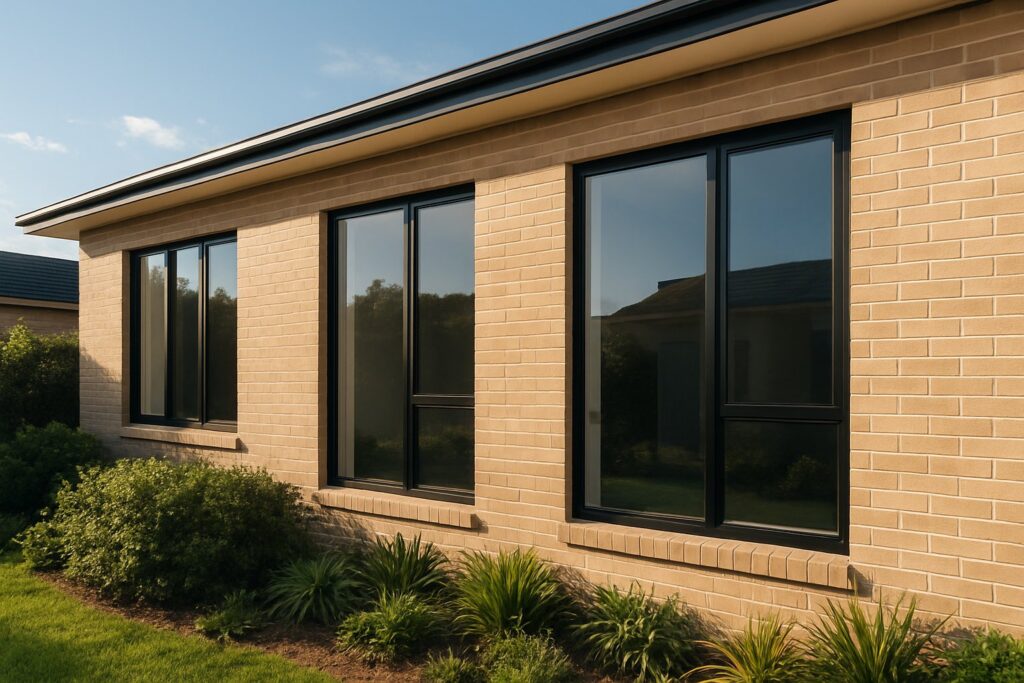
A 3-track aluminium sliding window uses three parallel rails set into a single frame, each carrying its own glass panel. The sashes glide independently along these tracks, which means two panels can stack to one side while the third stays put — opening roughly 66% of the total width instead of the 50% you get from a standard 2-track setup. That extra openable area changes the way a room breathes, and it also changes what you pay.
Getting a clear read on the 3 track aluminium sliding window price is harder than it should be. Online listings show wildly different numbers depending on the supplier’s market, order size, and what’s actually included in the quote. This guide cuts through the noise with a neutral breakdown of what drives pricing, where the hidden costs sit, and how to tell a fair quote from a padded one.
What Makes a 3-Track System Different
Every additional track adds material and complexity. Compared to a 2-track window, a 3-track configuration requires a wider frame profile — typically 120 mm to 150 mm deep versus 85 mm to 100 mm for its simpler counterpart. That deeper frame accommodates an extra set of rollers, another locking mechanism, and a third glass panel. More aluminium, more hardware, and more glass all feed directly into a higher aluminium sliding window price at the point of sale.
The structural demands increase too. Three panels spanning a wide opening need precisely engineered tracks to maintain smooth operation and weather sealing over years of daily use. Tight tolerances in fabrication keep the sashes from binding or rattling, and that precision costs more than loose-fit assembly.
Who Needs a 3-Track Configuration
Three-track systems earn their keep in spaces that demand broad, unobstructed openings — living rooms overlooking a garden, balcony enclosures in apartments, and commercial shopfronts where display visibility matters. Wherever maximum airflow and physical access take priority, the sliding window aluminium price premium pays for itself through daily usability.
A practical rule of thumb: 3-track windows typically serve openings wider than 1.8 metres, the point at which 2-track systems start to feel restrictive in both ventilation and visual openness.
For narrower openings, a 2-track system handles the job without the added expense. But once the span grows, the cost difference between track configurations becomes less about luxury and more about functional necessity. The sections ahead break down exactly where that money goes — from aluminium profiles and glass specifications through to installation charges and regional market variation.
2-Track vs 3-Track vs 4-Track
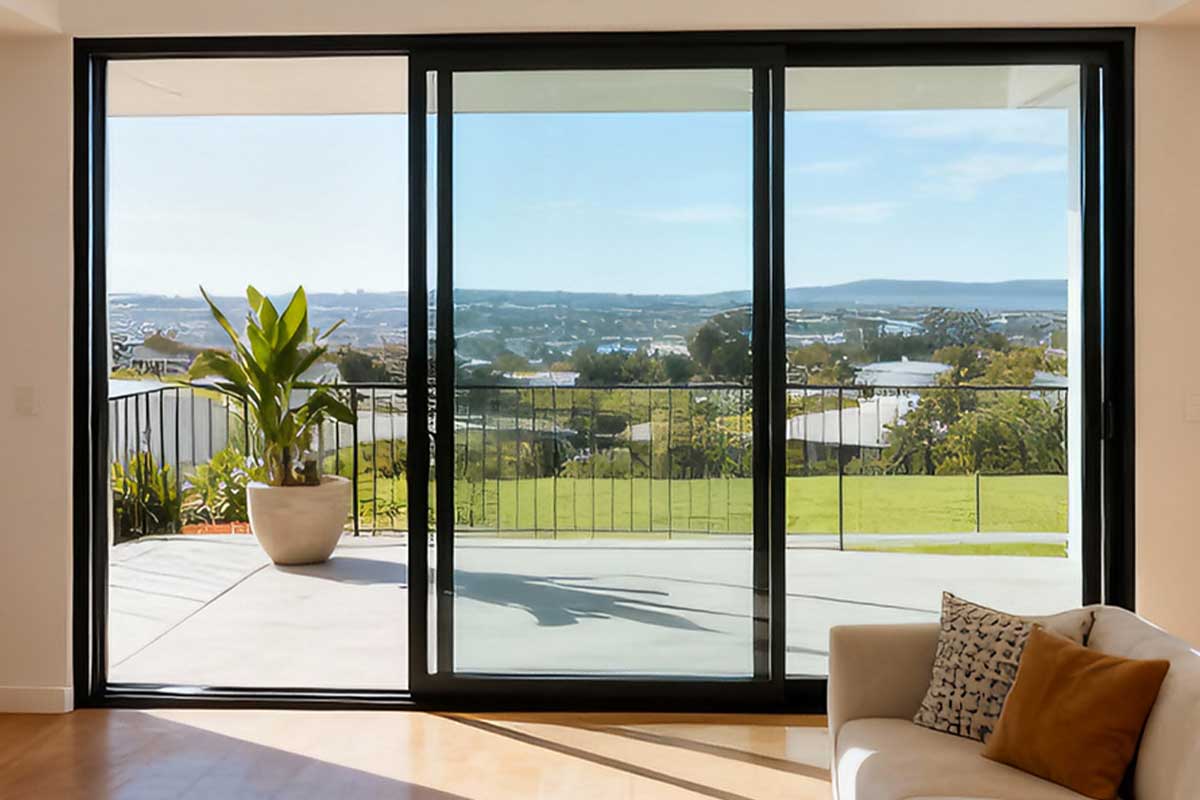
Budget and opening width pull buyers in opposite directions. A wider opening demands more tracks, but more tracks demand more money. The real question isn’t which system costs the least — it’s which configuration delivers the best return for your specific opening size and daily use pattern. Here’s how the three main options stack up.
Price Differences Between Track Configurations
The price of aluminium sliding windows climbs with each additional track because every rail adds a sash, a set of rollers, extra locking hardware, and more glass. Based on industry pricing data, 3-track systems typically cost 30% to 50% more than equivalent 2-track windows, while 4-track (multi-track) configurations push 60% to 80% above the 2-track baseline. In the Australian market, where labour and material costs run higher than many Asian markets, that gap can widen further once installation is factored in.
| Feature | 2-Track | 3-Track | 4-Track |
|---|---|---|---|
| Approximate price range (AUD per m², supply only) | $300 – $600 | $450 – $850 | $650 – $1,100+ |
| Number of sashes | 2 | 3 | 4 |
| Maximum practical opening width | Up to 1.8 m | 1.8 m – 3.0 m | 3.0 m – 4.5 m+ |
| Clear opening (ventilation capacity) | ~50% | ~67% | ~75% |
| Frame depth (approximate) | 85 – 100 mm | 120 – 150 mm | 150 – 180 mm |
| Ideal application | Bedrooms, kitchens, standard openings | Living rooms, balconies, wide residential openings | Commercial shopfronts, very wide spans |
These figures represent supply-only aluminium sliding windows price per square metre in the Australian market. Installed costs add another 25% to 40% depending on access, wall type, and whether the job is new construction or a retrofit. The aluminium window sliding price you see quoted online — particularly from overseas B2B platforms — rarely includes installation, shipping to Australia, or compliance with AS 2047.
For buyers whose opening width sits comfortably under 1.8 metres, a 2-track system handles the job without overspending. If you’re evaluating a 2-track configuration for an Australian project, MEICHEN’s MA100 sliding window provides a useful reference point — it’s a project-supply aluminium sliding system where builders and homeowners can review real specifications, track options, and screen configurations for a 2-track setup.
When 3-Track Offers Better Value Than 4-Track
Four-track systems exist for a reason: commercial shopfronts, conference room walls, and resort-style openings that span four metres or more. But for most residential applications, the jump from 3-track to 4-track delivers diminishing returns.
Consider the maths. A 3-track window already opens 67% of the total span. Moving to a 4-track system gains you another 8% of clear opening — from 67% to 75% — while the 4 track aluminium sliding window price jumps by roughly 40% to 50% over the 3-track equivalent. That’s a steep premium for a modest gain in ventilation area, especially when the wider frame eats into your wall space and the additional sash weight demands heavier-duty rollers and tracks.
For residential openings between 1.8 and 3.0 metres — which covers the vast majority of Australian living rooms, master bedrooms, and balcony enclosures — the 3-track configuration hits the practical sweet spot. You get a generous two-thirds opening without the structural complexity, deeper frame profile, or elevated cost that a 4-track system brings. The 2 track aluminium sliding window price makes sense below 1.8 metres; the 3-track earns its premium between 1.8 and 3.0 metres; and 4-track only justifies itself beyond that range or in commercial contexts where maximum access is non-negotiable.
Space Requirements and Installation Considerations
Each additional track adds roughly 30 mm to 40 mm of frame depth. That might sound trivial on paper, but it has real consequences during installation — particularly in renovation projects where existing wall thickness is fixed.
A standard Australian brick veneer wall is around 270 mm thick, which accommodates a 3-track frame without issue. Timber-framed walls with weatherboard or rendered cladding can be tighter, sometimes requiring packing or reveal adjustments to seat the deeper profile properly. If you’re replacing an old 2-track window with a 3-track unit in the same opening, the frame depth difference means the new window may project further into the room or require the reveal to be widened — both of which add labour cost to the installation.
Weight is the other factor installers flag. Three glass panels in a single frame assembly are significantly heavier than two, which affects handling during installation (especially on upper storeys) and places greater load on the structural lintel above the opening. For openings wider than 2.4 metres, builders often need to verify that the existing lintel can carry the additional weight without deflection. In new builds this is straightforward to engineer from the start; in renovations, it can trigger structural assessment costs that don’t appear in the initial window quote.
These physical constraints don’t make 3-track systems impractical — they simply mean the installation context matters as much as the window unit price when calculating total project cost. The next layer of pricing complexity sits inside the window itself: the profile grade, glass type, and hardware specification that separate a budget unit from a premium one.
Key Factors That Determine 3-Track Window Pricing
Two 3-track aluminium sliding windows can look nearly identical from across the room yet carry price tags that differ by 40% or more. The gap lives in the details — the alloy grade hidden inside the frame, the glass makeup you can’t see edge-on, and the hardware doing invisible work every time a sash glides open. Understanding these variables is what separates an informed buyer from one who simply picks the cheapest quote and regrets it two years later.
Aluminium Profile Quality and Wall Thickness
The aluminium section is the skeleton of the window, and its specification is the single biggest driver of the aluminium sliding window material price. Profiles are categorised by their wall thickness — the amount of metal in the extrusion walls — and by the overall section depth (sometimes called the profile series).
At the entry level, you’ll find profiles with a 1.2 mm wall thickness in a narrow section series (around 27 mm to 40 mm deep). These use less raw aluminium per linear metre, which keeps the aluminium sliding window section price low. They’re adequate for small panels — say, a kitchen window under 800 mm wide — but they flex under the weight and span of a full 3-track assembly. For a 3-track window spanning 2.4 metres or more, a 1.2 mm profile risks deflection, poor weather sealing, and premature roller wear.
Mid-range profiles step up to 1.4 mm or 1.5 mm wall thickness in a 40 mm to 60 mm section series. The additional aluminium adds structural rigidity, supports heavier glass panels, and maintains tighter tolerances over time. Industry data from 2026 shows the price difference between 1.2 mm and 1.5 mm profiles sits around 20% to 25% per square metre — a meaningful jump, but one that buys genuine longevity for wider openings.
At the premium end, profiles reach 1.8 mm to 2.0 mm wall thickness, often paired with thermally broken construction (a polyamide strip separating the inner and outer aluminium faces). These are specified for high-performance residential builds and commercial projects where compliance with AS 2047 structural requirements and strong energy ratings under WERS or NatHERS are non-negotiable. The aluminium sliding window price per sq ft at this tier can be double the entry-level equivalent, but the frame will handle large spans, resist coastal corrosion, and maintain thermal performance for decades.
The alloy grade matters too. Most quality window extrusions use 6063-T5 aluminium — a standard architectural alloy with good corrosion resistance and clean anodising characteristics. Cheaper imports sometimes use lower-grade alloys that look identical when new but oxidise faster in Australian coastal and high-UV environments.
Glass Type and Glazing Options
Glass typically accounts for 25% to 40% of the total aluminium sliding glass window price, and the specification range is wide. A 3-track window holds three separate glass panels, so any per-panel upgrade multiplies across the full unit.
Single glazing (5 mm or 6 mm clear float glass) is the baseline. It’s light, inexpensive, and adequate where thermal and acoustic performance aren’t priorities — think covered balconies or internal partitions. But for external walls in most Australian climate zones, single glazing struggles to meet NCC Section J energy requirements without compensating measures elsewhere in the building envelope.
Double glazing (typically a 5+12+5 mm or 6+12+6 mm insulated glass unit with an argon-filled cavity) is where the cost steps up significantly. Each of the three panels in a 3-track system becomes an IGU (insulated glass unit) rather than a single pane, roughly doubling the glass component cost. The upside is measurable: better U-values, reduced condensation, and improved acoustic insulation — all of which matter in Australian homes dealing with summer heat gain and street noise. Supplier pricing guides indicate that Low-E coatings and argon gas fills add another 10% to 30% on top of standard double glazing.
Laminated glass (two layers bonded with a PVB interlayer) adds safety and security without necessarily improving thermal performance. It’s often specified for ground-floor windows in bushfire-prone areas (BAL-rated construction) or where compliance with AS 1288 safety glazing requirements applies. The cost premium over standard float glass is moderate per panel, but again, multiply by three sashes and it adds up.
For buyers in cyclone-prone regions of northern Queensland or the NT, toughened or laminated glass may be mandatory rather than optional — a compliance cost that’s baked into the aluminium sliding window channel price before any aesthetic choices come into play.
Hardware and Locking Mechanisms
Hardware is easy to overlook during the quoting process because it’s rarely the headline number. But rollers, locks, handles, and the track channels themselves determine how the window feels in daily use — and how long it keeps feeling that way.
A 3-track system runs six rollers (two per sash), three sets of handles, and at least two locking points per operable panel. Budget hardware uses nylon rollers and basic zinc-alloy locks. Premium hardware steps up to stainless steel ball-bearing rollers and multi-point locking systems that compress the sash evenly against weatherstripping. The difference in per-window cost might be $40 to $120, but the difference in operational smoothness and security is substantial — especially for wide, heavy panels where cheap rollers wear flat within a few years.
Track channels themselves vary in quality. Precision-extruded channels with consistent rail geometry keep sashes tracking true over thousands of open-close cycles. Poorly finished channels develop flat spots and require earlier roller replacement.
Taken together, here are the primary cost drivers for a 3-track aluminium sliding window, ranked by their impact on the final price:
- Aluminium profile grade — alloy type, wall thickness, and section depth form the cost foundation
- Glass specification — single vs double glazing, Low-E coatings, laminated or toughened options
- Window dimensions — larger openings require more material and heavier-duty engineering
- Hardware quality — rollers, locks, handles, and track channel precision
- Surface finish — standard powder coating is the baseline; anodising (especially marine-grade) and dual-colour finishes add 10% to 20%
- Mosquito net inclusion — an integrated flyscreen track with mesh adds both material and frame width to the assembly
Each of these variables is independently selectable, which is why two quotes for the “same” 3-track window can land at very different totals. A quote that simply states “3-track aluminium sliding window” without specifying profile thickness, glass makeup, and hardware brand is essentially meaningless as a price comparison. The real cost picture only sharpens when every line item is visible — which brings us to the charges that sit outside the window unit itself.
Hidden Costs and Pricing Surprises Beyond the Window Unit
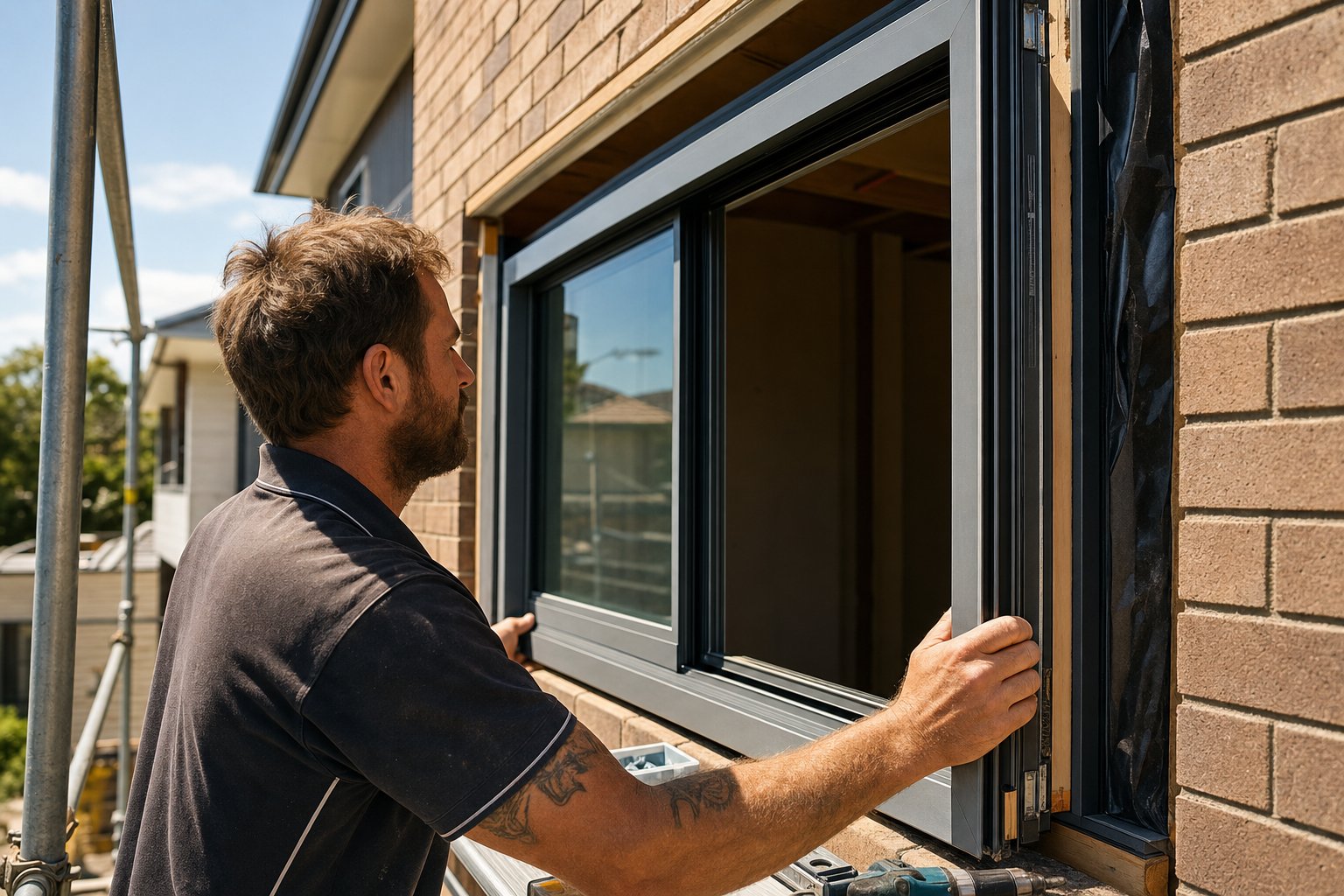
A window quote that looks sharp on paper can balloon once installation day arrives. The unit price — the number most buyers fixate on — often represents only 60% to 75% of the total installed cost. The rest hides in labour, add-ons, transport, and tax lines that don’t always appear until the invoice does. Knowing where these charges sit gives you a far more accurate picture of what your project will actually cost.
Installation Charges and Labour Costs
Labour is the most variable line item in any window project. For a straightforward ground-floor installation in new construction — where the opening is framed, flashed, and ready — installation of a 3-track unit might add $250 to $500 AUD per window. That figure climbs quickly once complications enter the equation.
Wall type matters. A standard Australian brick veneer wall is relatively simple to work with, but solid double-brick or concrete block walls demand more cutting and finishing time. Timber-framed weatherboard homes can require reveal modifications when a deeper 3-track profile replaces a narrower 2-track unit. Each of these scenarios adds labour hours that push the installation bill higher.
Floor level is another multiplier. Second-storey installations need scaffolding or elevated work platforms, which add both equipment hire and safety compliance costs. In multi-storey apartment buildings, access restrictions and lift scheduling can add an entire day to what would be a half-day job at ground level.
Replacement projects carry their own surcharges. Removing an existing window means disposing of old frames, patching damaged reveals, and sometimes discovering rot or corrosion in the surrounding structure that must be repaired before the new unit goes in. Budgeting an extra 15% to 25% above a new-construction installation cost is a reasonable safety margin for retrofit work. These variations in aluminium sliding window sizes and prices make it impossible to rely on a single generic cost figure — every opening has its own story.
Add-Ons That Increase the Final Bill
The base quote for a 3-track window rarely includes every feature a homeowner actually needs. Several common add-ons appear with surprising frequency, and their combined cost can shift the budget meaningfully. Listed here from most commonly requested to least:
- Mosquito net or flyscreen integration — An integrated mesh track adds both material and frame width. The aluminium sliding windows with mosquito net price runs 10% to 20% higher than the same window without one, and in tropical or subtropical parts of Australia — from Brisbane northward — it’s essentially a non-negotiable inclusion. Buyers searching for specific regional pricing, such as a 3 track aluminium sliding window with mosquito net price Nagpur, will notice that mesh-inclusive quotes vary enormously depending on whether the screen is a fixed panel, a sliding track, or a retractable roller system.
- Tinted or reflective glass upgrades — Grey, bronze, or green tinted glass reduces solar heat gain and glare. Reflective coatings offer stronger performance but cost more per panel. With three sashes in a 3-track system, a tint upgrade multiplies across all panels.
- Custom powder coating colours — Standard colours (white, black, monument, paperbark) are typically included in the base price. Custom RAL colours or dual-colour finishes (different colours on interior and exterior faces) attract a surcharge of $30 to $80 per square metre.
- Extended hardware warranties — Base warranties on rollers and locks often cover just 12 months. Extending coverage to 5 or 10 years costs extra but provides genuine peace of mind on high-use windows.
- Weatherstripping upgrades — Premium brush or compression seals improve air and water resistance. They’re particularly worthwhile in coastal or high-wind locations where standard seals degrade faster.
- Structural reinforcement for wide openings — Spans beyond 2.4 metres may require steel or engineered timber lintels, steel mullions, or reinforced head tracks. This cost sits outside the window supplier’s quote and falls to the builder or structural engineer.
Individually, each add-on looks modest. Stacked together across a multi-window order, they can add 20% to 35% to the original quoted price. An aluminium sliding windows price calculator — whether provided by a supplier or built into an online quoting tool — is only as accurate as the options you feed into it. Missing a single checkbox for flyscreen inclusion or glass tint can throw your budget estimate off by hundreds of dollars per opening.
Transportation and Delivery Fees
Aluminium windows are surprisingly fragile during transit. Glass panels can crack from vibration, and aluminium frames scratch easily if units shift against each other in the truck. Oversized 3-track assemblies — some exceeding 3 metres in width — often require custom crating, edge protection, and sometimes a dedicated delivery rather than sharing a general freight run.
Distance from fabricator to site is the primary cost driver. Metro deliveries in Sydney, Melbourne, or Brisbane typically run $80 to $200 per drop, depending on the order size. Regional and remote sites attract significantly higher fees — a delivery to a coastal build in far north Queensland or a rural property in western NSW can add $400 to $800 or more to the project, especially if the freight company needs to use a vehicle with a hydraulic tailgate to unload heavy multi-panel units.
Imported windows add another layer. Shipping aluminium products from overseas manufacturers involves sea freight, customs clearance, port handling fees, and last-mile delivery from the port to your site. These costs are rarely included in the ex-factory price quoted on B2B platforms, and they can add 15% to 30% to the landed cost of the window units.
Finally, GST applies to both the window units and the installation labour in Australia. Confirm in writing whether your quote is GST-inclusive or GST-exclusive — a 10% swing that’s caught more than a few buyers off guard at payment time. In other markets, tax treatment differs considerably; the aluminium sliding window lock price in India, for instance, carries different GST slab rates depending on the product classification, which is why cross-border price comparisons without tax adjustments are inherently misleading.
These layered costs — labour, add-ons, freight, and tax — are the reason two buyers can purchase the same window model and end up paying vastly different totals. The gap widens even further when you factor in the difference between what wholesale platforms advertise and what a retail buyer actually pays at the project level.
B2B vs Retail Pricing and Regional Market Context
Browse Alibaba or Made-in-China for five minutes and you’ll find 3-track aluminium sliding windows listed at prices that make your local fabricator’s quote look extortionate. The disconnect is real — but it’s also explainable. Those platform prices exist in a completely different purchasing universe from the one a homeowner or small builder operates in, and confusing the two leads to budget blowouts and sourcing headaches.
Why Online Prices Seem Lower Than Local Quotes
B2B platforms display factory-gate pricing designed for bulk buyers placing orders of 50 to 500 units or more. A Chinese manufacturer listing a 3-track sliding window at USD $45 to $90 per square metre is quoting for a container-load order with no glass upgrades, no powder coating customisation, and no compliance testing for your local market. That price excludes ocean freight, import duties, customs brokerage, port handling, inland transport, and installation.
Real-world import cost breakdowns show that ocean freight alone runs USD $2,500 to $4,500 per 20-foot container, with customs clearance, brokerage, and last-mile delivery stacking on top. For aluminium-framed products entering Australia, anti-dumping duties and the general 5% tariff rate apply before GST. By the time a single window from that Alibaba listing reaches your site in Melbourne or Brisbane — tested, certified to AS 2047, and ready for installation — the landed cost per unit can be 60% to 100% higher than the advertised factory price.
A homeowner ordering one or two windows simply cannot access bulk pricing. Minimum order quantities exist because factories tool up production runs for efficiency, and a single-unit order disrupts that workflow. The aluminium sliding windows Bunnings price, for instance, reflects retail-level purchasing with Australian compliance, warranty backing, and immediate availability — all of which carry legitimate cost that a raw factory quote strips away.
Regional Price Variations Explained
The same 3-track window costs dramatically different amounts depending on where you’re buying it. Local labour rates, import tariff structures, aluminium commodity pricing, competition density, and building code requirements all shape what lands on your invoice. Here’s how key markets compare:
| Market | Relative Cost Level | Primary Cost Drivers | Typical Supply Model |
|---|---|---|---|
| Australia | High | Labour rates, AS 2047 compliance, anti-dumping duties on imports, high transport costs to regional sites | Local fabrication or certified import |
| India | Low to moderate | Competitive domestic manufacturing, lower labour costs, wide supplier base | Local fabrication dominates |
| Philippines | Low to moderate | Import reliance on Chinese profiles, moderate labour, limited local extrusion capacity | Imported profiles, local assembly |
| South Africa | Moderate | Local aluminium smelting offsets import costs, but currency volatility affects hardware and glass pricing | Mix of local and imported |
| United Kingdom | High | Stringent Building Regulations Part L, high labour rates, thermal break requirements as standard | Local fabrication with European profiles |
The aluminium sliding window price in India benefits from a massive domestic manufacturing base — hundreds of fabricators compete on price, which keeps margins thin and options plentiful. The aluminium sliding window price Philippines tends to sit slightly higher because the country imports most aluminium extrusions rather than producing them locally, adding freight and duty to the base material cost. Aluminium sliding window prices South Africa reflect an interesting middle ground: the country produces its own aluminium, keeping raw material costs lower, but rand volatility makes imported hardware and glass unpredictable quarter to quarter. And aluminium sliding windows prices UK sit at the premium end because thermal performance regulations effectively mandate thermally broken profiles and double glazing as minimum specifications.
Buyers researching aluminium sliding window price in Nigeria, aluminium sliding window prices in Jamaica, or aluminium sliding windows prices in Kenya face a common challenge: these markets rely heavily on imported finished products or semi-finished profiles from China and India, meaning landed costs fluctuate with shipping rates, currency movements, and local import duty structures. Published price lists become outdated quickly in import-dependent markets.
Domestic vs Imported Windows
The trade-off between locally fabricated and imported windows comes down to three factors: unit cost, lead time, and recourse when something goes wrong.
Imported windows from Chinese manufacturers can offer lower per-unit costs — industry analysis of import economics consistently shows factory-direct pricing sitting 35% to 60% below equivalent local retail, even after freight. But that saving carries conditions. Lead times stretch to 8 to 14 weeks including production, shipping, and customs clearance. Quality consistency varies between factories, and without on-the-ground inspection, you’re relying on photos and samples that may not represent the full production run. If a unit arrives damaged, out of spec, or fails to meet AS 2047 during council inspection, enforcing a warranty claim against an overseas factory is difficult and slow.
Locally fabricated windows in Australia cost more per unit — sometimes 40% to 70% more than an equivalent Chinese import — but they arrive in days rather than months, they’re built to comply with Australian standards from the outset, and warranty claims are enforceable under Australian Consumer Law. For a single renovation window or a small residential project, the convenience and risk reduction of local supply usually outweighs the per-unit saving of importing.
For larger projects — apartment developments, commercial fitouts, or multi-dwelling builds — the calculus shifts. At 20, 50, or 100 units, the per-unit saving from importing becomes substantial enough to justify the longer lead time, the need for a customs broker, and the cost of independent quality inspection at the factory before shipping. Project-scale buyers also have more leverage to negotiate compliance testing and replacement guarantees as part of the supply contract.
Whether you’re sourcing locally or internationally, the real protection against overpaying isn’t finding the cheapest price — it’s knowing exactly what’s included in the quote and what’s been left out. That evaluation skill is what separates a confident buyer from one who gets caught by surprise charges after the contract is signed.
How to Evaluate Vendor Quotes and Avoid Overpaying
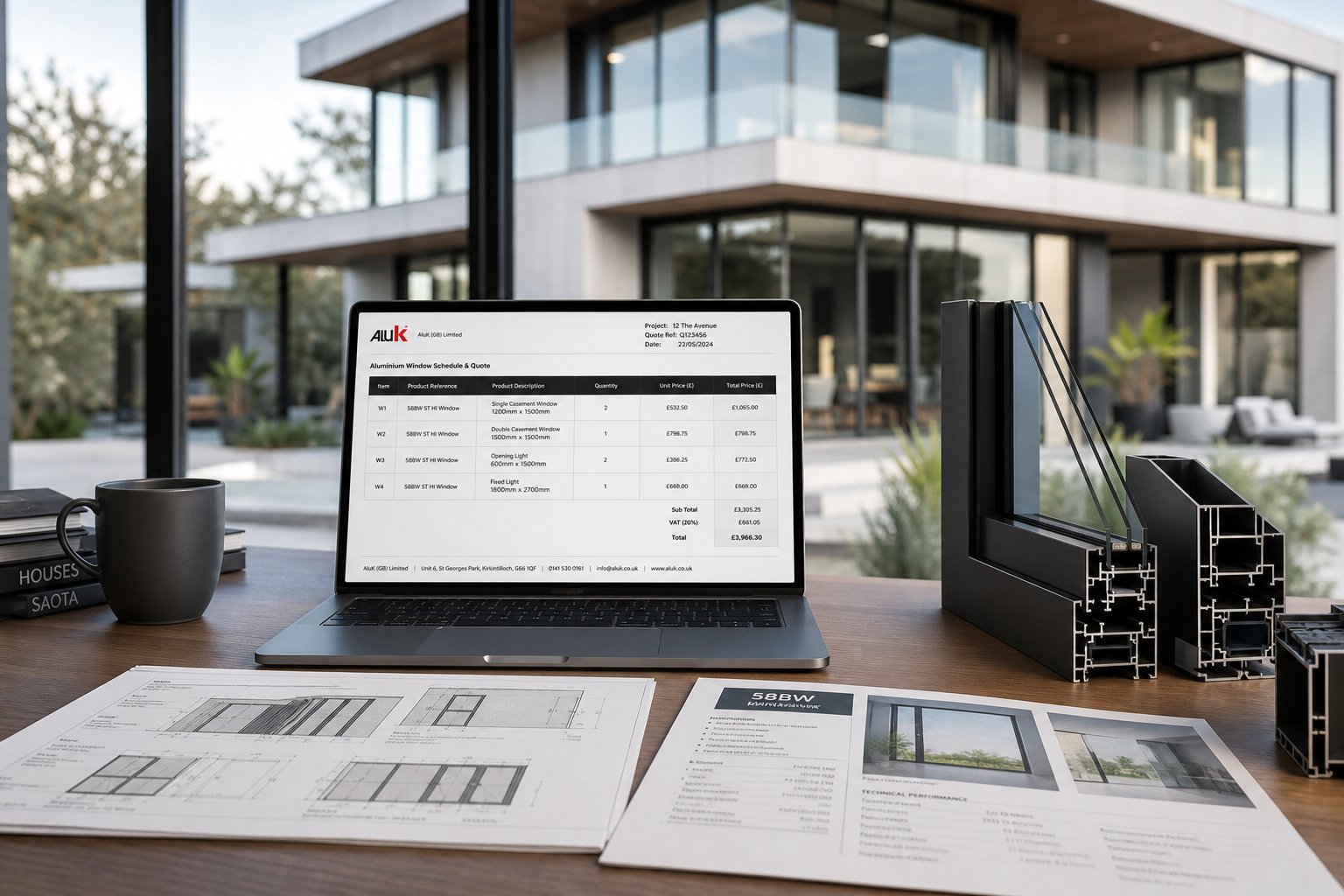
Knowing where costs hide is one thing. Knowing how to read a quote so those costs can’t ambush you is another. Whether you’re comparing an aluminium sliding windows price list from a local fabricator against an online supplier’s spreadsheet, the evaluation method stays the same: check what’s specified, flag what’s missing, and ask the questions that force clarity before money changes hands.
What a Complete Quote Should Include
A legitimate quote for a 3-track aluminium sliding window should read like a technical specification, not a vague summary. Industry guidance on quote comparison consistently identifies the same essential line items that separate a transparent offer from a deliberately ambiguous one:
- Profile series and brand — including wall thickness (e.g., 1.4 mm or 1.6 mm) and section depth
- Glass type and thickness — single, double glazed, or laminated, with specific makeup (e.g., 5+12A+5 mm IGU)
- Hardware specification — roller type, lock brand, handle style
- Surface finish — standard powder coat colour or custom RAL, anodised, or dual-colour
- Mosquito net inclusion or exclusion — and if included, whether it’s fixed, sliding, or retractable
- Installation scope — supply only, supply and install, or install with removal of existing frames
- Warranty terms — duration and what’s covered (frame, glass, hardware, installation workmanship)
- Delivery timeline — production lead time plus transport to site
- Payment schedule — deposit amount, progress payments, and final balance trigger
If any of these items are absent, you’re not comparing like for like — even if the bottom-line number looks attractive. An aluminium sliding window price list that omits profile thickness or glass specification is essentially meaningless as a comparison tool.
Red Flags in Window Pricing Quotes
Some warning signs are subtle. Others are glaring once you know what to look for. Be cautious when you encounter:
Missing profile specifications. A quote that says “aluminium sliding window” without stating the profile series, wall thickness, or alloy grade could be using a cheap price aluminium sliding window profile that won’t hold up under the weight of three sashes spanning a wide opening. Vague descriptions leave room for substitution at the fabricator’s discretion.
Unusually low prices that omit installation. The best price aluminium sliding windows aren’t always the lowest number on the page. A supply-only quote sitting 30% below competitors often excludes installation, delivery, and GST — costs that reappear later as “extras” once you’ve committed. Fabricator buying guides consistently warn that quotes 40% to 50% below market average are impossible without cutting corners on materials or scope.
Vague hardware descriptions. “Standard hardware included” tells you nothing. Without a named roller type, lock mechanism, or handle brand, you can’t assess durability or source replacements later. Quality aluminium window sliding price suppliers specify hardware by brand and model.
No written warranty. Verbal assurances evaporate the moment a problem surfaces. A supplier unwilling to put warranty terms on paper — covering frame integrity, powder coating adhesion, hardware function, and glass seal failure — is signalling that they don’t stand behind the product long-term.
Questions to Ask Before Signing
Armed with the checklist above, these questions force a supplier to either clarify their offer or reveal its gaps. Ask them in this order — each builds on the previous answer:
- What profile wall thickness and section series are you using for the 3-track frame?
- Is installation included in the quoted price, and if so, what does the installation scope cover?
- What is the warranty period, and does it cover the frame, glass seals, hardware, and powder coating separately?
- Are mosquito nets included or priced as an add-on? If included, what type — fixed mesh, sliding track, or retractable?
- What is the production lead time, and when can I expect delivery to site?
- Is the quoted price inclusive of GST and delivery, or are those additional?
Any reputable supplier answers these questions without hesitation. Evasiveness — or a response along the lines of “we’ll sort that out later” — is itself a red flag. The cheapest quote on your aluminium sliding window price list almost always excludes critical items that surface as surprise charges once the project is underway. A slightly higher quote that accounts for every line item upfront is nearly always the better deal when final costs are tallied.
With a clear framework for reading quotes, the remaining decision is matching the right window configuration to each room’s function and your long-term budget — because not every opening in your home needs the same level of specification.
Room-by-Room Recommendations and Long-Term Value
Not every opening in your home demands the same window. A 3-track system earns its premium in spaces where wide ventilation and daily access matter most — but spending that premium in a room that rarely needs more than a standard opening is money poorly allocated. Matching configuration to function keeps your total project budget honest while ensuring the rooms that matter most get the performance they deserve.
Living Rooms and Balconies
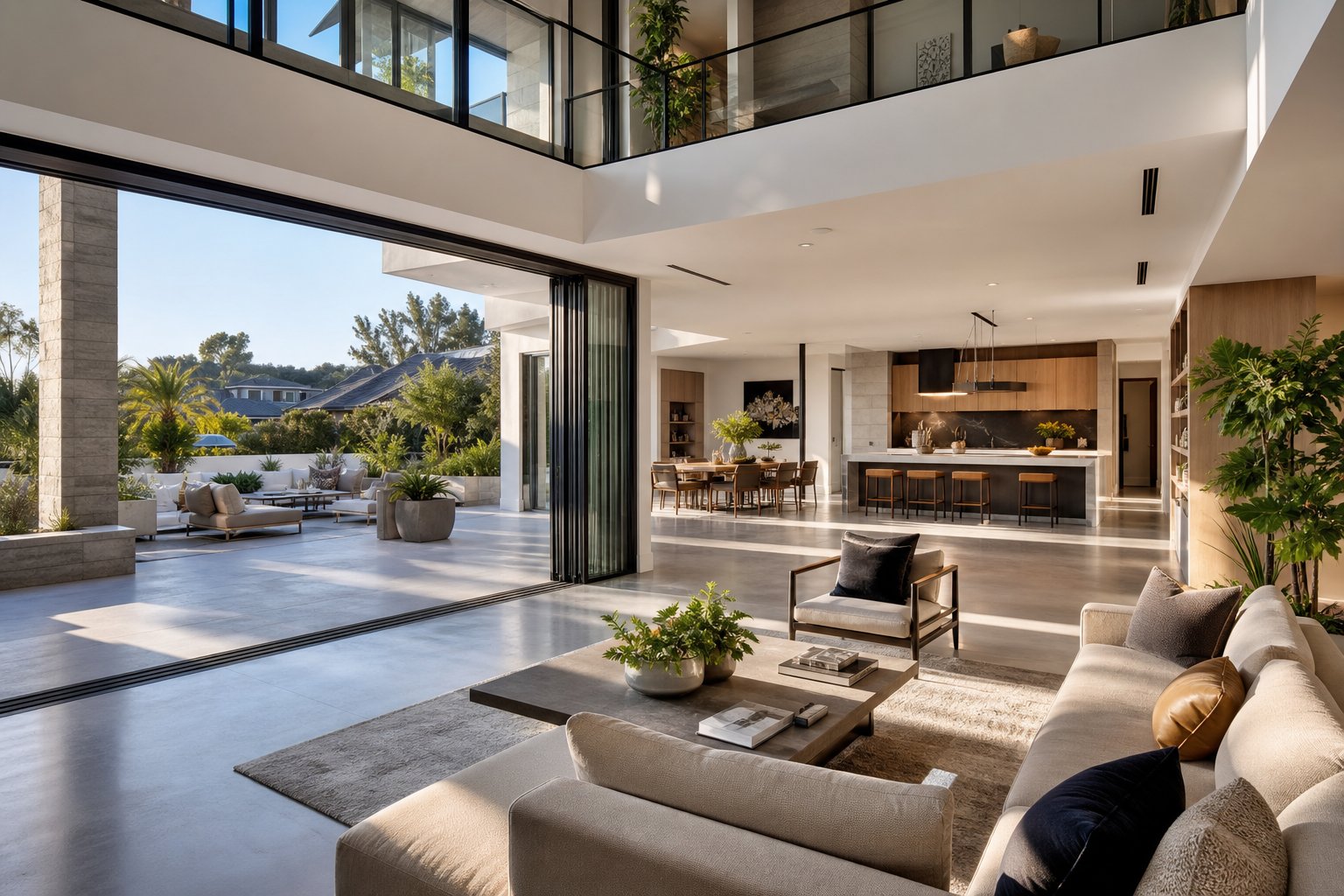
These are the rooms where a 3-track aluminium sliding window justifies every dollar. Living areas typically feature the widest openings in the house — often 2.0 to 3.0 metres — and they’re used constantly. Morning coffee with the breeze coming through, evening entertaining with the garden visible and accessible, weekend lounging with two-thirds of the wall open to the outdoors. The daily use frequency alone makes the investment rational.
Visual impact matters here too. A living room window is often the dominant architectural element on an interior wall. Three slim aluminium sashes with expansive glass panels create a cleaner, more contemporary look than a bulky 2-track frame struggling to cover the same span. For homes in coastal areas — think the NSW South Coast, the Sunshine Coast, or Perth’s western suburbs — the combination of wide openings and salt-air-resistant aluminium frames makes this configuration a natural fit.
Balcony enclosures in apartments follow similar logic. A standard balcony opening runs 1.8 to 2.4 metres, placing it squarely in 3-track territory. The ability to stack two panels aside and leave a generous clear opening transforms a balcony from a sealed-off space into a genuine extension of the living area. Aluminium sliding windows prices for balcony-grade units tend to sit at the mid-range of the spectrum — you need weather resistance and smooth operation, but the structural demands are typically lower than a ground-floor living room spanning 3 metres.
Bedrooms and Kitchens
Bedrooms tell a different story. Most bedroom windows in Australian homes measure 1.2 to 1.5 metres wide — well within the comfortable range of a 2-track system. Spending on a 3-track configuration here adds cost without delivering proportional benefit. You’re paying for a wider opening you’ll rarely use fully, since bedroom ventilation needs are modest compared to living spaces. A standard aluminium sliding window in a 4×4 (roughly 1200 mm x 1200 mm) size handles bedroom duty efficiently, and the aluminium sliding window 4×4 price sits considerably below a 3-track equivalent.
The exception is a master bedroom with a wide picture opening — say, 2.0 metres or more — overlooking a garden or view. In that scenario, the 3-track premium buys genuine daily enjoyment. But for secondary bedrooms, children’s rooms, and guest rooms, a quality 2-track window with good hardware is the smarter allocation of budget.
Kitchens occupy a middle ground. The opening width often suits a 2-track system, but the functional requirements differ from bedrooms. Cooking generates heat, moisture, and odours that need to escape quickly — ventilation is critical in kitchen design. What matters more than track count here is flyscreen integration. Aluminium sliding windows with mosquito net price in Bangalore or Brisbane — the climate doesn’t much matter — will always run higher than mesh-free equivalents, but in a kitchen where you want the window open while cooking without inviting insects inside, the integrated screen track is non-negotiable. Prioritise mesh quality and smooth screen operation over adding a third track you don’t need for the span.
Maintenance and Long-Term Value
Upfront cost dominates most buying decisions, but it’s a poor predictor of what a window actually costs over its working life. The total cost of ownership — purchase price plus maintenance plus eventual replacement — is where aluminium sliding windows quietly outperform alternatives.
Aluminium frames demand very little ongoing attention. Maintenance guidance from window manufacturers recommends washing profiles with mild detergent two to three times per year, cleaning track channels of accumulated dust and debris, and lubricating rollers annually with a silicone-based spray. That’s it. No repainting, no re-sealing, no sanding back peeling finishes. The powder-coated surface resists UV degradation and won’t chalk or fade the way painted timber does under Australian sun exposure.
Compare that to timber windows, which need repainting or re-oiling every five to seven years — a cost of $20 to $50 per window per year in materials and labour, compounding over decades. Lifecycle cost analysis shows that over a 45-year-plus lifespan, aluminium often works out cheaper than both timber and uPVC on a whole-of-life basis, despite its higher purchase price. uPVC frames typically last 20 to 30 years before seals fail and frames warp beyond repair, meaning a homeowner faces full replacement at least once — sometimes twice — within the period a quality aluminium frame continues operating without issue.
For aluminium sliding window sizes and prices in India and across the broader Asia-Pacific market, the durability argument carries even more weight. High humidity, intense UV, and monsoon-driven moisture accelerate degradation in timber and uPVC far faster than in temperate climates, making aluminium’s corrosion resistance a functional necessity rather than a luxury.
Spending 15% to 20% more upfront on a window with thicker profiles and quality stainless-steel rollers typically saves money over the window’s lifetime. Cheap hardware fails in 3 to 5 years and costs $150 to $300 per window to replace — including the callout fee. Quality hardware lasts 15 to 20 years without intervention. The maths favours paying more once rather than less repeatedly.
This long-term perspective reshapes how you read aluminium sliding windows prices. The lowest quote isn’t the cheapest window — it’s often the most expensive one measured across a decade of ownership. A slightly higher upfront investment in profile quality, hardware grade, and proper installation pays dividends through years of trouble-free operation and deferred replacement costs.
That said, even the best-specified window becomes a poor investment if it comes from a supplier who can’t deliver consistently or support you after the sale. The sourcing decision — local fabricator versus project-scale supplier — carries its own set of trade-offs worth understanding before you commit.
Sourcing Reliable Suppliers for Your Sliding Window Project
Your project type shapes your sourcing strategy more than your budget does. A homeowner replacing a single living room window, a builder fitting out a dozen townhouses, and a developer specifying for a 60-unit apartment block all need 3-track aluminium sliding windows — but they need them from very different types of suppliers, at very different price points, and with very different service expectations.
Choosing Between Local Fabricators and Project Suppliers
Local fabricators are the go-to for one-off residential jobs. They measure on site, fabricate to your exact opening dimensions, and typically deliver within two to four weeks. The trade-off is price: fabricating a single custom unit costs more per square metre than ordering 50 identical units from a project-scale operation. You’re paying for flexibility and speed, which is entirely reasonable when you need one window installed before winter.
Project-based suppliers operate on a different model. They supply consistent, specification-grade windows in volume — the kind of operation where an aluminium sliding doors and windows prices manufacturer or aluminium sliding doors and windows prices factory can offer competitive per-unit rates because production runs are longer and material purchasing happens in bulk. For builders managing multiple dwellings or developers specifying across an entire complex, this route delivers better cost control and uniformity. Every unit arrives with the same profile thickness, the same hardware, and the same finish — critical when council inspections or building certifiers are checking compliance across dozens of openings.
The middle ground exists too. Some suppliers serve both markets, offering project-scale pricing to builders while accepting smaller custom orders at a modest premium. Finding these hybrid operators often delivers the best aluminium sliding window price per sq ft for sale to buyers who sit between the single-unit homeowner and the large-scale developer.
What to Look for in a Sliding Window Supplier
Whether you’re sourcing from an aluminium sliding doors and windows prices supplier domestically or evaluating an aluminium sliding window price per sq ft factory overseas, the evaluation criteria remain consistent. Industry guidance on supplier assessment reinforces that transparency in specifications is the single most reliable indicator of a trustworthy operation. Suppliers who publish detailed technical information — track configurations, glass options, locking mechanisms, screen integration, hardware brands — give buyers the data they need to compare quotes on equal terms.
Use these criteria to shortlist potential suppliers:
- Product range across track configurations — a supplier offering 2-track, 3-track, and 4-track systems under a single product family demonstrates engineering depth, not just catalogue breadth
- Ability to supply at project scale — ask about minimum order quantities, batch consistency, and whether they support staged deliveries aligned to your construction schedule
- Transparent pricing structure — the aluminium sliding window price per sq ft supplier should itemise profile grade, glass specification, hardware, finish, and installation scope rather than bundling everything into a single opaque number
- Technical documentation availability — CAD drawings, installation guides, compliance certificates (AS 2047, WERS ratings), and material safety data sheets signal a supplier accustomed to professional-grade projects
- After-sales support — replacement parts availability, warranty claim processes, and a named contact for post-installation issues matter far more than a slick sales presentation
As a concrete example of this transparency in practice, MEICHEN’s MA100 sliding window system illustrates how a project-oriented aluminium sliding window price per sq ft manufacturer presents its specifications publicly. The MA100 product page details track options, screen integration methods, and lock configurations — the kind of granular information that allows builders, developers, and architects to evaluate whether the system suits their Australian residential or commercial project before requesting a formal quote. That level of upfront detail saves time during the quoting process and reduces the risk of specification mismatches arriving on site.
Regardless of where you source — from an aluminium sliding window price per sq ft China exporter or a local Australian fabricator — the suppliers who earn long-term trust are the ones who make their specifications visible, their pricing logic clear, and their warranty terms enforceable. The 3 track aluminium sliding window price on your final invoice should hold no surprises if you’ve done the evaluation work upfront. Treat the quoting process as a technical exercise, not a price-shopping race, and the right supplier will reveal themselves through the quality of information they’re willing to share before a single dollar changes hands.
Frequently Asked Questions About 3-Track Aluminium Sliding Window Pricing
1. How much does a 3-track aluminium sliding window cost in Australia?
In the Australian market, a 3-track aluminium sliding window typically costs between $450 and $850 AUD per square metre for supply only. Installed costs add another 25% to 40% on top, depending on wall type, floor level, and whether it is new construction or a retrofit. The final price varies significantly based on profile wall thickness, glass specification (single vs double glazing), hardware quality, surface finish, and whether mosquito net integration is included. Always confirm whether a quote is supply-only or supply-and-install, and whether GST is included, to avoid unexpected charges.
2. What is the price difference between 2-track and 3-track aluminium sliding windows?
A 3-track aluminium sliding window generally costs 30% to 50% more than an equivalent 2-track system. The premium reflects the additional aluminium frame material, a third glass sash, extra rollers, another locking mechanism, and a wider frame profile (120–150 mm versus 85–100 mm). For openings under 1.8 metres, a 2-track system like the MEICHEN MA100 sliding window handles the job efficiently without the extra expense. The 3-track configuration becomes the practical choice for openings between 1.8 and 3.0 metres, where 2-track systems feel restrictive in both ventilation and visual openness.
3. Are online prices for 3-track aluminium sliding windows accurate?
Online prices — particularly on B2B platforms like Alibaba — typically reflect bulk factory-gate pricing for orders of 50 or more units. These quotes exclude ocean freight, import duties, customs brokerage, local transport, AS 2047 compliance testing, installation, and GST. A single window purchased through these channels can end up costing 60% to 100% more than the advertised price once all landed costs are factored in. Local retail and fabricator quotes are higher per unit but include compliance, warranty backing, and realistic installation scope, making them a more reliable basis for budgeting.
4. What hidden costs should I expect when buying a 3-track sliding window?
Beyond the quoted unit price, expect additional charges for installation labour (which varies by wall type and floor level), mosquito net integration (adds 10%–20%), tinted or reflective glass upgrades, custom powder coating colours, extended hardware warranties, weatherstripping upgrades, structural reinforcement for wide openings, delivery fees, and GST. In renovation projects, removal and disposal of old frames plus reveal repairs can add 15%–25% above new-construction installation costs. Combined, these extras can increase the original quoted price by 20% to 35%.
5. How do I choose between a local fabricator and a project supplier for sliding windows?
Local fabricators suit one-off residential jobs, offering custom measurement, faster turnaround (two to four weeks), and flexibility — but at a higher per-unit cost. Project-based suppliers like MEICHEN provide better per-unit pricing for bulk orders, consistent quality across large developments, and detailed technical documentation including track options, screen configurations, and compliance certificates. For builders managing multiple dwellings or developers specifying across entire complexes, project suppliers deliver cost control and uniformity. Homeowners replacing a single window typically benefit from local fabrication, while multi-unit projects gain from the economies of scale a project supplier offers.
More Window & Door Guides