Aluminium vs UPVC Windows and the Decision That Matters Most
Every window replacement or new build project eventually lands on the same question: are aluminium windows better than uPVC? It is easily the most debated material choice among Australian homeowners, renovators, and builders, and the answer you get often depends on who is selling what.
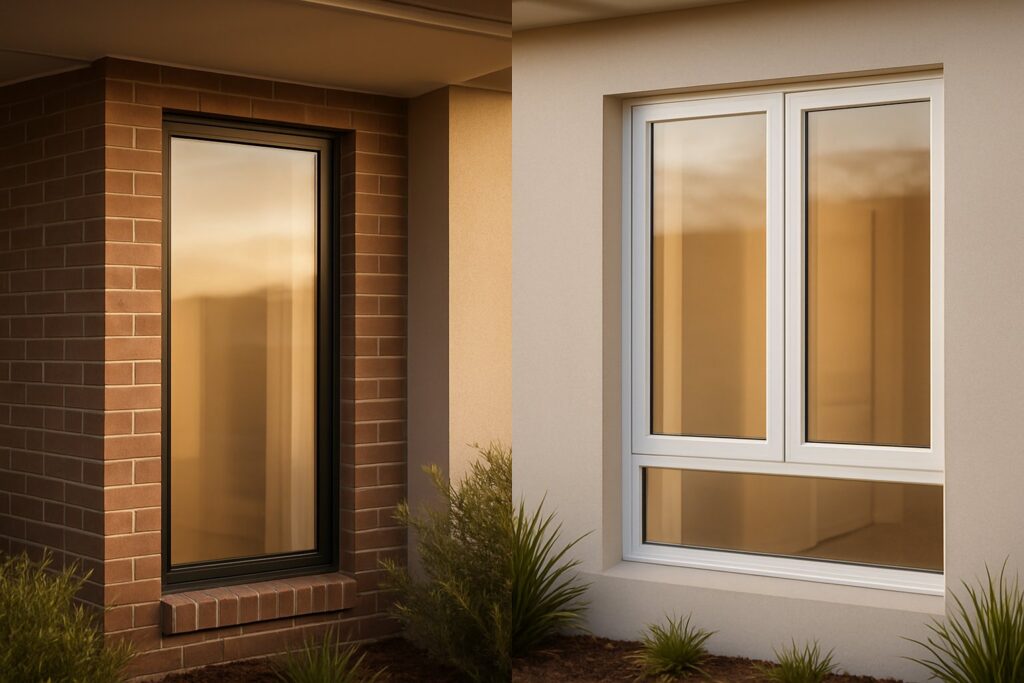
At a basic level, the two materials could not be more different. Aluminium frames are extruded from a lightweight, high-strength metal alloy. They are inherently rigid, corrosion-resistant, and capable of supporting large glass panels with remarkably slim sightlines. uPVC, short for unplasticised polyvinyl chloride, takes the opposite approach. Its profiles are engineered with multiple internal chambers that trap pockets of still air, creating a naturally insulating plastic frame that resists moisture and requires no painting.
This guide takes a genuinely neutral, evidence-based approach. We acknowledge trade-offs honestly for both materials so you can make a confident decision suited to your home, your climate, and your budget.
What the Aluminium vs UPVC Debate Really Comes Down To
Neither material wins across every category. uPVC doors and windows tend to cost less upfront and deliver strong thermal insulation straight out of the box. Aluminium, particularly modern aluminium thermal break windows paired with quality aluminium double glazing, offers superior longevity, slimmer profiles, and a wider palette of design options. The real question is not which material is objectively better. It is which set of trade-offs aligns with your project priorities, whether that is budget, street appeal, energy ratings under the NatHERS scheme, or long-term durability in a harsh coastal or UV-heavy Australian climate.
How This Guide Helps You Decide
Over the following sections, we break down the upvc vs aluminium windows comparison across every factor that actually matters: thermal performance, lifespan, pricing, aesthetics, security, sustainability, and suitability by property type. Each section includes specific data, side-by-side tables, and practical guidance so you walk away with clarity rather than a sales pitch.
The first factor most people want to understand is energy efficiency, and that starts with how each frame handles heat transfer.
Thermal Performance and Energy Efficiency Compared
Heat transfer through window frames is one of the biggest factors in how comfortable your home feels year-round, and it is where aluminium and uPVC take fundamentally different engineering paths. Raw aluminium conducts heat roughly 160 to 200 W/m·K, which is hundreds of times faster than uPVC at just 0.15 to 0.25 W/m·K. On paper, that gap looks insurmountable. In practice, modern frame engineering tells a very different story.
How Aluminium Thermal Breaks Actually Work
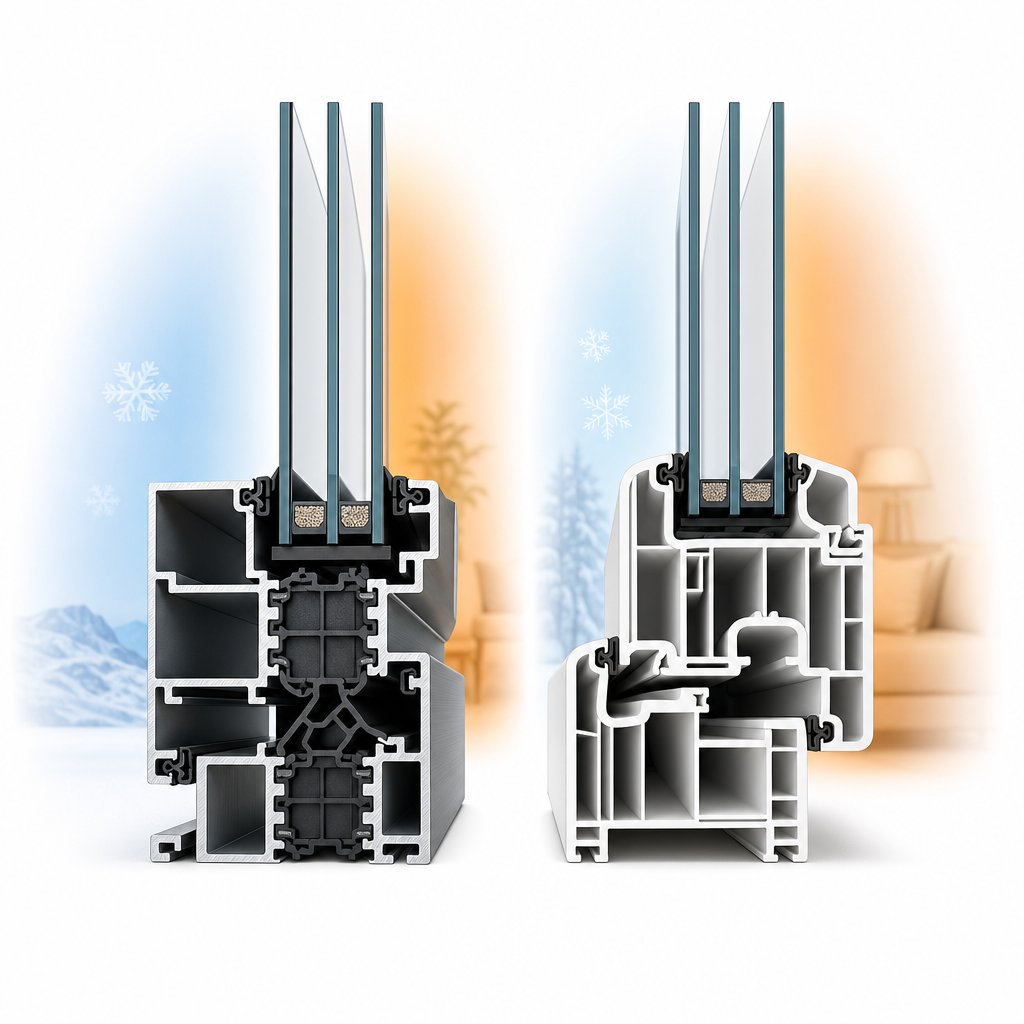
A thermally broken aluminium frame is not a single continuous piece of metal. Instead, the profile is split into two separate aluminium sections, one facing the interior and one facing the exterior, joined by a strip of reinforced polyamide (a type of nylon). This polyamide barrier has a thermal conductivity of approximately 0.3 W/mK compared to aluminium’s 237 W/mK, which effectively interrupts the metal’s natural heat pathway.
Think of it as cutting a bridge in half and replacing the middle span with an insulating material. Heat can no longer race straight through the frame from one side to the other. The width of the thermal break matters too. Wider polyamide strips, typically ranging from 24 mm to 35 mm in high-performance systems, deliver better insulation. Many thermally broken windows and doors also incorporate multi-chamber designs within the aluminium profile itself, adding extra pockets of still air that further slow heat movement.
Glass-fibre reinforcement within the polyamide ensures structural rigidity is maintained, so the frame can still support large, heavy glazing units without flexing. UV resistance and dimensional stability across temperature swings mean the thermal break performs consistently over decades, not just on day one.
UPVC Multi-Chamber Profiles Explained
Where aluminium relies on an engineered insert to block heat flow, uPVC windows and doors use the frame material itself as the insulator. Each uPVC profile is extruded with multiple internal chambers, sometimes five or more, that trap pockets of still air. Since still air is a poor conductor of heat, these chambers act as a series of thermal barriers stacked within the frame wall.
The result is a profile that insulates well without needing any additional thermal break component. This is one reason uPVC tends to be more affordable: the insulation is built into the manufacturing process rather than added as a secondary engineering step. Combined with quality seals and weather gaskets, multi-chambered uPVC frames deliver reliably low heat transfer across standard residential window styles, from casement and awning windows through to sliding configurations.
Real-World Energy Efficiency Compared
So are aluminium windows better than uPVC when it comes to keeping your home comfortable? The answer depends on which type of aluminium frame you are comparing. Non-thermally broken aluminium, still found in older homes and some budget installations, performs poorly. Thermally broken aluminium closes the gap significantly.
In Australia, window thermal performance is measured using U-values (Uw for the whole window, Uf for the frame alone). Lower numbers mean less heat transfer and better insulation. Indicative ranges from Australian double glazing data paint a clear picture:
| Frame Type | Insulation Method | Indicative Uf Range (W/m²·K) | Indicative Uw Range (W/m²·K) | Double Glazing Compatibility |
|---|---|---|---|---|
| uPVC (multi-chamber) | Multiple air-filled chambers within the profile | 1.5 – 2.5 | 1.8 – 2.4 | Excellent; supports double and triple glazing with gas fills and low-E coatings |
| Aluminium (thermally broken) | Polyamide strip separating inner and outer frame sections | 2.5 – 4.0 | 2.0 – 2.7 | Excellent; structural strength supports larger and heavier glazing units |
| Aluminium (non-thermally broken) | None — continuous metal frame | 5.5 – 7.0 | 3.0+ | Limited benefit; frame acts as a thermal bridge regardless of glass quality |
A few things stand out. Standard uPVC frames still hold a measurable edge in frame-only insulation (Uf), which is why they tend to deliver consistently low whole-window U-values without relying on premium add-ons. Thermally broken aluminium narrows that gap considerably, landing in a comparable Uw range when paired with quality double glazing, low-E coatings, and warm-edge spacers. High-performance aluminium vs PVC windows is no longer the lopsided contest it was a decade ago.
Where non-thermally broken aluminium still exists, the story is different. Even with decent double glazing, the frame itself becomes a thermal bridge that undermines the glass performance. If you are comparing quotes and an aluminium option seems unusually cheap, check whether the system is thermally broken. That single detail changes everything about how the window performs under WERS and NatHERS energy modelling.
Triple glazing pushes both materials further. uPVC triple-glazed systems can achieve Uw values approaching the low 1s in some configurations, while thermally broken aluminium with triple glazing tightens the performance gap even more. For most Australian climates, well-specified double glazing with either frame material will meet or exceed NCC energy requirements, but homes in cooler regions like Tasmania, alpine Victoria, or the ACT may benefit from exploring triple-glazed options.
Thermal performance, though, is only one piece of the puzzle. A window that insulates brilliantly but deteriorates after 15 years delivers a very different return than one that holds its performance for four decades.
Durability and Lifespan Side by Side
A window’s insulation value means little if the frame degrades well before its time. Longevity is where aluminium and uPVC diverge most sharply, and it is one of the factors that shifts the value equation over the life of a home.
How Long Each Material Really Lasts
Thermally broken aluminium windows routinely deliver a service life of 40 to 50 years, and many exceed that range with minimal intervention. The metal itself does not fatigue, soften, or become brittle with age. Powder-coated finishes hold their colour and surface integrity for decades, even under Australia’s intense UV exposure.
uPVC windows and doors generally last 20 to 35 years, with premium European-grade profiles like Aluplast sitting at the upper end of that range. The frame material is inherently stable and will not rot or corrode, but it is an organic polymer, and polymers age differently to metals. Over time, the compound can lose flexibility, particularly in climates with extreme heat cycling or relentless UV bombardment. Quality profiles incorporate UV stabilisers within the compound itself, which is a critical distinction. Budget uPVC that relies on surface-level protection alone tends to yellow, chalk, or turn brittle much sooner.
It is also worth separating the frame from the sealed glazing unit. Double-glazed sealed units typically last 20 to 25 years before the perimeter seal may begin to fail, regardless of frame material. When that happens, you replace the glass unit, not the entire window, which is a significant cost advantage for any frame that outlasts its glazing.
Maintenance Tasks You Should Expect
Both materials are genuinely low-maintenance compared to timber, but “low” does not mean “none.” Here is what each frame asks of you over its lifetime:
uPVC frames need periodic cleaning with mild soapy water, annual lubrication of hinges and locking hardware, and occasional inspection of rubber gaskets and drainage channels. No painting or sealing is required. If a gasket deteriorates, it can be replaced individually without disturbing the frame.
Aluminium frames follow a similar cleaning routine. Hardware should be lubricated annually, and drainage slots kept clear. The powder-coated finish does not need repainting under normal conditions, but if it is scratched or chipped, the affected area can be touched up or professionally re-coated to restore protection.
What Shortens or Extends Window Lifespan
For uPVC, the biggest threats are prolonged UV exposure without adequate stabilisation, heat-induced warping on dark-coloured foil finishes, and seal failure around the glazing unit. Discolouration is less of an issue with modern formulations than it was a generation ago, but cheaper profiles remain vulnerable. Coastal humidity, interestingly, is not a problem. uPVC is naturally resistant to salt air corrosion, which is one area where it can outperform aluminium in marine environments.
For aluminium, longevity hinges on the quality of the powder coating and the hardware. The frame itself is virtually indestructible in residential use, but a compromised coating in a coastal zone can allow surface oxidation. Marine-grade powder coatings and anodised finishes extend protection significantly. Hardware components, hinges, rollers, and locking mechanisms, are the parts most likely to wear first, and all are replaceable without affecting the frame.
| Factor | Aluminium | uPVC |
|---|---|---|
| Expected Lifespan | 40 – 50+ years | 20 – 35 years |
| Routine Maintenance | Wipe-down cleaning, annual hardware lubrication, clear drainage slots | Wipe-down cleaning, annual hardware lubrication, periodic gasket and seal inspection |
| Common Failure Points | Powder-coat damage (especially coastal), hardware wear, thermal break degradation in very low-quality systems | UV degradation and brittleness (low-grade profiles), seal failure, warping on dark foil finishes, gasket deterioration |
| Re-finishing Options | Touch-up paint, professional re-coating, or full re-powder-coating | Limited — frames cannot be repainted effectively; foil wraps may peel and are not easily replaced |
The upvc windows vs aluminum durability gap is real, but context matters. A premium uPVC system installed correctly in a temperate climate can comfortably reach 30-plus years, while a poorly coated aluminium frame in a harsh salt-spray zone may need attention sooner than expected. Material quality and installation standard matter at least as much as the material category itself.
Durability sets the stage, but it also feeds directly into cost. A frame that lasts twice as long fundamentally changes what you are actually paying per year of service, and that is where the pricing conversation gets interesting.
Pricing and Long-Term Value Breakdown
Sticker price is the number most people fixate on, and it almost always favours uPVC. But a window is not a one-off purchase in the way a piece of furniture is. It is a building component you will live with for decades, and the real cost only becomes clear when you account for how long each material performs before it needs replacing.
Upfront Price Ranges by Window Style
In the Australian market, uPVC windows can be 30 to 50 percent cheaper than their aluminium equivalents at the point of purchase. The exact gap depends on window style, glazing specification, and whether you are comparing supply-only or supply-and-install pricing. Below are broad indicative ranges for standard-sized, double-glazed windows supplied and installed in Australian metro areas:
| Window Style | uPVC (AUD, Supply & Install) | Aluminium — Thermally Broken (AUD, Supply & Install) |
|---|---|---|
| Casement / Awning | $450 – $850 | $700 – $1,300 |
| Sliding | $500 – $950 | $800 – $1,500 |
| Tilt-and-Turn | $600 – $1,100 | $900 – $1,600 |
These ranges reflect standard residential sizes and mid-market specifications. Custom dimensions, triple glazing, premium hardware, or non-standard colours push both materials toward the upper end. Regional pricing also varies: installation costs in Sydney and Melbourne tend to sit higher than in Brisbane or Adelaide, and remote or regional areas attract additional labour charges.
For a typical whole-house project of 10 to 15 windows, the upfront difference between aluminium vs uPVC windows can land anywhere from $3,000 to $8,000 AUD. That is a meaningful sum, and for budget-constrained renovations, it is often the deciding factor.
Total Cost of Ownership Over 30 Years
The upfront gap tells only half the story. Durable aluminium windows routinely last 40 to 50 years, while uPVC frames typically need replacing after 20 to 35 years. Run the numbers over a 30-year horizon and the picture shifts considerably.
With uPVC, you should budget for periodic gasket and seal replacements, roughly $50 to $120 per window every 10 to 15 years. If your sealed glazing units fail before the frame does, reglazing costs around $200 to $400 per unit. And if the frames themselves reach end of life at the 25-year mark, you face a full replacement cycle, essentially paying the original supply-and-install cost again at future prices.
Aluminium’s ongoing costs are lower. Hardware replacements (hinges, rollers, locks) may be needed once or twice over 30 years, typically $80 to $150 per window. Powder-coat touch-ups are rarely necessary unless the home sits in a severe coastal salt-spray zone. Critically, the frame itself is unlikely to need replacing within that 30-year window, so you avoid the single biggest expense: a second round of full installation.
When you compare upvc windows vs aluminium windows on a per-year-of-service basis, the cost gap narrows dramatically. In many scenarios, aluminium works out cheaper per year because you are dividing a higher upfront cost across nearly double the lifespan.
Warranty and Guarantee Differences
Warranty terms reflect each manufacturer’s confidence in their product, and they vary widely across the Australian market. As a general guide:
- uPVC frame warranties typically range from 10 to 15 years, with some premium manufacturers offering up to 20 years on the profile itself. Hardware and seals are often covered separately for shorter periods, usually 2 to 5 years.
- Aluminium frame warranties commonly span 10 to 20 years on the frame and powder-coat finish, with some Australian fabricators offering lifetime structural warranties on the aluminium profile. Hardware warranties mirror uPVC at 2 to 5 years.
- Sealed glazing units carry their own warranty regardless of frame material, typically 5 to 10 years against seal failure and fogging.
A longer warranty does not automatically mean a better product, but it does reduce your financial risk. Always check whether the warranty covers the full frame system or just individual components, and confirm whether it requires professional installation to remain valid. In Australia, consumer guarantees under Australian Consumer Law also apply, providing baseline protections beyond the manufacturer’s stated terms.
| Cost Factor | Aluminium (Thermally Broken) | uPVC |
|---|---|---|
| Upfront Cost (per window, installed) | $700 – $1,500 | $450 – $1,100 |
| Typical Manufacturer Warranty | 10 – 20 years (some lifetime on frame) | 10 – 15 years (up to 20 on premium profiles) |
| Maintenance Costs Over 30 Years | Low — occasional hardware replacement, rare re-coating | Moderate — gasket and seal replacements, possible reglazing |
| Likelihood of Full Replacement Within 30 Years | Very low | Moderate to high (especially budget profiles) |
| Estimated Total Cost of Ownership (per window, 30 years) | $800 – $1,800 | $900 – $2,400 (including one potential replacement cycle) |
The bottom line: if your budget is tight right now and you need functional, well-insulated windows today, uPVC delivers genuine value. If you can absorb the higher upfront spend, durable aluminium windows are likely to cost you less over the full ownership period, particularly for homes you plan to keep long-term.
Cost and longevity are quantifiable, but windows also shape how a home looks and feels from the inside. The next consideration is one that spreadsheets cannot fully capture: design flexibility, colour options, and how each material handles noise and condensation.
Aesthetics, Noise and Condensation
Numbers on a spec sheet can tell you how a window performs, but they cannot tell you how it makes a room feel. The amount of natural light flooding through, the colour of the frame against your brickwork, the silence when you close the sash on a busy street — these are the qualities people actually live with every day. And this is where aluminium windows vs uPVC reveal some of their starkest differences.
Sightlines and Design Flexibility
Sightline refers to the visible width of the frame when the window is closed. Narrower sightlines mean more glass and less frame, which translates directly into more daylight and a cleaner visual connection between indoors and out.
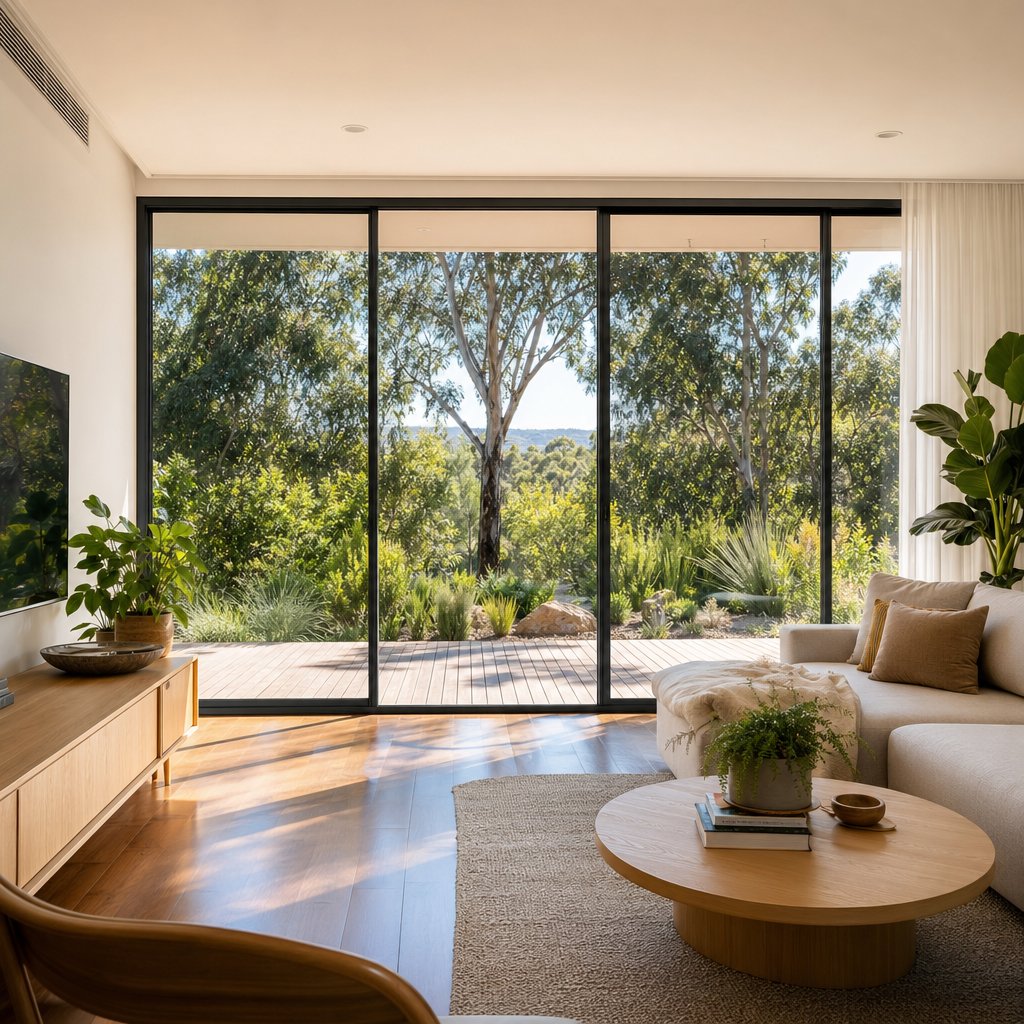
Aluminium’s inherent rigidity gives it a decisive edge here. Because the metal is structurally strong at thin cross-sections, aluminium frame faces can be as narrow as 20 mm, roughly half the width of a typical uPVC profile. That difference might sound modest on paper, but across a full window opening it adds up to a noticeably larger glass area. In open-plan living spaces, floor-to-ceiling configurations, or rooms where natural light is limited, slimmer aluminium frames can genuinely transform the feel of a space without any structural alterations.
uPVC profiles sit in the 70 mm to 80 mm depth range because the material needs thicker walls and internal steel reinforcement to achieve adequate rigidity. Modern uPVC designs are considerably more refined than the chunky white frames of the 1990s, but they still cannot match aluminium for slenderness. For standard residential windows, the visual difference is subtle. For large-format openings — bi-fold doors, picture windows, or expansive sliding systems — the contrast becomes hard to ignore.
Aluminium also handles scale better. Its strength-to-weight ratio supports glass panels exceeding 2 m x 2 m without requiring bulky reinforcement, making it the natural choice for contemporary Australian homes that favour open, light-filled layouts.
Colour Options and How They Age
Colour is where the two materials diverge most in terms of long-term satisfaction. Aluminium frames are finished using powder coating, a process where electrostatically charged pigment is baked onto the metal at high temperature. The result is a hard, UV-stable surface available in the full RAL colour standard — over 200 shades, from classic Monument and Surfmist through to bold custom tones.
One of aluminium’s standout features is dual-colour finishing. You can specify one colour for the exterior face and a completely different colour for the interior, allowing the windows to complement both your facade and your interior design scheme independently. This flexibility is particularly valuable in Australian homes where a dark exterior frame suits the streetscape but a lighter interior finish keeps rooms feeling open.
Available finish options for aluminium include:
- Powder coating in any RAL colour (matt, satin, or gloss)
- Dual-colour powder coating (different interior and exterior finishes)
- Anodised finishes for a natural metallic look
- Textured and woodgrain-effect powder coatings
uPVC takes a different approach. Standard profiles are extruded in white or a limited range of base colours. To achieve other shades, manufacturers apply foil wraps — thin laminate films bonded to the surface — or, less commonly, spray-painted finishes. The foil range typically covers around 30 colours, including popular woodgrain effects that mimic timber.
Available finish options for uPVC include:
- Standard white or cream extrusion
- Foil-wrapped colours (approximately 30 options, including woodgrain effects)
- Spray-painted finishes (limited availability, higher cost)
- Coloured-through extrusion in select shades (e.g., black, anthracite grey)
The critical difference shows up over time. Powder-coated aluminium retains its colour and surface integrity for decades, even under Australia’s harsh UV conditions. The baked finish does not peel, flake, or chalk in the way that applied surface treatments can. uPVC foils, by contrast, are adhesive-bonded films exposed to the same UV and heat cycling. Over 10 to 20 years, foils can begin to peel at edges, bubble, or fade — particularly on north- and west-facing elevations that cop the most sun. Dark-coloured uPVC is especially vulnerable: black uPVC surfaces can reach temperatures above 70 degrees Celsius, accelerating both foil degradation and the risk of frame warping.
Can you change the colour later? With aluminium, yes. Frames can be professionally re-coated or touched up if the finish is damaged or you simply want a new look. With uPVC, options are limited. The frames cannot be effectively repainted with lasting results, and replacing a peeling foil wrap is not a standard service. If you choose a coloured uPVC finish, you are largely committed to it for the life of the window.
Noise Insulation and Condensation Risk
Acoustic performance is a factor that often gets overlooked until you are living next to a busy road or under a flight path. When comparing upvc windows vs aluminium for sound reduction, the frame material plays a supporting role, but the glazing does the heavy lifting.
uPVC has a natural advantage in dampening sound vibrations. The plastic compound is non-conductive and its multi-chambered profile absorbs acoustic energy more effectively than a solid metal frame. For homes in high-noise environments, uPVC frames paired with acoustic-rated double glazing — or laminated glass with a sound-absorbing interlayer — deliver noticeably quieter interiors.
Aluminium, being a dense metal, can transmit sound vibrations more readily through the frame itself. That said, the frame accounts for a relatively small proportion of the total window area. The glass pane is the primary acoustic barrier, and both frame types accept the same glazing configurations: standard double glazing, triple glazing, and laminated acoustic glass. In practice, the difference between upvc versus aluminium windows for noise reduction is modest when both are fitted with equivalent glazing. If sound insulation is a top priority, investing in better glass — thicker panes, asymmetric glass thicknesses, or laminated interlayers — will deliver a bigger improvement than switching frame materials.
Condensation is the other comfort factor that catches homeowners off guard. It forms on interior window surfaces when the surface temperature drops below the dew point of the room’s air. Aluminium’s high thermal conductivity makes it naturally prone to this problem. In older or non-thermally broken aluminium frames, the interior face of the metal gets cold enough to attract moisture, leading to water pooling on sills and, over time, mould growth around the frame.
Modern thermally broken aluminium frames address this directly. The polyamide barrier keeps the interior aluminium skin closer to room temperature, dramatically reducing the conditions that trigger condensation. High-quality thermal breaks effectively bring aluminium’s condensation risk down to a level comparable with uPVC, which rarely suffers from frame condensation thanks to its naturally low conductivity.
The takeaway: if you are considering aluminium, confirm the system uses a genuine thermal break — not just for energy efficiency, but to avoid condensation issues that can damage your window surrounds and interior finishes over time. Budget aluminium without a thermal break is a false economy on multiple fronts.
Aesthetics, noise, and condensation all shape daily comfort, but none of them matter much if someone can lever your window open in 30 seconds. The next consideration is how each material stands up to forced entry and what the regulations say about where you can install them.
Security Features and Regulatory Considerations
A window can tick every box for thermal performance, aesthetics, and price, but if it folds under a crowbar or falls foul of your local council’s heritage rules, none of that matters. Security and compliance are the two factors that can override every other preference on your list, so they deserve a clear-eyed comparison.
Inherent Frame Strength and Forced Entry Resistance
The upvc vs aluminium window strength debate starts with the raw material. Aluminium is a rigid metal alloy. It resists flexing, bending, and levering in ways that plastic simply cannot match at equivalent cross-sections. When an intruder tries to prise open a window, the frame needs to hold its shape long enough for the locking hardware to do its job. Aluminium’s stiffness makes that task significantly harder for an attacker, even before you factor in the locking system itself.
uPVC, by contrast, is a plastic profile. On its own, it lacks the structural rigidity to resist sustained force. To compensate, manufacturers insert steel or aluminium reinforcement sections inside the hollow chambers of the profile. A well-reinforced uPVC frame can perform admirably against forced entry, but the keyword is “well-reinforced.” Budget uPVC systems sometimes use thinner or partial reinforcement, and that is where security performance drops off. If you are comparing quotes, ask specifically about the gauge and extent of the internal reinforcement — it is one of the details that separates a secure uPVC window from a vulnerable one.
Both materials are fully compatible with multi-point locking systems, which engage bolts at several positions along the frame rather than relying on a single central lock. Multi-point locks are standard on quality windows from either material and dramatically improve resistance to forced entry. Key-lockable handles, hinge-side security brackets, and window restrictors are also available across both aluminium and uPVC platforms. The hardware is largely interchangeable in terms of security capability — the difference lies in how well the frame itself supports that hardware under stress. Aluminium’s rigidity means the locking points stay aligned over decades of use, while uPVC frames can shift subtly as the material ages, potentially reducing lock engagement over time.
Standards and Certifications to Look For
Aluminium window security features and uPVC security claims both need to be backed by tested, certified performance — not just marketing language. In Australia, the key standard to look for is AS 2047, which covers the selection and installation of windows and external glazed doors in buildings. It addresses structural performance, weather resistance, and durability requirements that every window installed in an Australian home should meet.
For weather performance specifically, AS 2047 classifies windows by their resistance to wind load, water penetration, and air infiltration — functions covered by BS 6375 in the UK market. Australian testing protocols assess how a window performs under the wind pressures and driving rain conditions relevant to its installation location, from sheltered suburban sites to exposed coastal or high-altitude positions. Both aluminium and uPVC windows can achieve high weather performance ratings, but the test results should be available on request from any reputable manufacturer or fabricator.
On the security front, some Australian manufacturers also test their products to PAS 24, an internationally recognised enhanced security standard originally developed in the UK. PAS 24 security rated windows have been subjected to systematic manual attack testing, including attempts to lever, drill, and force the window open using common burglary tools. While PAS 24 is not an Australian standard, it provides a rigorous, independently verified benchmark that goes beyond the minimum requirements of AS 2047. If a manufacturer claims their windows are “high security,” ask whether they hold PAS 24 certification or an equivalent tested rating — vague security claims without test evidence should raise a red flag.
For homes in bushfire-prone areas, windows must also comply with AS 3959 (Construction of buildings in bushfire-prone areas), which specifies glazing and frame requirements based on your property’s BAL (Bushfire Attack Level) rating. This is a compliance requirement that applies regardless of whether you choose aluminium or uPVC.
Planning Permission and Building Regulations
Here is the factor that can make every other comparison irrelevant: regulatory restrictions on what you are allowed to install. In Australia, replacing windows in most standard residential properties is straightforward. If the new windows are similar in size and position to the originals and the work does not alter the building’s external appearance significantly, you generally will not need a development application (DA). The installation still needs to comply with the National Construction Code (NCC) and relevant Australian Standards, but your installer or builder handles that as part of the job.
The situation changes sharply if your property sits within a heritage overlay, conservation area, or is individually heritage-listed. Local councils across Australia impose specific controls on heritage properties that can dictate window material, profile shape, colour, and even glazing bar patterns. In many heritage contexts, slim aluminium profiles are preferred — or required — because they more closely replicate the proportions of original timber or steel windows. Chunky uPVC profiles may be rejected outright by a heritage advisor because they alter the building’s character.
Conversely, some heritage guidelines may require timber-look finishes that uPVC woodgrain foils can approximate, though councils vary widely in what they accept. The only reliable approach is to check with your local council’s planning or heritage team before committing to a material. Submitting a DA or heritage permit application after you have already ordered windows is an expensive mistake.
For properties in bushfire zones, cyclone-rated regions (northern Queensland, NT), or flood-prone areas, additional NCC provisions apply that may influence both frame material and glazing specification. These are non-negotiable compliance requirements, and your window supplier should be able to confirm that their product meets the relevant BAL rating or wind classification for your site.
To help you put all of this knowledge to practical use, here is a checklist of questions worth raising when you sit down with an installer or request a quote:
- Is this window system tested and certified to AS 2047? Can you provide the test report or certificate?
- Does the system hold PAS 24 or equivalent enhanced security certification?
- What type of multi-point locking system is included, and how many locking points does it have?
- For uPVC: what gauge and extent of internal steel reinforcement is used in the profiles?
- For aluminium: is the frame thermally broken, and what is the width of the thermal break?
- What is the rated wind load classification for this window, and does it suit my site’s exposure category?
- Does my property sit within a heritage overlay, conservation area, or bushfire zone that affects material choice?
- Will you handle NCC compliance documentation and any required council approvals as part of the installation?
- What warranty covers the frame, hardware, and sealed glazing unit separately?
- Can you provide references or examples of similar installations in my area?
Walking into a quote conversation with these questions gives you a practical way to verify claims rather than relying on a salesperson’s assurances. Any installer confident in their product will welcome the scrutiny.
Security and compliance protect your home and your investment. But there is a longer-term question gaining weight with Australian homeowners and builders alike: what happens to these materials at the end of their useful life, and which choice sits better with the planet?
Sustainability and Environmental Impact of Aluminium vs UPVC Window Frames
Eco-conscious buyers increasingly want to know what happens to their windows after decades of service. It is a fair question, and the answer reveals one of the sharpest contrasts between these two sustainable window frame materials. Both aluminium and uPVC carry environmental baggage at the manufacturing stage, but their end-of-life stories could not be more different.
Recyclability and End-of-Life Value
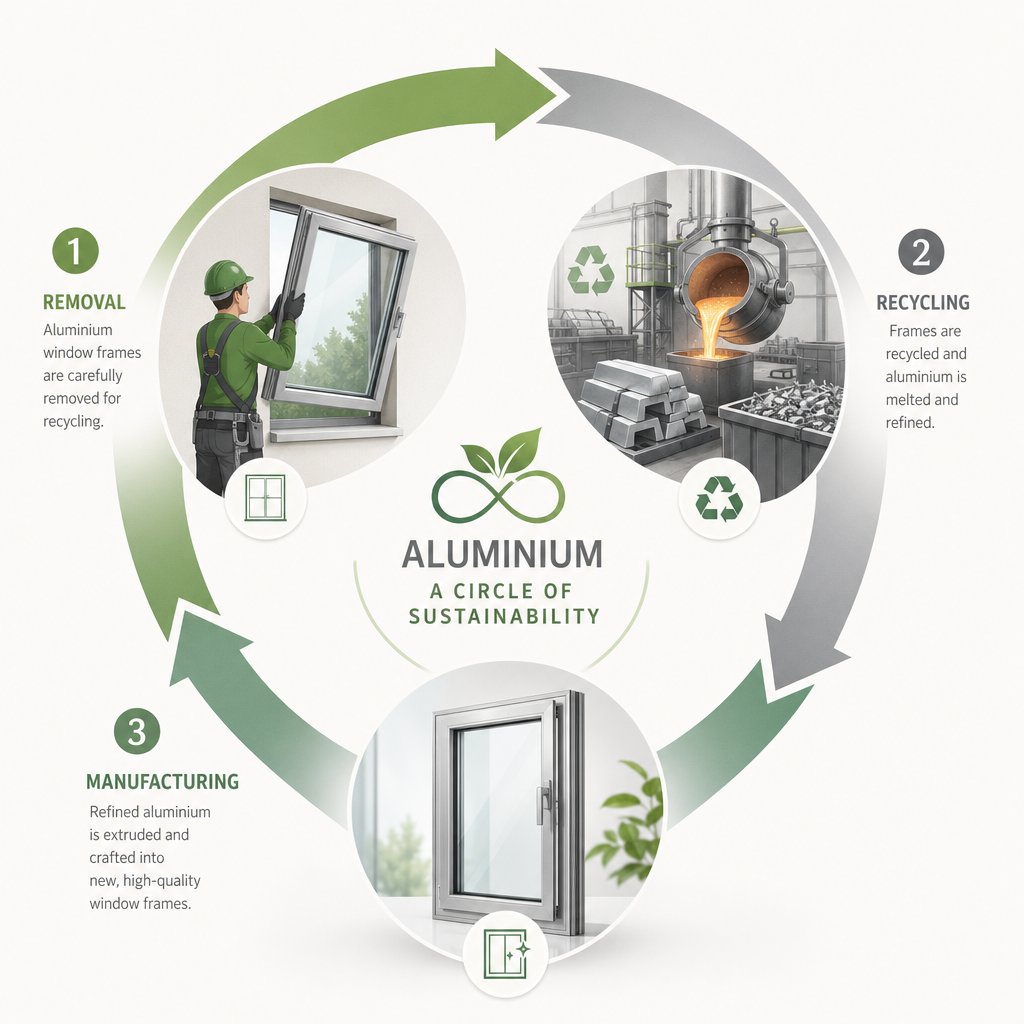
Aluminium is one of the few building materials that can be recycled indefinitely without any loss of structural quality. A recycled aluminium window frame has the same strength, corrosion resistance, and formability as one made from freshly smelted metal. Hydro, one of the world’s largest aluminium producers, confirms that aluminium is infinitely recyclable and that recycling it requires only 5 percent of the energy used to produce primary aluminium in a smelter. That energy saving is not marginal — it is transformative for the material’s lifecycle footprint.
A significant proportion of the aluminium in circulation globally is already recycled material. When your recyclable aluminium window frames eventually reach the end of their service life in 40 or 50 years, the metal retains genuine scrap value. Scrap dealers actively buy old aluminium frames because the material feeds straight back into the supply chain. Your old windows do not become waste — they become raw material for new products.
uPVC tells a more complicated story. The material can be recycled, and European recycling programs like VinylPlus have pushed PVC recycling rates in Europe to around 27 percent, primarily through mechanical recycling of rigid applications such as window profiles. In Australia, the Construction Plastic Recycling Scheme handles some PVC pipes and fittings, but dedicated uPVC window recycling infrastructure remains limited.
The core problem with uPVC window recycling and disposal is degradation. Each time PVC is mechanically recycled — shredded, melted, and re-extruded — the polymer loses thermal stability and mechanical properties. Research published in Waste Management notes that recycled PVC often needs to be blended with virgin resin to achieve acceptable quality, and the lifetime of the recycled product can decrease significantly after multiple processing cycles. Aluminium faces no such limitation. Melt it down and reshape it as many times as you like — the metal does not care.
There is also the additives issue. PVC window profiles contain stabilisers, UV inhibitors, and other chemical compounds that complicate recycling. Legacy additives such as lead-based stabilisers, once common in older uPVC windows, now face strict regulatory limits in many markets. Separating these substances during recycling adds cost and complexity, and in some cases renders the waste unsuitable for high-quality reuse. Aluminium frames, by contrast, contain no such chemical additives — the recycling process is straightforward metal reprocessing.
Embodied Carbon and Manufacturing Impact
If recyclability favours aluminium, the manufacturing stage is where it pays its heaviest environmental price. Primary aluminium smelting is extraordinarily energy-intensive. The electrolytic process that extracts aluminium from bauxite ore demands vast amounts of electricity, and the embodied carbon of virgin aluminium is substantially higher than that of uPVC on a per-kilogram basis.
uPVC is derived from petrochemical feedstocks — roughly 57 percent of the PVC polymer by weight is chlorine (sourced from salt), with the remainder coming from ethylene, a fossil fuel derivative. Its manufacturing footprint is lower than primary aluminium, but it is far from negligible. The production process involves vinyl chloride monomer synthesis, polymerisation, and compounding with the various additives needed to make the rigid profiles suitable for window applications.
Here is where the embodied carbon aluminium vs uPVC comparison gets nuanced. Recycled aluminium slashes the energy equation dramatically. Remelting scrap aluminium uses just 5 percent of the energy required for primary smelting, which means a window frame made from high-recycled-content aluminium carries a fraction of the embodied carbon of one made from virgin metal. As recycling infrastructure expands and the proportion of recycled content in new aluminium products grows, this gap continues to narrow.
uPVC’s lower starting point in embodied energy is real, but the material lacks an equivalent pathway to radically reduce its footprint over successive life cycles. Each recycling pass degrades the polymer, and the petrochemical base means the material’s carbon story is tied to fossil fuel extraction from start to finish.
Which Material Has the Smaller Environmental Footprint
There is no clean winner here, and anyone who tells you otherwise is oversimplifying. The honest answer depends on which part of the lifecycle you weigh most heavily.
If your priority is minimising manufacturing impact right now, uPVC has a lower embodied carbon at the point of production. If you are thinking in full lifecycle terms — factoring in a longer service life, genuine infinite recyclability, and retained scrap value — aluminium builds a compelling case over 40 to 50 years of use followed by complete material recovery.
| Environmental Factor | Aluminium | uPVC |
|---|---|---|
| Recyclability | Infinitely recyclable with no loss of quality | Recyclable but degrades with each cycle; often blended with virgin resin |
| Recycling Energy Savings | 95% energy reduction when using recycled aluminium vs primary smelting | Moderate savings; mechanical recycling still requires energy for shredding, reprocessing, and restabilising |
| Embodied Carbon (Virgin Material) | High — primary smelting is energy-intensive | Lower than primary aluminium, but tied to petrochemical feedstocks |
| Embodied Carbon (Recycled Material) | Dramatically reduced — approximately 5% of primary production energy | Modest reduction; polymer degradation limits recycled content ratios |
| End-of-Life Scrap Value | Retains meaningful scrap value; actively purchased by recyclers | Low or no scrap value; limited collection infrastructure in Australia |
| Additives and Contaminants | No chemical additives in the frame material | Contains stabilisers, UV inhibitors, and potentially legacy additives that complicate recycling |
| Overall Lifecycle Profile | Higher upfront carbon cost offset by longer lifespan and full material recovery | Lower upfront carbon cost but shorter lifespan and limited circular economy potential |
For Australian homeowners weighing sustainability alongside performance, the practical takeaway is this: both materials have genuine environmental trade-offs. Aluminium’s circular economy credentials are stronger, particularly as recycled content in new frames increases. uPVC’s lower manufacturing footprint is a valid consideration, but its end-of-life limitations and shorter service life dilute that advantage over the long run.
Environmental impact is a values-driven decision, and it rarely exists in isolation. Most homeowners are balancing sustainability against budget, aesthetics, and the specific demands of their property type and location — which is exactly where the material choice becomes most personal.
Which Window Material Suits Your Property Type and Location
Values and spec sheets only get you so far. At some point, the decision comes down to the building you are actually working on — its age, its construction type, its exposure to weather, and what you plan to do with it over the next decade or two. A sleek new build in inner Melbourne faces completely different demands than a fibro cottage on the NSW South Coast or a Queenslander in Cairns. The right window material is the one that fits the project, not the one that wins the most categories on a generic comparison chart.
Best Material by Property Type
Each property type brings a distinct set of priorities that tip the balance between aluminium and uPVC. Here is how the recommendation shifts depending on what you are building or renovating.
New builds offer the most flexibility because there are no existing frames to match and no heritage constraints to navigate. For contemporary designs that favour open-plan living, large glazed openings, and minimal frame profiles, aluminium windows for new builds are the natural fit. The slim sightlines maximise glass area, and the structural strength supports oversized sliding doors and floor-to-ceiling panels without bulky reinforcement. Aluminium also aligns well with the 7-star NatHERS requirements when specified with quality thermal breaks and double or triple glazing. uPVC remains a strong contender for new builds on tighter budgets, particularly single-storey homes with standard window sizes where the thicker profile is less visually intrusive.
Period and heritage homes present a different challenge entirely. If your property sits within a heritage overlay or conservation area, the council’s heritage advisor often has the final say on window material, profile shape, and colour. Slim aluminium frames can replicate the proportions of original timber or steel windows far more convincingly than uPVC’s wider profiles. For anyone weighing upvc or aluminium for period homes, the deciding factor is usually whether the replacement window can match the visual character of the original — and aluminium’s narrow sightlines give it a clear advantage in that context. Some councils will accept woodgrain-foiled uPVC as a timber substitute, but approval varies widely, so check before you order.
Flats and apartments tend to prioritise acoustic performance and compact frame profiles. Body corporate rules may also restrict colour and material choices to maintain a uniform building facade. Aluminium is the dominant material in Australian apartment construction because it handles the structural loads of larger openings, meets fire rating requirements more readily, and offers the consistent aesthetic that strata schemes demand. uPVC can work well in low-rise apartment renovations where noise insulation is the top priority, thanks to its natural sound-dampening properties.
Rental and investment properties sit at the intersection of cost and durability. The window material for investment property decisions often comes down to a simple question: do you want to pay less now or less over the ownership period? uPVC’s lower upfront cost makes it attractive for investors focused on immediate yield, especially across a portfolio of multiple properties. Aluminium’s longer lifespan and lower replacement probability make it the better bet for landlords who plan to hold a property for 20-plus years, since it reduces the chance of a costly full-window replacement during the ownership period.
Commercial conversions — warehouses turned into offices, shops fitted out as cafes, industrial buildings repurposed as studios — almost always lean toward aluminium. The material handles the large openings, unusual dimensions, and structural demands of commercial glazing far more capably than uPVC. It also meets the fire and structural compliance requirements of the NCC for commercial and mixed-use buildings with less engineering complexity.
| Property Type | Recommended Material | Primary Reasoning |
|---|---|---|
| New build (contemporary) | Aluminium (thermally broken) | Slim profiles suit modern design; structural strength supports large openings; meets NatHERS 7-star targets with quality glazing |
| New build (budget-focused) | uPVC | Lower upfront cost; strong thermal performance out of the box; well-suited to standard window sizes |
| Period / heritage home | Aluminium (slim profile) | Narrow sightlines replicate original timber or steel proportions; more likely to gain heritage approval |
| Flat / apartment | Aluminium | Handles structural loads for larger openings; meets fire rating and strata aesthetic requirements |
| Rental / investment property | Either — depends on hold period | uPVC for short-term cost savings; aluminium for long-term hold to avoid replacement cycles |
| Coastal property | uPVC or marine-grade aluminium | uPVC is naturally corrosion-proof; aluminium needs marine-grade powder coating or anodising to resist salt air |
| Commercial conversion | Aluminium | Handles large, non-standard openings; meets commercial NCC compliance; superior structural capacity |
Coastal, Exposed and Climate-Specific Guidance
Location shapes material performance in ways that generic comparisons often gloss over. Australia’s climate zones range from tropical humidity in the Top End to alpine cold in the Snowy Mountains, and each environment stresses window frames differently.
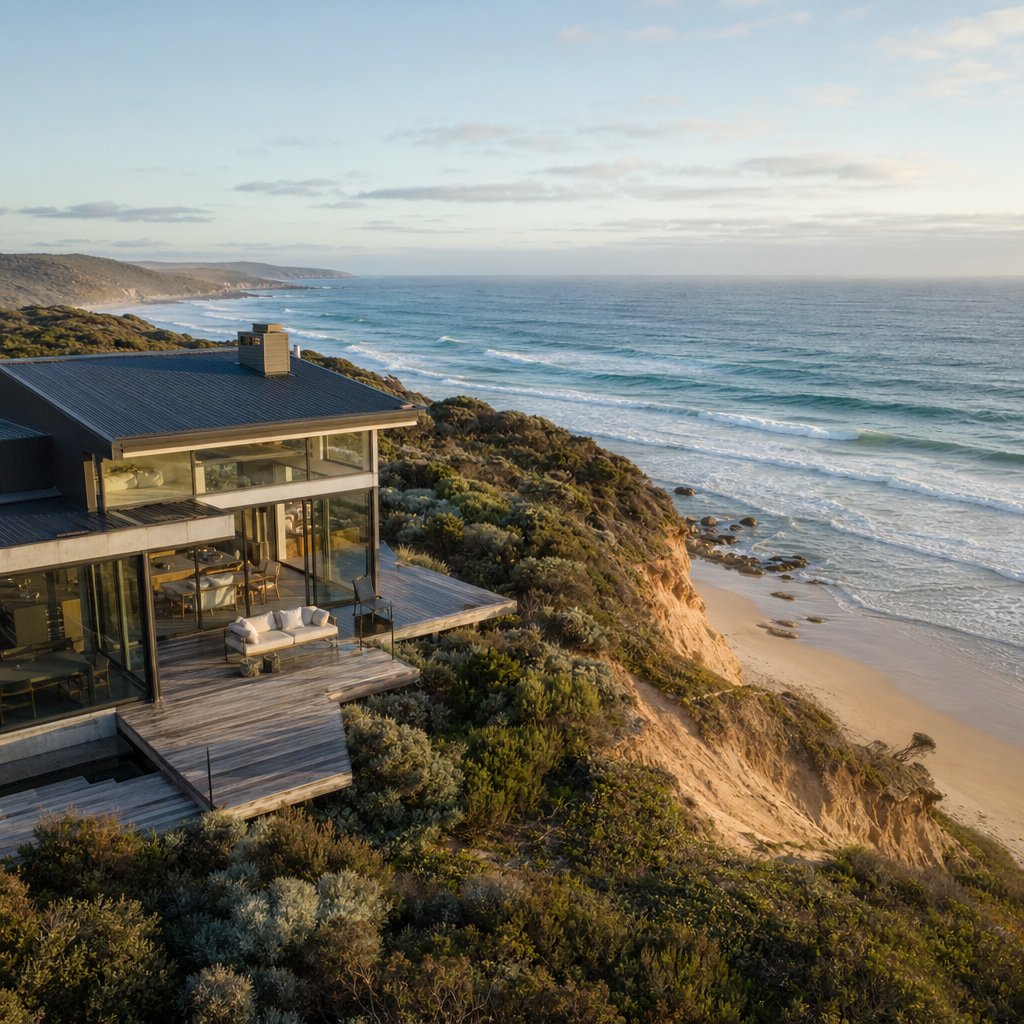
Coastal properties face the most aggressive conditions. Salt-laden air accelerates corrosion on any exposed metal, and the combination of humidity, UV, and wind-driven rain tests every seal and finish. When choosing the best windows for coastal properties, uPVC has a genuine edge: the material is inherently immune to salt corrosion, requires no protective coating, and will not pit or oxidise regardless of proximity to the waterfront. Aluminium can absolutely perform in coastal zones, but it demands a higher specification. Marine-grade powder coating, typically to a minimum of 60 microns, or anodised finishes rated for severe marine exposure are essential. Standard inland-grade coatings will break down within a few years in a salt-spray environment, so cutting corners here is a false economy. Properties within 500 metres of the surf line should treat coating specification as non-negotiable.
Cyclone-rated regions across northern Queensland, the Northern Territory, and parts of Western Australia impose strict wind load classifications under the NCC. Both aluminium and uPVC windows can be engineered to meet cyclone ratings, but aluminium’s inherent rigidity makes it easier to achieve the higher wind load categories (N3 and above) without excessively heavy reinforcement. If your site falls within a cyclone region, confirm the specific wind classification with your builder and ensure the window system is tested and certified to that rating under AS 2047.
Bushfire-prone areas add another compliance layer. Properties rated BAL-12.5 through BAL-FZ under AS 3959 face escalating requirements for glazing and frame materials. At higher BAL ratings, metal frames (aluminium or steel) are typically required because uPVC can soften or deform under radiant heat exposure. If your property carries a BAL-29 rating or above, aluminium is likely your only practical frame option for external windows.
Cold and alpine climates — think Canberra, Ballarat, Hobart, or the Blue Mountains — place a premium on thermal insulation and condensation resistance. uPVC’s naturally low conductivity gives it a slight performance advantage in these zones, particularly for homes that rely on passive solar heating through north-facing glazing. Thermally broken aluminium with wide polyamide breaks (30 mm or more) and triple glazing can match uPVC’s thermal performance in cold climates, but the specification needs to be deliberate. Standard thermal breaks designed for temperate zones may not cut it where overnight temperatures regularly drop below zero.
Hot, humid tropical zones like Darwin, Townsville, and Cairns prioritise ventilation, solar heat rejection, and moisture resistance over winter insulation. Both materials handle humidity well, though uPVC’s sealed profile and corrosion immunity give it a maintenance advantage. Aluminium’s strength is valuable here for supporting large louvre and casement configurations that maximise cross-ventilation — a critical comfort strategy in homes without heavy reliance on air conditioning.
Matching Window Material to Your Project Scale
The scale of your project also influences which material makes more practical sense. A single window replacement in an existing home is a straightforward swap — match the existing material unless you have a compelling reason to change. A full-house renovation or new build, on the other hand, gives you the opportunity to specify consistently across every opening.
For larger projects — whole-home builds, multi-unit developments, or renovation programs across several investment properties — aluminium’s versatility becomes a significant advantage. A single aluminium window system can typically cover casement, awning, sliding, bi-fold, and fixed configurations in a consistent profile and colour, simplifying specification and ensuring a cohesive look across the entire building. Suppliers like MEICHEN offer aluminium window collections designed for exactly this kind of project diversity, with energy-efficient, Australian-standard-compliant systems that cater to homeowners, renovators, builders, and developers working across different property types and scales.
uPVC works well for targeted upgrades — replacing the worst-performing windows first, upgrading a single room, or fitting out a granny flat where budget efficiency matters most. Its lower per-unit cost means you can address more openings within a fixed budget, which is a practical advantage when funds are limited.
Regardless of material, the principle is the same: match the specification to the site, the climate, and the project’s long-term goals. A window that performs brilliantly in a sheltered suburban street in Adelaide may be completely wrong for an exposed headland in Port Macquarie. Your installer should be able to walk you through the specific exposure category and compliance requirements for your address — and if they cannot, that tells you something about whether they are the right installer for the job.
With the property-specific picture clear, the final step is pulling every comparison factor together into one place so you can see the full trade-off landscape at a glance.
The Complete Aluminium vs UPVC Windows Comparison and Final Verdict
You have worked through the detail — thermal performance, durability, pricing, aesthetics, security, sustainability, and property-specific guidance. Each section revealed trade-offs that matter differently depending on your priorities. This final section consolidates everything into one scannable reference so you can weigh the full picture without flipping back through eight sections.
Master Comparison Table for Every Decision Factor
The table below covers every key factor side by side. Where a material holds a clear advantage, the verdict row calls it out. Where the two are genuinely close, we say so.
| Decision Factor | Aluminium (Thermally Broken) — e.g. MEICHEN Aluminium Windows | uPVC (Multi-Chamber Profile) | Verdict |
|---|---|---|---|
| Upfront Cost (per window, installed) | $700 – $1,500 AUD | $450 – $1,100 AUD | uPVC is 30–50% cheaper at point of purchase |
| Total Cost of Ownership (30 years) | $800 – $1,800 AUD (no replacement cycle expected) | $900 – $2,400 AUD (may include one full replacement) | Aluminium often costs less per year of service |
| Lifespan | 40 – 50+ years | 20 – 35 years | Aluminium lasts roughly twice as long |
| Thermal Performance (Uw, double glazed) | 2.0 – 2.7 W/m²K | 1.8 – 2.4 W/m²K | uPVC holds a slight edge; gap is narrow with quality thermal breaks |
| Maintenance | Minimal — periodic cleaning, occasional hardware replacement | Minimal — periodic cleaning, gasket and seal replacement over time | Comparable; both are low-maintenance vs timber |
| Aesthetics and Sightlines | Slim profiles (as narrow as 20 mm); full RAL colour range; dual-colour options | Wider profiles (70–80 mm); limited foil-wrap colours; foils can peel over time | Aluminium wins on design flexibility and long-term finish retention |
| Security (Frame Strength) | Inherently rigid metal; resists flexing and levering; locks engage directly into solid alloy | Relies on internal steel reinforcement; quality varies by manufacturer | Aluminium has a structural advantage; both secure with quality hardware |
| Noise Insulation | Good — frame transmits slightly more vibration; glazing does the heavy lifting | Good — plastic dampens sound vibration naturally; slight edge in frame-level performance | Marginal uPVC advantage at the frame; glazing choice matters more |
| Condensation Resistance | Excellent with quality thermal break; poor without one | Excellent — naturally low conductivity minimises condensation risk | uPVC is inherently safer; aluminium matches it only with a genuine thermal break |
| Sustainability | Infinitely recyclable; retains scrap value; high embodied carbon offset by long life and full recovery | Recyclable but degrades each cycle; lower embodied carbon upfront; limited end-of-life infrastructure in Australia | Aluminium stronger over full lifecycle; uPVC lower impact at manufacturing stage |
| Warranty (Typical) | 10 – 20 years on frame and finish; some lifetime structural warranties | 10 – 15 years on profile; up to 20 on premium systems | Similar range; aluminium edges ahead on structural guarantees |
The Balanced Verdict
So, which is better — aluminium or upvc windows for your home? After weighing every factor, the honest answer remains: it depends on who you are and what you are building.
Aluminium suits you if you are designing a contemporary new build, renovating a heritage property that demands slim profiles, building in a bushfire zone rated BAL-29 or above, planning to stay in the home long-term, or simply want a frame that will outlast the mortgage. Its strength, design flexibility, and circular economy credentials make it the material of choice for projects where longevity and aesthetics carry real weight. The upfront premium pays for itself over decades of service with virtually no replacement risk.
uPVC suits you if your budget is the primary constraint, you need solid thermal and acoustic performance at the lowest entry cost, or you are upgrading a rental property where immediate return matters more than 40-year durability. It is a genuinely capable material that delivers comfort and energy efficiency without the higher initial outlay. For standard residential windows in temperate climates, uPVC does the job well.
Neither material is a wrong choice when it is matched to the right project. The wrong choice is picking one without understanding the trade-offs — or letting an installer steer you toward whichever product carries their best margin.
Your Practical Next Steps
Knowing the upvc and aluminium windows pros and cons is the foundation. Turning that knowledge into a confident purchase takes a few deliberate steps:
- Get at least three quotes from certified installers who supply both aluminium and uPVC. Comparing quotes across materials from the same installer removes the bias of a single-material supplier.
- Use the questions checklist from the security section of this guide. Ask about AS 2047 certification, thermal break width, reinforcement gauge, wind load ratings, and warranty terms. The answers will tell you more about the quality of the product than any brochure.
- Check your council requirements first. If your property sits in a heritage overlay, bushfire zone, or cyclone region, compliance may narrow your material options before any other factor comes into play.
- Think in cost-per-year, not cost-per-window. A $1,200 aluminium window that lasts 45 years costs roughly $27 per year. A $700 uPVC window that lasts 25 years costs $28 per year — before you factor in potential gasket replacements or a second installation cycle.
- Match the specification to your site. Coastal homes need marine-grade coatings on aluminium or corrosion-proof uPVC. Cold-climate homes need wider thermal breaks or triple glazing. Do not accept a generic spec when your location demands a specific one.
If you have worked through this guide and aluminium aligns with your project, MEICHEN’s aluminium windows collection is worth exploring as one option — their range covers casement, sliding, awning, and fixed configurations built to Australian Standards, designed for homeowners, renovators, builders, and developers across different property types. It is a solid starting point alongside the multiple quotes you should be gathering.
The best window is the one specified honestly for your home, your climate, and your goals — not the one that won a debate on the internet. Take the data, ask the hard questions, and make the call that fits your project.
Frequently Asked Questions: Aluminium vs uPVC Windows
1. Are aluminium windows better than uPVC for energy efficiency?
Modern thermally broken aluminium windows achieve whole-window U-values of 2.0 to 2.7 W/m2K with double glazing, which is close to uPVC’s 1.8 to 2.4 W/m2K range. uPVC holds a slight thermal edge due to its multi-chamber insulating profile, but the gap has narrowed significantly with advances in polyamide thermal break technology. For most Australian climate zones, either material meets NCC energy requirements when paired with quality double glazing, low-E coatings, and warm-edge spacers. The key distinction is ensuring any aluminium system you consider uses a genuine thermal break rather than a continuous metal frame, which would perform poorly regardless of glazing quality.
2. How much more do aluminium windows cost than uPVC in Australia?
In the Australian market, uPVC windows are typically 30 to 50 percent cheaper at the point of purchase. For a standard double-glazed casement window supplied and installed, expect to pay $450 to $850 AUD for uPVC versus $700 to $1,300 AUD for thermally broken aluminium. However, the cost equation shifts over time. Aluminium frames last 40 to 50 years compared to uPVC’s 20 to 35 years, meaning you may avoid an entire replacement cycle. Over a 30-year period, aluminium’s estimated total cost of ownership is $800 to $1,800 per window, while uPVC can reach $900 to $2,400 when factoring in potential gasket replacements and a second installation. Collections like MEICHEN’s aluminium windows range (meichenwindows.com.au/aluminium-windows/) offer Australian-standard-compliant options across multiple styles for homeowners comparing long-term value.
3. Do aluminium windows last longer than uPVC?
Yes, aluminium windows have a significantly longer expected service life. Thermally broken aluminium frames routinely last 40 to 50 years or more with minimal maintenance, as the metal does not fatigue, soften, or become brittle with age. uPVC frames generally last 20 to 35 years depending on profile quality, UV stabilisation, and climate exposure. The main threats to uPVC longevity are UV degradation causing brittleness, seal failure, and potential warping on dark-coloured foil finishes. For aluminium, the powder-coated finish and hardware are the components most likely to need attention first, but both are repairable or replaceable without affecting the frame structure itself.
4. Which is better for coastal homes, aluminium or uPVC windows?
For properties within 500 metres of the surf line, uPVC has a natural advantage because the material is inherently immune to salt corrosion and requires no protective coating. Aluminium can perform well in coastal environments but demands a higher specification: marine-grade powder coating at a minimum of 60 microns or anodised finishes rated for severe marine exposure. Standard inland-grade coatings on aluminium will break down within a few years in salt-spray conditions. If you prefer aluminium for its slim sightlines and design flexibility in a coastal setting, budget for the upgraded coating specification and factor in periodic inspections of the finish integrity.
5. Are aluminium windows more secure than uPVC?
Aluminium holds a structural security advantage due to its inherent rigidity as a metal alloy. The frame resists flexing and levering attempts more effectively than uPVC, which relies on internal steel or aluminium reinforcement to achieve comparable resistance. Both materials support multi-point locking systems and key-lockable handles, so hardware-level security is equivalent. The difference lies in how well the frame supports that hardware under sustained force and over time. For verified security performance, look for windows tested to PAS 24 enhanced security standards or certified under AS 2047. Budget uPVC systems with thinner or partial internal reinforcement represent the weakest link in the security comparison.
More Window & Door Guides