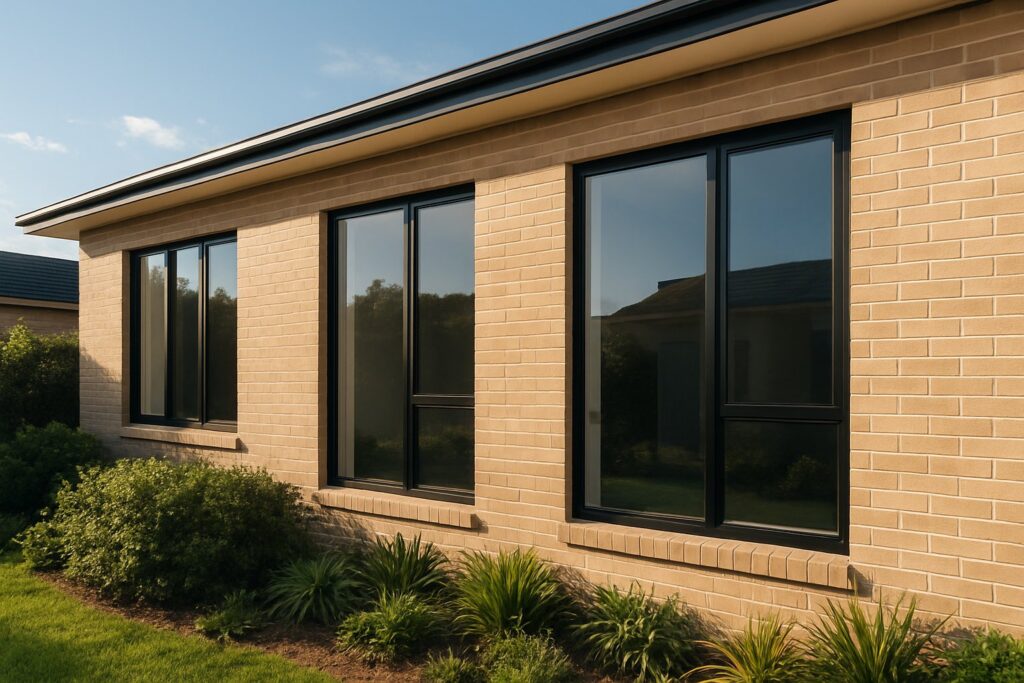
What Are Aluminium Colonial Windows
Picture a classic Australian Federation home with its symmetrical facade and neatly divided window panes. That multi-pane look defined an era, but the original timber frames that held it together rarely survived without constant upkeep. Aluminium colonial windows deliver the same divided-light aesthetic using modern materials that sidestep the rot, warping, and repainting cycle entirely.
Defining Aluminium Colonial Windows
Aluminium colonial windows are aluminium-framed windows fitted with glazing bars (colonial bars) that divide the glass into a grid of smaller panes, replicating the multi-pane appearance of traditional colonial-era windows while using a single sealed glass unit for improved thermal and acoustic performance.
What sets colonial aluminium windows apart from standard aluminium windows is purely visual and structural in terms of bar configuration. A standard aluminium window presents one uninterrupted sheet of glass. Colonial versions introduce horizontal and vertical bars, either applied to the glass surface, integrated into the frame, or sealed between the panes of a double-glazed unit. These bars exist for aesthetic effect rather than structural necessity. During the colonial period, small panes were a practical requirement because glassmakers could not produce large sheets. Today, the pattern is a deliberate design choice that adds scale, detail, and character to a facade.
Why Colonial Windows Remain Popular
The appeal of colonial windows aluminium frames carry forward is rooted in proportion and rhythm. Evenly spaced panes create visual harmony on both heritage renovations and new builds, introducing a human-scaled detail that large expanses of plain glass simply cannot replicate. Homeowners restoring weatherboard cottages and builders designing new estates both reach for this style because it bridges period charm and contemporary performance.
Aluminium technology has made the colonial look far more accessible than its timber predecessor. Powder-coated frames resist corrosion in coastal and bushfire-prone environments, never need repainting, and maintain consistent bar profiles over decades. Where timber colonial windows demanded seasonal maintenance to prevent swelling and decay, aluminium versions hold their shape and finish with little more than an occasional wipe down. That combination of heritage aesthetics and set-and-forget durability explains why aluminium has become the dominant frame material for this style across the Australian market.
The visual result, though, depends heavily on which type of colonial bar you choose and how it interacts with the glass unit behind it.
Types of Colonial Bars in Aluminium Frames
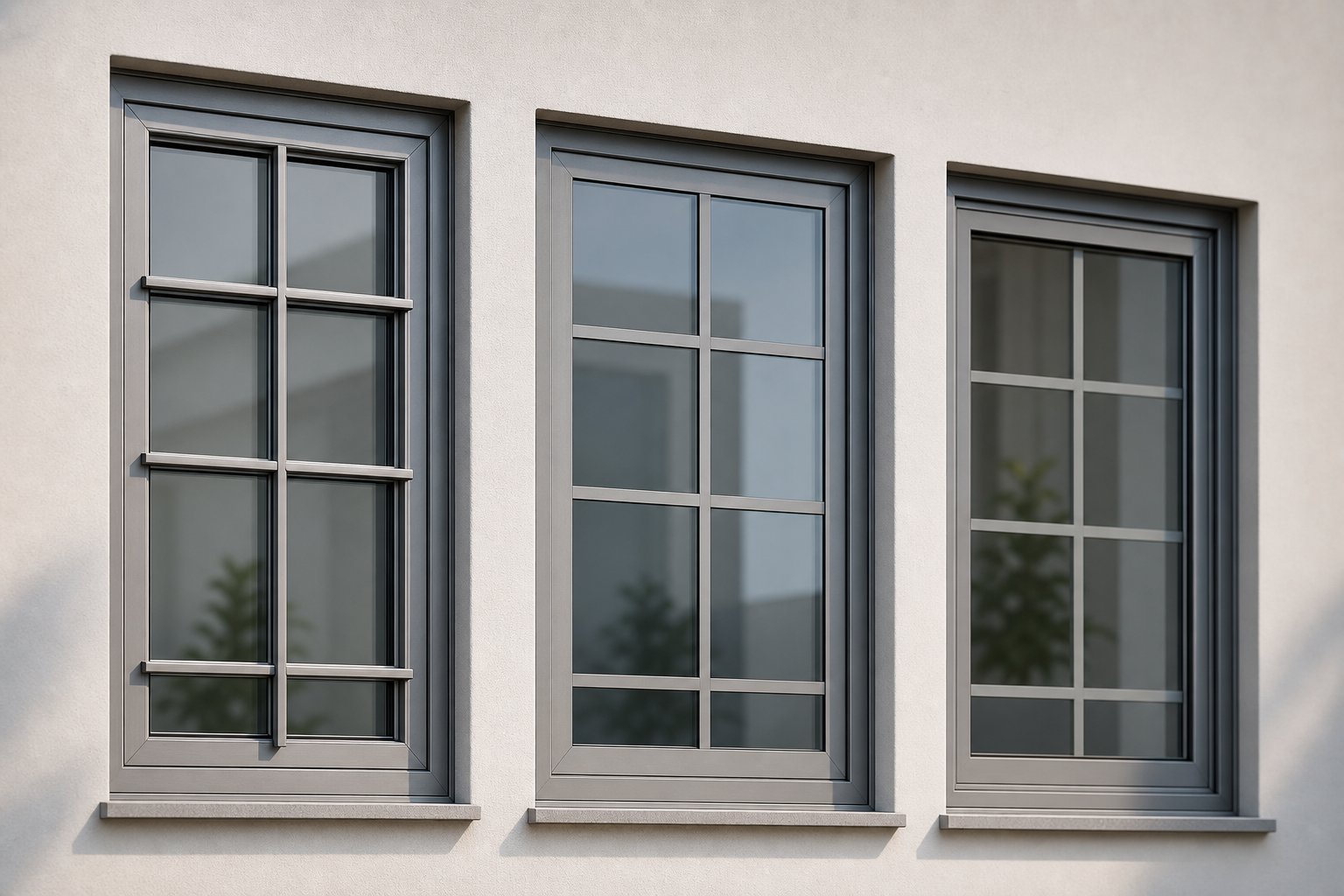
Three distinct colonial bar types exist for aluminium windows, and each one handles the relationship between bar, glass, and frame differently. The choice affects everything from how authentic the window looks to how easy it is to clean. Understanding these differences upfront prevents costly regrets down the track.
Integral Colonial Bars
Integral colonial bars aluminium windows use are welded or mechanically fixed directly into the frame structure, dividing the window into genuinely separate glass panes. Each section holds its own sealed unit, just as the originals did centuries ago. The result is the most authentic divided-light appearance available. You get real shadow lines where bars meet glass, visible depth from both inside and outside, and a profile that reads as unmistakably traditional even at close range.
Pros
- Most authentic heritage appearance with true shadow lines
- Visible bar depth from both interior and exterior
- Satisfies strict heritage council requirements
Cons
- Higher manufacturing cost due to multiple sealed glass units
- Reduced thermal performance, as each pane junction creates a potential thermal bridge
- More complex to manufacture and longer lead times
As Salisbury Joinery notes, solid glazing bars are more expensive partly because double glazing ordered in multiple small units costs significantly more than a single large pane. The same principle applies in aluminium: more divisions mean more sealed units, more labour, and a higher price tag.
Applied Colonial Bars
Applied colonial bars aluminium windows feature are adhered to the exterior surface, interior surface, or both faces of a single sealed glass unit. The window itself remains one large pane behind the scenes, while the bars create the visual impression of divided panes from the outside. This is the most popular colonial bar type in the Australian residential market because it balances appearance with practicality.
Pros
- Cost-effective compared to integral bars
- Maintains a single sealed unit for better energy performance
- Can be retrofitted to existing aluminium windows
- Available in profiles that match the frame colour
Cons
- Flatter profile than integral bars, less convincing at close range
- Edges where bars meet glass can trap dirt and moisture
- Bars applied to one side only look less authentic from the opposite side
When bars are applied to both the interior and exterior faces, the effect is considerably more convincing. Some manufacturers also add a spacer bar between the glass panes at each bar position, creating the illusion of a fully divided unit. This simulated divided light approach closely mimics integral bars without the thermal penalty of multiple sealed units.
Bars Between Glass
Bars between glass colonial windows use are sealed inside the double-glazed unit itself, sitting in the air gap between the two panes. Both glass surfaces remain completely smooth and unobstructed. Nothing protrudes on either side of the window.
Pros
- Zero maintenance: bars are permanently protected from weather, dust, and physical damage
- Smooth glass surfaces make cleaning effortless
- No edges to trap dirt or moisture
- Bars cannot peel, fade, or detach over time
Cons
- No tactile depth or shadow lines visible from outside
- Less authentic appearance, particularly noticeable in direct sunlight
- If a bar becomes dislodged internally, the entire glazed unit must be replaced
This option suits homeowners who want the colonial pattern without any additional cleaning burden. The trade-off is purely visual: bars between glass read as flat lines behind the surface rather than raised elements casting shadows across the facade.
Colonial Bar Types Compared
| Criteria | Integral Colonial Bars | Applied Colonial Bars | Bars Between Glass |
|---|---|---|---|
| Authenticity | Highest: true divided panes with real shadow lines | Moderate: convincing from a distance, flatter up close | Lowest: visible pattern but no depth or shadow |
| Maintenance | Moderate: more seals and joints to inspect | Moderate: bar edges require periodic cleaning | Minimal: smooth glass, nothing exposed |
| Thermal Performance | Lower: multiple sealed units create more thermal bridges | Higher: single sealed unit retained | Higher: single sealed unit retained |
| Cost | Highest | Mid-range | Lowest to mid-range |
| Cleaning Ease | Harder: glass divided into smaller sections | Moderate: bars obstruct wiping across full pane | Easiest: completely flat glass on both sides |
Each colonial bar type in aluminium windows serves a different balance of priorities. Heritage projects with strict council oversight often demand integral bars. New builds chasing the colonial look with minimal upkeep lean toward bars between glass. Applied bars sit in the middle ground, offering a credible aesthetic at a reasonable price point. The right choice depends less on which option is objectively best and more on how your windows need to perform within a specific architectural context.
Colonial Window Styles and Their Architectural Origins
Architectural context shapes everything about a colonial window, from bar spacing and pane count to the proportions of the opening itself. A six-over-six grid that looks perfectly at home on a Georgian facade would feel completely wrong on a French Colonial casement. Getting the style right means understanding where these patterns came from and how aluminium framing can faithfully reproduce each one.
Georgian and Federation Colonial Styles
Georgian colonial window design is defined by strict symmetry and repetition. Windows are tall, narrow, and arranged in perfectly balanced rows across the facade. The classic grid patterns are six-over-six or eight-over-eight, meaning six or eight panes in the upper sash and the same number below. Bars are slender and evenly spaced, creating a refined, formal rhythm that reflects the mathematical precision of 18th-century architecture.
Australian Federation homes, built roughly between 1890 and 1915, borrowed from Georgian proportions but relaxed the rules. Bars tend to be slightly wider, divisions simpler, often four-over-four or even two-over-two with a decorative top sash over a single lower pane. Federation style colonial windows aluminium frames replicate well because the wider bar profiles suit aluminium’s natural manufacturing strengths. Double hung configurations remain the most authentic opening type for both Georgian and Federation properties, with the upper and lower sashes sliding vertically within the frame.
Dutch, Spanish, and French Colonial Influences
Not every colonial style follows the tall, narrow Georgian template. Dutch Colonial homes favour broader, shorter windows with fewer divisions, often just a simple two-over-two or three-over-three grid beneath a distinctive gambrel roofline. Aluminium frames accommodate this through wider opening sizes and heavier bar profiles that match the style’s solid, grounded character.
Spanish Colonial architecture takes a different approach entirely, using arched window tops, minimal bar divisions, and smaller openings designed to manage heat and glare. Aluminium’s ability to be curved and shaped makes it well suited to replicating those arched heads without the structural limitations of timber.
French Colonial emphasises tall, narrow casement windows with fine bars and full-height openings that swing inward or outward. The bar spacing is tight and elegant, often creating a grid of many small panes across a slender frame. Colonial style aluminium windows in this configuration use casement or French door mechanisms rather than double hung sashes, paired with narrow-profile bars that preserve the delicate proportions.
Matching Your Home’s Architectural Period
Choosing new colonial aluminium windows that suit your property starts with reading the building itself. The roofline, facade proportions, and construction era all point toward a specific colonial vocabulary. Mismatching the window style to the architecture is one of the most visible renovation mistakes, and it is entirely avoidable.
- Georgian (symmetrical facade, hipped roof, brick or rendered walls): Six-over-six or eight-over-eight double hung windows with narrow bars and equal pane sizes
- Federation (decorative verandah, combination of materials, steep roof pitches): Four-over-four or two-over-one double hung windows with slightly wider bars and possible decorative top sash
- Dutch Colonial (gambrel roof, wide frontage, solid proportions): Broader double hung or sliding windows with two-over-two or three-over-three grids and heavier bar profiles
- Spanish Colonial (rendered walls, arched details, courtyard orientation): Arched-top fixed or awning windows with minimal divisions, often just a single horizontal bar
- French Colonial (tall openings, verandahs, raised floor level): Full-height casement windows with fine, closely spaced bars creating a multi-pane grid
Identifying your home’s architectural lineage narrows the field considerably. It also helps when dealing with council heritage requirements, where the wrong grid pattern or opening type can delay approvals. The material you choose for the frame, however, determines whether that historically appropriate design will hold up over the decades or demand the same maintenance cycle as the originals.
Aluminium vs Timber vs uPVC for Colonial Style Windows
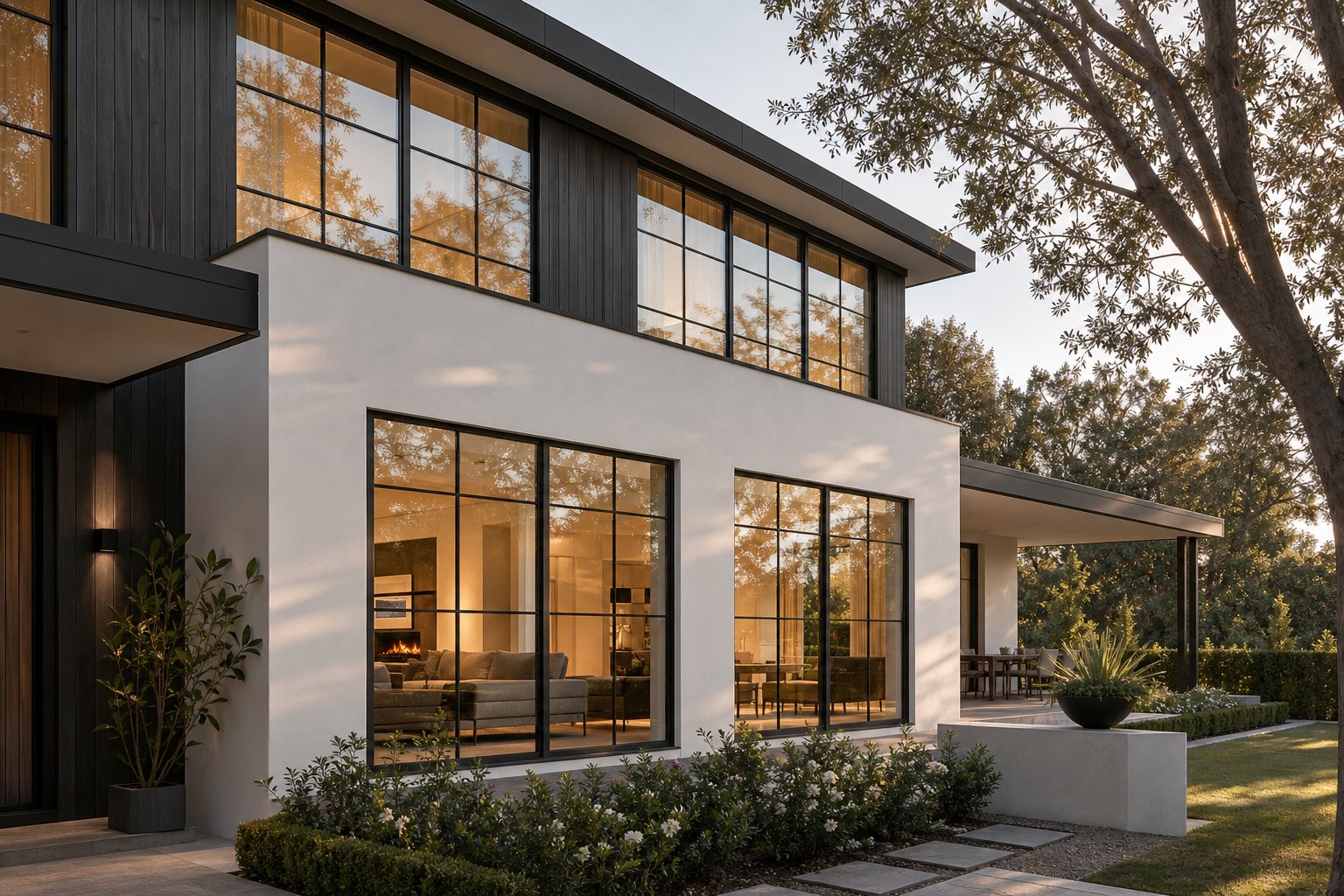
Four frame materials can carry a colonial bar pattern, but they differ dramatically in how well they hold that pattern over time, how much glass they let through, and how much ongoing attention they demand. A clear colonial windows material comparison helps cut through marketing noise and match the right frame to your project.
Aluminium Advantages for Colonial Windows
Aluminium earns its dominance in the colonial window market through a specific set of strengths that align with what divided-light designs need most. Precision manufacturing produces bar profiles with consistent dimensions across every window in an order, so a row of six colonial windows reads as a unified composition rather than a collection of slightly mismatched units. The material’s inherent structural density allows for slim sightlines that maximise glass area while maintaining the proportions colonial patterns require.
Powder-coat finishes open up virtually unlimited colour options without ever needing a repaint. Where timber colonial windows fade, peel, and demand recoating every few years, aluminium holds its colour for decades. The frames resist warping and swelling regardless of humidity or temperature shifts, which matters enormously for colonial configurations where even minor frame distortion throws off the visual rhythm of evenly spaced bars. Aluminium also handles larger openings comfortably, supporting the weight of oversized double hung sashes fitted with colonial bars without sagging or binding over time.
Timber, uPVC, and Steel Alternatives
Timber remains the most authentic choice for heritage projects. Nothing else replicates the warmth and depth of a hand-profiled timber colonial bar, and some heritage councils will accept nothing less. The trade-off is significant: timber frames require maintenance every three to five years, including sanding, priming, and repainting to prevent moisture damage, rot, and insect attack. In coastal or high-humidity areas of Australia, that cycle can accelerate. Timber also demands thicker frame profiles (typically 70 to 100 mm) to achieve adequate structural strength, which reduces the visible glass area compared to aluminium.
uPVC offers the lowest entry price for colonial style windows. Multi-chamber profiles provide good thermal insulation, and the material resists moisture without any protective coating. However, uPVC frames are bulkier again than timber, with sightlines that eat into the glass area and can make colonial bar patterns feel crowded rather than elegant. Over time, white uPVC can yellow under UV exposure, and colour options remain limited compared to powder-coated aluminium. Structural constraints also limit maximum window sizes, which restricts design flexibility for larger openings.
Steel delivers the slimmest sightlines of any frame material, with profiles as narrow as 38 to 65 mm and sightlines around 25 mm. For heritage restorations where ultra-fine bar profiles are critical, steel can be the best material for colonial windows in terms of pure visual refinement. The cost, however, sits at the top of the range, and steel requires protective treatment every five to seven years to prevent corrosion. In Australian coastal environments, that maintenance burden increases further without marine-grade coatings.
Which Material Suits Your Project
The best material for colonial windows depends on where your priorities sit across four axes: budget, maintenance tolerance, heritage compliance, and aesthetic preference. If your local council mandates traditional materials for a heritage-listed property, timber or steel may be unavoidable regardless of practical drawbacks. For everything else, the comparison below frames the decision clearly.
| Criteria | Aluminium | Timber | uPVC | Steel |
|---|---|---|---|---|
| Lifespan | 40 to 60 years | 30 to 50 years (with maintenance) | 25 to 40 years | 60 to 100+ years |
| Maintenance Frequency | Every 8 to 10 years (minimal) | Every 3 to 5 years (repaint, reseal) | Every 8 to 10 years (minimal) | Every 5 to 7 years (corrosion treatment) |
| Frame Thickness | 50 to 80 mm | 70 to 100 mm | 80 to 110 mm | 38 to 65 mm |
| Colour Options | Virtually unlimited (powder coat) | Unlimited (paint or stain) | Limited range, can yellow | Wide range (powder coat or paint) |
| Relative Cost | Mid to high | Mid (supply), high (lifecycle) | Lowest | Highest |
| Heritage Suitability | Good for most projects; some councils may require timber | Highest: accepted by all heritage bodies | Rarely accepted for heritage-listed properties | High: slim profiles suit strict heritage requirements |
For the majority of Australian residential projects, whether new builds, renovations, or window replacements, aluminium vs timber colonial windows comes down to a simple question: do you want to maintain your windows, or do you want to forget about them? Aluminium vs uPVC colonial windows is equally straightforward once you compare sightline widths and long-term colour stability side by side. Aluminium occupies the practical middle ground, delivering slim profiles, lasting colour, corrosion resistance, and a lifespan that justifies the investment without demanding the premium that steel commands or the upkeep that timber requires.
Material choice also interacts directly with the technical specifications of the window system itself. Frame profile depth, bar width, and glazing configuration all shift depending on which material carries the colonial pattern, and those details determine whether the finished product looks refined or clumsy on the facade.
Technical Specifications That Shape the Colonial Aesthetic
A colonial bar pattern can look refined or clumsy depending on dimensions most buyers never think to ask about. Frame profile depth, sightline width, bar proportions, and glazing configuration all interact to determine whether the finished window reads as authentically period or awkwardly modern. Knowing what to specify, and what questions to put to your supplier, separates a satisfying result from an expensive compromise.
Frame Profiles and Sightline Widths
The sightline is the visible width of aluminium frame you see from inside or outside once the window is installed in the wall. Narrower sightlines mean more glass and less frame, which directly benefits colonial aesthetics by giving the bars visual prominence rather than competing with a chunky border. In aluminium systems, sightlines typically range from 30 mm on high-performance slim profiles up to 65 mm on standard residential frames.
Colonial window frame profiles aluminium systems offer vary in depth from around 50 mm to 80 mm, depending on the manufacturer and the structural demands of the opening. Deeper profiles accommodate wider thermal breaks and heavier glazing, which matters for larger windows. As engineering data from aluminium extrusion specialists confirms, frame depth determines how much thermal break material can be housed within the profile. A 70 mm frame can incorporate thermal breaks of 35 to 39 mm, delivering strong insulation performance without bulking up the visible frame.
For colonial windows specifically, the relationship between frame sightline and bar width matters more than raw dimensions alone. If the frame sightline is 60 mm but the colonial bars are only 18 mm wide, the frame visually overwhelms the pattern. The most balanced results come from systems where bar width sits at roughly one-third to one-half of the frame sightline, creating a coherent visual hierarchy across the entire window.
Glazing Options and Bar Proportions
Glass selection interacts with colonial bars aluminium windows carry in ways that affect both appearance and performance. Standard double glazing uses two panes of 4 mm or 5 mm glass separated by a 12 mm to 16 mm air or argon-filled gap, creating a total unit thickness of 20 mm to 26 mm. Triple glazing pushes that to 36 mm or more. The thicker the glazed unit, the deeper the frame profile required to house it, which can shift proportions if not accounted for early in the specification process.
Low-E coatings, tinted glass, and laminated options all work with colonial bar configurations, but bar placement needs to respect the glass type. Applied bars adhered to a Low-E coated surface require compatible adhesives that will not degrade the coating. Bars between glass must fit within the cavity without touching either pane, which limits bar depth in thinner units.
The bar width-to-pane ratio is where authenticity lives or dies. Georgian window research shows original timber glazing bars measured just 18 to 20 mm wide. Aluminium colonial bars typically range from 18 mm to 30 mm depending on the system. Bars under 20 mm read as contemporary and delicate. Bars over 28 mm start to feel heavy and can crowd smaller pane divisions. For a six-over-six pattern on a standard 1200 mm wide window, bars in the 20 mm to 25 mm range generally produce the most balanced proportions.
Aluminium double hung colonial windows introduce an additional consideration: sash weight. Each sash in a double hung window must be counterbalanced by a balance system calibrated to its exact weight. Adding colonial bars, whether integral or applied, increases sash mass. Integral bars with multiple sealed glass units add the most weight, potentially requiring upgraded constant-force or block-and-tackle balance mechanisms to ensure smooth, reliable operation over thousands of cycles. Specifying colonial bars without confirming the balance system can handle the additional load leads to sashes that drift closed, bind in the frame, or wear out prematurely.
Configuration and Opening Types
Colonial bars work across every standard aluminium window opening type, but some configurations suit the style more naturally than others. Double hung remains the most traditional colonial configuration, directly replicating the vertical sliding sashes of Georgian and Federation originals. Casement windows with colonial bars suit French Colonial and some Federation styles, swinging outward on side hinges. Awning windows, hinged at the top, accept colonial patterns well and offer good weather protection when partially open. Sliding windows can carry colonial bars but tend to read as less authentic because the horizontal movement has no historical precedent in colonial architecture. Fixed windows paired with operable colonial sashes create balanced compositions where the bar pattern flows uninterrupted across both elements.
Suppliers like MEICHEN offer custom configuration options across these opening types, including multiple glazing choices and an extensive colour range that allow precise specification of colonial bar proportions and frame profiles to suit individual project requirements.
When requesting quotes or finalising specifications, the following details ensure your aluminium colonial window glazing options and frame choices deliver the result you expect:
- Frame profile depth: Confirm the total depth in millimetres and how it affects the window’s projection from the wall
- Bar width and projection: Specify the visible bar width and how far it projects from the glass surface (for applied bars)
- Sightline width: Ask for the visible frame width once installed, not just the overall frame dimension
- Glazing thickness: Confirm whether the system accommodates your preferred glass makeup (double, triple, laminated, Low-E)
- Thermal break details: Request the thermal break width in millimetres and the material used (polyamide or polyurethane)
- Balance system type: For double hung windows, confirm the balance mechanism is rated for the total sash weight including colonial bars and glazing
- Colour matching: Verify that bars and frames are powder-coated in the same batch to avoid subtle colour variation
Armed with these specifications, you can evaluate quotes on a like-for-like basis and avoid the common trap of comparing headline prices between systems that differ significantly in profile quality, thermal performance, and colonial bar detail. The gap between a well-specified aluminium colonial window and a poorly specified one is not always visible in a brochure, but it becomes obvious the moment both are installed side by side on a facade.
DIY Colonial Bars vs Professional Aluminium Windows
Specification details matter when you are ordering factory-manufactured windows. But not every project starts with a blank specification sheet. Some homeowners are staring at perfectly functional plain windows and wondering whether a cosmetic upgrade could deliver the colonial look without a full replacement. Adhesive colonial bars exist for exactly this scenario, and they have a legitimate place, but the gap between stick-on bars and purpose-built aluminium colonial windows is wider than most people expect.
When DIY Colonial Bars Make Sense
Adhesive colonial bars, sometimes called plant-on or astragal bars, are flat-profile strips that bond directly to the glass surface of an existing window. They are a reasonable stick on colonial bars alternative for specific situations: rental properties where permanent modifications are not permitted, temporary styling ahead of a sale, or tightly budget-constrained projects where appearance matters more than performance. The cost is low, installation takes an afternoon, and the result reads as colonial from the street.
The limitations, however, are real. DIY bars sit flush against the glass with no depth or projection, so they cast no shadow lines and look flat in raking light. Over time, adhesive can weaken in Australian heat, causing bars to peel at the edges or shift position. White bars can yellow under UV exposure, and the junction between bar and glass traps dirt and moisture that requires careful cleaning. Most critically, stick-on bars do nothing for thermal performance, acoustic insulation, weathersealing, or security. The window behind them remains exactly as it was.
Why Professional Aluminium Colonial Windows Differ
Factory-manufactured aluminium colonial windows are engineered as complete systems rather than cosmetic additions. Bars are either integrated into the frame structure, applied with precision to both faces of the glass, or sealed permanently within the double-glazed unit. The result is consistent bar profiles visible from both sides, proper shadow lines, and a finished appearance that holds up at arm’s length, not just from the footpath.
Beyond aesthetics, professional units deliver thermally broken frames, sealed glazing cavities filled with argon gas, multi-point locking hardware, and weatherseals rated for Australian conditions. These are performance upgrades that adhesive bars simply cannot replicate.
For homeowners who want more than cosmetics but less than a full structural renovation, retrofit aluminium colonial windows offer a practical middle path. A retrofit installation removes the old sashes and fits a new aluminium frame within the existing wall opening. The surrounding brickwork, render, or cladding stays untouched. As retrofit glazing specialists explain, this approach preserves existing finishes while delivering modern frame performance, making it faster and less disruptive than full-frame replacement. For most Australian homes with sound existing openings, retrofit provides the colonial aesthetic, improved energy efficiency, and long-term durability in a single upgrade.
Cosmetic colonial bars change how a window looks. Aluminium colonial windows change how it looks, performs, and lasts. The difference is the gap between decoration and engineering: one adds a pattern to glass, the other delivers thermal insulation, security, weatherproofing, and decades of maintenance-free service in a single integrated unit.
That performance gap becomes especially relevant when climate enters the equation. A stick-on bar does nothing to help a window manage heat gain in a western-facing Melbourne living room or resist salt corrosion on an Adelaide coastal facade, but the right aluminium system, properly specified for its environment, handles both without breaking a sweat.
Climate Performance and Regional Suitability
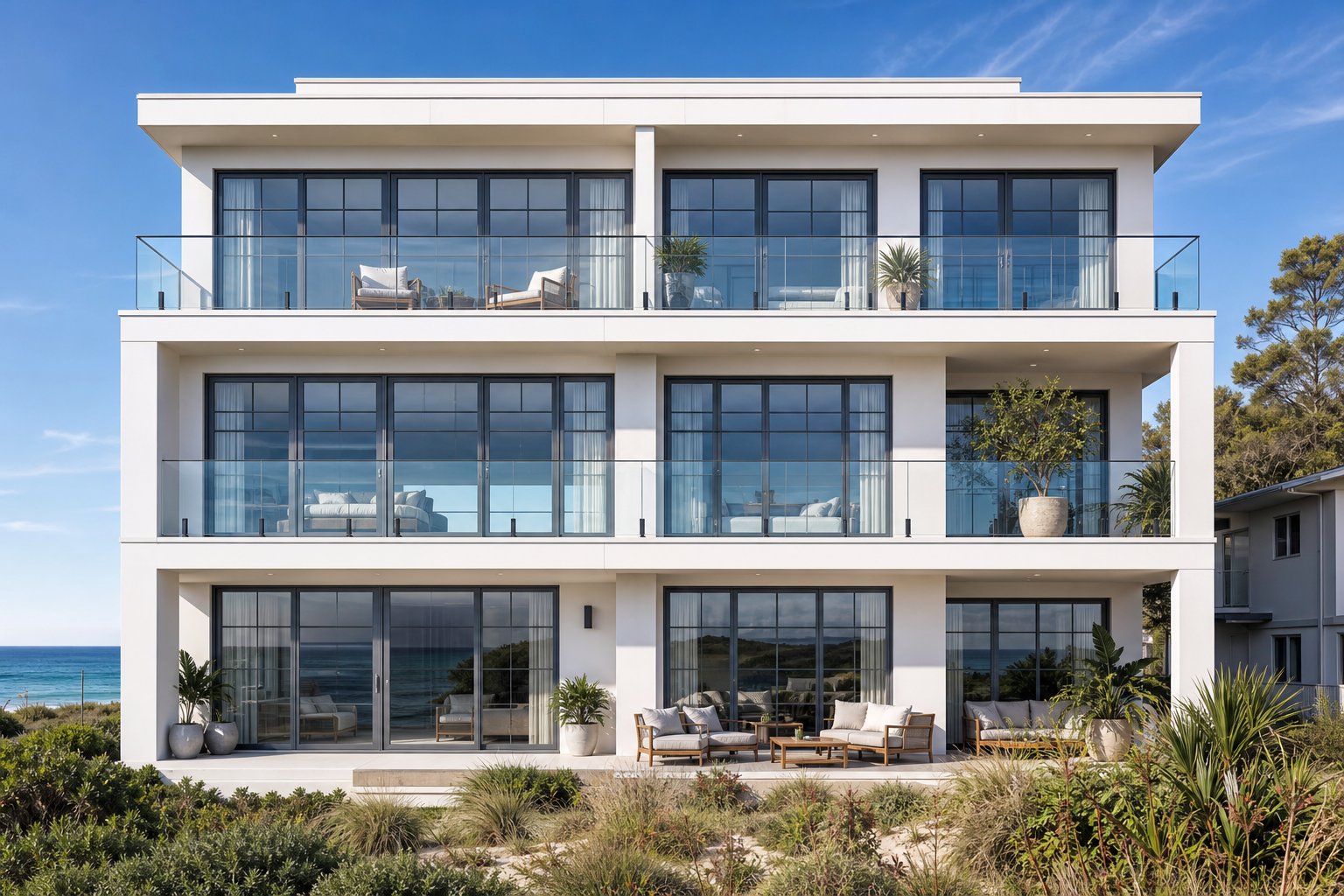
Australia does not have one climate. A colonial window system that performs beautifully in temperate Melbourne may struggle on a salt-sprayed Adelaide beachfront or overheat in a north-facing Brisbane living room. The bar type, glazing selection, and frame specification all need to respond to local conditions, and getting this wrong means either compromised comfort or inflated energy bills for the life of the window.
Thermal Performance in Hot and Cold Climates
Thermally broken aluminium frames form the foundation of climate-appropriate colonial windows. The polyamide or polyurethane break separating the inner and outer frame sections prevents heat from conducting straight through the metal, a critical detail given aluminium’s natural conductivity. As industry experience across Australian climate zones confirms, thermally broken aluminium paired with argon-filled double glazing can reduce indoor temperature swings by several degrees in both summer and winter.
Bar type directly influences thermal performance. Integral colonial bars create additional thermal bridges at every junction because each small pane requires its own sealed unit with edge spacers. Bars between glass preserve the single sealed unit intact, maintaining the best possible U-value across the full window area. For homeowners in colder regions like Ballarat, Canberra, or the Adelaide Hills, bars-between-glass configurations paired with Low-E coatings and argon fills deliver colonial aesthetics without sacrificing the insulation needed to meet 7-star NatHERS requirements.
In hotter climates, glazing selection shifts toward managing solar heat gain. Spectrally selective Low-E coatings block infrared heat while allowing visible light through, keeping rooms bright without the oven effect. Colonial aluminium windows Melbourne homeowners install on west-facing walls benefit enormously from a low Solar Heat Gain Coefficient (SHGC of 0.35 or below), regardless of which bar type sits across the glass.
Coastal, Bushfire, and Urban Environments
Aluminium’s natural oxide layer gives it inherent corrosion resistance that timber and steel cannot match without constant intervention. For coastal suburbs across Adelaide and Melbourne, where salt-laden air accelerates material degradation, powder-coated aluminium colonial windows resist pitting and surface breakdown over decades. The powder coat adds a second layer of protection, and lighter colours reflect heat while showing less salt residue between cleans.
Bushfire-prone areas introduce a different set of demands. Under AS 3959:2018, properties rated BAL-12.5 through BAL-40 require non-combustible metal frames and toughened glass of increasing thickness. Aluminium colonial windows satisfy the non-combustible frame requirement at every BAL level. At BAL-29, a minimum of 5 mm toughened glass is required. At BAL-40, that rises to 6 mm toughened glass with external metal mesh screens. Colonial bar configurations do not exempt a window from these requirements, so homeowners in bushfire zones need to confirm their chosen glazing thickness and screening meet the applicable rating.
Urban environments prioritise acoustic performance. Colonial aluminium windows Adelaide residents install near main roads or flight paths benefit from thicker glass makeups, asymmetric pane thicknesses (such as 6 mm outer and 4 mm inner), and laminated glass options that dampen sound transmission. The colonial bars themselves have negligible acoustic impact, but the sealed unit behind them does the heavy lifting.
Homeowners in Melbourne and Adelaide seeking colonial aluminium windows should verify their chosen system meets local energy efficiency and BAL requirements before committing to a supplier. A window that looks right but fails to meet NCC compliance or the property’s bushfire rating will need replacing, doubling the cost. Colonial aluminium windows Campbellfield suppliers manufacture can typically be specified to meet any combination of these requirements, provided the performance criteria are communicated clearly at the quoting stage.
Climate-specific factors worth confirming with your supplier:
- Coastal corrosion resistance: Powder-coat thickness, marine-grade hardware, and stainless steel fixings for properties within 1 km of the coastline
- Thermal break requirements for cold climates: Minimum 20 mm polyamide break for adequate insulation in NatHERS climate zones 6 and 7
- Solar heat gain management for hot climates: Low-E coatings with SHGC below 0.40 on north and west-facing windows
- BAL compliance for bushfire zones: Toughened glass thickness, non-combustible framing certification, and ember-guard mesh specifications matching the property’s assessed BAL level
- Acoustic ratings for urban areas: Rw (weighted sound reduction) ratings of 32 dB or higher, achievable through laminated glass or asymmetric double glazing
Climate performance is not a separate consideration from aesthetics. It is built into the specification from the start. The colonial pattern stays the same whether the window sits in a mild inner suburb or a harsh coastal bushfire zone, but the glass, frame, and hardware behind that pattern must shift to match the environment. Overlooking these details is one of the most common and costly specification errors homeowners make.
Common Mistakes When Specifying Aluminium Colonial Windows
Specification errors rarely announce themselves at the quoting stage. They reveal themselves months later, once the windows are installed and something looks off, performs poorly, or fails an inspection. Most aluminium colonial window specification mistakes stem from assumptions rather than ignorance: assuming any colonial pattern will suit the house, assuming thermal performance takes care of itself, or assuming the cheapest option carries no hidden costs. Here is where those assumptions break down.
Proportion and Style Mismatches
Colonial window bar proportion errors are the most visible mistakes because they sit on the facade for everyone to see. Bars that are too narrow for the window size create a spindly, modern look that contradicts the traditional intent. Bars that are too wide crowd the glass and make the window feel heavy and oppressive. Uneven pane divisions, where one row of panes is noticeably taller or wider than another, destroy the symmetry that defines colonial aesthetics.
The subtler version of this mistake is choosing a colonial pattern that does not match the home’s architectural period. A six-over-six Georgian grid on a Federation weatherboard cottage looks historically confused. Sliding windows fitted with colonial bars on a Georgian-style brick home create visual inconsistency because the horizontal sliding action has no precedent in that architectural tradition. As heritage window specialists note, incorrect muntin patterns are among the most common errors in period home renovations, with homeowners often defaulting to a generic colonial grid rather than researching the specific pattern their home’s era demands.
Overlooking Performance Requirements
A window can look perfectly colonial and still fail on performance. Specifying aluminium colonial windows without thermal breaks is the most expensive version of this mistake. Standard aluminium conducts heat rapidly, and without a polyamide or polyurethane break separating the inner and outer frame sections, the window becomes a thermal bridge that drives up energy costs and can cause condensation on cold mornings. Industry analysis of common aluminium window errors identifies ignoring thermal break technology as the single most costly procurement mistake, leading to condensation damage, mould growth, and inflated HVAC bills.
Bar type also affects energy ratings in ways buyers overlook. Integral colonial bars with multiple sealed units create more thermal bridges than applied bars or bars between glass. For projects that need to meet NCC 2022 energy requirements, the bar type choice can push a window system below the required U-value threshold if not accounted for in the energy modelling.
Weight is another overlooked factor. Double hung sashes fitted with colonial bars, particularly integral bars with multiple glass units, weigh significantly more than plain sashes. Failing to specify a balance system rated for that additional mass leads to sashes that drift closed, bind in the tracks, or wear out their mechanisms prematurely.
Heritage compliance rounds out this category. Homeowners frequently assume any colonial bar pattern satisfies council heritage requirements, only to discover during inspection that the bar width, projection, or division pattern does not match the approved specification. As Australian compliance specialists explain, a product that passes all relevant tests can still be wrong for a specific project if it is not matched to the actual site conditions and regulatory requirements.
Specification Shortcuts That Cost More Later
Budget pressure pushes homeowners toward shortcuts that feel sensible at the time but generate replacement costs within a few years. Choosing the cheapest applied bar option often means thinner adhesive, lower UV resistance, and bars that peel or discolour within five to seven years. Replacing failed bars across an entire home costs more than specifying quality bars once.
Skipping colour matching between bars and frames is another false economy. When bars and frames come from different powder-coat batches or different suppliers entirely, subtle colour differences become glaringly obvious in direct sunlight. The mismatch reads as cheap and careless, undermining the entire colonial aesthetic the homeowner paid to achieve.
Hardware selection often gets treated as an afterthought. Modern lever handles or basic cam locks on a window with carefully proportioned colonial bars create a jarring contrast between the traditional pattern and contemporary fittings. Period-appropriate hardware, including traditional-style locks, stays, and handles, completes the visual story. Failing to specify it leaves the job feeling unfinished.
Knowing how to specify colonial aluminium windows correctly means addressing each of these areas before the order is placed, not after installation reveals the gaps. The following list ranks the most common specification mistakes by frequency and cost impact:
- No thermal break specified: Leads to condensation, energy loss, and potential mould damage requiring full frame replacement
- Bar proportions mismatched to window size: Requires new bars or complete window reorder to correct
- Colonial pattern wrong for architectural period: May trigger council rejection on heritage properties, requiring replacement
- Balance system not rated for colonial bar weight: Causes premature mechanism failure in double hung windows
- Colour mismatch between bars and frames: Visible immediately and correctable only by recoating or replacing bars
- Cheapest bar adhesive or profile selected: Leads to peeling, discolouration, and full bar replacement within five to seven years
- Hardware style ignored: Creates visual discord that cheapens the overall result
- Heritage compliance assumed rather than confirmed: Risks council orders to remove and replace non-compliant windows
Every item on that list is avoidable with upfront specification work. The cost of getting it right at the quoting stage is zero. The cost of correcting it after installation ranges from inconvenient to devastating, depending on how far the error reaches across the project.
Choosing the Right Aluminium Colonial Windows for Your Project
Avoiding specification mistakes is half the equation. The other half is matching your window selection to the specific demands of your project type. A heritage renovation, a new build, and a straightforward window replacement each carry different constraints, different freedoms, and different criteria for success. The decisions that matter most shift depending on which category your project falls into.
Matching Windows to Your Project Type
Heritage renovations operate within the tightest boundaries. Council heritage overlays often dictate bar width, division pattern, frame colour, and even the degree of bar projection from the glass surface. Choosing aluminium colonial windows for a heritage-listed property means starting with the council’s requirements and working backward to find a system that satisfies them. Integral colonial bars are frequently the only option that passes heritage review because they produce the authentic shadow lines and divided-light depth that assessors look for. The priority here is compliance first, performance second, and cost third. As Australian compliance documentation guidelines make clear, suppliers must provide test reports under AS 2047 and a Window Compliance Certificate to prove the product meets regulatory requirements, so request these documents early in the process.
New builds offer maximum flexibility. No existing openings constrain your sizing, no heritage overlay limits your bar type, and no structural compromises force awkward workarounds. This is where you can freely choose between integral, applied, or bars-between-glass configurations based purely on your aesthetic preference, maintenance tolerance, and budget. New builds also allow you to coordinate colonial window specifications with the overall energy modelling from the outset, ensuring bar type and glazing selection contribute to rather than compromise your NatHERS rating. The freedom to specify exact opening sizes means colonial bar proportions can be optimised from scratch rather than adapted to fit existing rough openings.
Replacement projects sit between these two extremes. Existing wall openings define the maximum window dimensions, and the surrounding finishes, whether brick, render, weatherboard, or cladding, need to remain undisturbed. Retrofit aluminium colonial windows designed to fit within existing openings provide the cleanest path here. The key challenge is balancing the desired colonial pattern against the available glass area. A window opening that worked fine as a single plain pane may feel crowded once divided into a six-over-six grid, so bar count and width need careful consideration relative to the actual opening size. Measure twice, and confirm the bar pattern works at that specific dimension before ordering.
What to Look for in a Supplier
The right aluminium colonial window supplier Australia homeowners choose should function as a technical partner, not just a product catalogue. Colonial windows demand more specification detail than standard aluminium windows, and a supplier who cannot guide you through bar type selection, proportion planning, and compliance documentation will leave gaps that surface during installation or inspection.
Evaluate potential suppliers against these criteria before committing to a quote:
- Bar type options available: Does the supplier offer all three colonial bar types (integral, applied, and bars between glass), or are you limited to one configuration regardless of project needs?
- Colour range: Can bars and frames be powder-coated in matching colours from a full palette, including custom colours for heritage matching?
- Glazing options: Does the system accommodate double glazing, triple glazing, Low-E coatings, laminated glass, and tinted options within the colonial bar configuration?
- Custom sizing capability: Can windows be manufactured to non-standard dimensions to suit existing openings or bespoke architectural designs?
- Project supply experience: Has the supplier worked on multi-window residential projects, commercial developments, or builder-scale orders where consistency across dozens of units matters?
- Sample availability: Can you see and handle physical samples showing bar profiles, frame sightlines, and colour finishes before committing to a full order?
- Compliance documentation: Will the supplier provide AS 2047 test reports, WERS ratings, and a Window Compliance Certificate as standard?
- Architect and builder collaboration: Is the supplier willing to work directly with your architect or builder on bespoke specifications, or do they only offer fixed product ranges?
MEICHEN is one Australian supplier that ticks these boxes, offering an aluminium window range with custom configuration options across multiple opening types, extensive colour selections, and a variety of glazing choices suited to colonial styling. Their project-based supply model serves both residential renovations and larger commercial developments, with the flexibility to work with architects and builders on specifications tailored to individual site requirements. For homeowners and professionals exploring colonial aluminium window configurations, their aluminium windows page provides a useful starting point for understanding what system options are available.
Whichever supplier you approach, bring your specification checklist from the technical section of this guide: frame profile depth, bar width and projection, sightline dimensions, glazing makeup, thermal break details, and balance system ratings for double hung configurations. A supplier who can answer these questions confidently and provide documentation to back their claims is one worth working with. A supplier who deflects or offers vague responses is telling you something about the level of support you will receive when problems arise after installation.
Colonial windows for heritage renovation, new construction, or replacement projects all share one common thread: the quality of the outcome depends entirely on the quality of the specification. Get the details right upfront, choose a supplier equipped to deliver on those details, and the result is a facade that carries the warmth and character of colonial architecture without a single weekend spent sanding, priming, or repainting. That is the promise aluminium colonial windows deliver, and it is one they keep for decades.
Frequently Asked Questions About Aluminium Colonial Windows
1. What are the three types of colonial bars available for aluminium windows?
Aluminium colonial windows offer three bar configurations: integral bars (welded into the frame with separate glass panes for maximum authenticity), applied bars (adhered to the glass surface of a single sealed unit for a cost-effective middle ground), and bars between glass (sealed inside the double-glazed cavity for zero-maintenance smooth surfaces). Integral bars satisfy strict heritage council requirements with true shadow lines, applied bars balance appearance with thermal performance, and bars between glass prioritise easy cleaning. Your choice depends on budget, maintenance tolerance, and how closely the window needs to replicate traditional divided-light construction.
2. Are aluminium colonial windows suitable for heritage-listed homes in Australia?
Aluminium colonial windows can suit heritage-listed properties, though council requirements vary. Many heritage overlays specify bar width, projection depth, division pattern, and frame colour. Integral colonial bars are most commonly accepted because they produce authentic shadow lines and genuine divided-light depth that heritage assessors look for. Before ordering, confirm your council’s specific requirements and request AS 2047 test reports and a Window Compliance Certificate from your supplier. Some councils still mandate timber for strictly heritage-listed buildings, so early consultation with your local planning authority prevents costly replacement orders later.
3. How do aluminium colonial windows compare to timber colonial windows for maintenance?
Aluminium colonial windows require minimal upkeep, typically just an occasional wipe down every eight to ten years, while timber colonial windows demand sanding, priming, and repainting every three to five years to prevent rot, swelling, and insect damage. In coastal or high-humidity areas of Australia, timber maintenance cycles accelerate further. Powder-coated aluminium holds its colour for decades without repainting, resists warping regardless of temperature shifts, and maintains consistent bar profiles over time. Suppliers like MEICHEN offer extensive colour options through powder coating that never need refreshing, making aluminium the practical choice for homeowners who prefer set-and-forget durability.
4. Do colonial bars affect the energy efficiency of aluminium windows?
Yes, bar type directly influences thermal performance. Integral colonial bars create additional thermal bridges at each junction because every small pane requires its own sealed unit with edge spacers, reducing overall insulation. Applied bars and bars between glass preserve the single sealed unit intact, maintaining better U-values across the full window area. For homes in colder Australian climate zones needing 7-star NatHERS compliance, bars-between-glass paired with Low-E coatings and argon-filled cavities deliver colonial aesthetics without compromising energy ratings. Always confirm with your supplier that the chosen bar configuration meets NCC energy requirements for your specific climate zone.
5. What is the difference between DIY stick-on colonial bars and factory-made aluminium colonial windows?
DIY stick-on bars are flat adhesive strips bonded to existing glass, offering a low-cost cosmetic change suitable for rentals or temporary styling. They cast no shadow lines, can peel in Australian heat, yellow under UV, and provide zero improvement to thermal performance, acoustics, or security. Factory-manufactured aluminium colonial windows are engineered systems with thermally broken frames, argon-filled sealed glazing, multi-point locking, and consistent bar profiles visible from both sides. The performance gap is substantial: stick-on bars change appearance only, while professional aluminium colonial windows improve insulation, weatherproofing, security, and longevity simultaneously within a single integrated unit.
More Window & Door Guides