Why Aluminium Window Designs Are the Standard for Modern Homes
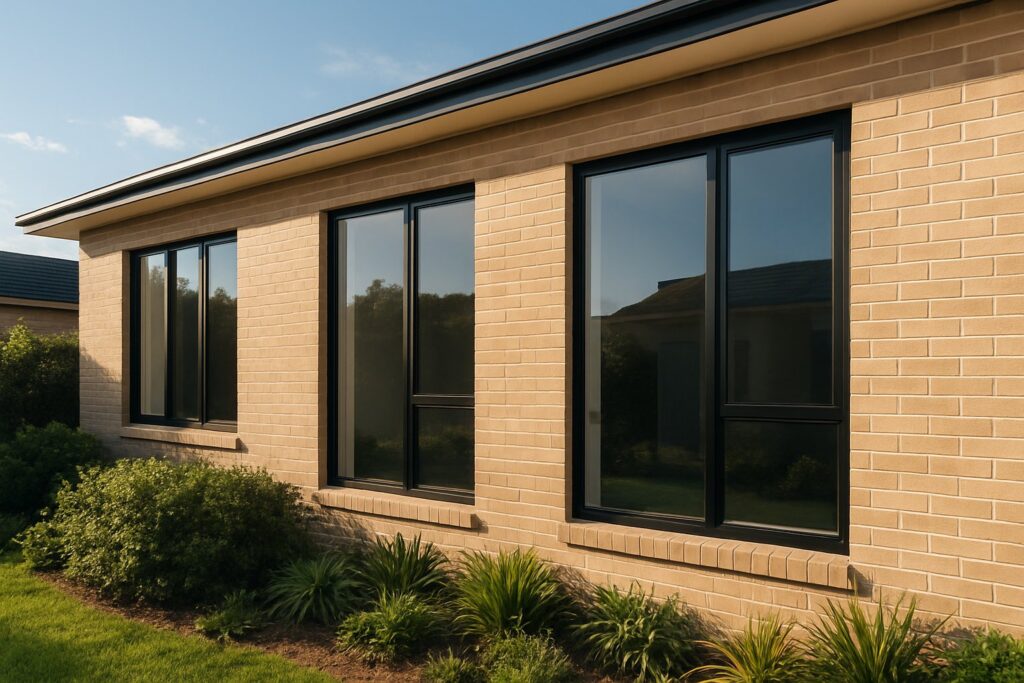
Aluminium window designs for homes refer to window systems built from extruded aluminium profiles that form the frame, sash, and structural components of a window. These profiles can be configured into virtually any opening type — casement, sliding, bi-fold, fixed, or pivot — giving architects and homeowners a level of design freedom that other framing materials simply cannot match.
Why Aluminium Dominates Residential Window Design
The reason aluminium has become the go-to framing material in Australian residential construction comes down to a few core properties working together. Its strength-to-weight ratio allows frames to span wider openings without bulky reinforcement. Its natural corrosion resistance handles coastal salt air and harsh UV exposure without degrading. And its design versatility means a single material system can deliver everything from a narrow casement in a heritage renovation to a three-metre sliding panel in a new build.
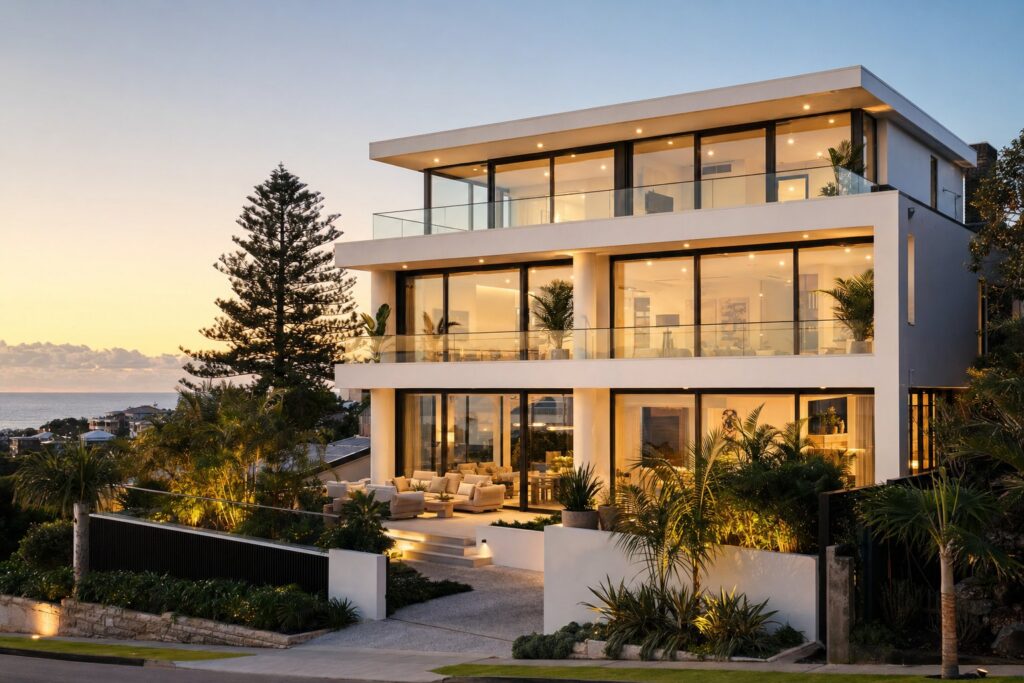
Aluminium frames can be engineered up to 40% slimmer than uPVC while maintaining full structural integrity — maximising glass area and flooding interiors with natural light.
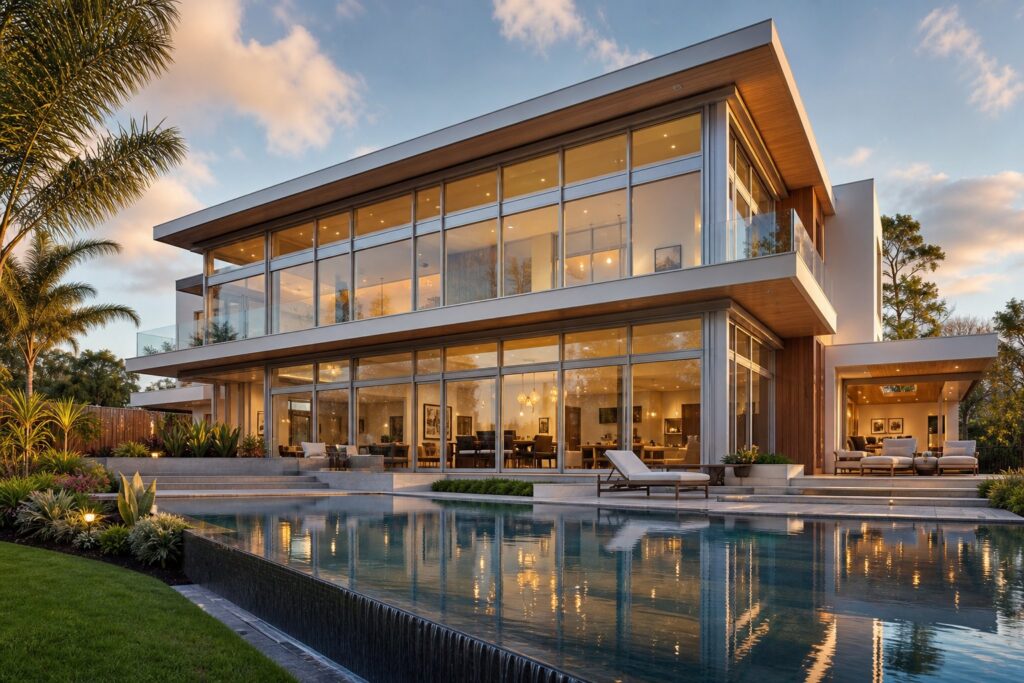
That slimness matters more than most homeowners realise. Thinner frames mean more glass per opening, which translates directly into brighter rooms, better views, and a cleaner aesthetic. Combined with powder-coated finishes that resist fading for decades and full recyclability at end of life, aluminium window design ticks performance, sustainability, and style boxes simultaneously.
What This Guide Helps You Decide
This is not a surface-level list of aluminium window designs. It is a decision-focused guide built to help you identify which specific design suits your home’s architecture, climate zone, room function, and budget. By the end, you will understand how each window type performs, how aluminium compares to alternative materials, and what specifications to prioritise when requesting quotes — so you can move from research to confident action without second-guessing your choice.
Aluminium Compared to Other Window Frame Materials
Knowing what aluminium can do is one thing. Knowing whether it is the right choice over uPVC, timber, or steel for your specific project is a different question entirely — and it is the one most homeowners struggle with at the quoting stage. Each material brings genuine strengths to the table, and aluminium is not the best option in every scenario. A clear-eyed comparison helps you spend confidently rather than second-guessing your decision years down the track.
Aluminium vs uPVC vs Timber vs Steel
The four primary window frame materials available in Australia each occupy a distinct position across performance, aesthetics, and cost. Here is how they stack up across the factors that matter most to residential builds and renovations:
| Factor | Aluminium | uPVC | Timber | Steel |
|---|---|---|---|---|
| Frame Slimness | Very slim profiles possible | Bulkier — requires thicker sections for strength | Medium to thick depending on span | Ultra-narrow sightlines achievable |
| Lifespan | 40–60 years with minimal upkeep | 25–35 years | 40–60+ years with regular maintenance | 50+ years with corrosion protection |
| Maintenance | Low — periodic cleaning and hardware lubrication | Very low — wipe-down and seal checks | High — repainting or resealing every 3–7 years | Moderate — corrosion monitoring and recoating |
| Thermal Performance | Good to excellent with thermal breaks (U-values 0.8–2.0 W/m²K) | Excellent inherently (U-values 0.7–1.5 W/m²K) | Good natural insulator (U-values 1.0–2.0 W/m²K) | Adequate with thermal breaks (U-values 1.5–2.5 W/m²K) |
| Colour Options | Extensive — powder coating in virtually any RAL colour | Limited range; wood-grain laminates available | Unlimited — paint or stain to any shade | Custom powder coating available |
| Recyclability | 100% recyclable infinitely without quality loss | Recyclable up to 7 times | Biodegradable and renewable | Highly recyclable |
| Relative Cost | Mid to premium | Budget to mid-range | Mid to premium | Premium to high-end |
A few things stand out immediately. uPVC wins on upfront affordability and out-of-the-box thermal insulation. Timber offers unmatched warmth and character for heritage homes. Steel delivers the thinnest possible sightlines for industrial or period aesthetics. Aluminium sits in a unique middle ground — it combines slim profiles, long lifespan, low maintenance, and near-unlimited colour choice in a single package.
When Aluminium Is the Clear Winner
Aluminium windows design pulls ahead decisively in several common Australian scenarios. Large openings — think bi-fold doors spanning a living area or floor-to-ceiling fixed panels framing a view — demand a material strong enough to support the glass weight without chunky frames eating into the sightline. Aluminium handles this effortlessly where uPVC would need bulkier reinforcement.
Coastal and high-UV environments also favour aluminium. Powder-coated aluminium resists salt air corrosion and intense sun exposure far better than untreated timber, and it does not become brittle or discolour the way lower-grade uPVC can over decades of Australian summers. For homes within a few kilometres of the coastline — common across Sydney, Melbourne’s bayside suburbs, Perth, and Queensland — this durability translates into real long-term savings.
The honest trade-off? Aluminium costs more upfront than uPVC, and without a thermal break it conducts heat readily. A standard aluminium frame with no thermal break can have a U-value above 4.0 W/m²K — poor by any modern standard. However, thermally broken aluminium systems now achieve U-values between 0.8 and 2.0 W/m²K, putting them on par with premium uPVC. The polyamide strip separating the inner and outer frame sections eliminates the old conductivity problem almost entirely. If you are comparing quotes, always confirm that thermally broken profiles are specified — it is the single detail that transforms aluminium from a mediocre insulator into a high-performance one.
Recyclability adds another dimension worth noting. Aluminium can be recycled indefinitely without losing structural quality, making it the strongest sustainability story among the four materials for homeowners factoring environmental impact into their decision.
So where does aluminium fall short? If your budget is tight and thermal performance is the top priority for a standard-sized window, uPVC delivers more insulation per dollar. If you are restoring a Federation-era home and heritage guidelines require authentic timber joinery, aluminium is not the right fit regardless of its technical merits. And if you want the absolute thinnest frame profile money can buy for a statement window, steel edges ahead — though at a significant cost premium and higher maintenance burden.
For most contemporary Australian homes, renovations, and new builds where the brief calls for slim frames, large glass areas, minimal upkeep, and decades of reliable performance, aluminium remains the material that balances the most priorities at once. The real question is not whether aluminium suits your project — it is which aluminium window type suits each room.
Every Aluminium Window Design Type Compared
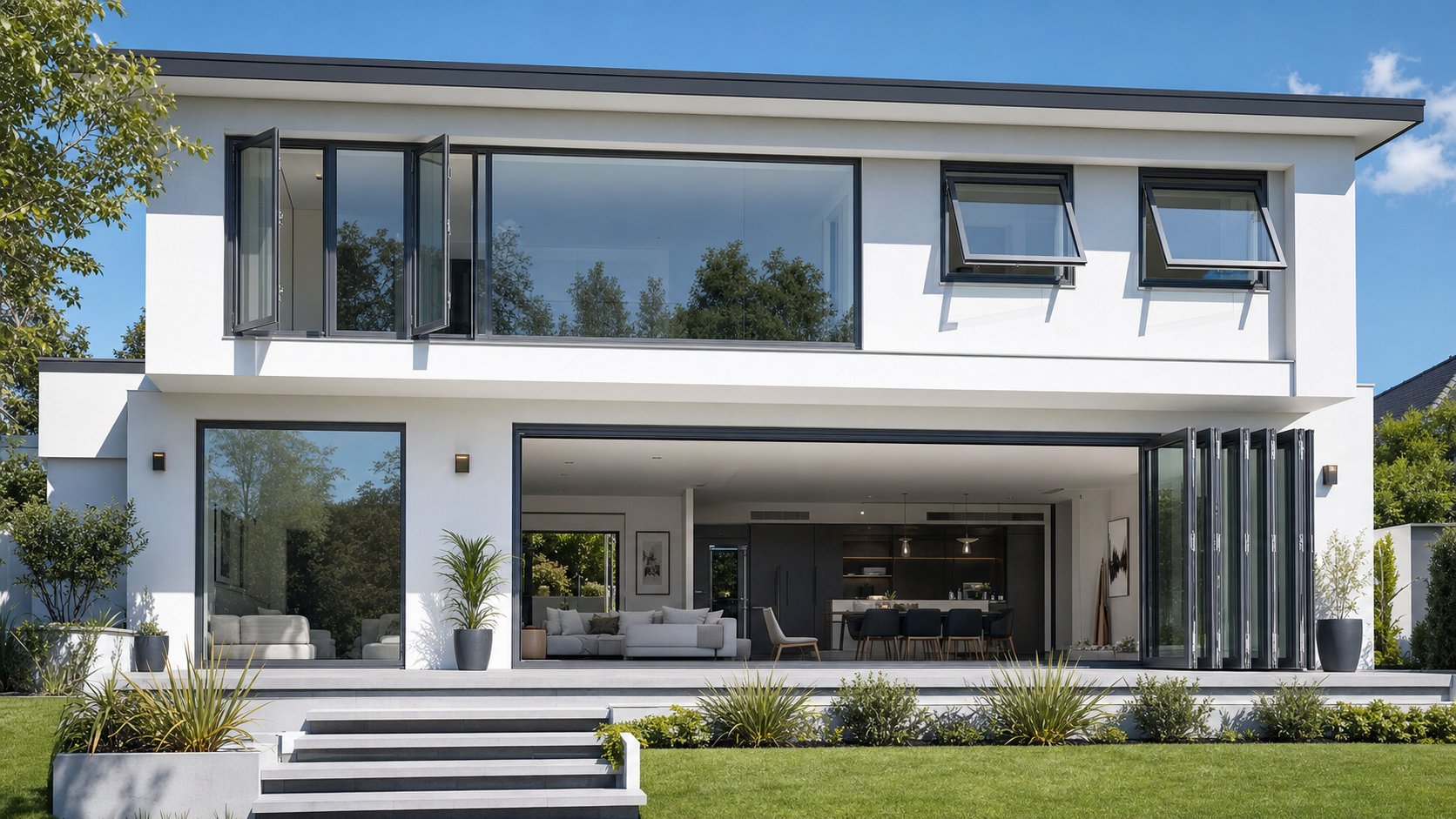
Nine distinct aluminium window types are commonly specified in Australian residential projects. Each solves a different problem — some prioritise airflow, others maximise light, and a few exist purely to create architectural drama. Rather than describing them alphabetically, the comparison below is organised around what each design actually does best for your home.
Window Types Organised by What They Do Best
| Window Type | Ventilation Rating | Space Required | Best Rooms | Security Level | Aesthetic Profile |
|---|---|---|---|---|---|
| Casement | Excellent — full sash opens outward | Exterior clearance needed | Kitchens, living rooms, bedrooms | High when closed (compression seal) | Clean and versatile — suits modern and traditional |
| Sliding | Moderate — 50% of opening ventilates | No swing space needed | Bedrooms, hallways, rooms facing walkways | Moderate (track locks) | Low-profile, horizontal emphasis |
| Bi-fold | Excellent — near-full opening | Stacking panels fold to one side | Living areas, entertaining zones, kitchens | Moderate to high (multi-point locks) | Contemporary, indoor-outdoor connection |
| Awning | Good — ventilates even in rain | Minimal exterior projection | Bathrooms, laundries, above kitchen benches | High (top-hinged, difficult to force) | Subtle, often paired with fixed panels |
| Tilt-and-Turn | Versatile — tilt for gentle air, turn for full opening | Interior clearance for inward swing | Upper storeys, children’s rooms, apartments | Very high (multi-point locking, up to 12 points) | Modern minimalist, European influence |
| Fixed | None — does not open | None | Stairwells, feature walls, scenic views | Very high (no operable hardware) | Maximum glass, architectural statement |
| Louvre | Excellent — adjustable blade angle | None (blades rotate in place) | Wet areas, tropical climates, pool rooms | Low to moderate (gaps between blades) | Tropical, relaxed, resort-style |
| Pivot | Good — large opening rotates centrally | Interior and exterior clearance | Feature windows, double-height spaces | Moderate | Dramatic, sculptural, contemporary |
| Corner | Varies by operable panel type | Structural engineering required at junction | Living rooms, master bedrooms, studies with views | Moderate to high | Seamless panoramic, frameless corner effect |
Casement and bi-fold types deliver the strongest airflow because their entire sash area can open. Sliding windows trade some ventilation capacity for zero swing space — a practical advantage along narrow side passages common in Sydney terrace houses and Melbourne townhouses. Awning windows earn their place in wet areas because their top-hinged design sheds rain away from the opening, letting you ventilate a bathroom year-round without water intrusion.
Tilt-and-turn windows deserve particular attention for multi-storey homes. Their dual-action mechanism — tilt inward from the top for secure ventilation, or swing fully inward for cleaning access — eliminates the need for ladders on upper floors. The multi-point locking system (typically four to twelve engagement points around the frame) makes them among the most secure operable window types available.
For rooms where the brief is simply “as much light as possible,” fixed aluminium windows are unbeatable. No hardware, no moving parts, and the slimmest possible frame profile — just glass. Pair them with operable casement or awning panels nearby to handle ventilation separately.
Specialty Designs Most Homeowners Overlook
Three modern aluminium windows types rarely appear in standard brochures but solve specific design challenges brilliantly:
Corner windows use a structural post (or eliminate it entirely with engineered glass-to-glass joins) to wrap glazing around a building corner. The result is a panoramic view with no visual interruption — particularly effective in living rooms or bedrooms oriented toward a landscape feature.
Pivot windows rotate on a central vertical or horizontal axis, creating a sculptural element that doubles as ventilation. They suit double-height voids and contemporary aluminium windows installations where a standard casement would look undersized.
Integrated louvre windows with aluminium blades offer precise airflow control in tropical and subtropical climates — think Far North Queensland or Darwin, where cross-ventilation is a design priority. Their adjustable blades let you dial in exactly how much breeze enters a room while maintaining privacy.
To simplify the selection, here are the top three designs for each common homeowner need:
Maximise natural light:
- Fixed windows (largest uninterrupted glass area)
- Corner windows (panoramic, frameless effect)
- Bi-fold windows (full opening dissolves the wall)
Maximise airflow:
- Casement windows (100% of sash area opens)
- Louvre windows (adjustable, continuous ventilation)
- Bi-fold windows (near-complete wall opening)
Save space:
- Sliding windows (no swing clearance needed)
- Awning windows (minimal exterior projection)
- Louvre windows (blades rotate within the frame)
Enhance security:
- Fixed windows (no operable entry point)
- Tilt-and-turn windows (multi-point locking, secure tilt mode)
- Awning windows (top-hinged, restricted opening size)
Most homes benefit from a combination of types rather than a single style throughout. A living area might pair fixed panels with bi-fold doors, while bedrooms use casement or tilt-and-turn for controlled ventilation and security. The key is matching each window’s strengths to the specific demands of the room it serves — and that decision becomes much clearer when you consider how each type interacts with your home’s architectural style.
Matching Aluminium Windows to Your Home’s Architectural Style
A window type might be technically perfect for a room — great ventilation, strong security, ideal space efficiency — and still look completely wrong on the facade. That disconnect almost always comes down to proportion, frame profile, and stylistic alignment. The best aluminium window frames for house designs are the ones that feel inevitable, as though the building could never have been arranged any other way.
Matching Window Designs to Your Home’s Architecture
Every architectural style carries its own visual rhythm. Window proportions, frame thickness, and opening mechanisms either reinforce that rhythm or fight against it. Here is how aluminium window styles for homes align with the most common Australian residential architectures:
Modern Minimalist
- Ultra-slim frame profiles (50–65 mm sightlines) to maximise glass area
- Fixed panels paired with casement or tilt-and-turn for ventilation
- Dark tones — black, anthracite grey, or charcoal — in matte or satin finishes
- No grid patterns; clean, uninterrupted glass is the priority
- Floor-to-ceiling proportions that align with internal ceiling heights
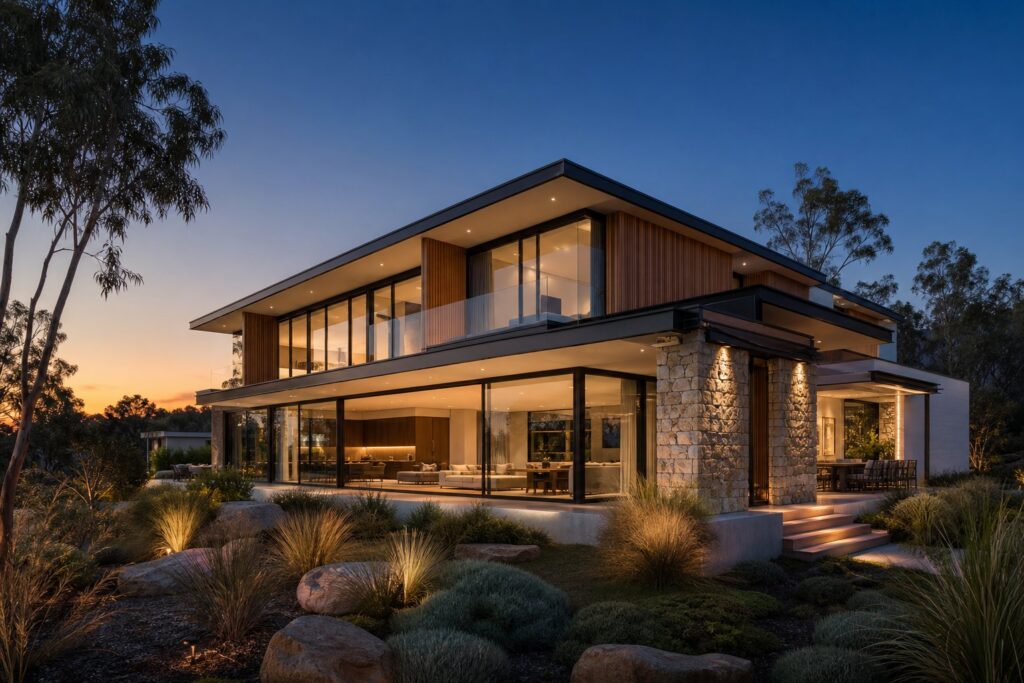
Modern home aluminium window design thrives on restraint. The slimmer the frame, the more the architecture speaks through form and light rather than decoration. Aluminium’s strength makes this possible — it can hold large glass panels with profiles that would be structurally impossible in uPVC.
Traditional and Colonial
- Slightly wider frame profiles (70–90 mm) to echo the visual weight of timber joinery
- Colonial bar or Georgian bar grid patterns dividing the glass into smaller panes
- Double-hung or casement opening mechanisms for period authenticity
- Cream, white, heritage green, or dark bronze powder-coat finishes
- Wood-grain effect finishes for warmth without the maintenance burden of real timber
Aluminium windows for traditional homes work best when they respect the building’s existing proportional logic. As architectural proportion research highlights, historic facades rely on consistent head heights, sill lines, and vertical emphasis — a replacement window that shifts these relationships even slightly can unsettle the entire elevation. Matching the original opening dimensions matters more than matching the original material.
Farmhouse and Weatherboard
- Medium-profile frames in white, cream, or soft grey
- Casement or awning types with simple hardware
- Subtle muntin bars (two or four panes) for character without fussiness
- Proportions that sit comfortably within weatherboard cladding — not oversized
Industrial
- Slim black frames mimicking steel-framed factory glazing
- Fixed panels with internal grid bars creating a multi-pane look
- Large openings — often casement or pivot — with bold, graphic framing
- Matte or raw-look finishes; avoid gloss
The industrial aesthetic is where aluminium genuinely outperforms alternatives. Black aluminium frames deliver the look of heritage steel windows without the corrosion risk, the weight, or the price tag — and they accept thermally broken profiles that steel often cannot accommodate economically.
Mid-Century Modern
- Horizontal emphasis — wide sliding windows and ribbon-style fixed glazing
- Low sill heights to connect interior spaces with garden landscapes
- Slim profiles in natural aluminium (silver anodised), bronze, or muted olive tones
- Clerestory windows above rooflines for indirect light
Window sizing directly shapes how a room feels to occupy. Taller windows draw the eye upward and make ceilings feel higher. Wider openings stretch the perceived width of a space. Floor-to-ceiling glazing dissolves the boundary between inside and out, making compact rooms feel generous. Conversely, undersized windows in a large wall create visual weight that can make even a spacious room feel enclosed. The proportional relationship between glass area, wall mass, and ceiling height is what separates a considered design from a catalogue selection.
Design Trends With Staying Power vs Passing Fads
Not every popular choice ages well. Here is a realistic assessment of current aluminium window trends:
Likely to endure:
- Slim frame profiles — driven by engineering capability, not fashion cycles
- Black and dark grey frames — a timeless contrast against light renders, brick, and stone that has persisted across decades of architectural history
- Larger glass areas — reflects a genuine shift in how Australians use indoor-outdoor space
- Thermally broken systems — increasingly mandated by NCC energy requirements, not optional
Potentially short-lived:
- All-black everything (frames, hardware, reveals, flashings) — risks feeling heavy and monolithic once the trend peaks
- Extremely oversized pivot windows used purely for visual drama without functional justification
- Crittall-style grid patterns applied to homes with no industrial or heritage context
The safest approach? Choose frame profiles and proportions that respond to your home’s architecture rather than the current design cycle. A well-proportioned window in a colour that complements your facade materials will still look right in fifteen years. A trend-driven choice applied without architectural logic tends to date the moment the trend moves on.
Style alignment gets you the right look. But looks alone do not keep a home comfortable through a Western Sydney summer or a Tasmanian winter — that job falls to the thermal engineering hidden inside the frame itself.
Energy Efficiency and Thermal Performance Explained
Aluminium conducts heat roughly 1,000 times more efficiently than polyamide plastic. That single fact is the reason older aluminium windows earned a reputation for being cold in winter and hot in summer — and it is also the reason modern aluminium window thermal break technology exists. The engineering solution is elegant: interrupt the thermal path through the frame so heat cannot travel freely between inside and out. Get this detail right, and energy efficient aluminium windows perform on par with the best uPVC systems. Get it wrong, and you are paying premium prices for mediocre comfort.
Thermal Break Technology Explained Simply
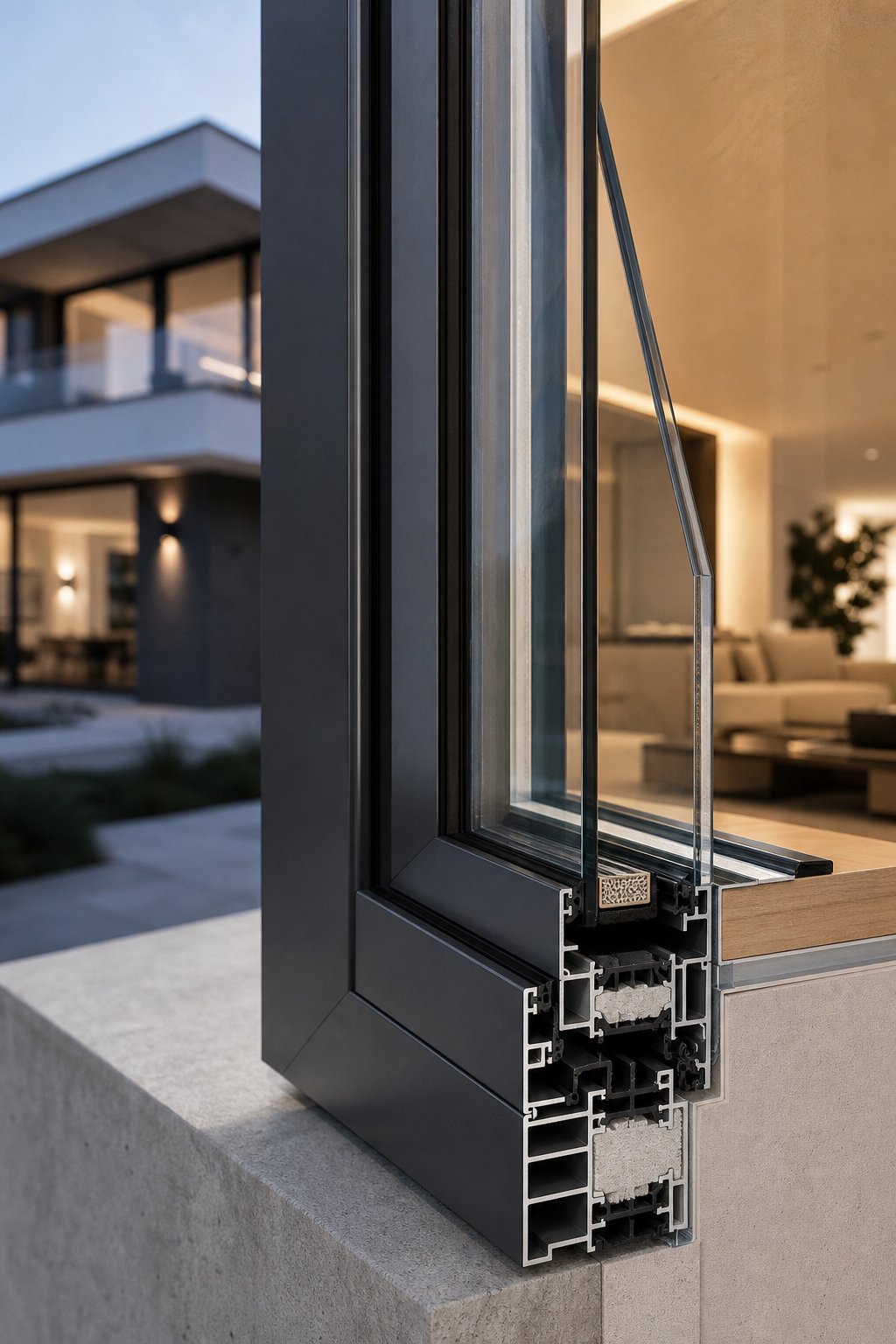
A thermal break is a continuous strip of insulating material — typically glass-fibre-reinforced polyamide (nylon) — mechanically crimped between the exterior and interior aluminium sections of a window frame. It physically separates the two halves so they no longer form a single conductive bridge.
Think of it like a gap in a metal fence. Heat travelling along the aluminium hits the polyamide strip and stalls, because polyamide conducts heat roughly 500 to 1,000 times less efficiently than aluminium. The wider that strip, the harder it is for thermal energy to cross.
Standard thermally broken aluminium window frames use polyamide strips between 14.8 mm and 24 mm wide. Premium systems push that to 30–35 mm, creating a substantial insulation zone within the frame itself. Some high-performance profiles add multiple chambers or foam inserts within the thermal break for even greater resistance.
The practical result? A non-thermally broken aluminium frame might have a U-value around 5.8–7.0 W/m²K — terrible by any modern standard. A basic thermal break system drops that to approximately 2.5–3.5 W/m²K. Premium multi-chamber systems achieve frame U-values between 0.8 and 1.5 W/m²K, which rivals or exceeds timber and high-end uPVC.
Understanding U-Values When Comparing Quotes
The aluminium window U-value rating is the single most useful number for comparing thermal performance between products. It measures how much heat passes through a material per square metre per degree of temperature difference (W/m²K). Lower numbers mean less heat transfer — and better insulation.
When evaluating quotes, pay attention to which U-value is being quoted:
- Uf — the frame U-value only (excludes glass)
- Ug — the glass U-value only (excludes frame)
- Uw — the whole-window U-value (frame + glass + edge effects combined)
Uw is the figure that matters for real-world performance. A supplier quoting an impressive Ug of 1.0 W/m²K for the glass alone might be pairing it with a poorly insulated frame that drags the whole-window value up to 2.5 or higher. Always ask for the Uw figure — it is what WERS (Window Energy Rating Scheme) assessments and NCC compliance calculations use in Australia.
For context, the NCC’s energy efficiency provisions increasingly push residential windows toward whole-window U-values below 2.0 W/m²K in cooler climate zones. In warmer zones, the Solar Heat Gain Coefficient (SHGC) often matters more than U-value alone, because keeping heat out is the primary challenge.
Double vs Triple Glazing: Which Makes Sense in Australia?
Aluminium’s structural strength means it comfortably supports both double and triple glazed units — an advantage over uPVC, which can struggle with the weight of triple glazing in larger openings.
Double glazing (two panes separated by a 12–20 mm gas-filled cavity) is the standard for most Australian residential applications. A typical double-glazed unit with Low-E coating and argon gas fill achieves a Ug around 1.0–1.3 W/m²K. Combined with a thermally broken aluminium frame, this delivers whole-window performance that satisfies NCC requirements across most climate zones.
Triple glazing (three panes with two gas-filled cavities) pushes glass U-values below 0.8 W/m²K and provides superior acoustic insulation — up to 45–48 dB reduction compared to roughly 35 dB for standard double glazing. However, it adds weight (requiring structurally stronger frames), reduces light transmittance slightly, and costs significantly more.
Triple glazing genuinely pays off in specific Australian scenarios:
- Alpine regions and cold-climate zones (NatHERS climate zones 24, 25, 65, 66) where heating loads dominate
- Homes near airports, railways, or major roads where acoustic performance is critical
- Passive House or NatHERS 8+ star builds where every fraction of a U-value point matters
For most homes in Sydney, Melbourne, Brisbane, Perth, and Adelaide, high-quality double glazing with Low-E coatings and argon gas fills delivers the best return on investment. The additional cost of triple glazing rarely recovers through energy savings in temperate and subtropical climates.
Low-E coatings are microscopically thin metallic layers applied to one or more glass surfaces. They reflect infrared radiation (heat) while allowing visible light through. In Australian conditions, a Low-E coating on surface two (inner face of the outer pane) reduces solar heat gain in summer, while a coating on surface three (outer face of the inner pane) retains interior warmth in winter.
Argon gas fills replace the air between panes with argon — a denser, less conductive gas that reduces heat transfer across the cavity by approximately 30% compared to air alone. Krypton gas offers even better performance but at a substantially higher cost, making it uncommon outside Passive House specifications.
Climate-Specific Window Design Recommendations
Australia’s climate diversity means a single glazing specification cannot serve every region well. Here is what to prioritise based on where you live:
Humid coastal areas (Far North Queensland, Darwin, coastal NSW and QLD):
- Prioritise low SHGC glazing to reject solar heat gain
- Louvre and casement windows for maximum cross-ventilation
- Thermally broken frames with marine-grade powder coating or anodising for salt-air resistance
- Double glazing is sufficient — the thermal challenge is keeping heat out, not in
- Ensure compliance with cyclone-rated specifications (AS 1170.2) in northern regions
Hot dry climates (Western Sydney, inland Queensland, central Australia):
- Low SHGC glass combined with external shading (eaves, louvres, or awnings)
- Thermally broken frames to prevent conducted heat entering through the profile
- Tinted or reflective Low-E coatings to reduce glare and radiant heat
- Awning windows positioned high on walls to exhaust hot air while maintaining security
Cold regions (Canberra, Hobart, alpine areas, Victorian highlands):
- Maximise U-value performance — consider triple glazing for south-facing windows
- Higher SHGC on north-facing glass to capture passive solar heat gain in winter
- Wide thermal breaks (24 mm+) to eliminate cold spots near frames
- Tilt-and-turn or casement windows with compression seals for superior airtightness
- Warm-edge spacers between glass panes to reduce condensation at the glass edge
Myths About Aluminium Window Performance
Several persistent misconceptions still steer homeowners away from aluminium — most of them based on experiences with older, non-thermally broken systems that are no longer representative of current products.
Myth: Aluminium frames feel cold to touch in winter.
With thermally broken aluminium window frames, the interior aluminium section is physically separated from the exterior. The inside surface stays close to room temperature because the polyamide barrier prevents cold from conducting through. Modern thermally broken systems eliminate the cold-radiation effect that older aluminium frames were known for.
Myth: Aluminium windows cause condensation.
Condensation forms when a surface temperature drops below the dew point of the surrounding air. Non-thermally broken aluminium frames could reach low enough temperatures to trigger this. Thermally broken profiles maintain interior surface temperatures well above dew point under normal humidity conditions (below 60–65% relative humidity). If condensation appears on a thermally broken frame, the issue is almost always excessive indoor humidity or poor ventilation — not the frame material itself.
Myth: Powder-coated colours fade quickly in Australian sun.
Quality powder coatings applied to Australian standards (AS 3715) are formulated specifically for high-UV environments. Reputable manufacturers use super-durable polyester powder coatings tested to withstand decades of direct sun exposure without chalking, cracking, or significant colour shift. Fading was a legitimate concern with early powder-coat formulations decades ago — it is not representative of current technology.
Myth: Thermal breaks weaken the frame structurally.
Modern crimping techniques bond the polyamide strips to the aluminium profiles with mechanical precision, and the reinforced nylon itself has high tensile strength. Thermally broken frames meet the same structural and wind-load requirements (AS 2047) as non-broken profiles. The thermal break does not compromise the window’s ability to resist wind pressure, water penetration, or forced entry.
The performance gap between a well-specified thermally broken aluminium window and a poorly specified one is enormous — far larger than the gap between aluminium and other frame materials. Thermal break width, glazing configuration, Low-E coating placement, and gas fill type all compound to determine real-world comfort. Understanding these specifications puts you in a position to evaluate quotes on substance rather than brand name alone — which matters just as much when you start considering the visible elements like colour, finish, and hardware.
Colours, Finishes, and Smart Home Integration
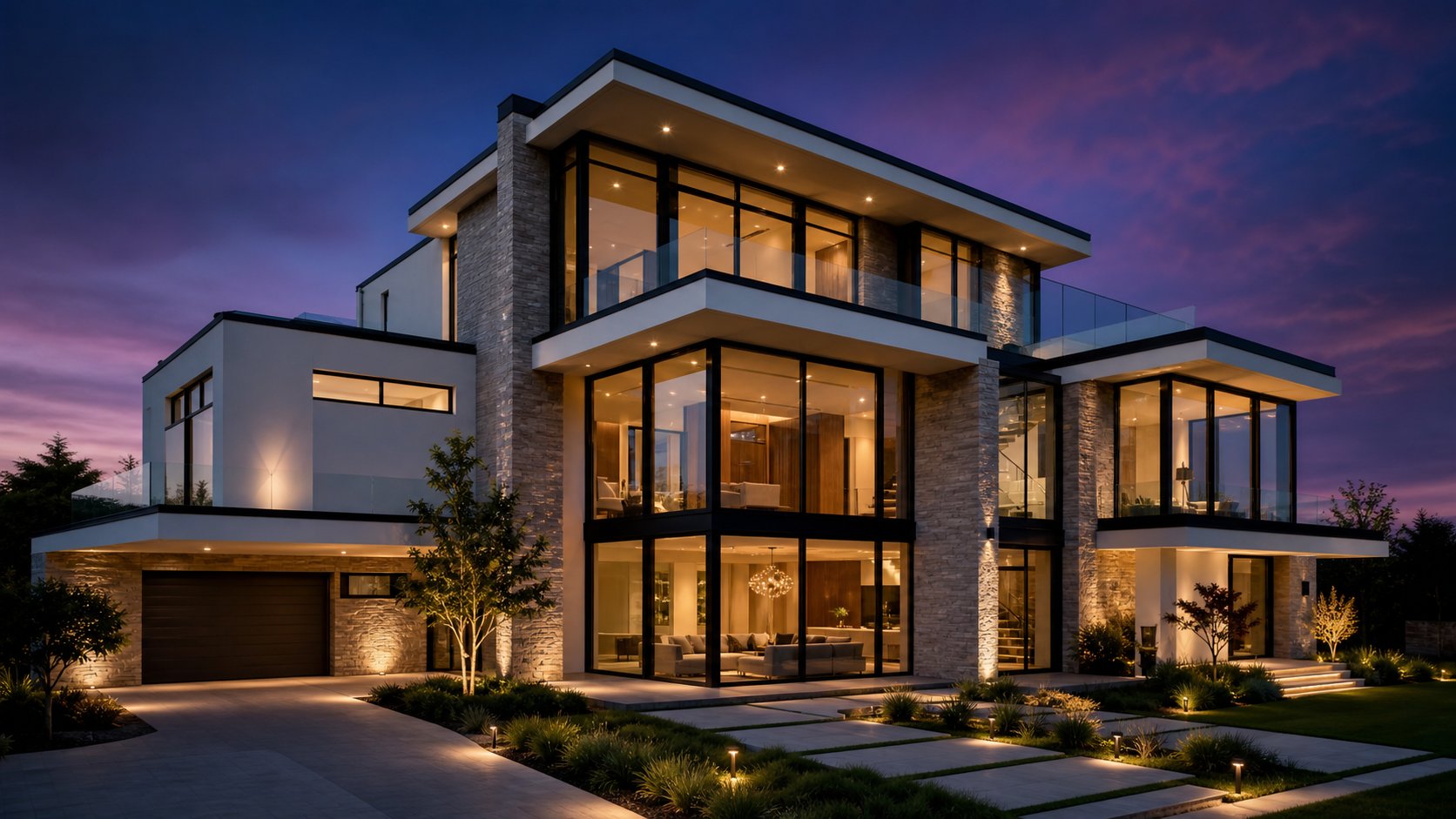
Thermal performance determines how a window behaves. Finish determines how it looks — and in residential architecture, looks carry weight. The colour and texture of your aluminium frames interact with every other material on the facade: the render, the brickwork, the cladding, the roof, the landscaping. Get the finish right and the windows disappear into a cohesive composition. Get it wrong and they announce themselves awkwardly against every surface they touch.
Aluminium’s advantage here is range. Unlike uPVC, which offers a limited palette of stock colours and laminate wraps, aluminium accepts multiple finishing processes that deliver everything from bold matte blacks to subtle metallic bronzes to convincing timber replicas — each with different durability characteristics suited to different environments.
Powder Coating, Anodising, and Wood-Grain Finishes
Powder coating is the dominant finish for residential aluminium windows in Australia. The process works by electrostatically spraying dry pigment powder onto the aluminium profile, then curing it at high temperature to form a tough, bonded film typically 60–80 microns thick. The result is a smooth, consistent surface that resists chipping, fading, and corrosion far better than liquid paint.
What makes powder coating so popular is its sheer versatility. Virtually any colour in the RAL spectrum is achievable — from classic white aluminium windows and soft creams through to deep charcoals, navy blues, and forest greens. Texture options extend the range further: matte, satin, gloss, and even fine-textured finishes that hide minor surface imperfections and fingerprints. Super-durable polyester formulations designed for high-UV environments resist chalking and colour shift for decades, making them well-suited to Australian conditions where intense sun exposure is the norm rather than the exception.
For homes in coastal areas — anywhere within a few kilometres of salt water — powder coating provides a sealed barrier that prevents salt-air corrosion from reaching the aluminium substrate. Marine-grade powder coatings tested to extended salt-spray exposure standards offer additional protection for beachside builds along the NSW coast, Queensland’s Gold Coast, or Perth’s western suburbs.
Anodising takes a fundamentally different approach. Rather than applying a coating on top of the aluminium, the process creates a hard oxide layer within the metal’s surface through an electrolytic bath. The resulting finish is integral to the aluminium itself — it cannot peel, flake, or delaminate because it is not a separate layer.
Anodised finishes deliver a distinctive metallic appearance — silver, bronze, champagne, or dark graphite — with a depth and lustre that powder coating cannot replicate. The oxide layer achieves a hardness of 300–400 Vickers, giving it exceptional scratch and abrasion resistance. This makes anodising a strong choice for high-traffic areas or homes where the windows are within arm’s reach of outdoor entertaining zones.
The trade-off? Colour options are limited to metallic tones. You will not get a bright red or a deep navy from anodising. And the process costs more per unit than powder coating, particularly for custom tones. But for mid-century modern homes, contemporary builds seeking a raw industrial edge, or any project where a natural metallic finish suits the design intent, anodising delivers a quality that feels inherently premium.
Wood-grain transfer finishes solve a specific problem: homeowners who love the warmth of timber but refuse the maintenance. The process uses heat and vacuum pressure to transfer a photographic timber pattern onto a powder-coated aluminium surface. The result is surprisingly convincing — particularly from normal viewing distances — and it weathers without the cracking, peeling, or rot that real timber eventually suffers.
Wood-grain effects work particularly well on aluminium windows for traditional homes, farmhouse-style builds, and weatherboard renovations where a stark metallic frame would clash with the surrounding materials. They also suit dual-colour configurations: timber-look on the interior face for warmth, and a solid colour on the exterior for weather resistance and street-facing consistency.
Here is how each finish type pairs with common Australian exterior materials:
- Light render (white, cream, grey): Matte black or charcoal powder coat for contrast; natural silver anodising for a softer, tonal approach
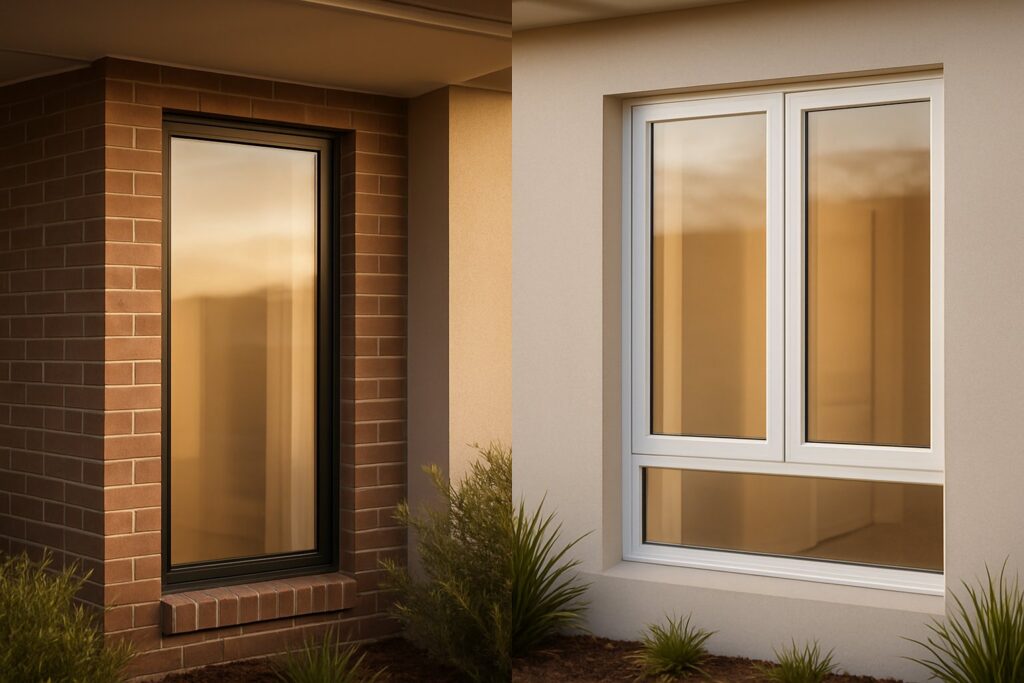
- Red or brown brick: Bronze anodising, dark grey powder coat, or heritage green for period homes; black for a modern industrial edge
- Weatherboard (painted): White aluminium windows or cream powder coat to match the cladding; wood-grain transfer for a seamless timber aesthetic
- Natural stone (sandstone, bluestone, granite): Bronze or champagne anodising to complement warm stone tones; charcoal powder coat against cooler grey stone
- Timber cladding: Black or dark bronze powder coat for contrast; wood-grain transfer in a complementary species tone for blending
For homeowners exploring custom colour combinations and finish configurations for their specific project, MEICHEN’s aluminium windows range provides a practical starting point — their specification options cover powder-coat colours, hardware selections, and frame configurations tailored to Australian residential builds.
Smart Home Integration and Hardware Options
Aluminium’s dimensional stability and structural precision make it the natural frame material for smart home window systems. Where timber swells and contracts with humidity changes — potentially misaligning sensors or motors — aluminium maintains its profile geometry year after year, keeping integrated electronics precisely positioned.
The most common smart integrations for residential aluminium windows include:
- Motorised opening mechanisms: Chain actuators or linear drives mounted within the frame head or sill, controlled via wall switch, remote, or smartphone app. Ideal for high-level windows, skylights, and hard-to-reach awning panels.
- Rain sensors: Exterior-mounted sensors that detect moisture and automatically close open windows — particularly useful for awning and casement types left open for ventilation during the day.
- Temperature and humidity sensors: Trigger automated opening or closing based on indoor climate conditions, working with home ventilation strategies to reduce reliance on mechanical cooling.
- Integration with home automation platforms: Compatibility with systems like Google Home, Apple HomeKit, or dedicated building management systems allows windows to respond to schedules, weather forecasts, or occupancy patterns.
Aluminium’s extruded profiles can be designed with precision grooves and channels that securely hold IoT modules without visible external hardware. This keeps the aesthetic clean while accommodating the wiring and mounting points that smart systems require. The frame’s long-term dimensional accuracy also means sensor calibration remains reliable over time — a practical advantage in climates with significant temperature swings between seasons.
Beyond automation, hardware choices shape both the daily experience and the visual character of your windows. Handles, stays, locks, and hinges come in a range of finishes — brushed stainless steel, matte black, satin chrome, white, and bronze — and the right selection ties the window into the broader interior design language of your home.
A few hardware considerations worth weighing:
- Flush handles on sliding windows create a streamlined profile and prevent curtains or blinds from catching
- Multi-point locking systems (standard on tilt-and-turn and high-security casements) engage at multiple points around the frame perimeter for superior resistance to forced entry
- Friction stays on casement and awning windows control how far the sash opens — important for child safety compliance (AS 5203) and upper-storey applications
- Concealed hinges hide the pivot mechanism within the frame, delivering a cleaner exterior appearance at a slight cost premium
The interplay between finish, hardware, and automation is where aluminium window designs move from functional building components to integrated architectural elements. Each decision compounds — a matte black frame with concealed hinges and flush hardware reads entirely differently from the same window in white with visible stays and chrome handles. Both are valid; the right combination depends on the design language your home speaks.
Of course, even the most beautifully finished window needs to perform reliably over decades. That longevity depends less on the initial specification and more on how the window is maintained once installed — a topic that varies significantly depending on which design type you have chosen.
Maintenance, Longevity, and Budget Considerations
Aluminium windows earn their reputation for low maintenance — but low does not mean zero. Every operable window has moving parts, seals that age, and surfaces exposed to weather. The difference between a window that performs flawlessly for 40 years and one that starts sticking after 10 often comes down to a few simple habits applied consistently. What those habits look like depends entirely on which window type you have installed.
Maintenance by Window Type
Sliding windows demand the most track attention. The bottom rail collects dust, pet hair, and grit that gradually impedes roller movement. Left unchecked, debris forces homeowners to push harder, which wears the rollers and can misalign the sash. A vacuum with a crevice attachment run along the track every few months prevents this entirely. The rollers themselves benefit from an annual application of dry silicone spray — avoid oil-based lubricants like WD-40, which attract more dust and eventually gum up the mechanism.
Casement and awning windows rely on friction stays and hinges rather than tracks. These pivot points accumulate less debris but still need annual lubrication with dry silicone to maintain smooth operation. Inspect the compression seals around the sash perimeter once a year — if they appear flattened, cracked, or no longer spring back when pressed, they are due for replacement. Worn seals compromise both thermal performance and water resistance.
Bi-fold windows and doors combine the challenges of both types. Their top and bottom tracks need regular clearing, their multiple hinged panels require lubrication at each pivot point, and their multi-point locking mechanisms should be checked for smooth engagement. Bi-fold systems have more moving components per opening than any other window type, which means slightly more maintenance time — though each individual task remains straightforward.
Tilt-and-turn windows have complex hardware concealed within the frame. The multi-point locking system engages at numerous points around the perimeter, and each engagement point benefits from annual silicone lubrication. Check that the tilt function limits correctly and that the turn function swings freely without resistance.
Fixed windows are the simplest to maintain — no hardware, no moving parts, no seals that wear through operation. Cleaning the glass and wiping down the frame is essentially the entire maintenance scope.
Across all types, caring for aluminium window frames follows the same core principles. Use a mild pH-neutral soap with warm water and a soft cloth for frame cleaning — never abrasive pads, ammonia-based cleaners, or bleach, which can damage powder-coated or anodised surfaces. For homes within five kilometres of the coast, rinse frames with fresh water monthly to remove salt deposits before they trigger corrosion. And always check the weep holes (small drainage slots at the base of the exterior frame) remain clear of dirt, mulch, or cobwebs — blocked weep holes trap water inside the frame, which can eventually leak into wall cavities.
Here is a seasonal maintenance checklist that covers all aluminium window types:
- Every 3 months: Vacuum sliding tracks and clear any visible debris from drainage channels
- Every 6 months: Wash frames and glass with mild soap and water; rinse coastal properties with fresh water monthly
- Annually (autumn): Lubricate all hinges, rollers, stays, and locking mechanisms with dry silicone spray
- Annually (spring): Inspect rubber seals and weatherstripping for cracking, flattening, or gaps; replace as needed
- Every 2 years: Check weep holes are unobstructed; test all locking points engage fully; inspect powder coat for chips near coastal or high-exposure areas
Follow this rhythm and most aluminium windows will outlast the mortgage. How long do aluminium windows last in practice? With consistent basic care, 40 to 60 years is a realistic lifespan — and the frames themselves often outlive the seals and hardware, which can be replaced individually without removing the entire window unit.
Relative Cost Positioning Across Design Types
Maintenance effort is one variable. Upfront cost is another — and the spread between aluminium window types is wider than most homeowners expect. The table below maps common window types to relative cost tiers for standard residential sizes, supply and install:
| Cost Tier | Window Types | Typical Applications | Why This Tier |
|---|---|---|---|
| Budget | Fixed, standard sliding | Stairwells, hallways, secondary bedrooms, side elevations | Fewer moving parts, simpler hardware, standard sizing |
| Mid-Range | Casement, awning, louvre | Living rooms, kitchens, bathrooms, primary bedrooms | Operable hardware, seals, and friction stays add moderate cost |
| Premium | Bi-fold, tilt-and-turn, pivot, corner | Main living areas, entertaining zones, feature walls, master suites | Complex mechanisms, multiple locking points, structural engineering, larger glass panels |
A fixed window might cost 30–40% less than a bi-fold of equivalent width, simply because it has no operable hardware, no rollers, no multi-point locks, and no track system. That price gap compounds across a full house — specifying fixed panels where ventilation is not needed (stairwells, above kitchen splashbacks, feature walls) frees budget for premium operable types where they matter most.
The aluminium window cost comparison also shifts depending on specification depth. A basic sliding window with a standard powder coat and single-point lock sits at a very different price point than the same sliding window with a thermally broken frame, Low-E double glazing, multi-point locking, and a custom colour. Specification drives cost more than window type alone.
So when do discount aluminium windows make sense? For rental properties, secondary rooms, or temporary builds where the window serves a functional role without needing to deliver peak thermal or acoustic performance, a budget-tier product from a reputable manufacturer is perfectly rational. The frames will still last decades and require minimal upkeep.
Where investing in premium specifications pays off is in the windows you interact with daily and the rooms where comfort matters most — living areas, master bedrooms, and any opening exposed to extreme weather, noise, or security risk. The upfront premium for thermally broken frames, quality hardware, and superior seals recovers through lower energy bills, fewer hardware replacements, and better day-to-day liveability across the window’s 40+ year service life.
Knowing what each type costs and demands in upkeep puts you in a stronger position when it comes time to make final selections. The remaining question is how to structure that decision — weighing room function, orientation, ventilation needs, and budget into a coherent specification that works across your entire home.
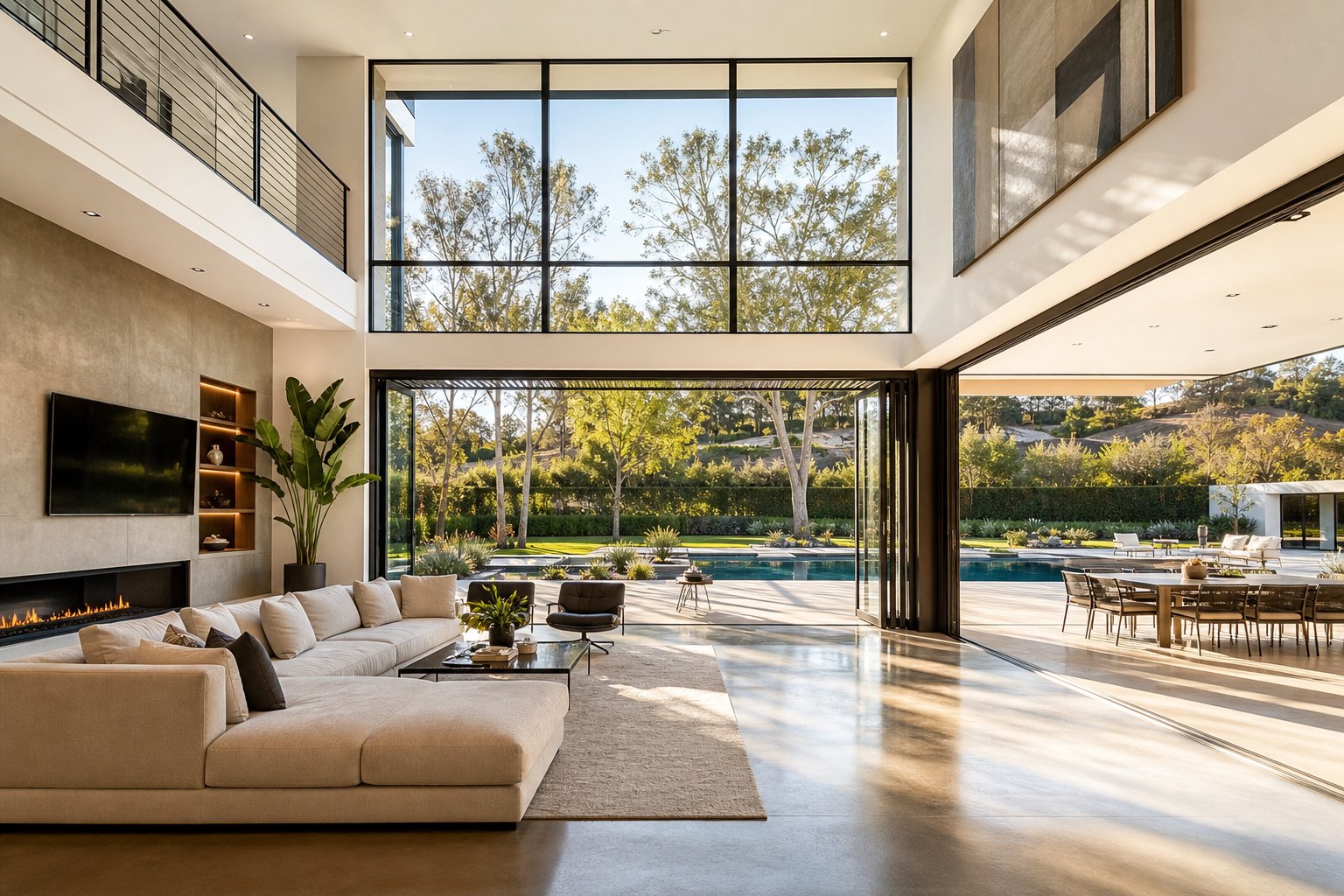
How to Choose the Right Aluminium Window Design for Your Home
You have the knowledge now — window types, thermal performance, finishes, maintenance profiles, and cost tiers. The challenge is assembling all of it into a coherent specification for your specific home. Choosing the best aluminium windows for my home is not a single decision but a sequence of smaller ones, each narrowing the field until the right design for each opening becomes obvious rather than overwhelming.
A Step-by-Step Selection Framework
This aluminium window selection guide walks through the decision in the order that produces the clearest results. Each step filters your options further, so by the end you are comparing two or three candidates per opening rather than nine.
- Define each room’s primary function. A bedroom prioritises privacy, acoustic insulation, and security. A living area prioritises light, views, and indoor-outdoor connection. A bathroom needs ventilation that works in rain. A hallway just needs light without taking up wall space. Write down the non-negotiable requirement for each room — this eliminates window types that cannot deliver it.
- Map window orientation and sun exposure. North-facing openings in Australian homes receive the most winter sun — ideal for passive solar gain through higher-SHGC glass. West-facing windows cop intense afternoon heat and benefit from low-SHGC glazing or external shading. East-facing openings get morning sun (generally welcome). South-facing windows receive minimal direct sun and should prioritise low U-values to prevent heat loss. Orientation determines glazing specification more than any other factor.
- Assess ventilation requirements. Rooms that generate moisture or heat (kitchens, bathrooms, laundries) need operable windows with strong airflow capacity — casement, louvre, or awning types. Rooms where comfort matters but moisture is not an issue (bedrooms, studies) can use tilt-and-turn or sliding for controlled ventilation. Rooms where you never need to open the window (stairwells, above fixed cabinetry) should use fixed panels to save budget and maximise glass area.
- Set security priorities by location. Ground-floor windows accessible from the street or a laneway need higher security ratings — tilt-and-turn with multi-point locks, or awning types with restricted openings. Upper-storey windows face less forced-entry risk but need child-safety compliance (AS 5203) if bedrooms or living areas are above ground level.
- Allocate budget by impact. Spend premium specification dollars on the windows you see, touch, and live with daily — main living areas, master bedrooms, and kitchen openings. Use budget-tier fixed or standard sliding windows in secondary spaces where performance demands are lower. This approach delivers the best overall result without blowing the total project cost.
Running through these five steps for every opening in your home produces a room-by-room specification that balances performance, aesthetics, and cost — rather than defaulting to a single window type everywhere or making ad-hoc choices that do not add up to a coherent whole.
What to Ask Your Window Supplier
Knowing what to look for in aluminium windows is half the equation. The other half is verifying that a supplier can actually deliver it. Australian window products must comply with specific standards, and not every quote includes the same level of documentation or specification transparency.
When evaluating suppliers and comparing quotes, request the following:
- Whole-window U-value (Uw) and SHGC — not just glass or frame values in isolation. These are the figures that determine real-world thermal performance and NCC compliance.
- AS 2047 test reports — covering deflection, air infiltration, water penetration, operating force, and ultimate strength. These tests verify the product performs as claimed under Australian wind loads and weather conditions. Ask whether testing was conducted by a NATA-accredited facility.
- WERS rating — the Window Energy Rating Scheme provides third-party certified energy performance data that is compliant with NCC requirements and accepted for NatHERS assessments.
- Window Compliance Certificate — suppliers are required to provide this document confirming the installed product meets all relevant Australian Standards. Do not accept delivery without it.
- Thermal break specification — confirm the polyamide strip width (14.8 mm minimum; 24 mm+ for premium performance) and whether the system is genuinely thermally broken or merely “thermally improved” (a lesser standard).
- Powder coat warranty and standard — quality suppliers offer 15–25 year warranties on powder-coated finishes applied to AS 3715. Ask whether super-durable polyester formulations are used, particularly for coastal or high-UV applications.
- Hardware brand and warranty — hinges, locks, and rollers wear before frames do. Knowing the hardware brand lets you assess replacement availability in 15–20 years.
If a supplier cannot provide AS 2047 test reports or a WERS rating, treat that as a red flag regardless of price. Compliance documentation protects you legally, ensures your build meets NCC energy provisions, and confirms the product will handle Australian conditions without premature failure.
For homeowners ready to move from research into project-specific decisions, MEICHEN’s aluminium windows page offers a practical next step — bringing together window types, custom configuration options, and performance specifications in one place so you can see how different designs, finishes, and hardware choices come together for Australian residential builds.
How to choose aluminium windows ultimately comes down to matching each opening’s demands to the design that serves those demands best — then verifying the product specification and supplier credentials before committing. Follow the framework above, ask the right questions, and you will end up with windows that perform as well in year twenty as they did on installation day.
Frequently Asked Questions About Aluminium Window Designs for Homes
1. What are the best aluminium window designs for modern homes?
For modern homes, the most popular aluminium window designs include fixed panels for maximum glass area, casement windows for clean lines and full ventilation, and bi-fold systems that create seamless indoor-outdoor connections. Slim-profile frames (50-65 mm sightlines) in matte black or charcoal finishes suit contemporary architecture particularly well. Many homeowners combine fixed panels with operable casement or tilt-and-turn windows to balance aesthetics with airflow. Suppliers like MEICHEN (meichenwindows.com.au/aluminium-windows/) offer custom configurations that let you mix window types across different openings for a cohesive modern look.
2. How long do aluminium windows last compared to uPVC and timber?
Aluminium windows typically last 40 to 60 years with minimal maintenance, outperforming uPVC (25-35 years) while matching timber’s longevity without the intensive upkeep timber demands. The frames themselves often outlast seals and hardware, which can be individually replaced without removing the entire window unit. Powder-coated finishes applied to AS 3715 resist UV fading and salt-air corrosion for decades in Australian conditions. The key to maximising lifespan is consistent basic care: annual hardware lubrication, periodic seal inspections, and regular cleaning with pH-neutral soap.
3. Are thermally broken aluminium windows worth the extra cost?
Thermally broken aluminium windows are worth the investment for most Australian homes. Without a thermal break, aluminium frames can have U-values above 5.8 W/m2K, meaning significant heat transfer and poor comfort. Thermally broken systems use polyamide strips (14.8-35 mm wide) to separate the inner and outer frame sections, achieving whole-window U-values between 0.8 and 2.0 W/m2K. This puts them on par with premium uPVC. The upfront cost premium recovers through lower energy bills, reduced condensation risk, and compliance with increasingly strict NCC energy provisions. Always confirm that quotes specify genuinely thermally broken profiles rather than merely thermally improved ones.
4. Which aluminium window type provides the best security for ground-floor rooms?
For ground-floor security, tilt-and-turn windows rank highest thanks to multi-point locking systems that engage at 4 to 12 points around the frame perimeter. Their tilt mode allows secure ventilation without creating an entry point. Fixed windows offer the highest security rating overall since they have no operable hardware, though they provide no ventilation. Awning windows are another strong option for ground-floor applications because their top-hinged design restricts the opening size, making forced entry difficult. For sliding windows at ground level, specify multi-point locks rather than standard single-point latches.
5. What colour and finish options are available for aluminium window frames?
Aluminium windows accept three main finishing processes, each with distinct characteristics. Powder coating offers virtually unlimited colour choice across the full RAL spectrum, from classic white and cream to bold charcoals and custom shades, in matte, satin, or gloss textures. Anodising creates a metallic finish (silver, bronze, champagne, graphite) that is integral to the metal surface and exceptionally scratch-resistant. Wood-grain transfer finishes replicate timber aesthetics without the maintenance burden, suiting traditional and farmhouse-style homes. MEICHEN’s aluminium windows range (meichenwindows.com.au/aluminium-windows/) showcases custom colour combinations and hardware selections tailored to Australian residential projects, helping homeowners visualise how different finishes pair with their exterior materials.
More Window & Door Guides