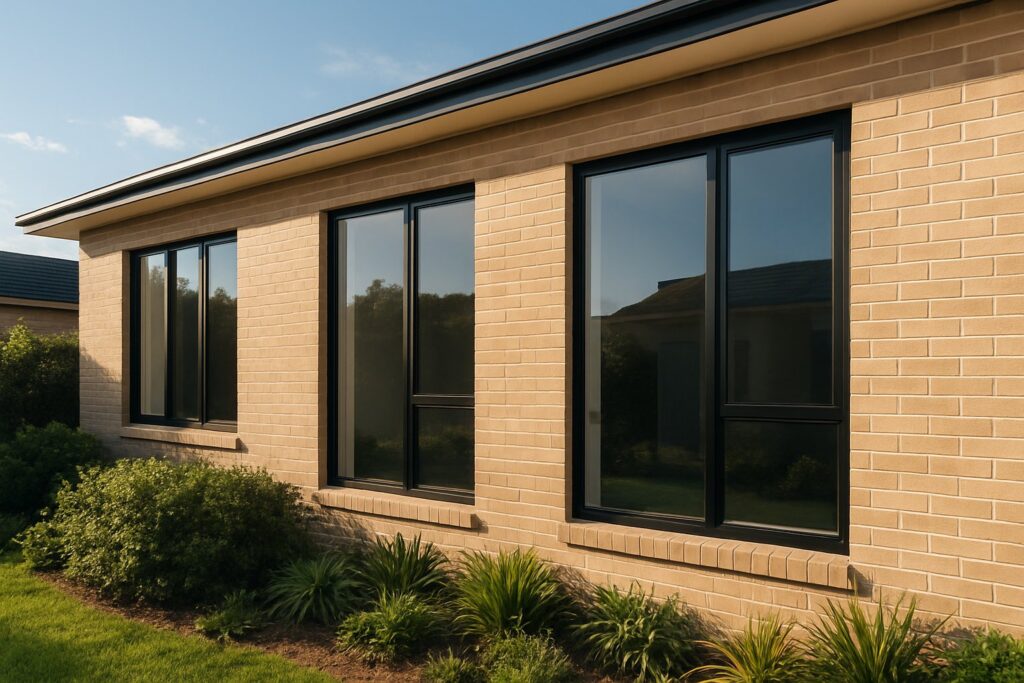
Why Aluminium Windows Deserve a Closer Look
A decade ago, many Australian homeowners dismissed aluminium windows as cold, basic, and better suited to office blocks than family homes. That perception stuck around long after the technology moved on. Modern aluminium window systems bear little resemblance to the thin, single-glazed frames of the 1980s and 90s. Thermally broken profiles, advanced powder coatings, and precision engineering have repositioned aluminium as a serious contender for residential projects of every scale.
What Are Aluminium Windows
At their core, aluminium windows use extruded aluminium alloy to form the structural frame that holds glazing in place. The aluminium window frame is lightweight yet remarkably strong, allowing manufacturers to create slimmer profiles with larger glass areas than timber or uPVC alternatives can structurally support. This strength-to-weight ratio is one reason architects consistently specify aluminium for both residential and commercial builds across Australia.
Why Aluminium Is Gaining Ground in Modern Construction
The global aluminium door and window market continues to expand, driven by demand for energy-efficient, durable building materials and modern architectural aesthetics. In Australia, the shift toward thermally broken alu windows reflects tighter energy performance requirements under the National Construction Code and growing homeowner interest in sustainable, low-maintenance materials. The advantages of aluminium windows span four key areas that this guide explores in depth: exceptional durability across harsh Australian climates, design flexibility from slim sightlines to bold custom colours, genuine energy efficiency through thermal break technology, and end-of-life sustainability that few other materials can match.
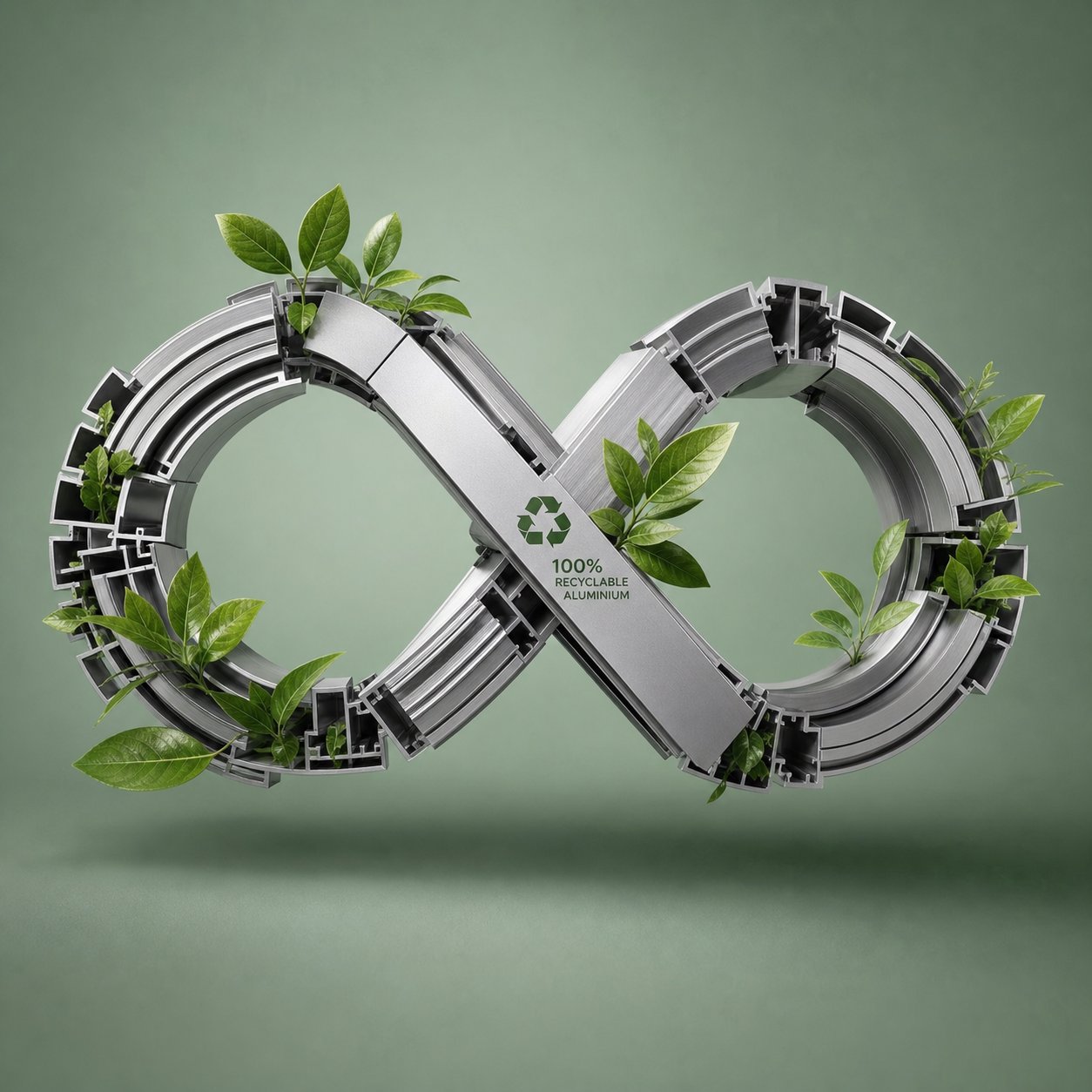
Aluminium is the most recycled building material used in window construction. It can be recycled indefinitely without any loss of quality or structural performance, making it a cornerstone of circular building design.
Whether you are building new, renovating a weatherboard cottage, or specifying alu windows for a multi-storey development, the material deserves evaluation on its current merits rather than outdated assumptions. The sections ahead break down each advantage with the detail needed to make a confident, informed decision.
Durability and Lifespan That Outperform Other Materials
Strength matters little if a material degrades within a couple of decades. For Australian homes exposed to coastal salt spray, intense UV radiation, and dramatic temperature swings, the window frame needs to hold up without constant intervention. This is where durable aluminium windows separate themselves from the field.
Built to Last in Any Climate
Aluminium does not rot, warp, crack, or swell. It is naturally resistant to corrosion thanks to a self-forming oxide layer that shields the metal from moisture and atmospheric attack. In coastal regions from the Sunshine Coast to the Mornington Peninsula, this corrosion resistance is critical. Timber frames in these environments demand frequent sealing and repainting to stave off decay, while uPVC can become brittle and discolour under prolonged UV exposure.
So how long do aluminium windows last in practice? Industry data from Ecovue places the lifespan of quality aluminium frames at 30 to 45 years, with many installations exceeding that range when properly maintained. Compare this to uPVC at 20 to 35 years, and the long-term value equation shifts considerably. Well-specified aluminium systems in sheltered positions can realistically serve 40 to 50 years before replacement becomes necessary.
Low Maintenance Without Compromising Appearance
Protective finishes play a major role in that longevity. Powder coated aluminium windows receive an electrostatically applied finish that is baked onto the frame at high temperatures, creating a hard, uniform surface that resists chipping, fading, and chalking. Anodising offers an alternative route, building up the natural oxide layer into a thicker, harder barrier that integrates with the metal rather than sitting on top of it. Both finishes hold their colour and sheen for decades under Australian sun without the cyclical sanding and repainting that timber demands.
Day-to-day upkeep is minimal. An occasional wipe-down with soapy water and a check of hardware lubrication is typically all that is required. No staining schedules, no anti-fungal treatments, no worrying about termite damage eating into your frames overnight.
- Corrosion resistance — natural oxide layer plus powder coating or anodising protects against salt air, humidity, and pollution
- UV stability — frames retain structural integrity and colour even under Australia’s extreme solar exposure
- Structural integrity over decades — aluminium does not expand, contract, or fatigue the way timber and uPVC can over repeated seasonal cycles
- Minimal upkeep requirements — no repainting, no sealing, no termite inspections needed for the frame itself
That combination of material resilience and finish technology means aluminium frames look and perform much the same at year twenty as they did at year one. The real question for most homeowners is not whether aluminium lasts long enough, but whether the energy performance keeps pace with its physical durability. Modern thermal break engineering answers that question decisively.
Thermal Break Technology and Energy Efficiency Explained
Aluminium conducts heat roughly 1,000 times faster than PVC and 5,000 times faster than timber. That single fact fuelled decades of criticism. Older aluminium frame windows transferred heat so readily that interior surfaces ran cold in winter and warm in summer, driving up energy bills and creating condensation headaches. The aluminium window frame material itself was never the problem — its strength, longevity, and recyclability were always clear. The problem was thermal conductivity, and thermal break technology solved it.
How Thermal Break Technology Works
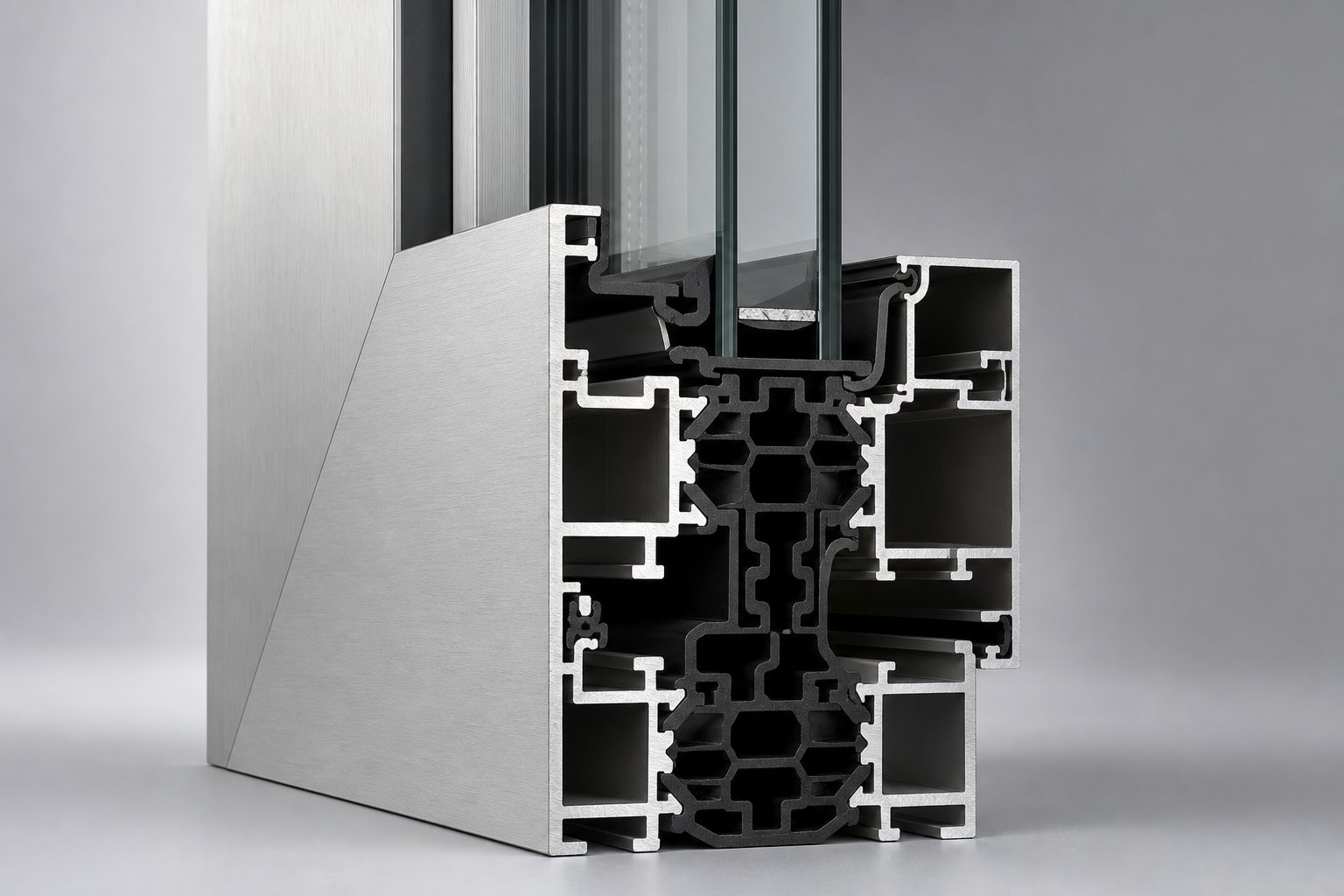
Picture an aluminium window profile split into two separate pieces: one facing the exterior, one facing the interior. Between them sits a structural insulating bar, typically made from polyamide (PA66) reinforced with glass fibre. This polyamide barrier has a thermal conductivity of just 0.3 W/m·K — over 500 times lower than the aluminium it connects.
The manufacturing process is precise. Each aluminium section is extruded with machined channels, and polyamide strips ranging from approximately 14.8 mm to 34 mm wide are inserted and mechanically crimped into place. The result is a composite profile that behaves as a single structural unit while dramatically interrupting the path heat would normally travel through the frame. Wider polyamide strips deliver greater thermal separation, which is why premium aluminium window profiles use 34 mm or wider barriers combined with foam insulation inserts for maximum performance.
Thermal break technology eliminated aluminium’s historical weakness. A material once dismissed as “too cold” for residential use now achieves frame U-values comparable to high-performance timber systems.
Energy Performance of Modern Aluminium Frames
The numbers tell the story clearly. A standard non-thermally-broken aluminium frame typically records a Uf value around 5.0 to 7.0 W/m²·K — poor by any modern standard. Introduce a 24 mm thermal break and that figure drops to 1.8 to 2.5 W/m²·K. Step up to premium profiles with 34 mm+ breaks and insulating foam, and you reach 0.8 to 1.2 W/m²·K, putting energy efficient aluminium windows on par with the best timber frames available.
For Australian homeowners, this matters in practical terms. The National Construction Code increasingly demands demonstrated thermal performance from window systems, and WERS (Window Energy Rating Scheme) ratings give buyers a clear way to compare whole-window efficiency. A well-specified thermally broken aluminium frame window paired with double or triple glazing, low-E coatings, and argon gas fill can meet or exceed NCC requirements across every Australian climate zone — from tropical Darwin to cold-climate Hobart.
The energy savings compound over time. Reduced heat gain in summer means less reliance on air conditioning. Better heat retention in winter lowers heating demand. Across a 40 to 50 year lifespan, those seasonal savings add up to a meaningful reduction in running costs and carbon output. The frame that once worked against your insulation strategy now actively supports it.
Performance at this level opens up a different conversation entirely — one about what you can do with aluminium’s inherent design strengths when thermal efficiency is no longer a compromise.
Design Flexibility From Slim Profiles to Bold Colours
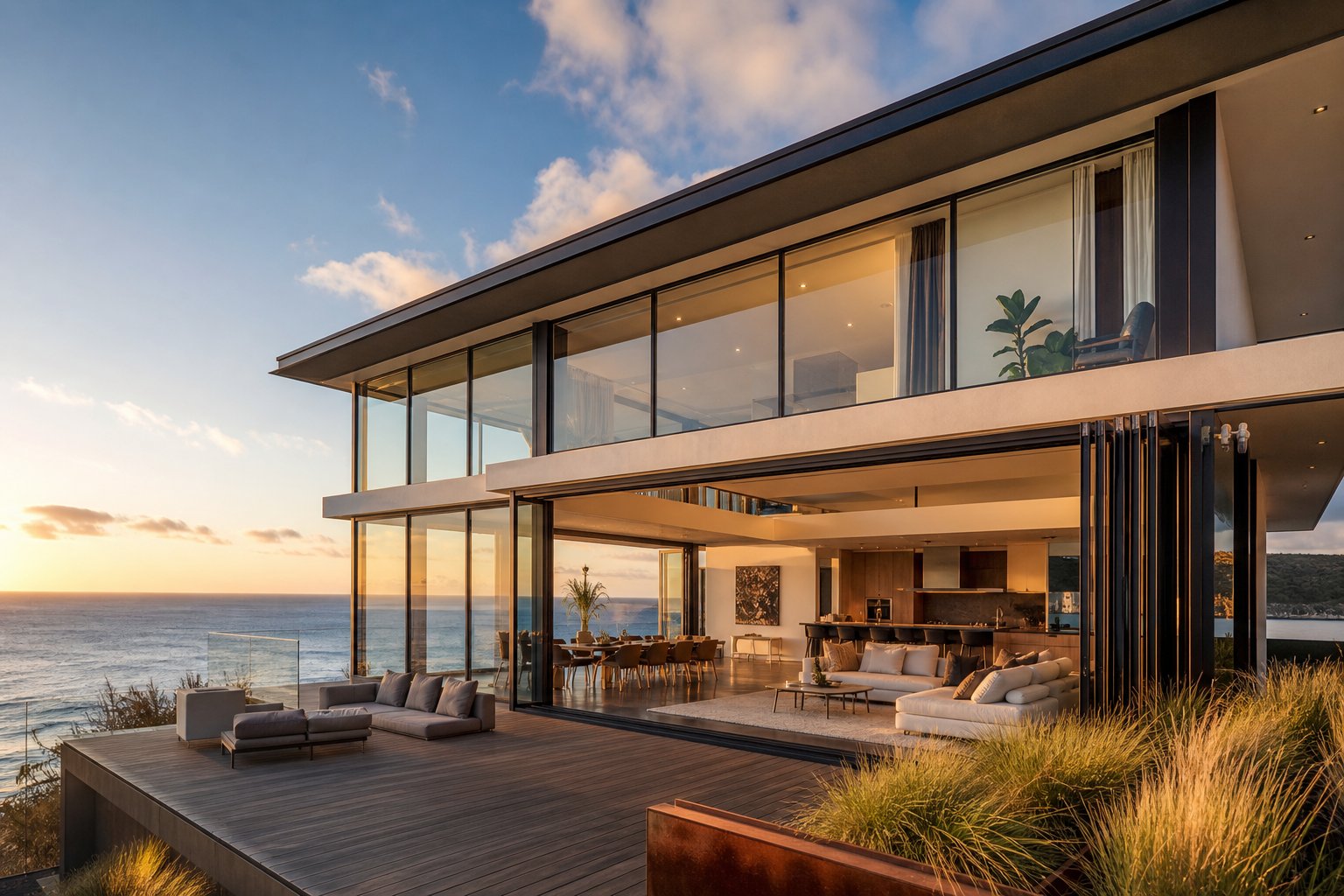
Aluminium’s structural strength relative to its weight is what unlocks design possibilities that other frame materials simply cannot deliver. When thermal performance is handled by the break technology inside the profile, the exterior and interior faces of the frame are free to be as slim as engineering allows. That slimness translates directly into more glass, more light, and more architectural freedom.
Slim Profiles and Maximum Glass Area
Aluminium window frames can be manufactured with sightlines as narrow as 50 mm. Compare that to uPVC, which typically requires 70 to 90 mm of frame width to achieve equivalent structural integrity. Those extra millimetres add up fast across a full elevation. In a wall of four windows, the difference between aluminium and uPVC framing can mean gaining the equivalent of an entire additional pane of visible glass.
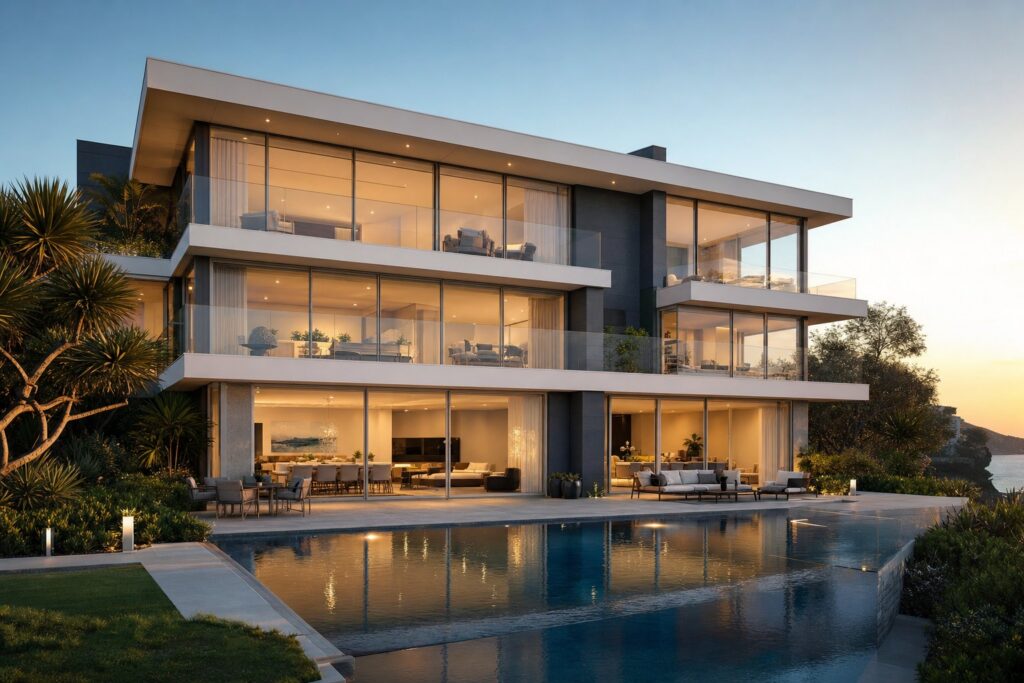
This matters beyond aesthetics. More glass area means more natural light penetrating deeper into living spaces, reducing reliance on artificial lighting during the day. It also means uninterrupted views — a priority for Australian homes positioned to capture coastal panoramas, bushland backdrops, or city skylines. Aluminium window framing achieves this without sacrificing weather resistance or structural ratings.
Strength also determines how wide a single span can reach. Aluminium comfortably supports openings up to 3 metres wide without requiring intermediate mullions or structural reinforcement. uPVC typically maxes out around 2 to 2.4 metres. For homeowners wanting expansive picture windows, full-height glazed walls, or wide bi-fold configurations, aluminium is often the only structurally viable option.
Window Styles for Every Application
The range of configurations available in aluminum framed windows covers virtually every opening type an architect or builder might specify. Each style suits different functional needs and property contexts:
- Casement — hinged at the side, opening outward for maximum ventilation; ideal for bedrooms, living areas, and kitchens where airflow control matters
- Awning — hinged at the top, opening outward from the bottom; excellent for wet climates or rooms needing ventilation during rain, such as bathrooms and laundries
- Sliding — panels glide horizontally on tracks; suited to balconies, patios, and rooms where outward-opening sashes would obstruct walkways
- Tilt-and-turn — tilts inward from the top for secure ventilation or swings fully open from the side for cleaning access; popular in multi-storey apartments
- Fixed — non-operable panels that maximise glass area and thermal performance; used for feature windows, highlight panels, and areas where ventilation is handled elsewhere
- Bi-fold — multiple panels fold and stack to one or both sides, creating wide unobstructed openings; the go-to choice for indoor-outdoor living connections
- Stacking — panels slide behind one another and stack at the jamb; delivers similar open-plan results to bi-folds with a different operational footprint
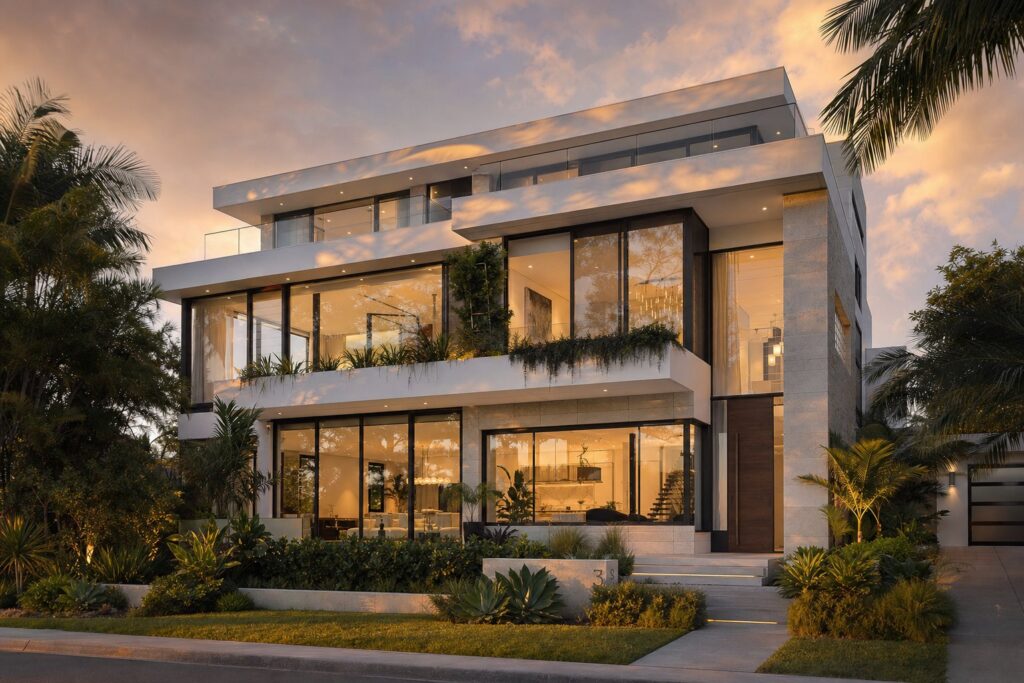
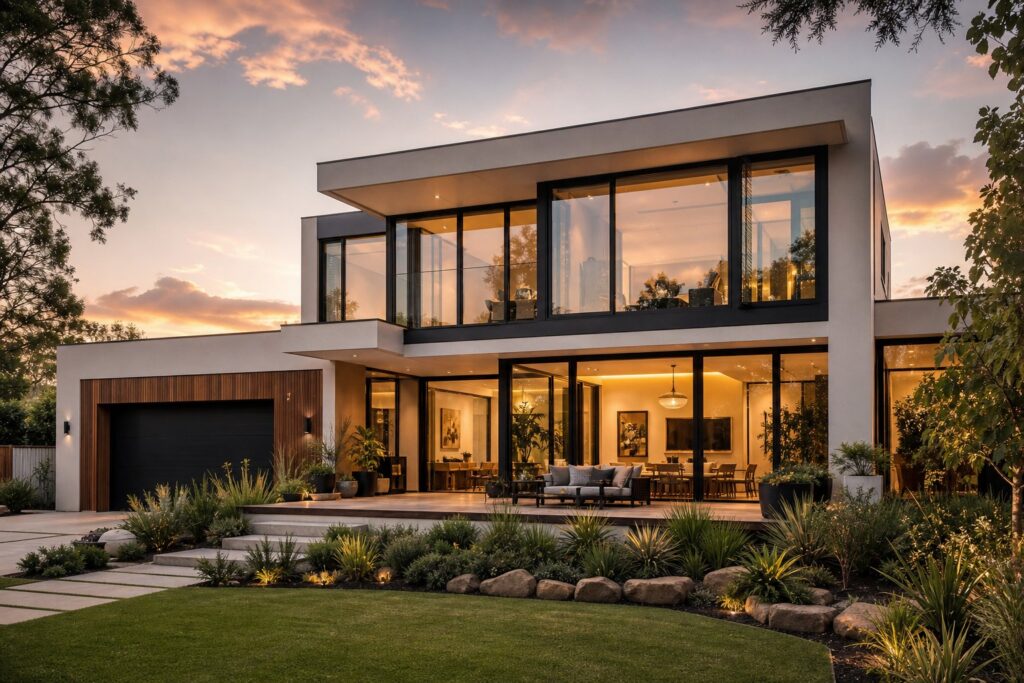
Modern new builds benefit from floor-to-ceiling configurations that blur the boundary between interior and garden. Period property renovations — think Federation homes or heritage-listed terraces — can use slimline heritage aluminium window frames that replicate traditional proportions while delivering contemporary performance. Commercial conversions of warehouses and industrial buildings leverage aluminium window framing’s structural capacity for expansive glazed facades that flood deep floor plates with daylight.
Colour and Finish Options
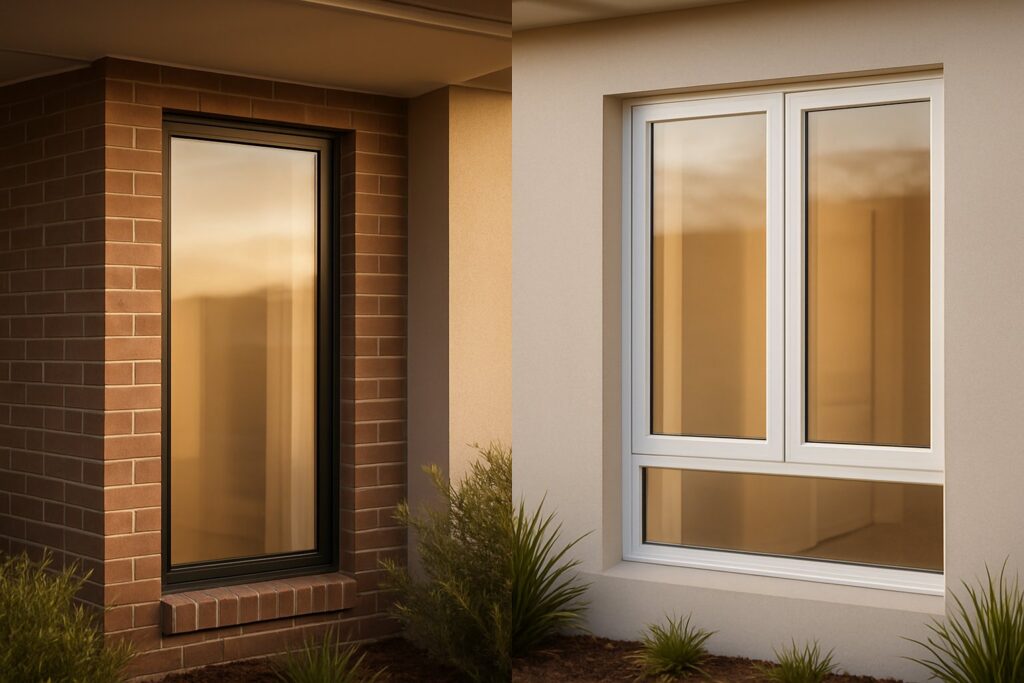
Powder coating gives aluminium a finish palette that no other window material can match. Suppliers now offer over 450 RAL colours, from classic white aluminium windows and matte blacks through to deep forest greens, sapphire blues, and warm earthy neutrals like quartz grey and grey beige. Custom RAL matching means the frame colour can be specified to complement any cladding, render, or brickwork on the project.
Colour longevity is equally important. Quality powder coatings carry 25-year colour warranties, resisting UV fading, chalking, and chipping across decades of Australian sun exposure. Matte and textured finishes have gained popularity for their ability to hide fingerprints and deliver a premium tactile quality. Anodised finishes offer an alternative with a metallic lustre that integrates into the aluminium surface rather than sitting on top of it.
Dual-colour options take flexibility further — a darker exterior tone to suit the streetscape paired with a lighter interior finish to match internal joinery. Few materials give homeowners and architects this level of control over how a building presents from both sides of the glass.
Design freedom of this calibre raises a natural question: how does aluminium actually stack up against the alternatives when you weigh every factor together — cost, maintenance, lifespan, and environmental impact included?
How Aluminium Compares to uPVC, Timber, and Fiberglass
Choosing a window material is rarely straightforward. Each option carries genuine strengths and real trade-offs, and the right answer depends on your climate, budget, maintenance tolerance, and design goals. Rather than declaring a single winner, a structured comparison helps you weigh the pros and cons of aluminium against the alternatives on the factors that actually matter for Australian homes.
Aluminium vs uPVC vs Timber at a Glance
The table below compares the four most common window frame materials across the decision factors homeowners, builders, and architects typically prioritise. It draws on general industry performance data rather than brand-specific claims.
| Factor | Aluminium | uPVC | Timber | Fiberglass |
|---|---|---|---|---|
| Durability | Excellent — does not rot, warp, or swell; resists corrosion and UV degradation | Good — resistant to moisture but can become brittle or discolour over time under UV | Good if maintained — vulnerable to rot, termites, and moisture without regular treatment | Very good — resists warping, rotting, and swelling; performs well in heat |
| Maintenance | Minimal — occasional wipe-down with soapy water | Minimal — similar cleaning routine; cannot be repainted if colour fades | High — requires repainting or staining every 3 to 5 years; termite inspections recommended | Low — similar to aluminium; can be repainted if desired |
| Thermal Performance | Competitive when thermally broken (Uf 0.8–2.5 W/m²·K); poor without thermal break | Good inherent insulation due to multi-chamber profiles | Naturally excellent — timber is a poor conductor of heat | Very good — low thermal conductivity similar to timber |
| Design Flexibility | Outstanding — slimmest sightlines, largest spans, 450+ RAL colours, dual-colour options | Limited — bulkier profiles, restricted colour range, cannot support very wide spans | Good — can be shaped and painted to any colour but limited by structural span | Moderate — slimmer than uPVC but fewer colour options; limited supplier availability |
| Lifespan | 40–50+ years | 20–35 years | 50+ years if well maintained; 15–20 years if neglected | 30–50 years |
| Sustainability | Infinitely recyclable without quality loss; high initial embodied energy offset by longevity and recyclability | Recyclable but degrades with each cycle; limited end-of-life pathways | Renewable resource; biodegradable; lower embodied energy but shorter effective life if poorly maintained | Difficult to recycle; limited end-of-life options currently available |
A few patterns emerge quickly. uPVC wins on upfront affordability but loses ground over time through shorter lifespan and limited design scope. Timber delivers beautiful natural insulation and longevity — but only if you commit to ongoing maintenance, which many Australian homeowners underestimate in practice. The comparison of aluminium vs fiberglass windows is closer than most people expect: fiberglass offers solid thermal performance and durability, yet it remains harder to source in Australia, carries fewer colour options, and presents recycling challenges at end of life that aluminium simply does not have.
When Aluminium Is the Strongest Choice
No material dominates every category, and an honest assessment of the windows pros and cons reveals where aluminium genuinely excels versus where it asks you to accept a trade-off.
Aluminium pulls ahead decisively in three scenarios. First, when design ambition demands slim frames, large spans, or floor-to-ceiling glazing that other materials cannot structurally support. Second, when longevity and low lifetime maintenance matter more than the lowest possible purchase price. Third, when end-of-life recyclability and circular economy credentials factor into the decision — particularly relevant for projects targeting Green Star or NatHERS performance benchmarks.
The trade-offs are real but manageable. Aluminium typically costs more upfront than uPVC, though the gap narrows considerably when you factor in replacement cycles and repainting costs over a 40-year horizon. Without a thermal break, aluminium frames conduct heat rapidly and can promote condensation — but as covered earlier, thermally broken systems have eliminated this weakness in any quality specification. Fiberglass windows vs aluminium is a closer contest on raw thermal numbers, yet aluminium’s vastly superior recyclability, wider availability in the Australian market, and unmatched colour range tip the balance for most residential and commercial projects.
Understanding where aluminium sits relative to the competition is one thing. Appreciating its environmental credentials in full — particularly the recycling story — adds another dimension that increasingly influences buying decisions.
Sustainability and Recyclability Advantages
Most window material discussions focus on what happens during the product’s working life — how it insulates, how it looks, how often it needs repainting. Fewer conversations address what happens after those 40 or 50 years of service end. This is where the aluminium advantages become difficult for any competing material to match. The environmental story of aluminium windows extends far beyond the building site, reaching into resource conservation, energy savings, and a genuinely circular material lifecycle.
Infinite Recyclability Without Quality Loss
Aluminium can be recycled indefinitely without losing its quality or strength. That is not marketing language — it is a metallurgical fact. Unlike uPVC, which degrades slightly with each recycling pass, or timber, which cannot be recycled in any meaningful structural sense, aluminium retains its full mechanical properties no matter how many times it passes through the recycling loop. A window frame installed in a Sydney terrace today could be melted down in 2070 and re-extruded into a new profile with identical performance characteristics.
The recycling process itself is straightforward. Old aluminium frames are sorted, cleaned of hardware and glazing, then melted down and cast into ingots ready for new manufacturing. No fillers are needed. No quality compromises are made. The resulting material is indistinguishable from freshly smelted aluminium in every structural and aesthetic respect.
This positions aluminium window frames among the most recycled building components globally. The material stays in circulation rather than heading to landfill, supporting what the construction industry increasingly calls a circular economy — where resources cycle continuously rather than following a linear path from extraction to disposal.
Lifecycle Environmental Impact
A fair assessment of the aluminium pros and cons from an environmental perspective requires looking at the full picture, not just a single data point. Primary aluminium production is energy-intensive. The Hall-Heroult smelting process demands significant electricity, and the embodied energy of virgin aluminium is higher than that of timber or uPVC. That is a legitimate criticism — but it tells only part of the story.
Two factors dramatically shift the equation. First, recycling aluminium requires only 5% of the energy needed to produce it from raw materials. Each recycling cycle avoids roughly 8 tonnes of CO2 per kilogram of aluminium processed. As the proportion of recycled content in new window profiles grows — and it is growing steadily as older buildings are renovated — the embodied energy gap between aluminium and other materials narrows considerably.
Second, lifespan matters enormously in lifecycle calculations. A timber window that lasts 20 years before rot forces replacement carries double the manufacturing impact of a single aluminium frame serving 40 to 50 years. Factor in the repainting, sealing, and chemical treatments timber demands every few years, and the cumulative environmental footprint of the “natural” material is not as green as it first appears. Aluminium’s durability, minimal maintenance requirements, and full recyclability at end of life create a favourable long-term environmental profile that improves with every decade of service.
For environmentally conscious Australian homeowners, these credentials align with broader sustainability goals. Green building certification frameworks — including Green Star in Australia — reward the specification of materials with high recycled content, long service lives, and proven end-of-life recyclability. Aluminium ticks all three boxes.
- 100% recyclable — can be recycled endlessly without any degradation in quality or structural performance
- 95% energy saving — recycled aluminium production uses just 5% of the energy required for primary smelting
- 40–50+ year lifespan — reduces replacement frequency and associated manufacturing emissions
- Non-toxic material — safe for residential environments with no off-gassing or chemical leaching
- Low maintenance footprint — no paints, stains, or chemical treatments required over its service life
- Circular economy ready — frames are easily recovered, sorted, and reprocessed at end of life
- Growing recycled content — as building renovation rates increase, more recycled aluminium enters the supply chain, further reducing embodied carbon
The pros of aluminium from a sustainability standpoint are not theoretical — they are measurable, verifiable, and increasingly valued by both homeowners and the certification bodies that assess building performance. As Australia’s construction industry moves toward net-zero targets, materials that can demonstrate genuine circularity will carry growing weight in specification decisions.
Still, sustainability credentials alone do not close the deal. Persistent myths about aluminium windows — from condensation fears to assumptions about cost — continue to influence buying decisions based on outdated information rather than current engineering reality.
Common Misconceptions About Aluminium Windows Debunked
Outdated information has a stubborn habit of lingering in the building industry. Homeowners researching window materials today still encounter advice rooted in the performance limitations of systems manufactured 30 or 40 years ago. The result is a set of persistent myths that no longer reflect how modern aluminium windows are designed, manufactured, or perform in real-world Australian conditions. Separating fact from fiction is essential for anyone weighing the genuine pros and cons of aluminium against competing materials.
Myth vs Reality in Modern Aluminium Systems
Each of the following misconceptions traces back to a kernel of historical truth — but the engineering has moved on, even if the assumptions have not.
- Myth: Aluminium windows are too cold for residential use.
This belief dates from the era of non-thermally-broken profiles, when aluminium’s high conductivity meant interior frame surfaces ran cold enough to chill a room’s perimeter. The reality in current systems is fundamentally different. Thermally broken aluminium profiles use polyamide insulating barriers — typically 24 mm to 34 mm wide — that prevent heat transfer between the inner and outer frame sections. Premium systems achieve frame U-values between 0.8 and 1.2 W/m²·K, placing them on par with high-performance timber. The material that was once dismissed as “too cold” now meets or exceeds NCC thermal requirements across every Australian climate zone. - Myth: Aluminium is only suited to commercial buildings.
Aluminium earned its early reputation in office towers and shopfronts because architects valued its strength and clean lines for large-scale glazing. That association stuck. Yet modern residential aluminium systems offer refined aesthetics that suit everything from heritage-style renovations to contemporary coastal homes. Slim profiles, wood-look finishes, over 450 powder-coat colours, and dual-colour options give homeowners a level of customisation that commercial systems never needed. Bi-fold doors, awning windows, and floor-to-ceiling configurations are now standard residential offerings — not commercial afterthoughts adapted for houses. - Myth: Aluminium windows cause excessive condensation.
Condensation is a physics problem, not a material defect. It forms when warm, moist indoor air contacts a surface cold enough to drop below the dew point. Older aluminium frames without thermal breaks created exactly those cold surfaces. Modern thermally broken systems maintain a much warmer interior frame temperature, dramatically lowering the risk of condensation forming — even during cold winter mornings. When condensation does appear on any window type, the root causes are almost always high indoor humidity and inadequate ventilation rather than the frame material itself. - Myth: Aluminium windows are too expensive.
Upfront cost is higher than uPVC — that much is true. But framing the comparison around purchase price alone ignores the total cost of ownership. Aluminium frames require no repainting, no sealing, no termite treatments, and no replacement of yellowed or brittle sections over their 40 to 50 year service life. Over a decade, the savings from reduced maintenance and fewer replacements more than offset the initial price difference. Factor in superior energy performance from thermally broken profiles and the lifetime equation tilts further in aluminium’s favour.
When you examine the disadvantages of aluminium that people cite most often, each one traces back to a problem that current engineering has already resolved. The material’s genuine limitations — higher embodied energy in primary production, the need to specify thermal breaks rather than assume them — are real but well understood and easily addressed through proper specification.
Understanding and Preventing Condensation
Condensation deserves a closer look because it remains the most misunderstood issue. It is not unique to aluminium. Timber windows condensate. uPVC windows condensate. Any surface that drops below the dew point of the surrounding air will collect moisture. The question is how likely a given frame system is to reach that temperature threshold.
In older aluminium frames without insulating barriers, the inner profile could approach outdoor temperatures on cold nights — creating a perfect condensation surface. Modern thermally broken frames keep interior surfaces well above the dew point by interrupting the conductive path through the metal. Paired with double or triple glazing featuring low-E coatings and argon fill, the entire window assembly stays warm enough to resist moisture formation under normal indoor humidity levels.
Practical steps that reduce condensation risk on any window system include:
- Using extractor fans in kitchens and bathrooms during cooking and showering
- Avoiding drying clothes indoors without adequate ventilation
- Maintaining steady indoor heating rather than allowing sharp temperature fluctuations
- Ensuring trickle vents or openable windows provide regular fresh air exchange
A well-ventilated home fitted with thermally broken aluminium windows and appropriate glazing is unlikely to experience condensation problems. Where issues do arise, the cause is almost always excess indoor moisture rather than a failing of the frame material.
There is also a broader question worth addressing honestly: why is wood preferred over aluminium in window construction by some homeowners? The answer usually comes down to aesthetic warmth and natural material character. Timber offers a tactile quality and visual grain that aluminium — regardless of finish sophistication — does not replicate identically. For heritage restorations or traditional interiors where that natural texture is central to the design intent, wood remains a valid choice for buyers who prioritise appearance and accept the maintenance commitment. The distinction is important: timber’s advantage is aesthetic preference, not performance superiority. Where durability, maintenance freedom, design span, and recyclability drive the decision, aluminium consistently outperforms.
Clearing away these misconceptions leaves a practical question: once you have decided aluminium is the right material, what should you actually look for in a quality window system to ensure you get the performance these modern profiles are capable of delivering?
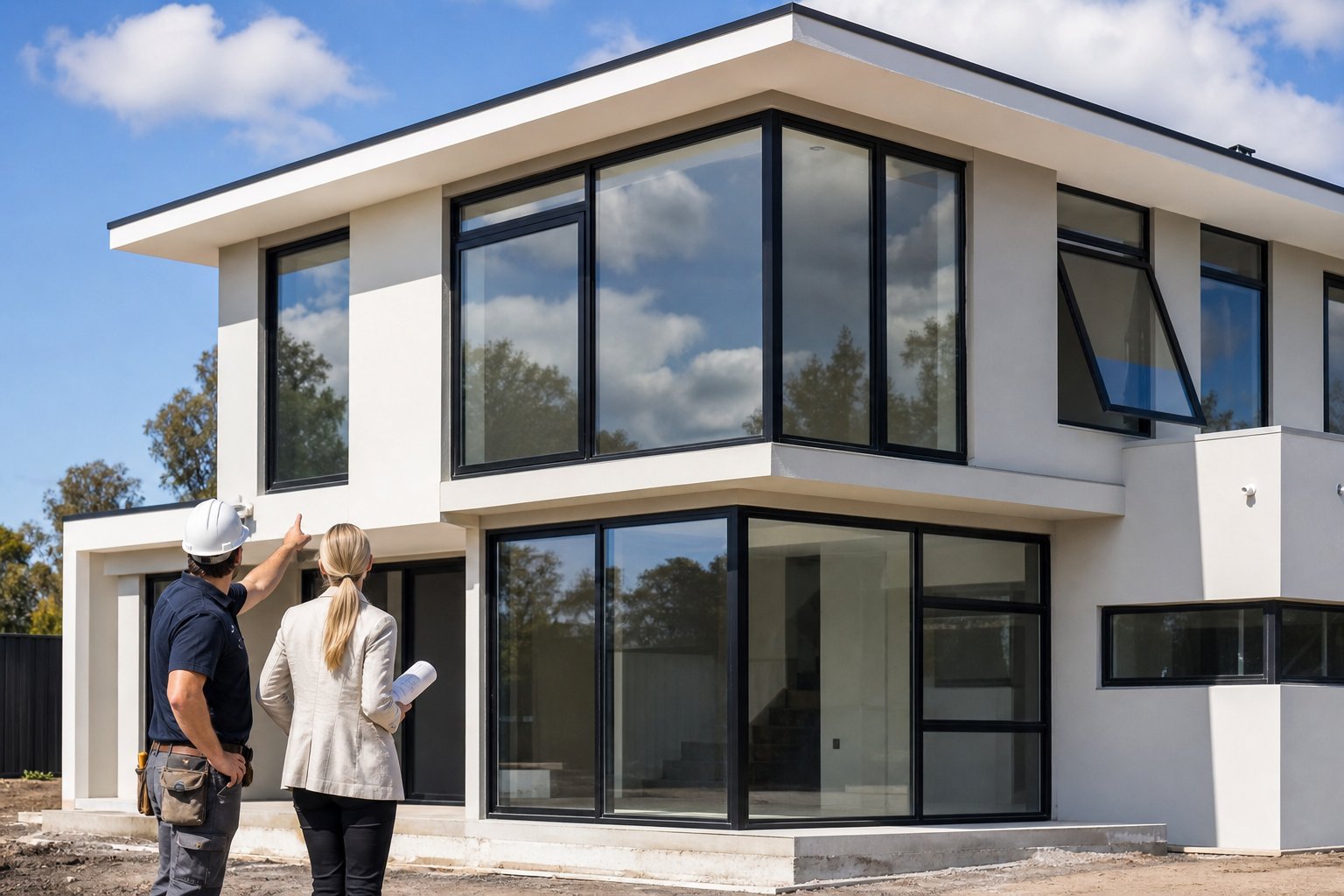
What to Look for When Buying Aluminium Windows
Knowing that aluminium is the right material is only half the decision. The gap between a mediocre aluminium frame window and a high-performance one is enormous — and it comes down to specification details that are not always obvious from a showroom display or a product brochure. Profile depth, thermal break width, glazing configuration, hardware grade, and weather sealing all influence how well your windows perform over the next four or five decades. Getting these details right at the point of purchase saves you from costly compromises later.
Key Specifications to Evaluate
Not every aluminium windows profile is created equal. Entry-level systems and premium systems may look similar at a glance, but their internal engineering differs substantially. Here is what to assess before committing to a supplier or product range.
Profile depth and construction quality. The depth of the aluminium extrusion — measured from the interior face to the exterior face — directly affects structural capacity and thermal performance. Deeper profiles accommodate wider thermal breaks and thicker glazing units. For residential aluminium windows in Australian conditions, look for profiles with a minimum depth of 60 mm for standard openings. Larger spans or high wind-load areas (cyclone-rated zones in northern Queensland, for instance) may require 70 mm or deeper profiles to meet AS 2047 structural requirements without deflection.
Thermal break presence and width. This is non-negotiable for any home where energy performance matters. Confirm that the system uses a genuine polyamide (PA66 GF25) thermal break rather than a cheaper PVC insert or — worse — no break at all. The width of the break matters: a 24 mm polyamide barrier delivers solid performance, while 34 mm or wider breaks with additional foam insulation push frame U-values below 1.5 W/m²·K. Ask for the specific Uf value of the frame profile, not just the whole-window rating, so you can compare systems on a like-for-like basis.
Glazing options. The frame is only part of the thermal equation. Windows with aluminium frames perform best when paired with glazing that matches the frame’s capability. Key glazing decisions include:
- Double vs triple glazing — double glazing (typically 20–28 mm insulated glass units) suits most Australian climate zones; triple glazing adds benefit in cold-climate regions like the Snowy Mountains, Hobart, or high-altitude areas where heating loads dominate
- Low-E coatings — a microscopically thin metallic layer applied to the glass surface that reflects radiant heat; essential for controlling solar heat gain in summer and retaining warmth in winter
- Argon gas fill — the sealed cavity between glass panes is filled with argon (a denser, less conductive gas than air) to improve insulation by approximately 30% over air-filled units
- Laminated or toughened glass — required for safety compliance under AS 1288 in certain locations (near doors, at low heights, in wet areas) and recommended for acoustic performance or bushfire-rated applications
Hardware quality. Handles, hinges, locking mechanisms, and friction stays determine how smoothly your windows operate year after year. Aluminium frames often support heavier glazing than other materials, so hinges must be rated for the sash weight without sagging over time. Multi-point locking systems provide superior security and even compression of weather seals. Stainless steel or marine-grade hardware is worth specifying for coastal properties where salt air accelerates corrosion on lesser metals.
Weather sealing. Rubber or silicone gaskets compressed between the sash and frame create the barrier against wind-driven rain, dust, and air infiltration. Look for dual-seal or triple-seal systems — particularly important in exposed locations. The seals should be replaceable without disassembling the entire window, as gaskets are one of the few components that may need attention over a 40-year lifespan.
Certifications and standards. In Australia, the relevant benchmarks are clear. Any aluminium frame window specified for a residential or commercial project should comply with:
- AS 2047 — the Australian Standard for windows and external glazed doors, covering structural adequacy, weather resistance, and operation
- AS 1288 — glazing selection and installation standard, ensuring correct glass types are used in safety-critical locations
- WERS rating — the Window Energy Rating Scheme provides star ratings for heating and cooling performance, giving you a comparable efficiency metric across different products
- NatHERS compliance — whole-of-house energy modelling that factors in window performance; your chosen system needs to support the required star rating for your climate zone
- BAL rating compliance — for properties in bushfire-prone areas, windows must meet the relevant Bushfire Attack Level requirements with appropriate glazing and frame specifications
- Cyclone rating — homes in Region C and D wind zones (northern WA, NT, and far north Queensland) require windows tested and certified for extreme wind loads
Request test reports and certification documentation from any supplier before placing an order. A reputable aluminium windows company will provide these without hesitation.
Choosing a Supplier for Your Project
Specifications on paper only deliver real-world performance when the manufacturing, finishing, and installation are executed properly. The supplier you choose matters as much as the system you specify.
Custom configuration capability is a key differentiator. Standard rectangular openings are straightforward, but Australian homes frequently present non-standard situations — raked ceilings requiring angled top rails, curved walls, oversized openings, or heritage proportions that demand bespoke profile dimensions. A supplier geared toward project-based work will offer the flexibility to accommodate these requirements rather than forcing you into a limited catalogue of fixed sizes.
Colour range and finish quality also vary significantly between suppliers. Some offer a handful of standard colours; others provide access to the full RAL spectrum with dual-colour options, textured finishes, and wood-grain effects. For projects where the window colour needs to integrate precisely with external cladding or internal joinery, that breadth of choice matters.
For Australian homeowners and builders exploring aluminium window systems with custom configurations, multiple glazing choices, and extensive colour selections, MEICHEN’s aluminium window range offers project-based supply for both residential and commercial applications — a useful starting point for comparing what is available in the local market.
Beyond product range, evaluate these practical factors when shortlisting a supplier:
- Lead times and supply reliability — can they deliver within your build programme, particularly for custom sizes?
- Technical support — do they provide installation guidance, CAD details, and specification assistance for complex openings?
- Warranty terms — look for minimum 10-year warranties on frames and finishes, with separate hardware warranties clearly stated
- Local project experience — a supplier familiar with Australian standards, climate zones, and council requirements will navigate compliance more smoothly than an offshore-only operation
- After-sales service — replacement parts, gasket availability, and technical support years after installation protect your investment long-term
The difference between a window that performs flawlessly for decades and one that disappoints within a few years almost always traces back to specification and supplier quality rather than the material itself. Aluminium gives you an exceptional foundation — but only careful selection of the right system, the right glazing package, and the right supply partner turns that foundation into a result you will be satisfied with for the life of your home.
Making the Right Window Decision for Your Project
Every window material has a context where it shines. The benefits of aluminium windows become clearest when you match the material’s strengths to your specific project priorities — and those priorities differ depending on who you are and what you are building.
Matching Aluminium Windows to Your Project Goals
Homeowners chasing longevity and minimal weekend maintenance find aluminium hard to beat. A frame that holds its finish and structural integrity for 40 to 50 years without repainting, sealing, or termite treatments is not just convenient — it is a genuine lifestyle benefit. For architects pushing design boundaries with slim sightlines, expansive glazing, and bold colour palettes, no other frame material offers the same combination of structural span and aesthetic control. Builders value the predictability: aluminium arrives on site ready to install, performs consistently across climate zones, and meets AS 2047 and NCC requirements without special site treatments. And for environmentally conscious buyers weighing the long-term footprint of their choices, infinite recyclability and a 95% energy reduction in reprocessing make aluminum house windows one of the most circular building products available.
Are aluminium windows good for every situation? Nearly. Thermally broken systems have closed the energy performance gap that once made aluminium a compromise. The only scenario where another material clearly wins is when a homeowner specifically wants the natural grain and tactile warmth of timber and is willing to commit to the maintenance that entails. In every other measurable category — durability, design freedom, colour range, lifespan, recyclability, and total cost of ownership — modern aluminium systems compete at or near the top.
Aluminium windows represent one of the strongest long-term investments in residential construction: a material that outlasts most alternatives, requires almost no maintenance, offers unmatched design flexibility, and can be fully recycled at end of life without any loss of quality.
Taking the Next Step
Where you go from here depends on where you sit in the decision process. If you are still comparing materials, revisit the specification details and comparison table earlier in this guide with your specific climate zone and design goals in mind. If you have settled on aluminium and need to narrow down a system, focus on thermal break width, glazing configuration, and certification compliance for your region — those three factors separate affordable aluminum windows that perform well from budget options that disappoint.
For those ready to explore specific product options for Australian residential or commercial projects, MEICHEN’s aluminium window systems offer custom configurations, multiple glazing choices, and an extensive colour range suited to everything from single-storey renovations to multi-level developments. It is a practical starting point for matching aluminum house windows to your project’s exact requirements — whether that means cyclone-rated frames for a Darwin build, heritage-slim profiles for a Federation terrace, or floor-to-ceiling panels for a coastal new home.
The material has earned its place. The engineering has caught up. The only remaining variable is choosing the right system and the right partner to deliver it.
Frequently Asked Questions About Aluminium Windows
1. How long do aluminium windows last compared to uPVC and timber?
Quality aluminium window frames typically last 40 to 50 years or more with minimal maintenance. This significantly outperforms uPVC, which generally lasts 20 to 35 years and can become brittle or discolour under UV exposure. Timber can match aluminium’s lifespan only with consistent repainting and sealing every 3 to 5 years. Without that maintenance commitment, timber frames may deteriorate within 15 to 20 years due to rot, moisture damage, or termite attack. Aluminium’s powder-coated or anodised finish resists fading, corrosion, and chalking without any cyclical retreatment, making it the lowest-maintenance option over its full service life.
2. Are aluminium windows energy efficient in Australian climates?
Modern thermally broken aluminium windows are highly energy efficient across all Australian climate zones. The key is the polyamide thermal break barrier inserted between the inner and outer aluminium profiles, which prevents heat transfer through the frame. Premium systems with 34 mm or wider thermal breaks achieve frame U-values between 0.8 and 1.2 W/m2K, comparable to high-performance timber. When paired with double or triple glazing, low-E coatings, and argon gas fill, thermally broken aluminium systems meet or exceed National Construction Code requirements and deliver meaningful reductions in heating and cooling costs year-round.
3. Do aluminium windows cause condensation problems?
Condensation is not caused by the frame material itself but by warm, moist indoor air contacting a surface below the dew point temperature. Older aluminium frames without thermal breaks did create cold interior surfaces prone to moisture buildup. However, modern thermally broken aluminium systems maintain warm interior frame temperatures that stay well above the dew point under normal conditions. When condensation does occur on any window type, the root causes are typically high indoor humidity and poor ventilation. Using extractor fans, avoiding indoor clothes drying, and ensuring adequate fresh air exchange will prevent condensation on properly specified thermally broken aluminium windows.
4. What makes aluminium windows more sustainable than other frame materials?
Aluminium is infinitely recyclable without any loss of quality or structural performance, and recycling it requires only 5 percent of the energy needed for primary production. While initial embodied energy is higher than timber or uPVC, the 40 to 50 year lifespan dramatically reduces replacement frequency and associated manufacturing emissions. At end of life, aluminium frames are easily recovered and reprocessed into new profiles with identical properties. uPVC degrades with each recycling pass and has limited end-of-life pathways, while fiberglass is difficult to recycle at all. For projects targeting Green Star certification or NatHERS performance benchmarks, aluminium’s circular economy credentials carry significant weight.
5. What should I look for when choosing aluminium windows for my home?
Focus on five key specifications: thermal break width (minimum 24 mm polyamide, ideally 34 mm or wider for best performance), profile depth (at least 60 mm for standard openings), glazing configuration (double glazing with low-E coatings and argon fill suits most Australian zones), hardware quality (stainless steel or marine-grade for coastal areas), and compliance certifications including AS 2047, WERS ratings, and BAL ratings if in bushfire-prone areas. Choose a supplier offering custom configurations, extensive colour options, and proven experience with Australian standards. Suppliers like MEICHEN provide project-based supply with multiple glazing choices and colour selections for both residential and commercial applications across Australia.
More Window & Door Guides