Why the Right Cleaner Matters for Aluminium Window Frames
Grabbing whatever spray bottle sits under your kitchen sink might seem harmless enough, but aluminium window frames punish that kind of guesswork. The wrong product can leave permanent etching, strip colour from powder-coated surfaces, or kick-start corrosion that spreads quietly for months before you notice it. Knowing what to use to clean aluminium window frames starts with understanding that there is no single universal answer. The best cleaner for aluminium window frames depends on two variables: the type of stain you are dealing with and the specific finish on your frames.
Aluminium behaves differently from timber or uPVC when exposed to chemicals. Acidic cleaners dissolve its protective layer, strongly alkaline products attack the metal itself, and abrasive tools scratch through coatings that took a factory oven to apply. A cleaner safe for one finish can ruin another.
The number one mistake homeowners make is using a generic all-purpose cleaner without checking whether it’s safe for their specific aluminium finish.
Why the Wrong Cleaner Damages Aluminium
Aluminium naturally forms a thin oxide layer (Al₂O₃) the moment it contacts air. This invisible shield is what makes the metal so durable outdoors. Harsh chemicals break that shield down. Acidic cleaners strip the oxide through chemical dissolution, while strongly alkaline solutions above pH 10 actually dissolve the aluminium underneath. Even mild vinegar sits on the acidic side, which is why asking “can you use vinegar on aluminium window frames” deserves a careful, finish-specific answer rather than a blanket yes or no. Understanding how to clean aluminium windows without damaging them means respecting this chemistry first.
What This Guide Covers
This article takes a problem-first approach. Rather than a single generic method, you will find guidance organised around your exact situation:
- How to identify your frame finish and choose a safe cleaner accordingly
- The complete cleaning toolkit, including solutions and application tools
- A step-by-step method for routine maintenance
- Stain-specific fixes for oxidation, mould, hard water marks, and urban grime
- Climate-based cleaning schedules for coastal, urban, humid, and rural Australian homes
- When cleaning is no longer enough and replacement makes more sense
Each section targets a different scenario, so you can jump straight to the one that matches your frames and your problem.
Identify Your Aluminium Frame Finish Before Choosing a Cleaner
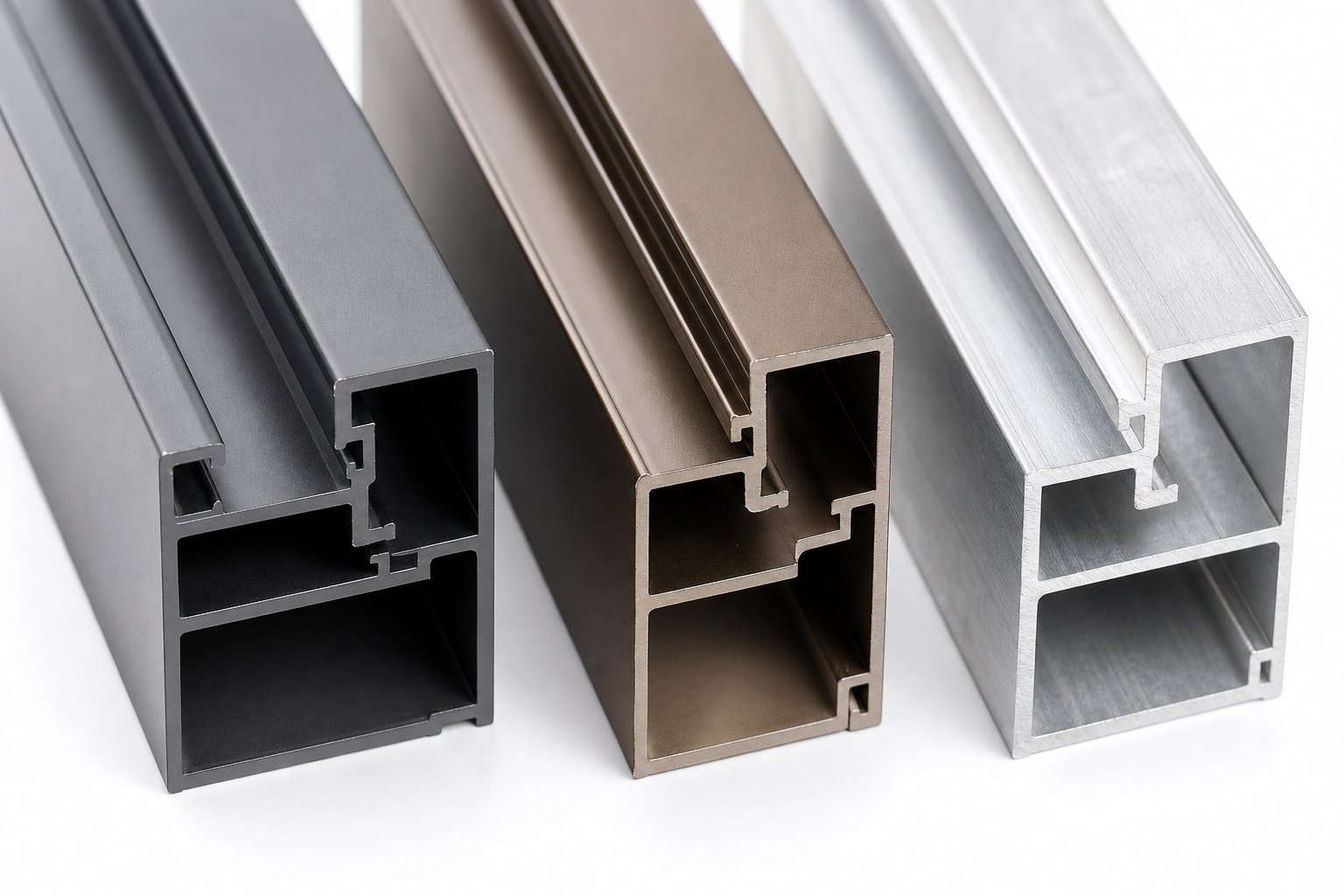
Every aluminium window frame has a surface treatment — and that treatment dictates exactly which products are safe to use. Skip this step and you risk stripping a coating that was factory-applied to protect the metal for decades. The difference between anodized and powder coated aluminium windows is not just cosmetic; it changes the entire cleaning approach.
Most residential aluminium frames in Australia fall into one of three categories. Identifying yours takes about thirty seconds, and it saves you from expensive mistakes.
| Finish Type | Appearance | Safe Cleaners | Products to Avoid |
|---|---|---|---|
| Powder-Coated | Smooth, uniform colour resembling baked paint; chalky when faded | pH-neutral soap and water, non-abrasive cream cleaners | Solvents, acetone, acidic cleaners, abrasive pads |
| Anodized | Metallic lustre visible through colour; smoother feel than paint | Mild soap and water, non-alkaline cleaners, dedicated anodized aluminium products | Alkaline cleaners (ammonia, bleach), strong acids, abrasive scourers |
| Mill-Finish (Bare) | Raw silver-grey metal; may show dark oxidation marks when touched | Aluminium-specific polish, mild soap, metal restoration creams | Chloride-based products, harsh acids, neglect (requires regular treatment) |
Powder-Coated Aluminium Frames
Powder coating is the most common finish on modern Australian aluminium windows. A dry resin-and-pigment powder is electrostatically sprayed onto the frame and then baked at roughly 200°C, fusing into a thick protective skin between 60 and 120 microns thick. That baked layer acts as both colour and armour.
How to tell if aluminium windows are powder coated? Look closely at the surface. It resembles a smooth, even paint finish rather than bare metal. If the frame has faded over time, you may notice a chalky residue when you run a finger across it — that chalking is the telltale sign of aged powder coating.
Safe cleaners for powder coated aluminium are straightforward: warm water with a few drops of pH-neutral dish soap and a soft microfibre cloth. That combination handles routine grime without touching the coating. Avoid solvent-based cleaners, acetone, or anything marketed as a “paint stripper” — these dissolve the very layer protecting your frames. Abrasive pads are equally damaging, creating micro-scratches that dull the finish and expose raw metal to moisture.
Modern powder-coated aluminium windows, such as those from manufacturers like MEICHEN, are engineered with durable finishes that simplify cleaning to just pH-neutral soap and water. This makes finish identification especially relevant for older frames where the coating type may be less obvious or the original quality less robust.
Anodized Aluminium Frames
Cleaning anodized aluminium window frames requires a slightly different mindset. Unlike powder coating, anodizing is not a layer sitting on top of the metal — it is the metal’s own surface converted into a harder, thicker oxide through an electrochemical bath. The result is an integral finish that cannot flake, peel, or blister the way paint can.
Visually, anodized frames retain a natural metallic lustre. Colours tend to be limited — silver, bronze, champagne, and black are the most common — and the surface feels noticeably smoother than powder coating. If your frames have a subtle metallic sheen visible through their colour, they are likely anodized.
Anodized surfaces can handle slightly more vigorous cleaning than powder-coated ones, but they have their own vulnerability: alkaline products. Ammonia-based glass cleaners, bleach, and caustic degreasers attack the anodized oxide layer. Stick to mild soap and water for routine cleaning, and if tougher grime demands something stronger, choose a dedicated aluminium cleaner explicitly labelled as safe for anodized surfaces. Avoid abrasive scourers — while the oxide is hard, scratches through it cannot self-repair.
Mill-Finish and Bare Aluminium
Mill-finish aluminium is raw metal with no applied coating beyond its natural oxide film. It appears silver-grey and oxidises faster than treated alternatives, often leaving a dark residue on hands or cloths. You will rarely find this on modern residential window frames in Australia, but it does appear on older installations, industrial buildings, and some custom architectural projects.
Because the only protection is that thin natural oxide layer, bare aluminium demands more active maintenance. Aluminium-specific polishing compounds restore the surface and remove oxidation buildup. A mild soap wash removes everyday dirt, but periodic polishing is essential to prevent the progressive pitting that unchecked oxidation causes — particularly in coastal environments where chlorides accelerate corrosion.
Chloride-based cleaners, strong acids, and prolonged neglect are the enemies here. If your bare aluminium frames sit within a kilometre of the coast, a monthly fresh-water rinse is non-negotiable.
Knowing your finish narrows the cleaning product choice from dozens of options to just a handful of safe ones. The next practical question is which specific tools and solutions belong in your cleaning kit — and which common household items should stay in the cupboard.
The Essential Cleaning Toolkit for Aluminium Windows
A good cleaner paired with a bad cloth still scratches. Getting the solution right is only half the equation — the tools you use to apply and remove it matter just as much. The best cleaning products for aluminium window frames accomplish nothing if you spread them with a scouring pad that gouges straight through the finish.
Building a proper toolkit means matching each product category to a specific cleaning scenario and pairing it with application tools that protect rather than damage the surface.
Recommended Cleaning Solutions by Category
Not every cleaning situation calls for the same bottle. Four solution categories cover virtually every scenario you will encounter on aluminium frames, from weekend dust to years of neglected grime:
- pH-neutral dish soap diluted in warm water — the safest all-purpose option and the only product most frames ever need. A few drops in a bucket of tepid water creates a solution gentle enough for powder-coated, anodized, and bare aluminium alike. Industry guidance recommends a pH between 6 and 8 to stay within safe limits.
- Non-abrasive cream cleaners — designed for stubborn grime that soap alone will not shift. These contain fine polishing agents suspended in a cream base rather than gritty particles. Use sparingly on localised marks rather than across entire frames.
- Oxygen-based cleaners — the go-to for mould and mildew. Sodium percarbonate releases oxygen when dissolved in water, lifting organic growth without the corrosive effects of chlorine bleach. Safe for sealed finishes and far less aggressive than bleach-based alternatives.
- Aluminium-safe degreasers — formulated for urban pollution buildup, carbon film from traffic, and greasy kitchen-adjacent residue. Look for products labelled as pH-neutral or specifically safe for coated metals. Avoid general-purpose degreasers unless the label confirms aluminium compatibility.
Each category exists because different contaminants bond to the surface differently. Soap lifts loose dirt, cream cleaners abrade stuck-on grime at a micro level, oxygen-based products kill biological growth, and degreasers dissolve oily films. Reaching for the wrong category usually means working harder for a worse result.
Application Tools That Protect the Finish
The right solution in the wrong hands still causes damage. A pH neutral cleaner for aluminium windows loses its gentle advantage the moment you apply it with an abrasive pad. Your application toolkit should include:
- Microfibre cloths (at least two) — one damp for washing, one dry for buffing. Microfibre picks up dust and dirt particles without scratching, making it the preferred fabric for aluminium frames.
- Soft-bristle brush — ideal for textured frame profiles, window tracks, and corners where cloths cannot reach.
- Non-abrasive sponge — useful for larger flat sections. Ensure it has no scouring layer on the reverse side.
- Spray bottle — lets you apply solution evenly without over-saturating seals or hardware.
- Plastic putty knife — removes caked-on debris, paint splatter, or dried insect residue without scratching the finish the way metal tools would.
Equally important is knowing what not to use on aluminium window frames. Keep these away from your frames entirely:
- Steel wool and wire brushes — these embed metal particles into the surface, causing rust spots on an otherwise corrosion-resistant material. Manufacturer care guides explicitly warn against steel wool, scrapers, and scouring liquids.
- Abrasive scourers — even “gentle” green scourers create micro-scratches that trap dirt and dull the finish over time.
- Pressure washers aimed at seals — high-pressure water forces moisture past rubber gaskets, potentially causing leaks and internal frame damage.
- Any tool that can gouge through coatings — metal scrapers, razor blades, and stiff wire brushes all penetrate powder coating or anodizing in a single pass.
A non abrasive cleaner for aluminium frames paired with a microfibre cloth handles ninety percent of maintenance jobs. The remaining ten percent — mould, mineral deposits, oxidation — calls for a targeted solution from the categories above, still applied with the same gentle tools. Having the full kit assembled before you start means you will not improvise with whatever rough cloth is closest, which is exactly how scratches happen.
With the right products and tools gathered, the method you follow determines whether you get streak-free results or uneven patches that need redoing.
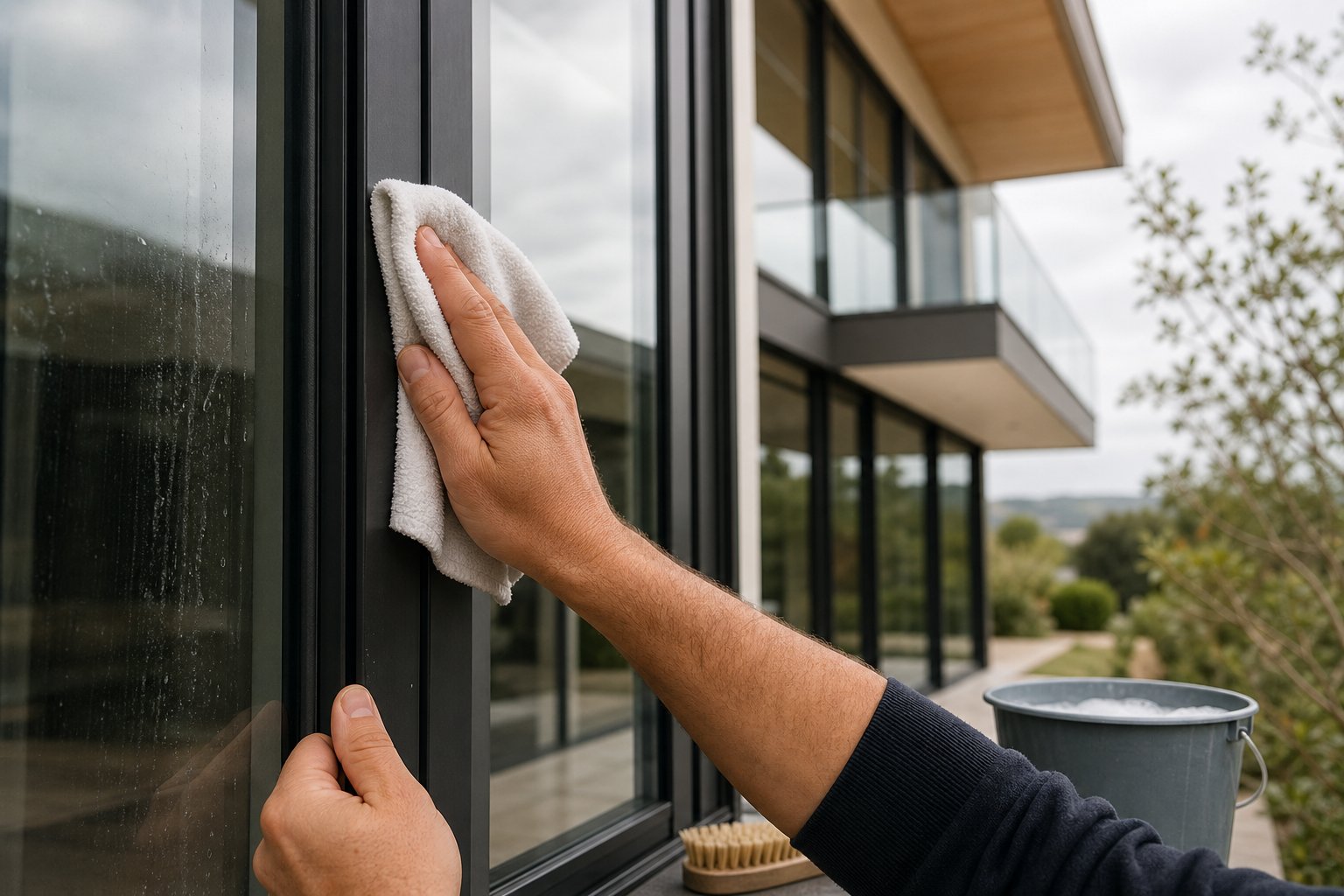
Step-by-Step Method to Clean Aluminium Frames Safely
Good products and proper tools still need a sensible method behind them. Rushing straight into scrubbing without a plan invites streaking, missed spots, and the risk of leaving cleaner residue that attracts grime faster than a bare frame would. A repeatable process — one you follow the same way every time — delivers consistent results regardless of whether you are cleaning powder-coated frames on a single-storey weatherboard home or anodized profiles on a third-floor apartment balcony.
The method below works for routine maintenance on any aluminium frame finish. It starts with a step most guides gloss over entirely: testing your chosen cleaner before committing it to visible surfaces.
The Spot-Test Process Most Guides Skip
Every cleaner behaves differently on every finish. Even a product labelled “safe for aluminium” may react with a specific powder-coat colour or an older anodized treatment. A spot test takes five minutes and can save you from an irreversible mistake across every frame in the house.
Here is how to clean aluminium frames without scratching or discolouring them — by confirming your cleaner is safe before it touches anything visible:
- Choose a hidden section of frame. The bottom inside corner of a window behind a curtain is ideal. If that is not accessible, try the underside of the frame or a section hidden by a fly screen. The goal is an area you will never see during normal use.
- Apply your chosen cleaner to a small patch — roughly 50 mm x 50 mm is plenty. Use the same dilution ratio and the same cloth you plan to use for the full clean.
- Let it sit for the same duration you intend to use during full cleaning. If your method calls for wiping immediately, wipe immediately. If the product label says to leave it for two minutes, leave it for two minutes. Matching the dwell time matters because some reactions only become visible after sustained contact.
- Wipe clean with a damp microfibre cloth and dry the area.
- Wait — ideally 24 hours. Some chemical reactions with aluminium coatings are not instantaneous. Discolouration or dulling can develop overnight as residues interact with the finish. If you cannot wait a full day, give it at least a couple of hours and inspect under natural light rather than artificial lighting, which can mask subtle colour shifts.
- Inspect under natural light for any change. Look for dulling of sheen, colour shift (even slight), a tacky feel, or chalky residue. Compare the test patch against an adjacent untouched area. If the two look identical, your cleaner is safe to use across the full frame.
If the test patch shows even minor changes, discard that cleaner for this particular frame finish and try a gentler alternative. A pH-neutral, non-abrasive cleaner is always the safest fallback when a harsher product fails the spot test.
Full Frame Cleaning in Seven Steps
With a confirmed-safe cleaner in hand, this seven-step sequence is the best way to clean aluminium window frames outside or inside. It works top-to-bottom for a simple reason: gravity pulls dirty water downward. Cleaning from the top prevents grimy runoff from streaking across sections you have already finished.
- Remove loose debris with a dry brush. Use a soft-bristle brush to sweep away cobwebs, dust, leaves, and insect residue from the frame surface, corners, and where the frame meets the wall. This prevents loose grit from becoming an abrasive the moment you introduce water.
- Rinse with plain water to remove surface grit. A gentle spray from a garden hose or a sponge soaked in clean water dislodges fine particles that the dry brush missed. This pre-rinse step is critical — skipping it means dragging sand and dirt across the finish under your cloth, creating scratches invisible until light hits them at the right angle.
- Apply diluted pH-neutral soap with a microfibre cloth. Dip your cloth into your bucket of warm water with a few drops of dish soap (or your spot-tested cleaner). Wring it out so it is damp rather than dripping. Too much water floods seals and tracks unnecessarily.
- Work in sections from top to bottom. Clean the top rail first, then the side jambs, and finish with the bottom rail. Use light, even pressure — let the cleaner do the work rather than your arm. Overlap your strokes slightly to avoid leaving unwashed gaps between passes.
- Use a soft-bristle brush in tracks and corners. Switch to a small brush (an old toothbrush works for tight spots) to dislodge grime from recessed profiles, drainage slots, and the inside corners where cloths cannot reach. Keep the brush damp with your cleaning solution.
- Rinse thoroughly with clean water. Go over every section with fresh water to remove all soap residue. Leftover detergent dries into a film that attracts dust within days, undoing your work. Rinse from top to bottom again to flush residue downward and off the frame entirely.
- Dry and buff with a clean microfibre cloth. Drying prevents water spots — especially in areas with hard water — and gives the finish a polished appearance. Buff lightly in straight, even strokes rather than circular motions to avoid visible swirl patterns on glossy finishes.
The entire process takes roughly 10 to 15 minutes per window for a standard residential frame. Homes with larger or more accessible windows may find it faster once the rhythm is established.
A few practical notes for how to wash aluminium window frames at home without surprises:
- Clean on an overcast day or when frames are in shade. Direct sunlight dries your cleaning solution mid-wipe, leaving streaks and soap residue that require a second pass.
- Change your rinse water frequently. Dirty rinse water redeposits the grime you just removed.
- If a section has stubborn marks that resist the soap solution, note it and return after the full clean with a targeted product — do not increase pressure or switch to an abrasive tool mid-process.
This routine handles the everyday dust, pollen, and light grime that accumulates between deep cleans. Tougher problems — oxidation that will not budge, black mould colonies, or mineral scale from sprinkler overspray — need targeted treatments matched to the specific stain type rather than extra elbow grease on the same soap-and-water method.
Fixing Specific Stains on Aluminium Window Frames
Soap and water handle daily dirt brilliantly — but they hit a wall against the stubborn stuff. White chalky patches, dark mould colonies, cloudy mineral scale, and sticky carbon film each bond to aluminium differently, and each demands its own targeted approach. Throwing more soap at a stain that soap cannot dissolve just wastes time and risks damaging the finish through unnecessary scrubbing.
The table below maps the four most common problems to their causes, cleaners, and fixes so you can jump straight to your specific issue.
| Problem Type | Visual Signs | Recommended Cleaner Category | Technique | Prevention Tips |
|---|---|---|---|---|
| Oxidation / Chalky Residue | White powdery film, dull patches, rough texture when touched | Aluminium restoration cream or oxalic acid-based cleaner | Apply with soft cloth in circular motions; rinse thoroughly | Keep frames clean and sealed; apply protective wax annually on bare aluminium |
| Mould and Mildew | Black or dark green spots, often concentrated in shaded corners and along bottom rails | Oxygen-based cleaner or diluted white vinegar (1:4 ratio with water) | Spray on, let sit 5–10 minutes, wipe with soft cloth, rinse clean | Improve ventilation; trim vegetation away from frames; wipe condensation regularly |
| Hard Water Stains / Mineral Deposits | White or cloudy spots, often in a spray pattern from sprinklers or along the base of frames | Baking soda paste or diluted white vinegar | Apply paste gently with damp cloth; let sit briefly; wipe and rinse | Redirect sprinklers away from windows; dry frames after heavy rain |
| Urban Grime / Carbon Film | Grey-black sticky residue, heaviest on street-facing frames | pH-neutral aluminium-safe degreaser | Spray on, work with microfibre cloth in sections, rinse completely | Increase cleaning frequency to every 8–10 weeks in high-traffic areas |
Removing Oxidation and White Chalky Residue
That white chalky residue on aluminium window frames is not dirt — it is the metal’s own protective oxide layer breaking down and flaking away. Oxidation starts as a faint dulling of the surface and gradually progresses to a rough, powdery film you can feel under your fingertips. It is most common on older mill-finish frames and aged powder-coated profiles where the coating has deteriorated, exposing the raw aluminium underneath.
Knowing how to remove oxidation from aluminium window frames means matching your approach to the severity. For mild surface fogging — a slight loss of sheen without visible powder — a dedicated aluminium restoration cream applied with a soft cloth in small circular motions is usually enough to restore the finish. These creams contain fine polishing compounds that lift the degraded oxide without scratching through to fresh metal.
Moderate chalking, where distinct white patches and a rough texture have developed, calls for something more targeted. Oxalic acid-based cleaners are particularly effective here — they dissolve the oxidised layer chemically rather than abrasively. Apply the cleaner, let it work for the time specified on the label (typically five to fifteen minutes), and use a non-metallic pad to gently work the surface. Always rinse thoroughly afterwards. Leftover acid residue continues reacting with the metal long after you have walked away, so neutralising with clean water is non-negotiable.
Severe cases — deep pitting, visible material loss, or a chalky texture that returns within weeks of cleaning — signal that the frame’s protective finish is fundamentally compromised. At that stage, cleaning alone will not solve the problem, and you may be looking at a refinishing or replacement conversation.
Eliminating Mould and Black Spots on Frames
Black mould on aluminium window frames tends to cluster where moisture lingers: bottom rails, shaded corners, and the junction between the frame and the wall. Mould thrives on dampness and organic debris like dust and pollen, so frames in humid, sheltered positions — bathroom windows, south-facing elevations shielded by eaves, or windows surrounded by dense vegetation — are prime targets.
For most cases, an oxygen-based cleaner is the safest and most effective option. Dissolve the powder in warm water according to the product instructions, apply it to the affected areas, and let it sit for five to ten minutes. The oxygen action lifts mould from the surface without bleaching colour from powder-coated finishes or attacking anodized treatments the way chlorine bleach would.
A diluted white vinegar solution — roughly one part vinegar to four parts warm water — also works well for how to get mould off aluminium window frames. Spray it on, leave it for a few minutes, then wipe clean with a soft cloth. If the mould is particularly stubborn, you can increase the vinegar concentration slightly, up to a 1:1 ratio with water. However, exercise caution with anodized frames: vinegar is mildly acidic, and prolonged or frequent use can dull the anodized finish over time. Always spot-test first, and rinse thoroughly after treatment.
One important detail often overlooked: recurring mould in the same location is not a cleaning problem — it is a ventilation or moisture management issue. If black spots keep returning within weeks of cleaning, the underlying cause needs attention. Improving airflow around frames, trimming back plants that block sun exposure, and addressing condensation sources inside the home will do more long-term good than any cleaning product.
Dissolving Hard Water Stains and Mineral Deposits
Those cloudy white spots that will not budge with regular soap are mineral deposits — primarily calcium and magnesium left behind when water evaporates on the frame surface. Removing hard water stains from aluminium windows is a common frustration for homeowners in areas with bore water, hard mains supply, or garden sprinklers that clip the window frames during their cycle. Rain runoff passing through concrete lintels or rendered walls can deposit the same mineral residue along the lower sections of the frame.
A paste made from equal parts baking soda and water is one of the gentlest and most effective remedies. Baking soda dissolves calcium deposits without scratching, making it safe for powder-coated and anodized surfaces alike. Apply the paste with a damp microfibre cloth, let it sit for roughly ten minutes, then wipe away gently and rinse with clean water. For heavier buildup, a light vinegar-and-water spray over the paste creates a mild fizzing reaction that helps loosen deposits further — though again, use vinegar cautiously on anodized finishes and always rinse completely.
Prevention is simpler than the cure. Redirecting sprinkler heads so they no longer hit the windows eliminates the most common source. After heavy rain, a quick wipe-down of the lower frame rails removes mineral-laden water before it has a chance to dry and leave marks. In regions with particularly hard water, a squeegee pass across the glass and frame after rain or hosing keeps deposits from ever gaining a foothold.
Matching the right treatment to the right stain keeps your aluminium frames looking sharp without risking damage — but how often you need to reach for these products depends less on the frames themselves and more on the environment they sit in.

Cleaning Frequency Based on Your Climate and Location
Your postcode matters more than your calendar when deciding how often to clean aluminium window frames. Generic advice to “clean twice a year” ignores the reality that a beachside home in Cronulla faces completely different challenges to a suburban house in Ballarat or a high-rise apartment in inner-city Melbourne. The contaminants attacking your frames, the speed at which they accumulate, and the specific products you need to combat them all shift depending on geography.
Rather than following a one-size-fits-all schedule, tailor your maintenance rhythm to the environment your frames actually live in.
| Environment Type | Primary Contaminant | Recommended Cleaning Frequency | Best Product Category |
|---|---|---|---|
| Coastal / Salt Air | Salt crystals, chloride deposits | Monthly fresh-water rinse; full clean every 6-8 weeks | pH-neutral soap and water only |
| Urban / High-Pollution | Carbon film, traffic soot, diesel residue | Full clean every 8-10 weeks | pH-neutral aluminium-safe degreaser |
| Humid / Mould-Prone | Mould spores, mildew, organic growth | Quarterly deep clean with mould treatment | Oxygen-based cleaner |
| Rural / Pollen-Heavy | Pollen, dust, insect residue | Quick rinse during pollen season; full clean every 10-12 weeks | Mild soap and water |
Coastal and Salt Air Environments
Salt is aluminium’s most persistent adversary. Airborne salt crystals carried on coastal breezes settle invisibly on frame surfaces and — if left undisturbed — draw moisture from the air, creating a concentrated saline solution that accelerates corrosion and causes pitting, discolouration, and weakened seals over time. Homes within a few kilometres of the coast in areas like the Gold Coast, Sydney’s Northern Beaches, or Perth’s coastal suburbs face this challenge year-round.
The best way to maintain aluminium windows in a coastal area is frequency over intensity. A monthly rinse with plain fresh water — nothing more than a garden hose passed over all frame surfaces for thirty seconds per window — washes away salt deposits before they can react with the metal or its coating. This takes minutes and prevents the buildup that leads to etching.
Every six to eight weeks, follow up with a proper full clean using pH-neutral soap and a microfibre cloth. Avoid anything acidic — even mild acidic cleaners compound the damage that salt has already started. To prevent corrosion on aluminium window frames near the coast, steer clear of vinegar-based solutions and citrus cleaners entirely. pH-neutral is non-negotiable in salt-air environments.
Pay extra attention to horizontal surfaces like bottom rails and sill tracks, where salt-laden moisture pools and concentrates. After coastal storms, give frames a fresh-water rinse as soon as conditions allow — salt spray from heavy weather can deposit far more residue in a single event than weeks of normal coastal air exposure.
Urban and High-Pollution Areas
If your home sits near a busy road, an industrial zone, or a train line, your aluminium frames are collecting carbon deposits and traffic film that soap-and-water alone struggles to shift. This grey-black residue — a cocktail of diesel particulates, brake dust, and airborne hydrocarbons — bonds to frame surfaces more stubbornly than organic dirt. Inner-city suburbs in Sydney, Melbourne, and Brisbane are particularly affected, especially on street-facing windows.
Cleaning aluminium windows in high-pollution areas every eight to ten weeks prevents carbon film from building into a layer thick enough to resist mild soap. For routine washes, your standard pH-neutral solution handles the lighter accumulation. When the film becomes visibly greasy or you notice a darkening of the frame colour that does not respond to soapy water, step up to an aluminium-safe degreaser. Apply it with a microfibre cloth, work in small sections, and rinse thoroughly to avoid residue attracting fresh particulates.
Carbon deposits are not just a cosmetic issue. Left for extended periods, they can trap moisture against the frame surface and create micro-environments where corrosion begins beneath the grime layer — invisible until the buildup is finally cleaned and damage is revealed underneath.
Humid and Mould-Prone Climates
Tropical and subtropical regions — Brisbane, Cairns, Darwin, much of coastal NSW — combine warmth and moisture in exactly the proportions mould loves. Frames in sheltered positions that receive limited direct sunlight accumulate mould faster than exposed ones. South-facing elevations, windows tucked under deep eaves, and frames surrounded by dense garden plantings are the usual culprits.
A quarterly deep clean with an oxygen-based mould treatment tackles established growth without damaging the frame finish. Between those quarterly sessions, keep frames as dry as possible. Wipe condensation from inside surfaces during humid mornings. If vegetation is growing within half a metre of the window, trim it back to improve airflow — stagnant, humid air trapped between foliage and the frame is a mould incubator.
Frames in bathrooms and laundries deserve even more attention. These rooms generate sustained humidity from showers, baths, and dryers. Extracting moisture at the source — running exhaust fans during and after use — reduces the moisture load on frames considerably and extends the interval between mould treatments.
Rural and Pollen-Heavy Regions
Country properties and homes near parkland or bushland face a different challenge entirely. Pollen, fine agricultural dust, and insect residue accumulate rapidly during spring and summer. The dust itself is relatively easy to remove — a rinse and wipe handles it — but pollen carries a hidden sting. When wet, pollen becomes mildly acidic. Left on frames through a cycle of morning dew and afternoon heat, it can gradually dull finishes over a single season.
During heavy pollen periods (typically September through November across much of southern Australia), a quick water rinse every week or two washes pollen off before it has a chance to become damp and acidic. A full clean every ten to twelve weeks addresses the heavier dust and insect buildup that accumulates in rural areas.
The good news for rural homeowners: the contaminants you face are generally less aggressive than salt or carbon. Mild soap and water is almost always sufficient, and the frames are less likely to develop the stubborn chemical staining that urban and coastal environments produce. The main risk is neglect — letting thick dust and pollen layers sit through an entire season without a rinse invites scratching during eventual cleaning, as dried particles act like fine sandpaper under a cloth.
Your environment dictates the tempo, but the act of cleaning itself often reveals adjacent maintenance needs — grimy tracks collecting debris, hardware growing stiff, and seals quietly degrading out of sight.
Cleaning Tracks and Hardware Alongside Your Frames
Dirty tracks, stiff hinges, and grimy handles tend to reveal themselves the moment you start wiping down your frames. Ignoring them while the bucket is already out means coming back later to repeat the setup — or worse, letting debris in the tracks interfere with how the window operates. A few extra minutes during your regular frame clean keeps everything functioning smoothly.
Cleaning Window Tracks Without Damaging Seals
The best approach to how to clean aluminium window tracks starts with a vacuum, not a cloth. Use a crevice attachment to pull out loose dust, dead insects, leaves, and grit sitting in the channels. Skipping this step means pushing abrasive debris back and forth when you introduce water — exactly the kind of scratching you have spent the whole clean trying to avoid.
Once loose material is gone, dip an old toothbrush or small detail brush in warm soapy water and work along the track channels. Focus on corners where grime compacts over time. Wipe with a damp cloth and dry. Check the small drainage holes along the bottom of the frame — these let water escape and must remain clear. If they are blocked, a cotton bud or soft bristle can dislodge the debris gently. Never force a pin, wire, or screwdriver into these openings; you risk enlarging or damaging the drainage path.
Rubber seals deserve their own rule: warm soapy water only. The best way to clean window frame rubber seals is the gentlest way. Chemicals — even mild ones — can cause seals to perish, peel, or lose flexibility, which leads to drafts and water ingress. Wipe them down with a soft damp cloth, remove any visible mould with soapy water and light pressure, and leave them alone. Solvents, bleach, and citrus-based sprays all degrade rubber over time.
Maintaining Hardware and Hinges
Handles, locks, and hinges collect the same grime as the frame itself but rarely get attention until something sticks or squeaks. While you have your cleaning cloth in hand, give all hardware a wipe-down with the same mild soapy solution you used on the frames. Rinse and dry to prevent water spots on metallic finishes.
For moving parts — hinges, friction stays, and locking mechanisms — a light application of silicone spray keeps things operating smoothly without attracting dust. How to lubricate aluminium window hinges properly: spray a small amount onto a cloth first, then apply to the hinge barrel and pivot points rather than spraying directly (overspray stains surrounding surfaces). Work the window open and closed a few times to distribute the lubricant, then wipe any excess.
Avoid WD-40 on window mechanisms. It works as a short-term solvent and water displacer, not a lasting lubricant — and its oily residue attracts dust and grit that accelerate wear on the very parts you are trying to protect.
One detail often missed when cleaning aluminium window hardware without scratching: brushed or satin-finish handles and stays have a visible grain direction. Always wipe along the grain, never across it. Wiping against the grain leaves micro-scratches that catch light and dull the surface permanently. A gentle pass in the correct direction keeps hardware looking as crisp as the frames around it.
With tracks clear, seals intact, and hardware moving freely, the entire window system works as a unit — which brings the bigger picture into focus: how long can you expect these frames to last, and when does maintenance stop being worthwhile?

Long-Term Frame Care and When to Consider an Upgrade
Regular cleaning is not just about appearances — it directly determines how long aluminium window frames last. A well-maintained powder-coated frame in a temperate Australian suburb can serve comfortably for 15 to 30 years or more, while an identical frame neglected in a salt-air environment may show serious deterioration within a decade. The cleaning methods, products, and schedules covered throughout this guide are what separate those two outcomes.
Still, there is a honest threshold where cleaning stops solving the problem. Cosmetic wear — surface dulling, minor discolouration, light oxidation — responds to the right products and techniques. Structural degradation does not. Knowing the difference saves you from pouring effort into frames that have already passed the point of return.
When Cleaning Is Not Enough and Replacement Makes Sense
Some damage is reversible. Chalky oxidation polishes away. Mould scrubs off. Hard water spots dissolve. These are surface-level issues that the correct cleaner and method will resolve every time.
Other damage signals that the frame itself — not just its surface — has failed. Watch for these signs aluminium window frames need replacing:
- Persistent pitting that will not polish out — small craters in the metal surface indicate corrosion has eaten into the aluminium beneath the coating. No amount of restoration cream fills material that is physically gone. If pitting covers large sections of the frame, the protective finish has irreversibly failed.
- Seal failure causing drafts or condensation between panes — condensation forming between double-glazed panes means the insulating gas has escaped and the unit no longer insulates properly. Drafts around closed windows point to gasket degradation that cleaning cannot fix. Both issues increase energy bills and reduce comfort.
- Powder-coat peeling that exposes raw aluminium — once the baked-on coating separates from the substrate, moisture reaches unprotected metal directly. Spot touch-ups rarely bond to the original factory finish, and exposed patches accelerate corrosion across the surrounding area. Widespread peeling is a clear indicator the frame has reached the end of its service life.
- Hardware that no longer locks securely — handles that spin without engaging, locks that will not latch, or hinges so worn the sash sags are safety and security concerns. Difficulty opening or closing windows often accompanies warped frames or hardware failure that replacement parts alone cannot resolve on older systems.
- Water damage or visible frame distortion — staining around the frame interior, bubbling paint on adjacent walls, or a frame profile that has visibly bowed all suggest water is entering the building envelope. This demands attention beyond cleaning — it demands new windows.
If you spot one of these signs in isolation, a targeted repair may still be worthwhile. Two or more appearing together — say, peeling coating alongside persistent drafts — typically means the frames have reached the stage where the cost and effort of ongoing repairs outweigh the value of replacement.
Modern Aluminium Windows Designed for Minimal Maintenance
The cleaning challenges discussed throughout this article — oxidation, mould adhesion, salt corrosion, pollen staining — are precisely the problems that modern aluminium window engineering is designed to minimise. Today’s powder-coated systems use advanced resin formulations baked at controlled temperatures to create finishes far more resilient than those available even fifteen years ago. These coatings resist chipping, cracking, and fading even under sustained UV exposure and harsh weather, meaning the baseline maintenance burden drops dramatically compared to older frames.
For homeowners tired of intensive upkeep — or dealing with frames showing the terminal signs listed above — upgrading to a current-generation aluminium window system is the most practical long-term solution. MEICHEN’s aluminium windows, for example, feature durable powder-coated finishes engineered to resist the oxidation and staining that plague older profiles. Their range includes a broad selection of colours that maintain their appearance with nothing more than periodic soap-and-water washes, weather-performance engineering suited to coastal and harsh Australian climates, and customisation options spanning residential homes, apartments, and commercial projects.
The practical reality is straightforward. Low maintenance aluminium windows designed and manufactured to current standards need less cleaning, respond better to gentle products when they do need attention, and hold their appearance for decades rather than years. If your current frames demand constant scrubbing, specialist restoration creams, or quarterly mould treatments just to look presentable, the issue may not be your cleaning routine — it may be the frames themselves.
Explore MEICHEN’s aluminium window range to see systems built to stay cleaner longer and perform in Australia’s toughest conditions — because the best answer to what to use to clean aluminium window frames might ultimately be windows that barely need cleaning at all.
Frequently Asked Questions About Cleaning Aluminium Window Frames
1. Can you use vinegar on aluminium window frames?
Vinegar can be used cautiously on powder-coated aluminium frames in a diluted solution (one part vinegar to four parts water) for mould removal or hard water stains. However, it should be avoided on anodized frames, as its mild acidity can dull the electrochemically treated surface over time. Always perform a spot test on a hidden section first, limit contact time, and rinse thoroughly with fresh water afterwards. For routine cleaning, pH-neutral soap and water is a safer all-purpose choice regardless of finish type.
2. What should you never use to clean aluminium window frames?
Avoid steel wool, abrasive scourers, wire brushes, and metal scrapers, as these scratch through protective coatings in a single pass. Chemical products to avoid include strongly alkaline cleaners like ammonia and bleach (which attack anodized finishes), solvents and acetone (which dissolve powder coating), and strongly acidic cleaners that strip aluminium’s natural oxide layer. Pressure washers aimed directly at rubber seals can also force water past gaskets and cause leaks. Stick to soft microfibre cloths, non-abrasive sponges, and pH-neutral cleaning solutions for safe results.
3. How often should you clean aluminium window frames in Australia?
Cleaning frequency depends on your local environment rather than a fixed calendar schedule. Coastal homes within a few kilometres of the ocean need a monthly fresh-water rinse and a full clean every six to eight weeks due to salt accumulation. Urban homes near busy roads benefit from cleaning every eight to ten weeks to remove carbon film and traffic soot. Humid climates like coastal Queensland require quarterly deep cleans with mould treatment. Rural and pollen-heavy areas generally need a full clean every ten to twelve weeks, with quick water rinses during peak pollen season.
4. How do you remove white chalky oxidation from aluminium window frames?
White chalky residue is the frame’s oxide layer breaking down. For mild surface fogging, apply a dedicated aluminium restoration cream with a soft cloth using small circular motions to polish away the degraded layer. For moderate chalking with visible rough patches, an oxalic acid-based cleaner dissolves the oxidised layer chemically — apply it, let it sit for the label-specified time, work gently with a non-metallic pad, and rinse thoroughly. If chalking returns within weeks or deep pitting is present, the frame’s protective finish has likely failed beyond what cleaning can resolve, and professional assessment or replacement may be warranted.
5. What is the best way to clean aluminium window tracks?
Start with a vacuum using a crevice attachment to remove loose debris, dust, and dead insects from the channels. This prevents abrasive particles from scratching the track when you introduce water. Next, use an old toothbrush or detail brush dipped in warm soapy water to scrub along the track channels, focusing on compacted corners. Wipe clean with a damp cloth and dry. Check that small drainage holes along the bottom rail remain clear — use a cotton bud to gently dislodge any blockage. Never force sharp objects into drainage openings, and clean rubber seals with soapy water only, avoiding solvents that degrade the rubber.
More Window & Door Guides