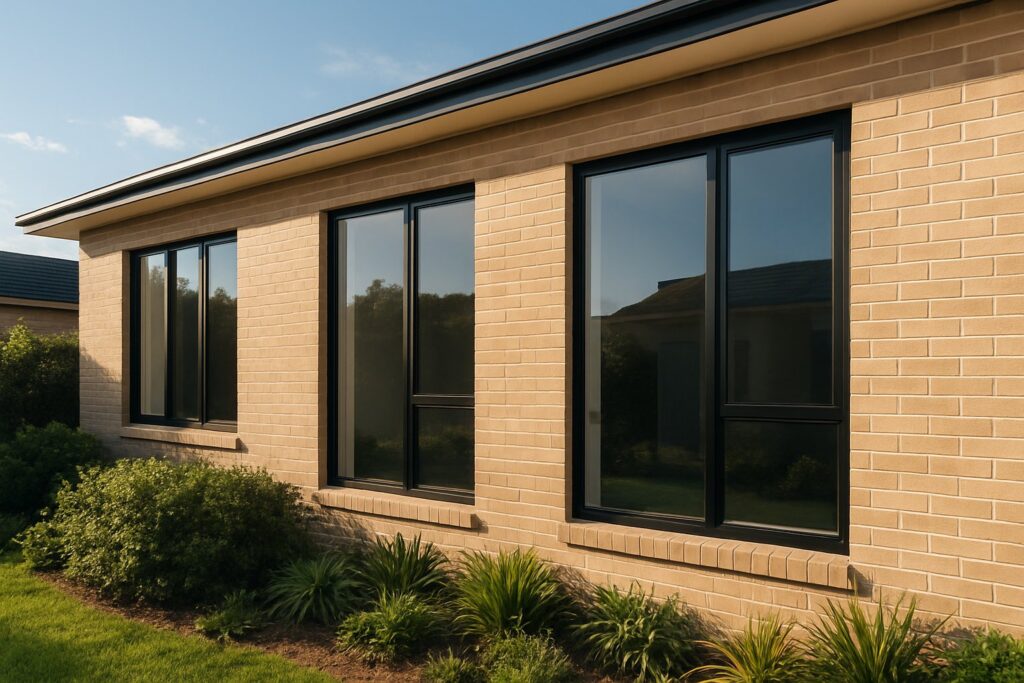
Choosing Between uPVC and Aluminium Windows in a Changed Market
Every new build, renovation, or extension reaches the same crossroads: uPVC vs aluminium windows. It sounds like a simple either-or, but the decision locks you into decades of thermal performance, maintenance costs, and street appeal. Get it wrong and you will feel the consequences every time you open an energy bill or try to sell.
Why This Decision Matters More Than You Think
Window frames account for roughly 20 to 30 percent of a window unit’s total surface area, yet they drive the lion’s share of long-term cost differences. The frame material determines how slim your sightlines can be, how well seals hold up against coastal salt air or western sun, and whether the system still operates smoothly after 25 years of Melbourne winters or Brisbane summers. For builders and specifiers working to NCC energy targets, the aluminium vs uPVC windows question also shapes which glazing configurations are viable and how easily a project meets its NatHERS star rating.
How Modern Materials Have Changed the Game
If your last encounter with aluminium frames was a draughty 1990s apartment, or your impression of uPVC comes from bulky white frames on a fibro cottage, it is time to reset. Both materials have undergone a quiet revolution.
Polyamide thermal break technology has turned aluminium from a heat conductor into a genuine thermal performer, while multi-chamber slim-profile uPVC systems now deliver sightlines that rival aluminium at a fraction of the cost. The old rules no longer apply.
So which material actually wins when you weigh thermal efficiency, lifespan, aesthetics, and budget together? The honest answer is that it depends on the specific product tier and your project context. That is why this guide ranks five distinct window options across both material categories, from thermally broken aluminium at the top to standard uPVC at the entry level, giving you a clear framework for deciding which option suits your home, climate zone, and budget. Wondering whether uPVC or aluminium windows which is better for your situation? The answer starts with understanding how each tier performs against a consistent set of criteria.
How We Ranked These Five Window Options
A fair comparison of uPVC windows vs aluminium windows needs more than gut feeling or a single spec sheet. Each of the five options in this guide was scored against the same set of weighted criteria, drawn from real-world performance data, industry lifespan benchmarks, and the specific demands of Australian climates. Here is how we structured the evaluation.
Evaluation Criteria Explained
Seven factors shape whether a window system delivers genuine value over its installed life. Some carry more weight than others because they compound over time or directly affect compliance with NCC energy requirements.
- Thermal performance — Measured by U-values (lower is better) and, where applicable, WERS star ratings. A window with a U-value of 1.2 W/m²K loses measurably less heat than one rated at 2.0 W/m²K, and that gap shows up in every energy bill for decades.
- Lifespan and durability — Aluminium frames typically last 40 to 50 years with minimal intervention, while uPVC frames perform well for 20 to 35 years under normal conditions. How long do uPVC windows last in harsh environments? South-facing positions with intense UV, or coastal zones with salt-laden air, can shorten that range noticeably.
- Cost and value proposition — Not just the upfront price per opening, but cost per year of ownership. A cheaper window that needs replacing fifteen years sooner may cost more in the long run.
- Aesthetics and sightline width — Frame width directly affects how much glass you see. Aluminium profiles sit around 50 to 65 mm wide; uPVC frames typically measure 70 to 80 mm or more. On large openings, that difference is immediately visible.
- Maintenance requirements — What each material demands at year one, year five, and year ten to stay functional and presentable.
- Security features — Inherent frame strength, multi-point locking compatibility, and compliance with Australian Standards for forced-entry resistance.
- Environmental credentials — Recyclability at end of life, embodied energy, and whether the material supports circular manufacturing.
How We Weighted Each Factor
Thermal performance and lifespan carry the heaviest weighting because they define the uPVC window lifespan vs aluminium cost equation over a 30-year ownership period. A frame that insulates brilliantly but degrades after 20 years still forces a costly replacement cycle. Conversely, a frame that lasts half a century but bleeds heat will quietly inflate energy costs every season.
Climate-specific conditions also influenced scoring. Coastal properties from the Sunshine Coast to the Mornington Peninsula face salt corrosion that accelerates wear on seals and hardware. Homes in western Sydney or inland Queensland endure extreme summer heat and UV that can stress uPVC profiles. Properties in alpine regions need frames that resist condensation and thermal cycling. No single material wins everywhere, which is exactly why ranking five tiers rather than two gives you a more honest picture.
With the scoring framework in place, the next question is straightforward: which option lands at the top when all seven criteria are applied together?
Thermally Broken Aluminium Windows
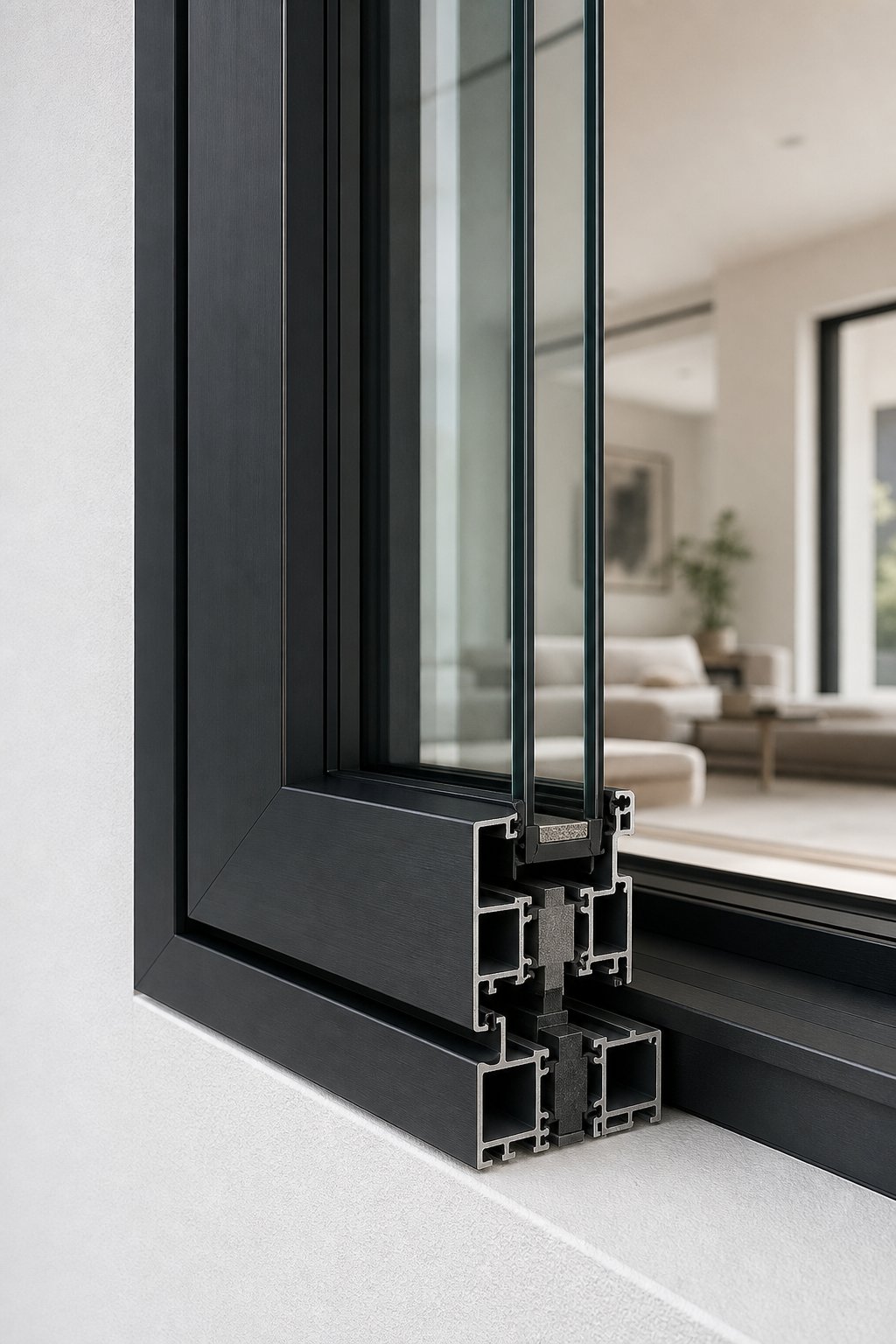
Across all seven criteria, thermally broken aluminium windows claim the top spot. They combine the structural advantages aluminium has always offered — slim profiles, strength over large spans, and a lifespan measured in decades — with thermal performance that rivals or exceeds uPVC. The key is a single engineering detail that most homeowners have never heard of: the thermal break.
What Makes Thermally Broken Aluminium Different
A standard aluminium frame is one continuous piece of metal. Heat travels straight through it, which is why older aluminium windows earned a reputation for condensation and energy loss. A thermally broken aluminium window solves this by splitting the frame into two separate aluminium profiles — one facing inside, one facing outside — joined by a strip of reinforced polyamide (typically PA66 GF25). This polyamide barrier has a thermal conductivity of just 0.3 W/m·K, compared to aluminium’s 205 W/m·K. The result is a frame that stops heat in its tracks.
This aluminum window thermal break reduces frame U-values by 30 to 60 percent depending on profile depth and glazing configuration. Paired with double glazing and Low-E coatings, thermally broken systems achieve whole-window U-values low enough to satisfy even the strictest NCC climate zone requirements. The NSW BASIX system recognises thermally broken aluminium as a distinct frame category precisely because its performance sits well above standard aluminium.
Here is the critical distinction many buyers miss: not all aluminium windows are thermally broken. If a quote simply says “aluminium windows” without specifying a thermal break, you may be getting a standard frame with none of these insulation benefits. Always confirm the profile includes a polyamide thermal barrier before comparing prices.
Best Use Cases and Property Types
Thermally broken aluminium windows suit a wide range of projects, but they truly shine where other materials hit their limits:
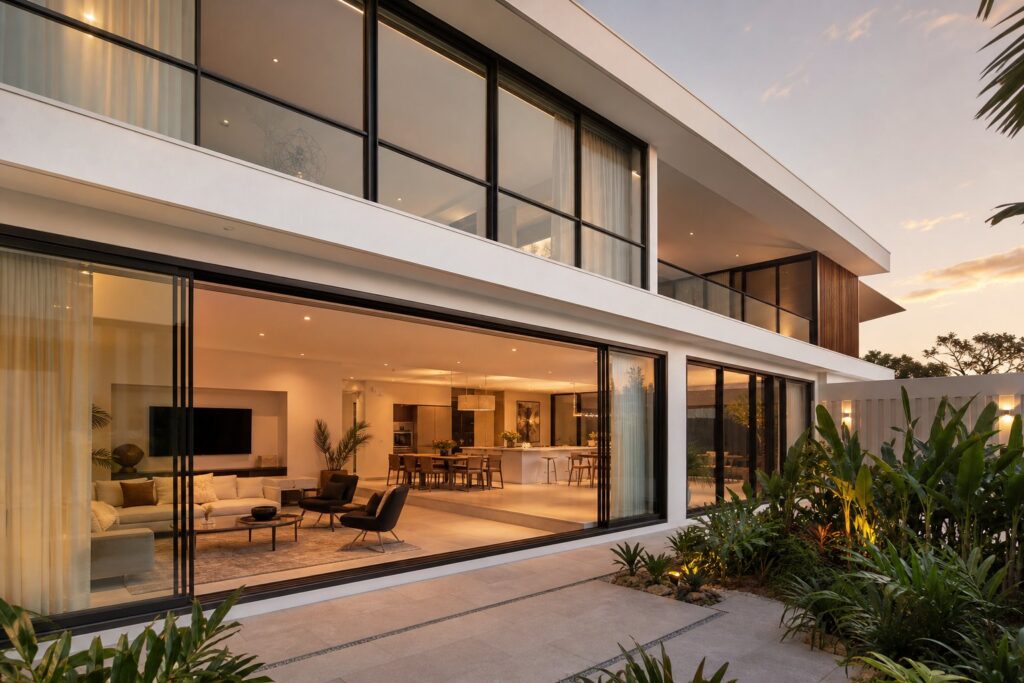
- Modern new builds — Sightlines as narrow as 50 mm maximise glass area, giving contemporary facades that clean, expansive look.
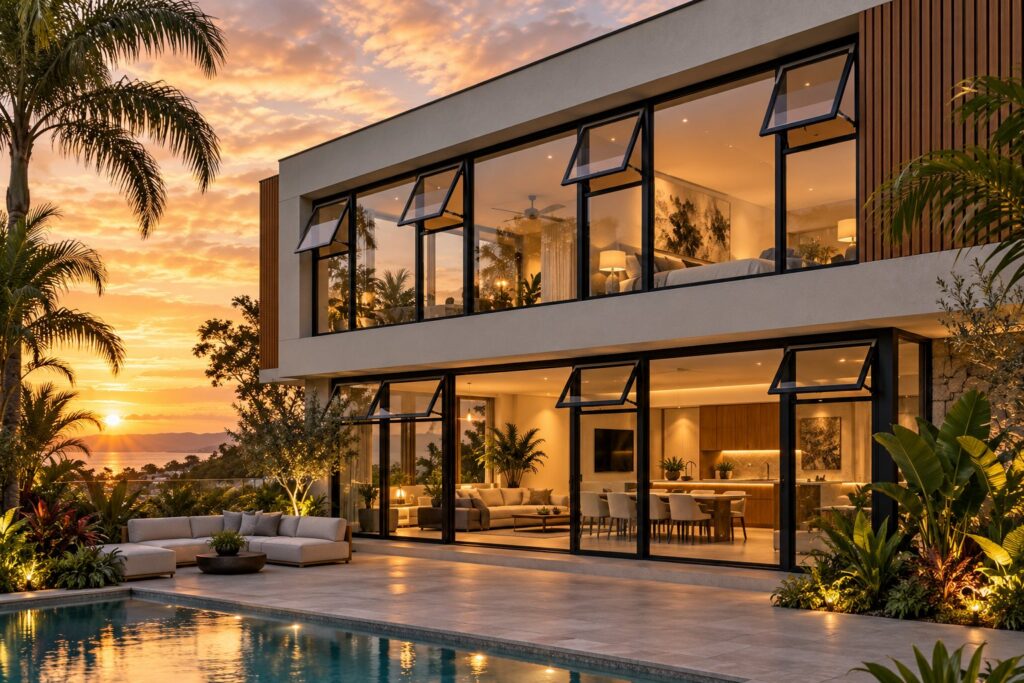
- Large openings and bifold doors — Aluminium’s inherent strength supports spans that would require bulky reinforcement in uPVC, keeping frames slim even at 3-metre heights.
- Coastal properties — Powder-coated finishes resist salt air corrosion far better than untreated metals, and the thermal break eliminates the condensation issues that plague standard aluminium near the coast.
- Commercial and multi-residential projects — Architects and specifiers favour these systems for their design flexibility, with powder-coat colour options covering virtually any RAL shade.
- Extensions and renovations — Where a single feature window or sliding door needs to make a statement without dominating the wall.
With proper surface treatment and installation, service life for thermally broken aluminium windows typically exceeds 30 to 40 years — and many systems remain fully functional well beyond that. Over a 40-year ownership period, the higher upfront cost often works out cheaper per year than replacing a lower-tier option midway through.
For builders and specifiers, selecting a system backed by documented compliance is non-negotiable. Certified thermally broken aluminium systems demonstrate verified thermal and structural performance against Australian Standards such as AS 2047 and AS 1288. MEICHEN’s compliance and certifications page is a useful example of what to look for: transparent documentation showing that the system meets energy performance and weather resistance requirements for Australian projects.
Pros and Cons at a Glance
Pros
- Exceptional lifespan of 40+ years with minimal maintenance
- Slimmest frame profiles available, maximising glass and natural light
- Full powder-coat colour flexibility — hundreds of finishes, no fading
- 100 percent recyclable at end of life without quality loss
- Best structural option for large spans, bifolds, and floor-to-ceiling glazing
- Eliminates condensation risk through thermal separation
Cons
- Higher upfront cost — typically 20 to 40 percent more than equivalent uPVC
- Requires certified, experienced installation to maintain thermal break integrity
- Overkill for small, standard-sized openings where budget is the primary concern
Thermally broken aluminium windows represent the performance ceiling in the aluminium vs uPVC debate. But not every project needs the ceiling — and not every budget can reach it. For homeowners who want strong thermal performance without the premium price tag, the next tier offers a compelling alternative.
Premium Slim-Profile uPVC Windows
Not every project demands the absolute performance ceiling. For homeowners replacing windows across an entire house, or renovators working within a firm budget, premium slim profile uPVC windows deliver thermal results that come remarkably close to thermally broken aluminium — at a noticeably lower upvc windows price. That balance of performance and affordability earns them the second spot in our ranking.
How Modern uPVC Has Evolved
The uPVC frames of ten or fifteen years ago were chunky, limited to white or a handful of colours, and looked unmistakably plastic. The current generation is a different product entirely. Premium systems now feature multi-chamber profiles — five, six, or even seven internal chambers within the frame — that trap air in separate pockets to dramatically reduce heat transfer. These profiles can achieve whole-window U-values below 1.0 W/m²K when paired with quality double or triple glazing.
Sightlines have slimmed down too. Where standard uPVC frames measure 70 to 80 mm wide, premium slim-profile systems bring that closer to 65 mm — still wider than aluminium, but far less obtrusive than older designs. The visual difference on a casement or awning window is significant enough that many homeowners no longer feel they are compromising on aesthetics when choosing upvc windows vs aluminum alternatives.
Then there is the finish. Woodgrain foil technology has matured to the point where textured laminates convincingly replicate timber species like oak, walnut, and rosewood. Anthracite grey, chartwell green, and cream foils round out the palette. These finishes are bonded to the profile during manufacturing, not painted on, so they resist peeling and hold up well under Australian UV conditions — though some colour shift over 20-plus years of direct sun exposure remains possible.
Where Premium uPVC Excels
Full-house replacements are where premium uPVC truly earns its keep. When you are fitting ten, fifteen, or twenty windows at once, the 20 to 40 percent saving compared to thermally broken aluminium adds up fast. For a typical three-bedroom brick veneer home, that gap can represent $3,000 to $6,000 AUD in savings — money that might fund better glazing specifications or upgraded hardware across the board.
Period homes and heritage overlay areas present another strong use case. Many Australian councils impose heritage controls that restrict changes to a property’s external appearance, particularly on street-facing elevations. Timber is often the preferred material in these zones, but high-quality uPVC with realistic woodgrain finishes is gaining acceptance — especially for rear and side elevations where visual impact on the streetscape is minimal. The key is demonstrating that the replacement windows maintain the proportions, glazing patterns, and character of the originals. If your property sits within a heritage overlay, always check with your local council’s heritage adviser before committing to a material. Requirements vary significantly between municipalities, and what flies in one suburb may be rejected in the next.
For homes in cooler climate zones — think Melbourne’s outer suburbs, Canberra, or Tasmania — premium uPVC’s inherent low conductivity gives it a slight thermal edge over aluminium at the same price point. The frame itself simply does not conduct cold the way metal does, even with a thermal break in place.
Pros and Cons at a Glance
Pros
- Best thermal performance per dollar — multi-chamber profiles insulate exceptionally well without premium pricing
- Low maintenance with no painting, sealing, or refinishing required
- Wide style range including casement, awning, sliding, and double-hung configurations
- Woodgrain foil options suit heritage overlay areas and period homes
- Resistant to moisture, salt air, and rot — performs well in coastal environments
Cons
- Wider frames than aluminium, reducing visible glass area on each opening
- Colour fading or slight chalking possible after 15 to 20 years of intense UV exposure
- Less structural strength for very large openings — spans beyond 1.5 metres may require steel reinforcement within the profile
- Lifespan of 25 to 30 years means one replacement cycle within a typical ownership period compared to aluminium’s 40-plus years
Premium uPVC hits a sweet spot that suits the majority of Australian residential projects. But what about situations where even this tier exceeds the budget, or where slim aesthetics matter more than peak insulation? Standard aluminium offers a different set of trade-offs worth examining.

Standard Aluminium Windows
Strip away the polyamide thermal barrier and you are left with standard aluminium — a single, continuous metal profile connecting inside to outside. These frames still deliver the slim sightlines and structural strength aluminium is known for, but without the insulating layer that separates them from their thermally broken counterparts. Is aluminium cheap in this configuration? Relative to thermally broken systems, yes — typically 20 to 30 percent less per opening. That price gap makes standard aluminium attractive for specific project types, though it comes with a clear thermal trade-off.
When Standard Aluminium Still Makes Sense
Standard aluminium windows thermal performance sits well below thermally broken or uPVC alternatives, but that limitation matters less in certain contexts. Mild climate zones across northern Queensland, the Top End, and coastal WA rarely demand high-insulation frames because heating loads are minimal and cooling strategies rely more on ventilation and shading than frame U-values. In these regions, a standard aluminium frame paired with aluminium double glazing delivers adequate comfort without the premium of a thermal break.
Commercial fit-outs, warehouses, covered balconies, and semi-enclosed spaces like carports or pool enclosures also suit standard aluminium well. These applications prioritise durability, slim profiles, and cost efficiency over strict energy compliance. Interior partitions and shopfronts fall into the same category — areas where the frame separates conditioned from unconditioned space less critically.
Limitations to Be Aware Of
Aluminium conducts heat roughly 1,000 times faster than uPVC. Without a thermal break interrupting that path, the interior face of the frame drops close to outdoor temperature on cold nights. The result? Condensation forms along frame edges, meeting rails, and sill corners — exactly the spots where mould thrives if moisture lingers. In cooler climates like Melbourne, Canberra, or Tasmania, this condensation risk makes standard aluminium a poor fit for bedrooms, bathrooms, and any room with elevated humidity.
The condensation difference between frame materials is stark. uPVC and thermally broken aluminium keep their interior surfaces warm enough to stay above the dew point under normal indoor humidity levels. Standard aluminium cannot make that guarantee once overnight temperatures drop below about 10°C outdoors. For energy-conscious residential builds targeting 6-star NatHERS ratings or above, standard aluminium frames will likely drag the overall window performance below compliance thresholds.
Pros and Cons at a Glance
Pros
- Slim frame profiles maximising glass area and clean contemporary lines
- Strong and dimensionally stable — resists warping, sagging, and impact damage
- Fully recyclable without quality degradation at end of life
- Lower cost than thermally broken aluminium, making it accessible for budget projects
- Excellent for large commercial openings, shopfronts, and non-conditioned spaces
Cons
- Poor thermal performance without a break — high frame U-values increase energy costs in cooler climates
- Condensation risk on interior frame surfaces during cold weather, particularly in humid rooms
- Limited to mild-weather residential applications if NCC energy compliance is required
- May not meet WERS or NatHERS targets for climate zones 6 and above without compensating glazing upgrades
Standard aluminium occupies a practical middle ground: strong aesthetics and longevity at a moderate price, provided your climate and application do not demand serious insulation. For projects where even this tier stretches the budget, the most popular residential window material in Australia offers an even lower entry point.
Standard uPVC Windows
There is a reason standard uPVC dominates the residential window market by sheer volume. When homeowners need a standard upvc window replacement across multiple openings and the budget is firm, nothing else comes close on upfront cost. These are the workhorse frames fitted in hundreds of thousands of Australian homes — functional, insulating, and accessible without stretching finances thin.
The Budget-Friendly Workhorse
Standard uPVC sits at the lowest price tier of any framing material covered in this guide. While exact pricing depends on window size, style, and supplier, a typical standard uPVC casement window in white runs noticeably cheaper than both thermally broken aluminium and premium slim-profile uPVC alternatives. For a full-house replacement of ten to fifteen openings, that per-window saving compounds into thousands of dollars — money that often determines whether a project goes ahead at all.
The cheap upvc windows cost reputation is not undeserved, but it does need context. “Cheap” here means affordable at the point of purchase, not low quality. Standard uPVC profiles still use multi-chamber construction (typically three to five chambers), still accept double-glazed units, and still deliver solid thermal insulation thanks to the inherent low conductivity of the PVC material itself. A standard uPVC frame with quality double glazing will outperform a standard aluminium frame on thermal metrics every time, simply because plastic does not conduct heat the way metal does.
Availability is another practical advantage. Because uPVC is the dominant residential material, finding qualified installers is straightforward in virtually every Australian metro and regional area. Lead times tend to be shorter, spare parts are easy to source, and most window companies carry standard uPVC as their bread-and-butter product line. That supply chain depth translates into competitive pricing and faster turnaround for homeowners who need windows fitted without a long wait.
Where Standard uPVC Falls Short
Cost accessibility comes with trade-offs, and standard uPVC has several that matter depending on your project goals.
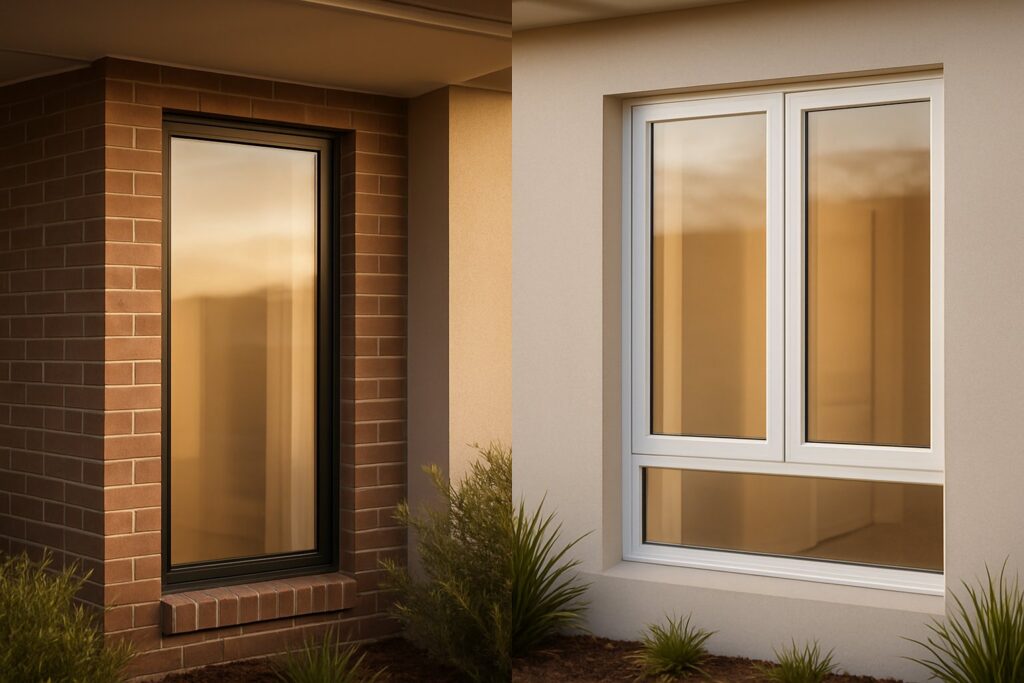
Frame width is the most visible limitation. Standard profiles typically measure 75 to 85 mm across the sash and frame — noticeably bulkier than aluminium’s 50 to 65 mm. On a single window, the difference might seem minor. Across a wall of three or four openings, those extra millimetres add up, reducing visible glass area and giving the facade a heavier, less refined appearance. For modern architectural projects that rely on clean lines and expansive glazing, upvc windows vs aluminium becomes a clear aesthetic contest that aluminium wins.
Colour options at the base level are limited. White remains the default, and while coloured foils are available in over 30 shades, upgrading from white typically adds 10 to 20 percent to the window cost. Dual-colour options — say, anthracite grey outside with white inside — push the price higher still. At that point, the gap between standard uPVC and premium slim-profile systems narrows, which is worth factoring into your decision.
Lifespan is shorter than aluminium. Standard uPVC frames perform reliably for 20 to 30 years under normal Australian conditions, but intense UV exposure accelerates degradation. Profiles can yellow, chalk, or become brittle over time, particularly on north and west-facing elevations that cop full sun for hours daily. Coloured foils hold up well for 15 to 25 years before any noticeable fading, though darker shades tend to retain their appearance longer than lighter tones.
Recyclability has historically been a weak point. While uPVC is technically recyclable, collection and reprocessing infrastructure in Australia lags behind aluminium, which can be melted and reformed indefinitely without quality loss. This gap is closing as recycling programs expand, but it remains a consideration for environmentally motivated buyers.
Finally, perception. Rightly or wrongly, standard white uPVC carries a “builder’s grade” association in some markets. On contemporary homes, architectural projects, or properties targeting a premium resale position, the visual weight of standard uPVC frames can work against the overall presentation. It is a subjective factor, but one that real estate agents and valuers consistently note when assessing street appeal.
Pros and Cons at a Glance
Pros
- Lowest upfront cost of any framing material — ideal for budget-constrained full-house replacements
- Good inherent insulation from multi-chamber profiles without needing a thermal break
- Widely available with short lead times and easy access to qualified installers across Australia
- Low maintenance — occasional cleaning with soapy water is all that is required
- Accepts standard double-glazed units and multi-point locking hardware
Cons
- Bulkier sightlines (75–85 mm) reduce visible glass area compared to aluminium
- Limited colour range at base pricing — coloured foils add 10 to 20 percent to cost
- Shorter lifespan of 20 to 30 years, meaning at least one replacement cycle within a long ownership period
- Less recyclable than aluminium in current Australian waste streams
- Can appear dated on modern or architecturally designed homes where slim frames are expected
Standard uPVC does exactly what it promises: solid thermal performance and reliable operation at the most accessible price point. It suits the majority of straightforward residential replacements where budget takes priority over architectural ambition. But what happens when budget and aesthetics pull in opposite directions on the same project? A growing number of builders and homeowners are finding that the answer is not choosing one material — it is using both.

The Hybrid Approach
Choosing between aluminum windows vs upvc does not have to be a binary decision. Across Australia, architects and builders are increasingly specifying both materials within the same project — placing each where it performs best and skipping it where it does not. The result is a home that looks premium from the street, insulates well throughout, and stays within budget.
Why Mixing Materials Works
Think about how you actually use your home. The ground-floor living area with its 2.7-metre sliding door framing the backyard demands slim sightlines and structural strength — aluminium territory. The three bedrooms upstairs? They need solid thermal performance and quiet operation, but nobody is admiring their frame profiles from the footpath. That is where uPVC earns its place.
This room-by-room logic is exactly what drives the hybrid approach. Mixing aluminium and uPVC windows lets you allocate budget where visual impact is highest — front elevations, open-plan living zones, feature glazing — while using cost-effective uPVC in secondary spaces like bathrooms, laundries, and upper storeys. You get the architectural statement without paying the premium on every single opening.
Best Combinations by Property Type
The aluminium versus upvc windows split works differently depending on the project:
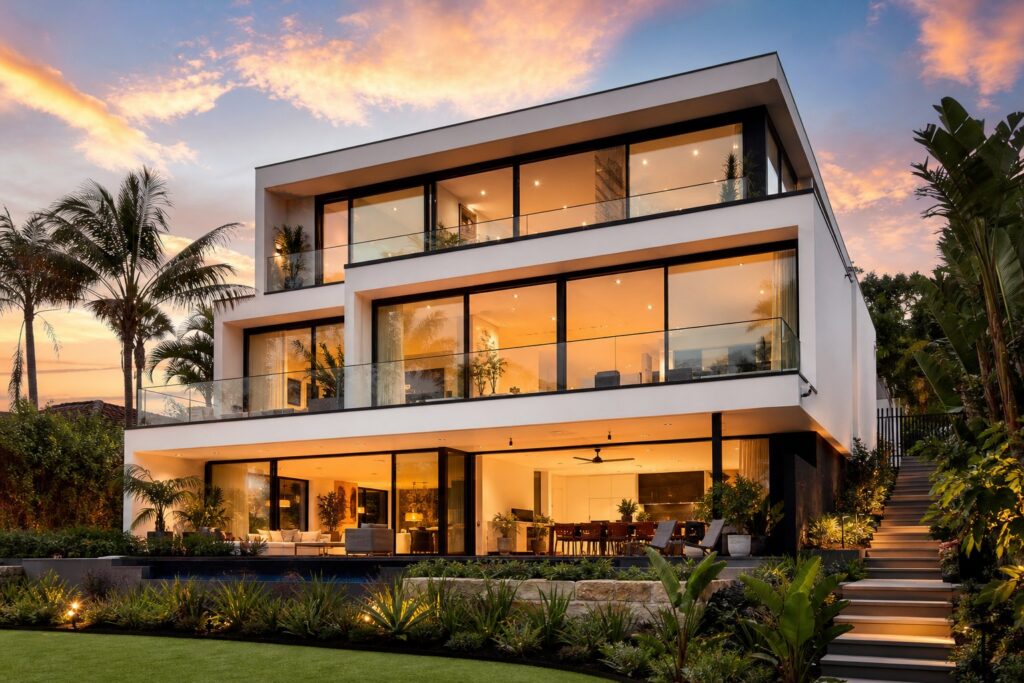
- Double-storey new builds — Aluminium bifolds and sliding doors on the ground floor, uPVC casement or awning windows on the upper level. The street-facing facade reads as cohesive while the upper floor benefits from uPVC’s inherent insulation.
- Single-storey renovations — Aluminium for the new open-plan extension at the rear, uPVC retained or replaced in the original front rooms where heritage character matters more than contemporary lines.
- Large project homes — Aluminium on the front elevation and living areas visible from the entry, uPVC for side elevations, garages, and utility rooms that face fences rather than neighbours.
The practical challenge most homeowners worry about is colour consistency. Will the two materials look mismatched? In practice, popular finishes like anthracite grey, matt black, and monument are available across both aluminium powder-coat and uPVC foil ranges. Externally, a well-matched colour makes it nearly impossible to distinguish between the two materials from the street — especially once frames are set back within reveals.
Hardware consistency matters too. Specifying the same handle style, hinge finish, and locking mechanism across both material types creates a unified feel internally. Most Australian window suppliers offer compatible hardware ranges that work across uPVC and aluminium systems, so coordinating this is straightforward if you raise it early in the quoting process.
Pros and Cons at a Glance
Pros
- Optimises budget allocation — premium spend goes where it delivers the most visual and functional return
- Best aesthetics where it matters most, without paying the aluminium premium on every opening
- Practical compromise for large projects with ten or more window openings
- Each material used in its ideal application — aluminium for strength and slim lines, uPVC for insulation and value
Cons
- Colour matching requires careful specification — foil finishes and powder coats look similar but not identical up close
- May require coordinating with multiple suppliers or ensuring your chosen company offers both systems
- Different maintenance schedules — uPVC seals may need attention sooner than aluminium hardware
- Resale explanation — some buyers may question why two materials were used, though this is increasingly common and well understood
The hybrid approach fills a gap that most material comparisons ignore entirely. It acknowledges that real projects have competing priorities — a tight budget here, a design ambition there — and that the smartest solution often is not picking one winner but deploying each material where it earns its place. With five distinct options now laid out, the next step is seeing how they stack up side by side across every decision factor that matters.
Side-by-Side Comparison of All Five Window Options
Individual profiles are useful, but the real clarity comes from lining up all five options against the same criteria in one place. The table below distils the aluminium vs upvc windows comparison into a single reference you can return to at any stage of your project — whether you are briefing a builder, comparing quotes, or finalising specifications for a development application.
Two factors often missing from standard comparisons are noise insulation and resale value impact. Both matter more than most buyers realise. Soundproofing depends heavily on glazing type and seal quality, but the frame material and profile depth also play a role — thicker uPVC profiles with more internal chambers tend to dampen sound transmission slightly better than slimmer aluminium frames with equivalent glass. Resale value, meanwhile, reflects how buyers and valuers perceive the windows when a property hits the market. Aluminium consistently scores higher in this regard on modern and architecturally designed homes, while quality uPVC holds its own on traditional residential stock.
Complete Feature Comparison Table
| Feature | Thermally Broken Aluminium | Premium Slim-Profile uPVC | Standard Aluminium | Standard uPVC | Hybrid (Both Materials) |
|---|---|---|---|---|---|
| Thermal Performance (Frame U-value) | Excellent (2.0–3.5 W/m²K frame; whole-window below 1.6) | Excellent (1.3–2.0 W/m²K frame; whole-window below 1.0 possible) | Poor (5.0–6.0 W/m²K frame without break) | Good (1.5–2.5 W/m²K frame) | Varies by opening — best of both where specified |
| Lifespan | 40–50+ years | 25–35 years | 40–50+ years | 20–30 years | 30–50 years (depends on mix) |
| Cost Tier | High | Medium | Medium | Low | Medium-High (blended) |
| Frame Width (Typical) | 50–65 mm | 62–70 mm | 45–60 mm | 75–85 mm | 50–85 mm (varies by location) |
| Colour Options | Unlimited RAL powder-coat range; no fading | 30+ foil finishes including woodgrain; slight fade possible over 20 years | Full powder-coat range | White standard; foils at extra cost | Full range across both materials |
| Noise Insulation | Good — relies on glazing; slim frame slightly less dampening | Very Good — deeper multi-chamber profile adds frame-level dampening | Moderate — thin profile offers minimal frame dampening | Good — multi-chamber construction helps reduce sound transfer | Good to Very Good depending on placement |
| Recyclability | 100% recyclable without quality loss | Recyclable but limited infrastructure in Australia | 100% recyclable without quality loss | Recyclable but limited infrastructure | Mixed — aluminium portions fully recyclable |
| Maintenance Needs | Minimal — periodic clean and hardware lubrication | Minimal — wipe-down and seal checks | Minimal — clean and lubricate | Minimal — clean with soapy water | Two schedules — aluminium and uPVC maintained separately |
| Security Rating | High — strong frame supports multi-point locks and resists forced entry | Good — steel-reinforced profiles accept multi-point locking | High — inherent metal strength | Good — relies on internal steel reinforcement | High where aluminium is used; Good elsewhere |
| Resale Value Impact | Strong positive — perceived as premium by buyers and valuers | Neutral to positive — well-regarded on traditional homes | Positive — modern appearance valued on contemporary properties | Neutral — expected standard; rarely adds premium | Positive — shows considered design approach |
| Best Property Type | Modern new builds, extensions, coastal homes, commercial | Full-house replacements, period homes, heritage overlays, cooler climates | Mild climates, commercial, semi-enclosed spaces, shopfronts | Budget replacements, investment properties, standard residential | Large projects balancing aesthetics and budget |
A few patterns stand out. Thermally broken aluminium and premium uPVC trade blows on thermal performance, but aluminium pulls ahead on lifespan, frame width, and resale perception. Standard aluminium matches its thermally broken sibling on durability but falls dramatically on insulation. Standard uPVC wins on price but concedes ground on aesthetics and longevity. The hybrid approach, meanwhile, sidesteps the either-or entirely by placing each material in its strongest position.
Maintenance Schedule at 1, 5, and 10 Years
Upvc and aluminium window maintenance requirements are often overstated by salespeople pushing one material over the other. In reality, both are low-maintenance compared to timber. The differences are subtle but worth knowing, especially if you are planning a long hold on the property.
| Timeframe | Thermally Broken Aluminium | Premium Slim-Profile uPVC | Standard Aluminium | Standard uPVC |
|---|---|---|---|---|
| Year 1 | Wipe frames with mild detergent. Check drainage slots are clear. Lubricate hinges and locks with silicone spray. | Clean frames with soapy water. Inspect rubber seals for correct seating. Lubricate hardware. | Same as thermally broken aluminium. Check for any early signs of condensation on frame edges in cooler months. | Wipe down with warm soapy water. Confirm seals are seated and drainage holes are unblocked. |
| Year 5 | Repeat annual clean. Inspect powder-coat finish for chips (touch up if needed, especially coastal areas). Re-lubricate all moving parts. Check weather seals for compression set. | Repeat annual clean. Check foil finish for lifting at edges (rare but possible on sun-exposed faces). Replace any perished rubber gaskets. Re-lubricate locks and stays. | Repeat annual clean. Inspect for oxidation or pitting in coastal zones. Lubricate hardware. Monitor condensation patterns — persistent moisture may indicate seal failure in glazing units. | Repeat annual clean. Inspect seals and gaskets — replace any that have hardened or cracked. Check frame corners for discolouration or chalking on sun-exposed elevations. |
| Year 10 | Full hardware service — replace worn friction stays or hinges if needed. Inspect thermal break integrity (no visible cracking or separation). Re-seal any external silicone joints showing age. Frames themselves should show no degradation. | Full hardware service. Assess seal condition across all openings — budget for gasket replacement on heavily used windows. Check frame rigidity (any flex suggests internal reinforcement issues). Foil finishes may show minor wear on high-traffic sashes. | Full hardware service. Replace any corroded screws or fixings. Inspect frame junctions for salt or pollution build-up. Frames remain structurally sound but cosmetic touch-ups may be needed in harsh environments. | Full hardware service and gasket replacement on any windows showing draughts. Assess frame condition — look for brittleness, warping, or yellowing. Frames in good condition should have another 10–15 years of reliable service ahead. |
The upvc versus aluminium windows maintenance story is straightforward: both materials ask very little of you compared to timber, which needs sanding and repainting every few years. The main difference is what you are watching for. With aluminium, it is powder-coat condition and hardware wear. With uPVC, it is seal integrity and UV-related surface changes. Neither demands significant expense at any of these checkpoints — a tube of silicone lubricant and an afternoon’s attention covers most of it.
These tables give you the data. The next step is matching that data to your specific project type, climate zone, and priorities — because the right choice for a coastal new build in Noosa looks nothing like the right choice for a heritage renovation in Ballarat.
Are Aluminium Windows Better Than uPVC?
Data and comparison tables only get you so far. At some point, you need a clear answer matched to your actual project. So here it is — a verdict for each common scenario, ranked by suitability so you can move forward with confidence rather than second-guessing your choice for the next thirty years.
Recommendations by Project Type
Every project carries a different mix of priorities. A coastal new build in Noosa faces completely different pressures than a heritage renovation in inner Melbourne. Here is how the five options stack up for each major use case.
New builds (modern and contemporary)
- Thermally broken aluminium — slim sightlines, structural strength for large openings, and verified thermal performance make it the best windows for new build Australia projects targeting premium aesthetics and NCC compliance.
- Hybrid approach — aluminium on feature elevations, uPVC on secondary spaces to manage budget without sacrificing kerb appeal.
- Premium slim-profile uPVC — strong thermal results at a lower price point, suitable where frame width is less of a concern.
Full-house renovations and replacements
- Premium slim-profile uPVC — delivers the best thermal upgrade per dollar when replacing ten or more openings at once.
- Hybrid approach — aluminium for the living area slider or bifold, uPVC for bedrooms and bathrooms.
- Standard uPVC — when budget is the hard constraint and the goal is functional improvement across the board.
Extensions and open-plan additions
- Thermally broken aluminium — handles the large spans and floor-to-ceiling glazing that define modern extensions.
- Premium slim-profile uPVC — works well for standard-sized openings within the extension where spans stay under 1.5 metres.
Period homes and heritage overlay areas
- Premium slim-profile uPVC with woodgrain foils — replicates timber proportions while meeting council heritage requirements on many rear and side elevations.
- Thermally broken aluminium — accepted in some heritage contexts where slim profiles better match original steel or aluminium frames from mid-century builds.
Coastal properties
- Thermally broken aluminium — marine-grade powder coating resists salt corrosion, and the thermal break eliminates condensation that plagues standard aluminium near the water. Aluminium windows for coastal properties need proper surface treatment and hardware rated to 316 marine-grade stainless steel to last.
- Premium uPVC — inherently corrosion-proof and salt-resistant, making it a strong second choice where budget matters more than frame slimness.
Commercial and multi-residential projects
- Thermally broken aluminium — meets compliance requirements, handles large openings, and delivers the architectural finish specifiers expect.
- Standard aluminium — suitable for mild-climate commercial applications, semi-enclosed areas, and shopfronts where thermal performance is less critical.
Making Your Final Decision
Are aluminium windows better than upvc? In absolute performance terms, thermally broken aluminium wins on longevity, aesthetics, and structural capability. Premium uPVC wins on thermal efficiency per dollar and suits budget-conscious projects without meaningful compromise on comfort. The honest answer is that both materials serve different priorities well — the mistake is choosing based on price alone or outdated assumptions about either material.
The single most important decision factor is not the material itself — it is matching the product tier to your climate zone, opening sizes, and ownership timeline. A window that performs brilliantly for 40 years costs less than one that needs replacing at year 25, regardless of what it is made from.
For builders, developers, and specifiers selecting thermally broken aluminium systems, one final step matters: verifying that the system you are specifying carries documented compliance with Australian Standards for energy performance, weather resistance, and structural adequacy. Systems tested and certified to AS 2047 and AS 1288 give you confidence that the thermal break, hardware, and seals will perform as rated over the system’s full service life. MEICHEN’s compliance and certifications page provides a practical example of the documentation specifiers should expect — transparent evidence that the aluminium window system meets the standards your project demands.
Whatever material you land on, the worst outcome is indecision that delays the project or a last-minute downgrade that saves money today and costs more over the next two decades. Use the comparison data in this guide, match it to your specific scenario, and commit to the tier that aligns with your priorities. Your future self — and your energy bills — will thank you.
Frequently Asked Questions About uPVC vs Aluminium Windows
1. Are aluminium windows better than uPVC for Australian homes?
It depends on the product tier and project context. Thermally broken aluminium outperforms uPVC on lifespan (40-50+ years vs 20-35 years), frame slimness, and resale value perception on modern homes. However, premium uPVC delivers comparable thermal efficiency at a lower price point, making it the stronger choice for budget-conscious full-house replacements. In cooler climate zones like Melbourne or Tasmania, uPVC’s inherent low conductivity gives it a slight thermal edge at the same spend. The key is matching the material tier to your climate zone, opening sizes, and ownership timeline rather than choosing based on price or outdated assumptions alone.
2. How long do uPVC windows last compared to aluminium windows?
Standard uPVC windows typically last 20 to 30 years under normal Australian conditions, while premium slim-profile uPVC systems can extend that to 25-35 years with proper care. Aluminium frames — both standard and thermally broken — generally last 40 to 50 years or more with minimal maintenance. Intense UV exposure on north and west-facing elevations can shorten uPVC lifespan through yellowing and brittleness, while coastal salt air accelerates seal degradation on both materials. When calculating true cost, factor in that aluminium’s longer service life may eliminate one full replacement cycle over a typical ownership period.
3. Do thermally broken aluminium windows reduce condensation?
Yes, significantly. Standard aluminium conducts heat roughly 1,000 times faster than uPVC, which causes the interior frame surface to drop near outdoor temperature on cold nights — creating condensation along edges and sill corners. Thermally broken aluminium uses a polyamide barrier (typically PA66 GF25) between inner and outer profiles, reducing thermal conductivity from 205 W/m·K to just 0.3 W/m·K at the break point. This keeps interior frame surfaces above the dew point under normal indoor humidity, effectively eliminating the condensation risk that plagues standard aluminium in cooler Australian climates like Canberra, Melbourne, and Tasmania.
4. Can you mix aluminium and uPVC windows in the same house?
Absolutely, and it is an increasingly common approach among Australian builders and architects. The hybrid strategy places aluminium where visual impact and structural strength matter most — ground-floor living areas, bifold doors, and street-facing elevations — while using uPVC for bedrooms, bathrooms, and upper storeys where budget efficiency takes priority. Popular finishes like anthracite grey and matt black are available in both powder-coat and foil options, making colour matching achievable from the street. Specify matching hardware styles across both materials early in the quoting process to ensure a unified interior feel.
5. Which windows are best for coastal properties in Australia?
Thermally broken aluminium with marine-grade powder coating ranks first for coastal homes. The thermal break eliminates condensation from salt-laden humid air, while quality powder-coat finishes resist salt corrosion over decades. Hardware should be rated to 316 marine-grade stainless steel for longevity near the water. Premium uPVC is a strong second choice because PVC is inherently corrosion-proof and unaffected by salt air, though its shorter lifespan (25-35 years) means earlier replacement in harsh coastal environments. Standard aluminium without a thermal break is a poor coastal choice due to condensation risk in humid conditions, despite its corrosion-resistant finish.
More Window & Door Guides