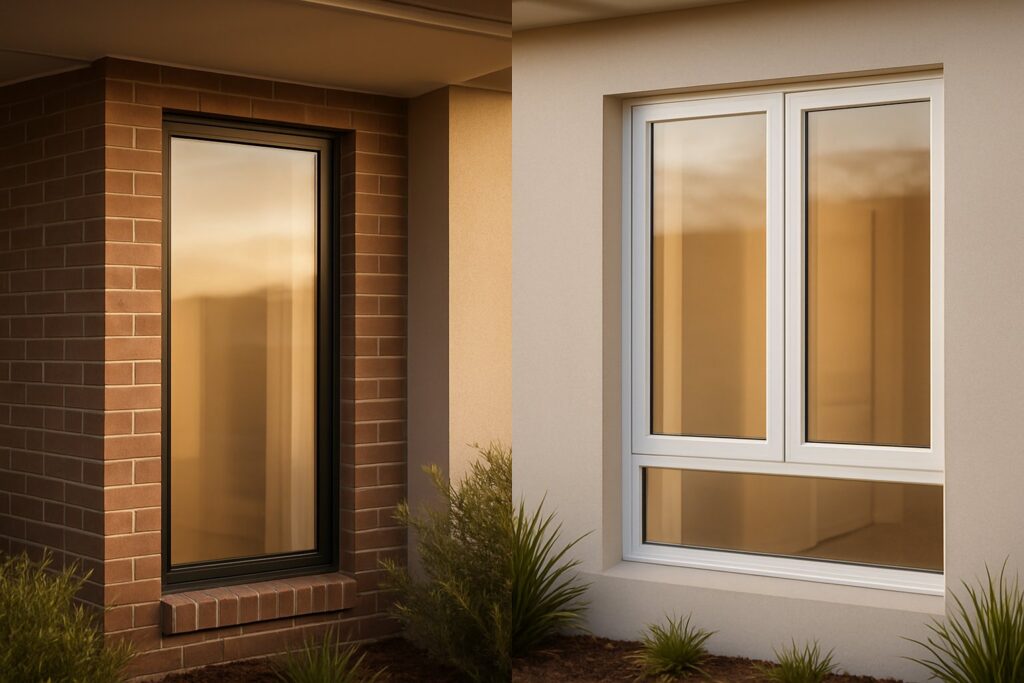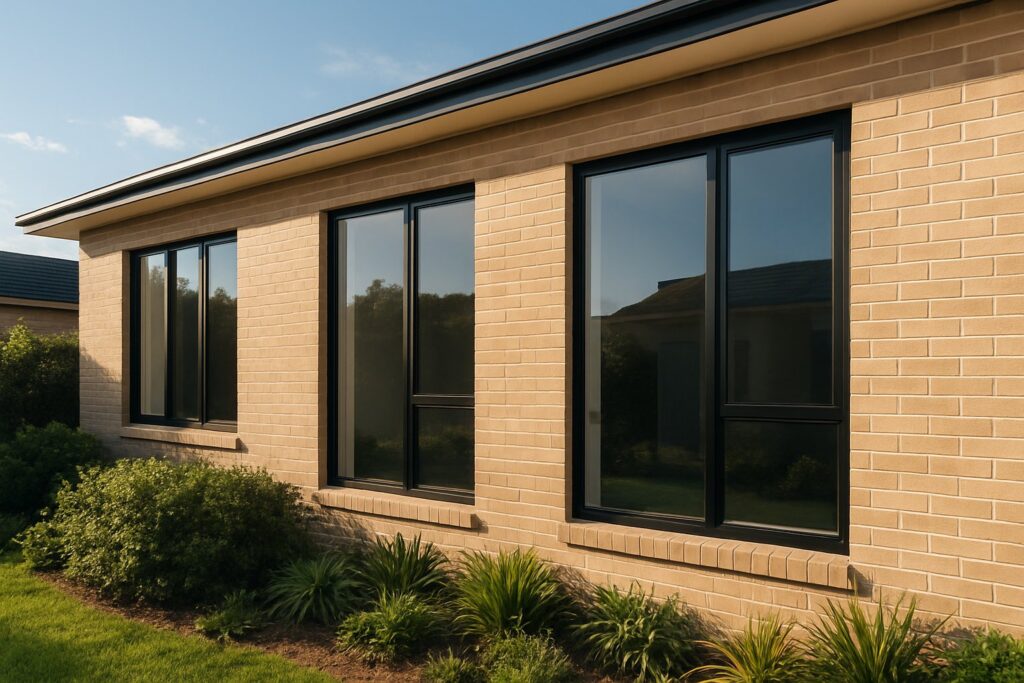
What Horizontal Sliding Windows Are and How They Work
Searching for “sliders,” “gliding windows,” or “sliding sash windows“? They all describe the same thing. Horizontal sliding windows are one of the most common window styles in residential construction, yet the terminology trips people up. Here is the short version:
A horizontal sliding window consists of two or more glass panels set in a frame, where one or more panels glide left or right along a horizontal track while at least one panel remains fixed in place.
Every slider shares the same core anatomy. You have a fixed panel, an operable panel (the one you actually move), a track or rail system at the top and bottom of the frame, rollers or glide pads mounted beneath the moving sash, weatherstripping around the perimeter, and a latch or locking mechanism that secures everything when closed.
How Horizontal Sliding Windows Work
The mechanics are refreshingly simple. The operable sash sits on a set of nylon or stainless steel rollers housed in a grooved aluminium or vinyl track. When you push the panel sideways, those rollers carry its weight so it travels with minimal effort. An interlocking meeting rail where the two panels overlap creates a weather-tight seal, and the latch draws the sash snugly against the frame’s weatherstripping to block air and water infiltration.
Compare that to a double-hung window, which has two sashes travelling vertically, or a casement window, which swings outward on a hinge using a crank handle. Sliders have no cranks, no hinges, and no outward swing. That distinction matters in tight spaces where a protruding sash would get in the way, and it also changes how you might fit an air conditioner unit for a horizontal sliding window later on.
Where You Will Find Them Most Often
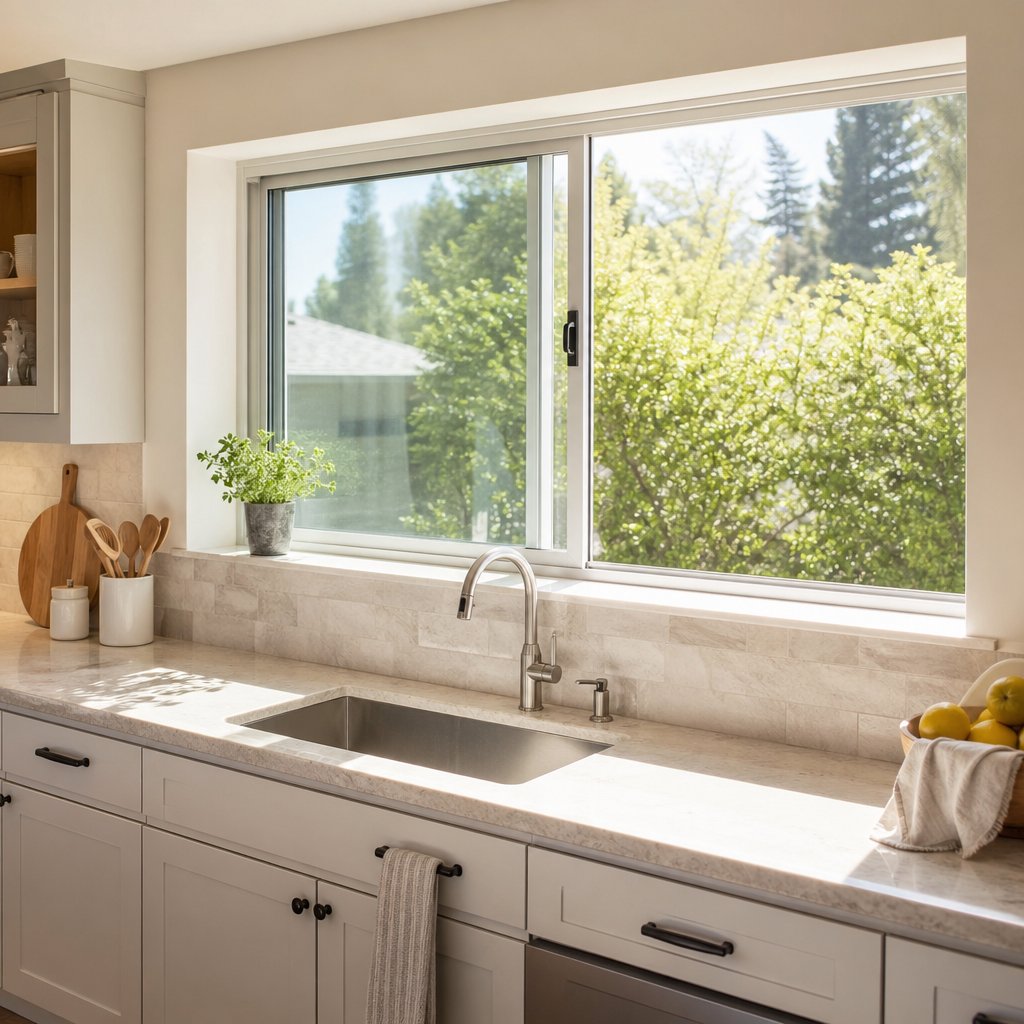
Imagine standing at your kitchen sink. The window above the counter needs to open without swinging into your face or knocking over the dish rack. That is the classic slider scenario. You will also find them in laundry rooms, basements where headroom is limited, bathrooms, and along wide living room walls where homeowners want an unbroken horizontal view.
Architecturally, horizontal sliding windows are a signature element of mid-century modern design and remain popular in contemporary Australian and North American homes. Their clean horizontal lines complement low-profile rooflines and open floor plans, and their straightforward operation suits everyone from young children to older adults. With no mechanical parts like cranks or hinges to seize up, they also tend to be lower-maintenance than their crank-operated counterparts.
Of course, choosing the right slider involves more than just picking a style you like. Configuration, panel layout, and frame material all shape how the window performs in your specific room and climate.

XO vs OX Configurations and Multi-Panel Designs
Configuration labels look like a secret code at first glance, but they are surprisingly intuitive once you know the trick. Every horizontal sliding window is described using a combination of two letters: X for an operable (sliding) panel and O for a fixed panel. The catch? These labels are always read from the exterior of the building looking in, not from inside the room.
Understanding XO and OX Panel Layouts
An XO window means the left panel slides and the right panel is fixed, as seen from outside. Flip that, and an OX window has a fixed left panel with the right panel doing the sliding. The functional difference is small but practical: it determines which side of the opening delivers ventilation and which side stays sealed.
Here is a quick decision tip. Stand inside the room, face the window, and ask yourself which side you want to open. If you want the panel on your left to move, you are looking at an OX configuration (remember, the labels reverse when viewed from inside). Furniture placement, traffic flow, and even where you plan to position a window ac unit for a horizontal sliding window all factor into this choice.
Two-Panel vs Three-Panel Sliding Windows
Two-panel sliders (XO or OX) handle standard openings up to roughly 72 inches (about 1800 mm) wide and are the workhorse of bedrooms, kitchens, and utility rooms. When the opening gets wider, a three-panel configuration steps in. An XOX layout places a fixed centre pane between two operable panels, while an OXO reverses that arrangement. Three-panel designs are common in living rooms and feature walls where you want both a broad view and ventilation from either side.
| Feature | Two-Panel (XO / OX) | Three-Panel (XOX / OXO) |
|---|---|---|
| Typical Width Range | 36 – 84 inches (900 – 2100 mm) | 72 – 144 inches (1800 – 3600 mm) |
| Ventilation Area | ~50% of total opening | ~66% of total opening |
| Relative Cost | Lower | Higher (additional panel and hardware) |
| Best Room Fit | Bedrooms, kitchens, bathrooms | Living rooms, dining areas, feature walls |
Keep in mind that two operable panels can never sit directly beside each other without a fixed panel between them. As one reference from Winco Window puts it, two X panels side by side simply would not function correctly because they need a stationary rail to interlock against.
Can You Install a Horizontal Sliding Window Vertically?
This question comes up more often than you might expect. The short answer: no. Horizontal sliding windows are engineered exclusively for lateral movement. Their weep holes sit at the bottom of the frame to drain rainwater outward. Rotate the unit 90 degrees and those drainage channels end up on the side, trapping water inside the frame. The rollers, designed to carry weight along a horizontal plane, would fight gravity instead of gliding smoothly, and the locking hardware would no longer align. If you need a vertically sliding window, a single-hung or double-hung unit with proper balance systems is the right call.
With configuration sorted, the next big variable is what the frame itself is made of. Aluminum horizontal sliding windows, vinyl, timber, and fiberglass each bring a different mix of durability, thermal performance, and maintenance demands to the table.
Frame Material Options for a Horizontal Sliding Window
The frame wrapping around your horizontal sliding window does far more than hold the glass in place. It determines how well the window insulates, how long it lasts, how much upkeep it demands, and whether it can handle your local climate without deteriorating. Five materials dominate the market, and each one comes with genuine trade-offs worth understanding before you commit.
Aluminium Frames
Aluminium is the most widely used frame material in Australia, and for good reason. It delivers an exceptional strength-to-weight ratio, which means manufacturers can build slimmer sightlines and let more glass into the opening without sacrificing structural integrity. For a horizontal sliding window air conditioner setup or a wide three-panel configuration, that strength matters because the frame needs to support heavier loads across broader spans.
Corrosion resistance is another standout trait. Coastal and humid climates punish lesser materials, but aluminium, especially with a powder-coat or marine-grade finish, shrugs off salt air and moisture. Powder coating also opens up a wide palette of colour options, so you are not locked into a single look. And when the window eventually reaches end of life, aluminium is fully recyclable.
The traditional knock against aluminium is thermal conductivity. Metal transfers heat more readily than vinyl or timber. Modern frames address this with thermally broken profiles, where an insulating polymer strip separates the interior and exterior aluminium sections, dramatically reducing heat transfer. If you are in a bushfire-prone area, aluminium frames also meet the Bushfire Attack Level (BAL) requirements outlined in AS 3959:2018 and comply with AS 2047 performance standards for wind load, water penetration, and structural integrity.
For homeowners, renovators, and builders in Australia exploring aluminium horizontal sliding windows with thermal breaks and multiple configuration options, MEICHEN’s aluminium window range is a practical starting point. Their collection is AS 2047-compliant and designed for energy efficiency across a variety of project types.
Vinyl, Wood, Fiberglass, and Composite Frames
Vinyl (uPVC) sits at the budget-friendly end of the spectrum. It insulates well, resists moisture, and never needs painting. The downsides? Colour choices are limited, and lower-grade vinyl can warp or discolour under intense UV exposure over time. In mild to cool climates, vinyl performs admirably. In extreme heat, quality matters a lot.
Wood offers the best natural insulation of any frame material and a warmth that suits heritage or traditional homes. The trade-off is maintenance. Timber frames need regular sanding, resealing, and repainting, and they are vulnerable to rot, warping, and termites, particularly in humid or coastal regions.
Fiberglass is the quiet overachiever. It resists expansion and contraction through temperature swings, will not warp or rot, and delivers thermal performance on par with wood. You can paint it to match any facade. The catch is cost: fiberglass frames typically sit at the higher end of the price range, and design options are more limited than aluminium or timber.
Composite frames blend recycled wood fibres with polymers to mimic the look of timber while reducing maintenance. They insulate well and resist rot, but quality varies significantly between manufacturers, so it pays to ask exactly what is inside the frame before buying.
| Material | Durability | Thermal Performance | Maintenance | Price Range | Best Climate Fit |
|---|---|---|---|---|---|
| Aluminium | High (corrosion-resistant, strong) | Moderate to high (with thermal break) | Low | Mid | Coastal, hot, bushfire-prone |
| Vinyl (uPVC) | Moderate (can warp in extreme heat) | High | Low | Low | Mild to cool climates |
| Wood | Moderate (vulnerable to rot and pests) | Highest (natural insulator) | High | Mid to high | Cool, low-humidity areas |
| Fiberglass | Very high (resists expansion/contraction) | High | Low | High | Extreme heat and cold |
| Composite | Moderate to high (varies by brand) | High | Medium | Mid to high | Temperate, mixed climates |
No single material wins across every category. Aluminium leads on strength and low maintenance in harsh conditions, vinyl wins on upfront cost, wood on insulation and aesthetics, fiberglass on all-weather durability, and composite on blending benefits without the full timber maintenance burden. The right choice depends on where you live, how much upkeep you are willing to do, and what you need the window to handle, whether that is an ac for horizontal sliding window installation, a wide-span living room feature, or a simple bedroom upgrade.
Material is only half the equation, though. Even the best frame will not perform if the window is the wrong size for the opening. Getting accurate measurements before ordering is the step that separates a smooth installation from a costly do-over.
Standard Sizes and How to Measure for a Horizontal Sliding Window
Ordering a horizontal sliding window without accurate measurements is a bit like buying shoes without knowing your size. You might get lucky, but the odds are not in your favour. Whether you are replacing an old slider or framing a brand-new opening, understanding standard dimensions and the correct measuring technique saves time, money, and a lot of frustration.
Common Standard Sizes for Horizontal Sliding Windows
Standard sizes vary by manufacturer and region, but most two-panel sliders fall within a range of roughly 900 mm x 600 mm up to 2400 mm x 1500 mm (approximately 36 x 24 inches to 96 x 60 inches). The 36 x 72 inch size, which converts to about 900 x 1800 mm, is one of the most commonly searched and stocked dimensions, making it a safe bet for availability and faster lead times.
Three-panel configurations push the width further, reaching 3600 mm (roughly 144 inches) or more. These wider units suit living rooms and feature walls where a generous span of glass is the goal. If your opening does not match any off-the-shelf dimension, most manufacturers offer custom sizing. Just expect a longer wait and a higher price tag compared to stock options.
How to Measure for Replacement or New Construction
Measuring sounds straightforward, but small errors compound quickly. A window that is even 5 mm too wide will not fit, and one that is too narrow leaves gaps that compromise weathersealing. The approach also differs depending on whether you are fitting into an existing frame or building from scratch.
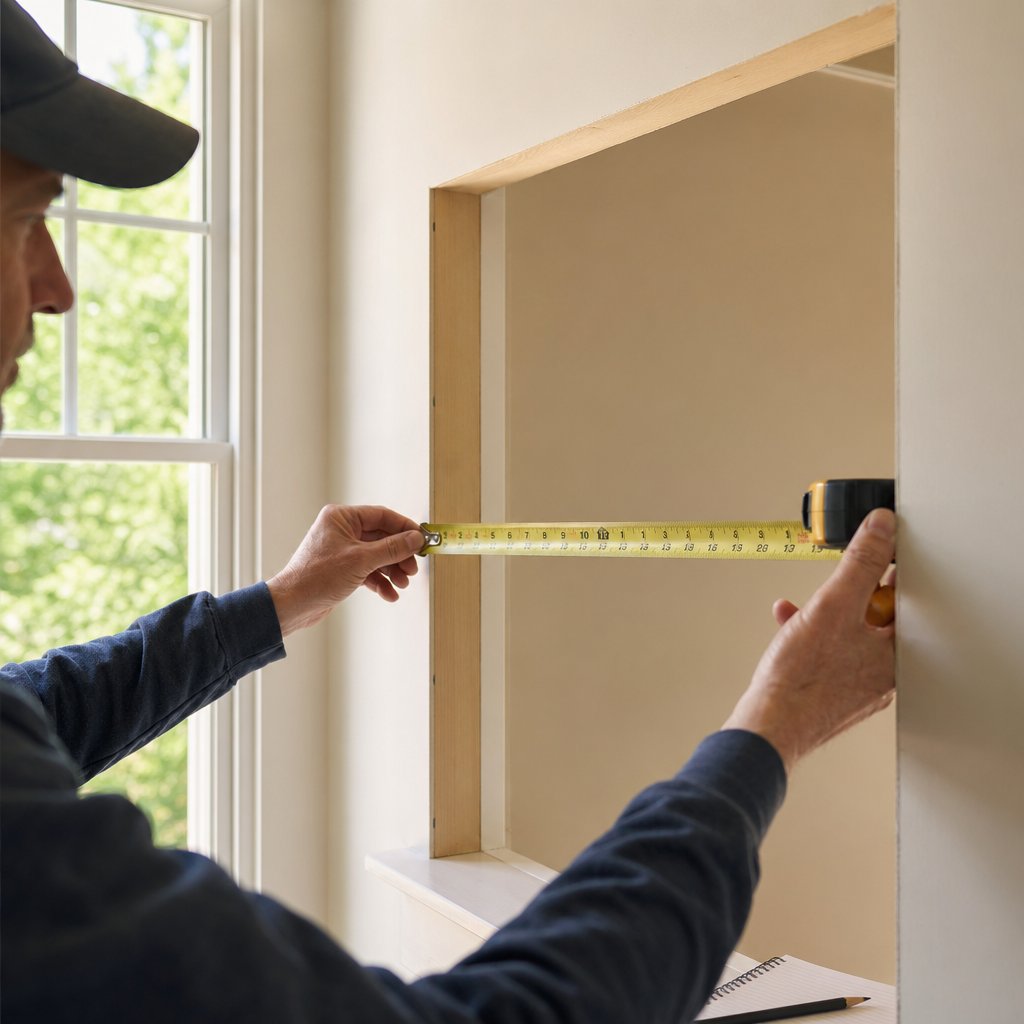
For a replacement window, you are measuring the existing frame pocket, which is the space left after the old sash is removed but the frame stays in place. For new construction, you are measuring the rough opening in the wall framing and accounting for shimming space on all sides, typically 10 to 15 mm per side.
Here is the step-by-step process that applies to both scenarios:
- Measure the width at three points: across the top, the middle, and the bottom of the opening. Record all three numbers.
- Measure the height at three points: along the left side, the centre, and the right side. Record all three.
- Use the smallest width measurement and the smallest height measurement. This ensures the new window will fit the tightest point of the opening.
- Check the diagonals by measuring corner to corner in both directions. If the two diagonal measurements differ by more than 6 mm, the opening is out of square and may need adjustment before installation.
- Note the depth of the frame pocket or rough opening. This determines whether a standard-depth window will sit flush or whether extension jambs are needed.
As Pella’s measuring guide points out, a professional installer will confirm your measurements and inspect the opening before the order is finalised, so treat your numbers as a solid starting estimate rather than the final word.
When to Remove the Existing Frame
This is where the replacement versus full-frame decision comes in. If the existing frame is square, structurally sound, and free of moisture damage, an insert (pocket) replacement is the faster and more affordable route. The new slider drops into the old frame, and you are done with minimal disruption.
But if you spot soft spots, visible rot, warping, or water staining around the sill or jambs, the frame itself is compromised. This Old House notes that full-frame replacement is the better option when the existing structure is damaged or no longer sealing properly, because it exposes the rough opening and lets you fix underlying issues like poor insulation or hidden water damage. Full-frame work costs more and takes longer, but it gives you a clean slate and a more reliable long-term result.
A quick test: press a screwdriver into the timber frame at the sill corners and along the bottom rail. If the wood feels spongy or the tool sinks in easily, that frame needs to go. The same logic applies if you are planning to add accessories like a cat door for a horizontal sliding window or fit a horizontal sliding window ac unit. Both modifications put extra stress on the frame, so starting with a solid structure is non-negotiable.
With the right measurements in hand and a clear picture of your frame’s condition, the next consideration is how well the window itself manages heat, light, and energy loss once it is installed.
Energy Efficiency Ratings and Climate Suitability
Window shopping gets confusing fast when spec sheets start throwing around acronyms like U-factor, SHGC, and VT. These numbers look intimidating, but they tell you exactly how a horizontal sliding window will handle heat, sunlight, and your energy bills. Understanding them puts you in control of the conversation with any supplier or installer.
Key Performance Ratings Explained in Plain Language
Think of your window as a gatekeeper managing three things: heat flow, solar energy, and visible light. Each rating measures one of those jobs.
U-factor measures how quickly heat passes through the window assembly. Imagine holding a ceramic mug of coffee versus a metal one. The metal mug loses heat to your hand much faster. A window with a high U-factor behaves like that metal mug, letting heat escape in winter and creep in during summer. Lower is better here. The Building America Solution Center notes that U-factor values generally range from 0.15 to 1.1, and anything at or below 0.20 likely indicates triple-pane glass.
Solar Heat Gain Coefficient (SHGC) tells you how much of the sun’s heat energy makes it through the glass. It runs on a 0-to-1 scale, with typical values falling between 0.15 and 0.80. A lower SHGC blocks more solar heat, which is exactly what you want in a sun-drenched room where you are already running an air conditioner for a horizontal sliding window. A higher SHGC, on the other hand, lets free solar warmth in, a genuine advantage in cold climates where passive heating trims your energy bill.
Visible Transmittance (VT) is the simplest of the three. It measures how much natural daylight passes through the glass, also on a 0-to-1 scale. Higher VT means brighter rooms and less reliance on artificial lighting. The sweet spot is a VT that keeps rooms well-lit without pushing SHGC so high that you overheat the space.
In the United States, the ENERGY STAR program sets U-factor and SHGC thresholds by climate zone, making it straightforward to verify whether a window meets minimum efficiency standards for your region. Australian homeowners can look for WERS (Window Energy Rating Scheme) star ratings, which use a similar logic: more stars equal better performance for heating, cooling, or both.
Glazing and Gas Fill Options
The glass itself is where most of the thermal heavy lifting happens. Single glazing, a lone pane of glass, offers almost no insulation and is largely outdated for habitable rooms. Double glazing sandwiches two panes with a sealed air gap between them, cutting heat transfer significantly. Triple glazing adds a third pane and a second sealed cavity, pushing U-factor values down even further. As Efficient Windows Collaborative explains, triple-glazed units with two Low-E coatings and gas fills are best suited for very cold climates where minimising heat loss is the top priority.
Low-E (low-emissivity) coatings are nearly invisible metallic layers applied to one or more glass surfaces. They work like a selective mirror, reflecting infrared heat back toward its source while still letting visible light pass through. In summer, a Low-E coating bounces solar heat away from your interior. In winter, it reflects your indoor heat back inside.
The gas between the panes matters too. Argon, an odourless and non-toxic gas denser than air, is the standard fill and improves insulation noticeably over a plain air gap. Krypton is even denser and performs better in narrower cavities, but it costs more and is typically reserved for triple-glazed or high-performance units.
One concern homeowners raise about horizontal sliding windows specifically is whether they seal well enough to compete with casement or awning styles. The answer is yes, provided the window features quality weatherstripping and interlocking meeting rails. A well-specified slider with double glazing, Low-E coating, and argon fill performs comparably to other operable window types in the same price bracket.
Choosing Features by Climate
No single glazing setup works everywhere. The climate you live in should drive your specification choices. A window ac for horizontal sliding window setups in a hot, humid city faces completely different demands than a slider in a cold mountain town relying on passive solar gain.
| Climate Type | Recommended U-Factor | Recommended SHGC | Glazing | Frame Considerations |
|---|---|---|---|---|
| Hot and sunny | 0.30 or lower | 0.25 or lower | Double glazed, low-solar-gain Low-E, argon fill | Aluminium with thermal break; tinted or reflective coatings |
| Cold | 0.20 or lower | 0.40 or higher | Triple glazed, high-solar-gain Low-E, argon or krypton fill | Vinyl, fiberglass, or thermally broken aluminium; condensation-resistant spacers |
| Coastal / humid | 0.30 or lower | 0.25 – 0.40 | Double glazed, Low-E, argon fill; impact-rated glass where required | Marine-grade aluminium or vinyl; drainage channels essential |
| Mixed / temperate | 0.25 – 0.30 | 0.25 – 0.40 | Double glazed, moderate-solar-gain Low-E, argon fill | Any material with adequate thermal performance |
In hot climates, the priority is keeping solar heat out. A low SHGC paired with a tinted or reflective Low-E coating does the heavy lifting, reducing the load on your cooling system, whether that is central air or an ac unit horizontal sliding window setup. Cold climates flip the equation: you want a high SHGC to capture free warmth from the winter sun, combined with a very low U-factor to keep that heat from escaping. Coastal regions add corrosion resistance and impact-rated glass to the list, especially in hurricane or cyclone zones. Humid areas need frames with well-designed drainage channels and condensation-resistant spacers to prevent moisture buildup inside the glass unit.
Getting the glazing and frame combination right for your climate is the efficiency side of the equation. But efficiency ratings do not help much if the room still feels stuffy on a 35-degree day and you need to cool it down fast. That is where fitting an air conditioner into a slider becomes the practical next question.
Installing an Air Conditioner in a Horizontal Sliding Window
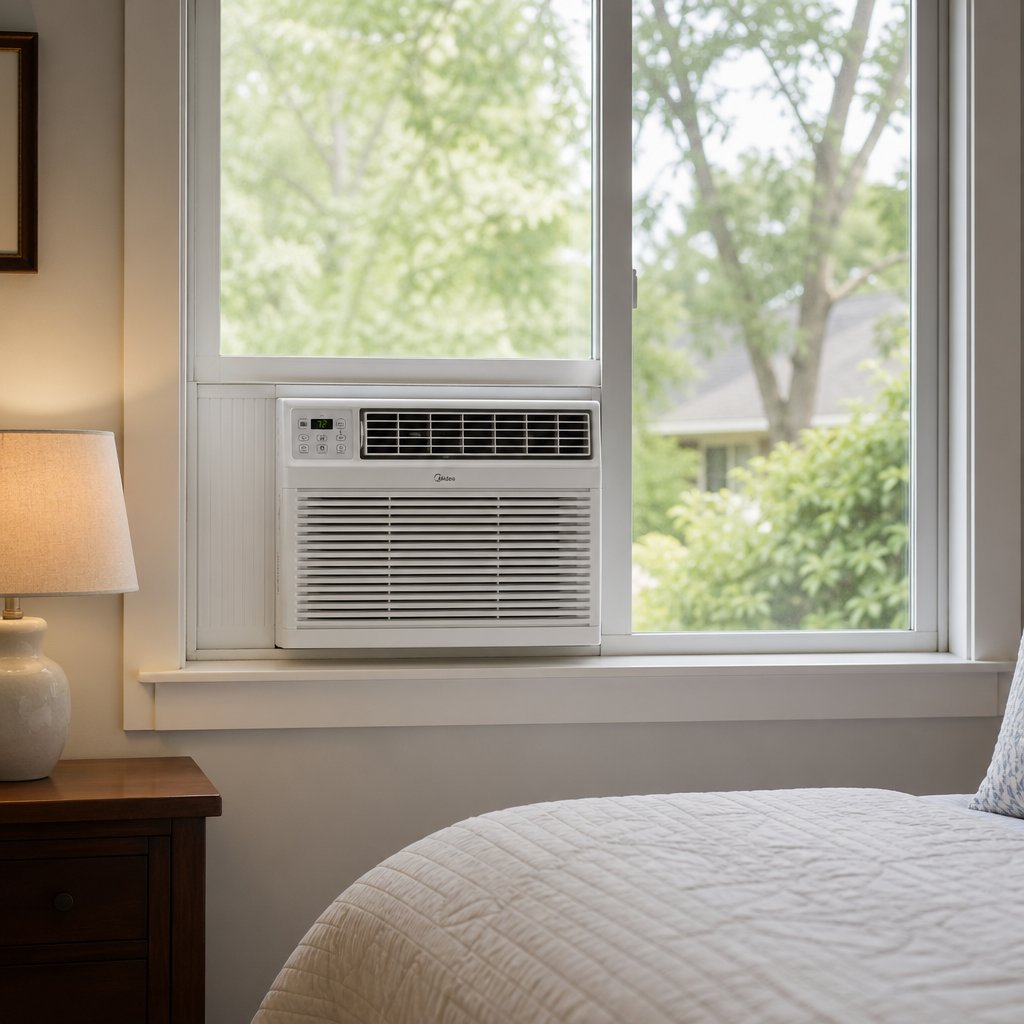
You have picked the right frame, nailed the glazing spec, and your slider is performing well on paper. Then summer hits, and you realise you need a window air conditioner for a horizontal sliding window that opens sideways, not up and down. This is one of the most common frustrations homeowners face with sliders, and the good news is it is entirely solvable.
Why Standard Window AC Units Do Not Fit Horizontal Sliders
Traditional window AC units are designed for double-hung windows. The idea is simple: raise the lower sash, rest the unit on the sill, lower the sash onto the top of the unit, and the vertical gap on either side gets filled by pull-out accordion panels built into the AC. With a horizontal slider, none of that works. The panel moves sideways, so there is no sash to lower onto the unit. The gap you need to seal runs horizontally beside the AC rather than vertically above it, and the built-in side panels are oriented the wrong way.
That mismatch does not mean you cannot use a window ac for horizontal sliding windows. It just means you need a different approach to mounting and sealing.
AC Installation Kits and Bracket Solutions
A horizontal sliding window air conditioner kit bridges the gap between a standard AC unit and a sideways-opening window. These kits typically include a filler panel made from plexiglass or rigid foam board, an L-bracket or support bracket to bear the unit’s weight on the sill, weatherstripping tape for sealing edges, and security screws to lock the sliding panel in place.
Here is the general installation sequence:
- Open the sliding panel fully and clean the sill and track so the unit sits on a stable, level surface.
- Position the AC unit on the windowsill with the exterior side (condenser and exhaust vents) facing outside. Use a level to confirm it sits flat or tilts very slightly outward for proper condensate drainage.
- Secure the unit to the sill using an L-bracket, screwing it into the frame or sill to prevent the AC from shifting or falling.
- Measure the horizontal gap between the AC unit and the window frame. Cut the filler panel to size and install it to close that opening completely.
- Seal all edges where the filler panel meets the frame and the AC unit with weatherstripping tape to block air leaks and insects.
- Slide the operable panel back until it presses against the filler panel, then install a security screw or window lock to prevent the panel from being pushed open from outside.
As one installation guide notes, you can substitute plywood for the filler panel, though plexiglass or rigid foam insulation gives a cleaner look and better thermal performance. Whichever material you choose, a snug fit and thorough sealing are what keep cool air in and hot air out.
Portable AC as an Alternative
If cutting panels and mounting brackets sounds like more effort than you want, a portable air conditioner sidesteps most of the hassle. These freestanding units vent hot air through a flexible exhaust hose that only needs a narrow slot in the window opening, roughly 4 to 5 inches wide. You slide the window open just enough to fit the hose adapter, lock the panel, and plug in.
Testing by Business Insider found that window AC units use roughly 0.43 kWh per hour on average, while portable units consume about 0.88 kWh, more than double the energy for less cooling output. Portable ACs also cooled a smaller test room by just 2.5 degrees Fahrenheit over two hours, compared to a 2.6-degree drop in a larger room in half the time with a window unit. The culprit is the exhaust hose: heat escapes from the poorly insulated hose back into the room before it reaches the outdoors.
So which is the best air conditioner for a horizontal sliding window? It depends on your priorities:
Window AC in a Horizontal Slider
- Pros: stronger cooling performance, lower energy consumption, cheaper to run over a full season, no floor space required inside the room
- Cons: more involved installation, requires a horizontal sliding window air conditioner kit or DIY filler panel, partially blocks the window, harder to remove and reinstall
Portable AC with Exhaust Hose Kit
- Pros: quick 10-to-15-minute setup, easy to move between rooms, leaves the window mostly usable, more secure since the opening is minimal
- Cons: uses roughly twice the electricity, weaker cooling output, takes up floor space, exhaust hose leaks heat back indoors
For mild climates where full air conditioning feels like overkill, a window fan designed for horizontal sliders offers a low-cost ventilation option. These fans mount in the opening much like a portable AC hose adapter and draw fresh air through without the energy cost of a compressor.
Whichever cooling route you take, the window itself still needs regular attention. Tracks clogged with dust, worn-out weatherstripping, and sluggish rollers can undermine both your comfort and your energy savings over time.
Maintenance, Track Care, and Troubleshooting for Sliding Horizontal Windows
A perfectly installed slider will not stay perfect on its own. Dirt builds up, rollers wear down, and weatherstripping compresses over the years. Whether you have a window ac in a horizontal sliding window adding extra weight to the sill or a bare opening letting in a coastal breeze, routine maintenance is what keeps everything gliding the way it should.
Routine Cleaning and Track Maintenance
The track is where most problems start. Dust, pet hair, leaves, and grit settle into the channel and create friction that makes the panel drag or stick. A simple cleaning routine, done twice a year or quarterly if you live in a dusty or coastal area, prevents the majority of issues before they begin.
Start by vacuuming loose debris from the track using a crevice nozzle attachment. Follow up with a stiff-bristled brush and warm soapy water to scrub out any caked-on grime. Wipe the track dry with a clean cloth, then apply a thin coat of silicone-based or Teflon-based lubricant along the rail and roller surfaces. Avoid oil-based products. They attract dust and create a sticky residue that makes the problem worse over time.
For the glass, a non-abrasive cleaner and a microfiber cloth handle most jobs. Screens should be removed and washed separately with mild soap and water, then dried completely before reinstalling to prevent mildew.
Common Problems and How to Fix Them
Even well-maintained sliding horizontal windows develop issues eventually. The table below covers the symptoms homeowners encounter most often, along with what is likely causing them and whether you can tackle the fix yourself.
| Symptom | Likely Cause | DIY Fix vs Professional Repair |
|---|---|---|
| Panel sticks or drags when sliding | Dirty track, worn rollers, or frame misalignment | DIY: clean track and lubricate. If rollers are visibly cracked or flat, replace them. Call a pro if the frame itself is warped. |
| Drafts around the meeting rail | Compressed or cracked weatherstripping | DIY: peel off old weatherstripping and press new self-adhesive strips into place. Inexpensive and straightforward. |
| Difficulty locking the window | Misaligned keeper (the strike plate the latch hooks into) | DIY: loosen the keeper screws, reposition to align with the latch, and retighten. If the latch mechanism itself is broken, a pro can source the correct replacement part. |
| Condensation between glass panes | Failed seal in the insulated glass unit (IGU) | Professional repair: the sealed glass unit needs replacement. This is not a DIY job, as the IGU must be factory-sealed to restore insulation. |
| Grinding or squeaking noise | Debris in the track or dry roller bearings | DIY: vacuum the track, clean rollers, and apply silicone lubricant. Persistent noise after cleaning suggests the bearings need replacement. |
If you have an ac horizontal sliding window setup, pay extra attention to the sill area around the unit. Condensate dripping from the AC can pool in the track and accelerate corrosion or mould growth. Wipe the sill dry regularly and confirm the unit tilts slightly outward so water drains outside.
Extending the Lifespan of Your Sliding Windows
A few small habits go a long way toward keeping your sliders functional for decades rather than just years:
- Inspect weatherstripping annually. Replace it as soon as you notice compression, cracking, or gaps. This is the cheapest upgrade that delivers the biggest improvement in air sealing.
- Check roller adjustment screws at least once a year. Most sliders have a small screw on the bottom edge of the operable panel that raises or lowers the rollers. Keeping the panel level prevents uneven wear on the track and ensures the latch lines up correctly.
- Lubricate locks and handles with a light silicone spray to keep the mechanism smooth and prevent internal corrosion.
- For timber frames, inspect the finish annually and repaint or reseal before bare wood is exposed. Once moisture penetrates raw timber, rot follows quickly.
Aluminium and vinyl frames are the lowest-maintenance options here. A wipe-down with soapy water once or twice a year is typically all they need. If you have an air conditioner in a horizontal sliding window, removing the unit at the end of cooling season and cleaning the sill and track underneath prevents off-season buildup from turning into a stubborn problem by spring.
Keeping your sliders in good working order is one thing. Knowing which rooms they actually suit, and where they might fall short, is another consideration entirely.
Room-by-Room Suitability and Honest Limitations
A slider that works brilliantly above a kitchen sink might create a code compliance headache in a bedroom. Choosing the right window for each room means weighing practical factors like ventilation needs, safety regulations, and how much wall space you have to work with, not just which style looks best on a mood board.
Kitchens, Bathrooms, and Laundries
These three rooms share a common trait: they generate moisture, odours, or both, and they usually have counters, appliances, or fixtures sitting directly below the window. A horizontal slider is a natural fit here because the panel glides sideways instead of swinging outward into your face while you are leaning over a sink or folding laundry.
One-handed operation is another practical win. When your other hand is holding a pot or a wet towel, a quick push to the side is far easier than cranking a casement handle. Controlled ventilation matters too. You can crack the panel open just a few inches to let steam escape without inviting a full gust of wind into the room.
For frame material, moisture-prone rooms favour aluminium or vinyl over timber. Both resist humidity and condensation without the risk of swelling, warping, or rot that timber faces in a steamy bathroom. If the room lacks a dedicated exhaust fan, a window fan designed for horizontal sliding windows can supplement airflow and help clear moisture before it settles on walls and ceilings.
Bedrooms and Egress Requirements
Here is where honesty matters more than salesmanship. In many jurisdictions, every bedroom (and habitable basement) must have at least one window that doubles as an emergency escape route. The International Residential Code (IRC) Section R310.2 requires a minimum net clear opening of 5.7 square feet, with a minimum height of 24 inches and a minimum width of 20 inches. Grade-floor openings drop slightly to 5 square feet.
The problem? A two-panel slider only opens to roughly half its total width. A 900 mm (36-inch) wide unit, for example, gives you an operable opening of about 18 inches, which falls short of the 20-inch minimum width. Even if the opening area technically meets the square footage requirement, both the height and width minimums must be satisfied independently.
This does not rule sliders out of bedrooms entirely. Wider units, particularly those around 48 inches or more, can clear the egress thresholds comfortably. The key is to check your local building code, whether that is the BCA in Australia or the IRC in the United States, before you finalise the size. If you are also planning a window air conditioner horizontal sliding window setup in the bedroom, remember that the AC unit and its filler panel will reduce the usable opening further, potentially pushing an otherwise compliant window below the egress minimum when the unit is installed.
Living Rooms and Feature Walls
Living areas are where large horizontal sliding windows truly shine. A three-panel XOX configuration spanning 3000 mm or more creates a panoramic view and allows cross-ventilation from two operable panels simultaneously. The fixed centre pane keeps the structural span manageable while maximising the glass-to-frame ratio for uninterrupted sightlines.
Light control becomes important with that much glass. Blinds for horizontal sliding windows come in several styles that work well with the lateral movement of the panels: vertical blinds track along the same horizontal plane as the window, panel glides offer a clean, modern alternative with wider fabric panels, and roller blinds can be mounted above the frame to cover the full opening when privacy or shade is needed.
For homeowners who want supplemental cooling without a permanent ac units for horizontal sliding windows installation, a portable AC with an exhaust hose adapter or a horizontal sliding window ac kit offers seasonal flexibility. The unit goes in when temperatures climb and comes out when the weather cools, leaving the full window available for views and ventilation the rest of the year.
- Kitchens: horizontal slider, ideal for above-counter placement, one-handed operation, and moisture-resistant frame materials
- Bathrooms and laundries: horizontal slider, excellent for controlled steam ventilation without an outward-swinging sash
- Bedrooms: horizontal slider works if the unit is wide enough to meet egress code minimums; verify dimensions before ordering
- Living rooms and feature walls: three-panel slider (XOX or OXO) for wide views, dual ventilation, and flexible light control with vertical blinds or panel glides
- Basements: horizontal slider suits low-headroom walls, but confirm egress compliance if the space contains a sleeping area
Every room has a window style that fits its demands. The real skill is matching configuration, size, and material to the specific conditions of your project rather than defaulting to a one-size-fits-all choice.
Choosing the Right Horizontal Sliding Windows for Your Project
Matching a window to a room is one thing. Matching it to your climate, your budget, and your long-term maintenance tolerance all at once is the decision that actually determines whether you will be happy with the result five or ten years from now. Everything covered in this guide, from configuration labels to glazing specs to AC compatibility, feeds into a single practical question: which combination of features is right for your specific project?
Matching Configuration, Material, and Glazing to Your Needs
Start with the room layout. Stand inside, face the opening, and decide which side needs to slide. That gives you your XO or OX configuration. If the span is wide enough for a feature wall or living area, a three-panel XOX or OXO layout opens up dual ventilation and a broader view. Horizontal sliding windows sizes range from compact 900 x 600 mm two-panel units to three-panel configurations exceeding 3600 mm, so there is a standard or custom option for virtually any opening.
Frame material comes next. If you are in a coastal, humid, or bushfire-prone area, aluminium with a thermal break is hard to beat. Mild climates with tight budgets lean toward vinyl. Heritage renovations or cold-climate builds where insulation is the top priority may justify timber or fiberglass. Revisit the material comparison table from earlier if you need a side-by-side refresher.
Glazing rounds out the specification. Hot climates call for low SHGC and a reflective Low-E coating. Cold regions benefit from high SHGC to capture passive solar warmth, paired with a very low U-factor. If you plan to run a portable air conditioner horizontal sliding window setup during summer, investing in better glazing upfront reduces how hard that unit has to work and how much electricity it consumes.
What to Look for in a Quality Sliding Window
Not all sliders are built to the same standard. When comparing quotes, look beyond price and check for these quality indicators:
- Stainless steel or high-grade nylon rollers that support smooth, long-lasting operation under the panel’s full weight
- Multi-point locking systems rather than a single latch, for better security and a tighter seal along the meeting rail
- Thermally broken aluminium profiles or welded vinyl corners, both of which prevent weak points where air and moisture can infiltrate
- Factory-applied weatherstripping with compression seals, not just adhesive-backed foam strips added after assembly
- Compliance certification: AS 2047 in Australia, or AAMA/WDMA ratings in North America
For Australian homeowners, renovators, and builders looking for AS 2047-compliant aluminium sliders with multiple configuration options, MEICHEN’s aluminium windows range is worth exploring. Their product page details specifications, glazing choices, and available layouts, making it a useful resource for comparing options before requesting quotes.
Budgeting and Next Steps
Pricing varies widely depending on material, size, glazing package, and your region’s labour rates. As a rough guide, vinyl sits at the entry level, aluminium occupies the mid-range, and timber and fiberglass trend higher. Modernize reports that installed sliding window costs in the US typically fall between $775 and $1,652 per window, with basic vinyl units starting as low as $200 to $500 and premium options reaching $3,000 or more. Australian pricing follows a different scale due to compliance requirements and material availability, so local quotes are essential.
A few practical steps will protect your investment:
- Get at least three quotes from different suppliers or installers so you can compare not just price but also what is included: installation, flashing, trim, cleanup, and disposal of old windows
- Ask about warranty coverage, specifically what is covered (frame, hardware, glass seal, finish) and for how long
- Request compliance documentation upfront, whether that is an AS 2047 test certificate or an NFRC label, so you have proof of performance on file
- Confirm whether accessories like a window fan for horizontal sliding window ventilation or an AC bracket kit will affect the warranty or require any frame modifications
Horizontal sliding windows are one of the most versatile and practical window styles available. The right combination of configuration, material, and glazing, chosen with your room, climate, and budget in mind, delivers a window that performs quietly in the background for years. Take your measurements, know your priorities, and let the specs do the talking when you sit down with a supplier.
Frequently Asked Questions About Horizontal Sliding Windows
1. Can you install a window air conditioner in a horizontal sliding window?
Yes, but it requires a different approach than a standard double-hung setup. Because the panel slides sideways rather than up and down, you need a horizontal sliding window air conditioner kit that includes a filler panel, an L-bracket for sill support, weatherstripping tape, and security screws. The filler panel closes the horizontal gap beside the AC unit, and the bracket prevents the unit from shifting. A portable AC with an exhaust hose adapter is another option that requires less modification, though it typically uses more electricity and delivers weaker cooling output.
2. What is the difference between XO and OX horizontal sliding windows?
The letters describe which panel slides and which stays fixed, always read from the exterior looking in. An XO window has a sliding left panel and a fixed right panel, while an OX window reverses that arrangement. The choice depends on your room layout, furniture placement, and which side you want ventilation. A practical way to decide is to stand inside the room facing the window and determine which side you prefer to open. Three-panel options like XOX or OXO are also available for wider openings where dual ventilation is desired.
3. Are horizontal sliding windows energy efficient?
They can be, provided you specify the right glazing and frame combination for your climate. A well-built slider with double or triple glazing, Low-E coatings, argon gas fill, and interlocking meeting rails performs comparably to other operable window styles in the same price bracket. Key ratings to check include U-factor for heat transfer resistance, SHGC for solar heat control, and VT for natural light transmission. In Australia, look for WERS star ratings, while US buyers should check ENERGY STAR certification for their climate zone.
4. What frame material is best for horizontal sliding windows in coastal areas?
Aluminium with a powder-coat or marine-grade finish is the strongest choice for coastal environments. It resists salt air corrosion, offers slim sightlines for maximum glass area, and requires minimal maintenance beyond an occasional wipe-down. Modern thermally broken aluminium profiles also address the material’s natural conductivity by inserting an insulating polymer strip between the interior and exterior sections. In Australia, suppliers like MEICHEN offer AS 2047-compliant aluminium sliders designed for harsh coastal and bushfire-prone conditions. Vinyl is a budget-friendly alternative that also handles moisture well, though it may discolour under intense UV exposure over time.
5. Do horizontal sliding windows meet bedroom egress requirements?
Not always. Because a two-panel slider only opens to roughly half its total width, narrower units may fall short of the minimum clear opening dimensions required by building codes. The IRC in the US requires at least 5.7 square feet of net clear opening with a minimum width of 20 inches and height of 24 inches. A 36-inch-wide slider, for example, provides only about 18 inches of operable width, which does not meet the threshold. Wider units around 48 inches or more typically clear egress requirements comfortably, but you should always verify against your local building code before finalising the specification.
More Window & Door Guides