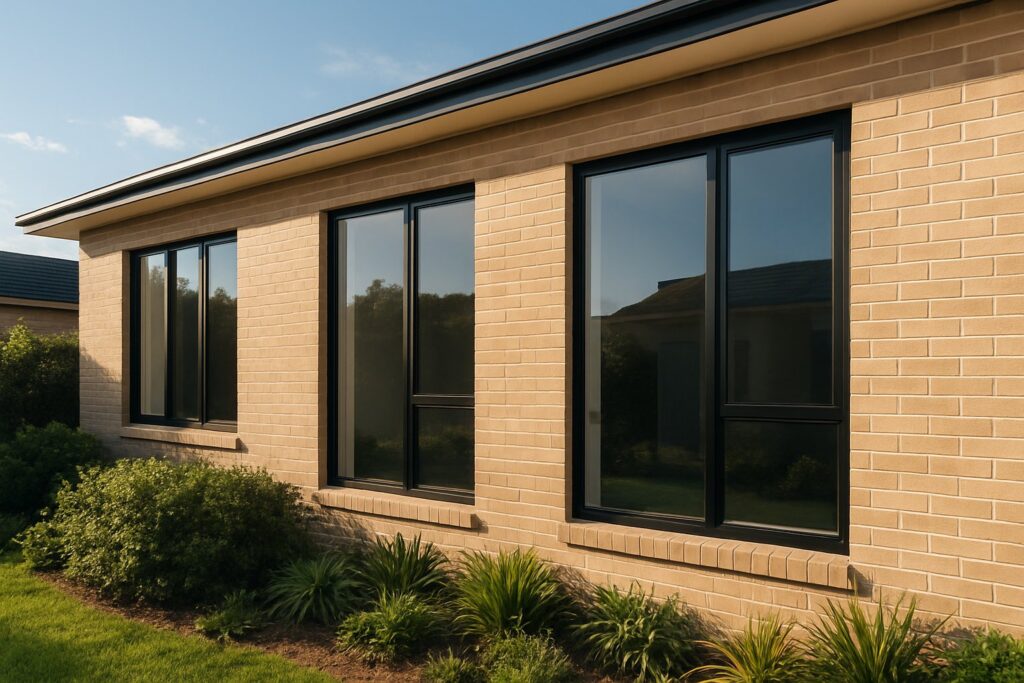
What Defines Modern Windows and Why They Matter
When you hear “modern windows,” you might picture any new window fresh off the production line. The reality is more specific than that. These aren’t just recent products — they’re a design philosophy with roots stretching back over a century.
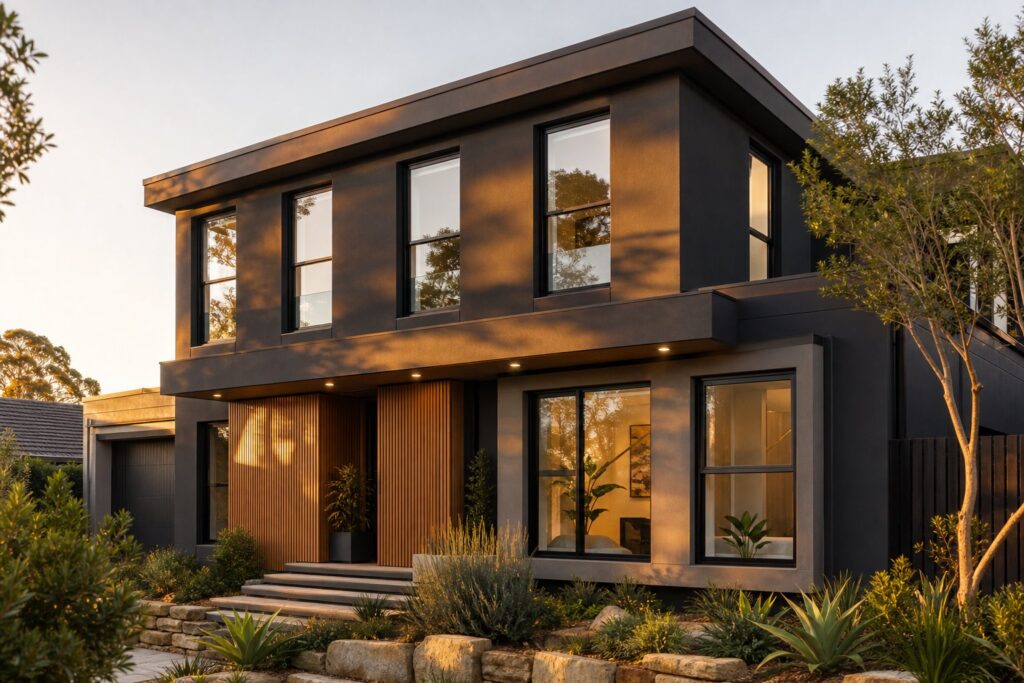
Modern windows are architectural glazing systems defined by clean geometric lines, minimal frame profiles, expansive glass areas, and a deliberate emphasis on natural light and indoor-outdoor connection — rooted in early 20th-century modernist design principles.
That definition matters because it separates a genuine design tradition from generic marketing language. The lineage traces directly to the Bauhaus school founded in 1919, where architects like Walter Gropius reimagined buildings using industrial materials — glass, steel, and concrete — stripped of ornamental excess. The International Style carried those ideas forward, and mid-century modern architects ran with them, turning ribbon windows and floor-to-ceiling glass into residential staples. Today’s modern house windows are a direct evolution of that same thinking: maximize glass, minimize frame, let light do the work.
Design Principles Behind Modern Windows
So what sets these window styles apart visually? A few core hallmarks define the look:
- Slim sightlines — frame profiles as narrow as 20mm, where the border nearly vanishes and glass dominates the view
- Geometric precision — clean rectangles, squares, and horizontal bands rather than arched or ornate shapes
- Floor-to-ceiling configurations — glass walls that erase the boundary between interior space and landscape
- Fixed-operable combinations — large fixed picture panels paired with smaller casement or awning sections for ventilation
Imagine standing in a living room where the frame practically disappears. Your eye doesn’t stop at the edge of the glass — it travels straight through to the garden, the sky, the horizon. That seamless quality is exactly what brands like Marvin Windows and Doors engineer into their modern lines, and it’s what separates a thoughtfully designed window from a standard one.
Why Modern Windows Look and Perform Differently
Here’s where things get interesting. Prioritizing glass area over framing creates real engineering challenges. A slimmer Marvin window profile or any ultra-thin frame still needs to handle structural loads, resist wind pressure, and prevent thermal bridging — all within a few centimeters of material. High-strength aluminium alloys, concealed reinforcement, and precision thermal breaks make this possible, but the balance is delicate. Every millimeter of frame reduction demands more from the materials and the glazing technology behind them.
This is exactly why choosing contemporary exterior windows for a project involves more than picking a look you like. The window types for house designs rooted in modernism need to perform as well as they appear — managing heat transfer, UV exposure, and air leakage through engineering that stays hidden behind those clean lines.
That performance-versus-aesthetics tension also explains why two terms — “modern” and “contemporary” — get confused so often, even though they point to very different design directions.
Modern vs Contemporary Windows and How They Differ
The two terms get swapped constantly in showrooms, product catalogs, and even by contractors. Yet “modern” and “contemporary” describe fundamentally different design intentions — and confusing them can lead you toward the wrong window for your home.
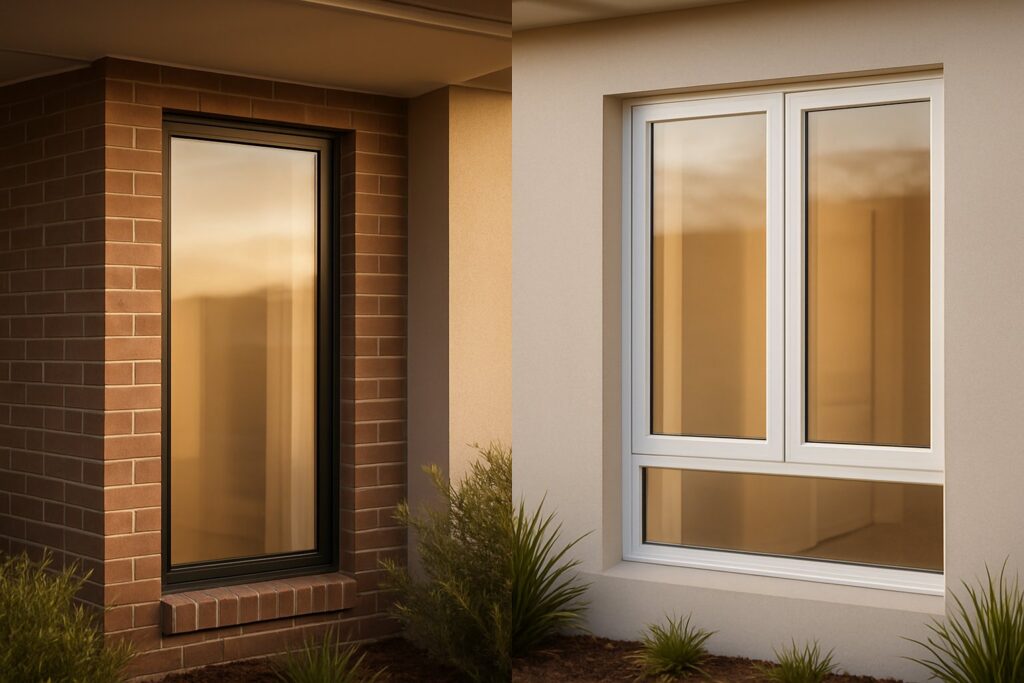
“Modern” refers to a specific architectural movement rooted in early-to-mid 20th century modernism. “Contemporary” simply means “of the current moment.” One is fixed in history; the other shifts with the times. That distinction directly shapes frame profiles, glass configurations, and the overall character of a window system. Here’s how they compare side by side:
| Dimension | Modern Windows | Contemporary Windows |
|---|---|---|
| Design Origin | Bauhaus, International Style, mid-century modernism | Fluid — borrows from multiple eras and current trends |
| Frame Profile | Ultra-slim, flat casings, minimal ornamentation | Varies — can include slim, mixed-width, or sculptural profiles |
| Glass Configuration | Large fixed panels, horizontal ribbon layouts, picture windows | Diverse — floor-to-ceiling, geometric shapes, curved glass |
| Typical Materials | Aluminium, steel, fiberglass, wood | Mixed materials — metal-and-wood hybrids, composite, vinyl |
| Lines and Geometry | Strong horizontal emphasis, strict rectangles | Organic curves, asymmetry, and angular experimentation |
| Architectural Context | Mid-century homes, modernist restorations, Eichler-style builds | New-build custom homes, trend-forward renovations |
Modern Style Windows Defined
Think geometric precision above everything else. Modern windows follow strict visual rules: flat casings with zero decorative molding, horizontal lines that stretch a room’s perceived width, and glass areas that dwarf the frame surrounding them. You’ll notice the emphasis is always on restraint. No grilles unless they serve a structural purpose. No arched tops. No fussy hardware. Even the modern door designs from this era share that same stripped-back logic — function expressed as form, nothing added for decoration’s sake.
A homeowner restoring a 1950s ranch or a mid-century split-level needs windows that honor these rules. Swapping in anything with ornamental mullions or thick frames would clash with the architecture’s DNA.
Contemporary Style Windows Defined
Contemporary window design operates without a fixed rulebook. It pulls from modernism, sure, but also from industrial aesthetics, biophilic design, and whatever direction architecture is trending toward right now. That freedom means you might see curved glass panels, mixed-material frames combining blackened steel with warm timber, or oversized pivot-style interior windows that blur the line between wall and opening.
As Modal Design notes, contemporary residential architecture evolved from mid-century modernism but shares a broader appreciation for simplicity and indoor-outdoor living — adapting those values rather than replicating them exactly. Brands like Marvin Doors and their extended product lines reflect this flexibility, offering configurations that range from historically faithful to boldly experimental.
Which Style Fits Your Project
Your architecture should lead the decision, not the other way around. Restoring or renovating a home with clear modernist roots? Stay within the modern vocabulary — slim aluminium or fiberglass frames, horizontal proportions, and clean hardware. Building something new without a specific historical reference? Contemporary gives you room to experiment with scale, shape, and material combinations.
A practical test: look at your home’s existing lines. If the roofline is flat or low-pitched, the exterior favors horizontal planes, and ornamentation is minimal, modern windows will feel native. If the architecture mixes influences — say, a gabled roof with open-plan interiors and industrial finishes — contemporary options offer the flexibility to tie those elements together.
Getting the style right is the first filter. The next layer of the decision involves something equally important: matching the right window configuration and type to your specific home architecture, whether that’s a mid-century original, a modern farmhouse, or a minimalist new build.
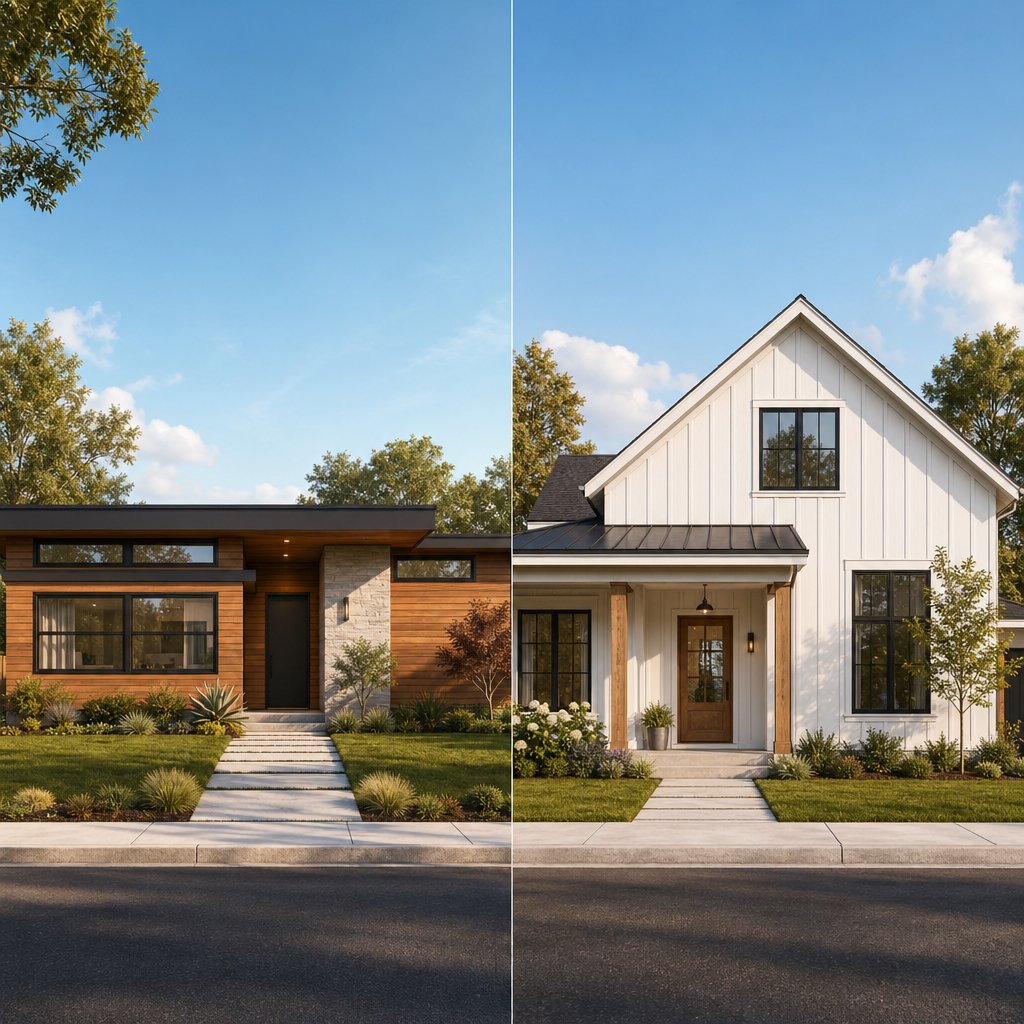
Modern Window Styles Matched to Home Architecture
A window that looks stunning on a minimalist concrete box can feel completely wrong on a modern farmhouse. The style of your home dictates which configurations, proportions, and frame treatments will look intentional rather than forced. Yet most window guides treat every project the same — here’s a casement, here’s a picture window, good luck.
That approach misses the point. Each architectural style has its own visual rhythm, and the right modern window design reinforces it. The wrong one disrupts it. Here’s how to match specific window types and configurations to four of the most popular home styles built or renovated today.
Mid-Century Modern and Modern Farmhouse Windows
These two styles sit at opposite ends of the modern spectrum, yet both rely heavily on window choices to define their character.
Mid-century modern homes are all about horizontal emphasis and expansive glass. The architecture itself — flat or low-pitched roofs, open floor plans, exposed beams — was designed around the idea that windows are a view, not just a wall opening. As Andersen’s mid-century style guide explains, expansive windows and doors are focal points in these homes, practically meeting inhabitants’ needs for light, air, and contact with the natural world.
Recommended configurations for mid-century modern homes:
- Horizontal ribbon windows — bands of casement or fixed panels joined in a row, creating a striking linear composition across the facade
- Clerestory windows — placed high on the wall near the ceiling, typically awning or fixed picture units that flood interiors with light without sacrificing wall space
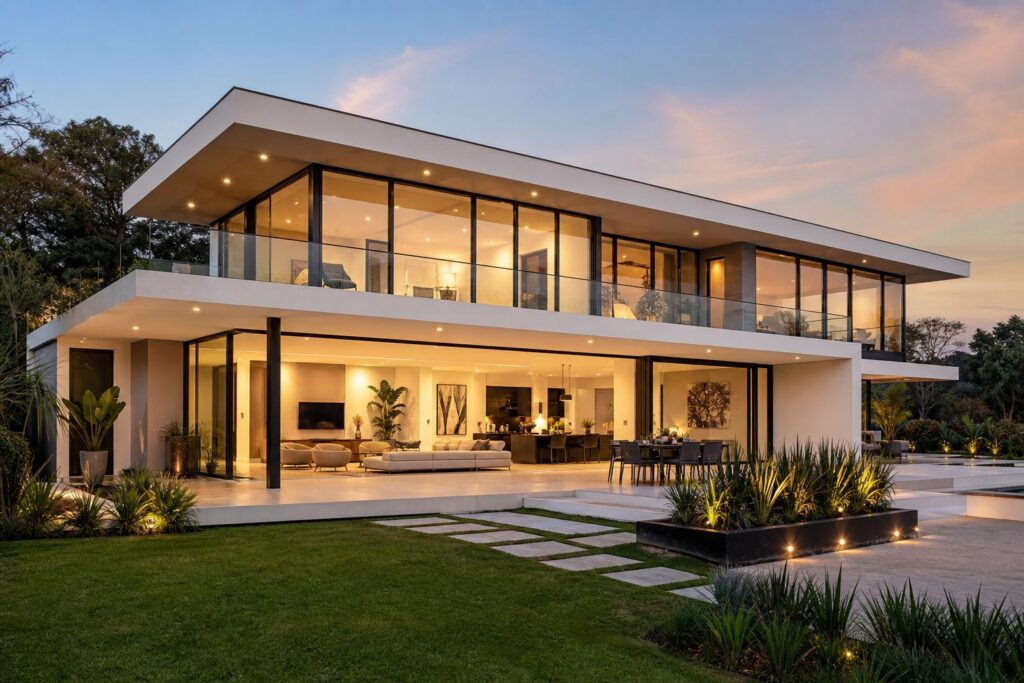
- Floor-to-ceiling picture windows — large fixed panels that essentially create glass walls, sometimes wrapping around corners for panoramic views
- Casement-and-picture combinations — a large fixed center panel flanked by operable casements for ventilation, forming an oversized rectangular grouping
Frame colors should stay neutral. Black and white dominate, though coppery reds or clear anodized aluminium finishes complement the industrial material palette these homes celebrate. Hardware is functional and minimal — clean right angles, satin nickel or chrome finishes.
Modern farmhouse windows tell a different story. Where mid-century leans horizontal and expansive, the farmhouse aesthetic pairs traditional proportions with clean-lined contemporary details. Think of it as classic shapes stripped of fussiness. Andersen’s farmhouse guide describes the style as showcasing an urban edge while retaining a warm, approachable feel — simple, clean, with practical materials and a high-contrast color palette.
Recommended configurations for modern farmhouse homes:
- Double-hung windows with a 2-over-2 grille pattern — the classic farmhouse proportion, updated with streamlined hardware and matte black trim
- Casement windows without grilles — for areas where a cleaner, more contemporary look is desired
- Large window combinations — multiple units grouped together to create expansive walls of glass, a signature move that separates modern farmhouse from its traditional ancestor
- Sliding windows — practical for horizontal placements like kitchen backsplash areas where a crank-out casement isn’t ideal
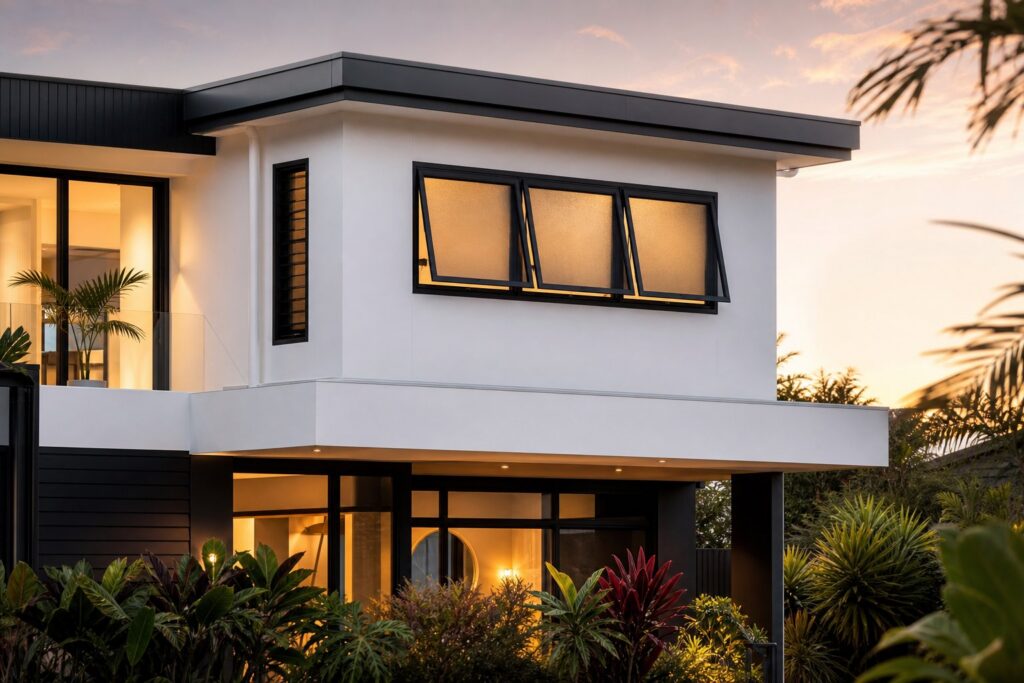
The signature front house windows on a modern farmhouse almost always feature matte black frames against a white exterior. That high-contrast pairing is the single most recognizable element of the style. Some homeowners are also exploring tone-on-tone black for a moodier, more dramatic look.
Contemporary Minimalist and Industrial Modern Windows
If mid-century and farmhouse styles have clear historical roots, contemporary minimalist and industrial modern are more about attitude — and they push window engineering to its limits in different ways.
Contemporary minimalist design demands the thinnest possible frames and the largest uninterrupted glass areas you can achieve. The goal is near-invisibility: the window frame should practically vanish, leaving nothing between you and the view. This is where contemporary home windows diverge most sharply from traditional styles. Every millimeter of frame is scrutinized. Fixed floor-to-ceiling panels dominate, often spanning entire walls. When operable sections are needed, slim-profile casements or awning units are integrated so seamlessly they’re hard to spot from the outside.
Recommended configurations for contemporary minimalist homes:
- Oversized fixed picture panels — the primary building block, sized as large as structural engineering and glass manufacturing allow
- Slim-profile casement or awning windows — tucked alongside fixed panels for ventilation, with frames matching the fixed units for visual continuity
- Corner window assemblies — glass meeting at the building’s edge without a visible post, dissolving the boundary between indoors and landscape
- Full-height sliding or lift-and-slide doors — functioning as operable glass walls that stack or pocket completely out of sight
Industrial modern takes a completely different approach to the frame. Instead of hiding it, this style celebrates it. Inspired by converted warehouses and factory buildings, industrial modern leans into visible grid patterns, divided lites, and metal-look finishes that reference the steel-framed windows of early 20th-century manufacturing spaces.
As Fenbro’s design guide notes, steel-look glazing stands out for its slim frames and bold contrast against neutral walls, adding depth and definition without clutter. These systems work brilliantly as both exterior glazing and interior partitions.
Recommended configurations for industrial modern homes:
- Steel-look frames with divided lites — black metal profiles with visible grid patterns that reference factory-era aesthetics
- Interior steel-and-glass partitions — used to separate spaces while maintaining light flow and visual connection between rooms
- Awning windows with grid muntins — operable units that maintain the industrial grid pattern while allowing ventilation
- Fixed transom panels above doors — a classic industrial detail that adds height and light to entryways
Color choices for industrial modern are narrow by design: matte black, dark bronze, and anthracite grey dominate. The frames are meant to read as structural elements, not decorative ones.
Choosing Window Styles for Renovations vs New Builds
Here’s where practical reality meets design ambition. Selecting windows for a new build and retrofitting them into an existing home are fundamentally different exercises.
With new construction, you’re designing window openings from scratch. Wall framing, structural headers, and rough openings can all be sized to accommodate whatever configuration you want — oversized picture panels, corner assemblies, full-height sliding systems. The architect and structural engineer work together to make the design window design possible from the ground up.
Renovations are more constrained. Existing rough openings dictate what fits without major structural modification. Enlarging a window opening means cutting into load-bearing walls, adding or resizing headers, and potentially reworking exterior cladding — all of which add significant cost and complexity. For many renovation projects, the smartest approach is working within existing openings while upgrading frame materials, glass technology, and hardware to achieve a modern look.
A few practical guidelines for renovation projects:
- Measure existing rough openings precisely before falling in love with a specific window size or configuration
- Consider insert replacement windows that fit within existing frames when structural changes aren’t feasible
- Use window combinations — joining multiple standard-sized units — to create the appearance of a larger opening without modifying the structure
- Prioritize high-impact locations first: street-facing facades and main living areas deliver the most visual return
Whether you’re building new or renovating, the window style needs to serve the architecture. But style is only one dimension of the decision. The frame material you choose determines how those windows will perform, how long they’ll last, and how much maintenance they’ll demand over the years ahead.
Window Frame Materials Compared for Modern Homes
Style gets you in the door, but material keeps you there. You can nail the perfect window style for your architecture and still end up disappointed if the frame material doesn’t hold up to your climate, your maintenance tolerance, or your budget over the long haul. The problem is that most comparisons oversimplify the trade-offs — or skip them entirely.
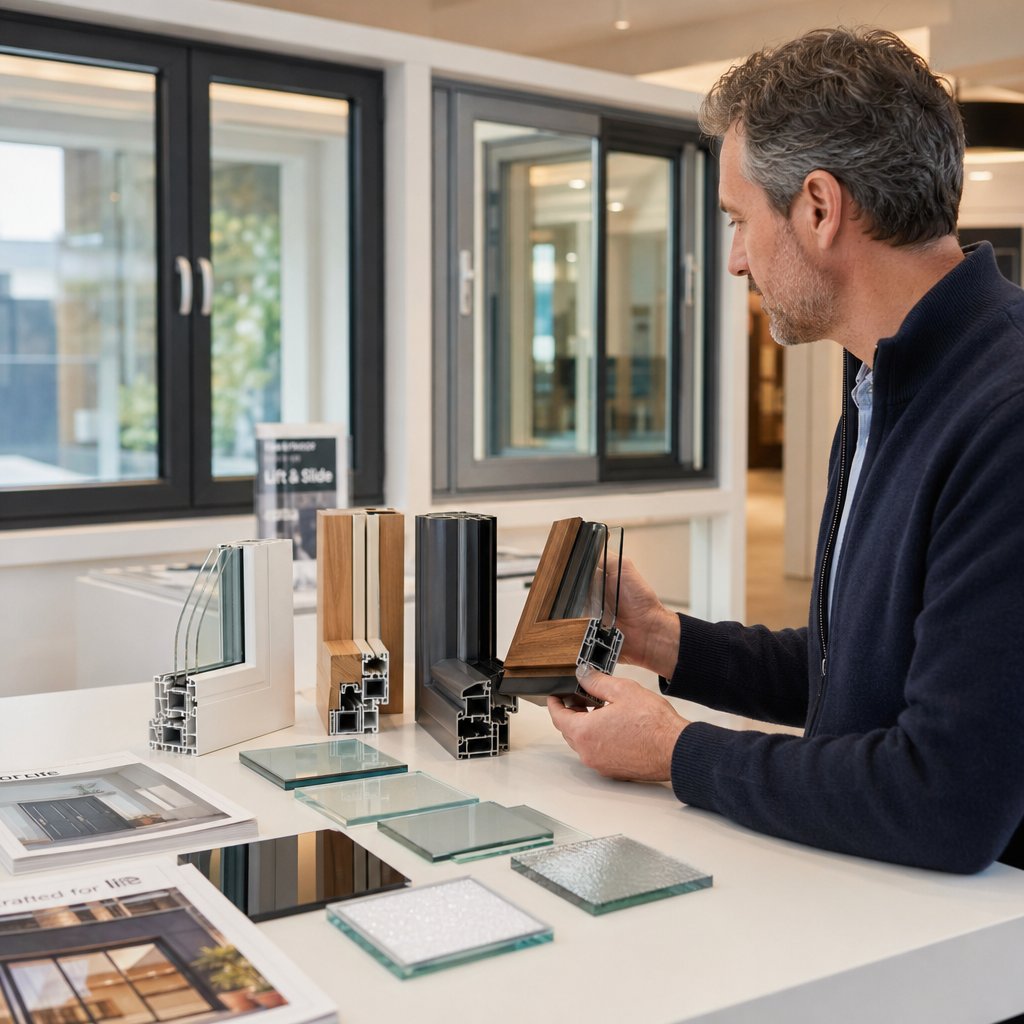
Five frame materials dominate the modern residential market: aluminium, fiberglass, vinyl, wood, and wood-clad. Each one handles thermal performance, durability, aesthetics, and cost differently. Here’s how they stack up across the dimensions that actually matter for a house modern window project:
| Material | Thermal Performance | Maintenance | Expected Lifespan | Aesthetic Flexibility | Relative Price Tier |
|---|---|---|---|---|---|
| Aluminium (thermally broken) | Good — thermal breaks reduce frame heat transfer by 30-60% | Very low — periodic cleaning, no painting | 30-45 years | Excellent — slimmest profiles, any powder-coat color, large spans | Mid to high |
| Fiberglass | Very good — low conductivity, foam-fillable cavities | Very low — paintable, rot-proof | 30-50+ years | Good — paintable, moderate profile width | Mid to high |
| Vinyl (PVC) | Good — multi-chamber insulation, better with foam fill | Very low — no painting, wipe clean | 20-40 years | Limited — restricted colors, thicker profiles | Low to mid |
| Wood | Very good — natural cellular insulation | High — regular painting, staining, sealing | 30-60+ years (with maintenance) | Excellent — warm aesthetic, fully paintable, traditional appeal | High |
| Wood-clad (exterior aluminium or fiberglass) | Very good — wood interior insulates, exterior cladding protects | Low to moderate — exterior needs minimal care, interior wood needs some attention | 30-50 years | Very good — warm interior, durable exterior, wide color range | High |
Aluminium and Fiberglass Frames
There’s a reason aluminium dominates modern architectural projects. No other material delivers profiles this slim while supporting the oversized glass panels that define contemporary windows design. When you browse pictures of windows in any architecture magazine, the ones with near-invisible frames are almost always aluminium. That razor-thin sightline is its signature advantage — and it’s structural enough to handle floor-to-ceiling spans that would require bulkier framing in other materials.
The historical knock on aluminium was thermal bridging. Metal conducts heat rapidly, and early aluminium frames were essentially thermal highways between indoors and outdoors. That concern has been largely resolved by thermally broken systems, which insert a polyamide insulating barrier between the interior and exterior aluminium profiles. Modern thermally broken aluminium frames achieve U-values comparable to uPVC, making them viable even in demanding climates. For readers exploring aluminium options — particularly in Australian conditions where UV exposure, coastal salt air, and compliance with local standards matter — MEICHEN’s aluminium windows collection offers a practical starting point, with thermally broken systems designed to meet Australian standards across residential and commercial projects.
Fiberglass shares aluminium’s strength-to-weight advantage but brings better inherent insulation to the table. Its hollow cavities can be filled with insulating foam, pushing thermal performance even higher. Fiberglass also expands and contracts at nearly the same rate as glass itself, which keeps seals tight over decades — a meaningful durability edge. The trade-off? Profiles run slightly wider than aluminium, and fewer manufacturers offer fiberglass in the ultra-slim configurations that define the sharpest modern window designs. A 2025 survey by This Old House found that 38.6 percent of recent window buyers chose fiberglass, surpassing vinyl for the first time — a clear signal that homeowners are prioritizing long-term value.
Wood, Wood-Clad, and Vinyl Frames
Wood is the original high-performance frame material. Its natural cellular structure provides excellent insulation without any engineering tricks, and nothing else matches its warmth and tactile quality. For Marvin modern windows and similar premium lines, wood interiors remain a hallmark of craftsmanship. The catch is maintenance. Wood demands regular painting, staining, or sealing — skip a cycle, and moisture infiltration can lead to rot, warping, and seal failure. In humid or coastal climates, that maintenance burden becomes a serious commitment.
Wood-clad frames solve the maintenance problem by wrapping the exterior in aluminium or fiberglass while keeping a wood interior. You get the warm, natural look inside and a weather-resistant shell outside. It’s a hybrid approach that works well for homeowners who love the aesthetic of wood but don’t want to repaint every few years. The downside is cost — clad systems sit at the top of the price range alongside solid wood.
Vinyl is the budget-friendly workhorse. It won’t rot, doesn’t need painting, and insulates reasonably well, especially in foam-filled configurations. For straightforward replacement projects where cost is the primary driver, vinyl delivers solid performance. The limitations show up in modern aesthetics: vinyl profiles are thicker than aluminium or fiberglass, color options are more restricted, and darker shades can warp under intense sun exposure. If your window style leans toward the slim, clean-lined look that defines modernist architecture, vinyl’s bulkier frames may work against the design intent.
How to Match Frame Material to Your Climate and Style
Your region’s weather and your willingness to maintain windows over time should narrow the field before aesthetics even enter the conversation.
- Hot, sunny, or coastal climates — thermally broken aluminium and fiberglass handle UV exposure, salt air, and heat without warping or corroding. Both resist the conditions that shorten vinyl and untreated wood lifespans.
- Cold climates — fiberglass, wood, and wood-clad frames offer the strongest insulation. Foam-filled vinyl also performs well here, and its lower cost can free up budget for triple-pane glazing upgrades.
- Mixed or temperate climates — all five materials are viable. The decision comes down to your design goals and maintenance tolerance.
- High-maintenance tolerance — wood rewards the effort with unmatched warmth and character, especially on heritage or period-inspired projects.
- Low-maintenance preference — aluminium, fiberglass, and vinyl all require little more than occasional cleaning.
A practical rule of thumb: spend more on frame material for the windows that face the harshest exposure — direct sun, prevailing wind, salt spray — and consider more economical options for sheltered elevations. That strategic mix lets you optimize both performance and budget without compromising the overall look.
The frame is only half the equation, though. What sits inside it — the glass itself — determines how much heat passes through, how much UV gets blocked, and how quiet your home stays. Glass technology has evolved dramatically, and understanding those options is where real performance gains hide.
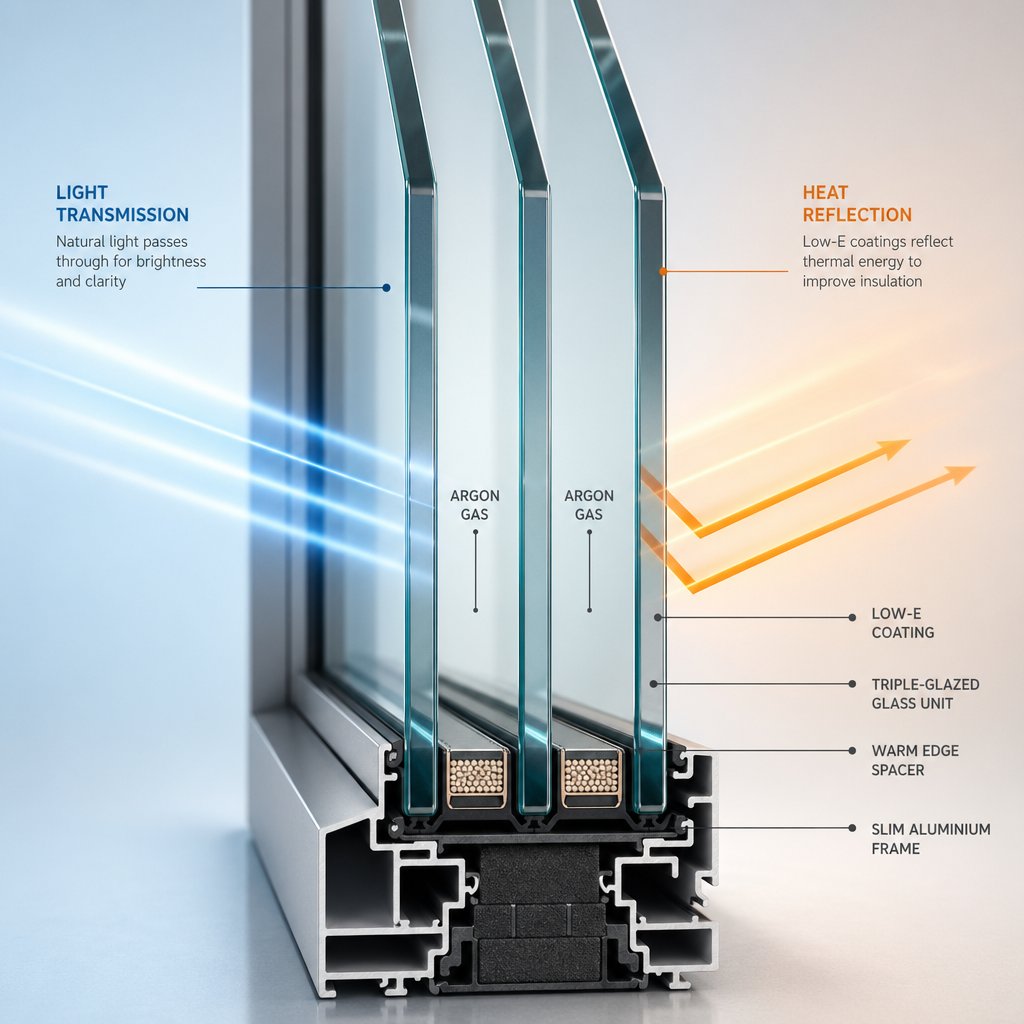
Modern Window Glass Technologies That Improve Performance
You could install the slimmest aluminium frame on the market and still end up with a window that leaks heat, lets UV damage your furniture, and does nothing about street noise. Why? Because the glass — not the frame — accounts for the majority of a window’s surface area and drives most of its thermal and acoustic performance. Whether you’re upgrading mid century modern windows in a 1960s ranch or selecting window styles for home projects from scratch, the glazing technology you choose shapes how the window actually performs day to day.
Here’s a quick overview of the core technologies available in today’s market:
- Low-E coatings — microscopically thin metallic layers that reflect infrared heat while letting visible light pass through
- Gas fills (argon or krypton) — inert gases sealed between panes that slow heat conduction compared to plain air
- Laminated glass — two glass layers bonded with a polymer interlayer for safety, UV filtering, and noise reduction
- Tinted glass — color-infused glass that reduces solar heat gain and glare without additional coatings
- Double-pane and triple-pane configurations — multiple glass layers with insulating gaps that progressively improve thermal and acoustic performance
Low-E Coatings and Gas Fills Explained
Imagine a window that lets sunlight flood your room but bounces most of the heat back outside in summer — and keeps warmth inside during winter. That’s essentially what Low-E (low-emissivity) coatings do. These virtually invisible metallic oxide layers are deposited on one or more glass surfaces within an insulating unit. The U.S. Department of Energy notes that Low-E coated windows typically cost about 10 to 15 percent more than regular windows but can reduce energy loss by 30 to 50 percent.
Different Low-E formulations target different climates. High solar gain coatings let more of the sun’s warmth through — ideal for cold regions where passive heating is welcome. Low solar gain coatings block more infrared radiation, keeping interiors cooler in hot, sunny areas. Some spectrally selective coatings filter out 40 to 70 percent of heat while still transmitting full daylight, a balance that works well for modern farmhouse windows and other styles where large glass areas face direct sun.
Between the panes, gas fills add another insulation layer. Argon is the standard choice — inexpensive, effective in the typical half-inch gap between panes, and significantly better at slowing heat conduction than plain air. Krypton performs even better thermally but costs more and is typically used in thinner cavities, around a quarter inch, where space is tight. You’ll find krypton most often in triple-pane units or in premium contemporary window frames where slim profiles demand narrower gaps.
Laminated Glass, Tinted Glass, and Triple-Pane Options
Low-E and gas fills handle heat transfer. Laminated glass tackles a different set of problems: safety, security, and noise. A polymer interlayer bonds two sheets of glass together so that if the pane breaks, fragments stay adhered rather than scattering. That makes laminated glass a smart choice for storm-prone coastal zones, ground-floor security concerns, and homes near busy roads where sound reduction matters. Products like the Marvin bay window and other large-format units benefit especially from laminated options, since bigger panes carry greater risk if shattered.
Tinted glass takes a simpler approach to solar control. Bronze, gray, or green tints are fused into the glass itself, reducing glare and solar heat gain without relying on coatings. Tinting works well as a complement to Low-E — not a replacement — particularly on west-facing elevations that catch intense afternoon sun.
Then there’s the pane count question. Double-pane insulating glass is the baseline for any serious modern window, but triple-pane configurations push performance further. The Efficient Windows Collaborative points out that triple-pane windows provide better insulation, more consistent indoor temperatures, reduced condensation, and superior noise reduction compared to double-pane units. The trade-off is weight, cost, and frame depth — triple-pane units are heavier and require frames engineered to support them. In extreme cold climates or high-noise environments, the upgrade often pays for itself through energy savings and comfort. In milder regions, double-pane with quality Low-E and argon fill may deliver the performance sweet spot without the added expense.
For homeowners choosing between Marvin wood windows with triple glazing or an aluminium system with advanced Low-E double-pane glass, the right answer depends on climate, noise exposure, and budget — not a one-size-fits-all rule. Manufacturer spec sheets and ENERGY STAR performance data are the most reliable tools for comparing real-world numbers across products.
Glass technology determines what happens to heat, light, and sound once they reach the window surface. But knowing which technology to prioritize requires understanding the rating systems that measure those outcomes — and how your specific climate zone shifts the math on what matters most.
Energy Ratings and Climate Considerations for Modern Windows
Low-E coatings, gas fills, laminated layers — you know the technologies exist. But how do you actually compare one modern window to another when they all claim to be “high performance”? The answer lives on a small label most homeowners walk right past: the NFRC rating sticker found on every ENERGY STAR certified product. Those numbers translate glass technology and window frame design into measurable outcomes — and reading them correctly is the difference between a smart purchase and an expensive guess.
Understanding Window Energy Ratings
Four ratings appear on every NFRC label. Each one tells you something different about how the window handles heat, light, and air:
- U-factor — measures how well the window resists heat transfer. Lower numbers mean better insulation. A U-factor of 0.25 or below is considered strong for cold climates; values up to 0.40 are common in milder regions.
- Solar Heat Gain Coefficient (SHGC) — measures how much solar radiation passes through the glass as heat. Lower SHGC means less heat enters your home. Hot climates benefit from values of 0.25 or below, while cold climates can use higher SHGC (0.30+) to capture free solar warmth.
- Visible Transmittance (VT) — measures how much natural light the glass lets through. Higher is brighter. A VT of 0.40 to 0.60 balances daylight with glare control, which matters especially for a living room window wall facing direct sun.
- Air Leakage (AL) — measures how much air passes through the window assembly. Lower is tighter. Look for values of 0.30 or below; many quality modern units achieve 0.10 to 0.20.
Sounds technical? Think of it this way: U-factor tells you how well the window keeps conditioned air inside, SHGC tells you how much sun heat it lets in, VT tells you how bright the room will feel, and AL tells you how drafty it might get. Every window with design intent toward energy efficiency will perform well across all four — but the priority shifts depending on where you live.
Climate-Specific Window Selection
This is where the ratings stop being abstract and start driving real decisions. A window that performs beautifully in Melbourne can underperform in Darwin, and what works in Minnesota won’t suit Miami. The ENERGY STAR program divides the U.S. into four climate zones, each with different certification thresholds. Australia’s Window Energy Rating Scheme (WERS) takes a similar approach, rating windows separately for heating and cooling performance across the country’s diverse climate zones.
Here’s how recommended performance ranges shift by climate type:
| Climate Type | U-Factor Target | SHGC Target | Priority Focus |
|---|---|---|---|
| Cold (northern U.S., alpine Australia) | 0.25 or lower | 0.30 or higher (south-facing) / low elsewhere | Insulation first — minimize heat loss through glass and frame |
| Mixed / Temperate (mid-latitudes, southeast Australia) | 0.28 – 0.32 | 0.25 – 0.40 (orientation-dependent) | Balanced — moderate insulation with selective solar control |
| Hot-Humid (tropical, northern Australia) | 0.30 – 0.40 | 0.25 or lower | Solar blocking — keep heat out, reduce cooling loads |
| Hot-Dry (desert, arid inland Australia) | 0.30 – 0.40 | 0.25 or lower | Solar blocking plus UV protection — intense radiation demands low SHGC and high-quality Low-E |
A few climate-specific considerations that often get overlooked when exploring house window styles and window ideas:
- Coastal and hurricane zones — impact-rated or laminated glazing isn’t optional in many jurisdictions. These windows must withstand wind-borne debris, and building codes in hurricane-prone areas often mandate specific glazing certifications. Even outside mandatory zones, laminated glass adds a meaningful safety layer for storm-exposed homes.
- High-altitude locations — UV intensity increases roughly 10 to 12 percent for every 1,000 meters of elevation gain. Homes in mountainous regions need aggressive Low-E coatings and potentially tinted glass to manage both UV damage and solar heat, even in otherwise cool climates.
- Australian conditions — with some of the highest UV indices on the planet, Australian homeowners face a dual challenge. Australia’s energy.gov.au notes that almost 90 percent of a home’s heat is gained, and up to 40 percent of heating energy is lost, through its windows. That makes selecting the right SHGC and U-factor combination critical across every Australian climate zone, from tropical Queensland to alpine Tasmania.
Window orientation matters just as much as the ratings themselves. The ENERGY STAR program recommends choosing higher SHGC for south-facing windows in cold climates to capture passive solar heat, while keeping SHGC low on west-facing glass where afternoon sun drives the heaviest cooling loads. That orientation strategy applies universally — flip it for the Southern Hemisphere, where north-facing glass catches the most sun.
Getting the ratings right protects your comfort and your energy bills for decades. But ratings and climate zones only tell you what performance to aim for — they don’t tell you how big to make the windows or what pitfalls to watch for during the selection process. That’s where sizing strategy and a few honest warnings about common mistakes come in.
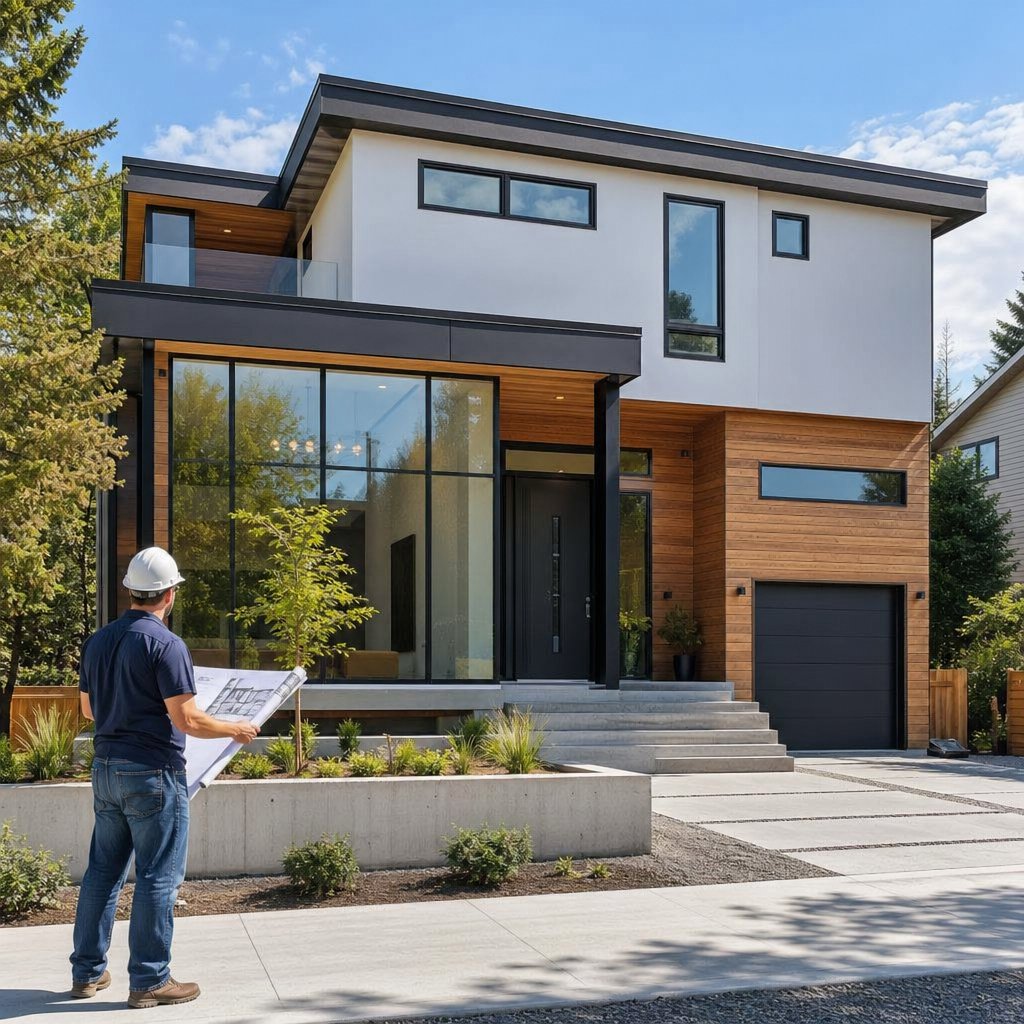
Sizing Strategies and Mistakes to Avoid with Modern Windows
You’ve identified the right performance ratings for your climate. You know which glass technologies matter. But here’s a question that trips up even well-researched homeowners: how much glass is too much? The answer involves a ratio that building codes care deeply about — and a handful of costly mistakes that no one warns you about until it’s too late.
Window-to-Wall Ratios and Configuration Planning
The window-to-wall ratio (WWR) is exactly what it sounds like: the total glazed area divided by the total exterior wall area, expressed as a percentage. A higher ratio means more glass, more light, and a more dramatic house window design. It also means more heat transfer, higher cooling loads, and a bigger energy bill if the glazing isn’t engineered to compensate.
Most U.S. building codes under the IECC prescriptive path cap the WWR at 40 percent. That doesn’t mean you can’t go higher — it means exceeding 40 percent triggers the performance path, which requires energy modeling to prove your overall design still meets efficiency targets. Upgrades like triple-pane glazing, enhanced wall insulation, and exterior shading devices can offset the thermal penalty of additional glass. One documented case study pushed a home in Climate Zone 4 to a 65 percent WWR by upgrading to triple-pane krypton-filled glass, R-35 continuous insulation, and calculated overhangs — at an added upfront cost of roughly $16,000 but with annual energy savings of approximately $1,800.
The takeaway? Expansive glass walls are absolutely achievable, but they require deliberate trade-offs elsewhere in the building envelope. If you’re dreaming of floor-to-ceiling contemporary windows across an entire facade, budget for the engineering and upgrades that make it work — not just the glass itself.
Bedroom windows add another constraint. The International Residential Code requires egress windows in every sleeping room — a minimum net clear opening of 5.7 square feet, at least 20 inches wide, 24 inches tall, with the sill no higher than 44 inches from the finished floor. These aren’t suggestions. They’re life-safety requirements that dictate minimum operable window sizes in bedrooms, regardless of your windows style preferences. Casement windows are the most efficient egress solution because 100 percent of the sash area opens, while double-hung and sliding units only offer about 50 percent clear opening — meaning they need to be significantly larger overall to comply.
Common Mistakes to Avoid When Choosing Modern Windows
Getting the ratio and sizing right is one thing. Avoiding the pitfalls that derail projects is another. These are the errors we see homeowners make repeatedly — and they’re rarely mentioned in product brochures or window images on manufacturer websites:
- Prioritizing aesthetics over energy performance — falling in love with a look and ignoring U-factor and SHGC ratings. As Design a View’s industry analysis puts it, the cheapest or most visually appealing option often ends up being the most expensive long-term through higher energy bills and premature replacement. This applies equally to mid century windows restorations where owners chase period-correct looks without verifying thermal performance.
- Choosing the wrong frame material for the local climate — installing untreated wood frames in a humid coastal environment, or standard aluminium without thermal breaks in a cold zone. The material needs to survive your weather, not just match your Pinterest board.
- Ignoring hardware and finish longevity — hinges, locks, and crank mechanisms wear out faster than frames or glass. Cheap hardware on an expensive window is a false economy. Ask about hardware warranties separately from the frame and glazing warranty.
- Underestimating installation complexity with oversized units — a 3-meter-tall fixed panel doesn’t arrive and install like a standard replacement unit. It may require crane access, specialized flashing, structural reinforcement at the header, and installers experienced with large-format glazing. Marvin replacement windows and similar premium products often need certified installation teams for oversized configurations.
- Failing to account for structural support — large openings need engineered headers, sometimes steel beams, to carry the load that the removed wall section was handling. Skipping the structural assessment can lead to sagging, cracking, or worse. This is especially critical in renovations where existing framing wasn’t designed for expansive glass.
- Using identical glass specifications on every elevation — a south-facing wall and a north-facing wall have completely different thermal profiles. Specifying the same SHGC everywhere either wastes money on unnecessary solar blocking or lets too much heat in where it’s not wanted. Orientation-specific glazing schedules cost little extra but deliver meaningful performance gains.
Every one of these mistakes adds cost — either upfront through rework or over time through poor performance and early failure. The common thread? They all stem from treating window selection as a single decision rather than a system of interconnected choices spanning design, engineering, and installation.
Understanding where the money actually goes — and where it’s wasted — is the next piece of the puzzle. Window pricing varies dramatically, and knowing what drives those differences puts you in a much stronger position when quotes start landing on your desk.
Cost Factors and Budgeting for Modern Windows
Two quotes for the same house, thousands of dollars apart. It happens constantly — and it’s not necessarily a red flag. Modern home windows pricing reflects a stack of variables, and each one shifts the total in ways that aren’t obvious until you break them down. Rather than chasing a single “average cost” number that won’t match your project anyway, understanding what drives the price puts you in control of the conversation.
What Drives Modern Window Pricing
The window unit itself typically accounts for 65 to 75 percent of the total installed cost, with professional installation making up the rest. Within that split, these factors carry the most weight — listed roughly in order of impact on your final number:
- Frame material — aluminium and fiberglass sit in the mid-to-high range, vinyl runs lower, and wood or wood-clad commands premium pricing. The gap between materials can shift a per-window cost by 30 to 50 percent.
- Glass technology tier — stepping from basic double-pane to Low-E with argon fill adds a moderate premium. Triple-pane with krypton fill or laminated options push costs higher still.
- Window size and operability — larger units cost disproportionately more, and operable styles (casement, awning) run higher than fixed panels due to hardware and engineering complexity.
- Custom vs standard sizing — non-standard dimensions add 15 to 30 percent to the window price. Many modern window styles demand custom sizing to achieve the proportions the design requires.
- Finish and hardware selections — powder-coat colors, premium handles, multi-point locking systems, and specialty finishes all layer onto the base price.
- Installation complexity — second-story access, structural modifications for larger openings, full-frame versus insert replacement, and exterior material repairs (stucco, brick, siding) can swing installation costs significantly. Difficult access alone can add $100 to $300 per window in labor.
When you’re comparing quotes across different home window types and configurations — whether evaluating Marvin contemporary windows, European tilt-and-turn systems, or even ventanales modernos from international suppliers — these are the line items to scrutinize. A lower quote isn’t always a better deal if it skips structural prep or uses thinner glass packages.
Smart Budgeting Strategies for Window Projects
You don’t have to spend top dollar on every opening. The smartest approach is strategic allocation: invest in premium frames and glass for high-visibility, high-impact locations — street-facing facades, main living areas, and the windows you interact with daily. Secondary bedrooms, utility rooms, and sheltered elevations can often use a step-down tier without any noticeable compromise in comfort or curb appeal.
Phasing the project is another lever. Replacing all windows at once typically saves 10 to 15 percent compared to splitting the work into stages, thanks to single-mobilization labor costs and volume pricing. But if cash flow matters more than total cost efficiency, phasing lets you tackle the worst-performing windows first and spread the investment over time. Just be aware that repeated setup fees and material price increases erode some of those savings.
The most important budget perspective is long-term. A value-tier window might save you hundreds upfront, but lower energy efficiency, faster seal degradation, and a shorter lifespan can cost more over 20 years than a mid-tier or premium unit would have from day one. Total cost of ownership — factoring in energy bills, maintenance, and replacement timing — is a far more honest number than the sticker price alone.
With a clear picture of where the money goes and how to allocate it wisely, the final step is pulling all these threads together — style, material, glass, climate, and budget — into a decision framework that fits your specific project.
How to Choose the Right Modern Windows for Your Project
Style, material, glass, climate ratings, sizing, budget — that’s a lot of variables. And every one of them interacts with the others. Choosing the right style of windows for a mid-century renovation leads to different material and glass decisions than specifying windows contemporary enough for a brand-new minimalist build. The trick isn’t optimizing any single factor. It’s finding the combination where everything works together.
The right modern window balances aesthetics, performance, and long-term value. Optimizing for just one — the slimmest frame, the lowest price, the highest energy rating — almost always means sacrificing something that matters later.
Matching Your Priorities to the Right Window System
Your starting point depends on what’s driving the project. Ask yourself which of these matters most, then let that priority guide the sequence of decisions:
- Design-driven — you’re matching a specific architectural style or achieving a particular visual effect. Start with the style-to-architecture pairings and frame profiles covered earlier, then select materials and glass that support the look without compromising performance.
- Efficiency-driven — energy costs or climate extremes are the primary concern. Start with the U-factor and SHGC targets for your climate zone, choose glass technology first, then find frames and styles that deliver those numbers.
- Budget-driven — you need to maximize impact within a fixed spend. Prioritize high-visibility front windows for homes and main living areas with premium units, and use value-tier options on secondary elevations. Phase the project if needed.
- Durability-driven — you want minimal maintenance and maximum lifespan. Thermally broken aluminium and fiberglass frames paired with quality glazing will outlast most alternatives with the least upkeep.
Builders and developers selecting house windows types at scale face a slightly different calculus. Consistency across units, supply chain reliability, and installation speed matter as much as individual window performance. Standardizing on one or two frame materials and a defined glass package simplifies procurement and reduces callbacks — while still allowing configuration variety across different modern houses windows and facade orientations.
Where to Start Your Modern Window Project
Regardless of whether you’re renovating a single home or specifying across a multi-dwelling development, a few practical steps set the project up for success:
- Get at least three quotes from different suppliers and installers — pricing varies widely, and comparing proposals reveals which costs are standard and which are inflated.
- Request NFRC performance data sheets (or WERS ratings in Australia) for every product you’re considering. Don’t rely on marketing claims alone.
- Ask about warranty coverage separately for glass, frame, hardware, and installation. A 20-year frame warranty means little if the hardware is only covered for five.
- Explore product ranges that match your requirements before committing. For those leaning toward aluminium — especially in Australian climates where durability, UV resistance, and compliance with local standards are non-negotiable — MEICHEN’s aluminium windows collection offers a solid starting point, with configurations spanning residential, renovation, and commercial project types.
The global market for modern windows continues to expand, with options ranging from domestic manufacturers to international suppliers offering ventanas modernas and European-engineered systems. That breadth of choice is a good thing — it means the right window for your project almost certainly exists. The framework above helps you find it without the guesswork.
Frequently Asked Questions About Modern Windows
1. What is the difference between modern and contemporary windows?
Modern windows refer to a specific design movement rooted in early-to-mid 20th century modernism, characterized by ultra-slim frames, geometric precision, flat casings, and strong horizontal lines. Contemporary windows, on the other hand, mean ‘of the current moment’ and borrow freely from multiple eras. Contemporary styles may include curves, mixed materials, and asymmetrical shapes that evolve with current trends. This distinction matters when purchasing: restoring a mid-century home calls for historically faithful modern profiles, while a new-build without a specific design reference benefits from the flexibility contemporary options offer.
2. What frame material is best for modern windows?
The best frame material depends on your climate, maintenance tolerance, and design goals. Thermally broken aluminium delivers the slimmest sightlines and supports oversized glass panels, making it the top choice for modern architectural projects. Fiberglass offers similar strength with better inherent insulation and foam-fillable cavities. Wood provides unmatched warmth but requires regular painting and sealing. Wood-clad frames combine a weather-resistant exterior shell with a natural wood interior. Vinyl is the most affordable option but has thicker profiles and limited color choices that may not suit minimalist modern aesthetics. For Australian climates, MEICHEN’s aluminium windows collection (meichenwindows.com.au/aluminium-windows/) provides thermally broken systems designed to handle UV exposure, salt air, and local compliance requirements.
3. How do I choose the right modern windows for my climate zone?
Start by understanding two key energy ratings: U-factor and Solar Heat Gain Coefficient (SHGC). In cold climates, prioritize a low U-factor (0.25 or below) to minimize heat loss, and consider higher SHGC on sun-facing glass to capture passive solar warmth. In hot or humid climates, a low SHGC (0.25 or below) is critical to block solar heat and reduce cooling loads. Mixed climates need a balanced approach, with orientation-specific glazing schedules that vary SHGC by facade direction. Coastal areas may also require impact-rated or laminated glazing for storm protection, while high-altitude locations need aggressive Low-E coatings due to increased UV intensity.
4. Are modern windows more expensive than traditional windows?
Modern windows generally cost more upfront due to slimmer engineered frames, advanced glass technologies, and custom sizing requirements. Key cost drivers include frame material, glass technology tier, window size and operability, custom versus standard dimensions, finish and hardware selections, and installation complexity. However, the long-term cost picture often favors quality modern units. Cheaper windows with poor thermal performance lead to higher energy bills, faster seal degradation, and earlier replacement. Strategic budgeting helps: invest in premium units for high-visibility areas like street-facing facades and main living spaces, and use value-tier options on secondary elevations where the visual and performance impact is lower.
5. What is a good window-to-wall ratio for modern homes?
Most U.S. building codes under the IECC prescriptive path cap the window-to-wall ratio (WWR) at 40 percent. Exceeding that threshold is possible but triggers the performance path, requiring energy modeling to prove the overall design still meets efficiency targets. Achieving higher ratios — some projects reach 60 to 65 percent — demands compensating upgrades like triple-pane glazing, enhanced wall insulation, and calculated exterior shading. Bedroom windows also face egress requirements mandating minimum operable opening sizes. The key is balancing the desire for expansive glass with practical energy, structural, and code considerations rather than treating glass area as a standalone design decision.
More Window & Door Guides