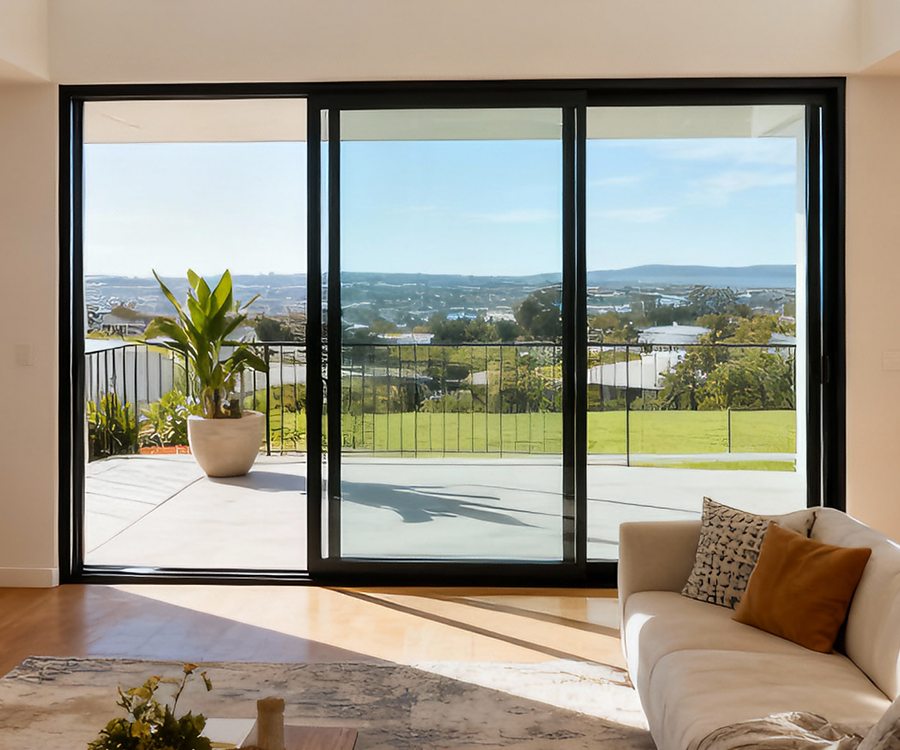
Why Window Design Is the Most Underrated Decision in Your Home
You’ll agonize over paint colors, countertop materials, and flooring finishes. But the windows? Most people treat them as an afterthought, picking whatever the builder suggests or whatever fits the budget. That’s a costly oversight. Window designs for house projects quietly shape everything at once: how much natural light floods your rooms, how high your energy bills climb, how fresh the air feels on a mild evening, and how your home looks from the street. Heat gain and heat loss through windows alone account for 25% to 30% of residential heating and cooling energy use. That single stat should tell you these aren’t just holes in a wall.
Why Window Design Shapes Your Entire Home Experience
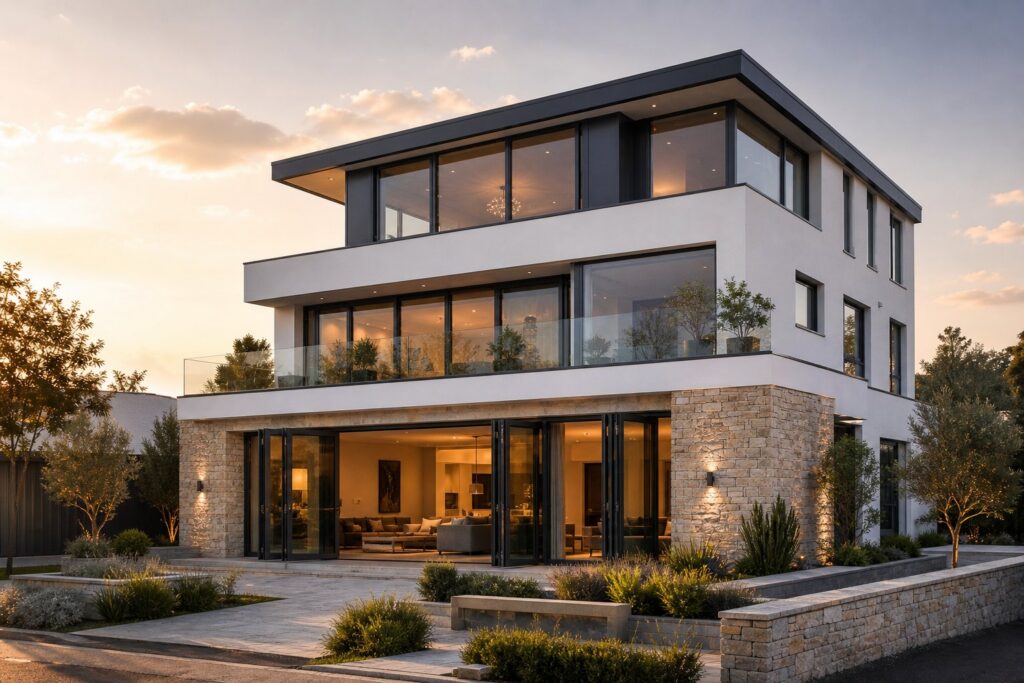
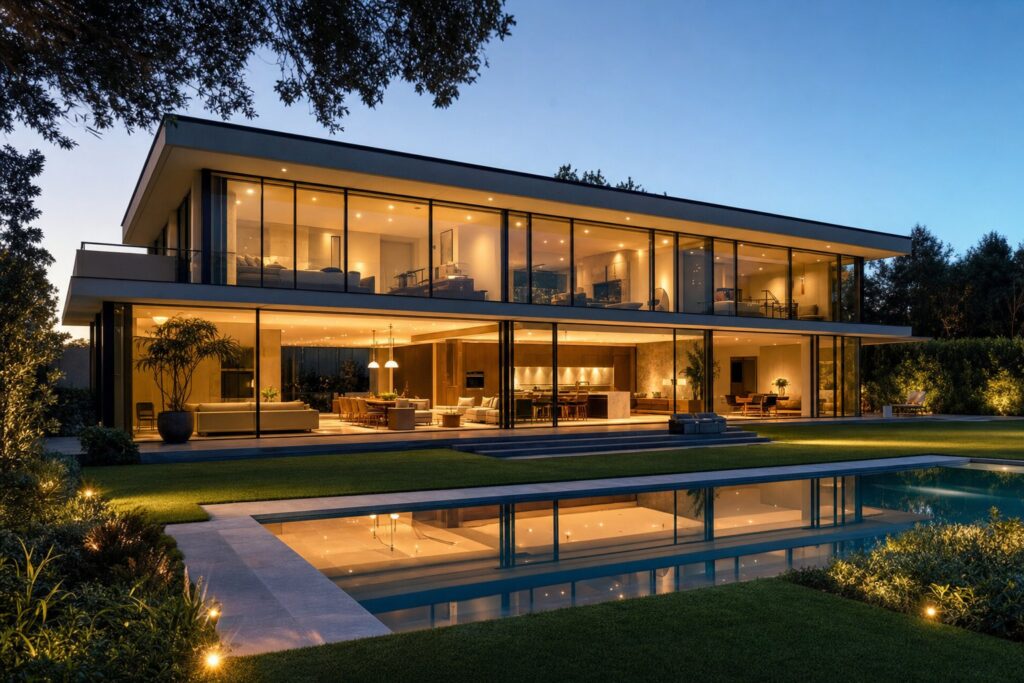
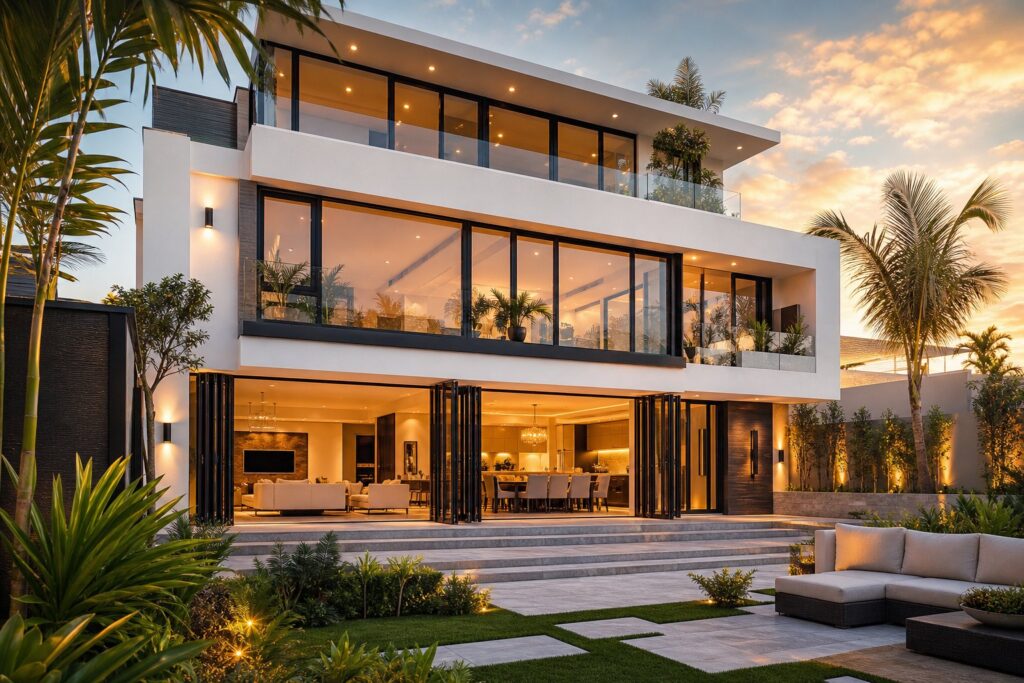
Think of windows as the point where architecture meets daily living. From the inside, they control brightness, airflow, privacy, and your connection to the outdoors. From the outside, they define rhythm, proportion, and curb appeal. A home with thoughtfully placed windows that balance interior comfort and exterior character will feel more inviting and often commands a higher resale value. Modern window designs for house exteriors can transform a flat facade into something with real depth, while the latest window designs for house interiors turn dark, stuffy rooms into spaces you actually want to spend time in. That dual role, inside and out, is what makes this decision so powerful.
What This Guide Covers and Who It Helps
This guide is built for homeowners planning a new build, renovators upgrading existing windows, and builders or developers selecting at scale. Instead of a quick photo gallery, you’ll get a decision-making framework: side-by-side type comparisons, frame material breakdowns, architectural style-matching advice, energy and glazing performance explained in plain language, room-by-room recommendations, and a practical project planning walkthrough.
Choosing the right windows for houses design involves balancing aesthetics, performance, building codes, and budget. This guide walks through each factor so you can make confident decisions rather than expensive guesses.
Every section ahead is designed to move you from inspiration to execution, covering the details most resources skip entirely.
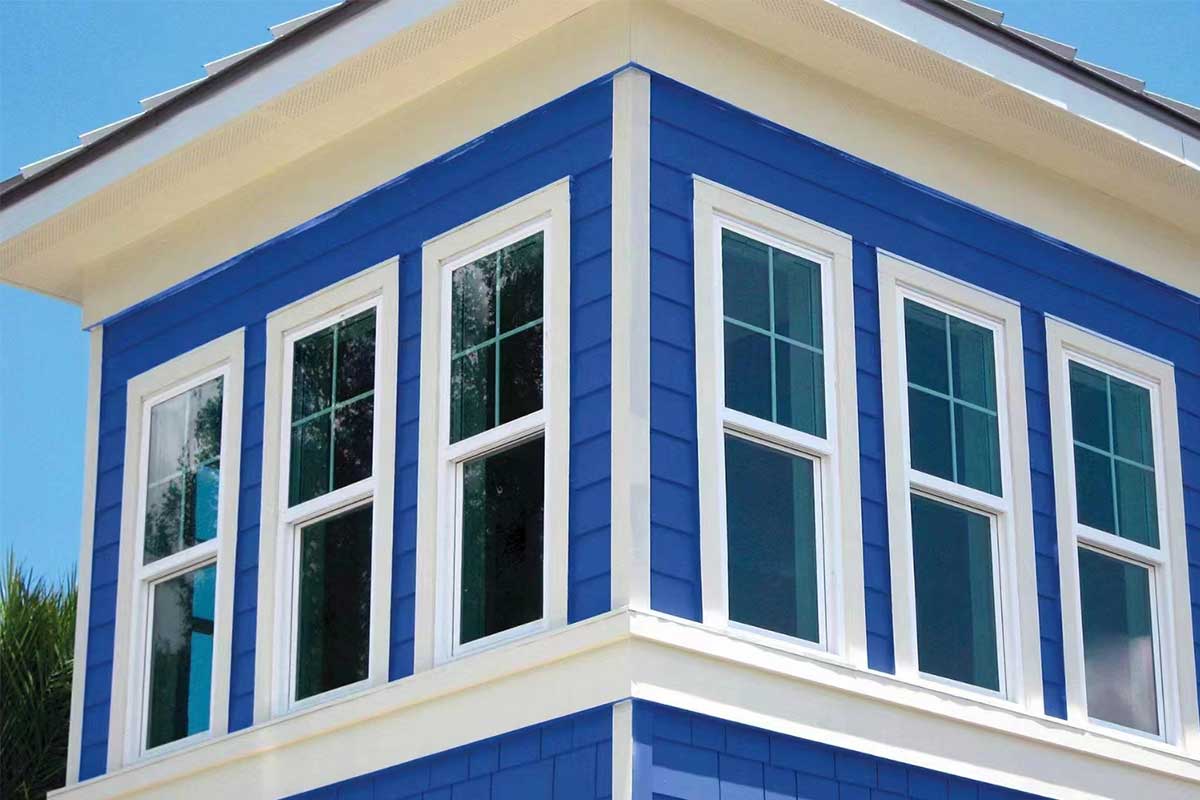
Every Residential Window Type Compared Side by Side
Knowing that windows matter is one thing. Knowing which type to pick for each situation is where most homeowners get stuck. There are at least ten common residential window styles, and each one operates differently, ventilates differently, and suits different rooms. Rather than researching them one at a time, you’ll find everything compared in a single view below.
How Each Window Type Operates and Where It Works Best
Casement windows hinge on the side and crank outward, creating a tight seal when closed that makes them one of the best choices for both airflow and energy efficiency. Double-hung windows feature two sashes that slide vertically, letting you open the top, bottom, or both for flexible stack ventilation, where warm air exits through the top while cooler air enters below. Sliding windows glide horizontally on a track, making them a practical fit for wide openings and rooms with limited exterior clearance.
Awning windows hinge at the top and push outward, so they can stay open during light rain without letting water in. That makes them ideal for kitchens and bathrooms where moisture and ventilation are constant concerns. Bay and bow windows project outward from the wall, combining a large fixed center pane with angled side panels that can be operable. They flood a room with light and create the illusion of extra space.
Picture windows are fixed, meaning they don’t open at all, but they deliver completely unobstructed views and maximum natural light. Fixed windows share that non-operable trait in smaller or custom shapes. Hopper windows hinge at the bottom and tilt inward, commonly used in basements where security and compact operation matter. Arched windows add a decorative curved top, typically fixed, and are often paired above operable windows for architectural character.
Window Types at a Glance
When you’re comparing window designs for houses, seeing the differences laid out in one place saves hours of back-and-forth research. This table covers the essentials for every major type.
| Type | Operation Mechanism | Ventilation Rating | Best Room Placement | Security Level | Maintenance Level | Ideal Use Case |
|---|---|---|---|---|---|---|
| Casement | Side-hinged, cranks outward | High | Kitchen, bedroom, living room | High (hook-shaped locks) | Medium | Maximum airflow with tight seal |
| Double-Hung | Two sashes slide vertically | Medium-High | Bedrooms, living rooms, hallways | Medium | Low (tilt-in cleaning) | Flexible ventilation, classic look |
| Sliding | Sash glides horizontally on track | Medium | Living rooms, hallways, wide openings | Medium | Low | Wide openings with limited exterior space |
| Awning | Top-hinged, pushes outward | Medium | Kitchens, bathrooms, basements | Medium-High | Medium | Ventilation during rain, moisture-prone rooms |
| Bay | Fixed center + operable side panels at angles | Medium | Living rooms, dining rooms | Medium | Medium-High | Panoramic views, added interior space |
| Bow | Multiple panels in gentle curve, some operable | Medium | Living rooms, master bedrooms | Medium | Medium-High | Curved aesthetic, wide light entry |
| Picture | Fixed (non-operable) | None | Living rooms, stairwells, scenic walls | High | Low | Unobstructed views, maximum light |
| Fixed | Fixed (non-operable, various shapes) | None | Accent walls, transoms, above doors | High | Low | Decorative light, architectural detail |
| Hopper | Bottom-hinged, tilts inward | Low-Medium | Basements, utility rooms | Medium-High | Low | Compact spaces, below-grade rooms |
| Arched | Typically fixed (curved top) | None (unless paired) | Entryways, front-facing walls, above other windows | High | Low | Decorative accent, architectural statement |
Combining Window Types for Maximum Impact
Here’s something most homeowners don’t consider: you rarely need to commit to just one type per room. The most effective windows designs for houses often combine two or more types in a single opening. Imagine a large fixed picture window flanked by two operable casements. You get the expansive, unobstructed view from the center pane and full ventilation control from the sides. Or consider stacking a row of awning windows beneath a tall fixed pane. The fixed glass delivers light deep into the room, while the awnings handle airflow without sacrificing wall space.
These grouping strategies also affect proportion and visual weight. A cluster of three narrow casements can create a stronger architectural statement than a single wide window, often at a comparable or lower cost. For modern latest window designs for house facades, pairing slim-profile fixed glass with minimal operable units produces that clean, contemporary look while still keeping rooms breathable. The key is to think of each window opening as a system rather than a single product, balancing what you see with what you need the window to do.
Of course, choosing the right type is only half the equation. How well a window performs and how long it lasts depends heavily on what it’s made of, and that’s where frame material enters the picture.
Matching Window Designs to Your Home’s Architectural Style
Frame material matters, and we’ll get to that next. But before you choose what your windows are made of, there’s a more fundamental question: do the windows actually suit the house they’re going into? Picking the best window design for house projects means matching the style of the window to the architectural language of the home. Get this wrong, and even premium windows will look out of place. Get it right, and the entire facade comes together.
Window Styles for Contemporary and Mid-Century Modern Homes
Modern and mid-century architecture is all about clean lines, open space, and a seamless connection between indoors and out. The windows should reinforce that. Large fixed picture panes, floor-to-ceiling glass, and slim-profile casement windows are the go-to choices. Grid patterns are minimal or absent entirely, keeping views unobstructed and the overall look sharp. As MI Windows and Doors notes, mid-century modern windows are typically large and square to match the architecture’s clean vertical lines, and they do not have grids so the view of the outdoors is seamless and clear.
Black or dark bronze frames have become a defining feature of contemporary homes. They create bold contrast against light-colored exteriors and add visual weight to large glass expanses. This isn’t a passing fad either. The trend toward black window frames continues to gain momentum, with homeowners and designers gravitating toward the look for its ability to enhance curb appeal from every angle. If you’re aiming for a modern aesthetic, think large panes, thin frames, dark finishes, and zero fuss.
Window Choices for Traditional, Colonial, and Craftsman Homes
Traditional homes play by different rules. Colonial architecture is defined by symmetry and proportion, and the windows need to reflect that. Double-hung windows with divided lites, typically in six-over-six or eight-over-eight grid patterns, are the most authentic choice. White or soft cream frames preserve the classic look, and evenly spaced placement across the facade keeps everything balanced.
Craftsman homes share the appreciation for tradition but lean toward wider casement windows with simple grid patterns and natural wood tones. The emphasis is on handcrafted character rather than strict symmetry. Victorian homes, on the other hand, call for drama. Bay and bow windows add depth and architectural interest, while an arch window design for house entryways or upper floors introduces the decorative flair that defines the style. Custom grid patterns, including diamond or curved muntins, and taller window proportions complete the look.
Farmhouse, Ranch, and Coastal Home Window Pairings
Farmhouse style thrives on contrast and simplicity. Large single-pane windows with black frames set against white siding create that iconic modern farmhouse aesthetic. Double-hung and casement windows both work well here, especially with Colonial-style grids that echo the traditional roots of the design. When you design windows for house exteriors in this style, keep the framing bold and the glass generous.
Ranch homes sit low and wide, so horizontal sliding windows and large picture windows echo the stretched-out roofline naturally. Minimal grids and clean frames reinforce the casual, mid-century character these homes are known for. Bay windows also work in ranch living areas, pulling in panoramic light without disrupting the low-profile silhouette.
Coastal homes introduce a different priority altogether: resilience. Salt air, high winds, and driving rain demand impact-rated glazing and corrosion-resistant frame materials like aluminium or fibreglass with marine-grade finishes. The style itself tends toward light, airy designs with plenty of operable windows for cross-ventilation, but performance can’t take a back seat to aesthetics in these environments.
Recommended Window Types and Frame Finishes by Style
- Contemporary / Mid-Century Modern: Picture windows and casement windows; black, dark bronze, or charcoal frames
- Colonial: Double-hung windows with six-over-six or eight-over-eight grids; white or cream frames
- Craftsman: Wide casement windows with simple grids; natural wood or warm-toned frames
- Victorian: Bay windows, bow windows, and arched accent windows; dark or period-inspired frame colours with decorative detailing
- Farmhouse: Double-hung or casement windows with Colonial grids; black frames against light exteriors
- Ranch: Sliding windows, picture windows, and bay windows; neutral frames with minimal grids
- Coastal: Impact-rated casement or awning windows; corrosion-resistant aluminium or fibreglass frames in light, weather-durable finishes
Mismatching window style with house architecture is one of the most common and costly design mistakes homeowners make. A sleek, gridless picture window on a Colonial facade looks just as wrong as ornate divided lites on a minimalist modern build. The window type and frame finish should feel like they belong to the home, not like they were borrowed from a different one. When the match is right, the result is a cohesive look that elevates curb appeal and holds its value over time.
Of course, the style you choose only tells part of the story. The frame material behind that finish determines how the window performs, how long it lasts, and how much maintenance it demands year after year.
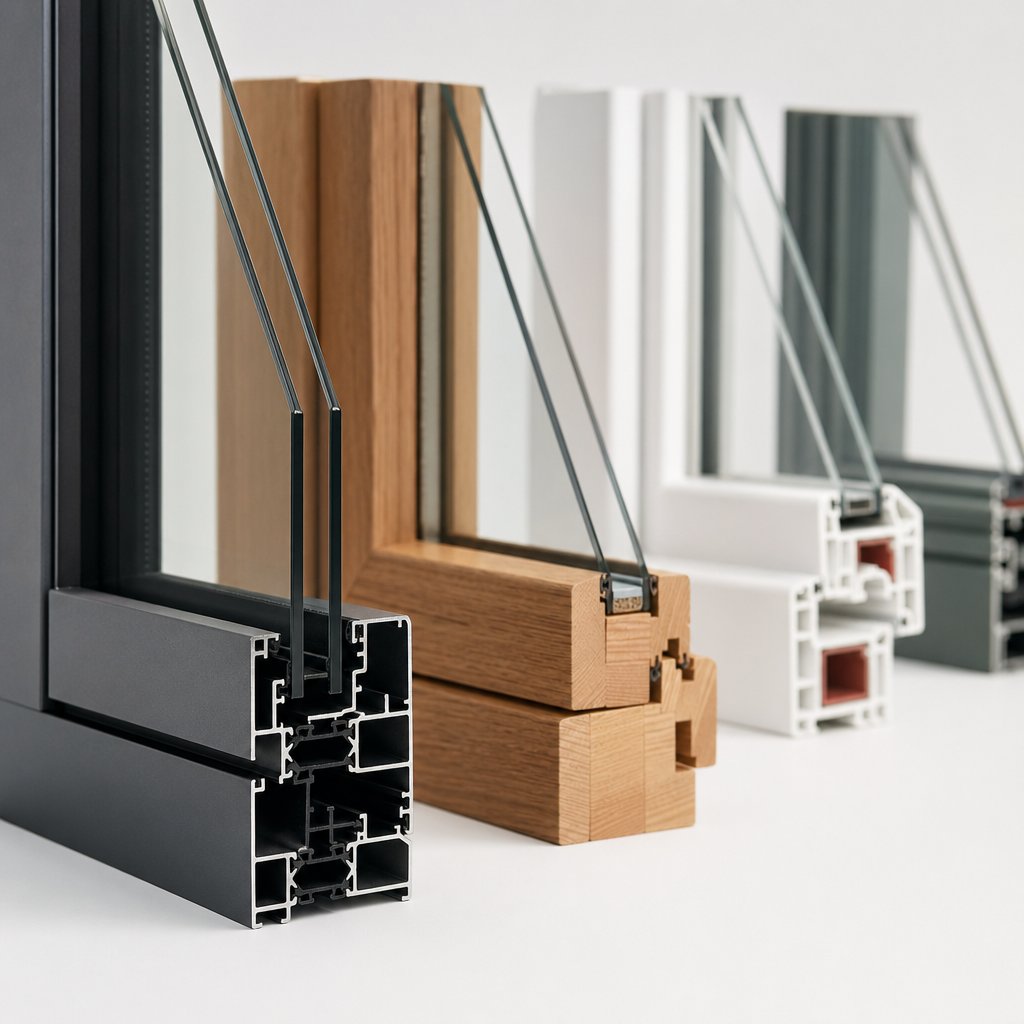
Window Frame Materials That Define the Look and Lifespan
That finish you admire on a window is only skin deep. Underneath it, the frame material is doing the real work: holding the glass in place, resisting weather, insulating your home, and determining how slim or bulky the profile looks. Two windows can appear identical from a distance, but if one uses aluminium and the other vinyl, they’ll age differently, perform differently, and offer completely different design possibilities. When you’re evaluating exterior window designs for house projects, the material choice is where aesthetics and engineering intersect.
Frame Material Properties That Affect Design and Performance
Frame material doesn’t just influence how long your windows last. It shapes the achievable look. Slim sightlines, colour options, finish textures, and even the maximum size of a single window unit all vary by material. Wood frames deliver natural warmth and a classic character that’s hard to replicate, but they demand regular painting, staining, and sealing to prevent rot and warping. Vinyl is the budget-friendly workhorse: low maintenance, decent insulation, and widely available, though colour choices are limited and the profiles tend to be thicker. Aluminium offers the slimmest frames and the widest colour range through powder-coat finishes, making it a favourite for contemporary house design for windows that prioritize clean lines and large glass areas.
Fibreglass combines strength with low thermal expansion, meaning it won’t warp or crack through seasonal temperature swings. It’s paintable and durable, though it sits at a higher price point. uPVC (unplasticized polyvinyl chloride) performs similarly to vinyl with slightly better rigidity and is common in European and Australian markets. Composite and clad frames blend materials, typically pairing a wood interior for warmth with an aluminium or fibreglass exterior shell for weather resistance, giving you the best of both worlds at a premium cost.
Material Comparison Table
Seeing these differences side by side makes the trade-offs clearer. This table covers the factors that matter most when selecting a frame material for any residential project.
| Material | Durability | Maintenance Level | Cost Tier | Aesthetic Flexibility | Energy Efficiency | Best Climate Fit | Frame Profile Width |
|---|---|---|---|---|---|---|---|
| Aluminium | 40-50 years | Low (periodic cleaning) | Mid-High | Very High (full RAL palette, powder-coat) | High (with thermal break) | All climates, especially coastal | Slimmest available |
| Wood | 30-40+ years (with upkeep) | High (paint, stain, seal) | High | High (natural grain, paintable) | High (natural insulator) | Temperate, dry climates | Medium-Wide |
| Vinyl | 20-30 years | Low | Low-Mid | Limited (fewer colours, thicker profiles) | Medium-High | Temperate, cold climates | Wide |
| Fibreglass | 40+ years | Low | High | Medium-High (paintable) | High | Extreme heat or cold | Medium |
| uPVC | 25-35 years | Low | Low-Mid | Medium (limited colours, improving) | Medium-High | Temperate, moderate climates | Wide |
| Composite / Clad | 35-45 years | Low-Medium | High-Premium | High (wood interior, durable exterior) | Very High | All climates | Medium-Wide |
Why Aluminium Is Gaining Ground in Modern Window Design
If you looked at aluminium windows a couple of decades ago, you’d have had a valid complaint: they conducted heat and cold straight through the frame. That problem is solved. Modern thermal break technology inserts non-conductive polyamide barriers within the aluminium profile, effectively separating the interior and exterior components and interrupting the path of heat transfer. The result is an aluminium frame that meets stringent energy ratings while maintaining the slimmest sightlines of any material on the market.
That slim profile isn’t just a cosmetic perk. It’s a structural advantage. Aluminium’s strength-to-weight ratio allows it to support larger glass panels without the bulky frames that wood or vinyl require, making it the go-to for floor-to-ceiling configurations, oversized picture windows, and the kind of large-format designs that define contemporary architecture. Add in corrosion resistance that handles coastal salt air without flinching, powder-coat finishes in virtually any colour, and a service life of 40 to 50 years with minimal maintenance, and it’s easy to see why the material keeps gaining market share.
For homeowners and builders exploring aluminium options in practice, MEICHEN’s aluminium windows collection offers a useful reference point. Their range covers multiple configurations built to Australian standards, incorporating thermal break technology, energy-efficient glazing, and powder-coated finishes across casement, sliding, awning, and fixed window types. It’s a practical starting point for comparing what’s available when aluminium is on your shortlist.
Choosing the right frame material locks in the structural and aesthetic foundation of your windows. But the glass sitting inside that frame has its own performance story to tell, one that directly affects your energy bills, indoor comfort, and how well your home handles the climate outside.
Energy Efficiency and Glazing Options That Actually Matter
Your frame material sets the structure. The glass inside it determines how your home handles heat, cold, noise, and UV exposure every single day. Yet glazing is the part of window selection most homeowners gloss over, defaulting to whatever comes standard. That’s a missed opportunity. The difference between basic glass and properly specified glazing can cut window-related energy loss by 30% to 50%, and in some climates, it’s the single biggest factor in year-round comfort.
Single, Double, and Triple Glazing Explained
Single glazing is exactly what it sounds like: one pane of glass with nothing between you and the outside temperature. It offers minimal insulation and is largely outdated for habitable rooms. If your home still has single-glazed windows, you’re looking at a U-value around 5.5 to 6.9 depending on the frame, which means heat pours out in winter and floods in during summer.
Double glazing changed the game. Two panes of glass separated by a sealed air gap, typically 6 to 16mm wide, create a thermal and acoustic barrier that dramatically reduces heat transfer. Fill that gap with argon gas instead of air and performance improves further, because argon is denser and conducts heat more slowly. A well-specified double-glazed unit with a timber or uPVC frame can bring the U-value down to around 3.0, roughly half the heat loss of a single-glazed equivalent.
Triple glazing adds a third pane and a second gas-filled cavity, pushing U-values below 1.0 in the best configurations. It’s the peak performer for extreme climates, and triple-glazed units often pair argon or krypton gas fills with multiple Low-E coatings for maximum insulation. The trade-off? Higher cost, heavier weight, and thicker frames. For large window designs for houses in moderate climates, double glazing with quality coatings often hits the sweet spot between performance and budget.
Low-E Coatings and Their Impact on Comfort
Imagine a coating so thin it’s invisible to the naked eye, yet it fundamentally changes how your glass handles heat. That’s Low-E, or low emissivity. Standard untreated glass has an emissivity of around 0.84, meaning it absorbs and re-radiates most of the thermal energy it encounters. A Low-E coating drops that figure to approximately 0.04, reflecting infrared heat back toward its source while still letting visible light pass through freely.
Here’s where it gets practical. There are two main types, and choosing the wrong one for your climate undermines the whole investment:
- Passive Low-E coatings are designed for heating-dominant climates. Placed on surfaces 3 and 4 of a double-glazed unit (the interior-facing sides), they reflect indoor heat back into the room while allowing solar warmth to enter. SHGC ratings typically range from 0.50 to 0.70.
- Solar Control Low-E coatings suit cooling-dominant climates. Placed on surface 2 (the exterior pane’s interior face), they intercept and reflect solar radiation before it enters the home. SHGC ratings drop to 0.25 to 0.30, significantly reducing cooling loads.
Both types deliver similar U-factor improvements, generally between 0.20 and 0.40 for double-glazed units. The difference is directional: one keeps heat in, the other keeps heat out. Pairing the right Low-E type with the right glazing level is what separates a comfortable home from one that fights its climate year-round.
Climate-Specific Glazing Recommendations
Your geographic location should drive your glazing specification, not the other way around. A setup that works perfectly in a cold continental climate will underperform in a tropical one, and vice versa. When you’re evaluating the latest aluminium window design for house projects or any other frame type, the glass package needs to match your conditions.
- Hot and humid climates (tropical regions, northern Australia, coastal West Africa): Solar Control Low-E with low SHGC (0.25 or below), double glazing minimum, and corrosion-resistant frames. The priority is rejecting solar heat gain while maintaining airflow through operable window types.
- Cold climates (northern Europe, Canada, highland regions): Passive Low-E with high SHGC (0.50-0.60) to capture free solar warmth, double or triple glazing with argon or krypton gas fills, and low U-values below 1.5. Triple glazing pays for itself fastest in these zones.
- Temperate and mixed-season climates (much of southern Australia, the US mid-Atlantic, Mediterranean zones): Balanced Low-E formulas with moderate SHGC (0.30-0.50), double glazing with argon fill, and proper shading on east and west elevations. North-facing glass (Southern Hemisphere) or south-facing glass (Northern Hemisphere) can run a higher SHGC to benefit from winter sun.
- Coastal and cyclone-prone areas: Impact-rated laminated glazing paired with corrosion-resistant aluminium or fibreglass frames. Salt air degrades unprotected materials quickly, so marine-grade finishes and sealed IGU construction are non-negotiable. The latest window designs for house projects in Nigeria and similar coastal regions increasingly specify these combinations.
The bottom line: a lowest possible U-value is better in every climate, because it measures resistance to heat flow in both directions. SHGC is where you tailor the specification, choosing how much solar energy you want your windows to admit based on whether heating or cooling dominates your annual energy use.
Glazing and frame material set the performance envelope. But performance means little if the right window ends up in the wrong room, and that’s where room-specific planning makes all the difference.
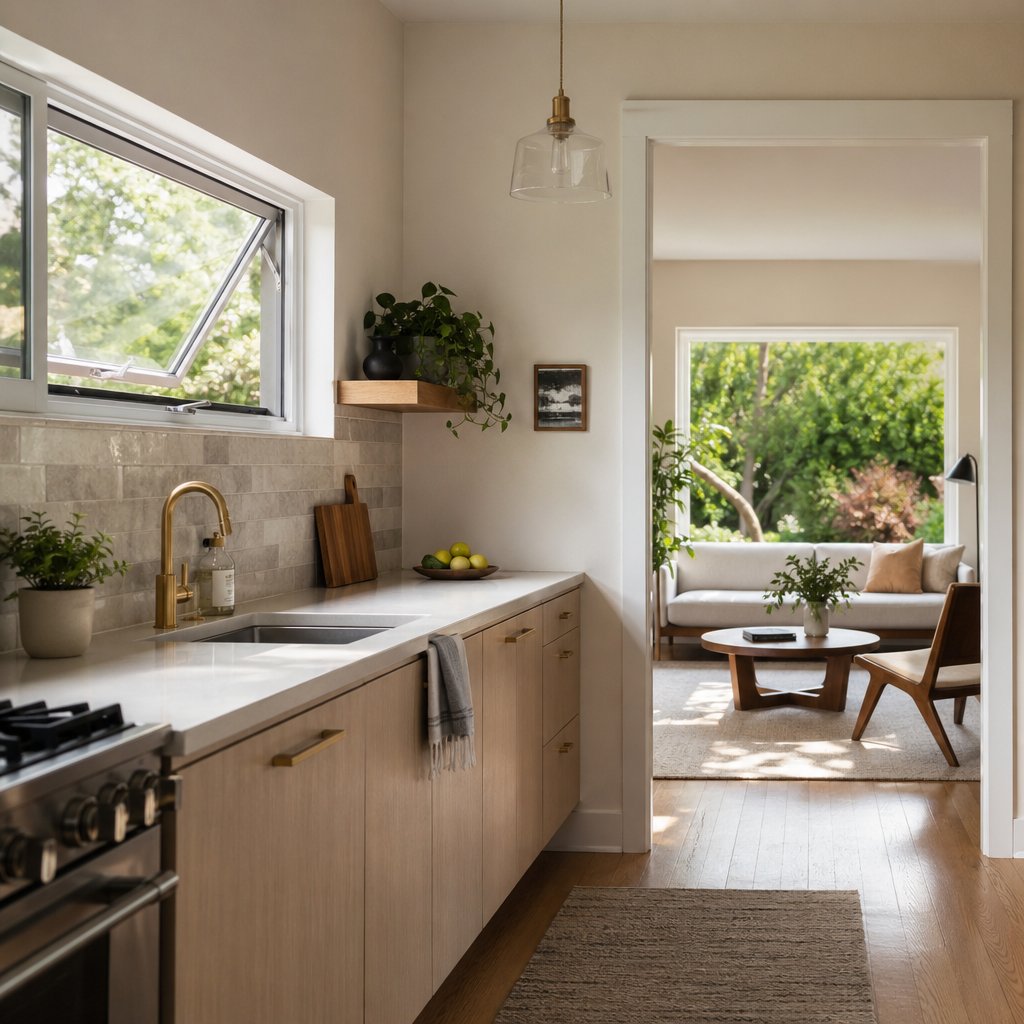
Room-by-Room Window Design Guide for Every Space
A perfectly glazed, thermally broken aluminium casement is still the wrong window if it ends up in a room where it can’t do its job. Every space in your home has a different relationship with light, air, moisture, and privacy, and the window design for house interiors needs to reflect those differences. A kitchen fights steam. A bedroom needs darkness on demand and a safe escape route. A living room wants drama. Here’s how to match the right window to each room based on what that room actually demands.
Kitchen and Bathroom Windows for Moisture and Ventilation
Kitchens generate heat, grease, and steam right at the cooktop, so you need operable windows positioned near cooking zones to pull that moisture out before it settles on every surface. Casement windows crank fully open and catch cross-breezes effectively, while awning windows are the standout choice because they can stay open during light rain without letting water in, a real advantage when a summer storm rolls through mid-dinner.
Bathrooms face an even tougher moisture challenge. Showers and baths produce steam daily, and that humidity has to go somewhere. The window type determines how well this actually works. Awning windows installed high on the wall solve two problems at once: the elevated position blocks sightlines from outside, and the top-hinged design ventilates even in wet weather. Frosted or textured glass adds another layer of privacy without permanently blocking natural light the way blinds do. For frame materials, moisture-resistant options like vinyl, aluminium, or fibreglass are essential. Wood frames in a bathroom are an invitation for rot unless you’re committed to constant upkeep. And remember, building codes mandate tempered safety glass in bathrooms near tubs and showers, so factor that into your specification from the start.
Bedroom Windows for Light Control, Privacy, and Egress
Bedrooms carry a requirement most homeowners don’t think about until an inspector flags it: egress. Emergency Escape and Rescue Openings (EEROs) are required in every sleeping room under the International Residential Code, and the sizing isn’t optional. You need a minimum of 5.7 square feet of net clear opening area, at least 24 inches of clear opening height, and at least 20 inches of clear opening width. Double-hung and casement windows typically meet these standards, while sliding windows can work if they’re sized generously enough. A small fixed pane or a narrow awning window won’t qualify, no matter how good it looks.
Beyond code, bedrooms are where light control and orientation matter most. An east-facing bedroom catches early morning sun, which is great if you’re a morning person and miserable if you’re not. West-facing rooms get intense afternoon heat. When you’re planning a long window design for house bedrooms, consider how the window’s size and placement interact with blackout treatments. Casement windows with recessed frames accommodate roller blinds or curtains cleanly, while oddly shaped or deeply recessed windows can make effective light blocking difficult.
Living Room and Front-of-House Statement Windows
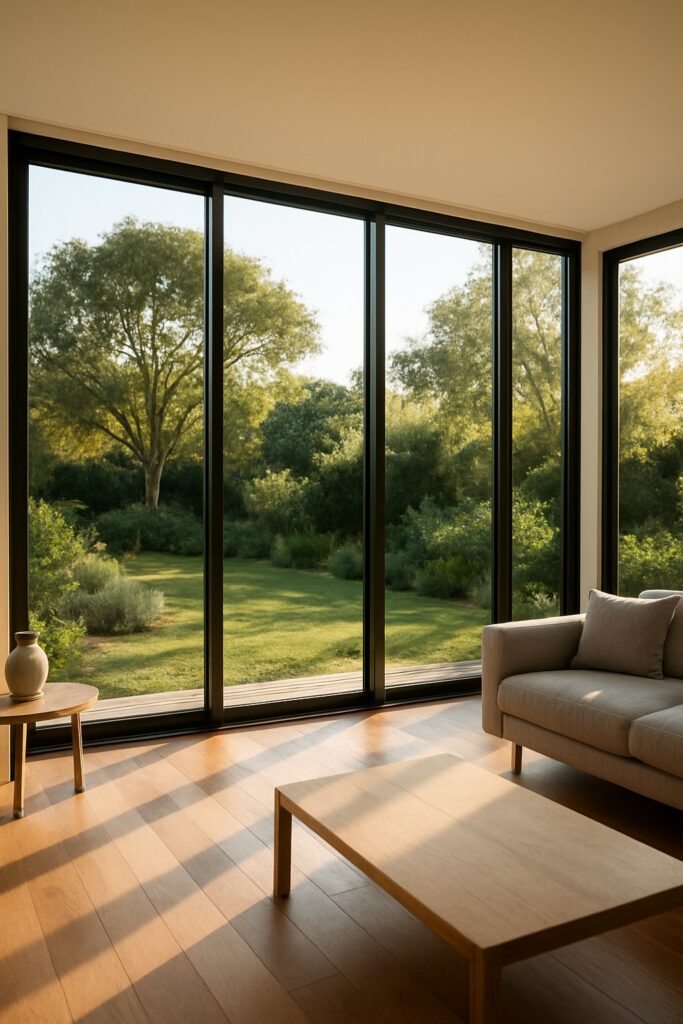
Living rooms are where you go big. This is the space for large-format configurations: picture windows that frame a view without interruption, bay windows that add depth and panoramic light, and floor-to-ceiling glazing that creates seamless connections to natural surroundings. A picture window design for house living areas delivers maximum visual impact, especially when flanked by operable casements that handle ventilation without compromising the view.
Front-facing windows carry extra weight because they define your home’s curb appeal. The style, proportion, and frame finish of these windows should align with the architectural language of the house, something we covered in the style-matching section. A well-proportioned bay window on a traditional facade or a wall of slim-framed glass on a contemporary home does more for street presence than almost any other exterior element.
Home offices round out the picture. Consistent, glare-free daylight is the priority here, making north-facing windows (in the Southern Hemisphere) or north-facing windows (in the Northern Hemisphere) ideal. Casement or double-hung windows provide ventilation breaks without requiring you to leave your desk, and positioning the window to the side of your screen rather than directly behind it reduces glare on monitors.
| Room | Recommended Window Types | Key Functional Requirements | Design Priority |
|---|---|---|---|
| Kitchen | Awning, casement | Steam extraction, cross-ventilation, easy operation near countertops | Ventilation |
| Bathroom | Awning, hopper, frosted casement | Moisture resistance, privacy glass, tempered safety glass compliance | Privacy |
| Bedroom | Double-hung, casement | Egress compliance (min. 5.7 sq ft opening), blackout compatibility, light control | Light Control |
| Living Room | Picture, bay, floor-to-ceiling, casement flankers | Maximum natural light, curb appeal, architectural statement | Views / Light |
| Home Office | Casement, double-hung | Consistent glare-free daylight, side-of-screen positioning, ventilation access | Light |
Picking the right window type for each room gets you most of the way there. But where exactly that window sits on the wall, how large it is, and whether it’s grouped with others determines how effectively it delivers light and airflow throughout the space.
Window Placement and Sizing Strategies for Light and Airflow
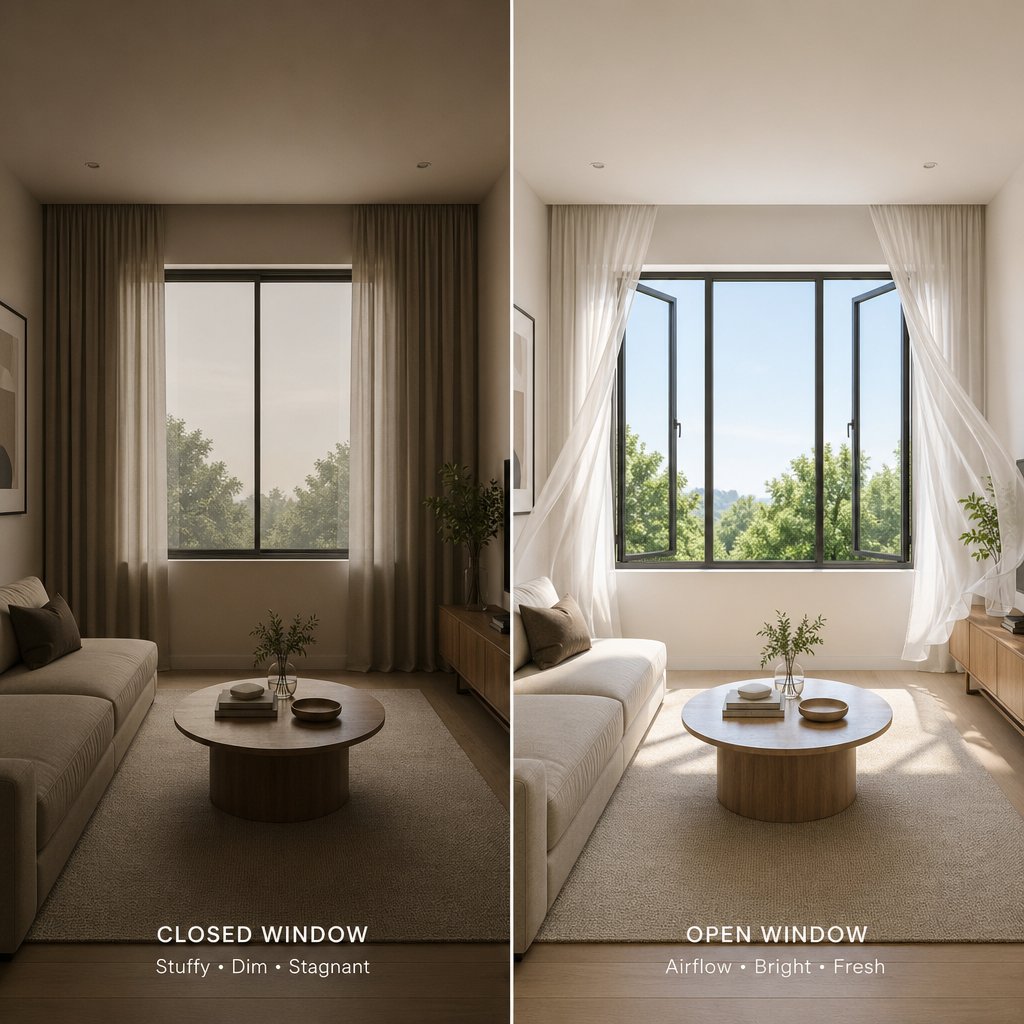
You’ve chosen the right window type for each room. You’ve settled on a frame material and a glazing specification. And yet, two homes with identical products can feel completely different inside, one bright and breezy, the other dim and stuffy. The difference almost always comes down to placement. Where a window sits on the wall, how tall it is, and how it relates to other openings in the room shapes the quality of light and air more than the window itself. This is where window design for house projects shifts from product selection to spatial strategy.
How Window Placement Controls Natural Light Distribution
Orientation is the starting point, and it’s non-negotiable. In the Southern Hemisphere, north-facing windows receive consistent, even daylight throughout the day without the harsh glare or overheating that comes from direct sun angles. They’re the gold standard for living areas, kitchens, and home offices where you want steady illumination. In the Northern Hemisphere, south-facing windows play the same role. East-facing windows deliver warm morning light that’s pleasant in bedrooms but can overheat a room by mid-morning if the glass area is too generous. West-facing windows catch intense afternoon sun, the hardest orientation to manage because the low sun angle makes shading devices less effective.
Here’s a detail most people miss: placing windows on a single wall lights only the first few meters of a room, leaving the back half in relative shadow. Put openings on two walls instead, even small ones, and you create cross-lighting that fills the space more evenly and eliminates the harsh contrast between the bright window zone and the dim interior. The Whole Building Design Guide reinforces this principle, noting that the depth of daylight penetration from sidelighting is roughly two and a half times the distance between the window head and the sill. A window with its head at 2.4 meters will push usable daylight about 6 meters into the room. Drop that head height to 1.8 meters, and you lose over a meter of reach. That single measurement, window head height, has an outsized effect on how a room feels.
Sizing and Proportion Rules That Architects Follow
How big should your windows actually be? Architects generally work with a baseline: window area should equal roughly 10% to 15% of the room’s floor area for adequate natural light. A 20-square-meter bedroom, for example, needs at least 2 to 3 square meters of glazing. Living spaces, where daylight is a priority, often push that ratio to 20% or higher, especially in window design for house front elevations where visual impact matters as much as function.
Size alone doesn’t tell the whole story, though. Proportion is what makes windows look intentional rather than random. Architects follow a few guiding principles:
- Windows should relate to the wall they sit in. A narrow, tall window suits a tall wall; a wide, low window suits a horizontal facade. Forcing the wrong proportion creates visual tension.
- Multiple windows on the same wall should share consistent head heights, even if their widths or sill heights differ. This creates a visual datum line that ties the composition together.
- Taller windows push daylight deeper into a room. If you’re choosing between a wider window and a taller one with the same glass area, the taller option almost always delivers better light distribution.
- For a window design for small house projects, fewer but well-proportioned openings look better and perform better than many undersized ones scattered across the facade.
The relationship between window head height and light penetration is worth repeating because it’s so often overlooked. Raising the top of a window by just 300mm can extend usable daylight by nearly a meter further into the room, a change that costs almost nothing during construction but would be expensive to retrofit later.
Grouping Strategies for Visual Impact and Airflow
A single large window makes a statement, but ganging multiple smaller windows together often creates a stronger one, sometimes at lower cost. Three narrow casements grouped in a row produce a rhythm and scale that a single wide opening can’t match. Grouping also gives you functional flexibility: you can make the center unit fixed for an unobstructed view and the flanking units operable for ventilation, combining aesthetics with airflow in one composition.
Airflow is where grouping becomes genuinely strategic. Cross-ventilation requires operable windows on opposite or adjacent walls so air has both an entry point and an exit path. Positioning windows on opposite walls encourages a steady flow of air through the room, while height variations between inlet and outlet openings amplify the stack effect, where warm air rises and exits through higher openings, drawing cooler air in through lower ones. Even in rooms with only one exterior wall, placing two operable windows at different heights on that same wall creates a version of this effect.
For window design for house exterior compositions, grouping also solves a common proportion problem. A single oversized window can look like a gap in the wall rather than a design feature. Breaking that same glass area into two or three units with slim mullions between them adds structure, rhythm, and architectural intent. It’s a technique that works across styles, from contemporary facades with floor-to-ceiling grouped panels to traditional homes with symmetrically paired double-hungs.
Strategic placement decisions made early in the design phase have more impact on comfort and light quality than upgrading to premium glass later. Get the position, height, and grouping right first, then optimize the glazing.
Placement, sizing, and grouping are the decisions that separate a home that feels effortlessly bright and comfortable from one that relies on artificial lighting and mechanical cooling all day. They’re also the decisions that are hardest to fix after construction. That reality points to a broader theme: the costliest window mistakes aren’t the ones you notice on installation day, they’re the ones that reveal themselves slowly over months and years of living with the result.
Common Window Design Mistakes and How to Avoid Them
Some window problems show up the day after installation. Most don’t. They creep in as stuffy rooms you can’t ventilate, energy bills that never come down, failed inspections that stall your project, or frames that deteriorate years before they should. The frustrating part? Nearly all of these are preventable. Here are the mistakes that trip up homeowners most often when choosing windows designs for house projects, and what to do instead.
Choosing Style Over Function and Ignoring Ventilation Needs
It’s easy to fall in love with a look. A wall of fixed glass on a Pinterest board is stunning, but install it in a bedroom or kitchen that needs airflow and you’ve created a room that depends entirely on mechanical cooling. Large picture windows and trendy floor-to-ceiling panes are powerful design tools, but they serve one purpose: light and views. They don’t ventilate. Every window in your home should pull double duty, contributing aesthetically while also fulfilling a functional role like ventilation, egress, or controlled daylight. When planning window designs for front of house facades, it’s tempting to prioritize curb appeal alone. Resist that. Pair fixed statement glass with operable flankers so the facade looks intentional and the rooms behind it actually breathe.
Overlooking Building Codes and Structural Requirements
Changing a window size, adding a new opening, or converting a wall section to glass isn’t just a design decision. It’s a regulatory one. In most jurisdictions, altering window openings in load-bearing walls requires structural engineering sign-off. Enlarging or adding windows often triggers council or permit approval, and the finished result must comply with current energy efficiency standards, not the ones that applied when the house was originally built. Bedroom egress requirements, as covered earlier, mandate minimum opening dimensions that can’t be negotiated away. In bushfire-prone zones, windows must meet specific BAL (Bushfire Attack Level) ratings with appropriate glazing and frame materials. Coastal and high-wind areas impose wind load ratings that dictate glass thickness and frame reinforcement. Skipping any of these steps doesn’t save time. It leads to failed inspections, costly rework, and in some cases, insurance complications down the line.
Mismatching Materials and Ignoring Long-Term Maintenance
The cheapest quote wins a lot of window projects, and that’s where long-term problems start. Choosing a frame material without considering your climate is like picking outdoor furniture without checking if it’s weatherproof. Wood frames in humid coastal areas invite rot and swelling. Standard aluminium without thermal breaks in extreme heat or cold creates condensation problems and energy loss, a point reinforced by research showing aluminium frame U-values of 8.78 W/m2K compared to 1.88 W/m2K for PVC, a nearly fivefold difference in heat transfer. Vinyl in high-UV environments can discolour and become brittle over time. Even window sun shade designs for house exteriors won’t fully compensate for a frame material that’s fighting its environment every day. The material needs to match the conditions it will face for decades, not just the budget it needs to fit today.
Five Window Design Mistakes Worth Avoiding
- Installing only fixed windows in rooms that need ventilation. Pair non-operable glass with at least one operable unit per room to ensure airflow.
- Skipping permit and engineering checks before changing openings. Confirm structural, energy, and egress compliance before ordering anything.
- Choosing frame materials based on price alone without climate consideration. Match the material to your environment: coastal areas need corrosion resistance, extreme temperatures need thermal breaks, humid zones need moisture-proof frames.
- Ignoring window-to-architecture style alignment. A mismatched window style undermines curb appeal regardless of quality. Refer back to your home’s architectural language before finalizing designs.
- Forgetting maintenance commitments. Every material has a maintenance profile. If you won’t repaint wood frames every few years, don’t install them. Choose a material whose upkeep matches your realistic willingness to maintain it.
Avoiding these pitfalls keeps your project on track, on budget, and built to last. The real question that follows is practical: once you know what to choose and what to avoid, how do you actually move from decisions on paper to windows on your walls?
Planning Your Window Project from Inspiration to Installation
Decisions on paper are one thing. Turning them into windows on your walls is a different challenge entirely, one that involves assessing what you already have, getting quotes you can actually compare, and choosing a supplier who delivers on the specifications you’ve worked so hard to define. Most window guides stop at inspiration. This section picks up where they leave off.
Evaluating Your Current Windows and Defining Project Scope
Not every project needs a full rip-and-replace. Start by honestly assessing what’s already there. Are the frames structurally sound but the glazing outdated? You might be able to retrofit double-glazed insulated glass units into existing frames, saving significant cost. Are the frames warped, corroded, or failing to seal? That’s a full replacement. Check for drafts around the edges, condensation between panes (a sign of failed seals), difficulty operating hardware, and visible frame damage.
The scope also depends on whether you’re renovating or building new. Renovation projects work within existing openings, which limits sizing options unless you’re prepared to engage a structural engineer to modify load-bearing walls. New construction gives you the freedom to design openings from scratch, placing and sizing windows exactly where the light, airflow, and views demand them. If you’re in the early planning stages, tools like 3D house design software can help you visualize how different window configurations look on your facade before committing. Either way, define your scope clearly before requesting a single quote.
Budgeting, Quotes, and What to Ask Your Window Supplier
Here’s where projects go sideways: homeowners compare quotes that aren’t quoting the same thing. A low number looks attractive until you realize it excludes flashing, interior finishing, removal and disposal of old windows, or compliance certification. To get comparable quotes, every estimate you request should specify the same details: window type, frame material, glazing specification (double or triple, Low-E type, gas fill), hardware finish, and the full installation scope including removal, disposal, flashing, and sealing.
Aim for at least three quotes. When you receive them, don’t just compare totals. Break down the cost of materials versus labour, check for hidden service fees, and look at what each supplier includes for warranty coverage. A good quote should itemize materials, labour, removal, disposal, warranty terms, and any additional features or upgrades. If a supplier can’t provide that level of detail, that tells you something. Also confirm that the products meet Australian Standards compliance and ask about both manufacturer and installation warranties, including their duration and what’s actually covered. As the window replacement process typically involves manufacturing lead times of several weeks, factor that timeline into your project plan early.
Choosing a Window System That Fits Your Project
By this point in the guide, you’ve built a clear picture of what you need: the right window type for each room, a frame material that suits your climate and aesthetic, glazing that matches your energy goals, and a style that belongs on your home’s architecture. Use those criteria as a checklist when evaluating any supplier. A beautiful window design for house projects only stays beautiful if the system behind it performs as promised.
For readers exploring aluminium as their frame material, MEICHEN’s aluminium windows collection is a practical place to start comparing configurations. Their range covers casement, sliding, awning, and fixed window types built to Australian standards, with thermal break technology, energy-efficient glazing, and powder-coated finishes across the lineup. Whether you’re a homeowner replacing a few key windows, a renovator upgrading an entire home, or a builder specifying at scale, it ties together the material, glazing, and style-matching guidance covered throughout this article.
To keep the full journey organized, here’s the sequence that moves a window project from idea to completion:
- Assess your existing windows for frame condition, seal integrity, glazing performance, and hardware function.
- Define your project scope: full replacement, partial upgrade, or new construction design.
- Research how to design windows for a house that matches your architectural style, room requirements, and climate zone.
- Select your frame material, glazing specification, and window types using the comparison guidance in this article.
- Request at least three itemized quotes specifying identical product and installation scopes.
- Compare quotes on materials, labour, warranties, compliance certifications, and total installed cost.
- Confirm building permits, structural requirements, and energy code compliance before ordering.
- Coordinate manufacturing lead times, site preparation, and installation scheduling with your chosen supplier.
- Complete a final inspection post-installation to verify operation, sealing, and finish quality before signing off.
Windows are one of the few home decisions that touch every part of your daily experience, from the light you wake up to, to the breeze that cools your kitchen, to the view that greets you when you pull into the driveway. The choices covered in this guide, type, material, glazing, placement, style, and supplier, aren’t independent decisions. They’re layers of the same one. Get them working together, and you end up with a home that looks right, feels right, and performs for decades.
Frequently Asked Questions About Window Designs for House Projects
1. What is the best window design for a modern house?
Modern houses look their best with large fixed picture windows, floor-to-ceiling glass, and slim-profile casement windows that emphasize clean lines. Black or dark bronze aluminium frames are a defining feature of contemporary design because they create bold contrast against light exteriors while keeping sightlines minimal. Pairing a non-operable picture pane with operable casement flankers gives you the sleek aesthetic along with functional ventilation. Gridless glass and thermally broken aluminium frames, like those in MEICHEN’s aluminium windows collection (meichenwindows.com.au/aluminium-windows/), deliver the slimmest profiles available while still meeting energy performance standards.
2. How do I choose the right window type for each room in my house?
Each room has different demands for light, airflow, moisture control, and privacy, so the window type should match those needs. Kitchens and bathrooms benefit from awning or casement windows that ventilate effectively and handle moisture. Bedrooms require double-hung or casement windows that meet emergency egress code minimums of 5.7 square feet of clear opening. Living rooms are ideal for large-format picture windows or bay windows that maximize views and natural light. Home offices perform best with side-positioned casement or double-hung windows that provide glare-free daylight without reflecting off screens.
3. What window frame material lasts the longest with the least maintenance?
Aluminium and fibreglass frames offer the best combination of longevity and low maintenance. Aluminium frames with modern thermal break technology last 40 to 50 years, resist corrosion even in coastal environments, and only need periodic cleaning. Fibreglass frames match that lifespan and resist warping through extreme temperature swings. Vinyl is low-maintenance but has a shorter 20-to-30-year lifespan and limited colour options. Wood frames can last 30-plus years but demand regular painting, staining, and sealing. Your climate should guide the final choice: coastal areas favour corrosion-resistant aluminium, while extreme-temperature zones benefit from fibreglass or thermally broken aluminium systems.
4. Is double glazing or triple glazing better for energy efficiency?
Double glazing is the current standard and delivers a significant upgrade over single-pane glass, cutting window-related energy loss by 30% to 50% when paired with Low-E coatings and argon gas fills. Triple glazing pushes performance even further with U-values below 1.0, making it the top choice for extreme cold climates where heating costs dominate. However, triple glazing costs more, weighs more, and requires thicker frames. For most temperate and mixed-season climates, double glazing with the correct Low-E coating type, either passive for cold regions or solar control for hot regions, hits the practical sweet spot between performance and budget.
5. What are the most common window design mistakes homeowners make?
The five most frequent mistakes are: installing only fixed windows in rooms that need ventilation, skipping building permit and structural engineering checks before modifying openings, selecting frame materials based solely on price without considering climate suitability, mismatching window style with the home’s architectural character, and underestimating long-term maintenance commitments. For example, choosing wood frames in a humid coastal area invites premature rot, while standard aluminium without thermal breaks in extreme temperatures causes condensation and energy loss. Each window should serve at least two purposes, one aesthetic and one functional, and the frame material must match the conditions it will face for decades.
More Window & Door Guides