uPVC vs Aluminium Windows and Why the Answer Isn’t Simple
If you have been searching for whether uPVC or aluminium windows is the better choice, you have probably noticed something frustrating. Nearly every comparison you find online is published by a company that sells one material or the other. The advice tilts predictably toward whatever they stock.
The reality is that both materials dominate the Australian residential window market for good reason. Each serves a different set of priorities, and the difference between uPVC and aluminium window frames comes down to your specific property, climate zone, budget, and design goals. There is no universal winner.
This guide weighs up the uPVC vs aluminium windows pros and cons across five core factors: thermal performance, true lifetime cost, durability, aesthetics, and situational fit. No manufacturer bias, just a practical framework for making a confident decision.
Why This Comparison Matters for Homeowners
Windows are not a decision you revisit every few years. A poor choice locks you into higher energy bills, premature replacement costs, or a look that drags down your property value at resale. In Australian conditions, where UV exposure is intense and climate varies dramatically from tropical Queensland to cool-climate Tasmania, the frame material you select has real consequences for comfort and running costs over decades.
Getting this right the first time saves thousands in avoided replacements and wasted heating or cooling energy.
What Most Comparisons Get Wrong
Here is the single biggest gap in almost every article asking whether aluminium windows are better than uPVC. They treat aluminium as one category. It is not.
Standard aluminium and thermally broken aluminium are fundamentally different products in terms of energy performance. Any comparison that lumps them together and declares aluminium “thermally poor” is outdated or misleading. The thermal break distinction changes the entire equation.
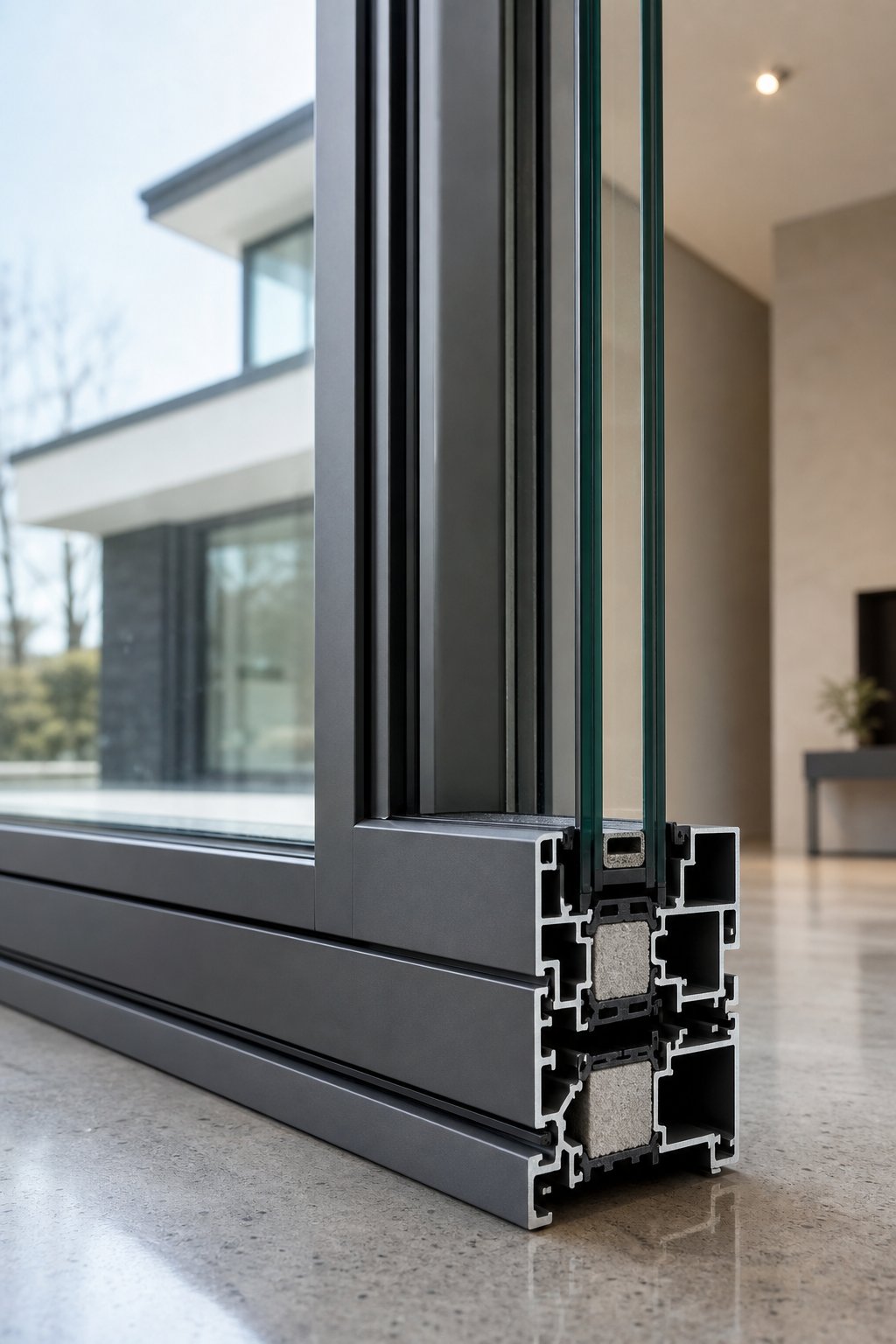
A thermally broken aluminium frame uses an insulating polyamide or polyurethane barrier between its inner and outer sections, interrupting heat transfer through the metal. Without understanding this distinction, you cannot make a fair comparison, and most online guides skip it entirely.
The sections ahead unpack exactly how these materials perform when you compare like for like, starting with the technical construction that determines everything else.
Understanding the Materials Behind Your Window Frames
The performance gap between uPVC and aluminium comes down to how each frame is engineered at a structural level. Strip away the marketing language and you find two very different approaches to the same problem: keeping conditioned air inside your home and weather outside.
How uPVC Frames Are Constructed
uPVC (unplasticised polyvinyl chloride) frames rely on a multi-chamber profile design to achieve their insulating properties. Rather than a solid block of plastic, the frame is extruded with multiple hollow compartments separated by internal walls. These trapped air pockets act as insulation barriers, slowing heat transfer from one side of the frame to the other.
A standard residential uPVC profile contains three to five chambers, while premium systems push to six or seven. The greater the number of air chambers in a uPVC multi chamber window frame, the better its thermal efficiency and structural rigidity. Each chamber serves a specific function:
- Insulation chambers — trap still air to resist conductive heat flow
- Drainage chambers — channel water away from seals and prevent leakage into the interior
- Reinforcement chambers — house galvanised steel or aluminium inserts that add structural strength for larger window sizes
- Gasket channels — retain EPDM rubber seals that maintain airtightness over time
The plastic itself is a poor conductor of heat, which gives uPVC a natural thermal advantage before you even factor in the chamber design. Steel reinforcement is optional and typically added for windows above a certain size or for high wind-load areas. In Australian conditions, reinforced profiles are common in cyclone-rated zones across northern Queensland and the NT.
One trade-off worth noting: the multi-chamber design and steel reinforcement make uPVC profiles bulkier than aluminium. This is why uPVC frames have wider sightlines and cannot span the same distances without mullions or transoms.
Standard Aluminium vs Thermally Broken Aluminium
Aluminium is roughly 1,000 times more thermally conductive than wood and vastly more conductive than plastic. In a standard aluminium frame, heat and cold travel through the metal with almost no resistance. This is why older aluminium windows feel cold to the touch in winter and can drip with condensation. The frame itself becomes a thermal bridge between your interior and the outside air.
Thermally broken aluminium solves this problem entirely. A thermal break is a continuous strip of insulating material — typically polyamide reinforced with 25% glass fibre (PA66 GF25) — mechanically crimped between the interior and exterior aluminium sections. This polyamide barrier has a thermal conductivity of just 0.30 W/(m·K) compared to aluminium’s 160 W/(m·K), creating a physical separation that slashes heat transfer through the frame.
In quality systems, these thermal breaks range from 14mm to 35mm or more in width. The wider the break, the longer the thermal pathway heat must travel, and the better the insulation. Premium multi-chamber thermal break profiles can achieve frame U-values between 0.8 and 1.5 W/(m²K) — performance that matches or exceeds many uPVC systems.
When people say aluminium windows are cold or energy-inefficient, they are almost always referring to non-thermally-broken profiles. These older-style frames are increasingly uncommon in quality Australian installations, particularly since the National Construction Code tightened energy efficiency requirements. Any reputable supplier offering aluminium for residential use today should be specifying thermally broken systems as standard for climate zones that demand it.
Why This Distinction Changes Everything
Most comparison articles asking whether uPVC or aluminium windows is better treat aluminium as a single product category. They quote thermal figures for standard aluminium, compare them against uPVC, and declare uPVC the winner on energy efficiency. That comparison is technically accurate but practically misleading — it is like comparing a base-model car to a competitor’s flagship and drawing conclusions about the entire brand.
The thermal break aluminium window profiles explained above represent a fundamentally different product from their non-broken counterparts. Once you understand this, the entire comparison shifts. The question is no longer “does aluminium conduct too much heat?” but rather “does the thermally broken aluminium system I am quoting match or exceed the uPVC alternative on energy performance?” In many cases, it does.
| Characteristic | Standard Aluminium | Thermally Broken Aluminium | uPVC (Multi-Chamber) |
|---|---|---|---|
| Frame U-value (W/m²K) | 5.8 – 7.0 | 0.8 – 2.5 | 1.0 – 2.0 |
| Thermal conductivity of frame material | 160 W/(m·K) | Interrupted by 0.30 W/(m·K) barrier | ~0.16 W/(m·K) |
| Insulation method | None | Polyamide strip (14–35mm wide) | Multi-chamber air pockets (3–7 chambers) |
| Steel reinforcement | Not required | Not required | Often required for larger sizes |
| Maximum span without mullion | Large | Large | Limited (bulkier profiles needed) |
| Profile slimness | Very slim | Slim | Wider sightlines |
| Condensation risk on frame | High | Low | Low |
| Recyclability | 100% without quality loss | 100% without quality loss | Recyclable but more complex process |
This table makes one thing clear: standard aluminium vs thermally broken aluminium frames are not the same product in any meaningful thermal sense. The broken system closes the performance gap with uPVC almost entirely, while retaining aluminium’s structural advantages in strength, slimness, and span capability.
With the material science laid out, the natural follow-up is how these construction differences translate into real-world energy performance — specifically, the U-values that determine what you pay to heat and cool your home.
Thermal Performance and Energy Efficiency Compared
A window frame’s construction only matters insofar as it affects what you actually experience: comfort inside your home and the energy bill that arrives each quarter. The metric that connects material science to real-world performance is the U-value, and understanding how it works is the difference between choosing windows based on evidence versus marketing claims.
What U-Values Mean for Your Energy Bills
A U-value measures how easily heat passes through a building element, expressed in watts per square metre Kelvin (W/m²K). The lower the number, the less heat escapes. A window with a U-value of 1.2 W/m²K loses heat half as fast as one rated at 2.4 W/m²K — and that difference compounds across every window in your home, every hour of every day your heating or cooling system runs.
Here is where most buyers get tripped up. Suppliers often quote a centre-pane U-value — the thermal performance measured at the middle of the glass unit under laboratory conditions. That number looks impressive but tells only part of the story. What actually determines your comfort and energy costs is the whole-window U-value, calculated using the ISO 10077 formula that accounts for three components together:
- Glass unit (Ug) — the insulating performance of the double or triple glazed panel itself
- Frame (Uf) — how much heat the frame material conducts or resists
- Spacer bar and edge seal (Psi value) — heat loss at the perimeter where glass meets frame
A centre-pane U-value of 1.1 W/m²K can degrade to 1.6 or higher once you factor in the frame and edge losses. This is why the frame material matters so much — it can either preserve or undermine the performance of even the best glazing unit. When evaluating a u-value comparison of uPVC vs aluminium windows, always confirm whether the figure quoted is centre-pane or whole-window. They are not interchangeable.
Double Glazing Performance by Frame Type
Something that surprises many homeowners: when you order aluminium double glazed windows and uPVC double glazed windows from the same supplier, the glass unit inside is often identical. Same Low-E coating, same argon-filled cavity, same spacer bar. The frame is the variable that shifts the overall thermal performance.
This is where the energy efficiency of uPVC compared to aluminium frames becomes measurable. uPVC’s low thermal conductivity (around 0.15 W/m·K) means the frame itself barely conducts heat. It naturally supports the insulating work the glass unit is doing. A quality uPVC double glazed system typically achieves frame U-values between 1.5 and 2.5 W/m²K, contributing to strong whole-window performance without needing additional engineering.
Standard aluminium, with thermal conductivity exceeding 160 W/m·K, actively works against the glass unit. Heat bypasses the insulated glazing by travelling straight through the metal frame. This is why non-thermally-broken aluminium double glazed windows can have frame U-values of 5.5 to 7.0 W/m²K — dramatically undermining the double glazing’s purpose.
Thermally broken aluminium sits between these two extremes. Quality thermally broken systems achieve frame U-values of 2.5 to 4.0 W/m²K in typical Australian residential configurations, with premium European-engineered profiles pushing below 2.0 W/m²K. The aluminium double glazed windows thermal performance gap narrows considerably once a proper thermal break is specified, though uPVC retains a measurable edge in frame-only insulation for most standard residential products available in Australia.
The practical takeaway: thermally broken aluminium window u-values are good enough to meet and often exceed NCC Section J energy requirements and achieve solid WERS ratings. They are not the thermal liability that outdated comparisons suggest. But if raw insulation per dollar spent is your sole priority, uPVC still holds a slight advantage at the frame level.
Condensation Resistance and Moisture Management
Condensation forms when warm, moisture-laden indoor air contacts a surface cold enough to drop below the dew point. In a Melbourne winter or a Canberra frost, the inside surface of your window frame is the most likely culprit.
Do aluminium windows cause more condensation? With standard profiles, yes — significantly. Because the metal conducts cold from outside directly to the interior face, the frame surface temperature plummets on cold nights. Moisture from cooking, breathing, and showering condenses on that cold surface, pooling on sills and potentially feeding mould growth in surrounding plaster.
uPVC frames resist this problem naturally. Their low conductivity keeps the interior frame surface close to room temperature even when it is 5°C outside, staying well above the dew point in most conditions. This is one of uPVC’s clearest practical advantages for southern Australian climates where winter condensation is a persistent issue.
Thermally broken aluminium dramatically reduces condensation risk compared to standard aluminium by interrupting the cold bridge. The interior aluminium section stays warmer because it is physically separated from the exterior section by the polyamide barrier. In well-specified thermally broken systems, condensation resistance approaches uPVC levels — though in extreme cold or high-humidity environments, uPVC still edges ahead because the entire frame profile is inherently non-conductive rather than relying on a single insulating barrier.
| Thermal Metric | Standard Aluminium | Thermally Broken Aluminium | uPVC (Multi-Chamber) |
|---|---|---|---|
| Frame U-value (Uf) | 5.5 – 7.0 W/m²K | 2.5 – 4.0 W/m²K | 1.5 – 2.5 W/m²K |
| Typical whole-window U-value (double glazed) | 3.5 – 5.0 W/m²K | 1.8 – 2.8 W/m²K | 1.4 – 2.2 W/m²K |
| Thermal conductivity of frame material | 160 – 200 W/m·K | Interrupted by 0.30 W/m·K barrier | ~0.15 W/m·K |
| Condensation resistance | Poor | Good | Excellent |
| Cold bridging risk | High | Low (barrier dependent) | Very low |
| NCC Section J compliance (without additional offsets) | Unlikely for habitable rooms | Achievable | Achievable |
| WERS star rating potential | Low | Moderate to high | High |
The numbers tell a clear story: standard aluminium has no place in energy-conscious residential construction. But the gap between thermally broken aluminium and uPVC is far narrower than most comparison articles acknowledge — often just 0.4 to 0.6 W/m²K at the whole-window level. Whether that difference justifies choosing one material over the other depends on what else each frame brings to the table: lifespan, maintenance burden, and the true cost of ownership over decades rather than the purchase price on day one.
Real Cost Comparison Beyond the Upfront Price Tag
Most homeowners start the uPVC vs aluminium windows cost comparison by looking at quotes and picking the lower number. That instinct makes sense — budgets are real, and nobody wants to overspend. But the purchase price printed on a quote represents only one slice of what you will actually pay over the life of those windows. The costs nobody mentions are the ones that accumulate quietly over 20, 30, or 40 years: maintenance, energy losses, earlier-than-expected replacement, and the value your windows add or subtract when you eventually sell.
Upfront Purchase Price Differences
The pricing hierarchy is consistent across the Australian market. uPVC sits at the most accessible price point, standard aluminium occupies the middle ground, and thermally broken aluminium commands the highest upfront cost. Industry data indicates aluminium windows typically cost 20 to 40 percent more than equivalent uPVC windows for the same opening sizes and configurations.
For a typical three-bedroom Australian home requiring eight to twelve window openings, that percentage gap translates to several thousand dollars in additional outlay for aluminium. The exact figure depends heavily on your state, supplier, window sizes, opening styles, and whether you are specifying thermally broken profiles or standard aluminium. Coastal areas, cyclone-rated zones, and custom configurations push prices higher for both materials.
A few realities worth noting: uPVC pricing has crept upward as raw material costs have risen, while aluminium fabrication has become more efficient. The gap is narrower than it was a decade ago, particularly for standard-sized openings. Still, if you are replacing every window in a house on a tight budget, uPVC remains the more affordable path on day one.
Total Cost of Ownership Over the Window Lifespan
The total cost of ownership for aluminium windows looks very different from the upfront price alone. Here is the calculation that changes the conversation:
Total cost = purchase price + maintenance costs + energy cost impact + replacement cost and timing
uPVC windows have an expected lifespan of 25 to 30 years before degradation becomes noticeable — seals perishing, profiles yellowing or warping, hardware wearing beyond adjustment. Aluminium frames routinely last 40 to 50 years with their powder-coated finish remaining UV-stable and structurally sound throughout.
Run the numbers on a practical example. If aluminium costs 30 percent more upfront but lasts 45 years versus uPVC lasting 27 years, the per-year cost of the aluminium window is actually lower. And that calculation does not yet account for the disruption and labour cost of a full window replacement midway through your ownership — scaffolding, plastering, repainting reveals, and days of tradespeople in your home.
Maintenance costs are minimal for both materials compared to timber, but they are not identical. uPVC requires periodic seal replacement and hardware servicing as profiles age. Coloured uPVC can fade or chalk under Australia’s intense UV exposure, with limited options for restoration beyond full replacement. Aluminium’s powder-coated finish holds its colour for decades and can be professionally re-coated if desired, extending the frame’s aesthetic life without structural replacement.
Energy cost differences between thermally broken aluminium and uPVC are modest — typically 0.4 to 0.6 W/m²K at the whole-window level, as covered in the thermal performance section. Over a 30-year period, this translates to a relatively small cumulative difference in heating and cooling bills for most Australian homes, particularly in temperate climate zones where neither extreme cold nor extreme heat dominates year-round.
Property Value and Resale Perception
Are aluminium windows worth the extra cost when it comes time to sell? The evidence suggests yes. Research from This is Money found that replacement windows added approximately 10 percent to a home’s value, and aluminium frames are increasingly perceived as a premium feature that signals quality to buyers and agents alike.
Do aluminium windows increase property value beyond what uPVC achieves? Estate agents consistently highlight them as a selling point, particularly in contemporary homes, renovated properties, and areas where buyers expect modern finishes. The slim sightlines, clean aesthetic, and association with architectural quality create a perception of premium that uPVC — regardless of its technical performance — struggles to match in the eyes of prospective buyers.
This perception gap matters most in higher-value property markets. In a suburb where median prices exceed $1.5 million AUD, aluminium windows read as appropriate to the price bracket. uPVC, fairly or not, can be perceived as a budget choice that sits at odds with premium interiors and landscaping. In more affordable markets, the distinction carries less weight and buyers focus primarily on condition and energy ratings rather than frame material.
- Upfront quote price — the obvious starting point, but only one factor in the equation
- Expected lifespan before replacement — divide total cost by years of service to find true annual cost
- Replacement disruption cost — labour, scaffolding, making good to internal and external finishes
- Maintenance and repair frequency — seal replacements, hardware servicing, finish restoration
- Energy performance difference — modest between thermally broken aluminium and uPVC, but compounds over decades
- Impact on EPC or NatHERS rating — better ratings correlate with higher property values and lower running costs
- Resale value contribution — how buyers and agents perceive the material in your specific market segment
- Warranty coverage — longer manufacturer warranties on aluminium frames reflect confidence in longevity
The bottom line on cost is counterintuitive but consistent: the cheaper option on paper is not always the cheaper option in practice. Whether aluminium justifies its premium depends on how long you plan to stay in the property, what your local market values, and whether you are comparing thermally broken systems or standard profiles. A window that costs 30 percent more but lasts nearly twice as long and adds measurable resale value is not an expense — it is a different kind of investment.
Cost tells you what you will pay. What it does not tell you is how each material holds up physically over those decades of service — how the finish weathers Australian sun, how the frame resists forced entry, and what happens when fire or extreme conditions test the limits of each material.
Durability, Lifespan, and Long-Term Maintenance
A window frame’s job is to hold glass securely, seal out weather, and look presentable — not for a year or two, but for decades. How long do aluminium window frames last compared to uPVC, and what kind of upkeep does each material demand over that time? The answers here often surprise homeowners who assume both options age at roughly the same rate.
Expected Lifespan for Each Material
Aluminium frames routinely deliver 40 to 60 years of service before any structural concern arises. The extruded alloy does not fatigue, warp, or become brittle with age. Its natural oxide layer actually protects the metal over time rather than degrading it. Properly powder-coated and installed, aluminium is genuinely a fit-and-forget material.
The uPVC window lifespan before replacement is shorter. Most industry sources place it at 20 to 35 years, depending on manufacturing quality, UV exposure, and climate. In Australia’s harsh sun — particularly across Queensland, Western Australia, and northern NSW — UV degradation accelerates. By year 25, white uPVC may begin to chalk and micro-crack, while seals shrink and hardware wears beyond reliable adjustment. The frame is not dangerous at that point, but it stops performing as intended.
These figures depend on quality of manufacture, installation workmanship, and environmental exposure. A premium uPVC system in a shaded, temperate location will outlast a cheap one baking in direct northern sun. Similarly, aluminium installed without proper drainage or with incompatible fixings in coastal salt air will not reach its full potential lifespan.
Maintenance Requirements and Colour Longevity
Both materials are low-maintenance compared to timber — no sanding, no repainting, no rot treatment. But they differ in how they age visually over extended periods.
Powder-coated aluminium maintains its colour remarkably well. The baked-on finish is UV-stable and resists chalking, fading, and yellowing for decades. If the coating does eventually wear in high-exposure areas, the frame can be professionally stripped and re-coated without replacing the window itself. This gives aluminium a second life that uPVC simply cannot match.
White uPVC stays clean easily and resists discolouration well in most conditions. The problem emerges with coloured uPVC. Do coloured uPVC windows fade over time? Under Australian UV intensity, yes. Dark-coloured uPVC profiles — particularly anthracite grey and black — can reach surface temperatures exceeding 70°C on summer afternoons. This accelerates fading, chalking, and in severe cases, warping. Once a coloured uPVC frame has degraded visually, refinishing options are extremely limited. You cannot re-coat it the way you can aluminium. Replacement becomes the only real solution.
For hardware and seals, both materials require periodic lubrication of hinges and locks. uPVC gaskets tend to compress and shrink faster than those in aluminium frames, meaning seal replacement may be needed earlier in the window’s life.
Fire Resistance and Safety Considerations
This is a factor almost no comparison article addresses, yet it carries real implications for building compliance and insurance. The aluminium vs uPVC fire resistance rating difference is stark.
Aluminium is non-combustible. It has a melting point above 660°C and maintains structural integrity in fire conditions long enough to support evacuation and firefighting access. It does not ignite, does not contribute fuel to a fire, and does not release toxic gases when heated. This is why aluminium is specified in commercial buildings, multi-storey residential developments, and properties in designated bushfire-prone areas where BAL (Bushfire Attack Level) ratings apply under Australian Standards.
uPVC behaves very differently under fire conditions. It deforms at relatively low temperatures (around 80–100°C), loses structural integrity quickly, and can release hydrogen chloride gas and other toxic fumes when burning. While modern uPVC formulations include fire retardants that cause the material to self-extinguish once the flame source is removed, the frame will not maintain its shape or seal during a fire the way aluminium does.
For homes in BAL-rated bushfire zones across Australia, aluminium is often the only compliant frame material for external windows. uPVC may not meet the requirements of AS 3959 (Construction of buildings in bushfire-prone areas) without additional protective measures. This is a critical consideration for properties in parts of Victoria, NSW, South Australia, and Western Australia where bushfire risk is assessed during the development application process.
Aluminium Durability Strengths
- 40–60+ year lifespan with minimal structural degradation
- Powder coating is UV-stable and can be professionally re-coated
- Non-combustible — maintains integrity in fire and meets BAL requirements
- Does not warp, chalk, or become brittle with age
- Natural oxide layer provides ongoing corrosion protection
uPVC Durability Strengths
- 20–35 year lifespan with no painting or sealing required
- White profiles resist discolouration well in most conditions
- Immune to rust and unaffected by salt air without special coatings
- Lower upfront cost means easier replacement when lifespan ends
- Does not conduct electricity — no galvanic corrosion risk with dissimilar metals
Aluminium Durability Limitations
- Requires marine-grade powder coating in coastal zones within 5km of the ocean
- Higher initial investment for the longer-lasting product
- Powder coating can scratch if impacted during construction or maintenance
uPVC Durability Limitations
- Coloured profiles prone to fading and chalking under intense UV
- Cannot be re-coated or refinished — replacement is the only restoration option
- Deforms and releases toxic fumes under fire conditions
- Seals and gaskets degrade faster, requiring earlier replacement
- May not comply with BAL-rated bushfire zone requirements
Durability and fire performance tell you how each material survives time and extreme conditions. But windows also need to perform daily — delivering the sightlines your architecture demands, resisting forced entry, and blocking the noise that disrupts your sleep. Those everyday performance factors separate the two materials just as clearly as lifespan does.
Design Flexibility, Security, and Noise Reduction
A window frame does more than insulate. It defines how much glass you see, how much light floods a room, and how your home presents itself from the street. It also determines how well your home resists intruders and how much external noise reaches your living spaces. On all three fronts, aluminium and uPVC deliver noticeably different results.
Sightlines, Design Options, and Architectural Fit
The visual difference between these two materials comes down to one physical reality: aluminium is far stronger per millimetre of profile depth. This superior strength-to-weight ratio means aluminium frames can be engineered with profiles as slim as 50mm wide, while uPVC profiles typically require 70 to 90mm to achieve equivalent structural integrity. That 20 to 40mm difference per frame edge might sound minor on paper, but across a full window opening it translates to significantly more visible glass and a cleaner, more contemporary appearance.
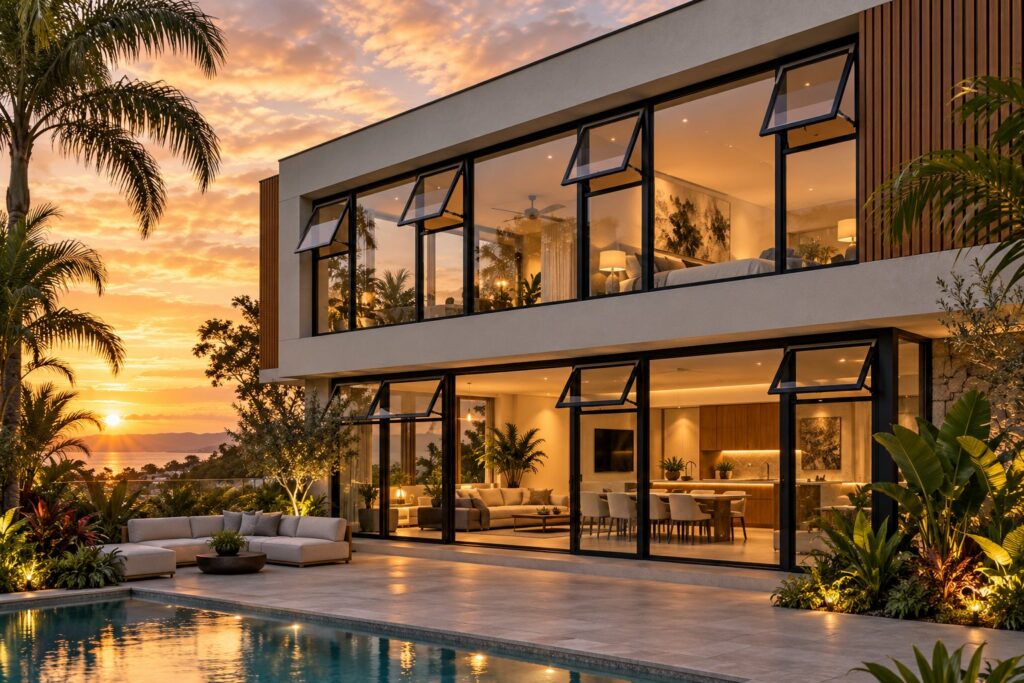
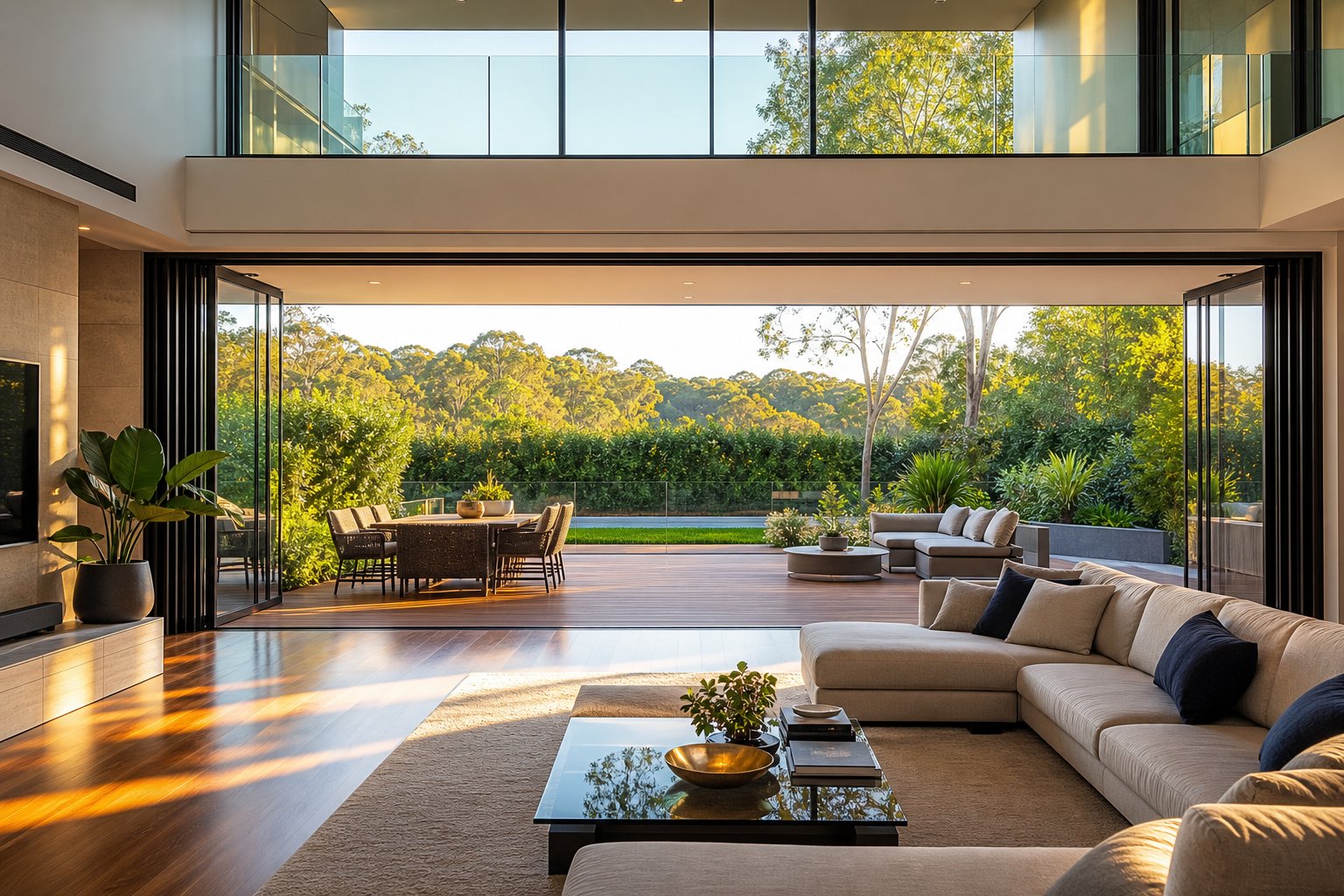
The aluminium window slim sightlines vs uPVC gap becomes even more pronounced with larger openings. Aluminium can span up to 3 metres wide without intermediate supports, while uPVC typically maxes out at 2 to 2.4 metres before requiring a mullion or transom to maintain structural rigidity. For bifold doors, floor-to-ceiling glazing, and expansive picture windows — the kind of openings that define modern Australian architecture — aluminium windows for large openings and bifolds are often the only viable choice.
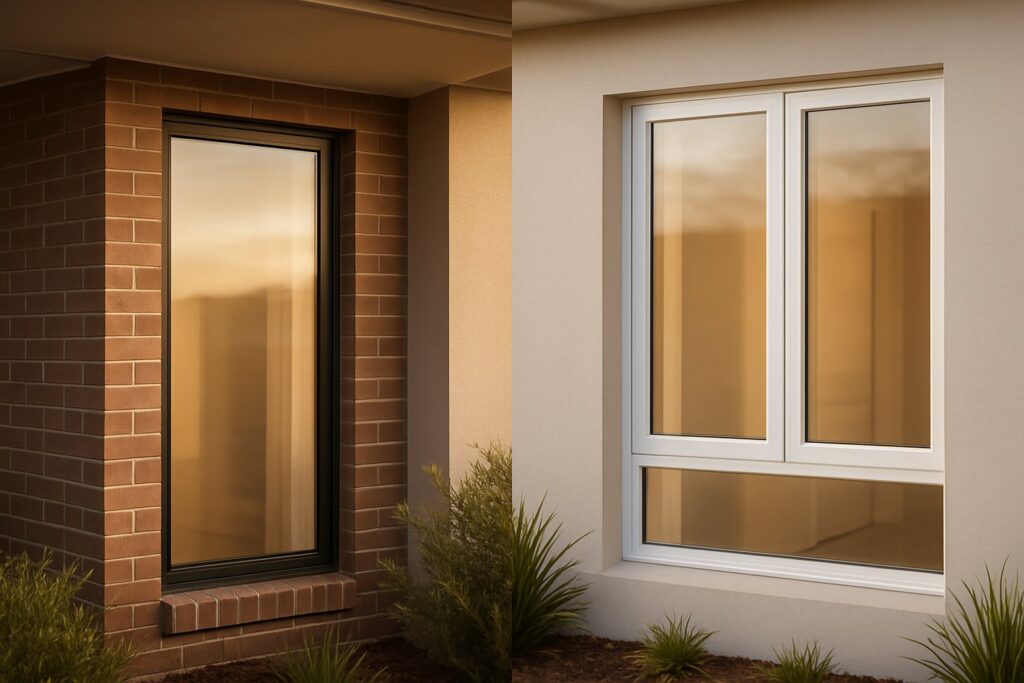
Does this mean uPVC always looks cheap? Not at all. Modern uPVC finishes have improved enormously. Foiled profiles in woodgrain, anthracite grey, and heritage colours suit traditional homes, Federation-style properties, and suburban streetscapes where a slimline contemporary look is not the goal. uPVC works well for standard-sized openings in bedrooms, bathrooms, and utility areas where the frame width is less visually dominant. But for feature windows, open-plan living areas, and any design where maximising the glass-to-frame ratio matters, aluminium holds a clear aesthetic advantage.
Colour flexibility reinforces this edge. Aluminium accepts powder coating in virtually any RAL colour, including dual-colour finishes — one shade externally to match your facade, another internally to complement your interiors. Colour warranties on quality powder coating extend to 25 years. uPVC offers a more limited palette of 30 to 40 standard foiled finishes, and as discussed in the durability section, darker colours can fade under Australian UV exposure with no practical refinishing path.
Security and Break-In Resistance
Are aluminium windows more secure than uPVC? At the frame level, aluminium has an inherent structural advantage. The material’s rigidity makes it significantly harder to flex, lever, or force open compared to plastic profiles. A crowbar applied to a uPVC frame can deform the profile enough to disengage locking points; the same force applied to aluminium meets far greater resistance.
That said, both materials can achieve high security ratings when paired with quality hardware. Multi-point locking systems, internally beaded glazing (where the glass is secured from inside rather than outside), and reinforced strike plates are available for both frame types. The difference is that aluminium achieves robust security with its base material properties, while uPVC often requires steel reinforcement inserts to reach equivalent resistance — adding weight and cost to larger openings.
Glass retention is another consideration. In aluminium frames, the glazing bead clips into a precision-machined channel that resists prying. uPVC beading can be more vulnerable to removal if an intruder identifies the external bead line, though modern uPVC systems have largely addressed this with internal beading as standard. For ground-floor windows in higher-risk areas, aluminium’s inherent rigidity provides a measurable security edge that does not depend on additional reinforcement.
Noise Reduction and Acoustic Insulation
Acoustic performance is one area where the frame material matters less than most people assume. The noise reduction of uPVC vs aluminium windows depends primarily on three factors: the glazing specification (laminated glass, thicker panes, or asymmetric glass combinations), the quality of the perimeter seal, and the precision of installation. A well-sealed uPVC window with standard glass will outperform a poorly sealed aluminium window with the same glass — and vice versa.
Where frame material does play a role is in long-term seal integrity. Sound Transmission Class (STC) ratings measure a window’s ability to reduce airborne sound, and any performance gains from acoustic glass are compromised if the frame develops gaps or the seals degrade. Aluminium’s dimensional stability — it does not expand, contract, or warp with temperature changes the way plastic can — means tighter tolerances are maintained over the window’s full lifespan. This contributes to consistent acoustic performance decade after decade, whereas uPVC frames may develop micro-gaps as gaskets compress and profiles shift slightly with age.
For homes near busy roads, flight paths, or railway lines, the glazing specification drives the bulk of noise reduction regardless of frame choice. Laminated glass with a PVB interlayer, asymmetric pane thicknesses (such as 6mm outer and 10mm inner), and wider cavities all boost STC ratings more than frame material selection alone. The practical advice: choose your glass package for acoustics, then let other factors — aesthetics, security, budget — guide your frame decision.
| Performance Factor | Aluminium | uPVC |
|---|---|---|
| Minimum frame sightline width | 50mm | 70–90mm |
| Maximum span without mullion | Up to 3m | 2–2.4m |
| Colour options | Unlimited RAL colours, dual-colour available | 30–40 standard foiled finishes |
| Colour warranty | Up to 25 years | Typically 10 years |
| Frame rigidity (forced entry resistance) | High — inherent material strength | Moderate — relies on steel reinforcement for larger frames |
| Glass retention security | Precision-machined internal bead channels | Internal beading standard on modern systems |
| Acoustic performance (frame contribution) | Consistent long-term seal integrity due to dimensional stability | Good initially; seals may compress over time |
| Primary acoustic factor | Glazing specification and installation quality (same for both) | |
Design, security, and acoustics round out the performance picture for everyday living. But windows also carry an environmental footprint — from the energy consumed in manufacturing to what happens at end of life. And for homeowners renovating older properties or considering a practical mix of both materials across different rooms, the sustainability and application story adds one more layer to the decision.
Sustainability, Renovations, and Mixing Both Materials
Environmental claims around window frames tend to be cherry-picked. Aluminium manufacturers highlight recyclability. uPVC suppliers point to lower production energy. Both are telling a partial truth. The full picture requires looking at the entire lifecycle — from raw material extraction through decades of service to what happens when the frame finally reaches end of life.
Environmental Impact and Recyclability
The recyclability of aluminium vs uPVC window frames is not a close contest on paper. Aluminium is infinitely recyclable without any loss in quality. Scrap aluminium retains high market value, which creates a genuine economic incentive to recover and reprocess it rather than send it to landfill. In Australia, aluminium recycling infrastructure is well established and the material re-enters the supply chain efficiently.
uPVC is technically recyclable, but the process is more complex. Frames must be separated from steel reinforcement, hardware, and gaskets before the plastic can be granulated and reprocessed. The recycled material often downcycles into lower-grade products rather than new window profiles. Economic incentives are weaker — scrap uPVC has minimal resale value compared to aluminium — meaning less of it actually gets recycled in practice.
Here is where the nuance matters. Aluminium production demands significantly more energy upfront. Smelting bauxite ore into raw aluminium is one of the most energy-intensive industrial processes on earth. uPVC production consumes far less energy per kilogram of finished product. On a single-lifecycle basis, uPVC carries a smaller manufacturing carbon footprint.
But single-lifecycle comparisons are misleading for a product that lasts decades. Are aluminium windows more sustainable than uPVC when you adjust for lifespan? If aluminium lasts 45 years and uPVC lasts 27, you need roughly 1.7 uPVC window lifecycles to match one aluminium lifecycle. Factor in the energy and waste of manufacturing and installing that second set of uPVC windows — plus disposing of the first — and aluminium’s higher initial energy cost is substantially offset. Add infinite recyclability at end of life, and the long-term environmental equation tilts toward aluminium for homeowners who value whole-of-life sustainability over short-term metrics.
Renovation vs New Build Considerations
Older Australian homes — weatherboard cottages, brick veneer from the 1960s, fibro houses, and heritage-listed properties — present specific challenges that new builds do not. Aluminium windows for renovation of older buildings offer several practical advantages that go beyond aesthetics.
Weight is the first consideration. Aluminium is lighter than steel-reinforced uPVC, particularly in larger configurations. Some older timber-framed structures cannot support the weight of heavy reinforced uPVC windows in wide openings without additional structural work to lintels and surrounding framing. Aluminium achieves the same or greater structural performance at lower weight, reducing the need for costly modifications to existing walls.
Planning and heritage considerations also come into play. Properties in heritage overlay zones or those subject to council character controls may require windows that replicate original proportions and sightlines. Aluminium’s slim profiles can more closely match the appearance of original timber or steel frames than bulkier uPVC profiles. As renovation specialists note, modern aluminium systems can be designed to faithfully recreate original architectural shapes while delivering contemporary thermal and acoustic performance — a combination that satisfies both heritage requirements and modern comfort expectations.
For new builds, both materials work without constraint. The choice comes down to the performance, aesthetic, and budget factors covered in earlier sections rather than structural compatibility.
Mixing Materials in One Property
Here is a strategy almost no comparison article mentions: you do not have to choose one material for your entire home. Mixing aluminium and uPVC windows in one house is not only possible — it is a genuinely practical approach that lets you allocate budget where it delivers the most value.
The logic is straightforward. Use aluminium where its strengths matter most:
- Large openings and bifolds — where slim sightlines and structural span are critical
- Front elevation and street-facing windows — where aesthetic impact influences property value
- Feature windows in living areas — where maximising glass area defines the room
- Ground-floor security-sensitive openings — where inherent frame rigidity adds protection
Then specify uPVC where budget efficiency is the priority:
- Standard bedroom windows — where thermal performance matters but sightlines are less critical
- Bathrooms and utility areas — where moisture resistance and low cost are the main concerns
- Upper-storey windows — where security risk is lower and frames are less visually prominent
Colour matching makes this hybrid approach seamless. Popular finishes like anthracite grey and matt black are available across both aluminium and uPVC ranges. With coordinated hardware and consistent glazing bars, the two materials can sit on the same property without looking disjointed — particularly when aluminium is used on the ground floor and uPVC on upper levels where frame details are less visible from street level.
This mixed approach lets you invest in aluminium’s longevity and design advantages where they deliver the greatest return, while keeping overall project costs manageable. It is a pragmatic middle path that sidesteps the false binary of choosing one material exclusively.
Which Material Suits Your Specific Situation
Pros and cons lists are useful, but they do not tell you what to do on Monday morning when you are sitting across from a window supplier with a floor plan in hand. The right frame material depends on your property, your priorities, and the trade-offs you are willing to accept. Here is how to match the material to your actual situation.
Choose uPVC If Your Priority Is Budget
There are scenarios where uPVC is clearly the smarter call — and none of them involve settling for an inferior product. When to choose uPVC windows over aluminium comes down to practical economics and project scope.
uPVC makes the most sense when you are replacing a large number of windows at once and the total project cost needs to stay within a firm limit. A full house of ten to fifteen openings in uPVC can save you several thousand dollars compared to thermally broken aluminium — money that might be better directed toward higher-performance glazing, improved insulation elsewhere in the building envelope, or simply staying within your borrowing capacity.
It also suits properties where the windows are not a design feature. If your home has standard-sized openings, rendered walls, and a streetscape where slim sightlines will not be noticed or valued at resale, the aesthetic premium of aluminium delivers diminishing returns. Bedrooms, bathrooms, laundries, and upper-storey windows that are rarely the focal point of a room all perform perfectly well in quality uPVC.
Rental investment properties fall into this category too. Tenants care about whether windows open smoothly, seal properly, and keep noise out — not whether the frame is 50mm or 80mm wide. uPVC delivers reliable performance at a price point that protects your rental yield.
Choose Aluminium for Modern Design and Longevity
If you are building or renovating a contemporary home where clean lines, expansive glass, and indoor-outdoor flow define the architecture, aluminium windows for contemporary home design are difficult to match. The slim profiles, unlimited colour options, and ability to span large openings without mullions give architects and designers the freedom that modern Australian homes demand.
Should you choose uPVC or aluminium for a new build? For new construction with a generous budget and a design that features floor-to-ceiling glazing, bifold doors opening to an alfresco area, or corner windows wrapping around a living space, aluminium is the natural fit. These configurations either cannot be achieved in uPVC or require such heavy reinforcement that the cost gap narrows while the aesthetic gap widens.
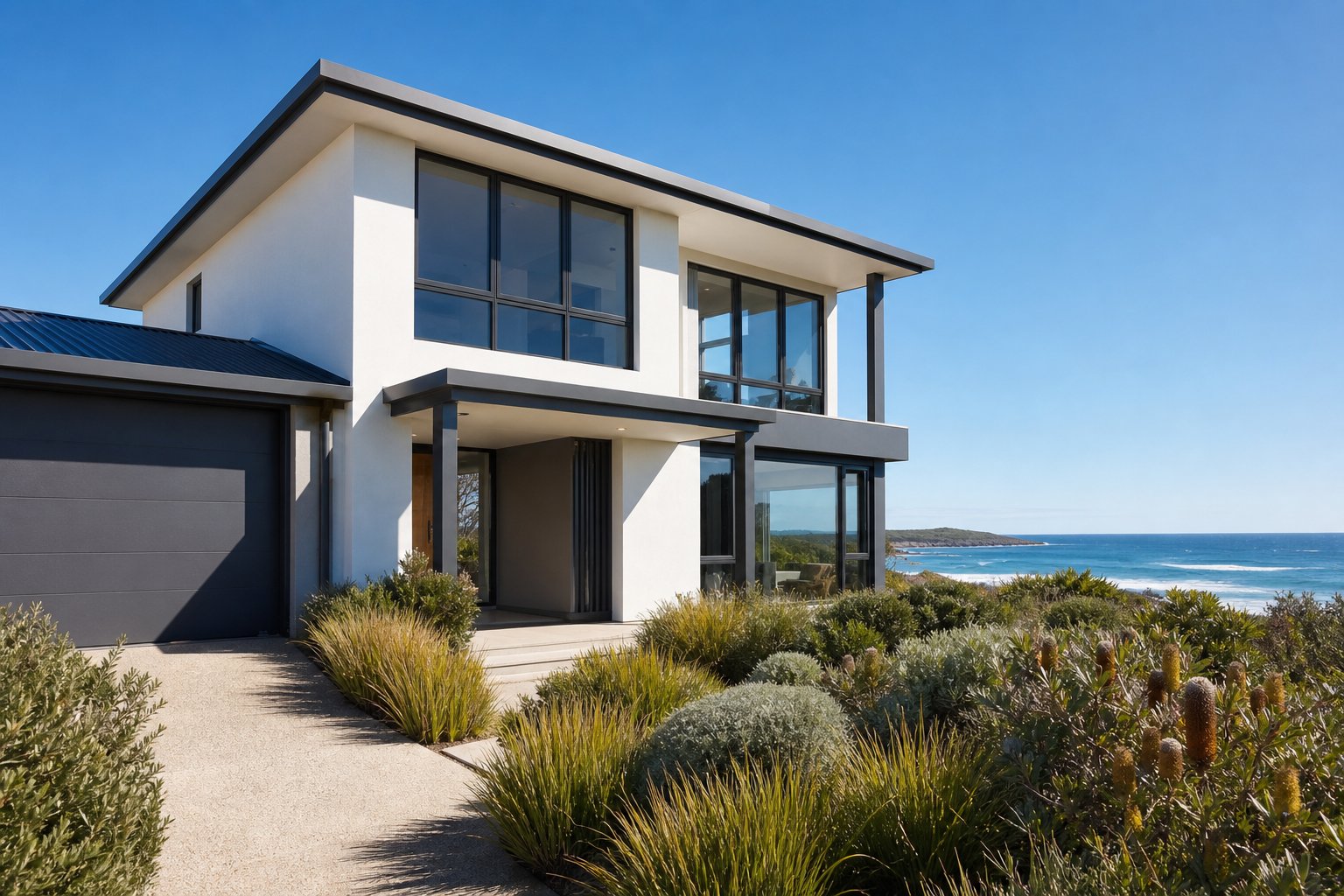
Coastal properties deserve special attention. The best window frame material for coastal homes needs to resist salt-air corrosion while handling the larger openings that capture ocean views. High-quality powder-coated or anodised aluminium offers excellent corrosion resistance in marine environments, and thermally broken systems ensure you are not sacrificing energy performance for durability. For homes within 500 metres of the coastline — particularly across coastal Queensland, the NSW South Coast, and Western Australia’s beachside suburbs — aluminium’s combination of corrosion resistance, structural strength, and longevity makes it the preferred choice.
Homeowners prioritising long-term value over upfront savings also lean toward aluminium. If you plan to stay in your home for 20 or more years, the longer lifespan and lower per-year cost equation covered earlier works decisively in aluminium’s favour. Thermally broken aluminium systems are available in multiple configurations — sliding, awning, casement, and fixed — to suit different architectural needs and climate zones across Australia. Suppliers like MEICHEN offer the full range of aluminium window systems, including both thermal break and non-thermal break options, making it straightforward to compare configurations and request project-specific guidance for your scenario.
When Either Material Works Well
Not every decision needs to be agonised over. For standard-sized windows in moderate climates — think suburban Melbourne, Adelaide, or Perth — with no strong aesthetic preference and a mid-range budget, both materials perform adequately. The thermal difference between quality uPVC and thermally broken aluminium is modest in temperate zones. Both meet NCC energy requirements. Both are low-maintenance. Both come with solid warranties from reputable manufacturers.
In these situations, the decision often comes down to whichever supplier provides the better overall package: warranty terms, installation quality, lead times, and after-sales support. Do not overthink it if your project does not have a strong pull toward either material’s unique strengths.
To cut through the noise and reach a decision that fits your specific circumstances, work through this checklist:
- Define your non-negotiable priority — is it budget, aesthetics, longevity, or energy performance?
- Identify any openings that require large spans, bifolds, or corner configurations (these favour aluminium)
- Check whether your property sits in a BAL-rated bushfire zone or within a coastal salt-air exposure zone
- Calculate your per-year cost by dividing total project cost by expected lifespan for each material
- Confirm whether aluminium quotes specify thermally broken or standard profiles — this changes the value proposition entirely
- Consider the mixed-material approach: aluminium for feature openings, uPVC for standard windows elsewhere
- Request WERS ratings and whole-window U-values (not just centre-pane figures) from every supplier you quote
- Ask about warranty duration and what it covers — frame, hardware, seals, and powder coating separately
- Factor in your planned ownership period — if you are selling within five years, upfront cost matters more than lifespan
- Get at least three quotes for each material in your specific window sizes and configurations before committing
Running through these ten points will surface the answer that generic comparison articles cannot give you — because it depends on details only you know about your home, your budget, and your plans.
Making Your Final Window Decision with Confidence
There is no single correct answer to whether uPVC or aluminium windows is better. The material that wins for a budget-conscious investor replacing twelve windows in a rental property is not the same material that wins for an architect-designed coastal home with 3-metre bifold openings. Both are legitimate choices — the question is which one aligns with your priorities, your property, and your timeline.
Key Takeaways for Your Decision
If this uPVC vs aluminium windows final decision guide had to be distilled into a few lines: uPVC delivers strong thermal performance at a lower upfront cost and suits standard openings, moderate budgets, and properties where frame aesthetics are secondary. Aluminium delivers superior longevity, slimmer sightlines, greater design freedom, and better per-year value for homeowners who plan to stay long-term or need large-span configurations.
But the single most important insight from this entire comparison is simpler than any of that:
Always confirm whether an aluminium quote is for thermally broken or standard profiles. This one detail changes the thermal performance, the condensation resistance, the energy rating, and the entire value proposition. Comparing standard aluminium against uPVC is not a fair test — and any supplier who quotes non-thermally-broken aluminium for habitable rooms without disclosing the thermal trade-off is not giving you the full picture.
Knowing how to choose between uPVC and aluminium windows starts with asking the right questions — not just comparing headline prices.
Your Next Step
Get quotes for both materials in your specific window sizes and configurations. When those quotes arrive, dig into the details that actually determine long-term value. Here are the questions to ask window suppliers about thermal break specifications and overall system performance:
- Is this quote for thermally broken or standard aluminium profiles?
- What is the whole-window U-value (not just centre-pane) for each opening?
- What WERS star rating does this system achieve in my climate zone?
- How wide is the thermal break barrier in millimetres?
- What is the warranty period for the frame, hardware, seals, and powder coating separately?
- What is the expected lifespan before seal or hardware replacement is needed?
For those leaning toward aluminium, the secondary decision matters too. Comparing different aluminium window systems — thermal break vs non-thermal break, sliding vs awning vs casement — determines whether you get the performance and configuration your home actually needs. MEICHEN’s aluminium window range lets you compare these categories side by side, including both thermal break and non-thermal break systems across all major opening styles, before requesting project-specific advice tailored to your property and climate zone.
Whatever you choose, compare like for like. Insist on whole-window U-values. Calculate per-year cost, not just upfront price. And remember that the best window is the one matched to your situation — not the one that won a generic internet comparison written by someone who has never seen your home.
Frequently Asked Questions About uPVC vs Aluminium Windows
1. Is uPVC or aluminium windows better for energy efficiency?
It depends on the type of aluminium specified. Standard aluminium conducts heat rapidly and performs poorly, with frame U-values of 5.5 to 7.0 W/m2K. However, thermally broken aluminium uses a polyamide insulating barrier between inner and outer sections, achieving frame U-values of 2.5 to 4.0 W/m2K. Quality uPVC multi-chamber frames typically achieve 1.5 to 2.5 W/m2K. While uPVC retains a slight edge in frame-only insulation, the whole-window performance gap between thermally broken aluminium and uPVC is often just 0.4 to 0.6 W/m2K — modest enough that other factors like lifespan and design may outweigh the thermal difference.
2. Are aluminium windows worth the extra cost over uPVC?
Aluminium windows typically cost 20 to 40 percent more upfront than equivalent uPVC. However, aluminium frames last 40 to 60 years compared to uPVC’s 20 to 35 years. When you calculate per-year cost — factoring in the purchase price, maintenance, and the disruption cost of replacing uPVC windows midway through ownership — aluminium often works out cheaper over the full ownership period. Aluminium also adds measurable resale value, particularly in higher-value property markets where slim sightlines and premium finishes are expected by buyers.
3. Can you mix aluminium and uPVC windows in the same house?
Yes, and it is a practical strategy that few comparison guides mention. You can use aluminium where its strengths deliver the most value — large openings, bifold doors, street-facing feature windows, and ground-floor security-sensitive areas — while specifying uPVC for standard bedroom windows, bathrooms, and upper-storey openings where budget efficiency matters more. Popular finishes like anthracite grey are available in both materials, so colour matching keeps the exterior looking cohesive. This hybrid approach lets you invest in aluminium’s longevity and design advantages selectively without blowing the overall project budget.
4. Do aluminium windows cause more condensation than uPVC?
Standard aluminium windows without a thermal break do cause significantly more condensation because the metal conducts cold directly to the interior frame surface, dropping it below the dew point. Thermally broken aluminium dramatically reduces this risk by inserting an insulating polyamide barrier between the inner and outer frame sections, keeping the interior surface warmer. In well-specified thermally broken systems, condensation resistance approaches uPVC levels. uPVC still holds a slight advantage in extreme cold or high-humidity environments because the entire profile is inherently non-conductive rather than relying on a single barrier.
5. Which window frame material is better for bushfire-prone areas in Australia?
Aluminium is the clear choice for properties in BAL-rated bushfire zones. It is non-combustible with a melting point above 660 degrees Celsius and maintains structural integrity during fire conditions. uPVC deforms at relatively low temperatures (around 80 to 100 degrees Celsius), loses structural integrity quickly, and can release toxic fumes. Under AS 3959 (Construction of buildings in bushfire-prone areas), aluminium is often the only compliant frame material for external windows without additional protective measures. This applies across bushfire-prone parts of Victoria, NSW, South Australia, and Western Australia.
More Window & Door Guides