Why Powder Coated Aluminium Frames Need Special Care
Paint splatters on your window frames might seem like a simple cleanup job. Grab some turps, scrub it off, move on. But when those frames carry a powder coated finish, the rules change entirely. The techniques you would use to strip paint from bare aluminium or timber can wreck the very surface you are trying to protect.
Understanding why requires a quick look at what sits beneath that unwanted paint.
What Makes Powder Coating Different From Regular Paint
Traditional paint is a liquid applied in thin layers that dry through solvent evaporation. Powder coating works nothing like that. A dry powder made of resin, pigments, and additives is electrostatically charged and applied to the metal surface, then cured in an oven at temperatures around 190-200°C. During curing, the powder melts and crosslinks into a thermoset polymer shell — essentially a hard, plastic-like layer that chemically bonds to the aluminium beneath.
This process creates a finish that is denser, more uniform, and significantly more durable than conventional paint. A quality powder coat on aluminium window frames can last 20 years or more in direct UV exposure without peeling or flaking. It resists chipping, abrasion, and most common solvents. That durability is exactly what makes removing paint from aluminium frames so tricky when a powder coat is involved — the finish you want to keep shares some chemical similarities with the paint you want gone.
Why Standard Aluminium Paint Removal Advice Can Backfire
Most online guides on how to remove paint from aluminium assume you are working with raw or anodised metal. They recommend aggressive solvents like acetone, wire brushes, coarse sandpaper, or heavy-duty chemical strippers containing methylene chloride. On bare aluminium, these methods work fine. On powder coated frames, they dissolve, scratch, or delaminate the protective layer right along with the unwanted paint.
Powder coating is chemically resistant to most common solvents, but it is not invincible. Concentrated chemicals, abrasive tools, or excessive heat can dull the gloss, leave visible scratches, or strip the coating back to bare metal in patches.
The goal is removing unwanted paint while preserving the powder coat beneath — not stripping the frame back to bare metal.
One more thing worth saying upfront: complete removal without any trace of impact is not always achievable. Thick, fully cured paint that has bonded tightly to a powder coated surface may leave behind faint marks or slight dulling even with the gentlest approach. Setting that expectation early saves frustration later and helps you choose the right method for your specific situation — which is exactly where the process begins.
Step 1 Assess the Paint Type and Your Specific Situation
Before reaching for any solvent or scraper, take a moment to look closely at what you are dealing with. The method you use to remove paint from a window frame depends entirely on how the paint got there, what kind of paint it is, and how long it has been sitting. Getting this assessment right saves time and protects the powder coat underneath.
Common Scenarios That Cause Paint on Window Frames
Paint rarely ends up on powder coated frames on purpose. In most cases, it arrives during renovation work or through sheer bad luck. Here are the situations Australian homeowners encounter most often:
- Renovation overspray — Painters working on nearby walls or ceilings with rollers or spray guns leave a fine mist of paint across frame surfaces. This is the most common culprit during interior repaints.
- Trim and skirting splashes — Brush work on architraves, sills, or skirting boards flicks droplets onto adjacent window frames, especially when masking is rushed or skipped.
- Previous owner’s poor masking — You move in and discover frames with paint edges that bleed onto the powder coat, or entire sections painted over by someone who did not bother taping off properly.
- Graffiti or vandalism — Spray paint applied deliberately to exterior frames, particularly on ground-floor windows facing public areas.
- DIY accidents — Spills from open tins, drips from a ladder above, or a child’s art project gone sideways.
Each scenario produces a different thickness, coverage area, and paint type — all of which influence your removal approach.
Identifying Your Paint Type and How Long It Has Cured
Different paints respond to removal methods in very different ways. Knowing what you are working with narrows your options quickly.
Latex and acrylic paints (water-based) are the easiest to deal with. They remain somewhat flexible when cured and soften readily with isopropyl alcohol or warm soapy water, especially if caught early. Most interior wall paints in Australia fall into this category.
Oil-based and enamel paints cure into a harder, smoother film that resists simple solvents. A reliable way to identify paint type on aluminium is the alcohol rub test: dampen a cotton ball with rubbing alcohol and press it against the paint for 15 seconds. If colour transfers to the cotton, it is water-based. If nothing happens, you are likely dealing with an oil-based or enamel product.
Spray paint bonds aggressively to smooth surfaces and often contains lacquer-based solvents that bite into the powder coat during application, making it one of the trickiest to remove cleanly.
Timing matters just as much as paint type. Fresh paint — still tacky or applied within the last few hours — wipes away with minimal effort. Once paint has fully cured (typically three to seven days depending on conditions, though some enamels take weeks), it forms a hardened film that requires progressively stronger methods to shift.
Small Splatters vs Large Areas — Setting Realistic Goals
Scale changes everything. A few scattered droplets from roller overspray are a straightforward job — gentle solvents and a microfiber cloth will handle most of them in minutes. Removing paint from a window frame that has been entirely brush-painted over is a different proposition altogether. Large areas mean more chemical exposure time, greater risk of dulling the powder coat, and a higher chance of visible inconsistencies once the job is done.
Be honest with yourself at this stage. If you are facing a full frame covered in cured oil-based paint, the realistic outcome may involve some compromise — and that knowledge shapes which tools and products you gather next.
Step 2 Gather the Right Tools and Safety Equipment
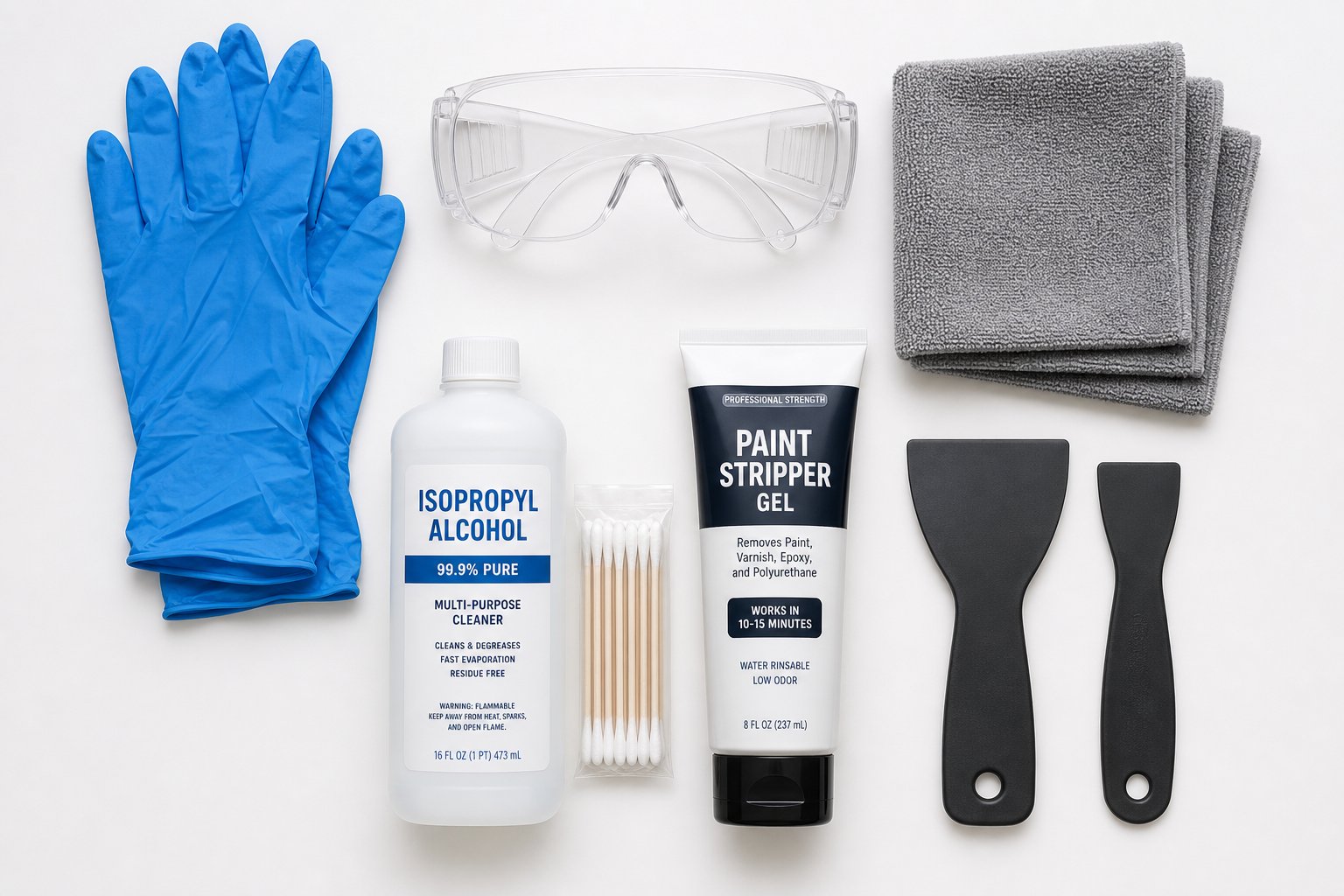
Having a clear picture of your paint situation means you can now assemble the right tools to remove paint from aluminium frames without gambling on the powder coat. Each method pathway calls for specific supplies, and laying everything out before you start prevents mid-job trips to the hardware store — or worse, grabbing something abrasive out of impatience.
Supplies for the Gentle Solvent Method
This is your starting kit for fresh splatters and water-based overspray. You likely have some of these at home already:
- Isopropyl alcohol (70% or higher concentration)
- Mineral spirits (white spirit)
- Clean microfibre cloths — at least four or five, since you will fold and rotate to fresh sections constantly
- Cotton swabs and cotton balls for tight corners and small droplets
- A spray bottle filled with warm water and a few drops of dish soap
- Plastic wrap for holding solvent-soaked cloths against stubborn spots
Supplies for Chemical and Mechanical Methods
When gentle solvents are not enough, you step up to a dedicated paint remover for window frames or careful scraping tools. Gather these before escalating:
| Method | Required Tools | Safety Gear |
|---|---|---|
| Chemical stripping | Methylene chloride-free paint stripper (gel formula preferred), plastic wrap for poulticing, plastic scraper, stiff nylon brush, clean water for rinsing | Nitrile gloves, chemical splash goggles, respirator with organic vapour cartridges, long sleeves |
| Mechanical removal | Plastic scrapers (multiple widths), non-abrasive nylon pads (white or blue Scotch-Brite style), razor blade holder with fresh single-edge blades, heat gun (low setting only) | Nitrile gloves, safety glasses, dust mask if scraping dried paint flakes |
For chemical strippers, look for products labelled methylene chloride-free and safe for use on clear coats or automotive finishes. Gel formulas cling to vertical frame surfaces without running, which matters when you are working on installed windows. Low-VOC, water-based options like Max Strip or Dumond Smart Strip are gentler choices that still handle multiple layers of cured latex and oil-based paint.
Ventilation is non-negotiable with any chemical method. Work with windows open and a fan pushing air outward, or tackle exterior frames on a breezy day.
What to Avoid — Tools That Damage Powder Coating
Knowing what not to reach for is just as important as having the right tools to remove paint from aluminium frames. These common items will scratch, dissolve, or strip the powder coat along with the unwanted paint:
- Wire brushes and steel wool — leave deep scratches that expose bare aluminium to corrosion
- Abrasive sandpaper (any grit) — removes the powder coat’s smooth surface texture permanently
- Acetone applied directly — while it softens some paints, it can also dull or cloud powder coated finishes with prolonged contact
- Methylene chloride-based strippers — these industrial-strength chemicals attack the crosslinked polymer bonds in powder coating itself
- Metal scrapers or putty knives — the hard edge gouges through the finish with minimal pressure
Stick to plastic, nylon, and soft cloth contact only. If a tool could scratch glass, it will scratch powder coating.
With your supplies sorted and your danger list clear, the actual removal work can begin — starting with the gentlest approach and escalating only when the paint refuses to budge.
Step 3 Try Gentle Solvents for Fresh or Light Paint
Solvent-based removal is the safest starting point for getting paint off a window frame without risking the powder coat. Isopropyl alcohol and mineral spirits dissolve water-based paints effectively, yet they evaporate quickly enough that they do not penetrate or soften the cured thermoset layer beneath. That is exactly why this method works — it exploits the chemical gap between uncured surface paint and the fully crosslinked powder coat.
The catch? It performs best on fresh paint, light overspray, and latex or acrylic splatters. Thick layers and oil-based products will likely resist this approach entirely. Start here, and let the results tell you whether to escalate.
Testing in a Hidden Area First
Before applying any solvent across visible sections of your frame, test it somewhere inconspicuous — the bottom edge of the frame, a section hidden behind a curtain, or the inside rebate where the sash sits. Dampen a cotton swab with your chosen solvent, hold it against the powder coat (not the paint) for 30 seconds, then wipe and inspect. You are looking for any dulling, softening, or colour transfer from the powder coat itself. If the finish looks unchanged, you are safe to proceed on exposed areas.
This step takes less than a minute and can save you from discovering damage across an entire frame face.
The Soak-and-Wipe Technique for Fresh Paint
Here is how to get paint off aluminium frames using the gentle solvent method, step by step:
- Dampen a clean microfibre cloth with isopropyl alcohol (for water-based paint) or mineral spirits (for slightly more stubborn spots). The cloth should be wet but not dripping.
- Press the damp cloth firmly against the paint splatter and hold it in place for 30 to 60 seconds. This dwell time allows the solvent to soften the paint film without needing aggressive rubbing.
- Gently wipe in one direction, lifting the softened paint away. Rotate to a fresh section of cloth frequently to avoid smearing dissolved paint back onto the surface.
- For small droplets in tight corners, use a cotton swab soaked in solvent and roll it over the spot rather than scrubbing.
- If splatters resist the solvent alone, spray the area with warm soapy water first, let it sit for two to three minutes, then repeat the solvent application. The warm water softens the paint’s outer skin, giving the solvent better access.
- For spots that have partially softened but will not wipe clean, use a plastic scraper held at a very shallow angle — nearly flat against the frame — and gently push the softened paint away. Let the solvent do the work rather than applying force.
- Wipe the cleaned area with a fresh damp cloth to remove any solvent residue, then dry with a clean microfibre towel.
This process works remarkably well on renovation overspray caught within the first day or two. Acrylic wall paint that has not fully cured will often lift in a single pass.
Signs You Need a Stronger Method
Gentle solvents have clear limits. If you are wondering how do you remove paint from aluminium when the solvent approach stalls, watch for these signals:
- The paint does not soften at all after 60 seconds of solvent contact — it remains hard and unmoved.
- You find yourself rubbing harder and harder with no progress. Increased pressure risks abrading the powder coat.
- The paint is visibly thick, with raised edges or brush marks indicating multiple coats.
- A test with rubbing alcohol produces no colour transfer, suggesting an oil-based or enamel product.
- The paint has been on the frame for weeks, months, or years and has fully crosslinked into a hard shell.
Any of these signs means the paint has bonded beyond what mild solvents can break down. Continuing to scrub will only fatigue the powder coat surface. The smarter move is stepping up to a chemical stripper formulated to dissolve cured paint without attacking the finish underneath — a method that requires more preparation, more patience, and a different set of precautions.
Step 4 Use Chemical Strippers for Cured or Oil-Based Paint
When solvents leave cured paint completely unmoved, a dedicated chemical paint stripper safe for powder coating becomes the practical next step. These products work by breaking the molecular bonds within the paint film itself, turning a hardened shell back into a soft, scrapeable paste. The key is choosing a formula that dissolves the unwanted paint without attacking the thermoset powder coat beneath it.
Choosing a Powder-Coat-Safe Chemical Stripper
Not all paint strippers are created equal, and the wrong one will damage your frames faster than the paint ever did. Here is what to look for when selecting a product to remove paint from aluminium that carries a powder coated finish:
- Methylene chloride-free formulas only. Methylene chloride (dichloromethane) is the active ingredient in many industrial-strength strippers. It is devastatingly effective at dissolving paint — and equally effective at dissolving powder coating. Avoid it entirely.
- Gel consistency. Gel strippers cling to vertical frame surfaces without running or dripping. Liquid formulas slide off before they have time to work, wasting product and creating mess.
- Labelled safe for clear coats or automotive finishes. Automotive clear coats share chemical similarities with powder coating (both are thermoset polymers). If a stripper is rated safe for clear coat, it is generally safe for powder coat at recommended dwell times.
- Low-VOC or water-based options. Products like Dumond Smart Strip or similar bio-based gel strippers work more slowly but carry less risk to both the finish and your lungs.
Read the product data sheet before buying. If it lists powder coating, lacquer, or two-pack finishes among surfaces it will attack, put it back on the shelf.
The Poultice Technique for Stubborn Cured Paint
A chemical stripper works best when it stays wet and in contact with the paint long enough to penetrate fully. The poultice technique achieves exactly that — it prevents the stripper from drying out and concentrates its action on the paint layer. Here is how to remove paint off aluminium frames using this method:
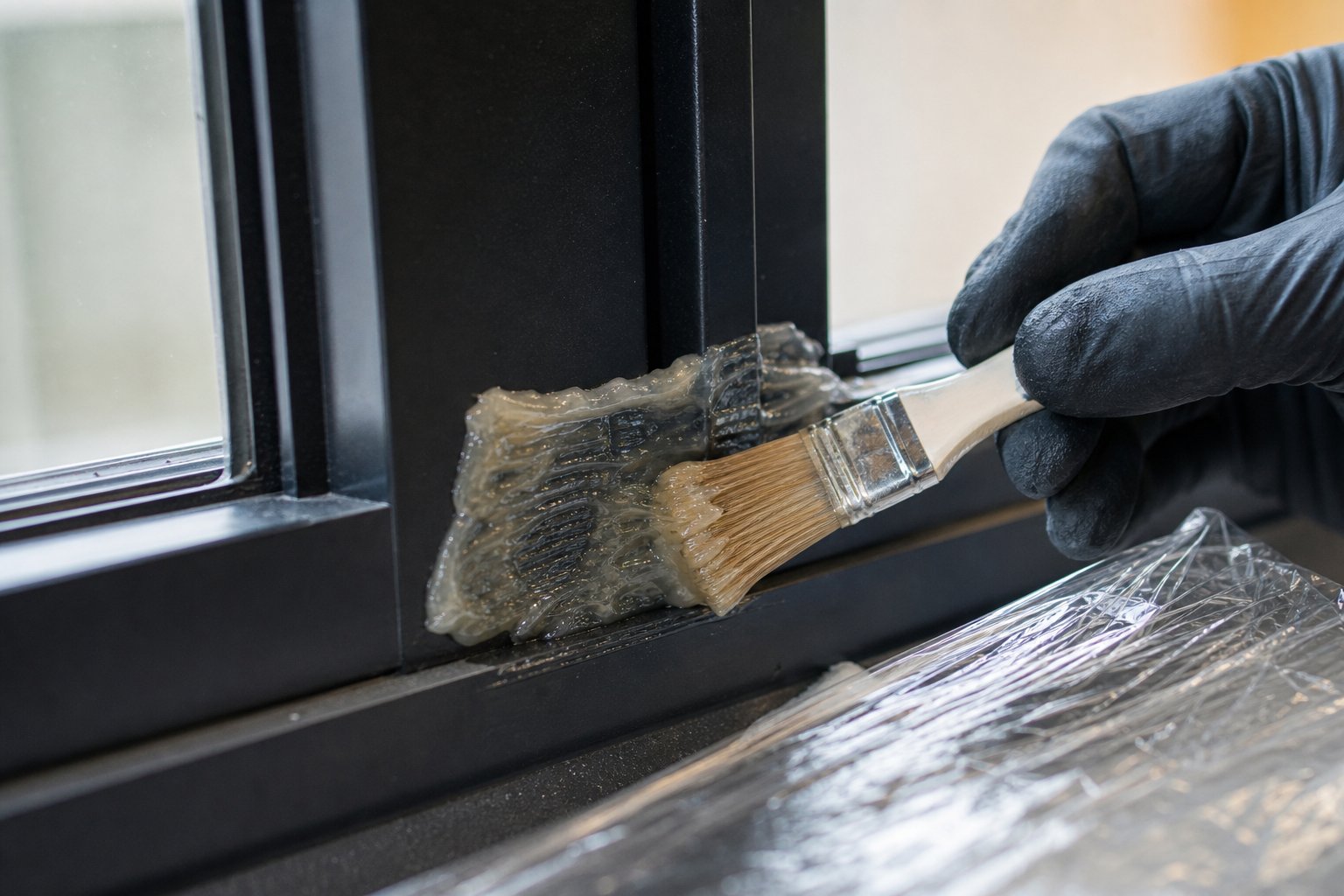
- Apply a generous layer of gel stripper directly over the paint — roughly 3 mm to 5 mm thick. Use a disposable brush or plastic spreader to work it into textured areas and corners.
- Cover the treated area immediately with plastic cling wrap, pressing it gently against the gel to seal out air. This keeps the stripper moist and active far longer than an exposed application.
- Wait the recommended dwell time. For most methylene chloride-free gels, this ranges from one to four hours depending on paint thickness. Thicker or older paint may need overnight contact. Check the edges periodically — if the gel appears dry beneath the wrap, the paint is not yet softened enough.
- Peel back the plastic wrap and test a small section with a plastic scraper. Softened paint will lift away in ribbons or curl up ahead of the scraper. If it still feels hard, re-cover and wait longer.
- Once softened, scrape the paint away using a plastic tool held at a low angle. Work in one direction and wipe the scraper clean between passes.
- Rinse the stripped area with clean water and a soft nylon brush to remove chemical residue. Dry with a microfibre cloth.
Thick paint or multiple old layers rarely come off in a single application. Expect to repeat the process two or three times, removing one layer per cycle. Patience here protects the powder coat — rushing with excessive scraping force is where damage happens.
Handling Oil-Based and Enamel Paints
Oil-based paints and enamels cure into a harder, more chemically resistant film than acrylics. They are the reason chemical strippers exist in the first place — gentle solvents simply cannot break their crosslinked structure. When working with these paint types, allow longer dwell times (often double what the product label suggests for latex) and accept that multiple poultice cycles are standard rather than exceptional.
Enamel paints in particular bond tenaciously to smooth powder coated surfaces. If the first application barely softens the edges, apply a thicker layer of stripper on the second round and extend the wrap time to eight hours or overnight. The gel will not harm the powder coat during extended contact provided you have chosen a methylene chloride-free product rated for automotive clear coats.
Safety note: Always work with adequate ventilation when using chemical strippers. Open windows on both sides of the room to create cross-flow, or use a fan to push fumes away from your breathing zone. Wear nitrile gloves, chemical splash goggles, and a respirator with organic vapour cartridges. Even low-VOC strippers release irritating vapours in enclosed spaces — never assume a milder product means no precautions are needed.
Once the chemical work is done and the frame is clean, residual stripper left in crevices or gasket edges can continue reacting if not thoroughly rinsed. A final wipe-down with a damp cloth followed by a dry pass ensures nothing is left behind to slowly attack the finish. From here, the question becomes whether any remaining paint traces call for careful mechanical intervention — a method that trades chemical patience for physical precision.
Step 5 Mechanical Removal and Heat Gun Considerations
Chemical strippers handle most cured paint situations, but they are not always practical. Paint lodged in tight gasket channels, thin lines of overspray along glass seals, or small stubborn patches in corners where poulticing is awkward — these call for hands-on mechanical work. Physical removal gives you precise control over exactly where force is applied, which matters when you are working millimetres from glass or rubber seals that chemicals could damage.
The trade-off is straightforward: mechanical methods carry the highest risk of visible marking on the powder coat. Every technique below involves direct contact with the finish, so pressure, angle, and tool choice become critical. Scraping paint off powder coated aluminium is not about force — it is about geometry and patience.
Plastic Scraper and Nylon Pad Techniques
A plastic scraper is your safest mechanical tool because it is softer than the powder coat surface. Hold the scraper at a very shallow angle — roughly 10 to 15 degrees from the frame face — and push forward in smooth, even strokes. The idea is to shear the paint film sideways rather than digging into it from above. Steep angles concentrate force on a tiny edge and risk gouging.
For thin overspray that has partially softened from earlier solvent or chemical work, a white or blue non-abrasive nylon pad works well. Dampen the pad with warm soapy water and use light, circular motions. Let the texture of the pad do the lifting rather than pressing hard. If you find yourself bearing down with real effort, stop — you are either working on paint that needs more chemical softening first, or you are about to push through into the powder coat layer.
Keep a microfibre cloth nearby to wipe away loosened flakes as you go. Built-up debris under the scraper acts like sandpaper and creates fine scratches you will only notice once the frame dries.
Razor Blade Method for Smooth Surfaces
A fresh single-edge razor blade in a proper holder can remove dried paint drips and thick splatters from flat, smooth powder coated surfaces with surprising precision. The technique borrows from window glass cleaning — hold the blade nearly flat against the surface (no more than 5 degrees of angle) and push in one direction only. Never pull the blade backwards or use a sawing motion.
Critical rules for razor blade use:
- Only use on smooth, flat sections of the frame — never on textured or matte powder coat finishes where the blade edge catches surface peaks.
- Replace the blade frequently. A dull or nicked edge drags rather than slices, creating scratches.
- Keep the surface wet with soapy water to lubricate the blade’s path and float away debris.
- Work in short strokes of 20 mm to 30 mm, lifting and repositioning between each pass.
This method is ideal for how to get paint off of a window frame when you are dealing with isolated thick drips on otherwise clean surfaces. It is not suitable for large areas — the repetitive strokes over broad sections almost guarantee inconsistent results and visible trail marks.
Heat Gun Risks and When to Avoid It Entirely
Heat guns soften paint by raising its temperature until the film becomes pliable enough to scrape. In theory, this avoids chemical mess and speeds up thick paint removal. In practice, using heat on powder coated aluminium is genuinely risky.
Powder coating cures at temperatures around 175°C to 200°C, and most standard powders begin to discolour noticeably above 120°C to 130°C. A heat gun on its low setting typically outputs 150°C to 200°C at the nozzle — already within the danger zone. Concentrate that heat on one spot for even a few seconds too long and the powder coat beneath the paint can soften, blister, yellow, or delaminate from the aluminium entirely.
If you choose to use a heat gun despite these risks, follow strict rules: keep the gun at least 150 mm from the surface, use the lowest temperature setting available, and never hold it stationary. Move constantly in slow sweeps, warming the paint just enough to soften it for a plastic scraper to lift. The moment you see the powder coat surface change in sheen or colour, stop immediately and let it cool.
Honestly? For most homeowners trying to get paint off of a window frame without professional equipment, a heat gun creates more problems than it solves. The margin between softening the unwanted paint and damaging the powder coat is razor-thin. Chemical poulticing with extended dwell time achieves the same softening effect with far less risk to the underlying finish.
| Method | Best For | Risk Level | Powder Coat Safety |
|---|---|---|---|
| Plastic scraper (shallow angle) | Partially softened paint, thin layers, edges and corners | Low | High — softer than powder coat surface |
| Nylon abrasive pad | Light overspray residue, final cleanup after chemical stripping | Low to moderate | High with light pressure; moderate if pressed hard |
| Razor blade (flat hold) | Thick isolated drips on smooth flat surfaces | Moderate | Good on gloss finishes; poor on textured or matte |
| Heat gun (low setting) | Thick multi-layer paint where chemicals are not an option | High | Poor — discolouration and delamination risk above 120°C |
Mechanical removal is a precision job, not a brute-force one. Each of these techniques works best as a targeted follow-up after solvents or chemicals have done the heavy lifting. Used alone on large areas of fully cured paint, they demand more time, carry more risk, and deliver less consistent results than a well-executed chemical approach.
Whatever combination of methods gets the paint off, the frame underneath still needs attention. Micro-scratches from scraping, chemical residue trapped in gasket channels, or dull patches where the finish took some punishment — these all benefit from deliberate aftercare that restores the powder coat to something close to its original condition.
Step 6 Protect and Restore the Powder Coat Finish
Getting the unwanted paint off is only half the job. The frame surface beneath may look clean at first glance, but closer inspection under good light often reveals the toll the removal process has taken. Dull patches, fine scratches, or chemical haze can all linger — and left unaddressed, they degrade the powder coat’s protective performance over time. Restoring the powder coat finish on aluminium frames takes a few deliberate steps, but the payoff is a surface that looks and performs close to its original state.
Inspecting for Powder Coat Damage After Removal
Wait until the frame is completely dry, then examine it in natural daylight at a shallow angle. This lighting reveals imperfections that overhead light hides. You are looking for three things:
- Dull or hazy patches — areas where chemical contact or rubbing has removed the surface gloss without penetrating the full coating thickness. These feel smooth but look flat compared to surrounding sections.
- Micro-scratches — fine lines visible when light catches them at certain angles. Running a fingernail across them, you can feel a slight texture but no distinct groove. These typically come from scraping or debris trapped under cloths during wiping.
- Exposed substrate — spots where the powder coat has been breached entirely, revealing bare aluminium or primer beneath. These appear as a distinctly different colour from the surrounding finish and represent a functional failure of the coating’s protective barrier.
Dull patches and micro-scratches are cosmetic issues you can address yourself. Exposed substrate is a more serious concern that needs sealing to prevent corrosion, particularly on frames exposed to coastal salt air or high UV environments common across much of Australia.
Polishing and Restoring the Original Finish
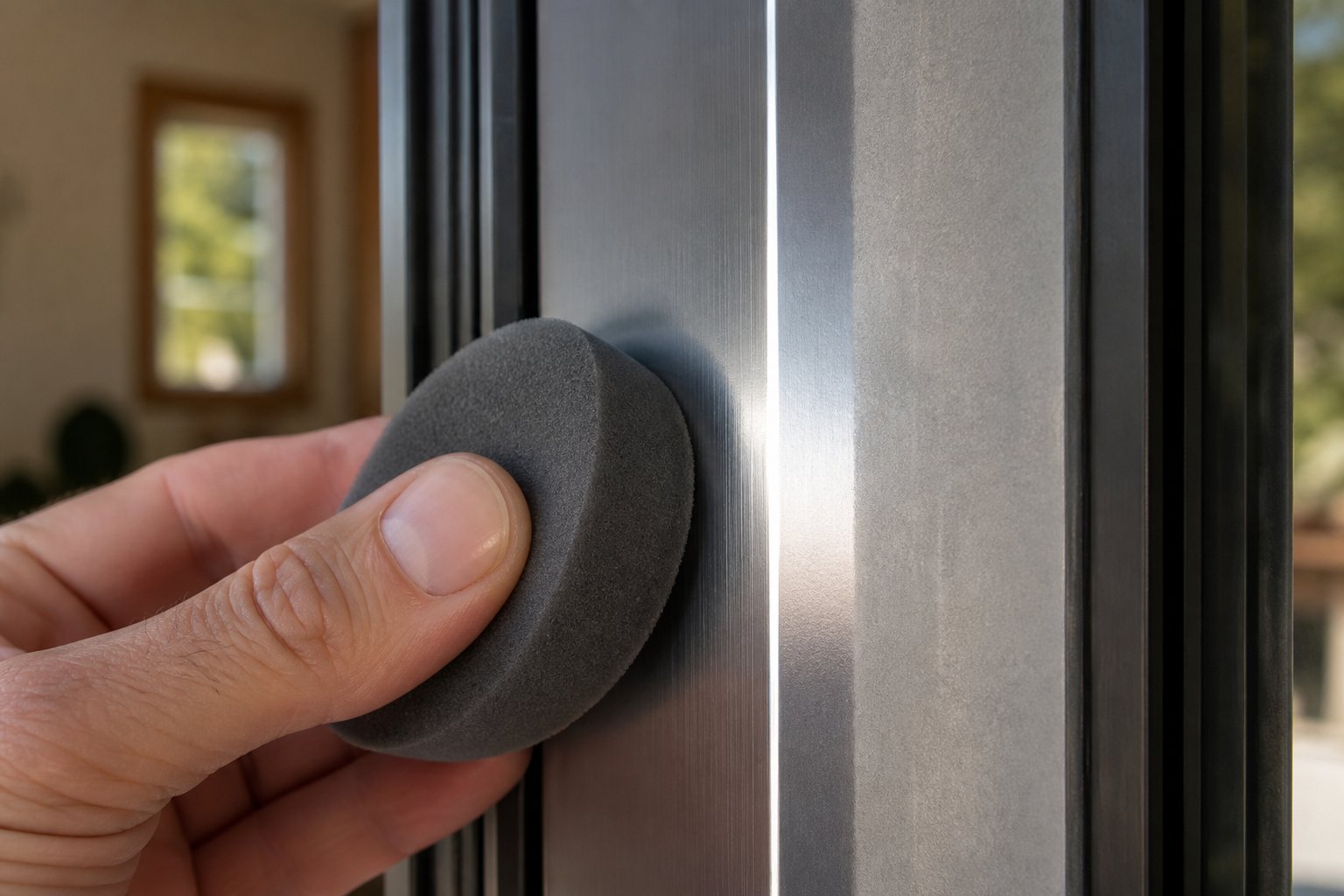
For dulled areas where the coating is intact but has lost its sheen, an automotive-grade cutting compound followed by a finishing polish produces excellent results. Apply a small amount of fine cutting compound to a soft foam pad or microfibre cloth and work it over the affected area in overlapping circular motions. This removes a microscopic layer of the coating surface, levelling out the haze and restoring light reflection. Follow immediately with a finishing polish to bring back full gloss.
For very fine scratches — the kind that catch light but cannot be felt with a fingernail — a finishing polish alone may be sufficient. Work it gently along the direction of the scratch rather than across it.
A few practical limits apply here. Polishing removes coating material, so avoid repeating the process on the same area multiple times. Two passes is a reasonable maximum. If the dullness persists after that, the damage sits deeper than polishing can reach.
Once you are satisfied with the finish, apply a coat of quality carnauba wax or polymer sealant. This adds a sacrificial protective layer that absorbs future scuffs before they reach the powder coat, and it makes cleaning easier going forward.
For isolated deep scratches that have penetrated into the coating but not through to bare metal, colour-matched touch-up paint pens designed for powder coated surfaces offer a targeted fix. These liquid coatings are formulated to match specific powder coat colours and can be applied with a fine brush or pen tip directly into the scratch. Build up thin layers, allowing each to dry before adding the next, until the repair sits level with the surrounding surface.
When the Powder Coat Is Beyond DIY Repair
Sometimes the honest assessment is that the damage exceeds what polishing and touch-up pens can fix. Multiple deep scratches across a large area, widespread discolouration from heat gun use, or sections where the coating has delaminated entirely — these situations call for professional intervention.
Professional re-coating is one option. A specialist powder coating applicator can strip the remaining finish, prepare the aluminium substrate, and apply a fresh powder coat in a controlled environment. This restores the frame to factory condition but involves removing the window, transporting it, and reinstalling it — a process that can approach or exceed the cost of the frame itself depending on size and complexity.
For frames where the powder coat is irreparably compromised — particularly older windows already showing signs of seal failure or operational wear — replacement with new aluminium windows featuring factory-applied powder coating eliminates the problem at its source. Professionally specified frames from manufacturers like MEICHEN come with custom powder coating options across a standard colour range, meaning you can match existing frames or choose a fresh palette without worrying about future paint removal concerns. Their project-based design support also means the new windows integrate properly with your home’s existing openings and aesthetic.
Repainting aluminium window frames over damaged powder coat is technically possible but rarely advisable — liquid paint applied over compromised powder coating tends to peel within a few years, putting you back at square one. A factory finish applied under controlled heat and electrostatic conditions will always outperform a brush-applied topcoat in durability and appearance.
The aftercare you invest now determines how long the restored finish holds up. But it also raises a practical question: at what point does the effort and cost of restoration outweigh simply starting fresh? That calculation depends on the scale of damage, the age of your frames, and what outcome you are actually willing to accept.

Step 7 Know When to DIY and When to Upgrade
That cost-versus-outcome calculation is not abstract — it comes down to a handful of concrete factors you can assess right now. The best way to remove paint from aluminium frames is not always the most labour-intensive one. Sometimes the smartest move is recognising that the frame has reached a point where restoration no longer makes financial or practical sense.
Clear Criteria for Successful DIY Removal
DIY paint removal works well when the conditions are in your favour. If most of the following apply to your situation, you can confidently handle the job yourself:
- Fresh paint — applied within the last 24 to 48 hours and not yet fully cured
- Water-based product — latex or acrylic paint that responds to isopropyl alcohol or warm soapy water
- Small splatters or isolated spots — scattered droplets rather than entire frame faces painted over
- Smooth, glossy powder coat in good condition — no existing chips, peeling, or chalking that complicates the work
- Accessible frames — ground floor or easily reached without scaffolding
Under these conditions, the gentle solvent method or a single round of chemical poulticing will get paint off window frames without meaningful risk to the finish beneath.
When Professional Restoration Makes Sense
Some situations exceed what patience and careful technique can solve at home. Call in a professional paint removal specialist or powder coating restorer when you are facing:
- Large areas of fully cured oil-based or enamel paint — multiple poultice cycles over entire frame faces become impractical and risk cumulative damage
- Powder coat already deteriorating — chalking, peeling, or fading that predates the paint problem means the coating is failing regardless
- Heritage or architecturally significant properties — where visible damage to original frames affects property value or heritage compliance
- Previous DIY attempts that caused visible scratching or discolouration — further work risks compounding the damage
- Spray paint or graffiti with lacquer solvents — these often bite into the powder coat during application, making clean separation nearly impossible
Professional restoration typically costs between $150 and $400 AUD per window depending on size and paint severity. That figure is worth comparing against what comes next.
Considering New Aluminium Windows as a Fresh Start
Here is the honest maths: professional paint removal on a single large window can approach $300 to $400 AUD once you factor in labour, chemicals, and potential touch-up re-coating. If you are dealing with multiple frames in poor condition — especially older windows with failing seals, stiff hardware, or single glazing — the cumulative restoration cost starts competing with replacement.
New aluminium windows arrive with a flawless factory-applied powder coat that no amount of careful DIY restoration can replicate. For homeowners facing frames beyond practical repair, MEICHEN’s aluminium windows offer a genuine reset — with a choice of standard colours and custom powder coating, multiple glass options including double glazing, and a range of opening configurations from awning to sliding to casement. Their project-based design support means you are not just buying a product off the shelf; the windows are specified to suit your openings, your climate zone, and your aesthetic preferences.
Upgrading also solves problems that paint removal never will: improved thermal performance, better seals, modern hardware, and a finish warranty that gives you decades of protection rather than a patched-up surface you will worry about every time a painter sets up nearby.
The decision is not about giving up — it is about recognising when how to get paint off of window frames becomes the wrong question, and the right question is whether those frames still deserve the effort.
Frequently Asked Questions About Removing Paint From Powder Coated Aluminium Frames
1. Will acetone damage powder coated aluminium window frames?
Yes, acetone can dull or cloud powder coated finishes with prolonged contact. While it dissolves some paints effectively, it also attacks the surface gloss of the thermoset polymer layer that forms the powder coat. Safer alternatives include isopropyl alcohol for water-based paints and mineral spirits for slightly more stubborn spots. Both evaporate quickly enough to avoid penetrating the cured powder coat beneath.
2. What is the safest way to remove dried paint from powder coated surfaces?
For fully cured paint on powder coated aluminium, a methylene chloride-free gel paint stripper combined with the poultice technique offers the safest results. Apply the gel generously, cover with plastic wrap to keep it moist, and allow one to four hours of dwell time. The softened paint then lifts away with a plastic scraper. This method avoids the scratching risk of mechanical removal and targets only the unwanted paint layer without attacking the powder coat’s crosslinked polymer bonds.
3. Can you use a heat gun to remove paint from powder coated aluminium?
A heat gun is technically possible but carries significant risk. Powder coating begins to discolour above 120 to 130 degrees Celsius, while most heat guns output 150 to 200 degrees Celsius on their lowest setting. Even brief concentrated heat can cause the powder coat to soften, blister, or delaminate from the aluminium. Chemical poulticing with extended dwell time achieves the same paint-softening effect with far less risk to the underlying finish and is the recommended alternative for most homeowners.
4. How do you fix powder coating after removing paint from aluminium frames?
After paint removal, inspect the frame in natural daylight at a shallow angle for dull patches, micro-scratches, or exposed substrate. Dulled areas respond well to automotive-grade cutting compound followed by finishing polish, which levels the surface haze and restores gloss. Fine scratches can be addressed with polish alone or colour-matched touch-up paint pens designed for powder coated surfaces. Finish by applying carnauba wax or polymer sealant as a sacrificial protective layer against future scuffs.
5. Is it worth removing paint from old powder coated window frames or should I replace them?
DIY removal makes sense for fresh paint, small splatters, and water-based products on frames in good condition. However, when you are facing large areas of cured oil-based paint, frames with already deteriorating powder coat, or damage from previous removal attempts, professional restoration costs of $300 to $400 AUD per window can approach the price of new aluminium windows with a flawless factory-applied powder coat. Replacement becomes the practical choice when frames also show failing seals, stiff hardware, or single glazing that no longer meets modern performance expectations.
More Window & Door Guides