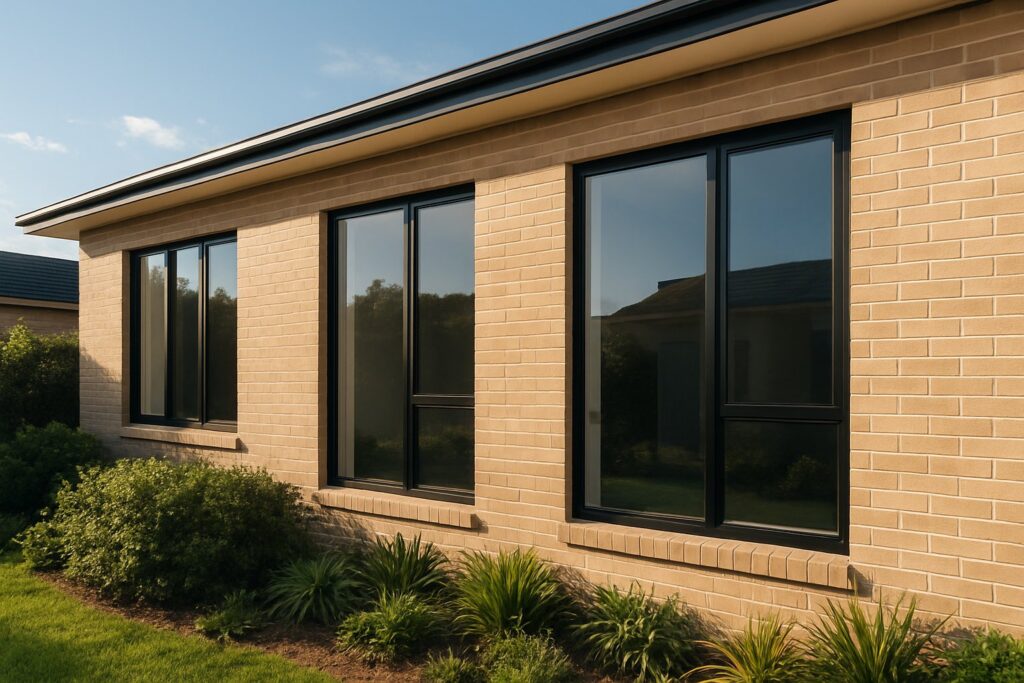
What Aluminium Window Replacement Actually Costs
Straight to it: most Australian homeowners pay between $600 and $1,500 AUD per window for a standard aluminium window replacement, supply and install. That range accounts for the window unit itself, professional labour, removal of the old frame, and basic finishing work. Where you land within it depends on window style, glass type, accessibility, and your location.
Typical Price Range for Aluminium Window Replacement
For a standard-sized aluminium replacement window (supply and install), expect to budget $600 to $1,500 AUD per opening. Basic single-pane replacements sit at the lower end, while double-glazed, thermally broken, or custom-sized units push costs toward the upper range.
These figures reflect current Australian market conditions, where labour rates and material costs run higher than overseas equivalents. US-based estimates often quote USD $400 to $850 per window, but once you factor in Australian wages, shipping, and compliance with the National Construction Code, the real cost to replace aluminium windows here sits noticeably higher.
Why Replacement Costs Vary So Widely
A $600-per-window job and a $1,500-per-window job are fundamentally different projects. The gap comes down to glass specifications (single versus double glazing), frame complexity (a fixed pane versus an operable casement), site access (ground floor versus second storey requiring scaffolding), and whether your existing opening needs structural modification.
It also matters that aluminium replacement windows are not the same product as new construction windows. Replacement units are designed to fit inside your existing frame and wall system without disturbing external cladding or internal plasterwork. That limits disruption but also means precise measurements and skilled fitting are critical. A poorly fitted aluminium replacement window leaks air, compromises thermal performance, and shortens the lifespan of surrounding materials.
The sections ahead break down exactly where your money goes, from material and labour splits to hidden costs that catch homeowners off guard, giving you the detail needed to budget accurately and avoid overpaying.
Full Cost Breakdown by Component
A single quoted figure never tells the full story. That $600 to $1,500 per window encompasses several distinct cost layers, each influenced by different variables. Understanding how the total splits between materials, labour, and finishing work puts you in a stronger position when reviewing quotes and spotting where savings (or unnecessary markups) hide.
| Cost Component | Approximate Share of Total | Typical AUD Range (per window) |
|---|---|---|
| Window unit (supply only) | 40–50% | $250–$700 |
| Labour (installation) | 30–40% | $200–$550 |
| Removal and disposal of old frame | 5–10% | $50–$120 |
| Supplies, hardware, and sealants | 3–5% | $30–$60 |
| Trim, flashing, and finishing | 5–10% | $50–$150 |
Materials and Window Unit Pricing
The window unit itself, the aluminium frame and glazing delivered to site, typically represents the largest single line item. A basic single-glazed aluminium window in a standard size might cost $250 to $350 supply only, while a thermally broken, double-glazed unit in a larger opening can push past $700. The window frame cost rises further if you specify powder-coated finishes, low-E glass coatings, or obscure glass for bathrooms. Homewyse’s unit cost data places material costs at roughly 55 to 65 per cent of the total project spend in the US market, which aligns with Australian supply-only pricing once local manufacturing margins are factored in.
Labour and Installation Fees
Labour is where Australian pricing diverges most from overseas estimates. The window install labour cost here reflects higher trade wages, superannuation, insurance, and compliance overheads. For a straightforward ground-floor aluminium frame window replacement in a brick veneer home, expect to pay $200 to $350 in labour per opening. Complex jobs, think second-storey access, rendered walls requiring cutting and patching, or heritage-listed properties with strict reinstatement requirements, can push labour above $550 per window.
Installation time typically runs two to three hours per window for an experienced glazier, though the first window in a batch often takes longer due to setup and equipment staging. If you are trying to run a window installation labour cost calculator for a whole-house project, multiply the per-window labour estimate by 0.85 to 0.90 for jobs involving five or more openings, since mobilisation and setup costs get amortised across the batch.
Removal, Disposal, and Finishing Costs
Pulling out old aluminium frames generates waste, and disposing of it properly is not free. Most installers include basic removal in their quote, but confirm this explicitly. Where disposal is itemised separately, industry data suggests an additional $55 to $65 per hour for removal labour, translating to roughly $50 to $120 AUD per window once you account for skip bin fees and tip charges.
Finishing work is the component homeowners most often underestimate. The labour cost to install window trim, apply new sealant to external flashings, and touch up internal reveals adds a meaningful amount to your final bill. Internal timber architraves may need replacing if they split during removal, and external aluminium capping or render patching adds both material and time. On a typical job, this finishing layer accounts for 5 to 10 per cent of the total cost of replacing window frames, yet it is the difference between a professional result and one that looks rushed.
Knowing these component-level splits gives you a framework to interrogate any quote you receive. But the total still shifts depending on which window style you select, and that choice brings its own pricing dynamics.
Replacement Costs by Aluminium Window Style
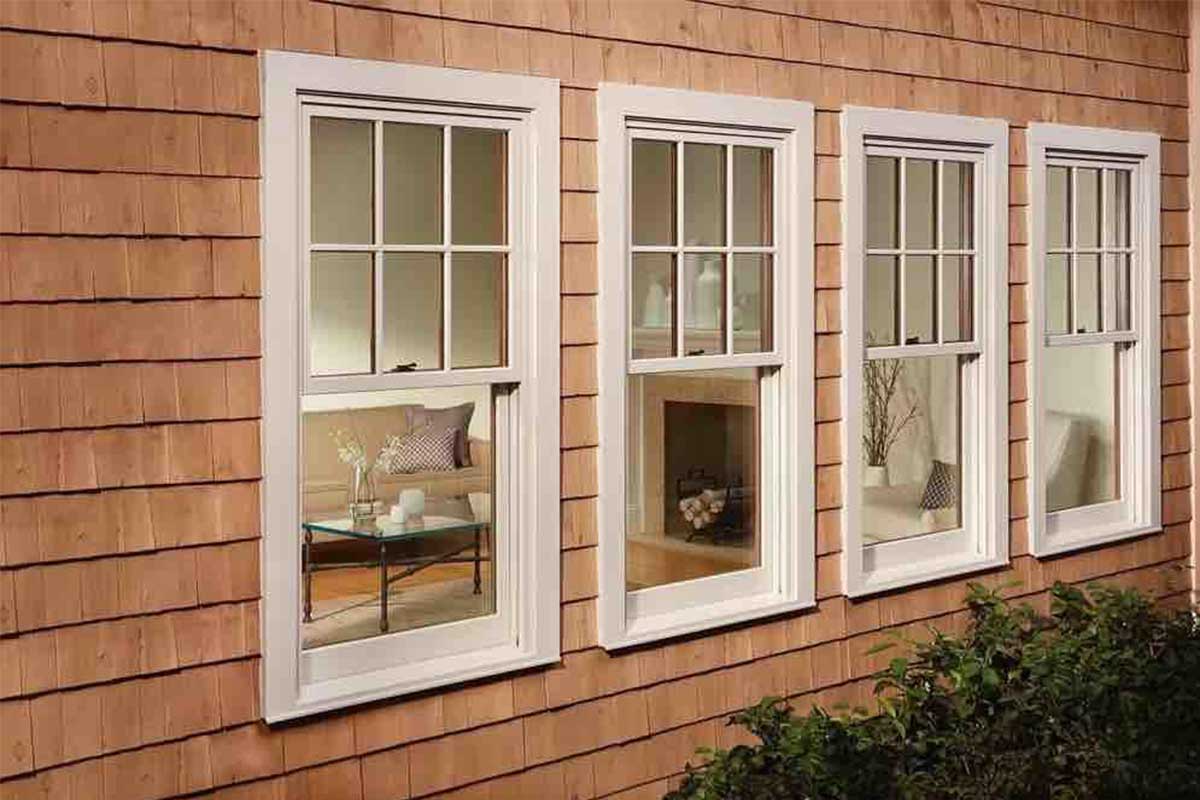
Style selection shapes your replacement budget more than most homeowners realise. A fixed pane with no moving parts costs far less to manufacture and install than a casement with multi-point locking, friction hinges, and compression seals. The table below maps each common aluminium window design to its relative cost tier, helping you anticipate where your project will land before quotes arrive.
| Window Style | Supply-Only Cost (AUD) | Typical Size Range | Complexity Notes |
|---|---|---|---|
| Sliding | $300–$650 | 900 mm – 2,400 mm wide | Track hardware, rollers, weather pile seals |
| Casement | $350–$700 | 600 mm – 1,200 mm wide | Friction hinges, multi-point locks, compression seal |
| Awning | $300–$650 | 600 mm – 1,500 mm wide | Top-hung hinges, winder mechanism, rain deflection |
| Fixed / Picture | $200–$450 | 400 mm – 2,000 mm wide | No hardware; cost driven purely by frame size and glass |
| Double-hung | $400–$750 | 600 mm – 1,200 mm wide | Counterbalance springs, dual sash tracks, more seals |
Sliding and Casement Window Replacement Costs
Sliding windows are the most frequently replaced style in Australian homes, particularly in living areas and along balcony lines where wide openings are standard. Their aluminium window frames run on horizontal tracks with nylon rollers, and replacement costs stay moderate because the mechanism is straightforward. Where costs climb is in wider configurations (three-panel or four-panel sliders) that demand heavier-gauge aluminium window framing and upgraded roller assemblies to handle the weight.
Casement windows sit a tier above. Each sash hinges outward on friction stays and locks at multiple points along the frame, creating a tighter weather seal but requiring more precision during installation. Industry data consistently places casement pricing 10 to 20 per cent above sliding equivalents of the same dimensions, reflecting the additional hardware and fitting time involved. For homes that prioritise ventilation and airtightness, casement aluminium frame windows justify that premium through superior energy performance over their lifespan.
Awning, Fixed, and Specialty Window Pricing
Awning windows are a staple in bathrooms, laundries, and kitchens across Australia. They hinge at the top and open outward, allowing airflow even during light rain. Their replacement cost aligns closely with casement windows in smaller sizes, though they tend to be cheaper in practice because they are typically installed in compact openings that require less material.
Fixed windows carry the lowest unit cost of any style since there is no operable hardware at all. The price is driven entirely by frame dimensions and glass specifications. Double-hung windows, while less common in modern Australian builds, remain present in older weatherboard and federation-style homes. Their dual-sash counterbalance system makes them the most mechanically complex option, pushing both supply and labour costs toward the top of the range.
Across every style, two upgrades consistently add cost: thermal break technology (a polyamide insulator within the aluminium frame that dramatically improves energy ratings) and powder-coated finishes in custom colours. Thermal break profiles can add $80 to $150 per window to the supply cost, while non-standard powder coating adds $40 to $80 depending on the colour and coating system. Modern aluminium windows increasingly come with these features as standard in premium ranges, which narrows the gap between base and upgraded pricing.
If you are weighing up which style suits your replacement project, MEICHEN’s aluminium window range lets you compare sliding, awning, casement, fixed, and thermal break systems side by side, making it easier to match the right product to your openings before requesting a project-specific quote.
Style determines unit cost, but it is only one variable in the equation. The factors that push your per-window price toward the lower or upper boundary often have nothing to do with the window itself.
Factors That Drive Your Final Aluminium Window Price Up or Down
Two homes on the same street can receive quotes $500 apart per window, and neither quote is wrong. The cost of aluminium windows is shaped by project-specific variables that compound on top of the base unit and labour rates discussed earlier. Some of these you control, others are dictated by your property. Knowing which levers exist helps you make deliberate trade-offs rather than accepting whatever lands in your inbox.
Size, Accessibility, and Property Type Impacts
Window dimensions are the most obvious price driver. Standard aluminium window sizes in Australia typically range from 600 mm to 1,800 mm wide and 600 mm to 1,200 mm high. Manufacturers hold stock profiles and pre-cut extrusions for these dimensions, keeping production efficient. The moment your opening falls outside standard sizing, the job enters custom territory, and custom means longer lead times, more material waste, and higher per-unit costs.
Accessibility matters just as much. A ground-floor window in a single-storey brick veneer home can be removed and refitted from the outside with basic equipment. A second-storey window on a double-storey rendered home might require scaffolding, elevated work platform hire, and additional safety measures under SafeWork Australia regulations. Each of these adds cost without changing the window itself.
Property type amplifies these dynamics further. Heritage-listed homes may require council approval and materials that match the building’s original character. High-rise apartments involve body corporate coordination, restricted access hours, and sometimes crane-assisted delivery. Even a straightforward Queenslander with deep verandahs can complicate access enough to add labour time. Industry research consistently confirms that installation conditions, not just product specifications, account for a significant share of total project variation.
Glass Options and Frame Finish Upgrades
Glass is where your aluminium window price can swing most dramatically. The leap from single glazing to double glazing adds $100 to $250 per window in supply cost, but delivers measurable returns through improved energy ratings under the Window Energy Rating Scheme (WERS). Triple glazing, while less common in Australian residential projects, adds another $150 to $300 per unit and is typically reserved for extreme climate zones or noise-sensitive applications near major roads or flight paths.
Beyond the number of panes, coatings and tints layer on additional cost. Low-E (low emissivity) coatings reflect radiant heat and are increasingly specified to meet NatHERS energy targets for new builds and major renovations. Tinted glass reduces solar heat gain in north- and west-facing openings, particularly relevant in Queensland and Western Australia. Laminated or toughened glass, mandatory in certain locations under AS 1288, adds both safety performance and dollars to the bill.
Frame finish is the final variable. Mill-finish aluminium (raw, uncoated) is the cheapest option but is rarely specified for residential work due to its dull appearance and lower corrosion resistance. Anodised finishes offer a harder surface and come in limited colour tones. Powder coating opens the full colour spectrum and provides superior durability in coastal and high-UV environments, but premium colours (particularly darker shades and textured finishes) carry a surcharge of $40 to $100 per window over standard whites and greys.
What Pushes Costs Higher
- Custom or non-standard opening sizes requiring made-to-order frames
- Upper-storey or difficult-access locations needing scaffolding or elevated platforms
- Heritage overlays or body corporate requirements adding approval steps and material constraints
- Double or triple glazing with Low-E coatings, argon gas fills, or laminated panes
- Premium powder-coat colours, especially dark tones that require specialised coating processes
- Thermally broken profiles for improved energy compliance
- Structural modifications to enlarge or reduce existing openings
- Coastal locations where marine-grade finishes and additional corrosion protection are essential
What Can Reduce Your Per-Window Cost
- Replacing multiple windows in a single project, sharing mobilisation, scaffolding, and skip bin costs across more units
- Choosing standard sizes that align with manufacturer stock profiles
- Ground-floor openings with clear external access
- Opting for insert (retrofit) installation where existing frames are structurally sound
- Selecting standard colour finishes (white, silver, or monument) that avoid custom powder-coat surcharges
- Scheduling during quieter months when glaziers have capacity and may offer sharper pricing
- Bundling window replacement with other facade work (cladding, rendering) to share scaffolding and site costs
The Bulk Replacement Advantage
Replacing a single window in isolation is always the most expensive option per unit. Every job carries fixed costs: travel, site setup, skip bin hire, scaffolding assembly, and documentation. When you spread those costs across ten or fifteen openings instead of one, the per-window figure drops noticeably. Project data from large-scale replacements shows that homeowners tackling 15 or more windows at once can achieve 10 to 15 per cent savings compared to phasing the same work over multiple years.
Beyond shared fixed costs, bulk orders often qualify for volume pricing from aluminium window suppliers. Manufacturers run more efficiently when cutting identical extrusion lengths in batches, and installers work faster once they establish a rhythm across repeated openings of similar dimensions. Even if your budget forces a phased approach, grouping windows by floor level or building elevation (so scaffolding only goes up once) captures some of that efficiency without requiring the full outlay upfront.
These variables interact in ways that are hard to predict from a generic price guide alone. And lurking beneath all of them are costs that never appear in the initial estimate, only revealing themselves once the old frames come out and the real condition of your walls becomes visible.
Hidden Costs Most Homeowners Miss
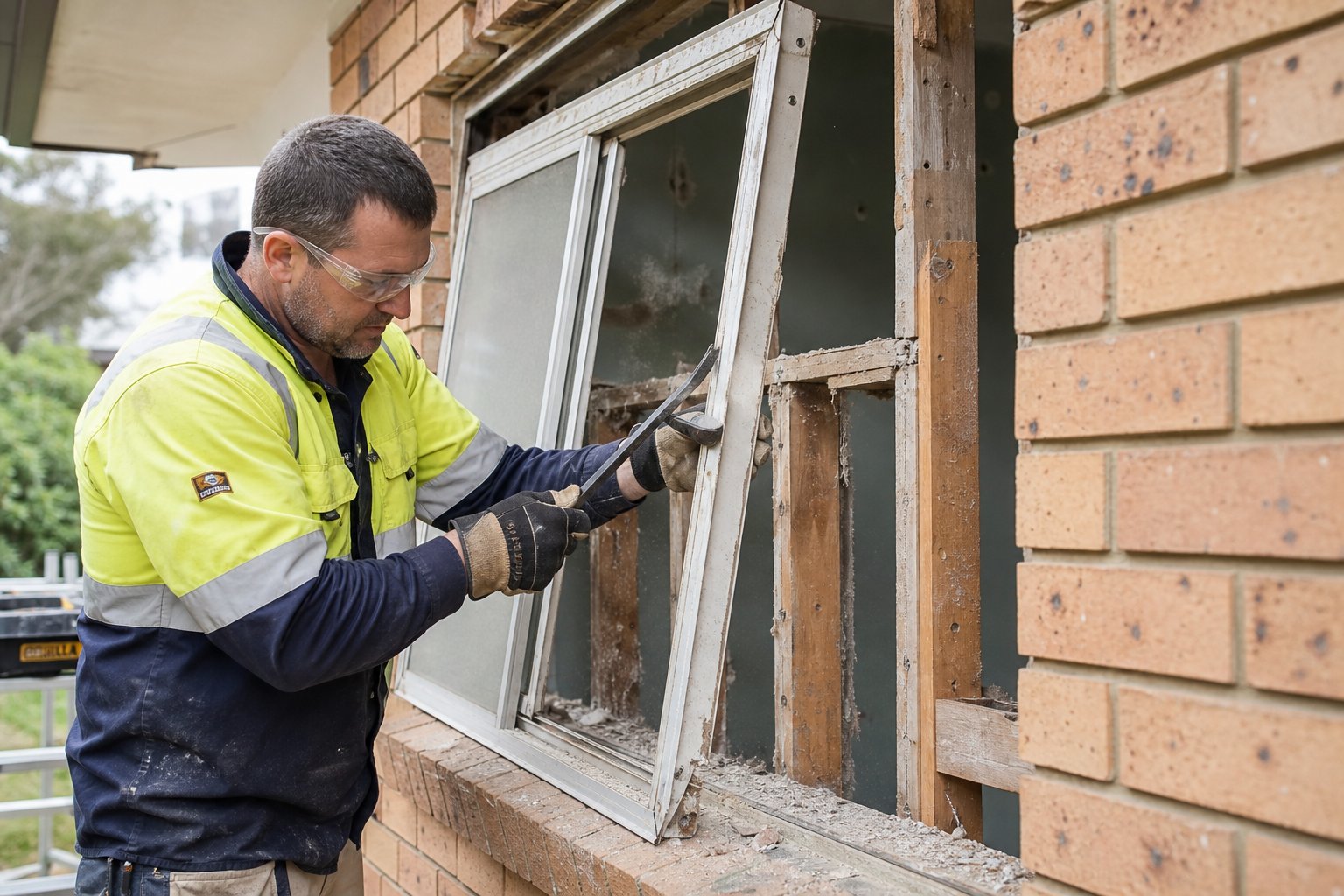
Your quoted price covers the window, the labour, and the basic finishing. What it rarely accounts for is everything that reveals itself once the old frame comes out and the wall cavity is exposed. These hidden costs are not hypothetical edge cases. They show up on a significant proportion of metal window replacement projects, particularly in homes built before 1990.
Structural Surprises and Remediation Work
Old aluminium frames often mask damage that has been accumulating for decades. Water ingress around failing seals rots timber reveals, corrodes steel lintels, and degrades the wall substrate behind the frame. None of this is visible until removal day. Industry experience confirms that structural issues like water damage, mould, and deteriorated framing commonly appear once the replacement process begins, adding hundreds or even thousands to the final bill.
In Australian homes, the risk profile varies by construction type. Brick veneer properties may reveal corroded cavity ties or cracked mortar beds around the opening. Weatherboard homes often hide rotted studs or noggings where moisture has tracked along the original frame. Rendered walls can crack or delaminate during removal, requiring patch-and-paint work that was never part of the original scope. The cost to replace window frame components in these scenarios depends entirely on the extent of damage, but $200 to $800 per affected opening is a realistic range for remediation before the new frame can go in.
Asbestos is the other structural wildcard. Homes built before 1990 in Australia frequently contain asbestos in eave linings, external cladding (fibro sheeting), and window reveals. Disturbing asbestos-containing material during a replacement window frame removal triggers mandatory safe-handling procedures under state WorkCover regulations. Licensed asbestos removal adds $500 to $2,000 per affected area depending on quantity and accessibility. Lead paint, common in homes built before 1970, carries similar remediation obligations. Professional lead paint removal around window frames runs $400 to $1,500 per opening when full containment is required.
Permits, Codes, and Regulatory Add-Ons
Like-for-like replacements (same size, same style, same location) generally do not require council approval in most Australian jurisdictions. But the moment you change the opening size, alter the window type, or affect a structural element, you may need a complying development certificate (CDC) or even a development application (DA). Permit fees for window work typically range from $100 to $500 AUD depending on your council and project scope, with inspections adding further cost and potential delays.
Energy compliance is another emerging cost layer. Major renovations increasingly trigger NCC Section J energy efficiency requirements, meaning your new windows may need to meet minimum WERS ratings or NatHERS benchmarks that your original windows never had to satisfy. Specifying thermally broken frames or upgrading to double glazing purely to meet compliance can add $100 to $250 per window beyond what you would have otherwise spent.
Bedroom windows carry an additional consideration under the NCC: egress requirements. If your replacement window changes the sill height or reduces the clear opening below minimum escape dimensions, you will need to address this, potentially selecting a different window style or size than planned. Strata properties and heritage-listed homes layer on body corporate approvals and heritage officer sign-offs respectively, each introducing their own timelines and fees.
Ranked from most frequently encountered to least, here is what to budget for beyond your quoted price:
- Trim repair, paint matching, and internal reveal patching ($100–$300 per window)
- Weatherproofing and flashing adjustments where existing membranes are damaged ($80–$200 per opening)
- Structural remediation of rotted or corroded framing ($200–$800 per affected window)
- Aluminium window wrap cost for external cladding reinstatement or aluminium capping around new frames ($120–$350 per window)
- Council approval fees and inspection costs ($100–$500 per project)
- NCC energy compliance upgrades requiring better glazing or thermal breaks ($100–$250 per window)
- Asbestos identification and licensed removal ($500–$2,000 per affected area)
- Lead paint remediation in pre-1970 homes ($400–$1,500 per opening)
- Body corporate or heritage approval processes ($200–$1,000 in application and consultant fees)
- Egress modifications to meet NCC escape requirements ($150–$600 per bedroom window)
A sensible contingency is 15 to 20 per cent above your quoted project total. On a ten-window replacement quoted at $12,000, that means holding $1,800 to $2,400 in reserve. Homes built before 1990, properties with visible aluminium window frame repair needs around existing openings, or any project involving upper-storey access should lean toward the higher end of that buffer. The contingency rarely goes entirely unspent, but it transforms a stressful surprise into a planned expense.
Hidden costs are local by nature. They depend on your home’s age, construction type, and geographic conditions. Those same geographic factors also influence the base pricing you will be quoted, sometimes by hundreds of dollars per window depending on where in Australia you live and when you choose to schedule the work.
Regional Pricing and Seasonal Timing Strategies
Where you live in Australia shifts your replacement costs by 20 to 40 per cent before a single product decision is made. Labour rates, freight distances, local compliance requirements, and even corrosion exposure all vary by postcode, and they compound in ways that make a Sydney metro quote look nothing like one from regional Tasmania.
How Location Affects Replacement Pricing
Capital city markets like Sydney, Melbourne, and Brisbane carry the highest trade labour rates in the country, driven by demand density and cost of living. A glazier in inner Melbourne typically charges $80 to $110 per hour, while the same skill set in a regional centre like Ballarat or Bendigo may run $60 to $85. That gap multiplies across a ten-window project into a difference of several hundred dollars in labour alone.
Regional and remote properties face a different cost pressure: freight. Metal frame windows manufactured in capital city factories incur significant transport surcharges when shipped to northern Queensland, the NT, or Western Australia’s Pilbara region. Fewer local suppliers mean less competition, longer lead times, and limited options for sourcing aluminium replacement windows near you without paying a premium for delivery.
Coastal locations add another layer. Salt-air exposure along Australia’s coastline accelerates corrosion on standard aluminium finishes, making marine-grade powder coating or anodising a necessity rather than an upgrade. Properties within 500 metres of the ocean typically require metal replacement windows with enhanced corrosion-resistant finishes, adding $50 to $120 per window in coating costs. In cyclone-rated regions north of the Tropic of Capricorn, compliance with AS 2047 wind-load classifications pushes both frame gauge and glazing specifications upward, further increasing the cost of metal windows in those areas.
Climate zones also dictate thermal performance requirements. Homes in NCC climate zones 1 and 2 (tropical north) face strict solar heat gain limits, while zones 7 and 8 (alpine and cold temperate regions like Canberra and the Victorian highlands) demand higher insulation values. Both scenarios can mandate thermally broken frames or specific glazing configurations that would be optional in milder zones like coastal Sydney or Perth.
Best Time of Year to Schedule Your Project
Demand for window replacement follows predictable seasonal patterns across most of Australia. Scheduling strategically can reduce wait times and, in some cases, shave cost from your project when installers offer sharper rates to fill quieter periods.
| Season | Demand Level | Pricing Impact | Notes |
|---|---|---|---|
| Spring (Sep–Nov) | High | Peak pricing, longer lead times | Renovation season begins; most contractors are booked weeks ahead |
| Summer (Dec–Feb) | High to Moderate | Strong pricing; holiday slowdowns in late Dec/Jan | Weather is favourable but tradies take annual leave; January can offer brief windows of availability |
| Autumn (Mar–May) | Moderate | Competitive pricing; good availability | Post-summer lull creates openings; mild weather suits installation |
| Winter (Jun–Aug) | Low | Best opportunity for negotiation | Reduced demand; some installers offer off-season discounts to maintain workflow |
Autumn and winter represent the strongest value window for scheduling. Industry surveys consistently show that spring and summer are peak demand periods when contractor pricing firms up and lead times stretch. By contrast, glaziers in quieter months often have capacity to start sooner and may absorb costs like call-out fees or scaffolding hire to win work during slower periods.
Weather is rarely a barrier in most Australian climates during autumn or early winter. Unlike northern hemisphere markets where freezing temperatures halt exterior work for months, Australian winters in Sydney, Brisbane, Perth, and Adelaide remain mild enough for installation year-round. Melbourne and Hobart see some wet-weather delays, but experienced installers work around them with minimal project impact.
Combining geographic awareness with seasonal timing gives you a realistic picture of what your project should cost. The next challenge is ensuring the quotes you receive actually reflect fair market value rather than inflated margins or missing scope.
How to Evaluate and Compare Contractor Quotes
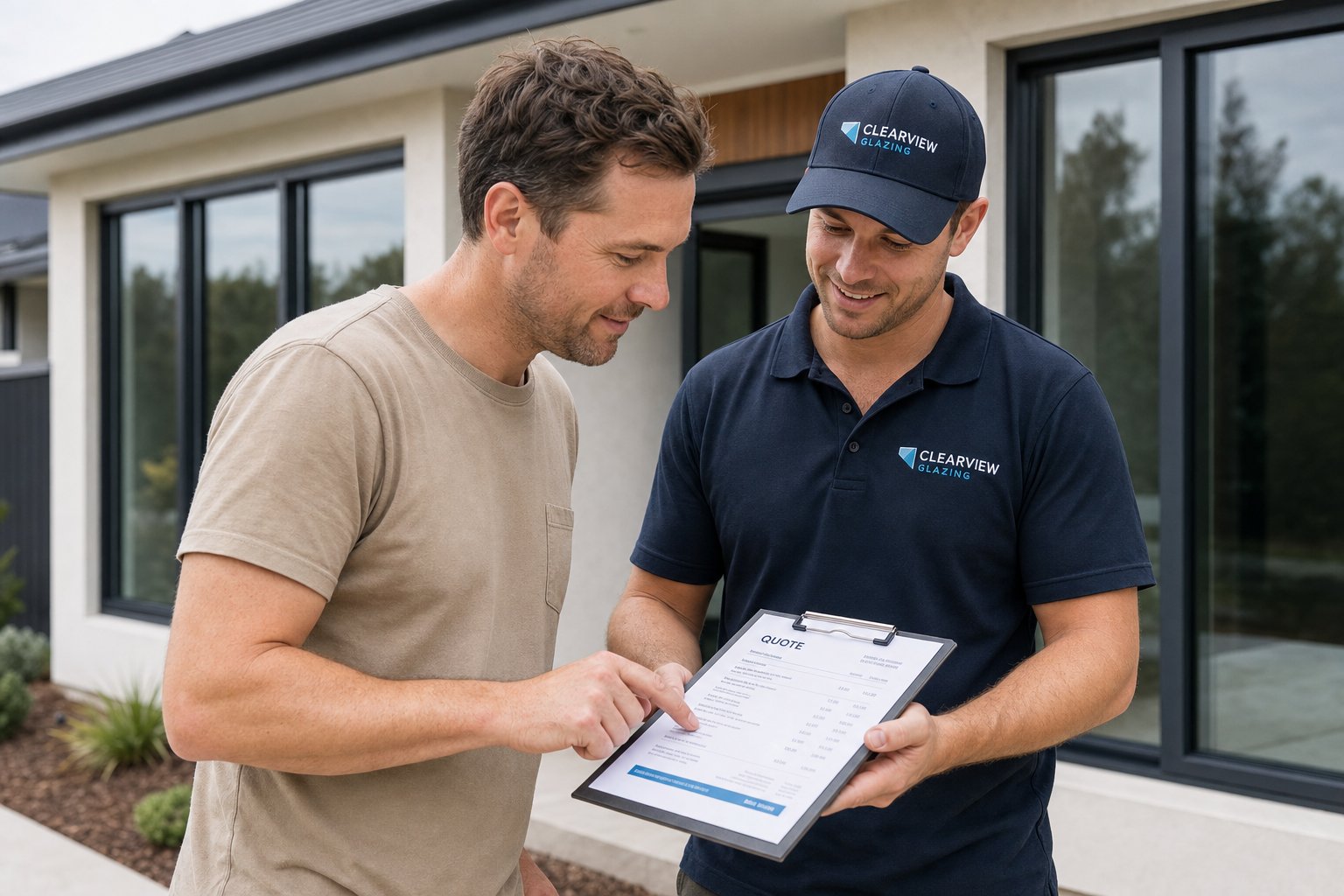
Three quotes sitting on your kitchen bench, each formatted differently, each showing a different total. One looks suspiciously cheap. Another runs a page longer than the rest. The third lands somewhere in between but is vague on details. Knowing what belongs in a legitimate aluminium window installation quote, and what signals trouble, saves you from committing to the wrong installer.
What a Professional Quote Should Include
A proper windows installation cost estimate is not a one-line price scribbled on a business card. It is a detailed document that accounts for every element of the project so both parties understand exactly what is being delivered. Professional estimating frameworks break the job into clear sections: product selections per opening, labour per opening, finishing work, and overheads. If your quote does not separate these elements, you cannot tell whether you are paying a premium for the window unit, the labour, or hidden margin.
At minimum, expect to see the following line items on any credible quote:
- Window unit specification per opening: manufacturer or system name, frame type, glazing configuration, colour, and energy ratings (WERS or U-value)
- Opening schedule listing each window by room, dimensions, and style
- Labour cost per window: removal of existing frame, installation of new unit, sealing, and insulation
- Removal and disposal of old frames and waste
- Trim and finishing: internal architraves, external flashings, caulking, and paint-ready preparation
- Hardware and supplies: shims, foam, sealants, fixings
- Access equipment: scaffolding or elevated work platform hire if upper-storey windows are involved
- Timeline: lead time for manufacturing, proposed installation dates, and estimated project duration
- Payment terms: deposit amount, progress payments, and final payment trigger
- Warranty details: manufacturer warranty on units and workmanship warranty on installation
- Exclusions: what is explicitly not covered (painting, structural repair, council fees)
A Modernize industry survey found that 63 per cent of homeowners collect three to four estimates before committing to a project. That comparison only works if the quotes contain enough detail to measure against each other. Vague descriptions like “aluminium windows x 6” without sizes, specifications, or scope breakdown make fair comparison impossible.
Red Flags and How to Compare Estimates Fairly
Not every low price is a bargain, and not every high price reflects quality. Watch for these warning signs when reviewing quotes from any aluminium window installer:
- Unusually low bid with no explanation of how the price was reached, particularly if it undercuts competitors by 30 per cent or more
- No ABN, licence number, or insurance details listed on the document
- Generic product descriptions without system names, glazing specs, or energy ratings
- Missing scope details: no mention of removal, disposal, sealing method, or finishing standard
- Pressure tactics: “price only valid today” or demands for large upfront deposits before materials are ordered
- No warranty terms or vague commitments like “guaranteed workmanship” without a defined period
- Verbal-only agreements with resistance to putting details in writing
When quotes vary by 20 to 30 per cent, the difference almost always traces back to scope rather than overcharging. Detailed quote analysis shows that pricing gaps typically result from variations in glazing quality, hardware specification, installation scope, and warranty conditions rather than one contractor simply being more expensive than another.
To normalise quotes for a fair comparison, calculate the cost per window at the same specification level. If one quote includes double glazing and another prices single glazing, you are not comparing like for like. Similarly, if one installer includes scaffold hire and skip bin fees while another lists these as exclusions, the headline totals are misleading. Pull each quote apart into its components, materials, labour, finishing, and extras, then compare each category independently.
Online tools like homewyse replacement windows calculators can provide a baseline reference for material costs in your area, but treat them as a sanity check rather than gospel. They reflect US market averages and do not account for Australian labour rates, NCC compliance requirements, or local supply chain realities. Your best benchmark remains the three-quote minimum from licensed local glaziers who have physically inspected your openings and measured on site.
Armed with a clear understanding of what fair pricing looks like and what belongs on a professional quote, the final decision becomes less about finding the cheapest option and more about choosing the right replacement approach for your home’s long-term performance.
Making the Right Replacement Decision for Your Home
Fair pricing only matters if you are replacing with the right material in the first place. Many homeowners assume they must replace aluminium with aluminium, but this is the ideal moment to evaluate whether a different frame material better suits your home’s performance requirements, aesthetic direction, and long-term budget. The aluminium windows cost picture looks different when you factor in decades of ownership rather than just the upfront quote.
Aluminium vs Other Frame Materials for Replacement
Each frame material carries trade-offs that become clearer when viewed across a 20- to 40-year ownership horizon. The table below compares aluminium against the three most common alternatives available in the Australian market.
| Frame Material | Installed Cost per Window (AUD) | Expected Lifespan | Maintenance Needs | Energy Efficiency |
|---|---|---|---|---|
| Aluminium (thermally broken) | $600–$1,500 | 20–30 years | Low: periodic cleaning, lubrication of hardware, finish inspection in coastal areas | Good with thermal break and double glazing; moderate without |
| Vinyl (uPVC) | $700–$1,400 | 20–25 years | Very low: no painting, just soap-and-water cleaning | Good natural insulation; poor in extreme heat (can warp) |
| Timber | $1,200–$2,500+ | 25–60 years (if maintained) | High: regular sanding, sealing, repainting every 3–5 years | Excellent natural insulator |
| Fibreglass (composite) | $1,000–$2,000 | 30–50 years | Low: similar to aluminium | Very good; low thermal expansion |
The cost of aluminium windows vs vinyl often looks comparable at the point of purchase, but the comparison shifts over time. Industry surveys show vinyl windows may last 20 to 25 years before seals degrade and frames lose rigidity, while aluminium frames properly maintained can reach 30 years. Vinyl’s thermal performance degrades in Australia’s intense UV conditions faster than in milder climates, and its limited colour options cannot be repainted later. Aluminium, powder-coated in your chosen colour, maintains its appearance and can be re-coated if needed.
Timber delivers superior insulation and architectural character but demands ongoing maintenance that most homeowners underestimate. Comparative data from large-scale replacement projects confirms that wood windows require treatment every three to five years to prevent rot and warping, particularly in humid coastal or tropical zones. That maintenance commitment erases much of timber’s efficiency advantage over thermally broken aluminium when viewed as a total cost of ownership.
Fibreglass offers strong performance metrics but remains less available in the Australian market than aluminium or vinyl. Fewer local manufacturers means longer lead times, limited style options, and higher pricing for what is still a relatively niche product domestically. For most Australian replacement projects, the practical choice narrows to aluminium (with thermal break for energy compliance) or vinyl, depending on budget, climate zone, and aesthetic preference.
If your existing openings are aluminium, replacing with aluminium again is often the most straightforward path. The frame dimensions, fixing methods, and flashing details align with what is already in place, reducing the risk of compatibility issues and keeping installation time to a minimum. Aluminium retrofit windows designed specifically for replacement into existing openings simplify the process further, avoiding the structural work and cladding disruption that a material change can trigger.
Getting Started With Your Replacement Project
Pulling together everything covered across this guide, here is a practical sequence for moving from research to installation:
- Audit your existing windows: note styles, approximate sizes, and any visible damage to frames or seals
- Decide on material and glazing level based on your climate zone, NCC requirements, and budget
- Request at minimum three quotes from licensed glaziers who measure on site
- Compare quotes at the component level using the framework from the previous section
- Confirm council requirements: check whether your project triggers a CDC or DA
- Allow 15 to 20 per cent contingency above the accepted quote for hidden costs
- Schedule installation during autumn or winter for better availability and pricing
For homeowners ready to explore replacement aluminium windows in detail, MEICHEN’s aluminium window page allows you to compare specific systems, including sliding, awning, casement, fixed, and thermal break configurations, side by side. You can submit drawings or window schedules directly for a project-specific recommendation, which connects naturally to the quote-evaluation process outlined earlier in this article. It is a practical starting point for translating your research into a tailored specification before engaging local installers.
Replacing aluminium windows does not need to be an exercise in overpaying or second-guessing. With a clear understanding of realistic costs, the variables that shift them, and the hidden extras that catch people out, you can approach the process with confidence, get fair value from your chosen installer, and end up with windows that perform well for decades.
Frequently Asked Questions About Aluminium Window Replacement Costs
1. How much does it cost to replace a single aluminium window in Australia?
A single aluminium window replacement in Australia typically costs between $600 and $1,500 AUD fully installed. This includes the window unit (40-50% of total cost), professional labour (30-40%), removal and disposal of the old frame (5-10%), and finishing work like trim and flashing (5-10%). Single-window replacements sit at the higher end per unit because fixed costs like travel, site setup, and skip bin hire cannot be shared across multiple openings. Opting for standard sizes, ground-floor access, and scheduling during autumn or winter can help bring costs toward the lower end of the range.
2. Is it cheaper to replace aluminium windows with vinyl or stick with aluminium?
Upfront costs are comparable: aluminium (thermally broken) runs $600-$1,500 per window installed, while vinyl (uPVC) ranges from $700-$1,400. However, replacing aluminium with aluminium is often more cost-effective overall because existing frame dimensions, fixing methods, and flashing details align with the new unit, reducing installation complexity and avoiding structural modifications. Aluminium also lasts 20-30 years versus vinyl’s 20-25 years, and performs better under Australia’s intense UV conditions where vinyl can warp and degrade faster. Vinyl cannot be repainted if you want to change colours later, whereas aluminium can be re-coated.
3. What hidden costs should I expect when replacing aluminium windows?
The most common hidden costs include trim repair and paint matching ($100-$300 per window), weatherproofing and flashing adjustments ($80-$200 per opening), and structural remediation of rotted or corroded framing discovered during removal ($200-$800 per affected window). Homes built before 1990 may also face asbestos identification and removal costs ($500-$2,000 per area) or lead paint remediation ($400-$1,500 per opening). Council approval fees, NCC energy compliance upgrades, and egress modifications for bedroom windows can add further unexpected expenses. Budgeting a 15-20% contingency above your quoted total is recommended.
4. Does the style of aluminium window affect the replacement cost?
Yes, window style significantly impacts pricing due to differences in hardware complexity, frame engineering, and installation time. Fixed or picture windows are cheapest ($200-$450 supply only) since they have no moving parts. Sliding and awning windows sit mid-range ($300-$650), while casement windows cost 10-20% more than sliding equivalents due to multi-point locking and friction hinges. Double-hung windows are the most expensive ($400-$750 supply only) because of their dual-sash counterbalance mechanism. Thermal break technology adds $80-$150 per window, and custom powder coating adds $40-$80 regardless of style. Comparing systems side by side through suppliers like MEICHEN (meichenwindows.com.au/aluminium-windows/) helps match the right style to your budget before requesting quotes.
5. What is the best time of year to replace aluminium windows in Australia?
Autumn (March-May) and winter (June-August) offer the best value for scheduling aluminium window replacements in Australia. These periods see lower demand from homeowners, meaning glaziers have more availability, shorter lead times, and may offer competitive pricing or absorb costs like call-out fees to maintain workflow. Spring and summer are peak renovation seasons when contractors book weeks ahead and pricing firms up. Unlike colder climates overseas, most Australian regions remain mild enough for year-round installation, so scheduling in quieter months rarely causes weather-related delays outside of Melbourne and Hobart.
More Window & Door Guides