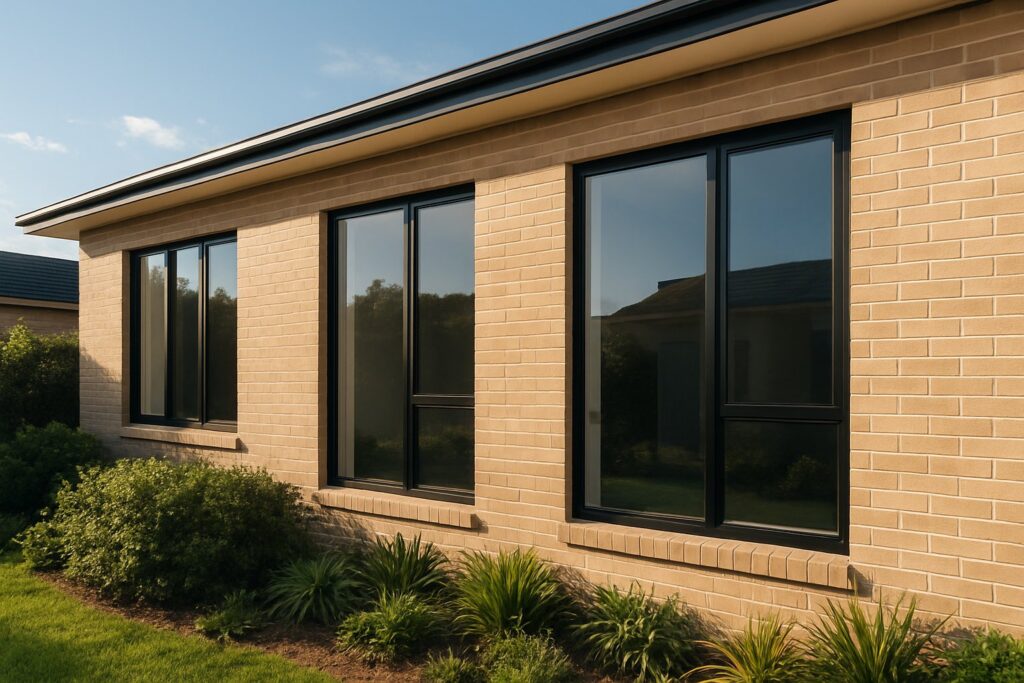
Brown Aluminium Windows and Why Homeowners Choose Them
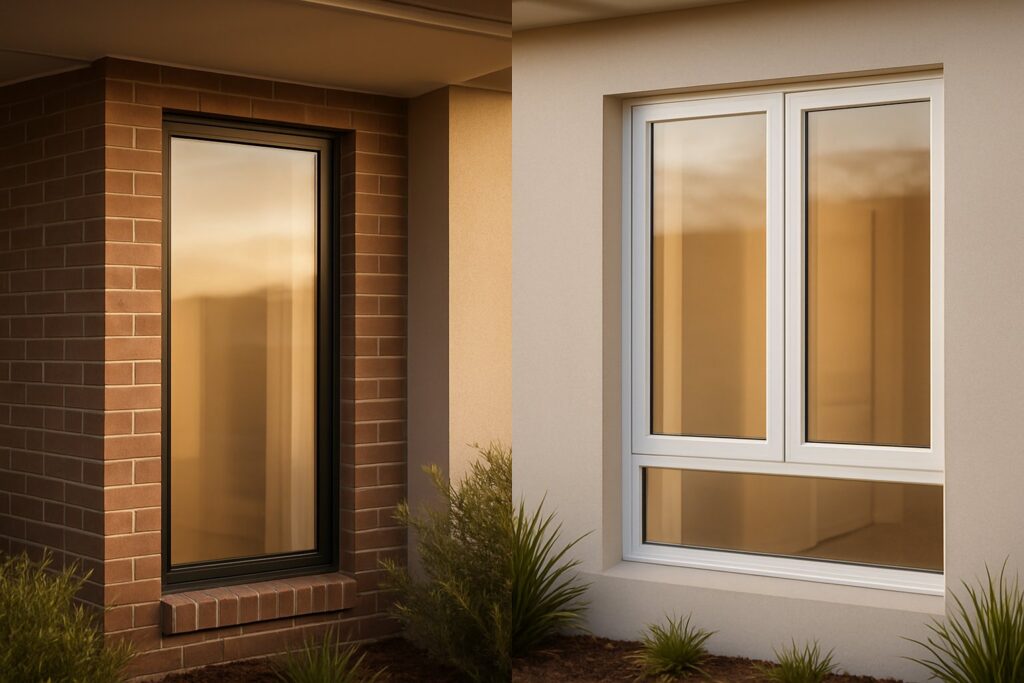
Picture a brick veneer home somewhere in suburban Melbourne or a weatherboard cottage on the NSW South Coast. The owner wants new windows that feel warm and grounded, not clinical. They love the look of timber but have zero interest in sanding and resealing every few years. That tension between character and convenience is exactly where brown aluminium windows sit.
What Are Brown Aluminium Windows
At their simplest, these are aluminium window frames finished in shades of brown rather than the more common white, black, or silver. The colour is applied through powder coating, anodisation, or wood-grain lamination during manufacturing, producing a durable surface that becomes part of the frame itself. Unlike paint on timber, these finishes resist peeling and won’t demand periodic retreatment.
The aluminium structure underneath delivers the strength, corrosion resistance, and slim sightlines the material is known for. The brown finish layered on top adds visual warmth and depth, giving windows in aluminium a softer, more natural presence on the facade.
Why Brown Is a Popular Aluminium Frame Colour
Brown tones appeal because they reference natural materials. Earth, timber, stone — colours Australians see in their landscapes daily. For heritage renovations, period homes, or builds that use exposed brick and sandstone, brown frames integrate far more naturally than stark modern alternatives.
Brown aluminium windows bridge the gap between modern performance and heritage aesthetics, giving homeowners the timber look they want with the longevity aluminium delivers.
Their growing popularity across residential renovations and new builds reflects a broader shift toward earthy, natural tones in Australian architecture. Aluminium windows in brown shades let homeowners honour the character of their property without inheriting the maintenance burden of real timber.
This guide covers everything you need to weigh up: finishing methods, thermal performance, design pairings, realistic costs, and long-term care. The goal is practical, unfiltered information so you can make a confident decision before speaking with any installer.
How Brown Colour Is Applied to Aluminium Window Frames
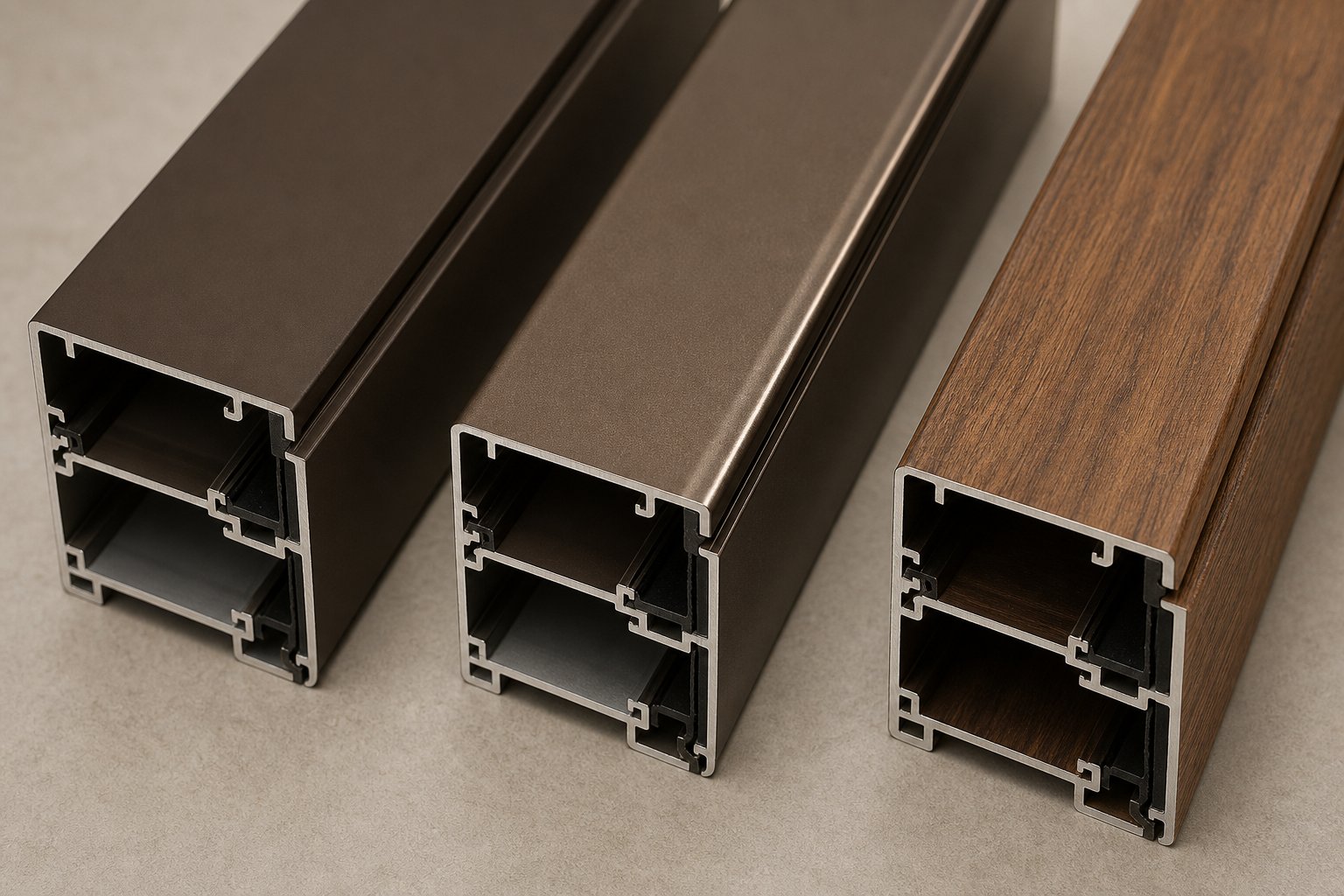
Knowing you want brown aluminium window frames is only half the decision. The method used to apply that colour shapes how the frame looks, how long the finish lasts, and what you’ll pay. Three finishing processes dominate the Australian market, and each delivers a distinctly different result.
Powder Coating for Brown Aluminium Frames
Powder coating is by far the most common way to colour aluminium window frames brown. The process involves electrostatically spraying a dry powder — typically polyester or polyester-polyurethane — onto the aluminium extrusion, then curing it in an oven at around 200°C. The result is a smooth, uniform film bonded to the metal surface.
What makes powder coating so popular is range. From warm tans and mid-tone mochas to deep chocolate browns, virtually any shade on the RAL colour chart can be matched. The texture is consistent, slightly matte to semi-gloss depending on the formulation, and it feels smooth to the touch rather than metallic.
In terms of durability, a quality powder coat on aluminium window framing typically holds up well for 15 to 25 years before any noticeable chalking occurs. UV resistance is strong — though in Australia’s intense sun, particularly in northern Queensland or inland areas, minor colour shift can develop over extended periods. Coastal environments are manageable with proper pretreatment of the aluminium substrate before coating, though salt-laden air will always demand more from any finish. Repairs are relatively straightforward: small chips and scratches can be touched up without refinishing the entire frame.
Anodised Brown Finishes and Their Unique Properties
Anodisation takes a fundamentally different approach. Rather than applying a layer on top of the aluminium, the process submerges the extrusion in an acidic electrolyte bath and passes an electrical current through it. This creates an oxide layer that forms within the metal surface itself, which can then be dyed with colour pigments — including brown tones — before being sealed.
The outcome is a finish with a subtle metallic sheen that powder coating simply cannot replicate. Brown anodised aluminium tends to appear more refined and muted, with warm bronze or dark umber tones that shift gently under changing light. Because the oxide layer is part of the metal rather than sitting on top of it, anodised finishes are exceptionally scratch-resistant — rivalling a 9 on the Mohs hardness scale.
Durability is the standout advantage. Anodised finishes can perform for 20 years or more, even in harsh coastal conditions, with minimal colour change. The tradeoff? Colour options are far more limited than powder coating — restricted to shades that enhance the natural tones of the aluminium itself. And if damage does occur, the finish cannot be easily touched up the way a powder coat can; sections may need full replacement.
Wood-Grain Lamination for Timber-Look Aluminium
For homeowners who want aluminum framed windows that genuinely look like timber, wood-grain lamination is the answer. This process — technically known as sublimation transfer — involves wrapping a pre-coated aluminium profile with a printed film, then applying heat and vacuum pressure to transfer the wood-grain pattern into the base powder coat layer.
The visual effect is striking. Up close, you see grain detail mimicking species like walnut, oak, or Tasmanian blackwood. Some profiles even carry a textured surface that replicates the feel of sanded timber. From street level, it becomes genuinely difficult to distinguish laminated aluminium from real wood joinery.
Laminated finishes generally cost 10 to 30 percent more than standard powder coating due to the additional processing steps. Weather resistance is good — the sublimated image sits beneath a protective clear coat — though the finish is more susceptible to scratching than anodisation. For exterior applications in high-UV or salt-spray environments, it pays to confirm that the lamination system meets recognised quality benchmarks such as Qualicoat or Qualideco certification.
| Method | Appearance | Durability (Years) | UV Resistance | Cost Level | Best Suited For |
|---|---|---|---|---|---|
| Powder Coating | Smooth, uniform matte to semi-gloss | 15–25 | Good to very good | Standard | Most residential and commercial projects needing broad shade choice |
| Anodisation | Metallic sheen, refined matte | 20–30+ | Excellent | Higher | Premium builds, coastal properties, high-traffic areas |
| Wood-Grain Lamination | Realistic timber grain with texture | 15–20 | Good (with clear coat) | 10–30% above powder coating | Heritage restorations, timber-look facades, character homes |
Each method has a clear sweet spot. Powder coating delivers flexibility and value. Anodisation offers premium longevity and coastal resilience. Wood-grain lamination closes the visual gap between aluminium and real timber. Your best choice depends on the property style, the local environment, and whether the facade calls for understated warmth or a convincing timber illusion — a question that leads directly into which architectural contexts favour brown frames in the first place.
Design Contexts and Property Styles for Brown Frames
A brown window frame only looks right if the building around it asks for warmth. Get the pairing wrong and the frames feel out of place — too heavy against a cool grey render, or too earthy next to a crisp white facade. Get it right and the windows disappear into the architecture, anchoring the design without competing for attention.
Architectural Styles That Suit Brown Window Frames
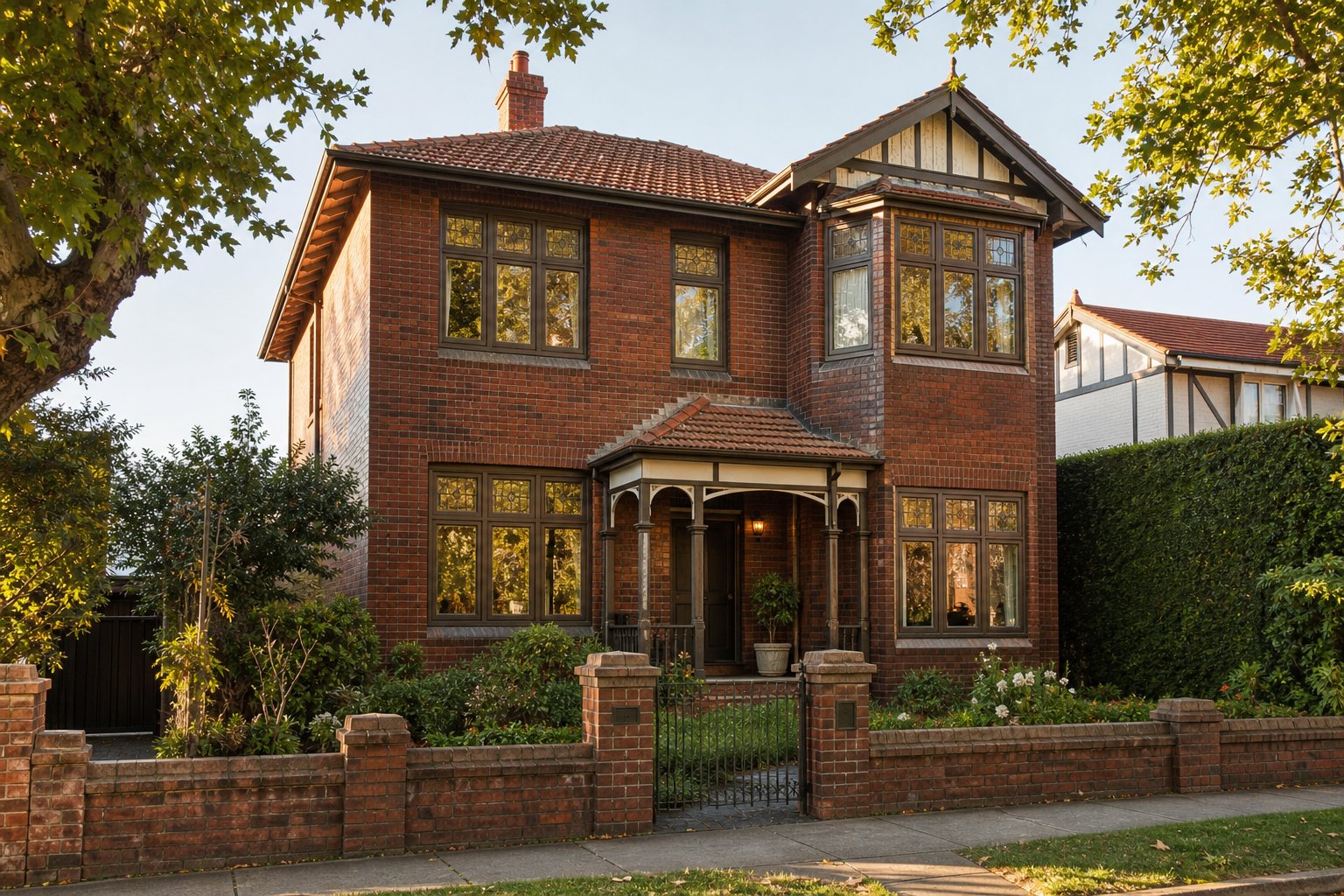
Some property types practically demand a brown frame. Federation homes across Sydney and Melbourne, Queenslanders raised on stumps, Victorian terraces in the inner suburbs — these were all originally built with dark timber joinery. Replacing those windows with stark white or jet black aluminium often jars against the period character. Brown frame windows restore the visual weight the facade was designed around.
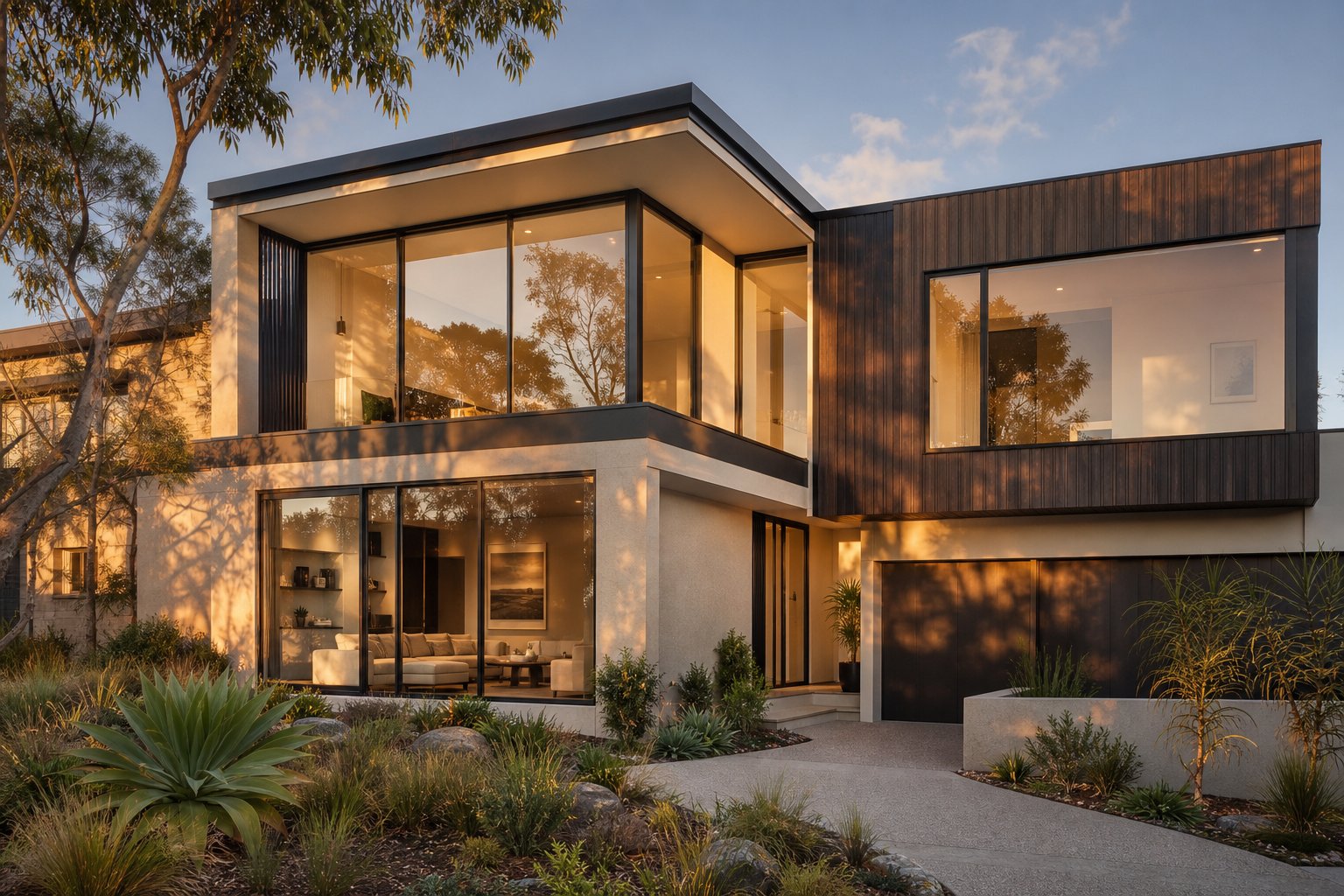
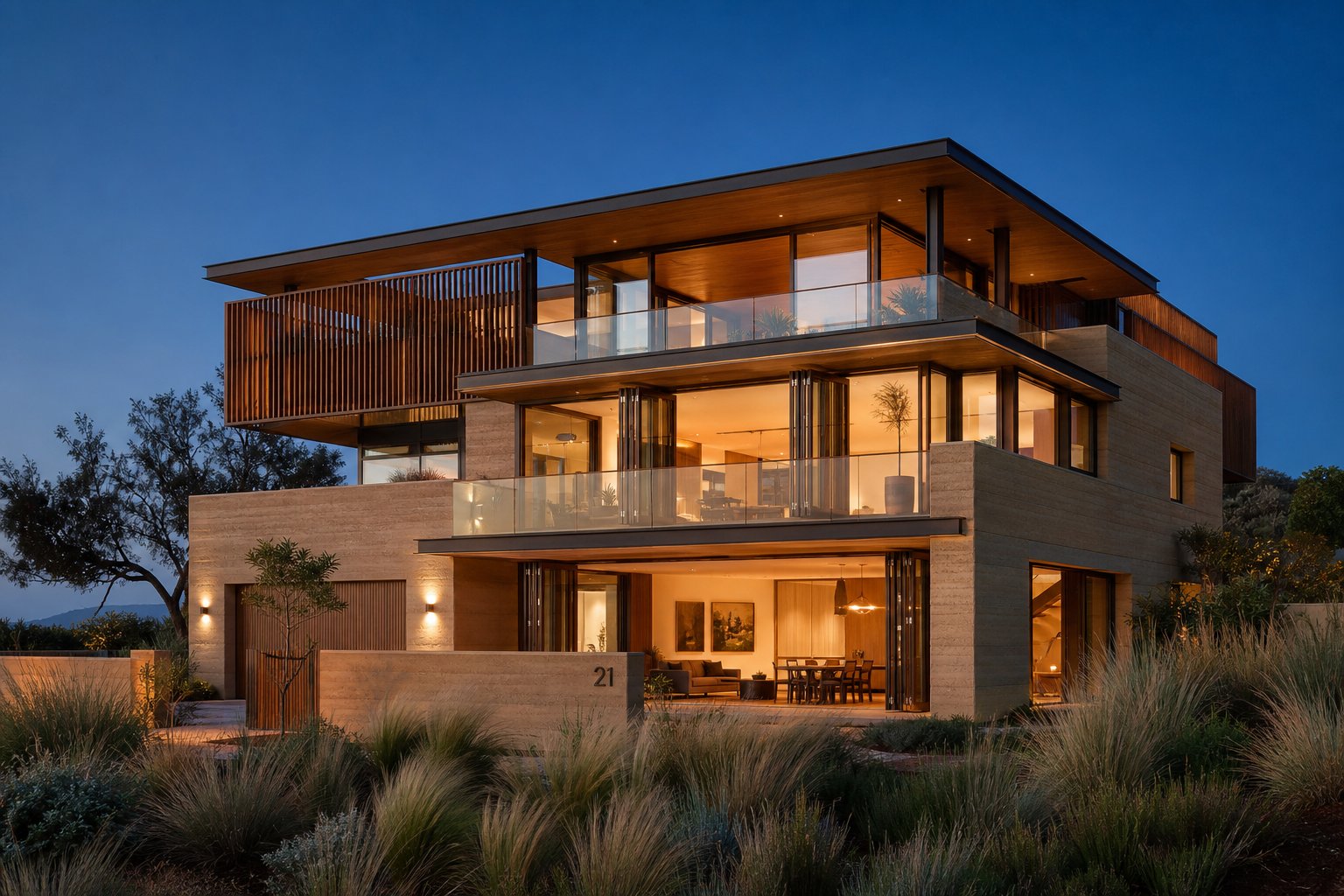
Rural properties benefit too. Homesteads set against dry pastoral landscapes, coastal retreats using natural timber cladding, and earth-rendered mudbrick homes all share an affinity for warm tones. Even contemporary builds are embracing the trend — particularly those using warm natural palettes with rammed earth, Corten steel, or spotted gum screening. A brown window ties these elements together without pulling focus.
- Federation and Edwardian homes: mid to dark brown (chocolate, walnut) to echo original timber joinery
- Brick veneer homes (1960s–1980s): warm bronze or mid-brown to complement orange and red brickwork
- Sandstone cottages: light tan or honey brown to harmonise with stone tones
- Queenslanders and weatherboard cottages: medium brown or wood-grain laminate for a timber-look finish
- Rural homesteads: deep umber or dark brown windows for grounding against open landscapes
- Modern earth-tone builds: bronze aluminum windows or warm mocha for sleek warmth alongside rammed earth, timber, and natural stone
- Rendered homes in cream or sand tones: light to mid-brown for soft contrast without starkness
Coordinating Brown Frames with Exterior Materials
The relationship between frame colour and facade material matters more than most homeowners realise. Standard white windows can look too stark against earthy brick and stone — a point colour consultants emphasise repeatedly when working on brick exteriors. Brown exterior windows solve that tension by sitting within the same warm tonal family as the surrounding materials.
Red and orange brickwork pairs best with bronze or warm mid-brown tones. The brown window picks up the earthiness of the mortar joints and softens the overall contrast, rather than creating a jarring visual break. For darker brown brick — common on 1970s and 1980s Australian homes — a slightly lighter mocha or warm tan creates enough distinction without clashing.
Light-coloured render in cream, warm grey, or sand shades benefits from a brown frame that provides definition. Where a white frame would blend into the wall and feel flat, brown adds depth and frames the glazing with purpose. Dark brown windows work particularly well against pale sandstone or limestone, creating the same kind of natural contrast you see in traditional European architecture.
Timber cladding introduces an interesting challenge. If the cladding is stained or oiled, matching the window frame too closely can make the facade feel monotone. A slightly darker or cooler shade of brown creates separation and visual interest. Wood-grain laminated aluminium works here if the species pattern is chosen deliberately to complement rather than copy the cladding timber.
Heritage and Planning Considerations
In heritage overlay areas — common across inner Melbourne, Sydney’s conservation zones, and older suburbs in Brisbane and Adelaide — council requirements often dictate window colour and profile. Many heritage guidelines specify that replacement windows must reference the original joinery materials in colour and proportion. Since most pre-war Australian homes used dark-stained or painted timber, brown aluminium frames frequently satisfy these requirements where white or black would not.
Properties within Heritage Conservation Areas may need council approval before changing window frames. Some councils require colour samples or RAL codes as part of the development application. The intent is streetscape cohesion — ensuring one property’s renovation doesn’t disrupt the visual rhythm of the block. Brown tones, particularly those in the mid to dark range, tend to pass heritage review more readily because they reference the historic character of surrounding buildings.
Even outside formal heritage overlays, some neighbourhood character provisions in local planning schemes encourage sympathetic material choices. A brown window on a period home signals respect for context. It connects the building to its era without requiring the ongoing maintenance of real timber — a practical compromise that planners and heritage advisors generally welcome.
There’s a colour psychology dimension worth noting, too. Brown evokes warmth, stability, and connection to the natural world. On a home, it communicates groundedness rather than trend-chasing. That psychological association is part of why brown frames feel so right on homes set among gardens, mature trees, or bushland — they echo what the eye already expects to see in that environment.
Of course, visual harmony is only one part of the equation. How a brown frame actually performs in terms of thermal efficiency — particularly whether the darker colour absorbs more heat — is a separate question entirely, and one that deserves a clear answer.
Thermal Performance and Energy Efficiency Explained
Aluminium conducts heat roughly 1,000 times faster than timber. That’s not marketing spin — it’s physics. And for decades, it was the single biggest argument against choosing metal frame windows for Australian homes. Cold frames in winter, scorching frames in summer, condensation dripping onto sills. The reputation stuck.
Here’s what changed: thermal break technology turned aluminium’s one genuine weakness into a solved problem.
Thermal Break Technology in Aluminium Frames
A thermal break is a strip of non-conductive material — typically polyamide (nylon) or polyurethane — inserted between the interior and exterior sections of the aluminium frame. It physically separates the two halves so heat cannot travel directly through the metal from one side to the other.
Think of it as cutting a bridge in half and replacing the missing section with an insulator. The aluminium still provides structural strength on both sides, but the thermal barrier blocks conductive heat transfer between indoors and outdoors. This dramatically changes how the frame performs. Interior surfaces stay closer to room temperature year-round, reducing condensation risk and improving comfort near the glazing.
Modern thermally broken aluminium systems can achieve U-values competitive with timber and uPVC — some premium configurations reaching U-values as low as 0.8 W/m²K when paired with triple glazing and advanced insulating materials. For Australian homes required to meet NCC Section J energy provisions and NatHERS star ratings, thermally broken aluminium comfortably meets compliance thresholds. Always confirm manufacturer-specific performance data and WERS ratings for the exact system you’re specifying.
Condensation is worth addressing directly. It forms when a surface drops below the dew point of the surrounding air. In older, non-thermally-broken aluminum frame windows, the interior face of the frame gets cold enough in winter to trigger condensation. A properly designed thermal break keeps that interior surface warmer, significantly reducing the conditions that allow moisture to form. Adequate ventilation and appropriate glazing selection handle the rest.
Glazing Options Compatible with Aluminium
Aluminium’s structural rigidity means it can support heavier glass units without the bulkier profiles required by softer materials. That translates directly into compatibility with high-performance glazing configurations:
- Double glazing: Two panes separated by an air or argon gas-filled cavity. Standard for most residential aluminum double pane windows in Australia. Delivers meaningful improvement over single pane aluminum windows still found in many older homes.
- Triple glazing: Three panes with two insulating cavities. Reduces heat transfer by an additional 40 to 50 percent compared to double glazing, ideal for climate extremes or high-performance builds.
- Low-E coatings: Microscopically thin metallic layers applied to glass surfaces that reflect radiant heat. In Australian climates, low solar heat gain coefficient (SHGC) coatings reduce summer heat entry while retaining warmth in winter.
- Gas fills: Argon or krypton gas between panes provides superior insulation compared to standard air gaps, due to lower thermal conductivity.
The combination of thermally broken frames and advanced glazing means an aluminum frame window specified today bears almost no thermal resemblance to the single-glazed aluminium windows common in Australian construction through the 1980s and 1990s. The frame handles structural loads; the glazing unit handles the bulk of thermal and acoustic performance.
Does Dark Frame Colour Affect Heat Absorption
This question comes up constantly with brown and black frames, and the concern is understandable. Darker surfaces absorb more solar radiation than lighter ones — that’s basic thermodynamics. A dark brown aluminium frame sitting in direct afternoon sun will be warmer to the touch than a white frame under the same conditions.
But warmer frame surface does not mean a hotter room. Research consistently shows that the temperature difference caused by frame colour rarely translates into a measurable change in indoor conditions. The reasons are straightforward: window frames represent a small proportion of the total building envelope, thermal breaks prevent that surface heat from conducting inward, and the glazing — not the frame — is the dominant pathway for solar heat gain.
In practical terms, a well-specified brown aluminium window with thermal breaks and appropriate Low-E glazing will perform virtually identically to the same window in white or silver. The colour choice is an aesthetic decision, not a thermal one. If solar heat gain is a genuine concern for west-facing openings or rooms with large glazed areas, the solution lies in glass specification (lower SHGC coatings), external shading, or eave design — not frame colour selection.
With the thermal question settled, the next logical comparison is how brown aluminium stacks up against the other materials offering brown frames — uPVC and timber — across the full range of performance criteria that actually affect long-term satisfaction.
Brown Aluminium Compared to uPVC and Timber Alternatives
Aluminium isn’t the only material available in brown. Both uPVC and timber offer brown-toned frames, and each brings a different mix of trade-offs to the table. The honest comparison isn’t about declaring a winner — it’s about understanding what you gain, what you give up, and what matters most for your specific property and budget over the decades ahead.
Brown Aluminium vs Brown uPVC Windows
Brown uPVC frames are produced using either through-coloured extrusion or a foil laminate applied to the surface of a standard white profile. The foiled option is more common and more affordable. From a distance, dark brown vinyl windows look convincing enough — but up close, the differences between the two materials become apparent.
The first distinction is sightlines. Aluminium’s superior strength-to-weight ratio allows profiles as slim as 35 mm, whereas uPVC typically requires 70 mm or more to achieve equivalent structural integrity. That difference — roughly double the frame width — directly affects how much glass is visible in each opening. On a standard casement window, aluminium can deliver around 20 percent more visible glass area than a uPVC equivalent of the same overall size. For homeowners who value natural light and unobstructed views, that’s significant.
Colour stability over time is the second major differentiator. Powder-coated aluminium maintains its brown tone with minimal change for 15 to 25 years, while anodised finishes hold even longer. Brown vinyl windows, particularly those using foil laminates, can show visible fading and lifting at the edges after 10 to 15 years of UV exposure — a real concern in Australia’s intense solar conditions. Through-coloured uPVC fares better than foil but still tends to bleach or chalk more noticeably than a quality aluminium finish.
Lifespan tells the longer story. Quality aluminium frames routinely last 40 to 60 years with minimal intervention beyond occasional cleaning and hardware servicing. uPVC typically reaches end of life at the 20 to 30 year mark, when seals degrade, hardware loosens in softening profiles, and replacement becomes necessary rather than optional. That’s potentially two rounds of uPVC windows in the same timeframe a single set of aluminium frames continues performing.
Where uPVC holds a genuine advantage is upfront cost. Brown uPVC windows are typically 25 to 50 percent cheaper than aluminium equivalents at purchase. For projects where the budget is the binding constraint, that gap is real and worth acknowledging. Thermal performance is also close: quality multi-chambered uPVC achieves U-values of 1.2 to 1.4 W/m²K compared to around 1.4 to 1.6 W/m²K for thermally broken aluminium — a marginal difference in real-world comfort.
Brown Aluminium vs Brown Timber Windows
Timber has always been the benchmark for brown window aesthetics. Nothing replicates the grain depth, the warmth under touch, or the way natural wood ages with character. Aluminum clad wood windows attempt to capture the best of both worlds — timber interiors with a protective aluminium exterior shell — but standard timber frames remain the purest expression of the material.
The case for timber centres on beauty and thermal performance. Hardwood frames achieve U-values between 1.2 and 1.4 W/m²K naturally, without needing thermal breaks. Properly maintained hardwood can last 50 to 60 years. On heritage-listed homes or within strict conservation zones, timber may be the only material that satisfies council requirements.
The case against timber centres on maintenance. Repainting or re-staining is required every five to seven years — sometimes sooner on north-facing elevations under Australia’s UV intensity. Over 40 years, that represents six to ten full maintenance cycles, each costing several hundred dollars per window in professional labour. Skip even one cycle and moisture ingress accelerates decay, particularly at sill joints and bottom rails where water collects.
Aluminium demands virtually none of that ongoing commitment. A wash with mild soapy water twice a year and periodic hardware lubrication is the full extent of required maintenance. For homeowners who want the warmth of a brown frame without inheriting a maintenance schedule, aluminium with a quality brown finish — or wood-grain lamination for an even closer timber aesthetic — represents a practical compromise.
Metal clad windows, where aluminium sheathes a timber core, offer another middle ground. These deliver timber’s natural insulation and interior warmth with aluminium’s weather resistance on the exposed exterior. The trade-off is cost: aluminum clad windows typically sit at or above pure timber pricing, making them a premium choice rather than a budget alternative.
Which Material Offers the Best Long-Term Value
Long-term value isn’t the same as lowest purchase price. It accounts for how long the windows last, how much they cost to maintain over their lifespan, and whether they’ll need full replacement before the building around them does.
The environmental angle favours aluminium decisively. Roughly 75 percent of all aluminium ever produced remains in use today because the material recycles endlessly without losing structural integrity. Recycling aluminium requires only 5 percent of the energy used in primary production. At end of life, aluminium frames have established recycling pathways in Australia. uPVC recycling infrastructure exists but is far less developed, and timber — while a renewable resource with lower embodied energy at production — offers limited recyclability once treated with paints and preservatives.
The embodied energy discussion is worth noting fairly. Primary aluminium production is energy-intensive, and the material carries a higher initial carbon footprint than timber or uPVC. That gap narrows considerably when recycled aluminium content is factored in, and it inverts entirely over a multi-decade lifespan where uPVC may need replacing once or twice while aluminium endures. For aluminum vinyl windows — hybrid systems pairing vinyl sashes with aluminium cladding — the lifecycle calculation falls somewhere between the two materials depending on specification.
| Criteria | Aluminium | uPVC | Timber |
|---|---|---|---|
| Lifespan | 40–60+ years | 20–30 years | 30–60+ years (maintenance dependent) |
| Maintenance Level | Minimal (wash and lubricate) | Minimal (wash and lubricate) | High (refinish every 5–7 years) |
| Sightline Width | 35 mm+ (slimmest) | 70 mm+ (widest) | 55 mm+ |
| Colour Stability | Excellent (15–25+ years) | Moderate (fading in 10–15 years) | Dependent on refinishing schedule |
| Recyclability | Excellent (infinite recycling, 95% recovery) | Limited (infrastructure developing) | Moderate (renewable but limited once treated) |
| Relative Cost | Higher upfront, lowest per-year cost | Lowest upfront, higher per-year when replacement included | Highest total (purchase + maintenance) |
The pattern that emerges is consistent with what industry data supports: aluminium costs more to buy once but less to own over time. uPVC costs less to buy but may need replacing within 25 years, effectively doubling the expenditure over a 50-year horizon. Timber costs the most overall when maintenance labour is honestly accounted for, yet remains irreplaceable where heritage requirements dictate material choice.
For most Australian homeowners choosing brown frames on a home built in the last 40 years — particularly those in coastal zones, high-UV areas, or bushfire-prone regions where durability under stress matters — aluminium delivers the strongest balance of performance, longevity, and aesthetic quality. The upfront premium over uPVC is real, but the 40-year calculation usually favours paying more now for frames that won’t need touching again.
That upfront cost difference raises a practical question: exactly how much more does brown aluminium cost, and what drives the price variation between projects? The answer depends on more factors than most quotes make clear.
Cost Factors for Brown Aluminium Window Projects
Quotes for brown aluminium windows don’t always make it obvious what’s driving the price. Some of the cost sits in the colour itself, some in the window configuration, and a surprising amount in choices that seem minor on paper but add up across a full-house project. Breaking these layers apart helps you compare quotes honestly rather than just chasing the lowest number.
How Brown Finish Affects Window Pricing
Choosing brown over standard white or silver does add cost — but how much depends on whether the shade you want is a stock option or a custom RAL match. Many Australian aluminium window manufacturers include a handful of popular brown tones (typically a mid-brown, dark bronze, and one or two wood-look options) within their standard colour range at no surcharge or a modest uplift of 5 to 10 percent.
Custom RAL colours — the specific chocolate, walnut, or umber you’ve fallen in love with after seeing it on a colour fan — carry a steeper premium. Industry data consistently places custom colour premiums at 20 to 35 percent above base pricing, owing to smaller batch runs and additional colour-matching steps during powder application.
The finish method itself layers on further variation. Powder coating is the baseline cost. Anodised brown finishes sit roughly 15 to 25 percent above that, reflecting the more complex electrochemical process involved. Wood-grain lamination — sublimation transfer over a powder-coated base — adds 30 to 50 percent above standard, making it the most expensive route to a brown frame. For replacement aluminium windows on a period home where the timber look matters, that premium buys a convincing illusion without the ongoing refinishing costs.
Custom sizing and non-standard configurations push pricing further. Arched heads, raked tops, or unusually large openings require bespoke fabrication, and custom aluminium windows of this type attract per-unit surcharges that compound with any colour premium already applied.
Cost Differences by Window Style and Configuration
Frame colour is only one cost variable. The window style you choose has an equal or greater influence on the final invoice. Hardware complexity, seal engineering, and frame material volume all shift with the operating type. As a general rule, simpler mechanisms and fewer moving parts mean lower costs, while multi-panel configurations with heavy-duty tracks and rollers climb steeply.
- Fixed panels — lowest cost; no hardware, no moving parts, minimal frame material
- Aluminium sliding windows — simple track mechanism, cost-effective for large openings
- Aluminium casement windows — crank or friction-stay hardware adds 10 to 20 percent over sliders
- Awning windows — similar to casements, slightly higher due to top-hung hinge engineering
- Bi-fold configurations — most expensive; multi-panel track systems, heavy-duty rollers, and complex weathersealing push costs 40 to 60 percent above fixed equivalents
For an aluminium window replacement project covering a full home, the mix of styles matters. A house with mostly fixed and sliding windows will come in noticeably cheaper than one specifying bi-folds and large awning units — even if the total glass area is similar.
Total Cost of Ownership Over Time
Upfront pricing tells an incomplete story. The more useful calculation is what the windows cost per year of service — factoring in maintenance, potential re-finishing, and eventual replacement.
A brown aluminium window that lasts 50 years with no repainting, no seal failure, and no colour fade costs less per year than a cheaper alternative that needs replacing or refurbishing at the 20-year mark. Total cost of ownership, not purchase price, is the honest measure of value.
Aluminium’s maintenance costs over its lifespan are close to zero beyond routine cleaning and occasional hardware servicing. Compare that to timber frames requiring professional refinishing every five to seven years (typically $200 to $400 per window per cycle in labour and materials) or uPVC needing full replacement at the 25-year mark. Over a 50-year horizon, the aluminium frame that cost 30 to 40 percent more upfront often proves the least expensive option in real terms.
That calculation shifts the conversation from “what can I afford today” to “what will cost me least over the life of this home” — a distinction worth making before any final decision on materials or finishes. And once the investment is made, understanding how to protect that finish ensures the frames actually deliver on their promised longevity.
Maintenance and Longevity of Brown Aluminium Finishes
Brown aluminium frames earn their reputation for low maintenance — but low doesn’t mean none. A small amount of routine care keeps the finish looking sharp and the hardware functioning smoothly across decades of service. Neglect that care, and even the most durable coating will age faster than it should.
Cleaning and Routine Care for Brown Frames
The cleaning process is straightforward. A mild household soap mixed with water and a soft, non-abrasive cloth is all a powder-coated or anodised metal window frame requires. Wipe down the profiles, rinse thoroughly with clean water, and dry with a soft cloth to prevent water spotting. That’s genuinely it.
What matters just as much is what you avoid. Harsh chemical cleaners, abrasive pads, steel wool, and high-pressure water jets all risk damaging the protective finish. Solvents and acidic cleaners can etch powder coating and strip its protective qualities. Even residue from glass-cleaning squeegees can deposit contaminants onto the frame surface — so wiping the profiles after each glass clean is a worthwhile habit. Irrigation sprinkler overspray is another overlooked culprit; mineral-laden water left to dry repeatedly on aluminium creates staining that becomes harder to remove over time.
How Brown Finishes Age Over Decades
Powder-coated and anodised finishes don’t age the same way. Powder coating — the more common choice — performs well for 15 to 25 years before any visual change appears. In high-UV environments (think north-facing elevations in Queensland or Western Australia), minor surface chalking can develop. This appears as a faint whitish residue on the brown surface, caused by UV radiation drawing the binder to the top layer. It’s not a coating failure — it’s an indication that cleaning has been neglected. Regular washing keeps chalking at bay, and specialist restoration cleaners can reverse it if the finish has been left too long.
Anodised brown finishes weather differently. Because the colour sits within the aluminium oxide layer rather than on top of it, UV has less impact on the appearance. These finishes commonly maintain their tone for 20 to 30 years even in demanding coastal or high-sun conditions. The trade-off, as covered earlier, is that anodised finishes can’t be touched up if physically damaged — scratches or chips may require section replacement rather than simple repair.
Warranty coverage reflects these durability differences. Most Australian aluminium window manufacturers offer finish warranties between 7 and 15 years on standard powder coating, and longer on premium formulations or anodised options. Warranties typically cover excessive fading, chalking beyond acceptable limits, and adhesion failure — but not mechanical damage or neglect of recommended cleaning schedules. If you compare old aluminum window frames from 20 or 30 years ago with today’s coatings, the improvement in fade resistance is substantial. Modern polyester-polyurethane powder formulations and higher-grade anodising processes simply hold colour better than what was available a generation ago.
Hardware Servicing and Seal Replacement
The frame finish may last decades without intervention, but metal window frames contain moving components that wear at a different rate. Hinges, friction stays, locking mechanisms, rollers, and rubber gaskets all have their own service life independent of the aluminium profile itself.
Rubber weather seals typically need replacement every 10 to 15 years as they compress, dry out, or crack — particularly on sun-exposed elevations. Rollers in sliding windows can wear or clog with debris, causing stiffness. Locking hardware may loosen over years of use. None of these issues mean the window has failed. They’re serviceable items, equivalent to replacing brake pads on a car — routine maintenance, not a signal that the frame is finished.
Recognising the difference between a serviceable issue and genuine end-of-life matters. Stiff operation, minor seal leakage, or a worn lock? Serviceable. Structural corrosion of the aluminium itself, thermal break degradation causing persistent condensation, or frames warped beyond adjustment? Those suggest the window has reached end of life — though with quality aluminium, that point is typically 40 to 60 years away.
A simple schedule keeps everything on track:
- Annually: Wash frames and glass with mild soapy water. Inspect seals for cracking or compression. Clear drainage slots of debris. Lubricate hinges, locks, and rollers with silicone-based lubricant.
- Every 5 years: Check seal integrity more thoroughly — test for drafts around closed sashes. Inspect powder coating or anodised finish for early chalking or discolouration. Tighten any loose hardware. For old aluminum windows still in service, this is the point to assess whether upgrade or restoration makes sense.
- Every 10 years: Replace rubber gaskets and weather seals if showing signs of hardening or shrinkage. Service or replace rollers on sliding units. Check double-glazed units for signs of seal failure (fogging between panes). Consider professional finish restoration if chalking has developed on neglected elevations.
Follow that rhythm and a brown aluminium frame will hold its colour, its function, and its kerb appeal for the better part of a lifetime. The next consideration — choosing exactly which shade of brown delivers that appeal — is where the decision gets personal rather than technical.
Choosing the Right Brown Shade and Colour Coordination
Brown sounds simple until you open a RAL colour chart and discover there are dozens of shades sitting between pale sand and near-black espresso. The difference between a frame that lifts your facade and one that feels heavy or flat often comes down to a single tone shift — and factors like your brickwork, roof colour, and even which direction your home faces all influence how that shade reads in reality.
Selecting the Right Brown Shade for Your Facade
The spectrum of aluminium window frame colors available in brown is broader than most homeowners expect. Light tans and warm honey tones sit at one end, progressing through bronze, mocha, and walnut in the middle, then deepening into chocolate, umber, and near-black brown tones that border on dark brown aluminium without quite reaching true black aluminum windows territory.
Choosing well means thinking beyond the frame in isolation. View your colour samples against the actual facade materials — not indoors under artificial light. A shade that looks perfect on a swatch can appear entirely different once placed beside red brick in morning sun versus afternoon shade. Homes facing north or west cop direct Australian sunlight for extended periods, which washes out lighter browns and warms darker tones. East-facing facades see cooler morning light that can make warm tones feel muted. South-facing elevations rarely receive direct sun, so mid-range browns maintain their depth more consistently throughout the day.
The coordination principles are straightforward once you see them working together:
- Light tan or honey brown: pairs with cream render, sandstone, and pale limestone facades — keeps the palette soft and open
- Warm bronze: complements orange and red brickwork, terracotta roof tiles, and spotted gum cladding
- Mid-brown (mocha or walnut): versatile enough for most brick veneer homes, particularly those with mixed earth-tone palettes
- Dark brown aluminum (chocolate or umber): grounds darker brick, Colorbond roofing in Woodland Grey or Jasper, and renders in charcoal or slate
- Near-black brown (espresso): suits contemporary builds using dark facades, Corten steel, or deep-toned timber cladding where true black feels too stark
For a cohesive exterior, coordinate the frame colour with fascias, guttering, and your front door. A common approach — endorsed by colour design professionals — is the 60/30/10 rule: brick or cladding as the dominant tone, then trim and window frames as the secondary colour, with your front door or feature elements as the accent. Brown aluminium frames slot naturally into that secondary role, tying the facade together without competing for attention.
Dual-Colour Frames for Interior and Exterior Harmony
One option many homeowners overlook is specifying different colours on the interior and exterior faces of the frame. Most quality aluminium window systems support dual-colour configurations — brown aluminum on the outside to match the facade, with white or a lighter neutral on the inside to complement internal decor, skirting boards, and cabinetry.
This matters more than it might seem. A deep chocolate frame that looks perfect against external brickwork can feel visually heavy inside a light, bright living space. Conversely, white aluminum windows suit most interior schemes but may look out of place on a period facade. Dual-colour frames resolve both problems simultaneously, letting each face of the window respond to its own context.
The cost uplift for dual-colour finishing varies by manufacturer but typically sits around 10 to 20 percent above a single-colour frame. For homes where interior and exterior palettes differ significantly — light contemporary interiors behind a heritage brown exterior, for instance — it’s a worthwhile investment in visual coherence from both sides of the glass.
Exploring Custom Colour Options with Specialist Suppliers
Standard brown ranges cover most needs, but some projects demand precision. Matching a specific heritage paint colour, coordinating with an unusual brick tone, or achieving a particular wood species shade may require a custom RAL code or even a bespoke colour-match service.
Not all suppliers offer the same depth of customisation. When evaluating options, look for manufacturers that provide physical colour samples viewable on-site (not just digital swatches), support dual-colour configurations as standard rather than special order, and can reference projects in similar climate conditions to yours. For Australian homeowners exploring the full range of brown shades and custom colour matching, MEICHEN’s aluminium window range offers project-ready configurations including dual-colour options and custom RAL matching suited to residential and commercial builds across varying Australian climates.
Regardless of supplier, always request a minimum two-sample comparison against your actual facade materials in natural daylight — ideally at different times of day. What reads as a warm walnut at midday can shift cooler by late afternoon, and a shade that looks harmonious in overcast conditions may appear too intense under direct summer sun. That small step of on-site sampling saves costly second-guessing after installation.
With the right shade selected and supplier confirmed, the final step is pulling all the decisions together — shade, style, glazing, hardware — into a coherent specification that ensures nothing falls between the cracks when your project moves to fabrication.
Specifying Brown Aluminium Windows for Your Project
Shade selected. Budget understood. Material comparison done. The remaining challenge is turning those preferences into a specification precise enough that your fabricator delivers exactly what you expect — no assumptions, no gaps, and no awkward surprises on installation day. A structured approach to the decisions that follow saves time, prevents costly variations, and gives you a document you can hold any supplier accountable to.
Step-by-Step Specification Checklist
Each decision builds on the one before it. Skip a step or leave it vague, and it becomes the installer’s call rather than yours. Work through the sequence in order:
- Window style selection — fixed, sliding, casement, awning, or bi-fold. Each opening type determines hardware requirements, weatherseal complexity, and structural loads. Match the style to the room’s ventilation needs, view priorities, and access requirements.
- Finish method — powder coating for broad shade range and value, anodisation for premium longevity, or wood-grain lamination for timber-look realism. Your facade context and budget from earlier chapters should make this decision clear.
- Brown shade and colour code — specify by RAL number, not description. “Dark brown” means different things to different fabricators. A RAL code (e.g., RAL 8014 Sepia Brown, RAL 8011 Nut Brown) removes ambiguity entirely. Confirm dual-colour if interior and exterior differ.
- Glazing specification — double or triple glazed, Low-E coating type, gas fill (argon or krypton), and glass thickness. Reference WERS ratings where available. For bushfire-prone areas, confirm BAL-rated glazing compliance to the relevant BAL level.
- Hardware finish coordination — handles, locks, and hinges in a finish that complements the brown frame. Common pairings include brushed nickel, matte black, or bronze hardware against brown profiles. Mismatched hardware undermines the visual coherence you’ve worked to achieve.
- Security features — multi-point locking, key-lockable handles, restricted openings for upper storeys, and compliance with AS 5039 for fall prevention where required. Specify these upfront rather than adding them as costly afterthoughts.
- Compliance confirmation — ensure the specified system meets AS 2047 (windows and external glazed doors), AS 1288 (glass selection and installation), and relevant NCC Section J energy requirements for your climate zone.
Document every selection in writing before accepting a quote. A detailed specification protects you if the delivered product doesn’t match expectations — and any reputable supplier will welcome the clarity rather than resist it.
What to Look for in a Quality Aluminium Window Supplier
The product is only as reliable as the organisation behind it. Aluminium window manufacturers vary enormously in capability, quality control, and post-sale support. Knowing what separates a dependable aluminum window supplier from a problematic one prevents expensive regret down the track.
Start with certifications. A supplier worth trusting should demonstrate compliance with AS 2047 testing, offer products with documented performance test reports for air permeability, water resistance, and wind load, and ideally hold quality management certification (ISO 9001 or equivalent). Powder-coated finishes should meet Qualicoat or equivalent standards; anodised finishes should reference Qualanod. These aren’t just badges — they represent verified processes that ensure batch-to-batch consistency.
Warranty terms reveal confidence. Look for structural frame warranties of 10 years minimum, finish warranties of 7 to 15 years depending on the coating type, and hardware warranties of at least 5 years. Read the exclusions carefully — some warranties void coverage for coastal installations or fail to cover colour fade beyond a certain Delta E threshold. Ask directly what isn’t covered.
Custom capability matters for brown frame projects specifically. Can the supplier deliver custom RAL shades without excessive lead times? Do they offer dual-colour as a standard option or treat it as a special order with extended timelines? Can they supply colour samples on actual aluminium profiles rather than paper swatches? Aluminium window suppliers with genuine custom capability will answer these questions without hesitation.
Project support is the final differentiator. The best suppliers walk alongside your project from specification through to installation — offering technical drawings, engineering certification where needed, and responsive communication when site conditions demand adjustments. That level of support is particularly important for aluminium windows and doors packages where multiple opening types must coordinate visually and technically across a facade.
Residential aluminum windows and commercial aluminum windows carry different requirements worth understanding. Residential projects prioritise aesthetics, cost efficiency, and comfort. Commercial projects demand heavier profiles, stricter performance testing, higher-cycle hardware, and documented compliance reporting. If your project straddles both — a mixed-use development or a luxury home with commercial-scale glazing — clarify which standard applies to each opening early in the specification process. Using residential-grade systems where commercial performance is needed creates compliance risk; specifying commercial systems throughout a simple residential build inflates cost unnecessarily.
Getting Started with Your Brown Aluminium Window Project
The research phase ends when you have three things: a written specification covering every decision on the checklist above, quotes from at least two aluminium window suppliers who can demonstrate their credentials, and physical colour samples viewed against your actual facade in daylight.
For Australian homeowners and project teams ready to move from research to action, MEICHEN’s aluminium windows page provides a practical starting point — covering window types, custom brown colour options, performance specifications, and project support for both residential and commercial builds. It’s one resource worth reviewing alongside your shortlisted suppliers as you compare capability, lead times, and pricing transparency.
When evaluating quotes, compare like for like. Ensure each supplier is pricing the same window style, glazing specification, colour, and hardware. The cheapest quote often omits items the others include — flashing, reveals, or compliance documentation. Ask what’s excluded before assuming you’ve found a bargain.
The specification is your insurance policy. Every detail you lock in writing — shade, finish method, glazing, hardware, compliance — is one less assumption that can go wrong between quote acceptance and installation day. Invest the time upfront and the project runs to plan rather than to luck.
Brown aluminium windows reward careful specification with decades of quiet, maintenance-free performance. The frame holds its colour through Australian summers. The thermal break keeps interior surfaces comfortable year-round. The hardware operates smoothly with nothing more than annual lubrication. Get the decisions right once, document them precisely, and the windows become the part of your home you never need to think about again — which, for most homeowners, is exactly the point.
Frequently Asked Questions About Brown Aluminium Windows
1. Are brown aluminium windows more expensive than white or black options?
Standard brown shades offered within a manufacturer’s core colour range typically add only 5 to 10 percent above white or silver pricing. Custom RAL shades cost more — roughly 20 to 35 percent above base pricing — due to smaller batch runs and additional colour-matching steps. The finish method also affects cost: anodised brown sits about 15 to 25 percent above standard powder coating, while wood-grain lamination adds 30 to 50 percent. Suppliers like MEICHEN offer a range of standard and custom brown options, so it pays to check which shades fall within their standard palette before assuming a surcharge applies.
2. Do dark brown aluminium window frames make a room hotter?
Darker frame surfaces do absorb slightly more solar radiation than lighter colours, but this rarely translates into a measurable indoor temperature increase. Window frames represent a small fraction of the total building envelope, and thermally broken aluminium profiles prevent surface heat from conducting inward. The glazing specification — particularly the solar heat gain coefficient of Low-E coatings — has a far greater impact on interior heat than frame colour. For west-facing openings where solar gain is a genuine concern, adjusting the glass specification or adding external shading is far more effective than choosing a lighter frame colour.
3. How long does the brown finish on aluminium windows last before fading?
Quality powder-coated brown finishes maintain their colour for 15 to 25 years before any noticeable chalking appears, even under Australian UV conditions. Anodised brown finishes last longer — often 20 to 30 years — because the colour sits within the aluminium oxide layer rather than on top of it. Regular cleaning with mild soapy water significantly extends the appearance of both finish types. Most Australian manufacturers offer finish warranties of 7 to 15 years covering excessive fading, chalking, and adhesion failure, with premium coatings receiving longer coverage.
4. Can I have brown on the outside and white on the inside of my aluminium windows?
Yes, most quality aluminium window systems support dual-colour configurations. This allows a brown exterior to match your facade while a white or light neutral interior complements internal decor, skirting boards, and cabinetry. The cost uplift for dual-colour finishing typically sits around 10 to 20 percent above a single-colour frame. It is a particularly popular option for heritage homes with dark exterior joinery but light, modern interior fit-outs. Specialist suppliers such as MEICHEN offer dual-colour as a standard configuration rather than a special order, which can reduce lead times.
5. What is the difference between powder-coated and wood-grain laminated brown aluminium windows?
Powder coating produces a smooth, uniform brown finish in matte to semi-gloss textures, available in virtually any shade on the RAL chart. Wood-grain lamination (sublimation transfer) goes further by transferring a realistic timber-grain pattern onto a powder-coated base, replicating the look and sometimes the feel of species like walnut or oak. Laminated finishes cost 30 to 50 percent more than standard powder coating and are best suited to heritage restorations or character homes where a convincing timber appearance is the priority. Powder coating offers broader shade choice at a lower price, making it the more versatile option for most residential and commercial projects.
More Window & Door Guides