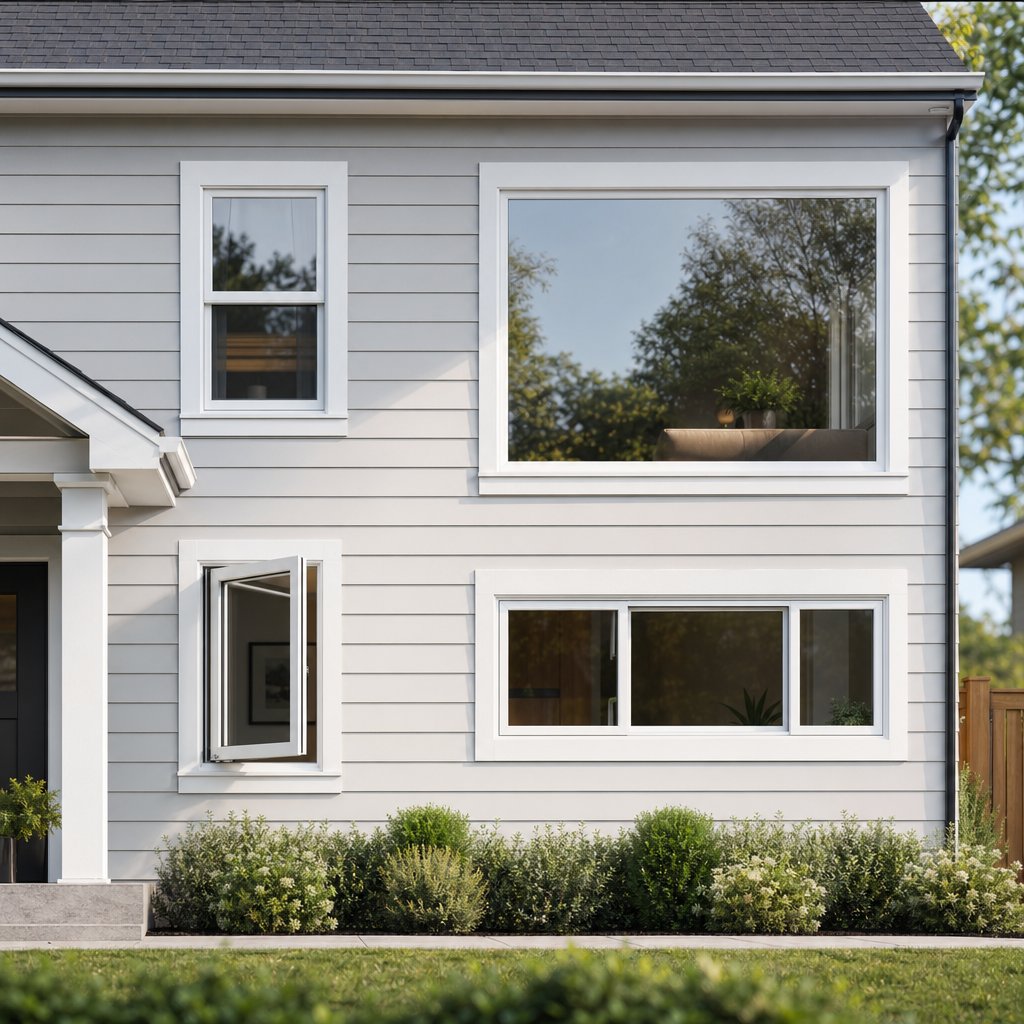
Why Aluminium Window Replacement Costs Vary So Much
Search for the cost of replacing aluminium windows and you will find a frustrating spread of numbers. One source quotes $500 per window; another suggests $2,000 or more. Neither figure is wrong, yet neither tells you much on its own. The reality is that aluminium window replacement is not a single product with a fixed price tag — it is a project shaped by dozens of variables unique to your home, your climate zone, and the condition of what is already in the wall.
This article will not hand you a misleading average. Instead, it provides a structured framework for understanding how much do replacement windows cost in practice, what drives those numbers up or down, and what to look for before you accept a quote.
Why Aluminium Window Replacement Is a Unique Cost Category
Aluminium frames behave differently from timber or vinyl in ways that directly affect replacement scope and pricing. The material’s high thermal conductivity means older frames often lack thermal breaks — the insulating barriers that separate the inner and outer frame sections. Replacing these windows frequently triggers a glazing upgrade from single to double-pane, which changes both the unit cost and the structural load on the opening.
Aluminium frames are also anchored differently. Their rigidity means they rely on specific fixing methods into masonry or timber reveals, and removing them can expose deterioration hidden behind the frame for decades. Homeowners also face a choice that does not exist with other materials: stay with aluminium and benefit from modern thermally broken profiles, or convert to an entirely different frame material — each path carrying its own cost of window replacement implications.
Key Variables That Create Price Ranges
Before requesting quotes, it helps to understand the primary factors that determine how much does a window cost for your specific situation. Each variable below will be explored in depth throughout this guide:
- Window size and whether openings are standard or custom-fabricated dimensions
- Window style — fixed, sliding, casement, awning, or double-hung
- Glazing specification — single, double, or triple glazing with Low-E coatings
- Thermal break quality and frame profile complexity
- Number of windows being replaced and bulk pricing thresholds
- Access difficulty — ground floor versus upper-storey windows requiring scaffolding
- Condition of existing openings and whether structural remediation is needed
- Powder-coat colour selection and hardware upgrades
These variables interact with each other. A single casement window on the ground floor sits at one end of the replacement windows cost spectrum; a full set of custom-sized, upper-storey double-hung units with triple glazing sits at the other. Understanding where your project falls across each factor is the first step toward a realistic budget — and toward recognising whether the quotes you receive reflect genuine scope differences or simply different margins.
Full Cost Breakdown for Aluminium Window Replacement
Every replacement project is really a collection of individual cost lines stacked together. Knowing what those lines are — and how much weight each one carries — puts you in a far stronger position when reviewing a windows installation cost estimate. Here is how the total cost of windows and installation typically breaks down for aluminium-specific projects in Australia.
Materials and Frame Costs
The aluminium frame and glazing unit form the base material expense, and several specification choices push that figure higher. Profile complexity is the first lever: a slim, minimalist frame costs less to extrude than a heavy-duty commercial section designed for large openings. Powder-coat colour adds next — standard whites and blacks are cheaper than custom colours that require individual batch runs.
Thermal break technology represents a meaningful cost multiplier. Thermally broken aluminium frames use an insulating polyamide or polyurethane barrier between the inner and outer frame sections, and this engineering adds roughly 25 to 40 percent over non-thermally-broken equivalents. Glass specification layers on further: moving from single glazing to double-glazed Low-E units, or triple glazing with argon gas fill, can double the glazing component alone.
In the Australian market, aluminium frames generally sit at a mid-to-premium price point — more expensive than vinyl but below quality timber joinery. Expect the materials component to account for roughly 40 to 55 percent of a standard project’s total cost.
Labour and Installation Expenses
The window installation cost is not a single task — it is a sequence of distinct labour stages, each carrying its own time and skill requirement. A professional aluminium windows installation typically progresses through:
- Removal and disposal of existing window units
- Preparation of the structural opening — cleaning reveals, checking lintels, repairing any deterioration
- Fitting and securing new aluminium frames with appropriate fixings
- Sealing and weatherproofing around the frame perimeter
- Internal finishing — architraves, trims, and plaster repairs
- External finishing — flashing, capping, or render patching
Labour often represents 40 to 60 percent of the total window replacement and installation cost, depending on complexity. In Australia, installation labour rates tend to sit higher than global averages due to trade wage structures and compliance requirements. Multi-storey access, non-standard openings, or older homes with concealed damage all push labour hours upward. While a window installation labor cost calculator can offer a rough starting figure, real-world labour quotes vary significantly based on site-specific conditions that no calculator can fully anticipate.
Ancillary Costs
Beyond the frame and the installer, a cluster of smaller expenses rounds out the budget. These individually seem minor but collectively add 5 to 15 percent to the project total. They include disposal fees for old frames (particularly relevant if removing older aluminium containing lead paint), delivery charges for new units, consumables like sealants, mechanical fixings, flashing tape, and any temporary weatherproofing needed if openings remain exposed overnight.
The table below presents how these components typically proportion across a standard aluminium replacement project. Use it as a framework when evaluating whether a quote accounts for the full scope, or whether key line items are missing — a gap that often signals unexpected extras later.
| Cost Component | Typical Proportion of Total | What Influences This Line Item |
|---|---|---|
| Aluminium frames and glazing units | 30–45% | Profile system, thermal break, glass spec, powder-coat colour, standard vs custom sizing |
| Installation labour | 35–50% | Number of units, access difficulty, opening condition, storey height, compliance requirements |
| Removal of existing windows | 5–10% | Frame material, how frames are anchored, presence of hazardous materials |
| Finishing and making good | 5–10% | Internal plaster repairs, external render or capping, architrave replacement |
| Ancillary costs (disposal, delivery, consumables) | 3–8% | Site access for delivery, tip fees, number of sealant and flashing products required |
The cost to install a window is never just the window itself. A quote that lists only the unit price without clearly allocating labour, finishing, and ancillary line items deserves closer questioning — because those costs do not disappear simply because they are not written down. They surface later, usually as variations.
With the overall cost structure mapped, the next question becomes how dramatically these proportions shift depending on what type and size of window you are actually replacing.
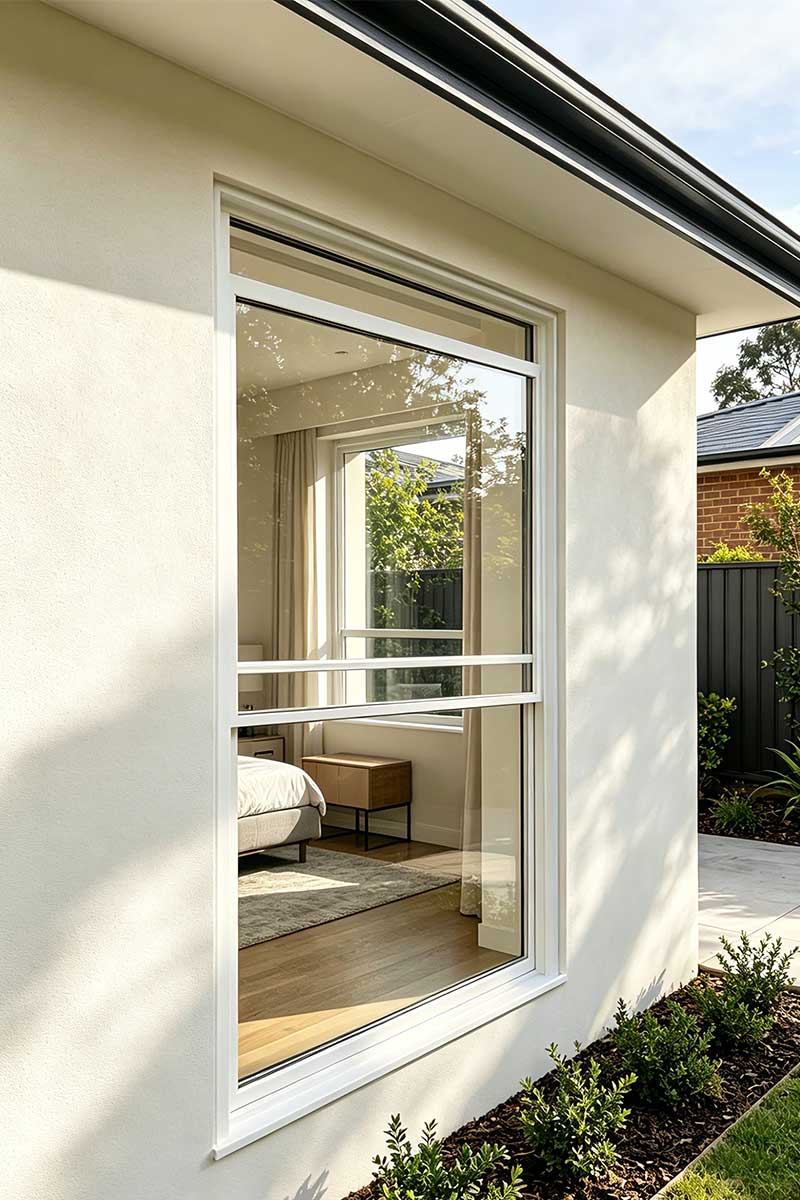
How Window Type and Size Shape Your Final Price
A sliding window and a double-hung window might occupy the same opening, yet their replacement costs can differ by 30 percent or more. The style you choose, the dimensions of the opening, and whether you upgrade the glazing all compound on top of the base cost structure covered above. For aluminium specifically, these differences are more pronounced than with vinyl because aluminium hardware and balancing systems are engineered to tighter tolerances.
Replacement Costs by Window Style
Every operable window costs more than a fixed panel of the same size. Moving parts demand hardware — hinges, locks, friction stays, or crank mechanisms — and the frame profiles need to accommodate that hardware without compromising weather seals. In aluminium, where frames are precision-extruded, each style carries a distinct cost profile.
The double hung window cost sits higher than most homeowners expect. Unlike timber double-hungs that rely on simple cord-and-weight balances, aluminium double-hung frames use spring-loaded or spiral balancing systems engineered for the frame’s specific weight. This added mechanical complexity drives the double hung window installation cost above that of a basic slider by roughly 15 to 25 percent. Casement windows push further still — their multi-point locking, heavy-duty friction stays, and tighter weathersealing requirements add both material and assembly time at the factory.
Here is how common aluminium window styles generally rank from lowest to highest typical window cost (supply and install for standard sizes in Australia):
- Fixed panel — simplest construction, no hardware, lowest window prices (approximately $700–$1,300 AUD installed)
- Single sliding — minimal hardware, straightforward track system ($700–$1,300 AUD)
- Awning — moderate hardware complexity, good weathersealing ($850–$1,700 AUD)
- Double-hung — spring-balance mechanisms, dual operable sashes ($750–$1,800 AUD)
- Casement — crank or friction-stay operation, multi-point locks ($1,000–$2,000 AUD)
- Custom architectural shapes — irregular geometry, bespoke fabrication ($1,800–$6,500+ AUD)
These ranges reflect 2025 industry pricing data adjusted for Australian labour rates and compliance requirements. Your actual double hung window replacement cost or casement replacement figure will land within these bands depending on size, glazing, and site complexity.
Standard Sizes vs Custom Openings
Manufacturers produce aluminium windows in standard aluminium window sizes — a set range of widths and heights that align with common Australian residential openings. Ordering within these dimensions means shorter lead times, lower fabrication costs, and no engineering surprises. Step outside them, and per-unit pricing jumps significantly because the factory must set up a custom extrusion or cutting run.
Older Australian homes fitted with original aluminium windows from the 1970s through 1990s frequently present non-standard openings. Building practices were less uniform, and windows were often fabricated to measure by local shops that no longer exist. When replacing these windows today, homeowners face a choice: order custom-fabricated units to match the existing opening, or modify the structural reveal to accept a modern standard size. Both paths add cost — custom fabrication through higher unit prices, and structural modification through additional trades (bricklaying, plastering, or re-rendering).
Room function also shapes the cost profile. Bedroom windows must comply with emergency egress requirements under the National Construction Code, which dictates minimum clear opening dimensions. Bathroom windows tend to be smaller but often require obscure glass and specific ventilation performance. Large living area panels — particularly stacking sliders or floor-to-ceiling fixed lights — carry the highest per-opening cost simply due to glass area and the structural framing needed to support wider spans.
Glazing Upgrades as a Cost Multiplier
Perhaps the single largest cost variable hiding within any aluminium replacement project is the glazing specification. A like-for-like single-glazed replacement keeps costs at the lower end of each style’s range. But most homeowners replacing old aluminium windows today choose to upgrade — and rightly so, given that modern energy performance standards effectively mandate double glazing for new installations in most Australian climate zones.
The double pane window replacement cost runs roughly 30 to 60 percent higher than an equivalent single-glazed unit. That premium covers the second glass pane, the sealed argon-gas-filled cavity, and the heavier frame profile needed to carry the additional weight. Adding a Low-E coating on top of standard double glazing typically does not add a significant standalone surcharge — most quality Australian suppliers now include it as standard. However, stepping up to triple glazing introduces a further 20 to 35 percent cost increase over double-glazed units, plus the requirement for even deeper frame sections.
For most Australian homes, double glazing with Low-E coating and argon gas fill represents the efficiency sweet spot — delivering meaningful thermal and acoustic improvements without the diminishing returns of triple glazing in our predominantly temperate climate. The exception is homes in alpine regions or those with extreme noise exposure, where triple glazing’s additional insulation layer justifies its premium.
Glazing choice does not just affect the window price in isolation. It cascades into labour costs (heavier units require more handling time), structural considerations (existing lintels must support greater weight), and even frame selection (not all aluminium profile systems accommodate triple-glazed units). Factor these downstream effects into your budget rather than treating the glazing upgrade as a simple line-item addition.
Aluminium vs Alternative Materials
Glazing and frame style shape your budget within a single material category — but a more fundamental question often arises during replacement planning: should you stay with aluminium at all? Homeowners replacing older aluminium windows face a fork in the road that rarely gets honest cost analysis. One path keeps the same frame material with modern upgrades; the other converts to vinyl, fibreglass, or composite. Each carries different upfront costs, different long-term economics, and different implications for the opening itself.
Aluminium vs Vinyl Replacement Costs
Vinyl sits at the lowest price point of any mainstream frame material. In Australia, replacement vinyl windows prices typically start around $400 to $700 AUD per window (supply and install) for standard sizes, while equivalent thermally broken aluminium units range from approximately $700 to $1,800 AUD depending on style and glazing. That gap makes the vinyl window replacement cost look attractive on a spreadsheet — particularly for whole-house projects where the per-unit savings multiply across ten or fifteen openings.
The cost of aluminium windows vs vinyl narrows considerably, though, once you factor in what each material delivers over its service life. Aluminium offers a superior strength-to-weight ratio, meaning frames can be significantly slimmer while supporting the same glass area. This translates to more visible glass and less visual bulk — a difference that matters in architecturally conscious renovations. Aluminium also outlasts vinyl in most Australian conditions, with a typical lifespan of 20 to 30 years compared to vinyl’s 20 to 25 years, and without the warping, discolouration, or brittleness that Australian UV exposure inflicts on PVC over time.
The vinyl windows cost advantage has also shrunk as thermally broken aluminium has become widely available from Australian fabricators. A decade ago, choosing aluminium meant accepting poor thermal performance; today, quality thermally broken profiles compete directly with vinyl on energy ratings while offering durability that vinyl cannot match in harsh climates.
Aluminium vs Fibreglass and Composite Options
At the premium end, fibreglass and composite frames command higher aluminium windows prices — typically $1,500 to $3,500 AUD per window installed for fibreglass, and $2,000 to $4,000+ AUD for quality composite units. These materials offer excellent thermal performance and long service lives (30 to 50 years for fibreglass), but their higher upfront cost requires a specific justification to make financial sense.
Fibreglass performs well in extreme temperature swings because its expansion rate closely matches glass, reducing seal failures over time. Composite blends wood fibres with polymer for a timber-like aesthetic without the maintenance burden. Both are valid choices — but neither is common in the Australian residential market at the volume aluminium enjoys. This limited local supply can extend lead times and restrict your installer options.
There is also a hidden cost in any material conversion: changing frame material often means the new profiles have different depth dimensions than the existing aluminium frames. The structural reveal — the opening in the wall where the window sits — may need packing, trimming, or re-rendering to accommodate the new frame geometry. This additional opening preparation adds labour cost beyond the window unit itself, sometimes $100 to $300 per opening in extra trades time. Staying with aluminium avoids this entirely because modern aluminium profiles are designed with backward compatibility in mind.
When Staying With Aluminium Makes Financial Sense
The cost of aluminium windows is not always the cheapest option per unit, but it is frequently the most cost-effective option once you account for total project economics and long-term ownership. Several scenarios tip the balance firmly in aluminium’s favour:
Coastal environments are the clearest case. Salt-air exposure corrodes unprotected metals and degrades vinyl over time, but powder-coated aluminium with marine-grade finishes resists coastal conditions far better than alternatives. The cost of metal windows in these locations is essentially an insurance policy against premature failure.
Modern architectural styles present another strong case. Where slim sightlines, large glass areas, and clean frame profiles define the home’s character, aluminium remains unmatched. Vinyl cannot achieve the same narrow frame widths because PVC lacks the structural rigidity to span openings without bulkier sections.
Practical compatibility matters too. If your existing openings are already sized and prepared for aluminium profiles, replacing like-for-like eliminates the reveal modification costs, the additional plastering, and the finishing work that material conversion demands. For a ten-window project, those savings compound quickly.
| Criteria | Aluminium (Thermally Broken) | Vinyl (uPVC) | Fibreglass | Composite |
|---|---|---|---|---|
| Typical cost per window (AUD, supply and install) | $700–$1,800 | $400–$700 | $1,500–$3,500 | $2,000–$4,000+ |
| Expected lifespan | 20–30 years | 20–25 years | 30–50 years | 30–40 years |
| Maintenance requirement | Low — periodic cleaning, lubrication | Low — cleaning only | Very low — cleaning only | Low to moderate |
| Frame slimness | Excellent — narrowest profiles available | Moderate — bulkier sections required | Good | Moderate |
| Coastal suitability | High — with marine-grade powder coat | Moderate — UV degradation over time | High | Moderate to high |
| Thermal performance | Good (with thermal break) | Good | Excellent | Excellent |
| Opening modification needed when replacing aluminium? | None — direct fit | Often required | Sometimes required | Sometimes required |
The aluminium window price you pay upfront only tells part of the story. When you weigh lifespan, maintenance costs, architectural flexibility, and the avoided expense of modifying every opening in your home, aluminium-to-aluminium replacement often emerges as the most rational path — particularly in the Australian coastal and suburban contexts where the material already dominates.
Material choice locks in your frame cost, but the total you actually pay depends heavily on what else your project demands beyond the window unit and standard installation. Some of those additional expenses are predictable; others surface only after work begins.
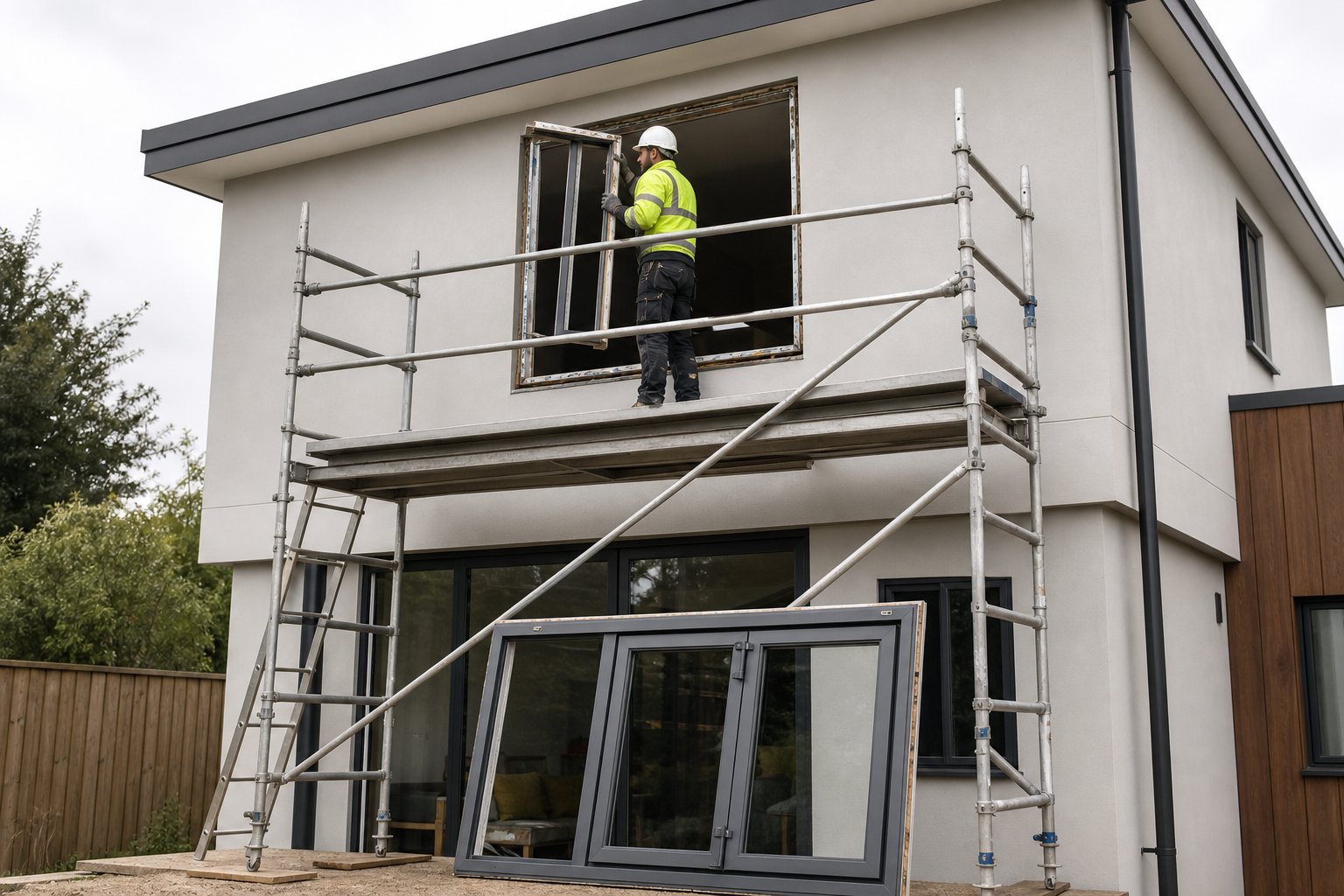
Hidden Costs That Catch Homeowners Off Guard
A window replacement quote typically covers the units themselves and the labour to fit them. What it often excludes — quietly, buried in fine print or simply omitted — are the ancillary expenses that turn a straightforward swap into a more complex (and expensive) project. These are the costs that generate disputes, budget blowouts, and regret. Understanding them before you sign means fewer surprises once scaffolding arrives.
Access and Scaffolding Costs
Ground-floor windows are relatively simple to reach. Upper-storey windows are not. The moment your project involves first-floor or second-floor openings, scaffolding or an elevated work platform enters the equation — and this single line item can add $800 to $2,500 AUD to a residential project depending on the number of elevations requiring access and how long the equipment stays on site.
Scaffolding rental data shows that a scaffold tower suitable for two-storey residential work runs approximately $250 to $900 AUD per week before delivery, setup, and disassembly fees are added. Those ancillary charges — typically $150 to $500 AUD combined — often catch homeowners off guard because they appear as separate line items outside the window install labour cost. Some installers quote per-floor pricing tiers to absorb access costs transparently; others leave it as an unspecified extra. Ask which approach applies before you commit.
The cost gap between ground-floor and upper-floor replacement can be substantial. A window that costs $1,200 installed at ground level might run $1,600 to $1,800 when scaffolding, safety compliance, and the slower pace of elevated work are factored in. Multi-storey homes with windows on three or four elevations face this multiplier on every facade.
Structural and Compliance Expenses
Replacing windows like-for-like in the same opening size rarely triggers council approval requirements. But the moment you change an opening’s dimensions — widening a kitchen window, converting a small bathroom window into a larger one, or adding a new opening altogether — you enter building regulation territory.
In Australia, structural modifications to window openings typically require a building permit or complying development certificate. Fees vary by council and state, but expect $200 to $1,500 AUD depending on scope and jurisdiction. Inspections during and after the work may carry additional charges. Beyond permit fees, structural modifications such as rebuilding frames or installing new lintels can add up to 50 percent on top of standard replacement costs per affected opening.
Older homes present particular risk here. Aluminium windows installed in the 1970s and 1980s may not comply with current NCC requirements for egress, energy performance, or bushfire attack level (BAL) ratings. Bringing these openings up to code during replacement adds engineering assessment, structural steel for new lintels, and potentially bricklayer or carpenter involvement — each an additional trade with its own minimum call-out charge. The window repair cost or cost of fixing a window that initially seemed modest can escalate quickly once compliance obligations surface.
Making Good and Finishing Costs
Even a straightforward aluminium-to-aluminium swap leaves marks. The old frame comes out, exposing raw reveals, damaged plaster, old sealant residue, and sometimes brickwork that has deteriorated behind the frame for decades. Making good — restoring interior and exterior surfaces to a finished state — is labour-intensive and rarely included in standard window quotes.
Internally, this means patching or re-skimming plaster around the new frame, repainting window surrounds, and fitting new architraves or window trims. The labour cost to install window trim alone can run $80 to $200 AUD per opening depending on material and complexity. Externally, many homeowners ask how to wrap windows with aluminium capping to conceal old timber reveals or create a clean, maintenance-free surround. This external capping windows cost varies by profile and linear metre but typically adds $150 to $400 per window for supply and install. Weatherproofing — proper flashing, sealant application, and drainage provisions — rounds out the external finishing scope.
The critical point: these costs do not disappear if your quote excludes them. They simply resurface as variations during the project or as unfinished work you must arrange separately. Before accepting any quote, confirm coverage across the following items:
- Scaffolding or elevated work platform hire, delivery, setup, and dismantling
- Council permits, building compliance certificates, and inspection fees
- Structural modifications — new lintels, reveal widening, or brickwork repairs
- Disposal of old frames and glazing (including any hazardous material handling for pre-1980s homes)
- Internal plastering and repainting around new frames
- Supply and fitting of new architraves or window trims
- External aluminium window wrap cost or capping to existing reveals
- Weatherproofing — flashing tape, sealant, and drainage detailing
- Temporary weatherproofing if openings remain exposed overnight
- Site clean-up and waste removal
A quote that accounts for every item on this list may appear more expensive at first glance. In practice, it is almost always cheaper than a low headline figure that generates three or four variation claims once work is underway. The real cost difference between quotes often lives in what each one leaves out — not what it includes.
How Project Scope Affects Per-Window Pricing
Hidden costs explain why individual quotes vary — but another force shapes your total just as powerfully: how many windows you replace at once. The cost to replace a window does not scale linearly. One window does not cost one-tenth of ten windows. Economies of scale compress the per-unit figure as quantity rises, and understanding where those pricing breaks fall can save thousands across a project.
Single Window vs Whole-House Replacement Pricing
Replacing a single aluminium window carries a disproportionate overhead. The installer still needs to mobilise a crew, transport equipment, set up site protection, and manage delivery logistics — all for one unit. These fixed costs (crew travel, vehicle use, setup and clean-up time, permit administration) get absorbed into that single window’s price, inflating it well beyond what the same window would cost as part of a larger job.
Whole-house projects spread those mobilisation expenses across every opening. Setup happens once. Scaffolding goes up once. The crew works continuously rather than packing up and returning weeks later. Industry pricing data shows that phased projects typically cost 10 to 15 percent more overall than completing the same scope in a single visit — a premium driven almost entirely by repeated fixed costs and year-over-year material price increases.
So how much does it cost to replace 25 windows versus five at a time over several years? The maths compounds against phasing. Five separate mobilisations, five delivery charges, potential price rises between phases, and lost volume discounts all stack up. Many Australian fabricators and installers offer tiered pricing that drops the per-unit rate once the order crosses certain thresholds — commonly at five, ten, and fifteen-plus units.
The biggest pricing break in residential aluminium window replacement typically occurs between one and five units. Moving from a single window to five or more can reduce per-window cost by 15 to 25 percent because fixed mobilisation, delivery, and setup charges are amortised across the batch rather than loaded onto one opening.
Room-by-Room vs Full Project Approach
Phasing is not irrational — it is a cash flow strategy. Plenty of homeowners prefer replacing windows room by room, tackling the worst-performing openings first and spreading expenditure across months or years. The trade-off is real but quantifiable: you pay mobilisation costs multiple times and forgo bulk pricing, but you avoid a large single outlay or the interest costs of financing the full project.
The average cost to replace windows in a 3 bed house in Australia — typically eight to twelve openings depending on layout — might range from $8,000 to $20,000 AUD for a full aluminium replacement with double glazing. Splitting that into three phases of three or four windows each could add $1,500 to $3,000 in repeated setup charges and lost volume discounts. For some households, that premium is a fair price for financial flexibility. For others — particularly those planning to stay long-term and with access to low-interest financing — completing everything at once delivers better value per dollar spent.
A practical middle ground exists: request a full-project quote alongside a phased quote, with the installer itemising the per-window premium for each phase. This “menu pricing” approach lets you see exactly what the phasing convenience costs and decide whether the average cost to replace windows under either model fits your budget.
How Project Timeline Affects Labour Costs
Beyond unit count, timing matters. Installer availability fluctuates with seasonal demand, and those fluctuations flow directly into how much to replace windows at any given point in the year. In Australia, spring and early summer represent peak renovation season — installers are booked weeks ahead, and there is less incentive to sharpen pricing. Autumn and winter (outside tropical regions) tend to be quieter, which can mean shorter lead times, more flexible scheduling, and occasionally better rates as fabricators seek to maintain workflow through slower months.
Project duration also plays a role. A whole-house replacement completed in two to three days costs less in labour than the same number of windows stretched over two weeks due to scheduling gaps or staged access. Every day the crew returns to site is a day they cannot be on another job — and that opportunity cost gets priced in.
For homeowners weighing the cost to replace windows now versus later, the broader trend works against waiting. Aluminium and glass prices in Australia have risen steadily due to raw material costs, energy inputs in manufacturing, and shipping expenses. Locking in current pricing for a larger scope generally outperforms staggering the same work across future price environments — provided the upfront commitment is financially manageable.
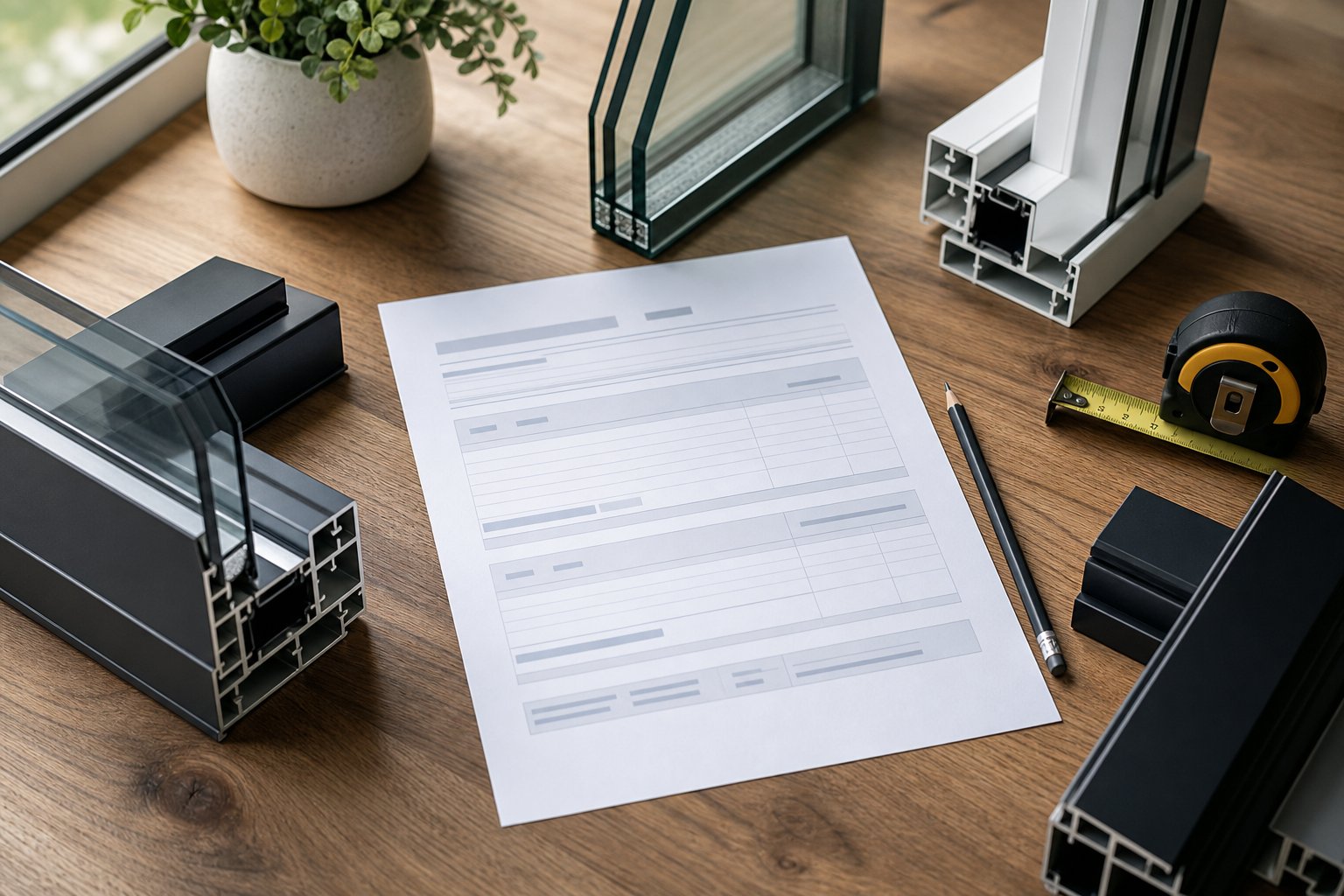
What Actually Drives a Replacement Window Quote
Scope and timing shape your total spend — but the document that crystallises all those variables into a single dollar figure is the quote itself. And here is where most homeowners lose money: not because they chose the wrong window, but because they could not distinguish between a quote that covered everything and one that left expensive gaps unmentioned. Understanding what belongs in a professional replacement window quote — and what drives legitimate price differences between suppliers — is the skill that separates informed buyers from frustrated ones.
Anatomy of a Professional Window Replacement Quote
A thorough aluminium window replacement quote is not a single line with a number on it. It is a detailed scope document that, when done properly, leaves no room for mid-project surprises. The window replacement costs you ultimately pay should align closely with what appears on this document — if the document is comprehensive enough.
Too many homeowners compare quotes by looking only at the bottom-line figure. A quote of $12,000 looks cheaper than $15,000 until you realise the first excludes internal finishing, waste removal, and any provision for opening repairs. The second includes everything. The real average cost for window replacement between these two scenarios is identical once variation claims roll in on the cheaper quote.
Australians searching online often encounter US-based tools like homewyse window replacement calculators or promotions advertising $199 windows installed. These figures reflect American labour markets, material costs, and scope definitions that bear little resemblance to Australian conditions. Similarly, questions like how much does Lowes charge to install windows have no local equivalent — Australian pricing structures, compliance requirements, and trade rates operate on entirely different foundations. Discard these foreign benchmarks and focus on what a local, itemised quote actually tells you.
Every replacement window quote you evaluate should clearly address these elements:
- Site measure confirmation — dimensions verified on-site, not estimated from plans alone
- Window specifications — profile system, thermal break type, frame colour, and hardware selections
- Glazing specification — glass type, Low-E coating, gas fill, and acoustic rating where relevant
- Installation method — whether existing frames are removed entirely or new units are retrofitted within existing sub-frames
- Finishing scope — what internal and external making-good is included (plastering, painting, trims, external capping)
- Waste removal — disposal of old frames, glass, and packaging
- Access provisions — scaffolding, elevated work platforms, or per-floor pricing tiers
- Compliance — any permit fees, engineering requirements, or NCC-related upgrades included in scope
- Timeline — estimated start date, project duration, and any conditions that may cause delays
- Warranty terms — both manufacturer product warranty and installer workmanship guarantee, with duration and coverage clearly stated
Quotes missing three or more of these details deserve scrutiny. They are not necessarily dishonest — sometimes they reflect a supplier who handles only part of the process — but they leave you exposed to costs that will surface eventually, just without competitive tension to keep them reasonable.
Why Quotes Vary Between Suppliers
When two quotes sit $3,000 or $5,000 apart, the instinct is to assume someone is overcharging. Sometimes that is true. More often, the gap reflects genuine differences in what each supplier is offering — differences that are invisible if you only read the total.
Profile system is the first driver. Not all aluminium frames are equivalent. A windows replacement cost based on a basic non-thermally-broken profile cannot be fairly compared against a quote using a premium thermally broken system with superior weather seals and hardware. The cheaper profile might meet minimum requirements; the more expensive one might deliver measurably better thermal performance, acoustic insulation, and hardware longevity. Both are legitimate — but they are different products solving the same problem at different performance levels.
Glass specification compounds this. One supplier might quote standard double glazing while another includes high-performance Low-E glass with argon fill and laminated inner panes for acoustic control. The window installation cost calculator mindset — plugging numbers into a formula — falls apart here because it cannot capture these qualitative differences.
Installation methodology matters equally. Professional guidance on comparing quotes consistently emphasises that a full-frame removal (pulling the entire old window back to the structural opening) costs more than a retrofit insert but delivers better long-term performance because it exposes and addresses hidden damage. Two quotes at different price points may simply reflect these two methods — both valid, but with different trade-offs in longevity and weatherproofing quality.
Supply chain structure introduces yet another variable. A supplier who imports finished window units from overseas operates on different cost and lead-time dynamics than one who fabricates locally. Local fabrication typically costs more per unit but offers faster turnaround, easier custom sizing, and better accountability if something arrives incorrectly. Project-capable suppliers who manage the full process — from initial drawings and scheduling through manufacturing coordination and delivery planning — tend to provide more accurate, comprehensive quotes because they control more variables and encounter fewer handoff errors between disconnected parties. MEICHEN’s services page illustrates this integrated approach, supporting the full quote-to-delivery process for aluminium window and door projects across Australia.
Aftercare commitments round out the picture. Some quotes include a post-installation inspection, hardware adjustment after settling, and responsive warranty service. Others end the relationship the moment the crew leaves site. That ongoing support has real value — particularly for larger projects where minor adjustments in the first twelve months are normal — and it carries real cost that shows up in the quoted price.
The quote that appears cheapest is not always the most expensive in the end, but it frequently is. Evaluating window replacement costs on scope depth rather than headline price protects you from the pattern that frustrates homeowners most: a low number that felt like a bargain on signing day and a final invoice that felt like anything but.
Making the Right Replacement Decision for Your Home
Knowing how to read a quote is half the equation. The other half is knowing whether replacement is actually the right call for your windows right now — and if so, building a budget that accounts for everything this article has covered rather than a hopeful number plucked from a search result.
Signs Your Aluminium Windows Need Replacement
Not every ageing aluminium window warrants replacement. Some issues respond well to targeted repairs — a new seal here, fresh hardware there. But certain indicators are aluminium-specific and signal that the frame or glazing system has passed the point of economical repair.
Visible corrosion on the frame surface is the most obvious. Older aluminium windows with degraded or absent powder coating develop pitting and oxidation, particularly in coastal areas where salt air accelerates deterioration. Once corrosion penetrates beyond the surface, the frame’s structural integrity is compromised and no amount of repainting restores it.
Persistent condensation between glass panes — fog that never clears — means the sealed unit has failed. The insulating gas has escaped and moisture has entered the cavity. This cannot be repaired in place; the glazing unit (and often the frame holding it) must be replaced. On older single-glazed aluminium windows, a different condensation pattern emerges: moisture forming on the interior glass surface and along the frame itself. This is thermal bridging in action — the frame conducting cold directly through to the inside face. It signals that the window lacks a thermal break and is haemorrhaging energy every day your heating or cooling runs.
Rattling during wind, difficulty latching or sliding, and visible daylight around closed sashes all indicate frame distortion or hardware failure. If the frame itself has twisted or bowed — common in older aluminium windows subjected to decades of thermal cycling — hardware replacement alone will not solve the problem. The frame geometry has permanently changed.
Single-glazed aluminium units in climate zones where the NCC mandates minimum energy performance for new installations present a different kind of trigger. They may still function, but they underperform so significantly against modern standards that the ongoing energy cost and comfort deficit justify replacement on economic grounds alone.
Building Your Replacement Budget
If one or more of those signs applies to your home, the question shifts from whether to replace to how much does it cost to replace windows realistically. The framework is straightforward — combine the cost components explored throughout this article into a single working number:
Start with the base replacement window cost per unit (driven by style, size, glazing, and thermal break specification as covered in earlier sections). Multiply by the number of openings. Layer on installation labour — remembering that this typically represents 40 to 60 percent of the project total. Add the hidden costs relevant to your situation: scaffolding if upper-storey windows are involved, structural modifications if openings need resizing, and finishing work to restore internal and external surfaces.
Then add contingency. A buffer of 10 to 15 percent handles the discoveries that only emerge once old frames come out — concealed timber rot, deteriorated lintels, or non-compliant framing that requires upgrading. This contingency is not pessimism; it is planning. Projects that run without it almost always run over budget.
For a typical three-bedroom Australian home with eight to twelve aluminium windows, the average cost of window replacement lands between $8,000 and $20,000 AUD for quality thermally broken aluminium with double glazing — a range shaped by all the variables this guide has detailed. How much are new windows at the upper end of that band? Usually projects involving custom sizes, upper-storey access, and glazing upgrades beyond standard Low-E double glazing.
Energy savings from modern thermally broken aluminium with quality glazing do offset replacement costs over time. Thermal break technology reduces heat transfer through the frame by 30 to 50 percent compared to non-thermally-broken equivalents, which translates directly into lower heating and cooling bills. However, precise payback periods depend on your climate zone, existing window condition, energy tariffs, and usage patterns — avoid generic claims of “pays for itself in X years” without project-specific calculations.
Understanding the real drivers behind your aluminium window cost — not just the unit price but the full scope — puts you in a fundamentally stronger position when engaging suppliers. Homeowners who approach the quoting process armed with this knowledge have more productive conversations, ask sharper questions, and avoid the low-headline-price trap that costs others thousands in variations.
For those ready to move from research to action, engaging a project-capable supplier early makes a measurable difference. A partner who supports the full process — from system recommendations and material calculations through manufacturing coordination and delivery planning — eliminates the gaps between disconnected trades that generate cost blowouts. MEICHEN’s services are structured around this integrated approach, supporting aluminium window and door projects from initial drawings through to site delivery across Australia.
- Audit your existing windows — note which openings show replacement indicators and which may only need hardware repairs or resealing
- Measure each opening and note whether dimensions align with standard aluminium window sizes or will require custom fabrication
- Define your glazing and thermal performance requirements based on your NCC climate zone and WERS ratings targets
- Determine access requirements — identify upper-storey windows that will need scaffolding and factor this into scope
- Request itemised quotes from at least two suppliers, comparing them element by element against the checklist in the previous section
- Confirm what finishing and compliance work each quote includes or excludes
- Build your final budget by combining the accepted quote, any excluded items you will need to arrange separately, and a 10–15 percent contingency
- Engage your chosen supplier early to lock in current pricing and secure a manufacturing slot — particularly important for custom-sized units or larger whole-house projects
The cost of new windows is never a single number. It is a project shaped by your home, your priorities, and the decisions you make at each stage. Armed with the framework this guide provides, you can approach that project with clarity — knowing exactly what you are paying for, why the numbers sit where they do, and how to ensure the final result delivers value that lasts decades rather than regret that surfaces within months.
Frequently Asked Questions About Aluminium Window Replacement Costs
1. How much does it cost to replace aluminium windows in Australia?
In Australia, replacing aluminium windows typically costs between $700 and $1,800 AUD per window (supply and install) for thermally broken units with double glazing. A full project for a three-bedroom home with eight to twelve openings generally falls between $8,000 and $20,000 AUD. The final figure depends on window style, glazing specification, access requirements, and whether openings need structural modification. Labour usually accounts for 40 to 60 percent of the total, with materials making up 30 to 45 percent and ancillary costs covering the remainder. Engaging a project-capable supplier like MEICHEN early in the process helps clarify these cost layers through detailed, itemised quotes.
2. Is it cheaper to replace aluminium windows with vinyl or stay with aluminium?
Vinyl windows have a lower per-unit cost, starting around $400 to $700 AUD installed versus $700 to $1,800 AUD for thermally broken aluminium. However, the total project cost gap narrows once you factor in opening modifications required for material conversion, which can add $100 to $300 per window in extra trades work. Aluminium-to-aluminium replacement avoids these modification costs entirely because modern profiles are designed for backward compatibility. Over the full lifespan, aluminium typically lasts longer (20 to 30 years versus 20 to 25 for vinyl) and resists Australian UV exposure and coastal conditions far better, making it more cost-effective on a per-year-of-service basis.
3. What hidden costs should I expect when replacing aluminium windows?
Several expenses commonly sit outside standard window quotes. Scaffolding for upper-storey access can add $800 to $2,500 AUD to a project. Structural modifications like new lintels or reveal widening may add up to 50 percent per affected opening. Internal plastering and repainting, external aluminium capping ($150 to $400 per window), new architraves ($80 to $200 per opening), council permits ($200 to $1,500 AUD), and waste disposal all contribute. Before signing any quote, confirm whether these items are included or excluded to avoid mid-project variation claims that inflate the final invoice.
4. Is it better to replace all windows at once or in stages?
Replacing all windows in a single project is generally 10 to 15 percent cheaper overall than phasing the same work across multiple visits. This saving comes from amortising fixed mobilisation costs, scaffolding hire, and delivery charges across all openings at once, plus accessing bulk pricing thresholds that typically activate at five, ten, and fifteen-plus units. Phasing makes sense as a cash flow strategy, but you pay repeated setup charges and forgo volume discounts. A practical approach is requesting both a full-project and a phased quote from your supplier so you can see the exact per-window premium that phasing adds.
5. How do I know if my aluminium windows need replacing or just repairing?
Replacement indicators specific to aluminium include visible corrosion or pitting that penetrates beyond the surface coating, persistent condensation trapped between double-glazed panes (indicating seal failure), interior condensation along the frame caused by thermal bridging, and frames that have twisted or bowed from decades of thermal cycling. Difficulty operating sashes or visible daylight around closed windows also signals frame distortion beyond repair. Single-glazed aluminium units in climate zones requiring minimum energy performance are candidates for replacement on economic grounds alone. If issues are limited to worn hardware or minor seal degradation, targeted repairs may suffice without full replacement.
More Window & Door Guides