What Is Window Condensation and Why Does It Happen
You pull back the curtains on a cold morning and there it is — water streaming down the glass, pooling on the sill. If you’ve ever wondered why do my windows get condensation on the inside, you’re far from alone. It’s one of the most common household frustrations, especially during cooler months. The good news? It’s not a sign that your windows are broken.
What Condensation on Windows Actually Means
Condensation on windows is simply water vapor in your indoor air turning into liquid droplets on the glass surface. Think of it the same way a cold drink “sweats” on a warm day. The air inside your home carries moisture — from breathing, cooking, showering, and dozens of other daily activities. When that warm, humid air touches a surface cold enough, the moisture it carries can no longer stay in vapor form. It turns to water.
Window condensation occurs when warm, moisture-laden indoor air contacts a glass surface that has cooled below the dew point temperature, causing water vapor to convert into visible liquid droplets on the pane.
This is a physics response to specific humidity and temperature conditions — not a flaw in the window itself. That distinction matters, because it means you have real control over the problem once you understand the mechanism behind it.
Dew Point Explained for Homeowners
The dew point is the temperature at which air becomes fully saturated and can no longer hold its moisture as vapor. To put it practically: if your home is 72 degrees with 50% relative humidity, the dew point sits around 52 degrees. Any glass surface at or below that temperature will collect condensation. Bump the humidity up to 55% and the dew point rises to roughly 55 degrees — meaning condensation starts forming on warmer surfaces, too.
The relationship between indoor humidity, air temperature, and glass surface temperature is the core of every condensation issue. Understanding how to stop condensation on windows starts right here, with these three variables.
In the sections ahead, we’ll dig into the root causes of excess moisture, how seasonal patterns shift the problem, the role glazing types and frame materials play, and practical strategies — from humidity monitoring to ventilation — that actually work.
Root Causes of Moisture Buildup on Your Windows
Knowing that dew point drives condensation is a solid start. But why do my windows have condensation inside on some days and not others? The answer comes down to how three variables interact in real time — and how your daily habits quietly tip the balance.
The Three Conditions That Trigger Condensation
Every case of condensation on the inside of the windows traces back to the same trio of factors: indoor relative humidity, indoor air temperature, and the surface temperature of the glass. Change any one of these and you change the outcome.
When relative humidity is high, air reaches its saturation point at a warmer temperature — so even mildly cool glass can trigger moisture. When indoor air temperature drops (say, after the heating cycles off at night), the air’s capacity to hold water shrinks. And when the glass surface is cold — because it’s single-pane, poorly insulated, or facing bitter outdoor temperatures — it becomes the first place that excess moisture lands.
All three conditions don’t need to be extreme. A moderately humid room paired with a moderately cold window is often enough. That’s why condensation inside the window can appear even in homes that feel comfortable and well-maintained.
Common Household Moisture Sources You Overlook
You might be surprised how much water vapor your household generates every day. NDSU Extension Service research notes that each person adds roughly 3 pints of water vapor to indoor air daily just from breathing. Layer on the rest of your routine and the numbers climb fast.
- Showers and baths — a single hot shower can release up to 2 pints of moisture into the air
- Cooking on the stovetop, especially boiling water or simmering without a lid
- Drying clothes indoors on racks or radiators
- Unvented gas appliances, including some older space heaters and stovetops
- Houseplants, which release moisture through transpiration
- Mopping floors, running dishwashers, and even fish tanks
This is why some rooms suffer more than others. Bathrooms and kitchens are obvious culprits — they’re moisture factories. But bedrooms often catch people off guard, especially when doors stay closed overnight and two people are breathing in a sealed space for eight hours straight.
Why Condensation Gets Worse Overnight
Morning condensation isn’t random. A predictable chain of events plays out while you sleep. Outdoor temperatures fall to their lowest point, pulling heat from the glass surface. Your heating system cycles down or shuts off entirely, so indoor air temperature drops too. Meanwhile, the moisture you exhale — along with any humidity trapped in the room — has nowhere to go.
The result? Glass surfaces hit the dew point, and condensation between window panes of air and glass becomes visible by dawn. Rooms with closed doors, heavy curtains drawn tight against the window, or poor airflow are hit hardest because the humid air sits stagnant right against the coldest surface in the room.
Interestingly, curtains and blinds can make the problem worse. They act as an insulating barrier that prevents warm room air from reaching the glass, letting the pane cool even further behind the fabric. If you’ve noticed heavier condensation behind drapes, that’s exactly why.
These moisture sources and overnight patterns explain the “when” and “why” — but not every type of condensation means the same thing. Where the moisture appears on the window tells a very different story depending on whether it’s on the inside, the outside, or trapped between the panes.
Interior vs Exterior vs Between-Pane Condensation
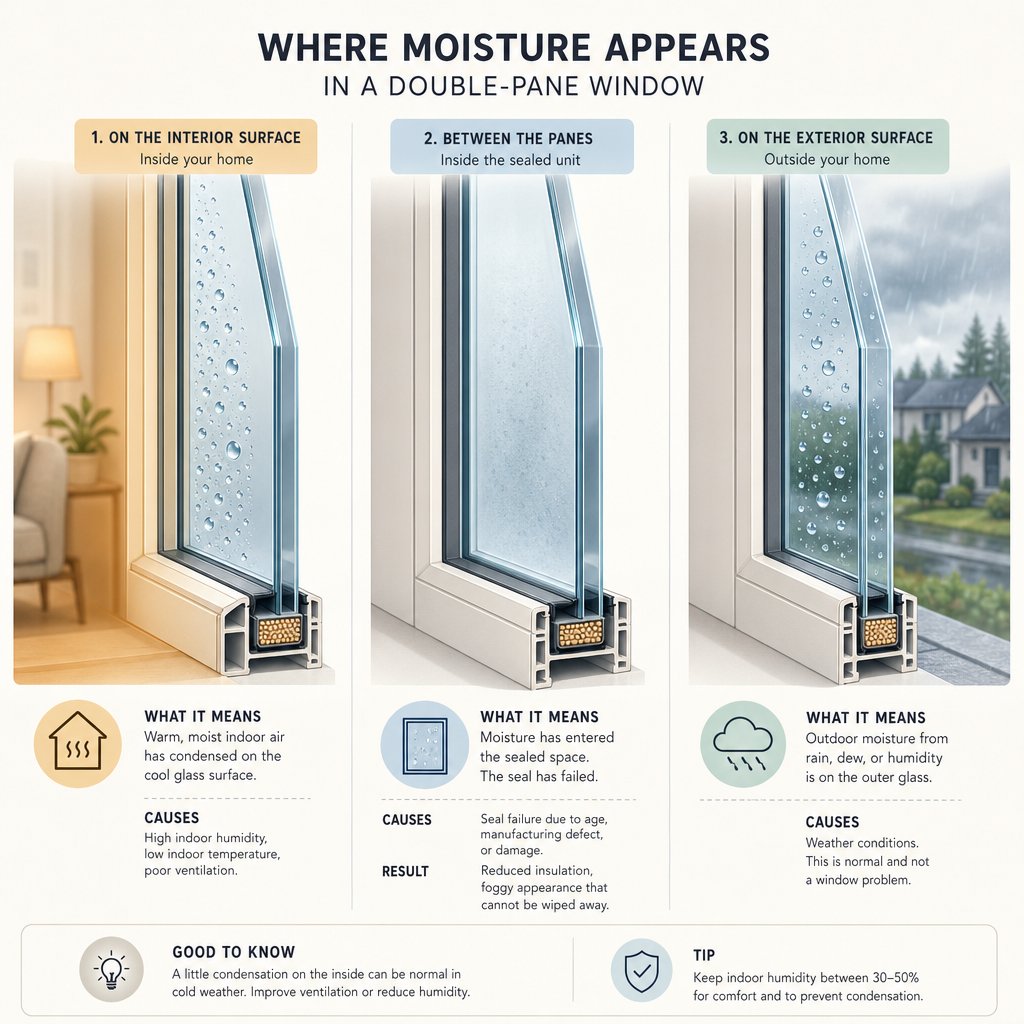
Location matters. Moisture on the room-facing side of the glass, on the outdoor surface, or sandwiched between two panes — each scenario points to a completely different cause and calls for a different response. Lumping them together is one of the most common mistakes homeowners make when trying to diagnose the problem.
Interior Condensation and What It Tells You
If you’re asking why is there condensation inside my windows, the answer almost always circles back to indoor humidity. Moisture buildup on inside of windows is the most frequent type homeowners encounter, and it peaks during winter when the temperature gap between your heated interior and the frigid outdoors is at its widest. That large differential chills the inner glass surface, and the warm, humid room air deposits its moisture right there.
Condensation on inside of windows doesn’t mean your windows are failing. It means the indoor environment is carrying more moisture than the glass surface temperature can handle. Kitchens after a long cook, bathrooms post-shower, and bedrooms sealed up overnight are the usual hotspots. In many cases, running a dehumidifier for window condensation control — especially in chronically damp rooms — brings humidity back into a manageable range and clears the glass.
In extreme cold, this moisture can go a step further. When outdoor temperatures plunge well below freezing, you may even notice ice on inside of windows — particularly on single-pane glass or older double-pane units with poor insulation. Ice formation is essentially condensation that freezes on contact with the glass, and it signals that both humidity and the temperature differential need attention.
Why Exterior Condensation Is Actually Good News
Waking up to foggy glass on the outside of your windows feels alarming, but it’s actually a positive sign. Exterior condensation typically appears on humid summer or early autumn mornings when the outdoor air is warm and moisture-rich, but the outer pane of glass remains cool. Why does it stay cool? Because your window’s insulation is doing its job — it’s preventing indoor heat (or air-conditioned coolness) from transferring through to the exterior surface.
This type of condensation is most common in the morning and usually disappears by midday as the sun warms the glass. It requires no action at all. If anything, it confirms that your glazing is performing as designed.
Condensation Between Panes Means a Broken Seal
This is the one that should concern you. Double- and triple-pane windows rely on a sealed airspace — often filled with an insulating gas like argon — between the layers of glass. If that seal fails, the gas escapes and outside air seeps in, carrying moisture with it. The result is a hazy, foggy appearance trapped between the panes that you can’t wipe away from either side.
Seal failure can happen due to manufacturing defects, poor installation, or simply age-related wear. Unlike interior condensation, this isn’t something ventilation or a dehumidifier can fix. The insulated glass unit (IGU) has lost its thermal performance, and the affected unit typically needs to be replaced. Before you go that route, check whether your windows are still under warranty — many manufacturers cover seal failure for a set period.
Seasonal patterns play a role across all three types. The table below maps each condensation location to its likely cause, the season it’s most common, how serious it is, and what you should do about it.
| Condensation Location | Primary Cause | Peak Season | Severity | Recommended Action |
|---|---|---|---|---|
| Interior (room side) | High indoor humidity + cold glass surface | Winter | Moderate — can lead to mold if persistent | Reduce humidity sources, improve ventilation, use a dehumidifier |
| Exterior (outside surface) | Humid outdoor air + well-insulated cool glass | Summer / early autumn mornings | Low — no action needed | None; indicates good window insulation performance |
| Between panes | Failed seal in double- or triple-glazed unit | Any season (often noticed in temperature swings) | High — insulating performance is compromised | Replace the insulated glass unit or the entire window; check warranty |
Shoulder seasons — spring and autumn — can produce variable patterns. You might see interior condensation on a cool night followed by exterior condensation the next humid morning. This is normal. The key diagnostic question is always the same: which side of the glass is the moisture on?
Interior and exterior condensation respond well to environmental adjustments. Between-pane moisture does not. That distinction is critical, especially for homeowners in newly built or recently renovated homes where heavy condensation can appear suddenly and feel overwhelming — even when the windows themselves are perfectly intact.
New Construction and Renovation Moisture Explained
Freshly built homes are supposed to feel pristine. So when condensation inside windows appears within weeks of moving in — sometimes heavier than anything you’ve seen in an older property — it’s natural to assume something went wrong. In most cases, nothing did. Your home is simply drying out.
Why New Homes Trap So Much Moisture
Construction is a wet process. Concrete slabs, screed, plaster, brickwork, timber framing, paint, and adhesives all absorb or contain significant amounts of water during the build. A typical new build home can hold up to 8,000 litres of residual moisture once construction wraps up — roughly 800 full buckets of water locked inside the structure. That moisture doesn’t vanish on handover day. It evaporates gradually into the indoor air over the first one to two heating seasons, and it has to go somewhere.
Here’s the catch: modern homes are engineered to be airtight and energy-efficient. Tight seals, heavy insulation, and minimal air leakage are great for keeping heating bills low — but they also trap all that construction moisture inside. In older, draftier homes, excess water vapor would escape through gaps and cracks. In a sealed new build, it lingers, saturates the air, and lands on the coldest surfaces available. If you’re wondering why do my windows get moisture on the inside in a brand-new house, this is almost always the reason.
Condensation in new homes is temporary. As construction materials cure and dry over the first 12 to 24 months, indoor moisture levels gradually drop and the problem resolves — provided ventilation is adequate during the drying-out period.
Post-Renovation Condensation and How Long It Lasts
Renovations trigger the same effect on a smaller scale. Fresh plaster, new tiling with wet adhesive, poured concrete, or even a few freshly painted rooms introduce a burst of moisture into the indoor environment. The more extensive the work, the more water enters the air. A full kitchen or bathroom remodel can produce noticeable moisture on inside of windows for several weeks to a few months afterward.
The key in both scenarios is aggressive ventilation during the drying-out period. Keep trickle vents open — even in cold weather. Run bathroom and kitchen exhaust fans longer than you normally would. Open windows briefly each day for cross-ventilation. And if humidity stays stubbornly high, a condensation windows dehumidifier setup — a portable unit placed in the worst-affected room — can pull excess moisture from the air while the structure finishes curing. Just avoid overdoing it: drying a home too aggressively can crack screed, split timber joints, and damage fresh plaster.
Patience and airflow are the real solution here. Most new builds show significant improvement within the first year, with conditions fully stabilizing by the end of the second. Renovated spaces typically settle faster — weeks to months rather than full heating seasons. Either way, the condensation is a sign of materials doing exactly what they’re supposed to do: releasing trapped water as they cure.
With construction moisture off the table, the next variable worth examining is the glass itself — because not all windows resist condensation equally, and the type of glazing you have makes a measurable difference.
Window Glazing Types and Condensation Resistance Compared
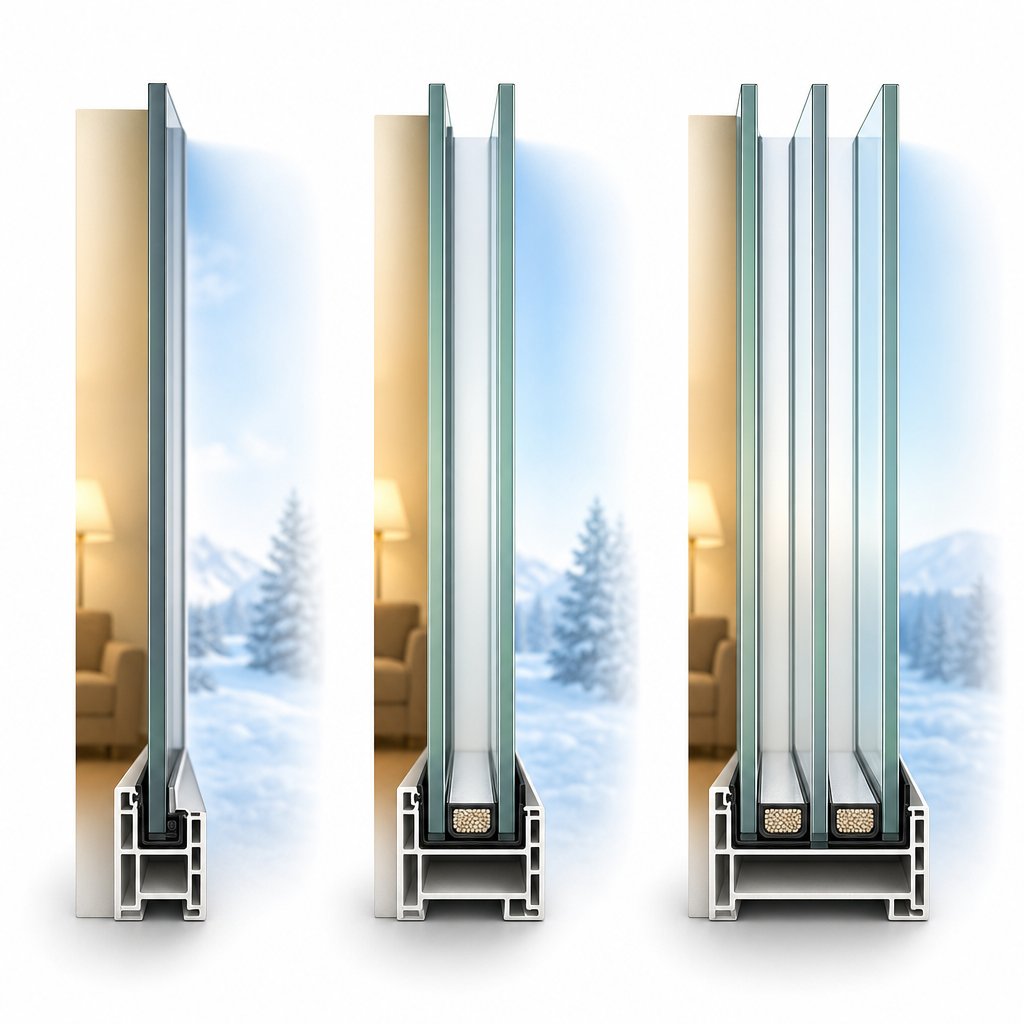
Your habits and humidity levels only tell half the story. The glass itself plays an equally important role in whether moisture inside window surfaces becomes a recurring problem or a rare event. Different glazing technologies keep the interior pane at very different temperatures — and that temperature is what determines whether water vapor stays invisible or turns into visible droplets.
How Window Glazing Affects Surface Temperature
The principle is straightforward: the better a window insulates, the warmer the interior glass surface stays relative to the room air. A warmer surface means the glass is less likely to drop below the dew point, and condensation inside window panes becomes far less frequent — even when indoor humidity is moderate.
Single-pane glass offers almost no insulating barrier. The interior surface temperature closely tracks the outdoor temperature, so on a cold night, that glass gets frigid fast. Double-pane windows introduce an air gap between two layers of glass, and that trapped air space dramatically slows heat transfer. The inner pane stays noticeably warmer.
Swap that air gap for argon gas and performance improves again. The U.S. Department of Energy notes that argon is denser than air and conducts less heat, making it a common fill in modern insulated glazing units. Add a Low-E (low-emissivity) coating — a microscopically thin metallic layer applied to the glass — and you get another leap forward. Low-E coatings reflect radiant heat back into the room, which keeps the inner pane warmer still. The Department of Energy reports that Low-E coatings can reduce energy loss by 30% to 50% compared to uncoated glass, and that thermal benefit translates directly into condensation resistance.
Triple-pane windows with argon fill and Low-E coatings represent the highest tier. Three layers of glass create two insulating gas-filled cavities, and the additional coated surfaces further limit heat transfer. The result is an interior pane that stays close to room temperature even in harsh winter conditions — making condensation unlikely under normal humidity levels.
Glazing Types Ranked by Condensation Resistance
Imagine two identical rooms with the same humidity and temperature. One has a single-pane window; the other has a triple-pane unit with argon and Low-E. The single-pane glass might be dripping wet while the triple-pane stays completely clear. The table below breaks down why, comparing five common glazing configurations side by side.
| Glazing Type | Number of Panes | Insulating Gas | Low-E Coating | Condensation Resistance | Typical Use Case |
|---|---|---|---|---|---|
| Single-pane | 1 | None | No | Low — inner glass gets very cold | Older homes, budget builds, mild climates only |
| Double-pane (air filled) | 2 | Air | No | Moderate — significant improvement over single-pane | Standard option in most modern homes |
| Double-pane (argon filled) | 2 | Argon | No | Moderate to High — argon reduces heat transfer further | Energy-conscious new builds and replacements |
| Double-pane with Low-E | 2 | Argon | Yes | High — inner pane stays noticeably warmer | Cold and mixed climates, energy-efficient upgrades |
| Triple-pane with Low-E | 3 | Argon (dual cavities) | Yes | Very High — inner surface stays near room temperature | Extreme climates, passive house builds, noise-sensitive areas |
For homeowners dealing with persistent condensation, a window dehumidifier or portable unit can manage symptoms in the short term — but if your home still has single-pane glass, no amount of dehumidification fully compensates for a surface that’s always going to run cold. Upgrading the glazing addresses the root cause rather than chasing the symptom.
That said, glazing is only one half of the window’s thermal equation. The frame surrounding that glass creates its own pathway for heat loss — and certain materials are far more forgiving than others when it comes to keeping condensation at bay.
How Window Frame Materials Affect Condensation Risk
You could install the most advanced triple-pane, argon-filled, Low-E coated glass on the market — and still find moisture on the inside of windows if the frame is working against you. The frame isn’t just a border holding glass in place. It’s a thermal pathway, and the material it’s made from determines how much cold transfers through to the interior surface. That transfer creates what building scientists call a thermal bridge: a shortcut for heat to escape and for cold to creep in.
Frames can account for 15% to 35% of a window’s total area. When that portion conducts heat rapidly, the frame itself becomes the coldest surface near the glass — and condensation forms right there on the frame and surrounding sill, even if the glazing performs well. It’s one of the most overlooked reasons why do windows sweat inside, especially in homes with older or non-insulated metal frames.
Why Frame Material Matters as Much as Glass
Different materials conduct heat at vastly different rates. Aluminium, for example, is lightweight, strong, and virtually maintenance-free — but it’s also a rapid heat conductor. In older aluminium-framed windows without any insulating barrier, the interior frame surface can get cold enough to collect moisture or even frost during winter. That inside window condensation on the frame often gets blamed on the glass when the frame is the real culprit.
Vinyl and uPVC sit at the opposite end of the spectrum. Their polymer structure naturally resists heat transfer, so the interior frame surface stays closer to room temperature without any special engineering. Wood insulates well too — its cellular structure is a natural thermal barrier — but it demands regular painting, staining, or sealing to prevent moisture damage and rot, especially in humid climates. Fiberglass delivers strong thermal performance and dimensional stability, though it typically comes at a premium price. Composite frames blend materials like polymer and wood products to balance insulation, durability, and cost.
The table below compares the most common frame materials across the factors that matter most for condensation control.
| Frame Material | Thermal Conductivity | Condensation Risk at Frame | Durability | Maintenance Level |
|---|---|---|---|---|
| Aluminium with thermal break | Low (insulating barrier disrupts conductivity) | Low — comparable to other insulated materials | Very High — corrosion-resistant, strong | Minimal — occasional cleaning |
| Vinyl / uPVC | Low (naturally non-conductive polymer) | Low — interior surface stays warm | High — moisture and UV resistant | Minimal — no painting required |
| Wood | Low (natural cellular insulator) | Low — good thermal resistance | Moderate — vulnerable to rot and moisture | High — regular sealing, painting, or staining |
| Fiberglass | Low (can be insulation-filled) | Low — excellent thermal performance | Very High — dimensionally stable | Low — minimal upkeep needed |
| Composite | Low to Moderate (varies by composition) | Low to Moderate — depends on material blend | High — good moisture and decay resistance | Low to Moderate |
How Thermal Breaks Transformed Aluminium Windows
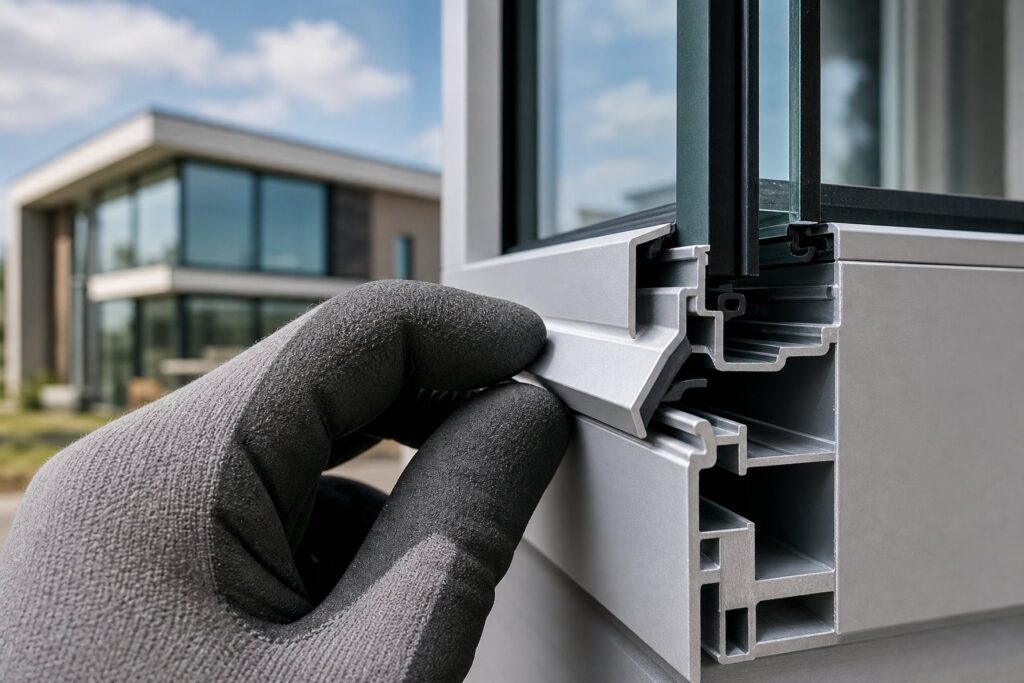
For decades, aluminium’s conductivity problem kept it off the shortlist for energy-conscious homeowners. That changed with the introduction of the thermal break — an insulating strip, typically made from polyamide or a similar polymer, built directly into the frame profile between the interior and exterior aluminium sections. This barrier disrupts the conductive path, preventing cold from traveling straight through the metal to the inside surface.
The U.S. Department of Energy recommends that metal frames include a thermal break to reduce heat flow, and modern thermally broken aluminium systems have closed the performance gap significantly. The interior frame surface stays warmer, which means less risk of condensation forming on the frame — even in cold conditions that would cause moisture between window panes of older, non-broken aluminium units to appear problematic.
Manufacturers like MEICHEN build their aluminium window range with engineered thermal break technology designed to meet Australian standards for energy efficiency. For homeowners who want the sleek profile and durability of aluminium without the historical condensation drawback, thermally broken systems offer a practical solution that performs on par with naturally insulating frame materials.
Exterior window condensation, as covered earlier, is a sign of good insulation — and thermally broken aluminium frames contribute to that performance by keeping indoor heat from warming the outer surface. It’s a complete reversal of how aluminium windows used to behave.
Choosing the right frame material eliminates one major variable in the condensation equation. The other variable — indoor humidity — is something you can measure and manage with surprising precision, and it doesn’t require expensive equipment to get started.
Monitoring and Controlling Indoor Humidity Levels
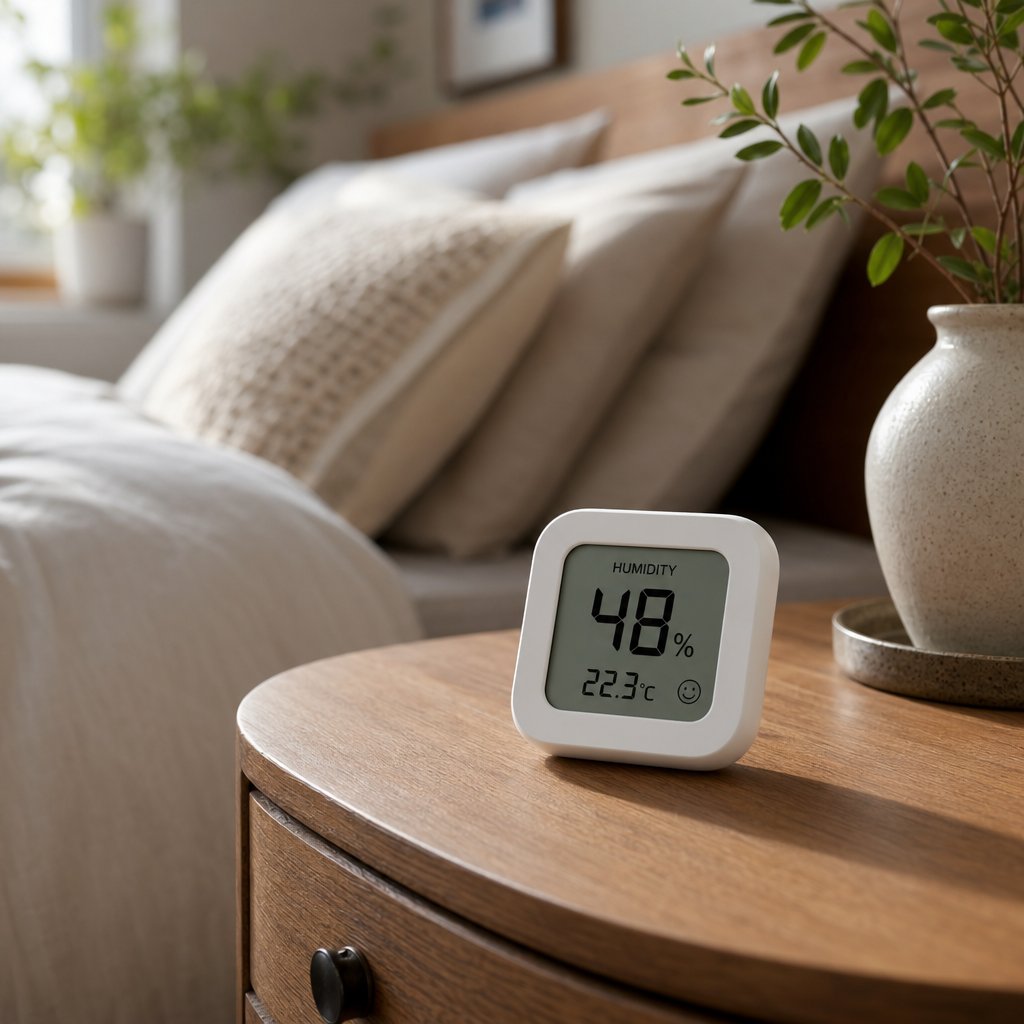
A high-performance window and a well-chosen frame can only do so much if the air inside your home is carrying too much moisture. The missing piece for most homeowners dealing with windows condensation inside is measurement. You can’t manage what you can’t see — and humidity is invisible until it shows up as water on your glass. A simple, inexpensive tool changes that entirely.
Using a Hygrometer to Track Indoor Humidity
A hygrometer measures the relative humidity (RH) in your air, displayed as a percentage. Digital models cost roughly the same as a takeout meal, show both humidity and temperature on a single screen, and require zero technical skill to operate. Smart versions from brands like Govee or ThermoPro connect to your phone and log data over time — useful if you want to spot patterns rather than just snapshots.
Placement matters. Put one in your main living area, one in the bedroom, and one in whichever room gives you the most trouble. Avoid placing them directly next to radiators, windows, or cooking surfaces — those spots skew readings. Chest height, on a shelf or side table, gives the most representative result. Let the device stabilize for 30 to 60 minutes after placing it, then check readings in the morning and evening to capture the daily range.
What should the numbers say? For most homes, 40% to 55% RH is the sweet spot — comfortable for your body, safe for your home, and low enough to keep condensation in check. Persistent readings above 60% in any room are a warning sign. Above 70%, mold risk climbs rapidly and action is overdue.
Outdoor Temperature and Target Humidity Ranges
Here’s the detail most guides skip: the right indoor humidity level shifts depending on how cold it is outside. Colder outdoor temperatures chill your window glass further, which means even moderate indoor humidity can trigger condensation. If you’ve ever wondered what causes a window to sweat on a freezing night but not a mild one, this relationship is the reason.
The Center for Energy and Environment provides a practical guideline tying outdoor temperature to maximum indoor RH. Use the table below as your reference.
| Outdoor Temperature (°F) | Recommended Maximum Indoor RH |
|---|---|
| 20 to 40 | Below 40% |
| 10 to 20 | Below 35% |
| 0 to 10 | Below 30% |
| -10 to 0 | Below 25% |
| -20 to -10 | Below 20% |
| -20 or below | Below 15% |
The pattern is clear: as outdoor temperatures drop, your indoor humidity target needs to drop with them. If your hygrometer reads 45% on a night when it’s 5°F outside, you’re well above the safe threshold — and you’ll almost certainly wake up to wet glass. This is often the missing explanation for why is there condensation on the inside of my windows even in a well-insulated home.
When to Use a Dehumidifier
When ventilation and habit changes aren’t enough to bring readings into range, a dehumidifier is the direct fix. Portable units work well for single problem rooms — a bedroom that consistently reads above 60%, a basement that feels damp year-round, or a laundry area without exterior venting. Look for an ENERGY STAR-rated model and set it to around 50% RH as a starting point.
For homes where multiple rooms run high or where the issue is systemic — think tightly sealed new builds still drying out, or climates with sustained summer humidity — a whole-house dehumidifier integrated with your HVAC system offers centralized control. These units pull moisture from the air as it circulates through the ductwork, maintaining consistent levels throughout the home without portable units cluttering every room.
Whether you go portable or whole-house, the hygrometer remains your feedback loop. It tells you if the dehumidifier is doing its job, if you can dial it back, or if something deeper — like a desiccant leaking from window seals or a hidden moisture source — needs investigation. Measurement turns guesswork into a clear, trackable process.
Controlling humidity is one half of the indoor air equation. The other half — moving that air effectively so moisture doesn’t pool against cold surfaces — depends on ventilation strategies that range from cracking a window to installing a whole-house recovery system.
Ventilation Strategies That Actually Prevent Condensation
Humidity monitoring tells you the numbers. Ventilation is what actually moves the needle. Most advice on how to stop moisture on windows boils down to a vague “improve your ventilation” — without explaining what that means in practice or which options exist beyond cracking a window. The reality is that ventilation comes in layers, from dead-simple passive methods to sophisticated whole-house systems, and the right approach depends on how severe your moisture problem is and how tightly sealed your home is built.
Passive and Spot Ventilation Basics
The simplest ventilation requires no equipment at all. Opening two windows on opposite sides of your home for even 10 to 15 minutes creates cross-ventilation — a brief flush of fresh, drier outdoor air that displaces the humid air trapped inside. Yes, even in winter. The heat loss from a short burst of cross-ventilation is minimal compared to the moisture it removes, and your heating system recovers the temperature quickly once you close up.
Trickle vents — small, adjustable openings built into window frames — offer a more passive, continuous approach. They allow a controlled trickle of outside air to enter without fully opening the window, which helps prevent moisture from building up in sealed rooms. If your windows have them, keep them open. Many homeowners close trickle vents to save on heating, not realizing they’re trapping the very humidity that causes condensation on outside of windows to be the only type they should see — rather than the interior kind pooling on their sills.
Spot ventilation targets the rooms that produce the most moisture. Bathroom exhaust fans are the most common example, and their effectiveness depends entirely on how you use them. Run the fan during your shower and for at least 20 minutes afterward — that post-shower run time is critical because humidity peaks after you turn off the water, not during. A humidity-sensing fan that activates automatically when moisture rises takes the guesswork out entirely.
Kitchen range hoods are the other key spot ventilator, but there’s an important distinction: only hoods vented to the exterior actually remove moisture from your home. Recirculating hoods filter grease and odors, then push the same humid air right back into the kitchen. If you’re boiling pasta under a recirculating hood, every drop of steam stays indoors. For anyone serious about learning how to get rid of condensation inside windows, switching to an externally vented range hood in the kitchen is one of the highest-impact single changes you can make.
Whole-House Ventilation Systems Explained
When passive and spot ventilation aren’t enough — common in tightly sealed modern homes, new builds still drying out, or climates with sustained high humidity — whole-house mechanical ventilation steps in. These systems move air continuously throughout the entire home rather than targeting individual rooms. They fall into four main categories, each with distinct trade-offs.
- Trickle vents and open windows — passive, zero cost, limited control, dependent on weather and occupant behavior
- Spot exhaust fans (bathroom, kitchen) — targeted moisture removal at the source, affordable, but only addresses individual rooms
- Exhaust-only systems — a central fan pulls stale air out of the home, creating negative pressure that draws fresh air in through gaps and vents; simple and inexpensive but can cause backdrafting of combustion gases in homes with gas appliances
- Supply-only systems — a fan pushes filtered outdoor air into the home, creating positive pressure that forces stale air out; reduces dust and allergen entry but introduces unconditioned air that your HVAC must heat or cool
- Balanced systems (HRV or ERV) — two fans work simultaneously, one exhausting stale air and one supplying fresh air, maintaining neutral pressure while recovering energy from the outgoing airstream; the most effective and efficient option for condensation control
Exhaust-only and supply-only systems are better than nothing, but they waste conditioned air. Building science research shows that opening a window or running an exhaust fan while your heater operates can waste significant heating energy because you’re expelling air you’ve already paid to warm. Balanced systems solve this problem.
A Heat Recovery Ventilator (HRV) is the go-to for cold, dry climates. It exchanges stale indoor air for fresh outdoor air through a heat exchange core — two airstreams pass close together without mixing, and heat transfers from the warm outgoing air to the cold incoming air. Modern HRV systems recover 60% to 95% of the heat from outgoing air, with most residential units achieving 70% to 80%. Because HRVs remove moisture along with stale air, they’re particularly effective at reducing indoor humidity and preventing mold on windows from condensation during winter months.
An Energy Recovery Ventilator (ERV) works similarly but transfers both heat and moisture between the airstreams. In hot, humid climates, an ERV prevents excess outdoor humidity from entering your home during summer. In very cold, dry winters, it retains some indoor moisture so your air doesn’t become uncomfortably dry. ERVs recover roughly 70% to 80% of heat energy and capture 40% to 60% of latent energy that would otherwise be lost. For homes where why is there moisture on the inside of my windows is a summer problem driven by outdoor humidity rather than a winter one, an ERV is often the better fit.
Both systems typically cost between $2,000 and $5,000 installed, last 10 to 15 years with proper maintenance, and require only basic upkeep — cleaning filters every one to three months and inspecting the core annually. The energy savings from recovered heat often offset the operating cost, which runs about the same as a 60-watt light bulb for most residential units.
Overnight Strategies to Reduce Morning Condensation
Nighttime is when condensation hits hardest, so your overnight habits carry outsized weight. A few targeted adjustments can make a noticeable difference by morning.
Crack a bedroom window slightly — even a gap of a centimeter or two allows enough air exchange to prevent humidity from building up in a sealed room overnight. If that feels too cold, leave the bedroom door open instead. An open door lets humid air disperse into the rest of the house rather than concentrating against the coldest surface in the room — your window glass.
Avoid drying laundry indoors overnight. A single load of wet clothes can release several pints of moisture into the air as it dries, and in a closed room that moisture has nowhere to go but onto the glass. If indoor drying is unavoidable, place the rack in a well-ventilated room with an exhaust fan running or a window cracked, and close the door to contain the humidity to that space.
Pull curtains and blinds back slightly from the glass rather than pressing them flush against the window. As covered earlier, heavy drapes act as an insulating layer that prevents warm room air from reaching the pane, letting it cool further and making condensation worse. A small gap between the fabric and the glass allows air to circulate across the surface and keeps it a few degrees warmer.
If your home has trickle vents, leave them open overnight — especially in bedrooms. Two people breathing in a sealed room for eight hours produce a surprising amount of moisture, and trickle vents provide just enough airflow to carry it away without creating a noticeable draft.
These strategies work best in combination. No single habit change eliminates condensation entirely, but stacking several together — open door, cracked vent, laundry moved out, curtains pulled back — can reduce morning moisture dramatically. For persistent cases, pairing these habits with a dehumidifier or a balanced ventilation system closes the gap between a damp morning and a dry one.
Ventilation and humidity control are the tools that prevent condensation. But what happens when the problem has already been ignored for too long? The consequences of sustained moisture go well beyond foggy glass — and some of them are far harder to reverse than the condensation itself.
What Happens If You Ignore Condensation Long-Term
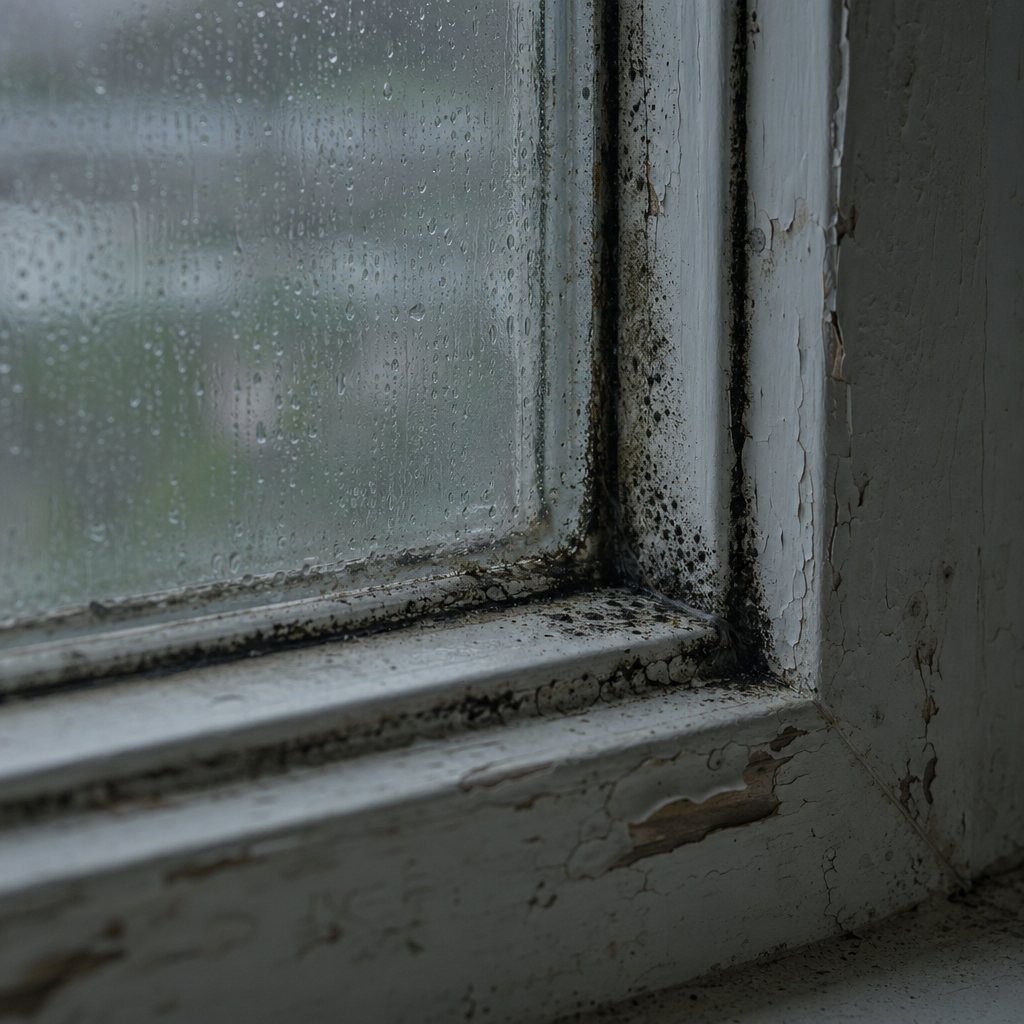
A few droplets on the glass each morning might seem harmless — and on their own, they are. Water on a window isn’t toxic. But leave that moisture sitting day after day, week after week, and the damage compounds in ways that go far beyond a foggy view. If you’ve been wondering why my windows are sweating and simply wiping them dry each morning, the real question is what’s happening to the surfaces around them while you’re not looking.
Mold Growth and Health Risks from Persistent Moisture
Mold spores are already floating in your indoor air — that’s normal. What they need to colonize is sustained dampness on a surface they can feed on. Research into mold growth timelines shows that spores can begin germinating within 24 to 48 hours of moisture exposure on porous materials, with visible colonies forming within one to three weeks depending on conditions. Window sills, silicone seals, timber frames, and the drywall surrounding your windows all qualify as ideal hosts.
Once mold establishes itself, it becomes a health concern. Common mold species found around windows — including Cladosporium, Aspergillus, and Aureobasidium — are classified as allergenic. They trigger sneezing, runny nose, itchy eyes, skin irritation, and respiratory discomfort. Children, elderly individuals, and anyone with asthma or a compromised immune system are especially vulnerable. In rare cases where toxic Stachybotrys chartarum takes hold in cellulose-rich materials nearby, the health risks escalate to include headaches, fatigue, and more serious respiratory effects.
Structural Damage You Cannot Afford to Ignore
Mold is the visible consequence. Structural decay is the hidden one. Windows with moisture pooling on sills and frames day after day set off a predictable chain of deterioration:
- Black spots appear on silicone seals and in the corners where glass meets frame — the earliest visual warning
- Discoloration or staining develops on window sills, especially painted wood or MDF
- A persistent musty odor lingers near the window, even when the glass looks dry
- Paint begins to bubble, crack, or peel on the frame and surrounding wall
- Timber frames and sills soften as wood rot sets in — once rot penetrates the grain, repair becomes far more involved than a simple sand-and-repaint
- Plaster or drywall near the window absorbs moisture, weakens, and begins to crumble
- Mold spreads from the window area into the surrounding wall cavity, compromising insulation and indoor air quality throughout the room
Each stage is harder and more expensive to fix than the one before it. A tube of mold-resistant sealant costs a few dollars. Replacing a rotted timber sill costs hundreds. Remediating mold that has spread into wall cavities can run into the thousands — and that’s before addressing the root cause that allowed it to happen.
This is exactly why how do you stop windows from condensation is a more important question than how do you clean up after it. Wiping glass dry every morning treats the symptom. Controlling humidity, improving ventilation, and ensuring your windows perform thermally — those address the cause. If you want to know how to prevent condensation on windows in a way that actually lasts, the answer is always upstream: fix the conditions that create the moisture, not the moisture itself.
Solving Your Condensation Problem Step by Step
Knowing what causes condensation is useful. Knowing exactly what to do about it — in the right order — is what actually gets your windows dry. Whether you’re dealing with a mild seasonal nuisance or persistent moisture on windows that’s already showing signs of mold, the diagnostic process is the same. Start by answering four questions: Where is the condensation forming? How humid is your indoor air? Is your ventilation adequate? And are your windows up to the task?
A Simple Diagnostic Checklist
If you’ve been asking why do i get condensation on my windows, work through these steps before spending money on anything.
First, identify the location. Interior moisture points to indoor humidity. Exterior moisture means your windows are insulating well. Moisture between panes means a failed seal that needs professional attention. Second, grab a hygrometer and check your readings against the outdoor temperature targets covered earlier — this single step reveals whether humidity is the primary driver. Third, assess airflow: are exhaust fans running long enough, are trickle vents open, and are bedroom doors staying closed overnight in sealed rooms? Fourth, evaluate the windows themselves — single-pane glass, non-thermally-broken metal frames, or foggy sealed units all point to the window as a contributing factor.
With those answers in hand, prioritize your actions from lowest cost to highest impact.
- Reduce moisture at the source — cover pots while cooking, run exhaust fans during and after showers, move laundry drying outdoors, and limit unvented gas appliance use
- Improve ventilation — open windows briefly for cross-ventilation, keep trickle vents open, and consider an HRV or ERV if your home is tightly sealed
- Monitor humidity actively — use a hygrometer in problem rooms and deploy a portable dehumidifier when readings consistently exceed safe thresholds for current outdoor conditions
- Upgrade windows if they are the weak link — replace single-pane glass, failed sealed units, or frames without thermal breaks
Most homeowners find that steps one through three resolve the problem entirely. What causes condensation on windows is almost always environmental — too much moisture, too little airflow — and those are factors you control without touching the windows at all. Condensation on windows in winter responds especially well to humidity management because the fix is behavioral, not structural.
When Window Upgrades Make the Most Difference
Sometimes, though, the windows genuinely are the bottleneck. If you’re still running single-pane glass, the interior surface will always run cold enough to collect moisture at even moderate humidity levels. If sealed units have failed and you see haze trapped between panes, no amount of ventilation restores that lost insulation. And if your aluminium frames lack a thermal break, the frame itself becomes a condensation magnet regardless of how good the glazing is.
In these cases, upgrading is the most permanent fix available. Modern double- or triple-pane units with Low-E coatings, argon gas fill, and thermally broken frames keep interior surfaces warm enough to resist condensation under normal living conditions. For homeowners, renovators, and builders exploring aluminium options specifically, MEICHEN’s aluminium window range offers thermally broken systems built to Australian standards — combining the slim profile and durability of aluminium with the energy efficiency needed to keep interior surfaces above the dew point.
The bottom line is straightforward. Condensation is not a mystery and it’s not a defect. It’s a predictable response to humidity, temperature, and surface performance — three variables you can measure, manage, and, when necessary, upgrade your way out of. Start with the cheapest fixes, measure the results, and escalate only if the problem persists. Your windows — and the walls around them — will thank you for it.
Frequently Asked Questions About Condensation on Windows
1. Why do my windows get condensation on the inside every morning?
Morning condensation forms because overnight temperatures drop, your heating cycles off, and the glass surface cools while moisture from breathing and other sources builds up in sealed rooms. When the glass temperature falls below the dew point of the humid indoor air, water vapor converts to visible droplets. Bedrooms with closed doors are especially prone because two people breathing in a sealed space for eight hours produce a significant amount of moisture with nowhere to escape. Keeping a door or trickle vent open overnight and pulling curtains slightly away from the glass can reduce morning moisture noticeably.
2. Is condensation on the outside of my windows a problem?
Exterior condensation is actually a positive sign. It appears on humid mornings when the outer pane stays cool because your window’s insulation is preventing indoor heat from warming it. Warm, moisture-rich outdoor air then condenses on that cool exterior surface. This typically clears by midday as the sun warms the glass and requires no action. If you see exterior condensation regularly, it confirms your glazing is performing its insulating job well.
3. What does condensation between window panes mean and can it be fixed?
Condensation trapped between the panes of a double- or triple-glazed window indicates a failed seal. When the seal breaks, the insulating gas escapes and outside air carrying moisture enters the gap, creating a hazy or foggy appearance you cannot wipe from either side. Unlike interior condensation, this cannot be resolved with ventilation or dehumidifiers. The insulated glass unit has lost its thermal performance and typically needs replacement. Check your manufacturer warranty first, as many cover seal failure for a set number of years.
4. What humidity level should I maintain indoors to prevent window condensation?
The ideal indoor relative humidity for most homes sits between 40% and 55%, but the safe maximum shifts with outdoor temperature. As it gets colder outside, your window glass chills further, so indoor humidity needs to be lower to avoid condensation. For example, when outdoor temperatures are between 20 and 40 degrees Fahrenheit, aim for below 40% RH. When temperatures drop below zero, keep humidity below 25%. A digital hygrometer placed in problem rooms gives you real-time readings so you can adjust ventilation or run a dehumidifier before moisture appears on the glass.
5. Do thermally broken aluminium windows help reduce condensation?
Yes. Traditional aluminium frames conduct heat rapidly, making the interior frame surface cold enough to attract condensation. Thermally broken aluminium windows include an insulating polymer barrier built into the frame profile that disrupts this heat transfer. The interior surface stays warmer, significantly reducing condensation risk at the frame. Modern thermally broken aluminium systems, such as those in MEICHEN’s aluminium window range built to Australian standards, perform comparably to naturally insulating materials like vinyl or wood while retaining aluminium’s strength, slim profile, and low maintenance requirements.
More Window & Door Guides