Recognising Faded Aluminium Window Frames
Run your finger along an aluminium window frame that has spent a decade or two in the Australian sun. If it comes away with a fine, chalky white residue — or if the frame’s colour looks washed out and uneven — you’re looking at fading in action. It’s one of the most common complaints from homeowners with old aluminum window frames, yet few people understand what’s actually happening beneath that dull surface.
This guide breaks down the science, the causes, and the fixes without pushing you toward any single solution. Whether your frames need a simple clean or a complete rethink, you’ll have a clear path forward by the end.
Signs Your Aluminium Frames Have Faded
Fading doesn’t arrive overnight. It builds gradually, which is why many homeowners don’t notice until the damage is well established. Here’s what to look for:
- Chalky white powder on bare or lightly coloured frames — this rubs off on your hand when touched
- Patchy lightening on coloured or powder-coated frames, especially on sun-facing elevations
- Loss of gloss — the frame looks matte or flat where it once had sheen
- Rough texture — the surface feels gritty or sandpapery rather than smooth
Oxidized aluminum window frames often display a mottled, grey-white discolouration that standard window cleaning won’t remove. Unlike surface grime, this chalky layer is chemically bonded to the metal and requires a different approach entirely.
Cosmetic Fading vs Structural Corrosion
Not all frame deterioration is the same. The distinction between surface fading and deeper aluminium window corrosion determines whether you’re facing a cosmetic fix or a structural problem.
- Cosmetic fading: Even colour loss, chalky residue, dull finish — the frame profile remains intact and seals still function
- Structural window corrosion: Pitting (small craters in the metal), flaking or bubbling paint, white crystalline deposits in joints, and compromised seal integrity
If your frames show only the first set of symptoms, the underlying aluminium is almost certainly sound. Pitting and flaking, on the other hand, signal that corrosion has moved beyond the surface and may be affecting the frame’s ability to keep water out.
Why This Matters for Your Home
Faded frames aren’t just an eyesore. They drag down curb appeal — the kind of detail buyers notice during inspections — and can signal neglected maintenance to insurers. More practically, advanced fading often coincides with degraded weather seals, which means drafts, moisture ingress, and higher energy bills. Catching the problem early keeps your options open and your costs down.
So what’s actually driving this breakdown at a molecular level? The answer involves UV radiation, oxygen, and a surprisingly complex chemical process happening right on the surface of the metal.
The Science Behind UV Degradation and Oxidation
Fading isn’t simply colour disappearing. It’s a chemical reaction — or more accurately, several reactions working in parallel — triggered by sunlight, moisture, and atmospheric oxygen. The mechanism differs depending on whether your frames are powder coated, anodised, or bare mill finish aluminium, but the underlying driver is the same: energy from UV radiation breaks molecular bonds.
How UV Radiation Breaks Down Coatings
Powder coated aluminum windows rely on a thermoset polymer film to provide colour and protection. That film is made of long-chain resin molecules held together by chemical bonds. When UV photons in the 295–400 nm wavelength range strike those molecules, they carry enough energy to cleave the polymer chains through a process called photooxidation.
Here’s the sequence in plain terms: UV light excites the resin molecules into an unstable state. Oxygen reacts with the resulting radicals, forming peroxides that break further bonds. As chains fragment, pigment particles that were once locked inside the coating are released to the surface. That loose pigment is exactly what you feel as chalk when you run your finger across a faded frame.
Colour shift follows the same logic. Organic pigments — particularly reds, blues, and dark shades — absorb UV energy intensely, accelerating bond breakage in the surrounding resin. The pigment molecules themselves degrade, and the colour literally fades from the outside in.
Oxidation and the Aluminium Oxide Layer
Beneath any coating, or on unprotected mill finish frames, aluminium reacts with atmospheric oxygen almost instantly. This forms a thin passivation layer of aluminium oxide (Al₂O₃) — typically just 2 to 5 nanometres thick — that actually protects the metal from deeper attack.
In benign environments, that natural oxide stays thin and uniform. In aggressive conditions — high humidity, temperature cycling, airborne contaminants — the layer thickens unevenly. The result is the dull, mottled grey appearance homeowners recognise as oxidized windows. On anodized aluminum windows, the engineered oxide is far thicker and more consistent, which is why anodised frames tend to dull gradually rather than chalk. But even anodised surfaces aren’t immune; alkaline cleaners or prolonged coastal exposure can erode the protective layer over decades.
Salt Spray, Pollution, and Accelerated Degradation
Geography makes an enormous difference to how quickly frames deteriorate. In coastal regions, airborne chloride ions from ocean spray penetrate micro-defects in coatings and attack the oxide layer beneath. Research on architectural aluminium in marine environments shows that chloride deposits have been measured more than 80 kilometres from the shoreline, meaning even properties well back from the beach face meaningful salt exposure.
In urban and industrial zones, sulphur dioxide and nitrogen oxides react with moisture to form acidic films on frame surfaces. These lower the local pH, weakening the oxide barrier and accelerating coating breakdown. The combined effect of chlorides and industrial pollutants can be synergistic — the two together cause corrosion rates far greater than either alone.
Fading is not just a colour issue. It’s a progressive chemical process — UV-driven polymer breakdown on the surface, and electrochemical oxidation beneath — that left unchecked, transitions from cosmetic concern to structural vulnerability.
Understanding the mechanism is useful, but the practical implication is this: the type of finish on your frames determines how fading starts, how fast it progresses, and what you can realistically do about it. Powder coat, anodised, and bare aluminium each follow a different degradation pathway — and each demands a different response.
How Different Aluminium Finishes Fade
Three distinct finish types dominate aluminium window frames in Australian homes, and each one degrades through a different mechanism, on a different timeline, producing a different visual result. Grouping them together — as most guides do — leads to misdiagnosis and wasted effort. A restoration method that works brilliantly on powder coated frames can damage an anodised surface, and vice versa.
Knowing which finish you’re dealing with is the first step toward choosing the right fix.
Powder-Coated Frames
Powder coating windows is by far the most common finish on residential aluminium frames installed in Australia from the 1980s onward. The process involves electrostatically spraying a dry thermoset polymer powder onto the aluminium profile, then curing it in an oven at around 180–200°C. The result is a tough, uniform film typically 60–80 microns thick that bonds mechanically and chemically to the metal surface.
When powder-coated frames fade, the symptoms are distinctive:
- Chalky residue on the surface — loose pigment particles released as the resin matrix breaks down
- Gloss reduction — the surface transitions from satin or gloss to flat matte
- Colour shift — most noticeable on darker shades, where the topmost layer bleaches while deeper layers retain original colour
- Micro-cracking in advanced cases — fine surface cracks visible under magnification that allow moisture beneath the coating
Expected lifespan depends heavily on coating quality. The Qualicoat certification system provides a useful benchmark: Class 1 coatings are rated for moderate environments and typically last 15–20 years before noticeable fading. Class 2 coatings use higher-grade resins (often fluoropolymer-modified) and maintain appearance for 20–25 years, even in aggressive conditions. Class 3 coatings — the highest tier — are specified for extreme UV and coastal exposure, with durability expectations exceeding 25 years.
Most standard residential frames in Australia carry a Class 1 equivalent coating. If your home is 15-plus years old and the frames are chalking, they’ve likely reached the natural end of their coating’s service life rather than suffering from a defect.
Anodised Aluminium Frames
Anodised finishes work on a fundamentally different principle. Rather than applying a separate material on top of the aluminium, the anodising process grows a controlled oxide layer from the metal itself through an electrochemical bath. The resulting layer is integral — it can’t peel or flake the way a coating can because it is the aluminium, just in oxidised form.
Anodized aluminium window frames were particularly popular in Australian commercial and residential projects from the 1960s through the 1990s. Many older apartment buildings, office towers, and mid-century homes still feature their original anodised frames. Architectural-grade anodising (Class I, per AAMA 611 standards) produces an oxide layer of 18 microns or more — considerably thicker than the natural passivation layer — creating a surface comparable in hardness to sapphire.
Fading on anodised frames looks quite different from powder coat degradation:
- Gradual, uniform dulling rather than patchy chalking
- Loss of the characteristic metallic lustre over decades
- Slight colour change on dyed anodised finishes (bronze tones lightening, for instance)
- No loose pigment or chalky residue when touched
Well-maintained anodised finishes can last 20–30 years or more in moderate environments. Their Achilles heel is chemical sensitivity. Alkaline cleaners — including many common household detergents and certainly anything used for cleaning mortar or concrete splash — dissolve the oxide layer and cause irreversible clouding or etching. This makes old metal window frames with anodised finishes vulnerable during nearby renovation work, where concrete dust and alkaline wash-down are common hazards.
Mill Finish (Bare Aluminium) Frames
Mill finish aluminium is the raw state of the metal after extrusion — no coating, no anodising, just bare alloy with its thin natural oxide layer providing the only protection. It has a shiny, slightly streaky appearance when new, with visible extrusion lines running along the profile.
You’ll encounter mill finish frames in older industrial buildings, some mid-century homes, agricultural structures, and budget commercial fit-outs where appearance wasn’t a priority. In Australian residential settings, they’re relatively uncommon on newer builds but turn up regularly in pre-1970s properties and sheds.
Bare aluminium oxidises progressively when exposed to the elements. The natural oxide layer thickens unevenly over time, producing:
- A dull, grey-white powdery appearance that replaces the original metallic sheen
- Surface roughness that traps dirt and makes the frame look darker in some areas, lighter in others
- In coastal or industrial zones, pitting and white crystalline corrosion products at joints and crevices
Mill finish has no defined “lifespan” in the way coated frames do — it just continues oxidising. In a benign inland environment, the oxide layer stabilises and the frame remains structurally sound indefinitely, despite looking weathered. In aggressive environments, corrosion can eventually compromise wall thickness at vulnerable points like drainage slots and screw holes.
Finish Type Comparison
| Characteristic | Powder-Coated | Anodised | Mill Finish (Bare) |
|---|---|---|---|
| Appearance when faded | Chalky residue, patchy colour loss, gloss reduction | Uniform dulling, loss of metallic lustre, no chalking | Grey-white powdery oxidation, surface roughness, uneven tone |
| Typical lifespan before visible fading | 15–25 years (varies by Qualicoat class) | 20–30+ years (if not chemically damaged) | 5–10 years to noticeable dulling; ongoing oxidation thereafter |
| Primary degradation mechanism | UV photodegradation of polymer resin; pigment release | Gradual erosion of oxide layer; chemical attack from alkaline substances | Natural atmospheric oxidation; accelerated by moisture and chlorides |
| Restoration approach | Cutting compound to remove chalk; recoat or repaint if colour is lost | Specialist cleaning only; cannot be recoated without full strip and re-anodise or conversion to paint system | Mechanical cleaning and polish; prime and paint for lasting protection |
This distinction matters because the right intervention for one finish type can be the wrong one for another. Applying an abrasive cutting compound to restore a chalky powder coat makes perfect sense — it removes degraded resin and exposes fresh pigment. That same compound on an anodised frame would strip the protective oxide you’re trying to preserve.
The degradation pathway also shapes how urgently you need to act. Powder coat fading is largely cosmetic until cracking allows moisture beneath the film. Anodised dulling rarely threatens structural integrity unless chemical damage has occurred. Mill finish oxidation is the most unpredictable — benign in sheltered locations, potentially aggressive in coastal or industrial zones where chlorides and pollutants drive pitting corrosion deep into the alloy.
With the finish type identified and its degradation pattern understood, the next logical question is what’s speeding the process up — or slowing it down — on your specific home. Orientation, geography, and even the original colour choice all shift the timeline considerably.
Orientation, Environment, and Colour Factors That Accelerate Fading
Two identical aluminium frame windows on the same house can age decades apart in appearance. One stays crisp and consistent while the other chalks and bleaches. The difference comes down to three variables: which direction the frame faces, what’s in the air around it, and what colour it was coated in the first place.
Orientation and Sun Exposure
In Australia, north-facing and west-facing elevations cop the worst UV punishment. North-facing frames receive sustained solar exposure throughout the day as the sun tracks across the northern sky. West-facing frames get hit with intense afternoon radiation combined with peak ambient temperatures — a double stress that accelerates both coating breakdown and thermal cycling of the aluminium beneath.
According to Valmond & Gibson’s technical guidance, this difference is significant enough to justify specifying different coating grades on different elevations of the same building. For homeowners assessing existing frames, the practical takeaway is straightforward: inspect your north and west faces first. These will show fading earliest and most severely. South-facing frames, by contrast, sit in relative shade for most of the year and often outlast their sun-exposed counterparts by a decade or more.
West-facing frames face an additional challenge beyond raw UV dose. The afternoon heat causes the aluminium profile to expand and contract more aggressively than frames on cooler elevations. Over thousands of cycles, this thermal movement stresses coating adhesion at joints and corners — exactly the points where moisture can eventually penetrate.
Environmental Exposure Zones
Geography shapes degradation as much as orientation does. Research into atmospheric corrosion severity demonstrates that corrosion rates can vary by a factor of 40 between benign and aggressive sites — and the difference often comes down to what’s suspended in the air.
Australian homes fall broadly into three exposure categories:
- Coastal (within 1 km of tidal water): Airborne chloride ions from sea spray penetrate coating micro-defects, attack the oxide layer, and accelerate sub-surface corrosion. Salt deposits can travel inland more than 25 km in onshore winds, though concentration drops significantly with distance. Commercial aluminium windows on beachfront properties in Queensland or Western Australia face some of the most aggressive conditions in the country.
- Urban and industrial: Sulphur dioxide, nitrogen oxides, and fine particulates from traffic and manufacturing settle on frames and react with surface moisture to form weak acids. These lower local pH and weaken the protective oxide beneath coatings. The effect is less dramatic than salt spray but persistent and cumulative.
- Rural and inland: Lower pollutant loads and no salt exposure mean slower degradation overall. However, clear inland skies transmit UV more efficiently — less atmospheric scattering means frames in outback or semi-arid regions can receive higher UV doses than their coastal counterparts, even without the chemical aggression. Commercial aluminum window frames on rural industrial sheds often show significant UV fading despite minimal corrosion.
Each environment attacks through a different mechanism: chlorides drive electrochemical corrosion, pollutants drive acid attack, and clear-sky UV drives photodegradation of coatings. A frame’s actual condition reflects the combined load of all three — which is why a coastal-industrial site like parts of Port Kembla or Gladstone can degrade frames far faster than either factor alone would predict.
Colour Selection and UV Resistance
Here’s a factor that rarely gets discussed: the colour you chose (or inherited) has a direct impact on how quickly fading becomes visible. Darker colours absorb more UV energy, which accelerates resin breakdown in the coating. Facade coating specialists confirm that darker shades and solid colours degrade faster than lighter and metallic alternatives under the same exposure conditions.
The chemistry is straightforward. Organic pigments — the molecules that create vivid reds, deep blues, and bright greens — are inherently less UV-stable than inorganic pigments. They absorb UV wavelengths aggressively, which breaks down both the pigment itself and the surrounding resin matrix. Inorganic pigments (metal oxides, for the most part) reflect or transmit UV rather than absorbing it, giving the coating less destructive energy to manage.
Ranked from most to least UV-resistant based on pigment chemistry:
- Metallic finishes (silvers, champagne, metallic grey) — reflective aluminium flakes deflect UV rather than absorbing it
- Light inorganic colours (white, cream, light grey) — minimal UV absorption, highly stable titanium dioxide pigments
- Earth tones (beige, tan, terracotta, olive) — iron oxide pigments with good inherent UV stability
- Medium greys and charcoals — carbon-based pigments are stable but higher heat absorption increases thermal stress
- Dark blues and greens — often use organic pigments that degrade more quickly under sustained exposure
- Reds, bright yellows, and vibrant oranges — organic pigments with the lowest UV resistance; these fade earliest and most visibly
For homeowners choosing colours for new or recoated frames, this ranking offers genuine future-proofing value. A north-facing window in coastal Queensland coated in deep red faces the worst possible combination of UV dose and pigment vulnerability. The same frame in silver metallic or light grey could look sharp for an extra decade under identical conditions.
Orientation, environment, and colour interact as multipliers rather than independent factors. A mildly aggressive environment combined with a vulnerable colour on an exposed face compounds the degradation rate well beyond what any single factor would cause. Understanding where your frames sit on this risk spectrum is the starting point for deciding what to actually do about them — whether that’s a simple clean, a targeted restoration, or something more substantial.
Diagnosing Your Frames and Choosing the Right Fix
Knowing why your frames have faded is one thing. Deciding what to do about it is another. The right response depends entirely on severity — and severity isn’t always obvious at a glance. A frame that looks rough might only need a wash, while one that appears mildly chalky could be hiding pitting beneath a degraded coating.
This diagnostic framework matches what you’re seeing to the intervention that actually makes sense, saving you from over-spending on a cosmetic issue or under-responding to a structural one.
Severity Assessment Checklist
Run through each symptom below and identify where your frames sit. Most homes won’t fall neatly into one category — north-facing frames might rate moderate while south-facing ones are still mild. That’s normal. Assess each elevation independently.
| Symptom Observed | Severity Level | Recommended Action |
|---|---|---|
| Slight dulling or loss of sheen; no residue when touched | Mild | Clean with pH-neutral detergent; monitor annually |
| Chalky residue transfers to fingers; colour appears lighter than original | Mild to Moderate | Deep clean and assess; cutting compound may restore surface |
| Visible colour patches — some areas noticeably lighter or different in tone | Moderate | Professional assessment; likely needs recoating or repainting |
| Pitting, bubbling, or flaking of the coating surface | Moderate to Severe | Aluminum window frame repair by a specialist; strip and recoat or replace |
| Seal failure, water ingress, or visible corrosion at joints and drainage slots | Severe | Structural assessment required; replacement likely necessary |
When Cleaning Is Enough
Here’s something many homeowners overlook: a surprising number of frames that look faded are actually just dirty. Years of accumulated grime, pollution residue, and oxidation deposits sit on the surface and mimic the appearance of genuine coating failure. A proper wash with a pH-neutral cleaner and soft microfibre cloth removes this layer and reveals the true condition beneath.
If the frame looks noticeably better after a thorough clean — colour more even, surface smoother — you’re probably dealing with mild degradation that doesn’t yet require intervention beyond regular maintenance. This is particularly common on old aluminium windows in sheltered positions where airborne dirt accumulates but UV exposure is limited.
When Restoration or Recoating Is Needed
The middle ground is where most faded frames actually sit. The coating has genuinely degraded — chalking is real, colour loss is permanent, gloss won’t return with cleaning alone — but the aluminium underneath remains structurally sound. No pitting. No seal failure. No water getting through.
This is the sweet spot for aluminum window repair: the frame itself has decades of life left, but the surface finish needs renewing. Options range from DIY repainting through to professional on-site spray refinishing or full powder recoating. The choice depends on your budget, how long you want the result to last, and whether the frames can be removed for off-site treatment.
Frames in this category are worth saving. The aluminium profile, hardware, and weatherproofing geometry are all intact — only the cosmetic layer has failed. Replacing the entire frame to solve a surface problem is like scrapping a car because the paint has faded.
When Replacement Makes More Sense
Replacement becomes the practical choice when the problem goes deeper than the finish. Three scenarios tip the balance:
- Structural corrosion: Deep pitting, perforation at drainage slots, or visible metal loss at corners means the profile can no longer perform its weatherproofing function. No amount of recoating fixes a frame that’s lost wall thickness.
- Thermal performance gap: Many old aluminum windows — particularly those from before the 1990s — use non-thermally-broken profiles with single glazing. Even if the frames are cosmetically restorable, their energy performance falls well below modern standards. In climate zones with hot summers or cold winters, the ongoing energy cost can justify replacement on efficiency grounds alone.
- Cost parity: When professional refinishing quotes approach 60–70% of new frame cost — which happens with complex multi-panel configurations or heavily corroded sections — the economics favour replacement. New frames deliver a fresh coating, modern thermal breaks, upgraded hardware, and a full warranty for a marginal cost increase.
The decision isn’t always binary. Some homes benefit from a mixed approach: replacing severely degraded frames on exposed elevations while restoring sound frames elsewhere. What matters is matching the intervention to the actual condition rather than applying a blanket solution across the entire house.
For frames that fall into the mild-to-moderate range — the majority of cases — the next question is practical: what does the restoration process actually involve, and how do the methods differ depending on whether you’re working with powder coat, anodised, or bare aluminium?
Restoration Methods for Every Finish Type
The gap between “your frames are faded” and “here’s how to fix them” is where most guides fall short. They offer generic advice that ignores the single most important variable: what finish you’re actually working with. A restoration technique that revives a powder-coated frame can permanently damage an anodised one. Bare aluminium needs a completely different preparation sequence again. Getting this wrong doesn’t just waste a weekend — it can make the problem worse.
Cleaning and Restoring Powder-Coated Frames
Start with proper cleaning aluminum window frames using a pH-neutral detergent diluted in warm water. Avoid anything alkaline — standard household cleaners, sugar soap, and ammonia-based products can attack the remaining coating. Use a soft microfibre cloth or non-abrasive sponge, working in sections and rinsing thoroughly so dissolved contaminants don’t dry back onto the surface.
If chalking is present but the underlying colour still exists beneath the degraded layer, a fine automotive cutting compound can bring the surface back. Apply a small amount to a soft cloth and work in circular motions over a test area. The compound removes the oxidised resin layer and loose pigment, revealing fresher coating beneath. Follow with a UV-protective clear coat or quality car wax to slow further degradation.
Be honest about the limits of this approach. If the colour is visibly patchy, if light areas don’t respond to compound, or if you can see the primer or bare metal through the coating, the damage has gone too deep for surface restoration. At that point, the frame needs repainting or professional recoating — no amount of polish will bring back pigment that’s already gone.
Painting and Repainting Aluminium Frames
Can you paint aluminium window frames? Absolutely — but the process is nothing like painting timber. Aluminium is non-porous, forms an oxide layer that resists adhesion, and expands and contracts significantly with temperature changes. Skip the preparation steps and you’ll have peeling paint within a year or two. Nail the preparation and a DIY job can hold up for 8 to 12 years in moderate conditions.
For anyone wondering how to repaint aluminium window frames, the critical sequence looks like this:
- Degrease thoroughly — use tri-sodium phosphate (TSP) or a dedicated metal degreaser to strip oils, silicone residues, and old wax
- Remove oxidation — apply an aluminium etching solution (phosphoric acid-based) to dissolve the oxide layer and create a chemical key
- Abrade lightly — scuff the entire surface with 180–220 grit sandpaper or a fine abrasive pad; avoid anything coarser than 120 grit
- Remove all dust — wipe down with a tack cloth or clean rag dampened with isopropyl alcohol
- Mask carefully — tape off glass, seals, and surrounding walls with quality painter’s tape pressed firmly to prevent bleed-through
- Apply specialist primer — use a self-etching primer for residential applications or a two-part epoxy primer for coastal or high-exposure environments
- Apply two topcoats — use 100% acrylic exterior paint or urethane-modified enamel; allow full drying time between coats (typically 4–24 hours depending on conditions)
Surface preparation accounts for roughly 80% of a paint job’s ultimate longevity on aluminium. The primer and topcoat matter, but if the surface beneath them isn’t clean, etched, and properly keyed, adhesion failure is virtually inevitable — often within two to three years.
Knowing how to paint aluminum window frames correctly also means understanding how the substrate changes the approach. Painting anodised aluminium window frames demands extra mechanical preparation because the hard oxide layer resists chemical etching. You need to aggressively dull the entire surface with 180–220 grit pads until no sheen remains, then use a two-part epoxy primer rather than a standard self-etch product. The anodic layer is so dense that painting anodized aluminum window frames without this step almost guarantees adhesion failure — the paint simply cannot grip a smooth, glassy oxide surface.
Bare aluminium, by contrast, responds well to chemical etching solutions. The etch dissolves the natural oxide and micro-roughs the metal in one step, creating an excellent base for self-etching primer. If the existing powder coat is still intact and merely faded (no flaking or cracking), you can treat it as a sound base: clean, scuff with 220 grit, and apply a high-adhesion bonding primer directly without stripping back to bare metal.
For topcoat selection, two options dominate for exterior aluminium: two-pack polyurethane (harder, more chemical-resistant, requires careful mixing) and 100% acrylic latex (easier to apply, flexible enough to handle thermal cycling, and available in spray cans for small jobs). Either way, apply thin, even coats — thick application causes runs on narrow frame profiles and extends cure times dramatically.
Professional Powder Recoating
When DIY painting won’t deliver the durability you need — or when the frames are too numerous, too large, or too visible to risk brush marks — professional powder recoating is the next step. Two service models exist in Australia:
Off-site recoating involves removing the window frames, transporting them to a powder coating facility, stripping the old finish (often by chemical bath or media blasting), applying fresh powder electrostatically, and curing in an industrial oven. This delivers a factory-quality result indistinguishable from a new frame’s finish, with coating thickness and adhesion that meet Qualicoat or GSB International certification standards. The downside is disruption: your openings are exposed during the process, typically for one to two weeks, requiring temporary weatherproofing.
On-site spray refinishing uses two-pack polyurethane or acrylic coatings applied by spray gun without removing the frames. It’s faster, less disruptive, and considerably cheaper than off-site powder coating. The trade-off is longevity — a professional spray job typically lasts 10–15 years versus 20–25 years for oven-cured powder coat. For frames in good structural condition that just need a cosmetic refresh, on-site spraying often hits the right balance of cost, disruption, and result.
When engaging a professional, ask for specific coating certifications. Qualicoat (European standard) and GSB International both test powder coatings for UV resistance, adhesion, and corrosion performance under accelerated weathering. A recoater using certified powders and proper pre-treatment (multi-stage chromate-free chemical conversion) gives you a quantifiable benchmark for how long the finish should last — rather than a vague “it’ll be fine” guarantee.
Professional recoating typically costs 30–50% of full frame replacement for a standard window, making it an attractive option when the aluminium profiles are structurally sound but cosmetically spent. The economics shift when frames also need seal replacement, hardware upgrades, or thermal performance improvements — at which point the cost comparison between refinishing and replacement becomes much tighter.
Comparing Costs
Knowing the restoration methods is one thing. Knowing what each one actually costs — in money, time, and long-term value — is what drives the final decision. The price gap between a weekend DIY repaint and a full frame replacement is enormous, but so is the gap in durability. Here’s an honest breakdown to help you weigh up what makes sense for your home and budget.
DIY Restoration Costs and Limitations
A DIY approach to repainting aluminium windows is the cheapest entry point. Materials for a typical home with 10–12 windows — degreaser, etching primer, topcoat paint for aluminum windows, brushes or spray cans, sandpaper, masking tape — run between $300 and $800 AUD depending on product quality. Add a weekend or two of labour (realistically 15–30 hours across preparation, priming, and painting), and you’re looking at a total outlay well under $1,000 for materials alone.
The catch is longevity. A careful DIY job using quality acrylic or enamel paint typically holds up for 5–8 years before chalking, peeling, or colour shift becomes noticeable again. Compare that to professionally applied powder coating, which delivers 15–25 years of service. If you’re repairing aluminium window frames that only need to last until a planned renovation or sale, DIY makes perfect sense. For a long-term home, you’ll likely be repeating the process two or three times before a professional coat would need its first touch-up.
There’s also a skill factor. Knowing how to repaint aluminium windows properly — the etching, the primer compatibility, the thin even coats — determines whether you get eight good years or two disappointing ones. Mistakes in preparation are expensive to fix because stripping failed paint off aluminium is harder than starting fresh.
Professional Refinishing Options and Pricing
Professional on-site spray refinishing sits in the middle ground. Expect to pay $200 to $500 per window for a qualified spray painter using two-pack polyurethane coatings, with total project costs for a standard Australian home ranging from $2,500 to $7,500 AUD. That covers surface preparation, priming, and two topcoats applied with professional spray equipment — delivering a far more uniform result than brush or rattle-can application.
For powder coating aluminum windows off-site, costs rise further because the frames must be removed, transported, chemically stripped, recoated in an industrial oven, and reinstalled. Budget roughly $400 to $700 per window all-in for this service, with the trade-off being a factory-quality finish that meets Qualicoat certification standards and lasts 20–25 years. The disruption factor is significant — windows are out of your home for one to two weeks — but the result is essentially indistinguishable from brand-new frames.
Both professional options require the frames to be structurally sound. If the aluminium profiles show pitting, seal failure, or metal loss, no coating will solve the underlying problem. A reputable refinisher will tell you this upfront — and that’s when the replacement conversation becomes unavoidable.
Full Frame Replacement Considerations
Replacing aluminium windows is a different financial proposition entirely. Supply and installation for quality double-glazed, thermally broken aluminium frames typically runs $800 to $2,300 per window in Australia, with whole-house projects for 10–15 openings landing between $15,000 and $40,000 AUD. Hidden costs — structural modifications for differently sized units, replastering reveals, repainting surrounding walls — can add $1,000 to $3,000 on top.
That said, replacement delivers benefits that no refinishing method can match: modern thermal breaks that dramatically reduce heat transfer, upgraded glazing for acoustic and energy performance, fresh hardware and seals, and a full manufacturer’s warranty. For homes with old single-glazed frames where energy loss is a genuine concern, the ongoing savings on heating and cooling can partially offset the higher upfront investment over a 10–15 year horizon.
When replacement is the right path, the coating specification matters just as much as the frame itself. Choosing frames with Qualicoat Class 2 or 3 certified powder coatings and UV-resistant colour options — such as those available from MEICHEN’s aluminium window range — ensures the new investment holds its appearance for decades rather than repeating the fading cycle within 15 years.
Cost Comparison at a Glance
| Factor | DIY Restoration | Professional Refinishing | Full Replacement |
|---|---|---|---|
| Approximate cost (10–12 windows) | $300–$800 (materials only) | $2,500–$7,500 (on-site spray) or $4,000–$8,400 (off-site powder coat) | $15,000–$40,000 (supply and install) |
| Expected finish lifespan | 5–8 years | 10–15 years (spray) or 20–25 years (powder coat) | 25–30+ years (with certified coatings from suppliers like MEICHEN) |
| Performance improvement | Cosmetic only | Cosmetic only (existing seals and glazing unchanged) | Thermal, acoustic, weatherproofing, and security upgrades |
| Disruption level | Low — work around the home over a weekend or two | Low to moderate — on-site spray takes 1–3 days; off-site removal takes 1–2 weeks | High — multi-day installation with openings exposed during work |
The table makes the trade-offs visible. DIY costs the least upfront but cycles faster, meaning cumulative spend over 20 years can approach professional refinishing costs without ever delivering the same quality. Professional refinishing hits the value sweet spot for structurally sound frames — roughly 20–50% of replacement cost for a result that lasts the majority of a replacement frame’s coating life. Replacement costs the most but resets everything: structure, thermal performance, seals, and finish in one intervention.
Most homeowners land somewhere in the middle — frames that are cosmetically tired but structurally fine. For them, professional spray refinishing delivers the strongest return on investment. The frames that genuinely need replacing are the minority: those with confirmed corrosion damage, failed seals beyond repair, or single-glazed profiles in climate zones where energy performance standards demand better.
Whichever path you choose, the finish won’t stay pristine forever without maintenance. The difference between a coating that lasts its full rated lifespan and one that fades prematurely almost always comes down to what happens after installation — the cleaning schedule, the products used, and the specification choices made upfront.
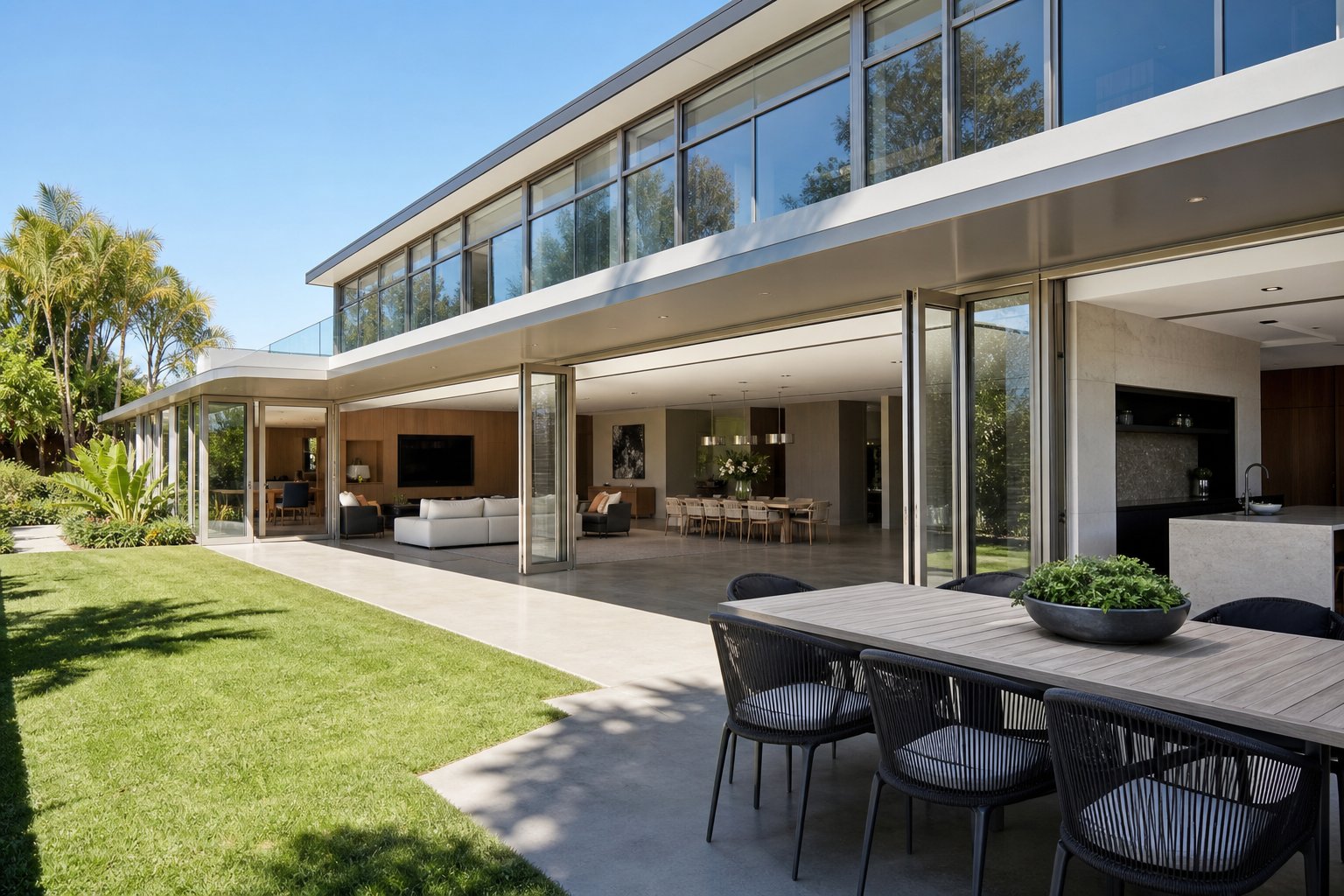
Prevention and Maintenance That Actually Works
A fresh coating or a brand-new frame only stays fresh if you maintain it. The generic advice — “clean your windows regularly” — isn’t wrong, but it’s useless without specifics. How often is regularly? What counts as cleaning? And does the schedule change if you live 500 metres from the ocean versus 50 kilometres inland? It does, dramatically.
Maintenance Schedules by Environment
How do you clean aluminium window frames effectively enough to prevent premature fading? Match your routine to your exposure zone. The table below provides specific frequencies based on environmental aggression — not guesswork, but intervals aligned with industry maintenance guidance for architectural aluminium in varying conditions.
| Environment | Cleaning Frequency | What Each Session Should Include |
|---|---|---|
| Coastal (within 1 km of water) | Every 3 months (rinse with fresh water monthly) | Full wash with pH-neutral aluminum window frame cleaner; inspect seals for brittleness; check for early chalking or salt buildup in drainage channels; lubricate hardware |
| Urban / Industrial | Every 4–6 months | Wash frames with diluted pH-neutral detergent and soft cloth; inspect coating surface for gloss loss or chalky residue; clear drainage slots of particulate buildup; check seal integrity |
| Rural / Inland | Every 6–12 months | General wash and rinse; visual inspection for UV-related chalking on north and west elevations; check rubber gaskets remain flexible; wipe down hardware |
A few practical rules apply across all zones. Always use a pH-neutral cleaner — not sugar soap, not ammonia-based glass sprays, not anything alkaline. Spray cleaning product onto your cloth rather than directly onto the frame so it doesn’t pool on seals or run into drainage channels. Rinse thoroughly afterward so dissolved contaminants don’t dry back on the surface. And never use abrasive pads or scouring powders; they scratch powder coat and strip anodised layers permanently.
Coastal properties deserve extra attention. A quick freshwater rinse between full cleans — even just a garden hose across the frames every few weeks — removes salt deposits before they have time to penetrate micro-defects in the coating. This single habit can extend coating life by years.
Specifying Quality Coatings for New Frames
If you’re installing new aluminium window framing or having existing frames professionally recoated, the specification choices made now determine how long your next coating lasts. Three benchmarks matter most:
Qualicoat certification class: This is the international quality mark for architectural powder coatings. Class 1 suits moderate environments — think sheltered inland positions. Class 2 uses higher-performance resins (often fluoropolymer-modified) and handles high-UV and semi-coastal exposure. Class 3 is the premium tier, specified for extreme conditions — directly coastal, tropical, or intensely sun-exposed elevations. For most Australian homes, Class 2 is the minimum worth specifying; coastal properties should insist on Class 3.
Minimum coating thickness: Qualicoat requires a minimum of 60 microns average film thickness. Thinner coatings offer less UV buffer and wear through faster. When reviewing quotes, ask whether the coater measures and certifies film thickness — reputable applicators do this as standard.
Pre-treatment standard: The preparation applied to bare aluminium before powder hits the surface is arguably more important than the powder itself. Multi-stage chromate-free chemical conversion processes (titanium or zirconium-based) create a bonding layer that dramatically improves adhesion and corrosion resistance. Older chromate-based processes work well too, but environmental regulations are phasing them out. Either way, a single acid-etch wash is not sufficient for architectural-grade durability — demand a multi-stage process.
For homeowners specifying new aluminium window frames, working with suppliers like MEICHEN who offer certified powder coating systems and custom colour consultation helps ensure long-term colour retention and fade resistance from day one. Having these conversations upfront — before manufacture — means your frames arrive with the right coating class for your specific exposure zone rather than a generic finish that may underperform in aggressive conditions.
Colour and Finish Choices That Minimise Future Fading
Revisiting the colour hierarchy from earlier in this guide: your choice of shade directly affects how quickly fading becomes visible. If longevity is the priority, lean toward colours that work with UV rather than against it.
Metallic finishes (silver, champagne, pewter) reflect UV energy rather than absorbing it, giving the resin matrix far less destructive load to manage. Light inorganic shades — whites, creams, and pale greys based on titanium dioxide pigments — rank second. Earth tones using iron oxide pigments hold up well too. The colours to avoid on high-exposure elevations are vivid reds, bright yellows, and deep organic blues — these absorb UV aggressively and show fading earliest.
If you want a dark frame colour on a north or west-facing wall, specify it in a Class 2 or 3 coating with super-durable resin chemistry. The premium adds a modest percentage to the frame cost but can double the time before visible fading appears compared to a standard Class 1 dark shade.
- Start now: Wash all frames with pH-neutral cleaner and inspect for early signs of chalking or seal deterioration
- Set a calendar reminder based on your environment zone — coastal every 3 months, urban every 4–6, inland every 6–12
- Avoid harsh chemicals: No alkaline cleaners, no ammonia, no abrasive pads — ever
- Rinse coastal frames monthly with fresh water to prevent salt accumulation between full cleans
- Inspect seals annually: Replace rubber gaskets that have hardened, cracked, or pulled away from the frame
- Apply UV-protective wax or clear coat to powder-coated frames every 12–18 months for an extra layer of defence
- When recoating or replacing, specify Qualicoat Class 2 or higher and choose UV-stable pigment colours for exposed elevations
Fading is inevitable over enough time — no coating lasts forever. But the difference between a frame that looks sharp at 20 years and one that chalks at 10 almost always comes down to these decisions: the right coating specified upfront, the right colour for the exposure, and a simple maintenance routine followed consistently. Get those three things right, and your aluminium frames will age gracefully rather than deteriorating visibly — protecting both the building envelope and the value of your home for decades to come.
Frequently Asked Questions About Faded Aluminium Window Frames
1. Can you paint over faded aluminium window frames?
Yes, aluminium frames can be painted successfully with proper preparation. The key steps include degreasing, applying an aluminium etching solution to dissolve the oxide layer, light sanding with 180-220 grit, and using a self-etching or two-part epoxy primer before topcoating with acrylic or polyurethane paint. Surface preparation accounts for roughly 80% of the paint job’s longevity. A well-executed DIY repaint typically lasts 5-8 years, while professional spray refinishing can last 10-15 years. Anodised frames require extra mechanical abrasion and a specialist adhesion promoter because the hard oxide surface resists standard primers.
2. What causes the chalky white residue on aluminium window frames?
The chalky residue is caused by UV-driven photodegradation of the powder coating. UV photons in the 295-400 nm wavelength range break polymer chains in the coating resin through a process called photooxidation. As the resin fragments, pigment particles that were locked inside the coating are released to the surface as loose chalk. On bare aluminium, the chalky appearance comes from uneven thickening of the natural aluminium oxide layer driven by moisture and atmospheric oxygen. Coastal and industrial environments accelerate this process through chloride ions and acidic pollutants that penetrate the coating surface.
3. How often should you clean aluminium window frames to prevent fading?
Cleaning frequency depends on your environment. Coastal properties within 1 km of water need cleaning every 3 months with a monthly freshwater rinse to remove salt deposits. Urban and industrial areas require cleaning every 4-6 months. Rural and inland homes can maintain frames every 6-12 months. Always use a pH-neutral cleaner and soft microfibre cloth. Avoid alkaline products, ammonia-based sprays, and abrasive pads. Applying a UV-protective wax or clear coat every 12-18 months adds an extra layer of defence for powder-coated frames.
4. Is it cheaper to restore or replace faded aluminium windows?
For structurally sound frames with only cosmetic fading, restoration is significantly cheaper. DIY repainting costs $300-$800 AUD in materials for a typical home. Professional on-site spray refinishing runs $2,500-$7,500 AUD for 10-12 windows, while off-site powder recoating costs $4,000-$8,400 AUD. Full replacement ranges from $15,000-$40,000 AUD. Replacement makes better financial sense when frames show structural corrosion, failed seals, or when refinishing quotes approach 60-70% of new frame cost. Modern replacements with certified coatings from suppliers like MEICHEN also deliver thermal and acoustic performance upgrades that refinishing cannot provide.
5. Which aluminium frame colours fade the fastest?
Darker colours and those using organic pigments fade fastest. Vivid reds, bright yellows, and deep blues absorb UV energy aggressively, which breaks down both the pigment molecules and surrounding coating resin. Metallic finishes (silver, champagne, metallic grey) are the most UV-resistant because reflective aluminium flakes deflect UV rather than absorbing it. Light inorganic colours like white and cream rank second due to stable titanium dioxide pigments. For high-exposure north or west-facing walls in Australia, choosing a metallic or light inorganic shade can extend visible coating life by a decade compared to a dark organic colour under identical conditions.
More Window & Door Guides