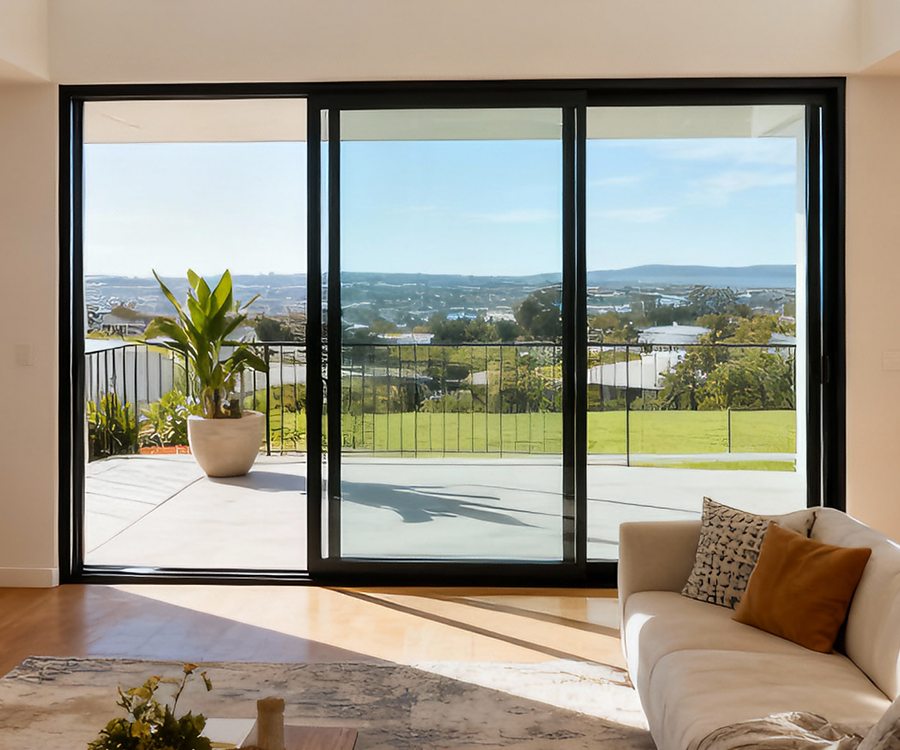
What Are Beige Aluminium Windows and Why Choose Them
Beige aluminium windows are powder-coated aluminium window frames finished in warm neutral tones ranging from sandy ivory to soft taupe, offering homeowners a middle ground between stark white and the once-dominant cool greys like RAL 7016. They suit both contemporary builds and heritage-style renovations, delivering the structural advantages of aluminium with a colour palette that feels grounded and inviting against almost any facade material.
For years, anthracite grey dominated the aluminium windows market. That era is shifting. Homeowners across Australia are gravitating toward warmer, earthier shades that soften a home’s exterior without sacrificing a clean, modern edge. Beige sits right at the centre of that movement, and the demand for a well-chosen beige window frame continues to climb.
Why Beige Is Gaining Popularity for Aluminium Frames
The shift away from cool-toned neutrals mirrors broader design trends. Scandinavian interiors, long celebrated for their warmth and restraint, have pushed sandy and oatmeal tones into mainstream architecture. Biophilic design principles — the idea that our built environments should echo natural materials and colours — reinforce the appeal. Beige reads like sandstone, raw linen, or sun-bleached timber, connecting a home visually to its landscape rather than sitting in contrast to it.
Australian conditions amplify this effect. Strong sunlight can make cool greys appear flat or industrial, while a warm beige aluminum tone holds depth and softness throughout the day. Whether set against red brick in Melbourne’s inner suburbs or a white-rendered coastal build in Byron Bay, the colour adapts without overpowering.
What Makes Aluminium the Ideal Frame for Beige Finishes
Powder-coated aluminium delivers colour precision that painted timber and foil-wrapped uPVC simply cannot match. Manufacturers apply beige finishes using the RAL colour system, ensuring consistency across every frame in a project. The resulting coat bonds to the metal at a molecular level, resisting chipping, peeling, and UV degradation for decades — a critical advantage in Australia’s harsh climate.
Aluminium also allows for slimmer sightlines than uPVC, meaning more glass area and less frame bulk. For homeowners choosing alu windows in lighter tones, that slenderness prevents the beige from becoming visually heavy on larger openings.
Beige aluminium windows combine the tactile warmth of natural colour with the structural strength and slim profile that only metal framing can achieve — a pairing that neither timber nor uPVC replicates as cleanly.
The result is a frame material that holds its colour true year after year, whether you opt for a sandy beige, a creamy ivory, or something closer to taupe. But picking the right shade from the RAL chart is where most homeowners hit uncertainty — and where the specific code you choose starts to matter far more than the word “beige” alone.
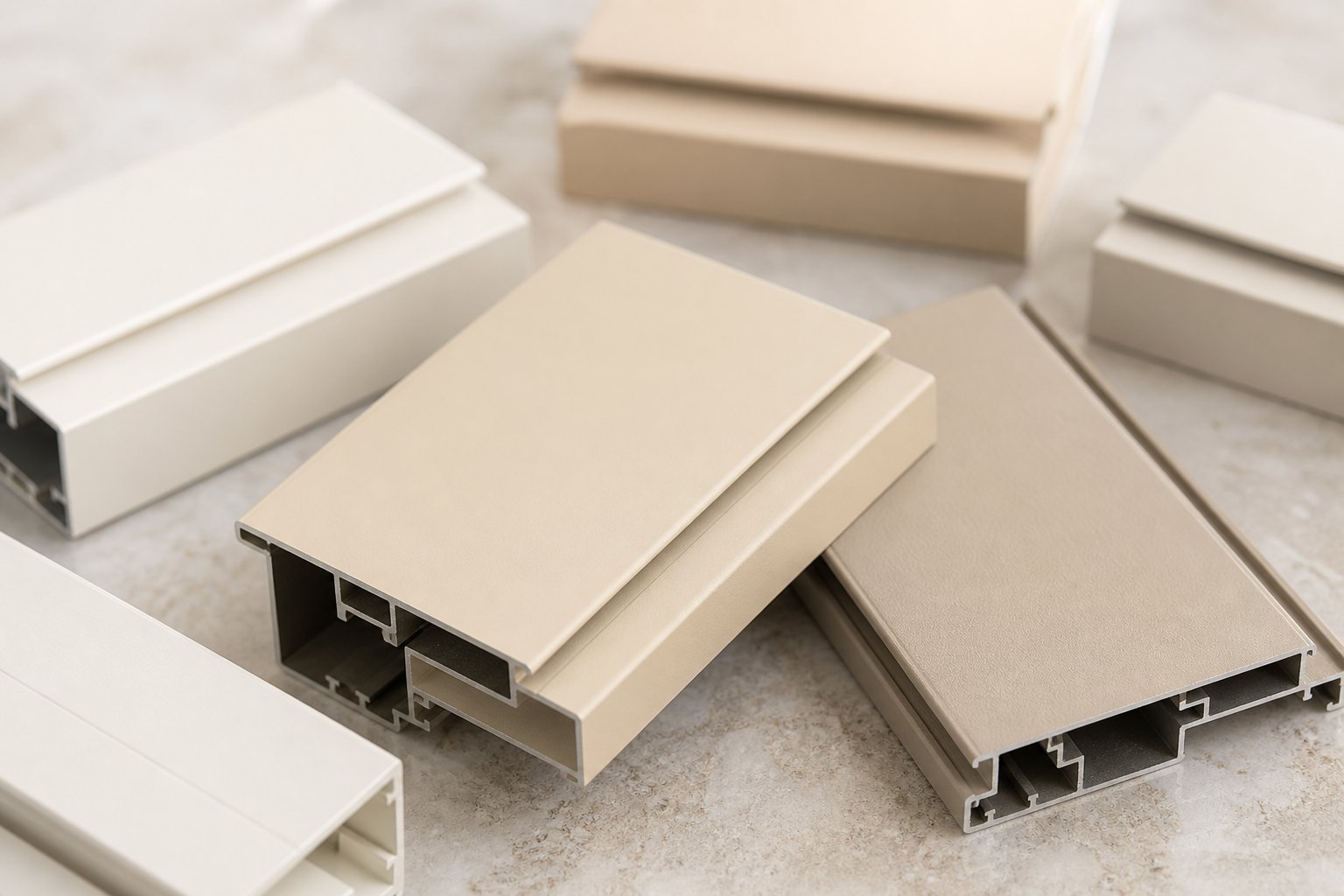
Understanding RAL Colour Codes for Beige Shades
The word “beige” covers a surprisingly broad spectrum. One manufacturer’s beige leans warm and sandy; another’s edges toward grey. This is exactly why the aluminium window industry relies on the RAL Classic colour system — a standardised coding framework developed in Germany and used by powder-coating suppliers across Europe and Australia. Every RAL code corresponds to a single, precisely defined shade, removing the guesswork that descriptive names introduce.
When you specify a RAL code on your order, the fabricator matches it against a universal physical swatch, not a subjective interpretation of “beige.” That precision is what separates aluminium from uPVC, where you’re limited to whatever foil options the manufacturer stocks. For homeowners weighing multiple quotes, referencing a RAL number guarantees you’re comparing identical colours across suppliers.
Key RAL Codes for Beige Aluminium Windows
Several codes in the RAL 1000 and RAL 7000 ranges fall within the beige family, but they read very differently on a finished frame. The table below maps the most popular options against their undertones and best-suited architectural contexts.
| RAL Code | Shade Name | Undertone | Best Architectural Match |
|---|---|---|---|
| RAL 1013 | Oyster White | Warm neutral | Rendered facades, coastal homes, Hamptons-style builds |
| RAL 1014 | Ivory | Warm yellow | Sandstone, cream brick, heritage restorations |
| RAL 1015 | Light Ivory | Soft warm | White or off-white render, light weatherboard cladding |
| RAL 7032 | Pebble Grey | Cool neutral (grey-beige) | Modern minimalist, concrete, zinc cladding |
RAL 1013 oyster white is one of the most frequently specified shades in Australia because it bridges warm and neutral without tipping into obvious yellow. RAL 1014 sits a step deeper, carrying enough golden undertone to complement warm-toned brickwork — particularly the reds and browns common in older Melbourne and Sydney suburbs. RAL 1015 is the palest of the group, close to white but with just enough warmth to avoid the clinical starkness of pure white frames. RAL 7032 suits homeowners who want beige undertones without fully committing to warmth; it leans toward a sandy grey that pairs well with contemporary concrete-rendered exteriors.
Beyond these four, related codes worth noting include RAL 1011 (brown beige), which reads significantly darker and earthier, and RAL 1035 (pearl beige), a metallic-finish option that introduces a subtle shimmer. On the cooler side, RAL 7048 (pearl mouse grey) offers a muted, sophisticated grey-beige with a pearlescent quality, while ral colour 7038 (agate grey) provides a lighter, cleaner grey that some homeowners consider as an alternative to traditional beige tones.
Standard Colours vs Custom RAL Orders
Most Australian aluminium window fabricators stock a core palette of between 10 and 25 standard colours. These typically include popular choices like ral1013, RAL 9001 (cream — sometimes catalogued as ral9001), black, and a handful of greys. If your chosen beige falls within the standard range, lead times stay short — generally four to six weeks from order to delivery depending on the window configuration.
Custom RAL orders open up the full Classic palette of over 200 shades but add time and cost. Expect an extra one to three weeks for powder sourcing and batch coating, along with a surcharge that varies by fabricator — often between $40 and $80 per frame for smaller orders. Larger projects may absorb this cost more easily, since powder is purchased by weight regardless of how many frames run through the line.
The practical takeaway: confirm whether your preferred code sits in stock before you fall in love with it on a colour chart. Requesting a physical powder-coat sample disc from your supplier is the surest way to verify what a specific RAL shade will look like on actual aluminium — screens and printed swatches never tell the full story, especially with subtle neutrals where a half-step of undertone makes a visible difference on your facade.
Beige vs Cream vs Ivory vs Champagne Explained
Even with RAL codes available, many Australian fabricators still list their colour options under descriptive names — “champagne,” “fawn,” “ivory,” “cream” — and those labels shift meaning from one brand to the next. A shade marketed as “champagne” by one supplier might sit closer to what another calls “light beige.” The inconsistency creates real problems during the specification process, especially when homeowners are comparing quotes from different companies.
The solution is straightforward: treat descriptive names as loose guides and always confirm the RAL code behind them before signing off.
Beige vs Cream vs Ivory in Aluminium Window Finishes
Each descriptive term points toward a different part of the warm-neutral spectrum, and the undertone differences matter more than most people expect on a full-sized frame.
Beige carries a yellow-brown warmth and typically maps to codes like RAL 1001 (beige) or RAL 1014 (ivory, despite the name). It reads earthy and grounded — think sandstone or natural hessian. Cream sits lighter with stronger yellow undertones, often corresponding to RAL 9001. It is brighter and softer than beige but warmer than pure white options like ral 9003 (signal white). Ivory is paler and cooler again, landing around RAL 1015 — close to white with just enough warmth to avoid feeling stark. Champagne introduces a subtle metallic warmth, and in powder-coat terms often references finishes with a pearlescent or satin-metallic quality rather than a flat opaque tone.
Deeper in the spectrum, terms like fawn brown and sepia brown appear in some manufacturer catalogues. These sit well outside what most homeowners picture when they say “beige” — fawn leans toward a muted tan, while sepia carries reddish-brown depth. They suit heritage projects but rarely match the lighter neutral look most people are chasing.
It is also worth noting the metallic finishes ral colour 9006 (white aluminium) and ral colour 9007 (grey aluminium). Some homeowners encounter these when searching for an alu grey or silver-beige tone. However, as John Knight Glass explains, ral9006 and RAL 9007 were originally industrial anti-corrosion coatings — not decorative finishes. They use aluminium and iron particles that make colour uniformity between frames nearly impossible, often resulting in visible batch variation once installed. Most reputable fabricators advise against specifying them for decorative window applications.
How Lighting and Surroundings Shift Beige Perception
A single RAL code can look like three different colours depending on when and where you view it. North-facing walls in Australia receive cooler, indirect light that pulls blue undertones forward, making a warm beige appear flatter or greyer. West-facing frames catch afternoon sun that amplifies golden warmth — the same RAL 1014 that seemed muted in the morning may glow almost honey-toned by late afternoon.
Surrounding materials compound the effect. A beige frame against red brick absorbs reflected warmth and appears richer. Against a bright white render, the same frame looks comparatively darker and more obviously toned. Even the colour of adjacent guttering or fascia boards shifts perception.
Digital colour charts make the problem worse. Computer monitors are all calibrated differently, meaning the shade displayed on screen will never match the actual powder-coat finish precisely. Screens should only serve as a starting point for narrowing your options.
- Request physical powder-coat sample discs from your fabricator — not printed swatches, but actual coated metal.
- View samples against your facade material at different times of day, especially morning and late afternoon.
- Hold samples vertically at the angle they will sit once installed, rather than flat on a bench.
- Compare your preferred shade alongside neighbouring colours (one step warmer, one step cooler) to confirm it still reads correctly in context.
- If your home has multiple orientations, check the sample on each face — a single shade may need to work under both northern and western light.
Spending an extra week living with sample discs taped to your external walls costs nothing and prevents a colour decision you will question every time you pull into the driveway. The subtle differences between beige, cream, and ivory flatten on a screen but become unmistakable at full scale — and once frames are powder-coated and installed, the finish is permanent.
Powder-Coat Finishes and Dual-Colour Options
Selecting the right RAL code is only half the decision. The finish texture applied during the powder-coating process changes how that code reads on your aluminium window profiles once they are installed — a matt RAL 1014 and a gloss RAL 1014 can look like entirely different colours under the same afternoon light. Understanding your finish options helps you lock in the exact appearance you are picturing, rather than discovering the discrepancy after installation.
Matt, Satin, and Gloss Finishes on Beige Frames
Powder coating is applied to extruded aluminum window frame sections as a dry polyester powder, then baked in an oven to form a hard, uniform layer. The finish texture is determined during this process. Three main options exist for beige tones, and each transforms the way light interacts with the frame surface.
Matt finishes absorb light rather than reflecting it, which softens beige and gives it a chalky, understated quality. This works particularly well on aluminum window frames in contemporary builds where you want warmth without shine. Matt is also the most forgiving surface for everyday wear — minor scuffs and surface marks are less visible compared to shinier alternatives, making it the most popular option across the Australian residential market.
Satin introduces a low-level sheen that catches directional light without producing glare. On beige tones, this subtle reflectivity enhances warmth and gives the frame a sense of depth that matt cannot replicate. The tradeoff is practical — satin surfaces show fingerprints and watermarks more readily, particularly on lighter shades where residue contrasts against the finish.
Gloss amplifies colour saturation, making beige appear richer and more defined. It reads as more formal and polished, suiting applications like feature entrance doors or aluminium shopfronts. However, gloss is the least forgiving finish for aluminum window frame material imperfections; any surface irregularity in the extrusion becomes visible under reflected light.
| Finish Type | Visual Effect on Beige | Maintenance Consideration | Best Suited Application |
|---|---|---|---|
| Matt | Softens tone, reduces glare, chalky quality | Hides scuffs and marks; easiest to maintain | Whole-of-house window suites, modern facades |
| Satin | Adds subtle warmth and depth via low sheen | Shows fingerprints and water spots more readily | Feature windows, visible street-facing elevations |
| Gloss | Amplifies colour richness and saturation | Highlights surface imperfections; requires careful cleaning | Entrance doors, accent frames, commercial frontages |
Most Australian fabricators default to matt unless you specify otherwise, which aligns with current design preferences for muted, tactile surfaces. If you lean toward satin or gloss, confirm availability in your chosen RAL code early — some shades are only stocked in matt, with satin or gloss requiring a custom batch run.
Dual-Colour and Bicolour Frame Options
Aluminium is one of the few aluminum frame windows materials that can be finished in two separate colours — one for the exterior face and another for the interior. This is possible because aluminum window frame extrusions are manufactured in sections that bolt or clip together, allowing the outer and inner profiles to pass through the powder-coat line separately before assembly.
The most common pairing for beige frames is a warm beige exterior (to complement the facade) with a white or light grey interior (to sit cleanly against internal wall colours and curtain fabrics). This combination lets homeowners match external tones without committing to beige on every interior sill and reveal — particularly useful when interior decor leans cooler or brighter than the external palette.
Bicolour finishing does carry cost and timing implications. Each frame effectively passes through the coating process twice, increasing labour and powder consumption. Expect a price uplift in the range of 10 to 20 per cent over a single-colour equivalent, depending on the fabricator and order volume. Lead times may also extend by a week or more, since dual-colour frames require sequential coating runs rather than a single batch.
Despite the premium, dual-colour options are growing in popularity — particularly for renovation projects where the exterior must respect an existing facade colour while the interior follows a different design direction. For investment properties or rentals, a neutral white interior keeps future tenant appeal broad, while the beige exterior maintains street-level warmth and character.
The flexibility of bicolour finishing also opens up less obvious combinations: a beige exterior with a charcoal interior for moody, contemporary living spaces, or a beige street-facing elevation paired with a darker tone on rear windows that face covered outdoor areas. The key constraint is confirming both colours with your fabricator at quoting stage, since adding a second colour after production has begun is not feasible.
With finish type and colour configuration locked in, the next consideration is how these choices land in the context of your home’s architecture — because a matt beige on a minimalist cube reads entirely differently from the same shade on a period cottage.
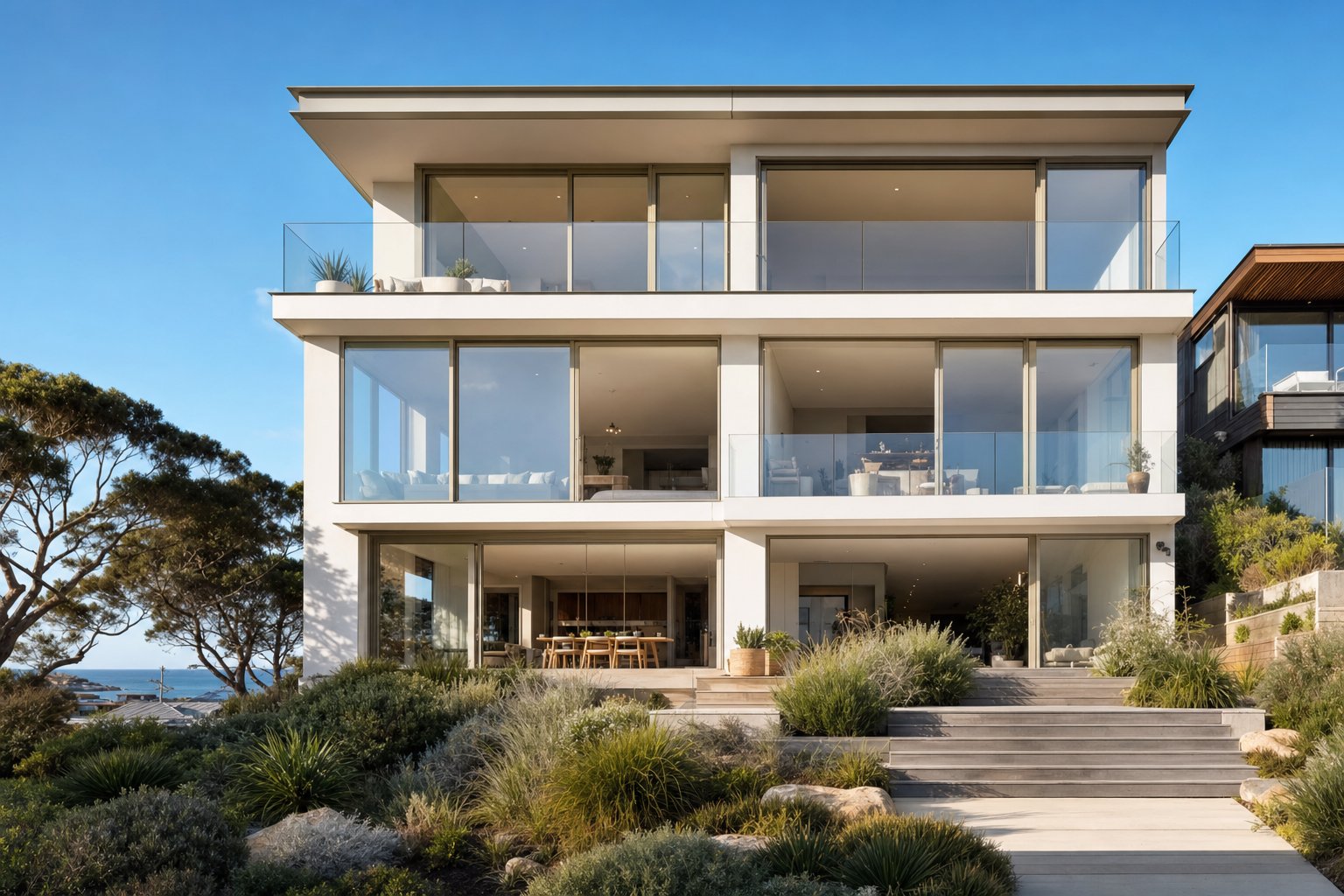
Architectural Styles That Suit Beige Aluminium Frames
A colour code and finish texture only tell part of the story. What truly determines whether beige aluminium windows look intentional or awkward is the architectural context they sit within. The same RAL 1015 matt frame that disappears elegantly into a white-rendered beach house can feel out of place on an industrial-style warehouse conversion. Context drives everything.
Rather than thinking product-first, it helps to start with your home’s design language and work backward to the shade and finish that reinforces it.
Beige Aluminium in Modern Minimalist Architecture
Minimalist homes rely on restrained palettes and clean geometry. The typical go-to has been black aluminum windows or stark white — both high-contrast choices that sharpen edges and emphasise form. Beige offers a third path. It introduces warmth without competing with the building’s lines, softening flat-roofed boxes and cantilevered volumes in a way that feels organic rather than clinical.
Slimline aluminium windows are essential here. Narrow frame profiles — some systems achieve sightlines under 40 mm — preserve the minimal aesthetic while allowing maximum glass area. A matt beige finish in the RAL 7032 (pebble grey-beige) range keeps the look restrained and modern, avoiding the overt warmth of deeper ivory tones that might read as traditional. For larger residential aluminum windows spanning full-height openings, the slim beige frame practically vanishes, letting the glazing and the view do the work.
Traditional, Heritage, and Period Properties
Heritage homes present a different challenge. In Australian conservation areas and heritage overlay zones, council planners scrutinise window replacements closely. Frame proportions, materials, and colours all need to respect the existing streetscape character. As heritage glazing specialists note, approval hinges on new windows preserving the visual character of the property — and beige aluminium is one of the most effective ways to achieve that.
Warm beige tones in RAL 1014 or RAL 1013 closely replicate the appearance of aged timber frames or sandstone window surrounds common on Federation, Victorian, and Edwardian homes. Metal clad windows finished in these tones can satisfy planning officers who would reject stark white or charcoal aluminium on sight. The key is matching the undertone to the existing masonry: warmer sandstone facades pair with golden-leaning codes, while cooler bluestone or rendered period homes suit greyer beige options like RAL 7032.
Combined with heritage-appropriate proportions — multi-pane configurations, glazing bars, and traditional handle styles — beige aluminium frames deliver modern thermal performance inside a shell that reads as sympathetic to the original architecture.
Coastal and Rural Settings
Along Australia’s coastline and in regional settings, homes sit against landscapes dominated by sand, dried grasses, eucalyptus greens, and weathered timber. Beige frames echo those natural tones rather than fighting them. Sandy renders, limestone block, and pale weatherboard cladding all gain cohesion when the window frames pick up the same warm-neutral family.
Coastal builds benefit from lighter codes like RAL 1015 in satin or matt, which reflect the pale sand and salt-washed aesthetic without looking too polished. Rural properties — stone farmhouses, rammed-earth builds, or corrugated-iron homesteads — can push deeper into RAL 1014 territory, where the frame colour relates to dry earth and natural bark tones.
For commercial aluminum windows on mixed-use coastal developments or rural hospitality venues, beige ties the building into its surroundings far more naturally than the bronze aluminum windows or dark anthracite commonly specified for urban projects. The colour feels grounded rather than imposed.
- Modern minimalist (flat roof, rendered cube): RAL 7032 pebble grey-beige, matt finish — subtle warmth without competing with geometry.
- Federation or Victorian terrace: RAL 1014 ivory, matt or satin — replicates aged timber warmth, heritage-appropriate.
- Coastal Hamptons-style: RAL 1013 oyster white, satin finish — light and fresh, pairs with white weatherboard and natural stone.
- Rural homestead or farmhouse: RAL 1014 ivory, matt finish — earthy and grounded against corrugated iron, stone, or rammed earth.
- Queenslander or weatherboard cottage: RAL 1015 light ivory, matt finish — soft warmth that complements painted timber cladding without yellowing.
- Contemporary metal windows residential builds: RAL 7032 pebble grey-beige, satin finish — bridges warm and cool for mixed-material facades.
The underlying principle across all these contexts is the same: beige works because it defers to the building and its setting rather than demanding attention. It is a colour that supports rather than leads — which is precisely why getting the specific shade wrong feels so jarring when it happens. How the frame material itself ages and retains that colour over decades becomes the next practical question, especially when weighing aluminium against the alternatives.
Thermal Performance and Energy Efficiency
A common question surfaces once homeowners settle on a beige shade: does a lighter frame colour perform differently from a darker one in terms of heat gain or loss? The short answer is no — not in any way that matters for your energy bills or comfort. The engineering inside the frame profile determines thermal performance, and that engineering is identical regardless of whether the exterior powder coat is beige, black, or charcoal.
Thermal Break Technology in Aluminium Frames
Raw aluminium conducts heat roughly 1,000 times faster than wood, which is why older single-skin aluminium frames earned a poor reputation for energy efficiency. Modern thermally broken aluminum windows solve this by splitting the frame into two separate aluminium sections — one facing the interior, one facing the exterior — connected by a polyamide (nylon) strip reinforced with glass fibres. That strip, typically 20 mm to 35 mm wide, interrupts the metal pathway and slashes heat transfer through the frame.
The thermal break is what drives your window’s U-value, not the colour sitting on its surface. Aluminum thermally broken windows routinely achieve frame U-values between 0.8 and 2.0 W/(m²K), depending on profile depth and break width — a 70 to 85 per cent improvement over non-thermally-broken equivalents. Whether your frames are finished in RAL 1014 beige or RAL 7016 anthracite, the polyamide barrier performs identically.
While darker surfaces do absorb marginally more solar radiation than lighter ones, research consistently shows that this difference rarely translates into a measurable change in room temperature once frames are properly insulated. The frame area exposed to direct sun is small relative to the glazed area, and the thermal break prevents any absorbed warmth from conducting through to the interior profile. Beige finishes sit in the mid-range of solar reflectance — neither the highest nor the lowest — making their thermal impact negligible by any practical measure.
Glazing Options That Complement Beige Frames
If thermal performance is your priority, your attention is better spent on what fills the opening rather than what surrounds it. The glazed area accounts for the vast majority of a window’s total heat transfer, and that is where specification choices genuinely move the needle.
Aluminium double glazing — two panes separated by a sealed air or gas-filled cavity — is the standard for Australian residential builds and typically satisfies NCC energy requirements across most climate zones. Aluminum double pane windows paired with low-emissivity (low-E) coatings reduce heat transfer by a further 30 to 50 per cent compared to uncoated glass, by reflecting infrared radiation back toward its source. Adding an argon gas fill between the panes improves insulation beyond what a plain air gap provides, since argon conducts heat less readily.
Triple glazing pushes performance further again, and suits homes in cooler southern regions or those chasing higher NatHERS star ratings. The additional pane and gas cavity lower the overall window U-value substantially, though with added frame depth and cost. For most Australian climates, high-quality aluminium double glazing with low-E coating and argon fill strikes the best balance between performance, weight, and budget.
Colour selection is an aesthetic decision, independent of thermal performance. The polyamide thermal break and glazing specification determine how your windows manage heat — not whether your frames are beige, white, or black.
What this means in practice is freeing: you can choose your beige shade purely on visual grounds, confident that your energy rating depends on the thermal break width and glass package you specify, not the RAL code on the order form. That clarity simplifies the decision — pick the colour your eyes prefer, then separately ensure the frame system and glazing meet your energy targets.
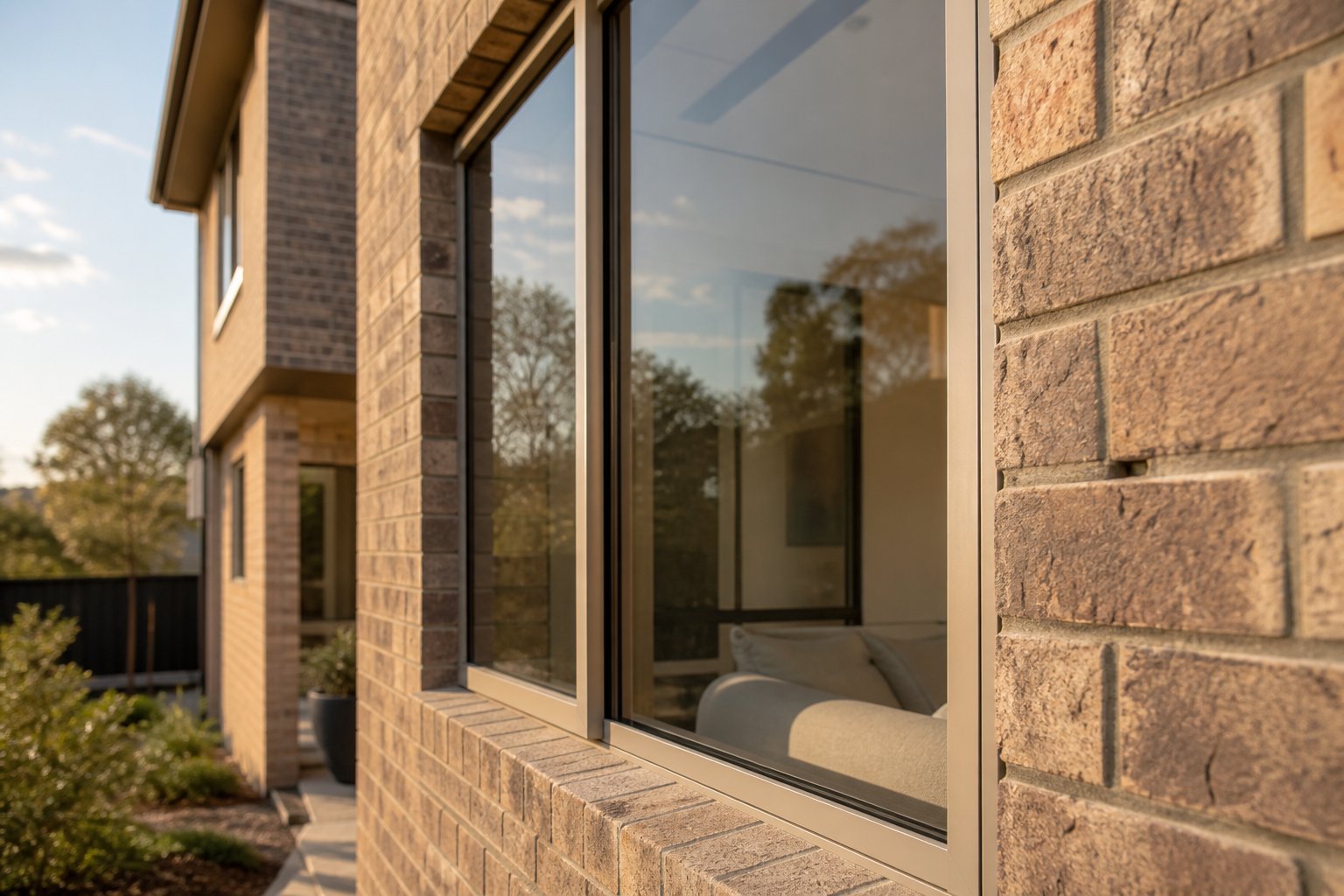
Beige Aluminium vs uPVC vs Timber Windows
Knowing that your beige shade won’t compromise thermal performance is reassuring — but the frame material you choose absolutely will affect how that colour looks, lasts, and ages over the life of your home. Aluminium is not the only material available in beige tones. uPVC and timber both offer warm neutral options, and each comes with a distinct set of tradeoffs in colour accuracy, frame profile, longevity, and upkeep demands.
For homeowners weighing an aluminium window replacement against keeping existing timber frames or opting for a lower-cost uPVC alternative, the differences become stark once you look beyond the initial colour swatch and consider what that finish will look like in five, ten, or twenty years.
Finish Quality and Colour Accuracy Across Materials
Aluminium powder coating delivers the most precise colour matching of any window frame material. You specify a RAL code, and the fabricator applies that exact shade as a fused polyester layer bonded directly to the metal. The result is uniform across every frame, mullion, and transom in your order — batch variation is minimal, and what you approve on the sample disc is what arrives on site.
uPVC takes a fundamentally different approach to colour. Beige-toned uPVC frames rely on laminated foils — thin printed films heat-bonded to the white PVC substrate. Manufacturers stock a limited selection of foil options, and those rarely correspond to specific RAL codes. You choose from whatever the supplier offers, typically three to five warm-neutral options at most. The foil creates a convincing surface finish initially, but it sits on top of the material rather than becoming part of it. Edge seams can lift over time, and the colour is essentially a photograph of a texture rather than a true pigmented coating.
Timber provides full colour freedom in theory — you can paint a timber frame any shade you like, including a precise RAL-matched beige. The catch is durability. Exterior paint on timber degrades under Australian UV exposure and weather cycling, requiring recoating every three to seven years depending on orientation and climate. Each repaint introduces subtle colour drift as new coats layer over old ones, and maintaining a consistent beige across the life of the window demands ongoing effort and expense.
For anyone considering an aluminum clad window — where a timber interior is protected by an aluminium exterior shell — colour precision improves on the outside face since that shell receives the same powder-coat process as a full aluminium frame. However, the timber interior still demands maintenance, and the composite construction increases both cost and frame bulk compared to a pure aluminium system.
Frame Thickness, Sightlines, and Long-Term Appearance
Frame slimness matters more than many homeowners realise, particularly in lighter colours. A chunky profile in beige draws the eye more than the same bulk in black, because the lighter tone reflects light and emphasises the frame’s visual weight. Aluminium’s structural strength-to-weight ratio allows sightlines as narrow as 35 to 45 mm on standard residential profiles — meaning more glass, less frame, and a cleaner overall appearance.
uPVC cannot match this. The material lacks aluminium’s tensile strength, so profiles need to be thicker to achieve equivalent structural rigidity. Expect frame faces in the range of 70 to 80 mm or more, which becomes visually prominent in beige. The broader profile is a key reason aluminum vinyl windows — sometimes marketed as a hybrid solution overseas — never gained traction in Australia, where slimline aesthetics and corrosion resistance are non-negotiable for coastal and high-UV environments.
Long-term colour stability is where the three materials diverge most dramatically. Powder-coated aluminium retains its original beige tone for decades. Quality architectural-grade coatings carry warranties of 15 to 25 years against fading, chalking, and colour shift, and in practice the finish often outlasts those guarantees comfortably.
uPVC tells a different story. Prolonged UV exposure causes uPVC to yellow, and beige or cream-toned foils are particularly susceptible because the discolouration reads as dirty rather than simply faded. Environmental pollution and ageing protective coatings compound the issue. Once yellowing sets in, restoration options are limited — respraying is possible but adds ongoing cost, and the original foil cannot be reversed to its factory state.
Painted timber weathers in its own way. Beige paint chips, flakes, and fades unevenly, with exposed edges and sun-facing sections degrading first. Timber is also prone to warping, swelling, and rot when moisture penetrates compromised paint films — risks that intensify in coastal or humid Australian climates. Termite susceptibility adds another layer of concern that neither aluminium nor uPVC share.
The comparison below summarises how each material performs across the key criteria that matter for a beige-finished window over its full service life.
| Criteria | Beige Aluminium | Beige uPVC | Beige Timber |
|---|---|---|---|
| Colour Precision | Exact RAL match via powder coat; batch-consistent | Limited to manufacturer foil range; no custom RAL | Any colour possible via paint; requires skilled application |
| Frame Slimness | 35–45 mm sightlines; maximum glass area | 70–80 mm+ profiles; visually bulkier | 50–70 mm typical; moderate profile |
| Colour Longevity | 15–25 year coating warranty; minimal fade | Yellows and discolours under UV within 10–15 years | Requires repainting every 3–7 years to maintain tone |
| Maintenance Frequency | Annual wash with mild detergent; no recoating | Periodic cleaning; no recoating unless resprayed | Regular sanding, repainting, sealing, and timber treatment |
| Typical Lifespan | 40–60+ years | 20–30 years | 30–60 years (with consistent maintenance) |
For Australian homeowners exploring aluminum replacement windows — whether swapping ageing timber for something lower-maintenance or upgrading single-glazed aluminium to thermally broken equivalents — the material comparison consistently favours modern aluminium systems on colour retention, slimness, and whole-of-life cost. Replacement aluminium windows also integrate readily with existing openings, since fabricators can manufacture profiles to match non-standard reveal sizes common in older Australian homes.
Those looking at aluminum retrofit windows for heritage or period properties gain an additional advantage: the precise RAL colour matching means new beige frames can replicate the exact warmth of the original timber they replace, satisfying both homeowner preferences and council heritage requirements.
Australian homeowners and builders ready to explore specific beige powder-coat options, window configurations, and custom colour specifications can review MEICHEN’s aluminium window range, which covers the full spectrum of RAL finishes and frame styles suited to residential and commercial projects across the country.
Colour durability is one thing on paper — but day-to-day maintenance habits are what keep a beige finish looking its best between those decade-long milestones. How you care for lighter-toned frames, and what specific cleaning patterns beige demands compared to darker colours, shapes the lived experience far more than any warranty document.
Maintenance and Long-Term Care for Beige Frames
Darker metal window frames hide atmospheric dust and water spots almost effortlessly — a black or charcoal frame can go months between washes without looking neglected. Beige does not offer the same forgiveness. Lighter neutral tones reveal dried water droplets, airborne grime, and pollen deposits sooner, particularly on south- and west-facing elevations that catch prevailing weather. The flip side is that beige conceals minor surface scratches far better than dark finishes, where any mark exposing the lighter substrate underneath becomes immediately visible.
Understanding this trade-off shapes a realistic cleaning expectation. A beige aluminium window will not demand significantly more effort than a darker one — just slightly more frequency to keep it looking sharp.
Cleaning Beige Aluminium Frames
The cleaning method itself is simple. Powder-coated metal frame windows respond best to a gentle approach that protects the finish layer rather than scrubbing through it.
Use a dilute solution of mild liquid detergent — standard dishwashing liquid works well — mixed with lukewarm water. Avoid excessively hot solutions, which can soften or stress the powder-coat surface. Apply with a soft microfibre cloth or a non-abrasive sponge, working in smooth passes rather than circular scrubbing motions. Rinse thoroughly with clean fresh water afterward, paying attention to corners and rebates where soapy residue tends to collect and dry into visible streaks on beige surfaces.
For stubborn marks — bird droppings, tree sap, or adhesive residue — a mild solvent such as methylated spirits applied briefly to the affected spot will lift most contamination without harming the coating. Keep contact time short, rinse immediately, and always test on an inconspicuous area first.
What to avoid matters just as much as what to use. Harsh chemicals, acidic or highly alkaline cleaners, acetone, and petroleum-based products can cause irreparable colour loss and gloss degradation on any window metal frame finish. Abrasive tools — steel wool, scouring pads, or stiff-bristled brushes — scratch through the powder coat and expose raw aluminium underneath, creating visible silver marks that are especially conspicuous against a beige background. Pressure washers are also problematic: the concentrated jet can damage rubber seals and force moisture into drainage channels where it does not belong.
Powder-Coat Care and Warranty Considerations
Architectural-grade powder coating is one of the most durable colour finishes available for a window frame metal surface. During manufacture, dry polyester powder is electrostatically applied to the aluminium extrusion and then oven-cured at around 200°C, forming a hard, continuous film that bonds to the substrate at a molecular level. This is not paint sitting on top of metal — it is fused into the surface, which is why properly maintained coatings resist chipping, peeling, and UV-driven colour shift for decades.
Most Australian aluminium window fabricators offer coating warranties between 15 and 25 years for residential applications, covering measurable colour fade, chalking, and loss of adhesion. However, warranties typically require evidence of regular cleaning — skipping maintenance altogether can void coverage. Other common warranty exclusions include damage from unapproved solvents, mechanical abrasion, and failure to remove construction debris (mortar, render splash, or scaffolding marks) within a reasonable timeframe after building works conclude.
A straightforward seasonal routine keeps your beige frames within warranty conditions and looking their best year-round:
- Inspect — Walk around the property each season and check frames for any signs of coating damage, seal deterioration, or debris buildup in corners and drainage slots. Catch issues early before they compound.
- Clean gently — Wash all metal window frame surfaces with dilute mild detergent and a soft cloth. Rinse thoroughly with fresh water. Ensure areas sheltered from rain — undersides of sills, recessed mullions — receive equal attention, as these accumulate grime that natural rainfall never reaches.
- Lubricate hardware — Apply a light silicone-based lubricant to hinges, locking mechanisms, and friction stays. Avoid petroleum-based greases that attract dust and can stain beige frames if they migrate onto coated surfaces.
- Clear drainage channels — Remove leaves, insect debris, and sediment from weep holes and drainage slots at the base of each aluminium window sash. Blocked drainage channels cause water pooling that leaves mineral stains on beige finishes and can eventually compromise seal integrity.
Properties within 5 km of the coast, an estuary, or a tidal river face an additional challenge. Airborne salt deposits accelerate corrosion and leave a white crystalline residue that becomes particularly visible on beige-toned surfaces. In these marine environments, industry guidelines recommend cleaning at intervals no longer than three months — and monthly is preferable for heavily exposed elevations. Some manufacturers require a documented maintenance log as a condition of their coastal warranty, so confirm your obligations at the point of purchase.
Pre-anodisation treatments — an additional protective layer applied to the aluminium before powder coating — offer enhanced protection for coastal projects by guarding the coating from beneath, reducing the risk of bubbling or lifting in salt-laden air. If your home sits on an exposed headland or waterfront, ask your fabricator whether a pre-anodised specification is available for your beige aluminium window frames.
Beyond coastal exposure, Australian homes face intense UV radiation that tests any exterior finish. The good news: quality polyester powder coatings are formulated specifically for exterior durability, and beige tones — sitting in the mid-range of solar reflectance — neither absorb punishing heat loads nor show UV-driven chalking as readily as the darkest colours. With consistent seasonal care, a beige powder-coat finish will retain its original warmth and tone for the full warranted period and often well beyond it.
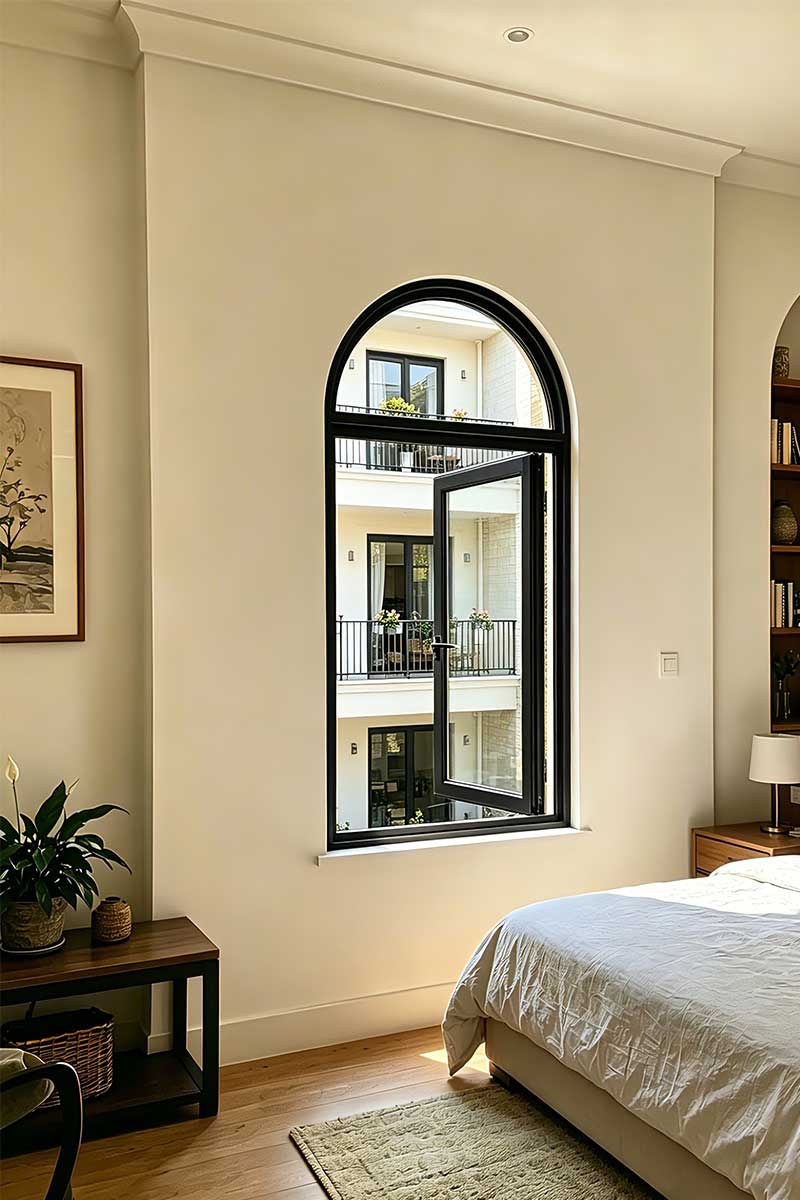
Complementary Pairings and Hardware Selection
A well-maintained beige frame only reaches its full potential when it sits harmoniously against the surrounding facade and is paired with hardware that reinforces rather than undermines the warmth. Getting the coordination right ties the entire exterior together — the wrong hardware finish or a clash with your brickwork can undo all the careful RAL code selection and finish decisions that came before.
Pairing Beige Frames with Facade Materials
Beige is cooperative by nature, but not all beige shades work equally well against every material. The undertone of both your frame and your facade needs to land in the same tonal family, or the window will look disconnected — colour experts consistently stress that ignoring this relationship is one of the most common and costly exterior mistakes homeowners make.
Warmer beige codes (RAL 1014, RAL 1013) pair naturally with materials that carry golden, red, or earthy undertones. Cooler beige shades (RAL 7032, lighter greige tones) sit better alongside materials that lean grey, blue-grey, or neutral. Here is how the most common Australian facade materials interact with beige aluminium joinery:
- Red or brown brick: Warmer beige (RAL 1014 ivory) echoes the earthiness of the brick without creating stark contrast. Avoid cooler grey-beige tones, which can fight the warmth and make the brick appear duller.
- White or off-white render: Light beige (RAL 1015 or RAL 1013) adds just enough warmth to break the monotony of an all-white facade without looking obviously coloured. The frame reads as a subtle accent rather than a feature.
- Natural stone (sandstone, limestone): Match the beige tone to the dominant mineral colour in the stone. Sandy limestone calls for RAL 1013; golden sandstone supports the deeper warmth of RAL 1014.
- Weatherboard cladding: Painted weatherboard in greys or whites pairs cleanly with RAL 7032 (pebble grey-beige) on an aluminium casement window or alum sliding window configuration. Cream-painted boards work better with RAL 1015 to keep the palette cohesive.
- Dark charcoal or navy cladding: Beige frames provide striking tonal contrast against deep colours. A warm RAL 1013 softens the drama without looking mismatched — this combination works particularly well on modern aluminium windows and doors installations where the contrast draws attention to the glazing.
For homes with mixed materials — say, brick on the ground floor and render above — pick the beige shade that suits the material closest to the window heads and sills, since that is where the eye registers the colour relationship most strongly.
Hardware and Glazing Bar Finishes That Complement Beige
Hardware finish selection is where many homeowners default to whatever comes standard, but the handles, stays, and locks on custom aluminum windows are visible design elements that either complement or clash with warm beige tones.
Brushed nickel is one of the safest pairings. Its soft silver warmth sits comfortably against beige without the harshness of polished chrome, which can read as cold and industrial against warm neutrals. Satin brass amplifies the golden undertones in warmer beige codes and suits heritage or Federation-style aluminium casement windows particularly well. Matte black provides clean contrast — it works best on modern builds where the beige frame is lighter (RAL 1015 or RAL 1013) and the black hardware creates deliberate punctuation.
Polished chrome is the one finish to approach cautiously. Its blue-cool reflectivity can fight the warmth in beige, creating a visual disconnect that reads as unintentional rather than designed. If your interior scheme already features chrome tapware or lighting, consider limiting it to interior-facing hardware only, with a warmer finish on the exterior.
Glazing bars — the dividing bars within a window pane — offer another coordination opportunity. Three approaches work reliably with beige frames: matching the bar colour to the frame for a seamless, integrated look; specifying white bars against beige frames for crisp definition on heritage-style aluminum doors and windows; or choosing a heritage gold bar for period properties where the best aluminum windows need to echo traditional leadlight proportions without the maintenance burden.
Australian homeowners and builders ready to move from research to specification can explore MEICHEN’s aluminium window range for available beige colour customisation, hardware options, and window style configurations suited to both residential and commercial projects. Their platform covers everything from standard aluminium casement windows through to large-format sliding systems, with full custom RAL ordering available across the range.
Frequently Asked Questions About Beige Aluminium Windows
1. What RAL colour code is best for beige aluminium windows in Australia?
The most popular RAL code for beige aluminium windows in Australia is RAL 1013 (Oyster White), which bridges warm and neutral tones without tipping into obvious yellow. RAL 1014 (Ivory) works well against warm-toned brickwork, while RAL 1015 (Light Ivory) suits lighter renders and coastal builds. RAL 7032 (Pebble Grey) offers a cooler grey-beige for modern minimalist homes. The right choice depends on your facade material, orientation, and surrounding landscape — always request physical powder-coat sample discs from your fabricator rather than relying on screen colours.
2. What is the difference between beige, cream, ivory, and champagne aluminium window finishes?
These terms describe different positions on the warm-neutral spectrum but are used inconsistently across manufacturers. Beige carries yellow-brown warmth and maps to codes like RAL 1001 or RAL 1014. Cream sits lighter with stronger yellow undertones, typically corresponding to RAL 9001. Ivory is paler and cooler, landing around RAL 1015. Champagne introduces a subtle metallic warmth with a pearlescent or satin quality. Because naming varies between suppliers, always confirm the specific RAL code behind any descriptive colour name before placing your order to ensure colour accuracy.
3. Do beige aluminium windows require more maintenance than darker coloured frames?
Beige frames show water marks, atmospheric dust, and pollen deposits more readily than dark grey or black alternatives, so they benefit from slightly more frequent cleaning. However, they conceal minor surface scratches better than darker finishes. A quarterly wash with dilute mild detergent and a soft cloth keeps beige powder-coated frames looking sharp. Coastal properties within 5 km of the ocean should clean monthly to prevent salt residue buildup. Architectural-grade powder coatings on aluminium carry warranties of 15 to 25 years against fading and chalking when maintained correctly.
4. Does the colour of aluminium window frames affect energy efficiency?
No — frame colour has no meaningful impact on thermal performance. The polyamide thermal break inside the aluminium profile is what determines heat transfer, and it performs identically regardless of whether the exterior finish is beige, white, or black. While darker surfaces absorb marginally more solar radiation, the small frame area and thermal break prevent this from affecting indoor temperatures. Your energy rating depends on the thermal break width and glazing specification (double or triple glazing, low-E coatings, argon gas fill), not the RAL code on the frame.
5. Can beige aluminium windows be used in heritage or conservation areas?
Yes — beige aluminium windows are one of the most effective solutions for heritage properties. Warm beige tones in RAL 1014 or RAL 1013 closely replicate the appearance of aged timber frames or sandstone window surrounds found on Federation, Victorian, and Edwardian homes. When combined with heritage-appropriate proportions, glazing bars, and traditional handle styles, beige aluminium frames can satisfy council planning officers who would reject stark white or charcoal options. They deliver modern thermal performance inside a shell that reads as sympathetic to original architecture. MEICHEN’s aluminium window range offers full custom RAL ordering suited to heritage projects across Australia.
More Window & Door Guides