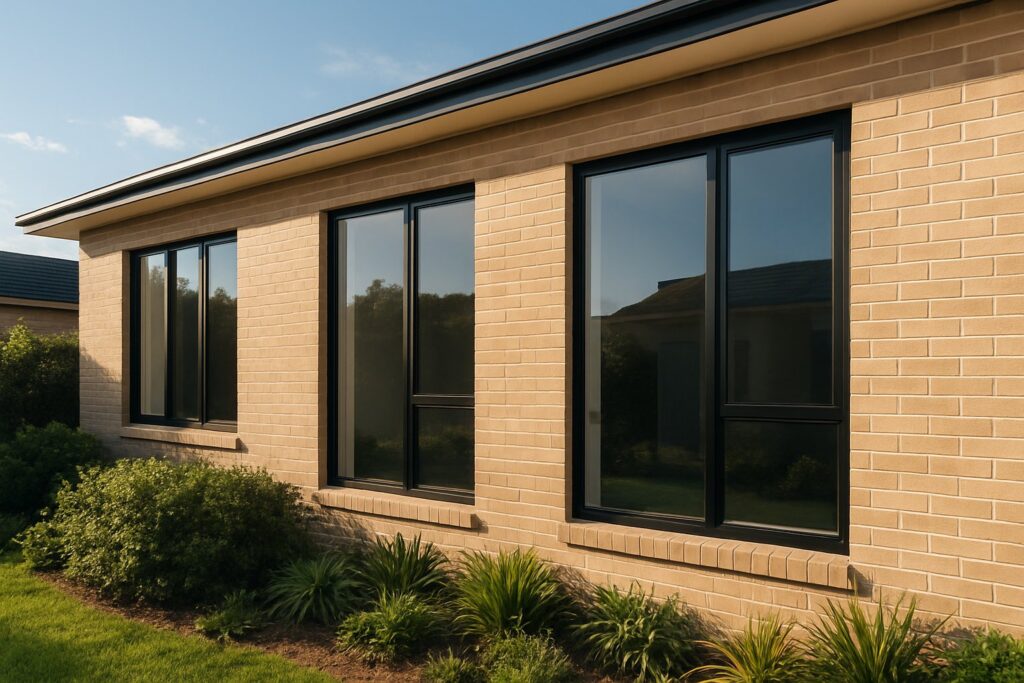
What Best Value Actually Means for Aluminium Windows
Best value aluminium windows sit at the intersection of four things: upfront cost, energy performance, durability, and how good they still look in fifteen years. That might sound obvious, but most buyers fixate on just one of those factors — usually the price tag — and end up paying more over the life of the window.
Value also shifts depending on who you are and what you are building. A homeowner renovating a forever home in coastal Sydney weighs durability and corrosion resistance differently than a developer fitting out a multi-storey apartment block in Melbourne. A landlord prepping a rental in Brisbane might prioritise low maintenance over architectural flair. There is no single best aluminium windows answer that works for every scenario.
This guide does not recommend one product or brand. Instead, it gives you a framework — a repeatable way to assess whether any quote for alu windows actually delivers long-term value or just short-term savings.
Why Price Alone Never Tells the Full Story
The sticker price on a window is only the beginning. Total cost of ownership includes installation, maintenance over decades, energy savings (or losses), and the eventual cost of replacement. Cheap aluminium windows that need resealing, repainting, or replacing within ten years rarely end up being affordable aluminum windows once you tally the full spend. A slightly higher upfront investment in thermally broken, well-finished frames can cut your annual ownership cost dramatically.
Who This Guide Helps
Whether you are a homeowner comparing renovation quotes, a builder costing a new project, a landlord managing multiple properties, or an architect specifying for performance, this framework applies. Each chapter breaks down a different dimension of value so you can weight what matters most for your situation.
The cheapest aluminium window and the most expensive one can both represent poor value — it depends entirely on the project context, the climate, and how long you plan to own the building.
A Framework for Calculating True Window Value
Knowing that price alone is misleading only helps if you have a structured way to evaluate what you are actually getting. That is where a proper value assessment framework comes in — a tool you can apply to any aluminium windows price comparison, regardless of supplier, system, or project type.
The goal is simple: translate vague notions of “good value” into concrete, comparable numbers. This works whether you are weighing different types of aluminium windows against each other or comparing aluminium window frames to timber or uPVC alternatives.
The Five Pillars of Aluminium Window Value
Every window purchase, no matter the scale, can be assessed across five dimensions. Ignore any one of them and you risk a decision that looks smart today but costs you later.
1. Upfront material and installation cost. This is the number everyone focuses on — the aluminium window price on the quote. It matters, but it is only one input. Supply-only pricing means nothing if installation adds 40-60% on top, so always compare fully installed figures.
2. Projected energy savings. Windows account for 18-30% of a home’s total heat loss, according to Glass and Glazing Federation research. A well-specified aluminium window with quality glazing reduces heating and cooling loads year after year. Over a 40-year lifespan, those annual savings compound into a substantial offset against the purchase price.
3. Maintenance burden and replacement timeline. Aluminium window profiles demand very little ongoing attention — periodic cleaning and occasional hardware lubrication. Compare that to timber frames requiring repainting every four to seven years, and uPVC frames that may yellow, warp, or lose seal integrity after two decades. Lower maintenance means lower lifetime cost and less disruption.
4. Impact on property value. Quality windows lift a property’s market appeal. Research from RICS and Savills indicates that well-built glazing systems can contribute to a 5-10% increase in property value. Buyers and valuers increasingly factor energy performance into their assessments, and aluminium’s clean sightlines suit the contemporary aesthetic that drives premium pricing in many Australian markets.
5. Warranty protection. A warranty is only as valuable as the company standing behind it and the terms written into it. Look for coverage that includes the frame finish, hardware, seals, and glazing unit — not just the profile itself. A 10-year warranty from a reputable manufacturer protects your investment far better than a 25-year warranty from a supplier who may not exist in five years.
Calculating Lifetime Cost Per Year
Here is the formula that cuts through marketing noise:
(Purchase price + Installation + Maintenance over lifespan) ÷ Expected years of service = Annual cost of ownership
Run this calculation and the picture shifts dramatically. Aluminium’s 40-50 year functional lifespan means you are dividing by a much larger number than uPVC’s 20-30 years or softwood timber’s 25-35 years. Even if the upfront aluminium windows price is 20-30% higher, the annual ownership cost often comes out lower.
Consider a practical comparison. A standard casement window in a typical Australian home might fall into these general ranges:
| Factor | Aluminium (Thermally Broken) | uPVC | Timber (Hardwood) |
|---|---|---|---|
| Indicative installed cost (AUD, per window) | $1,200 – $2,800 | $700 – $1,400 | $1,800 – $4,000 |
| Expected lifespan | 40 – 50 years | 20 – 30 years | 40 – 60 years |
| Maintenance over lifespan | Very low (cleaning only) | Very low, but seals degrade | High (repainting every 4-7 years) |
| Likely replacement cycles over 50 years | 1 (original install) | 2 (replacement at ~25 years) | 1 (if maintained) |
| Approximate annual cost of ownership | $30 – $70/year | $56 – $112/year (incl. replacement) | $65 – $120/year (incl. maintenance) |
These ranges reflect general Australian market conditions rather than a single supplier’s pricing. Regional variation — particularly between capital cities and regional areas — can shift these numbers by 15-25%. The point is not the exact dollar figure but the pattern: aluminium’s longer service life and minimal maintenance compress its annual cost below alternatives that appear cheaper at the point of sale.
That pattern holds across an aluminum windows price list from almost any reputable supplier. The window that costs more on day one frequently costs less per year of service — and that yearly figure is what your household budget actually feels over time.
With the financial framework established, the next question becomes performance. A low annual cost means nothing if the window bleeds energy or fails to keep your home comfortable — and that brings us to the ratings that separate genuinely efficient aluminium windows from those that merely look the part.
Energy Ratings That Translate to Real Savings
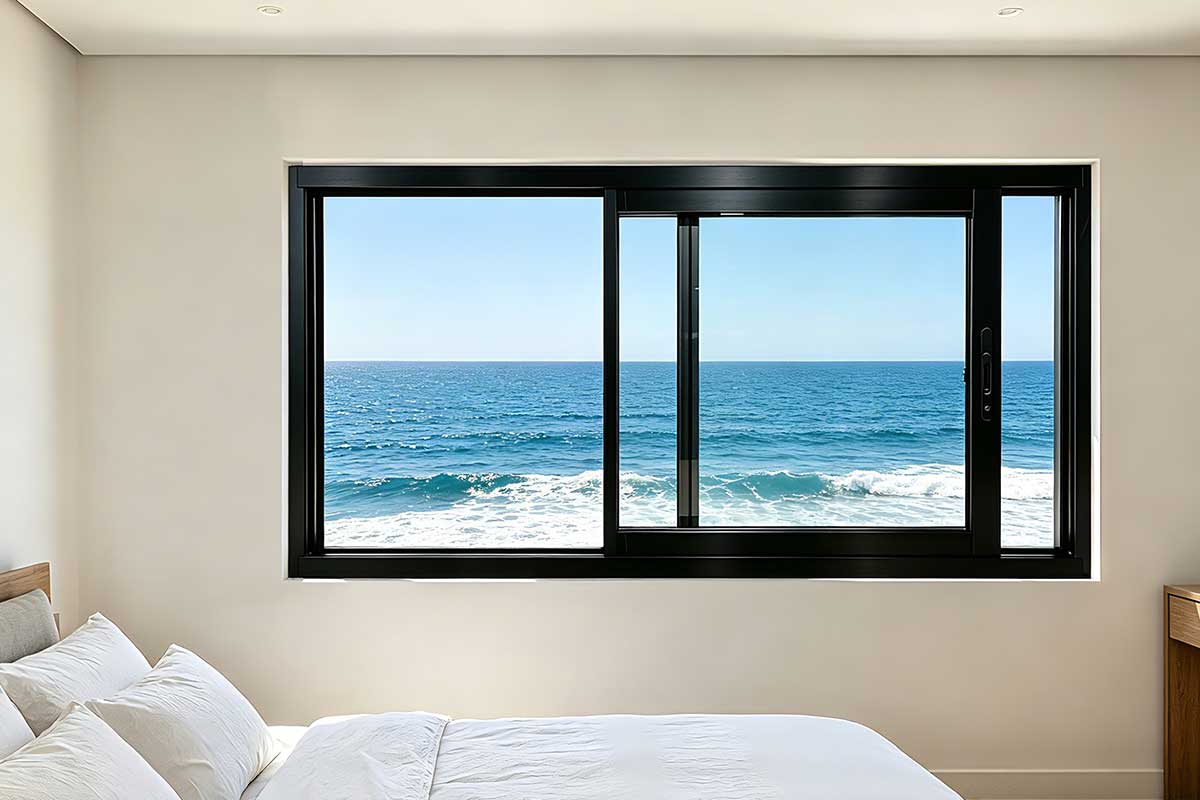
A window can look impressive on paper and still haemorrhage energy. The difference between a genuinely efficient aluminium window system and one that merely ticks a compliance box comes down to three measurable ratings. Understanding them puts you in a position to compare quotes on performance, not just price.
Understanding U-Factor, SHGC, and Air Infiltration
U-factor (thermal transmittance) measures how readily heat passes through the entire window assembly — frame, glass, and seals combined. It is expressed in W/m²·K, and lower numbers indicate better insulation. A standard aluminium window without thermal breaks typically sits around 4.5–6.8 W/m²·K, which is poor by current National Construction Code standards. High quality aluminum windows with thermally broken profiles and double glazing can achieve figures between 1.8 and 3.0 W/m²·K — competitive with uPVC and timber alternatives.
Solar Heat Gain Coefficient (SHGC) describes the fraction of solar radiation that passes through the glazing and enters your home as heat. Expressed as a number between 0 and 1, a lower SHGC means less solar heat gets in. In Australian cooling-dominated climates, a lower SHGC (around 0.25–0.40) reduces air-conditioning loads. In heating-dominated climates like highland Tasmania, a higher SHGC (0.50+) lets beneficial winter sun contribute to passive heating. The right value depends entirely on where you live and which direction the window faces.
Air infiltration rate measures how much outside air leaks through closed windows, typically rated in litres per second per metre of joint length. Casement and awning styles, which press the sash against the frame when closed, generally achieve lower air leakage rates than sliding configurations. Regardless of operating type, tight seals and precision manufacturing keep this number low — and your heating and cooling bills along with it.
In Australia, the Window Energy Rating Scheme (WERS) combines these factors into star ratings for both heating and cooling performance, making it simpler to compare products at a glance. Look for the WERS label rather than relying solely on a supplier’s claimed figures.
How Thermal Breaks Transform Aluminium Performance
Aluminium conducts heat roughly 1,000 times faster than timber. Without intervention, that conductivity turns the frame into a thermal highway between indoors and outdoors. Thermal break technology solves this by inserting a low-conductivity barrier — usually polyamide strips — between the interior and exterior aluminium sections, effectively severing the conductive pathway that causes energy loss and condensation.
The result is dramatic. Modern aluminium windows fitted with quality thermal breaks achieve U-factors in the range of 1.8–2.5 W/m²·K for the complete unit, which sits comfortably within NCC Section J requirements and rivals the performance of premium aluminium windows in uPVC or timber frames. Multi-chamber thermal break designs push performance even further by trapping static air within the profile, adding another layer of insulation without increasing visible frame width.
Thermal break quality varies significantly between manufacturers. Depth matters — a deeper polyamide strip creates greater separation between inner and outer aluminium sections, improving thermal resistance. Cheaper aluminum window profiles may use shallow or single-strip breaks that meet minimum compliance but fall well short of what a well-engineered system delivers. When comparing quotes, ask for the thermal break depth in millimetres and the overall system U-factor, not just the glass centre-pane value.
The frame is only part of the story. Low-emissivity (low-E) coatings on the glass reduce radiant heat transfer by reflecting infrared energy, while argon gas fills between panes slow conductive and convective heat movement through the glazing cavity. These technologies work in concert with the thermally broken frame to determine the window’s overall energy performance. A premium aluminium window with glass rated at an excellent U-factor still underperforms if the frame itself conducts heat freely — and vice versa.
Actual energy savings from upgrading to thermally broken aluminum window systems depend on your climate zone, home size, existing insulation levels, and how many windows you are replacing. The principles, though, are consistent: lower U-factor reduces heat loss in winter, appropriate SHGC manages solar gain in summer, and tight air infiltration prevents conditioned air from escaping year-round.
These ratings give you the tools to compare products objectively. But specifications that perform brilliantly in Melbourne’s temperate climate may be poorly suited to Darwin’s tropical heat or the salt-laden coastal air of the Sunshine Coast — which raises a critical question about matching those numbers to your actual location.
Matching Window Specifications to Your Climate
A window that delivers outstanding value in Hobart could be entirely wrong for a project in Cairns. Climate dictates which performance characteristics matter most, and getting this match wrong means paying for features you do not need — or worse, missing features you desperately do.
Australia spans multiple climate zones, from tropical humidity in the north to alpine cold in the high country. The right aluminium window systems for each zone look quite different in specification, even if the frames appear similar from the outside. Consulting aluminium windows specialists who understand regional requirements saves you from expensive specification errors.
Hot Climate Priorities
In northern Queensland, the Northern Territory, and much of Western Australia, solar heat gain is the dominant enemy. Your windows need to reject heat before it enters the building, not just insulate against temperature differences. Residential aluminium windows in these zones should prioritise:
- Low SHGC glazing (0.25–0.35) with solar control coatings to block infrared radiation while admitting visible light
- Lighter frame colours — dark powder-coated finishes absorb significantly more radiant heat than lighter tones
- Awning or louvre configurations that allow ventilation during mild weather without compromising security
- Tinted or reflective glass options on west-facing elevations where afternoon sun hits hardest
In hot climates, solar control glass and Low-E coatings do the heaviest lifting. The frame’s thermal break still matters — it prevents the aluminium from radiating stored heat inward during evening hours — but glazing selection carries more weight than in cooler regions.
Cold and Mixed Climate Priorities
Melbourne, Canberra, Hobart, and the highland regions experience genuine winter cold. Here, preventing heat escape takes priority over blocking solar gain. Modern aluminium windows specified for these zones should focus on:
- Low U-factor (below 2.5 W/m²·K for the whole window unit) to minimise conductive heat loss
- Deep thermal breaks (20mm or greater polyamide separation) to prevent condensation on interior frame surfaces
- Double glazing as a minimum; triple glazing for passive house targets or south-facing openings with high exposure
- High condensation resistance ratings — particularly important in bedrooms and bathrooms where humidity spikes overnight
- Airtight seals with low air infiltration to stop draughts undermining your heating system
Mixed climates — think Sydney, Adelaide, Perth — need both cooling and heating performance across the year. A balanced approach works best: moderate SHGC (around 0.35–0.45) paired with good thermal insulation lets winter sun contribute passive warmth without creating an oven in February. Commercial aluminium windows in these zones often use different glazing specifications on different elevations of the same building, optimising each facade for its solar exposure.
Australian Climate Considerations
Beyond temperature, Australian conditions throw additional challenges at window materials. Extreme UV radiation, coastal salt air, and dramatic temperature swings all attack window frames relentlessly. This is where durable aluminium windows hold a distinct advantage over alternatives.
- UV stability — powder-coated aluminium resists UV degradation far better than uPVC, which can yellow and become brittle under Australian sun intensity
- Corrosion resistance — properly finished aluminium withstands salt-laden coastal air that accelerates rot in timber and can pit lesser metals
- Thermal cycling — aluminium’s dimensional stability handles repeated expansion and contraction from extreme heat-to-cool swings without warping or seal failure
- Bushfire zones — aluminium is non-combustible, meeting BAL requirements where timber and uPVC cannot
These environmental factors do not show up on a quote, but they dramatically affect how long your windows last and how they perform five, ten, or thirty years after installation. A material that shrugs off salt air, UV bombardment, and bushfire ember attack delivers compounding value in conditions that actively destroy its competitors.
Climate determines what you should specify. But even a perfectly specified window becomes poor value if hidden quality shortcuts undermine its real-world performance — and that is exactly where many budget products fall apart.
Hidden Costs That Destroy Aluminium Window Value
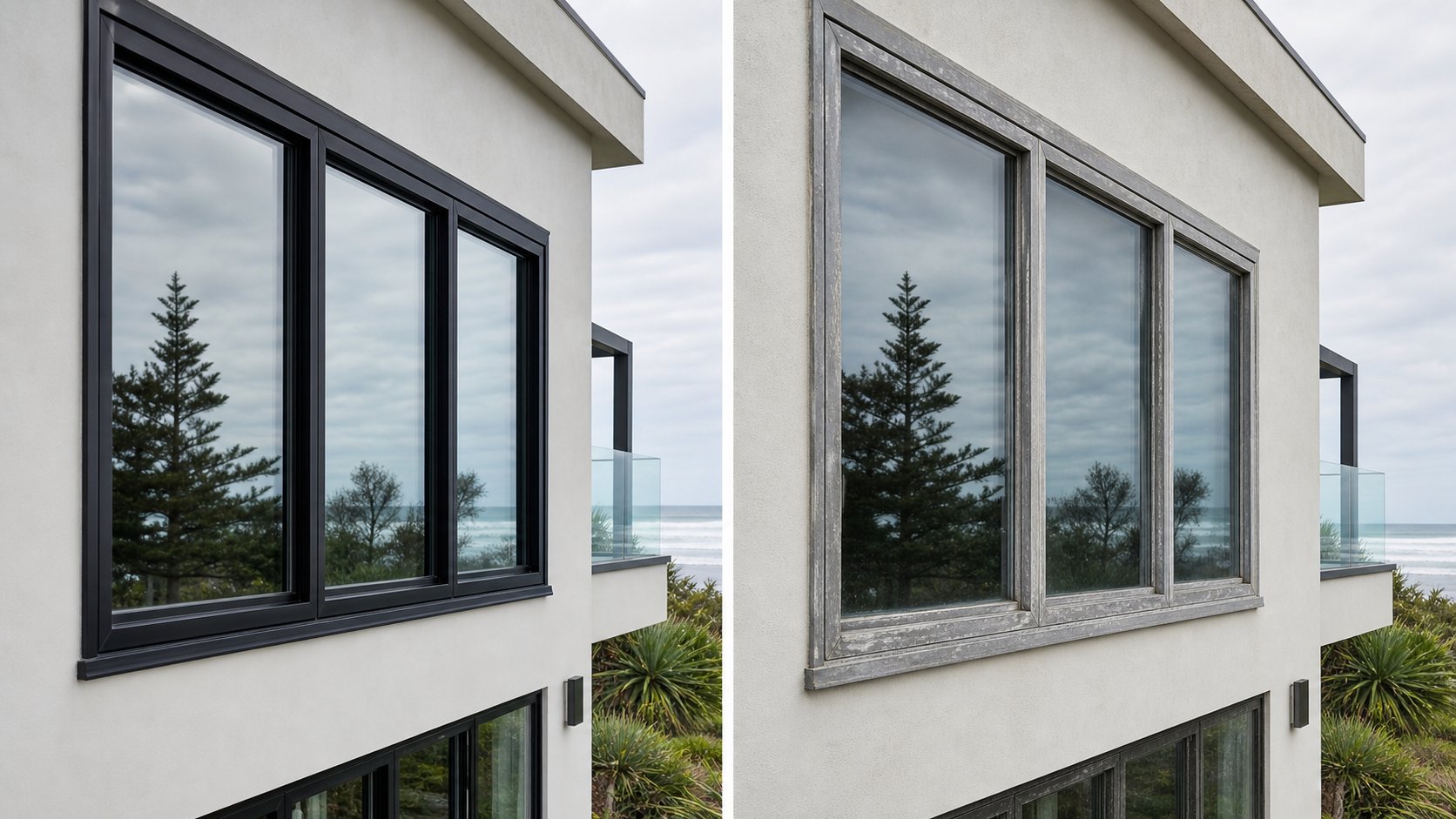
Cheap aluminium windows rarely announce their flaws upfront. They look clean on day one — slick profiles, modern finishes, hardware that operates smoothly enough during the showroom demonstration. The problems only surface months or years later, once the warranty claim process reveals just how little protection that bargain price actually bought you.
Five specific cost traps erode the value of budget aluminium windows. Each one is invisible at the point of sale and expensive to fix after installation.
Powder Coating and Hardware Quality
The finish on an aluminium frame is not decorative — it is the window’s primary defence against the elements. Quality powder coating involves thorough pretreatment (cleaning, etching, and conversion coating) followed by electrostatically applied powder cured at precise temperatures. Reputable aluminium window companies invest in coatings that meet or exceed Australian standards for adhesion, flexibility, and UV resistance.
Inferior coatings skip steps. The pretreatment is abbreviated or absent. Coating thickness sits below the minimum threshold for durability. Within three to five years, particularly in coastal or high-UV environments, the finish starts to chalk, fade, or bubble — leaving you with frames that look decades old and offer reduced corrosion protection. Recoating in situ is difficult and costly, often requiring removal of the glazing unit.
Hardware tells a similar story. Handles, hinges, locks, and rollers are the moving parts that determine whether a window functions day to day. Budget aluminium windows manufacturers frequently pair acceptable frames with low-grade components — untested rollers that jam under grit, zinc-alloy handles that snap, and hinge pins that corrode in salt air. Replacing failed hardware sounds minor until you discover that the fittings are proprietary, discontinued, or simply unavailable in Australia. A single hinge replacement on a difficult-to-access window can cost more in labour than the hardware itself is worth.
Thermal Breaks and Weather Sealing
The cheapest aluminium windows on the Australian market often have no thermal break at all. The frame is a single piece of aluminium running from inside to outside — a direct conductive bridge that bleeds energy, creates cold surfaces in winter, and causes persistent condensation. That condensation is not just uncomfortable. Over time it damages surrounding plaster, promotes mould growth, and can trigger costly remediation work in wall cavities.
Even windows marketed as “thermally broken” vary enormously. A shallow, single-strip polyamide insert meets the minimum definition but delivers marginal improvement. Deeper, multi-chamber thermal breaks — the kind found in properly engineered aluminium window systems — create meaningful thermal separation that prevents condensation and meaningfully reduces heating and cooling loads.
Weather seals compound the problem. Poor-quality gaskets shrink, harden, or pull away from the frame within a few years. The result is air infiltration and water ingress that no amount of curtaining or draught-proofing can fix. Rectifying failed seals usually means removing the sash — an exercise that risks damaging the glass unit and adds labour costs well beyond a simple maintenance task.
A fifth trap that receives almost no attention: non-standard sizing. Some aluminium window companies, particularly those importing from overseas factories, use proprietary dimensions for their glazing rebates. When the sealed glass unit eventually fails (and all IGUs have a finite life), you cannot source a standard replacement. You are locked into ordering custom glass at premium prices — or replacing the entire window.
Installation Quality as a Hidden Cost Multiplier
Even a well-made window becomes a liability if installed incorrectly. Poor installation creates gaps that allow air and water infiltration, voids manufacturer warranties, and can place structural stress on frames that leads to premature hardware failure.
Common installation failures include frames fixed out of square, inadequate or missing flashing, incorrect shimming that causes the frame to bow, and sealant applied over dust or debris that fails to adhere. These issues hide behind a clean facade until the first heavy rain or temperature swing exposes them. Remediating a badly installed window — removing it, repairing surrounding materials, and reinstalling correctly — frequently costs more than the original purchase and installation combined.
Critically, most aluminium window manufacturers’ warranties require installation to follow their specific guidelines. An unqualified installer who ignores these requirements leaves you unprotected when problems arise. The warranty exists on paper, but the coverage does not apply.
Watch for these warning signs of a low-value product disguised as a bargain:
- No clear information on powder coating standard or pretreatment process
- Hardware from unnamed or untraceable brands with no spare parts availability
- No mention of thermal break type, depth, or material
- Glazing rebate dimensions that do not match standard Australian IGU sizes
- Quotes that bundle supply and install without itemising each component
- No evidence of compliance testing to AS 2047 (windows and external glazed doors)
- Installer unwilling to provide evidence of manufacturer-approved installation training
- Warranty terms that exclude finish degradation, hardware, or seals
Each of these red flags signals a product or service where corners have been cut to reach a lower headline price. The savings are real on the quote — and entirely illusory over the window’s truncated lifespan. Genuine value lives in the details that survive first contact with Australian weather, daily use, and the passage of time.
Longevity and Maintenance Compared to Alternatives
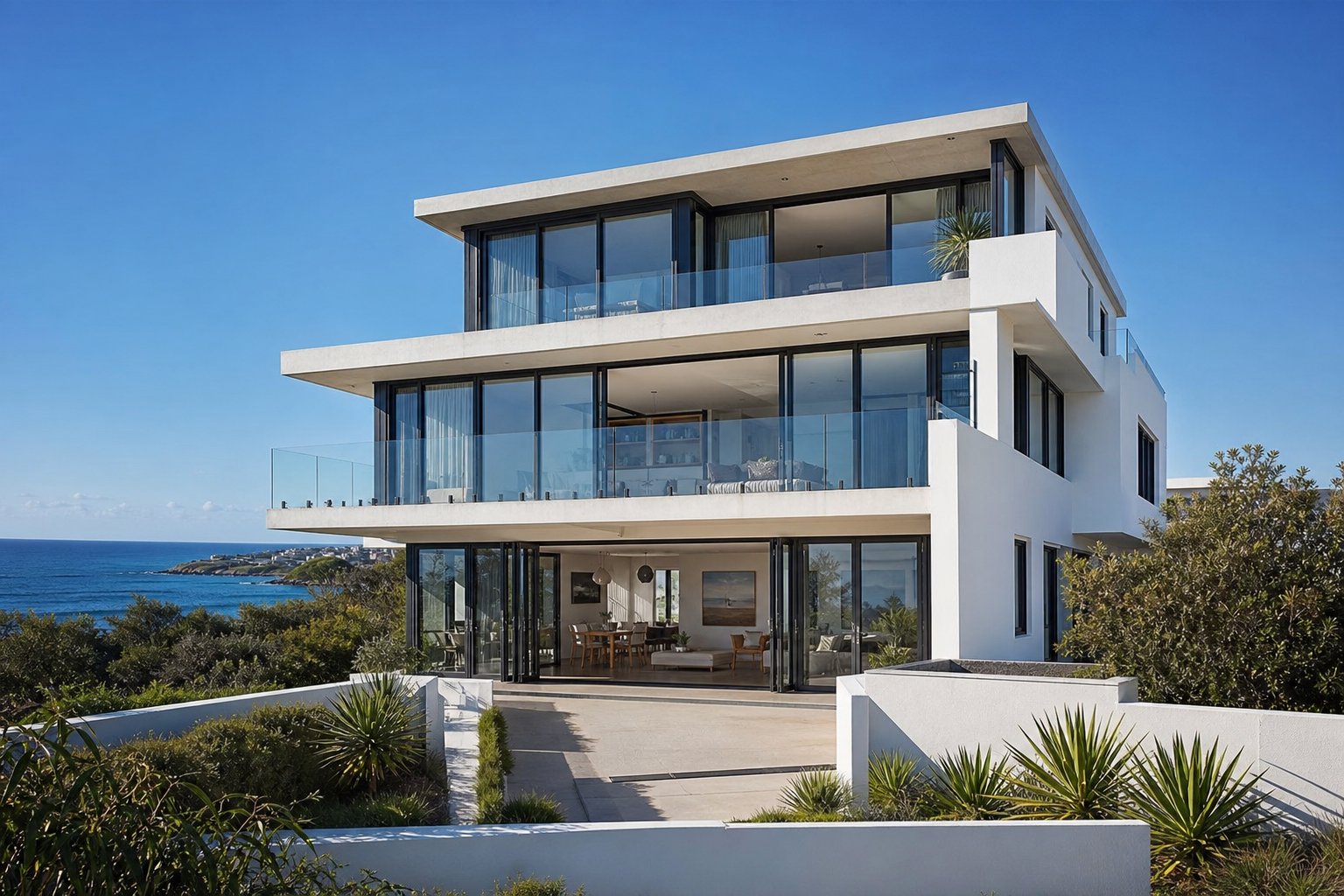
Time is the ultimate stress test for any window material. A product that looks sharp at handover means nothing if it demands constant upkeep or deteriorates beyond repair within two decades. When you are investing in aluminium windows and doors for a home or development, the real question is not how they perform on day one — it is how they perform on year thirty.
Maintenance Requirements Across Frame Materials
The ongoing effort each material demands varies enormously. Aluminium sits at one end of the spectrum — a quick wash with soapy water and occasional lubrication of hinges and locks is the full extent of its care routine. Timber sits at the other, requiring cyclical sanding, priming, and repainting to prevent moisture penetration and rot. uPVC falls somewhere in between: low effort on paper, but with degradation patterns that cleaning alone cannot reverse.
| Maintenance Task | Aluminium | uPVC | Timber |
|---|---|---|---|
| Frame cleaning | Every 3–6 months (soap and water) | Every 3–6 months (soap and water) | Every 3–6 months (specialist cleaner) |
| Repainting or refinishing | Not required | Not required (but cannot be restored if discoloured) | Every 4–7 years |
| Hardware lubrication | Annually | Annually | Annually, plus hardware may need replacing sooner due to frame movement |
| Seal and gasket inspection | Every 5–10 years | Every 5–10 years (seals degrade faster in UV) | Every 2–5 years (timber movement stresses seals) |
| Structural repair | Rarely needed | Cannot be repaired if warped or cracked — replacement only | Localised rot repair possible but costly |
| Approximate annual effort | Minimal (under 1 hour total) | Minimal initially, rising as material ages | Moderate to high (multiple hours per year) |
The contrast sharpens in Australian conditions. Timber is not weatherproof and needs constant care to prevent expansion, warping, rotting, fading, and mould. In subtropical Brisbane or coastal Newcastle, that maintenance cycle accelerates — you may be repainting every three years rather than seven. Miss a cycle and moisture finds its way in, triggering rot that can compromise the entire frame. uPVC fares better initially, but Australian UV intensity is punishing. Low-grade uPVC compounds yellow, warp under sustained heat, and can become brittle over time — issues that cleaning will not fix and that require complete window replacement to resolve.
All aluminum windows and doors benefit from the same fundamental advantage: properly powder-coated aluminium does not rot, does not warp, does not yellow, and does not become brittle. Salt air, UV bombardment, and temperature extremes that actively destroy competing materials simply do not affect a well-finished aluminium frame in any meaningful way.
How Longevity Impacts the Value Equation
Aluminium window systems can last between 40 and 50 years as a functional, aesthetically intact assembly. Some industry sources extend that estimate to 60 years for well-maintained installations in benign environments. Compare that to uPVC’s typical 20–30 year service life before seal failure, discolouration, or embrittlement forces replacement. Timber can match aluminium’s longevity — but only with diligent, uninterrupted maintenance that many homeowners simply do not sustain over decades.
This lifespan gap rewrites the value equation. A single set of aluminium doors and windows installed today could still be performing in 2065 or beyond. Over that same period, a uPVC installation would likely need at least one full replacement cycle — doubling the material and labour cost. Even if the initial aluminium windows price was 40% higher, the total expenditure across half a century falls lower because you buy once, maintain minimally, and never face replacement.
Industry data reinforces this shift. Approximately 75% of all aluminium ever produced is still in use today, thanks to the material’s inherent durability and infinite recyclability without quality loss. That is not a marketing claim — it is a material property that translates directly into fewer windows entering landfill and fewer replacement purchases hitting your budget.
For landlords managing aluminium windows doors across rental portfolios, the maintenance arithmetic is even more compelling. Tenants do not repaint timber frames. They do not notice seal degradation early enough to prevent damage. A material that requires nothing beyond periodic cleaning removes an entire category of property management headaches — and the invoices that come with them.
Longevity and low maintenance make a strong case on their own. But no material suits every situation, and intellectual honesty demands acknowledging the scenarios where aluminium is not the smartest spend — a question worth addressing directly.
When Aluminium Windows Are Not Your Best Option
Recommending aluminium in every situation would be dishonest — and dishonest advice costs people money. There are genuine scenarios where other materials deliver better value, and recognising them helps you trust the framework in situations where aluminium genuinely does come out ahead.
Budget Constraints and Short-Term Ownership
If you are fitting out a rental property you plan to sell within five years, or working with an absolute ceiling budget that cannot stretch to thermally broken aluminium, uPVC offers acceptable short-term performance at a significantly lower upfront cost. That 50–70% price gap identified in European window system comparisons narrows the equation for projects where long-term ownership is not the goal.
For investors flipping properties or landlords managing short lease-cycle assets, spending on a 40-year frame makes limited financial sense when the holding period is under a decade. In these cases, the best replacement windows 2025 buyers can source are the ones that meet compliance, look presentable, and preserve cash for other value-adding improvements. uPVC fills that brief adequately.
The trade-off is real, though. You sacrifice longevity, resale premium, and thermal performance — costs that compound silently if ownership plans change and the “temporary” window becomes a permanent fixture.
Heritage and Regulatory Requirements
Some projects simply cannot use aluminium regardless of its value proposition. Heritage-listed properties and homes within conservation zones frequently require timber windows to maintain historical character. In Australia, local council heritage overlays and state heritage registers can mandate that replacement windows match the original construction wherever possible — and for a Federation-era home in inner Sydney or a Victorian terrace in Carlton, that means timber sashes with period-appropriate profiles.
These are not suggestions. Installing aluminium in a heritage-listed property without consent can trigger enforcement action, mandatory removal, and reinstatement at the owner’s expense. If your property falls under heritage protection, consult your local council’s heritage officer before specifying any window material. The best windows for residential homes 2025 in these contexts are those that satisfy both planning requirements and performance targets — often timber or timber-composite systems with slimline double glazing that maintains a traditional appearance while improving thermal performance.
Where Alternatives Genuinely Compete
In highly insulated passive house builds targeting Uw values of 0.8 W/m²·K or below, composite frames — typically timber inside with an aluminium external skin — can achieve marginally better thermal performance than even the best thermally broken aluminium profiles. Timber’s natural thermal conductivity of 0.13–0.17 W/mK gives it a fundamental advantage at the extremes of insulation performance, and alu-clad composite systems pair that insulation with the low-maintenance exterior that aluminium provides.
For anyone researching highly rated replacement windows 2025 for a certified passive house, composite systems from high end window brands specialising in passive-certified products are worth serious consideration. They cost more upfront — often 30–50% above equivalent aluminium — but in a build where every fraction of a U-value point matters for certification, that premium buys compliance that pure aluminium struggles to match without increasingly complex profile engineering.
Similarly, among the most trusted brands for replacement windows 2025, several top-rated energy-efficient window brands offer timber-aluminium hybrids that suit luxury renovations where interior warmth and tactile quality matter as much as external durability. These systems genuinely compete with aluminium on longevity while offering a richer interior aesthetic that some homeowners prefer — particularly in living areas where the window frame is a visible design element.
Understanding where aluminium is not the ideal choice makes recommendations where it is the best value far more credible. If someone tells you aluminium wins every scenario, they are selling you a product — not solving your problem.
None of these exceptions diminish aluminium’s position as the strongest all-round value proposition for the majority of Australian residential and commercial projects. They simply define its boundaries — and knowing those boundaries puts you in a stronger position when requesting quotes, comparing specifications, and deciding where your budget delivers the greatest return. That quoting process itself, though, carries its own set of traps worth understanding before you commit.
Understanding Quote Drivers and Installation Pricing
Two quotes for identical-looking aluminium windows can differ by 40% or more — and neither one is necessarily wrong. Quote variation is not random. It reflects real differences in specification, installation context, and service scope that most buyers never see broken down clearly. Knowing what drives these differences puts you in control of the comparison rather than guessing which number to trust.
Key Factors That Drive Quote Variation
Every aluminium window quote is shaped by a set of interdependent variables. Change one and the price shifts. Change several and the total can move dramatically. Here are the primary cost drivers that separate a $1,400 window from a $3,200 one:
- Retrofit vs. new construction — Replacing existing windows involves removal, disposal, and making good the surrounding wall finishes. New builds skip those steps but may require coordination with other trades. Retrofit installations typically add 20–35% to labour costs compared to fitting into a prepared opening on a new build.
- Window size and configuration — Larger frames use more aluminium, require heavier glazing units, and demand more robust hardware. Multi-panel configurations (bi-folds, stacking sliders, corner windows) involve complex engineering that simple casements do not. Each additional panel or moving sash adds cost.
- Site accessibility — Ground-floor windows with clear access cost less to install than upper-storey openings requiring scaffolding, elevated work platforms, or restricted-hours access in apartment buildings. Difficult access can double installation labour.
- Glazing specification — Standard clear double glazing sits at the baseline. Low-E coatings, argon fills, acoustic laminated glass, tinted or solar control options, and triple glazing all carry price premiums that reflect genuine performance improvements.
- Hardware grade — Commercial-grade stainless steel hinges and multi-point locking systems cost more than basic zinc-alloy fittings. In coastal or high-use applications, that premium pays for itself many times over in longevity.
- Finish colour — Standard colours (white, black, monument, woodland grey) are batch powder-coated at scale, keeping costs lower. Custom RAL colours, textured finishes, or two-tone interior/exterior combinations require separate coating runs and add both cost and lead time.
- Local labour market — Installation rates vary significantly across Australia. A qualified aluminium windows contractor in central Sydney charges differently from one in regional Queensland. Capital city rates run 15–30% higher than regional areas, reflecting overhead differences rather than skill variation.
None of these factors are good or bad in isolation. They are simply the levers that determine where your specific project sits on the pricing spectrum. The problem arises when a quote hides these variables inside a single lump-sum figure — making comparison impossible.
How to Read and Compare Quotes Effectively
A properly structured quote from a reputable aluminium window supplier should itemise every component of the project cost. When you receive a quote, check that it explicitly covers:
- Window supply (frame, glazing, hardware, finish — listed per unit or per opening)
- Installation labour and timeframe
- Flashings, brackets, and sealing materials
- Removal and disposal of existing windows (for retrofit projects)
- Waste removal and site clean-up
- Make-good of internal and external finishes (plasterboard, render, trims)
- Any required scaffolding or access equipment
- Compliance documentation and certification
If any of these line items are missing, the quote is incomplete — and the missing costs will surface later as variations or extras. A lump-sum price with no breakdown is not a quote; it is a guess dressed up as certainty. You cannot compare two offers if one includes disposal and make-good while the other quietly excludes them.
Red flags to watch for: quotes that omit glazing specifications entirely, quotes that do not state the thermal break type or U-factor, pricing that bundles “supply and install” without separating the components, and any document that fails to specify warranty terms for frame, hardware, and installation workmanship individually.
Project-capable aluminium window suppliers — particularly those working with builders, developers, and architects — approach quoting differently. They work from drawings and window schedules, calculate material requirements against the actual design, and produce itemised costings that reflect the specific system, configuration, and installation context. MEICHEN’s services page demonstrates this approach: their process runs from project drawings and schedules through system recommendations, material calculation, and coordinated delivery planning. It is the kind of transparency that lets you compare like with like rather than decoding vague lump sums.
Look for this pattern when shortlisting aluminium window suppliers for any project of scale. An aluminium windows company that provides detailed schedules and material breakdowns upfront is far less likely to surprise you with cost blowouts mid-project — and far more likely to deliver the specification you are actually paying for.
The quoting process reveals a lot about a supplier’s capability. But the real test comes after the quote is accepted — in how you verify claims, compare warranty terms, and source the right partner for your specific build. That final step pulls the entire value framework together into a practical action plan.
How to Source Best-Value Aluminium Windows for Your Project
Frameworks only deliver results when they translate into decisions. Everything covered in this guide — lifetime cost calculations, energy ratings, climate matching, hidden cost traps, longevity comparisons, and quote analysis — converges at one practical moment: choosing who to buy from and confirming that what they offer actually stacks up.
Rather than searching for a top 5 window manufacturers list and hoping one of them suits your project, work through the following checklist. It applies whether you are sourcing for a single renovation or coordinating aluminium window manufacturers across a multi-dwelling development.
Your Value Assessment Checklist
- Define climate-appropriate specifications first. Identify your NCC climate zone and determine the U-factor, SHGC, and air infiltration targets that suit your location. Do this before requesting quotes — it prevents suppliers from steering you toward whatever they have in stock rather than what your building actually needs.
- Request itemised quotes from at least three suppliers. Each quote should separate supply, installation, flashings, removal, make-good, and waste disposal as distinct line items. If a supplier cannot or will not break down their pricing, move on. You cannot assess value from a single lump-sum figure.
- Verify thermal break and hardware quality. Ask for the thermal break material (polyamide vs. PVC), depth in millimetres, and the hardware brand. Cross-reference the hardware brand independently — can you source replacement parts in Australia if something fails in year eight?
- Compare warranty terms in detail. Check what is covered (frame, finish, hardware, seals, glazing unit) and what voids coverage (unapproved installation, coastal proximity, specific cleaning products). A comprehensive 10-year warranty from a stable aluminium windows manufacturer holds more weight than a vague 25-year claim with exclusions that gut its practical value.
- Calculate cost-per-year. Apply the formula from earlier in this guide: (supply + install + projected maintenance) ÷ expected lifespan. Compare this figure across your shortlisted options. The lowest annual ownership cost — not the lowest quote — identifies your best value aluminium windows.
- Confirm AS 2047 compliance and WERS ratings. Any product installed in Australia must comply with AS 2047. Ask for test evidence, not just a claim. WERS star ratings provide an independent, comparable measure of energy performance that cuts through marketing language.
Choosing a Supplier That Supports Your Project
The best windows manufacturer for your project is not necessarily the biggest name or the cheapest quote — it is the one whose capabilities match your project’s complexity. For straightforward single-home renovations, a competent local installer with access to quality systems may be all you need. For multi-unit developments, commercial builds, or architecturally complex designs, you need a supplier that functions as a project partner rather than a product vendor.
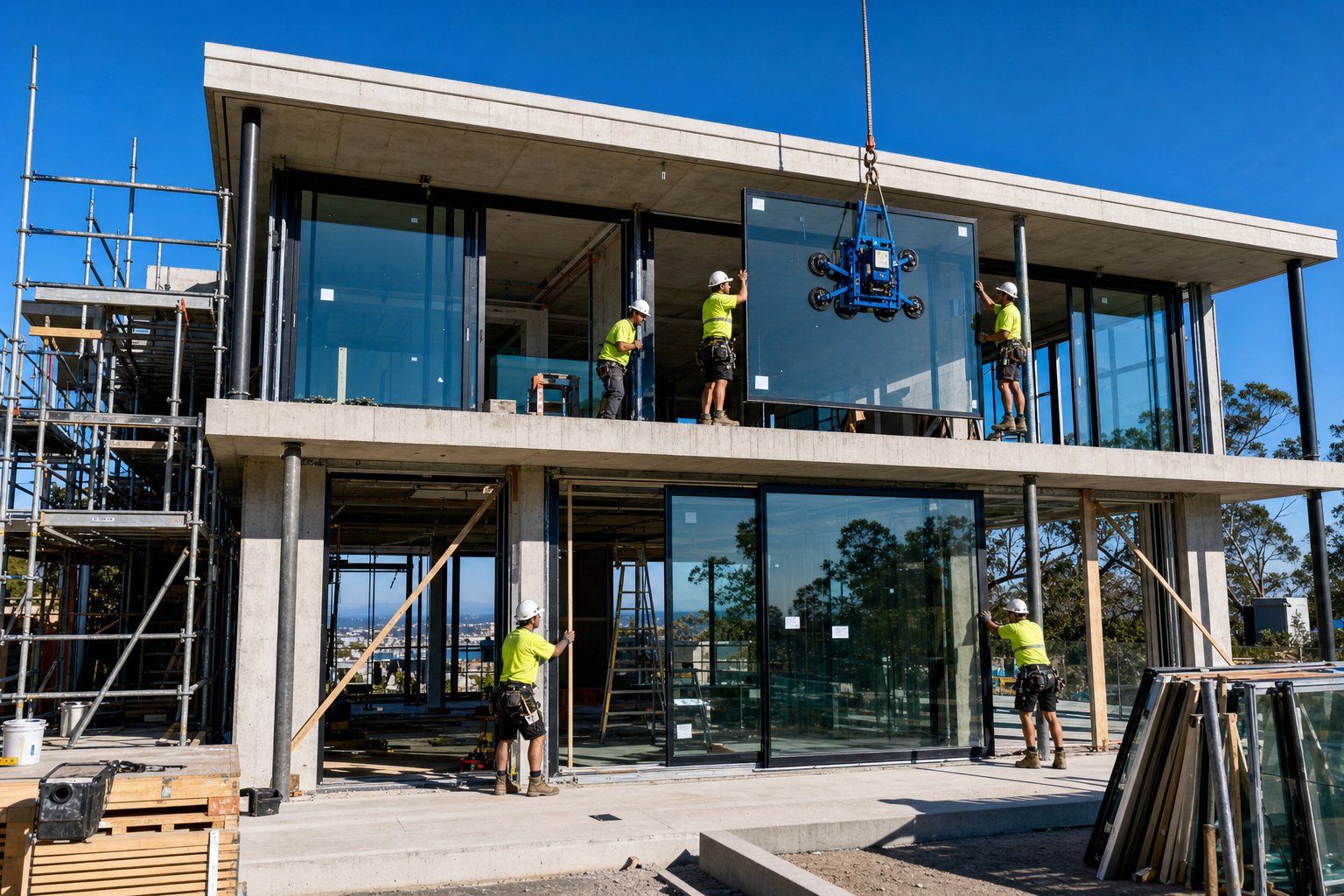
What does project-capable support look like in practice? It starts with drawing review and window schedule coordination, moves through system recommendations matched to your performance targets, includes accurate material calculation and manufacturing oversight, and finishes with quality control, logistics planning, and delivery coordination that aligns with your build programme. MEICHEN structures their services around exactly this workflow — from initial drawings through to delivery planning — giving builders, developers, architects, and procurement teams a single point of coordination across the entire aluminium window supply process. Their services page outlines each stage, making it straightforward to assess whether their capabilities align with your project requirements.
When evaluating any aluminium window supplier against your shortlist, look for these markers of genuine project capability:
- Willingness to work from your drawings rather than forcing their standard configurations
- Transparent material calculations that you can verify against the window schedule
- Clear quality control processes with inspection documentation
- Defined logistics and delivery planning that coordinates with your construction programme
- Technical support during installation — not just a phone number, but actual guidance on flashings, tolerances, and sequencing
You will not find this level of support by Googling a top 3 window manufacturers ranking or picking the first name on a window manufacturers list. It requires direct engagement — reviewing their process, asking how they handle your specific project type, and confirming that their systems align with the value framework this guide has laid out.
The top window manufacturers and aluminium window manufacturers who consistently deliver best-value outcomes share a common trait: they reduce project risk by controlling detail at every stage, from specification through fabrication to site delivery. That control is what separates a supplier who sells you windows from one who helps you build successfully with them.
Best value was never about finding the cheapest price. It is about spending intelligently — matching the right specification to your climate, verifying quality at the component level, comparing true lifetime cost, and partnering with suppliers whose process protects the outcome you are paying for.
Frequently Asked Questions About Best Value Aluminium Windows
1. How do I calculate the true value of aluminium windows over their lifespan?
Use the lifetime cost-per-year formula: add together the purchase price, installation cost, and projected maintenance expenses over the window’s lifespan, then divide by the expected years of service. Thermally broken aluminium windows typically last 40 to 50 years with minimal maintenance, which means dividing by a much larger number than uPVC (20-30 years) or poorly maintained timber. Even when the upfront aluminium price sits 20-30% higher, the annual ownership cost frequently comes out lower because you avoid replacement cycles, repainting, and seal repairs that accumulate with other materials.
2. What makes thermally broken aluminium windows worth the extra cost?
Thermal break technology inserts a low-conductivity polyamide barrier between the interior and exterior aluminium sections, severing the conductive pathway that causes energy loss and condensation. Without this barrier, aluminium conducts heat roughly 1,000 times faster than timber, turning the frame into an energy highway. Quality thermally broken profiles achieve U-factors of 1.8 to 2.5 W/m2K for the complete window unit, rivalling uPVC and timber performance while retaining aluminium’s strength, slim sightlines, and corrosion resistance. The depth of the thermal break matters — deeper polyamide strips (20mm or greater) deliver significantly better thermal separation and condensation resistance than shallow single-strip alternatives found in budget products.
3. Why are cheap aluminium windows often more expensive in the long run?
Budget aluminium windows hide costs that surface after installation. Poor-quality powder coating chalks or fades within three to five years, particularly in coastal or high-UV Australian environments. Inferior hardware from untraceable brands fails and proves expensive or impossible to replace. Windows without proper thermal breaks cause condensation that damages surrounding plaster and promotes mould growth. Inadequate weather seals shrink and harden, allowing air and water infiltration that requires sash removal to fix. Some imported products use non-standard glazing rebate dimensions, locking you into expensive custom glass replacements when the sealed unit eventually fails. Each of these hidden costs can individually exceed the savings achieved by choosing a cheaper product upfront.
4. What should a complete aluminium window quote include in Australia?
A transparent quote should itemise window supply (frame, glazing, hardware, and finish listed per opening), installation labour and timeframe, flashings and sealing materials, removal and disposal of existing windows for retrofit projects, waste removal, make-good of internal and external finishes, any scaffolding or access equipment, and compliance documentation. Project-capable suppliers such as MEICHEN work from drawings and window schedules to produce detailed material breakdowns rather than vague lump-sum pricing. If any of these components are missing from a quote, those costs will likely appear later as variations. Always compare fully installed figures across at least three suppliers to identify genuine best value.
5. Are aluminium windows suitable for all Australian climate zones?
Aluminium windows perform well across all Australian climate zones, but the optimal specification changes significantly by location. Hot climates like northern Queensland need low SHGC glazing (0.25-0.35) with solar control coatings and lighter frame colours. Cold climates like Hobart and Canberra prioritise low U-factors below 2.5 W/m2K, deep thermal breaks, and high condensation resistance. Mixed climates like Sydney and Perth benefit from balanced specifications with moderate SHGC paired with good thermal insulation. Australian conditions also favour aluminium’s UV stability, salt-air corrosion resistance, dimensional stability under temperature extremes, and non-combustibility for bushfire zones — advantages that compound over decades as competing materials degrade under the same conditions.
More Window & Door Guides