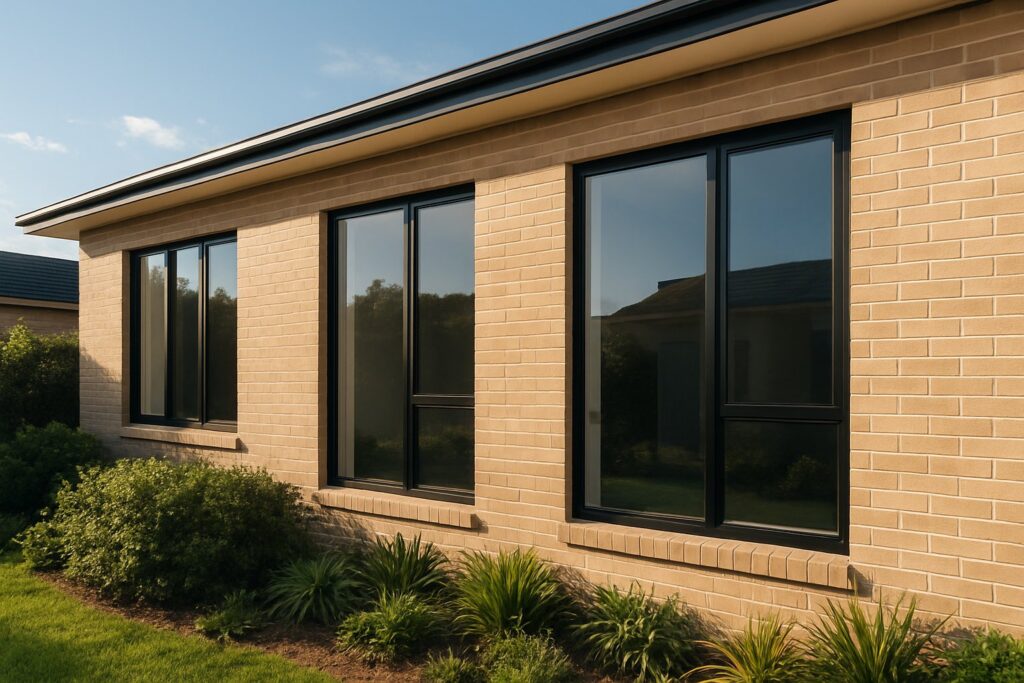
What Grey Aluminium Window Frames Are and Why They Matter
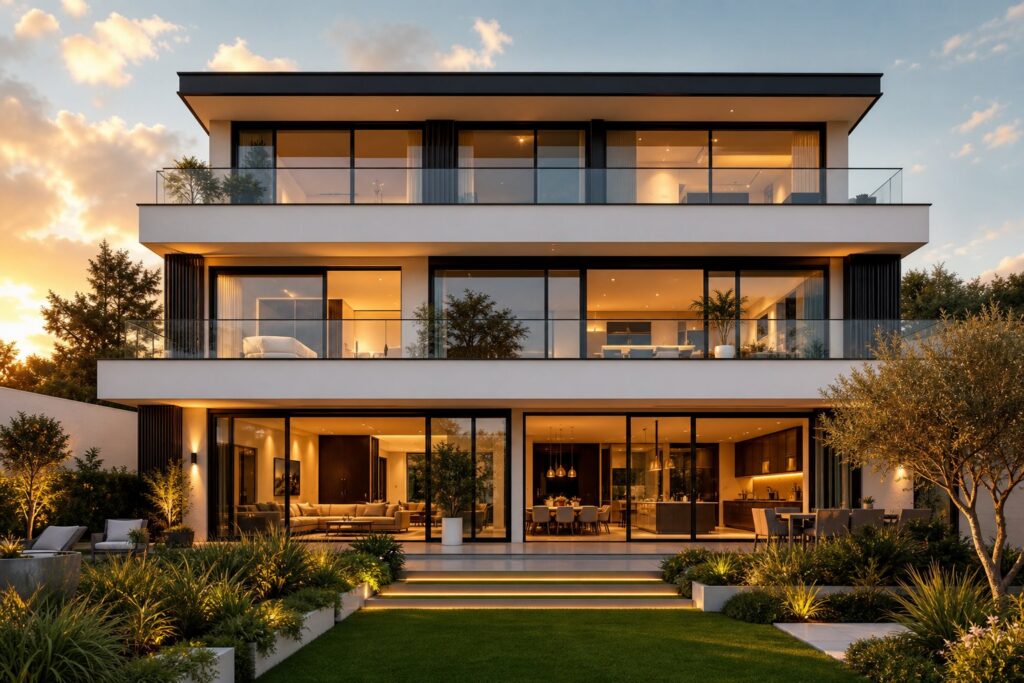
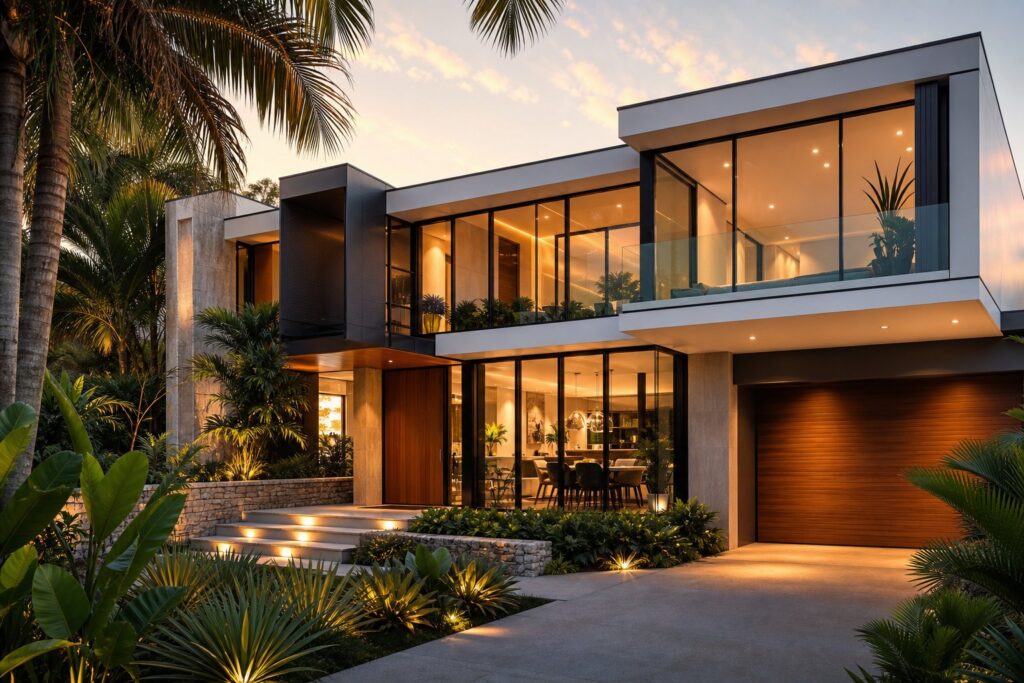
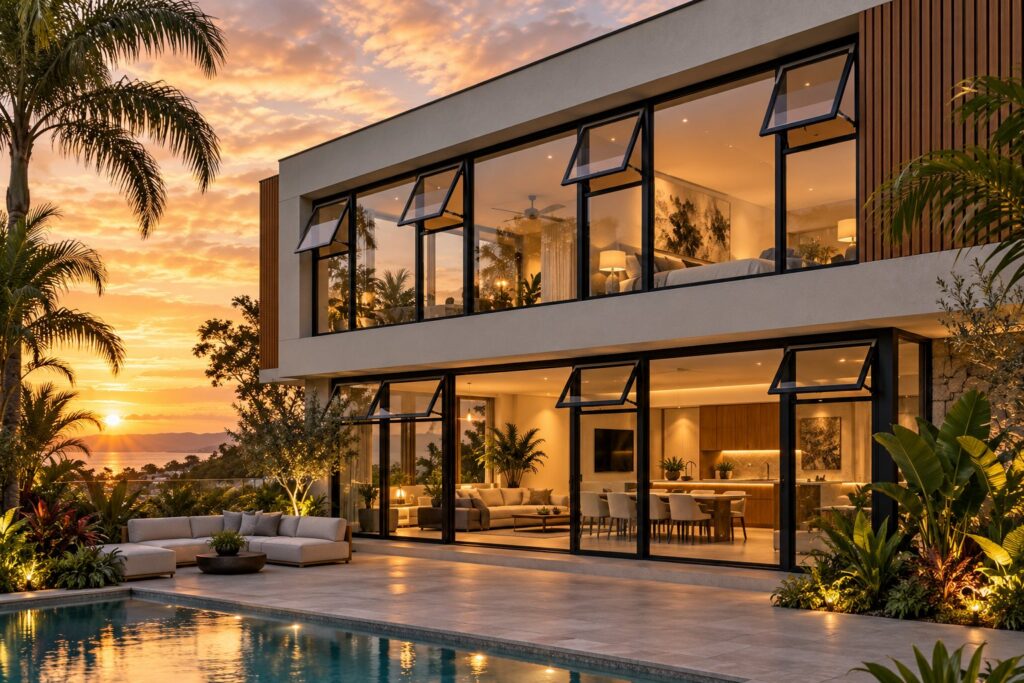
Few exterior choices shape a home’s personality as quickly as the colour and material of its window frames. Over the past decade, grey aluminium window frames have moved from architect-spec projects into mainstream Australian residential and commercial builds — and for good reason. They sit at the intersection of structural performance, slim design, and a colour family versatile enough to work on a Queenslander renovation or a two-storey coastal new build.
What Are Grey Aluminium Window Frames
Grey aluminium window frames are extruded aluminium profiles finished in a grey tone — typically through powder coating or anodising — and used as the structural surround for glazed window units. The term “grey” is deceptively simple: it spans dozens of distinct shades across the RAL colour chart, British Standard references, and proprietary manufacturer palettes. A soft, warm pebble grey and a near-black anthracite both fall under the same umbrella, yet they produce dramatically different results on a facade.
What sets grey aluminium apart from timber painted grey or grey uPVC is the material itself. Aluminium’s exceptional strength-to-weight ratio allows frames to be significantly slimmer, maximising glass area and letting more natural light into a room. That structural advantage, paired with a powder-coated or anodised finish that resists peeling, fading, and corrosion, gives grey aluminium windows a combination of durability and aesthetics that other frame materials struggle to match.
Why This Guide Exists
Most online resources cover grey aluminium windows and doors at a surface level — a colour swatch here, a product listing there. Rarely does a single article walk you through finishing-process science, thermal-break technology, planning and council considerations, structured shade-selection guidance, and honest material comparisons all in one place. That is exactly the gap this guide fills, giving Australian homeowners, renovators, builders, and specifiers the depth they need to make a confident, well-informed decision.
Grey aluminium frames combine the slimmest sightlines of any mainstream frame material with a finish palette broad enough to suit heritage cottages and contemporary apartments alike.
Choosing the right shade, however, is where many projects stumble — and where the real conversation begins.
Why Grey Has Become the Most Popular Window Frame Colour
A decade ago, most Australian homes wore white window frames without a second thought. Black aluminium windows started appearing on architect-designed builds, injecting a bold, graphic edge that turned heads on the street. Grey arrived somewhere in between — and quietly overtook both.
Its rise is not accidental. Grey taps into a broader shift in exterior design toward muted, nature-inspired palettes. Earthy renders, natural stone cladding, dark roof sheeting, and raw timber accents all pair effortlessly with a grey frame. The colour carries enough weight to anchor a facade without competing with it, which is precisely why architects and builders across Australia have gravitated toward it for everything from single-storey brick veneer renovations to multi-level commercial fitouts.
The Architectural Appeal of Grey Frames
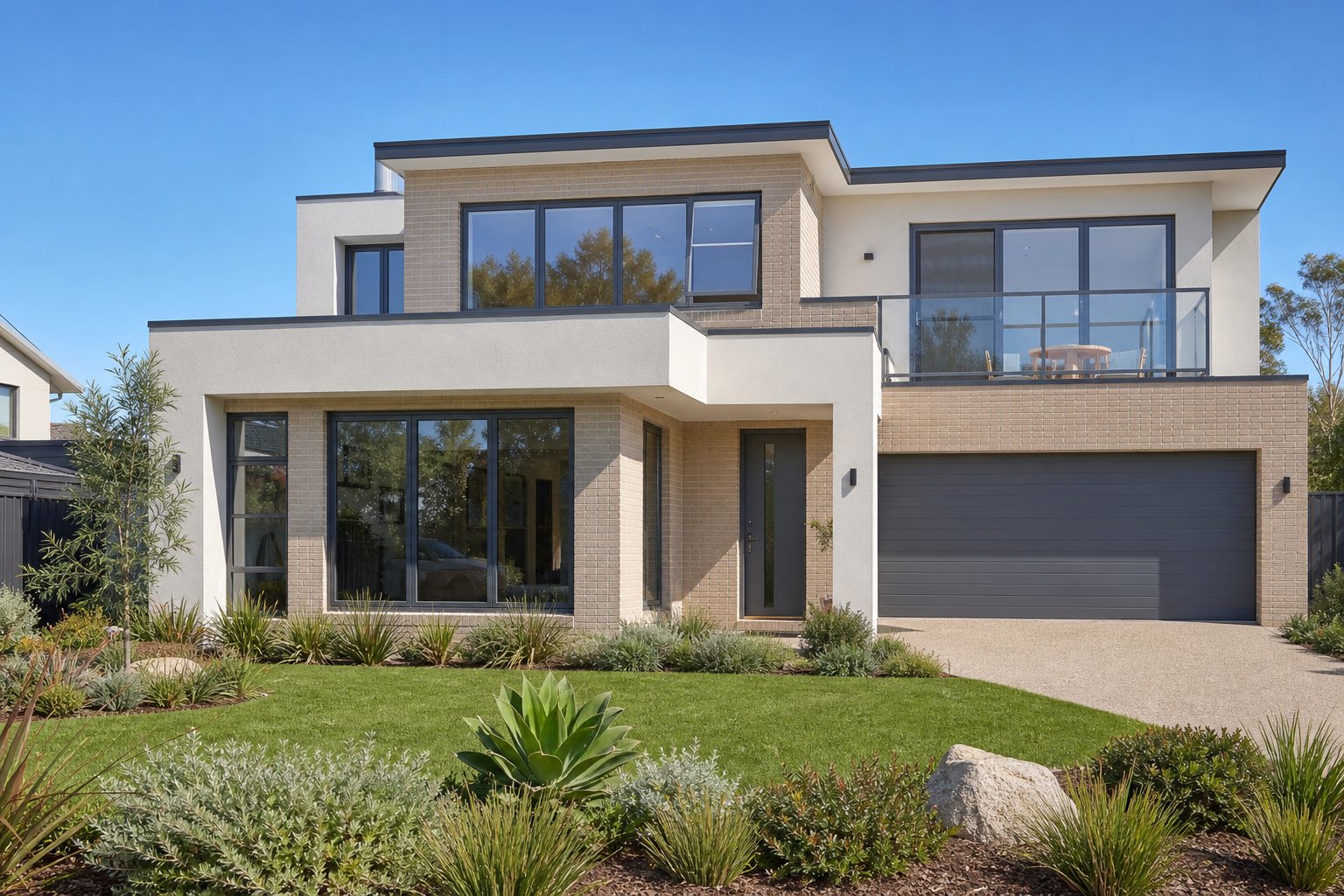
Grey reads as modern without being aggressive. A lighter shade like RAL 7035 can soften the look of a heritage weatherboard cottage, sitting gently against cream or stone-coloured walls. Shift to a deeper tone — RAL 7016 Anthracite Grey or RAL 7022 Umbra Grey — and the same frame material delivers the industrial, minimalist character that suits a contemporary concrete-and-steel home.
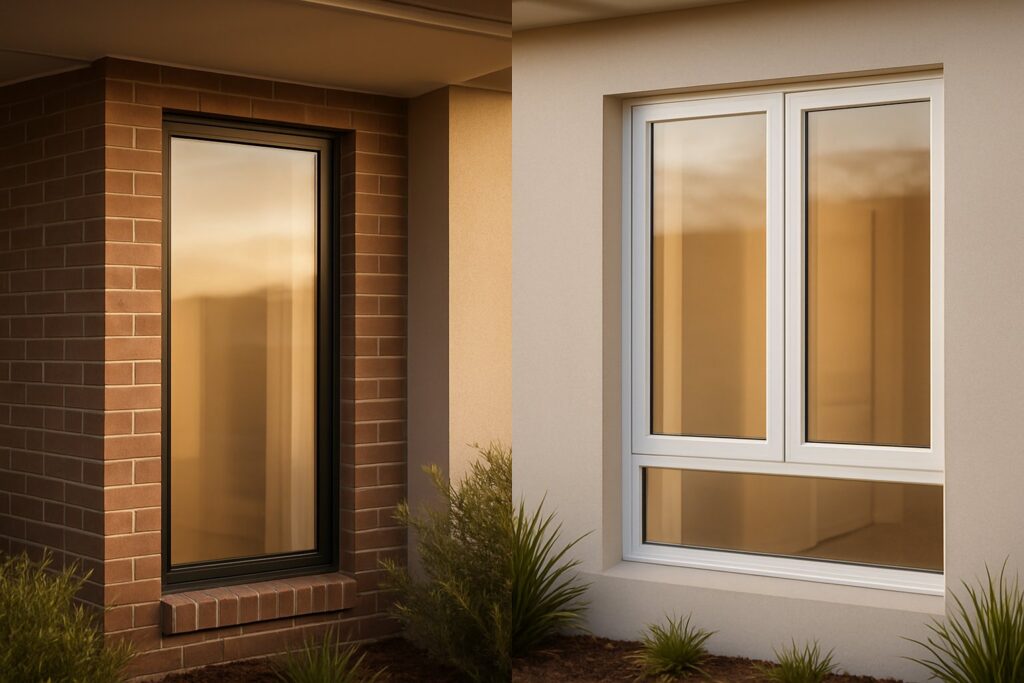
This range is what gives grey its staying power. White frames can feel dated on a modern build, and very dark frames risk overpowering a traditional facade. Grey occupies a middle ground that adapts to the property rather than dictating its style. On red brick, it feels grounded and warm. Against white render, it provides clean definition. Beside natural timber cladding, it adds just enough contrast to let both materials breathe. Few other colours offer that level of versatility across so many common Australian facade finishes.
Grey vs Black Frames — Choosing Your Contrast Level
The decision between grey and black aluminium frame windows often comes down to a single question: how much do you want the frame itself to stand out?
Black aluminium windows deliver maximum contrast. They create bold, graphic outlines against light-coloured walls, drawing the eye to each window opening as a deliberate design feature. The effect can be striking on a contemporary home with clean lines and expansive glazing. On the wrong facade, though, that same contrast can feel heavy — visually shrinking the glass and making frames the dominant element.
Grey aluminium frames take a softer approach. They still provide clear definition against a pale wall, but the boundary between frame and facade is gentler. The eye moves past the frame more readily, landing on the glazing and the view beyond. For homeowners who want their windows to feel integrated rather than spotlighted, grey offers exactly that balance.
It is worth noting that very dark greys — RAL 7016 Anthracite Grey being the most popular — can appear almost black in low light or on overcast days, giving homeowners a middle path between the two aesthetics. In full Australian sun, the grey undertone becomes visible, keeping the look slightly warmer and less stark than a true black.
One practical consideration often overlooked: darker frames absorb more solar heat. In exposed, north- or west-facing positions — common in Australian builds designed to capture light — a very dark frame will reach higher surface temperatures than a mid-grey one. While quality thermally broken profiles handle this well, it is a factor worth discussing with your supplier, particularly in hotter climate zones.
- Grey outperforms black when you want a subtle, understated frame that blends with the facade; when working with heritage or traditional architecture; when pairing with warm-toned materials like red brick or sandstone; and when reducing visible dust and water-spot marks on the frame surface.
- Black outperforms grey when you want a bold, high-contrast design statement; when the home is contemporary with large, floor-to-ceiling glazing panels; when the facade is very light or very dark (creating intentional drama); and when matching black external fixtures such as gutters, fascias, or balustrade steelwork.
Neither option is objectively better — the right choice depends on the property, its surroundings, and how visible you want your frames to be. What matters most is matching the contrast level to the architectural intent, and that starts with understanding the full spectrum of grey shades available.
Choosing the Right Shade of Grey for Your Frames
Here is where most homeowners hit a wall. You have settled on grey aluminium — the material is right, the contrast level makes sense — and then your supplier asks which grey. Not “light or dark,” but a specific RAL code from a palette that includes well over a dozen distinct grey tones. Pick the wrong one and the frames can clash with your brickwork, wash out in direct sun, or look heavier than intended. Pick the right one and every element of the facade clicks into place.
The challenge is that aluminium grey colour options look different on a screen than they do on a physical panel, and different again once installed on a sunlit wall at midday versus an overcast morning. A structured approach removes the guesswork.
Popular RAL Grey Shades for Window Frames
The RAL colour system is the standard reference used by powder coaters and aluminium fabricators across Australia and internationally. It ensures that the shade you specify is the shade you receive — regardless of which factory handles the coating. Below are six of the most commonly specified alu grey tones for residential and commercial window frames, along with their undertone characteristics and best-fit applications.
| RAL Code | Shade Name | Undertone | Best Suited Property Styles | Visual Weight |
|---|---|---|---|---|
| RAL 7016 | Anthracite Grey | Cool (blue-grey) | Contemporary homes, minimalist builds, industrial conversions, rendered facades | Dark |
| RAL 7015 | Slate Grey | Cool (blue-violet) | Natural stone exteriors, coastal homes, period properties seeking a modern edge | Dark |
| RAL 7022 | Umbra Grey | Warm (brown-grey) | Earthy palettes, timber cladding, rural or bushland settings, sandstone facades | Dark |
| RAL 7005 | Mouse Grey | Neutral | Brick veneer, mixed-material facades, transitional designs bridging old and new | Medium |
| RAL 7012 | Basalt Grey | Cool (green-grey) | Concrete, rendered walls, mid-century modern renovations, flat-roof designs | Medium |
| RAL 7035 | Light Grey | Neutral (slightly cool) | Heritage cottages, weatherboard homes, light-coloured facades, subtle upgrades | Light |
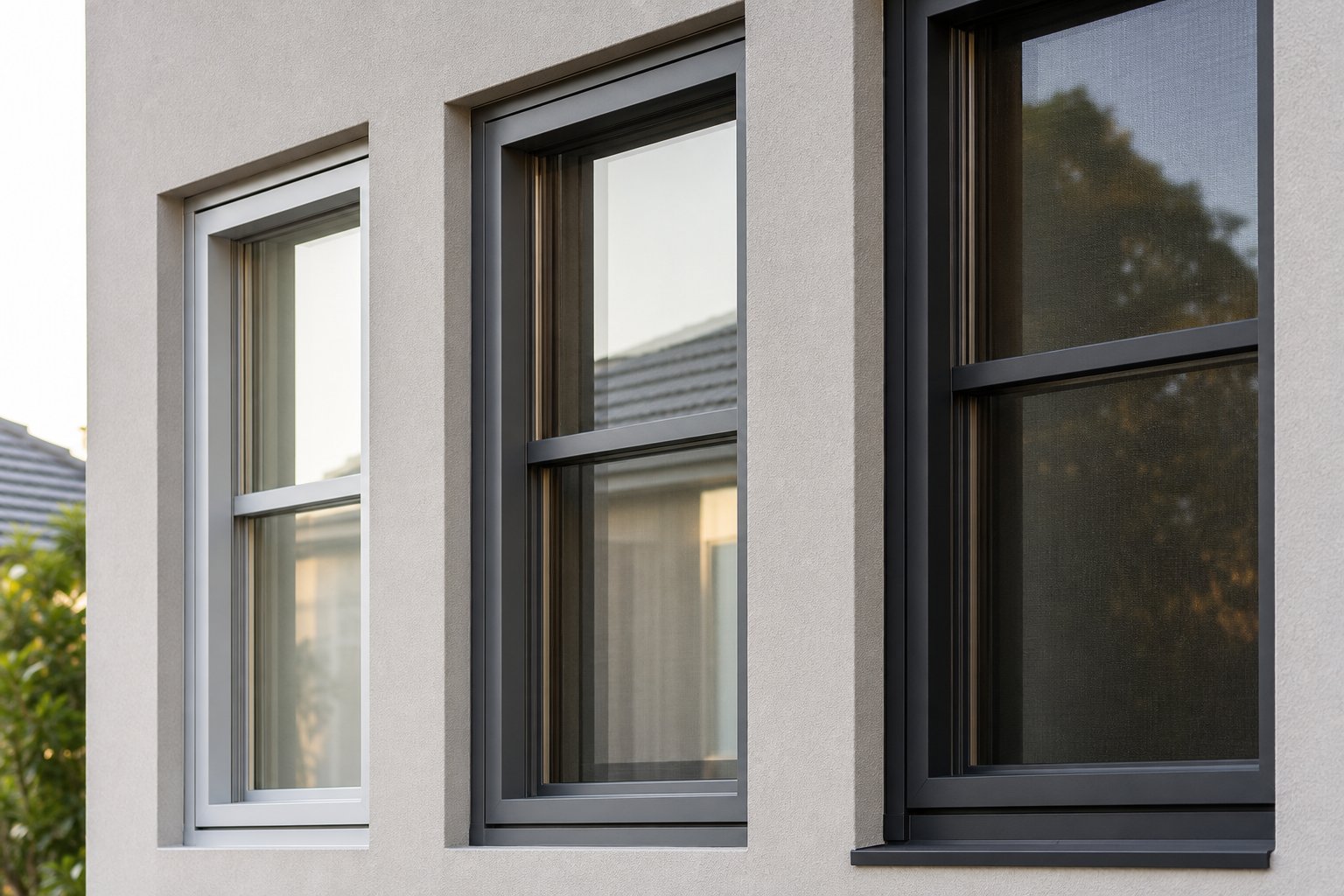
A few things this table cannot convey on its own. RAL 7016 Anthracite Grey dominates the aluminium gray market for a reason — it reads as nearly black in shade yet reveals a sophisticated blue-grey undertone in full sunlight, giving it a depth that flat black never achieves. RAL 7022 Umbra Grey, by contrast, leans distinctly warm. Side by side, the two look nothing alike, yet both fall under the broad “dark grey” label. This is exactly why relying on descriptions alone — or on what a shade looks like on a monitor — leads to costly regrets.
RAL 7035 Light Grey sits at the opposite end of the spectrum. It is a popular choice for homeowners who want to move away from white frames without making a dramatic shift. Against cream render or pale brick, it offers a gentle, almost cloud-like definition that keeps the facade feeling open and airy.
A Written Shade-Selection Decision Tree
Rather than browsing colour charts at random, work through the following sequence. Each step narrows your options until you arrive at a shortlist that genuinely suits your home, its surroundings, and the amount of light it receives throughout the day.
- Identify your property’s era and architectural style. A Federation home, a 1970s brick veneer, a Queenslander, and a brand-new two-storey build each carry a different visual language. Heritage-leaning properties tend to sit more comfortably with lighter or warmer greys (RAL 7035, RAL 7005, RAL 7022), while contemporary or minimalist builds can carry the visual weight of darker, cooler tones (RAL 7016, RAL 7015, RAL 7012).
- Note your exterior wall material and its colour. Red or orange brick calls for a grey with a warm or neutral undertone to avoid a cold, disconnected contrast. White or light-coloured render gives you the widest latitude — almost any grey will work, so the choice comes down to how bold you want the frames to appear. Natural stone and timber cladding pair particularly well with earthy greys like RAL 7022 Umbra Grey. Dark charcoal cladding may benefit from a lighter frame to prevent the facade from appearing flat and heavy.
- Decide on your desired contrast level. Do you want the frames to blend quietly into the facade, or do you want them to create deliberate definition? A subtle blend calls for a grey that sits close in tonal value to the wall colour. Deliberate contrast calls for a grey that is clearly darker or lighter than the surrounding surface. This single decision will often eliminate half the shades on your list.
- Consider orientation and light exposure. North-facing and west-facing elevations in Australia receive the most direct sun, which lightens the perceived colour and highlights warm undertones. South-facing walls sit in cooler, flatter light for much of the day, making greys appear darker and cooler than the swatch suggests. A shade that looks perfect on a south-facing sample wall might feel washed out on a sun-drenched northern elevation — and vice versa.
- Narrow to a shortlist of two or three RAL shades. By this point, you should be able to cross off any shade that clearly conflicts with your property style, wall colour, contrast goal, or orientation. Two or three candidates is the sweet spot — enough choice to compare, but not so many that the decision stalls.
- Request physical powder-coated colour swatches and view them against the actual facade at different times of day. This step is non-negotiable. Screens distort colour — even calibrated monitors cannot replicate the texture, sheen, and depth of a powder-coat finish. Hold the sample flat against your external wall at morning, midday, and late afternoon. Watch how the undertone shifts. If possible, tape samples in place for a full day and photograph them at intervals. The shade that looks best across all lighting conditions is your answer.
Skipping step six is the single most common mistake in the shade-selection process. A colour that appears warm and inviting on a supplier’s website can look unexpectedly sterile against a particular brick, or heavier than anticipated on a south-facing wall that rarely catches direct sun. Physical samples viewed in situ cost nothing but a little time — and they can save you from an aluminiumgrau choice you regret for decades.
With the right shade locked in, the next question shifts from colour to chemistry: how that grey actually gets onto the aluminium surface, how durable it will be, and what separates a finish that holds its colour for thirty years from one that chalks and fades far sooner.
Powder Coating vs Anodising
Two processes dominate the way grey aluminium window frames get their colour: powder coating and anodising. Both produce a hard, protective surface, but they work in fundamentally different ways — and those differences affect everything from the shade range available to how the finish ages over twenty or thirty years on an Australian facade. Understanding the distinction puts you in a far stronger position when comparing quotes, assessing quality, and asking the right questions of your supplier.
How Powder Coating Works
Powder coating is a dry finishing process, and it follows a tightly controlled sequence. Get any step wrong and the finish suffers — which is why certification matters, but more on that shortly.
First, the raw aluminium extrusions are cleaned and pre-treated. This typically involves acid or alkaline wash solutions that strip away oils, dirt, and the thin natural oxide layer on the metal’s surface. The pre-treatment stage also applies a conversion coating — a chemical layer that improves adhesion between the aluminium and the powder that follows. Think of it as primer, but at a molecular level.
Next comes the powder application itself. Finely ground pigment and resin particles are given an electrostatic charge as they leave the spray gun. Because the aluminium profile is electrically grounded, the charged particles are attracted to it and cling evenly across every surface, including complex profile shapes and recessed channels. No solvents are involved, so the process produces no volatile organic compounds (VOCs) — a genuine environmental advantage over traditional liquid paint.
Finally, the coated profiles enter a curing oven, typically heated to between 180 and 200 degrees Celsius. Over a cycle of roughly 15 to 30 minutes, the powder melts, flows together, and fuses into a continuous, hard film that bonds chemically and mechanically to the pre-treated aluminium beneath. The result is a finish that is thicker, tougher, and more uniform than conventional wet paint — resistant to chipping, scratching, UV degradation, and moisture penetration.
Coating thickness is not a minor detail. For exterior architectural use, industry standards specify a minimum dry-film thickness to ensure adequate UV and corrosion protection over the frame’s service life. Thinner coatings may look identical on day one but break down far sooner when exposed to the intense UV radiation and salt air common across much of coastal Australia. Always ask your supplier to confirm the dry-film thickness of their coating — and whether it meets recognised benchmarks.
The benchmark worth knowing is Qualicoat certification. Qualicoat is an international quality label specifically designed for coatings on aluminium used in architectural applications. It does not just test whether the colour looks right; it evaluates adhesion strength, surface hardness, UV resistance, and corrosion performance through rigorous laboratory testing. Qualicoat-certified products can offer durability guarantees ranging from 15 to 25 years, even in challenging environments, while non-certified coatings have been known to show significant fading and wear within just 12 months. For any grey aluminium window frame that will face Australian sun, coastal salt spray, or harsh inland conditions, Qualicoat certification — or an equivalent accredited standard — is a quality signal you should not overlook.
How Anodising Differs from Powder Coating
Where powder coating applies a layer onto the aluminium, anodising transforms the aluminium surface itself. The distinction matters more than most buyers realise.
Anodising is an electrochemical process. The aluminium profile is submerged in an electrolytic bath, and an electrical current is passed through the solution. This forces the surface of the metal to oxidise in a controlled way, building up a layer of aluminium oxide that is far thicker and harder than the thin natural oxide film that forms on untreated aluminium. The oxide layer is not sitting on top of the metal — it is integral to it, grown outward from the surface. That is why anodized aluminum frame windows are prized for their scratch and wear resistance.
Visually, anodised finishes have a distinctly different character. They tend toward a subtle metallic sheen — a luminous, slightly reflective quality that reveals the natural grain and texture of the aluminium beneath. Powder-coated frames, by contrast, can be finished in matte, satin, gloss, or textured effects that fully conceal the underlying metal. If you want your aluminium grey color to look unmistakably metallic, anodising delivers that. If you want a smooth, opaque, paint-like surface in a precise RAL shade, powder coating is the route.
The trade-offs extend further. Anodised finishes are exceptionally hard and offer superior corrosion resistance because the protective layer is part of the metal itself — there is no coating to chip or peel away. However, the aluminium gray color palette available through anodising is significantly narrower than what powder coating offers. Anodising produces a range of natural silver, bronze, champagne, and grey metallic tones, but it cannot replicate the virtually unlimited RAL colour matching that powder coating provides. Custom shades like RAL 7022 Umbra Grey or RAL 7035 Light Grey require powder coating.
One additional consideration: any imperfections, tooling marks, or surface inconsistencies in the raw aluminium will remain visible after anodising, since the process is translucent rather than opaque. Powder coating, on the other hand, effectively conceals minor surface flaws beneath its solid film.
| Feature | Powder Coating | Anodising |
|---|---|---|
| Appearance | Smooth, opaque finish; matte, satin, gloss, or textured options | Metallic, subtly reflective; reveals natural aluminium grain |
| Colour Range | Virtually unlimited — full RAL matching, custom shades available | Narrower palette — natural silver, bronze, champagne, and grey metallic tones |
| Scratch Resistance | Good — tough cured film resists daily wear | Excellent — hard oxide layer is integral to the metal |
| UV Stability | Very good with quality coatings; Qualicoat-certified products tested for UV resistance | Very good; natural oxide layer resists UV degradation, though some colour shift may occur over extended periods |
| Maintenance | Low — periodic wash with warm soapy water | Low — periodic wash; avoid abrasive or alkaline cleaners |
| Typical Warranty Period | Varies by manufacturer; Qualicoat-certified coatings often warrant 15 to 25 years for colour retention and adhesion | Varies by manufacturer; generally comparable to quality powder coating for architectural-grade anodising |
Note: Specific warranty terms differ between manufacturers and coating suppliers. Always request written warranty documentation for your project.
What to Look for When Assessing Finish Quality
Whether you choose powder coating or anodising, the quality of the application matters at least as much as the process itself. A poorly applied powder coat will underperform a well-executed one by years, and a sub-standard anodising job can leave the surface vulnerable to staining and premature wear. Before committing to a supplier, run through this checklist:
- Ask for Qualicoat or equivalent certification. This is the single most reliable indicator that the powder coating has been applied and cured to an internationally recognised standard. If the supplier cannot provide certification details, treat it as a red flag — particularly for frames that will face prolonged UV exposure or coastal salt air.
- Request information on coating thickness. For exterior architectural aluminium, ask your supplier to confirm the dry-film thickness in microns and whether it meets the relevant standard for your application. Thicker is not always better (excessive thickness can cause orange-peel texture or adhesion issues), but meeting the minimum is essential.
- Inquire about warranty coverage. A robust warranty should specifically address colour retention, gloss retention, adhesion failure, and resistance to chalking or flaking. Vague promises of “long-lasting colour” are not the same as a written guarantee with defined performance criteria.
- Inspect sample panels for finish uniformity. Look for consistent colour, even texture, no visible runs or sags, and uniform gloss across the entire surface. Hold the panel at an angle under good light — defects that are invisible straight-on often reveal themselves when viewed obliquely.
Getting the finish right protects your investment for decades. Getting it wrong means faded, chalking, or peeling frames that undermine the appearance — and the resale value — of the entire property. The finish is only half the performance equation, though. The other half sits inside the frame itself, hidden from view: the thermal break that determines how well your grey aluminium windows insulate your home against heat, cold, and condensation.
Thermal Break Technology and Energy Performance Explained
Aluminium is one of the strongest, most versatile framing materials available — and for decades, that reputation came with an uncomfortable asterisk. The metal conducts heat roughly a thousand times more readily than timber and several hundred times more than uPVC. Older aluminium frames earned a fair reputation as energy sieves: cold to the touch in winter, radiating heat inward during summer, and prone to condensation streaming down the inside of the profile on cool mornings. If someone has ever told you that aluminium is a poor choice for grey windows on an energy-conscious home, they were probably drawing on experiences with those earlier, single-piece frames.
That reputation, however, belongs to a technology that modern aluminium window and door systems left behind years ago.
Why Aluminium Conducts Heat and Why That Used to Be a Problem
At a fundamental level, aluminium’s thermal conductivity sits at approximately 160 to 200 W/m·K — a figure so high that heat passes through the metal almost without resistance. In an older, non-thermally broken aluminum frame for windows, the interior and exterior faces of the profile are a single, continuous piece of metal. Whatever temperature exists on the outside of the frame transfers directly to the inside.
In practical terms, this meant two things for Australian homeowners. During winter, the interior surface of the frame dropped close to the outdoor temperature, chilling the air immediately around the window and creating a cold zone that your heating system had to work harder to overcome. During summer — particularly on sun-drenched north and west elevations — the frame absorbed and radiated heat into the room, adding to cooling loads.
Condensation was the visible symptom. When warm, humid indoor air met a cold aluminium frame surface, moisture formed on the metal. Over time, that moisture could damage paint finishes on surrounding walls, encourage mould growth in the reveal, and stain timber sills. Non-thermally broken aluminium frames typically produce frame U-values (Uf) in the vicinity of 5.5 to 7.0 W/m²·K — numbers that drag down the performance of even high-quality double glazing sitting within the same opening. The glass could be doing its job; the frame was undoing it.
How Thermal Breaks Work
The solution is deceptively simple in concept, though precision-engineered in execution. Instead of a single continuous aluminium profile, the frame is split into two separate sections — one facing the interior of the home, the other facing the exterior. Connecting them is an insulating bar, typically made from reinforced polyamide (PA66 GF25), a type of glass-fibre-reinforced nylon with extremely low thermal conductivity — around 0.3 W/m·K, compared with aluminium’s 160 to 200 W/m·K.
Think of it as a thermal dam. Heat travelling through the outer aluminium section hits the polyamide bar and is effectively blocked. Only a fraction of that energy makes it across to the inner aluminium section. The same principle works in reverse: conditioned indoor air stays inside rather than bleeding outward through the frame.
The polyamide strips are mechanically locked into the aluminium profiles during manufacturing — rolled or crimped into precision-machined channels — so the structural integrity of the frame is maintained. You still get aluminium’s strength, its capacity for slim sightlines, and its ability to span wide openings. What you lose is the uncontrolled heat highway that used to run straight through the metal.
Two variables determine just how effective the thermal break is:
- Width of the polyamide bar. A wider insulating strip increases the thermal resistance of the bridge between inner and outer profiles. High-performance systems use deeper thermal breaks — sometimes exceeding 30 mm — to achieve lower U-values.
- Material composition. Reinforced polyamide (PA66 GF25) remains the industry standard because it combines low thermal conductivity with the dimensional stability and mechanical strength needed to hold the frame together over decades of thermal cycling, wind loads, and hardware stress. Lower-cost alternatives such as PVC thermal strips exist, but they do not offer the same long-term performance or structural reliability.
Modern Performance Compared with Older Systems
The performance gap between non-thermally broken and thermally broken aluminium is substantial. Where older systems might produce whole-window U-values (Uw) of 3.0 W/m²·K or higher — even with decent double glazing — thermally broken aluminium frames paired with suitable glass typically achieve Uw values in the region of 2.0 to 2.7 W/m²·K. That puts them in competitive territory with uPVC double-glazed windows (often around 1.8 to 2.4 W/m²·K) and timber frames (commonly around 1.8 to 2.5 W/m²·K), depending on profile design and glazing configuration.
Specific numbers shift with every variable: the depth of the thermal break, the type of glass (Low-E coatings, argon gas fill, warm-edge spacers), the window’s opening style, and the quality of installation. A well-specified thermally broken casement window will outperform a poorly sealed sliding window in the same material, regardless of what the profile’s lab-tested Uf value promises. Real-world performance is always a system outcome — frame, glass, seals, and installation working together.
For Australian homes, this matters more than many buyers realise. The National Construction Code (NCC) and the WERS (Window Energy Rating Scheme) both assess windows as complete systems, factoring in frame conductivity alongside glazing performance and solar heat gain. A grey aluminium window frame with a quality thermal break and appropriate glazing can meet or exceed NCC energy requirements across climate zones — from the cooler winters of southern Victoria and Tasmania to the intense summer heat of western Sydney and inland Queensland. Choosing non-thermally broken aluminium in those same locations would likely fall short of current code expectations and deliver noticeably less comfort at the glass line.
Modern thermally broken aluminium frames overcome the material’s historical insulation weakness, delivering energy performance on par with alternative frame materials while retaining aluminium’s structural and aesthetic advantages.
Thermal performance, of course, is only one dimension of the decision. Frame material also determines sightline width, maintenance demands, lifespan, recyclability, and how that grey finish actually looks and ages on the facade — all factors that shift when you compare aluminium directly against uPVC and timber side by side.
Grey Aluminium vs Grey uPVC vs Timber Painted Grey
All three mainstream frame materials — aluminium, uPVC, and timber — can be finished in grey. On a supplier’s website, they might even look broadly similar. Install them side by side on the same facade, live with them for a decade, and the differences become impossible to ignore. Structural slimness, how the grey finish ages, what maintenance you will actually need to do, and what happens to the frame at the end of its useful life all vary significantly between materials. The comparison below is designed to help you weigh those trade-offs honestly, without pushing you toward any single answer.
Frame Slimness and Sightlines
Sightline width — the visible portion of the frame you see when looking at a closed window — has a direct impact on how much glass area each opening delivers. More glass means more natural light, a better connection to the outdoors, and a cleaner aesthetic. Less frame means the grey finish you spent time selecting becomes an accent rather than a dominant visual element.
Grey aluminum frames win this comparison convincingly. Aluminium’s exceptional strength-to-weight ratio means fabricators can engineer profiles as slim as 35 mm or even narrower, while still meeting structural and wind-load requirements under AS 2047. That slimness is not just cosmetic — it translates into roughly 15 to 20 per cent more visible glass area compared with an equivalent uPVC unit in the same opening size.
uPVC, by contrast, needs bulk to compensate for the material’s lower inherent rigidity. Typical uPVC sightlines start at around 70 mm and often exceed that, especially for larger window sizes or tilt-and-turn configurations where additional reinforcement is necessary. The frame becomes a more prominent visual feature, which can work against the subtle, understated look that many homeowners choose grey to achieve in the first place.
Timber sits between the two. Depending on the species and engineering approach, timber frame sightlines generally fall in the range of 55 mm and upward. Hardwood species with greater structural density allow somewhat slimmer profiles, but timber will never match aluminium’s capacity for ultra-narrow frames spanning wide openings. For large sliding doors, stacking panels, or floor-to-ceiling fixed glazing — the kind of expansive glass walls increasingly popular in Australian coastal and contemporary builds — aluminium is the only material that keeps the frame from dominating the view.
Durability, Lifespan, and Recyclability
A grey window frame is a long-term commitment. Unlike interior paint, which you can refresh on a weekend, the finish on your external frames needs to perform reliably for decades under Australian UV, rain, salt air, dust, and temperature swings. How each material handles that punishment — and how long it lasts before replacement becomes necessary — varies more than most buyers expect.
Quality powder-coated aluminium frames routinely deliver service lives of 40 to 50 years or more. The metal does not rot, warp, swell, crack, or become brittle. In coastal locations — think the NSW Central Coast, Queensland’s Gold Coast, or Perth’s western suburbs — where salt-laden air accelerates degradation of other materials, aluminium’s inherent corrosion resistance becomes a genuine practical advantage, particularly when paired with marine-grade powder coating. Maintenance over that lifespan is minimal: a wash with soapy water a couple of times a year keeps the finish looking sharp.
Timber frames can match aluminium on raw longevity — hardwood species like spotted gum, jarrah, or imported mahogany may last 50 to 60 years — but only with consistent, hands-on maintenance. The grey paint or stain that gives a timber frame its colour is a sacrificial layer. It breaks down under UV, absorbs moisture at cut ends and joints, and needs to be sanded back and recoated on a cyclical basis — typically every four to seven years for exterior faces. Skip a cycle, and you are not just looking at cosmetic decline; moisture ingress can lead to rot, swelling, and eventually structural failure. That maintenance commitment is straightforward enough for a ground-floor window, but considerably less appealing when you are dealing with second-storey frames that require scaffolding or cherry-picker access.
uPVC frames typically last 20 to 35 years. Modern formulations have improved resistance to UV-induced yellowing and brittleness, but the material still degrades over time. Grey uPVC — especially foil-wrapped profiles designed to mimic a painted or powder-coated look — faces a specific vulnerability: the foil layer can peel, bubble, or discolour with prolonged UV exposure, particularly on north- and west-facing elevations that cop the full force of the Australian sun. Once that foil lifts, the underlying white PVC substrate shows through, and there is no practical way to repair it short of full frame replacement.
Recyclability is the final piece of the durability picture, and it increasingly matters to environmentally conscious Australian homeowners and builders targeting sustainability benchmarks. Aluminium is infinitely recyclable without any loss of structural or aesthetic quality, and recycling it requires only about five per cent of the energy needed to produce virgin aluminium. Industry estimates suggest up to 75 per cent of all aluminium ever produced remains in active use today. Timber is biodegradable and can be repurposed, but painted or treated timber often requires specialist disposal. uPVC can be recycled multiple times, though the infrastructure for uPVC recycling in Australia is less developed than for aluminium, and not all recyclers accept foil-wrapped profiles.
Maintenance Demands
The table below consolidates the key performance differences across all three materials. It is designed as a decision-support tool — scan the columns that matter most to your project and see where each material sits.
| Factor | Grey Aluminium | Grey uPVC | Timber Painted Grey |
|---|---|---|---|
| Typical Sightline Width | 35 mm+ (slimmest) | 70 mm+ (widest) | 55 mm+ (mid-range) |
| Structural Strength | High — spans large openings with minimal framing | Moderate — requires steel reinforcement in larger sizes | Good — varies by species; hardwood stronger than softwood |
| Expected Lifespan | 40–50+ years | 20–35 years | 30–60+ years (species-dependent; hardwood at the upper end) |
| Maintenance Frequency | Low — soapy water wash twice yearly | Low — occasional wipe-down | High — repaint or restain every 4–7 years |
| Recyclability | Infinitely recyclable; retains full material quality | Recyclable multiple times; limited local infrastructure | Biodegradable; treated timber may need specialist disposal |
| Grey Finish Stability Over Time | Excellent — quality powder coat holds colour and gloss for decades | Variable — foil wraps can peel, bubble, or discolour under sustained UV | Moderate — paint degrades and requires cyclical recoating to maintain appearance |
A pattern emerges quickly. Dark gray aluminum frames ask very little of you after installation and reward that low effort with the longest combination of lifespan and finish stability. Timber asks a lot but repays the effort with natural warmth and character — provided you actually commit to the maintenance cycle. uPVC demands the least upfront investment and almost no ongoing care, but its shorter lifespan and susceptibility to foil degradation mean you may face a full replacement within the ownership period of your home.
Aesthetic Differences in Grey
This is the comparison that photographs rarely capture well, yet it matters enormously in person. Grey does not look the same across all three materials — not even close.
Powder-coated aluminium delivers the smoothest, most uniform grey finish of the three. The cured coating fully conceals the metal beneath, producing a consistent colour and texture from frame to frame and window to window across an entire home. Whether you choose a matte, satin, or low-gloss finish, the result looks precise and intentional. On a contemporary facade, that uniformity reads as clean and architectural. On a heritage property, it can feel slightly too perfect for some tastes — though the right shade selection (a warmer grey, a lighter tone) goes a long way toward softening that effect.
Timber painted grey tells a different visual story. Even under a solid paint film, the natural grain of the wood remains faintly visible, introducing a subtle texture that no factory-applied coating can replicate. On a Federation home or a renovated weatherboard cottage, that grain adds a layer of character and craftsmanship. The trade-off is consistency: brush marks, slight colour variation between coats applied years apart, and the gradual weathering of exposed surfaces mean a timber frame always looks slightly less uniform than its aluminium counterpart. For some homeowners, that patina is part of the appeal. For others, it simply looks tired.
Grey uPVC has improved markedly over the past decade. Early foil-wrapped grey profiles had an unmistakably plastic sheen — a surface quality that read as synthetic even from a distance. Modern matte and textured foils have narrowed that gap considerably, and the best examples are difficult to distinguish from powder-coated aluminium in a passing glance. Up close, though, the difference often reappears. The colour can lack the depth that a genuine powder coat achieves, and the surface may feel slightly warmer (thermally) and softer to the touch than metal. Whether that distinction matters depends entirely on your personal threshold — and on how close visitors typically get to your window frames.
Choosing between these three materials is ultimately a question of priorities. If slimness, longevity, recyclability, and finish stability sit at the top of your list, aluminum grey frames lead the field. If you value natural texture and are prepared to maintain it, timber painted grey has a warmth that engineered finishes cannot fully replicate. If budget drives the decision, uPVC offers a practical path into grey without the premium price tag — just go in with realistic expectations about how the finish will age over time.
One advantage that aluminium holds over both alternatives — and one that uPVC and timber cannot easily match — is the ability to wear two different colours at once: one shade on the exterior face and a completely different finish on the interior. That dual-colour capability opens up design flexibility that is worth understanding before you finalise your specification.
Dual-Colour and Bicolour Aluminium Window Door Options
Most homeowners assume a window frame is one colour — the same shade inside and out. That assumption holds true for uPVC, where the foil wrap applied during manufacturing covers both faces of the profile in a single finish. Timber painted grey can technically be painted different colours on each side, but the labour involved and the difficulty of maintaining a clean colour break at the threshold make it impractical at scale. Aluminium plays by different rules entirely.
What Dual-Colour Aluminium Frames Mean
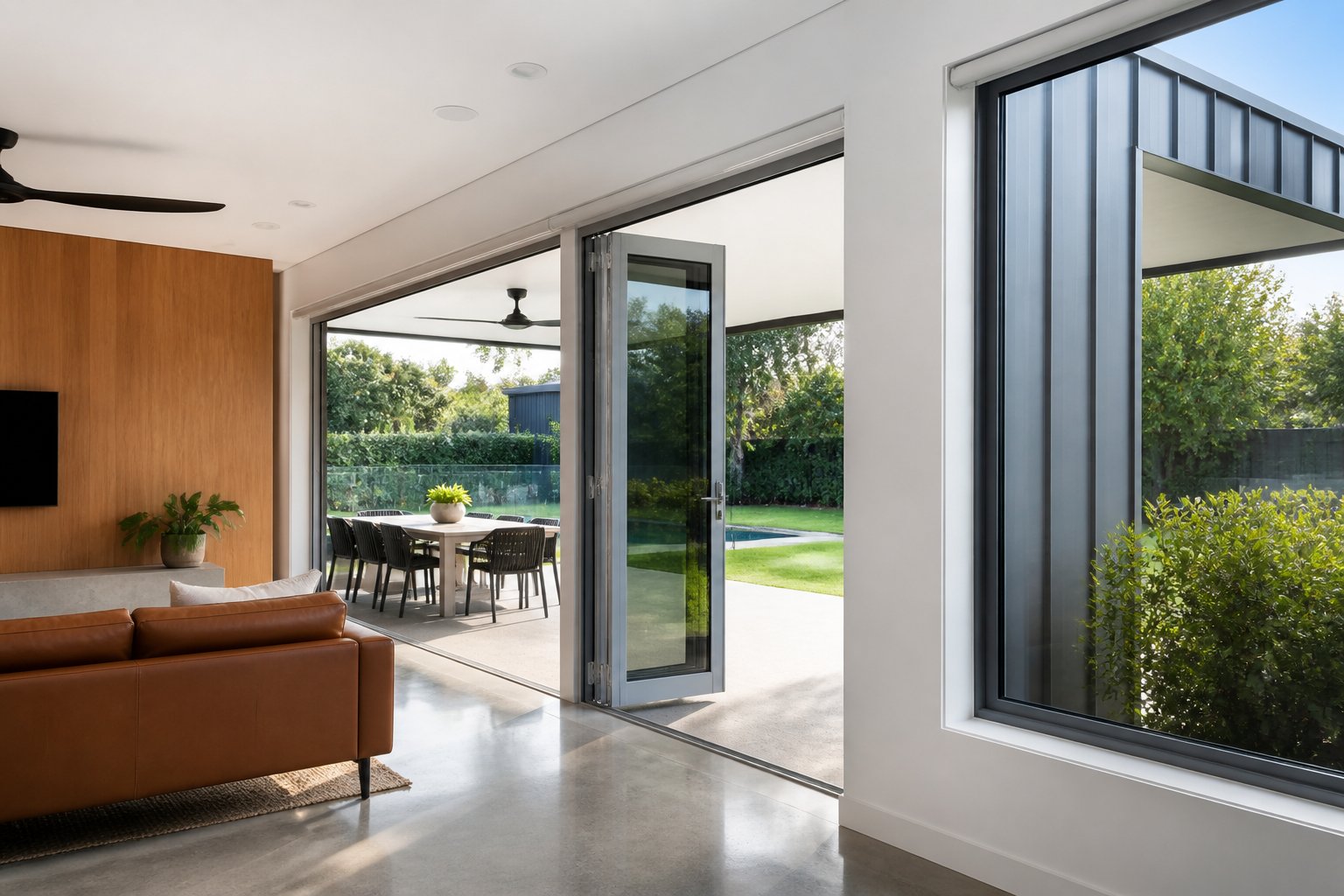
Dual-colour — sometimes called bicolour — refers to an aluminium window or aluminium door with window frames finished in one powder-coated colour on the exterior face and a completely different colour on the interior face. A dark grey exterior that complements your brick facade. A crisp white interior that matches the skirting boards and keeps the room feeling light and open. Two distinct aesthetics from a single frame, with no compromise on either side of the glass.
The thermal break makes this possible. As covered earlier in this guide, modern thermally broken aluminium profiles consist of an outer section and an inner section joined by an insulating polyamide bar. During dual-colour production, the two aluminium sections are powder coated separately before being rolled onto the thermal break to form the finished extrusion. The exterior profile goes through one coating line in your chosen grey, while the interior profile passes through a second line in white, cream, or whatever interior shade you have selected. Only after both halves are individually coated do they come together as a complete frame.
Compare this with single-colour powder coating, where the fully assembled extrusion — thermal break already in place — passes through the coating process once. The dual-colour workflow effectively doubles the painting steps, which is why it costs more and takes longer. But the result is genuine design freedom that no other mainstream frame material can deliver with the same precision and durability.
Popular Dual-Colour Combinations with Grey Exteriors
Grey on the outside paired with a contrasting interior is, by a wide margin, the most requested bicolour configuration in Australian residential projects. The specific interior shade depends on the style of the home, the room’s colour scheme, and how much visual continuity you want between the window frame and the surrounding walls. These are the pairings you will encounter most often:
- Grey exterior with white interior — the most popular combination by volume. The white interior bounces light around the room, keeps the window reveal feeling clean and airy, and integrates seamlessly with white walls, architraves, and ceiling lines. It works equally well in a compact apartment and a sprawling family home.
- Grey exterior with cream or warm white interior — a softer alternative for period-style properties, renovated weatherboard cottages, or rooms with warmer interior palettes. Cream prevents the starkness that a pure white can introduce in spaces finished with timber floors, natural stone benchtops, or warm-toned joinery.
- Dark grey exterior with lighter grey interior — a tonal approach favoured in contemporary builds where a white interior would feel too sharp against concrete feature walls, polished floors, or dark cabinetry. The lighter grey inside echoes the exterior without matching it exactly, creating visual continuity as you look through the glass from either side.
- Matching grey on both faces — a unified modern aesthetic where the same RAL shade wraps around both sides of the frame. This reads as a deliberate, architectural statement and suits homes where the interior design carries the same industrial or minimalist language as the exterior. It also simplifies the specification and can reduce lead times compared with a true dual-colour order.
Less common but worth noting: some homeowners pair a grey aluminium window door exterior with a timber-look interior finish. Several powder-coating suppliers now offer sublimation finishes that mimic the grain and warmth of natural wood on the inner face while keeping the outer face in a standard grey RAL tone. The effect lets you enjoy the strength and slimness of aluminium on the outside and a timber aesthetic on the inside — without any of the sanding, sealing, or repainting that real timber demands.
Lead Times, Cost, and What to Confirm with Your Supplier
Dual-colour aluminium is not a boutique, special-order curiosity — it is a standard capability offered by reputable fabricators. That said, it does come with a few practical implications worth understanding before you commit.
Lead times stretch longer than single-colour orders. Because each half of the profile is coated separately before assembly, the manufacturing process involves additional handling, curing, and quality-inspection steps. Standard single-colour profiles in popular shades like RAL 7016 Anthracite Grey or white are often held in stock by larger fabricators, meaning shorter turnarounds. Dual-colour combinations are almost always coated to order, since the number of possible pairings makes stockholding impractical. Expect to add several weeks to the programme — the exact timeframe depends on your supplier’s coating schedule and current demand.
Cost increases, too, though not as dramatically as some homeowners fear. The premium covers the additional powder-coating passes, masking or separate handling of interior and exterior sections, and the extra production time. As a general guide, plan for a meaningful but not prohibitive uplift over single-colour pricing. Your supplier should be able to quote the dual-colour surcharge as a line item so you can weigh it against the design benefit.
For readers exploring grey aluminium windows for an Australian project, MEICHEN’s aluminium window range offers a useful starting point for comparing window types, custom dual-colour powder-coating options, and available configurations across casement, awning, sliding, and fixed-panel designs. Their colour customisation service is a practical example of how Australian suppliers handle bicolour specification from enquiry through to delivery.
Before you finalise a dual-colour order, confirm a few essentials with whoever is supplying your aluminium doors and windows: Is the interior colour available in the same finish type (matte, satin, gloss) as the exterior? Does the dual-colour surcharge apply per frame or per order? And can physical sample panels be provided showing both colours side by side, so you can hold them against your internal wall colour and external facade before committing?
Dual-colour capability gives you creative control over both faces of the frame — but the colour you choose still needs to hold up over time. How that grey finish actually performs after ten, twenty, and thirty-plus years of Australian sun, rain, and salt air is the next question worth answering.
How Grey Aluminium Frames Age
A powder-coated grey finish looks immaculate on delivery day. The real test is what it looks like after a decade of coastal salt spray, two decades of western-elevation sun, or thirty-plus years of Melbourne’s four-seasons-in-one-day climate. Because aluminium windows and doors represent a significant investment — one you will live with far longer than a kitchen renovation or a bathroom refit — understanding how the finish actually ages is essential before you sign off on a quote.
Performance After Ten, Twenty, and Thirty-Plus Years
Quality powder-coated dark grey aluminium frames age remarkably well compared with their timber and uPVC counterparts. A Qualicoat-certified coating applied at the correct dry-film thickness resists UV degradation, chalking, and adhesion breakdown over extended periods. After ten years of typical Australian exposure, a well-maintained frame will generally retain its original colour depth and surface sheen with only minor, barely perceptible softening of gloss — the kind of change you would struggle to notice without holding a brand-new sample alongside it.
Push the timeline to twenty years and the difference between quality coatings and cheap ones becomes stark. Frames coated to an accredited standard continue to perform, showing gradual and even mellowing rather than patchy deterioration. Frames finished with substandard powder — thinner film, weaker pre-treatment, no certification — may begin to chalk, fade unevenly, or lose adhesion at edges and drainage slots where moisture collects. By thirty years, the best coatings still look respectable with basic care, while poorly coated profiles can look tired enough to warrant recoating or replacement.
Timber painted grey follows a fundamentally different ageing curve. The lifespan of a powder-coated finish depends on coating quality, maintenance, and weather exposure, but even a mid-range powder coat outlasts a premium exterior timber paint between maintenance cycles. Painted timber typically needs sanding back and recoating every four to seven years. Miss a cycle and moisture creeps beneath the film, causing the paint to blister, crack, and peel — exposing the raw wood to rot. The grey colour itself fades noticeably faster than a powder coat because paint films are thinner and less UV-stable than cured powder coatings.
Grey foil-wrapped uPVC faces a different vulnerability altogether. The foil adhesive layer can soften under sustained heat, leading to bubbling, lifting, or edge peeling — particularly on north- and west-facing elevations that absorb the most solar radiation. Once a foil begins to separate, there is no practical field repair. The underlying white PVC shows through, and the only remedy is full frame replacement. In milder, shaded positions the foil can last well, but Australian UV intensity is not kind to adhesive-bonded surface finishes over the long haul.
Actual longevity on any material depends on several interacting factors: the quality of the original coating or paint system, the orientation of each elevation, the local microclimate (coastal salt air accelerates degradation; sheltered inland positions slow it), and whether the homeowner follows a basic maintenance routine. No finish is maintenance-free forever — but dark grey aluminum frames come closer to that ideal than any painted or foil-wrapped alternative.
Maintenance Best Practices for Grey Aluminium Frames
The maintenance routine for grey aluminium frames is straightforward enough that most homeowners can handle it in under an hour. Consistency matters more than effort — a light, regular clean prevents the build-up of grime, salt residue, and airborne pollutants that can gradually dull the finish if left unchecked. Following the proper care procedures ensures you get the maximum lifecycle from your frames.
- Clean frames with warm soapy water and a soft cloth at least twice a year. A mild household detergent diluted in warm water is all you need. Use a non-abrasive sponge or microfibre cloth to gently wipe down all visible aluminium surfaces, paying particular attention to the bottom rail and drainage channels where dirt and moisture tend to accumulate.
- Rinse thoroughly to remove all soap residue. Leftover detergent can leave a film that attracts dust and, over time, may cause minor staining or dull patches on the coating. A clean rinse with fresh water and a quick dry with a soft towel prevents this entirely.
- Avoid abrasive cleaners, solvents, or harsh chemicals. Steel wool, scouring pads, alkaline or acidic cleaning agents, and solvent-based products can scratch, strip, or chemically damage the powder-coat finish. If you encounter stubborn marks — adhesive residue, bird droppings, tree sap — soak the area with soapy water before wiping gently. Never scrub aggressively.
- Inspect seals and gaskets annually and replace if cracked or compressed. Weatherseals and glazing gaskets are the components most likely to degrade before the aluminium frame itself. Cracked or flattened rubber seals compromise water tightness and thermal performance. Most seals can be replaced by a qualified installer without removing the entire frame.
- Lubricate hardware — hinges, locks, handles — as recommended by the manufacturer. A light application of silicone-based lubricant keeps moving parts operating smoothly and prevents corrosion of internal mechanisms. Avoid petroleum-based oils, which can attract grit and accelerate wear.
For properties in coastal areas, increase the cleaning frequency. Salt deposits left on frames — even frames with marine-grade coatings — can cause surface pitting if allowed to accumulate over months. A quarterly wash is a sensible minimum for any home within a few kilometres of the ocean.
Planning Permission Considerations for Grey Frames
Durability and maintenance are within your control. Planning restrictions, on the other hand, can dictate your frame colour before you even open a RAL chart — and catching this late in the process is one of the costliest mistakes homeowners make.
Properties in heritage overlay zones, conservation areas, or those subject to restrictive planning controls may face limitations on both frame material and colour. Some local councils require replacement windows to match existing joinery in material, colour, profile, and method of opening. If your heritage-listed Victorian terrace currently has timber frames in a specific heritage colour, switching to dark grey aluminium on a street-facing elevation could trigger a development application — and potentially a refusal — if the change is deemed to alter the building’s character.
The rules vary significantly across Australian jurisdictions. In some states, rear and side elevations that are not visible from the street enjoy more flexibility than the principal facade. Others take a blanket approach, requiring consent for any external change regardless of visibility. Heritage advisors within your local council are the definitive source, and engaging them early — before ordering frames, not after — can save thousands of dollars and weeks of delays.
Even outside formal heritage zones, body corporate rules for apartments and townhouse complexes may restrict exterior colour changes to a pre-approved palette. If you are renovating within a strata scheme, check the by-laws before committing to any specific RAL shade.
The practical takeaway is simple: confirm that your preferred grey is permissible for your property before you progress to specification and ordering. Speaking of which, knowing what to ask your supplier — and which certifications and standards to look for — is the difference between a smooth procurement process and an expensive lesson in fine print.
How to Specify and Order Grey Aluminium Doors and Windows
A beautiful grey frame that underperforms on a windy night or starts chalking after three summers is not a bargain — it is a liability. The difference between a window that delivers decades of quiet, reliable service and one that generates callbacks and regret almost always traces back to the specification stage: the questions you asked (or did not ask), the documentation you reviewed (or took on faith), and the details you locked in before manufacturing began. This chapter turns those invisible decision points into a concrete checklist you can carry into every supplier conversation.
Key Questions to Ask Your Window Supplier
Suppliers expect technical questions from architects and builders. They should welcome them from homeowners too — and any supplier who deflects, vagues out, or rushes past the details is telling you something worth hearing. Before you accept a quote for aluminium windows doors or any related glazing package, work through this list:
- What thermal-break system does the profile use, and what is the frame’s U-value? Not all thermal breaks are equal. Ask whether the insulating bar is reinforced polyamide (PA66 GF25) and how wide it is. Request the tested frame U-value (Uf) and, ideally, the whole-window U-value (Uw) for the specific glazing configuration quoted. A supplier who cannot provide these figures may not fully understand the product they are selling.
- Is the powder coating Qualicoat-certified or equivalent? As covered earlier in this guide, Qualicoat certification tests adhesion, hardness, UV resistance, and corrosion performance to an internationally recognised benchmark. If the coating is not Qualicoat-certified, ask what alternative accreditation or quality-assurance process applies — and request evidence, not just assurance.
- What warranty covers the finish against colour fade, chalking, peeling, and adhesion failure? A strong warranty will specify performance criteria — for example, defined limits on colour change and gloss loss over a stated number of years. Vague language like “guaranteed to last” without measurable terms offers little real protection. Ask for the warranty document in writing before you commit.
- Can dual-colour options be specified, and does this affect lead time or cost? If you want a grey exterior with a different interior finish, confirm that the fabricator handles dual-colour work in-house or through a trusted coating partner. Clarify whether the surcharge is per frame, per order, or per square metre — pricing structures vary.
- What hardware colour options are available to match or complement the grey frame? Handles, hinges, and locking mechanisms come in a range of finishes — black, grey, white, brushed stainless, satin chrome, and more. Mismatched hardware can undermine an otherwise cohesive design. Ask to see physical hardware samples against your chosen frame colour.
- Are standard aluminum window sizes and custom sizes both available? Standard sizes suit many openings and typically offer shorter lead times and lower costs. Custom sizing becomes essential for renovation projects where existing openings are non-standard, or for new builds with architect-specified dimensions. Confirm whether custom sizing carries a premium and how it affects the production schedule.
Think of these questions as a filter. A supplier who answers each one clearly and backs the answers with documentation is demonstrating capability. One who hesitates, hedges, or cannot produce certification paperwork may be offering a lower price for a reason — and that reason will eventually show up on your facade.
Certifications and Standards Worth Checking
Australian aluminium windows and external glazed doors must comply with AS 2047, the national standard governing structural performance, water penetration resistance, air infiltration, and operating force. It is not optional — it is referenced in the National Construction Code (NCC), and non-compliant windows can create safety risks, trigger legal penalties, inflate energy bills, and reduce property value at resale.
Compliance is verified through three key indicators. First, a performance label — typically found on the inside of the frame or head — displaying the window’s tested wind and water ratings in Pascals. Second, a certificate of compliance issued by the manufacturer, ideally backed by membership of the Australian Glass and Window Association (AGWA), whose members have products tested by NATA-accredited laboratories. Third, test reports from accredited testing facilities confirming the product’s ability to meet AS 2047 requirements under controlled conditions.
Beyond AS 2047, several other standards and schemes may be relevant depending on your project:
- AS 1288 — covers glass selection and installation, including safety glazing requirements for windows at low levels, near wet areas, or in high-traffic zones.
- WERS (Window Energy Rating Scheme) — provides a star-rating system for the energy performance of complete window units, making it easier to compare products on a like-for-like basis.
- NatHERS (Nationwide House Energy Rating Scheme) — assesses whole-of-house energy performance, where window specifications feed directly into the modelled star rating for new builds and major renovations.
- BAL (Bushfire Attack Level) ratings — properties in designated bushfire-prone areas require windows and glazing that meet specific BAL requirements. Aluminium frames with appropriate glazing can be configured to meet BAL ratings up to and including BAL-FZ (Flame Zone), but this must be confirmed with the supplier at specification stage, not assumed.
The practical advice here is straightforward: request documentation rather than accepting verbal assurances. A reputable supplier will have compliance certificates, test reports, and coating accreditation readily available — often as standard attachments to their quotation. If you need to chase for them repeatedly, that reluctance is itself a data point worth factoring into your decision.
Getting the Specification Right for Your Project
Colour selection — the shade of grey, the interior finish, the hardware tone — often dominates the specification conversation. It should not be the only conversation. A grey aluminium window frame is a system, and every component of that system affects both the visual outcome and the long-term performance. Overlooking any one element can leave you with a window that looks right but leaks, jams, or fails to meet energy requirements.
Before you finalise your order, make sure these additional details are locked in:
- Glazing specification. Double glazing is effectively standard for thermally broken aluminium in Australia, but the type of glass matters. Low-E coatings, argon gas fills, and warm-edge spacers all improve thermal and acoustic performance. In northern climate zones with intense solar heat gain, a higher Solar Heat Gain Coefficient (SHGC) consideration is critical for comfort and cooling costs. Your glazing choice should be tailored to your climate zone and orientation, not defaulted to a one-size-fits-all package.
- Opening type. Casement, awning, sliding, bi-fold, fixed — each style delivers a different combination of ventilation, weathersealing, sightline width, and ease of operation. Awning windows, for instance, can remain open during light rain, which suits Australian conditions where cross-ventilation is prized. Sliding windows offer clean sightlines and wide openings but typically have slightly lower air-tightness ratings than casement or awning configurations.
- Hardware finish. As noted above, handles, locks, and hinges should complement the frame colour. Beyond aesthetics, hardware quality affects security and daily usability. Multi-point locking systems provide stronger resistance to forced entry than single-point locks. Ask whether the hardware is rated for corrosion resistance — particularly important for coastal properties where salt air can corrode unprotected internal mechanisms within a few years.
- Weatherseal colour. A small detail that can nag visually if ignored. Black seals against a light grey frame, or grey seals against a dark frame, create visible contrast lines that may or may not suit your aesthetic intent. Confirm seal colour options with your supplier and match them to the frame for a cohesive, considered finish.
- Flyscreens and security screens. In most Australian states, insect screens are a practical necessity. Retractable, fixed, or security-grade mesh options each have different visual impacts on the frame’s exterior appearance. Security screens rated to AS 5039 or AS 5041 provide forced-entry resistance and can be powder coated to match or complement the grey frame — another detail worth specifying upfront rather than retrofitting later.
For readers exploring grey aluminium windows for an Australian project, MEICHEN’s aluminium window range offers a useful starting point for comparing window types, custom colour options, and performance specifications in one place. Their product pages walk through casement, awning, sliding, and fixed-panel configurations alongside dual-colour and hardware options — a practical resource for pulling your specification together before engaging a builder or installer.
One final point that ties the entire specification process together: installation quality. The best-specified window in the world will underperform if it is poorly installed. Incorrect shimming, inadequate sealing around the frame, or misaligned hardware can compromise water resistance, air tightness, thermal performance, and smooth operation — all at once. Ask your supplier whether installation is included in the quote, whether installers are trained on the specific profile system being used, and who carries responsibility for rectifying any post-installation issues. A window is only as good as the hands that fit it into the wall.
Frequently Asked Questions About Grey Aluminium Window Frames
1. What is the most popular grey for aluminium window frames?
RAL 7016 Anthracite Grey is widely regarded as the most popular grey shade for aluminium window frames across Australian residential and commercial projects. It reads as nearly black in shaded conditions yet reveals a refined blue-grey undertone in direct sunlight, offering more depth and sophistication than a flat black finish. Other frequently specified options include RAL 7022 Umbra Grey for warmer, earthy facades and RAL 7035 Light Grey for homeowners seeking a subtle step away from white without a dramatic shift. The best choice depends on your property style, wall material, desired contrast level, and the orientation of each elevation — always request physical powder-coated swatches and view them against your actual facade at different times of day before committing.
2. Are grey aluminium windows more expensive than white or black?
Standard grey shades such as RAL 7016 Anthracite Grey are among the most commonly stocked powder-coat colours in the Australian market, so they typically carry no surcharge over white or black in a single-colour configuration. Where costs increase is with custom RAL shades that need to be coated to order, or with dual-colour (bicolour) specifications where the exterior is grey and the interior is a different colour — this involves coating each half of the profile separately before assembly, adding both production time and cost. Suppliers like MEICHEN (meichenwindows.com.au/aluminium-windows/) offer custom colour configurations and can provide transparent pricing for standard versus dual-colour options so you can budget accurately.
3. How long do grey powder-coated aluminium window frames last?
Quality powder-coated grey aluminium frames routinely deliver service lives of 40 to 50 years or more. The aluminium itself does not rot, warp, or become brittle, and a Qualicoat-certified powder coat resists UV degradation, chalking, and adhesion breakdown across decades of Australian sun, salt air, and temperature swings. After ten years, a well-maintained frame generally retains its original colour depth with only minor softening of gloss. The key factors influencing longevity are coating quality and certification, dry-film thickness, the orientation of each elevation, local microclimate exposure, and whether you follow a simple twice-yearly cleaning routine with warm soapy water and a soft cloth.
4. Do grey aluminium windows need a thermal break?
In virtually all modern Australian residential applications, a thermal break is essential. Without one, aluminium’s high thermal conductivity allows heat to pass freely between the interior and exterior faces of the frame, resulting in poor U-values, higher energy bills, and condensation on the inner frame surface during cooler months. Thermally broken profiles split the aluminium into two sections connected by an insulating polyamide bar, reducing thermal conductivity dramatically. Modern thermally broken grey aluminium windows achieve whole-window U-values competitive with uPVC and timber, meeting or exceeding National Construction Code energy requirements across Australian climate zones.
5. Can grey aluminium window frames be a different colour on the inside?
Yes — dual-colour or bicolour powder coating is a standard capability of aluminium window fabrication. Because thermally broken profiles consist of separate interior and exterior aluminium sections joined by an insulating bar, each half can be powder coated independently before assembly. Popular combinations include a grey exterior with a white interior for bright, airy rooms, grey with cream for period properties, or dark grey outside with lighter grey inside for contemporary tonal consistency. Dual-colour orders typically add several weeks to lead times and carry a surcharge over single-colour profiles, so it is worth confirming availability, pricing, and sample panels with your supplier early in the specification process.
More Window & Door Guides