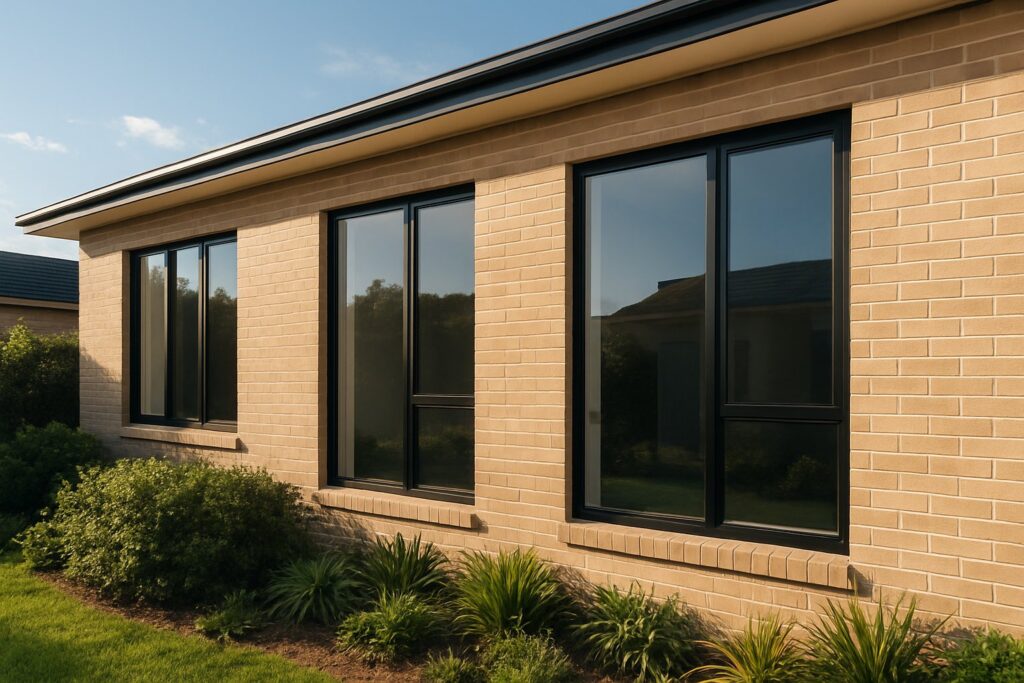
What Fixed Aluminium Windows Are and How They Work
Strip away the hinges, the tracks, the locking hardware, and the movable sashes. What remains is an aluminium window reduced to its purest structural form — a rigid frame bonded permanently to a sealed glass unit. That simplicity is exactly what makes a fixed aluminium window one of the highest-performing elements you can place in an external wall.
A fixed aluminium window is a non-operable glazing unit in which a sealed insulated glass panel is permanently set into an extruded aluminium frame. With no moving parts, it delivers superior weather sealing, maximised glass area, and enhanced structural rigidity compared to operable alternatives.
How a Fixed Aluminium Window Is Constructed
The assembly is straightforward in concept but precise in execution. An extruded aluminium frame — typically between 1.6 mm and 2.0 mm wall thickness for residential applications — forms the perimeter structure. The insulated glass unit (IGU) sits within that frame, held in place by a glazing bead that clips or screws into a dedicated channel. Between the glass and the aluminium, continuous rubber or EPDM gaskets compress to form a watertight and airtight seal around the entire perimeter.
Because there are no sashes to slide, swing, or tilt, the frame carries load directly to the building structure without intermediate mechanical connections. The glass itself contributes to the panel’s rigidity — once sealed in place, it acts as a stressed skin that resists wind pressure across the full face of the opening. This frame-to-glass relationship is what allows an aluminium fixed window to span larger openings than any operable equivalent of the same profile depth.
Why the Fixed Design Outperforms Operable Frames Structurally
Every operable window introduces compromise. Hinges create point loads. Sliding tracks interrupt the seal line. Multi-point locks add complexity but still rely on gasket compression that degrades over repeated open-close cycles. A fixed aluminum window sidesteps all of this. The seal is continuous and permanent, so there are no weak points where air or water can infiltrate under pressure.
This sealed construction also means fixed panels consistently achieve tighter air-infiltration ratings. In windy coastal areas or high-rise applications where pressure differentials are severe, the absence of moving joints gives architects and builders confidence in long-term weatherproofing without ongoing hardware maintenance.
Where Fixed Aluminium Windows Are Typically Specified
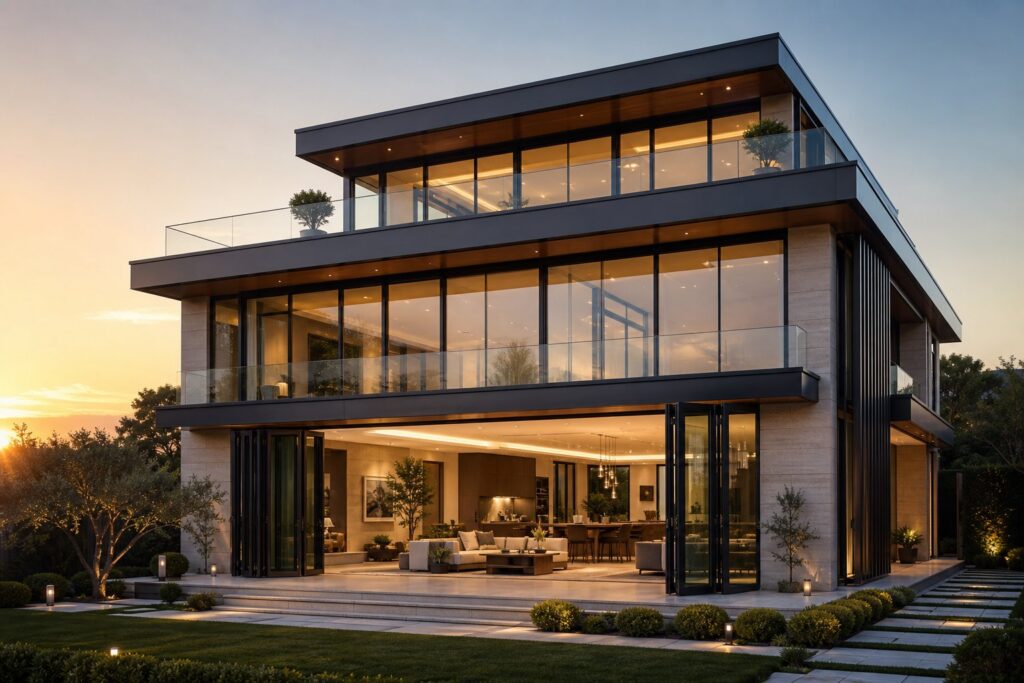
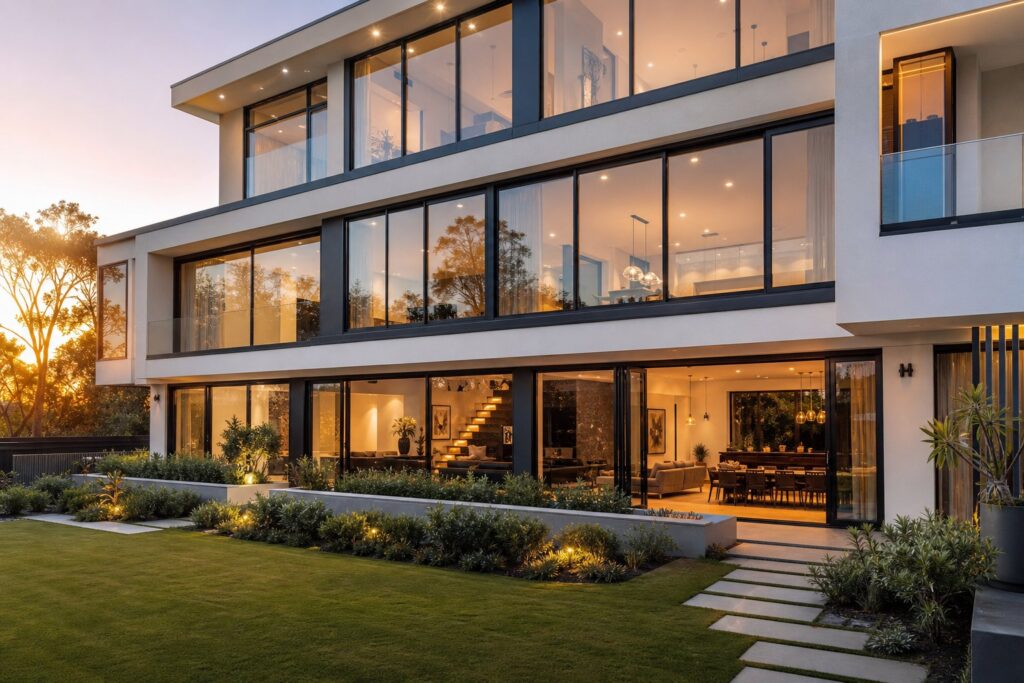
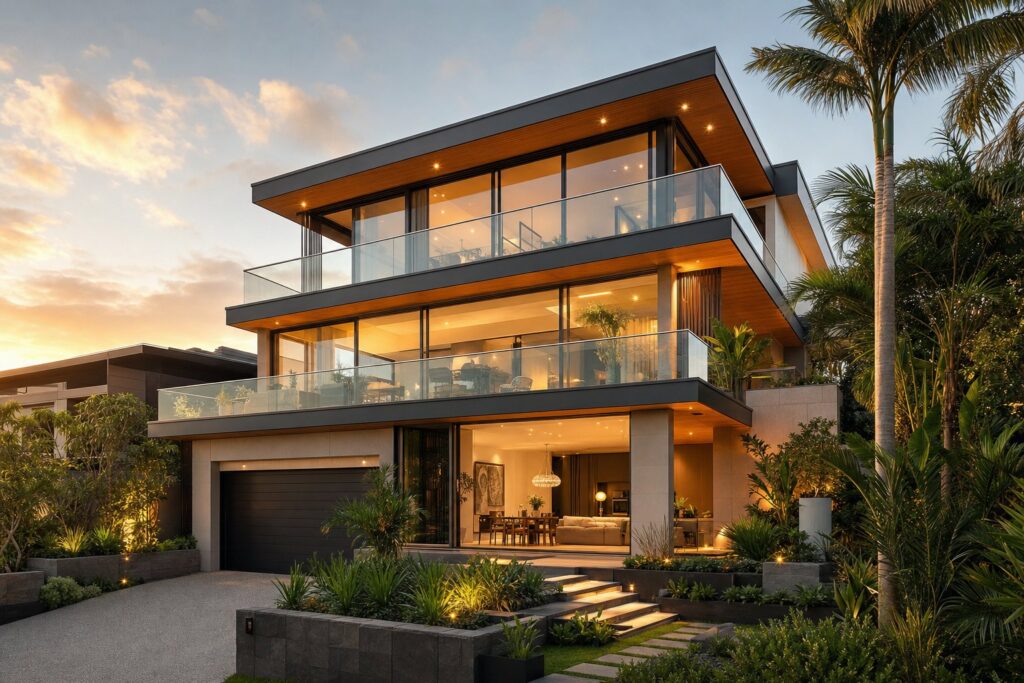
You will find fixed aluminum windows wherever uninterrupted views, maximum daylight, or structural glazing performance matter most. Living areas facing a garden or coastline, stairwells where ventilation comes from other sources, highlight windows above door sets, and entire curtain wall zones in commercial buildings all rely on this panel type. They are equally common in double-storey homes where upper-level glass is out of reach and ventilation is handled by mechanical systems or operable windows elsewhere in the floor plan.
In Australian residential construction, fixed panels frequently pair with operable casement or awning sections within the same framing system — delivering both the expansive glass area homeowners want and the ventilation that NCC requirements demand. Understanding the fixed panel’s strengths and limitations at this fundamental level sets the stage for comparing it directly against those operable types and evaluating where each belongs in a well-designed façade.
Fixed Windows Compared to Operable Window Types
Every window style solves a different problem. Fixed panels prioritise light and structural performance; operable types prioritise airflow. The real skill in specifying windows in aluminium lies in knowing exactly where each type earns its place — and where combining them delivers the best of both worlds.
Fixed vs Casement and Awning Windows
Casement windows swing outward on side-mounted hinges, while awning windows hinge at the top and open from the bottom. Both provide generous ventilation and can be left open during light rain — the awning style especially, since the sash creates a canopy effect over the opening. These are popular choices in kitchens, bathrooms, and laundries across Australian homes where moisture control matters.
The trade-off is glass area. Aluminium frames for windows with operable sashes need space for hinge mechanisms, locking hardware, and clearance gaps. That hardware reduces the visible glass proportion and introduces potential failure points over time. Hinges fatigue, friction stays wear, and multi-point locks eventually need adjustment. A fixed panel, by contrast, dedicates nearly its entire face to glass and requires zero mechanical servicing.
Weather performance tells a similar story. Casement and awning windows rely on compression seals that contact the frame only when the sash is closed and locked. Those seals gradually lose elasticity through UV exposure and repeated cycling. The permanent seal on a fixed aluminium panel maintains consistent air and water resistance year after year without degradation.
Fixed vs Sliding and Tilt-and-Turn Systems
Sliding windows move horizontally along tracks, making them a space-efficient option — they never project into a room or over a walkway. Tilt-and-turn systems offer two opening modes: tilting inward from the top for secure ventilation, or swinging inward like a door for cleaning access. Both are practical, but both come with compromises that aluminium framed windows in a fixed configuration simply avoid.
Sliders sacrifice roughly half their total opening to ventilation, since one panel always overlaps another. The track itself is a maintenance liability — dirt accumulation, roller wear, and drainage blockages are common over a 15- to 20-year lifespan. Tilt-and-turn hardware is among the most complex in the window industry, which drives up cost and creates more components that may need replacement.
From a maximum span perspective, aluminum framed windows in operable configurations face size limits dictated by sash weight and hardware load ratings. Fixed panels are constrained mainly by glass availability and wind-load engineering — meaning you can achieve significantly wider and taller openings with the same profile depth.
| Window Type | Glass Area | Ventilation | Weather Seal Rating | Maximum Span | Maintenance Needs | Best Application |
|---|---|---|---|---|---|---|
| Fixed | Highest | None | Excellent | Largest | Minimal (cleaning only) | Feature glazing, highlight windows, curtain walls |
| Casement | High | Good (full sash opens) | Very good | Moderate | Moderate (hinges, stays, locks) | Living areas, bedrooms |
| Awning | High | Moderate (rain-protected) | Very good | Moderate | Moderate (hinges, winders) | Kitchens, bathrooms, wet areas |
| Sliding | Moderate (overlapping sashes) | Moderate (50% opening) | Good | Wide spans possible | Higher (tracks, rollers, drainage) | Bedrooms, offices, compact spaces |
| Tilt-and-Turn | High | Excellent (dual mode) | Very good | Moderate | Higher (complex hardware) | Multi-storey apartments, high-access areas |
Combining Fixed Panels with Operable Sections
Rarely does a façade consist entirely of one window type. The most effective designs use combination framing strategies — large fixed panels for unobstructed views flanked by narrower operable sections that handle ventilation duty. A typical Australian living room might feature a floor-to-ceiling fixed centre panel with casement or awning sidelights, delivering panoramic outlook and cross-ventilation in a single unified frame.
This approach lets you maximise the glass-to-frame ratio across the overall opening while still meeting NCC ventilation requirements. Windows with aluminum frame systems make this especially seamless because the mullion profiles that divide fixed from operable sections can be matched in depth and finish, creating a clean visual line. The fixed portion carries no mechanical load from adjacent operable sashes, so each section performs independently at its best.
Combination configurations also solve a practical challenge: keeping maintenance concentrated in accessible locations. Place the operable sections at arm height where hardware can be serviced, and let the fixed glazing handle the hard-to-reach upper zones where you want light but never need to open anything. The result is a façade that performs structurally, thermally, and visually — without asking every panel to do every job.
What makes all of this possible at scale is the aluminium profile itself — the extruded section that gives each window type its structural backbone. How those profiles are engineered determines sightline width, load capacity, and ultimately how large and slim your fixed panels can be.
Aluminium Frame Engineering and Profile Design
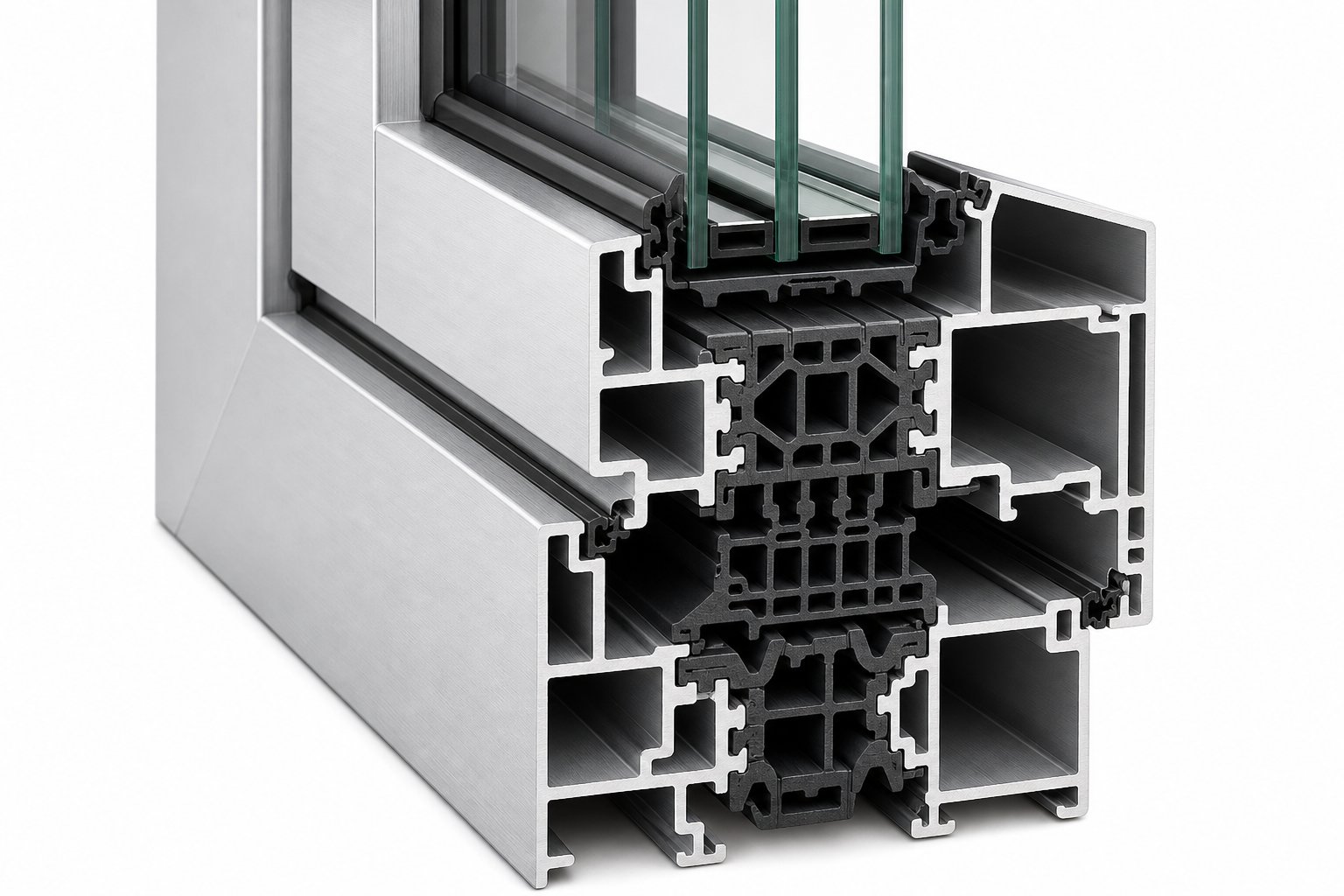
Behind every slim, clean sightline sits a remarkably complex cross-section. The aluminium window frames you see from the outside represent just the visible edge of an engineered profile — one shaped through an industrial extrusion process that dictates everything from structural load capacity to the thickness of glass a frame can carry.
The Extrusion Process Behind Aluminium Window Profiles
Extrusion works by forcing heated aluminium alloy (typically 6060 or 6063 series in architectural applications) through a precision-machined steel die at high pressure. The die’s internal geometry determines the exact cross-sectional shape of the resulting profile — including internal chambers, gasket grooves, drainage channels, and glazing pockets — all formed in a single continuous pass. This is how aluminum window frame extrusions achieve dimensional consistency across thousands of metres of production.
What makes this process particularly relevant to fixed window design is repeatability. Each extruded aluminum window frame section emerges with identical wall thicknesses, chamber proportions, and accessory grooves. For a project requiring dozens of identically sized fixed panels — say, a commercial façade or a series of highlight windows across a double-storey home — that consistency ensures every unit seals, drains, and performs identically once glazed and installed.
A typical fixed-frame profile includes several integrated functional zones, each serving a distinct role in the assembled window:
- Frame member — the primary structural perimeter that transfers wind loads and glass weight to the building opening
- Glazing bead — a clip-in or screw-fixed section that locks the insulated glass unit into the frame from the interior side
- Thermal break cavity — a channel separating inner and outer aluminium sections, typically filled with a polyamide strip to reduce heat conduction
- Drainage slot — a shaped pathway within the sill section that collects any condensation or wind-driven moisture and directs it to exterior weep holes
- Gasket groove — precision channels that accept continuous EPDM or silicone seals, creating the airtight and watertight barrier between glass and metal
Each of these aluminum window components is formed simultaneously during extrusion, which means the relationships between them — gasket compression depth, bead engagement, drainage fall — are locked in at the design stage rather than left to site assembly.
Profile Geometry and Sightline Width
Sightline refers to the visible width of aluminium you see from inside or outside when looking at the installed window. Narrower sightlines mean more glass and less frame in the elevation — something architects and homeowners increasingly demand for contemporary façades.
Standard commercial aluminium window profiles typically present sightlines between 50 mm and 70 mm on the frame face. These profiles prioritise versatility: deeper chambers accommodate a range of glass thicknesses (from 20 mm double-glazed units up to 40 mm or more for triple-glazed assemblies), generous hardware channels, and robust wall thicknesses around 1.6 mm to 2.0 mm in load-bearing zones.
Slimline architectural aluminium profiles push sightlines down to 30 mm or even 20 mm. They achieve this through tighter geometry — shallower chambers, optimised wall distribution, and reduced accessory space. The visual payoff is significant: a wall of fixed glazing can appear almost frameless. The trade-off is reduced tolerance for very thick glass build-ups and less room for complex drainage or accessory integration. For fixed panels, though, this matters less than it would for operable windows. There are no hinges to house, no roller tracks to accommodate, and no lock keeps to machine into the profile. The geometry can be dedicated entirely to holding glass and managing seals.
How Frame Design Supports Larger Glass Panels
Glass weight increases quickly with size. A 2400 mm x 1200 mm double-glazed unit weighs roughly 60 kg; scale that to 3000 mm x 1800 mm and you are approaching 120 kg or more depending on glass composition. The aluminum window frame must support that dead load continuously, plus resist live wind loads that can exceed 2 kPa in exposed Australian coastal locations.
Fixed aluminium window frames handle this better than operable equivalents for a straightforward reason: the load path is direct. Glass weight transfers through the gaskets and glazing bead into the sill member, then straight into the building structure. There is no sash to deflect, no hinge to fatigue, and no roller to overload. The frame acts as a simple structural perimeter rather than a mechanism.
Profile designers exploit this by engineering deeper sill sections with reinforced internal webs — thin walls of aluminium spanning the internal chambers that add stiffness without adding visible bulk. Combined with the glass panel’s own contribution to racking resistance, a well-designed fixed frame can support glazed areas that would be impractical or impossible in a casement or sliding configuration of the same profile series.
This structural confidence is what allows architects to specify floor-to-ceiling fixed panels, corner glazing conditions, and ribbon window arrangements that define modern Australian residential and commercial design. The profile is doing the invisible work — managing load, sealing weather, and draining moisture — while presenting the thinnest possible edge to the eye. What happens inside that edge, particularly across the thermal break cavity, determines whether all that engineering also delivers the energy performance modern building codes demand.
Thermal Performance and Energy Efficiency Explained
Aluminium conducts heat roughly 1,000 times faster than wood. Left unchecked, that conductivity turns an aluminium window frame into a highway for energy loss — warm air escaping in winter, unwanted heat flooding in during a Melbourne summer. Solving this challenge without sacrificing the material’s structural advantages is where thermal break engineering earns its keep.
Understanding Thermal Bridging in Aluminium Frames
A thermal bridge forms wherever a highly conductive material creates an uninterrupted path between the conditioned interior and the external environment. In an aluminium system without any thermal separation, heat transfers directly through the metal from one side to the other. The visible symptom is condensation forming on interior frame surfaces during cold mornings — a sign that the frame’s inner face has dropped below the dew point. Beyond comfort, persistent condensation invites mould growth and can damage surrounding plasterwork or timber reveals.
For NCC compliance under the NatHERS energy efficiency framework, unbroken aluminium frames simply cannot achieve the performance thresholds required in most Australian climate zones. The solution is not to abandon aluminium — its strength, longevity, and slim profiles are too valuable — but to interrupt the conductive pathway with an insulating barrier.
How Thermal Break Technology Works
Two primary methods dominate the fenestration industry. Both achieve the same goal — splitting the aluminium profile into separate interior and exterior sections connected only by a low-conductivity material — but they do so through different manufacturing processes.
Polyamide strut systems use pre-extruded strips of glass fibre-reinforced nylon (PA 6.6) that are mechanically crimped into knurled grooves in the aluminium profile. Each strip bridges the thermal cavity while providing structural continuity between the inner and outer frame halves. This is the most widely used approach in Australian thermally broken aluminium window frames.
Pour-and-debridge systems take a different path. A two-part polyurethane resin is poured into a channel within the connected aluminium extrusion, allowed to cure in place, and then the aluminium bridge at the base of the channel is mechanically cut away. The cured polyurethane becomes the structural and thermal link. This method offers slightly lower thermal conductivity than glass-filled polyamide, and because the resin conforms to the cavity shape during pouring, it does not require profile-specific strip inventory.
Both technologies are proven and widely certified. The choice between them typically depends on the manufacturer’s production workflow, profile geometry, and target thermal performance rather than one being categorically superior to the other.
Achieving Low U-Values with Fixed Aluminium Assemblies
The overall thermal transmittance of a window — its U-value, measured in W/m2K — is not a single number derived from one component. It is a weighted calculation combining three distinct contributors:
- Frame U-value (Uf) — the thermal transmittance through the aluminium frame section itself, including its thermal break
- Glass U-value (Ug) — the centre-of-pane transmittance through the insulated glass unit
- Psi value (Ψg) — the linear heat loss at the glazing edge where frame, spacer bar, and glass interact
Each component’s contribution is proportional to its area (or length, for the Psi value). This is why larger aluminium glazed window panels often achieve better overall U-values — the high-performance glass occupies a greater proportion of the total window area, diluting the impact of the frame.
In practical terms, a thermally broken aluminium window frame paired with aluminium double glazing (argon-filled, Low-E coated) typically achieves whole-window U-values between 1.8 and 2.4 W/m2K. Step up to triple glazing with warm-edge spacers and a quality thermal break, and values between 1.0 and 1.4 W/m2K become achievable — performance levels that satisfy even the most demanding NatHERS modelling scenarios.
Fixed panels hold a quiet advantage here. In operable windows, movable seals represent a weak point in the thermal envelope — they compress unevenly, degrade with UV exposure, and lose elasticity after thousands of open-close cycles. Aluminum double glazed windows in a fixed configuration eliminate this vulnerability entirely. The continuous, permanently compressed gaskets maintain their insulating performance for the full service life of the window, which means the U-value you achieve on day one is effectively the U-value you still have twenty years later.
Spacer bars deserve attention too. Traditional aluminium spacers at the glass edge create a localised thermal bridge that increases edge condensation risk. Warm-edge spacers — made from stainless steel, composite polymers, or foam-based materials — reduce this edge loss measurably, improving both the Psi value and occupant comfort on cold mornings. For any aluminium system targeting high energy ratings under the WERS scheme, warm-edge spacers have become a baseline specification rather than a premium upgrade.
Thermal performance, though, is only half the glazing story. The glass unit itself — its composition, coatings, interlayers, and thickness — determines how much solar heat enters, how much sound is blocked, and how heavy the panel becomes. Those variables open an entirely different set of design decisions.
Glazing Options and How They Affect Performance
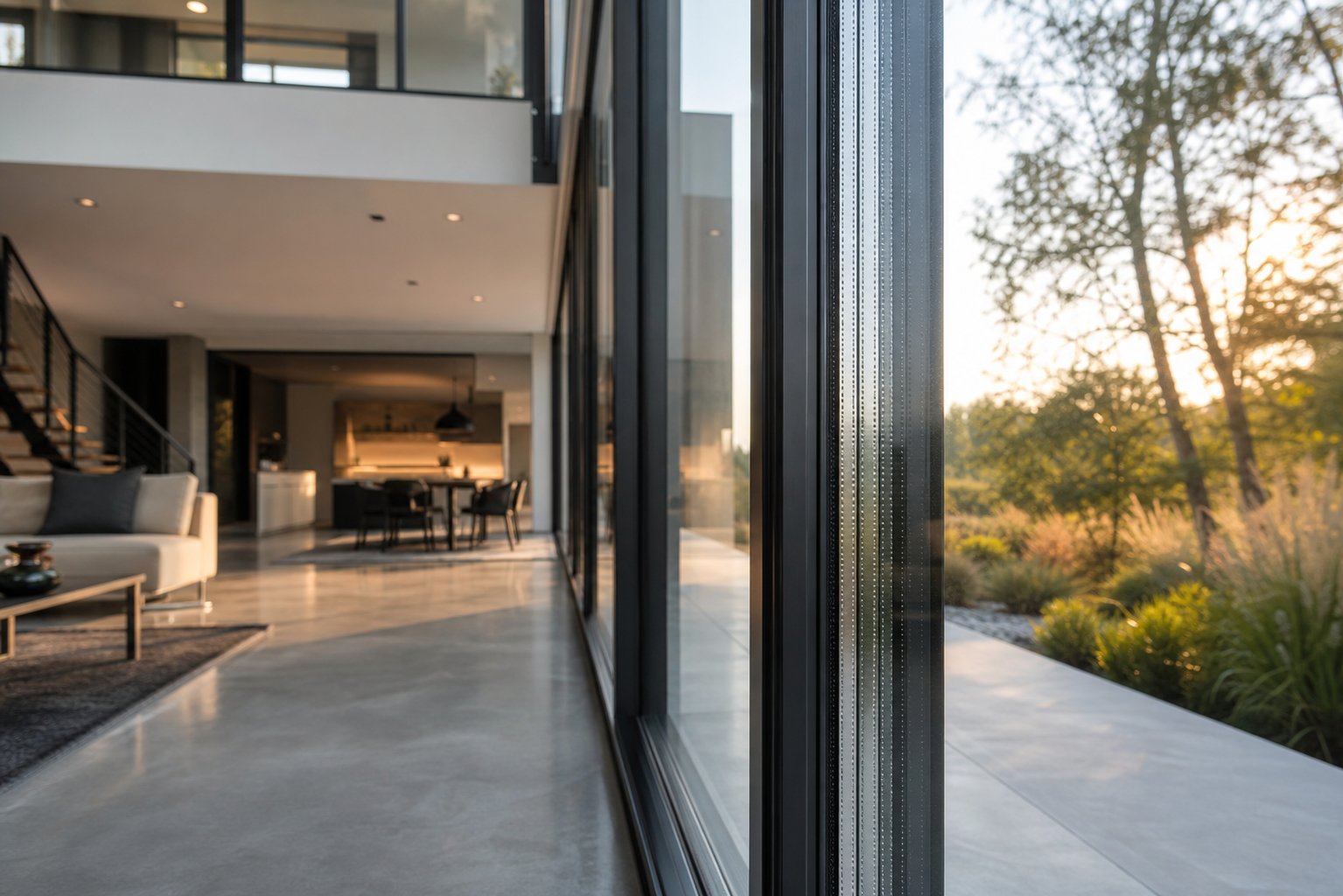
The glass you specify inside a fixed aluminium frame does far more than fill the opening. It controls how much heat crosses the building envelope, how much noise penetrates from outside, how much UV reaches your furnishings, and how safe the panel is under impact. Because a fixed frame carries no mechanical burden from hinges or rollers, it can accept thicker, heavier insulated glass units that operable windows of the same profile depth simply cannot support. That structural freedom unlocks the full spectrum of modern glazing profiles and compositions.
Double vs Triple Glazing in Fixed Frames
Double glazing remains the standard for most Australian residential and commercial projects. Two panes of glass — typically 4 mm to 6 mm each — separated by an argon-filled cavity of around 12 mm to 16 mm provide a solid thermal and acoustic foundation. A quality double-glazed unit with Low-E coating achieves centre-of-pane U-values around 1.1 to 1.4 W/m2K, which satisfies NatHERS requirements for the majority of climate zones.
Triple glazing adds a third pane and a second gas-filled cavity, pushing centre-of-pane U-values below 0.7 W/m2K in high-performance configurations. The trade-off is weight and thickness. A triple-glazed unit can weigh 50% more than its double-glazed equivalent and measure 36 mm to 44 mm deep. For operable windows, that extra mass strains hinges and complicates hardware ratings. In a glass aluminium frame configured as fixed glazing, the weight transfers directly through compressed gaskets into the sill and structure — no moving parts to overload. This is precisely why architects specify triple glazing in fixed panels first and reserve lighter double-glazed units for adjacent operable sections.
Condensation resistance improves markedly with triple glazing too. The inner pane stays closer to room temperature even during cold Canberra or Hobart mornings, which keeps the surface well above dew point and eliminates interior moisture build-up.
Low-E Coatings, Tints, and Laminated Glass
Low-E (low emissivity) coatings are microscopically thin metallic layers — often silver-based — applied to one or more glass surfaces within the insulated unit. They reflect radiant heat while allowing visible light through. In Australian conditions where solar heat gain drives cooling loads, a Low-E coating on surface two (the inner face of the outer pane) reflects summer heat back outside while maintaining high visible light transmittance, typically above 70%.
Tinted glass absorbs a portion of solar radiation before it enters the room. Grey, bronze, and green tints reduce solar heat gain coefficients (SHGC) and can soften glare without fully blocking views. Tints are especially useful on west-facing elevations where late afternoon sun creates intense heat loads that even Low-E coatings alone may not adequately manage.
Laminated aluminium glass — two panes bonded with a polyvinyl butyral (PVB) or ethylene-vinyl acetate (EVA) interlayer — serves dual purposes. It holds shattered fragments together on impact, meeting safety glazing requirements under AS 1288. And it blocks up to 99% of UV radiation, protecting interior finishes from fading. Acoustic-grade laminated glass uses thicker or specialised interlayers to dampen sound transmission, making it valuable for homes near roads, flight paths, or entertainment precincts. Fixed panels suit acoustic glazing particularly well, since the permanently sealed perimeter eliminates the air gaps that undermine sound insulation in operable frames.
| Glazing Type | Thermal Performance | Acoustic Rating | Weight (per m2) | Cost Tier | Best Use Case |
|---|---|---|---|---|---|
| Double glazed (clear + argon) | Good (Ug ~1.6 W/m2K) | Moderate (Rw ~29-32 dB) | ~20 kg | Standard | General residential, temperate climates |
| Double glazed (Low-E + argon) | Very good (Ug ~1.1-1.4 W/m2K) | Moderate (Rw ~29-32 dB) | ~20 kg | Mid | Energy-efficient homes, NatHERS compliance |
| Triple glazed (Low-E + argon) | Excellent (Ug ~0.5-0.7 W/m2K) | Good (Rw ~33-36 dB) | ~30 kg | Premium | Cold climates, passive house, noise-prone sites |
| Laminated (acoustic interlayer) | Moderate (Ug ~2.8 W/m2K single) or combined in IGU | Very good (Rw ~35-40 dB) | ~25 kg (6.38 mm laminate in IGU) | Mid-premium | Roadside, flight paths, entertainment areas |
| Tinted (grey/bronze in IGU) | Good (reduced SHGC) | Moderate (Rw ~29-32 dB) | ~20 kg | Mid | West-facing elevations, glare control |
| Laminated Low-E + tint (combined) | Very good | Very good (Rw ~36-39 dB) | ~26 kg | Premium | High-performance façades, multi-storey |
How Spacer Bars Influence Edge Performance
The spacer bar sits at the perimeter of the insulated glass unit, separating the panes and maintaining the gas-filled cavity. Its material directly affects edge-of-glass temperature and condensation risk — the very zones where thermal performance is weakest.
Traditional aluminium spacers are inexpensive and structurally stiff, but aluminium’s high thermal conductivity creates a localised cold bridge at the glass perimeter. On cold mornings, this shows up as condensation forming in a ring near the frame edge while the centre of the pane remains clear. Over time, repeated condensation cycling can stress the secondary sealant and shorten the IGU’s service life.
Warm-edge spacers address this by replacing the aluminium conductor with lower-conductivity materials — stainless steel, thermoplastic composites, or foam-based hybrid systems. Research indicates warm-edge spacers can reduce heat transfer at the glass edge by up to 30% compared to aluminium equivalents. For fixed glazing panels in a thermally broken frame, this improvement compounds: the frame’s thermal break limits conduction through the metal, while the warm-edge spacer limits conduction at the glass perimeter. Together, they eliminate the weakest link in the thermal chain.
Stainless steel spacers offer a middle ground — lower conductivity than aluminium (roughly one-quarter the thermal transmission) with the structural rigidity needed for large-format fixed panels. Composite and foam spacers push thermal performance further still, though they may not suit very large or heavy glazed units where edge stiffness is critical.
For any fixed aluminium window targeting high WERS ratings or meeting stringent NatHERS energy modelling, specifying warm-edge spacers is no longer optional. It is a baseline decision that pays dividends in comfort, condensation management, and long-term durability of the sealed glass unit — benefits that persist unchanged because the fixed frame never subjects its seals to mechanical cycling. All that remains on the exterior is the aluminium surface itself, and how that surface is protected determines whether the frame’s performance endures across decades of Australian sun, salt, and weather.
Surface Finishes and Long-Term Protection
Raw aluminium forms a natural oxide layer within minutes of exposure to air — a thin, self-healing skin that offers some baseline corrosion resistance. For a window frame expected to perform for 30 years or more in Australian conditions, though, that passive layer is nowhere near enough. UV radiation, salt-laden coastal air, industrial pollutants, and temperature cycling all attack exposed metal surfaces relentlessly. The finish applied to your aluminium frames determines whether they still look sharp after two decades or start pitting within two years.
Two dominant finishing technologies serve the architectural aluminium industry: powder coating and anodising. Each protects the metal through a fundamentally different mechanism, and each suits different project requirements, budgets, and environments.
Powder Coating vs Anodising for Aluminium Frames
Powder coating applies a dry thermoplastic or thermoset polymer to the aluminium surface using an electrostatic charge, then cures it in an oven at around 180-200°C. The result is an applied film — typically 60 to 100 microns thick — that sits on top of the metal. It creates a physical barrier between the aluminium substrate and the external environment.
Anodising takes the opposite approach. Rather than coating the surface, it transforms the aluminium’s own surface into a hard aluminium oxide layer through an electrochemical process. The metal is submerged in an acidic bath and subjected to electrical current, growing an integral oxide layer that becomes part of the substrate rather than sitting on top of it. A Class I anodised finish (the architectural standard) reaches 25 microns of oxide depth — extremely hard, scratch-resistant, and chemically stable.
The practical differences between these two finishes matter significantly when specifying durable aluminium windows for long-term façade performance:
- Durability — Anodising produces a harder surface that resists scratching and abrasion more effectively than powder coating. However, quality 70% PVDF powder coatings offer superior resistance to UV-driven colour fading and chalking over extended periods.
- Colour options — Powder coating delivers virtually unlimited colour choice, including any RAL colour, custom matches, metallics, textured finishes, and wood-grain effects. Anodising is limited to natural metallic tones — silver, bronze, champagne, and dark grey — that enhance the metal’s inherent character.
- Repairability — Powder-coated surfaces can be touched up on site with matched repair paint or fully stripped and recoated. Anodised finishes cannot be spot-repaired; damaged sections typically require complete replacement of the affected frame member.
- Cost — Powder coating is the more budget-friendly option, particularly for standard colours with high production volume. Anodising carries a premium due to the electrochemical process and tighter quality controls, though its longevity may offset the higher upfront investment over the frame’s lifespan.
For projects demanding custom aluminium windows in specific brand colours or bold architectural statements, powder coating is the clear path. For those prioritising long-term surface hardness and a refined metallic aesthetic that ages gracefully, anodising earns its premium.
Coastal and Marine-Grade Finish Specifications
Salt spray is among the most aggressive forces acting on exterior aluminium. Chloride ions attack the metal substrate relentlessly, and significant airborne salt deposits have been found more than 80 kilometres from the coast. For homes and buildings in exposed coastal positions — think beachfront properties along the Gold Coast, Sydney’s eastern suburbs, or the Perth coastline — standard finishes simply will not last.
Marine-grade powder coatings use 70% PVDF (polyvinylidene fluoride) resin systems, tested to withstand over 4,000 hours of accelerated salt-spray exposure. These high-performance coatings resist adhesion loss, chalking, and colour shift in ways that standard polyester powder coatings cannot match. In Australia, specifying to the equivalent performance benchmarks ensures the finish maintains integrity in salt-laden environments across a typical warranty period of 15 to 25 years.
Class I anodising also performs strongly in coastal zones, withstanding approximately 3,000 hours of salt-spray testing. Its integral oxide structure means there is no film edge to lift or blister — salt must erode through the hardened oxide before reaching base metal. For aluminium black windows in a marine environment, anodised dark finishes can offer a robust alternative to powder coat where scratch resistance around high-traffic ground-floor zones is a concern.
Regardless of finish type, maintenance in coastal locations is non-negotiable. Regular washing — even a simple freshwater rinse every few months — removes accumulated salt deposits before they concentrate and compromise the protective layer. Neglecting this basic step voids most manufacturer warranties and accelerates finish degradation dramatically.
Popular Colour Trends and Custom Options
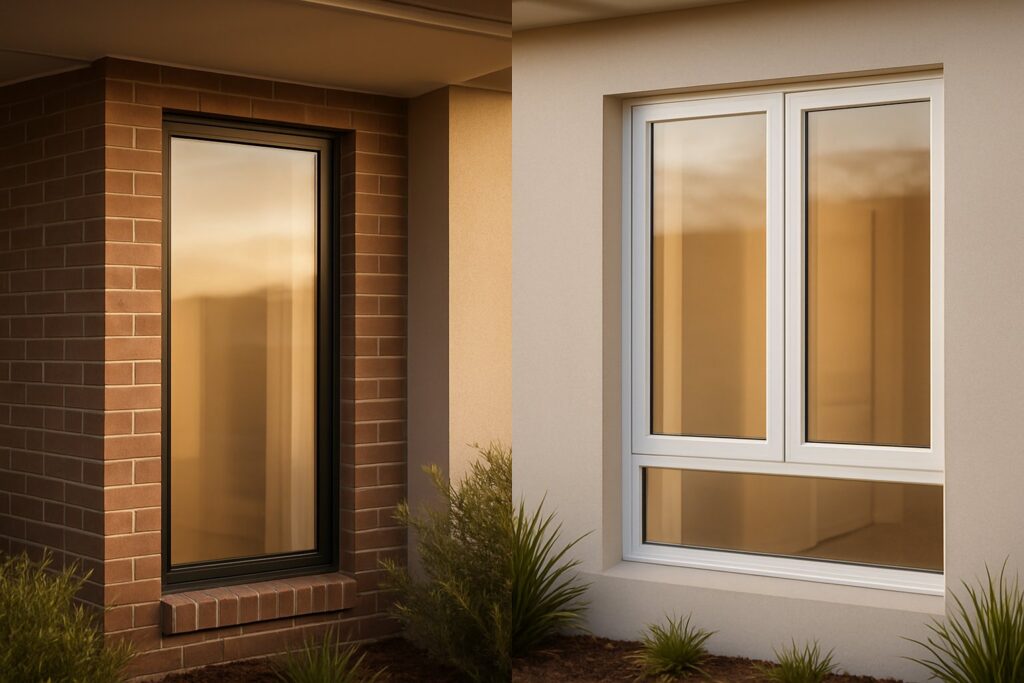
Colour trends in architectural aluminium have shifted decisively toward darker, warmer tones. Black aluminium windows dominate contemporary Australian home design — matt black in particular delivers that sharp contrast against rendered walls and natural timber cladding that defines the modern residential aesthetic. The finish absorbs light rather than reflecting it, creating bold frame lines that read as deliberate architectural elements rather than just functional boundaries.
Bronze aluminium windows have gained steady momentum, offering warmth without the visual weight of full black. Darker bronze tones reference anodised heritage finishes while lighter champagne and gold variants suit coastal palettes where black might absorb too much solar heat. For bespoke aluminium windows on heritage-influenced projects or luxury residences seeking a distinguished metallic finish, anodised bronze remains a popular specification because it delivers depth and variation that flat powder-coat colours struggle to replicate.
Beyond these standards, powder coating opens the door to virtually any colour from the RAL chart — over 200 standard shades plus custom colour matching. Matt finishes currently trend above gloss or satin, though textured and metallic options are gaining ground in high-end residential projects. Dual-colour frames — one colour externally to suit the façade, a different colour internally to match interior joinery — are increasingly achievable through split-profile manufacturing or selective masking during the coating process.
The finish you choose does more than protect the metal; it positions the window within the architectural language of the entire building. A well-chosen surface treatment turns durable aluminium windows into design features that hold their appearance for decades. But that exterior performance relies on one critical assumption: the finish and frame system are appropriate for the climate zone and building code context in which they are installed.
Climate Considerations and Building Compliance
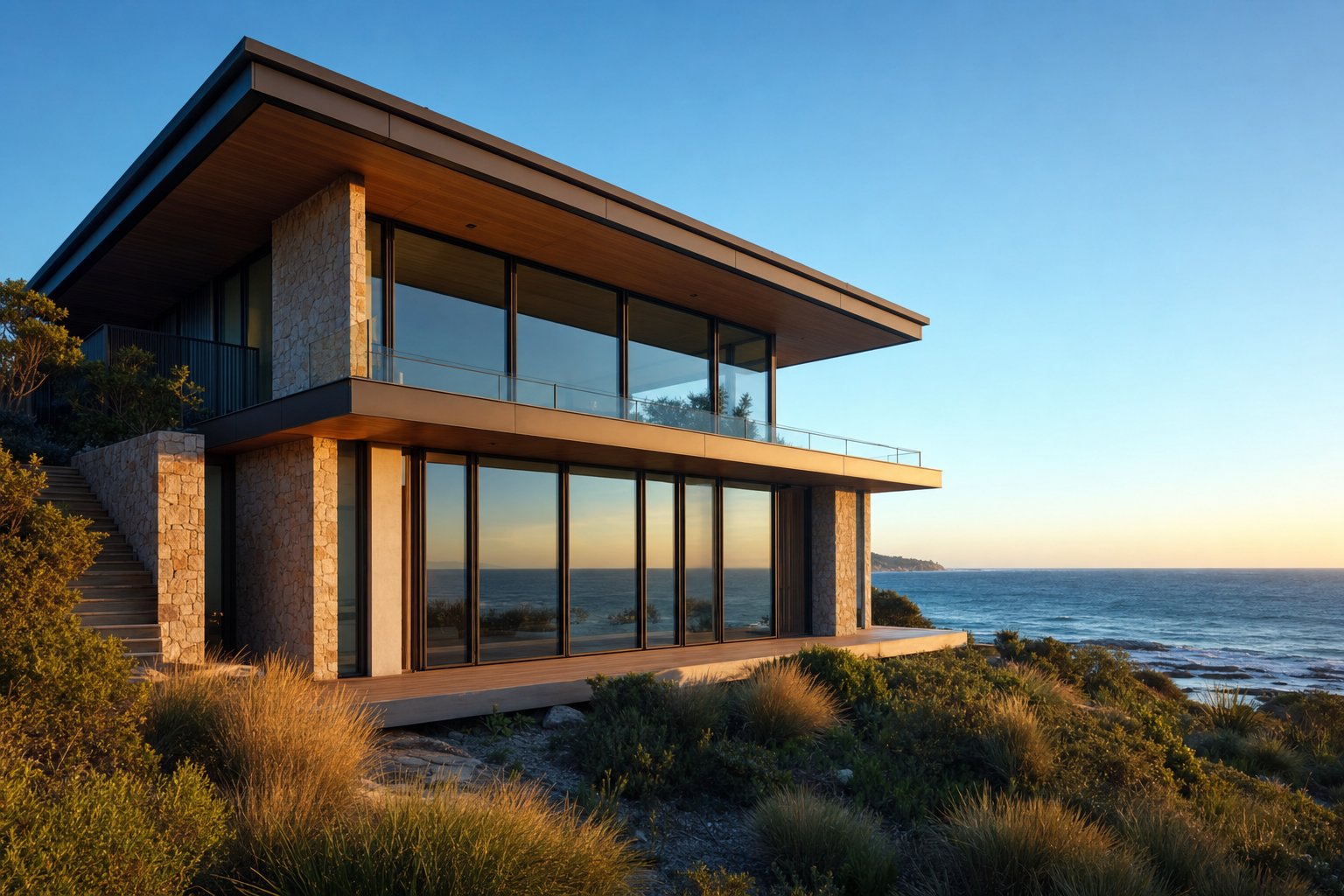
A fixed aluminium frame that excels on a temperate Melbourne elevation may struggle under the relentless humidity of Darwin or the salt-driven wind loads of a Sunshine Coast beachfront. Climate does not simply affect comfort — it determines which thermal break grade you need, which glazing combination makes sense, and whether building regulations even permit fixed-only openings in a given room. Getting this wrong costs more than energy bills; it can mean failed inspections, condensation damage, or a façade that degrades years ahead of schedule.
Climate Zone Performance Differences
Australia’s NCC divides the country into eight climate zones, each placing different demands on window assemblies. The challenges shift dramatically depending on where you build.
In tropical zones (Climate Zones 1 and 2) — covering Cairns, Darwin, and coastal northern Queensland — humidity is the primary enemy. Moisture-laden air drives condensation risk not on the glass surface (which stays warm year-round) but within poorly sealed frame cavities where trapped moisture promotes corrosion from the inside out. Commercial aluminium windows specified for tropical projects need robust internal drainage pathways and gasket systems that tolerate prolonged moisture exposure without swelling or degrading. Fixed panels perform well here structurally, particularly during cyclone season, because their sealed assembly resists wind-driven rain infiltration far better than operable alternatives.
In arid inland zones (Climate Zone 4) — places like Alice Springs and parts of inland NSW — extreme diurnal temperature swings create thermal cycling stress. Daytime expansion and overnight contraction subject frame seals to constant movement. Fixed frames handle this more gracefully than operable types because their continuous gasket compression accommodates thermal movement evenly rather than concentrating stress at hinge points or lock keeps.
In cold zones (Climate Zones 7 and 8) — alpine Victoria, Canberra winters, the Tasmanian highlands — heat retention becomes the priority. Residential aluminium windows without adequate thermal breaks will form interior condensation every cold morning, sometimes heavy enough to pool on sills and damage surrounding linings. A thermally broken frame paired with double or triple glazing and warm-edge spacers eliminates this issue, keeping the inner frame surface above dew point even when exterior temperatures drop below zero.
Coastal salt zones span the entire Australian coastline but hit hardest within a few hundred metres of breaking surf. Here, the marine-grade finishes discussed earlier are not optional — they are the minimum threshold for survival. Fixed panels offer one advantage in these locations: fewer joints and no exposed hardware tracks where salt can accumulate and accelerate corrosion in hidden crevices.
Building Code Ventilation and Egress Constraints
Fixed windows deliver outstanding thermal and structural performance, but they cannot ventilate a room. This creates a hard regulatory boundary. Under NCC Part 10.6, every habitable room in a Class 1 or Class 2 building must have natural ventilation — openings, windows, or doors that can be opened — with a ventilating area of not less than 5% of the room’s floor area. A fixed aluminium panel, no matter how large, contributes zero ventilating area to this calculation.
That does not mean you cannot use fixed glazing in habitable rooms. It means every room still needs adequate operable area elsewhere — typically through casement or awning sidelights, louvres, or doors that open to the outside or an adjoining ventilated space. Architectural aluminum windows in a fixed configuration can fill the majority of a wall opening, but the ventilation duty must be handled by companion operable sections within the same room or borrowed from an adjoining room under the NCC’s borrowed ventilation provisions.
Egress adds another constraint. Bedrooms and other sleeping spaces often require an emergency exit path that may include a window large enough for a person to pass through. A fixed panel cannot serve this purpose. In multi-storey designs where upper bedrooms rely on windows for emergency egress under state-based fire safety provisions, at least one opening per room must be operable and adequately sized — typically a minimum clear opening of 450 mm wide by 600 mm tall.
Bushfire-prone areas introduce yet another layer. Properties assessed at BAL-12.5 and above under AS 3959 must use glazing systems tested and rated for radiant heat and ember attack. Commercial aluminum window details specified for BAL-rated zones require specific glass types (toughened or laminated), mesh screen protection, and frame systems that limit gaps where embers might lodge. Fixed panels actually fare well in bushfire zones — their sealed, gap-free construction resists ember ingress more effectively than operable frames with sliding tracks or hinge clearances. However, the glazing must still be rated appropriately, and external screens may be mandated depending on BAL level.
When Fixed Aluminium Windows Are Not the Right Choice
Honesty matters here. Fixed panels are not a universal solution, and specifying them in the wrong location creates problems no amount of engineering can paper over.
Do not specify fixed-only glazing in any room that relies solely on natural ventilation — kitchens, bathrooms, bedrooms, and living areas all need operable openings under the NCC. Do not use them as the sole window in a room requiring emergency egress. Avoid them in highly humid internal environments (indoor pools, commercial laundries) where the inability to vent moisture naturally creates unsustainable condensation loads, even with thermally broken frames. And think carefully before specifying fixed panels at ground-floor level in homes without mechanical ventilation systems — cross-ventilation is one of the most effective passive cooling strategies in Australian residential design, and eliminating operable openings removes that tool entirely.
Condensation remains a concern in cooler climates if the thermal break specification is inadequate. A budget-grade polyamide strip in a cold Canberra application will still allow enough heat transfer to produce morning condensation — undermining the entire purpose of choosing a sealed, maintenance-free panel. The thermal break grade must match the climate zone severity, not just the project budget.
For designers and builders working through the specification process, a methodical compliance review avoids costly remediation after installation. The following checkpoints cover the key regulatory and performance considerations:
- Confirm every habitable room achieves the NCC Part 10.6 minimum ventilating area of 5% of floor area through operable openings — fixed panels cannot contribute to this requirement.
- Verify emergency egress provisions for all bedrooms and sleeping areas, ensuring at least one operable window or door meets minimum clear opening dimensions per state-based regulations.
- Assess the site’s BAL rating under AS 3959 and specify glazing, screens, and frame gap tolerances accordingly.
- Confirm the thermal break grade is appropriate for the NCC climate zone — particularly for Climate Zones 6, 7, and 8 where condensation risk is elevated.
- Check WERS or NatHERS energy modelling to ensure the window assembly (frame, glass, spacer) meets the overall energy performance target for the building.
- Verify coastal exposure distance and specify marine-grade finishes if the site falls within a corrosive salt-air zone as defined by the relevant Australian Standard.
- Review cyclone-rated wind load requirements for sites in Wind Regions C and D (northern Australia), confirming the fixed panel’s tested structural rating meets or exceeds the design wind pressure.
- Ensure all glass selections comply with AS 1288 for safety glazing and AS 2047 for complete window assembly performance under the specified conditions.
Working through these points early — ideally at design development stage rather than during construction documentation — prevents the scenario where a beautiful wall of fixed glazing fails inspection because the adjacent ventilation provision was overlooked or the thermal performance falls short of what NatHERS modelling assumed.
These compliance realities shape not just individual window selections but the broader façade strategy. The most effective designs treat fixed panels as one element within an integrated system — working alongside operable sections, spandrel panels, and mullion grids to deliver a unified building envelope that satisfies code, climate, and architectural intent simultaneously.
Integrating Fixed Panels into a Whole-Façade Strategy
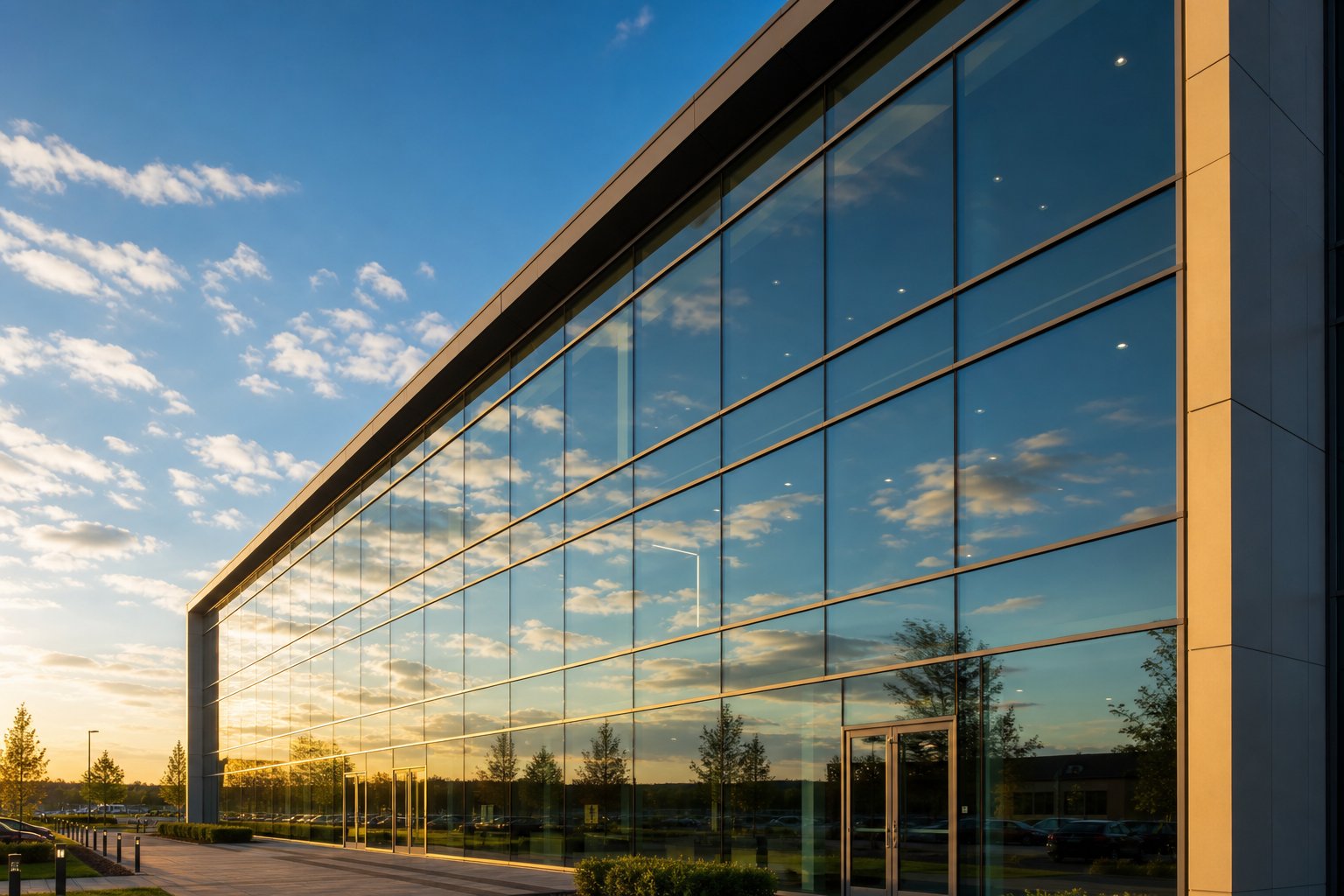
A single fixed panel is a high-performance component. A coordinated wall of fixed panels — interspersed with spandrel zones, operable vents, and structural mullions — becomes something greater: an integrated building envelope that manages light, thermal loads, structural forces, and architectural expression as one system. The most compelling contemporary façades treat fixed aluminium glazing not as individual window openings punched into a wall, but as the dominant transparent surface within a unified aluminium structure that spans entire elevations.
Fixed Panels Within Curtain Wall and Window Wall Systems
Two primary systems govern how large-scale glazed façades attach to a building’s primary structure, and fixed panels play a central role in both.
A curtain wall hangs from the edge or top of structural floor slabs, suspended like a curtain rather than bearing any building load. Vertical mullions and horizontal transoms form a continuous grid of extruded aluminium, and fixed glazed panels, spandrel infill, and occasional operable vents slot into that grid. Because the curtain wall is non-load-bearing, it can span multiple storeys without interruption — creating vast, unbroken glass surfaces that define commercial towers and institutional buildings. Fixed panels dominate these systems; operable sections typically occupy only a small fraction of the total wall area, reserved for maintenance access or supplementary ventilation.
An aluminium window wall takes a different structural approach. Rather than hanging, it sits between floor slabs — loaded from below and restrained at the top by a head receptor that accommodates vertical building movement. Window wall systems suit residential towers and hospitality projects where floor-to-floor heights are shorter and operable windows are needed more frequently. Even here, fixed panels form the majority of the glazed area, delivering the light and views that occupants expect while operable sections handle ventilation in a fraction of the overall façade.
Both systems rely on the same underlying principle: a modular aluminium grid that accepts different infill types — vision glass, insulated spandrel panels, louvres, or solid cladding — within a consistent structural and aesthetic framework. The aluminium window design challenge lies in maintaining visual continuity across all these panel types so the façade reads as a single composed surface rather than a patchwork of components.
Floor-to-Ceiling Glazing and Façade Integration
Floor-to-ceiling fixed glazing transforms the relationship between interior space and landscape. Instead of a view framed by a wall, the wall itself becomes the view. Daylight penetrates deep into floor plates, reducing artificial lighting loads during working hours and creating interiors that feel expansive regardless of actual floor area.
Ribbon window configurations — continuous horizontal bands of fixed glazing wrapping around a building’s perimeter — deliver similar benefits while maintaining solid wall zones above and below for structural bracing, services routing, or privacy. These horizontal strips of fixed panels are especially effective on commercial buildings where consistent daylighting across open-plan offices matters more than individual window operability.
The aluminium mullion grid makes these configurations practical. Architects can combine wide fixed panels for maximum transparency, narrower operable casement or awning sections where NCC ventilation requirements demand airflow, and opaque spandrel panels to conceal floor slab edges and mechanical zones — all within alu systems that share common profile depths, gasket types, and finish specifications. The result is a coherent façade where structural, thermal, and aesthetic performance are resolved together rather than treated as competing priorities.
Achieving the Frameless Look with Slimline Aluminium Systems
The contemporary appetite for minimal sightlines drives demand for slimline aluminium windows that reduce visible frame width to 30 mm or less on the exterior face. In curtain wall applications, structural silicone glazing eliminates external pressure caps entirely — the glass appears to float with only fine shadow lines revealing the mullion grid beneath. Fixed panels are ideally suited to this treatment because they carry no operable hardware that would compromise the flush glass plane.
For Australian architects and builders seeking this frameless aesthetic in a curtain-wall-integrated format, systems like MEICHEN’s BA150 Curtain Wall Fixed Window demonstrate how modern aluminium window design can support larger openings, slimmer sightlines, and seamless façade integration within a single engineered system. The BA150 is purpose-built for fixed glazing applications where maximising glass area and achieving a clean, contemporary elevation are primary design drivers — particularly relevant for commercial projects and architecturally ambitious residential builds across Australia.
Whether specified as part of a full curtain wall, a window wall between slabs, or a hybrid ribbon configuration, fixed aluminium panels are the workhorse glazing type that makes large-scale façade ambitions structurally and thermally achievable. The next consideration — often the most practical one for project teams — is how to evaluate, compare, and ultimately select the right fixed window system from the range of manufacturers and specifications available in the Australian market.
How to Evaluate and Select Fixed Aluminium Windows
Specifications on paper tell part of the story. The rest depends on asking the right questions, understanding what drives cost, and knowing how much maintenance the finished product will actually demand over its service life. Whether you are an architect finalising a façade specification, a builder pricing a tender, or a homeowner investing in a renovation, a structured evaluation process separates genuinely high-performing aluminium joinery from products that merely look the part at handover.
Key Questions to Ask Your Window Supplier
Not all aluminium windows manufacturers offer the same transparency about what goes into their frames. Some supply detailed test reports and sectional drawings on request; others expect you to accept a brochure at face value. The difference matters — especially for fixed panels that may span large openings, support heavy glazing units, or sit in demanding climate or exposure zones.
Before committing to any aluminium window supplier, work through these technical questions:
- Profile alloy and wall thickness — What aluminium alloy grade is used (6060, 6063-T5, or higher), and what is the minimum wall thickness in load-bearing sections? Architectural-grade profiles with walls of 1.6 mm to 2.0 mm indicate a more robust system.
- Thermal break specification — Is the thermal break polyamide strut or pour-and-debridge polyurethane? What is the width of the thermal cavity? A wider cavity generally delivers lower frame U-values.
- Tested performance data — Can the supplier provide AS 2047 test reports showing water resistance, air infiltration, and structural adequacy for the specific window size and configuration being quoted?
- Glazing capacity — What is the maximum insulated glass unit thickness the profile accepts? Confirm the frame accommodates double or triple glazing with warm-edge spacers for your chosen performance target.
- WERS or NatHERS data — Does the system carry Window Energy Rating Scheme certification, and what are the published U-values and SHGC figures for the assembly as tested (not just the glass centre-of-pane)?
- Finish warranty and testing — How many hours of salt-spray testing does the powder coat or anodised finish meet? What conditions void the warranty, and what maintenance schedule does the warranty assume?
- Drainage and seal design — How does the sill section manage condensation drainage and wind-driven rain? Are gaskets EPDM rated for UV stability?
- Compliance certifications — Does the completed window assembly comply with AS 2047, AS 1288 for safety glazing, and (where applicable) AS 3959 for bushfire zones?
A reputable aluminium window company will answer these without hesitation and supply documentation to back up their claims. For projects requiring curtain-wall-compatible fixed glazing or larger-than-standard opening sizes, manufacturers like MEICHEN publish system-specific technical data for their BA150 fixed window range — useful as a benchmark when comparing aluminium window supplies from competing fabricators in the Australian market.
Understanding What Drives Fixed Window Pricing
Fixed panels are typically the most affordable window type within any given profile series — no hardware, no mechanical complexity, and simpler fabrication. That said, final pricing varies considerably based on several compounding factors.
Frame size is the most obvious driver. Larger openings require deeper, heavier profiles and bigger glass units, both of which escalate material cost and freight weight. In Australia, supply-only pricing for a standard thermally broken fixed aluminium window starts around $400 to $600 AUD for moderate residential sizes (roughly 1200 mm x 1200 mm). Scale up to floor-to-ceiling panels at 2400 mm x 1500 mm or beyond, and supply-only costs can reach $1,200 to $2,000+ AUD depending on glass specification and profile system.
Glazing choice has the single largest influence after size. Stepping from standard clear double glazing to a Low-E argon-filled unit adds 15-25% to the glass component. Triple glazing, acoustic laminate interlayers, or tinted configurations push glass costs further. For fixed panels that accept heavier units — where you are leveraging the frame’s full structural capacity — this is where the real performance investment happens.
Finish specification also moves the needle. Standard powder coat in white or monument grey sits at baseline pricing. Matt black, custom RAL colours, or dual-colour inside/outside finishes add 10-20% to the frame cost. Marine-grade PVDF coatings or Class I anodising carry a further premium, justified by extended warranty coverage and coastal durability.
Thermal break grade and manufacturer tier round out the equation. Budget-tier aluminium windows manufacturers may offer thermally broken profiles with narrower polyamide strips and less rigorous testing. Premium-tier systems from established aluminium windows company suppliers invest in wider thermal cavities, comprehensive AS 2047 testing across a full range of sizes, and longer warranty terms. The upfront difference typically runs 20-40% between tiers, but higher-grade window joinery delivers measurable returns through better energy performance, fewer callback issues, and longer service intervals.
Installation adds $150 to $350 AUD per opening for standard residential situations — more for difficult access, high-level installation requiring scaffolding, or integration into curtain wall or window wall systems that demand specialist glazing contractors.
Maintenance and Expected Service Life
This is where fixed aluminium windows deliver their most compelling long-term value proposition. No hinges to adjust. No rollers to replace. No friction stays to corrode. No multi-point locks to service. The maintenance burden for a fixed panel reduces to exactly two tasks: cleaning and periodic seal inspection.
For cleaning, the approach is simple: warm water with mild detergent, a soft cloth, and a thorough rinse every three to four months. In coastal or urban environments where salt or pollution accumulates faster, monthly rinsing prevents corrosive build-up. Avoid abrasive cleaners, solvents, and anything designed for other metals — these strip protective finishes and void warranties.
Seal inspection should happen annually. Look for gaskets that have hardened, cracked, or pulled away from their grooves — particularly along the sill where UV exposure and thermal cycling are most intense. A well-specified EPDM gasket in a fixed frame should last 20 to 25 years before requiring replacement, since it never flexes or stretches through operation. Compare that to operable windows where seal life is typically 10 to 15 years due to repeated mechanical compression and release.
The aluminium frame itself, properly finished and maintained, has a realistic service life exceeding 40 years. The insulated glass unit — the one component with a finite sealed lifespan — typically delivers 20 to 30 years before argon gas loss or seal failure degrades thermal performance enough to justify replacement. When that day comes, reglasing a fixed frame is far simpler than reglasing an operable sash: pop the glazing bead, remove the old IGU, install the new unit, refit the bead. No hardware adjustment, no realignment, no recalibration of lock points.
That combination of low maintenance, long service life, and straightforward eventual glass replacement makes fixed aluminium panels the lowest total-cost-of-ownership glazing solution available. The initial specification decisions — thermal break quality, glass performance, finish grade, and supplier credibility — determine whether those decades of trouble-free service actually materialise. Invest the time upfront to interrogate specifications and choose a capable aluminium windows manufacturer, and the fixed panel rewards you with quiet, reliable performance for the life of the building.
Frequently Asked Questions About Fixed Aluminium Windows
1. What is the difference between a fixed aluminium window and an operable window?
A fixed aluminium window is a non-operable glazing unit where sealed glass is permanently set into an extruded aluminium frame with no hinges, tracks, or moving hardware. This sealed construction delivers tighter air-infiltration ratings, larger uninterrupted glass areas, and superior long-term weather resistance compared to operable types like casement, awning, or sliding windows. The trade-off is zero ventilation capacity, which means fixed panels must be paired with operable sections to meet NCC natural ventilation requirements in habitable rooms.
2. Do fixed aluminium windows need thermal breaks in Australia?
In most Australian climate zones, thermally broken frames are essential for NCC compliance under the NatHERS energy efficiency framework. Without a thermal break, aluminium’s high conductivity creates a direct heat transfer path that causes interior condensation in cooler climates and energy loss year-round. Polyamide strut or pour-and-debridge polyurethane systems interrupt this conductive pathway. The thermal break grade should match the climate zone severity — particularly in Climate Zones 6, 7, and 8 where condensation risk is highest.
3. How long do fixed aluminium windows last?
A properly finished and maintained fixed aluminium frame has a realistic service life exceeding 40 years. The insulated glass unit typically delivers 20 to 30 years before argon gas loss or seal failure warrants replacement. Because fixed panels have no hinges, rollers, or locks to wear out, their maintenance reduces to periodic cleaning and annual gasket inspection. EPDM gaskets in fixed frames last 20 to 25 years since they never flex through operation — significantly longer than the 10 to 15 year seal life typical in operable windows.
4. Can fixed aluminium windows be used in bushfire-prone areas?
Yes, fixed aluminium panels actually perform well in BAL-rated bushfire zones because their sealed, gap-free construction resists ember ingress more effectively than operable frames with sliding tracks or hinge clearances. However, the glazing must comply with AS 3959 requirements for the specific BAL rating — typically toughened or laminated glass — and external mesh screens may be mandated depending on the assessed level. All glass selections must also meet AS 1288 for safety glazing and AS 2047 for complete window assembly performance.
5. What is the best glazing option for fixed aluminium windows in Australia?
The optimal glazing depends on climate zone, orientation, and performance goals. For most Australian residential projects, double glazing with Low-E coating and argon fill delivers centre-of-pane U-values around 1.1 to 1.4 W/m2K — sufficient for NatHERS compliance in temperate zones. Triple glazing suits cold climates or passive house targets, achieving U-values below 0.7 W/m2K. West-facing elevations benefit from tinted or high-performance Low-E glass to manage solar heat gain. Fixed frames can support heavier triple-glazed or acoustic laminated units that operable windows of the same profile depth cannot accommodate.
More Window & Door Guides