Why Cost Per M2 Is the Smartest Way to Compare Window Quotes
A quote for $1,200 per window tells you almost nothing useful. That figure could represent a narrow 600mm x 900mm bathroom casement or a sprawling 2.4m x 1.8m living room panel. Same dollar amount, vastly different value. This is exactly why aluminium windows cost per m2 has become the preferred metric among builders, architects, and procurement teams across Australia. It strips away the ambiguity of per-unit pricing and gives you a single, comparable number that works across every supplier, every configuration, and every project scale.
What Does Cost Per M2 Actually Measure
The calculation itself is straightforward: take the total cost of a window (or a group of windows) and divide it by the total area of those units measured in square metres. Area is calculated from the overall frame dimensions — width multiplied by height — capturing both the glazed surface and the frame profile within the opening. Most Australian suppliers quote on this total opening area basis rather than separating glass from frame, which keeps the metric consistent whether you’re pricing fixed panels, clad windows with aluminium exteriors, or operable units with visible mullions. It’s worth confirming with each supplier exactly what their quoted area includes, but in practice the frame-to-frame measurement is the industry standard.
Why Per-Window Pricing Fails for Accurate Budgeting
Consider two aluminum clad windows quoted at $950 each. The first measures 1.2m x 1.0m (1.2 m²), landing at roughly $790 per m². The second measures 2.1m x 1.5m (3.15 m²), delivering a cost of about $300 per m². On a per-unit basis they appear identical. On a per-m² basis, the larger window represents dramatically better value per square metre of glazing. Scale that discrepancy across a full home with fifteen or twenty openings of varying sizes, and per-unit pricing can distort your budget by thousands of dollars. Window cladding systems, bi-folds, and stacker doors amplify this problem further because their panel configurations make per-unit figures almost meaningless.
Cost per m² is the only metric that lets you compare quotes from different suppliers on equal terms, regardless of window configuration, size mix, or opening type.
With this baseline understanding of how the metric works, the next logical question is what a reasonable cost per m² actually looks like for different aluminium window types — because a fixed panel and a bi-fold door occupy very different territory on the pricing spectrum.
Average Aluminium Windows Cost Per M2 by Window Type
The aluminium window price you pay per square metre shifts considerably depending on the style of window you choose. A fixed pane with no moving parts sits at a completely different price point than a bi-fold system engineered to stack six panels into a neat package. Here’s how common window types compare on a supply-only basis in the Australian market.
Fixed and Casement Window Cost Per M2
Fixed panels represent the entry point for aluminium windows prices per m2. Without hinges, locks, handles, or friction stays, there’s simply less material and less fabrication involved. A standard thermally broken fixed window typically falls between $300 and $550 per m2 (AUD, supply only) depending on profile quality and glazing specification.
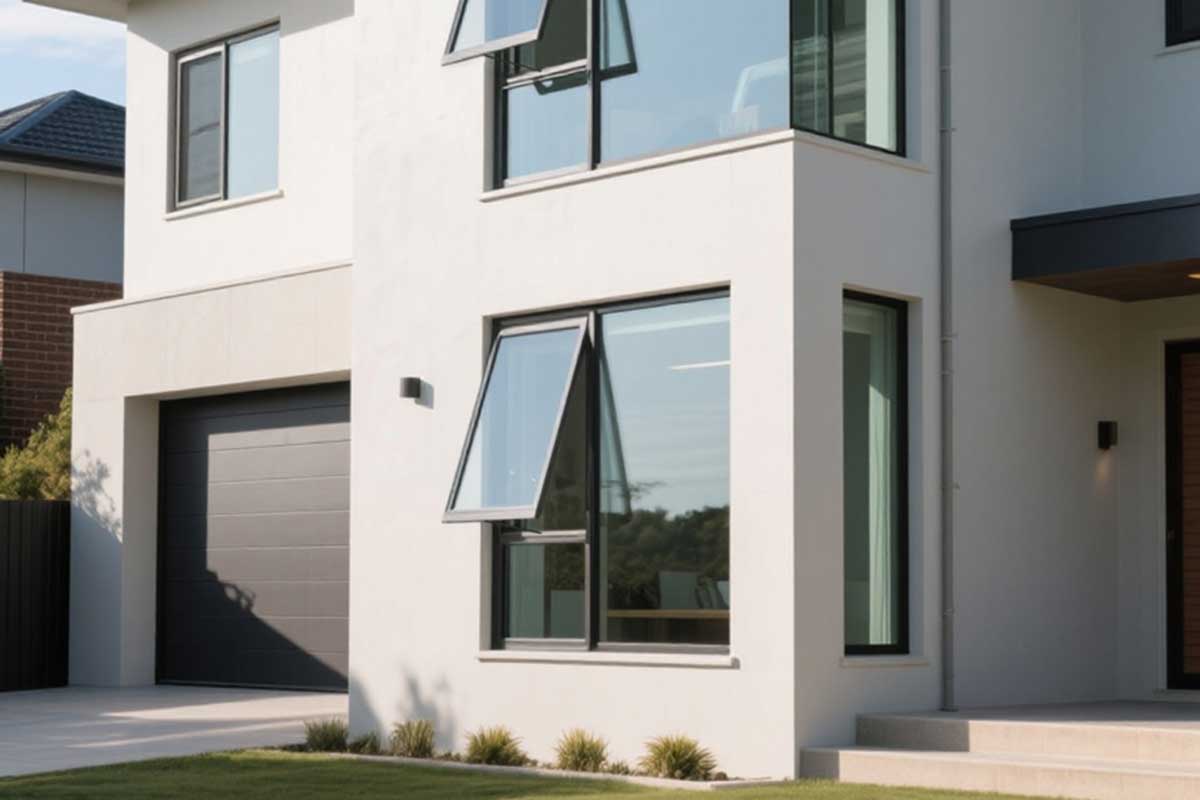
Casement windows — side-hung or top-hung with multi-point locking — step up from there. The addition of friction stays, espagnolette locking systems, weather seals around the operable sash, and tighter fabrication tolerances pushes casement pricing into the $450 to $750 per m2 range. Awning windows (hinged at the top, opening outward) land in similar territory because they share comparable hardware requirements.
Sliding and Bi-Fold Window Cost Per M2
Sliding windows introduce track systems, rollers, and interlocking stiles that fixed and casement configurations don’t require. Standard residential sliders generally range from $400 to $700 per m2, though heavy-duty lift-and-slide systems designed for larger openings can climb well beyond that.
Bi-fold systems occupy the top end of the aluminium window pricing spectrum. Each panel needs its own hinge set, carrier system, and structural connection to adjacent panels. The track engineering must handle significantly more weight and movement than a simple slider. Expect bi-fold pricing between $700 and $1,200 per m2 for quality thermally broken systems — and premium architectural-grade options can exceed this. Tilt-and-turn windows, popular in high-performance builds, also sit at the upper end ($600 to $1,000 per m2) due to their dual-function hardware and precision engineering.
How Window Type Shifts the Price Range
The aluminium profile extrusion might be identical across all these configurations. What changes the cost per m2 is everything bolted onto that profile: hardware complexity, fabrication time, structural reinforcement, and quality assurance testing for operable components. A project mixing multiple window types will naturally produce a blended average per m2 — understanding where each type sits helps you assess whether a supplier’s blended figure is reasonable or padded.
| Window Type | Typical Cost Per M2 (AUD, Supply Only) | Key Cost Drivers |
|---|---|---|
| Fixed Panel | $300 – $550 | Minimal hardware; glass and frame dominate cost |
| Casement / Awning | $450 – $750 | Multi-point locks, friction stays, operable seals |
| Sliding | $400 – $700 | Track systems, rollers, interlocking stiles |
| Bi-Fold | $700 – $1,200 | Multiple panels, carrier hardware, structural track |
| Tilt-and-Turn | $600 – $1,000 | Dual-function hardware, precision fabrication |
Note: These are indicative market ranges for thermally broken aluminium systems in Australia. Actual aluminium windows prices depend on profile grade, glazing specification, and supplier. Always obtain local quotes for project-specific accuracy.
These figures represent what you’re paying for the complete manufactured unit delivered to site. They don’t, however, reveal what’s happening inside that price — which components consume the largest share of each dollar per square metre, and where meaningful savings might exist without compromising performance.
Component Cost Breakdown Per Square Metre
Knowing the overall cost per m2 for each window type is useful, but it doesn’t tell you where your money actually goes inside that figure. Every aluminium window is an assembly of distinct components, each consuming a measurable slice of the total price. When you understand these proportions, you gain leverage — the ability to identify where a quote is inflated, where savings exist, and where cutting corners would compromise the window’s long-term performance.
Frame Profile and Extrusion Costs
The aluminium frame profile typically accounts for 30% to 40% of the total window cost. Three variables drive this proportion: profile thickness, thermal break technology, and alloy grade.
Wall thickness ranges from 1.4mm in lighter residential systems up to 2.0mm or more in heavy-duty commercial frames. Thicker walls support larger spans and higher wind loads — relevant for exposed Australian coastal sites and upper-storey installations — but they consume more raw aluminium per lineal metre of extrusion.
Thermal break technology introduces polyamide insulation strips between the inner and outer aluminium sections, creating a barrier against heat transfer. This adds measurable cost to the frame component — roughly equivalent to an additional $15 to $25 per m2 of window area compared to non-thermally-broken profiles — but delivers the thermal performance required to meet NCC energy efficiency provisions and achieve reasonable NatHERS ratings. For Australian climates, thermally broken frames are essentially standard in quality residential and commercial work.
Alloy grade matters less than many buyers expect. Most aluminium window cladding and frame extrusions use 6063-T5 alloy, which offers an excellent balance of extrudability, strength, and corrosion resistance. The price difference between alloy grades is minimal compared to the impact of profile geometry and thermal break inclusion.
Glass, Hardware, and Surface Treatment
The glazing unit, hardware package, seals, and surface finish collectively make up the remaining 60% to 70% of cost. Their relative contributions shift depending on window type and specification, but the general hierarchy remains consistent:
- Glazing unit (insulated glass unit): 25% to 35% of total cost. This is often the single largest component, especially when double or triple glazing with Low-E coatings is specified. The glass cost scales directly with area, making it particularly dominant in the per-m2 calculation for larger panels.
- Frame profile: 30% to 40% of total cost. As covered above, driven by extrusion weight, thermal break inclusion, and alloy processing.
- Hardware (handles, locks, friction stays, hinges): 8% to 10% of total cost for operable windows. Fixed panels have negligible hardware cost, which partly explains their lower per-m2 pricing. Bi-folds and tilt-and-turn systems push hardware well above this range due to multi-point locking and carrier mechanisms.
- Seals and gaskets: 3% to 5% of total cost. Weather seals, compression gaskets, and glazing rubbers are inexpensive individually but essential for weather performance and longevity — particularly in coastal environments where salt air demands quality EPDM compounds.
- Surface treatment (powder coating or anodising): 5% to 8% of total cost. Standard single-colour powder coating sits at the lower end. Marine-grade anodising, dual-colour finishes (different colour inside and outside), and premium architectural-grade coatings push this proportion higher. Dual-colour treatments can add 10% to 20% to the finish cost alone.
Why does this matter practically? Because it reveals where negotiation and specification choices have real impact. Switching from triple to double glazing, for instance, affects the largest single cost component. Choosing a simpler handle style on secondary windows saves on hardware across multiple openings. Opting for standard powder coat colours rather than custom matches avoids the premium surcharge on surface treatment. Conversely, downgrading seals or reducing profile thickness to shave a few percent off the price can create problems — water ingress, thermal bridging, or premature failure — that far exceed the initial saving.
For aluminium clad window systems where the aluminium exterior protects a different interior material, the component split shifts further toward the frame and cladding elements. But for standard all-aluminium residential windows, these proportions give you a reliable framework to interrogate any quote line by line.
Of all these components, glazing specification deserves its own deeper examination. It’s the one area where small changes in specification — an extra pane, a coating, a gas fill — create disproportionately large shifts in cost per m2 and equally large differences in real-world performance.
How Glazing Specification Changes Your Cost Per M2
Glazing accounts for 25% to 35% of total window cost — and it’s the component where specification choices create the steepest jumps in price per square metre. A basic single-glazed panel and a triple-glazed unit with performance coatings can sit in the same aluminium frame, yet the glass alone might differ by $150 to $300 per m2. Understanding this progression helps you spend where it matters rather than defaulting to either the cheapest option or the most expensive one without knowing what you’re gaining.
Single vs Double vs Triple Glazing Per M2
Each additional pane of glass introduces more than just another sheet of material. It adds spacer bars to maintain cavity width, gas fill (typically argon or krypton) for improved insulation, additional seals to keep that gas contained over decades, and extra weight that demands stronger frame profiles and more robust hardware. The cost compounds rather than simply doubling.
Single glazing is now largely limited to non-habitable structures in Australia — sheds, garages, and some commercial shopfronts where NCC energy provisions don’t mandate insulated glass. Its cost per m2 is the baseline, but it’s rarely a realistic option for residential projects.
Double glazing represents the current standard for Australian homes. Moving from single to double glazing typically adds 40% to 60% to the glazing component cost per m2. That uplift covers the second pane, argon gas fill, warm-edge spacer bars, and the additional sealing required for a sealed insulated glass unit (IGU). A standard double-glazed IGU with clear glass achieves U-values around 1.2 W/m²K — a significant improvement over single glazing’s roughly 5.8 W/m²K.
Triple glazing pushes further. Research on triple glazing upgrades indicates an additional cost premium of approximately $400 to $500 per m2 (converted to AUD) over good-quality double glazing when factoring in the upgraded frames typically paired with triple-glazed units. Triple glazing achieves U-values as low as 0.8 W/m²K, meaning it loses substantially less heat than double glazing. The weight increase also means carriers, hinges, and tracks must be uprated — a hidden cost that shows up in the hardware line rather than the glass line. For most Australian climate zones, triple glazing delivers its strongest return in alpine regions, consistently cold southern areas, and high-performance builds targeting Passivhaus or similar standards. In temperate coastal cities like Sydney or Perth, double glazing with quality Low-E coatings often delivers a better cost-to-benefit ratio.
Low-E Coatings, Tinting, and Acoustic Lamination
Beyond adding panes, you can upgrade the glass itself with performance coatings and interlayers. Each adds incremental cost per m2 but targets a specific problem — and in the Australian context, solar heat gain and UV exposure often matter more than raw insulation.
Low-emissivity (Low-E) coatings are microscopically thin metallic layers applied to one or more glass surfaces within the IGU. They reflect radiant heat back toward its source: keeping warmth inside during winter and blocking solar infrared from entering during summer. Industry data suggests Low-E glass adds roughly 10% to 15% to glass cost compared to uncoated clear glass, while reducing energy loss through the glazing by 30% to 50%. For aluminium clad replacement windows in climate zones where cooling loads dominate — most of Queensland, the NT, and inland NSW — Low-E with a low solar heat gain coefficient (SHGC) is arguably the single best-value glazing upgrade available.
Solar control tinting goes a step further for north and west-facing elevations that cop direct sun. Tinted glass reduces glare and solar heat gain without relying solely on the Low-E coating. It adds approximately 8% to 12% to the glass cost per m2 and is particularly worthwhile on expansive aluminum cladding windows where large glazed areas amplify heat build-up.
Acoustic lamination involves bonding an interlayer — typically PVB (polyvinyl butyral) or a specialised acoustic resin — between two sheets of glass. This dampens sound transmission significantly, with laminated units achieving sound reduction ratings well above standard IGUs. The cost uplift runs around 15% to 25% per m2 of glass, making it a targeted investment for homes near busy roads, flight paths, or commercial areas rather than a blanket specification across every opening.
| Glazing Specification | Relative Cost Impact Per M2 | Primary Benefit |
|---|---|---|
| Single glazing (clear) | Baseline | Lowest cost; suited to non-habitable spaces only |
| Double glazing (clear, argon fill) | +40% to 60% over single | Thermal insulation; meets NCC minimum requirements |
| Double glazing with Low-E coating | +10% to 15% over clear double | Reduces energy loss by 30–50%; reflects radiant heat |
| Double glazing with Low-E + solar control tint | +18% to 25% over clear double | Heat gain reduction on sun-exposed elevations; reduced glare |
| Double glazing with acoustic lamination | +15% to 25% over standard double | Significant noise reduction (approx. 35–40 dB Rw) |
| Triple glazing (Low-E, argon fill) | +60% to 80% over standard double | Superior insulation (U-value ~0.8 W/m²K); condensation control |
Note: Percentages represent indicative uplifts on the glazing component cost. Actual figures depend on glass supplier, unit size, and quantity. Frame upgrades required for heavier configurations add further cost beyond the glass itself.
The right specification depends on your project’s specific conditions — not a one-size-fits-all rule. A clad window facing south in Melbourne benefits most from Low-E optimised for heat retention. The same window facing west in Darwin needs aggressive solar control to manage cooling loads. For a bedroom overlooking a highway, acoustic lamination solves the actual problem better than triple glazing would. Matching glazing specification to orientation, climate zone, and room function delivers far better value per m2 than simply ticking the most expensive box on the order form.
These glazing choices sit within the supply-only portion of your quote. But supply cost is only part of the picture — the gap between what you pay for the manufactured unit and what the finished installation actually costs per m2 can be just as significant, and it’s where many budgets come unstuck.
Supply-Only vs Supply-and-Install Pricing Per M2
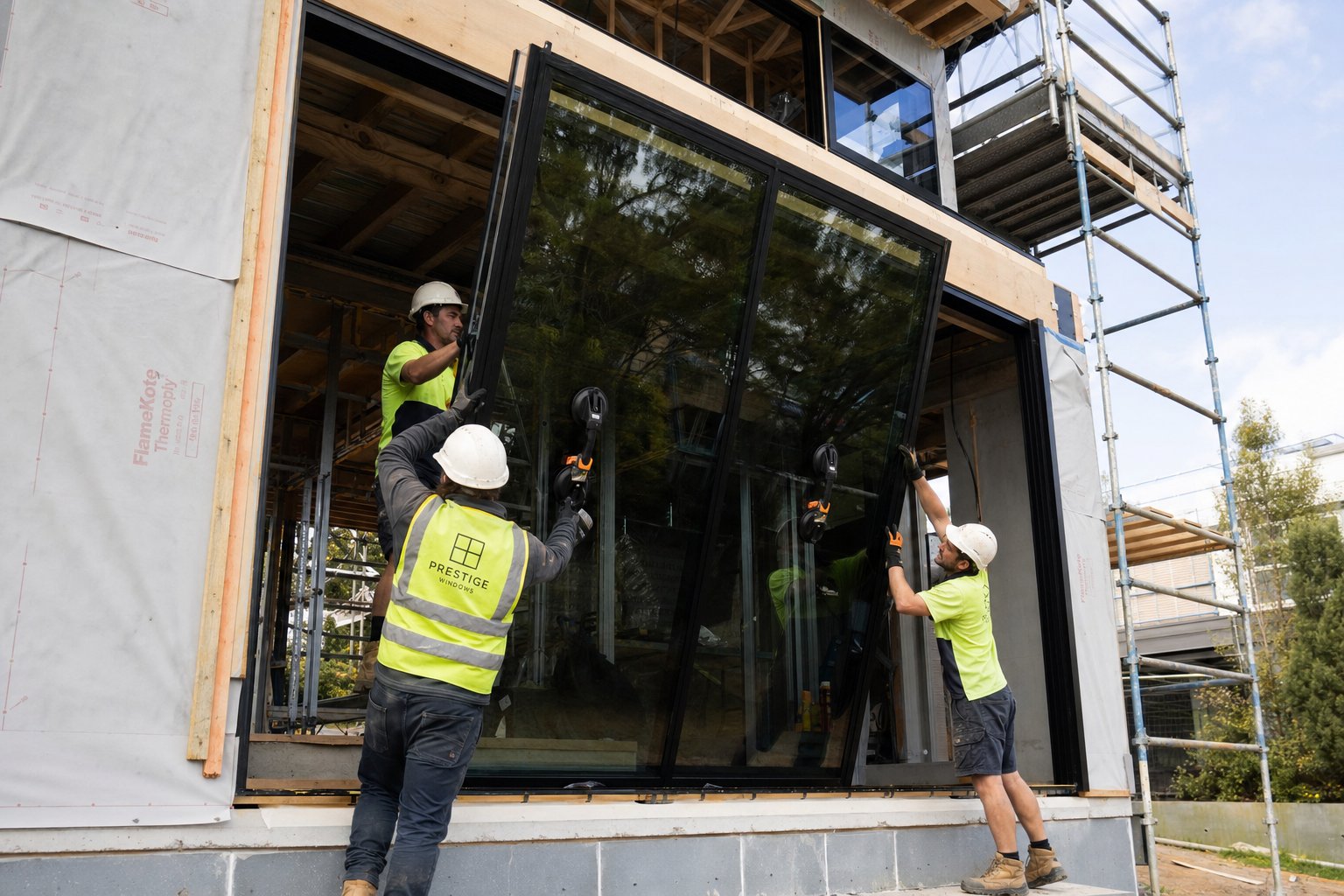
A quote that reads $600 per m2 and another at $1,100 per m2 might actually represent the same window — the difference being that one covers the manufactured unit alone while the other includes getting it into your wall. This supply-only versus supply-and-install distinction is where more renovation budgets blow out than almost anywhere else in a window project. Suppliers don’t always make the boundary obvious, and buyers don’t always ask. The result: an aluminium window cost that looked competitive on paper becomes significantly more expensive once site work begins.
What Supply-Only Cost Per M2 Includes
A supply-only price covers the completed, factory-finished window unit ready for installation. Specifically, you’re paying for:
- Fabricated aluminium frame — fully welded or mechanically joined, with thermal break (if specified), cut and assembled to your dimensions
- Glazing unit — sealed IGU installed into the frame with appropriate glazing gaskets
- Standard hardware — handles, locks, friction stays or rollers as applicable to the window type
- Factory-applied surface finish — powder coating or anodising in the specified colour
- Weather seals and gaskets — compression seals, drainage slots, and weatherstripping fitted during manufacture
- Basic packaging — protective wrapping and edge protection for transport to depot or site
That’s where it stops. Supply-only pricing typically excludes delivery beyond the supplier’s depot (or charges it separately per kilometre), installation labour, external flashings, internal reveal trims, window cladding trim around the finished opening, sill nosings, sealants applied on site, and any structural modification to the opening itself. Some suppliers include delivery to site within a metropolitan radius; others don’t. It’s a line item worth checking before you compare figures.
For clad aluminum windows — where the aluminium exterior wraps a timber or composite interior — the supply-only scope generally includes the complete hybrid unit but still excludes site-applied flashings and architectural trims that connect the window to surrounding wall cladding.
Installation Labour and Additional Site Costs Per M2
Installation transforms a boxed product into a functioning, weathertight part of your building envelope. The labour and materials involved carry their own cost per m2, and that figure varies more dramatically than the supply side because it depends on site conditions rather than factory efficiency.
Based on Australian market data from hipages, installation costs layer onto the supply price through several distinct components. Here they are, ordered from largest to smallest typical cost impact:
- Installation labour — the core cost. A qualified glazier or licensed window installer charges for measuring, fitting, shimming, fixing, and sealing each unit into its opening. For standard ground-floor installations in accessible locations, labour typically adds $150 to $350 per m2 of window area. This is the single largest installation line item.
- Removal and disposal of existing windows — in replacement projects, old frames need to come out cleanly without damaging surrounding finishes. Removal adds roughly $50 to $120 per m2 depending on the existing frame material and condition. Aluminium-to-aluminium swaps are generally faster; extracting old timber frames bedded in mortar takes longer.
- Making good reveals and surrounds — once old windows come out, internal and external reveals often need patching, plastering, or repainting. This remediation work adds $40 to $100 per m2 and varies with house construction type. Brick veneer homes tend to require less making-good than rendered or weatherboard exteriors.
- Flashings and external sealing — head flashings, sill flashings, and perimeter sealant ensure long-term weathertightness. Materials and labour for proper flashing installation add $30 to $80 per m2. Skipping or underspecifying flashings is a false economy that leads to water ingress within years.
- Scaffold hire for upper-storey access — ground-floor windows avoid this entirely, but second-storey and above installations require safe access. Scaffold adds roughly $25 to $75 per m2 of upper-floor window area, depending on how many units share the same scaffold setup. A single window on a gable end is proportionally expensive; a row of windows across a first-floor elevation shares the fixed cost efficiently.
- Internal trims, architraves, and sill finishing — the final presentation layer inside the room. Timber or MDF reveals, sill boards, and architraves add $20 to $60 per m2 including supply and fit.
- Waste removal and site clean-up — old windows, packaging, offcuts, and protective coverings all need removal. Typically $10 to $30 per m2, though this is often bundled into an overall project waste fee rather than itemised per window.
Adding these components together, total installation cost typically ranges from $250 to $500 per m2 for standard residential work — meaning the installed aluminium window cost per m2 can be 40% to 80% higher than the supply-only figure. On a project with 30 m2 of total window area, that’s an additional $7,500 to $15,000 beyond the supply price that needs to be in your budget from day one.
One pattern worth noting: installation costs per m2 decrease as project scale increases. A single window replacement carries disproportionate setup time — the installer still needs to mobilise, set up equipment, and manage waste for one opening. Spread that overhead across twenty or thirty windows and the per-m2 installation figure drops noticeably. Scaffold hire is the clearest example: the cost of erecting and dismantling a scaffold run is largely fixed regardless of whether it services three windows or eight. Larger projects also allow installers to batch similar tasks — removing all old units first, then fitting all new units, then sealing and trimming — which creates efficiency that smaller jobs can’t achieve.
This is precisely why it matters to understand your quote structure. When a supplier presents a single lump-sum figure without separating supply from installation, you lose the ability to benchmark either component independently. Two quotes at the same total figure might contain very different allocations — one offering a premium window with basic installation, the other a budget window with expensive remediation priced in. Separating supply from install per m2 reveals which quote delivers better product quality and which is absorbing higher site complexity.
The distinction also matters when comparing across pricing tiers. A budget aluminium system and a premium thermally broken system might differ by $200 per m2 on supply — but the installation cost remains almost identical regardless of which product goes into the opening. Understanding this helps you evaluate whether stepping up to a higher-quality product is genuinely as expensive as the total price difference suggests, or whether the gap narrows once you account for the installation baseline that applies to any window regardless of grade.
Pricing Tiers and Lifecycle Cost Comparison
Stepping up from one product grade to the next sounds expensive in isolation. But the real question isn’t whether premium aluminium costs more per m2 than budget — it obviously does. The real question is what you get for that extra spend, and whether the gap looks the same when you zoom out to a 25 or 40-year ownership horizon. That’s where the comparison gets interesting, especially once you bring alternative materials like uPVC and timber into the frame.
Budget, Mid-Range, and Premium Aluminium Tiers
Not all aluminium windows are built the same. The market broadly divides into three quality tiers, and each reflects genuine differences in materials, engineering, and long-term performance — not just branding.
Budget tier ($300 – $500 per m2 supply only) uses thinner profile walls (typically 1.4mm), omits thermal breaks entirely or uses basic polyurethane foam rather than polyamide strips, and applies a standard single-colour powder coat finish from a limited palette. Hardware is functional but basic — simple cam locks, lightweight rollers, and generic gaskets. These systems meet minimum structural requirements but offer limited thermal performance and a narrower design envelope. They suit utility applications, garages, or investment properties where cost control outweighs long-term comfort.
Mid-range tier ($500 – $800 per m2 supply only) represents where most quality residential projects land. Profiles include genuine polyamide thermal breaks, wall thickness steps up to 1.6mm or more, and the colour range expands to include popular architectural tones and dual-colour options (different finishes inside and outside). Hardware improves to multi-point locking, quality friction stays, and branded European mechanisms. Glazing typically includes double-glazed IGUs with Low-E coatings as standard. This tier delivers solid NatHERS contributions and comfortable year-round performance for Australian climates.
Premium tier ($800 – $1,200+ per m2 supply only) targets architectural-grade projects, high-performance builds, and exposed coastal or alpine locations. Profiles feature heavy-duty extrusions (1.8mm to 2.0mm walls), oversized polyamide thermal breaks for superior U-values, and slim sightlines that maximise glass area. Surface treatments move into marine-grade anodising, PVDF coatings, or textured finishes that resist fading and degradation over decades. Hardware is commercial-grade: concealed hinges, soft-close mechanisms, and multi-point locking rated to AS 5039 for forced-entry resistance. Premium systems also accommodate triple glazing and acoustic lamination without frame compromise.
The gap between tiers isn’t just about upfront dollars — it’s about how long the window performs before needing repair or replacement. A budget system might deliver 15 to 20 years of reasonable service. A premium thermally broken system, properly installed, routinely lasts 40 to 50 years with virtually zero maintenance beyond occasional cleaning.
Aluminium vs uPVC and Timber on a Lifecycle Cost Basis
Initial cost per m2 tells only part of the story. The three dominant framing materials — aluminium, uPVC, and timber — sit at different price points upfront but diverge dramatically when you factor in lifespan, maintenance, and replacement cycles over a realistic ownership period.
uPVC offers the lowest entry cost per m2 in Australia, typically $250 to $500 for supply of standard double-glazed units. It requires almost no maintenance during its service life. The catch: industry data indicates uPVC frames last 20 to 30 years before seals fail, frames warp, or discolouration becomes unacceptable. Once a uPVC frame fails, it cannot be repaired — the entire unit requires replacement. Over a 50-year period, that means at least one full replacement cycle, potentially two.
Timber windows — including aluminium clad wood windows that use an aluminium exterior shell over a timber interior — carry a higher initial cost per m2, typically $600 to $1,100 depending on timber species and whether the system is all-timber or clad. Wood clad aluminium windows combine the warmth and aesthetic of timber interiors with aluminium’s weather resistance externally, reducing (but not eliminating) maintenance demands. Pure timber frames demand repainting or restaining every 5 to 7 years, and well-maintained timber can last 30 to 60 years. Neglect that maintenance schedule, though, and rot sets in quickly — turning a long-term asset into a liability. Clad wood windows reduce this risk substantially but still require periodic attention to timber sections at joints and internally.
Mid-range aluminium sits between uPVC and timber on upfront cost but typically wins on lifecycle economics. With a 40 to 50-year lifespan, no repainting requirement, and excellent corrosion resistance (particularly relevant for Australian coastal properties), the ongoing cost is limited to occasional hardware servicing and seal replacement after 20-odd years.
| Material Type | Initial Cost Per M2 (AUD, Supply Only) | Estimated Lifespan | Maintenance Cost Over 25 Years | Effective Lifecycle Cost Per M2 (Over 50 Years) |
|---|---|---|---|---|
| uPVC | $250 – $500 | 20 – 30 years | Minimal ($0 – $20/m2) | $550 – $1,100 (includes one replacement) |
| Aluminium (mid-range, thermally broken) | $500 – $800 | 40 – 50 years | Very low ($10 – $40/m2 for seal/hardware service) | $510 – $840 (no replacement needed) |
| Timber (quality hardwood) | $600 – $1,000 | 30 – 60 years | High ($150 – $350/m2 for paint cycles and repairs) | $750 – $1,350 (maintenance-intensive) |
| Aluminium clad timber | $700 – $1,100 | 40 – 60 years | Moderate ($50 – $120/m2 for interior timber care) | $750 – $1,220 (reduced external maintenance) |
Note: Lifecycle estimates assume standard residential conditions. Coastal exposure, extreme UV, and bushfire zones may shorten lifespans for all materials. Figures are indicative and market-dependent — obtain local quotes for project-specific accuracy.
The pattern is clear: aluminium’s higher upfront cost per m2 is offset by decades of near-zero maintenance and no replacement cycle within a typical ownership period. uPVC looks cheapest on day one but expensive at year 30 when the second set of windows goes in. Timber — including clad wood windows with aluminium exteriors — can last as long as aluminium but only with consistent, ongoing investment in surface maintenance. For Australian conditions where UV intensity, coastal salt exposure, and temperature cycling punish neglected surfaces, the low-maintenance argument for aluminium carries particular weight.
These tier and material comparisons assume relatively standard project conditions. In practice, real-world quotes deviate from published averages for reasons that have nothing to do with the window product itself — site access, building constraints, and order scale all push the actual cost per m2 above or below the ranges presented here.
Factors That Push Cost Per M2 Above or Below Average
Published averages are a starting point, not a guarantee. The ranges in the tables above assume a reasonably straightforward installation scenario — ground-floor or easy first-floor access, standard rectangular openings, no heritage constraints, and a project large enough to avoid single-unit premiums. Strip away any one of those assumptions and the actual cost per m2 shifts, sometimes dramatically. Here’s what drives those deviations on real Australian projects.
Site Conditions That Increase Cost Per M2
The window itself might cost exactly the same leaving the factory regardless of where it ends up. The difference shows up in what it takes to get that unit safely into the wall — and what the wall needs to accept it.
Upper-floor and high-rise access is the most common cost escalator. Ground-floor installations need nothing more than a stable platform and a clear path from the truck to the opening. Second-storey work requires scaffolding. Third-storey and above may demand scaffold towers, mast climbers, or crane lifts for larger glazed units. Specialist scaffolding guidance confirms that upper-floor window replacement almost universally requires scaffolding for safe access — it provides a stable, spacious work platform that ladders simply cannot replicate when handling heavy aluminium frames and sealed IGUs. That scaffold hire adds a fixed cost spread across however many windows it services, and single isolated windows on upper floors bear the full weight of that setup disproportionately.
Heritage and character overlay requirements introduce constraints invisible in standard quotes. Properties listed on heritage registers or located within heritage conservation areas often require aluminium profiles that replicate existing timber proportions, specific glazing bar patterns, or particular colour finishes matching adjacent period buildings. Some councils mandate that replacement windows demonstrate visual equivalence with the originals — which can push specifications toward custom mouldings, non-standard sightline widths, or specialised coatings that carry substantial premiums over standard catalogue options. Heritage sites may also need temporary protection of ornate surrounds during installation, further adding to labour time.
Structural modifications to openings represent another hidden multiplier. Enlarging a window opening requires cutting back masonry or framing, installing new lintels, and re-establishing waterproofing details — work that falls outside the window supplier’s scope but dramatically affects the installed cost per m2. Reducing an opening (less common, but required for some conversions) involves infilling, which carries its own structural and finishing costs. Neither scenario appears in a supply-only price per m2, yet both are common in renovation and extension projects.
Restricted site access for delivery affects logistics costs. Narrow inner-city laneways, steep driveways, developments behind existing buildings, and sites with no crane access all force manual handling of heavy window units across longer distances. Some sites require special-order smaller delivery vehicles or after-hours deliveries due to council time restrictions in residential areas.
Custom Manufacturing vs Standard Sizes
The gap between standard and bespoke pricing is real — but it’s not as dramatic as many buyers assume, particularly at volume.
Standard aluminium window sizes follow commonly produced dimensions that manufacturers run on efficient, repetitive production cycles. Wholesale market data shows lead times of 2 to 4 weeks for standard-size orders with pricing that benefits from continuous production runs and stocked profiles. Custom fabrication — non-standard dimensions, unusual configurations, or specialised performance requirements — typically adds a 25% to 50% premium over comparable standard units due to the additional design work, setup changes, small-batch production interruptions, and extended quality checks each bespoke order demands.
That premium narrows as order volume increases. A one-off custom window for a single opening absorbs the full setup cost individually. Fifty identical custom-sized units spread that setup across the batch, reducing the per-unit penalty significantly. At volumes above 100 to 150 units — common on multi-dwelling developments — the distinction between “custom” and “standard” pricing often compresses to 10% to 15% because the order justifies a dedicated production run regardless of whether the dimensions appear in a catalogue.
Trade and wholesale versus retail pricing also creates substantial per-m2 variation. Builders and developers purchasing at trade volumes routinely access pricing 25% to 45% below retail depending on order scale. A homeowner replacing three windows pays full retail; a builder ordering the same product across a 30-lot subdivision receives volume pricing that can reshape the per-m2 figure by hundreds of dollars. Project scale directly affects negotiating position — and it’s one of the main reasons identical products appear at wildly different per-m2 figures in different quotes.
The common cost escalators worth checking against any quote include:
- Scaffold or crane access — fixed cost per setup, shared across windows serviced; isolated upper-floor openings bear disproportionate cost
- Heritage overlay compliance — custom profiles, mandated colours, glazing bar replication, and council approval processes
- Structural opening modifications — new lintels, masonry cutting, infilling, waterproofing re-establishment
- Restricted or difficult site access — manual handling, special vehicles, after-hours delivery requirements
- Custom sizing premium — 25% to 50% above standard at low volumes; compresses to 10% to 15% at higher quantities
- Non-standard finishes — custom powder coat colours, dual-colour treatments, marine-grade anodising, textured coatings
- Cyclone or bushfire compliance — BAL-rated glazing, cyclone-rated hardware, and tested frame-to-wall sealing add cost in designated zones across northern Queensland, the NT, and bushfire-prone areas of NSW, VIC, SA, and WA
- Acoustic performance requirements — laminated glass and upgraded seals for sites near roads, rail corridors, or flight paths, often mandated by council DA conditions
- Bulk volume discounts — mid-volume orders (50–150 units) typically unlock 20% to 30% below retail; large project orders (150+ units) can achieve 30% to 45% reductions
These factors explain why a neighbour’s quote from last year, or a figure found in a generic online guide, may bear little resemblance to what you’re quoted for your specific project. The published averages in this article account for typical conditions — but your conditions are your conditions. The only reliable way to move from indicative ranges to an actual budget number is to calculate your own cost per m2 from real supplier quotes built against your project’s specific details.
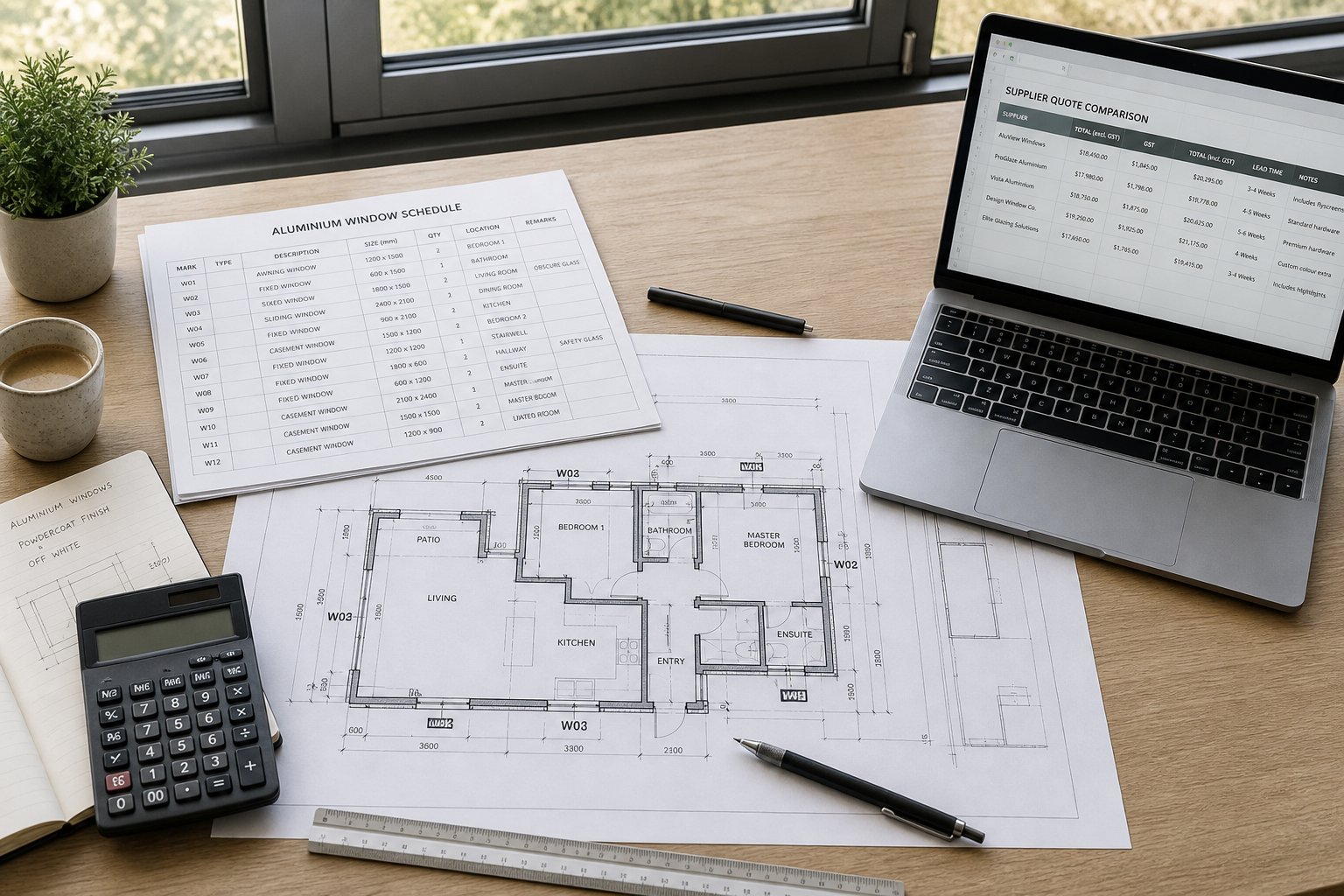
How to Calculate Your Own Cost Per M2 From Supplier Quotes
Knowing what typical ranges look like is one thing. Turning the quotes sitting in your inbox into actual comparable per-m2 figures is another. Suppliers format their pricing in wildly different ways — one sends a per-window breakdown, another gives a lump sum for the whole project, and a third quotes per lineal metre of frame. None of these formats let you compare directly until you convert them all to the same unit. Here’s exactly how to do that.
Step-by-Step Calculation Method
This process works regardless of whether your quote covers three bathroom windows or a full multi-storey build. Grab a calculator, pull up the quote, and work through these steps:
- Record each window opening’s dimensions in metres. Measure (or pull from architectural drawings) the width and height of every window opening on the project. Use frame-to-frame external dimensions — the same measurement basis suppliers use when manufacturing. A window noted as 1200mm x 1500mm becomes 1.2m x 1.5m.
- Calculate the area for each individual window. Multiply width by height for each unit. That 1.2m x 1.5m window equals 1.8 m². A 2.4m x 2.1m sliding door equals 5.04 m². Write each area alongside its corresponding line item on the quote.
- Sum the total window area across the entire project. Add all individual areas together. If you have eight windows totalling 14.6 m² and two sliding doors totalling 9.2 m², your project total is 23.8 m² of window and door area.
- Divide the total quoted price (supply only) by total area. If the supply-only quote for all units comes to $16,660, your supply cost per m2 is $16,660 ÷ 23.8 = $700 per m². This is your headline comparison figure.
- Repeat separately for the installation component. If installation is itemised (as it should be), divide that total by the same area figure. An installation quote of $7,140 across 23.8 m² gives you $300 per m² for install. Your combined supply-and-install rate is $1,000 per m².
That five-step process gives you a single, directly comparable number regardless of how the original quote was structured. It also reveals whether your blended rate aligns with the ranges discussed earlier in this article — or whether something needs closer scrutiny.
Comparing Multiple Quotes on Equal Terms
The calculation above works cleanly when a supplier itemises by window. But what about quotes formatted differently? Three common scenarios require a slight adjustment:
Lump-sum quotes — some suppliers present a single total figure for the entire project without breaking it down by unit. Divide that lump sum by your total calculated area (step 3 above) to get the blended per-m2 figure. If the supplier won’t separate supply from install within that lump sum, you’ve lost the ability to benchmark each component — and that itself is a problem worth raising.
Per-lineal-metre pricing — occasionally used for aluminium framing, particularly on commercial projects. This format prices the frame extrusion rather than the finished window. To convert: multiply the per-lineal-metre rate by the total perimeter of each window (width + width + height + height, plus any mullions or transoms), then add the quoted glass and hardware costs. Divide the total by area in m² as before.
Per-window pricing with no dimensions stated — if the quote lists only a price per window without specifying sizes, you cannot calculate cost per m2 at all. Request the schedule of dimensions from the supplier. Any professional operation will have this data because they need it to manufacture the product. If they can’t or won’t provide it, treat that as an immediate red flag.
If a supplier cannot break out supply costs from installation costs, request an itemised breakdown before signing. Transparency at the quoting stage predicts transparency during the project — and opacity at this point rarely improves later.
Working with a supplier that provides transparent cost breakdowns from the outset — including material calculations, system recommendations, and detailed schedules showing dimensions, specifications, and pricing per unit — makes this entire comparison process significantly easier. You shouldn’t need to reverse-engineer basic data from a vague lump sum. Suppliers set up to support builders and procurement teams typically deliver drawings, schedules, and itemised costings as standard practice because that’s what project-capable partners do. MEICHEN’s Services & Solutions page illustrates this approach — supporting the process from specification through material calculation and manufacturing coordination, giving buyers full visibility into what drives their quoted cost per m2.
Once you’ve converted two or three quotes into per-m2 figures using the same methodology, patterns emerge quickly. You’ll spot which supplier delivers more glass area for the same spend, which one buries installation extras in the headline price, and which offers genuinely competitive supply pricing versus one that simply strips out line items to appear cheaper. The maths doesn’t lie — but it does depend on the quote containing enough detail to work with. And that brings up a natural follow-on concern: what does it look like when a quote deliberately obscures detail, and how do you distinguish a trustworthy breakdown from one designed to mislead?
Red Flags in Quotes and Getting Accurate Project Pricing
A per-m2 figure only tells you something useful if the quote behind it is honest. Strip out essential components and any supplier can produce a number that looks competitive on a spreadsheet — right up until installation day when the extras start appearing. Equally, an inflated quote padded with unnecessary upgrades or opaque margins can make a straightforward project look far more expensive than it needs to be. Knowing what to watch for on both ends of the spectrum protects your budget and your build timeline.
Red Flags That a Quote Is Too Low
When one quote comes in 30% to 40% below others for seemingly comparable aluminium clad windows, something is almost certainly missing. Industry guidance on quote comparison consistently identifies the same pattern: suspiciously low prices result from reduced specification or excluded scope, not genuine efficiency savings. The cheapest quote frequently becomes the most expensive once hidden extras surface.
Watch for these warning signs in low-priced quotes:
- No thermal break mentioned — the profile may be a basic non-thermally-broken extrusion, which won’t meet NCC energy provisions for habitable rooms and will need replacing sooner
- Unspecified profile thickness — if the quote doesn’t state wall thickness (e.g. 1.6mm or 1.8mm), assume the thinnest possible option has been priced
- Vague glazing specification — “double glazed” without stating Low-E type, gas fill, spacer type, or U-value leaves the supplier free to use the cheapest IGU available
- Missing flashings and seals — essential weatherproofing components omitted from the quote will appear as site extras at installation, often at inflated rates
- No waste removal or disposal included — old windows don’t disappear for free; if removal isn’t listed, it’s either excluded or hasn’t been considered
- No warranty documentation — a quote without clear warranty terms (product, installation, seal integrity) signals a supplier who won’t stand behind the work
- “Package price” with no line items — a single lump sum with no breakdown prevents you from evaluating what you’re actually receiving per dollar spent
The real cost of aluminium windows only becomes clear when every component is accounted for. A quote that excludes flashings, skips sealant, or uses unspecified hardware isn’t cheaper — it’s incomplete. Those missing elements will need to be purchased and installed regardless; the only question is whether you pay for them upfront at competitive rates or later as unplanned extras with no negotiating leverage.
Signs of an Overpriced Quote and What Good Pricing Looks Like
On the other end, an unreasonably high per-m2 figure doesn’t always mean you’re getting a superior product. Some quotes are inflated through excessive margins on standard configurations, unnecessary upgrades presented as mandatory (“you must have triple glazing” on a north-facing ground-floor window in Brisbane), or proprietary systems that lock you into one supplier’s ecosystem without technical justification.
Additional signs a quote may be overpriced:
- Refusal to itemise costs — a supplier who won’t separate supply from installation, or won’t break down material versus labour, is preventing you from benchmarking their pricing against the market
- “Today only” pricing pressure — legitimate suppliers give you time to compare; urgency tactics suggest the price won’t withstand scrutiny
- Specifications that don’t match site requirements — premium upgrades (cyclone rating in suburban Melbourne, acoustic lamination on a quiet cul-de-sac) that add cost without solving an actual problem
- No project drawings or schedules provided — if you’re spending tens of thousands on aluminium clad wood or all-aluminium systems, you should receive dimensioned schedules showing exactly what’s being manufactured for each opening
A transparent, project-capable supplier operates differently. Good pricing looks like detailed window schedules with dimensions and specifications per opening, system recommendations matched to your building’s performance requirements, clear material breakdowns showing profile type, glazing spec, hardware grade, and finish, plus logistics planning that accounts for site access and delivery staging. You can see what’s driving the cost per m2 at every level — no guesswork, no surprises.
This is what separates a supplier who merely quotes a number from one who supports accurate budgeting throughout the project. MEICHEN’s Services & Solutions approach illustrates this model in practice — providing builders and architects with drawings, material calculations, manufacturing coordination, and delivery planning so that every dollar in the quoted cost per m2 is accounted for and justified. When your supplier operates at this level of transparency, spotting overpriced or underspecified competitor quotes becomes straightforward because you have a properly documented baseline to compare against.
Ultimately, the goal isn’t finding the lowest number — it’s finding the most accurate one. A quote that clearly maps every component, honestly states what’s included and excluded, and gives you the data to calculate your own cost per m2 is worth more than a cheap headline figure that unravels during construction. The maths you learned to run in the previous section only works when the inputs are honest. Demand that honesty from every supplier you engage, and your budget will thank you for it.
Frequently Asked Questions About Aluminium Windows Cost Per M2
1. How much do aluminium windows cost per m2 in Australia?
In Australia, aluminium windows typically cost between $300 and $1,200 per m2 for supply only, depending on window type and specification. Fixed panels sit at the lower end ($300 to $550 per m2), casement and awning windows range from $450 to $750, sliding windows from $400 to $700, and bi-fold systems from $700 to $1,200 per m2. These figures cover thermally broken aluminium systems and vary based on profile grade, glazing specification, hardware quality, and supplier. Adding installation typically increases the total by $250 to $500 per m2 for standard residential work.
2. How do I calculate the cost per m2 from a supplier quote?
Measure each window opening’s width and height in metres, then multiply to get the area of each unit. Sum all individual areas to get your total project window area. Divide the total supply-only quote by this total area to get your supply cost per m2. Repeat separately for installation costs if itemised. For example, a $16,660 supply quote across 23.8 m2 of window area equals $700 per m2. This method works regardless of how the supplier formats their quote and allows direct comparison between different providers. A project-capable supplier like MEICHEN provides detailed schedules with dimensions and specifications, making this calculation straightforward.
3. Is aluminium cheaper than uPVC or timber windows per m2 over time?
While aluminium has a higher upfront cost per m2 than uPVC ($500 to $800 versus $250 to $500 for mid-range systems), it typically delivers lower lifecycle costs over 50 years. Aluminium frames last 40 to 50 years with near-zero maintenance, meaning no replacement cycle is needed within typical ownership periods. uPVC lasts 20 to 30 years and requires full replacement when it fails, effectively doubling the cost over time. Timber can match aluminium’s lifespan but demands repainting every 5 to 7 years, adding $150 to $350 per m2 in maintenance over 25 years. For Australian conditions with high UV and coastal salt exposure, aluminium’s durability advantage is particularly pronounced.
4. Why do aluminium window quotes vary so much between suppliers?
Quote variation stems from differences in profile quality (thermal break inclusion, wall thickness), glazing specification (single vs double vs triple, Low-E coatings), hardware grade, surface treatment, and what is included in scope. Some suppliers exclude flashings, seals, waste removal, or delivery, producing artificially low headline figures. Site-specific factors also contribute: upper-floor scaffold access, heritage compliance, structural modifications, restricted delivery access, and custom versus standard sizing all push costs above published averages. Trade volume discounts of 25% to 45% below retail further explain why identical products appear at different per-m2 figures across quotes.
5. What red flags should I look for in aluminium window quotes?
For suspiciously low quotes, watch for missing thermal break specification, unspecified profile thickness, vague glazing descriptions without U-values or Low-E details, excluded flashings and seals, no waste removal, and absence of warranty documentation. For overpriced quotes, be wary of refusal to itemise supply versus installation costs, pressure tactics like today-only pricing, unnecessary upgrades that do not match your site requirements, and no project drawings or schedules provided. A transparent supplier provides dimensioned schedules, clear material breakdowns, system recommendations matched to your building’s performance needs, and separated supply and installation pricing.
More Window & Door Guides