Understanding the True Cost of Painting Aluminium Window Frames
The cost to paint aluminium window frames can range anywhere from $100 to $600 per window in Australia, and that spread exists for good reason. Frame condition, storey height, window size, coating system, and whether you tackle the job yourself or hire a specialist all push the final figure in different directions. Unlike painting wooden window frames, where a light sand and a fresh coat of acrylic often does the trick, aluminium demands a fundamentally different approach to preparation and product selection.
Why Aluminium Frame Painting Costs Differ From Other Materials
Aluminium is non-porous. Standard primers slide right off it, and paint applied without proper adhesion prep will peel within months. The surface requires chemical etching or a dedicated self-etching primer to create a bond strong enough to last. This single technical reality separates aluminium window frame painting from timber or PVC projects and adds both material cost and labour time to every quote you receive. Where painting wooden window frames interior might involve a quick sand, spot-prime, and two coats of enamel, aluminium needs degreasing, abrasion, specialist primer, and typically a two-pack or high-performance topcoat rated for metal substrates. Each of those steps carries a price tag that generic “window paint price” searches rarely account for.
What This Guide Covers
This article breaks down every factor that shapes your window frame painting cost so you can evaluate quotes with confidence and decide whether DIY or professional work suits your situation. Here is what we cover:
- How frame condition changes preparation requirements and pricing
- An itemised cost breakdown for every stage of the job
- Cost ranges by frame size and window type
- A full DIY vs professional comparison including hidden expenses
- A decision framework for paint vs powder coat vs replacement
- Regional and seasonal pricing variations across Australia
- What drives price differences between quotes and how to spot red flags
Every section that follows builds on the fact that aluminium’s surface chemistry dictates the products, processes, and ultimately the dollars involved. That foundation matters, because the biggest pricing surprises tend to hide inside the preparation stage rather than the painting itself.
How Frame Condition Changes Your Painting Costs
Frame condition is the single biggest variable hiding inside any painting quote. Two identical windows on the same house can carry wildly different price tags if one is lightly chalked and the other is pitted with decades of oxidation. The reason is straightforward: worse condition means more preparation, more materials, and more labour hours before a brush or spray gun even touches the surface.
Understanding where your frames sit on the condition spectrum helps you anticipate costs and have informed conversations with painters. Here are the four categories most professionals use when assessing aluminium frames.
Lightly Weathered Frames With Minor Chalking
This is the best-case scenario. The frame looks dull and slightly powdery to the touch, but there is no flaking, pitting, or paint failure. Preparation involves a thorough degrease, a light scuff with 180-220 grit sandpaper, and a wipe-down before priming. It is the fastest turnaround and the lowest cost tier for repainting window frames.
Heavily Oxidized or Pitted Aluminium
Heavy white chalking, rough texture, and visible pitting signal that the protective oxide layer has broken down significantly. According to restoration specialists, this stage requires mechanical sanding with fine-grit abrasives or chemical acid treatment to strip the damaged layer back to sound metal. Multiple primer coats are often needed to fill micro-pitting, and the labour component can effectively double compared to a lightly weathered frame.
Previously Painted Frames Needing Recoat
If your frames were painted before and the existing coating is sound, you can repaint window frames with relatively minimal prep — a clean, light abrasion for adhesion, and fresh topcoats. The cost stays moderate. However, if the old paint is peeling, bubbling, or flaking, the failing coating must be fully stripped before any new system goes on. Stripping adds significant time and often requires chemical paint removers or heat methods, pushing costs toward the higher end.
Bare Aluminium or Factory-Anodized Surfaces
Bare aluminium that has never been painted needs thorough degreasing and a self-etching primer to create a chemical bond, but it avoids any stripping costs entirely. Factory-anodized frames are trickier — if the anodised layer is intact, aggressive sanding will destroy it. A gentler chemical prep and compatible primer system is required, which a specialist will factor into the quote.
| Condition Level | Typical Prep Time Per Frame | Additional Materials Needed | Estimated Cost Impact |
|---|---|---|---|
| Lightly weathered / minor chalking | 20–30 minutes | Degreaser, 180-220 grit sandpaper, single coat etch primer | Base rate (no increase) |
| Heavily oxidized or pitted | 60–90 minutes | Chemical stripper or acid wash, fine-grit abrasives, multiple primer coats, corrosion inhibitor | +80% to +120% |
| Previously painted (failing coat) | 45–75 minutes | Paint stripper, additional sanding, fresh etch primer | +50% to +80% |
| Bare aluminium or anodized | 25–40 minutes | Specialist degreaser, etch primer (compatible with anodised layer if applicable) | +10% to +25% |
Assessing Your Own Frame Condition
Before requesting quotes, run your finger firmly across the frame surface. A white powdery residue on your fingertip indicates chalking. Visible pits or rough patches you can feel with a fingernail suggest heavier oxidation. For previously painted window frames, press a strip of masking tape firmly onto the coating and peel it back — if paint lifts with the tape, the existing finish is failing and will need stripping. Photographing each frame up close gives painters enough information to provide realistic estimates without a site visit, saving everyone time in the early quoting stage.
These condition differences explain why a neighbour’s quote for the same number of windows might look nothing like yours. The next layer of cost complexity sits in the individual components that make up a painting job — materials, labour, equipment — each carrying its own price range depending on the standard of work specified.
Itemized Cost Breakdown for Every Stage of the Job
Most painting quotes arrive as a single lump sum — one number per frame or one number for the whole house. That figure tells you almost nothing about where your money actually goes. Breaking the job into its individual cost components reveals which stages carry the most weight and where savings (or overspending) typically hide.
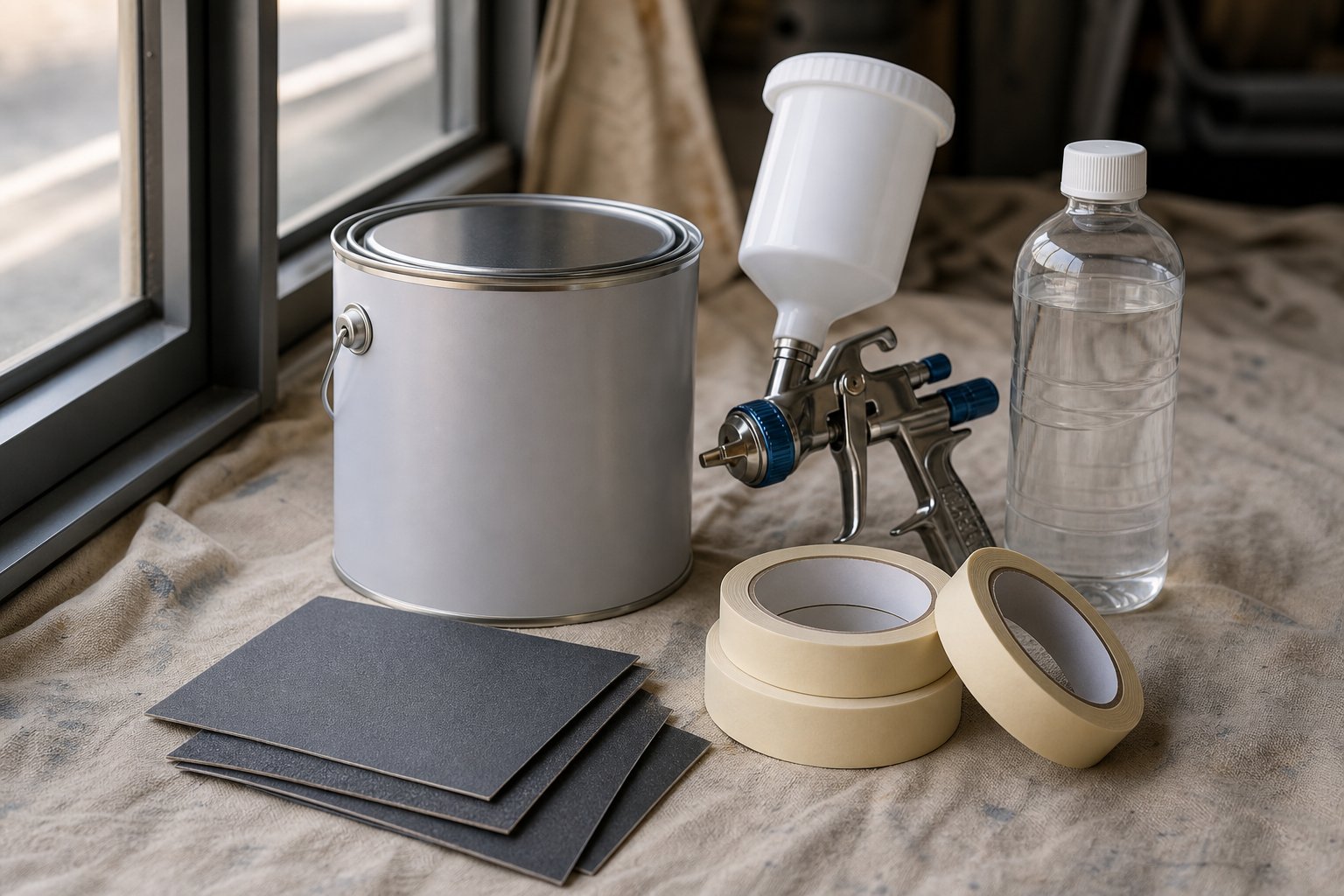
Professional painters bundle preparation, materials, application, and access into a per-frame or hourly rate. That bundling is convenient, but it makes it difficult to judge whether a quote is fair or inflated. The itemised breakdown below separates every stage so you can compare quotes on equal terms and build a realistic budget if you plan to paint window frame surfaces yourself.
Surface Preparation and Labour Costs
Labour dominates the cost to paint aluminium window frames. Industry data consistently shows labour accounts for 70–85% of a professional painting project’s total cost, and aluminium work sits at the higher end of that range because preparation is more involved than standard surfaces. Degreasing, sanding or chemical etching, and priming all happen before a single topcoat goes on. For a standard window in moderate condition, expect preparation alone to consume 30–60 minutes of a tradesperson’s time — time billed at $50 to $80 per hour in most Australian metro areas.
Application labour adds another 20–40 minutes per frame depending on whether the painter uses a brush, roller, or spray gun. Spray application is faster but requires more masking time upfront, so the net labour difference is smaller than you might expect.
Materials and Coating Products
Specialist window frame paint for aluminium costs more than general-purpose exterior coatings. A quality self-etching primer runs $30 to $60 per litre, and high-performance topcoats formulated for metal substrates — two-pack polyurethanes or acrylic-modified enamels — sit between $50 and $100 per litre. A single standard window frame typically uses 150–300 ml of primer and a similar volume of topcoat across two coats, so material cost per frame stays relatively modest in isolation. The catch for DIY painters is that these products are sold in minimum quantities (usually 1 litre or 4 litres), meaning you pay for more paint for window frames than a small job actually requires.
Cheap acrylic paint for window applications might seem tempting at $25–$40 per litre, but without the chemical bonding agents built into aluminium-rated products, adhesion failure is almost guaranteed within 12–18 months. The material cost difference between a proper system and a budget shortcut is roughly $15–$30 per frame — a small premium that prevents an expensive redo.
Masking, Access Equipment, and Cleanup
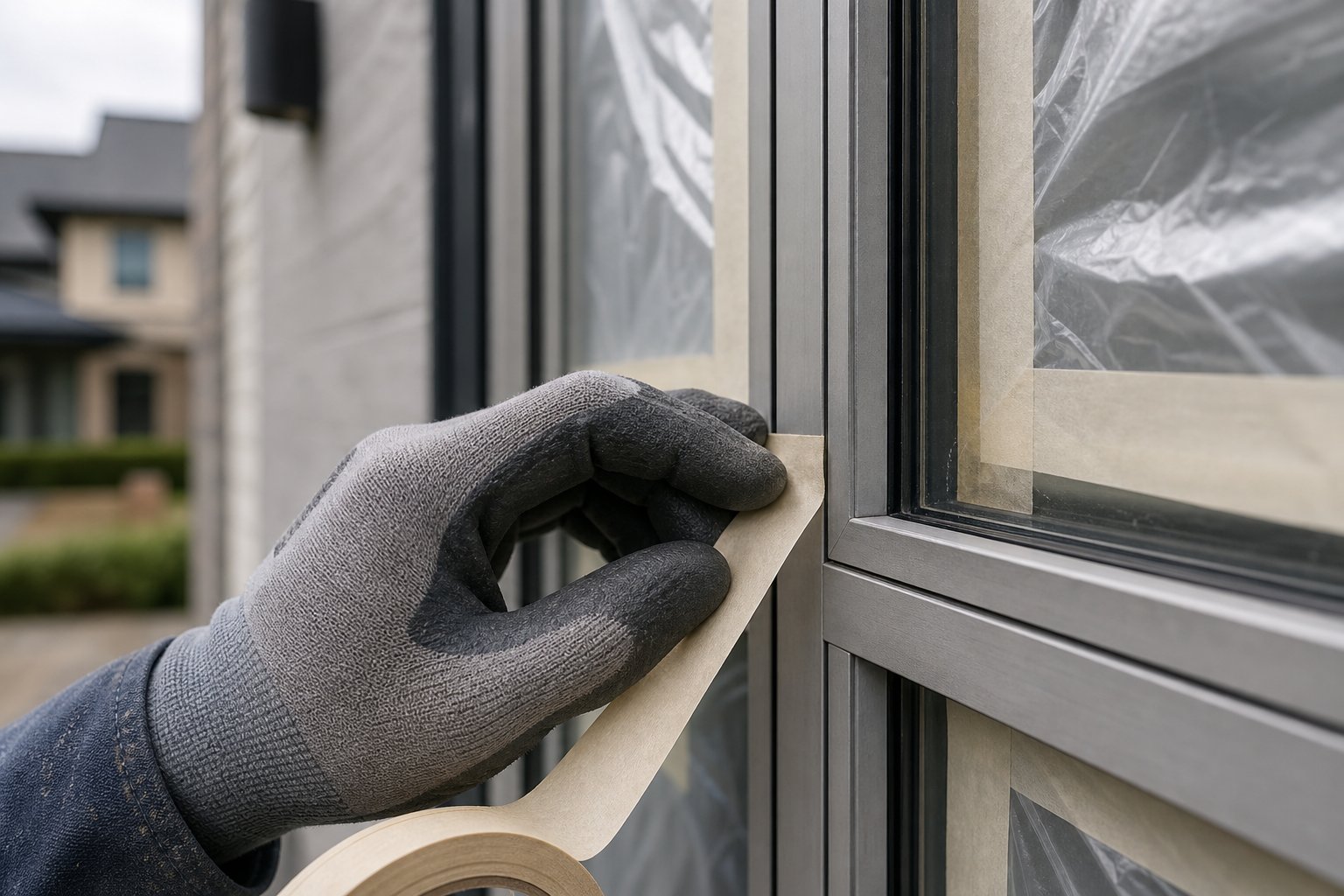
Masking is the invisible time-eater. Every pane of glass, every rubber seal, and every section of surrounding wall needs protection. Quality automotive-grade masking tape and plastic sheeting cost $5–$15 per frame in materials, but the labour to apply and remove masking carefully can add 15–30 minutes per window. Multi-pane casement windows with thin mullions push that figure higher.
Access equipment becomes a separate line item for any frame above ground-floor reach. Scaffold hire for a single-storey section typically runs $200–$500 per day depending on length, while multi-storey setups requiring full scaffolding can add $800–$2,000 to the project. Ladder work is cheaper but slower and limits spray application options.
Cleanup and waste disposal — removing masking, cleaning spray equipment, disposing of chemical residues — adds a modest $10–$20 per frame to professional quotes, though it is rarely listed separately.
| Cost Component | DIY Cost Range Per Frame | Professional Cost Range Per Frame | Notes |
|---|---|---|---|
| Surface cleaning / degreasing | $3–$8 | $10–$20 (included in labour) | Solvent-based degreaser required; household cleaners are insufficient |
| Sanding / etching | $5–$12 | $15–$30 (included in labour) | Chemical etch or 180–320 grit abrasion depending on condition |
| Masking tape and plastic sheeting | $5–$15 | $5–$15 (materials) + labour | Automotive-grade tape prevents bleed-through on glass |
| Etching primer (one coat) | $8–$18 | $10–$20 | Self-etching primer at $30–$60/L; ~200 ml per standard frame |
| Topcoat paint (two coats) | $12–$25 | $15–$30 | Aluminium-rated topcoat at $50–$100/L; ~300 ml total per frame |
| Labour — preparation | $0 (your time) | $40–$80 | 30–60 min at $50–$80/hr; condition-dependent |
| Labour — application | $0 (your time) | $30–$60 | 20–40 min per frame; spray is faster but needs more masking |
| Access equipment | $0–$80 (ladder hire) | $20–$80 (amortised per frame) | Scaffolding hire $200–$2,000 total depending on height and duration |
| Cleanup and waste disposal | $5–$10 | $10–$20 | Chemical waste must be disposed of responsibly |
| Estimated Total Per Frame | $38–$168 | $155–$355 | Excludes severe condition surcharges or multi-storey premiums |
A few patterns stand out in these numbers. DIY material costs are not dramatically lower than what professionals pay — the real saving is in labour. But that saving only holds if the preparation is done correctly. Skipping the etching primer or rushing the degreasing step does not reduce cost; it defers it into a strip-and-redo job six months later.
For homeowners comparing quotes, the table above provides a benchmark. If a professional quote for a standard ground-floor window in fair condition lands between $200 and $500 — consistent with figures reported by Australian aluminium restoration specialists — the breakdown shows that pricing is reasonable once labour, specialist paint for window frames, and proper preparation are accounted for. A quote significantly below that range likely cuts corners on one or more of these components.
These per-frame figures shift considerably once you factor in window size and type. A narrow single-hung frame uses far less material and time than a full-width sliding door, and the complexity of multi-pane configurations introduces masking demands that can double the labour on detailed profiles.
Cost Ranges by Frame Size and Window Type
A standard single-hung window and a full-width sliding door both count as “one frame” on a quote, yet the time, material, and skill required to paint them are worlds apart. Frame type dictates surface area, profile complexity, and hardware interference — three variables that directly shape what you pay when painting window frames exterior.
Standard Single and Double-Hung Windows
Single and double-hung windows are the most common frame type in Australian homes. A standard unit measures roughly 600 mm to 1200 mm wide and 900 mm to 1800 mm tall, giving a paintable frame perimeter of approximately 0.3 to 0.5 m² of surface area. These frames have relatively simple profiles with minimal hardware obstruction, making them the fastest to mask and coat. They represent the base rate in most professional quotes and are the most straightforward option for homeowners looking to paint exterior window frames themselves.
Sliding Door Frames and Large Picture Windows
Sliding door frames carry significantly more linear surface area — a standard 2.4 m wide sliding door can present 0.8 to 1.2 m² of paintable aluminium across its tracks, stiles, and head. Hardware removal is often necessary to achieve a clean finish around rollers and locking mechanisms, adding 20–40 minutes of labour per door. Picture windows are simpler in profile since they have no operable sash or moving parts, but their sheer scale (often 1500 mm to 1800 mm wide) means more coating material and longer drying management between coats.
Casement, Awning, and Specialty Shapes
Multi-pane casement windows with thin mullions are among the most time-intensive frames to paint. Each mullion bar requires precise masking on both sides of the glass, and the hinged sashes need careful work around friction stays and winders. Awning windows present similar challenges with their top-hinged operation. Louvre windows — common in Queensland and tropical regions — demand individual attention to each blade frame, making them disproportionately expensive relative to their overall size. When painting exterior windows and trim on these complex configurations, labour time can double compared to a simple fixed or hung window of equivalent dimensions.
| Frame Type | Approximate Surface Area | Estimated Professional Cost Range | Complexity Notes |
|---|---|---|---|
| Standard single-hung window | 0.3–0.4 m² | $150–$300 | Simple profile; minimal masking; fastest turnaround |
| Double-hung window | 0.35–0.5 m² | $180–$350 | Two operable sashes; slightly more hardware to work around |
| Sliding door frame | 0.8–1.2 m² | $350–$600 | Hardware removal often required; large track sections add time |
| Large picture window | 0.5–0.9 m² | $250–$450 | No moving parts but large scale; straightforward masking |
| Casement window (multi-pane) | 0.4–0.6 m² | $250–$500 | Thin mullions require detailed masking; hinges need careful prep |
| Louvre window | 0.3–0.5 m² | $300–$550 | Individual blade frames; high labour-to-area ratio |
Multi-storey access adds a premium regardless of frame type. Scaffolding hire for upper-level work typically costs $200 to $700 per week for residential heights (converted to approximate AUD equivalents), and this charge sits separate from the painting work itself. A painter quoting ten ground-floor windows and five first-floor windows will price the upper frames 20–40% higher to cover equipment, setup time, and the slower pace of working at height. For double-storey homes, always ask whether scaffolding is included in the per-frame rate or listed as a separate line item — that distinction alone can explain a $500–$1,500 difference between otherwise similar quotes.
These size-based differences matter most when you are weighing the DIY route against hiring a professional. A homeowner comfortable tackling a few ground-floor single-hung windows might baulk at the masking precision required for multi-pane casements or the logistics of reaching second-storey sliding doors — and that is exactly where the cost-benefit calculation between doing it yourself and paying a specialist starts to shift.
DIY vs Professional Painting Costs Compared
Saving money is the obvious reason homeowners consider the DIY route. But the real question is not whether you can paint window frames yourself — it is whether the savings hold up once you account for specialist materials, tool purchases, time investment, and the risk of getting it wrong on a surface as unforgiving as aluminium.
Full DIY Cost Including Tools and Materials
If you already own ladders, drop sheets, and basic sanding gear, your out-of-pocket spend to paint aluminium frames sits primarily in the coating system. A litre of self-etching primer ($30–$60), a litre of aluminium-rated topcoat ($50–$100), quality automotive masking tape ($15–$25 per roll), degreaser ($10–$20), and 180–220 grit sandpaper ($10–$15) form the minimum kit. For a house with ten standard windows, expect $150–$300 in materials alone — before factoring in any equipment you need to buy or hire.
The hidden cost trap is quantity. These specialist products are sold in minimum volumes. You will buy a full litre of etching primer even if you only need 400 ml for four small frames. Leftover product has a limited shelf life once opened, so the per-frame material cost for a small job runs higher than what a professional pays buying in bulk across dozens of projects.
If you need to hire scaffolding or purchase a quality respirator, spray gun, or compressor, add $100–$500 depending on the scope. Those one-off purchases can erode the labour savings quickly on smaller jobs.
Professional Painter Rates and What They Include
Professional spray-painting of aluminium windows in Australia typically ranges between $250 and $600 per window, with most standard ground-floor frames landing in the $250–$400 bracket. That rate bundles surface preparation, masking, priming, two topcoats, cleanup, and a workmanship guarantee into a single figure.
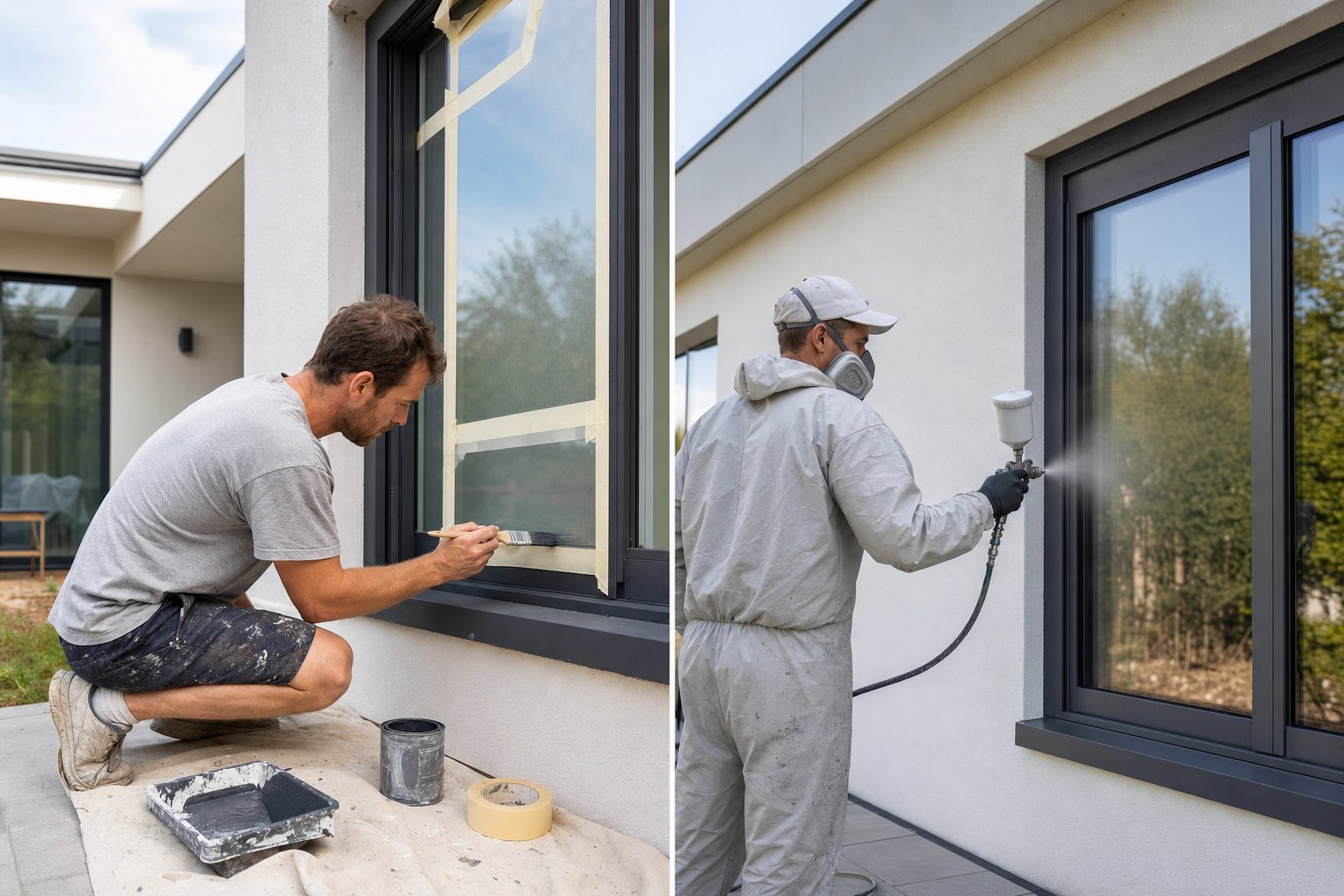
Professionals bring two advantages that directly affect finish quality. First, they buy coatings in bulk at trade pricing — often 30–40% below retail — so their material cost per frame is lower than yours. Second, they use spray equipment calibrated for metal coatings, delivering a thin, even film that brushes and rollers struggle to replicate on aluminium’s smooth surface. A sprayed finish on aluminium looks closer to the original factory coating, with no brush marks or roller stipple. As industry professionals note, proper spray technique produces an attractive, durable finish that outperforms brush application on smooth substrates when executed correctly.
For a typical home with 10–15 windows, total professional project cost lands between $2,500 and $7,500 depending on condition, access, and coating system specified.
When DIY Makes Sense and When It Does Not
How do you paint window frames successfully on aluminium? The honest answer: slowly and meticulously. A homeowner tackling ten frames should budget an entire weekend purely for preparation — degreasing, sanding, wiping, masking — before any primer goes on. Application across two days follows. That is three to four full days of work for a competent DIYer working at a careful pace.
Aluminium painting failures are almost always preparation failures, not paint failures. The coating itself rarely lets you down — it is the bond between metal and primer that breaks when shortcuts are taken.
This reality shapes the risk calculation. If preparation is inadequate, the finish peels within months. Stripping a failed paint job off aluminium and starting again costs more in time and materials than hiring a professional would have in the first place. For anyone learning how to paint window frames on aluminium for the first time, the margin for error is slim.
The same logic applies if you want to paint interior window frames — the preparation demands are identical even though access is easier. Aluminium does not care whether it faces the weather or sits inside a climate-controlled room; without proper etching and priming, adhesion will fail regardless of location.
| Dimension | DIY | Professional |
|---|---|---|
| Total cost per frame | $38–$168 | $250–$600 |
| Time investment per frame | 2–4 hours (spread over multiple days) | Included in quote; typically 1–2 hours on-site |
| Equipment needed | Sandpaper, degreaser, masking, brushes/roller or hired spray gun, ladder/scaffold | Provided by painter (professional spray setup, scaffolding, safety gear) |
| Skill level required | Moderate to high — surface prep technique is critical | Handled by experienced tradespeople |
| Warranty / guarantee | None — product warranty only (void if prep is incorrect) | Typically 2–5 year workmanship guarantee |
| Risk of failure | High if preparation is rushed or products are wrong | Low with reputable painter using correct system |
| Best suited for | 1–4 ground-floor frames in fair condition; experienced DIYers with patience | Whole-house projects, upper-storey frames, complex window types, or anyone wanting a factory-quality finish |
The table makes the trade-off clear. DIY delivers genuine savings on small, accessible jobs where you have the time and confidence to prepare surfaces properly. For larger projects, multi-storey homes, or frames in poor condition, professional work reduces risk and typically delivers a longer-lasting result that justifies the higher upfront spend.
Of course, painting is not the only option on the table. Frames in marginal condition raise a harder question: is recoating the most cost-effective path forward, or would powder coating or outright replacement deliver better value over the next decade? That comparison requires a different kind of calculation entirely.
Paint vs Powder Coat vs Replace
Knowing you can paint a window frame does not automatically mean painting is the smartest investment. Frames in borderline condition force a harder question: should you spend money refreshing a surface that may need attention again in a decade, or redirect that budget toward a longer-lasting solution? The answer depends on three things — current frame condition, how long you plan to stay in the home, and how much disruption you can tolerate.
The table below compares all three paths side by side before we unpack the scenarios where each one wins.
| Factor | Painting | Powder Coating | Full Replacement |
|---|---|---|---|
| Upfront cost (per window, AUD) | $150–$600 | $300–$900 | $800–$2,300+ |
| Expected lifespan of finish | 7–15 years | 15–25 years | 30+ years (new frame and coating) |
| Disruption level | Low — done on-site, windows stay in place | High — frames removed, transported to facility, reinstalled | High — full removal, structural work, new installation |
| Best frame condition | Lightly weathered to moderately oxidised; structurally sound | Sound frames needing a factory-quality refresh | Structurally compromised, warped, or thermally inefficient |
| Colour options | Virtually unlimited; custom-mixed on site | Wide RAL/Dulux powder range; some limitations on metallics | Full manufacturer colour range including anodised finishes |
| Thermal performance impact | None — existing glass and frame unchanged | None — same frame reinstalled | Significant — opportunity to upgrade to thermally broken, double-glazed units |
When Painting Is the Right Choice
Painting suits frames that are structurally intact but cosmetically tired. If the aluminium is not pitted beyond light surface oxidation, a proper etching primer and two-pack topcoat system restores painted window frames exterior to a finish that lasts 10–15 years with minimal maintenance. It is the lowest-cost, lowest-disruption option — work happens on-site over one to three days, and you keep your windows functional throughout.
Budget-conscious homeowners renovating for resale often land here. Spending $2,500–$7,500 to refresh an entire home’s aluminium joinery delivers a visible uplift in street appeal without the five-figure outlay of replacement. It also makes sense when only a handful of frames need attention and the rest of the house is in good shape.
When Powder Coating Offers Better Value
Powder coating aluminum windows delivers a baked-on, factory-equivalent finish that outperforms site-applied paint in hardness, UV resistance, and longevity. The trade-off is logistics. Frames must be removed from the building, transported to a coating facility, stripped, pretreated, powder-coated, cured in an oven, and reinstalled. That process adds $150–$300 per window in removal and refitting labour on top of the coating cost itself.
This path makes sense when you want a 20-year finish and your frames are in good structural condition but too degraded for on-site painting to achieve a durable result. It also suits homeowners who want a colour change across the entire house and value the chip-resistant hardness that powder coating provides over liquid paint. The disruption is real — expect windows to be out of the building for three to five days — but the result is as close to new as an existing frame can get.
When Replacement Makes More Financial Sense
Replacement becomes the rational choice when the cost of preparing and coating degraded frames approaches the cost of new units, or when the frames themselves are failing. Warped profiles that no longer seal properly, frames with deep structural corrosion, or single-glazed aluminium in a home where energy efficiency matters — these scenarios tip the equation toward new windows.
The numbers reinforce this. If heavy preparation and powder coating a badly pitted frame costs $700–$900 per window and delivers no thermal improvement, spending $1,200–$2,300 on a new thermally broken, double-glazed unit starts to look like the better decade-long investment. Tools like homewyse replacement windows calculators can provide ballpark figures, though Australian labour and material costs typically run higher than the US-derived estimates those platforms generate. Local quotes remain the most reliable benchmark.
For homeowners leaning toward replacement, project-capable suppliers like MEICHEN can provide system recommendations and material calculations to help assess whether new aluminium frames deliver better long-term value than recoating degraded ones. Understanding real quote drivers — profile selection, glass specification, custom sizing, and installation logistics — gives you a clearer picture of what replacement actually costs versus the rough homewyse replacement windows estimates found online.
The decision ultimately comes down to a simple ratio: if painting or powder coating costs less than 40–50% of replacement and your frames are structurally sound, refinishing wins on value. Once that ratio climbs above 60%, or thermal performance is a priority, new frames become the smarter spend. Geography and seasonal timing also shape what you will pay for any of these options — factors that vary more than most homeowners expect across different parts of Australia.
Regional and Seasonal Pricing Variations
Two homeowners with identical aluminium frames, identical condition, and identical window counts can receive quotes that differ by 30–50% purely because of where they live and when they book the job. Geography and timing are silent cost drivers that rarely get discussed in generic pricing guides, yet they shape what you actually pay when painting outside window frames across different parts of Australia.
How Location Affects Painting Quotes
Labour rates are the primary reason location matters. Analysis of Australian painting costs reveals a staggering 233% cost differential between the most expensive capital city (Sydney) and the most affordable (Hobart) for equivalent work. While those figures reflect whole-house interior projects, the same labour cost gradient applies to aluminium window painting. A painter charging $65–$80 per hour in Sydney’s inner west will quote significantly more than one charging $45–$55 per hour in regional Tasmania or South Australia — even if the preparation steps and coating system are identical.
Beyond raw labour rates, urban areas carry additional overheads that inflate quotes. Council permits for scaffolding, noise and work-hour restrictions in residential zones, parking levies for trade vehicles, and higher insurance premiums all feed into the per-frame price. Regional and rural areas avoid most of these surcharges, though travel time for tradespeople servicing remote properties can partially offset the savings.
Coastal properties face a location-specific cost factor that inland homes do not. Salt-laden air accelerates aluminium oxidation — research shows salt particles can travel over 80 kilometres inland, but homes within a few kilometres of the shoreline experience the most aggressive surface degradation. Frames exposed to persistent salt spray often present heavier chalking and pitting, pushing preparation into the higher cost tiers discussed earlier. If you live on the coast and wonder whether you can paint window frames exterior to a lasting standard, the answer is yes — but expect preparation costs 20–40% above equivalent inland work due to the additional oxidation removal required.
Seasonal Timing and Its Impact on Price
Aluminium coatings need specific conditions to cure properly. Most specialist primers and topcoats require air temperatures between 15°C and 35°C with relative humidity below 70% for optimal adhesion and film formation. Paint applied outside these windows risks improper binding, leading to cracking and peeling — the exact failures aluminium preparation is designed to prevent.
This temperature sensitivity creates seasonal demand patterns that directly affect pricing. In temperate climates (Sydney, Melbourne, Adelaide, Perth), summer and early autumn are peak season for painting outdoor window frames. Demand surges, and quotes can carry a 10–15% premium simply because painters have full schedules and less incentive to negotiate. Winter brings fewer suitable exterior painting days, but interior aluminium work remains viable — and painters often discount rates by around 10% to keep crews busy during quieter months.
In tropical regions (northern Queensland, the Northern Territory), the dynamic inverts. The dry season (May to October) offers ideal painting conditions, concentrating demand into those months. The wet season’s high humidity and frequent rain make exterior coating work unreliable, effectively shrinking the available painting calendar and intensifying competition for dry-season bookings.
Several factors compound regional pricing beyond base labour rates:
- High-rise access requirements in apartment buildings or multi-storey homes requiring engineered scaffolding
- Heritage overlay restrictions that mandate specific colour palettes or coating methods approved by council
- Coastal salt exposure accelerating frame oxidation and increasing preparation scope
- Extreme heat limiting productive work hours to early morning in northern and western regions
- High local demand during spring renovation season when multiple trades compete for the same workforce
If your timeline is flexible, booking during a painter’s off-peak period delivers genuine savings. Offering a two-to-three-week scheduling window rather than demanding a fixed date gives tradespeople the flexibility to slot your job between larger projects — and that flexibility often translates into sharper pricing. The same job quoted at $4,500 in November might come in at $3,800 in June, with no difference in quality or materials.
These regional and seasonal variables explain part of the gap between competing quotes. But location and timing are only two pieces of the puzzle — the remaining price differences between painters often come down to what each quote actually includes in terms of preparation standards, coating quality, and access solutions.
What Drives Price Differences Between Quotes
A $200-per-frame quote and a $450-per-frame quote for the same windows are not necessarily pricing the same job. Different window frame painters scope work differently, specify different coating systems, and include different levels of preparation in their figures. Understanding what sits behind the numbers helps you distinguish genuine value from inflated margins — and spot dangerously low bids that will cost more in the long run.
Access Difficulty and Storey Height Premiums
Any frame above comfortable ladder reach introduces equipment, safety compliance, and slower working pace into the equation. Second-storey windows require scaffolding or elevated work platforms, both of which carry hire costs and setup time. Frames positioned above rooflines, behind fixed pergola structures, or recessed into deep reveals add further complexity — the painter spends more time manoeuvring and less time actually coating. These access premiums are legitimate. A quote that prices upper-level frames the same as ground-floor ones is either absorbing the cost elsewhere or planning to cut corners on safe access. When evaluating how much to charge for window painting at height, expect a 20–40% uplift over equivalent ground-floor work purely for equipment and reduced productivity.
Frame Complexity and Number of Openings
A simple fixed-pane picture window might take 45 minutes to mask and coat. A multi-light casement with six panes, thin mullions, and friction-stay hinges can take two hours or more for the same surface area. The difference is detail work — cutting in around glass edges, masking each individual pane, working paint into narrow profiles without runs or misses. This is the same reason how much it costs to paint a door frame varies so widely; a plain rectangular frame is quick, while a panelled door surround with moulded profiles demands significantly more brush time.
Quotes that price all windows identically regardless of type are oversimplifying. A thorough estimator will differentiate between simple and complex frames, and that differentiation is a sign they have actually assessed the scope rather than guessing from the driveway.
Preparation Standards and Coating Quality Tiers
This is where the real money separates good quotes from cheap ones. A quote specifying proper solvent degreasing, chemical etching or mechanical abrasion, two-pack epoxy primer, and two coats of polyurethane topcoat is pricing a coating system engineered to last 10–15 years on aluminium. A quote offering a quick sand and a single coat of acrylic enamel is pricing a finish that may look acceptable on day one but starts failing within months because the adhesion foundation was never properly established.
The material cost difference between these two approaches is only $15–$30 per frame. The labour difference is larger — thorough preparation takes twice as long as a rushed job. But the performance gap is enormous. A properly prepared and coated aluminium frame holds its finish for a decade. A poorly prepared one peels, and the strip-and-redo costs more than doing it right the first time.
Watch for these red flags in suspiciously low quotes:
- No mention of primer type or brand — just “primer included”
- Single topcoat only, with no option for a second coat
- No detail on surface preparation steps (degreasing, etching, sanding grit)
- No workmanship warranty or guarantee period offered
- Vague material descriptions like “quality paint” without specifying the product line
The cheapest quote often becomes the most expensive when the finish fails within a year. Stripping a failed coating off aluminium and starting from scratch costs more in labour and materials than paying for proper preparation the first time around.
A higher quote is not automatically better — some painters simply charge more. But a higher quote that clearly itemises preparation steps, names specific products, and backs the work with a written guarantee is telling you exactly where your money goes. That transparency is worth paying attention to, especially when the next step is gathering your own quotes and knowing which questions separate a thorough professional from one cutting corners.
How to Get Accurate Quotes and Choose Wisely
Knowing what drives pricing is one thing. Turning that knowledge into quotes you can actually compare — and a decision you feel confident about — requires a bit of legwork before you pick up the phone. The more specific information you provide upfront, the tighter and more comparable the estimates you receive. Vague enquiries produce vague numbers, and vague numbers lead to surprises on invoice day.
Information to Gather Before Requesting Quotes
Painters price what they can see. Give them clear details and you eliminate the guesswork that inflates quotes with contingency padding. Before contacting anyone, work through these steps:
- Count every frame you want painted and note the type of each window — single-hung, casement, sliding door, louvre, or fixed pane.
- Measure or estimate frame dimensions. You do not need millimetre precision; approximate width and height is enough for an initial quote.
- Photograph each frame up close in natural light. Capture any chalking, pitting, peeling, or previous paint failure so the painter can assess condition without a site visit.
- Note access challenges honestly — which frames are on the upper storey, which sit behind garden beds or pergolas, and whether there is clear ground for ladder or scaffold placement.
- Decide on colour preferences. A dramatic colour change from light to dark (or vice versa) may require an additional topcoat, affecting the quote.
- Request itemised quotes from at least three painters, specifying that you want preparation steps, primer type, topcoat product, number of coats, and access equipment listed separately.
That last point matters more than anything else on the list. An itemised quote lets you compare like with like. Two lump-sum figures of $3,800 and $5,200 tell you nothing about value until you know what each one includes. An itemised breakdown reveals whether the gap is in preparation quality, coating system, access equipment, or simply margin.
Questions That Reveal Quote Quality
Once quotes arrive, a handful of targeted questions separate thorough professionals from those cutting corners. These are the questions that expose how a painter actually plans to handle aluminium — a substrate that punishes shortcuts more visibly than timber or render ever will.
- What primer system do you use on aluminium, and is it a self-etching or adhesion-promoting product designed for non-porous metal?
- How many topcoats are included, and what specific product will you apply?
- What surface preparation steps do you perform before priming — degreasing, sanding grit, chemical etching?
- What workmanship warranty do you offer, and is it provided in writing?
- Does the quote include all access equipment, or is scaffolding charged separately?
- How do you handle frames with existing paint failure — full strip or spot repair?
A painter who answers these confidently and specifically — naming products, citing grit ranges, and offering a written guarantee — is telling you they understand how to paint the window properly on aluminium. One who deflects with generalities like “we use quality products” or “standard preparation” is either inexperienced with metal substrates or planning a process that will not last. As industry professionals emphasise, a verbal promise carries no weight if issues arise — always get warranty terms documented before work begins.
Payment structure deserves attention too. Reputable painters typically request 10–30% as a deposit with the balance due on completion. Be cautious of anyone requesting full payment upfront or offering no staged payment option on larger projects.
Making Your Final Decision With Confidence
With itemised quotes and clear answers in hand, the decision framework becomes straightforward. Price is one factor, but it should not be the only one. Weigh these elements together:
A quote that specifies a proper aluminium coating system, includes thorough preparation, offers a written warranty of two to five years, and prices access equipment transparently is worth more than a cheaper alternative that leaves those details ambiguous. The cost difference between a ten-year finish and a one-year failure is not the gap between two quotes — it is the full cost of stripping and redoing the job from scratch.
For homeowners who discover during this process that their frames are too far gone for economical repainting — heavy pitting, structural warping, or preparation costs climbing toward 60% of replacement value — the quoting exercise still delivers value. It gives you a concrete number to compare against new aluminium windows. Project-capable suppliers like MEICHEN can support the replacement path from drawings and schedules through to manufacturing coordination and delivery planning, providing a clear alternative when painting window frames no longer represents the best return on your budget.
Whether you proceed with painting, powder coating, or replacement, the principle remains the same: informed decisions come from specific information, comparable quotes, and the right questions asked before any work begins. Invest thirty minutes in preparation and documentation upfront, and you will save hours of frustration — and potentially thousands of dollars — on the other side.
Frequently Asked Questions About Painting Aluminium Window Frames
1. How much does it cost to paint aluminium window frames in Australia?
Professional painting of aluminium window frames in Australia typically costs between $150 and $600 per window. Standard ground-floor frames in fair condition usually fall within the $250 to $400 range. The final price depends on frame condition, window type, storey height, and the coating system specified. DIY costs range from $38 to $168 per frame in materials alone, though the risk of adhesion failure on improperly prepared aluminium can make a budget approach more expensive long-term if the job needs redoing.
2. Can you paint aluminium window frames yourself?
Yes, but aluminium is far less forgiving than timber or PVC. The surface is non-porous, so standard primers will not adhere without chemical etching or a self-etching primer. DIY success depends on meticulous preparation: solvent degreasing, sanding with 180-220 grit, applying a specialist etch primer, and finishing with two coats of an aluminium-rated topcoat. Budget an entire weekend for preparation alone on ten frames. If any step is rushed, peeling can occur within months, and stripping a failed coating costs more than hiring a professional initially.
3. How long does paint last on aluminium window frames?
A properly prepared and coated aluminium frame holds its finish for 7 to 15 years depending on the coating system used, UV exposure, and proximity to coastal salt air. Two-pack polyurethane topcoats over epoxy primer deliver the longest lifespan, while single-coat acrylic systems may begin failing within 12 to 18 months if adhesion preparation was inadequate. Powder coating offers even greater durability at 15 to 25 years but requires frame removal and off-site application in a specialist facility.
4. Is it better to paint or powder coat aluminium windows?
Painting suits frames in reasonable condition where budget is limited and disruption must be minimal — work happens on-site and windows remain functional throughout. Powder coating delivers a harder, more UV-resistant factory-quality finish lasting 15 to 25 years, but frames must be removed, transported to a coating facility, and reinstalled, adding $150 to $300 per window in logistics costs. Choose painting for cosmetic refreshes on sound frames; choose powder coating when you want maximum longevity and your frames are structurally intact but too degraded for on-site painting to achieve a durable result.
5. What type of paint should I use on aluminium window frames?
Aluminium requires a specific coating system: a self-etching primer (around $30 to $60 per litre) that chemically bonds to the non-porous metal surface, followed by two coats of a topcoat formulated for metal substrates. Two-pack polyurethane or acrylic-modified enamel topcoats ($50 to $100 per litre) provide the best adhesion and durability. Standard exterior house paint or general-purpose primers will not bond properly to aluminium and will peel regardless of how well the surface is sanded. Always degrease with a solvent-based cleaner before priming — household detergents leave residues that compromise adhesion.
More Window & Door Guides