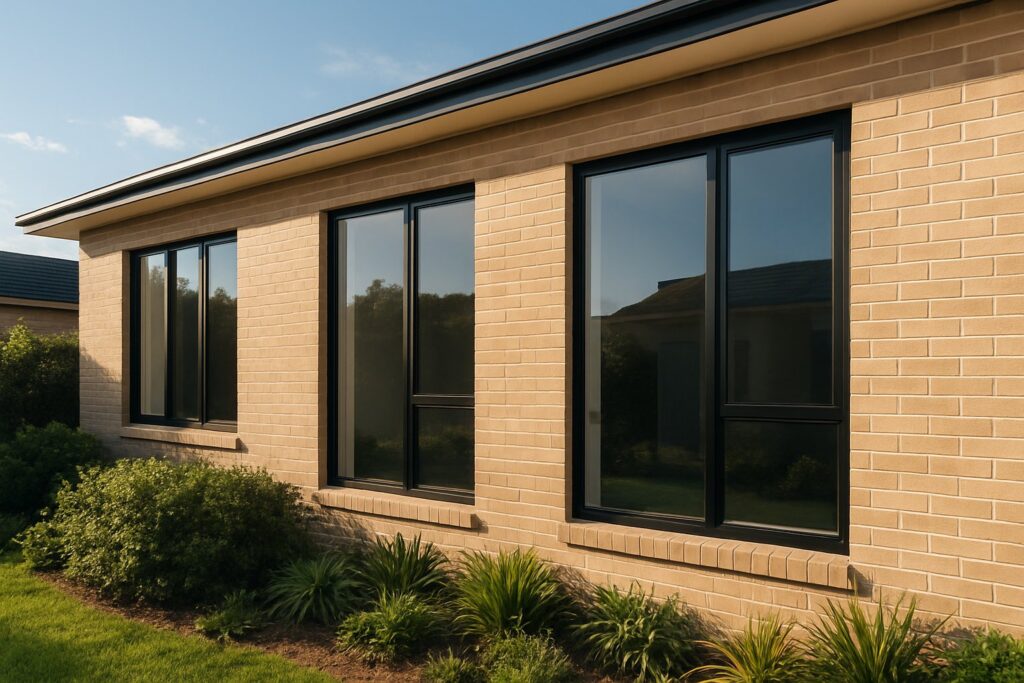
What the Cost of Installing Aluminium Windows Really Includes
Search for the cost of aluminium windows online and you will find numbers ranging from $700 to well over $2,000 per opening. That spread is not random. It reflects the fact that aluminium window installation is never just one expense — it is a bundle of material, labour, and ancillary costs that shift depending on your home, your location, and the scope of the project.
What Goes Into the Total Installation Cost
Three core categories make up every windows installation cost estimate. First, there is the product itself: the aluminium frame, glazing unit, hardware, and any powder-coat finish. Second comes labour — the hands-on work of removing old frames, fitting new ones, sealing, flashing, and finishing internal and external trims. Third are the ancillary expenses most people overlook: scaffolding for upper-storey access, structural modifications, council compliance, waste disposal, and making good surrounding plasterwork or cladding.
Strip any one of those layers out and the quote looks cheaper on paper, but the real project cost stays the same. Someone still has to pay for it.
A per-unit window price tells you what the product costs. A total project cost tells you what the job actually costs. The gap between those two figures is where budget blowouts hide.
Why Price Ranges Vary So Widely
Several variables push quotes apart. Window style matters — a fixed-lite panel is simpler to manufacture and install than a bi-fold or tilt-and-turn unit. Glass specification adds another layer: double glazing with a standard Low-E coating sits at a different price point than triple glazing with argon fill. Then there is the installation scenario itself. A new-build home with open stud frames requires far less labour than a retrofit into an existing brick-veneer wall where old timber frames need cutting out and reveals need repairing.
Geography plays a role too. Labour rates in Sydney or Melbourne differ from regional centres, and homes in cyclone-prone or bushfire-rated zones may need frames and glazing that meet stricter Australian Standards — adding compliance cost on top of material cost.
This guide works through each of those variables in detail, giving you a realistic framework for budgeting your entire project rather than fixating on a single per-window figure that rarely tells the full story.
Aluminium Window Material Costs by Style and Specification
Not every aluminium window carries the same price tag, and the style you choose is one of the biggest reasons why. A simple fixed panel and a multi-sash bi-fold window may both be aluminium, but they sit at opposite ends of the cost spectrum. Understanding where each style falls — and what drives it there — helps you allocate your budget before a single quote lands in your inbox.
Pricing by Window Style and Configuration
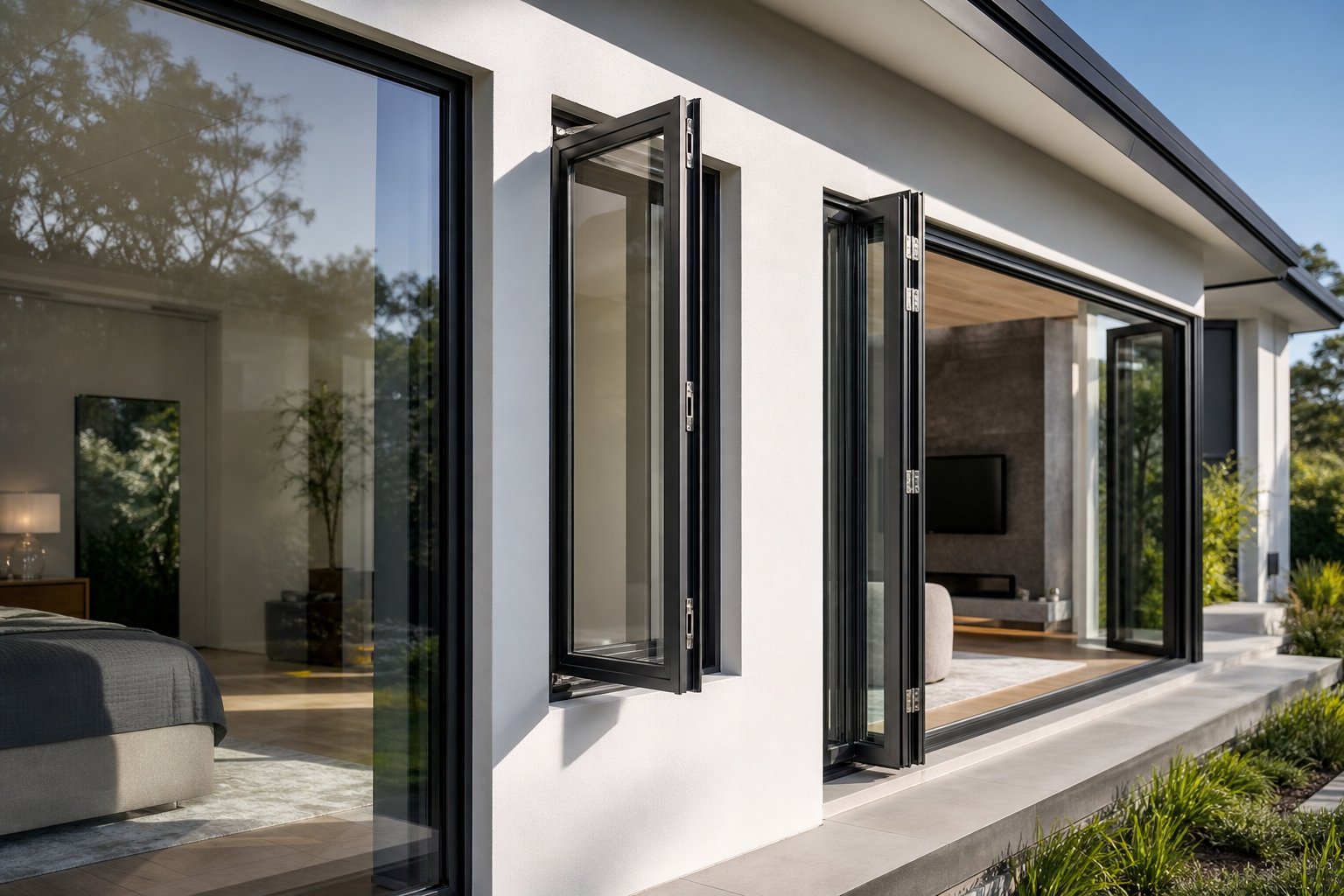
Each window style demands a different level of engineering. Fixed windows have no moving parts, no hinges, no locking hardware — just frame and glass. That simplicity keeps material costs low. Casement and sliding windows introduce operable sashes, friction stays or rollers, and multi-point locking systems, all of which push the aluminium window price higher. Move into tilt-and-turn or awning configurations and the hardware becomes more complex again, with dual-action mechanisms and heavier-duty hinges designed for larger openings.
At the premium end, bi-fold windows require the most intricate frame profiles. Each folding panel needs its own track system, carrier hardware, and precise alignment tolerances. The gas strut window cost also tends to sit above a standard awning because the strut mechanism itself is an engineered component that adds both material and assembly time.
The table below outlines approximate supply-only price ranges in AUD for common aluminium window styles in standard residential sizes. These are indicative figures — your actual quote will shift based on glass choice, finish, and whether you are ordering standard or custom dimensions.
| Window Style | Typical Size Range | Indicative Supply-Only Cost (AUD) | Relative Cost Tier |
|---|---|---|---|
| Fixed | 600 mm x 900 mm to 1200 mm x 1500 mm | $350 – $750 | Budget |
| Casement | 600 mm x 1000 mm to 1200 mm x 1500 mm | $500 – $1,100 | Mid-Range |
| Sliding | 900 mm x 900 mm to 2400 mm x 1500 mm | $500 – $1,200 | Mid-Range |
| Awning / Gas Strut | 600 mm x 600 mm to 1500 mm x 1200 mm | $550 – $1,200 | Mid-Range to Premium |
| Tilt-and-Turn | 600 mm x 1000 mm to 1200 mm x 1500 mm | $750 – $1,500 | Premium |
| Bi-Fold | 2400 mm x 2100 mm to 5000 mm x 2400 mm | $1,500 – $4,000+ | Premium |
How Glass and Hardware Choices Affect Material Cost
The frame is only part of the equation. Glass specification can shift the total unit price by 15 to 30 per cent or more. Standard double glazing with a clear Low-E coating is the baseline for most Australian residential projects. Step up to argon-filled cavities, laminated inner panes for acoustic control, or triple glazing for superior thermal performance and the glass component alone can add hundreds of dollars per opening.
Hardware follows a similar pattern. Entry-level friction stays and cam locks keep costs down, but premium multi-point locking systems, concealed hinges, or integrated child-safety restrictors all carry a price premium. In coastal areas — think northern NSW, Queensland, or Perth’s western suburbs — marine-grade hardware and corrosion-resistant finishes are often essential rather than optional, adding another layer to the aluminium windows price list.
Standard Sizes vs Custom Sizing
Ordering within standard aluminium window sizes almost always costs less. Manufacturers tool their extrusion lines and cutting processes around common dimensions, so standard units benefit from production efficiency. Custom sizing introduces additional machining, potentially bespoke die work for unusual profiles, and longer lead times — all of which feed into a higher per-unit price.
That said, custom does not automatically mean extravagant. A window that is 50 mm wider than a standard module might attract only a modest surcharge. The real cost jumps arrive with non-rectangular shapes, oversized spans requiring thicker frame profiles, or configurations that combine multiple sash types in a single assembly.
Knowing where your chosen style and specification sit on this cost map is the first step. The next question — and often the one that catches homeowners off guard — is how much the labour and installation process adds on top of those material figures.
Labour Costs and What the Installation Process Involves
Material prices get most of the attention in online searches, yet labour frequently accounts for 40 to 60 per cent of the total bill. One industry analysis of a residential bay window project found materials represented roughly 40 per cent of the total spend while labour consumed the remaining 60 per cent. That ratio should shift how you read any quote — a cheap per-unit window price means little if the installation line items double the final figure.
The Installation Process Step by Step
Every aluminium window installation follows a logical sequence, and each stage carries its own time and skill requirement. Skipping or rushing any step risks water ingress, air leakage, or a frame that binds within months. Here is the typical progression a qualified installer works through:
- Site survey and measurement verification — The installer confirms that rough openings match the ordered window dimensions, checks for square and level, and identifies any structural concerns before tools come out.
- Protection of surrounding finishes — Drop sheets go down, internal furnishings are moved back, and external cladding or render near the opening is masked to prevent damage during removal.
- Removal of old frames — Existing timber, steel, or aluminium frames are cut out carefully. In brick-veneer homes, this means separating the frame from the brickwork without cracking surrounding courses. In weatherboard or rendered walls, extra care is needed to preserve the external finish.
- Preparation of the opening — Old sealant, packers, and debris are cleared. The rough opening is inspected for rot, termite damage, or cracked lintels. Any remedial work happens here before the new frame goes in.
- Fitting the new aluminium frame — The frame is positioned, shimmed to plumb and level, then mechanically fixed to the structural opening using appropriate anchors for the wall type — masonry anchors for brick, timber screws for stud framing.
- Sealing and flashing — Expanding foam rated for window and door use fills the gap between frame and opening. External flashing tape or a silicone perimeter seal creates the weatherproof barrier. This stage is critical to energy performance and NCC compliance.
- Glazing installation — If the glass unit was removed for transport and fitting, it is re-seated into the frame with glazing beads and wedges.
- Hardware adjustment and testing — Handles, locks, friction stays, and restrictors are fitted or fine-tuned. Every operable sash is opened, closed, and locked multiple times to confirm smooth operation.
- Internal and external trimming — Architraves, reveal linings, or shadow-line trims are installed inside. Externally, flashings, cappings, and sealant beads finish the junction between frame and wall.
- Clean-up and waste removal — Old frames, glass, and packaging are cleared from site. A final wipe-down of the new windows and surrounding surfaces wraps the job.
Notice that the labour cost to install window trim and complete the finishing work sits at the tail end of that sequence, yet it can add one to two hours per opening. Many quotes split this out as a separate line item, and some exclude it altogether — a detail worth checking before you sign.
What Drives Labour Costs Up or Down
Not every window takes the same amount of effort to install, and the variables that push the window install labor cost higher are surprisingly practical.
- Access difficulty — Ground-floor windows on a single-storey home are straightforward. Upper-storey openings on a double-storey house may require scaffolding or elevated work platforms, adding both hire cost and setup time.
- Wall construction type — Installing into lightweight timber framing is faster than cutting into double-brick or concrete block. Older homes with non-standard reveals or uneven masonry add fitting time.
- Structural modifications — Widening an opening to accommodate a larger window means lintel replacement, temporary propping, and potentially an engineer’s certification. This alone can add $500 to $2,000 or more per opening in Australia.
- Installer experience and licensing — Licenced glaziers and builders operating under the relevant state licensing authority (such as NSW Fair Trading or the VBA in Victoria) carry higher hourly rates than unlicensed operators. In most Australian states, you should expect qualified installer rates between $80 and $130 per hour, with metropolitan areas sitting at the upper end of that range.
- Seasonality — Spring and summer are peak renovation seasons across Australia. Booking installation during quieter autumn or winter months can sometimes reduce labour costs or at least shorten lead times.
A useful mental model: the window install labor cost covers getting the frame into the wall and operating correctly. The total project labour also includes demolition, structural prep, finishing, and site clean-up. When using a window installation labor cost calculator or comparing quotes, make sure you are clear on which definition of “labour” each number represents.
Typical Timeframes for Residential Projects
For a straightforward like-for-like replacement — same opening size, no structural changes — experienced installers typically complete one window in 45 minutes to two hours, depending on wall type and access. Full-frame replacements where the entire old assembly comes out tend to sit closer to two to three hours per opening because of the additional demolition and finishing involved.
Scale that up to a whole-house project. A typical three-bedroom home in Australia might have 10 to 15 window openings. At two hours per opening for a retrofit installation, that is roughly 20 to 30 hours of on-site labour — usually spread across three to five working days when factoring in set-up, clean-up, and the inevitable minor adjustments that crop up on older homes. Larger homes or projects involving structural alterations can stretch beyond a full week.
These timeframes matter because labour is billed by the hour or by the day. A project that drags into extra days due to unforeseen complications — hidden rot, asbestos-containing materials in old window putty, or out-of-square openings — will push the final labour bill higher. Building a contingency of 10 to 20 per cent into your labour budget is a practical safeguard against exactly these surprises.
Labour costs paint a clearer picture when you also consider which type of installation you are paying for. The difference between fitting windows into a new-build frame and retrofitting them into an existing home is significant — and it reshapes the entire budget.
New Build vs Replacement Installation and Whole-House Budgets
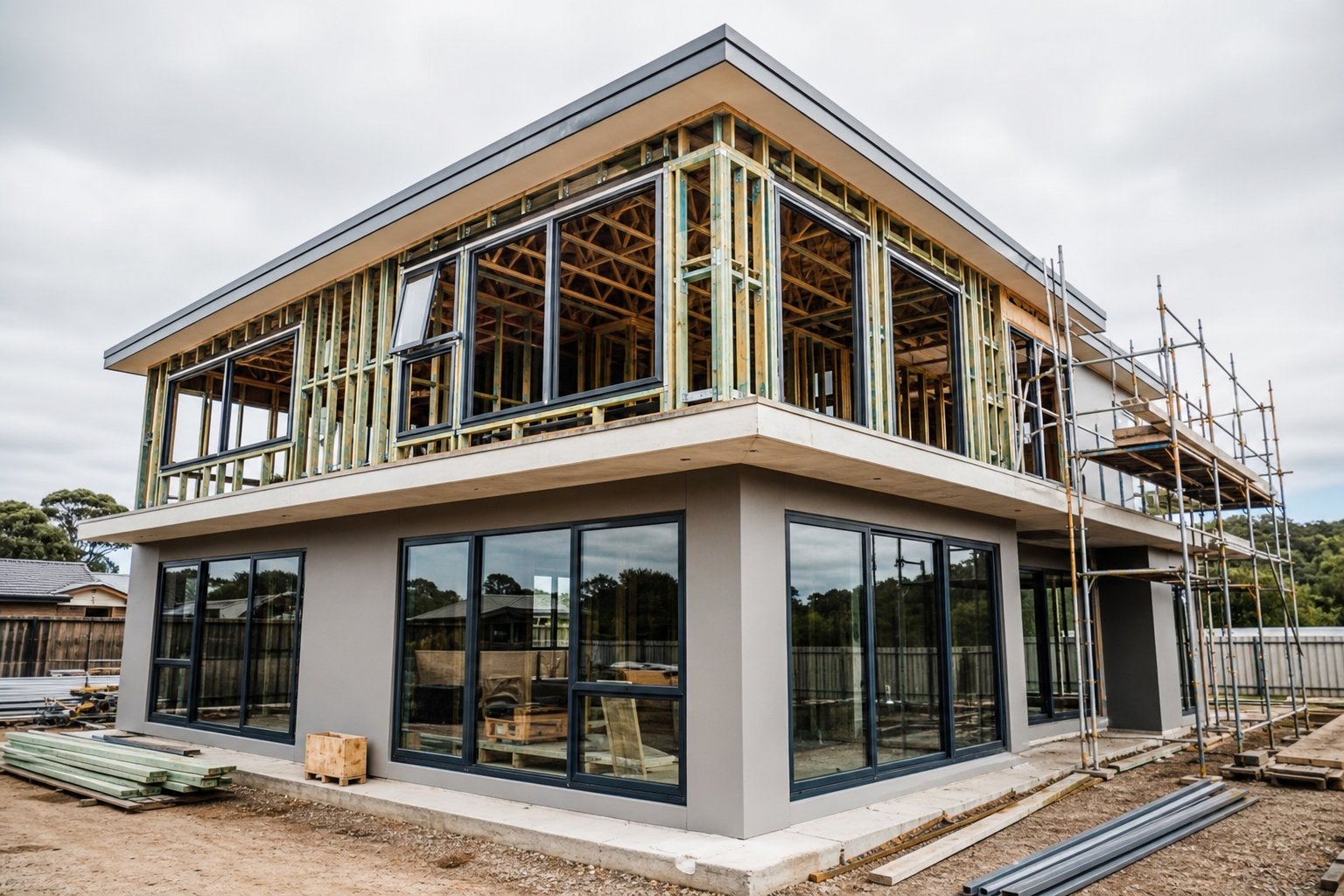
A window going into an open stud frame on a construction site and a window replacing a 30-year-old timber unit in a brick-veneer home are two fundamentally different jobs. The product might be identical, but the labour, preparation, and finishing work surrounding it are not — and that gap reshapes your budget in ways a simple per-unit price never captures.
New Build Installation Costs
In a new build, the rough opening is already framed, the wall cavity is exposed, and there is nothing to demolish. The installer positions the aluminium frame, fixes it to the structural studs or masonry, applies flashing tape, and moves on. No old frames to cut out, no renders to patch, no waste to cart away. Labour per opening typically runs 30 to 60 minutes, and the absence of remedial work keeps the installation cost per window noticeably lower — often in the range of $150 to $350 AUD for labour alone, depending on window size and storey height.
Builders also benefit from volume. When 15 or 20 windows are scheduled across a single site in one visit, installers work more efficiently and may offer a reduced per-unit rate. There is no scaffolding hire for upper-storey work because the scaffold is already part of the construction program.
Retrofit and Replacement Costs
Aluminium replacement windows in an existing home introduce a chain of additional tasks. The old frame must be carefully removed without damaging surrounding brickwork, weatherboard, or render. Disposal of old timber, glass, and hardware adds a waste-management cost. Once the opening is exposed, surprises often appear — corroded lintels, termite-damaged studs, or reveals that are out of square after decades of settling.
Each of those issues demands remedial work before the new frame can go in. After installation, internal plasterwork and external finishes need making good: patching, painting, or re-rendering around the new frame. Industry data suggests retrofit labour can run 50 to 100 per cent higher than new-build installation on a per-opening basis, and full-frame replacements — where the entire old assembly is stripped back to the rough opening — typically cost 20 to 30 per cent more again than a simple insert retrofit.
Common Scenarios and Whole-House Budgeting
Homeowners rarely replace a single window. The more realistic question is: what does it cost to replace all the windows in a three-bedroom house? Most Australian three-bedroom homes have between 10 and 15 openings. Multiply the per-unit cost by that count and the budget picture becomes clearer — but only if you are comparing the right scenario.
| Cost Category | New Build (per opening) | Retrofit / Replacement (per opening) |
|---|---|---|
| Old frame removal | $0 | $80 – $200 |
| Structural repairs (if needed) | $0 | $150 – $800+ |
| Installation labour | $150 – $350 | $250 – $550 |
| Internal finishing and trim | Included in build program | $80 – $200 |
| External making good | Included in build program | $100 – $250 |
| Waste disposal | $0 | $30 – $80 |
| Total labour premium vs new build | Baseline | +50% to +100% |
For a typical whole-house replacement project on a three-bedroom home with 12 openings, a realistic total budget — supply and install — generally falls between $12,000 and $30,000 AUD. The lower end reflects standard casement and sliding windows with a straightforward retrofit into sound frames. The upper end accounts for premium styles, thermally broken profiles, structural modifications, and full-frame replacement where existing frames are beyond salvage.
Planning at the whole-house level also reveals savings opportunities. Contractors can mobilise once, set up scaffolding once, and sequence the work efficiently — reducing the per-window labour cost compared to replacing openings one at a time over several years. If your budget is tight, prioritising the worst-performing windows first (typically older single-glazed units on the western or southern elevation) delivers the biggest comfort and energy gains per dollar spent.
Even with a solid understanding of new-build versus retrofit pricing, the final invoice often carries line items that were never part of the original mental budget. Those hidden costs — from scaffolding hire to council compliance — deserve their own close look.
Hidden Costs and Unexpected Expenses to Budget For
The quote arrives, the per-window figure looks reasonable, and the project feels affordable — until the invoice includes line items you never saw coming. Scaffolding hire. Lintel replacement. Council fees. Plaster patching. Aluminium capping around external reveals. These ancillary costs rarely appear in early estimates, yet they can add 15 to 30 per cent to the total spend. Knowing where they hide is the difference between a controlled budget and a stressful blowout.
Structural and Building Regulation Costs
Structural issues are the most expensive surprises, and they only reveal themselves once old frames come out. Corroded steel lintels above openings, termite-damaged timber studs, cracked masonry, or moisture-affected wall cavities all need fixing before a new aluminium frame can be properly installed. Hidden damage behind old frames — including rot, mould, and deteriorated framing — can add hundreds or even thousands of dollars to the final bill, particularly in older Australian homes where original timber framing may have been exposed to decades of weather.
Regulatory costs catch people off guard too. In most Australian states, a like-for-like window replacement into the same opening does not require council approval. But the moment you change the opening size — widening a bedroom window, converting a fixed panel to an operable sash, or adding a new opening where none existed — you cross into development application territory. Council fees, engineering certification for new lintels, and compliance inspections all follow.
Beyond council, the National Construction Code (NCC) sets performance requirements for energy efficiency, weatherproofing, and structural adequacy. Windows must meet AS 2047 for design and performance and AS 1288 for glazing selection. Homes in bushfire-prone areas need BAL-rated frames and glazing, while cyclone-rated regions across northern Queensland and the NT require windows engineered to withstand higher wind loads. Each of those compliance layers adds cost — sometimes a modest surcharge for upgraded glass, sometimes a significant premium for specialised frame systems.
The key takeaway: always check whether your project triggers any regulatory requirements before ordering windows. A quick conversation with your local council’s building department costs nothing. Discovering a compliance gap mid-installation costs plenty.
Scaffolding, Access, and Site Preparation
Ground-floor windows on a single-storey home rarely pose access problems. Double-storey homes are a different story. Upper-floor openings almost always require scaffolding or mobile elevated work platforms, and the hire cost is not trivial.
Scaffolding hire in Australia typically runs between $800 and $2,500 for a standard residential setup, depending on the linear metres required, the height involved, and how long it stays on site. For a whole-house replacement across both storeys, the scaffold may need to wrap around multiple elevations, pushing costs toward the upper end of that range. Some installers include scaffolding in their quote; others treat it as a separate hire passed through at cost. Always ask which approach your quote uses.
Other site-preparation expenses that slip under the radar include:
- Temporary weather protection — Openings left exposed overnight during a multi-day project need boarding or sheeting to keep weather out. In tropical or wet-season climates across northern Australia, this is not optional.
- Asbestos identification and removal — Homes built before the mid-1980s may have asbestos-containing materials in window putty, fibro sheeting, or eaves linings near the opening. Licensed asbestos removal is legally required and adds $150 to $500 or more per affected area.
- Furniture and fitting relocation — Built-in window seats, blinds, curtain tracks, security screens, and internal cabinetry near openings all need removing and later reinstating. Some installers handle this; others expect you to have it done beforehand.
- Waste disposal fees — Old frames, broken glass, demolished render, and packaging create a surprising volume of waste. Disposal costs vary by region, but budgeting $30 to $80 per opening for waste removal is realistic. If hazardous materials like lead paint or asbestos are involved, special disposal procedures push that figure higher.
Capping, Wrapping, and External Finishing
Once the window frame is installed and sealed, the junction between the new frame and the external wall still needs finishing. In many Australian homes — particularly brick-veneer and rendered construction — this means aluminium capping or wrapping of the external reveals, sills, and head flashings.
Capping involves covering exposed timber or masonry reveals with pre-formed aluminium sections, creating a clean, weather-resistant finish that eliminates the need for ongoing painting. The capping windows cost depends on the number of openings, reveal depth, and profile complexity. For straightforward rectangular windows, expect to pay between $80 and $200 per opening for supply and installation of aluminium capping. Deep reveals, arched heads, or multi-angled bay windows push that figure higher because each section needs custom forming on site.
Window wrapping takes a similar approach but covers a broader area of the surrounding trim. If you have ever wondered how to wrap windows in aluminum, the process starts with inspecting the existing substrate for rot or moisture damage — as industry guidance on aluminium trim wrap emphasises, wrapping over damaged material traps moisture and creates worse problems down the track. Sound trim is then measured, and aluminium coil stock is cut, brake-formed to match the profile, and fastened over the existing surface with sealed overlaps at corners and junctions.
The aluminium window wrap cost varies with project scope. Simple wrapping on a standard opening might add $100 to $250 per window, while complex profiles with deep returns, custom colours, or multi-storey access can push that well above $300. For whole-house projects, many installers offer a bundled rate that brings the per-opening cost down — and understanding how to aluminum wrap windows properly at this stage can prevent repainting costs for decades to come.
Internal finishing carries its own expense. Patching plasterwork around new frames, fitting architraves or shadow-line trims, and repainting disturbed surfaces typically costs $80 to $200 per opening, depending on the extent of remedial work and the finish quality you expect. In older homes where internal reveals are deep or walls are uneven, plastering work can take longer and cost more.
Add all these ancillary items together — scaffolding, structural repairs, compliance fees, capping, wrapping, and internal finishing — and the hidden cost layer on a whole-house project can easily total $3,000 to $8,000 or more on top of the quoted window supply and base installation price. That does not mean every project hits those numbers, but budgeting a contingency of at least 15 per cent above the headline quote protects you from the line items no one mentioned upfront.
These hidden expenses sharpen the case for thinking beyond upfront cost entirely. When you weigh the total spend — including all those ancillary items — against the lifespan and ongoing maintenance demands of different frame materials, the value equation shifts in ways that deserve close attention.
Long-Term Value and Cost Per Year Compared to Alternatives
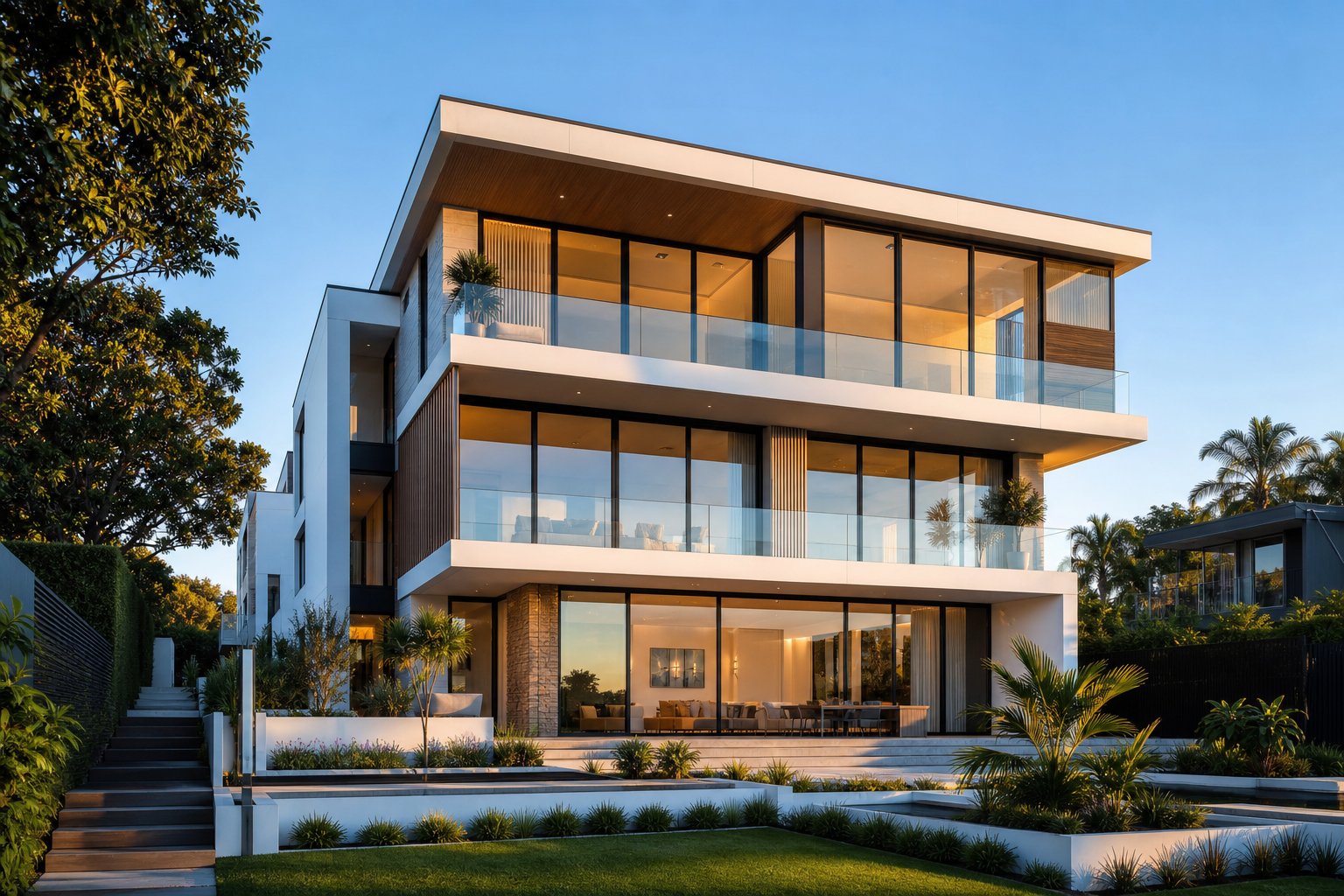
Upfront price is the number everyone fixates on, but it is a poor measure of what windows actually cost you over the life of a home. A cheaper frame material that needs replacing in 20 years, or repainting every five, quietly erodes the savings that made it attractive on day one. Flipping the lens from purchase price to cost per year of service tells a very different story — and it is where the cost of aluminium windows vs vinyl or timber starts to favour metal frames decisively.
Aluminium vs Vinyl and Timber Over Time
Aluminium frames routinely deliver 40 to 50 years of service life with minimal intervention. Powder-coated finishes resist UV degradation, and the material itself does not rot, warp, or attract termites — a meaningful advantage in the Australian climate. Vinyl (uPVC) frames typically last 20 to 30 years before seals degrade and profiles begin to discolour or become brittle under sustained UV exposure. Timber frames can match aluminium’s lifespan in theory, but only with consistent maintenance: sanding, priming, and repainting every 5 to 10 years, plus vigilant termite management.
When you divide the total installed cost of metal windows by their expected service life, the annual cost often drops below that of alternatives that looked cheaper at the point of purchase. The table below illustrates this principle using indicative Australian figures.
| Criteria | Aluminium (Thermally Broken) | Vinyl / uPVC | Timber |
|---|---|---|---|
| Expected Lifespan | 40 – 50 years | 20 – 30 years | 30 – 60 years (with maintenance) |
| Maintenance Frequency | Occasional wash only | Occasional wash; seal checks after 15 yrs | Repaint every 5 – 10 years; termite inspections |
| Estimated Maintenance Cost Over 40 Years | Minimal (under $500 total) | $500 – $1,500 + potential replacement at 25 yrs | $3,000 – $6,000+ in painting and repairs |
| Energy Performance (with double glazing) | High (thermally broken profiles) | High (inherent insulation) | High (natural insulator) |
| Indicative Cost Per Year of Service | Lower over full lifecycle | Moderate (shorter replacement cycle inflates cost) | Variable (maintenance-dependent) |
Energy Efficiency and Maintenance Savings
Modern thermally broken aluminium frames incorporate a polyamide insulating barrier between the inner and outer frame sections, disrupting heat transfer and bringing thermal performance in line with vinyl and timber. This technology also reduces condensation on interior surfaces — a practical benefit in cooler southern climates from Melbourne through to Hobart. Combined with quality double glazing and Low-E coatings, thermally broken aluminium windows contribute to lower heating and cooling bills year after year without the maintenance burden that timber demands or the UV degradation risk that shortens vinyl’s effective life in sun-drenched Australian conditions.
Maintenance savings compound quietly. Timber owners face repainting costs of $150 to $400 per window every repaint cycle, plus the time and disruption involved. Over 40 years, that recurring expense can exceed the original price difference between timber and aluminium. Vinyl avoids the painting issue but may require full replacement within that same timeframe — effectively doubling the aluminium windows cost comparison when measured across a single ownership period.
Resale Value and Return on Investment
From a resale perspective, industry ROI data indicates that quality window replacements typically recoup 65 to 75 per cent of their cost at sale — placing them among the stronger exterior improvement projects. Aluminium frames carry an additional advantage in the Australian market: buyers associate them with durability, low upkeep, and a contemporary aesthetic that photographs well in listings. Homes with dated timber frames showing peeling paint or fogged vinyl units signal deferred maintenance — exactly the kind of red flag that triggers buyer hesitation or price negotiation.
The cost of aluminium windows is undeniably higher at the point of purchase than budget vinyl alternatives. But when you account for lifespan, maintenance avoidance, energy performance, and resale perception, the annual cost of ownership often works out lower. That long-term lens is worth holding onto as you move from understanding value to the practical task of evaluating the quotes sitting in your inbox.
How to Read Quotes and Get Better Installation Prices
You have three quotes in front of you. One is $8,000 lower than the next. It feels like a no-brainer — until you realise the cheap one excludes scaffolding, says nothing about glazing specification, and lists no warranty on workmanship. Suddenly, the gap between those numbers is not a saving at all. It is a gap in scope.
Learning to read aluminium window quotes properly is one of the most valuable skills you can develop before committing to a project. The goal is not to find the lowest figure — it is to understand exactly what each figure includes so you are comparing genuine value, not just bottom lines.
What a Professional Quote Should Include
A complete, trustworthy quote removes guesswork. If key details are missing, you cannot compare it fairly against another offer — and you cannot hold anyone accountable if the finished job falls short. Here is what to look for:
- Window system and profile specification — The brand, profile series, and whether frames are thermally broken or standard. Generic descriptions like “aluminium windows” without a system name make it impossible to verify quality.
- Glazing details — Double or triple glazed, Low-E coating type, gas fill (argon or krypton), and the Uw value for the complete window unit. The Uw figure reflects how the entire assembly performs thermally — not just the glass on its own.
- Window dimensions and configurations — Exact sizes in millimetres, opening type (casement, sliding, awning, fixed), and colour or powder-coat finish for every unit in the project.
- Hardware specification — Lock type, handle style, hinge or track system, and any security or child-safety features included.
- Installation method — Whether the quote covers full-frame replacement (removing everything back to the rough opening) or an insert retrofit (fitting into the existing frame). These two approaches carry very different labour costs.
- Removal and disposal — Confirmation that old windows, glass, and debris will be removed from site and disposed of, including any hazardous materials like lead paint or asbestos-containing putty.
- Scaffolding and access — Whether upper-storey access costs are included or will be invoiced separately.
- Internal and external finishing — Trimming, architraves, capping, flashing, plaster patching, and any painting or rendering required to complete the job.
- Compliance and certification — Confirmation that windows meet AS 2047, AS 1288, and any applicable NCC energy or bushfire requirements. If council approval is needed, the quote should state whether the supplier or installer handles that process.
- Warranty terms — Separate manufacturer warranty (covering frames, glazing, and hardware) and installer workmanship warranty (covering fitting, sealing, and finishing). Both duration and what is actually covered matter more than headline years.
- Payment schedule and timeline — Deposit amount, milestone payments, estimated start date, and project duration. Vague timelines are a warning sign.
If a quote leaves three or more of those items unspecified, industry guidance recommends holding off on price comparison until you have requested clarification. Comparing incomplete quotes against each other is like comparing houses by street address alone — the number tells you nothing about what is inside.
Red Flags and How to Compare Quotes Fairly
Price differences of 20 to 30 per cent between quotes are common, and they are rarely explained by one contractor simply being greedy. More often, the gap sits in the specification details — different glazing packages, different hardware grades, different installation scopes. Your job is to figure out where the difference lives before deciding which offer represents genuine value.
Watch for these red flags:
- No brand, system, or profile name listed — A quote that simply says “aluminium windows” without naming the system cannot be verified or compared.
- Missing Uw values or glazing details — If the thermal performance of the window is not stated, you have no way of knowing whether you are getting a budget unit or a high-performance one.
- “Installation included” with no scope breakdown — This phrase hides more problems than it solves. Does it include removal? Finishing? Scaffolding? Without itemisation, you will not know until the extras appear on the final invoice.
- No workmanship warranty — A manufacturer warranty covers the product. A workmanship warranty covers the installation. The second one is the one you will need if water starts leaking through a poorly sealed frame two years down the track.
- High-pressure tactics or “today only” pricing — Reputable suppliers and installers do not need to pressure you into signing before you have had time to compare. If a price expires overnight, the offer was never genuine.
- Full payment demanded upfront — A reasonable deposit to secure scheduling and materials is standard. Paying 100 per cent before work begins removes your leverage if the project stalls or quality falls short.
The fairest comparison is always like-for-like: same glazing specification, same installation method, same scope of finishing work. A quote that is $3,000 cheaper but excludes external capping, scaffolding, and internal trims is not cheaper at all — it is just incomplete.
To compare fairly, line up each quote’s specification elements side by side. Create a simple spreadsheet with columns for each supplier and rows for every checklist item above. Gaps become obvious fast. Where one quote lacks detail, go back and ask for it before making a decision. The ten minutes that exercise takes can save thousands in unexpected costs.
Timing and Negotiation Strategies
When you buy matters almost as much as what you buy. Aluminium window installation follows seasonal demand patterns, and understanding those patterns puts you in a stronger negotiating position.
Spring and early summer are peak renovation seasons across Australia. Installers are busy, lead times stretch, and there is little incentive for suppliers to discount. Scheduling your project during autumn or winter — when demand drops — can open the door to better pricing, shorter wait times, and more flexible scheduling. Seasonal pricing data consistently shows that off-peak periods deliver lower labour costs and, in some cases, manufacturer promotions designed to keep production lines moving.
Bulk ordering is another lever. Replacing all the windows in a home as a single project almost always works out cheaper per opening than doing them individually over several years. Suppliers can offer volume pricing on materials, and installers mobilise once, set up scaffolding once, and work through the openings sequentially — cutting the per-window labour cost significantly.
A few other practical moves that help you secure more affordable aluminium windows without sacrificing quality:
- Get at least three itemised quotes — Not just for price comparison, but to identify which scope items some contractors include and others do not.
- Ask about standard sizes — If your openings are close to a standard module, staying within those dimensions avoids custom-manufacturing surcharges.
- Be flexible on start dates — Contractors sometimes offer better rates when they can slot your project into a gap in their schedule rather than working to a hard deadline.
- Enquire about window price per sq ft or per square metre rates — Some suppliers quote this way for larger projects, making it easier to compare across different window sizes and configurations.
- Separate supply from install if it makes sense — On larger projects, sourcing windows from a dedicated manufacturer and engaging an independent licensed installer can sometimes deliver better overall value than a bundled quote from a single company.
The common thread across all these strategies is the same: clarity. The more precisely you define what you need — sizes, styles, glazing specification, installation scope — the more accurately suppliers can quote, and the less room there is for hidden costs to creep in after the contract is signed.
Getting a sharp quote, though, depends heavily on who is producing it. The difference between a basic product retailer and a supplier capable of supporting an entire project — from drawings through to delivery — shapes both the accuracy of the quote and the smoothness of everything that follows.
Choosing a Supplier That Supports Your Entire Aluminium Windows Installation
A retailer sells you a product. A project-capable supplier helps you avoid the mistakes that make that product cost more than it should. The distinction sounds subtle, but it is the single biggest factor separating smooth aluminium windows installation from the kind of project that bleeds time, money, and goodwill at every stage.
When builders, developers, architects, or procurement teams source cheap aluminium windows purely on unit price, they often discover the real expense was never the window itself. It was the wrong system specified for the opening. The glass package that did not meet NCC energy requirements. The batch that arrived with inconsistent powder-coat colour because nobody reviewed the finish schedule before manufacturing began. These are project support failures, not product failures — and no amount of discounting fixes them once they reach site.
What Project-Capable Suppliers Offer Beyond a Price
A genuine project partner does more than generate a quote and dispatch stock. They embed themselves in your project workflow early enough to catch specification errors before those errors become fabrication problems. The difference shows up in every phase of the supply chain, from the first drawing review through to the moment the last window is unloaded on site.
Here is what that full-service support typically involves:
- Drawings review — Checking architectural plans for dimensional accuracy, opening compatibility, and any clashes between the specified window system and the surrounding wall assembly. Errors caught at this stage cost nothing to fix. The same errors caught during installation cost thousands.
- System recommendation — Matching the right aluminium profile system to the project’s performance requirements: thermal break specifications, wind load ratings, bushfire or cyclone compliance, acoustic targets, and sightline preferences. A standard residential casement system is not the right answer for every opening.
- Material calculation — Quantifying frames, glazing units, hardware, flashings, and accessories across every opening on the schedule. Accurate take-offs prevent costly shortages mid-installation and reduce waste from over-ordering.
- Manufacturing coordination — Sequencing production to align with site delivery dates, managing batch consistency for colour and finish, and confirming that custom sizes or non-standard configurations are achievable within the project timeline.
- Quality control — Inspecting frames, glazing, and hardware before dispatch — checking profile tolerances, coating adhesion, glass integrity, and hardware operation. Problems found in the factory are dramatically cheaper to resolve than problems found on the scaffold.
- Logistics and delivery planning — Coordinating transport to match the site’s installation sequence, particularly on multi-storey or phased projects where windows need to arrive in a specific order. A full delivery arriving at once when the site can only store and install one floor at a time creates handling damage and storage headaches.
Each of these stages adds a layer of risk management that a basic retail transaction simply does not provide. Trade supply specialists consistently emphasise that the cheapest quote on day one can become the most expensive package by day thirty if errors, delays, or unclear scope begin compounding. Cost certainty — knowing that the quoted price reflects what will actually be supplied and when — is often worth more than a marginal per-unit saving.
From Drawings to Delivery — Understanding the Full Service
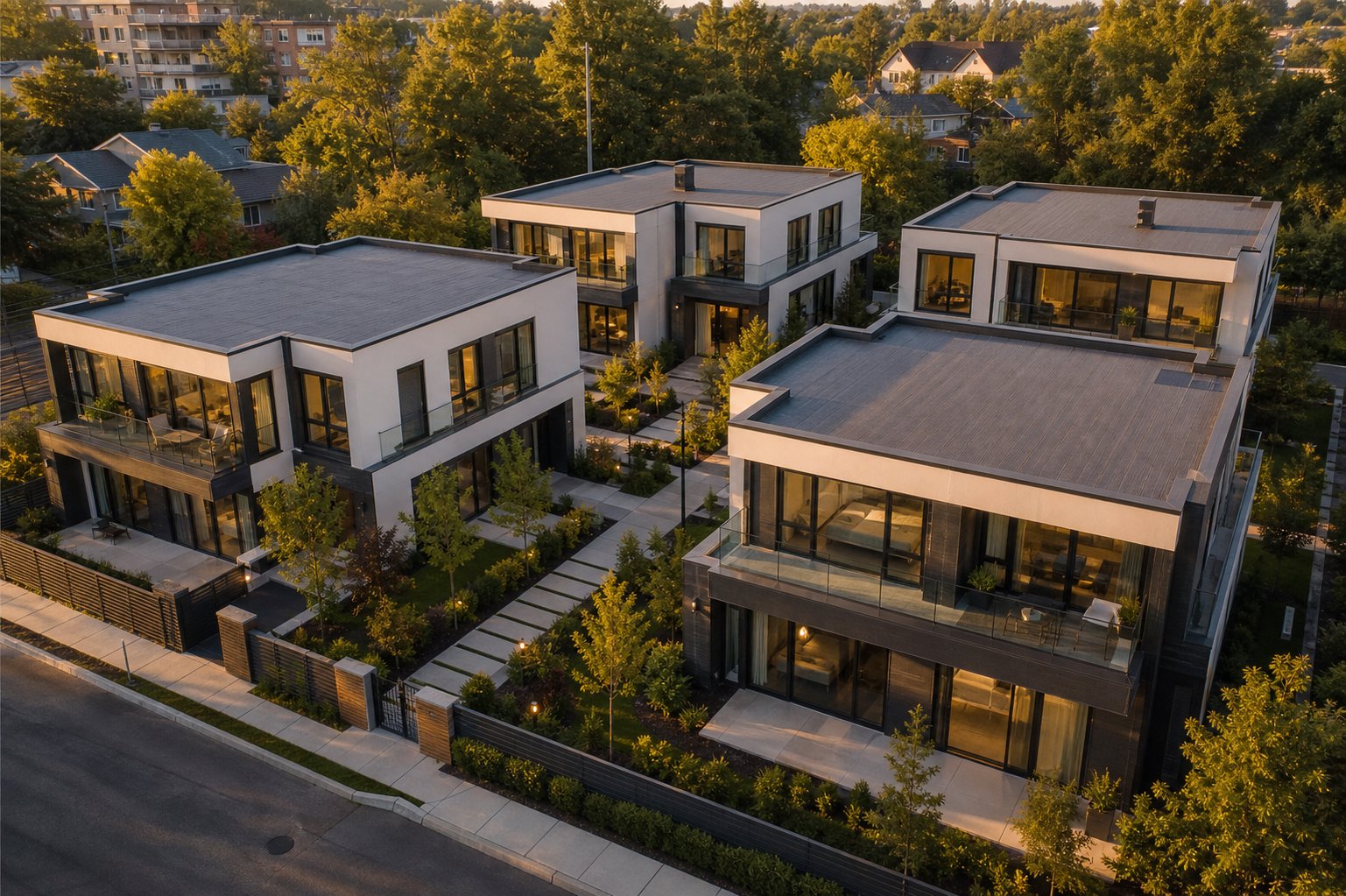
Consider a practical scenario. A medium-density residential development in western Sydney has 120 aluminium window openings across four townhouses. The architect has specified thermally broken casement and fixed-lite combinations with a specific sightline width and a dark charcoal powder-coat finish. If the supplier simply takes the schedule, quotes a unit price, and ships what arrives off the production line, several things can quietly go wrong: the frame depth may not suit the wall build-up, the glass package may fall short of NCC Section J requirements for the climate zone, or the charcoal finish may shift slightly between production batches because colour matching was never locked in upfront.
A project-capable supplier catches all of that during the drawings review and system recommendation stages. They confirm the profile matches the wall thickness, verify the glazing Uw value against the energy compliance report, and lock in the powder-coat colour with a sample sign-off before manufacturing begins. The material calculation ensures every opening has the correct unit, and the delivery plan stages the windows by townhouse so installers are not hunting through a full shipment for the right frames.
That level of coordination is exactly what MEICHEN’s project services are structured to provide — supporting builders, developers, and procurement teams through the entire journey from drawings and schedules to system recommendations, manufacturing coordination, quality control, and delivery planning. For multi-window projects especially, this end-to-end approach is what separates a quote that holds together on site from one that unravels the moment installation begins.
The bottom line is straightforward. Cheap aluminium windows exist, and sometimes they are perfectly adequate for simple, small-scale jobs. But on any project where specification accuracy, batch consistency, compliance, and delivery timing matter — which is most projects worth quoting — the supplier’s capability is as much a cost factor as the aluminium itself. Investing in project support upfront almost always costs less than fixing project failures after the fact.
With the right supplier behind the quote, the final step is pulling every cost factor together into a practical planning sequence that moves your project from spreadsheet to site.
Planning Your Aluminium Window Installation Project
Every cost factor covered in this guide — material selection, labour complexity, new-build versus retrofit scenarios, hidden ancillary expenses, long-term value, quote evaluation, and supplier capability — feeds into a single practical question: how do you actually move forward without losing control of the budget? The answer is a structured planning sequence that forces clarity at each stage, so by the time you sign a contract, the numbers on the page genuinely reflect the job ahead.
Your Installation Planning Checklist
Treat this as a step-by-step roadmap. Each action builds on the one before it, and skipping steps is how budgets unravel.
- Define the project scope — Decide whether you are replacing every window in the house, targeting the worst-performing openings first, or specifying for a new build. The scope determines the cost category — retrofit, full-frame replacement, or new construction — and shapes every estimate that follows.
- Measure every opening accurately — Take three width measurements (top, middle, bottom) and three height measurements (left, centre, right) for each opening, recording the smallest values. Check diagonals to confirm square, and note sill depth. Inaccurate measurements lead to custom-sizing surcharges, fabrication delays, or windows that simply do not fit.
- Choose window styles and specifications — Select the configuration for each opening (casement, sliding, awning, fixed, bi-fold) and confirm the glazing package (double or triple glazed, Low-E type, gas fill) and frame type (standard or thermally broken). Factor in any compliance requirements — BAL ratings for bushfire zones, cyclone ratings for northern regions, or specific NCC Section J energy targets for your climate zone.
- Set a realistic whole-project budget — Work from the aluminium windows price ranges discussed earlier, multiply by the number of openings, and add 15 to 20 per cent contingency for hidden costs: scaffolding, structural repairs, capping, internal finishing, and waste disposal. Budgeting per opening is useful for comparison, but your bank account pays the total aluminium window cost, not the per-unit figure.
- Request at least three itemised quotes — Provide identical specifications to every supplier so the quotes are genuinely comparable. Insist on line-item breakdowns covering product, installation labour, removal, finishing, scaffolding, compliance, and warranty. Use the checklist from the previous chapter to verify nothing is missing.
- Compare like-for-like, not bottom-line — Lay each quote side by side in a spreadsheet. Flag any gaps in scope or specification. Go back to suppliers with questions before making a decision — a ten-minute phone call can expose a $3,000 difference hiding behind vague wording.
- Evaluate supplier capability — For multi-window projects, confirm whether the supplier offers genuine project support: drawings review, system recommendation, material take-off, manufacturing coordination, and staged delivery. This capability directly affects cost certainty and on-site efficiency.
- Schedule strategically — Book installation during autumn or winter when demand drops and installers have more flexibility. Whole-house projects completed in a single mobilisation deliver better per-window rates than piecemeal replacements spread over years.
- Confirm regulatory requirements — Check with your local council whether the project needs a development application, and verify that the specified windows meet AS 2047, AS 1288, and any applicable NCC or WERS requirements before manufacturing begins.
- Lock in a clear contract — Ensure the signed agreement covers payment milestones (never 100 per cent upfront), start and completion dates, the exact specification schedule, and separate warranty terms for both product and workmanship.
Next Steps for Getting an Accurate Project Quote
The difference between a smooth project and a painful one almost always traces back to how thoroughly these planning steps were completed before the first order was placed. Rushing from a rough idea to the cheapest aluminium windows price you can find online skips the specification, measurement, and scope definition stages that protect your budget downstream.
The real cost of installing aluminium windows is never the per-unit figure in a product catalogue. It is the total project cost — materials, labour, ancillary expenses, compliance, and finishing — divided across every opening on the schedule. Plan for the total, and the per-unit number takes care of itself.
If you are a builder, contractor, or procurement team managing a multi-window installation, the planning process benefits enormously from engaging a supplier who operates across the full project lifecycle rather than simply filling a product order. Exploring MEICHEN’s services and solutions is a practical starting point for understanding how a project-capable partner approaches quoting, system selection, manufacturing coordination, and delivery planning — the stages where cost certainty is either built or lost.
Every dollar you invest in planning, accurate measurement, and thorough specification pays back multiples during installation. Get the preparation right, and the cost of your aluminium window project stops being a source of anxiety and becomes exactly what it should be: a well-understood investment in a home that performs better for decades to come.
Frequently Asked Questions About Aluminium Window Installation Costs
1. How much does it cost to install aluminium windows in a typical Australian home?
For a standard three-bedroom Australian home with 10 to 15 openings, a complete supply-and-install budget generally falls between $12,000 and $30,000 AUD. The lower end covers standard casement and sliding windows with straightforward retrofit into sound frames, while the upper end reflects premium styles like bi-folds, thermally broken profiles, structural modifications, and full-frame replacements. Always add a 15 to 20 per cent contingency for hidden costs such as scaffolding, capping, structural repairs, and internal finishing — expenses that rarely appear in initial per-unit quotes but significantly affect the final invoice.
2. Are aluminium windows more expensive than vinyl or timber in the long run?
Despite a higher upfront purchase price, aluminium windows often deliver a lower cost per year of ownership than vinyl or timber alternatives. Aluminium frames last 40 to 50 years with virtually no maintenance beyond occasional washing, while vinyl typically needs replacing after 20 to 30 years and timber demands repainting every 5 to 10 years plus regular termite inspections. Over a 40-year period, timber maintenance alone can cost $3,000 to $6,000 or more, and vinyl’s shorter replacement cycle effectively doubles its lifetime expense. Thermally broken aluminium also matches the energy performance of competing materials, further narrowing any upfront cost gap.
3. What hidden costs should I expect when replacing aluminium windows?
Several ancillary expenses commonly surprise homeowners. Scaffolding for upper-storey access can cost $800 to $2,500 AUD. Structural repairs — such as replacing corroded lintels or termite-damaged studs revealed once old frames come out — may add $150 to $800 or more per opening. External aluminium capping and wrapping of reveals typically runs $80 to $250 per window. Internal plaster patching and repainting costs $80 to $200 per opening, and waste disposal adds $30 to $80. Council fees, compliance certificates, and asbestos removal (in pre-1980s homes) can push the total ancillary layer to $3,000 to $8,000 above the headline quote on a whole-house project.
4. How long does it take to install aluminium windows in a house?
For a straightforward like-for-like replacement with no structural changes, experienced installers typically complete one window in 45 minutes to two hours. Full-frame replacements, where the entire old assembly is stripped back to the rough opening, take closer to two to three hours per opening. Scaling up to a whole-house retrofit on a three-bedroom home with 12 openings, expect roughly 20 to 30 hours of on-site labour spread across three to five working days. Larger homes or projects involving structural alterations, asbestos removal, or complex access requirements can extend beyond a full week.
5. What should a professional aluminium window installation quote include?
A complete quote should itemise the window system and profile name, glazing specification with Uw values, exact dimensions and configurations for every opening, hardware details, installation method (full-frame or insert retrofit), old frame removal and disposal, scaffolding and access costs, internal and external finishing work, compliance with AS 2047 and NCC requirements, separate product and workmanship warranty terms, and a clear payment schedule with project timeline. If three or more of these items are missing, the quote cannot be fairly compared against competitors. Working with a project-capable supplier like MEICHEN — who supports the process from drawings review through to delivery planning — helps ensure every cost driver is captured upfront rather than surfacing as a surprise on the final invoice.
More Window & Door Guides