What Colour Is Aluminium and Why Colour Charts Matter
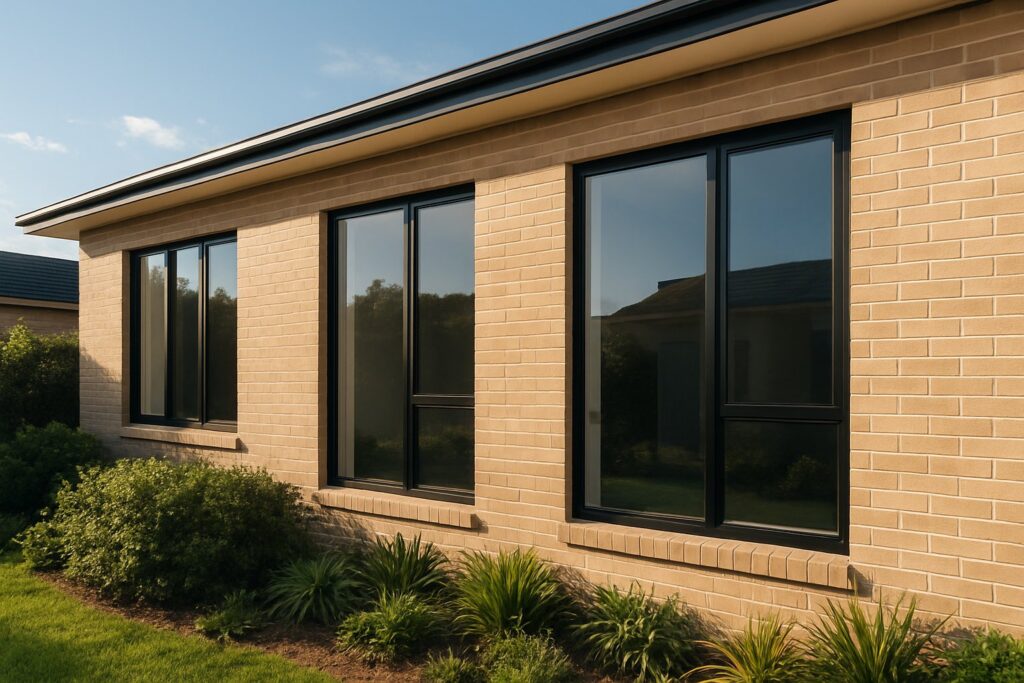
So what colour is aluminium, really? In its raw, uncoated state, aluminium is a silvery-grey metal with a soft, reflective sheen. It looks clean and industrial straight off the extrusion line. But here is the thing most people miss: that natural silver tone is just the starting point. Modern powder-coating and anodising technology means aluminium window frames can be finished in virtually any colour you can imagine, from crisp whites and deep blacks to heritage greens, warm browns, and bold statement reds.
An aluminium windows colour chart is the reference tool that makes this vast palette navigable. Homeowners, architects, and builders across Australia use these charts to browse, compare, and specify their preferred frame finish before committing to an order. This article serves as both a comprehensive colour reference and a practical decision-making guide, helping you move from browsing to confident specification.
The Natural Colour of Aluminium and How Coatings Transform It
The base metal appears as a light silvery-white with a cooler tone than metals like copper or brass. Left untreated, aluminium forms a thin oxide layer that dulls the surface slightly over time. For window frames exposed to Australian sun, salt air, and rain, a protective decorative finish is essential.
Powder coating is the industry-standard method. A dry powder is applied electrostatically to the aluminium profile, then cured under heat to form a tough, uniform skin. The result is a durable colour finish that resists UV degradation, chalking, and corrosion far better than liquid paint. This process opens the door to hundreds of colour options within standardised systems like RAL.
Why a Colour Chart Matters When Specifying Windows
Colour choice affects more than aesthetics. The right frame colour influences street appeal, property value, planning compliance with local council requirements, and how well your windows tie interior and exterior design together. Colours also look noticeably different on screen versus in person, which is why physical swatches remain critical before final specification.
Aluminium’s ability to be finished in virtually any colour is one of its primary advantages over uPVC and timber alternatives. Where uPVC offers a limited palette and timber requires ongoing repainting, aluminium delivers lasting colour freedom with minimal maintenance.
The challenge, of course, is knowing how to read and navigate the colour systems that underpin every aluminium windows colour chart. That starts with understanding the RAL coding standard that the entire industry relies on.
Understanding the RAL Colour Coding System
Every aluminium windows colour chart you encounter in Australia is built on a European colour matching standard called RAL. Knowing how this system works gives you the ability to navigate any manufacturer’s palette independently, compare options across suppliers, and communicate your exact colour preference without ambiguity.
What RAL Stands For and How the Numbering Works
RAL stands for Reichs-Ausschuss fuer Lieferbedingungen, which translates roughly to the Imperial Commission for Delivery Terms and Quality Assurance. Created in Germany in 1927, the system was designed to eliminate confusion when specifying colours across different manufacturers and industries. Instead of relying on subjective descriptions like “dark grey” or “off-white,” RAL assigns a precise four-digit code to each colour.
The structure is straightforward. The first digit tells you which colour family you are looking at:
- RAL 1xxx — Yellows
- RAL 2xxx — Oranges
- RAL 3xxx — Reds
- RAL 4xxx — Violets
- RAL 5xxx — Blues
- RAL 6xxx — Greens
- RAL 7xxx — Greys
- RAL 8xxx — Browns
- RAL 9xxx — Whites and Blacks
So when you see RAL 7016 on a specification sheet, you immediately know it sits in the grey family. RAL 6005? That is a green. This logic applies across every aluminium window supplier in Australia and internationally, making it a universal language for ral colours for aluminium windows.
RAL Classic vs RAL Design and Other Colour Standards
The system most relevant to window specification is RAL Classic, which contains around 215 colours. This is the industry standard panel used by powder coaters and aluminium window manufacturers. Each colour carries a four-digit code plus a descriptive name, such as RAL 9010 Pure White or RAL 7016 Anthracite Grey.
RAL Design is a separate, much larger system with over 1,800 colours organised using a seven-digit code based on hue, lightness, and chroma. It is used more in interior design and architecture than in window manufacturing. The two systems do not overlap, so a RAL Classic code cannot be directly translated into a RAL Design equivalent.
In Australia, you may also encounter references to British Standard colour systems, particularly on projects involving heritage specifications or local authority requirements. BS 4800 is used in architectural and building applications, while BS 381C covers defence and government specifications. These systems use a different coding structure entirely, with alphanumeric codes like 18-B-25 (Merlin) or BS 381C 224 (Deep Bronze Green). They appear less frequently in residential window specification but are worth knowing if your project involves matching existing council or commercial building colours.
To simplify the selection process, many aluminium system manufacturers organise the full RAL palette into curated collections. These groupings, with names like Elements, Homestead, Spectrum, or Urbane, bundle complementary aluminum colours into smaller, more manageable sets tailored to specific design styles. They are a helpful starting point, though you are never limited to them if a particular RAL code outside the curated range suits your project better.
- RAL Classic — approximately 215 colours; the industry standard for aluminium window and door specification
- RAL Design — over 1,800 colours; used primarily in interior design and architectural colour planning
- BS 4800 — British Standard for building and architectural colours; relevant for heritage and council-specified projects
- BS 381C — British Standard for defence and government applications; occasionally referenced in public building specifications
One important note: cross-referencing between these systems is possible but not always exact. A BS 4800 colour may have a close RAL equivalent, but subtle differences in pigment formulation mean the match is approximate rather than guaranteed. Always confirm the specific code and system with your manufacturer before locking in a specification. The colour you see labelled as aluminiumgrau in one system may carry a slightly different tone in another.
With the coding logic clear, the real question becomes which specific RAL colours are available for aluminium windows and what each one actually looks like in practice.
Complete Aluminium Window Colour Chart by Family
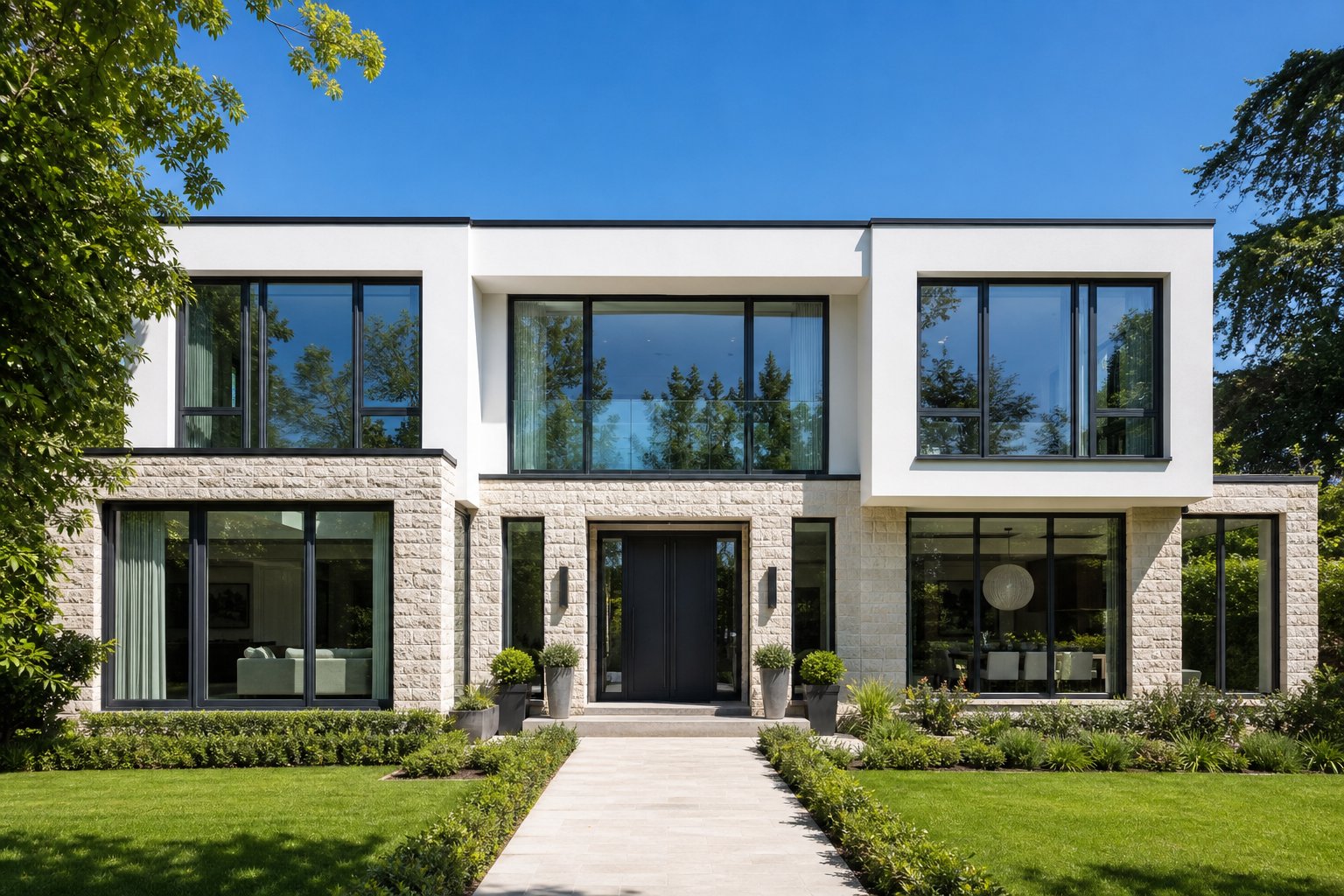
This section is the reference you have been looking for. Below, every major RAL colour commonly specified for aluminium window frame colors is organised by family, described in plain language, and matched to its typical use case. Bookmark this page. It is designed to be the most comprehensive text-based aluminium windows colour chart available online.
A quick but important caveat before you scroll through: actual colour appearance depends on your screen’s calibration, ambient lighting, and the finish type applied (matt, satin, or gloss). These tables give you a reliable starting point for shortlisting, but always request physical powder-coated samples from your supplier before final specification.
Whites, Creams, and Ivories
White-family RAL codes dominate period home replacements, coastal builds, and any project where a light, clean frame is needed. The differences between these shades are subtle on screen but unmistakable in person, particularly under Australian sunlight.
| RAL Code | Colour Name | Description of Appearance | Typical Use Case |
|---|---|---|---|
| RAL 9010 | Pure White | A soft, warm off-white with a faint creamy undertone. Despite its name, it is not a stark bright white but closer to an eggshell tone. | The most popular white for residential aluminium windows. Suits traditional homes, heritage replacements, and projects needing a warm neutral frame. |
| RAL 9016 | Traffic White | A cooler, crisper white with a very slight greyish cast. Brighter and more neutral than RAL 9010. | Modern builds, minimalist interiors, and projects where a clean contemporary white is preferred over warmth. Common in commercial applications. |
| RAL 9001 | Cream | A noticeably warmer tone than RAL 9010, sitting between white and very light beige. Soft and inviting rather than clinical. | Heritage and conservation-sensitive projects, federation-style homes, and properties with warm-toned render or sandstone. Pairs well with natural timber elements. |
| RAL 1015 | Light Ivory | A light yellowish-cream with a distinctly warm, buttery quality. More colour presence than RAL 9001. | Period properties, Mediterranean-inspired builds, and homes with warm brick or rendered exteriors where a pure white would look too stark. |
| RAL 9003 | Signal White | The brightest, most neutral white in the RAL system. Almost no warmth or coolness, just pure clean white. | Commercial projects, high-contrast modern designs, and situations where maximum brightness is required. Less common in residential due to its clinical intensity. |
Greys From Light to Dark
Grey is the defining colour family for contemporary Australian architecture. From soft Scandinavian-inspired light greys to the near-black drama of dark anthracite, this family offers more nuance than any other. It is also where most specification mistakes happen, because greys that look identical on screen reveal very different undertones in real life.
| RAL Code | Colour Name | Description of Appearance | Typical Use Case |
|---|---|---|---|
| RAL 7035 | Light Grey | A pale, clean grey with a neutral-to-cool undertone. Light enough to feel airy without being white. | Scandinavian-inspired builds, light-rendered homes, and projects wanting subtle frame definition without the weight of darker greys. |
| RAL 7040 | Window Grey | A soft mid-tone grey with a slightly blue-cool cast. Gentle and understated. | Traditional and transitional homes where a mid-grey offers a modern update without being too bold. Works well with both warm and cool exterior palettes. |
| RAL 7016 | Anthracite Grey | A deep, dark charcoal grey with a neutral-to-cool undertone. Rich and sophisticated without being black. | The most popular colour for modern Australian builds. Creates strong contrast against light render, white brick, and pale cladding. The defining shade of contemporary residential architecture. |
| RAL 7015 | Slate Grey | A dark grey with a noticeable blue undertone. Cooler and slightly lighter than RAL 7016. | Coastal properties, homes with blue-grey roofing, and projects seeking a softer alternative to anthracite with a more maritime character. |
| RAL 7012 | Basalt Grey | A medium-dark grey with a green-cool undertone. Earthy and grounded compared to the blue-leaning greys. | Rural and bushland properties, homes with natural stone or green landscaping, and projects wanting depth without the urban edge of anthracite. |
| RAL 7021 | Black Grey | An extremely dark grey that reads almost black in low light but reveals its grey base in direct sun. | Dramatic modern builds, near-black aesthetics without the full commitment of jet black. Popular for slim-profile window systems where shadow lines are emphasised. |
Blacks, Blues, Greens, Browns, and Statement Colours
Beyond the whites and greys, the full RAL spectrum opens up for homeowners who want their aluminium frames to make a deliberate design statement or blend with specific building materials. Heritage greens suit period homes and rural settings. Rich browns complement timber cladding and natural stone. And for those willing to go bold, red aluminium and yellow aluminium options exist within the RAL system for truly distinctive facades.
| RAL Code | Colour Name | Description of Appearance | Typical Use Case |
|---|---|---|---|
| RAL 9005 | Jet Black | A deep, true black with no visible undertone. Bold, definitive, and high-contrast. | Modern industrial-style homes, heritage properties (replicating traditional ironwork), and any project where maximum contrast against light walls is desired. |
| RAL 5014 | Pigeon Blue | A muted, dusty blue-grey. Soft and sophisticated rather than vivid. | Coastal homes, Hamptons-style builds, and properties where a subtle colour accent is preferred over neutral grey or black. |
| RAL 5011 | Steel Blue | A very dark navy blue that appears almost black in shade but reveals deep blue in sunlight. | Heritage properties, formal facades, and projects wanting a refined alternative to black with hidden colour depth. |
| RAL 6005 | Moss Green | A deep, rich green with a warm, earthy quality. Classic and traditional in character. | Federation and Edwardian homes, conservation area projects, rural properties, and any build where heritage green window frames are specified. |
| RAL 6009 | Fir Green | A very dark green, almost black-green, with a cool forest tone. Deeper and more subdued than RAL 6005. | Period properties requiring dark heritage frames, barn conversions, and rural homes where frames should recede into surrounding greenery. |
| RAL 6021 | Pale Green | A soft sage green with a grey undertone. Muted and contemporary rather than traditional. | Modern farmhouse builds, homes with natural landscaping, and projects following the current trend toward earthy, organic colour palettes. |
| RAL 8014 | Sepia Brown | A dark, warm brown with a rich chocolate-earth quality. Grounded and natural. | Rural and bushland properties, homes with exposed timber or natural stone, and projects where frames should harmonise with earthy surroundings. |
| RAL 8017 | Chocolate Brown | A deep red-brown, darker and slightly warmer than RAL 8014. Rich and traditional. | Heritage homes, properties with dark brick or terracotta elements, and builds where a warm dark frame is preferred over grey or black. |
| RAL 3003 | Ruby Red | A deep, dark red with a slightly blue undertone. Dramatic without being garish. | Statement facades, commercial shopfronts, and residential feature windows where a bold accent colour is part of the design intent. |
| RAL 3011 | Brown Red | A muted, earthy red-brown. More restrained and heritage-appropriate than brighter reds. | Period properties with red brick, barn-style builds, and projects where red aluminium frames complement existing warm masonry tones. |
| RAL 1021 | Rape Yellow | A vivid, saturated yellow. Bright and attention-grabbing. | Commercial and retail applications, feature elements on modern builds, and projects where yellow aluminium is used as a deliberate design accent. |
| RAL 1019 | Grey Beige | A warm, muted tone sitting between grey and beige. Subtle and versatile. | Contemporary homes with warm-toned cladding, projects seeking a softer alternative to grey, and builds where a neutral warmth is preferred. |
These tables cover the most commonly specified RAL codes for aluminium windows in Australia, but they represent only a fraction of the full RAL Classic palette. Any of the approximately 215 RAL Classic colours can typically be powder-coated onto aluminium frames. If you have a specific vision that falls outside these popular options, your manufacturer can usually accommodate it as a custom order.
The popularity of certain colours over others is not random. Market data and industry ordering patterns reveal clear favourites, and understanding why specific RAL codes dominate can help you make a more informed, future-proof choice.
Most Popular Aluminium Window Colours by Industry Data
Knowing what is available is one thing. Knowing what actually gets specified on real projects, year after year, tells a different and more useful story. When it comes to the most popular aluminium window colours, the data is remarkably consistent.
Specialist coatings firms with decades of project records paint a clear picture. Vanda Coatings’ 18-year trend analysis of commercial aluminium window spraying projects found that three RAL codes have never left the top three positions since 2008: RAL 9005 (Jet Black), RAL 9010 (Pure White), and RAL 7016 (Anthracite Grey). Together, these three colours accounted for over 60% of all colour specifications across their project data. The residential market follows a near-identical pattern.
Based on industry ordering patterns, here are the most popular ral colours for windows specified for aluminium frames:
- RAL 9005 — Jet Black — consistently the single most-specified colour across both commercial and residential projects
- RAL 7016 — Anthracite Grey — has risen sharply since 2015 and now rivals black on many project types
- RAL 9010 — Pure White — the enduring default for heritage-sensitive and period property replacements
- RAL 7021 — Black Grey — a near-black alternative gaining ground among specifiers wanting depth without full black
- RAL 7015 — Slate Grey — a blue-toned dark grey increasingly chosen for coastal and contemporary builds
These five dominate for practical reasons beyond aesthetics. They are universally stocked as standard colours by Australian aluminium window manufacturers, which means shorter lead times and lower costs compared to custom orders. They complement the widest range of building materials, from rendered walls and face brick to timber cladding and natural stone. And they carry proven resale appeal, making them a safe long-term investment for homeowners conscious of property value.
Why Anthracite Grey Dominates Modern Builds
RAL 7016 has become the defining colour of contemporary Australian residential architecture. Its rise from occasional alternative to default specification mirrors the broader shift toward clean-lined, contrast-driven facade design that took hold from 2015 onwards.
The appeal is straightforward. Anthracite grey creates striking contrast against light render and white brick without the visual weight of full black. It reads as sophisticated and modern, pairs naturally with slim-profile aluminium framing systems, and works equally well on a double-storey new build in Melbourne’s outer suburbs as it does on a commercial office refurbishment. It also hides dirt and weathering better than lighter shades, a practical advantage in the Australian climate where dust, pollen, and coastal salt are constant factors.
Its versatility across residential and commercial projects is unmatched. Whether the surrounding materials are pale cladding, dark brick, or natural timber, anthracite grey holds its own without clashing.
The Enduring Appeal of Classic Black and White
RAL 9005 Jet Black delivers a bold, definitive frame line that suits two very different aesthetics. On heritage-style properties, it replicates the look of traditional painted ironwork and steel-framed windows. On modern builds, it provides a crisp industrial edge, particularly effective on large glazing sections and floor-to-ceiling window systems where the frame becomes a deliberate graphic element against the facade.
RAL 9010 Pure White occupies the opposite end of the spectrum but holds equal staying power. It remains the go-to for period property replacements, conservation-sensitive projects, and any home where lighter frames are needed to maintain architectural character. In Australia, it is particularly common on federation homes, Queenslanders, and coastal weatherboard properties where white frames are part of the established streetscape.
Trends do shift, though. Heritage greens like RAL 6005 and RAL 6009 are entering specifications where only greys and blacks appeared five years ago, driven by biophilic design principles and a desire for warmer, more natural facades. Warm neutral greys such as RAL 7022 (Umbra Grey) and RAL 8019 (Grey Brown) are also gaining ground on projects where standard anthracite feels too ubiquitous. These emerging aluminum window colours suggest the palette is broadening, but the core three remain the safest, most versatile starting point for any project.
Popularity rankings help narrow the field, but within the grey family alone, the differences between individual shades are far more nuanced than most people expect. Choosing between them requires understanding undertones, light behaviour, and how orientation affects what you actually see on your facade.
Grey Aluminium Windows and Their Many Shades
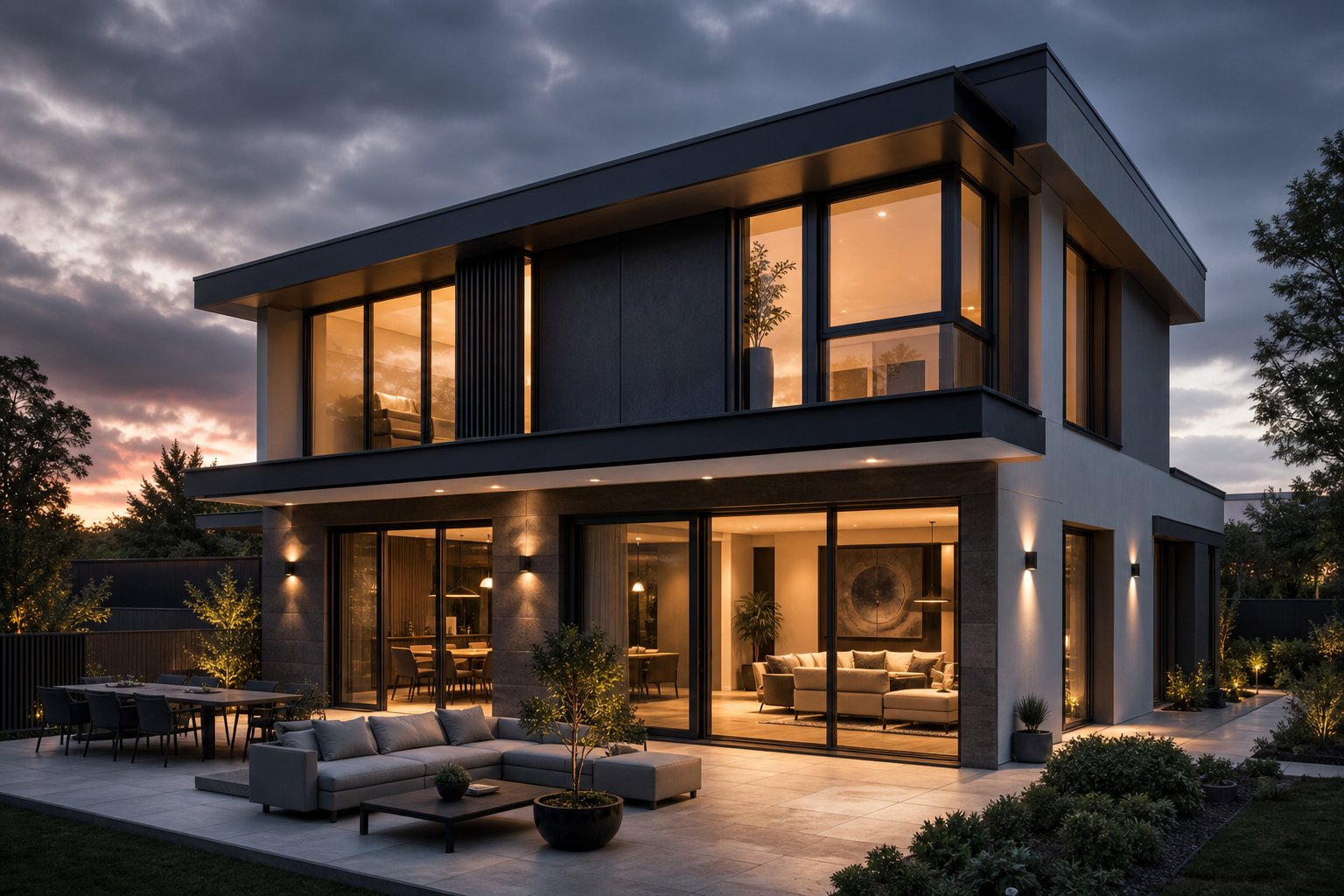
Grey aluminium dominates the Australian residential market for good reason. It is versatile, modern, and pairs with almost any building material. But the grey family is also where the most specification regret happens. On screen, RAL 7016 and RAL 7021 can look nearly identical. In person, mounted on your facade at midday versus dusk, they are entirely different colours. Choosing the right aluminium grey colour demands more attention than any other family on the chart.
Mapping the Grey Spectrum From Alu Grey to Anthracite
Think of the grey spectrum as a gradient with distinct personality shifts at each step. RAL 7035 (Light Grey) sits at the pale end, a clean, airy tone that suits Scandinavian-inspired homes and light-rendered coastal builds where you want frame definition without visual weight. Step darker and you reach RAL 7040 (Window Grey), a softer mid-tone with a subtle blue-cool cast that works beautifully on transitional homes bridging traditional and contemporary styles.
RAL 7016 (Anthracite Grey) occupies the sweet spot that has made it Australia’s most specified alu grey for modern builds. It is dark enough to create contrast against pale walls but retains enough grey to avoid the starkness of black. RAL 7015 (Slate Grey) offers a blue-toned alternative, slightly lighter and cooler than anthracite, lending a softer maritime quality that resonates on coastal properties from the Mornington Peninsula to the Northern Beaches.
At the darkest extreme, RAL 7021 (Black Grey) delivers near-black drama. In overcast conditions or at twilight, it reads as black. Under direct Australian sun, its grey base emerges, giving it a depth and complexity that pure jet black cannot match. Vanda Coatings’ project data confirms RAL 7021 as the second most specified grey after 7016, with growing demand on premium residential projects where specifiers want something darker without going full black.
The challenge is that these differences collapse on a digital screen. Two shades separated by a clear undertone shift in real life can appear as the same flat swatch on a monitor. This is precisely why grey selection requires physical samples viewed in context.
How Orientation and Light Affect Grey Aluminium Windows
The same RAL code will look like a different colour depending on which direction your facade faces. Natural light is not neutral. It shifts in colour temperature, intensity, and angle throughout the day, and your window orientation determines which version of that light your frames sit in most often.
North-facing frames in Australia receive the most consistent direct sunlight throughout the day. This warm, intense light makes grey aluminium windows appear lighter and warmer than their swatch suggests. A frame in RAL 7016 on a north-facing wall will read as a rich warm charcoal. That same frame on a south-facing elevation, which receives cooler, more diffused light, will appear noticeably darker and bluer. The shift is subtle in isolation but obvious when you see both orientations on the same house.
East-facing frames catch warm morning light and shift to cooler tones by afternoon. West-facing frames do the reverse, appearing relatively neutral in the morning before warming dramatically during the golden hour. Surrounding materials amplify these effects. Grey frames against warm red brick pick up a warmer cast. The same grey against cool blue-grey cladding leans cooler.
The practical takeaway: view your shortlisted grey samples against the actual external wall material, on the actual facade orientation, at multiple times of day. Morning, midday, and late afternoon will each reveal something different.
| RAL Code | Common Name | Undertone | Best Suited Property Style |
|---|---|---|---|
| RAL 7035 | Light Grey | Neutral to cool | Scandinavian-inspired builds, light-rendered coastal homes, pale cladding |
| RAL 7040 | Window Grey | Cool (blue cast) | Transitional homes, 1930s updates, soft contemporary facades |
| RAL 7016 | Anthracite Grey | Neutral to cool | Modern new builds, contrast-driven design, commercial refurbishments |
| RAL 7015 | Slate Grey | Cool (blue undertone) | Coastal properties, homes with blue-grey roofing, maritime-influenced design |
| RAL 7012 | Basalt Grey | Cool (green undertone) | Rural properties, bushland settings, natural stone facades |
| RAL 7021 | Black Grey | Cool and neutral | Premium modern builds, dramatic facades, slim-profile window systems |
| RAL 7022 | Umbra Grey | Warm (brown undertone) | Red brick homes, natural stone, projects seeking warmth in a dark grey |
Ordering a powder-coated sample from your supplier, rather than relying on printed colour cards or digital swatches, is the single most important step in grey selection. A physical sample viewed against your actual wall material, in your actual light conditions, eliminates the guesswork that leads to costly reorders.
Grey selection is ultimately a question of undertone and context. But once you have settled on your preferred shade, another factor determines what you will actually pay and how long you will wait: whether that grey sits within your manufacturer’s standard colour range or falls into the non-standard category.
Standard vs Non-Standard RAL Colours and Pricing
Picking a colour from the aluminium windows colour chart is one decision. Discovering that your chosen shade adds four weeks and a significant cost premium to your project is a different conversation entirely. The distinction between standard and non-standard RAL colours is one of the most overlooked practical factors in window specification, yet it directly affects your budget, your build timeline, and your options for aluminium window colour options across an entire project.
Standard Colour Ranges and What They Include
Most aluminium window manufacturers and system houses in Australia maintain a standard colour palette. This typically covers the high-demand RAL finishes that get ordered week in, week out: key whites (RAL 9010, RAL 9016), the dominant greys (RAL 7016, RAL 7021, RAL 7035), jet black (RAL 9005), and a curated selection of popular greens and browns (RAL 6005, RAL 8017). The exact list varies between suppliers, but the logic is consistent.
Standard colours are either pre-stocked as finished powder or frequently batched in the coating line. This means the powder coater does not need to source a special colour, purge their equipment, or run a separate small batch just for your order. The result is shorter lead times and lower per-unit costs. For most residential projects in Australia, standard window frame colours ship within the manufacturer’s normal production window, typically four to six weeks from order confirmation.
Curated collections from major system manufacturers group these popular RAL codes into named ranges designed to simplify ordering for homeowners. You might see them labelled as contemporary, heritage, or coastal palettes. They are a useful shortcut, but they are not a limitation. They simply represent the colours that can be delivered fastest and cheapest.
Non-Standard and Custom RAL Colours and Their Impact
Here is the good news: virtually any RAL Classic colour can be powder-coated onto aluminium frames. The full palette of approximately 215 colours remains available to you. The trade-off is practical rather than technical.
Choosing a non-standard colour means the powder must be specially ordered from the coating supplier, and your frames may need to be batched separately for coating rather than running through with the day’s standard production. Industry pricing data indicates that custom RAL matches typically add 10 to 15 percent to the frame cost, with an additional two to four weeks on lead time compared to standard finishes.
For a single window, that premium might feel negligible. Across a full house of ten to fifteen openings, it compounds into a meaningful budget line item. And the timeline extension matters most when your build programme is tight. Plasterers, renderers, and cladding installers often cannot proceed until windows are installed, so a colour-driven delay can cascade through your construction schedule.
The practical implications come down to three things:
- Budget planning — factor the colour premium into your window quote from the start, not as a surprise variation later
- Timeline awareness — confirm lead times for your chosen colour before locking in your installation date with your builder
- Early specification — decide on colour as early as possible in the design process, particularly for non-standard choices that require powder to be sourced
| Factor | Standard RAL Colours | Non-Standard RAL Colours |
|---|---|---|
| Availability | Pre-stocked or frequently batched; readily available from most Australian suppliers | Powder must be specially ordered; may require minimum batch quantities |
| Typical Lead Time Impact | No additional delay beyond normal production (4–6 weeks) | Additional 2–4 weeks on top of standard lead time |
| Cost Implication | Included in base frame price; no colour surcharge | Typically 10–15% premium on frame cost |
| When to Choose | When budget and timeline are priorities; when the standard palette includes your preferred shade; for most residential projects | When a specific design vision requires a particular RAL code outside the standard range; architectural projects with bespoke colour schemes; matching existing non-standard building elements |
The same logic applies to aluminium door colours. Bifold doors, sliding doors, and entrance doors all go through the same powder-coating process as windows. If you are specifying RAL 7016 windows with a RAL 5014 front door, both need to be confirmed and ordered with colour lead times in mind. Consistency across all openings on a project requires early colour planning, ideally at design stage rather than after contracts are signed.
Where this gets particularly interesting is when you move beyond solid RAL colours altogether. Woodgrain finishes, textured coatings, and the choice between matt and gloss within the same RAL code each introduce another layer of decision-making that changes both the look and the cost of your frames.
Woodgrain Aluminium Window Finishes and Matt vs Gloss Options
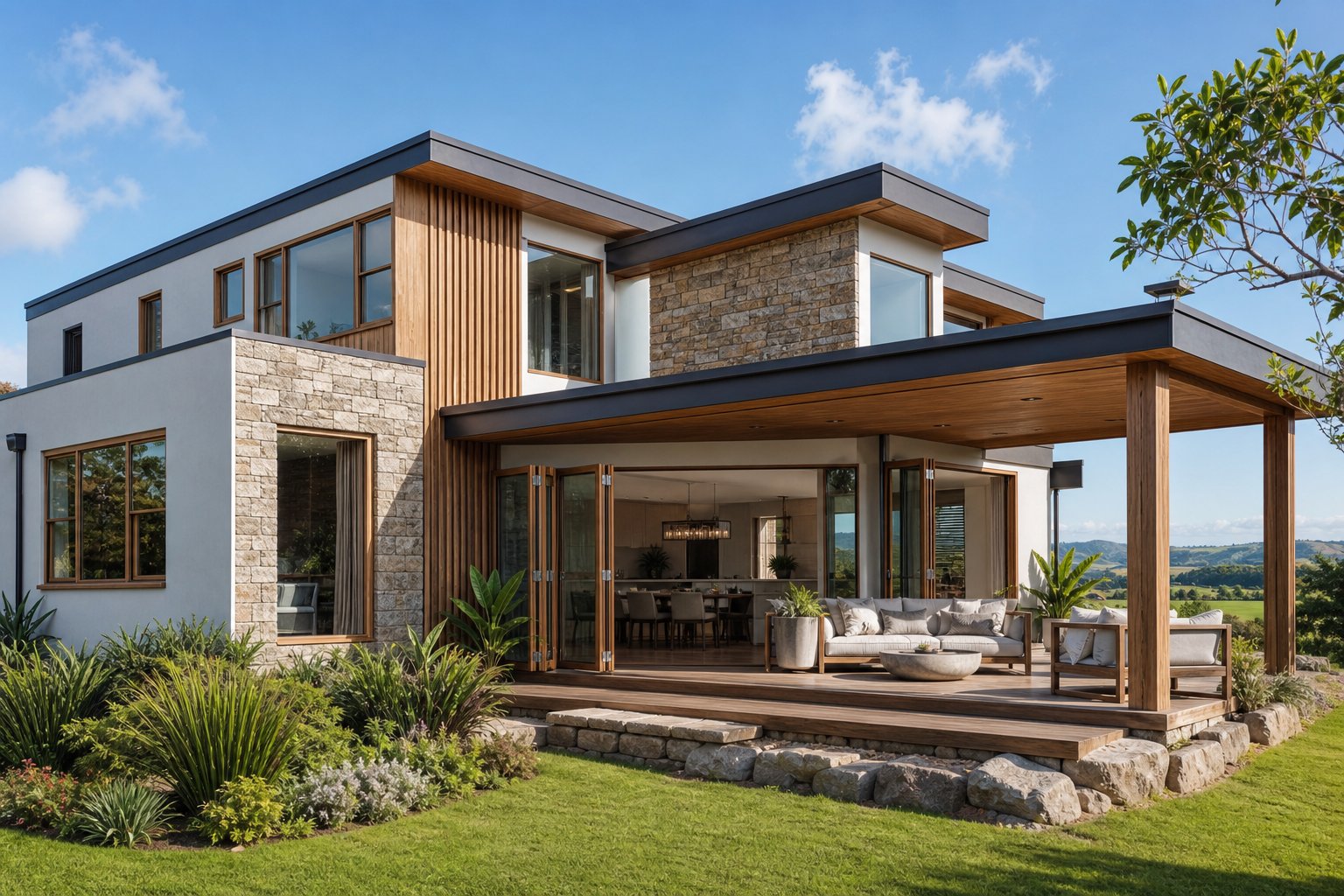
A RAL code tells you the colour. It does not tell you the texture, the sheen level, or whether the frame will look like timber from the street. Beyond solid colour specification, two additional decisions shape the final appearance of your aluminium windows: whether to use a woodgrain sublimation finish, and whether to specify your chosen colour in a matt, satin, or gloss surface. Both choices alter the visual character of the frame significantly, and both carry practical implications for maintenance and longevity.
Woodgrain and Textured Finishes Beyond Solid RAL Colours
Woodgrain aluminium window finishes replicate the appearance of natural timber species without any of the maintenance burden that real wood demands. The process uses sublimation printing: a base powder coat is applied to the aluminium profile first, then a specialised film carrying a high-resolution timber grain pattern is wrapped around the frame and heated. Under controlled temperature, the ink from the film sublimates (transitions directly from solid to gas) and penetrates the powder-coated surface, bonding permanently into the finish. The result is a durable, UV-resistant timber-look coating that protects the window from corrosion, UV rays, and airborne contaminants while delivering an authentic wood appearance.
Common timber replications include golden oak, natural oak, walnut, rosewood, and dark mahogany. Some manufacturers also offer grey-washed and weathered timber effects that suit contemporary coastal aesthetics. These finishes sit outside the RAL numbering system entirely and are specified by the manufacturer’s own product names or codes rather than a universal standard.
Woodgrain finishes are particularly well suited to heritage properties, barn conversions, Queenslander renovations, and rural builds where a timber appearance is desired but aluminium’s performance advantages are needed. They also work well on projects where council heritage overlays require a timber-like aesthetic but the homeowner wants to avoid the cyclical sanding, oiling, and repainting that real timber frames demand in the Australian climate. Windows, front doors, bifold doors, and sliding doors are all available in timber-look aluminium, allowing a consistent wood-effect appearance across every opening.
One practical note: because woodgrain finishes use a proprietary sublimation process rather than standard powder coating, they typically sit in the non-standard pricing and lead time category. Confirm availability and turnaround with your supplier early in the specification process.
Matt, Satin, and Gloss Finishes and How They Change Colour Appearance
Here is something that catches many homeowners off guard: the same RAL code looks noticeably different depending on the surface finish applied. A frame in dark grey aluminium RAL 7016 with a matt finish appears deeper, flatter, and more contemporary than the same RAL 7016 in a gloss finish, which reflects light, shows more surface detail, and reads as a slightly different aluminium gray color altogether. The RAL code is identical. The visual result is not.
This distinction matters because finish type affects not just aesthetics but also how the frame performs day to day. Industry specialists note that matt finishes are more scratch-resistant and easier to maintain, which is a key reason they dominate residential specification in Australia. Satin and gloss options exist but are less commonly used due to their tendency to show marks, fingerprints, and surface imperfections more readily.
- Matt finish — low reflectivity with a smooth, flat appearance. Hides minor surface imperfections and fingerprints well. More scratch-resistant and easier to clean. The current default for residential aluminium windows, particularly in darker colours where glare and reflection would be distracting.
- Satin finish — a subtle sheen sitting between matt and gloss. Offers a sleek, modern look with slightly more light reflection than matt. Less forgiving of marks and fingerprints. Less commonly available as many powder coating suppliers have reduced their satin range due to lower demand.
- Gloss finish — high reflectivity with a smooth, mirror-like surface. Traditional in character and visually striking on period-style homes. Shows dirt, water spots, scratches, and surface imperfections more readily. Requires more frequent cleaning to maintain appearance. Best suited to heritage restorations or projects where a polished, formal aesthetic is the intent.
- Textured finish — a stippled or slightly rough surface that is highly durable and resistant to scuffing. Primarily used on entrance doors rather than window frames. Excellent at hiding surface marks from daily contact and easier to clean than satin or gloss.
Finish choice also affects long-term appearance. Gloss finishes tend to show chalking and UV degradation more visibly over time, particularly on north-facing and west-facing elevations that cop the most intense Australian sun. Matt finishes age more gracefully, with any gradual surface change being far less perceptible. For dark grey aluminium frames in particular, matt is the overwhelmingly preferred option because it absorbs light rather than bouncing it back, giving the frame a solid, architectural presence on the facade.
When requesting samples from your supplier, always specify the finish type alongside the RAL code. A sample of RAL 7016 matt and RAL 7016 gloss side by side will demonstrate just how much sheen level transforms the perceived colour. This is especially critical for anyone choosing between similar dark greys, where finish can shift the visual weight of the frame as much as the RAL code itself.
Solid colours, woodgrain effects, and finish types cover the external face of the frame. But aluminium offers yet another layer of flexibility that most other framing materials cannot match: the ability to specify completely different colours on the inside and outside of the same window.
Dual-Colour Aluminium Windows and Heritage Area Colour Rules
Aluminium is one of the few framing materials that allows completely independent colour specification on the interior and exterior faces of the same profile. This capability, known as dual colour aluminium windows, means your frames can present one aluminium colour to the street and an entirely different one to your living spaces. It is a practical solution to a common design tension: the exterior needs to suit the facade, the streetscape, or council heritage requirements, while the interior needs to complement your floors, walls, and furnishings.
Dual-Colour Aluminium Windows Explained
The process is straightforward in principle. Each aluminium profile is powder-coated separately on its interior and exterior faces before assembly. The two colours are applied in sequence, with masking protecting the opposite face during each coating pass. The result is a single frame carrying two distinct finishes that meet cleanly at the frame’s edge, visible only when the window is open.
Some combinations appear on specification sheets far more often than others. The most common dual-colour pairing in Australia is RAL 7016 (Anthracite Grey) on the exterior with RAL 9010 (Pure White) on the interior. This gives you the contemporary street presence of grey aluminium windows while maintaining a clean, bright frame line inside that works with virtually any interior scheme. For period homes, RAL 6005 (Moss Green) exterior with RAL 9001 (Cream) interior is a popular heritage-sensitive combination. Jet black exteriors paired with white interiors suit industrial-modern builds where bold contrast defines the facade but softer tones are preferred inside.
Practical considerations worth factoring in early:
- Cost uplift — dual-colour specification typically adds 15 to 25 percent to the frame cost compared to a single-colour finish, due to the additional coating pass and masking labour
- Lead time — expect an additional one to two weeks beyond standard single-colour production timelines
- Frame depth — dual colour does not affect the physical frame dimensions; the same profile is used regardless of whether one or two colours are applied
- Consistency across openings — specify the same interior and exterior RAL codes across all windows and doors on the project to avoid mismatched tones between rooms
Suppliers like MEICHEN offer aluminium window systems with custom colour options, including dual-colour specification, allowing project teams to match both interior and exterior requirements from a single source. This kind of unified supply simplifies colour coordination across windows, bifold doors, and sliding doors on the same build.
Choosing Colours for Heritage Areas and Planning Restrictions
Colour selection becomes significantly more constrained when your property sits within a heritage overlay, a heritage conservation area, or carries individual heritage listing. In Australia, local councils manage these designations through their planning schemes, and the rules vary considerably between municipalities. What flies in one council area may trigger a refusal notice in another.
The core principle is consistent, though. Heritage overlays exist to protect the visual character of historically significant streetscapes. External window frame colours that clash with the established character of the area, or that introduce materials and finishes inconsistent with the building’s period, are likely to face objection during the development application (DA) process. Council heritage advisors assess proposed changes against the area’s statement of significance and any applicable heritage design guidelines.
Typically, the following RAL colours are considered acceptable for heritage-sensitive projects across most Australian councils:
- RAL 9010 (Pure White) — the most universally accepted heritage frame colour; suits federation, Victorian, and Edwardian properties
- RAL 9001 (Cream) — a warmer alternative to white; appropriate for sandstone buildings, rendered cottages, and interwar homes
- RAL 6005 (Moss Green) — a traditional heritage green widely accepted for period properties, particularly Victorian and Edwardian terraces
- RAL 6009 (Fir Green) — a darker heritage green suited to formal period facades and properties with established dark-framed character
- RAL 7016 (Anthracite Grey) — increasingly accepted on mid-century and post-war heritage properties where dark metal frames were original
- RAL 8017 (Chocolate Brown) — appropriate for properties with dark timber joinery traditions, particularly in rural heritage areas
- RAL 9005 (Jet Black) — acceptable where original windows were painted black or where iron-framed windows are being replaced
Before committing to any aluminium colour for a heritage-listed or overlay property, contact your local council’s heritage advisor for informal pre-application advice. This conversation costs nothing and can save you from specifying a colour that will be refused at DA stage. Ask specifically whether the council has published heritage design guidelines for your area, as these often include explicit colour palettes or acceptable RAL ranges for external joinery.
A refused DA does not just delay your project. It means redesigning, resubmitting, and potentially reordering frames in a compliant colour, all at additional cost. Heritage planning specialists consistently advise that early engagement with the planning authority is the single most effective way to avoid refusal. The same principle applies in Australia: confirm your colour is acceptable before you order, not after.
This is also where dual-colour specification proves its value on heritage projects. You can present a council-approved heritage green or white to the street while enjoying a modern neutral grey or warm cream on the interior. The exterior satisfies planning requirements; the interior satisfies your design preferences. Both goals met with a single window system.
With colour, finish, and compliance sorted, the final piece of the puzzle is matching your selection to the specific architectural style of your property, ensuring the frames enhance rather than fight the building’s character.
Choosing the Right Aluminium Window Colours for Your Property Style
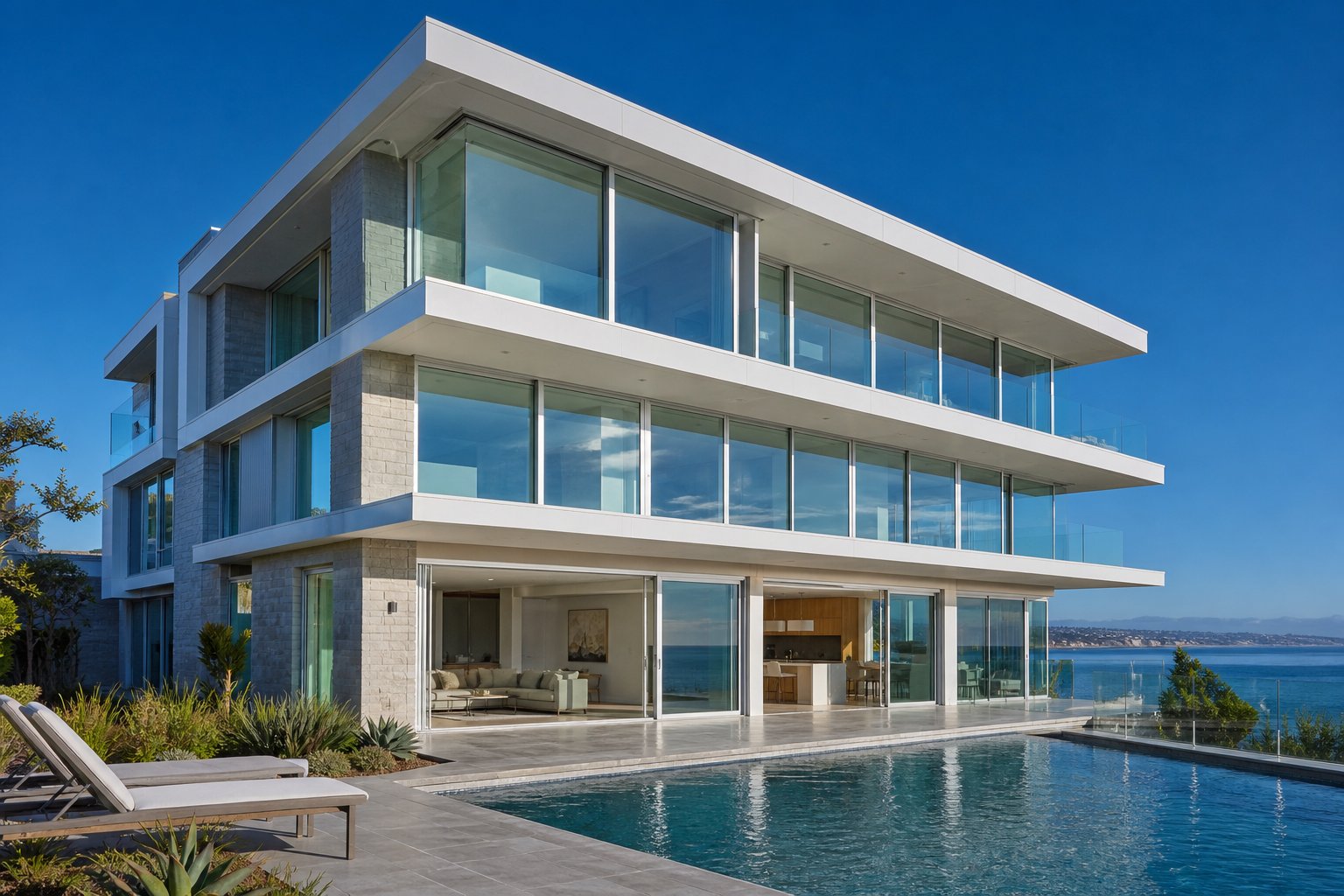
Knowing the full RAL palette is useful. Knowing which window colours actually suit your specific property type is what gets you to a confident decision. Architectural style, building materials, roof colour, and surrounding landscape all influence which RAL codes will enhance your facade rather than fight it. The recommendations below are drawn from common specification patterns across Australian residential projects, organised by the property types that dominate our built environment.
Matching Aluminium Window Colours to Your Property Style
A modern new build in a Melbourne growth corridor has entirely different framing needs than a federation cottage in inner Sydney or a converted barn on a rural acreage. The colour that makes one property sing can make another look disjointed. Here is how the most commonly specified aluminum window colors map to Australian property styles in practice.
| Property Type | Recommended Colours | Finish Type | Key Consideration |
|---|---|---|---|
| Modern new builds (rendered, cladded, or mixed-material facades) | RAL 7016 (Anthracite Grey), RAL 9005 (Jet Black), RAL 7021 (Black Grey) | Matt | Dark frames create contrast against light walls and emphasise clean architectural lines. Matt finish avoids glare on large glazing areas. |
| Victorian and Edwardian terraces | RAL 9010 (Pure White), RAL 6005 (Moss Green), RAL 9005 (Jet Black) | Matt or satin | Heritage sensitivity is paramount. White and green are the safest choices for council approval. Black suits properties with original iron-framed character. |
| Federation homes | RAL 9001 (Cream), RAL 9010 (Pure White), RAL 6005 (Moss Green) | Matt or satin | Warmer whites and heritage greens complement red brick, terracotta, and decorative timber detailing typical of the era. |
| 1930s–1950s brick homes | RAL 7016 (Anthracite Grey), RAL 9001 (Cream), RAL 7040 (Window Grey) | Matt | Anthracite grey delivers a modern update without clashing with warm brick tones. Cream maintains a traditional feel for less dramatic renovations. |
| Barn conversions and rural properties | Woodgrain finishes, RAL 6005 (Moss Green), RAL 8014 (Sepia Brown), RAL 6009 (Fir Green) | Matt or textured | Frames should integrate with the landscape rather than contrast against it. Earthy tones and timber-look finishes ground the building in its setting. |
| Coastal homes (weatherboard, rendered, or fibro) | RAL 9010 (Pure White), RAL 7015 (Slate Grey), RAL 5014 (Pigeon Blue) | Matt | Salt-air corrosion resistance is critical. Lighter and blue-toned greys complement coastal light. Ensure marine-grade powder coating is specified. |
| Queenslanders and elevated timber homes | RAL 9010 (Pure White), RAL 9001 (Cream), RAL 6005 (Moss Green) | Matt or satin | White frames maintain the traditional character of the streetscape. Green offers a heritage-appropriate alternative that pairs with painted timber balustrades. |
These pairings are starting points, not rules. A 1930s brick semi can absolutely carry jet black frames if the renovation intent is a bold contemporary transformation. The question is whether you want your windows to blend with the building’s existing character or deliberately contrast against it. Both approaches work when executed with intention.
What colour is aluminum in its finished state? Whatever your property demands. That flexibility is the entire point of choosing aluminium over more limited framing materials. A Metra Building style guide reinforces this principle: aluminium adapts to classic, modern, industrial, Nordic, and eclectic styles equally well through colour and finish selection alone.
Ensuring Colour Consistency Across Windows, Doors, and Frames
A single property rarely involves just windows. Bifold doors opening to the deck, a sliding door off the master bedroom, an entrance door at the front, and perhaps a set of louvre windows in the bathroom all need to read as part of the same design language. Colour inconsistency between these elements is one of the most common and most visible specification failures on residential projects.
The risk is real because different product types sometimes come from different manufacturing lines, different system houses, or even different suppliers. A bifold door system and a casement window system may both offer RAL 7016, but if they are powder-coated in different batches, by different coaters, or with different powder suppliers, subtle shade variation can result. Under direct sunlight, even a minor batch difference becomes noticeable where two products sit adjacent on the same facade.
Three steps eliminate this risk:
- Specify the exact same RAL code and finish type across every aluminium product on the project. RAL 7016 matt on the windows but RAL 7016 satin on the doors will read as two different colours in certain light.
- Source from a single supplier or system house wherever possible. When all products run through the same coating line in the same batch, colour consistency is virtually guaranteed.
- Confirm batch coordination with your supplier at order stage. Ask whether your windows and doors will be coated together or separately, and request that they be batched simultaneously if feasible.
Suppliers like MEICHEN offer multiple aluminium window types within a unified system, which allows homeowners and project teams to maintain colour consistency across their entire window and door specification from a single source. This approach removes the batch-variation risk that comes with sourcing different products from different manufacturers.
Colour consistency also extends to ancillary elements. Flashings, reveal trims, and external corner moulds should be specified in the same RAL code as the frames. If your builder is sourcing these separately from a sheet metal supplier, provide them with the exact RAL code and finish type to ensure everything matches when installed.
Your next steps from here are practical. Request physical powder-coated samples in your shortlisted RAL codes and view them against your actual wall material at different times of day. If your property sits within a heritage overlay or conservation area, contact your local council’s heritage advisor before finalising your colour. And when you are ready to move from selection to specification, explore project-ready aluminium window suppliers who offer the full RAL colour range with custom finish support, ensuring every opening on your home carries the same consistent, considered colour from facade to interior.
Aluminium Windows Colour Chart FAQs
1. What is the most popular colour for aluminium windows in Australia?
RAL 7016 Anthracite Grey is the most popular colour for modern Australian residential builds, closely followed by RAL 9005 Jet Black and RAL 9010 Pure White. These three colours have dominated industry ordering data for over a decade because they complement the widest range of building materials, are stocked as standard by most manufacturers (meaning shorter lead times and no colour surcharge), and carry strong resale appeal. Anthracite grey in particular has become the defining frame colour of contemporary Australian architecture due to its ability to create contrast against light render and pale cladding without the visual weight of full black.
2. What is the difference between RAL 9010 and RAL 9016 white for aluminium windows?
RAL 9010 Pure White is a soft, warm off-white with a faint creamy undertone, making it the preferred choice for traditional homes, heritage replacements, and federation-style properties. RAL 9016 Traffic White is a cooler, crisper white with a slight greyish cast that reads as brighter and more neutral. RAL 9016 suits modern minimalist builds and commercial applications where a clean contemporary white is needed. Under Australian sunlight, the difference between the two is clearly visible, so requesting physical powder-coated samples is recommended before committing to either.
3. Can aluminium windows be two different colours on the inside and outside?
Yes, aluminium frames can be powder-coated in completely different colours on their interior and exterior faces through a process called dual-colour specification. The most common combination in Australia is RAL 7016 Anthracite Grey on the exterior with RAL 9010 Pure White on the interior. This allows your frames to suit the streetscape externally while complementing your interior design. Dual-colour specification typically adds 15 to 25 percent to the frame cost and one to two weeks to production lead times. Suppliers like MEICHEN offer dual-colour aluminium window systems, allowing homeowners to coordinate both faces from a single source.
4. Do non-standard RAL colours cost more for aluminium windows?
Yes, choosing a non-standard RAL colour typically adds 10 to 15 percent to the frame cost and extends lead times by two to four weeks compared to standard finishes. This is because the powder must be specially ordered and frames are often batched separately for coating. Standard colours like RAL 7016, RAL 9005, and RAL 9010 are pre-stocked or frequently batched by Australian manufacturers, so they ship within normal production windows of four to six weeks. If your preferred colour falls outside the standard range, confirm availability and lead times early in the design process to avoid delays cascading through your build programme.
5. What aluminium window colours are acceptable in heritage conservation areas?
Heritage overlays and conservation areas in Australia typically accept a limited palette of traditional frame colours. The most universally approved options include RAL 9010 Pure White for Victorian and Edwardian properties, RAL 9001 Cream for sandstone and rendered heritage homes, RAL 6005 Moss Green as a classic heritage green, RAL 6009 Fir Green for darker period facades, and RAL 9005 Jet Black where original iron-framed windows are being replaced. Requirements vary between councils, so always contact your local heritage advisor for pre-application advice before specifying a colour. Dual-colour aluminium windows can satisfy both council requirements externally and your interior design preferences.
More Window & Door Guides