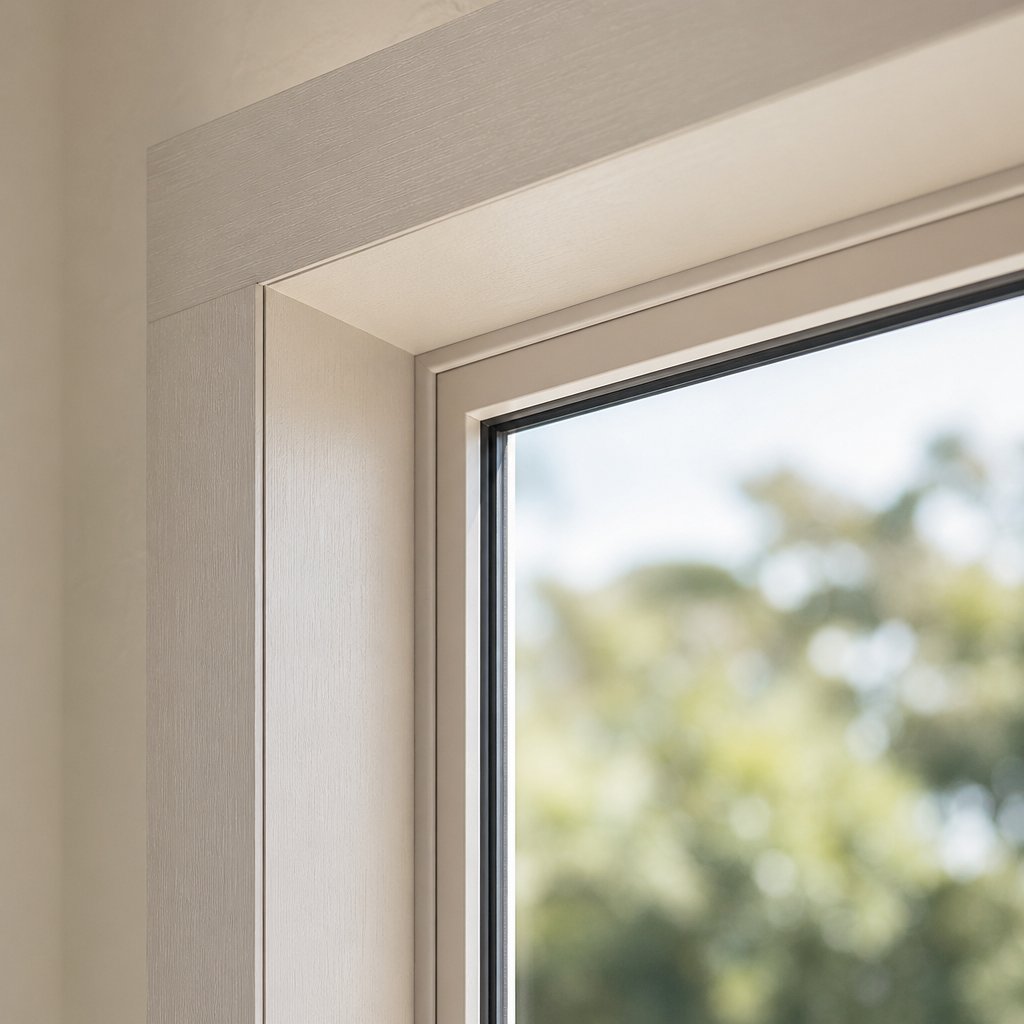
Yes, You Can Respray Aluminium Windows
The short answer is yes — you can absolutely respray aluminium windows, and the results can rival a factory finish when the job is done right. Faded frames, outdated colours, and chalky oxidation are all fixable without ripping out perfectly functional windows. The key lies in understanding what respraying actually involves and why aluminium makes it possible in the first place.
What Respraying Actually Means for Aluminium Frames
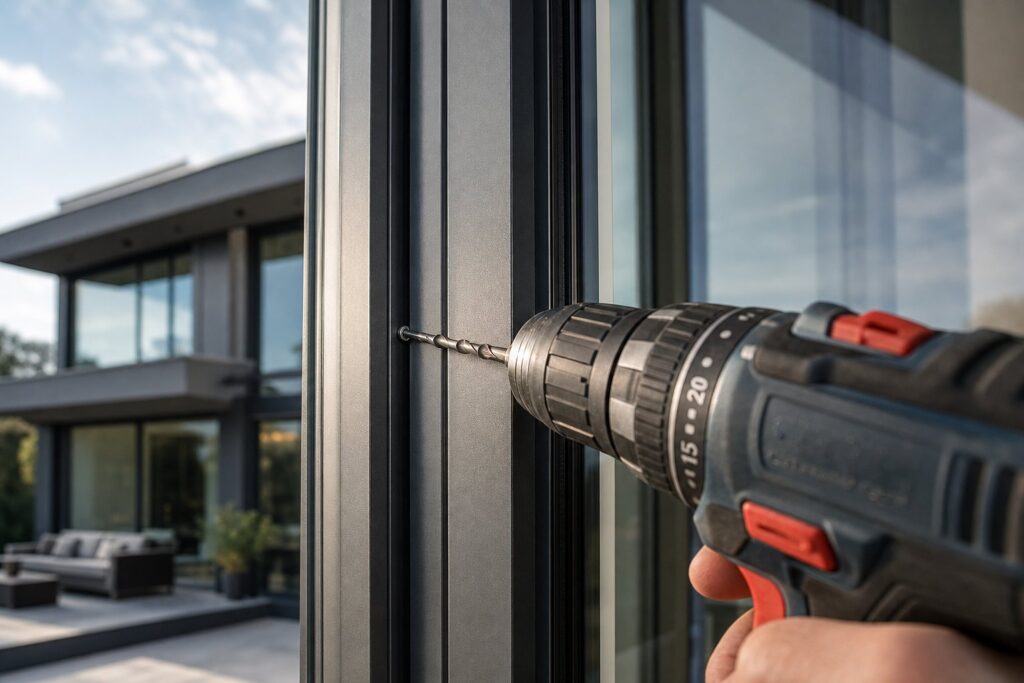
Respraying is not the same as grabbing a brush and a tin of house paint. In this context, it refers to the spray application of a multi-coat paint system — primer, colour coats, and sometimes a clear coat — applied with professional-grade equipment like an HVLP gun or high-quality aerosol system. The difference between respraying and a basic touch-up is significant. A proper respray builds a durable film that bonds chemically and mechanically to the aluminium substrate, whereas brush painting or a quick rattle-can pass tends to peel within months.
Two main paths exist for homeowners looking to paint aluminium windows. You can tackle it as a DIY project with the right spray equipment and materials, or you can hire a professional service that handles everything on-site (or removes frames for off-site powder coating). Both approaches work — the deciding factor is your comfort level with preparation and spray technique.
Why Aluminium Responds Well to Respraying
Can you paint aluminium window frames with confidence that the finish will hold? You can, and aluminium is actually one of the better substrates for it. Unlike timber, it won’t rot, warp, or absorb moisture that causes paint to blister from within. It’s dimensionally stable, non-porous, and incredibly durable — many aluminium frames last 45 years or more. Can you spray paint aluminium and expect it to stick? Absolutely, provided you respect the surface chemistry. Aluminium forms a thin oxide layer almost instantly when exposed to air, and this layer needs to be addressed with the right primer system rather than painted over blindly.
Proper preparation determines roughly 90% of the outcome when you paint aluminium windows. Skip the cleaning, sanding, or priming steps and the finish will fail — no matter how expensive the topcoat.
That preparation piece is where most DIY resprays go wrong, and it’s where the real difference between a finish that lasts years and one that peels in a single season becomes clear.
When Respraying Makes Sense and When It Does Not
Not every aluminium window is a good candidate for respraying. Some frames just need a colour refresh, while others have deeper issues that paint cannot fix. Knowing the difference saves you time, money, and the frustration of a finish that fails because the underlying problem was never addressed.
Signs Your Windows Are Good Candidates for Respraying
Can you repaint aluminium window frames that have simply lost their lustre? In most cases, yes — and the results are well worth the effort. Respraying works best when the frame itself is structurally sound but cosmetically tired. Here are the situations where a respray makes clear sense:
- Faded or chalky colour from years of UV exposure
- An outdated colour scheme that no longer suits your home’s exterior
- Minor surface oxidation — that white powdery residue that develops over time
- A cosmetic refresh as part of a broader renovation or pre-sale preparation
- Frames that still operate smoothly, seal properly, and show no structural damage
High-quality aluminium windows can last between 25 and 45 years — and often longer with proper care. That kind of lifespan means many homes have frames that are perfectly functional but visually dated. Repainting aluminum window frames in this condition is a practical, cost-effective way to extend their service life without the disruption and expense of full replacement.
When Respraying Is Not Worth the Effort
Can window frames be painted if they have deeper problems? Technically yes, but the paint won’t solve what’s actually wrong. A respray is a cosmetic treatment, not a structural repair. Walk away from respraying if you notice any of the following:
- Severe aluminium window corrosion with visible pitting or holes in the frame
- Warped or bent profiles that no longer sit square in the opening
- Failed or cracked rubber seals causing drafts or water ingress
- Condensation trapped between double-glazed panes (indicating seal failure)
- Frames that rattle, jam, or no longer lock securely
- Single-glazed windows where upgrading thermal performance is the real priority
In these scenarios, the money spent on respraying would be better directed toward repair or replacement. Painting over pitted corrosion, for example, creates a surface that looks acceptable for a few weeks before the coating lifts and flakes away from the compromised substrate beneath.
Warranty and Insurance Considerations
One question homeowners often overlook: does respraying void your window warranty? Most manufacturer warranties exclude cosmetic modifications — including painting over the factory finish without authorisation. If your windows are still within their finish warranty period (typically 10 to 15 years for standard powder coating), applying a respray could void that coverage. Check your warranty documentation before proceeding.
Home insurance is less of a concern. Standard policies cover structural damage and weather events, not cosmetic finishes. A respray won’t typically affect your cover, but it’s worth confirming with your insurer if you’re making significant changes to a heritage-listed property or strata-managed building where external appearance is regulated.
For frames well past their warranty period — and most windows being considered for a respray fall into this category — the warranty question is moot. The real value equation is straightforward: a professional respray at a fraction of replacement cost can keep structurally sound frames looking sharp for years to come, making it one of the smartest investments for ageing aluminium joinery.
How to Prepare Aluminium Frames for a Lasting Respray
Preparation is where resprays succeed or fail. Every peeling finish you’ve seen on a metal window frame traces back to a shortcut taken during prep — a greasy residue left behind, oxidation painted over, or primer applied to a surface that wasn’t ready to receive it. If you want to know how to paint aluminum window frames without the coating lifting within a season, the answer lives entirely in these steps.
The best way to paint aluminium is methodically. Each stage removes a specific barrier to adhesion, and skipping even one creates a weak link that moisture, UV, and thermal cycling will exploit. Here’s the full sequence, broken down with the reasoning behind every step.
- Clean with sugar soap or a heavy-duty degreaser — removes oils, grime, silicone residues, and atmospheric deposits that prevent any coating from gripping the surface.
- Identify and treat oxidation — that white, chalky powder on aged aluminium is aluminium oxide buildup, and it must be removed or the primer will bond to loose residue rather than solid metal.
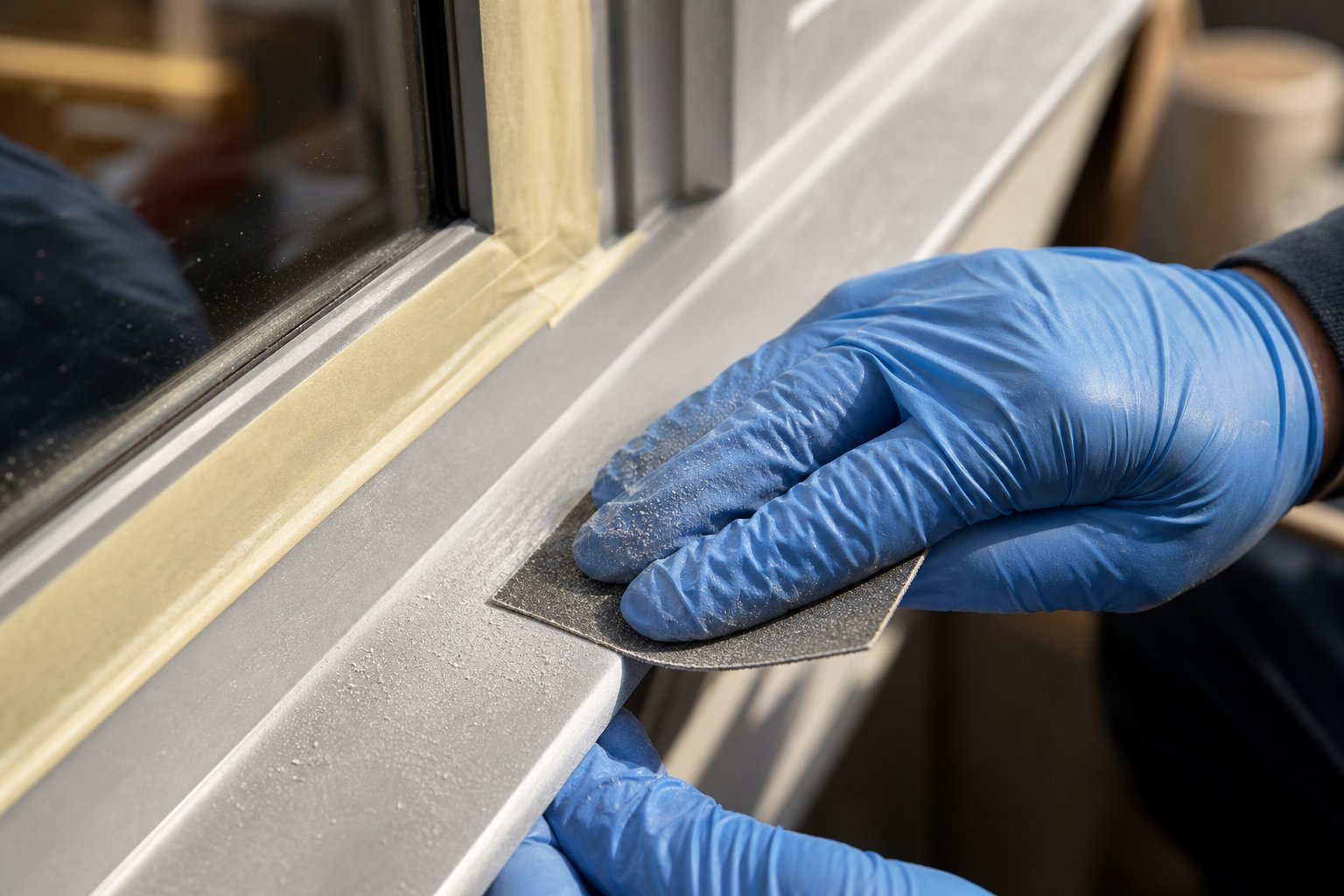
- Sand with the correct grit grade — creates a mechanical “tooth” for the primer to key into, and removes the remaining oxide layer down to fresh aluminium.
- Wipe with methylated spirits or acetone — a final degreasing pass that eliminates sanding dust and any oils transferred from your hands during the process.
- Mask glass, hardware, and surrounding surfaces — protects everything you don’t want coated and ensures clean, sharp paint lines on the finished frame.
Cleaning and Degreasing Aluminium Frames
Start with a thorough wash using sugar soap solution or a dedicated aluminium degreaser. Years of handling, airborne pollutants, and even residue from cleaning products leave an invisible film on the frame surface. This film acts as a release agent — paint applied over it will adhere to the contamination rather than the metal, and the whole system peels away as a sheet once stressed.
Work the solution into every channel and rebate with a stiff nylon brush, then rinse completely with clean water. For frames near kitchens or barbecue areas, where grease buildup is heavier, a second pass with tri-sodium phosphate (TSP) cuts through stubborn residue that sugar soap alone may miss. Allow the frames to dry fully before moving on — trapped moisture beneath primer causes blistering within weeks.
Sanding Grades and Oxidation Treatment
Oxidation on aluminium appears as a dull, white powdery coating. On lightly affected frames, a scuff with 240-grit sandpaper is enough to remove the haze and create surface texture for primer adhesion. For heavier oxidation — where the chalking is thick and the surface feels rough or pitted — drop to 120-grit to cut through the buildup more aggressively before finishing with a 240-grit pass to smooth the profile.
How do you paint aluminium that’s been neglected for decades? The same way, just with more patience at this stage. Sand in one direction following the frame profile, not in circles, to avoid creating an uneven surface that shows through the topcoat. The goal is a uniform matte finish across every face of the frame — no shiny patches, no rough gouges.
Once sanded, wipe the entire frame with a lint-free cloth dampened with methylated spirits or acetone. This removes every particle of sanding dust and performs a final degrease in one pass. Even fingerprints left during sanding contain enough oil to cause localised adhesion failure, so wear nitrile gloves from this point forward and avoid touching bare aluminium with ungloved hands.
Why Etch Primer Is Essential on Aluminium
Here’s the science that explains why standard primers fail on aluminium: the moment you sand back to fresh metal, a new oxide layer begins forming almost instantly — within seconds of air exposure. This reformed oxide is microscopically smooth and chemically inert, meaning regular primers sit on top of it without truly bonding. Thermal expansion and contraction then crack that weak bond, and peeling follows.
Self-etch primer solves this problem through chemistry rather than relying on mechanical grip alone. It contains phosphoric acid that reacts with the aluminium oxide layer, dissolving it and simultaneously depositing zinc and resin into the micro-etched surface. The result is a chemical bond at the molecular level — far stronger than paint simply sitting in sanding scratches.
This is precisely why timing matters. Apply your etch primer within 30 to 60 minutes of completing the final solvent wipe. The longer you wait, the thicker the reformed oxide becomes, and the harder the primer has to work to penetrate it. For anyone learning how to paint an aluminum window frame properly, this single detail — priming promptly after degreasing — is the difference between a finish that lasts years and one that lifts within months.
Understanding how to paint metal window frames comes down to respecting this chemistry. You cannot shortcut your way to adhesion on aluminium. Every step in the sequence removes a specific obstacle: grime, oxidation, surface smoothness, dust, and finally the reformed oxide itself. Miss one, and you’ve given the finish a reason to fail. Complete them all within the correct timeframe, and you’ve created the foundation for a coating system that genuinely bonds to the substrate rather than merely resting on it.
With preparation handled correctly, the next critical decision is which primer and topcoat system to pair with your freshly prepped frames — a choice that determines both the durability and the final appearance of your respray.
Choosing the Right Paint and Primer System
A perfectly prepped aluminium frame is only half the equation. The coating system you apply on top determines whether your respray holds up for a decade or starts chalking after a couple of summers. Choosing the right window frame paint involves matching primer chemistry to your substrate and selecting a topcoat that can handle UV, thermal cycling, and whatever your local climate throws at it.
Primer Options and How They Bond to Aluminium
Three primer categories dominate the aluminium respraying space, and each bonds to the metal through a different mechanism. Understanding what paint to use on aluminium starts here — at the primer level — because no topcoat performs well on a poorly primed surface.
Self-etch primer contains phosphoric acid that chemically reacts with the aluminium oxide layer, dissolving it while simultaneously depositing a zinc-rich resin film. This creates a molecular bond rather than relying purely on mechanical grip. Self-etch primers are widely available in aerosol cans and are the go-to choice for residential resprays where frames face moderate weather exposure.
Two-part epoxy primer is the professional standard. Mixing a resin component with a hardener triggers a chemical cure that produces an extremely hard, moisture-resistant film. Epoxy primers score 5 out of 5 for adhesion on aluminium and offer unmatched corrosion protection — making them the non-negotiable choice for coastal properties or frames exposed to salt air and high humidity.
Universal metal primers (sometimes labelled bonding primers or multi-surface primers) offer convenience but compromise on performance. They provide adequate adhesion for interior-only frames or low-exposure situations, though they lack the chemical bonding strength of etch or epoxy systems and are not recommended for exterior aluminium trim paint applications.
| Primer Type | Adhesion Method | Durability | Best Use Case |
|---|---|---|---|
| Self-Etch (Phosphoric Acid) | Chemical bond — acid reacts with oxide layer | Good (8–12 years with quality topcoat) | Residential exterior, moderate climates |
| Two-Part Epoxy | Chemical cure — resin/hardener cross-links to surface | Excellent (15+ years in professional systems) | Coastal, commercial, high-exposure frames |
| Universal Metal Primer | Mechanical grip — relies on surface profile | Fair (5–7 years, interior preferred) | Interior frames, low-wear situations |
Topcoat Systems From DIY to Professional Grade
Your topcoat is the layer that faces the world — UV radiation, rain, temperature swings, and physical contact. It needs to be flexible enough to move with aluminium’s thermal expansion without cracking, and hard enough to resist scratching and chalking over time.
Two-pack polyurethane is the best paint for aluminum window frames when longevity is the priority. This two-component system (base and hardener) cures into an incredibly tough, chemical-resistant film with outstanding gloss retention. Professional spray painters use it almost exclusively for on-site aluminium resprays because it delivers a finish quality close to factory powder coating. The trade-off is a strict pot life once mixed — typically 2 to 4 hours — and the need for proper respiratory protection during application.
Acrylic enamel is the more accessible DIY option. Single-pack acrylics don’t require mixing with a hardener, making them forgiving for less experienced sprayers. They provide a solid finish for paint for aluminum windows in sheltered positions, though they chip more easily and have a shorter lifespan than two-pack systems — particularly in harsh weather. For exterior frames in full sun, expect to recoat sooner than you would with polyurethane.
Powder coating sits in a different category entirely. Applied electrostatically and oven-cured at around 200°C, it’s a factory process rather than an on-site spray option. Powder coating delivers the most durable finish available but requires frame removal and transport to a specialist facility.
How Many Coats You Actually Need
A durable respray system on aluminium typically involves four to five layers working together:
- One coat of etch primer — bonds chemically to the prepared aluminium surface
- One coat of build primer (optional but recommended) — fills minor imperfections and provides a uniform base for colour
- Two coats of colour — the first achieves coverage, the second delivers depth and an even sheen
- One clear coat (metallic or pearl finishes only) — protects metallic flake from UV degradation and adds gloss
Drying times between coats matter more than most DIYers realise. Each layer needs adequate flash-off time — the period where solvents evaporate before the next coat is applied. For spray application, this is typically 10 to 20 minutes between passes within the same coat, and 4 to 24 hours between different coat types depending on the product and ambient temperature. Applying a topcoat over primer that hasn’t fully cured traps solvents beneath the surface, leading to blistering or soft spots that never harden properly.
For exterior-facing frames — which describes most aluminium windows in Australian homes — the best paint for aluminum window frames is a two-pack polyurethane over etch primer. Interior-only frames in bathrooms or enclosed areas can get away with a quality acrylic enamel, since they face minimal UV and weather stress. The coating system you choose should reflect the exposure level, not just the budget.
Getting the primer and topcoat pairing right sets the ceiling for how long your respray will last. But the method of application — whether you spray it yourself or hand the job to a professional — introduces its own set of variables that affect the final result just as much as product choice.
DIY Respraying vs Hiring a Professional
Knowing the right products is one thing. Applying them well enough to achieve a smooth, lasting finish is another challenge entirely. Whether you spray paint window frames yourself or hand the job to experienced window frame painters, each path comes with trade-offs in cost, quality, and time. Here’s an honest look at what both approaches actually involve — plus a third option that sits between the two.
What DIY Respraying Realistically Involves
Tackling the job yourself is entirely feasible if you’re comfortable with spray equipment and willing to invest serious time in preparation. But let’s be clear about what “DIY” means here — it’s not a Saturday afternoon project.
Equipment you’ll need:
- An HVLP spray gun with a 1.3–1.5 mm nozzle tip, or high-quality aerosol cans formulated for metal
- An air compressor (if using an HVLP gun) capable of delivering consistent pressure at 25–30 PSI
- A P2-rated respirator — two-pack paints release isocyanates that are genuinely dangerous to inhale
- Masking tape, plastic sheeting, and masking paper to protect glass and surrounding surfaces
- Sandpaper (120 and 240 grit), degreaser, lint-free cloths, and nitrile gloves
Skill level and time commitment: Expect to spend 2 to 4 hours per window on preparation alone — cleaning, sanding, degreasing, and masking. The actual spraying adds another 1 to 2 hours per window when you factor in flash-off times between coats. A house with 10 windows can easily consume an entire weekend just on prep, with spraying spread across a second day.
Common mistakes that ruin DIY results: Runs from holding the gun too close or moving too slowly. Orange peel texture from incorrect air pressure or spraying in cold conditions. Dust contamination from working in windy or dusty environments without any form of enclosure. Rushing the job — skipping sanding, applying coats too quickly, or painting in direct sunlight — accounts for most DIY failures on aluminium frames.
If you want to paint aluminum window frames yourself and achieve a genuinely smooth result, practice your spray technique on cardboard or scrap metal first. Learning how to paint window frames with a spray gun takes repetition, and your front windows aren’t the place to develop that muscle memory.
What Professional On-Site Respraying Looks Like
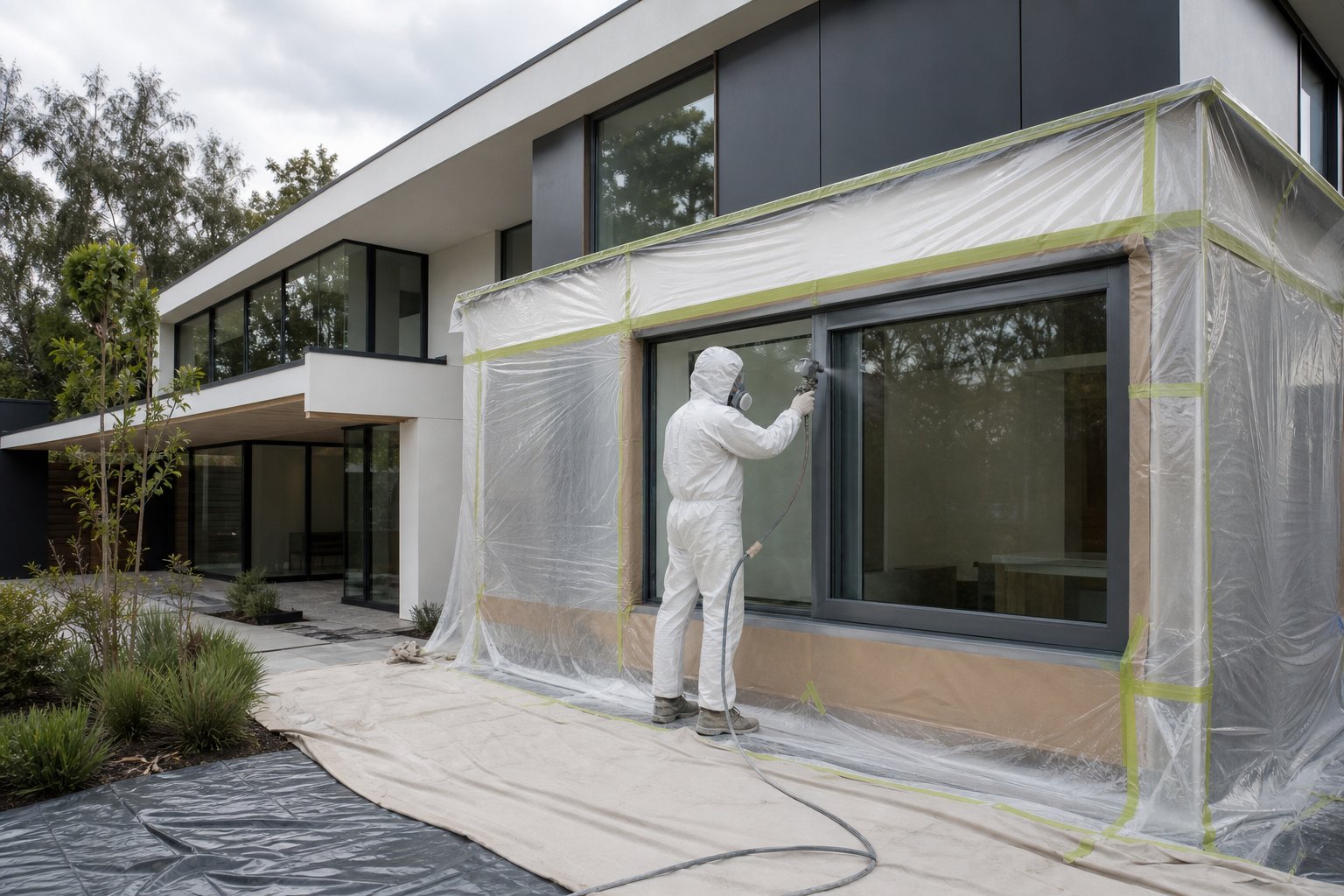
Professional window frame painters bring controlled conditions to your home rather than requiring frame removal. The process typically involves erecting a temporary enclosure or tenting system around each window — essentially a mobile spray booth that keeps dust out and overspray contained. Some operators use filtered extraction systems to maintain air quality within the enclosure during application.
The coating system professionals apply is almost always a two-pack polyurethane over etch primer — the same chemistry used in automotive refinishing. They’ll handle all preparation, priming, and multi-coat application in a single visit, with most standard-sized windows completed in one day. A full house of 15 to 20 windows typically takes 3 to 5 days depending on access and weather conditions.
What to look for when hiring:
- Public liability insurance — non-negotiable for anyone working on your property
- A portfolio of completed aluminium window jobs (not just general painting)
- A written warranty on the finish — reputable operators offer 5 to 10 years
- Clear communication about which coating system they use and why
The advantage of professional on-site spraying is consistency. Experienced operators paint metal window frames daily, so they’ve already made (and corrected) every mistake a DIYer encounters for the first time. The finish quality is noticeably superior — even, smooth, and free of the texture issues that plague home attempts.
Off-Site Powder Coating as a Third Option
A middle ground exists for homeowners who want a factory-quality finish but don’t need the convenience of on-site work. Off-site powder coating involves removing the window frames entirely, transporting them to a specialist facility, and having them electrostatically coated and oven-cured at around 200°C. The frames are then returned and reinstalled.
This approach delivers the most durable finish available — powder coating bonds at a molecular level and resists chipping, scratching, and UV degradation better than any liquid paint system. The downside is disruption. Your window openings need temporary weatherproofing while frames are away (typically 5 to 10 business days), and removal and reinstallation adds labour cost on top of the coating itself. It’s best suited to renovations where windows are already being removed for other work, or where frames need hardware replacement at the same time.
| Factor | DIY Spray | Professional On-Site Spray | Off-Site Powder Coating |
|---|---|---|---|
| Difficulty Level | High — requires spray technique and careful prep | None for homeowner — fully managed | Low for homeowner — managed by specialist |
| Finish Quality | Variable — depends on skill and conditions | High — consistent, smooth, professional | Highest — factory-equivalent finish |
| Time Per Window | 3–6 hours (prep + spray + drying) | 1–2 hours (operator handles everything) | 5–10 business days (including transport) |
| Disruption | Moderate — windows remain in place | Low — tenting contains the work | High — openings exposed during process |
| Finish Lifespan | 5–8 years (acrylic) or 8–12 years (2-pack) | 10–15 years (two-pack polyurethane) | 15–25 years (oven-cured powder coat) |
Each method has its place. DIY suits a single window or tight budget where you’re willing to trade time for savings. Professional on-site spraying is the sweet spot for whole-house resprays where finish quality and convenience both matter. Off-site powder coating makes sense during major renovations or when you want the absolute longest-lasting result and can tolerate the downtime.
Whichever route you choose, the real question most homeowners circle back to is cost — and that’s where the numbers vary more than you might expect depending on method, location, and the number of frames involved.
Cost Breakdown for Painting Aluminium Window Frames
Cost is usually the deciding factor. You can research primers, watch spray technique videos, and plan your prep schedule — but eventually the question becomes: what will this actually cost me, and is it worth it compared to just replacing the windows? The answer depends heavily on which method you choose, how many frames you’re doing, and where you live in Australia.
Pricing for window frame painting varies significantly by region, window size, access difficulty, and the number of openings involved. A ground-floor casement in suburban Melbourne is a different proposition to a second-storey awning window on a coastal Queensland home requiring scaffolding and marine-grade coatings. The figures below reflect general Australian market ranges rather than fixed quotes — always get multiple estimates for your specific situation.
DIY Material Costs Per Window
Going the DIY route keeps costs low, but the savings come from your labour rather than cheap materials. Cutting corners on product quality defeats the purpose — budget primer and bargain paint will peel regardless of how well you prepared the surface.
For a single standard-sized window, expect to spend roughly $30 to $60 on materials: etch primer ($15–$25 per aerosol can, one can covers 2–3 windows), topcoat paint ($20–$40 per can or small tin), sandpaper in 120 and 240 grit ($5–$10), masking tape and plastic sheeting ($10–$15), degreaser and methylated spirits ($10–$15). These consumables stretch across multiple windows, so the per-window cost drops as you scale up.
The hidden expense is equipment. If you don’t own an HVLP spray gun and compressor, hiring a quality setup runs $80 to $150 per day from most tool hire outlets. A P2 respirator adds another $30 to $50. For a single window, equipment hire can double your total outlay — but across a full house of 10 or more frames, it becomes negligible per opening.
Professional Respraying Price Factors
Professional painting of aluminum windows typically falls between $200 and $500 per window for aluminium frames in Australia, depending on frame condition, access, and the coating system used. A standard repaint on frames in reasonable condition sits around $200 to $350, while premium finishes or custom colour systems push toward $500 or more per opening.
Several factors shift the price within that range:
- Frame condition — heavy oxidation or previous paint failure adds $50 to $120 in extra preparation
- Access difficulty — second-storey windows add $30 to $120 per frame; scaffolding requirements can add $300 to $800 per project
- Coating system — a standard two-pack finish is included in most professional quotes, but coastal-grade protection adds 25–35% to material costs
- Number of windows — bulk discounts of 10–25% typically apply for whole-house projects of 10 or more openings
Off-site powder coating sits higher again. The coating itself is comparable to professional spray pricing, but removal and reinstallation labour adds $150 to $300 per frame on top. Total cost per window for powder coating generally lands between $350 and $700 — justified by the superior durability and finish quality of the oven-cured result.
Respray vs Full Replacement Value Equation
Here’s where the maths becomes compelling. Full aluminium window replacement in Australia typically costs $1,500 to $4,000 per opening depending on size, glazing type, and installation complexity. Across a house with 12 to 15 windows, that’s a $20,000 to $50,000 project before you factor in making good the surrounding walls and trims.
Professional respraying the same house? Roughly 70–80% less than replacement cost. You’re looking at painting metal window frames for a fraction of what new units would run, while extending the functional life of structurally sound frames by another 10 to 15 years.
| Method | Approximate Cost Per Window (AUD) | Finish Quality | Expected Lifespan of Finish |
|---|---|---|---|
| DIY Spray (materials only) | $30–$60 (plus equipment hire) | Variable — skill dependent | 5–8 years |
| Professional On-Site Respray | $200–$500 | High — smooth, consistent | 10–15 years |
| Off-Site Powder Coating | $350–$700 (including removal/refit) | Highest — factory equivalent | 15–25 years |
| Full Window Replacement | $1,500–$4,000 | New — factory finish included | 20–30+ years (new frame and finish) |
The value equation is straightforward for most homeowners. If your frames are structurally sound, painting aluminum windows professionally delivers a like-new appearance at roughly one-fifth to one-quarter the cost of replacement. Even at the premium end of professional respraying, you’re spending a fraction of what new windows demand — and the finish will carry you through the next decade or more before any maintenance is needed.
Bulk pricing makes whole-house projects particularly attractive. Most professional operators discount by 10–25% when quoting 10 or more windows, since setup, travel, and equipment costs are amortised across the job rather than charged per frame. If you’re considering painting just a few windows now, it’s often more cost-effective to do the entire house in one go and lock in that volume rate.
Cost tells you what you’ll spend upfront — but the real return on that investment depends on how long the finish actually lasts once it’s on the frames, and what you do (or don’t do) to maintain it over the years that follow.
How Long a Respray Lasts and How to Maintain It
Spending money on a respray only makes sense if the finish holds up long enough to justify the investment. Durability varies dramatically depending on the coating system, your local climate, and whether you bother with basic aftercare. Here’s what to realistically expect — and how to squeeze the maximum life out of your resprayed frames.
How Long Different Respray Methods Last
Does paint stick to aluminum permanently? Not quite — every coating degrades eventually. But the gap between a finish that fades in three years and one that looks sharp for over a decade comes down to the system applied.
A DIY acrylic enamel respray typically lasts 5 to 8 years in moderate conditions. Single-pack acrylics lack the chemical cross-linking that gives professional coatings their toughness, so they chalk and fade faster — particularly on north and west-facing frames copping full sun.
A professional two-pack polyurethane respray significantly outlasts single-pack systems, delivering 10 to 15 years of solid performance when applied over proper etch primer. The two-component cure creates a harder, more UV-resistant film that resists chalking far longer than anything from an aerosol can.
Off-site powder coating sits at the top. Oven-cured at 200°C, standard powder coating lasts 15 to 20 years in typical residential conditions, with architectural-grade formulations pushing even further. It’s the closest you’ll get to a factory-original finish without buying new windows.
These figures assume correct preparation. Painted aluminum window frames that were poorly prepped — skipped sanding, no etch primer, contamination left on the surface — can start peeling within 12 months regardless of how premium the topcoat was.
Climate Factors That Affect Finish Longevity
Australia’s climate diversity means a respray in Hobart faces completely different stresses than one in Cairns or Fremantle. Regional conditions directly dictate how quickly any aluminium painted finish deteriorates.
- Coastal salt air — salt deposits accelerate corrosion beneath the paint film, particularly at edges and joints where coating thickness is thinnest. Homes within 1 km of the coast may see finish life reduced by 30–40% compared to inland properties.
- High UV exposure — intense sun breaks down paint binders and fades pigments. North and west-facing frames in Queensland, the NT, and Western Australia degrade fastest. UV-resistant topcoats are essential, not optional, in these regions.
- Tropical humidity — persistent moisture trapped against frame surfaces promotes adhesion failure from beneath. Adequate ventilation around frames and proper primer selection (epoxy over etch in high-humidity zones) mitigates this.
- Physical abrasion — frames near high-traffic areas, sliding tracks, or locations where objects regularly contact the surface wear through topcoats prematurely.
- Temperature extremes — repeated thermal cycling causes expansion and contraction that stresses rigid coatings. Two-pack polyurethanes handle this better than cheaper single-pack alternatives due to their inherent flexibility.
For anyone repainting aluminium windows in harsh coastal or tropical environments, factoring in a maintenance coat every 7 to 10 years is realistic planning rather than pessimism.
Maintenance Routine for Resprayed Frames
The difference between a respray that lasts its full expected lifespan and one that fails early often comes down to simple aftercare. Aluminium painted surfaces don’t need much attention — but they do need the right kind.
Do:
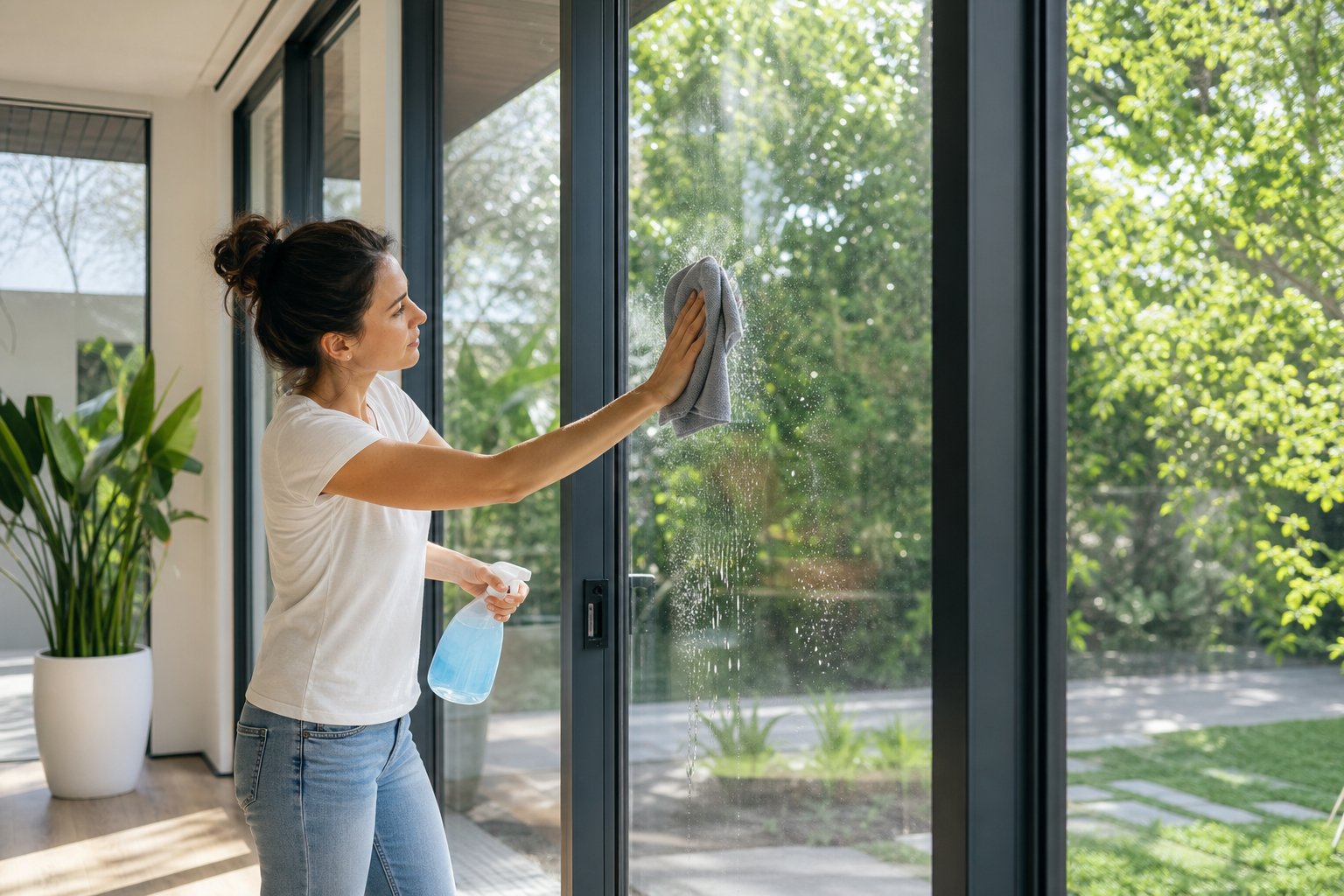
- Clean frames every 2 to 3 months with mild soap and warm water using a soft cloth or non-abrasive sponge
- Rinse thoroughly after cleaning to remove all soap residue — leftover detergent can cause staining and accelerate oxidation
- Inspect annually for early signs of failure: chalking (powdery residue when you run a finger across the surface), micro-cracking, or small chips where adhesion has let go
- Address chips and scratches promptly with touch-up paint before moisture reaches bare aluminium beneath
- Apply a UV-protective wax or sealant annually on frames in high-exposure positions
Don’t:
- Use abrasive cleaners, scouring pads, or steel wool — these cut through topcoats and expose primer or bare metal
- Spray frames with high-pressure washers — the force can lift edges of the coating, especially at joints and corners
- Allow sprinkler systems to repeatedly hit resprayed frames — mineral deposits etch into the finish over time
- Ignore chalking or peeling spots — small failures spread rapidly once moisture gets underneath the film
Knowing how to repaint aluminium windows is valuable, but knowing how to maintain them so you don’t have to repaint prematurely is where the real savings live. A consistent low-effort routine — a quarterly wash, an annual inspection, and prompt touch-ups — can extend your finish life by three to five additional years beyond its baseline expectancy.
Longevity also ties back to colour choice. Darker shades absorb more heat and UV energy, which accelerates binder breakdown — a factor worth considering before you commit to a colour that looks stunning but works against the finish chemistry in your specific climate.
Colour Selection and Heat Considerations for Aluminium Window Frames
Colour does more than change how your aluminum window frame looks — it influences heat absorption, maintenance frequency, and even resale appeal. Picking the right shade and finish type is a design decision and a practical one rolled into a single choice. Here’s how to navigate it without regret.
Popular Colour Choices for Aluminium Window Frames
Forget the natural aluminium silver paint finish that dominated homes in the 1980s and 90s. Today’s window frame paint ideas lean heavily toward low-saturation neutrals that age gracefully and complement a wide range of facade materials — from rendered brick to timber cladding and modern fibre cement panels.
The colours that consistently perform well across Australian homes:
- Matte black — the dominant trend in contemporary builds. Creates sharp contrast against light-coloured walls and pairs naturally with dark roofing. Best suited to modern, minimalist architecture.
- Charcoal (Colorbond Monument) — slightly softer than true black, this shade works across both traditional and modern facades without feeling as stark. A safe choice for resale value.
- Monument grey — sits between charcoal and mid-grey, offering depth without the heat absorption concerns of full black. Extremely popular for whole-house resprays.
- Surfmist — a warm off-white that blends with rendered walls and lighter colour schemes. Ideal for coastal homes where a clean, relaxed aesthetic suits the surroundings.
- Woodland grey — a versatile mid-tone that coordinates with both warm and cool palettes. Works particularly well against natural stone, earthy renders, and bushland settings.
For window frame painting ideas that hold their appeal long-term, neutral tones consistently outperform bold or trendy colours. A charcoal or monument grey respray still looks current a decade later, whereas a fashion-forward colour risks dating the property within a few years — a real consideration if you’re planning to sell.
Dark Colours and Heat Considerations
The question homeowners ask most often about dark frames: will they get too hot and cause problems? The concern is understandable — black surfaces absorb more solar radiation than lighter ones. But the practical impact on aluminium window frames is less dramatic than the myth suggests.
Dark-coloured aluminium frames do absorb more heat than lighter alternatives. However, research consistently shows that this rarely translates into a noticeable increase in room temperature when windows are properly glazed and sealed. The frame material itself matters far more for heat transfer than the colour applied to it — thermally broken aluminium with quality glazing handles dark finishes without issue.
Where dark colours do warrant caution is in extreme heat environments. Frames on north and west-facing elevations in regions like inland Queensland or Western Australia experience surface temperatures well above ambient on peak summer days. This accelerates thermal expansion, which can stress rubber seals over repeated cycles. It also breaks down paint binders faster, shortening finish life compared to the same coating in a lighter shade.
The practical takeaway: dark colours work beautifully across most of Australia, but if your frames face intense afternoon sun in a hot climate, consider reserving the deepest shades for south and east-facing windows and opting for a mid-tone grey on the high-exposure sides.
Finish Types and Their Visual Impact
Beyond colour, the sheen level changes both the look and the maintenance profile of your respray. Each finish type suits different architectural styles and exposure conditions.
- Matte — hides surface imperfections well and produces less glare in bright sunlight. Preferred in hot, bright regions where gloss finishes create uncomfortable reflections. Shows fingerprints less but can be slightly harder to clean.
- Satin — the middle ground that most professional resprayers recommend. Offers a subtle sheen without high reflectivity, cleans easily, and suits both modern and traditional homes.
- Gloss — delivers a high-end, polished look but shows every imperfection in the substrate and application. Requires flawless preparation and spray technique. Fingerprints and water spots are more visible.
- Metallic — adds depth and visual interest through suspended metallic flake in the topcoat. Requires a clear coat over the colour to protect the flake from UV degradation, adding cost and complexity. Best reserved for feature windows or architectural statements.
For most residential resprays, satin strikes the best balance between appearance and practicality. It’s forgiving enough to mask minor surface irregularities while still delivering a refined, professional result that elevates the entire facade.
Homeowners exploring colour options for a refresh might also consider the breadth of factory-finished colour choices available on new aluminium window systems. MEICHEN’s aluminium windows offer pre-finished colour ranges and custom options backed by manufacturer finish warranties — worth exploring if you want a specific shade with guaranteed long-term colour stability rather than relying on an aftermarket respray to achieve it.
Colour and finish choices shape how your windows look for the next decade. But for some homeowners, the honest assessment lands somewhere different — where the frames themselves have reached a point where no amount of fresh paint addresses the real underlying issues.
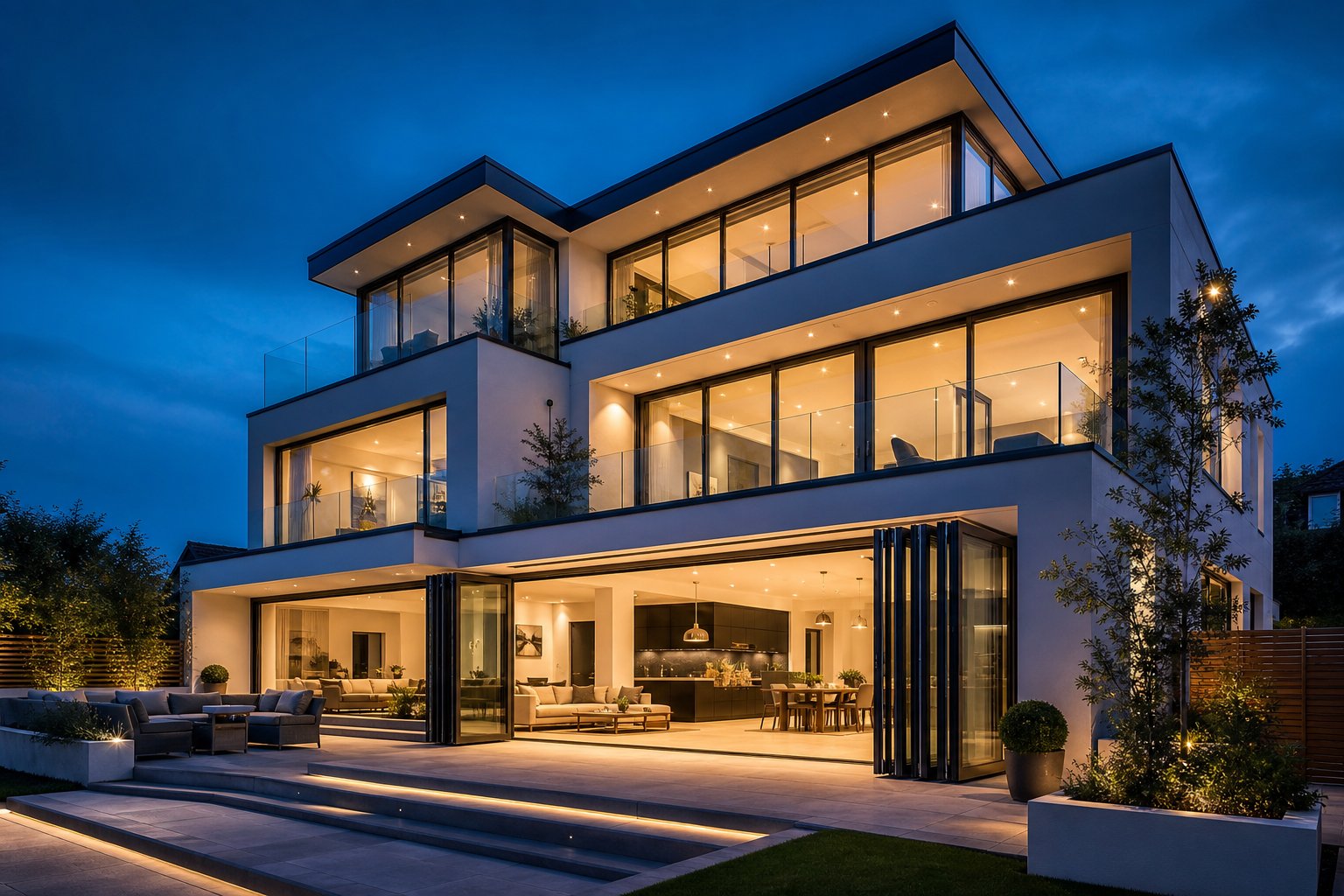
When Replacing Your Aluminium Windows Makes More Sense
A respray is the right call for structurally sound frames that just need a cosmetic lift. But sometimes the honest answer to “can you paint aluminum windows and solve the problem?” is no — because the problem isn’t cosmetic. When the frame itself has deteriorated, or when performance gaps cost you more in energy bills than replacement would, fresh paint becomes a band-aid on a deeper issue.
Structural and Performance Tipping Points
Certain conditions push a metal frame window past the point where respraying delivers meaningful value. If any of the following apply to your aluminium frame windows, replacement is likely the more practical and cost-effective path forward:
- Severe corrosion with pitting — deep pitting compromises the structural integrity of aluminum window frames. Paint cannot fill or reinforce metal that has lost material thickness, and coatings applied over pitted surfaces lift within months.
- Failed seals with inter-pane condensation — fog or moisture trapped between double-glazed panes signals seal failure. No respray addresses this. The insulated glass unit needs replacing, and at that point the cost gap between reglazing old frames and fitting new windows narrows considerably.
- Single glazing on a home requiring thermal upgrades — upgrading from single to double glazing can reduce heat loss by up to 60% when paired with thermally broken frames. The energy savings over 10 to 15 years often offset the higher upfront cost of replacement, particularly in climate zones with extreme summers or cold winters.
- Frames that no longer meet NCC requirements — if your home is undergoing a major renovation requiring council approval, existing windows may need to comply with current National Construction Code energy provisions. Older non-thermally-broken frames rarely meet these standards, regardless of how fresh the paint looks.
- Warped profiles or failed hardware — frames that no longer sit square, lock securely, or operate smoothly have mechanical issues a respray cannot touch. Can you paint aluminum clad windows that won’t close properly? Technically yes, but you’ve solved the wrong problem.
- Anodized aluminum window frames with heavy wear — anodised finishes that have worn through to bare metal in multiple areas often indicate frames approaching end-of-life, especially if the anodising was the only corrosion protection originally applied.
When New Windows Add More Value Than a Respray
Beyond structural triggers, there are situations where replacement simply delivers a better return. A major renovation — kitchen extension, second-storey addition, or full facade upgrade — is the clearest example. New aluminium window systems with factory-applied finishes, thermally broken profiles, and modern hardware add measurable property value in ways a respray cannot replicate. Buyers notice energy ratings, security features, and acoustic performance alongside aesthetics.
Modern thermally broken aluminium frames also eliminate the maintenance cycle entirely. Factory powder coating backed by a manufacturer warranty means no respraying for 20 to 30 years — a compelling proposition for homeowners tired of periodic refinishing.
For homeowners, builders, and architects who’ve determined replacement is the stronger path, MEICHEN’s aluminium window systems offer custom sizing, thermally broken profiles, and an extensive factory-finished colour range that removes the need for future respraying altogether. It’s worth exploring as a long-term solution when your existing frames have genuinely reached the end of their serviceable life.
Frequently Asked Questions About Respraying Aluminium Windows
1. How long does a respray last on aluminium windows?
Lifespan depends on the coating system and climate exposure. A DIY acrylic enamel respray typically holds up for 5 to 8 years in moderate conditions. A professional two-pack polyurethane system lasts 10 to 15 years, while off-site powder coating delivers 15 to 25 years of durability. Coastal salt air, intense UV, and poor preparation all shorten these timeframes. Regular maintenance — quarterly washing with mild soap and prompt touch-ups on any chips — can extend finish life by an additional 3 to 5 years beyond baseline expectations.
2. What is the best paint for aluminium window frames?
For exterior aluminium frames in Australia, a two-pack polyurethane topcoat over a self-etch primer is the professional standard. This system chemically bonds to the aluminium oxide layer and cures into a hard, UV-resistant film that resists chalking and peeling. For DIY projects, a quality acrylic enamel over etch primer offers a more accessible option, though it won’t last as long in harsh conditions. Coastal properties benefit from two-part epoxy primer underneath for superior corrosion resistance. Regardless of topcoat choice, the primer is the critical layer — without proper etch primer, even premium paint will peel.
3. Can you respray aluminium windows yourself or do you need a professional?
Both paths are viable, but they suit different situations. DIY respraying works for homeowners comfortable with HVLP spray equipment who can dedicate 2 to 4 hours of preparation per window plus spraying time. You’ll need a spray gun or quality aerosols, a P2 respirator, and patience for proper masking and multi-coat application. Professional on-site spraying suits whole-house projects where consistent finish quality matters — operators bring mobile enclosures and use automotive-grade two-pack systems. The cost difference is significant: roughly $30 to $60 per window for DIY materials versus $200 to $500 per window professionally.
4. Does respraying aluminium windows void the warranty?
In most cases, yes — manufacturer warranties on factory-applied finishes typically exclude cosmetic modifications made without authorisation. If your windows are still within their finish warranty period (usually 10 to 15 years for standard powder coating), applying an aftermarket respray could void that coverage. However, most windows being considered for respraying have long passed their warranty period, making this a moot point. Home insurance is generally unaffected by a respray, though homeowners in heritage-listed or strata-managed properties should confirm with their insurer before proceeding.
5. How much does it cost to respray aluminium windows in Australia?
Costs vary by method and scale. DIY materials run approximately $30 to $60 per window (plus $80 to $150 per day for equipment hire if you don’t own a spray gun). Professional on-site respraying ranges from $200 to $500 per window depending on frame condition, access difficulty, and coating system. Off-site powder coating costs $350 to $700 per frame including removal and reinstallation. For context, full window replacement runs $1,500 to $4,000 per opening — making professional respraying roughly 70 to 80 percent cheaper than replacement for structurally sound frames. Bulk discounts of 10 to 25 percent typically apply for whole-house projects.
More Window & Door Guides