What Aluminium Window Respraying Actually Costs in Australia
If you’re wondering whether you can paint window frames instead of ripping them out entirely, the short answer is yes — and the savings are significant. Professional aluminium window respraying in Australia typically costs between $250 and $600 per window, depending on size, condition, and access. For a standard home with 10 to 15 openings, that puts total project costs in the range of $2,500 to $7,500.
Compare that to full replacement, where each opening runs between $1,500 and $4,000 once you factor in the new unit, installation labour, and structural modifications. Respraying saves roughly 70 to 80 percent over replacement — a gap wide enough to make painting window frames the default choice for structurally sound aluminium.
Aluminium window respray cost in Australia: $250–$600 per window for professional spray-painting, or $2,500–$7,500 for a typical 10–15 window home. Full replacement costs $15,000–$40,000 for the same home.
Typical Price Ranges for Aluminium Window Respraying
At the lower end — around $200 to $250 per frame — you’ll find straightforward ground-floor jobs on windows in reasonable condition. Mid-range pricing of $300 to $450 covers most standard residential work, including proper preparation and a quality two-coat system. The upper end, $500 to $600 or more, typically reflects complex access requirements, extensive surface repair, or premium coating systems like two-pack polyurethane.
These figures represent supply and application by a professional spray painter. DIY window frame painting cost drops substantially on materials alone, but the finish quality and longevity rarely compare to professional work on aluminium substrates.
Why Respray Costs Vary So Widely
A $250 quote and a $600 quote for the same window aren’t necessarily comparing like with like. The spread reflects real differences in preparation thoroughness, coating systems, access difficulty, and the current state of the aluminium. Upper-storey windows need elevated work platforms. Badly oxidised frames demand more prep time. Premium finishes use costlier materials and additional coats.
This guide breaks down each of those variables so you can read a quote and understand exactly what you’re paying for — and what might be missing from the price.
Itemized Cost Breakdown of a Respray Job
Every respray quote bundles several distinct cost components into a single figure. Knowing what sits behind that number makes it far easier to spot gaps between competing proposals — and to understand why one painter charges $280 per window frame while another charges $550 for seemingly identical work.
Materials and Primer Costs
The paint for window frames isn’t the same product you’d grab off the shelf for timber or plasterboard. Aluminium demands a specialised system, and each layer serves a different purpose.
First comes surface preparation chemicals — degreasers and oxide removers designed to strip contaminants from the aluminium substrate. These typically run $30 to $60 for a full-house project. Next is the etching primer, a critical adhesion layer formulated to bite into non-porous aluminium. Quality etch primers cost $60 to $90 per litre, and a standard home might consume two to three litres depending on frame count and size.
The topcoat — the finish you actually see — varies dramatically in price based on the system chosen. Single-pack acrylic coatings sit around $50 to $80 per litre, while two-pack polyurethane window frame paint ranges from $80 to $120 per litre. Total material costs for a 10 to 15 window home generally land between $500 and $1,500, heavily influenced by whether the painter uses a single-pack or two-pack system.
Labour and Application Charges
Labour is where the bulk of your money goes. A professional spray painter’s time covers far more than pulling a trigger on a spray gun. The labour component includes:
Surface preparation — cleaning, sanding, and chemical treatment of every frame. This alone can account for 40 to 50 percent of total labour hours. Masking and protection of surrounding glass, walls, and landscaping adds another significant chunk. On a typical residential job, masking takes one to two hours per window because overspray on brick or glass creates costly rectification work.
Application itself — priming plus one or two topcoats with drying time between layers — rounds out the hands-on work. Then there’s final cleanup: removing masking, touching up any imperfections, and clearing the site. Labour rates for experienced aluminium spray painters in Australia generally sit between $60 and $90 per hour, with a standard window taking one to two hours of total labour once you account for all stages.
What a Standard Quote Should Include
When you paint a window frame professionally, the quote should clearly itemise what’s covered. Not all do. The table below breaks down common cost components and whether they typically appear in a standard respray quote.
| Item | Typical Inclusion in Quote | Notes |
|---|---|---|
| Surface degreasing and cleaning | Yes | Essential prep step; should always be included |
| Etching primer application | Yes | Aluminium-specific adhesion primer |
| Topcoat (1–2 coats) | Yes | Confirm whether one or two coats are quoted |
| Masking of glass and surrounds | Yes | Labour-intensive but standard practice |
| Minor surface repairs (light oxidation) | Yes | Heavy corrosion repair usually costs extra |
| Site cleanup | Yes | Removal of masking, debris, and overspray |
| Scaffolding or elevated work platform | No | Often quoted separately or as a line item add-on |
| Fly screen or security screen removal | No | Some painters include this; many charge extra |
| Repair of damaged seals or hardware | No | Discovered during prep; quoted as variations |
| Colour matching or custom tinting | No | Standard colours included; bespoke shades cost more |
| Warranty beyond 12 months | No | Extended warranties may require premium paint systems |
Items commonly excluded from base quotes tend to catch homeowners off guard. Watch for these when comparing proposals:
- Scaffolding or boom lift hire for upper-storey access
- Removal and refitting of security screens, fly screens, or blinds
- Repairs to perished rubber seals or weather stripping
- Additional coats required due to extreme colour changes (e.g., bronze to white)
- Travel or mobilisation fees for regional or remote properties
Understanding this breakdown puts you in a stronger position to compare quotes on equal terms. Two painters quoting different totals might actually be offering different scopes — one including screen removal and two topcoats, the other pricing a single coat with screens left in place. The real cost difference only becomes clear when you line up the inclusions side by side.
Key Factors That Drive Your Respray Price Up or Down
Scope differences explain why two quotes look different on paper. But even when scope is identical, the characteristics of your actual windows shift the price substantially. Some variables add $50 per opening. Others double it. Here’s what moves the needle most — and how these factors stack on top of each other.
- Finish type and paint system — the single largest price driver
- Number and size of window openings — determines total labour hours
- Colour complexity — single-colour vs multi-colour jobs
- Accessibility — ground floor vs upper-storey windows
- Current frame condition — clean aluminium vs heavy oxidation or flaking
Each factor rarely exists in isolation. A two-storey home with badly oxidised upper-floor frames needing a two-tone finish will sit at the top of the pricing spectrum — not because any one variable is extreme, but because several compound together.
How Window Size and Count Affect Pricing
Larger frames mean more lineal metres of masking, more paint consumption, and more labour time per opening. A small bathroom window with 2 metres of frame perimeter takes a fraction of the effort required for a 3-metre sliding door with thick mullions and multiple sashes.
Volume, however, works in your favour. Window frame painting projects covering 10 or more openings attract lower per-window rates because setup and mobilisation costs spread across the job. A painter quoting $400 for a single window might price the same window at $280 each when you’re doing fifteen at once. Batching every opening into one project — rather than doing the front of the house now and the back next year — almost always reduces your per-unit cost.
Single Colour vs Multi-Colour Respray Costs
Most homeowners choose one colour across all frames, and that’s the simplest scenario for a spray painter. One batch of paint, one masking approach, consistent workflow from window to window.
Two-tone work — say, a dark exterior face with a lighter interior return — changes the game entirely. The painter must mask between colour zones on every frame, apply one colour, wait for cure time, re-mask, then apply the second. Labour hours can increase by 40 to 60 percent compared to a single-colour job. Painted window frames with three or more colours (sometimes seen on heritage restorations or bold contemporary designs) push costs higher still, because each additional colour multiplies masking passes and drying stages.
If budget is tight but you want contrast, consider limiting the second colour to feature windows — an entry door surround or a large picture window — rather than applying two tones across every opening.
Finish Types and Their Price Implications
The coating system your painter uses affects both upfront cost and how long the job lasts before needing attention again. Three common options exist for painting exterior windows and trim on aluminium frames:
Single-pack acrylic. The most affordable system. Air-dries without a chemical hardener, making it simpler to apply. Expect a lifespan of around 5 to 7 years in typical Australian conditions before fading or chalking becomes noticeable. Suitable for budget-conscious projects or rental properties where longevity is less critical.
Two-pack polyurethane. A two-component system that chemically cross-links during curing, forming a harder, more UV-resistant film. Professional application costs 30 to 50 percent more than single-pack due to the material price and stricter application requirements — including safety precautions around isocyanates. In return, you get 10 to 15 years of durable performance with superior gloss retention and chemical resistance. This is the system most closely replicating a factory powder-coat finish.
Powder coat effect (liquid powder coat). A relatively newer option marketed as delivering powder-coat-like durability through a spray-applied liquid. Pricing sits between acrylic and full two-pack systems. Real-world longevity data in the Australian market is still limited, so ask any painter offering this system for specific warranty terms and references.
Choosing a premium finish on upper-storey windows makes particular financial sense. If access equipment is needed regardless, paying a little more for a coating that lasts twice as long avoids repeating that scaffolding expense in five years. The interaction between access cost and finish durability is one of the most overlooked calculations in respray budgeting — and it leads directly into costs that many quotes leave out entirely.
Hidden Costs Most Respray Quotes Leave Out
A base quote gives you the headline number. What it often doesn’t reveal are the extras that appear once the painter arrives on site, starts removing screens, or discovers perished seals behind the frames. These add-ons can inflate your final bill by 20 to 40 percent if you haven’t budgeted for them upfront.
Here are the most common surprise costs, ranked by how frequently they catch homeowners off guard:
- Scaffolding or elevated work platform hire — affects nearly every two-storey home
- Fly screen and security screen removal and refitting — required on most Australian homes
- Damaged seals, weather stripping, or hardware discovered during preparation — hidden until frames are stripped back
- Additional preparation for heavily oxidised or flaking frames — not covered under standard prep allowances
- Council permits or heritage overlay approvals — rare, but expensive when triggered
Scaffolding and Access Equipment Fees
Painting outside window frames on the ground floor is straightforward. Upper-storey work is a different story. Most spray painters won’t use ladders for respraying — the equipment, masking materials, and spray guns demand a stable, level platform.
Options include mobile scaffolding, fixed scaffolding, and boom lifts (elevated work platforms or EWPs). Scaffolding hire for a two-storey house typically runs $4,000 to $8,000 for supply, setup, and dismantling, plus $250 to $450 per week for ongoing hire. If your respray job takes five to seven days, that adds a substantial chunk to the project cost — sometimes more than the painting itself.
Boom lifts cost less for short jobs (often $300 to $600 per day including delivery) but only suit properties with clear ground access. Tight side passages, sloping blocks, or gardens with established trees can rule them out entirely, pushing you back to fixed scaffolding.
The key consideration: if you’re already paying for access equipment, batch every upper-storey task into the same hire period. Gutter cleaning, fascia painting, and window respraying done together split that scaffolding cost across multiple jobs rather than absorbing it all into one.
Screen Removal and Hardware Repairs
Australian homes almost universally feature fly screens, and many also have security screens bolted over window openings. You cannot paint exterior window frames properly with screens in place — they block access to frame edges, create masking nightmares, and trap overspray against mesh that’s nearly impossible to clean afterward.
Removing and refitting screens adds $20 to $50 per opening for standard fly screens and $40 to $80 per opening for security screens with fixed bolts or one-way screws. On a 15-window home, that’s $300 to $1,200 of labour that many base quotes exclude.
Then there’s what removal reveals. Perished rubber seals, cracked weather stripping, corroded friction stays, and jammed winders are commonly hidden behind screens. Painters aren’t obligated to fix these — but they’ll flag them, and you’ll want them addressed while everything is apart. Budget $50 to $150 per window for minor hardware or seal replacements discovered mid-project. Ignoring degraded seals means moisture can creep behind your freshly painted frames, causing adhesion failure from underneath.
Preparation Steps You Cannot Skip
Proper aluminium preparation for painting window frames exterior involves three non-negotiable stages: degreasing to remove surface contaminants, oxide removal to expose fresh metal, and application of an etching primer formulated specifically for aluminium’s non-porous surface. Skipping any of these — particularly the etching primer — dramatically reduces how long the finish lasts.
An etching primer chemically bonds to the aluminium by reacting with the oxide layer, creating microscopic anchor points that hold the topcoat in place. Without it, paint sits on the surface rather than gripping it. The result? Peeling and flaking within two to three years instead of the 10-plus years a correctly prepared system delivers.
Budget spray painters sometimes skip deoxidising or substitute a generic primer to save 30 to 45 minutes per window. That shortcut saves you $50 to $100 upfront but virtually guarantees an earlier respray — effectively doubling your long-term cost. When comparing quotes, ask specifically whether the price includes chemical degreasing, oxide treatment, and a dedicated aluminium etching primer. If a quote seems unusually cheap, these are usually the steps being trimmed.
Understanding what’s genuinely included — and what’s left out — brings you much closer to evaluating whether a low quote represents real value or simply deferred expense. That distinction becomes even sharper when you examine the difference between budget, mid-range, and premium service tiers.
Budget vs Premium Respray Services and What Justifies the Price
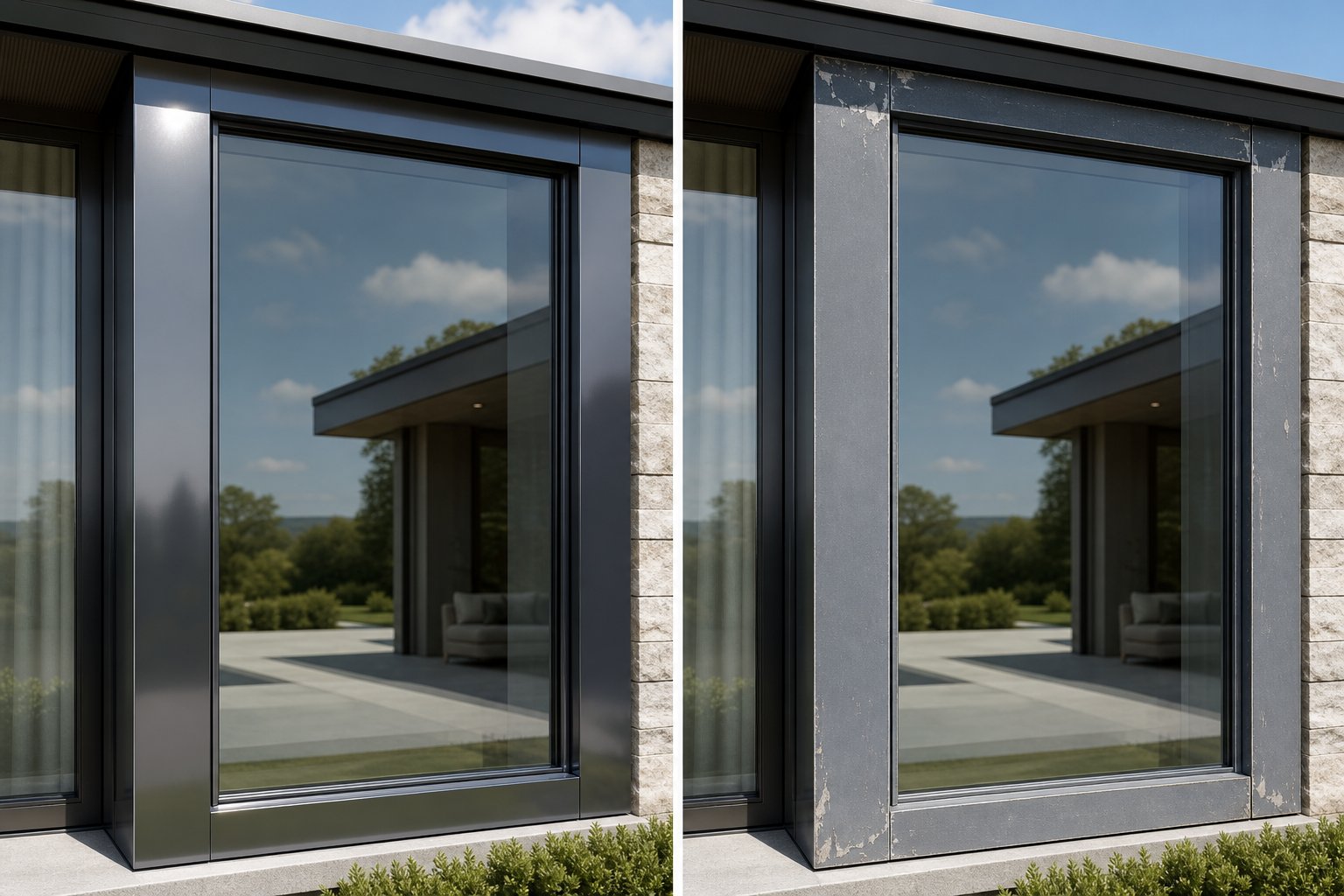
Not every cheap quote is a bargain, and not every expensive one is a rip-off. The gap between a $200 per window quote and a $550 one usually reflects genuine differences in process, materials, and skill — differences that directly determine how long your painted window frames exterior will hold up before needing attention again.
Think of it this way: a budget respray that fails in three years costs you twice. Once for the original job, and again when you pay someone to strip, re-prep, and recoat everything properly. The table below lays out what each tier actually delivers.
| Criteria | Budget ($200–$300/window) | Mid-Range ($300–$450/window) | Premium ($450–$600+/window) |
|---|---|---|---|
| Preparation Steps | Basic wipe-down; minimal or no oxide removal | Degrease + light abrasion + standard primer | Full chemical degrease, oxide removal, dedicated etching primer |
| Finish System | Single-pack acrylic, one coat | Single-pack acrylic, two coats (or entry-level two-pack) | Two-pack polyurethane, two coats minimum |
| Expected Lifespan | 2–4 years | 5–7 years | 10–15 years |
| Warranty | None or 12 months | 2–3 years | 5–10 years |
| Overspray Management | Minimal masking; risk of drift onto glass and walls | Standard masking of glass and immediate surrounds | Full masking including landscaping, roofing, and adjacent surfaces |
What Budget Services Typically Skip
Budget window frame painters attract jobs on price alone — which means the margin comes out of time and materials. The corners most commonly cut:
- Chemical degreasing replaced by a quick wipe with a rag
- No etching primer — topcoat applied directly to bare or oxidised aluminium
- Single thin coat instead of a proper two-coat build
- Masking limited to glass edges, leaving walls, sills, and landscaping exposed to overspray
- No environmental checks — spraying in unsuitable temperatures or humidity that compromise adhesion
The result looks fine on day one. Within 18 to 24 months, though, you’ll start seeing peeling at frame corners and chalking on sun-exposed faces. Professional sprayers using two-pack polyurethane systems consistently report 10-year performance, but that durability depends entirely on correct preparation and application conditions — the exact steps budget operators eliminate to hit a lower price point.
Premium Respray Characteristics and Longevity
Premium services justify their pricing through process rigour, not marketing. A quality operator repainting window frames at the top tier will typically hold trade qualifications in automotive or industrial spray finishing, carry proper insurance, and use calibrated HVLP equipment that minimises waste and overspray.
The paint system itself is the key differentiator. Two-pack polyurethane coatings chemically cross-link during curing, creating a film hardness and UV resistance that single-pack acrylics simply cannot match. This is the same technology used in factory powder coating and automotive refinishing. Applied correctly to properly prepared aluminium, it delivers a decade or more of fade-free, peel-free performance — even in harsh Australian coastal and high-UV environments.
Warranties reflect this confidence. A premium operator offering a 10-year guarantee on their coating is putting their business reputation behind the system’s durability. Budget operators rarely offer anything beyond a vague 12-month promise, if that.
The long-term maths tells the real story. A $500 premium respray lasting 12 years costs you roughly $42 per year. A $250 budget job lasting three years costs $83 per year — plus the inconvenience and disruption of respraying twice more in the same period. When you factor in repeated scaffolding hire for upper-storey work, the premium option isn’t just better quality — it’s genuinely cheaper over a 10-year window.
Understanding what quality tier you’re actually being quoted helps frame the next logical question: at what point does even a premium respray stop making financial sense compared to replacing the windows altogether?
Respray vs Full Replacement and When Each Makes Sense
The 70 to 80 percent saving figure gets repeated across the industry — and it’s broadly accurate. But broad accuracy isn’t the same as personal accuracy. Your specific situation might land firmly in respray territory, or it might be one of those cases where paying more upfront for new windows actually costs less over a 15-year horizon. The right answer depends on what you’re solving for: cosmetics, structural integrity, or thermal performance.
Direct Cost Comparison Per Window Opening
Putting real numbers side by side clarifies the gap between these two paths. The table below compares a professional respray against full aluminium window replacement on a per-opening basis, using current Australian market pricing.
| Factor | Professional Respray | Full Replacement |
|---|---|---|
| Typical cost per opening | $250–$600 | $1,500–$4,000 |
| Project timeline (10–15 windows) | 3–5 days | 2–4 weeks |
| Disruption level | Low — windows remain in place | High — frames removed, walls exposed |
| Performance improvement | Cosmetic only; no change to glazing or thermal performance | Option to upgrade glazing, seals, and thermal breaks |
| Lifespan of result | 10–15 years (premium system) | 30+ years (frame); 10–15 years (surface finish) |
| Hidden cost risk | Moderate — scaffolding, screen removal | High — structural modifications, plastering, reveals |
That last row matters more than most homeowners expect. Replacement projects commonly uncover unexpected structural costs — older homes with slightly non-standard openings require custom fabrication or wall modifications that add $1,000 to $3,000 to the bill. Respray projects carry their own extras (scaffolding, screen removal), but the ceiling on surprise costs is much lower.
For a standard home with 12 windows, the window paint price difference is stark: roughly $3,600 to $7,200 for a quality respray versus $18,000 to $48,000 for full replacement. Even accounting for the respray’s shorter lifespan, you could repaint window frames three times over before matching the cost of one replacement cycle.
When Replacement Actually Saves Money Long Term
None of this means respray is universally the smarter financial move. Several scenarios flip the equation:
Frames with structural compromise. Aluminium that has warped, cracked at welded corners, or corroded through to the point of losing rigidity won’t hold a new coating any better than it held the old one. Respraying a structurally failed frame gives you a pretty window that still leaks air, rattles in wind, and may not secure properly. The cost of respray plus eventual replacement exceeds what you’d spend doing the replacement now.
Single-glazed frames where energy performance is the real goal. If your motivation is cutting heating and cooling bills rather than refreshing appearance, a respray changes nothing about thermal performance. Upgrading from single-glazed aluminium to double-glazed thermally broken frames can reduce heat transfer through windows by 50 percent or more. In this case, the replacement cost delivers a measurable return through lower energy bills — something a cosmetic respray simply cannot offer.
Frames requiring hardware replacement anyway. When winders are seized, friction stays are snapped, and locks no longer engage, the cost of new hardware plus respray can approach 60 to 70 percent of a full replacement — without giving you the benefits of new seals, improved security ratings, or modern glass options. At that ratio, replacement starts making more sense.
Homes approaching sale in a competitive market. Buyers in higher-end markets often perceive new windows as a value-add that freshly painted ones don’t match. If you’re spending $60,000 on a kitchen renovation to sell, the incremental cost of new windows may generate a stronger return at auction than resprayed frames — particularly if neighbouring properties have already upgraded.
The honest calculus: if your frames are structurally sound, your glazing meets your comfort needs, and the issue is purely cosmetic, respray wins every time. If two or more of those conditions aren’t met, run the numbers on replacement before committing to a surface solution.
Regional Price Variations Across Australia
Where you live affects what you’ll pay — sometimes significantly. Labour rates, market competition, and climate-driven preparation needs all vary by region.
Sydney and Melbourne. Higher labour rates and strong demand push per-window pricing toward the upper end of the range. Expect $350 to $600 per opening for mid-range to premium work. The upside: more competition among operators means easier access to multiple quotes and established businesses with verifiable track records.
Brisbane and South-East Queensland. Pricing typically sits slightly below Sydney levels ($300 to $500 per opening), but tropical humidity and UV intensity mean preparation standards matter more. Coatings degrade faster in Queensland’s climate if corners are cut on primer or surface prep. A premium two-pack system is especially worthwhile here.
Perth and Western Australia. Installation and trades labour costs in Perth have fluctuated with the mining economy’s cycles. Currently, expect pricing comparable to Melbourne. Coastal properties from Mandurah to Geraldton face salt-air corrosion that demands more thorough deoxidising during preparation — adding time and cost.
Adelaide and regional South Australia. Generally the most competitive metro market for respray pricing, with per-window costs often $250 to $450. Fewer upper-storey homes in older Adelaide suburbs also means less scaffolding expense on average.
Regional and remote areas. Travel charges, mobilisation fees, and limited competition push costs 15 to 30 percent above equivalent metro work. Some regional homeowners find it more economical to batch respray jobs with neighbours and share the painter’s travel costs across multiple properties.
Climate also drives regional variation in a less obvious way: homes in tropical northern Australia or exposed coastal zones need recoating more frequently, which affects whether a premium system’s longer lifespan justifies its higher upfront cost. A two-pack polyurethane system that lasts 12 years in temperate Melbourne might deliver only 8 to 10 years in Cairns or Darwin, where UV exposure and humidity are relentless. Factoring regional durability into your cost-per-year calculation prevents underestimating what you’ll actually spend over time.
Armed with a realistic picture of what respray costs in your area — and clarity on whether replacement might serve you better — the next practical step is ensuring the quotes you collect are genuinely comparable and complete.
How to Get Accurate Quotes and Compare Them Fairly
Most homeowners collect three quotes, glance at the bottom-line figures, and pick the cheapest. That approach almost guarantees disappointment — because respray quotes rarely compare apples with apples unless you force them to. The preparation you do before contacting painters directly determines whether you receive vague ballpark numbers or detailed proposals you can actually evaluate side by side.
Knowing how much to charge for window painting from the contractor’s perspective also helps you spot bids that are suspiciously low. If a quote can’t cover proper materials, labour, and access costs at a reasonable margin, something is being left out — and you’ll pay for it later through early failure or surprise extras on invoice day.
Measurements and Photos Contractors Need
A spray painter can’t quote accurately from a street address alone. The more specific information you provide upfront, the tighter and more reliable the estimate you’ll receive. Walk through this preparation process before reaching out:
- Count every opening. Include windows, sliding doors, louvres, and fixed panels. Note which ones are operable (opening sashes) versus fixed — operable frames have more edges and hardware to mask around.
- Measure frame dimensions. You don’t need millimetre precision at this stage. Record the approximate height and width of each opening in metres. This helps painters estimate lineal metres of frame to coat and calculate paint consumption.
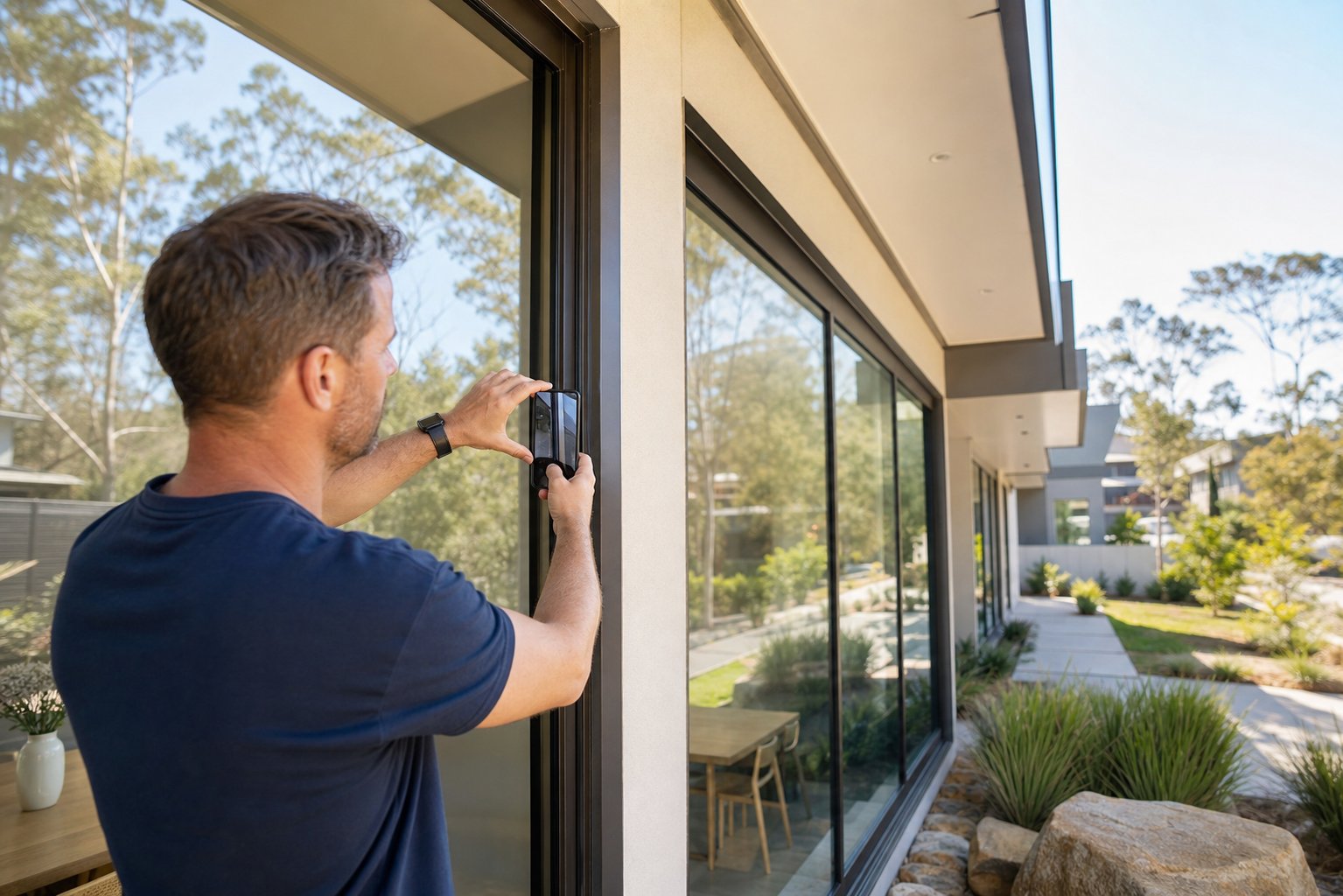
- Photograph each window. Take close-up shots showing the current surface condition — any peeling, chalking, oxidation, or damage. These details determine how much preparation time the painter needs to allow.
- Capture access points. Photograph the ground conditions below upper-storey windows. Is there concrete, garden bed, sloped terrain, or a narrow side passage? This tells the painter whether a boom lift can reach or whether scaffolding is the only option.
- Shoot full elevation views. Step back and photograph each face of the house showing all windows in context. This reveals window heights, proximity to rooflines, and overall scope in a way that individual close-ups miss.
- Note screens and hardware. Record which windows have fly screens, security screens, or both. Mention any known issues — seized winders, cracked handles, or damaged seals — so the quote can account for them rather than springing them as extras later.
Providing this information package to every painter you contact achieves two things: it forces each contractor to quote against the same scope, and it signals you’re an informed client who expects detailed responses rather than rough guesses.
Questions to Ask Before Accepting a Quote
A written quote should answer most of your questions on paper. But if something isn’t listed on the quote, assume it isn’t included in the price. Before accepting any proposal, clarify these specifics directly with the contractor:
- What paint system are you using — single-pack acrylic or two-pack polyurethane? (This single question reveals more about expected longevity than anything else.)
- How do you prepare aluminium frames before priming? Do you chemically degrease and deoxidise, or just sand?
- How many coats of primer and topcoat are included in the price?
- Is the quote based on one colour across all frames, or does it allow for a second colour?
- Does the price include removal and refitting of fly screens and security screens?
- What access method will you use for upper-storey windows, and is that cost included or separate?
- What warranty do you offer on the finished coating, and what conditions void it?
- What’s excluded from this quote that I might need to budget for separately?
- What happens if you discover damaged seals or corroded areas during preparation — how are variations priced?
- Can you provide references or photos of past aluminium respray work?
Painters who answer these questions confidently and in detail are generally the ones who do the work properly. Vague or dismissive responses — “we just use good paint” or “it’ll be fine” — are red flags worth heeding.
Comparing Quotes Beyond the Bottom Line
Once you have three or more proposals in hand, resist the urge to sort purely by price. Line up the inclusions. Does each quote specify the same number of coats? The same preparation process? The same access solution? If one quote is $1,500 cheaper but excludes scaffolding and uses single-pack acrylic where others quote two-pack polyurethane, the real gap is far narrower than it appears — and the cheaper option may cost more per year of service life.
Create a simple comparison grid with columns for each contractor and rows for: paint system, number of coats, preparation method, screen removal (yes or no), access equipment (included or extra), warranty length, and estimated timeline. This structure makes the true scope differences visible at a glance, turning how do you paint window frames into a question with a measurable, comparable answer across each proposal.
Pay attention to timeline too. A contractor offering to start next week on a 15-window job might be underestimating the preparation time needed — or planning to rush through it. Quality respray work on a full house typically requires five to seven working days. Quotes promising two-day turnarounds on large projects should prompt questions about how many steps are being compressed or skipped.
For homeowners whose quote research reveals that frames are too deteriorated for a cost-effective respray — severe corrosion, structural warping, or hardware failure throughout — the comparison exercise shifts from “which painter” to “respray versus replacement.” In those cases, understanding what drives new window project costs becomes just as important as knowing how to paint window frames. MEICHEN’s services page offers a useful reference point for exploring replacement pricing components, including custom sizing, system recommendations, and full project support from drawings through to delivery. Comparing a detailed respray quote against a genuine replacement proposal from a full-service supplier ensures you’re making the decision on real numbers rather than assumptions.
Whichever direction your quotes point, the comparison process itself builds confidence that you’re choosing based on value — not just on whoever typed the smallest number into a PDF.
When Respraying Is Not the Right Choice
Honest advice that saves you money: sometimes the answer to “can you paint window frames exterior?” is technically yes, but practically no. A respray only makes financial sense when the underlying frame is structurally sound and functionally adequate. When those conditions aren’t met, fresh paint becomes an expensive band-aid — one that delays an inevitable replacement while adding to the total bill.
Frame Conditions That Make Respray Unsuitable
Paint adhesion depends on a stable substrate. Aluminium frames that have deteriorated beyond surface-level wear won’t hold a new coating regardless of how skilled the painter is or how premium the system. Visible corrosion, pitting, and frame warping are signs the structure itself is compromised — not just the finish.
Clear indicators that replacement is the better investment:
- Severe pitting or through-corrosion — etching primer needs a relatively intact surface to bond with. Deep pits create voids that trap moisture beneath the new coating, causing failure from underneath within months.
- Structural warping or cracked weld joints — frames that no longer sit square in the opening leak air and water regardless of their colour. No amount of paint fixes a frame that won’t close flush or lock securely.
- Seized mechanisms and broken hardware throughout — when winders, friction stays, and locks all need replacing, the combined cost of new hardware plus respray often reaches 60 to 70 percent of a full replacement, without any of the performance benefits new windows deliver.
- Failed seals with condensation between panes — fog trapped inside double-glazed units means the sealed unit has failed. You can paint interior window frames and exterior faces to look pristine, but the glazing performance won’t improve. The window needs reglazing or replacement, not cosmetics.
- Water damage to surrounding wall structure — if frames have allowed moisture ingress long enough to damage reveals, lintels, or wall framing, removing the window to repair the structure is unavoidable. Respraying first just means paying twice for access and disruption.
Performance Upgrades That Require New Windows
A respray answers one question: how do you paint a window to look new again? It cannot answer questions about thermal comfort, noise reduction, or energy efficiency. If your real goal involves any of these, paint isn’t the solution.
Single-glazed aluminium frames without thermal breaks are among the poorest performers in any home’s building envelope. Upgrading to double-glazed, thermally broken aluminium can cut heat transfer through windows by half — a measurable improvement that pays back through lower heating and cooling bills year after year. A $400 respray on a single-glazed frame delivers zero energy benefit. A $2,500 replacement with performance glass delivers returns for decades.
Heritage-listed properties present a different constraint entirely. Homes with heritage overlays — whether on the Victorian Heritage Register or local council heritage schedules — often require specific restoration methods, approved colour palettes, and materials sympathetic to the building’s era. Standard respraying may not meet these requirements, and unapproved work can trigger compliance action. Heritage restoration typically costs more than standard respraying and demands specialist tradespeople familiar with overlay conditions.
The pattern across all these scenarios is consistent: respray cost plus future rectification exceeds what upfront replacement would have cost. Spending $4,000 on respraying frames that need replacing within three years anyway means you’ll eventually pay for both — the respray and the replacement. Recognising when you’re in this territory early saves the double-up and puts your budget where it delivers lasting results.
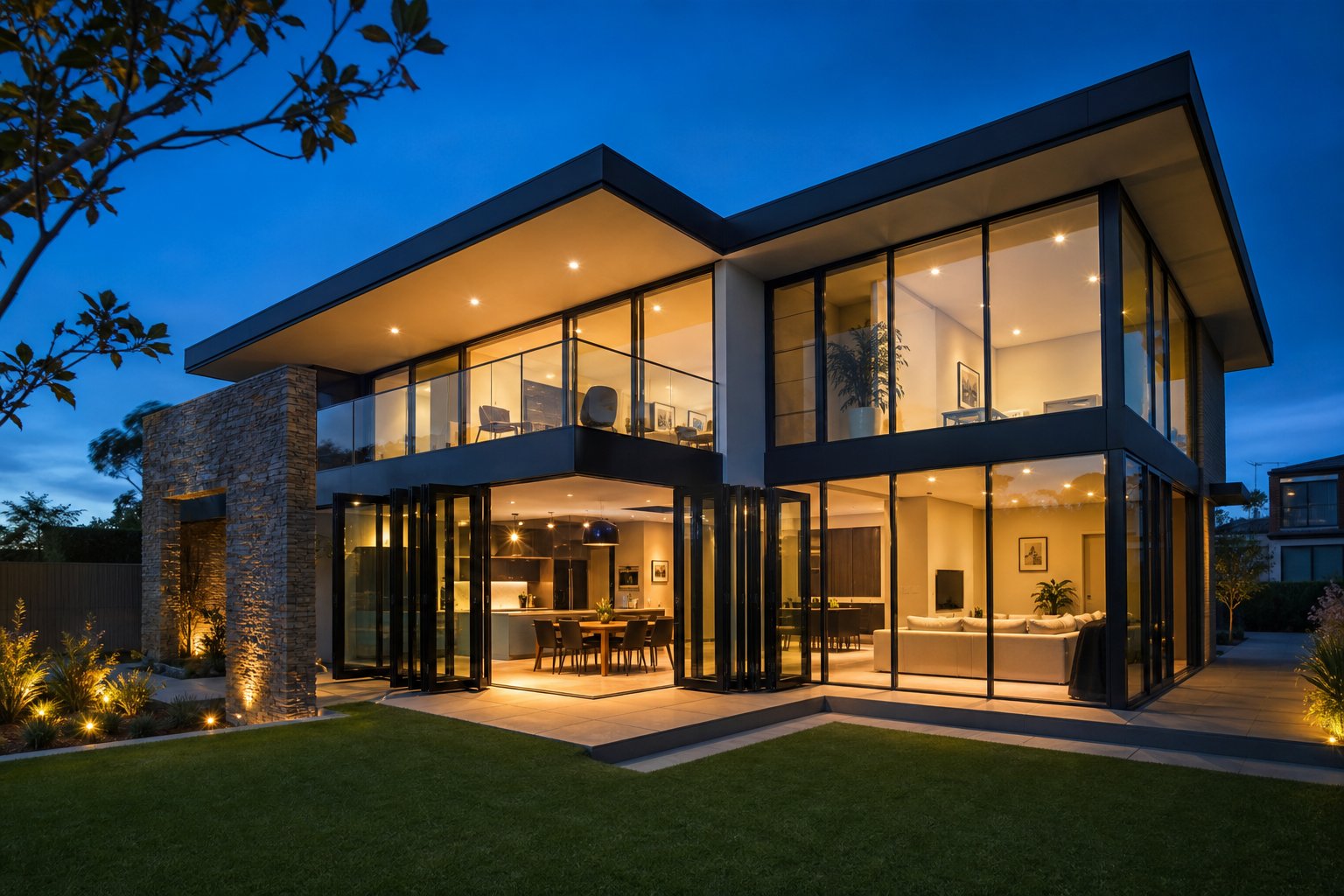
Planning Your Next Steps and Saving on Painting Outdoor Window Frames
Where you go from here depends on what your frames actually need — and that answer should be clearer after working through the cost variables, quality tiers, and deal-breakers covered above. Whether you’re ready to pick up the phone or still weighing options, a few practical strategies can shave hundreds off the final number without sacrificing the result.
Cost-Saving Strategies Worth Considering
You can’t negotiate away the fundamentals of a quality respray — proper preparation and a decent paint system aren’t optional. But you can influence the total in other ways:
- Batch every window into one project. Per-opening rates drop 15 to 25 percent when painters quote 10 or more frames at once, because setup and mobilisation costs spread across the job.
- Stick to a single colour. Two-tone work adds 40 to 60 percent in labour. If budget is the priority, choose one colour across all openings and save multi-tone for a future feature window upgrade.
- Schedule during off-peak months. Late autumn and winter bring lower demand for exterior trades in most Australian regions. Painters have more availability, and you may find better pricing or faster scheduling.
- Remove fly screens yourself. If you’re comfortable doing it safely, pulling standard clip-in fly screens before the painter arrives saves $20 to $50 per opening in labour — potentially $300 or more across a full house.
- Combine with other access-dependent work. If scaffolding is needed anyway, add gutter cleaning, fascia painting, or downpipe work to the same hire period rather than paying for access equipment twice.
Your Next Steps Based on Frame Condition
Your decision framework comes down to one honest assessment: can you paint a window frame and get lasting value from it, or has the frame moved beyond what a coating can fix?
- Frames in good structural condition with cosmetic wear: Get three detailed respray quotes using the preparation checklist in this guide. Compare paint systems, preparation methods, and warranties — not just price.
- Frames with minor hardware issues but sound structure: Request quotes that include hardware replacement as a line item. A respray plus new friction stays or winders still costs far less than full replacement.
- Frames showing structural compromise, severe corrosion, or failed glazing: Shift your research toward replacement. Understanding what drives new window project costs — custom sizing, system selection, and installation complexity — is essential for accurate budgeting. MEICHEN’s services page provides a useful starting point for exploring those components, from drawings and material calculation through to delivery coordination.
- Not ready to act yet: Budget $300 to $500 per window for planning purposes, photograph your frames now as a baseline, and revisit pricing in 6 to 12 months. Conditions won’t improve on their own — oxidation progresses — but knowing your numbers means you can move quickly when timing suits.
The decision to paint window frames or replace them rests on three questions: Is the frame structurally sound? Does the glazing meet your performance needs? Is the issue purely cosmetic? If all three answers are yes, a quality respray at $300–$600 per window delivers 10-plus years of fresh appearance at a fraction of replacement cost. If any answer is no, run the replacement numbers before committing to a surface solution.
Painting outdoor window frames remains one of the highest-value cosmetic upgrades available to Australian homeowners — provided the work is done properly and the frames warrant the investment. Armed with realistic pricing expectations, a clear understanding of what separates good work from cheap work, and a structured approach to collecting and comparing quotes, you’re positioned to get genuine value from whichever path your frames need.
Frequently Asked Questions About Aluminium Window Respray Costs
1. How much does it cost to respray aluminium windows in Australia?
Professional aluminium window respraying in Australia typically costs between $250 and $600 per window opening. For a standard home with 10 to 15 windows, expect a total project cost of $2,500 to $7,500. Pricing depends on frame condition, access difficulty, the paint system used (single-pack acrylic vs two-pack polyurethane), and whether scaffolding or elevated work platforms are required for upper-storey windows. Ground-floor windows in good condition sit at the lower end, while complex access jobs with premium coatings reach the upper range.
2. Is it cheaper to respray or replace aluminium windows?
Respraying saves roughly 70 to 80 percent compared to full replacement. A professional respray costs $250 to $600 per opening, while replacement runs $1,500 to $4,000 per opening once you factor in the new unit, installation labour, and structural modifications. However, replacement becomes the better long-term investment when frames have structural warping, severe corrosion, failed glazing seals, or when upgrading thermal performance is the primary goal. For structurally sound frames needing only a cosmetic refresh, respray wins on cost every time.
3. How long does a professional aluminium window respray last?
Longevity depends heavily on the paint system and preparation quality. A premium two-pack polyurethane system applied over proper chemical degreasing, oxide removal, and etching primer lasts 10 to 15 years in typical Australian conditions. Mid-range single-pack acrylic with adequate prep delivers 5 to 7 years. Budget services using minimal preparation and a single coat of acrylic may fail within 2 to 4 years. Climate also affects lifespan — harsh coastal salt air, tropical humidity, and intense UV exposure in northern Australia can reduce these timeframes by 20 to 30 percent.
4. What hidden costs should I expect with aluminium window respraying?
Common extras that inflate the final bill by 20 to 40 percent include scaffolding or boom lift hire for upper-storey windows ($300–$600 per day for EWPs or $4,000–$8,000 for fixed scaffolding), fly screen and security screen removal and refitting ($20–$80 per opening), repair of perished seals or damaged hardware discovered during preparation ($50–$150 per window), additional preparation time for heavily oxidised frames, and colour-change surcharges when going from dark to light finishes requiring extra coats. Always ask contractors what is excluded from their base quote before accepting.
5. Can you paint aluminium window frames yourself to save money?
While DIY is technically possible, professional results on aluminium are difficult to achieve without specialist equipment and materials. Aluminium’s non-porous surface requires chemical degreasing, oxide removal, and a dedicated etching primer for proper adhesion — steps that demand specific products and knowledge. Professional spray painters also use calibrated HVLP equipment that produces a smooth, even finish impossible to replicate with brushes or rollers. A DIY job using incorrect preparation will likely peel within 12 to 24 months, costing more long-term when professional rectification is needed. If budget is the concern, consider batching all windows into one project or scheduling during off-peak months to reduce professional quotes instead.
More Window & Door Guides