Why Standard Blinds Often Fail on Aluminium Windows
Most blind-buying guides start with the blind itself: roller, venetian, vertical, cellular. They walk you through fabric choices and light-filtering options before casually mentioning “fix to frame.” The problem? That advice assumes you’re working with a chunky timber or PVC frame, where deep rebates and porous surfaces make mounting straightforward. Aluminium windows play by different rules entirely.
Aluminium frames are engineered for minimal visual mass. Their profiles can be as slim as 25 to 50 mm in visible width, with frame depths sometimes sitting under 40 mm. That precision engineering delivers stunning sightlines but leaves very little room for standard blind brackets, headrails, or cassette housings. If you’ve ever ordered aluminium window blinds online only to find the brackets won’t grip or the headrail fouls on a handle, the frame itself is the missing variable nobody warned you about.
This guide flips the typical approach. Instead of starting with blind materials, it starts with your window frame and works outward from there.
Why Aluminium Frames Need Special Consideration
Three physical properties set aluminium apart from timber or uPVC when fitting blinds for aluminium windows. First, the profiles are hollow. Standard self-tapping screws designed for solid timber can spin freely inside an aluminium cavity without anchoring. Second, the surfaces are smooth and non-porous, meaning adhesive brackets that bond well to textured PVC may release over time on powder-coated aluminium. Third, aluminium conducts heat readily, creating thermal bridging that leads to condensation along the frame, which affects both blind material selection and long-term durability.
Add in the narrow rebate depths typical of modern metal window blinds installations, and you’re dealing with a fitting environment that most off-the-shelf solutions simply weren’t designed for.
Who This Guide Helps
Whether you’re a homeowner retrofitting blinds to existing aluminium frames, a renter in an aluminium-framed apartment who can’t drill a single hole, or a builder specifying window treatments during construction, the challenges overlap but the solutions differ. Each scenario demands a mounting strategy matched to the frame’s geometry rather than a one-size-fits-all bracket thrown into the box.
Standard blinds are designed around timber frame dimensions, typically 60 mm or deeper. Aluminium windows often require adapted mounting strategies because their rebates can be half that depth, and their hollow profiles won’t hold conventional fixings.
The sections ahead break down exactly which blind types suit aluminium frames, how each mounting method interacts with slim profiles, and where common fitting attempts go wrong, so your aluminium blinds for windows actually perform the way they should from day one.
Which Blind Types Work Best With Aluminium Frames
Not every blind type handles shallow aluminium profiles equally. Some were practically designed for slim frames; others need workarounds or outright fail. The deciding factors come down to four things: weight (heavier blinds need sturdier fixings in hollow profiles), required mounting depth (aluminium rebates often sit between 30 and 50 mm), bracket grip compatibility (can the system attach without deep-screw anchoring?), and aesthetic match (does the blind complement the modern, linear look of metal frames or fight against it?).
Here’s how the most common blind types stack up when paired specifically with aluminium windows.
Roller Blinds on Aluminium Frames
Compact cassette roller blinds are one of the strongest options for aluminium frames. Their headrails can be as slim as 30 to 40 mm in diameter, letting them tuck inside shallow rebates where bulkier systems can’t fit. The fabric wraps around a single tube, so the stacking depth at the top of the window stays minimal. This matters because aluminium casement and awning windows often have friction stays or restrictors sitting close to the glass line, and a roller’s flat profile avoids fouling on that hardware.
Weight is another advantage. A standard roller blind on a 1200 mm wide window weighs well under 2 kg, placing less stress on brackets fixed into hollow aluminium sections. Slim-cassette versions designed for narrow-depth windows can work with as little as 20 mm of mounting space, making them viable even for the shallowest aluminium reveals.
Venetian Blinds and Aluminium Compatibility
Aluminium venetian blinds are the most natural pairing you’ll find. The slats are made from the same material as the frame, so they share a visual language: clean lines, metallic sheen, and a contemporary edge. Aluminium mini blinds with 25 mm slats weigh significantly less than timber venetians of the same span, and their headrails are engineered to be compact. Many aluminium venetian blinds require only 40 to 50 mm of frame depth for an inside mount, which aligns well with typical aluminium window rebates.
Aluminum venetian blinds also resist the moisture issues that plague timber slats on thermally conductive frames. Where condensation would warp wooden slats over a single winter, metal slats simply wipe clean. The trade-off is noise: aluminium slats against aluminium frames can rattle in a breeze unless you fit felt buffers or bottom-rail magnets.
Timber venetians remain an option for wider frames but their added weight (often 4 to 6 kg for a standard window) demands more robust fixings, and their deeper headrails push past what many aluminium rebates can accommodate without an outside mount.
Cellular and Pleated Options
Cellular (honeycomb) blinds and pleated blinds suit aluminium frames exceptionally well for one reason: they are among the lightest window coverings available. A cellular shade across a 900 mm opening can weigh under 1 kg, and the headrail profiles on these systems start at around 15 to 25 mm deep. That makes them viable for even the tightest aluminium reveals where nothing else will fit inside the frame.
Cellular shades carry a bonus for aluminium windows specifically. Because aluminium conducts heat and creates cold spots in winter, the honeycomb air pockets in cellular blinds provide an insulating buffer between the cold frame surface and the room. This reduces condensation buildup on the glass and frame, protecting both the blind and the window seals. Pleated blinds offer similar depth advantages, though without the thermal pocket of a true honeycomb structure. Both types work with tension-fit and clip-on bracket systems, making them strong candidates for no-drill installations on metal frames.
| Blind Type | Minimum Frame Depth Needed | Weight Rating | Mounting Flexibility | Best Aluminium Window Style Match |
|---|---|---|---|---|
| Roller (cassette) | 20–40 mm | Light (under 2 kg typical) | High — screw-fix, adhesive, or clip-on | Casement, awning, fixed pane |
| Aluminium Venetian (25 mm slat) | 40–50 mm | Light to moderate | Moderate — needs bracket anchorage | All styles; ideal for sliding windows |
| Timber Venetian (50 mm slat) | 55–70 mm | Moderate to heavy (4–6 kg) | Low — requires deep rebate or outside mount | Larger fixed or picture windows |
| Vertical Blinds | 50–65 mm (headrail) | Moderate | Low — typically wall or face-fix only | Sliding doors, wide openings |
| Cellular / Honeycomb | 15–25 mm | Very light (under 1 kg) | Very high — tension, clip, adhesive, screw | Any aluminium frame; best for shallow rebates |
| Pleated Blinds | 15–25 mm | Very light | Very high — tension-fit and clip systems | Tilt-and-turn, casement, skylights |
A few quick considerations for each type:
Roller Blinds
- Pros: Minimal stack height, wide fabric choice, works with most no-drill bracket systems, excellent for casement windows
- Cons: No adjustable light angling (fully open or closed), fabric choice affects moisture resistance
Aluminium Mini Blinds / Venetians
- Pros: Precise light control via tilt, moisture-proof slats, aesthetically cohesive with metal frames, lightweight
- Cons: Can rattle against aluminium frames in drafts, slats collect dust more visibly than fabric
Timber Venetians
- Pros: Warm contrast against cool metal frames, premium appearance
- Cons: Heavy, deep headrail rarely fits aluminium rebates, vulnerable to condensation damage on thermally bridged frames
Vertical Blinds
- Pros: Ideal for wide aluminium sliding doors, easy to operate across large spans
- Cons: Bulky headrail doesn’t suit inside-mount on narrow aluminium profiles, typically requires wall or ceiling fix
Cellular / Honeycomb Blinds
- Pros: Shallowest mounting depth of any blind type, thermal insulation counters aluminium’s conductivity, featherlight
- Cons: Less durable than metal blinds in high-traffic areas, limited tilt control compared to venetians
Pleated Blinds
- Pros: Ultra-slim profile, works with clip-on and tension systems designed for aluminium, great for tilt-and-turn windows
- Cons: Less effective blackout than cellular, fabric can degrade faster in high-UV positions common on unshaded aluminium frames
Knowing which type fits your frame is only half the equation. The next challenge is getting that blind physically attached to a hollow, smooth aluminium profile without compromising the window’s weather seal or warranty.
How to Mount Mini Blinds on Aluminium Window Frames
Getting a blind to stay put on an aluminium frame is a different challenge than fixing one to timber or PVC. The profile is hollow, the surface is slick, and the available depth is often half what standard mounting brackets for blinds expect. Five primary attachment methods exist, each with distinct trade-offs depending on your frame type, weight requirements, and willingness to drill.
Screw-Fix Into Aluminium Profiles
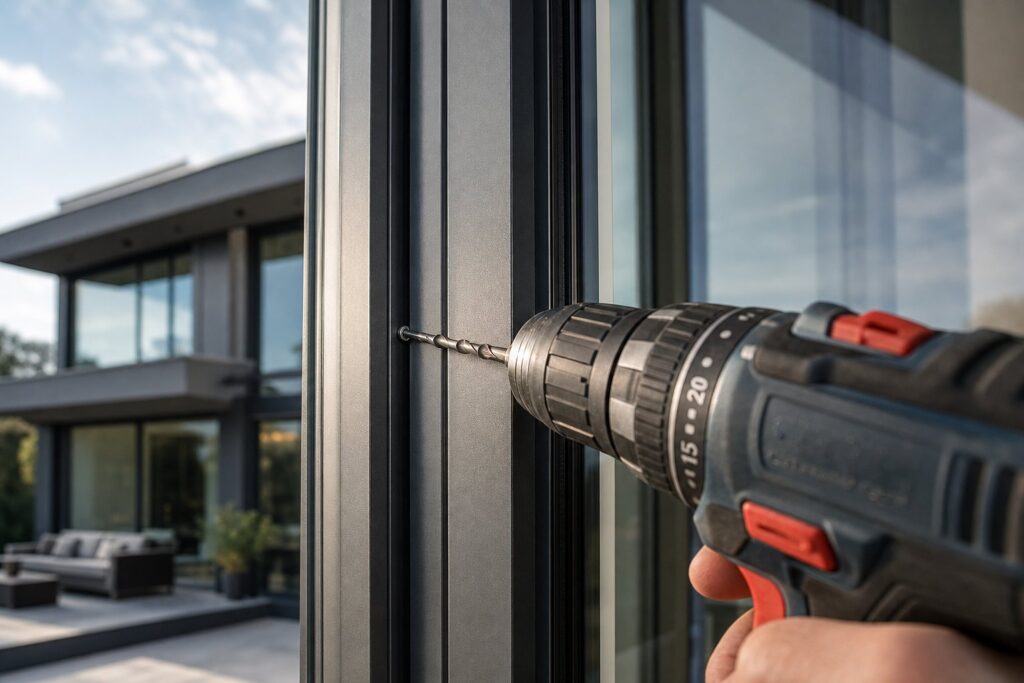
Direct screw-fixing remains the strongest method for how to mount mini blinds on aluminium frames, but technique matters. Aluminium profiles are hollow extrusions with wall thicknesses typically between 1.2 and 2.0 mm. A standard wood screw will simply spin inside that cavity. The correct approach uses self-tapping screws with a high-speed steel (HSS) or cobalt drill bit to create a pilot hole through the aluminium wall, then a self-tapping screw that cuts its own thread into the metal.
For heavier installations like 2 inch aluminum window blinds or timber venetians, consider rivnuts (threaded inserts) pressed into the hollow section to provide a solid anchor point. Use a drill bit slightly smaller than the screw diameter, apply steady moderate pressure, and avoid over-tightening, which can strip the thin aluminium wall or distort the profile. Stainless steel fixings prevent galvanic corrosion where dissimilar metals meet.
This method suits homeowners who own their property and want permanent, rattle-free mounting. It handles the heaviest blind types and provides the most secure long-term hold.
Drilling into aluminium window frames may void the manufacturer’s warranty in some cases, particularly on newer thermally broken systems. Check your warranty documentation before committing to screw-fix mounting, and photograph existing seals for reference.
Face-Fix and Reveal Mounting
Face-fixing avoids the aluminium frame altogether. Brackets mount to the wall above the window (face-fix) or to the masonry inside the window reveal. This approach is popular for how to hang mini blinds when the aluminium rebate is too shallow for an inside mount, or when you want to avoid any contact with the frame.
Wall-mounted face-fix works well for vertical blinds and roller cassettes on aluminium sliding doors, where the frame’s top profile may sit too close to the glass for bracket clearance. Reveal mounting into brick or rendered reveals uses standard wall plugs and gives a clean inside-the-opening appearance without touching the aluminium at all. The trade-off is a slightly wider light gap at the edges since the blind sits proud of the frame rather than nesting within it.
No-Drill Attachment Methods
Three systems let you attach blinds without putting a single hole in the aluminium:
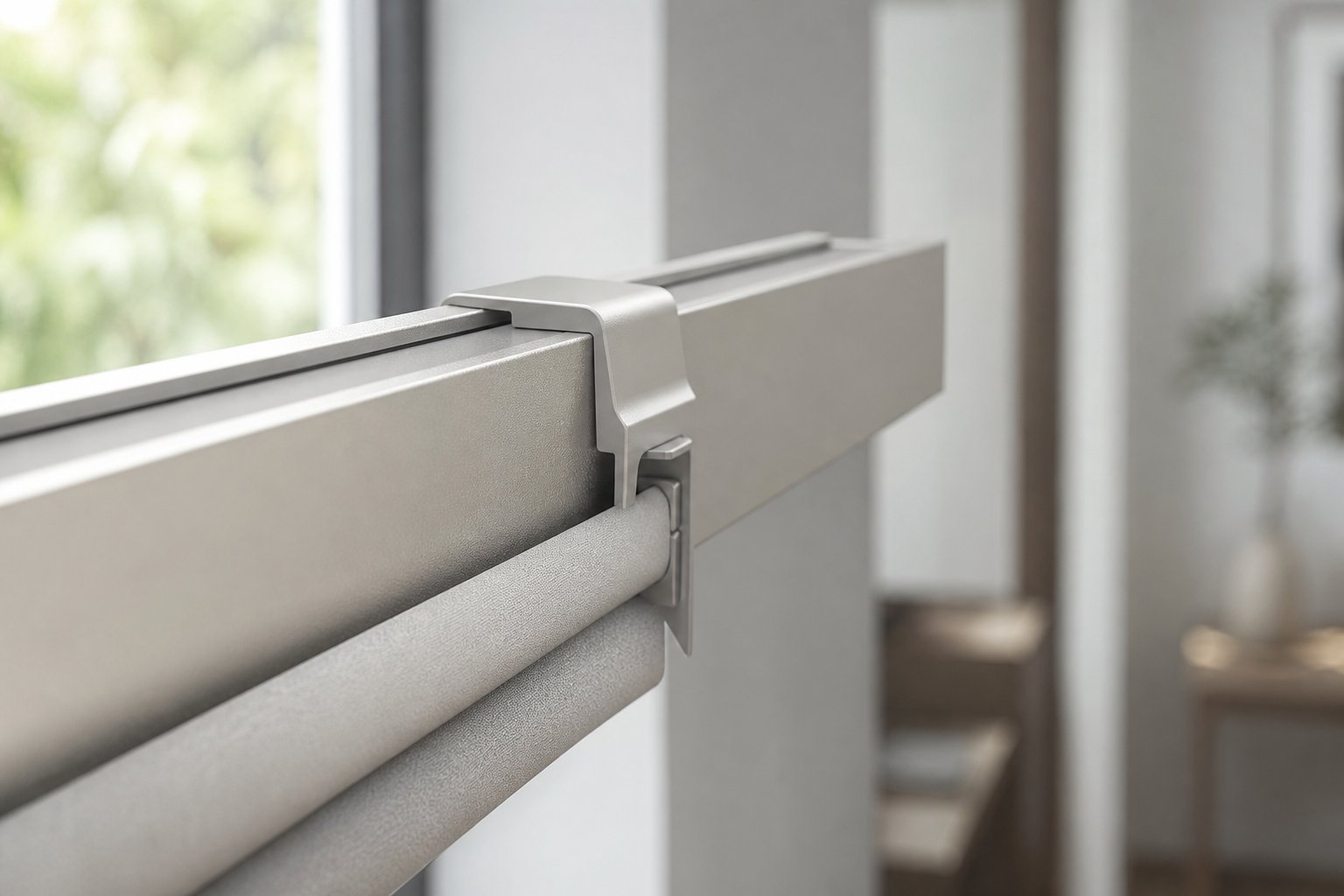
Clip-on brackets are designed to grip the top edge of aluminium window profiles. They hook over the frame lip and tighten with an adjustment screw. These work best on casement and tilt-and-turn windows where the sash edge is accessible when the window is open. Weight capacity is moderate, suiting lightweight rollers and pleated blinds but not heavy venetians.
Magnetic attachment strips exploit aluminium’s metallic surface. Rare-earth magnets bonded to the blind’s headrail grip the frame without adhesive or mechanical fixing. They suit lightweight cellular and pleated blinds, though their hold strength drops on powder-coated frames where the coating adds a barrier between magnet and metal. Magnetic systems are best for fixed panes rather than opening sashes, where repeated movement can shift the blind over time.
Tension-fit systems use spring-loaded rods or brackets that press outward against the inside of the window reveal. They work reliably on spans up to about 2 metres and hold roller blinds and pleated shades securely. Because the tension force acts on the reveal walls rather than the aluminium frame itself, there’s zero risk to the window’s weather seals or finish. This makes them the go-to choice for renters and anyone protecting warranty coverage.
| Method | Tools Required | Frame Damage Risk | Weight Capacity | Best For |
|---|---|---|---|---|
| Screw-fix into frame | Drill, HSS/cobalt bit, self-tapping screws | Moderate — holes in aluminium, potential seal compromise | High (supports all blind types) | Homeowners wanting permanent, heavy-duty mounting |
| Face-fix (wall above window) | Drill, wall plugs, screws | None to frame (holes in wall only) | High | Shallow rebates, vertical blinds, wide sliding doors |
| Reveal mount (masonry sides) | Drill, wall plugs, screws | None to frame | High | Inside-mount appearance without touching aluminium |
| Clip-on brackets | None (hand-tighten adjustment screw) | Minimal — may mark powder coat under pressure | Low to moderate (up to ~3 kg) | Casement and tilt-and-turn sashes, lightweight blinds |
| Magnetic strips | None | None | Low (under 1.5 kg) | Fixed panes, cellular and pleated blinds, temporary setups |
| Tension-fit rods/brackets | None | None | Moderate (reliable up to ~2 m span) | Renters, warranty protection, roller and pleated blinds |
Each method addresses the aluminium-specific challenges differently. Screw-fixing delivers maximum strength but demands proper technique and accepts frame modification. Face-fix and reveal mounting sidestep the frame entirely at the cost of a slightly less integrated look. Clip-on, magnetic, and tension systems preserve the frame completely but limit you to lighter blind types and narrower spans.
Your choice depends on ownership status, blind weight, and how the window opens. But regardless of which mount you select, the next hurdle is the same for everyone: getting accurate measurements from frames that are narrower and more obstructed than most measuring guides assume.
No-Drill Blind Solutions for Renters With Aluminium Frames
Aluminium-framed windows dominate rental apartments and modern multi-storey builds across Australia. The frames are durable, low-maintenance, and architecturally clean, but they create a specific problem for tenants: you need window coverings, yet your lease prohibits drilling into anything. The mounting methods covered earlier assumed some level of permanent modification. Renters don’t have that luxury, so the best no drill blinds for aluminium frames rely entirely on reversible attachment systems that leave zero trace when you move out.
Tension Rods and Pressure-Fit Systems
Tension-fit blinds use a spring-loaded headrail that expands inside the window reveal until friction holds it in place. No screws, no adhesive, no tools. The system presses against the masonry or plasterboard sides of the reveal rather than gripping the aluminium frame itself, which means your window seals and powder-coat finish stay untouched.
These systems work reliably on spans up to about 1.8 metres. Beyond that width, the tension force can’t maintain enough grip to prevent sagging. Aluminium reveals tend to be straight and true, which actually helps, since uneven frames are what cause most tension-rod failures on older timber windows. Roller blinds and pleated shades are the most common types available in pressure-fit configurations, and they suit standard-sized apartment windows well. For wider openings like aluminium sliding doors, tension rods become impractical and you’ll need to look at other methods.
Magnetic and Adhesive Solutions
Aluminium frames offer renters one advantage that timber and PVC don’t: a metallic surface. Magnetic blind systems use industrial-grade ceramic or rare-earth magnets embedded in the headrail that grip directly onto the aluminium profile. Installation takes minutes. You position the blind, let the magnets snap into contact, and you’re done. Removal is just as fast, leaving no residue or marks behind.
Magnetic shades work best on fixed panes and lightly used casement windows. On high-traffic doors or frequently opened sashes, repeated movement can shift the blind over time. Powder coating does reduce magnetic grip slightly, so heavier blinds may not hold as securely. For cordless aluminium window blinds in the cellular or pleated category, where weight sits well under 1.5 kg, magnetic mounting is more than adequate.
Adhesive bracket systems offer an alternative for situations where magnetic grip isn’t strong enough. Heavy-duty 3M-style adhesive pads bond to the smooth aluminium surface and support lightweight roller or honeycomb blinds. The surface must be clean and dry before application. When you move out, slow steady pressure removes the adhesive cleanly, and any residue wipes away with warm soapy water or a mild adhesive remover.
Temporary Blinds That Look Permanent
Not every rental solution needs to look temporary. Cordless lift blinds in cellular and pleated designs now come in semi-permanent configurations that appear custom-fitted yet attach without a single hole. These easy blinds for windows use clip-on brackets that grip the aluminium sash edge or tension headrails that sit flush inside the reveal. From the street, they’re indistinguishable from professionally installed treatments.
For shorter-term needs, pleated paper blinds offer an inexpensive stopgap that cuts to width and adheres with a light adhesive strip. They won’t win design awards, but they provide immediate privacy and light control while you source a better long-term solution. Cordless aluminium blinds and cordless metal blinds in magnetic-mount configurations bridge the gap between temporary and permanent, delivering a hidden window blinds aesthetic where the mounting hardware virtually disappears behind the headrail.
When shopping for renter-friendly blinds on aluminium frames, prioritise products that tick these boxes:
- No-drill mounting compatible with metallic or smooth powder-coated surfaces
- Removable adhesive rated for clean release without surface damage
- Adjustable width or cut-to-size options to fit non-standard aluminium reveals
- Damage-free removal guaranteed by the manufacturer
- Cordless operation for child safety and a cleaner visual profile
These solutions let you control light and privacy without risking your bond. But fitting any of them accurately still depends on one thing: knowing the exact dimensions of your aluminium reveal, including obstructions most people overlook until the blind arrives and won’t sit flat.
How to Measure Aluminium Windows for a Perfect Blind Fit
Aluminium frames punish imprecise measurements more than timber ever will. With rebate depths typically sitting between 30 and 50 mm, a 5 mm error that wouldn’t matter on a chunky hardwood frame can mean the difference between a blind that sits flush and one that protrudes awkwardly or won’t fit at all. Standard measuring guides assume generous depths and simple rectangular openings. Aluminium windows demand tighter tolerances and awareness of obstructions that most guides never mention.
Measuring Inside Aluminium Rebates
The rebate is the recessed channel within the window frame where an inside-mounted blind sits. On aluminium profiles, this channel is narrow and precise. Here’s how to measure it correctly:
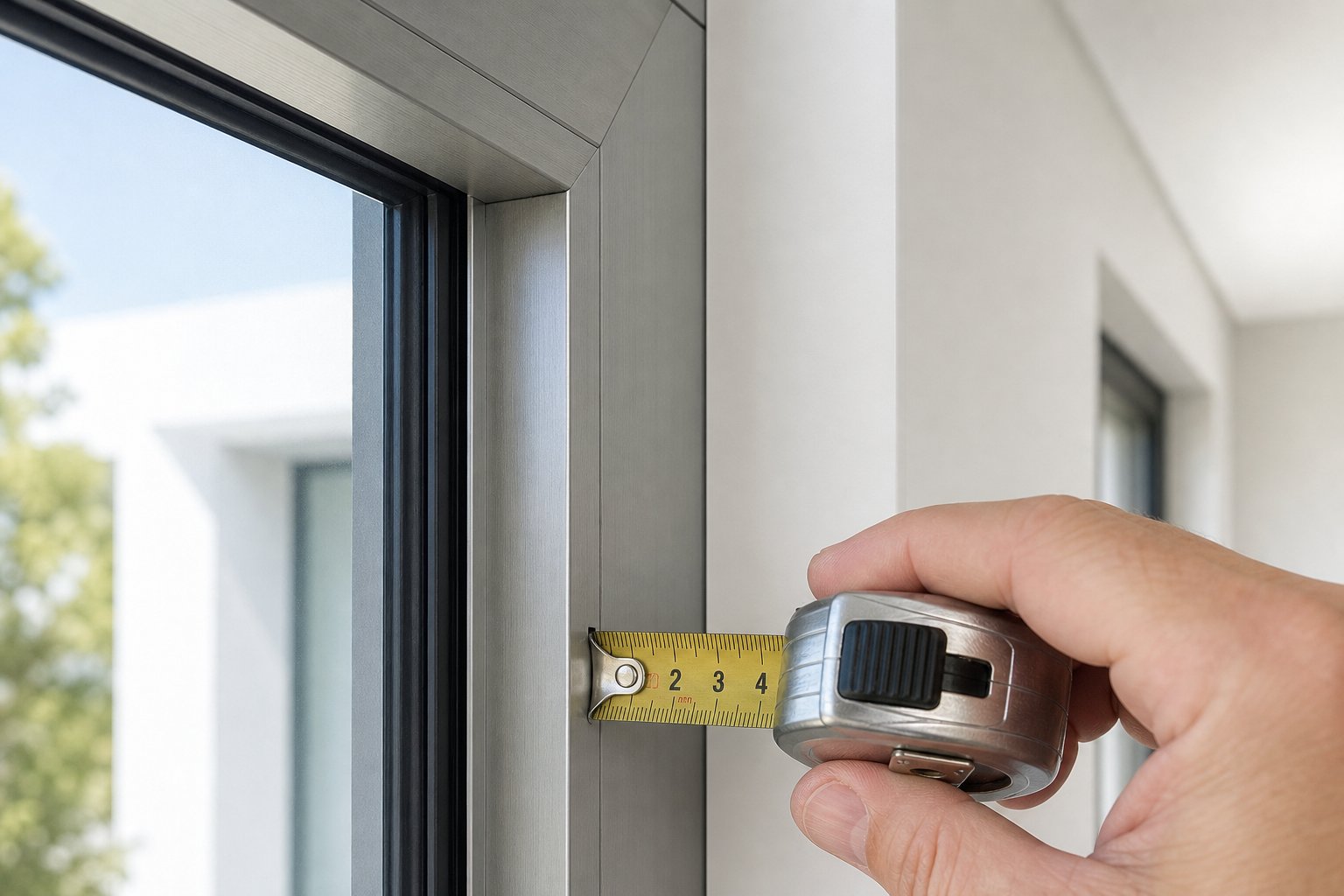
- Use a metal tape measure. Retractable cloth or laser measures introduce too much variability at this scale. A steel tape gives you millimetre accuracy where it counts.
- Measure the width at three points — top, middle, and bottom of the opening. Record all three in millimetres. Aluminium frames are generally more consistent than timber, but thermal expansion can introduce slight variation. Use the smallest of the three measurements for your order width.
- Measure the height (drop) at three points — left, centre, and right. Again, take the smallest reading. This prevents the blind from being too tall to clip into its brackets.
- Measure the rebate depth. This is critical for aluminium. Place the tape inside the channel and measure from the glass surface (or glazing bead) to the front face of the frame. You need a minimum of 35 mm for most aluminium venetians and 15 to 25 mm for cellular or pleated blinds. If your depth is under 30 mm, thin blinds for windows such as slimline rollers or micro blinds for windows become your primary inside-mount options.
- Record width first, then height. Always note dimensions as width x height in millimetres to avoid transposition errors when ordering.
Always measure at three points across both width and height. Aluminium frames can flex slightly under thermal expansion, and even a 2 to 3 mm difference matters when you’re working within a 35 mm deep rebate.
Identifying Obstructions on Aluminium Frames
Aluminium windows carry more potential obstructions than most people expect. Before settling on an inside mount, open the window fully and inspect the frame for anything that could interfere with blind operation:
- Handles and espagnolette locks: These locking mechanisms often protrude 15 to 30 mm into the rebate space. If the handle sits within the blind’s path, the slats or fabric will catch every time you operate the window.
- Friction stay hinges: Friction stays on casement and awning windows use a sliding track mechanism that sweeps inward when the sash opens. The hinge arm can foul on a blind headrail or roll up fabric if the blind sits too close to the frame edge.
- Window restrictors: Safety limiters on upper-storey windows add a protruding arm that the blind must clear in both open and closed positions.
- Trickle vents: Slotted ventilation strips along the top of the frame reduce the available headrail space by 10 to 15 mm and must not be blocked by the blind.
- Drainage slots: Small weep holes at the bottom of the frame need to remain unobstructed. A blind bottom rail sitting over these slots can trap moisture and accelerate corrosion.
For small window blinds and narrow blinds on compact aluminium frames, obstructions eat up a larger proportion of the available space. A handle that’s manageable on a 1200 mm wide window becomes a serious problem on a 400 mm wide bathroom opening. Mini blinds for small windows and micro blinds with slimline headrails help in tight scenarios, but only if you’ve identified the obstruction first and confirmed there’s clearance.
When to Choose Inside vs Outside Mount
Inside mounting looks cleaner, sitting the blind within the frame for a built-in appearance. But aluminium rebates frequently don’t cooperate. If your measured depth is under 35 mm, most venetian and roller systems won’t fit without protruding beyond the frame face. That’s when outside mounting becomes the practical choice.
An outside mount fixes the blind to the wall above the window or across the face of the surrounding reveal. You gain full coverage, eliminate depth restrictions, and avoid the obstruction issues entirely. The trade-off is a slightly less integrated aesthetic and marginally wider light gaps at the edges. For blinds for small windows where the aluminium rebate is especially shallow, outside mounting often delivers a better result than forcing an inside fit with an ultra-slim system that limits your blind-type options.
A practical rule: if your rebate depth is 35 mm or more and the frame is clear of obstructions, inside mount. If it’s under 35 mm or handles and stays intrude into the space, go outside mount and save yourself the frustration of returns and refits. Either way, accurate measurements specific to your aluminium frame are the foundation everything else builds on, especially when you’re matching blind type to a particular window configuration.

Matching Blinds to Different Aluminium Window Styles
Every aluminium window configuration opens differently, and that movement dictates what can sit in front of the glass. A blind that works perfectly on a fixed pane might foul on a casement hinge, block a sliding track, or get crushed by a tilt-and-turn sash swinging inward. Matching the right blind to your specific window style eliminates the guesswork that leads to returns and refits.
Casement and Awning Aluminium Windows
Outward-opening casement windows are among the most common aluminium configurations in Australian homes. The sash swings away from the interior, which means the blind itself doesn’t get pushed out of position. The real issue is internal clearance: friction stay hinges sweep inward as the sash opens, and any blind headrail or fabric sitting too close to the frame edge will catch on that moving arm.
For casement windows, inside-mounted aluminium venetian window blinds or compact roller cassettes work well, provided the rebate depth clears the friction stay’s arc. Measure with the window open to confirm the hinge arm doesn’t contact the headrail position. If it does, shifting to a face-fix above the frame solves it instantly.
Awning windows present a slightly different geometry. These are top-hinged and push outward from the bottom, so the sash doesn’t interact with the blind at all once it’s open. The challenge is that the blind must sit behind the opening sash, meaning it occupies the limited depth between the glass and the interior frame face. Cellular and pleated blinds, with their 15 to 25 mm profiles, excel here. A roller blind also fits if you choose a slimline cassette that doesn’t protrude past the frame edge when rolled up.
Sliding Aluminium Windows and Doors
Sliding windows and doors move horizontally along a track, and any blind system must avoid interfering with that lateral movement. The headrail can’t extend past the frame’s front edge, and the blind material can’t drape into the track channel where the sash glides.
Aluminum venetian blinds for windows in a sliding configuration work effectively because each panel gets its own separate blind. This per-panel approach lets you open one side while keeping the other covered. A mini blind for door window panels on aluminium sliding doors follows the same logic: individual blinds mounted to each fixed or sliding section operate independently.
For wider aluminium sliding doors, aluminum vertical blinds are often the practical default. Their headrail mounts to the wall or ceiling above the frame rather than within the shallow aluminium profile, and the louvres stack neatly to one side when you need full access. Mini blinds for doors also suit narrower single-panel aluminium sliding doors where the opening width stays under 900 mm.
Bifold Door Blinds and Large Aluminium Openings
Bifold doors fold in sections, meaning the blind system has to accommodate panels stacking on top of each other without interference. Three approaches handle this well:
Perfect-fit blinds clip directly into the frame of each individual door panel. The blind moves with the panel when it folds, so opening and closing happens without snagging. Perfect-fit systems work on aluminium bifolds with defined glazing beads, though they were originally designed for uPVC. Confirm compatibility with your specific aluminium profile before ordering.
Built in blinds (also called integral or in-glass blinds) are sealed inside the double-glazed unit itself. They sit between the glass panes, completely flush with the surface, maintenance-free, and impossible to damage from either side. This option needs to be specified during manufacturing, making it ideal for new builds or full window replacements rather than retrofits.
Panel-track systems use wide fabric panels that slide sideways on a ceiling-mounted track, stacking to one side like the bifold panels themselves. They suit open-plan living spaces where the bifold opening spans 3 metres or more and a traditional blind would look undersized.
| Window Style | Recommended Blind Type | Mounting Approach | Key Consideration |
|---|---|---|---|
| Casement (outward opening) | Roller cassette, aluminium venetian | Inside mount or face-fix above | Friction stay clearance when window is open |
| Awning (top-hinged, opens out) | Cellular, pleated, slimline roller | Inside mount (minimal depth required) | Blind sits behind sash; ultra-slim profile essential |
| Tilt-and-turn (inward opening) | Clip-on pleated, perfect-fit | Frame-mounted (moves with sash) | Must clear both tilt and full-open swing modes |
| Sliding window | Aluminium venetian, roller per panel | Inside mount per fixed/sliding section | Blind must not extend into sliding track channel |
| Sliding door | Vertical blinds, panel track | Wall or ceiling mount above frame | Wide span demands headrail support beyond frame |
| Bifold door | Perfect-fit, built in blinds, panel glide | Panel-mounted, in-glass, or ceiling track | Blind must fold/stack with door panels |
Tilt-and-turn windows deserve a specific note. These swing fully inward like a door or tilt in from the top for ventilation. Any blind mounted to the reveal or wall will be hit by the sash in full-open mode. The solution is a frame-mounted blind that travels with the sash: clip-on pleated blinds or perfect-fit cellular shades attached directly to the opening panel. This way, the blind clears both operating modes without interference.
Homeowners planning new aluminium windows have a significant advantage here. By coordinating blind-compatible frame depths, hardware placement, and glazing bead profiles during the specification stage, you eliminate most retrofit challenges covered in this guide. MEICHEN’s aluminium window systems offer custom configuration options across casement, sliding, awning, and bifold types, allowing you to select profiles that accommodate your preferred blind type from the outset.
Getting the window style and blind type matched correctly is the structural foundation. But even the right pairing can develop problems over time if you don’t account for one factor unique to aluminium frames: how the metal itself interacts with moisture and temperature.
Managing Condensation and Blind Maintenance on Aluminium Frames
Aluminium conducts heat roughly 1,000 times more efficiently than timber. That thermal conductivity is what allows manufacturers to build incredibly slim, strong profiles, but it also turns the frame into a cold bridge between indoor warmth and outdoor air. On winter mornings, moisture from cooking, breathing, and showering condenses directly onto the aluminium surface. That water doesn’t stay on the frame. It pools in channels, runs down glazing beads, and drips onto headrails, bottom rails, and slat edges of whatever blind sits against the glass. Over a season, this repeated wetting cycle can destroy blinds that weren’t chosen with condensation in mind.
Condensation on Aluminium Frames and Blind Damage
The mechanism is straightforward. Warm, humid air inside the room contacts the cold aluminium frame and glass. The air cools below its dew point and releases moisture as liquid water. On thermally broken frames (with a polyamide strip separating inner and outer aluminium sections), this effect is reduced. On older or non-thermally-broken profiles still common across many Australian apartments, condensation can be heavy enough to form visible puddles along the bottom frame channel within hours of heating a room.
Not every blind material handles this equally. Timber venetian slats absorb moisture through their grain and swell, warp, or crack after repeated wet-dry cycles. Natural fabric roller blinds, particularly cotton and linen weaves, trap moisture in their fibres and become breeding grounds for mould. Even some synthetic fabrics develop black spotting along the bottom edge where the material contacts a wet frame rail. If you’ve ever pulled up a roller blind to find a band of mould across the lowest 50 mm of fabric, condensation on the aluminium frame below is almost certainly the cause.
Honeycomb and cellular blinds sit in a grey area. Their insulating air pockets reduce heat loss through the glass, which actually decreases condensation on the pane itself. However, the fabric cells can trap humid air against the window overnight, and in bathrooms or kitchens with poor ventilation, mould can develop inside the honeycomb pockets where it’s invisible until well established. In well-ventilated rooms, they perform fine. In persistently damp environments, they need careful monitoring.
Best Blind Materials for Moisture-Prone Aluminium Windows
Choosing aluminium window shades or other non-porous materials eliminates the condensation problem at its source. If water can’t penetrate the blind surface, repeated wetting does no structural damage. Here are the most durable pairings for aluminium frames in moisture-prone positions, ranked by resistance:
- Aluminium venetian slats: Completely impervious to water. Metal mini blinds and standard 25 mm aluminium venetians wipe dry in seconds and won’t warp, swell, or harbour mould regardless of how much condensation the frame produces. They’re the most naturally compatible material for metal window shades on thermally conductive frames.
- PVC and faux-wood slats: Non-porous, waterproof, and resistant to warping. Plastic mini blinds for windows and vinyl horizontal blinds replicate the look of timber without any moisture vulnerability. They’re lighter than aluminium and suit bathrooms, kitchens, and laundries where humidity runs high.
- Moisture-rated cellular shades: Some manufacturers offer cellular blinds with anti-microbial treated fabric specifically rated for humid environments. These won’t match the outright waterproofing of metal or PVC, but they resist mould growth far better than untreated alternatives.
- Polyester roller fabrics: Synthetic roller blind fabrics with a sealed or coated back surface shed water rather than absorbing it. Look for PVC-backed or polyurethane-coated options for positions directly above condensation-prone aluminium sills.
- Natural timber and cotton/linen: The least suitable for aluminium frames in cold or humid climates. These absorb moisture readily and deteriorate within one to two seasons of regular condensation exposure.
For aluminum shades and metal window shades in general, the maintenance routine is minimal: wipe down with a dry cloth weekly, and use a damp microfibre cloth monthly to remove dust buildup. PVC and faux-wood slats follow the same approach. Fabric-based blinds require more attention. Raising them fully during the morning to let air circulate over the wet frame surface helps moisture evaporate before it saturates the material.
Wipe aluminium frame channels before water pools deep enough to contact the blind headrail. A quick pass with a microfibre cloth each morning during winter takes seconds and prevents moisture from wicking into bottom rails, cords, and slat edges where damage compounds over time.
Ventilation plays a supporting role. Opening windows briefly each day or running an exhaust fan in kitchens and bathrooms reduces indoor humidity, which means less moisture available to condense on the frame in the first place. Thermally broken aluminium frames reduce condensation significantly compared to non-broken profiles, so if you’re replacing windows and condensation has been an ongoing issue, specifying a thermally broken system addresses the root cause rather than just managing symptoms at the blind level.
Even with the right material and maintenance habits, blinds on aluminium frames can develop fitting issues over time: brackets loosen, slats rattle, and headrails shift position as seasons change. Those mechanical problems have their own set of causes and fixes.
Troubleshooting Common Blind Fitting Problems on Aluminium Windows
You’ve chosen the right blind type, measured carefully, and selected a mounting method suited to your frame. Then the blind goes up and something still isn’t right. Brackets spin without biting. The headrail jams against a handle every time you lower the blind. A persistent tapping sound starts the moment a breeze picks up. These aren’t rare edge cases. They’re predictable consequences of aluminium’s physical properties colliding with hardware designed for denser, thicker frame materials.
Here’s a systematic approach to diagnosing and fixing the most common issues.
- Brackets slipping or spinning on hollow aluminium profiles
- Blinds too deep for the available rebate
- Headrails fouling on handles or friction stays
- Cords and chains tangling on hardware
- Blinds rattling against the aluminium frame in drafts
Brackets Slipping on Hollow Aluminium Profiles
Standard blind brackets assume they’re biting into solid material. Timber gives wood screws something to grip. Aluminium window profiles are hollow extrusions with wall thicknesses between 1.2 and 2.0 mm. Drive a regular screw into that thin shell and it either punches straight through without catching, or holds briefly then strips out under the blind’s weight. The bracket spins, the headrail sags, and the blind eventually drops.
The root cause is simple: there isn’t enough material thickness for a screw thread to engage properly.
- Use rivnuts (threaded inserts): A rivnut compresses against the inside wall of the hollow section when installed with a dedicated tool, creating a permanent threaded anchor. Select a rivnut that matches the bolt size on your bracket. Drill the pilot hole through the aluminium face, insert the rivnut, and compress it so the body mushrooms against the internal wall. This gives you a solid M4 or M5 thread that won’t strip, even under the weight of heavier mini metal blinds or timber venetians.
- Use self-drilling tek screws: These have a drill-point tip that cuts cleanly through thin aluminium and a thread pitch designed for sheet metal. They grip both walls of a hollow section if positioned correctly, providing far better holding power than wood screws.
- Add a backing plate: For brackets that sit on a single aluminium wall, place a small steel plate inside the hollow section behind the screw point. This distributes load across a wider area and prevents the screw pulling through under tension.
- Consider face-fix as an alternative: If the aluminium profile simply won’t hold brackets securely, mounting to the masonry reveal or wall above eliminates the problem entirely.
Blinds Too Deep for Shallow Aluminium Rebates
A blind that technically fits the width and height of your opening can still fail if its headrail protrudes past the front edge of the frame. Standard venetian headrails run 45 to 55 mm deep. Many aluminium rebates offer only 30 to 40 mm of usable depth from glazing bead to frame face. The result: a headrail that sticks out awkwardly, prevents the window from opening fully, or won’t fit inside the frame at all.
- Switch to slimline blinds: Slimline headrail systems designed for shallow reveals measure as little as 20 to 25 mm deep. Cellular shades and pleated blinds routinely fit within 15 to 25 mm. If your current blind protrudes, replacing it with a slim-cassette roller or micro mini blinds built for minimal depth solves the issue without changing your mounting approach.
- Choose 1 inch aluminum mini blinds: With 25 mm slats and compact headrails, these micro mini window blinds are purpose-built for tight spaces. Their headrail profiles sit around 30 to 35 mm deep, making them one of the few slatted options that fit inside shallow aluminium rebates while still providing adjustable light control.
- Move to an outside mount: If no inside-mount option works within your available depth, mounting the blind to the wall or reveal face above the window gives you full freedom on headrail size. You trade the flush built-in look for guaranteed clearance.
- Fit a slim cassette system: Some roller blind manufacturers offer cassettes specifically designed for narrow-depth windows, fitting inside recesses as shallow as 12 to 15 mm. These omit the traditional housing in favour of a minimal fabric-wrapping tube that tucks against the glazing bead.
Headrails Fouling on Handles and Cords Tangling on Stays
Espagnolette handles on aluminium casement windows typically protrude 15 to 30 mm into the rebate space. If the blind’s headrail or bottom rail passes across that handle when raising or lowering, the mechanism jams. Similarly, chain or cord controls can loop around friction stay arms when the window is opened, creating tangles that wear the cord and eventually break it.
- Offset the headrail position: Mount the bracket slightly to one side of the handle so the blind’s operating area avoids the obstruction. On narrow windows, this may not be possible without cutting the blind width.
- Use a stand-off bracket: These bring the headrail forward by 10 to 15 mm, creating clearance between the blind and any protruding hardware behind it.
- Swap to cordless operation: Cordless lift blinds remove dangling chains and cords that catch on friction stays. The blind raises with a push on the bottom rail, keeping all mechanical parts internal and away from frame hardware.
- Fit cord guides or cleats: If you keep a corded blind, small adhesive cord guides route the chain or cord away from hinge arms and stays, preventing tangles during window operation.
If individual slats have been damaged by repeated fouling against handles or stays, blind slat replacement horizontal kits let you swap out bent or kinked slats without replacing the entire blind. For 1 inch aluminum blinds, replacement slats for blinds are widely available in matching colours and simply unhook from the ladder cords.
Rattling and Noise Issues
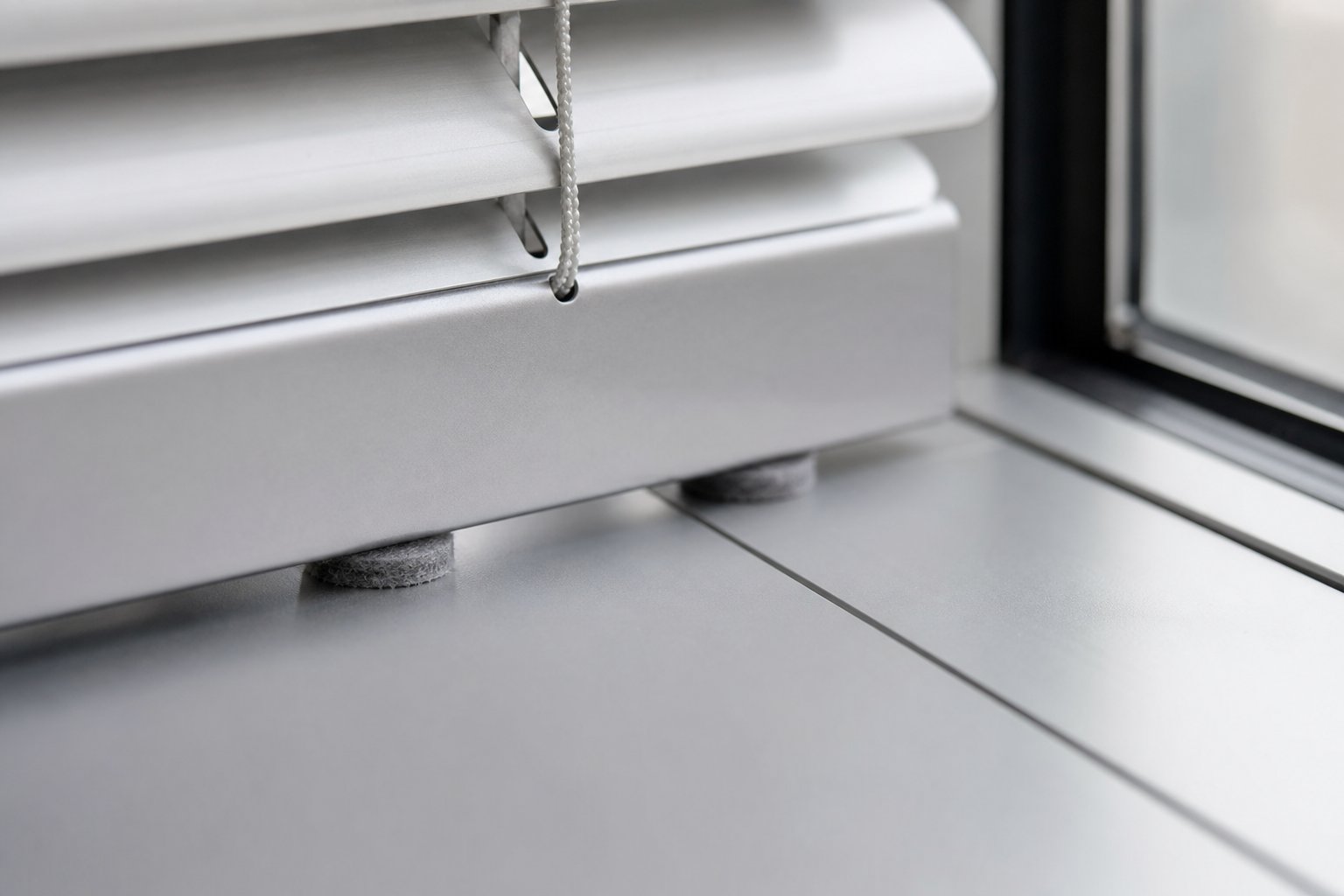
Aluminium-on-aluminium contact produces a sharp, persistent tapping that amplifies with every breeze. Lightweight venetian slats and bottom rails vibrating against a smooth aluminium frame are the most common culprits, particularly on windows near air conditioning vents or in rooms with cross-ventilation.
- Apply adhesive felt pads or rubber bumpers: Small self-adhesive felt buffers placed where the bottom rail contacts the frame absorb impact and eliminate the metallic tapping sound. Position them at each end of the sill channel and at the centre point. Clear or frame-colour-matched versions stay virtually invisible.
- Install bottom-rail magnets: Rare-earth magnets bonded to the underside of the blind’s bottom rail create a gentle hold against the aluminium frame when the blind is lowered. This prevents the rail from swinging in air currents. The magnetic pull is light enough that raising the blind still takes minimal effort.
- Add bottom-rail weight: Heavier bottom rails resist air movement better. Some micro mini blinds and mini metal blinds accept weight inserts in the bottom channel. Alternatively, adhesive strip weights along the underside add mass without altering the blind’s appearance.
- Redirect airflow: If the rattle only occurs when air conditioning runs, angling the nearest vent away from the window reduces the air current hitting the blind. Vent deflectors are an inexpensive fix that addresses the cause rather than the symptom.
- Apply foam weather stripping to contact points: Thin self-adhesive foam strips along the frame edges where slats make contact cushion movement silently. These are renter-friendly since they peel away cleanly.
Rattling tends to worsen over time as brackets loosen from vibration. If noise returns after initially fixing it, check that all mounting screws remain tight and that rivnuts haven’t loosened in their seats. A periodic tightening check, particularly at the start of summer when windows stay open more, keeps the system stable.
Most fitting problems trace back to one mismatch: the blind wasn’t specified for the aluminium frame’s exact geometry. The final section pulls these threads together into a decision framework that matches your specific situation to the right blind and mounting combination from the start.
Choosing the Right Blinds for Your Aluminium Windows
Every challenge in this guide traces back to a single mismatch: a blind designed for one frame type forced onto another. The fix isn’t complicated. It starts with identifying your window style, then selecting a blind and mount combination that works within your frame’s geometry rather than against it.
Decision Framework by Window Type
The table below pulls together the recommendations from earlier sections into a single reference. Find your situation in the left column and follow across for the pairing that avoids the fitting problems, rattle issues, and condensation damage covered throughout this guide.
| Your Situation | Recommended Blind Type | Recommended Mount Method | Key Consideration |
|---|---|---|---|
| Aluminium casement or awning window, homeowner | Aluminium venetian blinds (25 mm slat) | Inside mount (screw-fix or clip-on) | Confirm friction stay clearance before fixing; metal blinds for windows resist condensation on thermally conductive frames |
| Shallow rebate under 35 mm, any window type | Cellular or pleated blinds | Tension-fit or adhesive clip-on | Ultra-slim profiles (15–25 mm) fit where nothing else will; custom mini blinds sized to exact millimetre dimensions prevent light gaps |
| Rental apartment, no drilling permitted | Magnetic cellular shade or tension-fit roller | No-drill (magnetic, adhesive, or tension) | Aluminium’s metallic surface enables magnetic grip; choose cordless operation for clean aesthetics |
| Sliding aluminium door or wide opening | Vertical blinds or panel-track system | Wall or ceiling mount above frame | Headrail must clear the sliding track; per-panel aluminium mini blind setups suit narrower sliding windows |
| Bifold doors, new build | Built-in (integral) blinds or perfect-fit | In-glass or panel-mounted | Specify during manufacturing to avoid retrofit limitations; blind moves with each folding panel |
| High-moisture room (bathroom, kitchen, laundry) | Aluminium venetian or PVC/vinyl slat | Any — match to frame depth | Non-porous slats handle condensation without warping; when weighing aluminum vs vinyl blinds, aluminium offers better durability while vinyl delivers affordable mini blinds pricing |
| Budget-conscious multi-window project | Custom made mini blinds (aluminium 25 mm) | Inside mount where depth allows, face-fix otherwise | Custom aluminum blinds sized per window avoid returns; bulk ordering reduces per-unit cost significantly |
The framework prioritises window style first because it determines physical constraints. Mounting preference narrows options further based on ownership and willingness to drill. Budget and aesthetic sit last because they only matter once you’ve confirmed what physically fits your frame.
Planning Blinds During a Window Project
Every retrofit challenge in this guide — shallow rebates, handle fouling, bracket grip failures, condensation damage — stems from the blind being an afterthought. The simplest path to perfect-fitting aluminium blinds is specifying blind-compatible frame depths and hardware positions when the windows themselves are ordered.
If you’re building new or replacing existing windows, you can request frame profiles with deeper rebates (45 mm or more), handles positioned clear of the blind path, and glazing beads that accept clip-on bracket systems. These specifications cost nothing extra at the manufacturing stage yet eliminate the most common pain points entirely.
Readers planning new builds or window replacements can explore MEICHEN’s aluminium window range to select frame profiles, hardware configurations, and custom sizing that accommodate a preferred blind type from the outset. Their systems cover casement, sliding, awning, and bifold configurations with options to specify rebate depths and hardware clearances that make blind installation straightforward rather than a compromise.
Whether you’re retrofitting affordable mini blinds to an existing apartment or coordinating custom aluminum blinds alongside a full window replacement, the principle holds: start with the frame, work outward to the blind, and match the mount to both. That sequence — not the other way around — is what separates blinds that work from blinds that fail on aluminium windows.
Frequently Asked Questions About Blinds for Aluminium Windows
1. Can you screw blinds directly into aluminium window frames?
Yes, but standard wood screws won’t hold in hollow aluminium profiles. You need self-tapping screws with a high-speed steel drill bit to create a pilot hole, or rivnuts (threaded inserts) for heavier blinds. The aluminium wall thickness is typically only 1.2 to 2.0 mm, so over-tightening can strip the metal. Use stainless steel fixings to prevent galvanic corrosion, and check your window warranty before drilling, as some manufacturers void coverage if the frame is modified.
2. What are the best no-drill blinds for aluminium windows in rental apartments?
Tension-fit roller blinds, magnetic cellular shades, and adhesive-mounted honeycomb blinds are the strongest renter-friendly options. Aluminium frames offer a unique advantage: their metallic surface allows magnetic blind systems to grip directly without tools or fixings. Tension-fit systems press against the masonry reveal rather than the frame itself, working reliably on spans up to 1.8 metres. Heavy-duty adhesive brackets also bond well to smooth powder-coated aluminium and remove cleanly when you move out.
3. Why do blinds rattle on aluminium window frames?
Aluminium-on-aluminium contact creates a sharp tapping sound that amplifies with airflow. Lightweight venetian slats and bottom rails vibrating against the smooth metal frame are the most common culprits. Fix this by applying adhesive felt pads where the bottom rail contacts the frame, installing rare-earth magnets on the underside of the bottom rail to hold it gently against the frame, or redirecting air conditioning vents away from the window. Foam weather stripping along frame contact points also cushions movement silently.
4. How deep does an aluminium window rebate need to be for inside-mount blinds?
It depends on the blind type. Cellular and pleated blinds need as little as 15 to 25 mm, making them viable for even the shallowest aluminium profiles. Compact cassette roller blinds require 20 to 40 mm. Aluminium venetians with 25 mm slats need 40 to 50 mm. If your rebate measures under 35 mm, your inside-mount options narrow to ultra-slim systems. Anything shallower than 30 mm typically pushes you toward an outside mount or face-fix above the frame to avoid the depth limitation entirely.
5. Do aluminium windows cause condensation damage to blinds?
Aluminium conducts heat roughly 1,000 times more efficiently than timber, creating cold surfaces where moisture condenses in winter. This pooling water can warp timber venetian slats, grow mould on fabric roller blinds, and corrode metal headrails over time. The most resistant options are aluminium venetian slats (completely impervious), PVC or faux-wood slats, and moisture-rated cellular shades with anti-microbial treatment. Wiping frame channels each morning during winter and ensuring adequate room ventilation significantly reduces condensation buildup.
More Window & Door Guides