What Are Aluminium Windows with Integral Blinds
Picture a window with zero dangling cords, no dust-coated slats, and nothing cluttering the sill. That is the basic promise of aluminium windows with integral blinds — a glazing solution where the blind sits entirely inside the sealed glass unit rather than hanging on the room side of the window.
Integral blinds are window blinds permanently sealed within a double-glazed or triple-glazed insulated glass unit. They are operated via external controls — magnetic sliders, cords, or motorised systems — without breaking the thermal seal, keeping the blind mechanism protected from dust, moisture, and physical damage.
Unlike traditional blinds mounted externally on brackets, windows with blinds inside the glass never need dusting, can’t be grabbed by small hands or pets, and won’t flap around when a breeze comes through. The concept is straightforward: the blind slats or pleated fabric live in the cavity between panes, completely encapsulated and untouched by daily life.
What Makes Integral Blinds Different from Standard Window Blinds
Standard blinds attach to the frame or wall and sit exposed to the room environment. They collect cooking grease, dust, pet hair — and they degrade with handling. Windows with internal blinds flip that arrangement. The shading element is factory-sealed inside the insulated glass unit during manufacturing. You still control tilt, raise, and lower functions, but the mechanism stays enclosed. That sealed environment is what eliminates cleaning and extends the blind’s working life well beyond a conventional roller or venetian.
Why Aluminium Frames Suit Integral Blind Systems
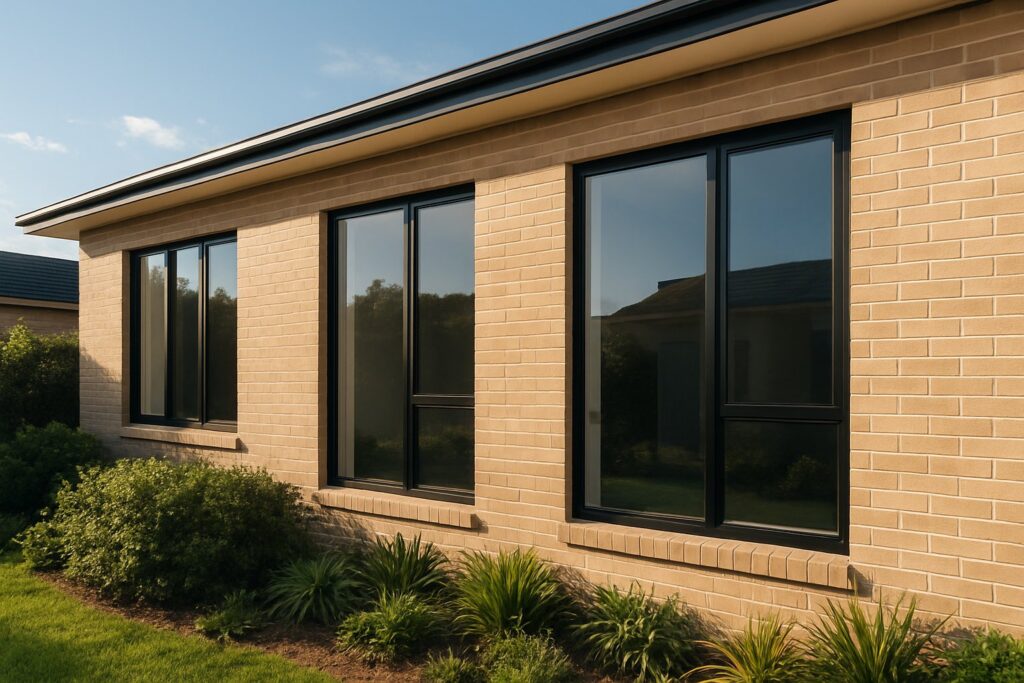
Aluminium frames pair particularly well with integral blind technology for a few practical reasons. First, their inherent structural rigidity supports larger, heavier glass units without flex or distortion — important when you’re housing a blind mechanism inside the glazing cavity. Second, aluminium profiles achieve slimmer sightlines than most timber or uPVC alternatives, maximising the visible glass area and letting more light through even when the blind is retracted. Third, thermally broken aluminium systems are engineered to accept thicker sealed units (commonly 20 mm or 27 mm cavities), which is exactly the space integral blinds require.
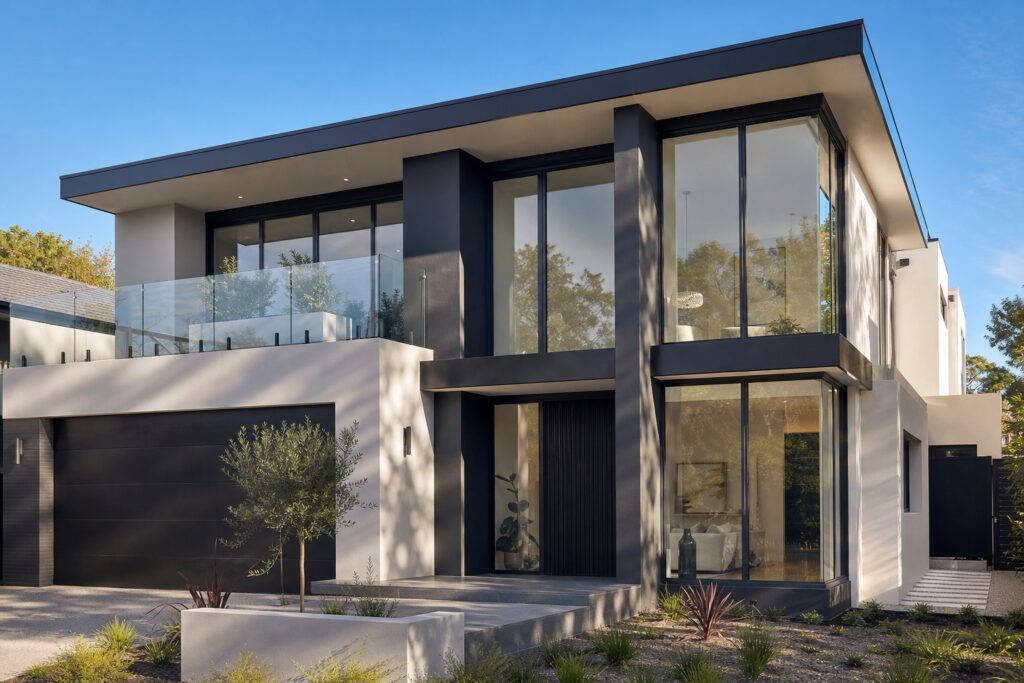
These characteristics explain why windows with integrated blinds are gaining traction across Australian residential builds, extensions, and commercial fit-outs — from coastal apartments in Sydney to new-build estates in Melbourne’s outer suburbs. The combination of slim framing, large glass areas, and built-in shading aligns with how Australians actually use their homes: chasing natural light while managing fierce solar heat gain.
The real question, though, is what’s actually happening inside that sealed glass cavity — and whether all between-glass blind systems perform equally.
How Integral Blinds Work Inside the Glass
Not every system marketed as blinds between glass is built the same way. The distinction matters because it directly affects thermal performance, longevity, and what happens when something eventually wears out. Two fundamentally different approaches exist, and confusing them is one of the most common mistakes homeowners make when specifying window glass with built in blinds.
Sealed Insulated Glass Units vs Separate Pane Cavities
A true integral blind is factory-sealed inside a single insulated glass unit (IGU). The blind mechanism, slats, and operating hardware are all encapsulated during manufacturing, then the unit is sealed with a perimeter spacer and edge sealant — the same way any standard double- or triple-glazed unit is constructed. Once sealed, no air, dust, or moisture reaches the blind. It exists in a controlled environment for its entire service life.
The alternative is a cavity-mounted system, where blinds sit between two separate panes of glass held apart by a frame or secondary glazing arrangement. These are sometimes retrofitted into existing window cavities or installed as part of a secondary glazing layer. The critical difference? The cavity is not hermetically sealed. Air — along with dust, humidity, and insects — can migrate into the space over time.
For Australian conditions, where coastal humidity and fine red dust are constant factors, that seal integrity becomes especially important. A properly sealed IGU keeps the blind pristine; a leaky cavity does not.
| Factor | Sealed IGU Integral Blinds | Cavity-Mounted Blinds |
|---|---|---|
| Dust protection | Complete — hermetically sealed from contaminants | Partial — air ingress possible over time |
| Thermal performance | Maintains IGU integrity; argon or air fill retained | May lack gas fill; seal performance varies |
| Seal integrity | Factory-sealed perimeter with validated spacer system | Relies on secondary frame seals; higher failure risk |
| Condensation risk | Low if seal remains intact | Higher due to potential moisture ingress |
| Maintenance access | None — blind cannot be accessed without replacing the unit | Sometimes accessible, but repairs compromise the cavity further |
How the Glass Unit Is Constructed Around the Blind
Inside a sealed IGU, the blind mechanism occupies the cavity between panes. Typical unit thickness for glass blinds inside a double-glazed configuration ranges from 20 mm to 27 mm — enough space for venetian slats or pleated fabric to tilt and retract without contacting either pane. Triple-glazed versions are also available; HITECH Rooflights notes that their triple-glazed units with integral blinds achieve a U-value of 0.81 W/m²K, with one cavity argon-filled and the other housing the blind mechanism.
That gas fill point is worth pausing on. In standard double-glazed units, both the cavity and the argon gas work together to slow heat transfer. When a blind occupies that cavity, some manufacturers omit argon to accommodate the mechanism — which can nudge U-values slightly higher. Quality suppliers engineer around this by retaining gas fill where space allows, or by using low-emissivity coatings on the glass to compensate.
The blind’s headrail and operating components mount at the top of the spacer bar, integrated into the perimeter seal. External controls — typically a magnetic slider on the frame edge — communicate through the glass without penetrating it. This is what keeps blinds inside windows genuinely maintenance-free: nothing breaches the sealed environment, so nothing degrades it from within.
The takeaway? Not all between the glass blinds deliver equal protection or performance. Specifying windows with blinds between glass means asking your supplier explicitly whether the blind sits within a certified sealed IGU — because that distinction determines whether your system stays clean and functional for a decade or starts fogging within a few years.
Blind Types and Control Mechanisms Available
Knowing how the sealed unit is constructed is one thing. Choosing what goes inside it — and how you’ll operate it daily — is where the practical decisions start. The blind type shapes how light enters your room, and the control mechanism determines how effortlessly you can adjust it. Both choices get locked in at the point of manufacture, so they’re worth getting right.
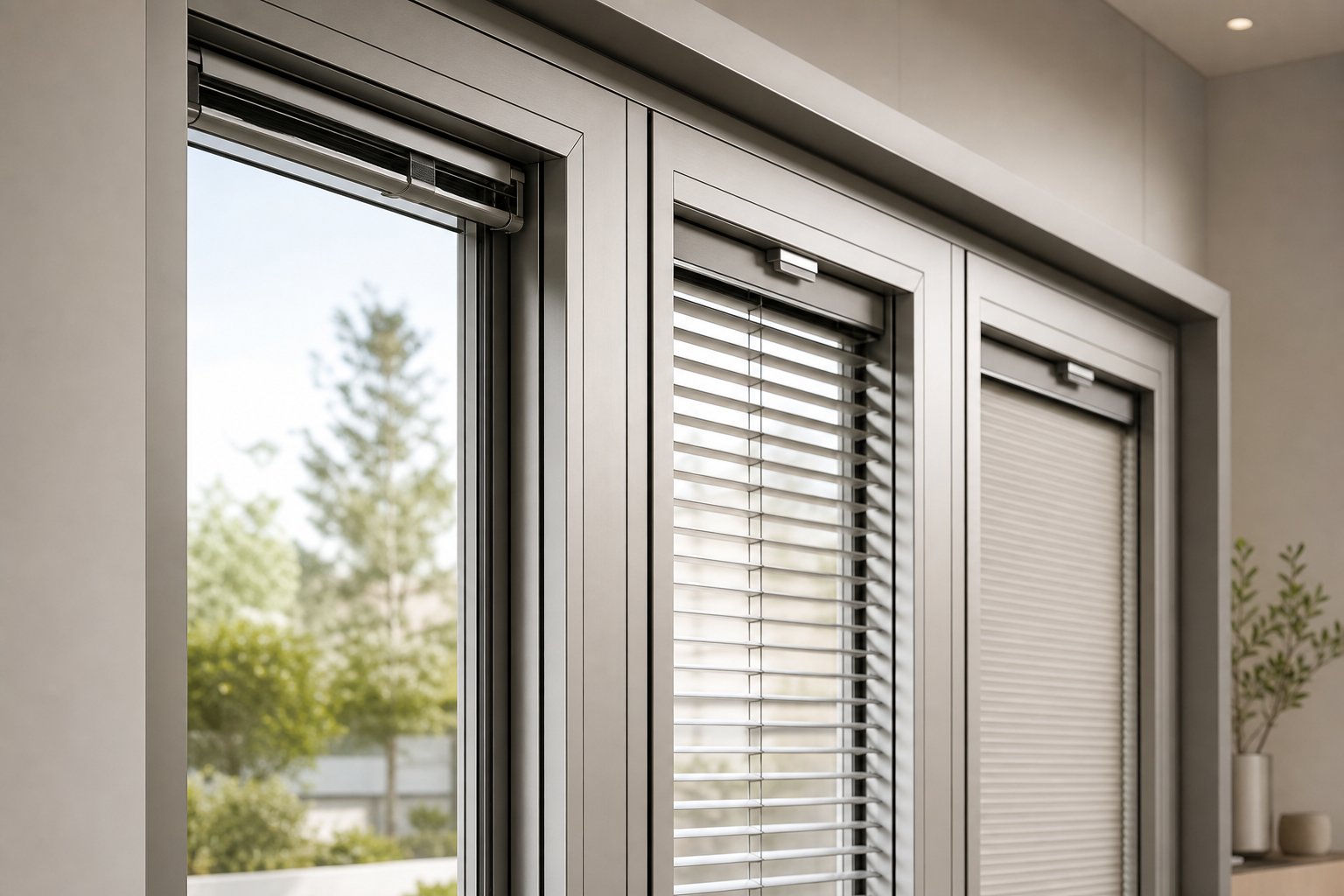
Venetian, Pleated, and Blackout Blind Options
Three core blind styles are available within sealed integral units, each suited to different rooms and lighting goals.
Venetian blinds remain the most widely specified option for a window with blinds inside the glass. These use slim aluminium slats — typically 16 mm or 25 mm wide — that tilt to control light angle and can be fully raised or lowered. They’re versatile enough for kitchens, living areas, and offices where you want adjustable daylight without full blockout. Colour ranges have expanded significantly; most suppliers offer ten or more finishes, from whites and silvers through to anthracite grey.
Pleated fabric blinds provide softer light diffusion. Rather than hard slats, a concertina-folded fabric filters and scatters incoming light, reducing glare while maintaining a warmer aesthetic. Colour choices tend to run broader than venetian — twelve or more shades in many ranges — making them popular in bedrooms and living spaces where design flexibility matters as much as function. Windows with built in shades of this type offer a textile feel without any of the dust accumulation you’d get from exposed fabric blinds.
Blackout pleated blinds are engineered to eliminate light bleed. They use an opaque fabric combined with edge-channel design to block light around the perimeter. Bedrooms, nurseries, media rooms, and shift workers’ spaces are the obvious applications. Several manufacturers offer these in multiple interior colours — blackout doesn’t have to mean black.
Manual, Magnetic, and Motorised Control Systems Compared
How you raise, lower, and tilt the blind depends on the operating system sealed into the unit. Each approach involves a different trade-off between cost, simplicity, and capability.
Magnetic slider systems are the simplest option for windows with shades inside the glass. A small magnetic control slides along a guide rail on the frame edge, communicating through the glass to tilt or reposition the blind. Nothing penetrates the sealed unit. No wiring, no batteries, no moving parts beyond the magnet itself. This makes them the most reliable long-term choice — fewer components means fewer potential failure points.
Corded or wand-operated systems use an externally mounted winder or pull cord. One cord raises, another lowers, and a slight pull tilts venetian slats. The mechanism is familiar to anyone who has used a traditional venetian blind, but it does introduce a cord into the equation — a consideration for child safety, even though the cord sits on the room side rather than within reach of the sealed blind itself.
Motorised electric systems bring remote control, wall-switch operation, or full smart-home integration. A brushless motor within the sealed unit responds to infrared or radio-frequency signals, adjusting blinds at the push of a button. Higher-end versions integrate with home automation platforms — Loxone, Google Assistant, Amazon Alexa — and can be programmed to respond to time schedules or light sensors. Impress Blinds notes that motorised systems allow synchronised operation of up to twelve blinds simultaneously, which suits larger glazed facades or open-plan living areas. Solar-powered variants also exist, using a small photovoltaic strip to charge onboard batteries — eliminating hardwiring entirely.
For a window with built in blinds, the decision often comes down to where the window sits, how often you’ll adjust it, and what you’re willing to spend.
| Control Type | Indicative Cost Premium | Reliability | Ease of Use | Smart-Home Compatible | Best-Fit Scenario |
|---|---|---|---|---|---|
| Magnetic slider | Lowest | Very high — no electrical parts | Simple slide motion | No | Standard windows, budget-conscious projects, child-safe environments |
| Cord/wand operation | Low to moderate | High — minimal moving parts | Familiar pull-cord action | No | Accessible windows where manual adjustment is easy |
| Motorised (hardwired) | High | Good — motor lifespan varies | Button, remote, or app | Yes | Hard-to-reach windows, automation-focused homes, commercial fit-outs |
| Motorised (solar-powered) | High | Good — battery dependent | Remote or app | Yes | Retrofit projects without existing wiring, north-facing glazing with good light |
Budget naturally plays a role, but accessibility often matters more. A magnetic slider is perfect for a kitchen splashback window at arm’s reach. A motorised system makes far more sense for a bank of high-level clerestory glazing or a two-storey void where no one can physically touch the frame. Frequency of adjustment matters too — if you only change blind position seasonally, a simple manual system avoids paying for motorisation you’ll rarely use.
Where things get interesting is how these blind choices interact with the thermal performance of the overall window unit — because the blind type, its position in the cavity, and even its colour all influence how much heat passes through the glass.
Thermal Performance and Energy Efficiency
A closed blind inside a sealed glass unit does more than block a view. It creates an additional barrier to heat transfer — one that sits precisely where thermal exchange between indoors and outdoors is most intense. For Australian homes dealing with harsh summer sun and occasionally cold winter mornings, that positioning matters.
How Integral Blinds Affect Thermal Performance
Windows account for a significant portion of a home’s heat gain and loss. Research from the U.S. Department of Energy puts heat loss through windows at roughly 30% of total heating energy, while around 76% of sunlight hitting standard double-glazed windows enters as heat. Australian figures vary by climate zone, but the principle holds: glazing is the weakest thermal link in most building envelopes.
Internal blinds sealed within the cavity address both sides of this equation. In summer, closed or tilted slats reflect solar radiation before it fully penetrates the room, reducing the cooling load on your air conditioning. In winter, the blind acts as a low-conductivity layer between the panes, slowing heat escape from heated interiors. Because the blind sits inside the sealed unit rather than on the room side, it avoids the air-gap problems that undermine conventional internal window blinds — no convection currents circulate around the slats, and no draughts form between the blind and the glass.
Impress Blinds reports that integral blind systems can reduce heating and cooling costs by up to 15%, depending on property type and orientation. North- and west-facing windows in Australian homes — the orientations receiving the most direct afternoon sun — benefit most during cooling season.
Key thermal benefits when blinds are closed versus open:
- Closed position (summer): Reflects direct solar radiation, reduces solar heat gain coefficient (SHGC), lessens air conditioning demand, and protects furnishings from UV fading
- Closed position (winter): Creates an additional insulating air pocket, reduces heat loss through the glazing, and helps maintain consistent room temperature overnight
- Tilted/partially open: Balances natural daylight entry with controlled heat gain — useful on cooler winter mornings when passive solar heating is welcome
- Fully raised: Maximises solar gain and daylight for passive heating during clear winter days, with no thermal penalty beyond the standard IGU performance
The colour of the blind also plays a role. Lighter, more reflective slat finishes bounce solar energy back through the outer pane, while darker colours absorb and re-radiate heat within the cavity. For windows with shades built in where summer overheating is the primary concern, specifying a white or silver slat finish makes a measurable difference.
Aluminium Thermal Breaks and Energy Efficiency
Aluminium conducts heat readily — roughly 1,500 times more than the polyamide inserts used to interrupt that conduction. Without a thermal break, an aluminium frame acts as a bridge, transferring outdoor temperatures directly to the indoor surface. This is why early aluminium windows earned a reputation for condensation and poor insulation.
Modern thermally broken aluminium profiles solve this. As Kawneer explains, a thermal break is a low-conductivity material — typically extruded polyamide — placed between the inner and outer aluminium sections of the frame, effectively splitting the profile into two thermally isolated halves. The result: the exterior frame face can be freezing or scorching without dragging the interior surface temperature with it.
When paired with windows blinds inside a sealed IGU, the combination works on two fronts. The thermally broken frame minimises conduction around the perimeter, while the integral blind reduces radiation and convection through the glass area itself. Together, they help achieve the U-values and energy ratings required under the National Construction Code (NCC) and assessed through the Window Energy Rating Scheme (WERS).
For anyone specifying windows with interior blinds in climate zones 1 through 8, it’s worth requesting both the overall U-value of the complete window unit and the SHGC with blinds closed. These figures feed directly into NatHERS energy modelling and can influence whether a home meets its required star rating without additional shading devices or upgraded insulation elsewhere.
The thermal story only paints part of the picture, though. Where these systems genuinely shine is in everyday practical use — particularly around safety, hygiene, and the sheer variety of property types they suit.
Practical Benefits for Homes and Commercial Projects
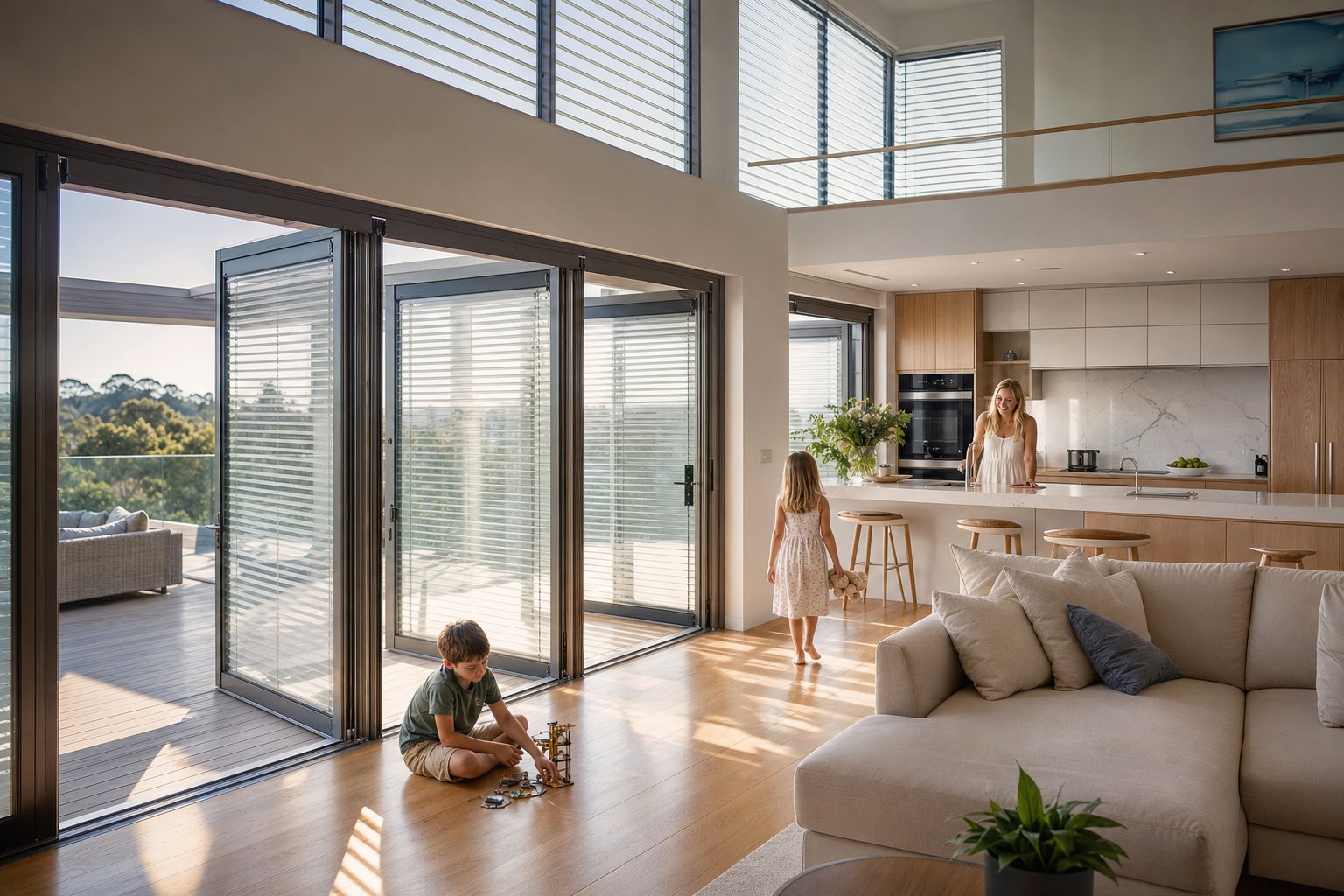
Energy ratings tell you how a window performs on paper. Living with it daily is a different conversation — one shaped by how much time you spend cleaning, how safely your kids move around the house, and whether the system actually suits the room it’s installed in.
Child Safety and Hygiene Advantages
Cord-related injuries remain a preventable hazard in Australian homes. Traditional blinds rely on pull cords, chains, or looped strings that present a strangulation risk to young children and pets. Aluminium windows with integral blinds eliminate this entirely. There are no accessible cords, no dangling chains, and nothing for small hands to grab. The Eclipse Integral Blinds team notes that the cordless, enclosed design removes the entanglement hazard completely — children and pets can move freely around the window without risk.
Hygiene is the other standout. Because the blind sits sealed within the glass unit, it never contacts the room environment. No cooking grease settles on slats above the kitchen sink. No mould spores cling to fabric in a humid bathroom. No allergens accumulate between slats in a child’s bedroom. For healthcare settings, aged-care facilities, and commercial kitchens where contamination control matters, that sealed environment offers a genuine functional advantage over any externally mounted option.
Key practical benefits at a glance:
- Zero accessible cords or chains — meets current Australian child safety requirements without aftermarket cord cleats or tensioners
- Dust-free sealed environment — no slat cleaning, no fabric vacuuming, no chemical wipe-downs
- Resistant to pet damage — cats can’t claw the slats, dogs can’t tangle in cords
- No flapping or rattling in draughts — ideal for rooms where windows are frequently open
- Reduced allergen accumulation — beneficial for asthma and allergy sufferers
- Simple glass-surface cleaning only — a quick wipe of the exterior pane is all that’s needed
Compared to maintaining separate external blinds — dusting fortnightly, replacing broken slats, re-stringing cords every few years — the maintenance reduction is substantial over a decade of ownership.
Applications Across Property Types and Window Styles
Integral blinds aren’t limited to one type of project or a single window configuration. Their versatility is part of what’s driving adoption across the Australian market, from suburban family homes through to multi-storey commercial buildings.
New builds and extensions are the simplest application. Specifying integral blinds at design stage lets builders incorporate wiring for motorised systems and plan frame depths to accommodate sealed units. Modern open-plan extensions with large glazed walls benefit enormously — you get shading without curtain tracks or bulky roller mechanisms competing with clean architectural lines.
Period property renovations present a subtler opportunity. Heritage-listed homes or character dwellings often restrict external shading devices. Blinds for double hung windows mounted traditionally can look cluttered on Federation or Victorian joinery. Integral blinds, hidden entirely within the glass, maintain a clean facade appearance while providing modern light control — often satisfying council heritage requirements more easily than external additions.
Commercial fit-outs — offices, medical clinics, childcare centres, hospitality venues — value the hygiene, safety, and low-maintenance combination. In a childcare setting, the absence of cords is non-negotiable, and sealed blinds mean less cleaning labour for staff.
The range of compatible window styles is broader than most people expect:
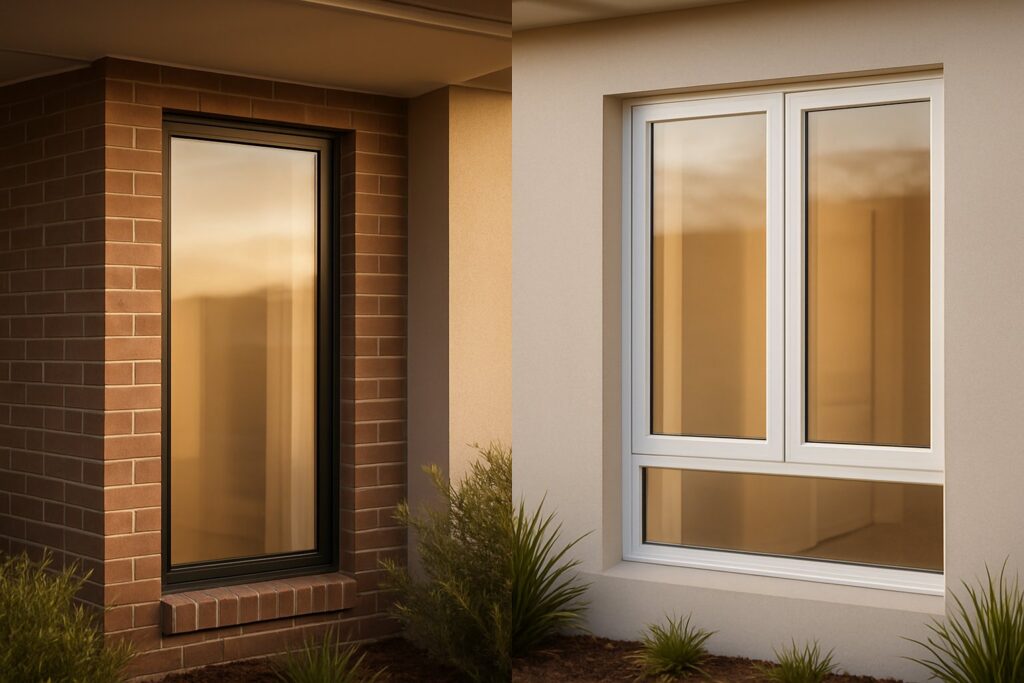
- Casement windows with blinds — the most common residential application; standard hinged or awning sashes with integral blind IGUs slot into thermally broken aluminium frames without modification
- Sliding doors with built in blinds — large-format patio sliders and stacking doors suit integral blinds particularly well, eliminating the need for curtains across expansive openings
- Bay windows with blinds between the glass — multi-panel bay configurations gain a unified, streamlined look when each pane houses its own independently controlled blind
- Picture window blinds — fixed glazing panels benefit from integral blinds because there’s no opening sash to mount a conventional blind onto; the built-in solution is often the neatest option for large fixed panes
- Bifold doors — each folding leaf carries its own sealed blind unit, maintaining clean lines whether doors are stacked open or closed
- Blinds inside glass door panels — French doors, entry sidelights, and internal glass partitions all suit integral blinds where privacy on demand is needed without obstructing the door’s operation
For blinds for double windows — side-by-side pairs or ganged casement configurations — each sash typically receives its own independently operated blind unit. This gives room-by-room flexibility; you can tilt one side for afternoon sun control while leaving the other fully open.
The common thread across all these applications is that the aluminium frame’s slim profile and structural strength make it possible to house the slightly thicker sealed units integral blinds require, without the chunky frame proportions you’d see in uPVC equivalents. That structural efficiency is what lets architects specify these systems across everything from a compact bathroom awning window through to a full-height two-storey glazed wall.
All of these benefits come at a cost premium over standard aluminium double glazing, though — and understanding what drives that price difference helps set realistic project budgets.
Cost Factors and Pricing Guidance
The price gap between a standard aluminium double-glazed window and one housing an integral blind is real — but it’s not as straightforward as a single dollar figure. Several variables stack on top of each other, and understanding which ones you can control helps you budget without nasty surprises at quoting stage.
What Drives the Cost of Integral Blind Windows
The windows with built-in blinds price you’ll see quoted depends on a cluster of specification choices, each adding or subtracting from the final figure. No single factor dominates — it’s the combination that shapes your total.
Window size and quantity. Larger openings mean bigger sealed units, more blind material, and heavier glass that demands stronger hardware. A standard 600 mm x 1200 mm casement costs significantly less than a 1500 mm x 2100 mm sliding door panel. Kyler Industries notes that costs escalate quickly when installing across multiple windows in larger spaces.
Blind type. Venetian aluminium slats are the most common and typically the most affordable option. Pleated fabric blinds carry a moderate premium due to material and manufacturing complexity. Blackout pleated variants sit at the higher end.
Control mechanism. A magnetic slider adds the least to the unit cost — no wiring, no motor, no electronics. Motorised systems with remote or smart-home integration represent the largest single cost jump. Impress Blinds reports that motorised and solar-powered options drive up the price considerably compared to manual alternatives.
Glass specification. Double glazing is standard; triple glazing adds another pane and typically a gas fill in the additional cavity, improving U-values but raising material and manufacturing costs. Low-emissivity coatings and acoustic glass push pricing further.
Frame finish. Standard powder-coated colours — white, black, monument, surfmist — are generally included in base pricing. Custom RAL colours, woodgrain finishes, or dual-colour profiles (different inside and out) attract a premium.
As a general guide for the Australian market, expect built in window blinds within aluminium-framed sealed units to fall in the range of $800 to $2,000+ per window (supply and install), depending on specification. Smaller manually operated venetian units sit at the lower end; large motorised triple-glazed panels push well beyond the upper figure. These are indicative ranges — actual pricing varies by supplier, state, project scale, and lead time.
| Cost Factor | Manual Venetian | Motorised Venetian | Pleated (Manual) |
|---|---|---|---|
| Blind mechanism cost impact | Low — magnetic slider, no electronics | High — motor, receiver, remote/app | Low to moderate — slider or cord |
| Glass unit complexity | Standard double-glazed IGU | Standard or triple-glazed IGU with wiring provision | Standard double-glazed IGU |
| Installation complexity | Straightforward — no electrical work | Higher — may require hardwiring or transformer | Straightforward — no electrical work |
| Smart-home integration | Not applicable | Available — adds to system cost | Not applicable (unless motorised variant) |
| Typical cost range (AUD, per window, supply and install)* | $800 – $1,400 | $1,400 – $2,200+ | $900 – $1,500 |
| Best suited to | Budget-conscious projects, accessible windows | Hard-to-reach glazing, automation-focused homes | Bedrooms, living areas wanting softer light diffusion |
*Indicative ranges for standard residential sizes. Actual pricing depends on supplier, window dimensions, glass specification, and project location. Always obtain itemised quotes.
Lifecycle Cost Compared to Separate Blinds and Windows
The upfront windows with built in blinds price is undeniably higher than ordering standard aluminium double glazing and adding separate external blinds. A typical quality roller or venetian blind runs $150 to $400 per window — significantly less than the integrated premium. So why would anyone pay more?
The answer sits in lifecycle cost. External blinds degrade. Cords fray and need re-stringing. Slats discolour, warp, or snap — especially in UV-heavy Australian conditions. Most homeowners replace conventional blinds every five to eight years. Over twenty years of window life, that’s two or three sets of replacement blinds, plus the labour and inconvenience each time. Factor in periodic deep-cleaning costs (or the hours you spend doing it yourself), and the gap between separate systems and integrated ones narrows considerably.
Replacement windows with built in blinds also consolidate two purchasing decisions into one. You avoid coordinating separate blind and window suppliers, eliminate the mismatch risk between frame colour and blind hardware, and gain a single warranty covering both components. For new builds or full window replacements, the cost difference shrinks further because you’re already paying for the aluminium frames and sealed units — the blind integration is an upgrade, not a doubling of expense.
Lead times are worth factoring into project budgets too. Integral blind units are manufactured to order, with typical Australian supply timeframes running four to eight weeks depending on specification complexity and supplier capacity. Custom RAL colours, non-standard sizes, or motorised systems tend to push toward the longer end. If your project has a fixed completion date, ordering early avoids costly programme delays — particularly for larger residential builds or commercial fit-outs where multiple units ship together.
Pricing ultimately comes down to perspective: a higher day-one investment versus decades of zero-maintenance, zero-replacement operation. For many Australian homeowners, particularly those specifying for a long-term family home rather than a quick flip, the maths works out favourably over the life of the building.
What the budget conversation rarely covers, though, is whether these units can slot into your existing frames — or whether you’re looking at a full window replacement to make them work.
Installation and Retrofit Considerations
The short answer is no — you cannot simply slide blinds inside window frame cavities that already exist. Integral blinds are factory-sealed within a manufactured insulated glass unit, which means they must be built into the glazing from the outset. There is no way to open an existing sealed IGU, insert a blind mechanism, and reseal it to the same standard. Attempting this would destroy the thermal seal, void warranties, and invite condensation between the panes within months.
Can Integral Blinds Be Retrofitted into Existing Frames
If you already have aluminium windows and want blinds inside window glass, the path forward is replacing the sealed glass unit — not modifying it. Fenster Glazing confirms that integral blinds cannot be inserted into an existing sealed unit; the entire double-glazed panel must be swapped for a new factory-sealed unit containing the blind mechanism.
In some cases, the existing aluminium frame can remain in place while only the IGU is replaced. This depends on whether the frame’s rebate depth can accommodate the slightly thicker sealed unit that inside window blinds require — typically 20 mm to 27 mm compared to a standard 16 mm to 20 mm residential unit. A site survey determines feasibility. Older or thinner profiles may not have the depth, in which case full frame replacement becomes necessary.
For most homeowners considering windows integrated blinds, the practical reality is a complete window replacement. This isn’t necessarily a disadvantage — it means you get new thermally broken aluminium frames alongside the integral blind units, improving overall thermal performance, hardware quality, and weather sealing in one project. Suppliers like MEICHEN offer aluminium window systems designed to accommodate integral blind units, with custom sizing and configuration options suited to both residential and commercial projects — making it straightforward to specify project-ready frames that match your exact opening dimensions and blind requirements.
What to Expect During Window Replacement and Installation
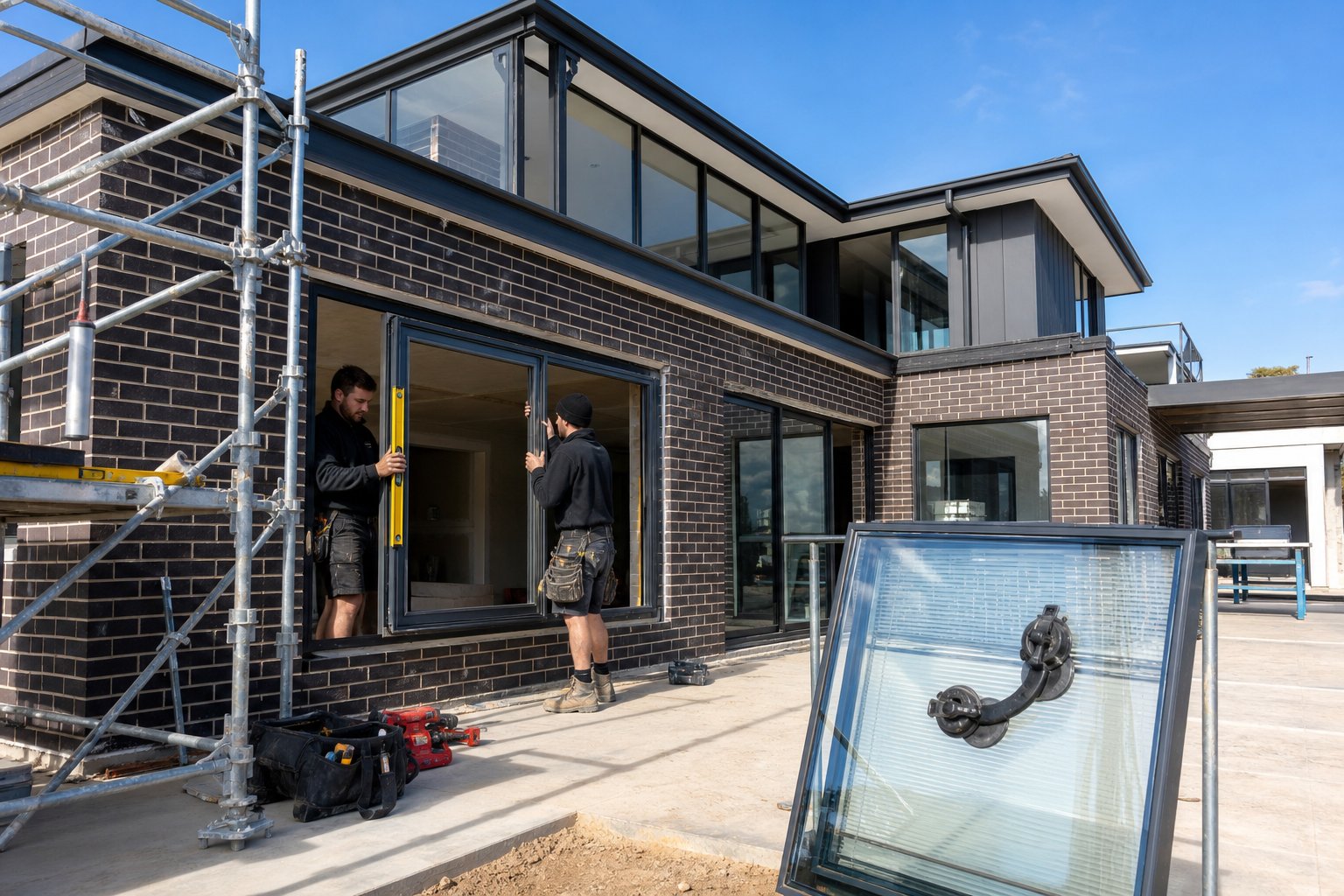
The installation process for aluminium windows with integral blinds follows the same general sequence as any window replacement, with a few additional considerations:
- Site survey and measurement — an installer measures each opening precisely, noting structural conditions, access constraints, and any electrical requirements for motorised systems
- Manufacturing and lead time — sealed units with blinds for inside window frame integration are built to order, typically requiring four to eight weeks for Australian supply depending on specification and supplier capacity
- Removal of existing windows — old frames and glazing are carefully extracted; internal and external reveals may need minor making-good
- Frame installation — new aluminium frames are fitted, levelled, and mechanically fixed into the structural opening, then sealed with appropriate flashings and weatherproofing
- Glazing and commissioning — the sealed IGU containing the integral blind is installed into the frame, gaskets are fitted, and the blind mechanism is tested for smooth operation
- Electrical connection (motorised units only) — hardwired systems are connected to pre-run cabling; solar-powered variants simply need their control paired to the remote
For a standard residential project replacing three to five windows, expect installation to take one to two days on site. Larger projects — full-house replacements or commercial fit-outs — scale proportionally but benefit from economies of repetition once the installer establishes a workflow.
If motorised blinds are specified, planning electrical provisions early avoids costly retrospective work. Running concealed cabling to the window head is simple during a renovation or new build but far more disruptive once plastering and painting are complete. Discuss wiring routes with your electrician before the frames go in.
Council Approval and Heritage Considerations
In most Australian states, replacing windows on a standard residential property does not require a development application (DA) — provided the new windows are similar in appearance and do not alter the building’s external facade significantly. Integral blinds sit entirely within the glass unit, invisible from the street when open, so they rarely trigger additional planning scrutiny on standard homes.
Heritage-listed properties and homes in conservation areas are a different matter. Council regulations typically require that replacement windows match the original in material, proportion, and detailing. Aluminium frames on a Federation weatherboard or a Victorian terrace may need heritage approval regardless of what’s inside the glass. The integral blind itself is unlikely to be the concern — it’s the frame material and profile proportions that councils assess. In these situations, check with your local planning authority early. Some councils accept slimline aluminium profiles as sympathetic replacements; others insist on timber or timber-look alternatives.
For properties in designated heritage overlay zones across NSW, VIC, or QLD, lodging a pre-application enquiry with council before ordering is strongly advisable. Lead times of four to eight weeks for manufactured units mean you don’t want to discover a compliance issue after the windows are already built.
Getting installation and approvals sorted is the practical side. The question that determines long-term satisfaction, though, is what happens five, ten, or fifteen years down the track — when mechanisms wear and seals age.
Lifespan, Maintenance, and Honest Limitations
No product lasts forever, and a blind inside window glass is no exception. The sealed environment protects against dust and physical abuse, but it also hides the moving parts from inspection — and makes intervention far more difficult when something eventually wears out. An honest assessment of longevity and failure modes matters more here than with conventional blinds, because the consequences of failure are fundamentally different.
Expected Lifespan and Common Failure Modes
Most manufacturers quote operational lifespans of ten to twenty years for built in blinds within sealed IGUs, with the glass unit itself often warranted for ten to twenty years and the blind mechanism warranted separately for five to ten years. In practice, Frame-Well notes that well-made systems installed square and operated gently hold up impressively, while cut-rate or heavily used units can show problems in as few as five to seven years — particularly on high-traffic doors where the slider gets daily use.
The most common failure modes break down as follows:
- Magnetic slider disengagement — the external magnet loses coupling with the internal mechanism. The slider moves but the blind doesn’t respond. Often this is re-engageable by the homeowner, but persistent decoupling suggests worn or weakened magnets.
- Internal cord or tape degradation — the lift cords or woven ladder tapes inside the sealed unit fray over thousands of cycles. Once frayed, slats jam partway or hang unevenly.
- Tilt gear stripping — the gear mechanism that angles venetian slats can wear, leaving the blind stuck at one angle or unresponsive to tilt commands.
- Motor failure (motorised systems) — brushless motors have a finite cycle life, typically around 10,000 operations. Battery-powered variants may also lose charging capacity over time. Argo Glass & Windows reports a roughly ten-year expected motor lifespan under normal use.
- Perimeter seal degradation — UV exposure, thermal cycling, and age gradually break down the edge sealant. Once the seal fails, moisture enters the cavity, causing condensation between the panes and potentially corroding the blind mechanism itself.
User behaviour is a quiet accelerator. These systems are designed for smooth, moderate motion. Slamming the magnetic slider hard against its stops, leaving blinds in windows exposed to constant direct sun without occasional operation, or mounting heavy curtains that stress the frame — all of these shorten service life even though the blind itself never sees physical contact.
What Happens When an Integral Blind Fails
This is where the trade-off bites. With conventional blinds, a broken slat costs a few dollars. A snapped cord is a fifteen-minute restring. Windows with the blinds inside don’t offer that luxury. Because the blind is hermetically sealed within the insulated glass unit, you cannot open the unit, repair the mechanism, and reseal it to factory standard. The fix, in almost every case, is replacing the entire glass-blind unit.
Industry sources indicate that replacement of a sealed integral blind unit typically costs in the range of $500 to $900 AUD per sash, depending on glass size, specification, and supplier — a significant outlay compared to swapping a $50 roller blind. The aluminium frame itself generally remains in place and can accept the new sealed unit, so you’re not replacing the entire window. But you are paying for a custom-manufactured IGU, professional removal of the failed unit, and reinstallation with new gaskets and beading.
Condensation forming inside the glass is often the first visible sign that a seal has failed. At that point, even if the blind mechanism still works, the unit’s thermal performance is compromised, and the fogging will worsen over time. Replacing proactively avoids living with obscured glass while waiting for the mechanism to follow the seal into failure.
Warranty coverage varies. Some manufacturers offer ten-year coverage on the sealed unit and a separate five-year warranty on the blind mechanism. Others bundle everything under a single ten- to fifteen-year limited warranty. Always check what’s covered — seal failure, mechanism failure, and motor failure may each fall under different terms, and labour for replacement is not always included.
Pros: Aluminium Integral Blind Systems
- Slimmer aluminium profiles maximise glass area and daylight, even with thicker IGUs housing the blind
- Structural rigidity of aluminium prevents frame flex that could stress the sealed unit’s perimeter seal over time
- Thermally broken aluminium resists condensation at the frame edge, reducing moisture exposure near the seal
- Zero day-to-day maintenance — no cleaning, no cord replacement, no slat straightening for the entire service life
- Windows with blinds between the glass are protected from UV damage to slats, extending cosmetic life significantly
- Corrosion-resistant aluminium frames suit coastal Australian environments without degrading seal integrity
Cons: Aluminium Integral Blind Systems
- Repair typically requires full sealed-unit replacement — not a quick or cheap fix
- Aluminium’s conductivity means thermal bridging remains a factor if thermal breaks are poorly specified, potentially accelerating seal stress at the frame-glass junction
- Condensation risk exists if edge seals degrade, and the aluminium frame’s temperature differential can contribute to moisture formation at the perimeter
- Limited style flexibility — blind colour and type are locked in at manufacture for the life of the unit
- Higher upfront cost compared to separate aluminium windows plus conventional blinds
- Motor or battery failure in motorised units leaves the blind stuck until the entire IGU is replaced
- Thicker sealed units required for the blind mechanism may limit frame options in very slim heritage-style profiles
The honest summary: aluminium windows with integral blinds deliver years of effortless, trouble-free performance — genuinely lower maintenance than any external blind system. But when failure eventually arrives, it’s a unit-replacement event rather than a ten-minute repair. Accepting that trade-off upfront, choosing quality manufacturers with robust warranty terms, and treating the mechanism gently are the best ways to ensure the system reaches its full potential lifespan.
For homeowners who’ve weighed these limitations and decided to proceed, the next step is getting the specification right — because the choices you lock in at ordering stage determine performance, longevity, and compatibility for the life of the window.
How to Specify and Source the Right System
Every decision about integral window blinds gets locked in at the factory. You can’t swap slat colours six months later or upgrade from manual to motorised without replacing the entire sealed unit. That permanence makes the specification stage unusually important — get it right once, and you won’t revisit it for a decade or more.
Key Specification Decisions for Your Project
The choices break down into four categories, each influenced by how the room will actually be used day to day.
Blind type by room function. Venetian slats suit kitchens, offices, and living areas where adjustable light angle matters more than total blockout. Pleated fabrics work well in bedrooms and lounges where softer diffusion and a wider colour palette are priorities. Blackout pleated blinds belong in nurseries, media rooms, and shift workers’ bedrooms — anywhere darkness on demand is non-negotiable.
Control mechanism by accessibility and budget. A magnetic slider is the most reliable, cheapest option for any window within arm’s reach. Cord or wand systems suit homeowners comfortable with a familiar manual action. Motorised systems justify their cost premium on high-level glazing, hard-to-reach clerestory panels, or when smart-home automation is part of the broader build. If you’re specifying house windows with built in blinds across an entire home, mixing control types — manual for accessible openings, motorised for elevated or oversized panels — balances the budget without sacrificing convenience.
Glass specification for thermal and acoustic needs. Double-glazed IGUs cover most Australian residential applications. Triple glazing adds measurable insulation for colder climate zones or acoustically sensitive sites near main roads and flight paths. Low-E coatings and argon gas fills improve U-values regardless of whether the unit houses a blind — specify them where NatHERS modelling shows a benefit.
Frame colour and finish. Standard powder-coat colours — monument, surfmist, black, white — are included in base pricing across most suppliers. Dual-colour profiles (dark exterior, light interior) add a premium but create a polished look from both sides. Custom RAL matches and woodgrain finishes extend lead times and cost further; only specify them where design intent genuinely demands it.
Choosing the Right Aluminium Window Supplier
The question of who makes windows with blinds between the glass comes up frequently, and the answer matters more than price alone. A supplier’s warranty terms, seal quality guarantees, profile range, and ability to handle custom sizes all determine whether your windows with blinds built in perform reliably over their full service life.
Look for suppliers offering complete aluminium window systems where integral blind compatibility is engineered into the product range — not bolted on as an afterthought. This means frames designed with rebate depths that accept the thicker IGUs, tested seal systems warranted for ten years or more, and a documented track record across residential and commercial projects.
When moving from research to specification, work through this checklist and explore suppliers who can demonstrate capability across every point:
- MEICHEN — offers custom-configured aluminium window systems across casement, sliding, awning, and fixed-lite types, with sizing and specification options suited to both residential and commercial Australian builds. Their range is purpose-built to accommodate integral blind units and supports project-ready integration from design through to delivery.
- Your local specialist glazing fabricator — many regional manufacturers produce sealed IGUs with integral blinds and can supply directly or through window installers in your area.
- National aluminium window brands with integral blind partnerships — some larger Australian window companies partner with dedicated blind-in-glass manufacturers to offer the combined system under a single warranty.
Regardless of which supplier you engage, confirm these points before committing:
- Warranty period on the sealed IGU (look for ten years minimum) and whether it covers seal failure specifically
- Separate warranty on the blind mechanism and motor (if motorised) — five years is common; longer is better
- Whether labour for warranty replacement is included or charged separately
- Range of aluminium frame profiles available — slim, standard, and heavy-duty sections for different opening sizes
- Ability to produce custom dimensions rather than limiting you to modular sizes
- Availability of thermally broken profiles compliant with NCC energy requirements
- Lead time commitments and capacity to deliver on programme for larger projects
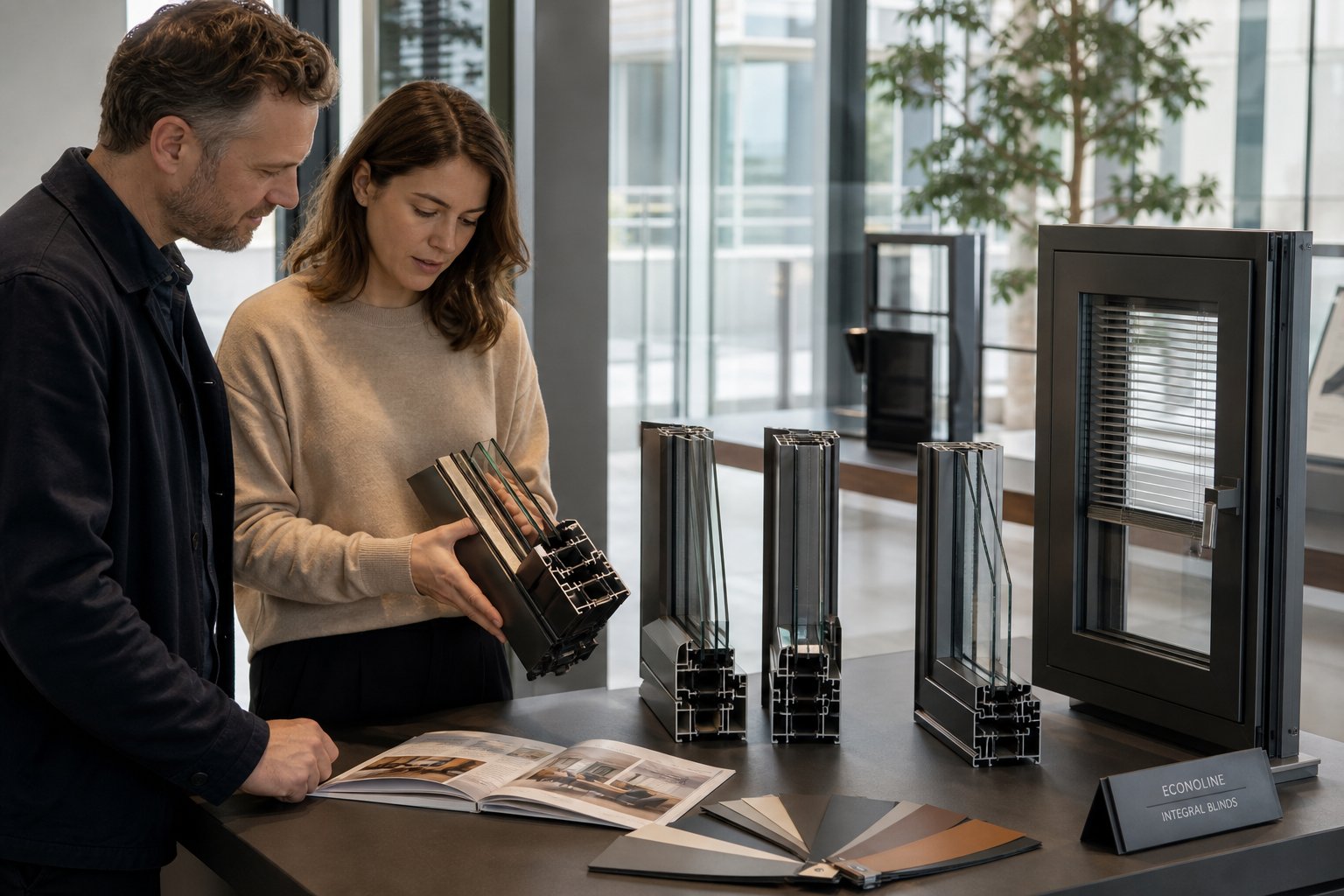
For anyone specifying windows with built-in blinds across a full home or multi-unit development, requesting a sample unit is well worth the lead time. Operating the blind in person — feeling the slider resistance, checking the tilt precision, assessing the glass clarity with slats at various angles — tells you more about build quality than any brochure. A supplier confident in their product will welcome that request rather than deflect it.
The specification process doesn’t need to feel overwhelming. Match blind type to room function, control type to accessibility, glass to climate needs, and frame to aesthetic preference. Then find a supplier whose product range, warranty backing, and custom capability give you confidence the system will perform as promised — not just on day one, but a decade into daily use.
Frequently Asked Questions About Aluminium Windows with Integral Blinds
1. Can integral blinds be retrofitted into existing aluminium window frames?
In most cases, no. Integral blinds are factory-sealed within an insulated glass unit during manufacturing, so they cannot be inserted into an existing sealed panel. The typical path is replacing the entire glass unit or the full window. Some existing aluminium frames may accept a new, thicker IGU if the rebate depth is sufficient (usually 20-27 mm required), but a site survey is needed to confirm. For most Australian homeowners, a complete window replacement with thermally broken aluminium frames — such as those offered by MEICHEN (meichenwindows.com.au/aluminium-windows/) — provides the best outcome, combining new frames, improved thermal performance, and the integral blind system in one project.
2. How long do integral blinds last before needing replacement?
Quality integral blind systems typically last ten to twenty years under normal residential use. The sealed glass unit is often warranted for ten to twenty years, while the blind mechanism itself carries a separate five- to ten-year warranty. Common failure modes include magnetic slider wear, internal cord degradation, and eventual perimeter seal breakdown. Motorised systems have a motor lifespan of around 10,000 operations. When failure occurs, the entire sealed glass unit generally requires replacement rather than repair, at an approximate cost of $500 to $900 AUD per sash in Australia.
3. Are aluminium windows with integral blinds safe for homes with young children?
Yes, they are one of the safest window blind options available. Because the blind mechanism is entirely sealed within the glass unit, there are no accessible cords, chains, or looped strings that could pose a strangulation risk to children or pets. Magnetic slider controls and motorised systems operate without any dangling components. This cordless design meets current Australian child safety requirements without needing aftermarket cord cleats or tensioners, making them particularly popular in family homes, childcare centres, and healthcare facilities.
4. How much do aluminium windows with integral blinds cost in Australia?
Expect to pay between $800 and $2,000+ AUD per window (supply and install) depending on specification. Manual venetian units in standard sizes sit around $800 to $1,400, pleated blinds range from $900 to $1,500, and motorised systems push from $1,400 to $2,200 or higher. Key cost drivers include window size, blind type (venetian, pleated, or blackout), control mechanism (manual vs motorised), glass specification (double vs triple glazing), and aluminium frame finish. While the upfront cost exceeds standard windows plus separate blinds, the lifecycle cost often favours integral systems due to zero maintenance and no replacement blind purchases over twenty years.
5. What is the difference between sealed-unit integral blinds and cavity-mounted blinds?
Sealed-unit integral blinds are factory-encapsulated within a certified insulated glass unit (IGU) with a hermetic perimeter seal, protecting the mechanism from dust, moisture, and insects for its entire service life. Cavity-mounted blinds sit between two separate panes held apart by a frame or secondary glazing, but the cavity is not hermetically sealed — allowing air ingress, dust accumulation, and condensation over time. For Australian conditions with coastal humidity and fine dust, sealed IGU systems deliver significantly better long-term performance, thermal integrity, and visual clarity compared to cavity-mounted alternatives.
More Window & Door Guides