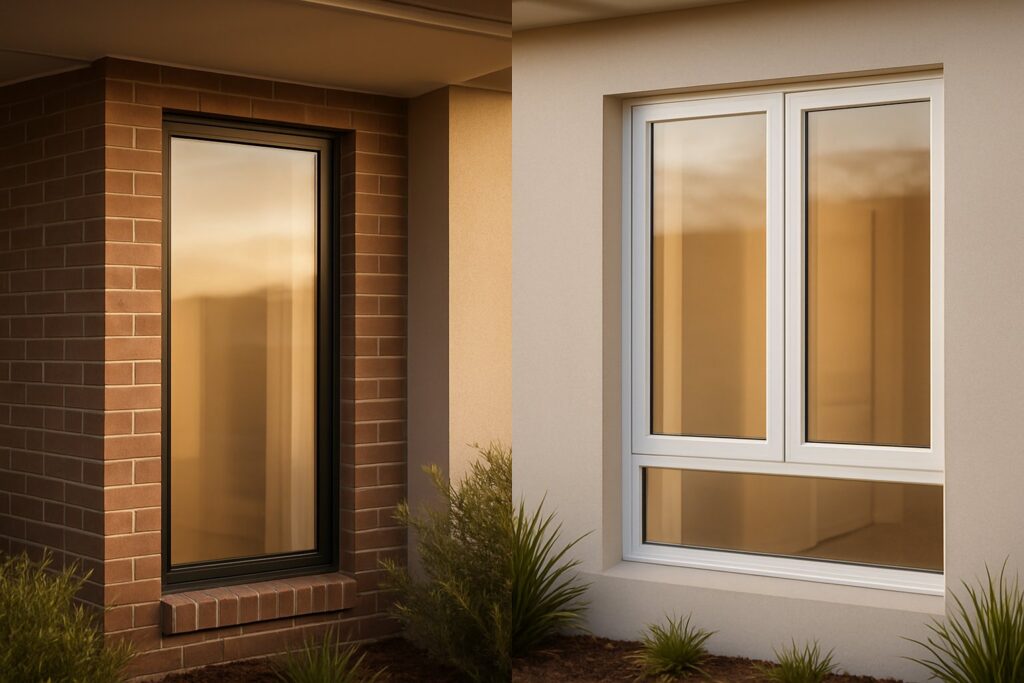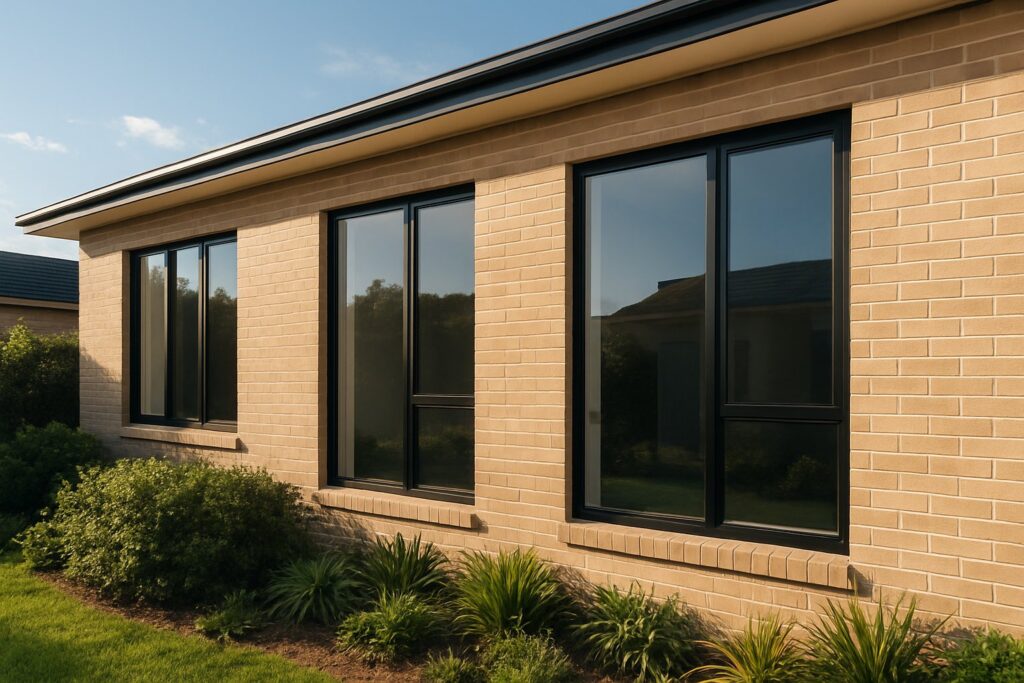
Why Choosing the Right Sealant for Aluminium Windows Matters
Timber frames absorb sealant into their grain. PVC offers a slightly textured surface that most adhesives grip without fuss. Aluminium does neither. Its smooth, non-porous surface and reactive chemistry make it one of the more demanding substrates to seal reliably, yet it remains the preferred framing material for Australian homes and commercial builds thanks to its strength, slim profiles, and longevity.
Finding the best sealant for aluminium windows means understanding why generic products fall short. Most online resources are product catalogues or single-brand spec sheets rather than genuine editorial comparisons. This guide ranks five proven options based on real-world performance criteria, starting with the science behind the challenge.
Why Aluminium Frames Demand a Different Sealant
Three characteristics set aluminium apart from other window frame materials:
Non-porosity. Unlike timber or concrete, aluminium has no pores for a sealant to grip mechanically. The bond relies entirely on chemical adhesion at the molecular level, which is why applying silicone on metal surfaces without proper preparation often results in peeling within a single season.
High thermal expansion. Aluminium moves roughly twice as much as steel and nearly three times as much as glass per degree of temperature change. Technical data shows aluminium’s coefficient of thermal expansion sits at approximately 23 x 10⁻⁶ mm/mm/°C. On a sun-drenched north-facing wall in Sydney or Perth, that translates to significant joint movement across a full thermal cycle. Any aluminium sealant must stretch and compress repeatedly without tearing.
Galvanic sensitivity. Pair aluminium with an incompatible sealant for metal substrates, one that releases acidic by-products during cure, and you introduce the conditions for galvanic corrosion. Acid-cure silicones, for example, release acetic acid that attacks aluminium’s protective oxide layer and accelerates pitting.
What Happens When You Use the Wrong Sealant
Choosing a silicone for aluminium that isn’t formulated for the substrate leads to predictable failures. Here are the three most common:
- Adhesion loss: The sealant peels cleanly away from the aluminium surface, often within the first year. This adhesive failure signals poor chemical compatibility or missing primer, not necessarily a low-quality product.
- Cracking during temperature cycles: A metal sealant with insufficient movement capacity becomes brittle and splits as the frame expands and contracts. Joints on west-facing and north-facing elevations in Australian climates are particularly vulnerable.
- Discolouration from chemical incompatibility: Acidic cure by-products or plasticiser migration can stain anodised or powder-coated finishes, leaving permanent marks around the seal line that no amount of cleaning will remove.
Each of these failures is avoidable with the right product selection. The challenge lies in matching sealant chemistry, movement class, and cure type to the specific joint you’re sealing, whether that’s a perimeter weatherseal, a glass-to-frame bond, or a frame-to-wall junction. That matching process is exactly what the ranking criteria in this guide are built around.
How We Evaluated and Ranked Each Sealant
Before any product could earn a spot in this guide, it had to pass through a clear framework, one that reflects the actual demands aluminium window joints face across Australian conditions. But the framework itself only makes sense once you understand a fundamental distinction that most product pages gloss over entirely.
Structural vs Weatherproofing Sealants Explained
Not every sealant does the same job, and confusing the two categories leads to either over-spending or under-performing joints.
Structural glazing sealants are load-bearing adhesives. They physically hold glass in place within the frame, transferring wind loads, dead loads, and thermal stresses from the glass panel into the aluminium structure. Think of a frameless glass facade where no mechanical clips are visible. That glass is bonded to metal using a silicone structural adhesive engineered for sustained loading. These products fall under standards like ASTM C920 Class 50 or higher, and often require ASTM C1184 compliance, engineering sign-off, and factory-controlled application. A glass-to-metal seal in a structural glazing system is not a DIY job.
Weatherproofing sealants do not carry structural loads. Their purpose is sealing joints against air infiltration and water ingress. The perimeter bead around your aluminium window frame, the junction between frame and wall cladding, the metal to glass seal where a glazing bead meets the pane: these are weatherproofing applications. The sealant must accommodate movement, resist UV degradation, and maintain adhesion, but it isn’t holding anything up.
For most homeowners, builders, and renovators working on Australian residential projects, weatherproofing sealants are what you need. Structural glass-to-metal sealing is specified by facade engineers for commercial curtain wall systems. Products historically marketed under the Dow Corning glazing range (now branded as Dowsil) span both categories, which is precisely why knowing which type your project requires matters before you reach for a cartridge.
Our Five Ranking Criteria
Every sealant in this guide was assessed against five criteria, weighted toward the properties that matter most on aluminium substrates in Australian climates:
- Adhesion performance on aluminium. The single most critical factor. We evaluated whether each product bonds reliably to anodised, powder-coated, and bare aluminium, and whether a primer is required to achieve that bond. Products offering primer-free adhesion scored higher for practical accessibility.
- Flexibility and movement accommodation. Aluminium’s thermal expansion demands a sealant rated for at least ±25% movement. Products rated at ±50% or higher received top marks, particularly for exposed exterior joints facing northern or western sun.
- UV and weather resistance. Australian UV levels are among the harshest globally. Sealants must resist degradation from intense solar radiation, wind-driven rain, and in coastal areas, salt spray. Long-term UV stability without chalking or hardening is non-negotiable.
- Ease of application and tooling. A product’s performance means little if it’s difficult to gun, tools poorly, or skins too fast for clean finishing. We considered working time, gun-ability in typical Australian temperatures, and availability in colours that match common aluminium frame finishes.
- Expected service life. Measured against manufacturer warranties and documented field performance, with preference for products demonstrating 20-plus years of reliable service in facade applications.
One factor threads through all five criteria: primer requirements. Many high-performance sealants need a dedicated primer on aluminium to achieve their rated adhesion. Manufacturer data sheets reference this in small print, but it’s rarely explained in plain language. The reality is straightforward. Aluminium’s non-porous oxide layer resists chemical bonding. A primer creates a reactive bridge between that oxide and the sealant, converting a marginal bond into a permanent one. Skipping primer when specified doesn’t save time; it guarantees adhesive failure within a few thermal cycles. Throughout the product reviews that follow, we note exactly where primer is required and where you can apply directly to clean aluminium.
With these criteria established, each product earns its rank based on how well it performs across the full set, not just one standout property. A sealant with exceptional adhesion but poor movement capacity still fails in the field. The goal is balanced, reliable performance on aluminium window joints across their full service life.
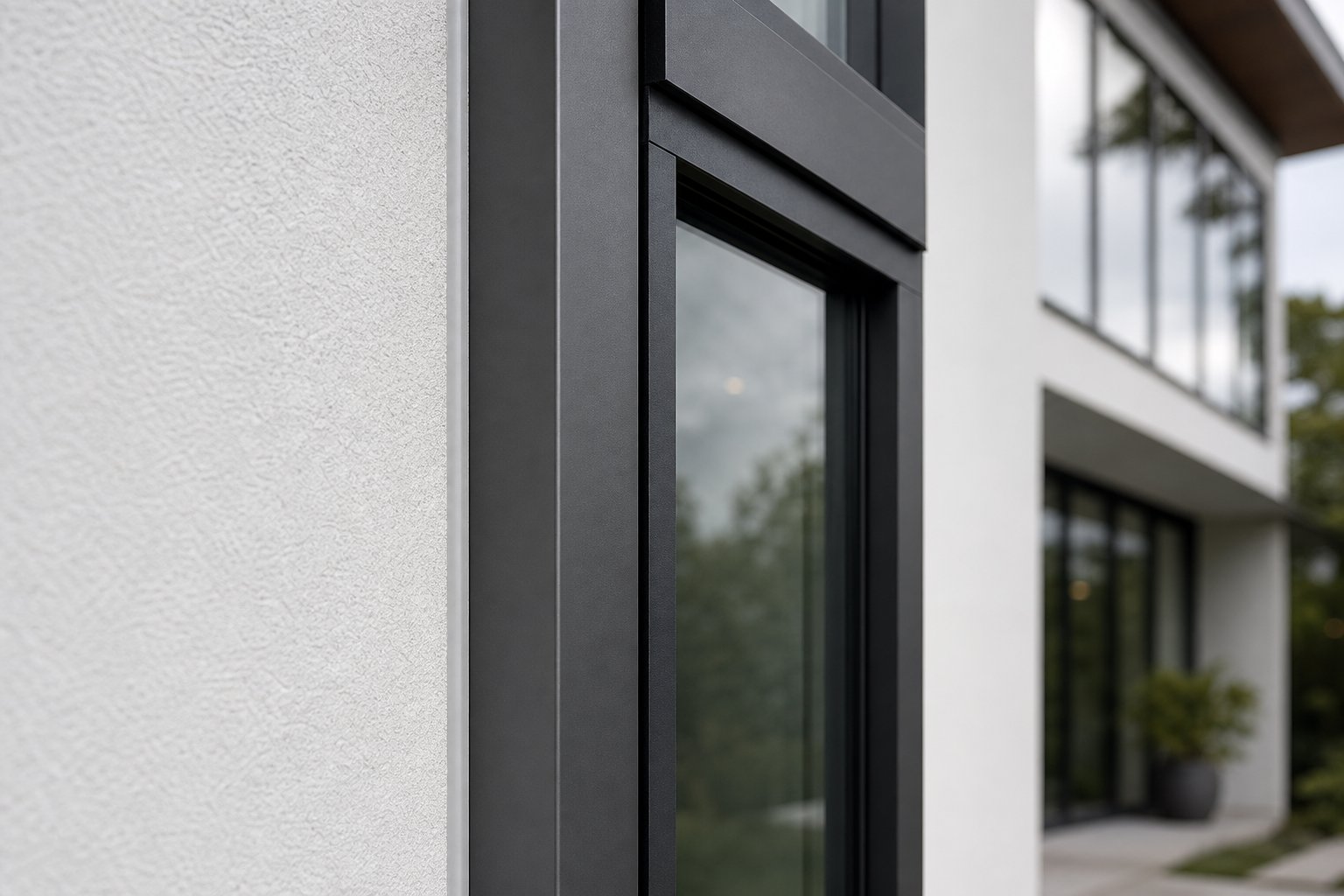
Dowsil 890-SL – Top Pick for Exterior Weatherproofing
A sealant that scores well across all five criteria isn’t easy to find. Most products trade movement capacity for adhesion, or UV resistance for ease of tooling. Dowsil 890-SL manages the rare feat of delivering strong performance across every metric without a glaring weakness, which is why it earns the top spot for exterior weatherproofing on aluminium window perimeters.
This is a one-part, neutral-cure silicone originally formulated for high-movement joints on building facades. It’s self-levelling (the “SL” designation), designed to flow into horizontal and sloped joints and form a smooth, tooled finish without sagging. For aluminium window applications, that translates to clean perimeter beads around frames where thermal expansion places constant stress on the joint.
Why Dowsil 890-SL Leads the Field
Movement capability. Rated at ±50% joint movement, Dowsil 890-SL accommodates the thermal cycling aluminium frames experience across Australian seasons. That’s double the minimum threshold we set in our ranking criteria and well above what most residential-grade products offer. Whether you’re sealing a north-facing window in Brisbane or a west-facing frame copping afternoon sun in Adelaide, this product won’t tear when the joint opens and closes.
Neutral-cure chemistry. Unlike acetoxy (acid-cure) silicones that release acetic acid during curing, Dowsil 890-SL cures without corrosive by-products. This matters enormously on aluminium. Acid-cure products attack the oxide layer, triggering pitting and staining over time. Neutral-cure formulations leave the metal completely unaffected, making them safe for anodised, powder-coated, and bare aluminium alike.
UV stability. Silicone’s inherent UV resistance is one of its key advantages over polyurethane and hybrid sealants, and Dow Corning sealants (now marketed under the Dowsil brand) have long set the benchmark here. The 890-SL formulation resists chalking, hardening, and colour shift even under prolonged Australian UV exposure, which ranks among the most intense globally.
Proven track record. This isn’t a newcomer. Dowsil 890-SL appears consistently in facade engineering specifications for aluminium curtain wall joints on commercial projects across Australia and internationally. That documented field history, spanning decades of installed performance on high-rise aluminium systems, gives confidence that it will outlast the window frame it’s applied to in residential settings.
Ideal Use Cases and Limitations
Dowsil 890-SL excels at exterior perimeter sealing: the joint between your aluminium window frame and the surrounding wall substrate, whether that’s rendered masonry, cladding, or a concrete reveal. It’s also suitable for expansion joints between aluminium sections and for sealing flashings to frame junctions.
It is not a structural glazing sealant. It won’t hold glass in place under load. For glass-to-frame bonding, you need a dedicated structural product or a mechanically retained glazing system with a separate weatherseal. Dowsil 890-SL fills the weatherproofing role only, but it fills it exceptionally well.
Pros
- High movement accommodation (±50%): handles aluminium’s thermal expansion without splitting or adhesive failure
- Neutral cure: zero risk of corrosion or staining on aluminium substrates
- Colour range: available in multiple colours to match common aluminium frame finishes
- Long service life: 20+ years demonstrated in commercial facade applications under full weather exposure
Cons
- Requires primer on some substrates: while it bonds well to clean aluminium in many cases, certain anodised or fluoropolymer-coated finishes may need Dowsil’s recommended primer for rated adhesion
- Premium price point: expect to pay more per cartridge than residential-grade alternatives, typically $25–$40 AUD depending on supplier
- Slower cure in cold weather: neutral-cure silicones rely on atmospheric moisture, so winter applications in cooler southern states may see extended skin-over and full-cure times
For builders and homeowners seeking a single product they can trust on exposed exterior aluminium window joints across any Australian climate zone, Dowsil 890-SL is the benchmark. Its combination of movement class, cure chemistry, and UV durability means fewer callbacks, fewer re-seal jobs, and joints that stay watertight well beyond warranty periods. The premium price reflects commercial-grade performance, but given that a single cartridge covers multiple windows, the per-joint cost difference over a lesser product is negligible compared to the cost of failure.
Where it may be more product than you need, specifically for tighter budgets, lower-exposure applications, or jobs where its self-levelling behaviour isn’t ideal for vertical beads, there are alternatives worth considering. Adhesion to aluminium specifically, rather than broad weatherproofing performance, is where the next product in our ranking carves out its niche.
Dow 758 – Best for Aluminium Frame Adhesion
Broad weatherproofing performance is one thing. Sticking reliably to aluminium itself, without primer, across finishes that most sealants struggle with, is a different challenge entirely. That’s where Dow 758 separates itself from the field.
DOWSIL 758 Silicone Weather Barrier Sealant is a one-part, neutral-cure silicone elastomeric product engineered specifically for primerless adhesion to low surface energy and non-porous substrates. While many silicone sealants claim aluminium compatibility, the Dow 758 sealant was purpose-built for materials that resist bonding: metals, fluoropolymer coatings, PVC, and glass. That narrow focus makes it the strongest performer in our lineup for direct frame adhesion.
Dow 758 Performance on Aluminium Substrates
The fundamental challenge with aluminium is its smooth, non-porous oxide layer. Standard silicone sealant for glass and metal relies on chemical adhesion alone, and without proper formulation, that bond simply doesn’t hold long-term. Dow 758 addresses this head-on with a chemistry optimised for challenging substrates.
According to Dow’s published specifications, the product adheres directly to anodised aluminium, painted surfaces, vinyl, and fluoropolymers without requiring a separate primer. It delivers 800% elongation, a Shore A hardness of 30, and ±25% movement capability. Its tensile strength sits at approximately 1.4 MPa, which is more than adequate for weatherproofing joints that don’t carry structural loads.
For Australian builds, this means reliable adhesion across the most common aluminium window finishes: standard anodised (natural, bronze, black), powder-coated colours, and even fluoropolymer-coated commercial frames. The neutral-cure chemistry ensures no corrosive by-products contact the aluminium surface during curing, eliminating the pitting risk that acid-cure products introduce.
Dow’s data also confirms the product passes 5,000 hours of QUV accelerated weathering testing, a meaningful benchmark for Australian UV exposure where degradation happens faster than in temperate northern hemisphere climates.
When to Choose Dow 758 Over Alternatives
Dow 758 is the right pick when adhesion to the aluminium frame itself is your primary concern rather than high-movement exterior joints. Think glass-to-frame junctions where the glazing bead meets metal, frame-to-flashing intersections, and frame-to-structure connections where the window meets the wall substrate. It functions as both a silicone adhesive for glass bonding and a reliable weather barrier at frame junctions.
For anyone looking for an adhesive to stick glass to metal in a mechanically retained glazing system, Dow 758 provides the weather seal component while the frame’s hardware carries structural loads. It’s not a silicone glue for glass in the structural sense, but rather the durable weather barrier that keeps water and air out of the joint.
Choosing the right sealant, though, is only half the equation. The quality of the aluminium window system itself determines whether any sealant can perform to its potential long-term. Precision-engineered frames with consistent glazing rebates, proper drainage channels, and tight manufacturing tolerances give products like Dow 758 the best possible substrate to bond to. Irregular frame profiles, poor drainage, or inconsistent gaps force sealants into conditions they weren’t designed for. MEICHEN’s aluminium windows are one example of systems designed with sealing performance in mind, incorporating features like uniform rebate depths and integrated drainage that support long-term sealant adhesion across Australian conditions.
Pros
- Excellent aluminium adhesion: primerless bonding to anodised, powder-coated, and fluoropolymer-coated aluminium surfaces
- Primer-free on many substrates: reduces preparation time and eliminates a common failure point (missed or expired primer)
- Good tooling characteristics: 15-minute working time allows clean finishing before skin formation, practical in Australian temperatures
- Multiple colour options: available in colours that match standard aluminium frame finishes, maintaining clean sight lines
- Low VOC formulation: at 25 g/L, well within Australian indoor air quality requirements
Cons
- Lower movement capacity than 890-SL: rated at ±25% versus the 890-SL’s ±50%, making it less suitable for large-format expansion joints or high-movement perimeter seals
- Not suitable for structural glazing loads: this is a weather barrier sealant only and cannot hold glass in place under wind or dead loads
- Availability: primarily distributed through commercial building suppliers rather than hardware stores, which may require trade accounts or specialist orders for residential users
Where Dowsil 890-SL wins on sheer movement capacity for exposed perimeter joints, Dow 758 wins on substrate adhesion, specifically its ability to grip non-porous aluminium and glass surfaces without primer intervention. For builders fitting quality aluminium window systems and needing a dependable silicone weather barrier at every frame junction, it’s the most targeted product available.
Of course, silicone isn’t always the answer. Some applications demand a sealant you can paint over, particularly where frame-to-wall junctions need to disappear under a rendered or painted finish. That requirement calls for a fundamentally different chemistry.
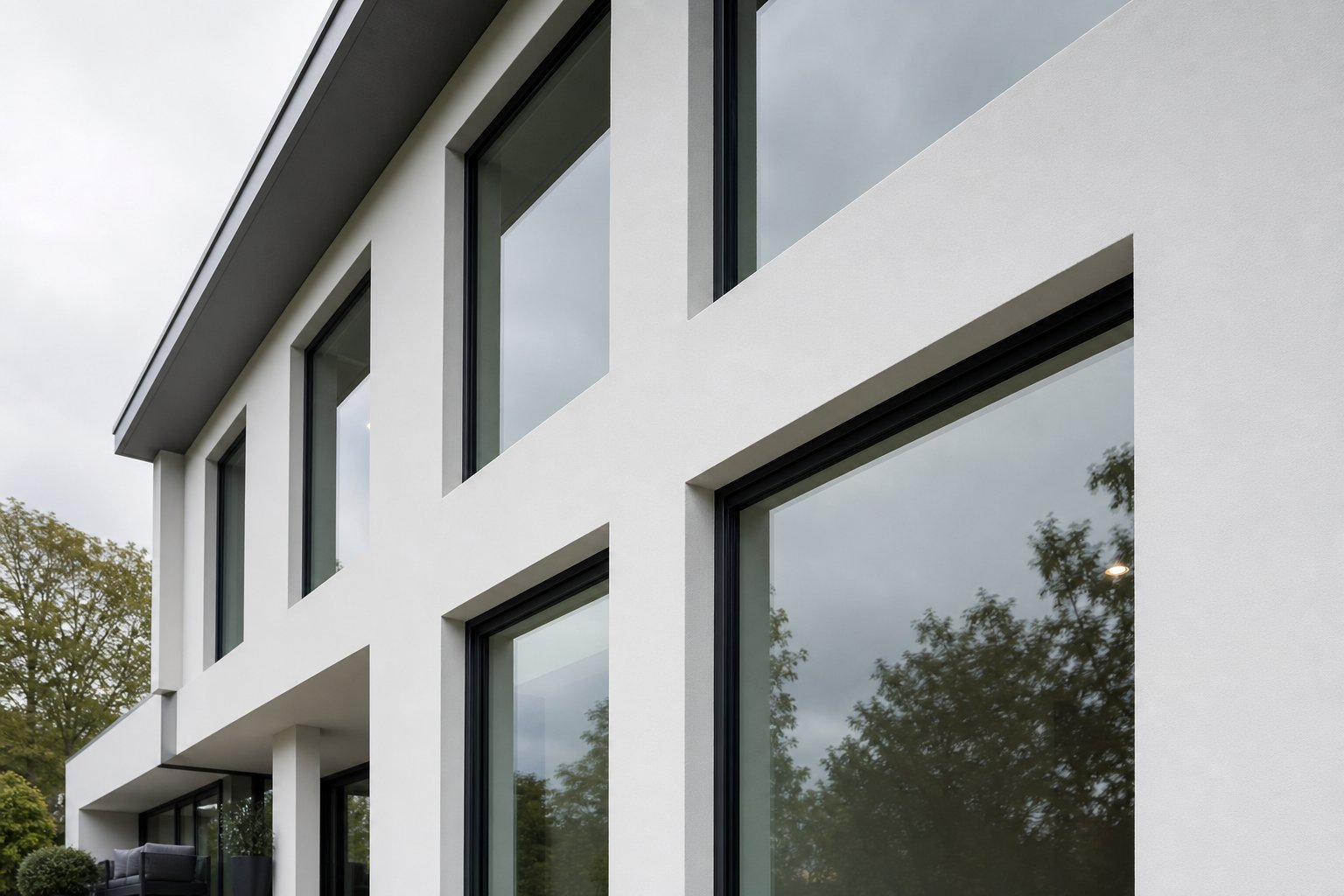
3M Polyurethane Glass Adhesive Sealant 590 – Best Paintable Option
Silicone dominates aluminium window sealing for good reason, but it carries one deal-breaking limitation: you cannot paint over it. Latex, acrylic, and oil-based paints all bead off cured silicone, leaving visible bead lines wherever the sealant meets a painted surface. When the joint between an aluminium frame and a rendered wall needs to vanish under a coat of paint, or when silicone bleed would stain adjacent finishes, polyurethane steps in as the right chemistry for the job.
The 3M Polyurethane Glass Adhesive Sealant 590 is a single-component, moisture-cure polyurethane designed for glass caulking sealant applications on automotive and architectural substrates. Its high tensile strength and paintability make it the standout option for aluminium window joints that need a finished, concealed appearance.
Why Choose Polyurethane Over Silicone
The choice comes down to what happens after the sealant cures. If the joint stays exposed and needs to resist decades of UV and weather on its own, silicone wins. If the joint gets painted, rendered over, or sits behind a trim detail, polyurethane offers advantages that silicone simply cannot match:
Paintability. Once cured, 3M 590 accepts standard acrylic and latex paints without adhesion issues. This lets the sealant joint blend seamlessly into surrounding wall finishes, eliminating the visible bead lines that silicone creates.
Higher tensile strength. Polyurethane sealants generally deliver stronger pull-through resistance than silicone. Industry comparisons confirm that polyurethane withstands heavy loads and impacts better, making it well-suited for joints subject to vibration or mechanical stress. As a sheet metal sealant in fabrication contexts, polyurethane has long been the preferred choice over silicone for exactly this reason.
Better adhesion to porous substrates. Where aluminium frames meet masonry reveals, concrete lintels, or fibre cement cladding, the sealant must bond to both a non-porous metal and a porous building material in the same joint. Polyurethane grips porous materials more readily than silicone, making mixed-substrate joints around aluminium window perimeters more reliable. For caulking for glass and masonry simultaneously, this dual-substrate capability is a genuine practical advantage.
Application Considerations for Aluminium
Polyurethane’s strengths come with trade-offs that matter specifically on aluminium substrates. Understanding these before you pick up a caulking gun prevents costly rework.
Primer is typically required on aluminium. Unlike Dow 758’s primerless adhesion, polyurethane sealants generally need a dedicated primer on non-porous metals for long-term bond integrity. Skipping this step on aluminium invites adhesive failure within a few thermal cycles. The 3M system includes compatible primers, but the extra preparation step adds time and cost.
Lower UV resistance than silicone. Comparative data shows polyurethane sealants offer a service life of 5 to 10 years in exposed conditions versus 10 to 20 years for silicone. Under Australian UV intensity, unprotected polyurethane joints degrade faster, becoming brittle and cracking where silicone would remain elastic. This makes 3M 590 better suited for concealed joints, painted-over applications, or locations shielded from direct sun rather than exposed exterior beads on north or west elevations.
Metallic caulk behaviour. When working with aluminium specifically, polyurethane can attract surface dirt more readily than silicone once cured. On a painted joint this is irrelevant, but on an exposed metallic caulk line adjacent to clean aluminium frames, the discolouration can become noticeable over time. Keep this in mind when deciding whether the joint will be painted or left visible.
Pros
- Paintable: accepts acrylic and latex topcoats for a seamless, concealed finish
- High bond strength: superior tensile and shear strength compared to most silicone alternatives
- Gap-filling capability: accommodates irregular joint widths common in renovation work around existing aluminium frames
- Good for mixed-substrate joints: bonds effectively to both non-porous aluminium and porous masonry or concrete in the same bead
Cons
- Requires primer on aluminium: adds a preparation step that silicone alternatives like Dow 758 eliminate entirely
- Lower UV resistance than silicone: not ideal for exposed exterior beads in high-UV Australian conditions without paint protection
- Shorter service life in exposed applications: 5 to 10 years versus 20+ for quality silicone products in comparable conditions
- Not suitable for structural glazing: provides weatherproofing and adhesion only, not load-bearing glass retention
The 3M Polyurethane Glass Adhesive Sealant 590 fills a specific gap that no silicone product can: joints that need to disappear under paint. For aluminium window installations where the frame-to-wall junction runs into a rendered, painted, or plastered reveal, it delivers strong adhesion and a finish that integrates with surrounding surfaces. Pair it with the manufacturer’s recommended primer on the aluminium substrate, plan to paint over it within the specified window, and it performs reliably in that niche.
Not every project needs the premium performance tier, though. For homeowners tackling routine maintenance or re-sealing residential aluminium windows on a practical budget, a more accessible product built on the same neutral-cure silicone chemistry offers a compelling middle ground.
Dowsil CWS – Best Budget-Friendly Weatherproofing Choice
Commercial-grade products like the 890-SL deliver outstanding performance, but most residential aluminium window maintenance doesn’t demand that level of specification. Re-sealing a perimeter joint on a single-storey home in suburban Melbourne calls for reliable chemistry at a sensible price, not a facade-engineering product designed for 40-storey curtain walls. That’s the space Dowsil CWS occupies.
Dowsil CWS for Residential Projects
The Dowsil Contractors Weatherproofing Sealant shares its DNA with the premium products higher in this ranking. It’s a one-part, neutral-cure silicone, meaning it won’t release corrosive by-products that damage aluminium substrates during curing. The same safe-for-metal chemistry that makes 890-SL a commercial benchmark runs through this more accessible formulation.
Where Dow CWS differs is in its movement rating and target market. It’s formulated for standard residential and light commercial joints rather than the high-movement facade applications that justify the 890-SL’s premium. For typical aluminium window perimeters on Australian homes, where joint widths are moderate and thermal cycling is less extreme than on a fully exposed high-rise facade, that reduced movement class is still more than adequate.
Among Dow silicone sealants available through Australian trade suppliers, CWS hits the sweet spot between genuine performance and practical accessibility. A cartridge typically runs $12–$18 AUD at trade outlets like Bunnings Trade or specialist sealant distributors, roughly half the cost of the 890-SL. For a homeowner re-sealing six or eight windows during a maintenance weekend, that price difference adds up quickly.
Where CWS Fits in the Product Lineup
This is a dow silicone sealant built for everyday residential work rather than specialist specification. It performs best in these scenarios:
- Re-sealing aged or cracked perimeter joints around existing aluminium window frames
- Filling gaps between aluminium frames and brick veneer, weatherboard, or rendered wall substrates
- General weatherproofing maintenance on single and double-storey residential builds
Pros
- Accessible price point: significantly cheaper per cartridge than commercial-grade alternatives while retaining neutral-cure chemistry
- Neutral cure, safe for aluminium: no acetic acid release, eliminating corrosion and staining risks on anodised or powder-coated frames
- Good colour range: available in translucent, white, grey, and other tones that match common residential aluminium finishes
- Readily available: stocked at major trade suppliers and accessible without commercial accounts or specialist orders
Cons
- Lower movement capacity than 890-SL: adequate for standard residential joints but not suited to high-movement expansion joints or large-format aluminium panel systems
- May require primer on anodised aluminium: some anodised finishes benefit from a primer coat to achieve full rated adhesion, adding a preparation step
- Not suitable for high-rise or extreme-exposure applications: lacks the enhanced UV stabilisers and movement class needed for fully exposed commercial facades or severe coastal conditions
For the majority of residential aluminium window sealing tasks across temperate and inland Australian climates, Dowsil CWS delivers honest, dependable performance without the cost premium of specification-grade products. It’s the cartridge to reach for when the job is straightforward and the environment isn’t punishing.
Coastal locations, however, present a different set of demands entirely. Salt spray, relentless UV, and wind-driven rain push standard residential sealants past their design limits, and that’s where the final product in our ranking earns its place.
Dow Allguard – Best for Coastal and High-Exposure Locations
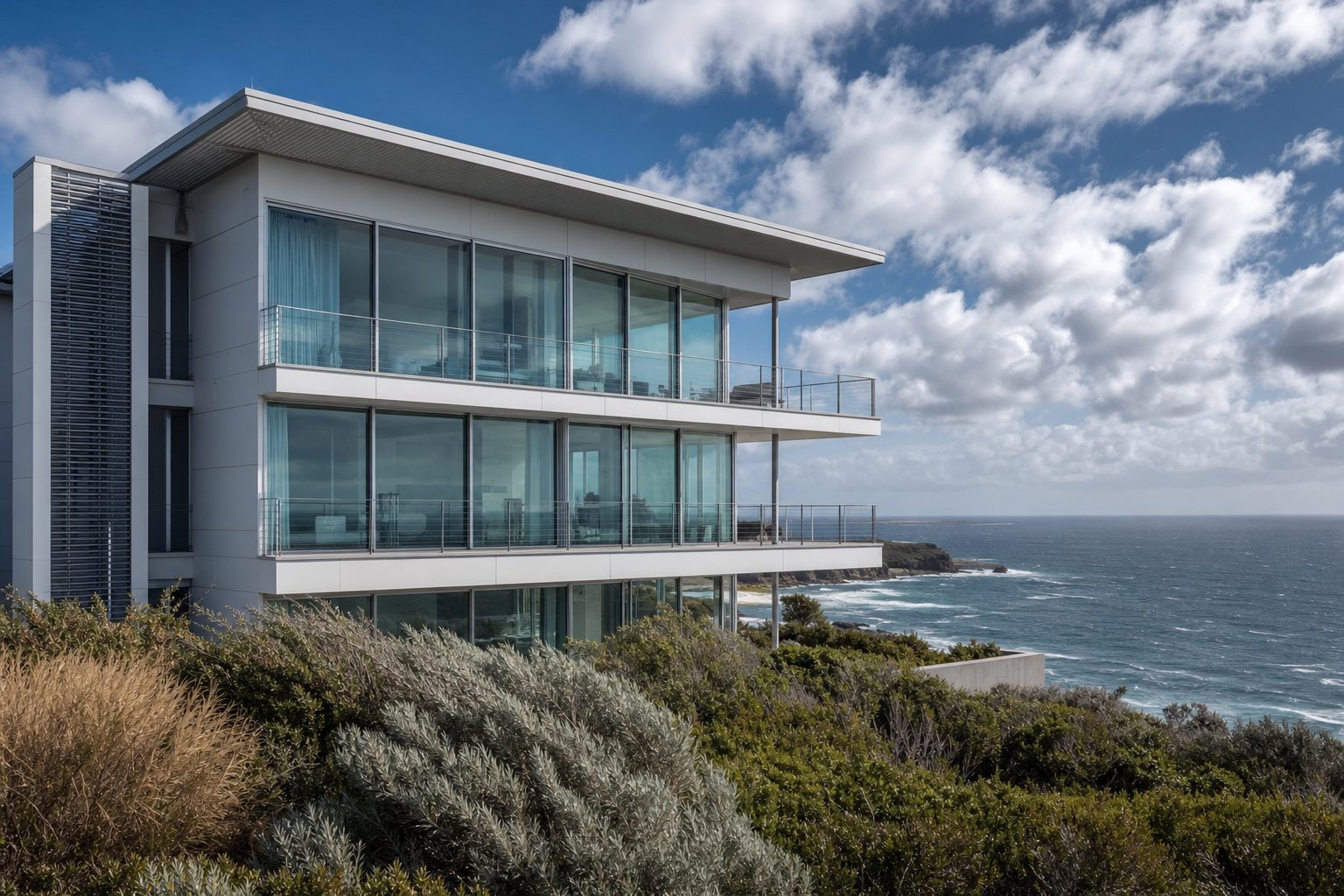
A sealant that performs well in sheltered suburban conditions doesn’t automatically survive a decade on a beachfront home in Noosa or a cliff-top build along the Great Ocean Road. Coastal environments compound every stress factor that aluminium window joints face, and they do so simultaneously. Salt, UV, wind, and temperature work together rather than in isolation, accelerating degradation far beyond what inland conditions produce.
Dow Allguard is a high-performance silicone sealant formulated specifically for facades in marine and high-exposure environments. Where Dowsil CWS handles everyday residential work and the 890-SL covers commercial perimeter sealing, Allguard targets the narrow but critical niche where standard products simply cannot survive long enough to justify their installation cost.
Why Coastal Environments Destroy Standard Sealants
Living within a few hundred metres of the Australian coastline subjects every external building material to conditions that are genuinely corrosive. For window sealants specifically, three mechanisms combine to cause premature failure:
Salt degradation. Airborne salt crystals deposit on sealant surfaces and work into micro-cracks over time. On a standard metal silicone sealant not formulated for marine exposure, salt penetration accelerates surface crazing and eventually compromises the bond line. The salt also attacks the aluminium substrate at the sealant edge, undermining adhesion from underneath the bead where it’s invisible until the joint fails entirely.
Intensified UV exposure. Coastal properties typically have fewer obstructions between the building envelope and direct sunlight. Reflected UV from water and sand amplifies the dose hitting west and north-facing window joints. Standard sealants rated for moderate UV begin chalking and hardening within five to seven years under this intensity, losing the elasticity needed to accommodate thermal movement.
Wind-driven rain pressure. Coastal wind speeds create positive pressure that forces water through any marginal seal joint. A bead that merely sits against the substrate isn’t enough. The sealant must maintain full adhesion under dynamic water pressure driven by gusts that regularly exceed 80 km/h in exposed Australian coastal zones. A sealant losing even partial adhesion at one edge becomes a water entry point under storm conditions.
These three factors don’t take turns. A joint on a beachfront aluminium window cops salt spray, peak UV, and wind-rain pressure on the same afternoon. That simultaneous loading is what separates coastal failure from inland degradation, and it’s why a purpose-formulated product earns its place in this ranking.
Dow Allguard Performance in Extreme Conditions
Dow Allguard builds on the same neutral-cure dow silicone chemistry that makes the broader Dowsil range safe for aluminium, but adds specific enhancements for marine and high-exposure service:
Enhanced UV stabilisers. The formulation incorporates additional UV-blocking compounds that extend service life under prolonged direct exposure. Where a standard metallic silicone sealant might begin surface degradation after seven to ten years in coastal conditions, Allguard is designed to maintain its elasticity and adhesion well beyond that threshold.
Salt-spray resistance. Tested against accelerated salt-spray protocols, the product maintains bond integrity on aluminium substrates even after extended exposure to saline conditions. This addresses the specific failure mode where salt undermines adhesion at the sealant-substrate interface.
Marine facade formulation. Rather than being a general-purpose product with good weather resistance, Allguard is explicitly designed and marketed for facades in marine environments. That targeted formulation means every component, from the polymer backbone to the filler system, is selected for coastal durability rather than broad applicability.
For Australian homeowners along the Queensland coast, the NSW northern beaches, Western Australia’s coastal suburbs, or Victoria’s surf coast, this specificity matters. Standard products installed on these properties routinely fail within half their rated service life, leading to water ingress, frame corrosion, and costly remediation. Allguard’s purpose-built chemistry addresses the root cause rather than offering a marginal improvement over generic alternatives.
Pros
- Superior UV and salt resistance: formulated specifically for marine and high-exposure environments rather than adapted from a general-purpose product
- Designed for extreme weather exposure: maintains adhesion and elasticity under combined salt, UV, and wind-rain loading typical of Australian coastal properties
- Long service life in coastal conditions: outperforms standard silicone products that degrade prematurely in marine environments
- Compatible with aluminium without corrosion risk: neutral-cure chemistry safe for anodised and powder-coated aluminium frames common in coastal Australian builds
Cons
- Premium pricing: expect to pay more than standard weatherproofing sealants, reflecting the specialised formulation and targeted market
- May be overkill for sheltered inland applications: homes in protected suburban locations won’t benefit from the enhanced marine resistance, making standard products more cost-effective
- Limited colour options compared to standard range: fewer finish-matching choices than the broader Dowsil colour palette, which may matter on non-standard aluminium frame colours
No other product in this guide, or in most competitor recommendations online, addresses the specific question of which sealant to use when the environment itself is hostile. That gap in available guidance leaves coastal homeowners defaulting to standard products and experiencing premature failure. Dow Allguard fills that gap with a targeted, proven solution for Australia’s extensive coastal building stock.
With all five products now reviewed individually, the practical question shifts: how do they compare side by side, and which one fits your specific project?
Side-by-Side Sealant Comparison for Aluminium Windows
Five products, five different strengths. Scanning individual reviews is useful for depth, but sometimes you need all the critical specs in one view to make a confident decision. The table below puts every relevant performance metric side by side so you can match the right product to your joint type, exposure level, and budget in seconds rather than minutes.
Head-to-Head Feature Comparison
| Product Name | Sealant Type | Best For | Movement Capacity | Primer Required on Aluminium | Paintable | UV Resistance | Recommended Application |
|---|---|---|---|---|---|---|---|
| Dow 758 | Neutral-cure silicone | Direct aluminium adhesion | ±25% | No (most finishes) | No | Excellent | Glass-to-frame joints, frame-to-structure connections |
| Dowsil 890-SL | Neutral-cure silicone (self-levelling) | Exterior perimeter weatherproofing | ±50% | Sometimes (fluoropolymer coatings) | No | Excellent | High-movement perimeter joints, expansion joints |
| 3M 590 | Polyurethane | Paintable concealed joints | ±25% | Yes | Yes | Moderate | Frame-to-wall junctions under paint or render |
| Dowsil CWS | Neutral-cure silicone | Budget residential maintenance | ±25% | Sometimes (anodised finishes) | No | Good | Standard residential re-sealing and gap filling |
| Dow Allguard | Neutral-cure silicone (marine-grade) | Coastal and extreme exposure | ±25%+ | No | No | Superior | Beachfront properties, salt-spray zones, exposed facades |
A few patterns stand out. Every silicone option uses neutral-cure chemistry, confirming that acid-cure products have no place on aluminium. Movement capacity separates the 890-SL from the rest. And only one product, the 3M 590, offers paintability, which comes at the cost of UV durability and primer-free application.
Choosing by Use Case
Rather than picking the best silicone sealant for metal in the abstract, match your product to the specific joint you’re sealing. Each scenario below points to a single recommended choice:
- Exterior perimeter sealing (frame-to-wall): Dowsil 890-SL. Its ±50% movement class handles aluminium’s thermal expansion on exposed joints without fatigue, making it the strongest glass sealer for perimeter weatherproofing.
- Glass-to-frame and frame-to-structure joints: Dow 758. Primerless adhesion to non-porous aluminium gives it a clear edge for direct metal to metal sealant applications and glass-to-metal junctions within the window assembly.
- Concealed joints requiring paint coverage: 3M Polyurethane 590. The only option here that accepts topcoats, ideal for rendered reveals and plastered surrounds where the bead needs to disappear.
- Budget residential maintenance: Dowsil CWS. Genuine neutral-cure performance at a practical price for homeowners re-sealing standard aluminium windows across temperate climates.
- Coastal and marine environments: Dow Allguard. Purpose-built salt and UV resistance for properties within the coastal exposure zone where standard products fail prematurely.
For metal to metal caulking where two aluminium components meet, such as frame junctions or flashing overlaps, Dow 758’s primerless adhesion to non-porous metals makes it the default. Where movement is the dominant concern on those same joints, step up to 890-SL and apply primer as specified.
The best sealant for aluminium windows depends on three variables: whether the joint is structural or weatherproofing, whether it sits interior or exterior, and the level of environmental exposure the window faces. No single product wins in every scenario, but matching the right chemistry to your specific conditions eliminates the guesswork.
With the comparison clear, the remaining question is practical: once you’ve chosen the right product, how do you apply it for maximum service life?
Final Verdict and Application Tips for Long-Lasting Seals
Picking a silicone sealant for metal substrates is never a one-size-fits-all decision. Each product in this guide earned its ranking by excelling at something specific. Your job is matching that strength to your joint, your climate, and your budget.
Our Top Overall Recommendation
Best all-rounder: Dowsil 890-SL. If you need a single product for exposed exterior aluminium window joints across any Australian climate zone, its ±50% movement capacity, neutral-cure safety, and proven 20-year service life make it the benchmark. No other silicone metal sealant in this category offers the same combination of flexibility and UV durability for perimeter weatherproofing.
Quick picks by scenario:
- Best aluminium adhesion without primer: Dow 758 — the strongest performer for glass window sealant applications and direct frame bonding
- Best paintable option: 3M Polyurethane 590 — the only choice when the bead needs to disappear under render or paint
- Best budget residential pick: Dowsil CWS — honest neutral-cure performance at half the cost of commercial-grade products
- Best for coastal properties: Dow Allguard — purpose-formulated salt and UV resistance for marine environments
For window pane sealant applications where the glass meets the aluminium frame in a mechanically retained system, Dow 758 remains the targeted choice. For everything surrounding that frame externally, the 890-SL takes over. That two-product approach covers the majority of residential and commercial aluminium window sealing projects across Australia.
Getting the Best Results from Your Sealant
Even the right product fails when applied poorly. These steps, drawn from industry best-practice guidance, ensure your silicone sealant metal bond reaches its full rated service life:
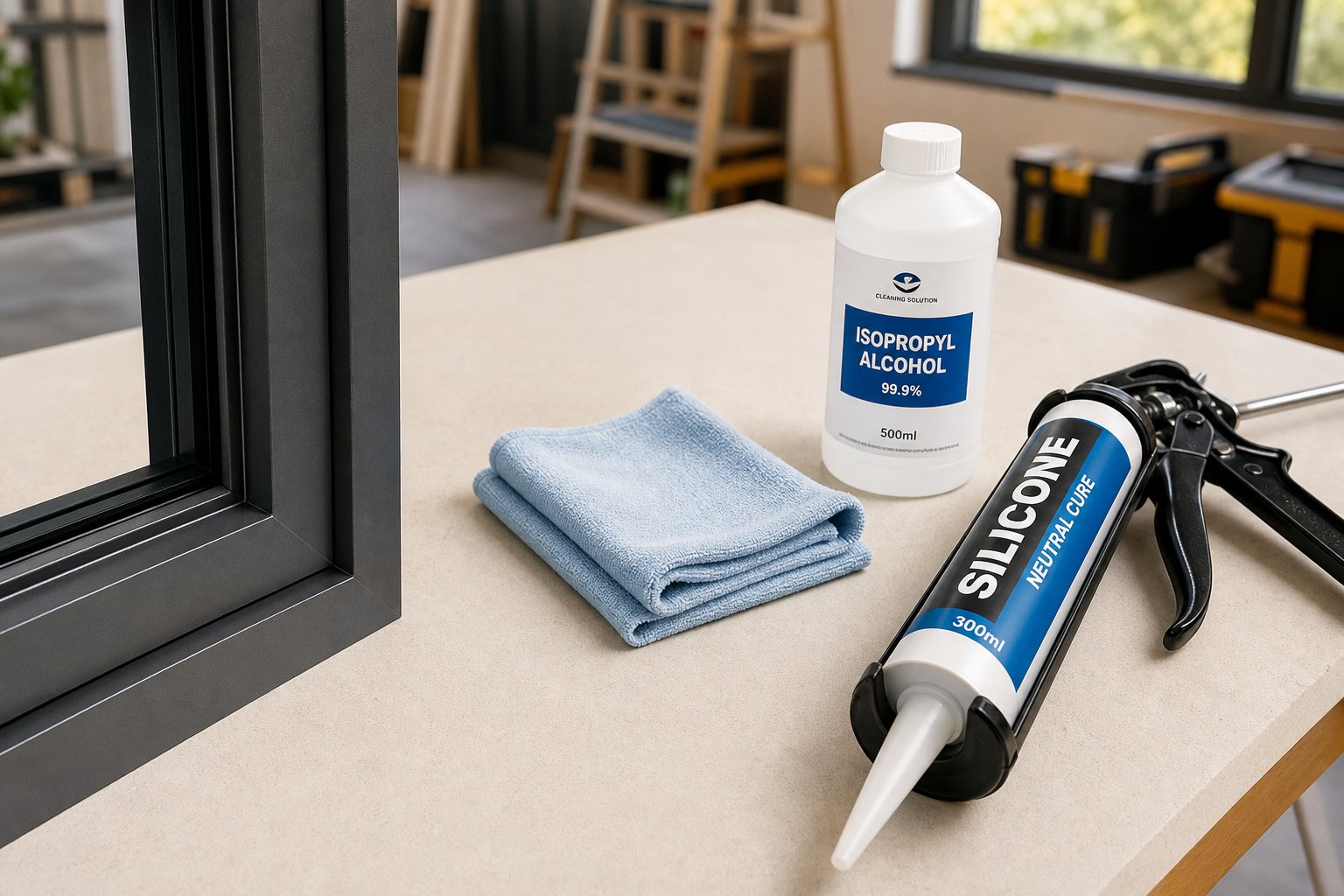
- Clean with isopropyl alcohol (IPA). Wipe the aluminium surface using a clean lint-free cloth soaked in IPA, then immediately follow with a dry cloth before the solvent evaporates. This two-rag method removes cutting oils, dust, and oxidation residue that prevent adhesion. Never let IPA air-dry on the surface.
- Apply primer where specified. If the product datasheet calls for primer on your specific aluminium finish, don’t skip it. Apply a thin film with a clean cloth, allow 15 minutes minimum drying time, and protect the primed area from contamination before sealing.
- Tool within the open time. Most neutral-cure metal silicone products skin over within 15 to 60 minutes depending on humidity and temperature. Tool the bead immediately after application using dry tooling rather than soapy water, pressing the sealant into full contact with both joint faces.
- Allow full cure before water exposure. Skin formation is not full cure. A typical 6 mm joint cures at roughly 2 to 4 mm per day at 20°C and 50% relative humidity. Protect freshly sealed joints from rain for at least 24 to 72 hours, and longer during cold or dry conditions.
Sealant performance ultimately depends on two things working together: the product quality and the window system it’s applied to. Precision-engineered aluminium frames with consistent glazing rebates, proper drainage channels, and tight manufacturing tolerances give any silicone metal product the substrate conditions it needs for lasting adhesion. Frames with irregular profiles, poor drainage, or inconsistent gap widths force sealants into geometries they aren’t designed for, shortening service life regardless of how good the product is.
For readers planning new installations or window replacements alongside a sealing project, MEICHEN’s aluminium window range is worth exploring. Their systems incorporate thermal breaks, integrated drainage channels, and uniform frame profiles specifically designed to support long-term sealant performance across Australian conditions. Starting with a well-engineered frame means your chosen sealant works with the system rather than compensating for its shortcomings.
Choose the right product, prepare the substrate properly, and apply it to a quality frame. That combination delivers sealed aluminium window joints that outlast decades of Australian weather without callbacks or costly re-work.
Frequently Asked Questions About Sealants for Aluminium Windows
1. Can you use normal silicone on aluminium window frames?
Standard acid-cure (acetoxy) silicone should never be used on aluminium. It releases acetic acid during curing, which attacks aluminium’s protective oxide layer and causes pitting and corrosion over time. You need a neutral-cure silicone specifically formulated for non-porous metal substrates. Products like Dow 758 or Dowsil 890-SL use neutral-cure chemistry that won’t damage anodised or powder-coated aluminium finishes while providing reliable long-term adhesion.
2. Do you need primer before applying sealant to aluminium windows?
It depends on the product and the aluminium finish. Some sealants like Dow 758 are engineered for primerless adhesion to anodised and powder-coated aluminium. Others, including polyurethane options like 3M 590, require a dedicated primer on aluminium for reliable bonding. Even products that typically don’t need primer may require it on certain fluoropolymer-coated or speciality finishes. Always check the manufacturer’s technical data sheet for your specific aluminium finish, as skipping a required primer virtually guarantees adhesive failure within a few thermal cycles.
3. What is the difference between structural and weatherproofing sealant for windows?
Structural glazing sealants are load-bearing adhesives that physically hold glass in place, transferring wind and dead loads from the pane into the aluminium frame. They require engineering sign-off and factory-controlled application. Weatherproofing sealants seal joints against air and water infiltration without carrying any structural load. Most residential aluminium window projects need weatherproofing sealants only, applied around perimeter joints, frame-to-wall junctions, and glazing bead interfaces. Structural sealants are typically specified by facade engineers for commercial curtain wall systems.
4. Which sealant is best for coastal aluminium windows in Australia?
Dow Allguard is purpose-formulated for marine and high-exposure environments where salt spray, intense UV, and wind-driven rain combine to destroy standard products prematurely. Its enhanced UV stabilisers and salt-spray resistance outperform general-purpose silicones in coastal conditions. Standard residential sealants often fail within half their rated service life on beachfront properties, making a marine-grade product essential for homes within a few hundred metres of the Australian coastline. Pair it with precision-engineered aluminium window systems featuring proper drainage channels to maximise seal longevity.
5. Can you paint over sealant on aluminium window frames?
You cannot paint over silicone sealant. Latex, acrylic, and oil-based paints all bead off cured silicone, leaving visible lines. If your project requires the sealant joint to be painted over, such as where an aluminium frame meets a rendered or plastered wall reveal, you need a polyurethane sealant like 3M Polyurethane Glass Adhesive Sealant 590. It accepts standard acrylic and latex topcoats once cured. The trade-off is lower UV resistance and the need for primer on aluminium, so it works best for concealed or painted-over joints rather than exposed exterior beads.
More Window & Door Guides