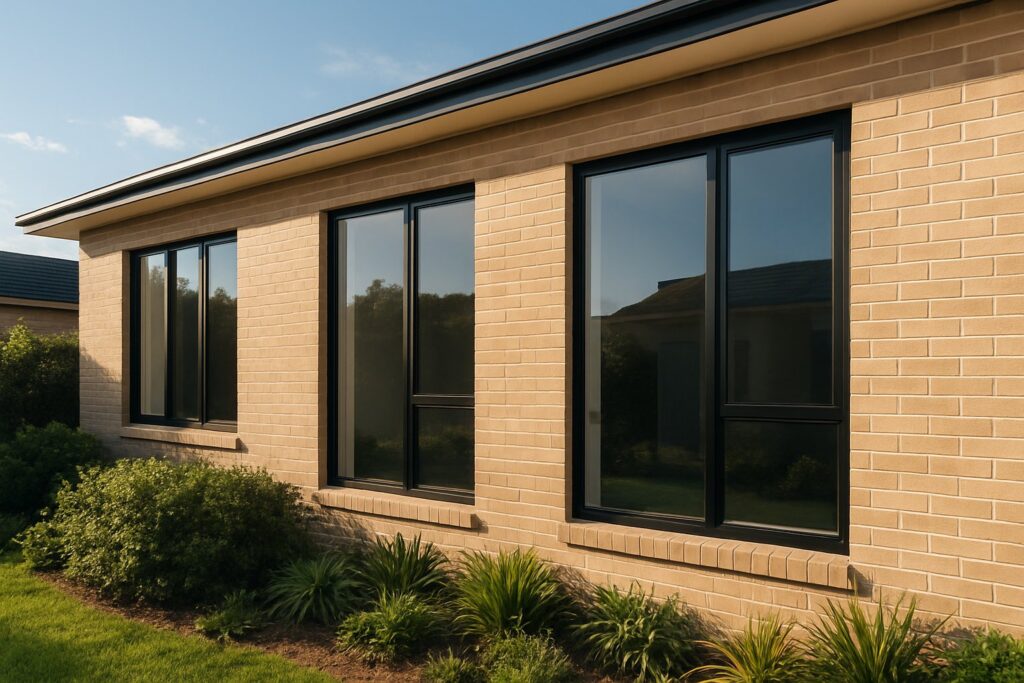
What Makes Aluminium Windows a Leading Choice
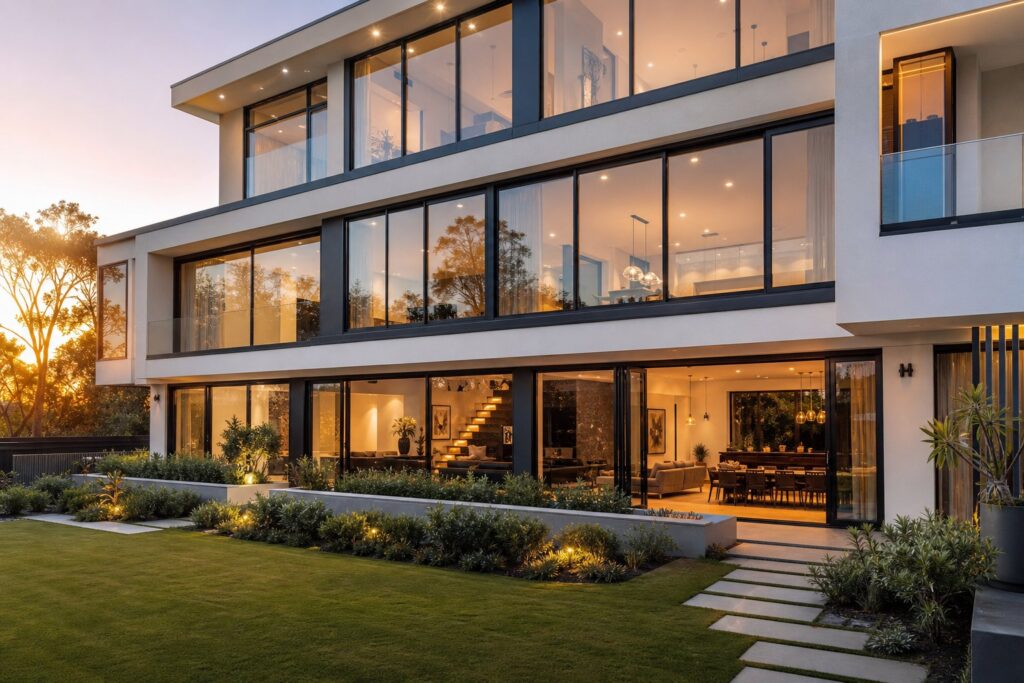
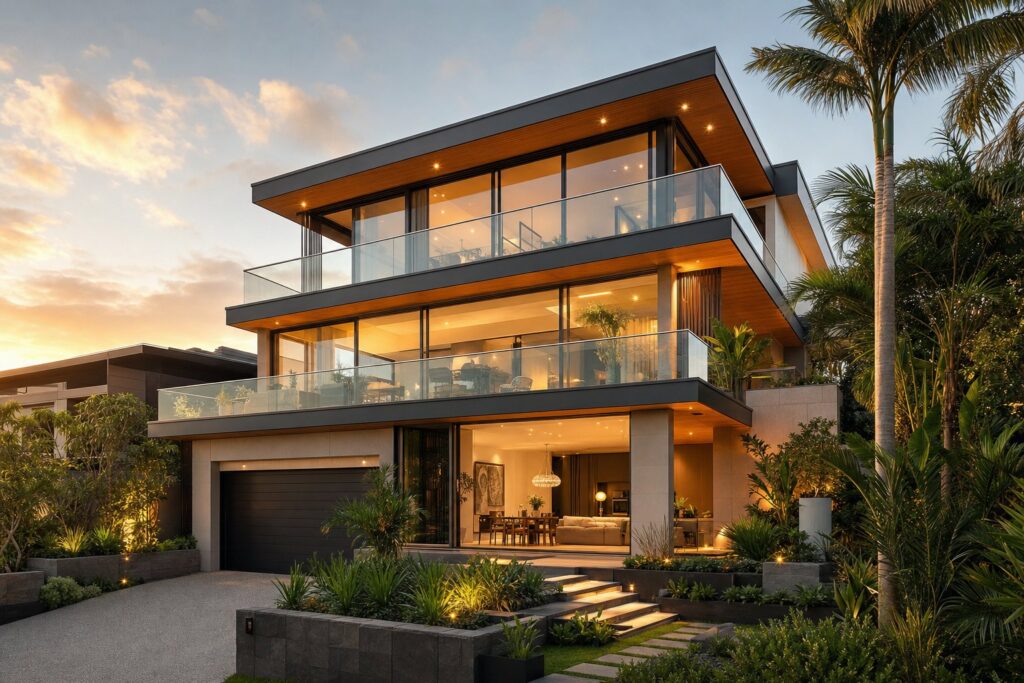
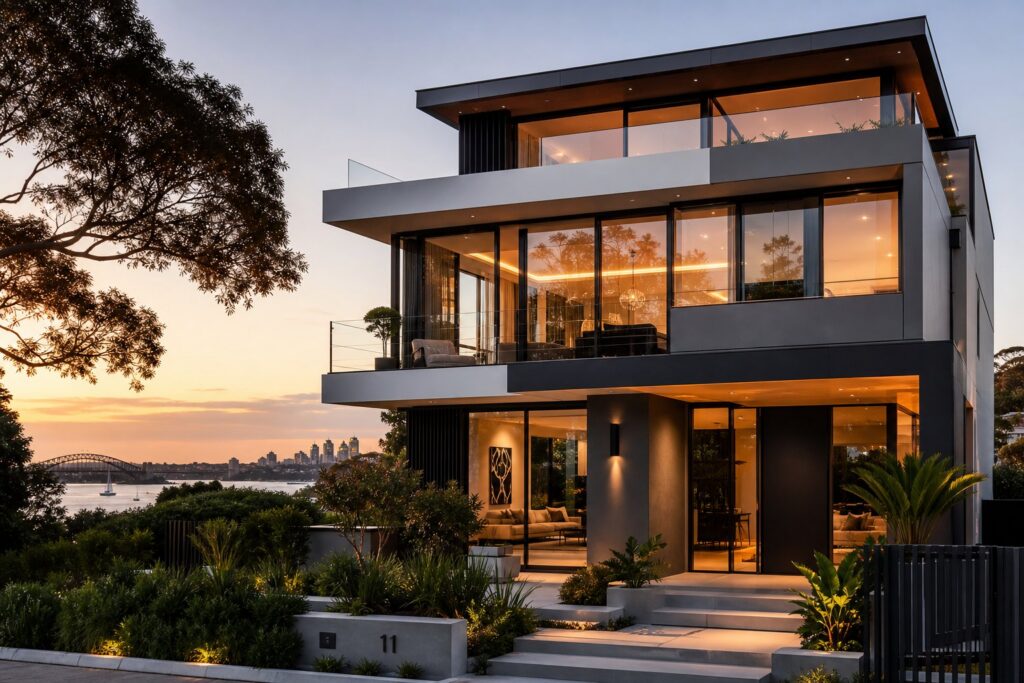
Every window frame material involves trade-offs. Timber looks warm but demands upkeep. uPVC insulates well but limits how thin the profiles can go. Aluminium sits in a category of its own — a material strong enough to hold expansive glass panels with barely-there sightlines, yet light enough to avoid overloading wall structures. That combination of strength and slenderness is exactly why aluminium dominates modern residential and commercial construction across Australia.
Searching for the best aluminium windows can feel overwhelming. Dozens of suppliers, competing claims, and technical jargon make it hard to know what actually matters. This guide strips away the sales pitch. Instead of ranking brands, it walks you through the full buyer journey — from understanding the material itself to confidently selecting the right product for your build.
Why Aluminium Remains a Top Frame Material
Four core properties keep aluminium at the front of the pack. Its strength-to-weight ratio allows frames as narrow as 45mm to support floor-to-ceiling glazing without structural compromise. Slim sightlines mean more glass, more light, and cleaner architectural lines. Design flexibility is another standout — powder coating delivers virtually unlimited colour options, and the material can be extruded into complex profiles for casement, sliding, bi-fold, and fixed configurations. Then there is recyclability. Aluminium is infinitely recyclable without quality loss, making every alu window a long-term environmental asset rather than future landfill.
Who Benefits Most from Aluminium Windows
Different people come to the aluminium window conversation with different priorities:
- Homeowners — seeking low maintenance, contemporary aesthetics, and long-term durability without repainting or refinishing.
- Architects — prioritising slim profiles, large openings, and the design freedom to match any facade style.
- Builders — valuing dimensional stability, reliable lead times, and straightforward installation across project types.
- Developers — focused on lifecycle cost, compliance with NCC requirements, and broad market appeal at resale.
No single online resource currently covers what all four groups need to know — from material science through to supplier evaluation and climate-specific specification. That gap leaves buyers relying on whatever their supplier chooses to share. The sections ahead fill it, starting with how aluminium genuinely stacks up against every competing frame material.
Aluminium vs Other Frame Materials Compared
Knowing aluminium’s strengths is one thing. Understanding how it genuinely compares to every alternative on the market is what separates a confident purchase from an expensive guess. Suppliers rarely lay this out transparently — each tends to champion their own material. Here is the unfiltered comparison.
Aluminium vs Vinyl and Fiberglass Frames
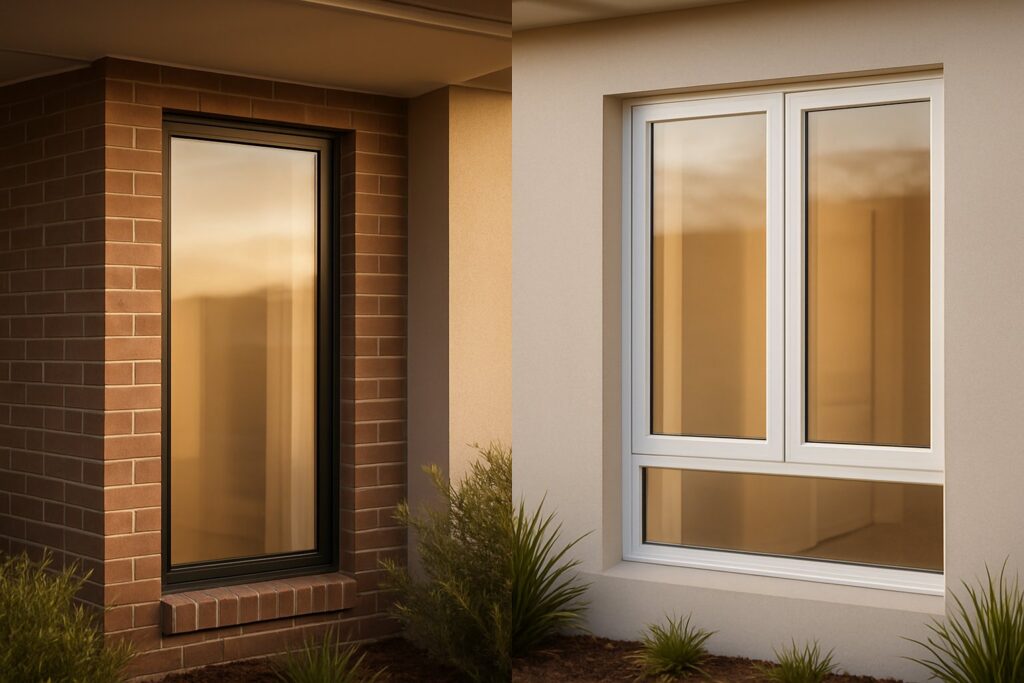
Vinyl (uPVC) frames dominate the budget end of the market. A standard white uPVC casement window insulates well thanks to the multi-chambered profile uPVC construction, and it resists rot and rust without any painting. For homeowners on tight budgets in temperate climates, uPVC doors and windows deliver solid value. The trade-off? Vinyl lacks rigidity. Frames need to be bulkier to maintain structural integrity, which limits how large an opening you can span and how slim the sightlines can be. Dark-coloured vinyl also risks warping under intense Australian sun exposure, and the material is difficult to recycle at end of life.
Fiberglass sits between vinyl and aluminium in both price and performance. It is dimensionally stable, strong, and offers good thermal properties. However, fiberglass frames carry a higher price tag than vinyl without matching aluminium’s slenderness or design flexibility. Availability in Australia is also more limited — fewer local fabricators stock fiberglass systems compared to aluminium or uPVC. When researching the top 10 vinyl window manufacturers or fiberglass suppliers, you will notice most operate primarily in North American markets, which can mean longer lead times and limited local warranty support for Australian builds.
Aluminium vs Wood and uPVC Frames
Timber windows remain beautiful. They insulate naturally, dampen sound effectively, and suit heritage renovations where council approval demands period-appropriate aesthetics. A well-maintained timber frame can last 50 years or more. The catch is that “well-maintained” means repainting every three to five years, regular inspections for rot and termite damage, and higher upfront costs — often $800 to $2,500 AUD per window depending on species and configuration. In Australia’s climate, where UV intensity and moisture fluctuations are relentless, timber maintenance becomes a genuine ongoing commitment.
Wood-clad frames attempt to solve this by wrapping the exterior in aluminium or vinyl while retaining an interior timber finish. They perform well but sit at the premium end of the price spectrum. Many of the best german window manufacturers produce exceptional wood-clad systems with engineered thermal breaks, though importing these to Australia adds cost and complexity around compliance with AS 2047.
Standard profile uPVC frames — the kind most commonly installed in Australian volume builds — offer a practical middle ground for smaller openings. They insulate effectively and cost less upfront. But for spans beyond about 1.5 metres, or where architectural intent demands minimal frame visibility, uPVC simply cannot compete with aluminium’s structural capacity.
Aluminium’s historical weakness was thermal conductivity. Raw aluminium transfers heat rapidly, which once made it a poor performer in energy-rated assessments. Modern thermally broken aluminium windows have largely eliminated this problem. A polyamide thermal break — typically 20mm to 35mm wide in quality systems — separates the interior and exterior aluminium faces, dramatically reducing heat transfer and condensation risk. Today, thermally broken aluminium achieves U-values competitive with uPVC and fiberglass, while retaining all the structural and aesthetic advantages those materials cannot match.
| Criteria | Aluminium (Thermally Broken) | Vinyl / uPVC | Fiberglass | Wood / Wood-Clad |
|---|---|---|---|---|
| Thermal Performance | Good to excellent (with thermal break) | Very good | Very good | Excellent (natural insulator) |
| Durability | 40-60+ years | 20-30 years | 30-50 years | 50+ years (with maintenance) |
| Maintenance Needs | Minimal — occasional cleaning | Minimal | Minimal | High — regular painting, sealing, inspections |
| Design Flexibility | Excellent — slim profiles, any colour, complex shapes | Limited — bulkier frames, fewer colour options | Moderate | Good — custom shapes, natural finishes |
| Cost Range (per window, AUD) | $600 – $2,000+ | $350 – $900 | $800 – $1,800 | $800 – $2,500+ |
| Recyclability | 100% infinitely recyclable | Difficult to recycle | Limited recyclability | Biodegradable but often landfilled |
| Suitability for Large Openings | Excellent — spans 3m+ easily | Poor — structural limits beyond 1.5m | Good | Good (with engineered sections) |
If you are comparing the top 5 replacement window manufacturers in any market, you will find that the highest-performing systems — regardless of brand — increasingly use thermally broken aluminium for large-format openings and premium residential projects. The material’s combination of longevity, slimness, and recyclability is difficult to replicate in any other frame type.
Aluminium is the strongest choice for coastal environments, large spans, slim-profile designs, and commercial applications where durability and minimal maintenance are non-negotiable. Alternatives like uPVC may be preferable for smaller openings in extreme cold climates where budget is the primary constraint and thermal performance must be maximised at the lowest upfront cost.
Material choice sets the foundation, but two windows made from the same aluminium can differ wildly in quality. The difference lies in how the profiles are constructed, how corners are joined, and what hardware sits behind the handle — details that become visible only when you know what to inspect.
How to Evaluate Aluminium Window Quality Before Buying
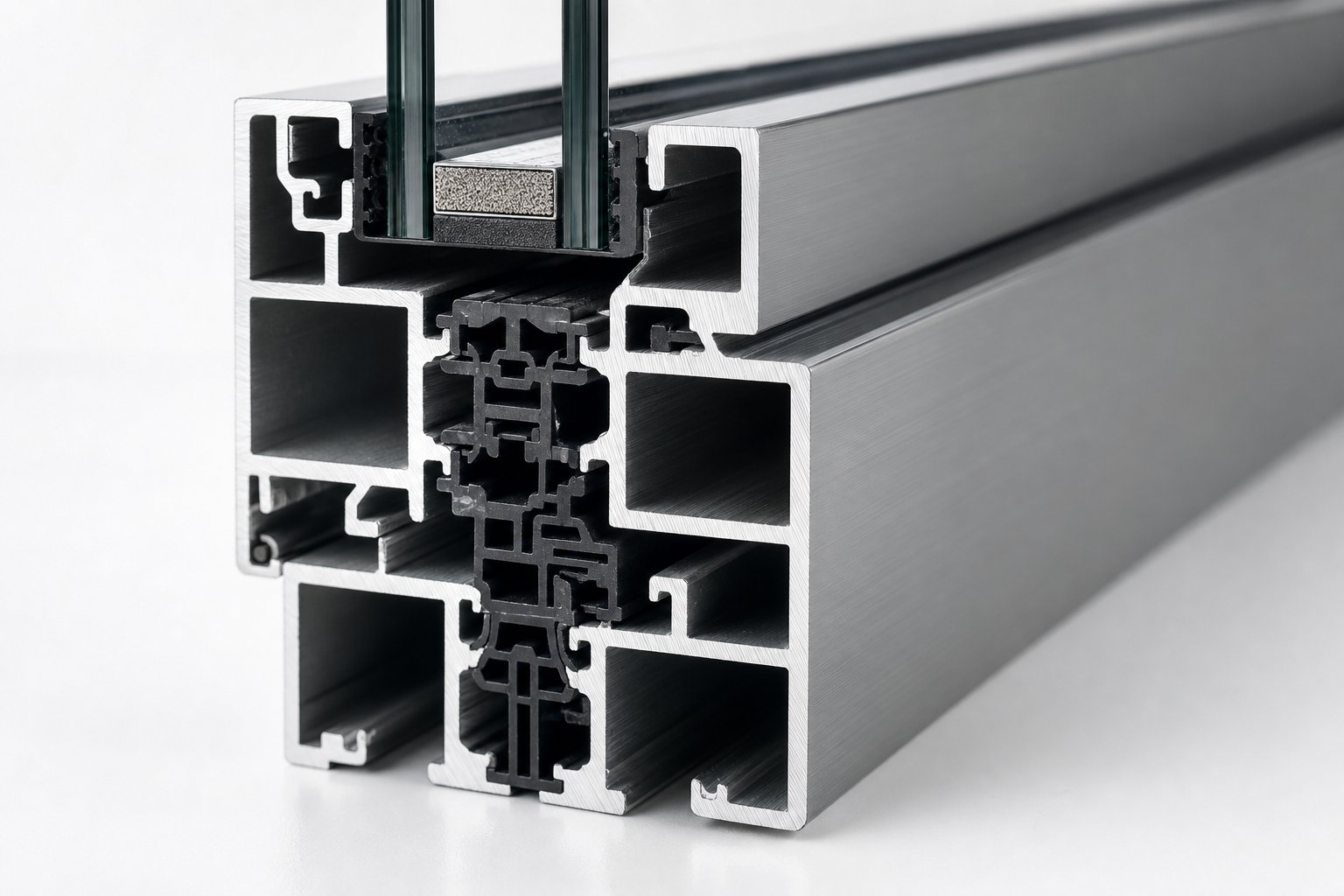
Two aluminium windows can look identical in a brochure yet perform decades apart in real life. The difference hides inside the profile — in wall thickness, joint construction, seal compounds, and hardware grade. Most suppliers will not volunteer this information unless you ask the right questions. Here is how to assess quality independently, whether you are standing in a showroom or reviewing a cross-section sample from an aluminium window maker.
Profile Construction and Corner Joints
The aluminium window profiles themselves reveal the most about build quality. Ask to see a cross-section cut. Premium extrusions use architectural-grade aluminium alloy (typically 6063-T5 or 6060-T6) with a minimum wall thickness of 1.6mm for structural members. Economy-grade profiles often drop to 1.2mm or thinner — enough to pass basic compliance but prone to flex under wind load or repeated operation over time. Thicker walls mean greater rigidity, better screw-holding capacity for hardware, and longer service life.
Inside the aluminium profile for windows, look for multiple internal chambers. These chambers add structural strength without increasing weight and provide space for drainage slots that channel condensation and rainwater safely to the exterior. A quality profile will have clearly defined drainage pathways — blocked or absent drainage is a red flag for long-term water damage.
Corner joints tell you how the frame will hold up over decades. The two main methods are mechanical fastening (crimped, screwed, or pressed corners) and welded construction. Mechanically fastened joints are the industry standard — fast to produce and cost-effective. However, welded corners offer superior strength, eliminate visible mitre lines, and remove exposed raw aluminium edges that can oxidise in coastal environments. For projects near the coast or where aesthetics demand seamless lines, welded construction is worth the premium. If your supplier uses mechanical joints, confirm that mitre cuts receive a protective sealant to guard against corrosion creep — particularly important within salt-spray zones.
Glazing, Seals, and Hardware Indicators
Glazing beads — the strips that hold glass within the frame — should clip firmly into place with no visible gaps. Internally beaded designs (where the bead sits on the room side) offer a security advantage because the glass cannot be removed from outside. Check that the thermal break width is at least 20mm; premium systems run 24mm to 35mm, which directly affects the window’s U-value and condensation resistance.
Seals deserve close inspection. High-quality systems use EPDM rubber gaskets that maintain elasticity across temperature extremes. Cheap foam or PVC seals harden and crack within a few years, leading to drafts and water ingress. Run your finger along the seal — it should feel supple, sit continuously around the frame, and compress evenly when the sash closes.
Hardware is where many manufacturers of aluminum windows cut costs invisibly. Use this checklist when evaluating any system:
- Confirm multi-point locking — at minimum three locking points on casement windows, engaging at the top, middle, and bottom of the frame.
- Check hinge load ratings against the sash weight. Quality hinges are rated for the actual glazed sash mass plus a safety margin, typically 60kg to 130kg depending on window size.
- Operate the handle repeatedly. It should feel solid, with no lateral play, and lock positively into each position.
- Look for stainless steel or marine-grade hardware components — especially critical in coastal Australian environments where standard zinc-plated fittings corrode within years.
- Ask whether restricted opening stays are available for upper-storey windows, a safety requirement under Australian building codes for fall prevention.
A window that passes all five points is built for performance, not just appearance. These details separate a product that lasts 40 to 60 years from one that starts failing within a decade — and they are entirely assessable before you commit to a purchase order.
Knowing what to look for physically is half the equation. The other half is understanding the performance numbers stamped on specification sheets — U-values, STC ratings, air infiltration classes — and what they actually mean for comfort and energy bills inside your home.
Understanding Performance Ratings and Thermal Breaks
Specification sheets for aluminium windows profile systems are packed with numbers — U-values, STC ratings, air infiltration classes, water resistance grades. These figures determine how your home actually feels to live in, yet most suppliers present them without context. A U-value of 1.5 means nothing if you do not know whether that is measured at the centre of the glass or across the whole window. Here is what each rating genuinely tells you.
U-Values and Thermal Break Technology Explained
A U-value measures how much heat passes through a window, expressed in watts per square metre per Kelvin (W/m²K). The lower the number, the better the insulation. Simple enough — but the critical detail is which U-value you are reading. The Ug value measures only the centre of the glass pane. The Uw value measures the entire window including frame and glass together. Because frames insulate less effectively than glazing, the Uw figure is always higher (worse) than the Ug figure for the same product.
Always compare whole-window U-values (Uw) rather than centre-of-glass values (Ug). Glazing accounts for the majority of the window area, but the frame’s thermal weakness pulls the overall number up. A supplier quoting only Ug values may be presenting a misleadingly optimistic picture of real-world performance.
So how do modern aluminum window systems overcome aluminium’s natural conductivity? Through thermal break technology. A thermal break is a strip of reinforced polyamide (PA66 with glass fibre) inserted between the interior and exterior aluminium faces of the profile. This strip has a thermal conductivity of just 0.30 W/(m·K) compared to aluminium’s 160 W/(m·K) — effectively creating an insulating barrier that stops heat from conducting straight through the frame.
Width matters. Entry-level thermal breaks run around 14mm to 20mm. Premium aluminum window profiles used by top custom window brands for passive house standards push that to 34mm or wider, combined with multi-chamber profile designs featuring five to seven internal air cavities. The result is frame U-values as low as 0.8 to 1.2 W/m²K — competitive with timber and uPVC. Paired with double or triple glazing using low-E coatings and argon gas fills, the whole-window Uw can reach 1.2 to 1.4 W/m²K for double-glazed units and below 0.8 W/m²K for triple-glazed passive house configurations.
Acoustic Ratings and Air Infiltration Standards
Thermal performance is only one dimension. Sound Transmission Class (STC) ratings measure how effectively a window blocks airborne noise. An STC of 26 to 28 is typical for standard double glazing — enough to take the edge off suburban traffic. Step up to acoustic-laminated glass in a thermally broken aluminium frame and you reach STC 35 to 40, which noticeably reduces road noise, aircraft flyovers, and neighbourhood disturbance. For homes near highways or flight paths, this difference is the gap between tolerable and comfortable.
Air infiltration rates quantify how much air leaks through a closed window under pressure. Tighter seals mean fewer draughts, less dust ingress, and better energy efficiency. Under AS 2047, Australian windows are tested and classified for air infiltration — lower leakage rates directly correlate with improved comfort and reduced heating and cooling loads.
Water penetration resistance and wind load ratings round out the picture. Water resistance is tested by applying increasing pressure to the exterior face while spraying water — higher-rated windows withstand coastal driving rain without leaking. Wind load ratings confirm the frame and glazing can handle the structural forces of storms and sustained gusts without deflecting beyond safe limits, which is particularly relevant for exposed sites and upper storeys.
| Performance Metric | What It Measures | Good Range | Premium Range | Practical Meaning |
|---|---|---|---|---|
| Whole-Window U-Value (Uw) | Total heat transfer through frame + glass | 1.4 – 1.8 W/m²K | 0.8 – 1.2 W/m²K | Lower values mean less heat escaping in winter and less heat entering in summer — directly reducing energy bills |
| STC Rating | Airborne sound reduction | 28 – 32 | 35 – 42 | Higher ratings block more external noise — critical near busy roads or flight paths |
| Air Infiltration | Air leakage through closed window | ≤ 2.0 L/(s·m²) | ≤ 0.5 L/(s·m²) | Tighter seals mean fewer draughts, less dust, and lower heating/cooling costs |
| Water Penetration Resistance | Pressure at which water enters | 300 Pa | 500 – 700 Pa | Higher ratings suit coastal and exposed sites where driving rain is common |
| Wind Load Rating | Structural resistance to wind pressure | N3 (residential standard) | N4 – N5 (high exposure) | Higher grades handle cyclonic regions and upper-storey installations safely |
These numbers are not abstract engineering metrics — they translate directly into whether your home stays quiet during a storm, whether condensation forms on frames in winter, and how much your energy bills climb each quarter. The challenge is that performance varies dramatically depending on where in Australia you are building. A window perfectly specified for Melbourne’s temperate climate may underperform in Darwin’s tropical humidity or fall short of cyclone compliance in coastal Queensland — which is exactly why climate-specific selection matters.
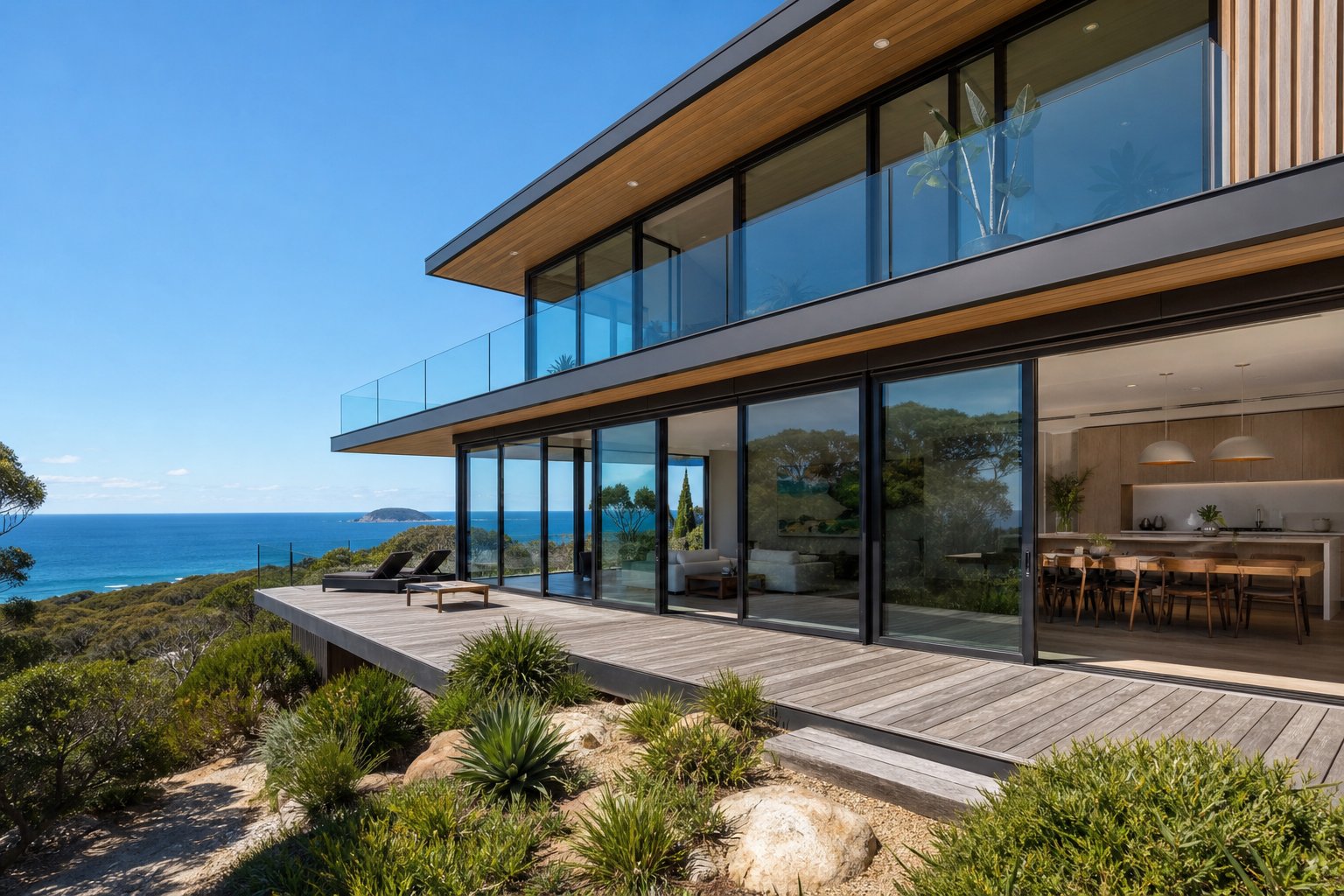
Selecting Durable Aluminium Windows by Climate Zone
Australia spans climate zones from tropical Darwin to alpine Tasmania, and a window that performs brilliantly in one region can fail spectacularly in another. The National Construction Code (NCC) divides the country into eight climate zones, each with different energy efficiency thresholds assessed through NatHERS and WERS ratings. These codes set the floor — the minimum acceptable performance. They do not tell you what is optimal for comfort, longevity, or long-term cost. That distinction is where climate-specific specification becomes critical.
Both residential and commercial projects face different compliance pathways under the NCC. Residential builds (Class 1 and 2) must meet energy efficiency provisions under Section J (formerly Volume Two, Part 3.12.0), while commercial projects follow a separate verification method. Regardless of the pathway, the principle holds: selecting modern aluminium windows matched to your specific climate zone delivers performance that generic off-the-shelf products cannot.
Coastal and Tropical Climate Considerations
Salt spray is relentless. Standard powder-coated aluminium frames can show visible corrosion within two to three years if installed within 500 metres of the ocean without marine-grade protection. For coastal builds along the NSW coast, Queensland shoreline, or Western Australia’s Indian Ocean frontage, the specification checklist changes substantially.
- Coating: Marine-grade powder coating at 80 to 120 microns minimum (standard inland coating runs 40 to 60 microns). AAMA 2604 or 2605 rated finishes resist salt degradation far longer than standard polyester coatings.
- Hardware: Grade 316 stainless steel for all hinges, handles, locks, rollers, and fasteners. Standard zinc-plated or Grade 304 stainless corrodes within a few years in salt-laden air.
- Seals: EPDM or silicone rubber compounds that resist salt degradation and maintain elasticity in high humidity.
- Glazing: Low-E coatings with a low Solar Heat Gain Coefficient (SHGC) — typically 0.25 to 0.40 — to manage intense solar radiation while maintaining views. Every aluminum window with glass facing the ocean also needs to handle wind-driven rain at higher pressure ratings (500 Pa or above).
- Alloy: 6063-T5 aluminium alloy offers strong corrosion resistance as standard; some manufacturers add anodising beneath the powder coat for a dual-layer defence.
Tropical regions like Far North Queensland and the Northern Territory add cyclone compliance to the equation. Windows must meet higher wind load ratings (N4 to N5 under AS 2047) and often require impact-resistant glazing. High quality aluminum windows specified for these zones combine thicker profiles (1.6mm to 2.0mm wall thickness), reinforced corner joints, and heavy-duty fixings at closer centres — typically every 400mm rather than the standard 600mm spacing.
Cold Climate and Energy Code Requirements
In cooler zones — think Melbourne, Canberra, Hobart, and the alpine regions — the priority shifts from corrosion resistance to thermal insulation and condensation control. The NCC requires progressively lower U-values as you move into colder climate zones, and WERS star ratings reward windows that minimise heat loss.
- Thermal break width: A minimum of 24mm is advisable for zones 6 to 8; premium systems use 34mm or wider polyamide breaks to achieve frame U-values below 2.0 W/m²K.
- Glazing: Double glazing with argon gas fill and low-E coatings is the baseline. Triple glazing becomes worthwhile for passive house targets or south-facing elevations with high heat loss exposure.
- Condensation resistance: Wider thermal breaks and warm-edge spacers prevent interior frame surfaces from dropping below dew point — the main cause of mould and moisture damage around window reveals in cold climates.
- SHGC balance: Unlike hot climates where you want to block solar gain, cooler regions benefit from moderate SHGC values (0.40 to 0.60) on north-facing windows to capture free winter warmth.
Many residential aluminum window manufacturers focus their product development on temperate markets, which means their standard offerings may not include the wider thermal breaks or triple-glazing compatibility that cold-climate builds demand. It pays to confirm that the system you are quoting is genuinely engineered for your climate zone rather than a warm-climate product with a thermal break retrofitted as an afterthought.
Bushfire-prone areas introduce yet another layer. Under AS 3959, properties assigned a Bushfire Attack Level (BAL) of 12.5 or above must use windows and doors that resist ember attack, radiant heat, and in extreme cases, direct flame contact. Aluminium frames are inherently well-suited to bushfire zones — the material will not ignite, melt at lower temperatures like uPVC, or char like timber. At BAL-29 and above, requirements escalate to include toughened or heat-strengthened glazing, ember-guard mesh screens, and precision-engineered seals that prevent burning debris from entering the building envelope. Durable aluminium windows rated to BAL-40 are available from Australian manufacturers, covering the vast majority of bushfire-prone residential sites without requiring specialist flame-zone engineering.
Building codes set the minimum. Exceeding those minimums — specifying a wider thermal break than required, choosing marine-grade hardware even at 3km from the coast, or opting for BAL-29 compliance in a BAL-12.5 zone — costs marginally more upfront but delivers measurably better comfort, lower maintenance, and stronger resale value over the life of the building. Even some aluminum window manufacturers usa-based have adopted this “exceed the code” philosophy in their product engineering, recognising that minimum compliance and optimal performance are rarely the same thing.
Climate dictates the specification, but it does not dictate the style. Whether your project calls for a coastal holiday home with expansive sliding panels or a heritage renovation in a cold-climate suburb, the security features built into the frame and hardware determine how well those windows protect what is inside — a dimension most buyers overlook entirely.
Security Features and Ratings That Matter
Most buyers spend hours comparing U-values and colour swatches, then barely glance at the locking mechanism before signing off. Security is the overlooked dimension of aluminium windows doors — and it is the one you will care about most at 2am when something goes bump outside. Aluminium’s material properties give it a natural advantage here, but only when paired with the right hardware and glazing. Here is what to look for and why it matters.
Locking Mechanisms and Forced-Entry Resistance
A single-point lock — the kind that secures a window at one central location — offers minimal resistance to a determined intruder. One firm lever or pry bar and the sash flexes enough to disengage. Multi-point locking systems change the equation entirely. With a single handle turn, they engage three to five locking points simultaneously around the frame perimeter, distributing force so that prying at one location does not compromise the others.
Aluminium’s rigidity is the critical factor here. Vinyl and timber frames can flex, bow, or compress under localised force, allowing a pry bar to create enough gap to defeat a lock. Aluminium resists this distortion. The material’s stiffness means the frame holds its shape under attack, keeping locking points engaged even when significant force is applied. This inherent structural advantage makes aluminum windows and doors substantially harder to breach than equivalent openings in softer frame materials.
Forced-entry resistance is tested and certified through standards that simulate real-world break-in scenarios. The ASTM F3038-21 standard evaluates how long a complete window system — frame, glazing, and hardware together — withstands forced entry using common hand tools, accounting for variables like the number of aggressors and attack sophistication. In Australia, AS 5039 covers security screens and barriers, while the broader AS 2047 compliance framework addresses structural performance under load. Products must be tested as complete assemblies, not individual components, because a strong frame with weak hardware (or vice versa) fails as a system.
When evaluating any aluminum window and door product for security, look for these features:
- Multi-point espagnolette locks — a central handle drives locking bolts into the top, bottom, and sides of the frame simultaneously, creating compression at every point.
- Key-locking handles — prevent the window from being opened even if an intruder breaks a small hole in the glass to reach the handle.
- Hinge-side security bolts — fixed pins or mushroom-headed cams that engage the frame on the hinge side, preventing the sash from being lifted off even if hinges are attacked.
- Restricted opening stays for upper floors — limit the opening to 125mm or less to meet Australian fall-prevention requirements under the NCC, while still allowing ventilation.
- Stainless steel strike plates — reinforced receiving points that resist deformation when force is applied to the locking bolts.
Glass Options for Impact and Intrusion Protection
The strongest frame in the world means little if the glass shatters on first impact. Two types of safety glass dominate the security conversation: toughened and laminated. They behave very differently under attack.
Toughened glass (also called tempered glass) is heat-treated to be four to five times stronger than standard annealed glass. It resists impact well, and when it does break, it fractures into small, relatively harmless granules rather than dangerous shards. Under BS EN 12600, toughened glass typically achieves a Class 1 impact rating — the highest classification, tested with a 50kg pendulum dropped from 1,200mm. However, once toughened glass breaks, it disintegrates completely, leaving an open hole. For security purposes, this is a significant weakness.
Laminated glass solves that problem. Two or more panes are bonded with a polyvinyl butyral (PVB) or ionoplast interlayer — typically 0.38mm to 1.52mm thick depending on the security grade. When struck, the glass cracks but the interlayer holds the fragments together, maintaining a physical barrier even after multiple impacts. An intruder would need to punch through repeatedly to create an opening large enough to reach through or climb through, buying critical time.
For aluminum doors and windows in storm-prone regions — northern Queensland, the NT coastline, and exposed sites anywhere along Australia’s eastern seaboard — impact-rated glazing serves double duty. It resists both deliberate intrusion and wind-borne debris during cyclone events. Products tested to AS 1170.2 wind loading requirements and certified for cyclone regions combine laminated glass with reinforced aluminium frames to handle both security and weather extremes in a single system.
The practical takeaway: toughened glass is the minimum for safety compliance in most residential applications under AS 1288. Laminated glass — particularly with a 0.76mm or thicker PVB interlayer — is the upgrade that delivers genuine intrusion resistance. Combining laminated glass with multi-point locking in a rigid aluminium frame creates a security package that rivals dedicated security screens, without the visual bulk or restricted views.
Security hardware and glazing protect against external threats. But the long-term value of your windows also depends on something less dramatic — how the exterior finish weathers over decades, and what the true cost of ownership looks like when you factor in maintenance, recoating, and eventual replacement.
Colour Finishes and Long-Term Cost of Aluminium Window Frames
A finish is not just cosmetic. It is the first line of defence between the aluminium substrate and decades of UV radiation, salt air, rain, and temperature cycling. Choose well and your aluminium window frames look sharp with almost zero intervention for 30 years or more. Choose poorly — or accept whatever the cheapest quote includes — and you are looking at fading, chalking, or corrosion patches within a decade. The gap between a good finish and a great one is surprisingly affordable upfront, yet it compounds dramatically over the life of the building.
Powder Coating vs Anodizing Durability
Powder coating dominates the Australian market. A dry polyester powder is electrostatically applied to the aluminium extrusion and cured in an oven, forming a tough, uniform skin. Standard polyester coatings run 40 to 60 microns thick and suit inland residential applications. Premium coatings — fluoropolymer (PVDF) or super-durable polyester rated to AAMA 2604 or 2605 standards — deliver 30-plus years of fade and chalk resistance, making them essential for coastal or high-UV environments. Colour options are virtually unlimited across the RAL spectrum, including matte, satin, gloss, and textured finishes. Dual-colour configurations — a different shade on the interior face versus the exterior — let you match internal decor without compromising street-facing aesthetics.
Anodising takes a fundamentally different approach. Rather than applying a coating on top of the metal, an electrochemical process grows a hard oxide layer into the aluminium surface. The result is a finish that cannot chip or peel because it is part of the metal itself. Anodised aluminium excels in scratch resistance, salt-spray durability, and UV stability — it simply does not fade. The trade-off is a limited colour palette: silvers, champagnes, bronzes, and blacks with a distinctive metallic lustre. For architects and homeowners who want that raw, industrial-modern look, anodising delivers an authenticity that powder coating cannot replicate. Many high end window brands specify anodised finishes for commercial facades and premium residential projects precisely because of this permanence.
A third option — sublimation film transfer — imprints realistic timber-grain patterns onto powder-coated aluminium. The process bonds the grain, colour, and texture permanently to the surface, producing alum windows that look like natural oak, walnut, or mahogany without any of timber’s maintenance demands. This technique is gaining traction in heritage renovation zones where council requirements call for a timber appearance but the homeowner wants aluminium’s longevity. Some Australian fabricators are also experimenting with powder-to-powder methods that produce a more tactile wood-grain texture, though sublimation remains the most widely available option in aluminium windows fabrication.
| Finish Type | Durability | Colour Range | Coastal Suitability | Maintenance Needs | Relative Cost |
|---|---|---|---|---|---|
| Standard Powder Coat (polyester, 40-60μm) | 15-20 years before visible fade | Unlimited RAL colours | Moderate — not ideal within 500m of ocean | Annual wash; touch-up chips as needed | $ |
| Premium Powder Coat (PVDF / super-durable, 60-120μm) | 30+ years | Unlimited RAL colours | Excellent — rated for marine exposure | Annual wash only | $$ |
| Anodised (natural or coloured) | Indefinite with maintenance | Limited — metallic tones only | Excellent — inherent salt resistance | Periodic clean; no recoating needed | $$$ |
| Wood-Grain Sublimation | 15-25 years (dependent on base coat quality) | Timber replicas — oak, walnut, mahogany, etc. | Moderate to good (depends on base coat grade) | Annual wash; avoid abrasive cleaners | $$ |
| Dual-Colour Powder Coat | Same as base powder type selected | Any two RAL colours (interior/exterior) | Depends on exterior coating grade | Same as single-colour equivalent | $$ (additional processing cost) |
Maintenance, Lifespan, and Total Cost of Ownership
Regardless of finish, aluminium frames demand remarkably little upkeep. The routine is straightforward: wash frames with mild soapy water two to four times per year (more frequently within coastal salt zones), lubricate hinges and locking mechanisms with a light silicone spray once or twice annually, and inspect rubber seals every five years for signs of hardening or compression set. Seal replacement — typically needed around the 15 to 20 year mark — is inexpensive and straightforward for any qualified installer.
Frame lifespan sits between 40 and 60 years for quality thermally broken systems. That figure is not theoretical — aluminium does not rot, warp, or become brittle with age. The frame itself outlasts virtually every other component in the window assembly. Hardware may need replacement at 20 to 25 years, seals at 15 to 20, and glazing units (if sealed double-glazed units develop fogging) at 20 to 30 years. Each of these is a serviceable component, not a reason to replace the entire window.
This is where total cost of ownership reshapes the value equation. A quality aluminium window might cost $900 to $1,800 AUD supply and install — 30 to 50 per cent more than a comparable uPVC unit. Over 30 years, however, the aluminium window requires no frame replacement, no repainting, and minimal repair. Lifetime cost analysis consistently shows that aluminium’s annual cost of ownership runs lower than vinyl or timber once you factor in the replacement cycle those materials demand. A vinyl window replaced at year 22 to 25 — with inflation-adjusted costs — can double the total expenditure compared to an aluminium frame that simply keeps performing.
For high end window brands and budget options alike, the maths follows the same pattern: higher upfront investment in aluminium delivers lower lifetime cost through longevity and near-zero maintenance. The finish you select determines how gracefully the frame ages in between — and whether your 20-year-old windows still look like they were installed last year.
Finish and longevity define the financial picture. But the practical picture — which window type suits your rooms, your architecture, and your lifestyle — depends on configuration. Casement, awning, sliding, bi-fold, louvre, and fixed-lite options each solve different problems, and the right choice varies by room, orientation, and building style.
Aluminium Window Types for Every Building Application
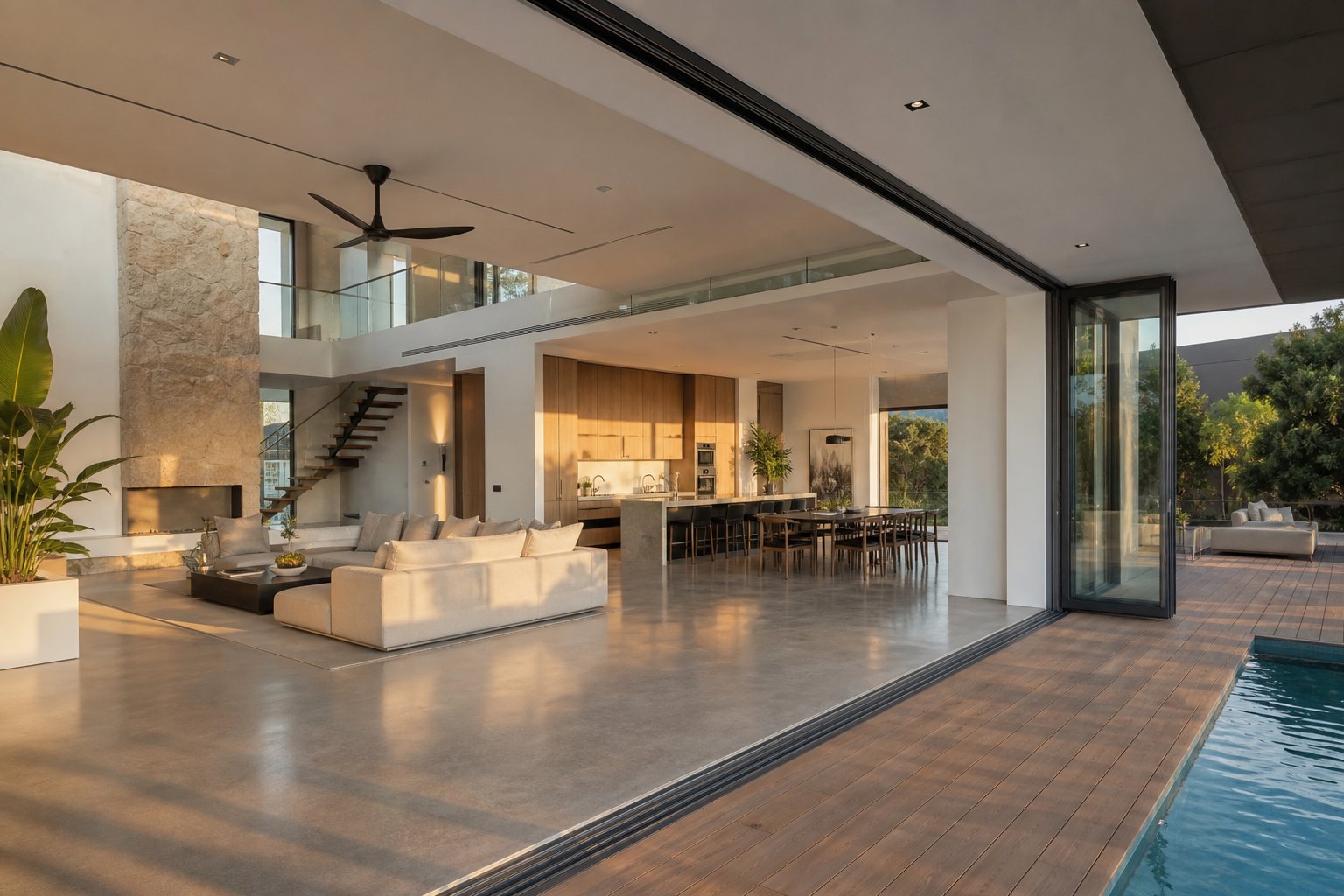
A window’s configuration shapes how a room breathes, how light enters, and how the building connects to its surroundings. Aluminium’s structural strength unlocks configurations that softer frame materials simply cannot achieve — wider spans, slimmer mullions, and taller openings without mid-rail interruptions. Choosing the right type for each opening is as important as choosing the right material in the first place.
Window Styles for Residential and Heritage Projects
Residential builds rarely need just one window type. A well-designed home typically combines several configurations, each matched to the room’s function and orientation. Here is how the main styles align with common residential scenarios:
- Casement windows — hinged at the side and opening outward, these deliver maximum ventilation because the entire sash swings clear. Ideal for bedrooms, living areas, and any room where you want to capture cross-breezes. Their tight seal when closed also makes them one of the better performers for air infiltration resistance.
- Awning windows — top-hinged and opening outward from the bottom, creating a canopy effect that allows ventilation even during rain. Perfect above kitchen benchtops, in bathrooms, or stacked beneath fixed-lite panels to add airflow without sacrificing wall space.
- Fixed-lite windows — non-operable panels designed purely for light and views. Aluminium’s slim profiles mean more glass and less frame, making fixed windows the go-to for stairwells, feature walls, and any elevation where uninterrupted sightlines matter most.
- Double-hung windows — two vertically sliding sashes that suit traditional Australian home styles including Federation, Californian bungalow, and Queenslander renovations. Aluminium double-hung profiles can replicate heritage proportions while delivering modern thermal and acoustic performance — a practical solution where council heritage overlays restrict visible changes to the facade.
- Louvre windows — multiple horizontal glass blades that pivot simultaneously, offering precise airflow control and a clean, linear aesthetic. Common in Queensland and tropical builds where constant ventilation is essential, and increasingly popular in contemporary southern designs as a design accent.
Heritage renovations present a particular challenge. Councils often require window replacements to match original proportions and sightline widths. Aluminium windows specialists working in this space can fabricate custom profiles that replicate period detailing — colonial bars, arched heads, and narrow meeting rails — while embedding thermally broken cores and modern hardware behind the traditional appearance. For projects with unusual shapes or non-standard geometry, seeking out the best custom shaped window manufacturers for unique architecture ensures the design intent is preserved without compromising performance.
Commercial and Large-Opening Configurations
Commercial aluminium windows operate at a different scale. Curtain wall systems, shopfront glazing, and multi-storey facade assemblies demand profiles engineered for structural loads, acoustic separation between tenancies, and fire-rating compliance — none of which standard residential frames address. But the crossover between residential and commercial is growing, particularly in high-end homes that borrow commercial-scale glazing for dramatic effect.
Two configurations dominate the indoor-outdoor living conversation in Australian residential design:
- Bi-fold aluminium windows and doors — multiple panels fold accordion-style to one or both sides, creating a wide, unobstructed opening. Aluminium’s strength supports panels up to 1,000mm wide and 2,700mm tall without sagging, and the slide and fold mechanism operates smoothly on stainless steel rollers even at these dimensions. Open corners — where two bi-fold runs meet at a 90-degree junction without a fixed post — eliminate the last structural barrier between inside and out.
- Sliding and lift-and-slide doors — for openings where swing clearance is limited, large-format sliding panels glide along tracks to stack behind fixed panes. Lift-and-slide systems raise the panel off its seals before sliding, reducing friction and allowing single panels to reach 3 metres wide and 100kg or more. These alu windows and doors suit entertaining zones, pool areas, and any space where you want the opening to disappear without panels projecting into the room or onto a deck.
The common thread across all these configurations is that aluminium enables larger glass areas with minimal frame interruption. A typical aluminium casement sightline runs 45mm to 65mm — roughly half the width of an equivalent uPVC frame. That difference compounds across a wall of windows: less frame means more daylight, better views, and a cleaner architectural expression.
For readers exploring specific window type availability across residential and commercial applications, MEICHEN’s aluminium window range offers a practical example of a supplier providing comprehensive style options — from casement and awning through to bi-fold and custom configurations — with project-ready integration for Australian builds. Their catalog demonstrates how a single aluminum windows contractor can cover the full spectrum of residential, heritage, and commercial requirements under one system, simplifying coordination for builders and architects managing complex projects.
Selecting the right window type is a design decision. But selecting the right supplier to fabricate and deliver that type — with consistent quality, realistic lead times, and warranty terms that actually protect you — is a procurement decision that carries equal weight. The two require different evaluation criteria entirely.
Finding a Trusted Aluminium Window Supplier
A beautifully specified window means nothing if the company behind it cannot deliver consistent quality, honour its warranty, or support you when something goes wrong five years down the track. The supplier you choose on day one determines what you are managing for the next three decades — and most buyers learn this the hard way, after installation, when the leverage has shifted entirely.
The aluminium window industry includes three distinct types of business, and understanding which you are dealing with changes the questions you need to ask. A system house designs and engineers the aluminium profile system — the extrusion shapes, thermal break integration, and hardware platform. A fabricator purchases those profiles under licence and assembles finished windows to order. An installer fits the finished product into your building. Some companies span all three roles; others specialise in one. The risk emerges when a fabricator assembles a well-known system but lacks the precision, equipment, or quality control to do it justice — you get the brand name on paper without the performance in practice. A full supply chain manufacturer that controls design, fabrication, and delivery under one roof eliminates the gaps where quality slips between separate businesses.
What to Look for in an Aluminium Window Supplier
Evaluating aluminium window suppliers systematically — rather than defaulting to whoever quotes cheapest — protects your investment from hidden costs that surface only after installation. Among the top 10 window manufacturers and smaller specialist fabricators alike, the same evaluation criteria separate reliable partners from risky ones. Work through this checklist before committing to any aluminium window manufacturers on your shortlist:
- Manufacturing certifications — confirm ISO 9001 quality management as a baseline. For Australian projects, verify that products are tested and certified to AS 2047 (windows and external glazed doors) and AS 1288 (glazing). These are non-negotiable for compliance sign-off.
- Thermal testing documentation — request independent U-value test certificates from an accredited laboratory, not just product brochure claims. A supplier confident in their thermal performance will have this ready without hesitation.
- Warranty coverage breakdown — insist on separate warranty terms for the frame, hardware, seals, finish, and glazing units. Each component has a different expected lifespan and failure mode. A single blanket warranty that does not distinguish between them is vague by design.
- Lead times and production capacity — ask for realistic delivery timeframes based on current order volume, not best-case scenarios. Confirm whether custom sizes or non-standard configurations add lead time and by how much.
- Custom capability — verify that the supplier can produce non-standard dimensions, arched heads, corner configurations, and specialist glazing without outsourcing to third parties who sit outside their quality control system.
- Installation support — determine whether the supplier provides installation guidance documentation, approved installer networks, or direct installation services. A product installed incorrectly will underperform regardless of its factory quality.
- Project portfolio and references — request completed project examples comparable in scale and complexity to yours. Follow up with the builder or architect on those projects and ask specifically how the supplier handled problems, not just how the product looked on delivery day.
Among the best window manufacturers, transparency at the inquiry stage is a reliable predictor of behaviour post-purchase. A supplier that deflects technical questions, cannot produce test certificates, or offers only vague assurances about quality is telling you something important about how they will respond when a warranty claim lands on their desk.
Warranty Terms and After-Sales Support
Warranty comparison is where most buyers get caught out. The headline number — “10-year warranty” — means little without understanding what it actually covers and what voids it. Quality aluminium windows manufacturers structure their warranties with clear, separate durations for each component:
| Component | Minimum Acceptable | Good | Excellent |
|---|---|---|---|
| Frame / Profile | 5 years | 7–10 years | 10+ years |
| Powder Coat Finish (standard) | 10 years | 12–15 years | 15+ years |
| Powder Coat Finish (marine-grade) | 15 years | 15–20 years | 20+ years |
| Hardware | 5 years | 7–10 years | 10+ years |
| Sealed Glazing Units | 5 years | 7–10 years | 10+ years |
| Installation Workmanship | 1 year | 2 years | 3+ years |
Any supplier offering less than the minimum acceptable figures for any component warrants serious scrutiny — or removal from your shortlist entirely.
Warranty red flags to watch for:
- Coastal exclusions buried in fine print — a standard finish warranty that silently excludes salt-spray damage is effectively worthless for any property within 5 to 10 kilometres of the ocean. If your build is coastal, demand explicit marine-grade coverage in writing.
- Short hardware coverage — hardware is the component most likely to fail first. A supplier offering 10 years on the frame but only 12 months on hinges and locks is protecting themselves at your expense.
- Conditions that void coverage — some warranties require annual paid inspections, use of approved installers only, or specific cleaning products. These conditions are not inherently unreasonable, but they must be disclosed before you sign, not discovered when you lodge a claim.
- No named entity on the warranty document — if the warranty does not clearly identify the company backing it (with ABN, address, and contact details), enforcement becomes nearly impossible if the business changes hands or closes.
- Non-transferable terms — most warranties apply only to the original purchaser. If you plan to sell the property within the warranty period, a transferable warranty adds genuine resale value.
Beyond warranty terms, after-sales support infrastructure matters. Can you source replacement hardware, seals, or glazing beads from the same supplier in 10 or 15 years? Top window manufacturers who have maintained consistent product lines for a decade or more are far more likely to stock compatible parts than those who regularly discontinue and replace their ranges. Ask the question directly — a confident answer backed by documented parts availability is a strong signal of long-term reliability.
For Australian homeowners, builders, and project teams ready to move from research to procurement, MEICHEN’s aluminium window range demonstrates the qualities this evaluation framework describes — custom options across residential and commercial configurations, project-ready integration, and a clear path from specification to delivery. Their offering is worth exploring as a practical reference point when comparing aluminum window suppliers against the criteria above, particularly for builds requiring tailored solutions rather than off-the-shelf products.
The supplier decision is ultimately a long-term partnership decision. Price matters — but it belongs at the end of the evaluation sequence, not the beginning. A supplier that passes the quality, documentation, and service evaluation at a slightly higher price point will almost always deliver a lower total cost of ownership than a cheaper alternative that fails on any of these fundamentals.
Frequently Asked Questions About Aluminium Windows
1. What makes aluminium windows better than uPVC or timber frames?
Aluminium offers a superior strength-to-weight ratio, allowing frames as narrow as 45mm to support floor-to-ceiling glazing. Unlike uPVC, which becomes structurally limited beyond 1.5-metre spans, aluminium handles openings over 3 metres with ease. Compared to timber, aluminium requires virtually no maintenance — no repainting every three to five years, no rot or termite inspections. Modern thermally broken aluminium also matches uPVC and timber for thermal performance, while being 100% infinitely recyclable. The trade-off is a higher upfront cost, but total cost of ownership over 30 years is typically lower due to the 40 to 60-year frame lifespan and minimal upkeep. Suppliers like MEICHEN offer thermally broken aluminium systems across residential and commercial configurations that demonstrate this balance of performance and longevity.
2. How do I tell if an aluminium window is high quality?
Start by requesting a cross-section sample of the profile. Quality extrusions use 6063-T5 or 6060-T6 aluminium alloy with a minimum wall thickness of 1.6mm for structural members. Look for multiple internal chambers, clearly defined drainage pathways, and a thermal break width of at least 20mm (premium systems use 24mm to 35mm). Corner joints should be either welded for maximum strength or mechanically fastened with sealed mitre cuts. For hardware, confirm multi-point locking with at least three engagement points, hinges rated for the actual sash weight plus a safety margin, and stainless steel components for coastal environments. Seals should be EPDM rubber that feels supple and compresses evenly when the sash closes.
3. Are aluminium windows suitable for coastal areas in Australia?
Yes, but only with the correct specification. Standard powder-coated aluminium can show visible corrosion within two to three years if installed within 500 metres of the ocean without marine-grade protection. Coastal builds require marine-grade powder coating at 80 to 120 microns (rated to AAMA 2604 or 2605), Grade 316 stainless steel hardware, EPDM seals resistant to salt degradation, and water penetration ratings of 500 Pa or above. Some manufacturers add anodising beneath the powder coat for dual-layer corrosion defence. When specified correctly, aluminium is actually the strongest frame choice for coastal environments due to its inherent rigidity and resistance to warping — outperforming timber and uPVC in salt-spray conditions.
4. What U-value should I look for in aluminium windows?
For Australian residential builds, a whole-window U-value (Uw) between 1.4 and 1.8 W/m²K is considered good for double-glazed thermally broken aluminium. Premium systems achieve 0.8 to 1.2 W/m²K, approaching passive house standards. Always compare Uw values rather than centre-of-glass (Ug) figures, as the frame’s thermal performance pulls the overall number higher. The thermal break width directly affects this — entry-level breaks run 14mm to 20mm, while premium profiles use 34mm or wider polyamide strips. For colder climate zones (Melbourne, Canberra, Hobart), aim for a minimum 24mm thermal break and consider triple glazing for south-facing elevations to meet NCC energy efficiency requirements comfortably.
5. How long do aluminium windows last and what maintenance do they need?
Quality thermally broken aluminium window frames last 40 to 60 years — significantly longer than vinyl (20 to 30 years) and comparable to well-maintained timber. The aluminium frame itself does not rot, warp, or become brittle with age. Routine maintenance is minimal: wash frames with mild soapy water two to four times per year, lubricate hinges and locks with silicone spray once or twice annually, and inspect seals every five years. Seals typically need replacement around the 15 to 20-year mark, and hardware may need attention at 20 to 25 years — both are serviceable components that do not require full window replacement. This low maintenance profile means aluminium’s annual cost of ownership often runs lower than vinyl or timber over a 30-year period, despite the higher upfront investment.
More Window & Door Guides