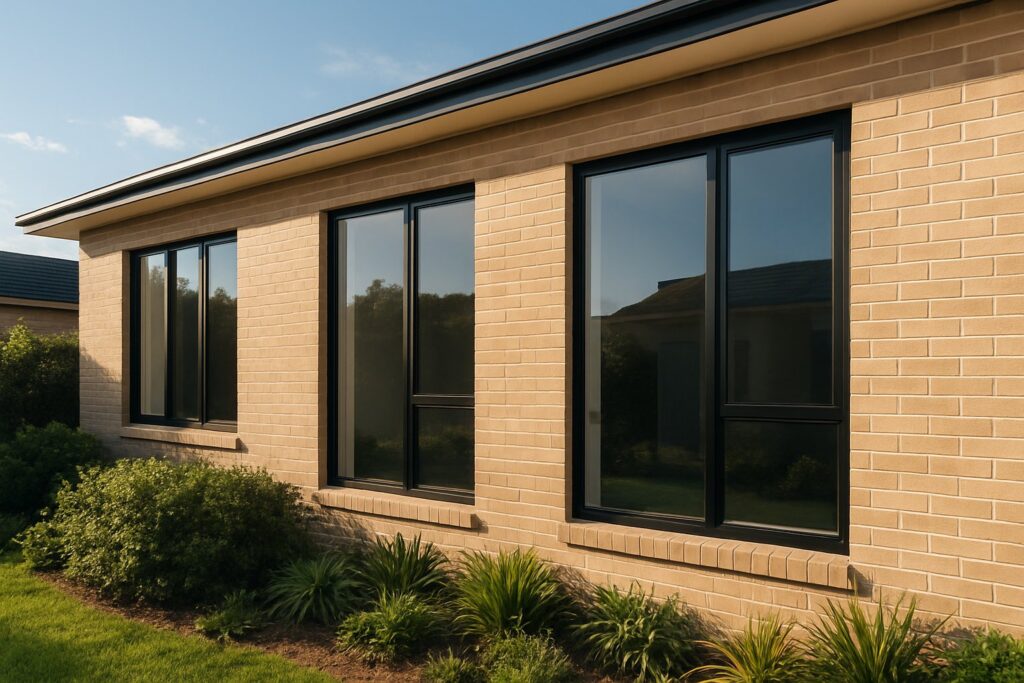
Why Melbourne Homeowners Are Choosing Aluminium Windows
If you wake up to fogged glass every winter morning, hear every truck on the street through your bedroom wall, or watch your gas bill climb year after year, your windows are likely the weakest link in your home’s envelope. These are not minor annoyances. Drafts, traffic noise, condensation pooling on sills, and heat pouring out through single-glazed frames all point to the same underlying problem: windows that no longer perform.
For thousands of Melbourne homeowners facing exactly this situation, aluminium framing has become the go-to solution, and it is not hard to see why.
Common Pain Points That Drive Window Upgrades
Melbourne’s climate is uniquely demanding. Winter mornings regularly drop below 5°C while summer afternoons push past 35°C, and that wide temperature swing punishes older window systems. Single-glazed aluminium frames from the 1980s and 90s conduct heat rapidly in both directions, creating cold interior surfaces where moisture condenses overnight. Add road noise from increasingly busy suburban streets, and many homeowners reach a tipping point where patching and weatherstripping simply stops making sense.
The decision to replace rather than repair often comes down to stacking costs: higher heating bills, mould remediation, repainting water-damaged sills, and the sheer discomfort of living with windows that fight against you rather than working for you.
Why Aluminium Dominates Melbourne Window Projects
Aluminium accounts for the majority of residential window installations across Australia. The material’s strength-to-weight ratio allows manufacturers to produce slim frame profiles that maximise glass area, letting more natural light into a room without sacrificing structural integrity. That same strength supports large-span openings, bifold configurations, and floor-to-ceiling glazing that lighter materials struggle to handle.
Australia’s aluminium window and door market reached 5.5 million units in 2024 and is projected to grow to 6.4 million units by 2035, reflecting steady demand driven by both new construction and replacement projects.
Beyond performance, aluminium offers genuine design versatility: virtually unlimited powder coat colours, compatibility with double glazed windows melbourne conditions demand, and full recyclability at end of life. Modern thermally broken profiles have also eliminated the old reputation for poor insulation, a point we will unpack in detail later.
This guide is not a sales pitch for any single brand or supplier. It is a neutral walkthrough of everything you need to know before committing to a quote, from frame materials and glazing technology to installation credentials and Melbourne-specific climate factors. The goal is simple: help you ask better questions so you end up with the best aluminium windows Melbourne can offer for your specific project, budget, and location.
Aluminium vs Timber vs uPVC for Melbourne Homes
Choosing a frame material is the first real decision in any window project, and it shapes everything that follows: your thermal performance, maintenance routine, colour options, and long-term cost. The three materials you will encounter most often across the window Australia market are aluminium, timber, and uPVC. Each has genuine strengths, and the right pick depends on your home, your location, and what you are trying to achieve.
Aluminium Frames and Their Modern Advantages
A persistent myth still circulates: aluminium conducts heat, so it must be a poor insulator. That was a fair criticism twenty years ago. It no longer holds. Modern thermally broken aluminium profiles incorporate a polyamide strip between the inner and outer frame sections, interrupting the conductive path that once made older aluminium frames feel cold to the touch in winter. Paired with quality double glazing windows Melbourne conditions demand, a thermally broken aluminium frame delivers insulation performance that rivals or exceeds standard timber in many configurations.
Beyond thermal upgrades, aluminium’s core advantages remain compelling. Its strength-to-weight ratio allows slimmer sightlines, meaning more glass and more light for the same opening size. It resists warping, swelling, and rot regardless of humidity or rain exposure. Powder coating provides a factory-applied finish in virtually any colour, and that finish holds up under Melbourne’s intense UV without flaking or fading for decades. At end of life, aluminium is fully recyclable without loss of quality, giving it strong environmental credentials.
How Timber and uPVC Compare in Melbourne Conditions
Timber brings natural warmth and a traditional aesthetic that suits period homes. It offers reasonable insulation in its own right because wood is a poor conductor. The trade-off is maintenance. Timber frames need repainting or restaining every few years to prevent moisture damage, and Melbourne’s wet winters accelerate that cycle. Left unattended, timber sills rot, sashes warp, and gaps open up around meeting rails.
For homes within a Heritage Overlay, timber may still be the expected material on street-facing elevations. Councils assess visual character rather than material alone, but matching original proportions and detailing is easier when the frame material aligns with the original construction.
uPVC sits at the other end of the spectrum. Multi-chamber profiles give it strong thermal performance, and it requires almost no maintenance beyond occasional cleaning. However, uPVC frames tend to be bulkier than aluminium, limiting design flexibility for large openings. Colour options are narrower, UV stability can be a concern in Australia’s harsh conditions, and the material lacks the structural strength needed for wide-span bifold or stacking configurations. It works well for standard-sized openings where thermal performance is the priority and budget is tight.
Which Material Suits Your Project
The honest answer when comparing aluminium vs timber windows Melbourne homeowners face: no single material wins on every criterion. The table below lays out how each performs across the factors that matter most in local conditions.
| Criteria | Aluminium (Thermally Broken) | Timber | uPVC |
|---|---|---|---|
| Thermal Performance | Good to excellent with thermal break and double glazing | Good (natural insulator) | Very good (multi-chamber profiles) |
| Maintenance | Minimal — occasional cleaning | High — repaint every 3-5 years | Minimal — occasional cleaning |
| Lifespan | 40-60+ years | 30-60 years (with maintenance) | 25-40 years |
| Cost (Supply and Install) | Mid to high | High | Low to mid |
| Design Flexibility | Excellent — slim profiles, large spans | Moderate — limited by structural weight | Limited — bulkier profiles |
| Colour Range | Virtually unlimited (powder coat) | Any paint colour (requires recoating) | Limited standard colours; foil wraps available |
| Coastal Suitability | Excellent — corrosion-resistant with marine-grade coating | Poor to moderate — salt accelerates decay | Good — non-corrosive |
| Environmental Credentials | Fully recyclable, high embodied energy offset by longevity | Renewable resource, but maintenance chemicals add impact | Recyclable in theory, limited recycling infrastructure in Australia |
If your project involves large openings, coastal exposure, or a contemporary design language, aluminium is hard to beat. If you are restoring a Victorian terrace on a heritage-listed streetscape, timber or a timber-look profile may be necessary to satisfy council. And if budget is the primary constraint on a standard-sized replacement job, uPVC delivers solid thermal value for less outlay.
Material choice also affects what comes next: the style of window you can specify, the glazing combinations available, and how the frame handles Melbourne’s specific climate pressures. Those factors narrow the field further.
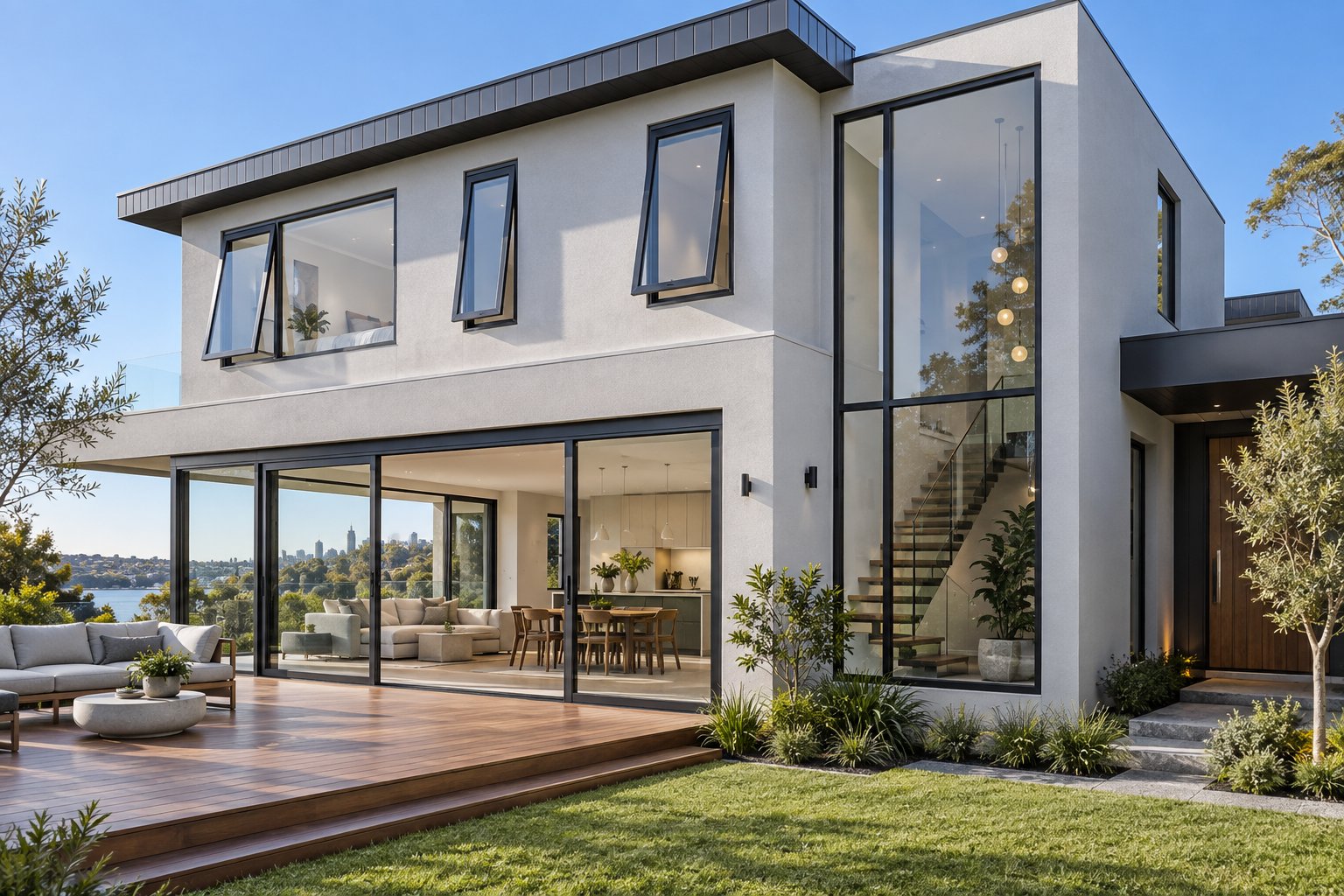
Aluminium Window Styles and Where They Work Best
Frame material determines what is structurally possible. Style determines how a window actually lives in your home: how it opens, how air moves through a room, how much wall space it occupies, and whether it suits the architectural character of your street. Aluminium’s slim profiles and high strength mean it supports a wider range of operating styles than any other framing material, from compact awning sashes to full-width bifold panels spanning several metres.
Here is a breakdown of the main styles available as custom windows Melbourne suppliers offer, along with where each one works best.
- Casement windows — Hinged on one side and swinging outward, casement windows open fully to catch breezes at an angle. They seal tightly when closed, making them one of the best performers for weather resistance. Ideal for bedrooms, living rooms, and any elevation exposed to prevailing winds where you want controlled ventilation without rain entry.
- Awning windows — Hinged at the top and opening outward from the bottom. The sash acts as a small canopy, shedding rain while still allowing airflow. Perfect above kitchen benches, in bathrooms, or stacked above fixed-lite panels where you need ventilation without sacrificing privacy or weather protection.
- Sliding windows — Panels glide horizontally along a track, requiring zero clearance space inside or outside the wall. A practical choice for rooms facing walkways, decks, or narrow side passages. Large-format aluminium sliding systems also pair naturally with double glazed sliding doors Melbourne homeowners use to connect living areas to outdoor entertaining zones.
- Bifold windows — Multiple hinged panels fold and stack to one side, creating an almost fully open aperture. Commonly used as servery windows between kitchens and outdoor areas, or as wide openings in pool houses and alfresco spaces. Aluminium’s rigidity keeps panels aligned over time, even in wide configurations.
- Double hung windows — Two sashes slide vertically within the frame, allowing airflow from both top and bottom simultaneously. Warm air escapes through the upper opening while cooler air enters below, creating natural convection. A classic profile that suits period homes and works well in bedrooms and hallways where outward-opening sashes would obstruct paths.
- Louvre windows — Horizontal glass blades rotate open in unison, offering precise airflow control from fully closed to wide open. Excellent for wet areas, laundries, and tropical-influenced designs. They provide ventilation even during light rain when angled correctly.
- Fixed windows — Non-operable panels designed purely for light and views. Used wherever ventilation is handled by adjacent operable windows, such as large feature glazing in stairwells, above doors, or as highlight panels in double-height living spaces. Fixed panels also allow the largest uninterrupted glass areas because there is no operating hardware to limit size.
Sliding and Bifold Windows for Open-Plan Living
Melbourne’s renovation culture leans heavily toward open-plan rear extensions that blur the line between indoor and outdoor living. Sliding and bifold windows are the workhorses of this design approach. A three- or four-panel aluminium sliding system can span openings of 3 to 6 metres while keeping frame profiles slim enough that the glass dominates the view. Bifold configurations push that further, folding away almost entirely to leave a near-unobstructed opening between a kitchen and an outdoor deck.
The key difference is clearance. Sliding panels stay within the plane of the wall, making them better suited to tight sites or where furniture sits close to the opening. Bifold panels need stacking room to one side but reward you with a wider clear opening when fully retracted. Both styles benefit from aluminium’s dimensional stability: the frames resist sagging and binding over years of daily use, even in Melbourne’s temperature extremes.
Casement and Awning Styles for Ventilation Control
Where sliding and bifold windows prioritise openness, aluminium casement windows Melbourne homes rely on deliver something different: precise control over airflow direction and volume. A casement sash swung open at 30 degrees scoops passing breezes into a room far more effectively than a sliding panel opened the same distance. Awning windows add the ability to ventilate during rain, which matters in a city that averages around 150 rain days per year.
Combining both styles on a single elevation is a common strategy. A large fixed panel provides the view, flanked by operable casement or awning sashes that handle ventilation duties. This approach maximises glass area while keeping hardware costs focused only where opening function is actually needed.
Matching Window Styles to Melbourne Architectural Periods
Style choice is not purely functional. In suburbs like Fitzroy, Carlton, Hawthorn, and Kew, the architectural period of your home influences which window profiles look appropriate and, in some cases, which profiles your council will approve.
Victorian terraces typically featured tall, narrow double hung windows with vertical proportions and decorative mouldings. Modern aluminium double hung profiles can replicate these proportions with slimmer frames, and colonial bar inserts or applied glazing bars recreate the multi-pane look without the maintenance burden of timber sashes.
Edwardian and Federation homes often combined casement windows with fanlights or highlight panels above. The proportions are slightly wider than Victorian examples, and leadlight detailing was common. Aluminium casement windows with decorative glass inserts or applied leading can honour this character while delivering modern sealing and thermal performance.
Art Deco and Interwar homes introduced bolder geometry: curved corners, strong horizontal lines, and porthole features. Steel-framed windows were typical of the era, and aluminium’s slim sightlines actually replicate that original steel aesthetic more closely than timber or uPVC can.
Mid-century modern homes from the 1950s and 60s embraced large glass areas, flat rooflines, and minimal framing. Sliding windows and floor-to-ceiling fixed panels are natural fits here, and aluminium’s clean lines align perfectly with the design intent of the period.
If your property sits within a Heritage Overlay, any external window changes will likely require a planning permit from your local council. The assessment focuses on visual impact from the public realm, so rear and side elevations often have more flexibility than street-facing facades. Discussing your plans with council early, before locking in a quote, can save significant time and cost if modifications are required.
With style and material settled, the next question becomes performance: how well does the frame actually insulate, and what role does the glass itself play in keeping your home comfortable year-round?
Understanding Thermal Breaks and Double Glazing Performance
You will see the phrase “thermally broken aluminium” on almost every window supplier’s website. Rarely does anyone explain what it actually means, why it matters, or how it interacts with the glass sitting inside the frame. That gap between marketing language and practical understanding costs homeowners money, because without knowing what a thermal break does, you cannot tell whether a quote is offering genuine performance or just ticking a buzzword box.
What Thermal Break Technology Actually Means
Aluminium is a superb conductor of heat. That property makes it ideal for cookware but problematic for window frames, where you want to stop heat moving between inside and outside. In an older, non-thermally broken frame, the aluminium profile runs continuously from the exterior face to the interior face. Heat travels straight through it. In winter, the inside surface of the frame drops close to the outdoor temperature, creating a cold strip around every window that chills the air nearby and attracts condensation. In summer, the reverse happens: the frame absorbs radiant heat from the sun and radiates it into your living space.
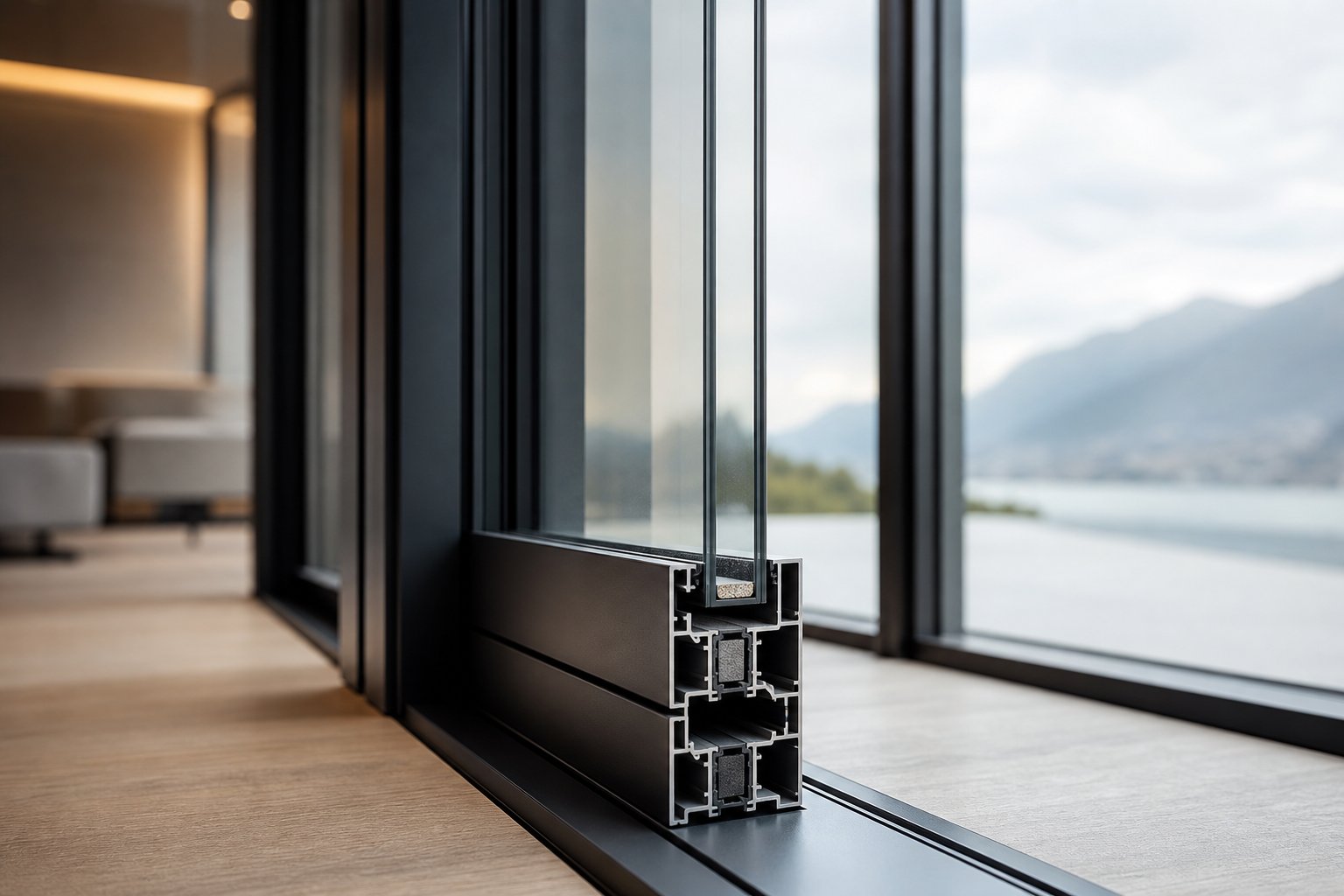
A thermal break solves this by physically splitting the frame into two separate aluminium sections, one facing outside and one facing inside, connected by a strip of polyamide (a glass-fibre reinforced nylon). This polyamide barrier is roughly 500 to 1,000 times less conductive than aluminium, so heat transfer through the frame drops dramatically.
A thermal break is simply an insulating bridge between the outside and inside halves of your window frame. It stops heat from short-cutting through the metal, so the interior surface stays closer to room temperature regardless of what is happening outside.
The width of that polyamide strip matters. Entry-level thermally broken aluminium windows Melbourne suppliers offer might use a 14 to 18 mm break, while premium systems push to 24 mm or beyond. A wider break creates a longer path for heat to travel and a larger insulation zone within the profile. For Melbourne’s climate, where morning temperatures can sit near 3°C and afternoon peaks exceed 38°C on the same day in shoulder seasons, that insulation zone is doing serious work in both directions.
How Double Glazing and Frame Design Work Together
A thermally broken frame addresses heat transfer through the metal. Double glazing addresses heat transfer through the glass, which makes up the majority of any window’s surface area. Together, they form a complete thermal envelope around each opening.
Double glazing Melbourne homes benefit from consists of two panes of glass separated by a sealed cavity, typically 12 to 16 mm wide. That cavity is filled with argon gas rather than plain air. Argon is denser and less conductive than air, so it slows heat movement between the inner and outer panes more effectively. The two glass panes are held apart by a spacer bar around the perimeter. Modern “warm edge” spacers use composite materials instead of aluminium to prevent a thermal bridge at the glass edge, the same principle as the frame’s thermal break applied at a smaller scale.
Layered on top of this structure, a Low-E (low emissivity) coating is applied to one of the glass surfaces. This microscopically thin metallic layer reflects infrared radiation, the wavelength that carries heat, while still allowing visible light through. In winter, it bounces radiant heat back into the room. In summer, it reflects solar heat away from the interior. The coating is invisible to the eye but measurable in energy performance: a double glazed unit with Low-E glass and argon fill can reduce heat loss through the glazing by around 50 to 70 percent compared to a single clear pane.
The critical point is that these technologies are not interchangeable. A thermally broken frame with single glazing still loses heat through the glass. Double glazing in a non-thermally broken frame still conducts heat around the perimeter. You need both working together to get the full performance benefit, and any quote that offers one without the other deserves a follow-up question about why.
Retrofit Options for Existing Aluminium Frames
Not every project requires ripping out existing windows entirely. If your aluminium frames are structurally sound, not corroded, and still close tightly, retrofit double glazing Melbourne specialists offer can be a practical middle path. The process involves removing the existing single pane and installing a sealed insulated glass unit (IGU) into the original frame, using modified glazing beads and new seals.
Retrofit works best when the existing frame has enough depth to accommodate the thicker IGU, typically 20 to 24 mm for a standard double glazed unit. It delivers a genuine improvement in glass performance: less radiant chill in winter, reduced solar heat gain in summer, and better acoustic insulation from street noise.
The honest limitation is the frame itself. Retrofitting does not change the frame material, so if your existing aluminium profiles lack a thermal break, heat will still conduct through the metal around the perimeter of the glass. You gain the benefit of the upgraded glazing but miss the frame insulation that a full thermally broken replacement provides. Condensation can still form on the cold frame edges even when the glass centre stays warm and dry.
For homes where the frames are in good condition and budget is a constraint, retrofit is a worthwhile step forward. For homes with older non-thermal frames showing corrosion, poor sealing, or operational issues, full replacement with a modern thermally broken system typically delivers a more complete and longer-lasting result. The condition of your existing frames, rather than any blanket rule, should guide that decision.
Performance specifications only tell part of the story, though. How a window actually behaves depends heavily on where it sits: which direction it faces, how close to the coast, and whether local planning rules limit what you can install.
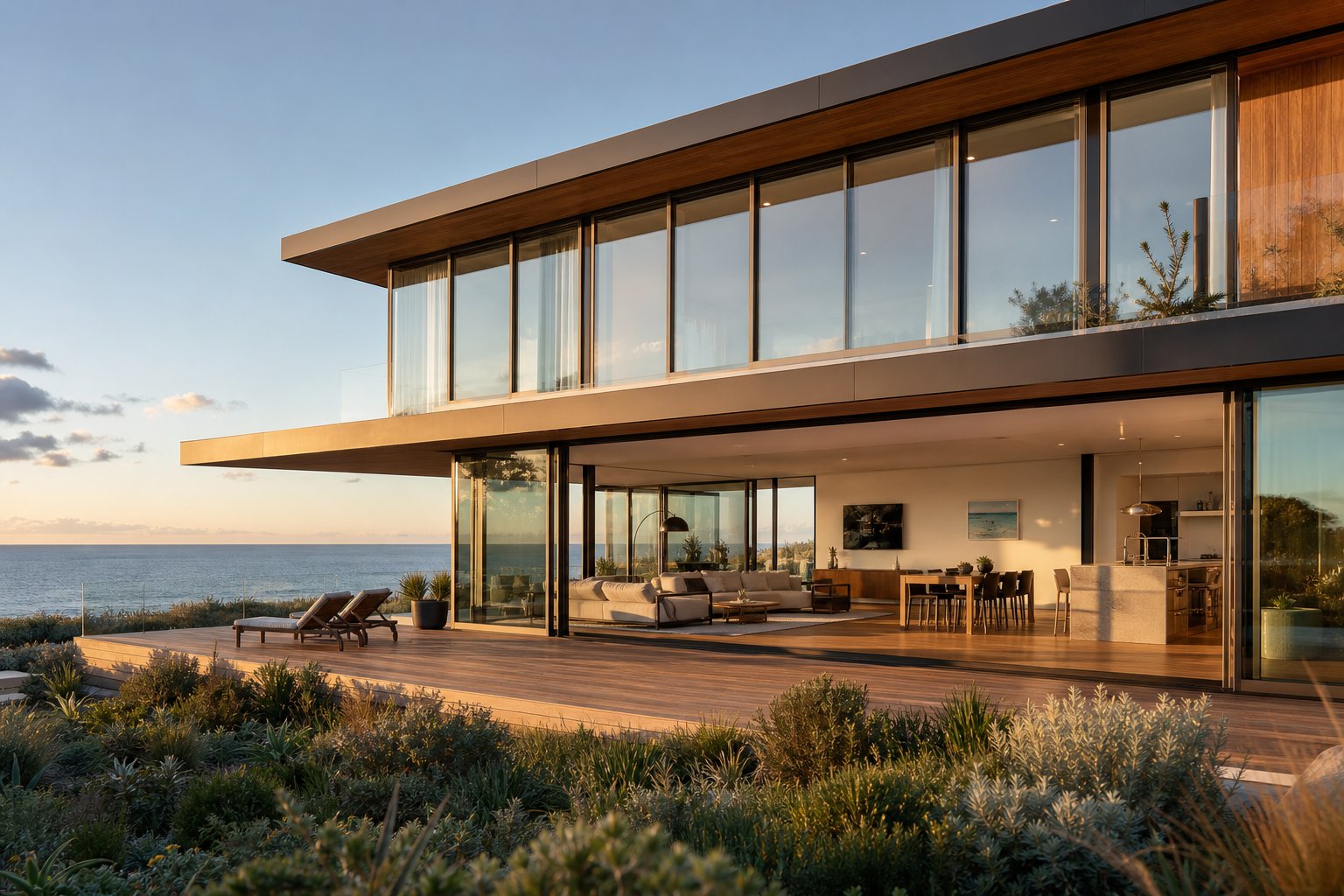
Melbourne Climate and Location Factors That Affect Your Choice
A window that performs brilliantly in one Melbourne suburb can underperform or fail prematurely in another. The difference comes down to site-specific conditions: salt exposure, bushfire risk, UV intensity, heritage restrictions, and the climate zone your property sits within. These factors rarely appear in standard quotes, yet they directly influence which aluminium windows and doors Melbourne homeowners should be specifying.
Coastal, Inland, and Bushfire Zone Requirements
Melbourne’s metropolitan area falls predominantly within NCC Climate Zone 6 (mild temperate), with some outer and elevated areas touching Zone 7. This classification drives the minimum thermal performance your windows need to achieve under the National Construction Code, and it affects how energy assessors model your home for NatHERS ratings.
Location within the metro area matters just as much as the zone itself. Bayside suburbs like Brighton, Williamstown, Frankston, and Sandringham sit within direct salt spray zones. Untreated or poorly coated aluminium frames in these areas can show visible corrosion in under 18 months. Marine-grade powder coating and 316 stainless steel hardware become necessities rather than upgrades. If your home is within 500 metres of open water or a tidal estuary, ask your supplier specifically about salt spray resistance ratings and whether their hardware meets AS 3715 durability requirements.
At the other end of the spectrum, outer fringe suburbs in the Dandenong Ranges, Kinglake, Warrandyte, and the Yarra Valley face Bushfire Attack Level (BAL) ratings that dictate window construction. Homes rated BAL-12.5 through BAL-40 require progressively higher levels of protection: metal mesh screens, tempered glass, and frames that resist ember attack. Aluminium is inherently non-combustible, giving it a natural advantage in bushfire zones, but the glazing type, seals, and installation detailing must all comply with AS 3959.
Powder Coating Colours and UV Durability
Melbourne receives some of the highest UV radiation levels of any major city in the temperate world. That intensity punishes window finishes relentlessly, particularly on north and west-facing elevations that cop direct sun for hours each day.
Powder coated aluminium windows Melbourne suppliers offer come in two broad quality tiers. Standard powder coat finishes suit sheltered or moderately exposed applications and typically carry warranties of 10 to 15 years against fading and chalking. Premium or “super durable” polyester powder coats are formulated for high-UV environments and coastal exposure, with warranties extending to 20 to 25 years. The price difference between standard and premium finishes is modest relative to the total window cost, but the longevity difference is significant.
Colour choice interacts with thermal performance in a way many homeowners overlook. Darker colours, particularly blacks, charcoals, and deep bronzes, absorb substantially more solar radiation than lighter tones. On a 38°C day, a dark frame on a west-facing elevation can reach surface temperatures exceeding 80°C. That heat load stresses seals, accelerates finish degradation, and transfers warmth into the frame profile. For dark-coloured frames on sun-exposed orientations, thermally broken profiles are not just a comfort upgrade but a durability requirement. The thermal break prevents the extreme outer surface temperature from conducting directly to the interior frame section, protecting both the seals and the indoor environment.
Heritage Overlays and Planning Considerations
Inner and middle-ring suburbs including Fitzroy, South Yarra, Malvern, Camberwell, and Williamstown contain extensive Heritage Overlay areas where external changes require a planning permit. Window replacements visible from the street are assessed on their visual impact: frame proportions, sightline widths, glazing bar patterns, and colour. Bespoke double glazed windows that replicate original timber proportions using slim aluminium profiles can satisfy heritage requirements while delivering modern thermal and acoustic performance, but early consultation with your local council’s heritage adviser is essential before committing to a supplier or configuration.
The following list covers the site-specific factors worth raising with any window supplier before they quote your project:
- Your property’s NCC climate zone and any NatHERS modelling requirements for the build or renovation
- Distance from the coast or tidal waterways, and whether marine-grade coatings and hardware are needed
- BAL rating for your site, confirmed via a bushfire assessment or your local council’s planning maps
- Heritage Overlay status and any planning permit requirements for external window changes
- Primary sun exposure on each elevation, particularly north and west faces that drive colour and thermal break decisions
- Powder coat finish grade: standard versus super durable polyester, matched to your exposure conditions
- Colour selection relative to orientation, with darker tones on sun-exposed faces requiring thermally broken frames as a minimum
A supplier who asks about these factors before measuring up is one who understands that the best aluminium windows for your project are shaped by your specific site, not just your floor plan. The next consideration is equally practical: what does the installation process actually look like, and how do you tell a quality installer from one who will cut corners?
The Installation Process and How to Evaluate Installers
A perfectly specified window installed poorly will leak, bind, rattle, and underperform from day one. Yet most quotes focus entirely on the product and gloss over the installation itself. Understanding what window installation Melbourne projects actually involve, and knowing how to separate skilled tradespeople from corner-cutters, protects your investment far more than obsessing over frame profiles alone.
New Build vs Replacement Installation Differences
In new construction, windows arrive on site while the walls are still open. The installer sets each frame into a prepared rough opening, shims it level and plumb, fixes it to the structural framing, and then the builder completes the cladding, flashing, and internal linings around it. The sequence is straightforward because everything is designed to fit together from the start.
Aluminium window replacement Melbourne projects are a different proposition entirely. The existing opening already has defined dimensions, and years of settlement or structural movement may have shifted those dimensions slightly. The old frame needs to come out without damaging surrounding plaster, render, or brickwork. Flashing and waterproofing membranes behind the cladding may need repair or replacement. And the new frame must adapt to the real-world conditions of the opening rather than the idealised geometry of a plan.
Replacement scenarios also split into two approaches. A full-frame replacement removes everything back to the rough opening and installs a complete new system, including new flashings and perimeter sealing. A retrofit or insert installation fits the new window inside the existing frame or opening without disturbing the surrounding wall. Full-frame replacement delivers better long-term performance and allows proper waterproofing, but it costs more and takes longer. Retrofit suits situations where the existing frame is structurally sound and the surrounding finishes are in good condition.
What Happens on Installation Day
The actual installation is the visible part of a longer process. Here is the typical timeline from first contact to final sign-off:
- Initial consultation and site assessment — The supplier visits your home, discusses your requirements, inspects existing windows, checks opening conditions, and identifies any site-specific issues (access constraints, heritage considerations, structural concerns).
- Detailed site measurement — A technician takes precise measurements of every opening, noting any out-of-square conditions, wall thickness variations, and flashing details. These measurements drive the manufacturing order.
- Quote and specification confirmation — You receive a detailed quote covering frame type, glazing specification, hardware, colour, and installation method. Any variations from standard (BAL compliance, marine-grade coating, custom sizes) are itemised.
- Manufacturing — Custom aluminium windows are fabricated to your exact measurements. Lead times vary by supplier and complexity, but expect 4 to 8 weeks for standard orders and up to 12 weeks for complex or high-demand periods.
- Pre-installation preparation — The installer confirms delivery dates, discusses access requirements, and advises you on preparing the work area (moving furniture away from windows, protecting floors, arranging pet and child safety).
- Old window removal — Existing windows are carefully removed, minimising damage to internal linings and external finishes. In replacement projects, this stage often reveals the true condition of concealed flashings and framing.
- Opening preparation and repair — Any damaged framing, deteriorated flashings, or compromised waterproofing membranes are repaired before the new frame goes in. Skipping this step is one of the most common shortcuts poor installers take.
- New window installation — Frames are set into the opening, shimmed to level and plumb, mechanically fixed, and sealed. Glazing units are installed, hardware is fitted and adjusted, and drainage paths are confirmed clear.
- Perimeter sealing and finishing — Internal and external trims are fitted, perimeter gaps are sealed with appropriate sealants, and any disturbed finishes are made good.
- Final inspection and handover — The installer demonstrates operation of each window, checks locking mechanisms, confirms drainage function, and walks you through care and maintenance. Any defects or adjustments are noted and resolved before sign-off.
For a typical whole-house replacement of 10 to 15 windows, expect the on-site installation phase to take 2 to 4 days depending on access, opening condition, and whether full-frame or retrofit methods are used.
Credentials and Certifications That Matter
Finding trusted window installers double glazing Australia homeowners can rely on starts with verifiable credentials rather than glossy marketing. Here is what to check:
Registration as a building practitioner. In Victoria, any builder or tradesperson carrying out work valued over $10,000 must be registered with the Building and Plumbing Commission (BPC). A full-house window replacement will almost certainly exceed that threshold. Ask for the installer’s registration number and verify it through the BPC’s online practitioner search. Unregistered operators working above this value are breaking the law, and you lose access to key consumer protections if something goes wrong.
Domestic building insurance. For work valued over $16,000, the practitioner must hold domestic building insurance and provide you with a certificate of currency before taking a deposit or starting work. This insurance covers you if the builder dies, disappears, or becomes insolvent before completing the job. No certificate, no deposit — that is the rule.
Australian Window Association (AWA) membership. While not a legal requirement, AWA membership signals that a supplier or installer engages with industry standards, training, and best practice. Members commit to a code of conduct and have access to technical resources that improve installation quality.
Familiarity with WERS ratings. The Window Energy Rating Scheme rates windows on a star system for heating and cooling performance. An installer who understands WERS can advise whether a particular window configuration will meet your energy assessment requirements under NatHERS, which matters for both new builds and major renovations requiring a building permit.
Warranty structure. Quality suppliers separate their warranties into distinct categories: frame (typically 10 to 20 years), glass seal integrity (10 years is common), hardware (5 to 10 years), and workmanship on installation (often 5 to 7 years). A single vague “10-year warranty” without specifying what it covers is a red flag. Ask for the warranty document in writing before signing a contract, and confirm whether the warranty is backed by the manufacturer, the installer, or both.
The difference between a smooth installation and a drawn-out headache almost always traces back to these fundamentals: proper credentials, adequate insurance, clear warranties, and an installer who treats the opening preparation with the same care as the window itself. Get these right, and the product has every chance of performing as specified for decades.
Aluminium Window Maintenance Melbourne
Quality installation sets the stage, but what happens over the following decades determines whether your windows deliver their full service life or deteriorate prematurely. The good news: aluminium window maintenance Melbourne homeowners need to perform is remarkably light compared to timber or even uPVC. The bad news: “low maintenance” is not the same as “no maintenance,” and neglecting a few simple tasks can shorten a 50-year asset into a 20-year replacement cycle.
Well-manufactured aluminium windows can deliver 40 to 50 years of reliable service, significantly outlasting timber (15 to 25 years) and uPVC (20 to 30 years). That lifespan assumes a basic maintenance routine is followed. Without it, hardware wears prematurely, gaskets harden and crack, and powder coat finishes degrade faster than they should.
Routine Cleaning and Maintenance Schedule
The single highest-return maintenance activity is regular cleaning. Dust, airborne pollutants, and salt deposits settle into frame crevices and, left in contact with the aluminium surface, accelerate oxidation and pitting. Melbourne’s mix of coastal salt air in bayside suburbs and urban particulates closer to the CBD means frames accumulate grime faster than you might expect.
Cleaning is straightforward: a soft-bristled brush, mild pH-neutral detergent diluted in water, and a microfiber cloth for drying. Avoid abrasive pads, steel wool, solvent-based cleaners, or high-pressure washers, all of which damage powder coat finishes and degrade sealant beads. Vacuum window tracks with a small nozzle attachment to clear grit that causes sliding panels to bind.
The table below outlines a practical schedule scaled to Melbourne conditions:
| Task | Frequency | Difficulty |
|---|---|---|
| Clean glass, frames, and tracks with mild detergent | Monthly | Easy |
| Inspect weep holes and clear any debris | Quarterly | Easy |
| Operate all windows fully; check for stiffness or misalignment | Quarterly | Easy |
| Inspect perimeter sealant for cracks or separation | Quarterly | Easy |
| Lubricate hinges, locks, friction stays, and rollers with silicone spray | Twice yearly (spring and autumn) | Easy |
| Condition rubber gaskets with silicone-based conditioner | Twice yearly | Easy |
| Deep clean frames; assess for oxidation or finish chalking | Annually | Moderate |
| Re-align hardware and adjust friction stays | Annually | Moderate (professional recommended) |
| Reapply perimeter sealant where degraded | Every 3-5 years | Professional required |
| Replace gaskets if hardened or cracked | Every 10-15 years | Professional required |
For homes in coastal suburbs like Brighton, Williamstown, or Frankston, increase frame cleaning to fortnightly during summer when salt deposits accumulate fastest. Hardware in these areas tends toward the lower end of its service life without that extra attention.
Hardware Longevity and When to Service
Frames last decades, but the moving parts inside them have shorter service lives. Hinges typically last 10 to 15 years, friction stays 7 to 12 years, and sliding track rollers 5 to 8 years depending on use frequency and environmental exposure. Locks and handles sit in the 10 to 20 year range.
Signs that hardware needs servicing rather than outright replacement include: a window that no longer holds its open position, a locking mechanism that requires extra force to engage, or a sliding panel that judders rather than gliding smoothly. These symptoms usually respond to cleaning and lubrication with a silicone-based dry lubricant. Silicone spray is preferable to grease or oil-based products because it does not attract dust and grit that form an abrasive paste on contact surfaces.
When lubrication no longer resolves the issue, the component has reached end of life. Friction stays that cannot hold a sash open, rollers with flattened surfaces, or locks that no longer engage fully all warrant replacement. Most quality aluminium window systems use standardised hardware that can be sourced and swapped without replacing the entire frame, keeping long-term ownership costs manageable.
Watch for these specific warning signs of seal degradation:
- Visible gaps or separation at gasket corners, the first point where water typically enters
- Rubber that feels hard and inflexible rather than springy when pressed
- Cracking along the length of the gasket, particularly on sun-exposed faces
- Condensation or fogging between double glazed panes, indicating a failed IGU edge seal
- Perimeter sealant that has pulled away from the frame or wall substrate
Preventing Condensation and Moisture Issues
Condensation on windows is one of the most common complaints Melbourne homeowners raise, and it is often misattributed to faulty windows when the real cause is a combination of indoor humidity and inadequate ventilation. That said, window design plays a direct role in whether moisture becomes a problem or drains away harmlessly.
Double glazed window condensation prevention starts with the frame and glass working together. A thermally broken frame keeps the interior surface closer to room temperature, reducing the likelihood that warm, humid indoor air will reach its dew point on the frame surface. Quality double glazing does the same for the glass area. When both elements perform well, condensation shifts from the window surface to other cold spots in the room, or does not form at all.
The drainage system built into the frame handles any moisture that does form or enter from outside. Weep holes at the sill section channel water out of the frame cavity before it can pool and cause damage. Blocked weep holes are the primary mechanism for frame flooding and internal water damage. A quarterly check with a fine probe or compressed air keeps them clear, and it takes less than a minute per window.
The best brands of double-glazed windows for moisture control integrate several design features: properly sized weep holes with weather-resistant covers, pressure-equalised frame cavities that prevent wind-driven rain from entering, and gasket systems with continuous corner joints rather than butt-joined sections that separate over time. These details rarely appear in marketing material, but they determine whether a window manages Melbourne’s wet winters without issue or develops mould and water staining within a few seasons.
Factors that shorten overall window lifespan include coastal salt exposure without adequate cleaning frequency, dark-coloured frames on sun-hammered elevations without thermally broken profiles, blocked drainage causing internal corrosion, and deferred hardware servicing that leads to forced operation and seal damage. Conversely, a basic maintenance routine, appropriate specification for the site conditions, and timely hardware replacement can push a quality aluminium window system well beyond its nominal 40-year service life.
Maintenance is manageable when you know what to look for and when. The harder question for most homeowners is evaluating the companies quoting the work in the first place: how do you compare suppliers when every quote looks different and pricing varies by thousands of dollars for seemingly similar products?
How to Evaluate Melbourne Window Companies
Every aluminium window company in Melbourne will tell you they offer quality products and great service. The challenge is not finding suppliers — it is distinguishing the ones who will deliver on those claims from the ones who will not. Rather than ranking companies or handing you a list, this section gives you a framework for evaluating any window suppliers Melbourne has to offer, so you can make that judgment yourself based on evidence rather than marketing.
Key Questions to Ask Any Window Supplier
The questions you ask before signing a contract reveal more about a company than their website ever will. A supplier who answers these confidently and in detail is one who understands their product and stands behind it. One who deflects or gives vague responses is telling you something too.
- Do you manufacture locally or import? Locally manufactured windows allow tighter quality control, faster lead times, and easier warranty claims. Imported products can be cost-effective but introduce longer timelines and more complex dispute resolution if something arrives damaged or out of spec.
- What is your full range of window types? A supplier offering casement, awning, sliding, bifold, double hung, louvre, and fixed configurations from a single system gives you design flexibility without mixing incompatible products. Limited range often means limited capability for complex projects.
- Can you customise sizes, configurations, and colours to my project? Standard sizes suit some openings, but most Melbourne renovation and new-build projects require at least some custom dimensions. Ask whether custom work is routine or treated as a special order with extended lead times and surcharges.
- What are your warranty terms — broken down by component? As industry compliance guidance makes clear, you should receive specific warranty periods for the frame, glass seal, hardware, powder coat finish, and installation workmanship. A single blanket figure without component breakdown is insufficient.
- Can you provide AS 2047 test reports and a Window Compliance Certificate? Under Australian Standards, windows must pass deflection, air infiltration, water penetration, and ultimate strength tests. Suppliers must prove compliance, and you have every right to request these documents before purchase.
- Do you have a showroom or display where I can see and operate the products? Physically handling a window tells you more about build quality, hardware smoothness, and finish consistency than any brochure. Suppliers with permanent displays demonstrate confidence in their product.
- Can you show me completed projects similar to mine? A portfolio of finished work, particularly in your suburb or architectural style, confirms the supplier has practical experience with your type of project rather than just theoretical capability.
- What is your current lead time from order to installation? Lead times fluctuate with demand and manufacturing capacity. A transparent answer helps you plan your build schedule realistically.
Suppliers like MEICHEN, for example, tick several of these criteria by offering local manufacturing, a full range of aluminium window types, custom sizing and colour options, and integrated project support from specification through to installation. Using this checklist against any aluminium window companies Melbourne homeowners are considering helps you compare on substance rather than surface impressions.
Understanding What Drives Pricing Differences
Double glazed windows Melbourne price variations can be staggering. Two quotes for the same house might differ by 30 to 50 percent, and neither is necessarily wrong. The gap usually traces back to specification differences that are not immediately obvious on a one-page quote summary.
The primary cost drivers include:
- Window size and quantity — Larger openings require heavier profiles, more glass, and stronger hardware. Custom dimensions cost more than standard modules.
- Glazing specification — A basic clear double glazed unit costs significantly less than a Low-E coated, argon-filled unit with laminated inner pane. Triple glazing adds further cost. The performance difference is substantial, but so is the price.
- Thermal break inclusion — Thermally broken profiles cost 20 to 35 percent more than standard aluminium frames. Some quotes include them as standard; others offer them as an upgrade. If a quote seems unusually cheap, check whether thermal breaks are included at all.
- Hardware grade — Entry-level hardware handles basic operation but wears faster. Commercial-grade hinges, multi-point locks, and stainless steel rollers add cost upfront and subtract it from your long-term maintenance bill.
- Powder coat colour and finish grade — Standard colours from common ranges cost less than custom-matched or premium super-durable finishes. Dark colours on exposed elevations may require upgraded coatings.
- Installation scope — Some quotes cover supply only. Others include full removal, disposal, installation, flashing, sealing, and internal finishing. Comparing a supply-only quote against a fully installed quote is meaningless without adjusting for scope.
The lesson is simple: never compare bottom-line prices without first confirming that both quotes specify the same glazing, the same frame system, the same hardware tier, and the same installation scope. A quote that looks $3,000 cheaper might be missing thermal breaks, using basic hardware, or excluding installation entirely.
Red Flags and Green Flags When Comparing Quotes
Once you have two or three quotes in hand, patterns emerge. Industry research consistently shows that prices for seemingly similar window solutions can differ by 20 to 30 percent or more, with the variation almost always rooted in specification and scope differences rather than pure margin.
Red flags that warrant caution:
- No specific frame system or profile name mentioned — just “aluminium windows”
- Missing thermal performance values (no U-value, no WERS rating reference)
- Glazing described only as “double glazed” without specifying gas fill, coating, or spacer type
- A single warranty figure with no breakdown by component
- No mention of AS 2047 compliance or willingness to provide test reports
- Pressure to sign quickly with “limited time” pricing
- No site visit before quoting — measurements taken from plans alone for replacement projects
- Installation scope unclear or not itemised separately
Green flags that signal a reliable supplier:
- Detailed line-item specification for every window: type, size, glazing makeup, hardware, colour, and thermal break confirmation
- Separate warranty terms for frame, glass, hardware, finish, and workmanship
- Willingness to provide AS 2047 test reports and a Window Compliance Certificate upon completion
- Clear installation scope describing removal, preparation, fitting, sealing, and finishing
- Transparent lead time with realistic delivery estimates
- A physical showroom or display where you can inspect product quality firsthand
- References or a portfolio of completed Melbourne projects
Getting three quotes is a reasonable minimum. It gives you enough data points to spot outliers in both directions — the suspiciously cheap and the unjustifiably expensive — and to identify which suppliers are genuinely specifying to your needs versus padding or cutting corners. Compare like-for-like, ask the hard questions, and let the answers guide your decision rather than the price alone.
Making Your Final Decision With Confidence
Comparing quotes is the last step, not the first. The homeowners who end up happiest with their windows are the ones who arrive at the quoting stage already knowing what they need — because they have worked through the decisions that actually shape the outcome long before price enters the conversation.
Your Decision-Making Checklist
Every factor covered in this aluminium windows buyer guide Melbourne homeowners can use boils down to a handful of confirmed decisions. Before you sign anything, make sure each one is resolved:
- Material confirmed — Aluminium suits your design goals, site exposure, and maintenance expectations. If heritage constraints require timber appearance on street-facing elevations, that is identified and planned for.
- Style matched to application — Each opening has a window type assigned based on ventilation needs, clearance constraints, and architectural character. You know where you need casement, where sliding works better, and where fixed panels maximise light without unnecessary hardware cost.
- Thermal performance specified — Thermally broken frames and appropriate glazing (Low-E, argon fill) are confirmed for your climate zone and orientation. North and west elevations get the attention they deserve.
- Site factors addressed — Coastal exposure, BAL rating, heritage overlay status, and colour-related heat absorption are all accounted for in the specification rather than discovered after installation.
- Installer credentials verified — Registration, insurance, warranty structure, and AS 2047 compliance documentation are confirmed before any deposit changes hands.
- Budget aligned with scope — You are comparing fully specified, like-for-like quotes that include installation, not just supply-only figures that hide thousands in unquoted labour and finishing.
The best aluminium windows Melbourne projects produce are never the cheapest option or the most expensive. They are the ones specified correctly for the site, installed by qualified practitioners, and supported by transparent warranties. That combination delivers decades of performance without regret.
Next Steps to Start Your Window Project
If you have read this far, you already know more than most homeowners do when they request their first quote. Put that knowledge to work with a structured approach:
- Book a site assessment — Have a qualified supplier visit your home to inspect existing openings, discuss your goals, and identify site-specific requirements. A consultation typically takes one to two hours and should be obligation-free.
- Confirm any planning requirements — Check your council’s Heritage Overlay maps and BAL ratings before locking in specifications. A quick call to your local planning department can save weeks of rework later.
- Define your specification — Use the consultation to settle on frame system, glazing makeup, hardware grade, and colour. Get these in writing so every subsequent quote references the same baseline.
- Request detailed quotes from at least three suppliers — Compare line-item specifications, not just totals. Ask the hard questions from the evaluation framework above and note who answers with confidence.
- Verify credentials and documentation — Confirm BPC registration, request insurance certificates, and ask for warranty terms in writing before committing.
- Review, decide, and schedule — Allow realistic lead times (typically 4 to 12 weeks for manufacturing) and plan installation around your household logistics.
For homeowners ready to explore specific window types, custom configurations, and performance options for their Melbourne project, MEICHEN’s aluminium windows page provides a practical starting point to see what is available across sliding, casement, awning, bifold, and fixed systems — along with the customisation and project support that turns a specification into a finished result.
Whether you are replacing tired single-glazed frames in a bayside weatherboard, specifying best double glazed doors for a new rear extension, or fitting double glazed doors Melbourne apartments need for acoustic control, the process is the same: understand your site, define your performance requirements, verify your supplier, and let the specification drive the price rather than the other way around. That is how you get windows that perform for decades rather than a quote that simply looks good on paper.
Frequently Asked Questions About Aluminium Windows in Melbourne
1. Are thermally broken aluminium windows worth the extra cost in Melbourne?
Yes. Melbourne’s wide temperature swings, from near-freezing winter mornings to 38°C summer afternoons, make thermal breaks a practical necessity rather than a luxury. The polyamide strip between the inner and outer frame sections prevents heat from conducting through the metal, keeping interior surfaces closer to room temperature. This reduces condensation in winter, lowers cooling loads in summer, and improves overall comfort. Thermally broken profiles typically add 20 to 35 percent to the frame cost but deliver measurable energy savings and protect seals from thermal stress, extending the window’s service life. For dark-coloured frames on north or west-facing elevations, thermal breaks are essential to manage extreme surface temperatures that can exceed 80°C on hot days.
2. How long do aluminium windows last in Melbourne conditions?
Quality aluminium windows with proper powder coating and routine maintenance can last 40 to 60 years or more, significantly outlasting timber (30 to 60 years with regular repainting) and uPVC (25 to 40 years). The key factors that influence lifespan in Melbourne include proximity to the coast, UV exposure on sun-facing elevations, cleaning frequency, and whether hardware is serviced before it fails. Coastal suburbs like Brighton and Williamstown demand more frequent cleaning and marine-grade coatings to prevent salt-driven corrosion. Inland homes with standard maintenance routines can expect frames to outlast most other building components.
3. What should I look for when comparing aluminium window quotes in Melbourne?
Focus on specification detail rather than bottom-line price. A reliable quote will itemise the frame system by name, confirm whether thermal breaks are included, specify the glazing makeup (glass thickness, Low-E coating, argon gas fill, spacer type), list hardware grade, state the powder coat finish tier, and clearly define installation scope including removal, preparation, fitting, and sealing. Separate warranty terms for frame, glass seal, hardware, finish, and workmanship are a strong indicator of supplier confidence. Suppliers like MEICHEN provide this level of specification transparency alongside local manufacturing and full project support, which simplifies the comparison process.
4. Do I need a planning permit to replace windows in Melbourne heritage overlay areas?
In most cases, yes. Properties within a Heritage Overlay require a planning permit for external window changes visible from the public realm. Your local council’s heritage adviser assesses visual impact based on frame proportions, sightline widths, glazing bar patterns, and colour rather than material alone. Rear and side elevations typically have more flexibility than street-facing facades. Modern slim-profile aluminium frames can replicate original timber proportions and satisfy heritage requirements while delivering contemporary thermal and acoustic performance. Contact your council’s planning department early in the process, before committing to a supplier or configuration, to avoid costly redesigns.
5. Is retrofit double glazing a good option for existing aluminium windows in Melbourne?
Retrofit double glazing works well when your existing aluminium frames are structurally sound, free of corrosion, and still close tightly. The process replaces single panes with sealed insulated glass units, delivering improved thermal insulation, reduced solar heat gain, and better acoustic performance. The limitation is that retrofitting does not add a thermal break to the frame itself, so heat still conducts through the metal perimeter and condensation can form on cold frame edges. For frames in good condition where budget is a constraint, retrofit is a worthwhile improvement. For older frames showing corrosion, poor sealing, or operational issues, full replacement with a modern thermally broken system from a supplier like MEICHEN delivers more complete, longer-lasting results.
More Window & Door Guides