Why Aluminium Windows Pictures Help You Choose the Perfect Design
A spec sheet tells you a frame is 52mm wide. A photo shows you whether that frame disappears into the facade or dominates it. That gap between technical data and lived reality is exactly where most window-buying regrets are born. Homeowners, builders, and architects all benefit from seeing aluminium windows in real settings before locking in decisions that will shape a home for decades.
Why Visual References Matter for Window Selection
Architects often note that windows sit at a crossroads between architecture, experience, and performance. Choosing the wrong type, proportion, or finish can quietly undermine an entire facade. Aluminium images found in catalogues or on white backgrounds rarely capture how light interacts with a frame at different times of day, or how a particular profile reads against brick veneer versus rendered walls. Visual references taken in situ bridge that gap. They show shadow lines, colour shifts under Australian sun, and the real-world glass-to-frame ratio that numbers alone cannot communicate.
Seeing aluminum windows and doors white background images is useful for comparing products side by side, but pairing those with installed examples is what prevents costly renovation mistakes. When you can observe how a slim charcoal frame looks on a double-storey coastal build versus a single-storey weatherboard cottage, your shortlist sharpens fast.
What This Aluminium Window Gallery Covers
Rather than focusing on a single window category, this guide walks through every visual dimension that affects your final result:
- Window types — sliding, casement, awning, bi-fold, and more
- Architectural contexts — modern, traditional, industrial, and colonial homes
- Frame profiles — slim-line versus standard, and how each reads on a facade
- Colours and finishes — powder coat, anodised, and wood-grain options
- Glass pairings — clear, tinted, frosted, and low-E combinations
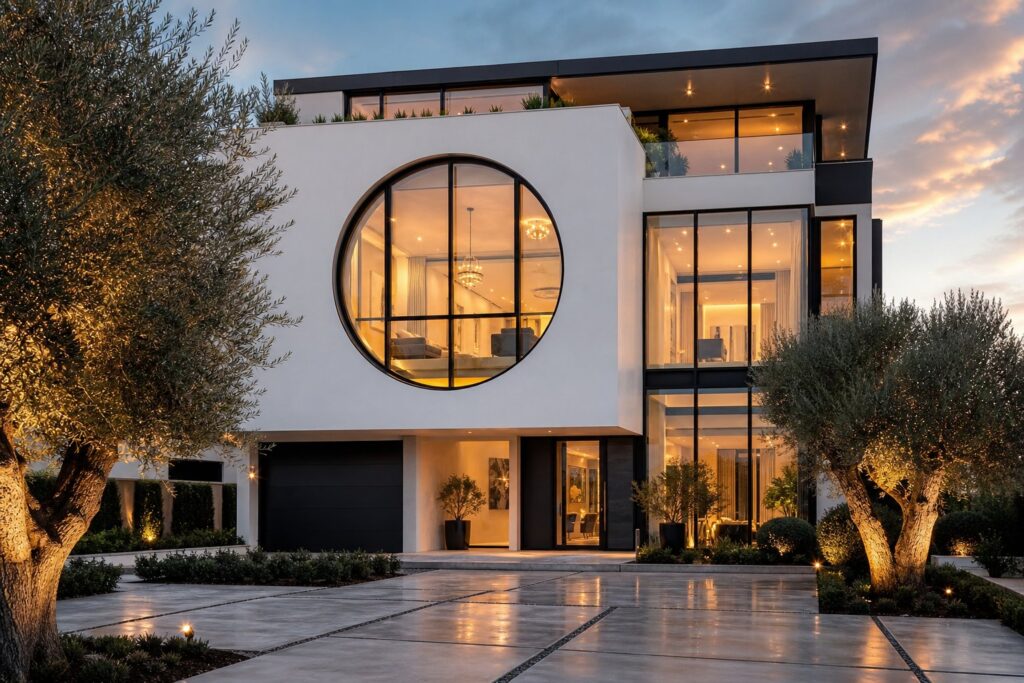
- Custom shapes — arched, circular, triangular, and geometric designs
Each section pairs descriptive detail with practical guidance so you can move from browsing aluminium images to making confident, informed choices for your next project.
Every Aluminium Window Type Explained With Visual Descriptions
Knowing that you want aluminium windows is only half the decision. The type you choose dictates sightlines, ventilation patterns, and how the facade reads from the street. Whether you have been searching for alumital window options or browsing broader aluminium window types pictures, the visual differences between styles are dramatic once you see them in context. Here is how each major type actually looks when installed.
Sliding and Casement Aluminium Windows
Sliding windows sit flush within the wall plane, with one or more panels gliding horizontally along a track. Visually, they create clean horizontal lines and suit contemporary facades where simplicity is the goal. Because the panels overlap rather than project outward, they preserve tight spaces like hallways and balconies without interrupting the exterior line. From inside, the slim aluminium rails frame the view like a widescreen picture.
Casement windows swing outward on side hinges, opening like a small door. When closed, they present a flat, uniform face with minimal visible hardware. When open, the sash angles away from the building at up to 90 degrees, catching side breezes and directing them into the room. On a facade, a row of casement windows produces a rhythmic pattern of identical panels that reads as orderly and intentional. Home Beautiful notes that casement styles suit both traditional homes and modern builds, largely because their proportions adapt easily to different frame widths and glass sizes.
Awning, Fixed, and Louvre Aluminium Windows
Awning windows hinge at the top and tilt outward from the bottom, forming a small canopy shape when open. This geometry means you can leave them cracked during rain without water entering the room. Visually, an open awning window casts a subtle shadow beneath the sash, adding depth to an otherwise flat wall. They are commonly placed higher on walls in bathrooms or laundries, where privacy matters but airflow is essential.
Fixed windows do not open at all. Their purpose is purely visual and thermal — maximising the glass area with no operating hardware to interrupt the view. A large fixed panel paired with slender aluminium framing creates an almost frameless effect, making it the go-to choice for feature walls or living rooms facing a garden or coastline.
Louvre windows use multiple horizontal glass slats set in an aluminium frame, tilting open in unison. When closed, the overlapping blades create a textured, layered look. Open, they allow precise control of airflow direction. They are a staple in Queensland and northern NSW homes, where cross-ventilation is critical year-round.
Bi-Fold and Tilt-and-Turn Styles
Bi-fold windows consist of multiple panels that fold back against each other along a track, concertina-style. When fully open, they stack neatly to one side and leave almost the entire opening clear — perfect for kitchen servery windows or living areas that flow onto a deck. Closed, the narrow aluminium stiles between each panel create a grid-like rhythm across the facade.
Tilt-and-turn windows offer a European-inspired dual function. In tilt mode, the top of the sash tilts inward, allowing secure ventilation without the panel projecting outside. In turn mode, the entire sash swings inward like a casement, giving full access for cleaning or rapid airflow. On a facade, they look identical to a standard fixed or casement panel when closed — the versatility is hidden in the hardware.
For anyone researching aluminimum windows online and finding conflicting information, the table below consolidates how each type compares at a glance.
| Window Type | Visual Characteristics | Best Suited Rooms | Facade Effect |
|---|---|---|---|
| Sliding | Horizontal panels, flush profile, slim rails | Bedrooms, hallways, apartments | Clean horizontal lines, contemporary feel |
| Casement | Flat face when closed, outward swing when open | Kitchens, living areas, bathrooms | Rhythmic, orderly panel pattern |
| Awning | Top-hinged, tilts outward, creates shadow line | Bathrooms, laundries, high wall placements | Subtle depth and layering on the wall |
| Fixed | No hardware, maximum glass, near-frameless look | Living rooms, feature walls, stairwells | Expansive, uninterrupted glass plane |
| Louvre | Horizontal slats, textured layered appearance | Tropical zones, bathrooms, breezeways | Textural contrast, ventilation-forward design |
| Bi-Fold | Multi-panel concertina, stacks to one side | Kitchens, serveries, indoor-outdoor living | Grid rhythm when closed, open wall when folded |
| Tilt-and-Turn | Dual function hidden in hardware, flat closed face | Bedrooms, upper-storey rooms, studies | Minimal and flush, indistinguishable from fixed |
Each of these types looks entirely different depending on the building it sits within. A charcoal bi-fold on a rendered modern facade tells a completely different story from the same window on a weatherboard cottage — which is exactly why architectural context matters just as much as window type.
Aluminium Windows Matched to Every Architectural Style
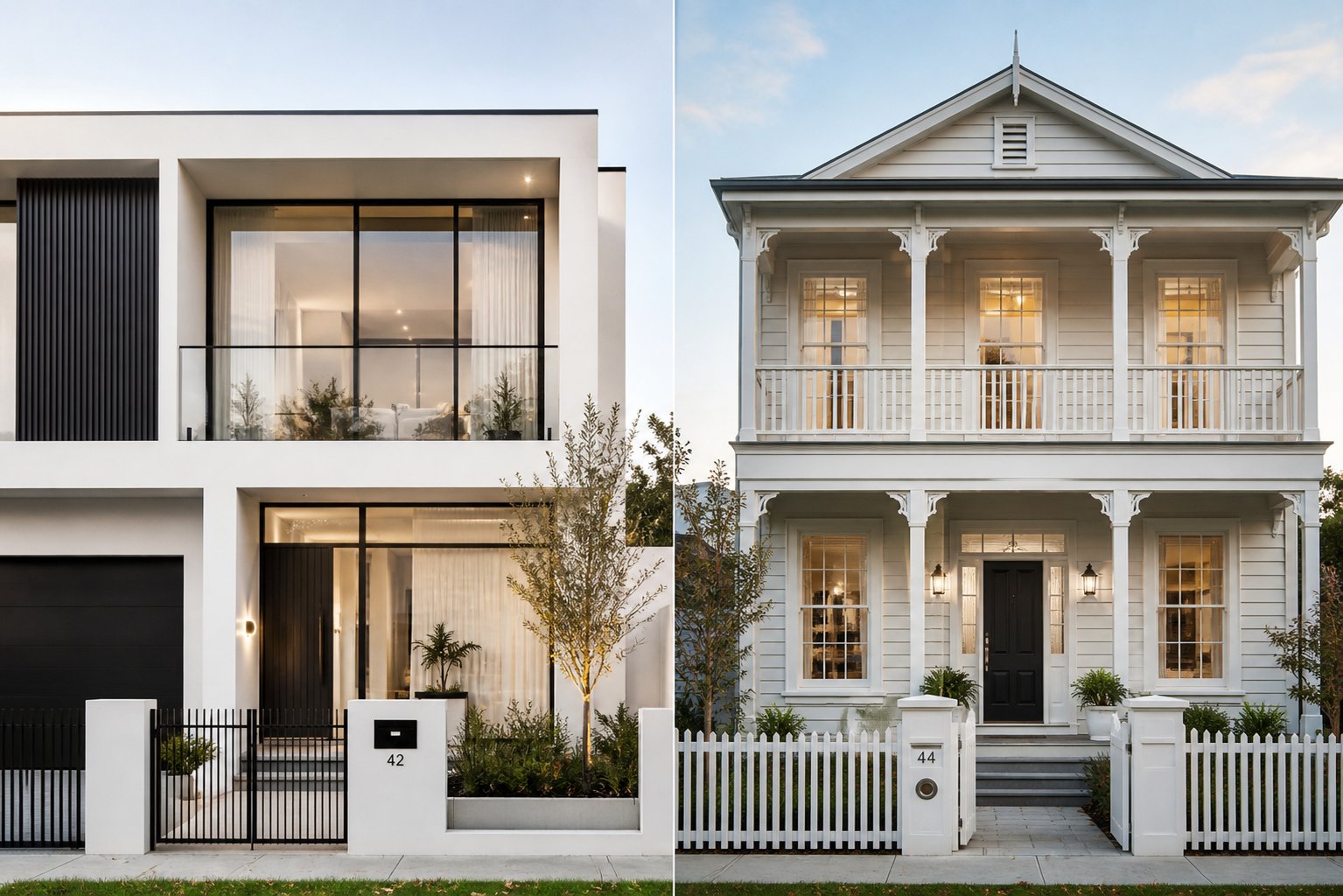
A charcoal casement window on a rendered cube home and that same window on a Federation cottage produce two entirely different visual outcomes. The frame hasn’t changed — the architecture around it has. This is why browsing aluminium windows pictures without considering building context leads to choices that feel disconnected once installed. The surrounding facade, roofline, and material palette all influence whether a window looks intentional or out of place.
Modern and Minimalist Homes
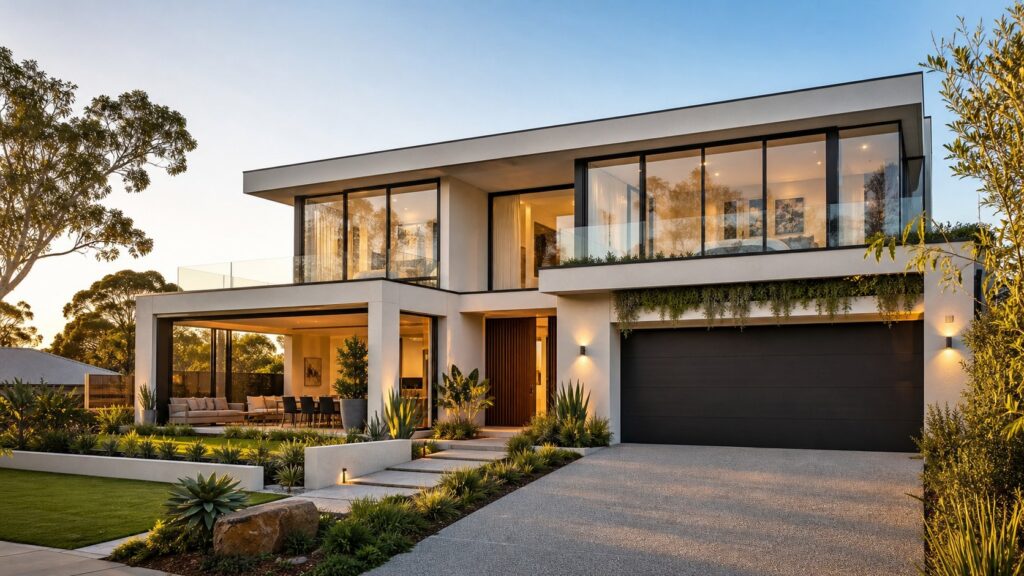
Modern Australian homes tend to favour flat rooflines, rendered or cladded walls in neutral tones, and large glass expanses that blur the line between indoor and outdoor living. In this context, modern white aluminium windows with slim profiles almost vanish into the wall, letting the glass do the talking. The effect is calm, open, and uncluttered.
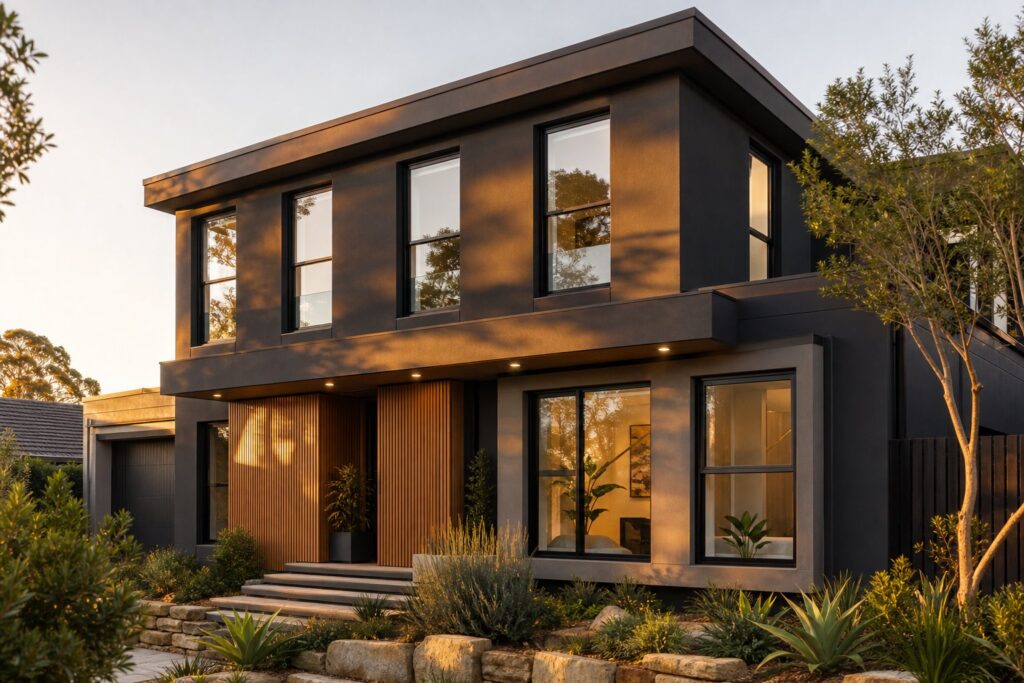
For sharper contrast, black or anthracite grey frames set against a pale rendered facade create bold geometric outlines — each window reads like a framed artwork on the wall. This pairing dominates double-storey builds in suburbs across Sydney, Melbourne, and Perth, where street appeal depends on crisp proportions and restrained material choices. Industry research confirms that aluminium’s slim profiles and satin or extra-gloss finishes suit the modern style because they echo the clean lines already present in the architecture.
Minimalist homes push this further. Every element must earn its place, and windows are no exception. Here, the thinnest possible aluminium framing maximises the glass-to-frame ratio, producing an almost frameless appearance. Colours stay tight — white, silver, or matte black — and finishes lean opaque or sandblasted to avoid drawing attention away from the spatial openness. The result in photos and in person is a home where the windows feel like deliberate absences in the wall rather than additions to it.
Traditional and Colonial Architecture
Aluminium windows for traditional homes need to solve a different visual problem. Rather than disappearing into the wall, they must harmonise with existing detail — decorative mouldings, brick or stone facades, pitched rooflines, and heritage proportions. The good news is that aluminium’s versatility extends well beyond contemporary aesthetics.
On a classic weatherboard cottage or a Federation-era brick home, white or cream powder-coated aluminium frames mimic the look of painted timber without the ongoing maintenance burden. Choosing an opaque or semi-gloss finish avoids the reflective sheen that would feel too industrial for these softer architectural styles. Pairing the frames with colonial bar inserts — thin aluminium strips placed inside or on the glass surface — recreates the traditional multi-pane look that suits these homes perfectly.
Old style aluminium windows in heritage contexts work best when the proportions respect the building’s original rhythm. A Federation home with evenly spaced double-hung openings across the front facade demands that replacement windows maintain those spacings and height-to-width ratios. Swap in an oversized sliding panel and the entire street presence shifts uncomfortably. Aluminium allows you to replicate period proportions with modern performance — thermally broken frames, double glazing, weather seals — all hidden behind a face that respects the home’s era.
The single most important visual rule when selecting windows for an existing home: match the proportions and spacing rhythm of the original facade before choosing colour or type. Get the proportions wrong and no finish or frame style will rescue the result.
Industrial and Warehouse Conversions
Converted warehouses, factory lofts, and industrial-style new builds share a visual language of raw, exposed materials — polished concrete, face brick, steel beams, and unfinished surfaces. Aluminium windows slot into this palette with ease, especially in darker tones and rougher finishes.
Black and anthracite grey frames with matte or lightly textured finishes read as modern steel without the corrosion risk. In warehouse conversions with high ceilings and wide openings, large fixed panels divided by slim aluminium mullions recreate the classic factory window grid — multiple panes separated by narrow framing that emphasises the scale of the space. Design guidance from fenestration specialists notes that aluminium’s structural strength is critical here, supporting extensive glass areas that timber and uPVC frames simply cannot span without additional support.
Bronze and rust-toned powder coats also work in these settings, picking up the warm undertones of exposed brick and recycled timber flooring. The finish should stay matte or satin — anything glossy would clash with the deliberately unpolished character of industrial interiors. For these projects, the window becomes part of the raw material story rather than a refined contrast to it.
Across all three contexts, the lesson is consistent: the same aluminium frame takes on a completely different personality depending on the walls, roofline, and material palette surrounding it. Colour and finish decisions follow naturally from that architectural conversation — which is precisely why the frame profile and finish options discussed next carry so much visual weight in the final outcome.
How Frame Profiles Transform Aluminium Window Aesthetics
Two aluminium windows can share the same colour, glass type, and operating style yet look completely different on the same wall. The variable? Frame profile. It is the single specification most homeowners overlook when browsing slim frame aluminium window pictures online — and the one that most dramatically shapes the finished result. A profile is not just a number on a data sheet. It determines how much frame you actually see, how deep the shadow lines cut across your facade, and whether the window reads as a bold architectural element or a near-invisible sheet of glass.
Slim Frame Profiles and Their Visual Impact
Slim-line aluminium window profiles typically feature sightlines between 20mm and 45mm. The sightline is the visible width of the frame between panes — the part your eye actually registers when looking at the window. Modern engineering has pushed these measurements down to the point where the frame nearly disappears, letting glass dominate the facade.
The visual payoff is immediate. A slim profile means a higher glass-to-frame ratio, so more of the opening is transparent. Light floods deeper into the room. The view feels panoramic rather than sectioned. From outside, the window appears as a clean, uninterrupted pane set into the wall — precisely the look you see in aluminium window design features across contemporary Australian builds. These profiles suit fixed panels, narrow casements, and sliding windows where the goal is maximum visual openness with minimal structural distraction.
Slim frames achieve their strength through high-performance alloys and reinforced internal chambers rather than bulk. The result is a profile that carries large glass panels without the thickness that older systems required. For homeowners chasing that seamless indoor-outdoor feel common in coastal and suburban builds across Sydney, Melbourne, and Brisbane, this is the profile category to focus on.
Standard Profiles for Larger Openings
Standard aluminium profiles sit in the 55mm to 75mm sightline range, and they serve a different structural purpose. When openings grow wider or taller — think full-height stacking doors, large bi-folds, or corner window configurations — the frame needs more depth to handle wind loads, panel weight, and the mechanical hardware for opening and closing.
Visually, standard profiles carry more presence. They create defined borders around each glass panel, which can actually benefit certain aluminium window designs. On a heritage home where window frames are meant to be seen and to echo the proportions of original timber joinery, a slightly wider profile feels intentional rather than clunky. It also produces deeper shadow lines on the facade as the sun moves across the building — those dark recesses where the frame steps back from the wall surface — adding a subtle three-dimensional quality that slim profiles cannot replicate.
The trade-off is straightforward: more visible frame means less visible glass per opening. But in large-format configurations where you might have four or five panels spanning three metres or more, the structural confidence of a standard profile keeps everything operating smoothly for decades.
How Profile Choice Affects Indoor and Outdoor Appearance
From inside, the difference plays out in how much of your peripheral vision is interrupted. A 20mm sightline at the junction of two sliding panels is barely noticeable — your eye skips past it to the garden beyond. A 70mm interlock, by contrast, creates a visible vertical bar that divides your view into distinct sections. Neither is wrong, but one suits a minimalist living room facing a landscaped yard while the other works better for a utility space or a room where structural security matters more than unbroken views.
From outside, profile depth changes how the window interacts with wall surfaces. Deeper profiles sit further back within the reveal, creating shadow pockets that give texture to otherwise flat facades. Shallow profiles sit nearly flush, producing a smooth, planar look that suits rendered walls and modern cladding. Design specialists note that darker frame colours emphasise slim profiles further, making them appear even narrower than their measured width — a useful trick when the goal is near-invisible framing.
The table below maps profile types to their visual and practical outcomes, giving you a quick reference when comparing aluminium window profiles across different suppliers.
| Profile Type | Frame Width (Sightline) | Glass-to-Frame Ratio | Visual Effect | Typical Application |
|---|---|---|---|---|
| Ultra-slim | 20–35mm | Very high (90%+) | Near-frameless, glass-dominant facade | Fixed panels, picture windows, feature walls |
| Slim-line | 35–50mm | High (80–90%) | Minimal frame presence, clean contemporary lines | Sliding windows, narrow casements, modern homes |
| Standard | 55–75mm | Moderate (70–80%) | Defined frame borders, deeper shadow lines | Bi-folds, large openings, heritage replacements |
| Heavy-duty | 75–100mm+ | Lower (60–70%) | Bold structural presence, pronounced grid pattern | Commercial glazing, cyclone-rated systems, corner windows |
Profile choice sets the bones of the visual outcome. But it works in concert with the next major decision — colour and finish — which adds the final layer of personality to the frame you have selected.
Colour and Finish Options That Define Your Window Look
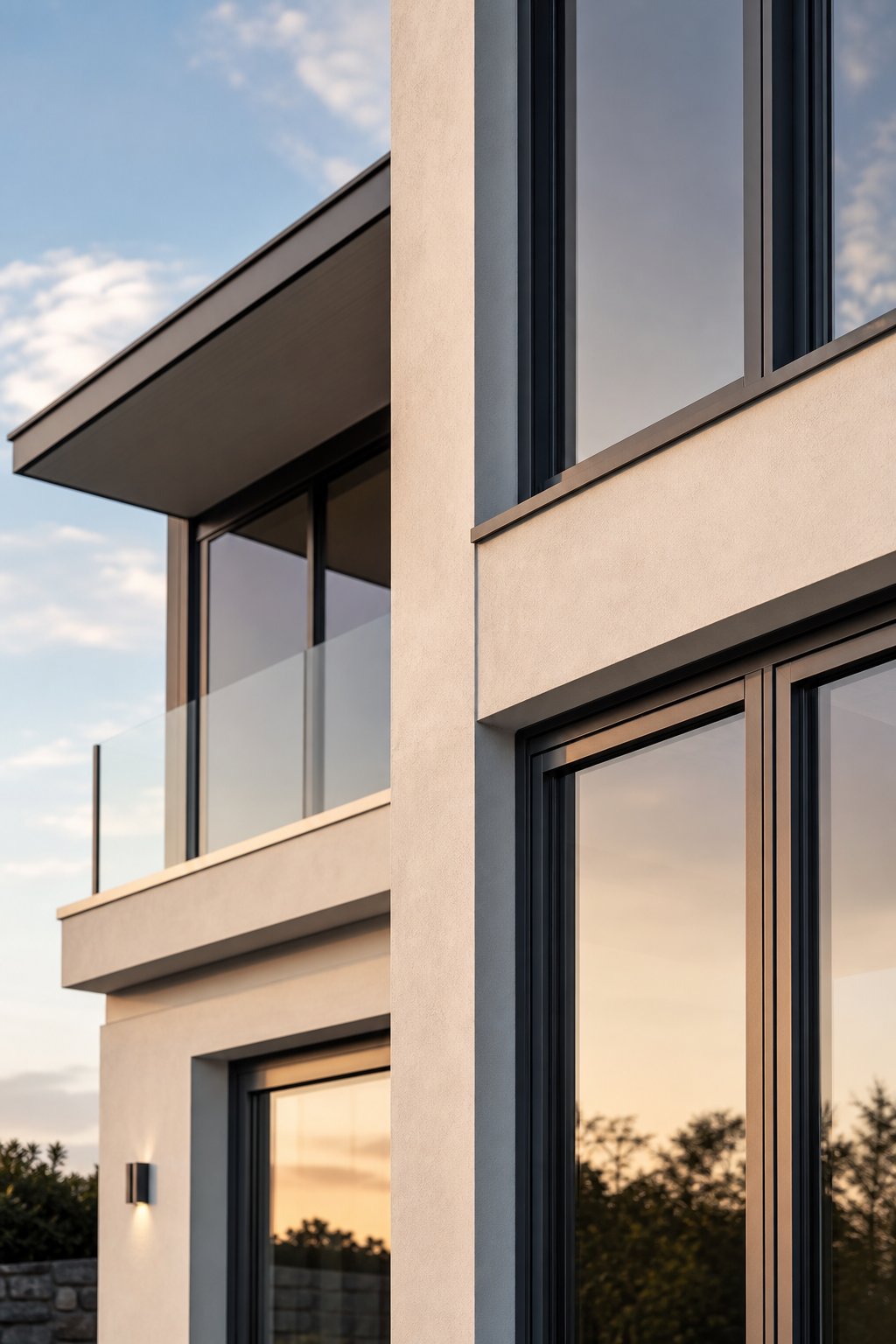
A frame profile gives your window its proportions. Colour gives it personality. Two identical slim-line casement windows — one finished in matte charcoal, the other in satin champagne — will tell entirely different stories on the same facade. When browsing pics of aluminium windows online, this is the variable that causes the most dramatic visual shifts between otherwise identical installations. Understanding your aluminium window colour options before committing saves you from a result that clashes with the home you have spent months planning.
Powder Coating Colours and Finishes
Powder coating is the dominant finish method for residential aluminium windows in Australia. A dry powder is electrostatically applied to the frame and then cured at high temperatures, bonding a tough, uniform layer typically 50 to 125 microns thick to the aluminium surface. The result resists chipping, fading, and corrosion — critical qualities under harsh Australian UV and coastal salt exposure.
The finish itself comes in three textures that each read differently on a facade. Matte absorbs light, producing a soft, contemporary look with no reflective glare. Satin offers a gentle sheen that catches morning and afternoon sun without appearing glossy. Full gloss creates a polished, almost lacquered appearance that suits statement windows on feature walls but can amplify imperfections on larger spans.
Colour range is where powder coating truly opens up. The RAL colour system provides over 200 standardised shades, from deep anthracite greys to soft coastal whites. Popular choices in the Australian market cluster around a handful of proven families:
- Charcoal and anthracite grey (RAL 7016) — modern drama, sharp contrast against light renders, the dominant choice for contemporary double-storey builds
- White and traffic white (RAL 9016) — coastal freshness, a timeless neutral that brightens interiors and suits weatherboard, brick veneer, and rendered homes alike
- Monument and matt black (RAL 9005) — bold and architectural, receding visually to let glazing dominate the facade
- Bronze and chocolate brown (RAL 8017) — warmth and depth, pairing naturally with sandstone, timber cladding, and earthy landscaping
- Light grey (RAL 7035) — understated and versatile, bridging the gap between white and charcoal without committing to either extreme
White aluminium windows remain the single most specified option across Australian residential projects. They coordinate effortlessly with nearly every wall colour, read cleanly from both interior and exterior perspectives, and make rooms feel brighter by reflecting natural light back into the space. Yet a shift toward darker tones — particularly in new estates across Melbourne’s west and Sydney’s Hills District — reflects growing confidence in using window frames as deliberate design accents rather than background elements.
Anodized and Wood-Grain Aluminium Finishes
Anodising takes a different approach. Rather than applying a coating on top of the aluminium, the process grows an oxide layer from the metal itself through electrolysis. This creates a hard, scratch-resistant surface with a distinctive metallic depth that powder coating cannot replicate. The finish appears to glow subtly from within rather than sitting on the surface.
Colour options are more limited than powder coating — typically natural silver, bronze, black, and champagne — but the visual quality is distinct. Anodised finishes suit modern and industrial contexts where you want the material character of aluminium to remain visible. A champagne anodised frame on a minimalist home, for example, reads as refined and warm without leaning into the earthiness of brown powder coat. Bronze anodising pairs beautifully with exposed brick and polished concrete in warehouse conversions.
The trade-off is practical: anodising offers excellent corrosion resistance with a hardness of 300 to 400 Vickers, making it ideal for coastal areas in Queensland, WA, and the NSW coast. However, if your project demands a specific custom colour outside the metallic range, powder coating remains the more flexible path.
Wood-grain transfer finishes bridge a third category entirely. This process heat-transfers a realistic timber pattern onto powder-coated aluminium, producing frames that look like stained hardwood from a normal viewing distance. Up close, the grain detail holds up well. These finishes suit heritage renovations and traditional homes where timber aesthetics are desired but the maintenance burden of real wood — repainting every few years in the Australian climate — is not. They are particularly popular on Queenslander and Federation homes where council or heritage overlays discourage visible modern materials on street-facing facades.
Coordinating Frame Colour With Your Home Exterior
Colour choice does not happen in isolation. A frame exists within a visual ecosystem of wall colour, roofline, gutters, fascia, and landscaping. The core principle of colour coordination comes down to one decision: do you want your windows to blend or to contrast?
Matching frame colour to the wall creates a seamless, unified look — white frames on a white rendered home make the windows almost disappear, emphasising the glass itself. This approach suits minimalist facades where restraint is the goal. Contrasting frame colour against the wall transforms each window into a defined architectural feature. Dark frames on light walls produce bold geometric outlines; light frames on dark cladding create bright punctuation marks across the facade.
From inside the room, the same logic applies in reverse. Dark frames tend to visually recede, letting your eye travel straight through to the garden or streetscape. Light interior frames brighten the window opening and make the room feel airier. Some manufacturers offer dual-colour options — a dark exterior face for street drama paired with a white interior face for a fresh, light-filled feel indoors.
Consider the undertones of your wall colour when making the final call. A cool grey render pairs cleanly with black or silver frames. A warm cream or sandstone wall harmonises with bronze or champagne tones. Clashing undertones — cool blue-grey walls with a warm brown frame, for instance — create a subtle discord that feels off without being immediately obvious. Viewing physical colour swatches against your actual wall surface in morning and afternoon light is the simplest way to avoid this mismatch.
Colour and finish lock in the visual identity of your aluminium windows. But there is one more layer that fundamentally alters how these frames appear in reality versus in photographs: the glass sitting inside them.
How Glass Type Changes the Look of Aluminium Windows
You can nail the perfect frame profile, select an ideal powder coat colour, and still end up with a window that looks nothing like you expected. The reason? Glass accounts for 70 to 85 percent of the visible window area, yet it is rarely discussed as a visual design choice. Most people searching for aluminium window glass types pictures are focused on the frame — but it is the glass that controls how light enters a room, how reflections read from the street, and even how the frame colour itself appears to shift throughout the day.
Clear, Frosted, and Tinted Glass Appearances
Clear glass is the default in most residential installations, and for good reason. It offers maximum transparency, the highest visible light transmission, and a neutral colour rendering that lets your chosen frame finish speak for itself. In aluminium windows pictures taken in bright conditions, clear glass almost disappears — you see straight through to interiors or reflections of sky and landscape. Standard clear float glass carries a faint green tint from iron oxide in the raw material, though this is only noticeable at thicker dimensions or when viewed from the edge. Low-iron variants eliminate that green cast entirely, producing a truly colourless pane that suits feature walls and display windows where colour accuracy matters.
Frosted and obscure glass shifts the visual equation dramatically. Instead of transparency, these textured or acid-etched surfaces scatter light, producing a soft, diffused glow inside while blocking clear views from the exterior. The aluminium frame becomes the only defined element visible from outside — so its profile and colour carry far more visual weight. Frosted glass is common in bathrooms, side-facing windows on boundary walls, and front entry panels where privacy is needed without sacrificing daylight. In photos, frosted panels read as luminous white or soft grey rectangles rather than transparent openings.
Tinted glass introduces deliberate colour into the pane itself. Grey tint reduces glare and softens the harshness of direct sun, creating a slightly muted interior light that suits home offices and media rooms. Green tint filters solar heat while maintaining reasonable clarity, producing a cool-toned interior ambience. Bronze tint warms everything — the light entering the room takes on a golden quality, and the exterior appearance of the window gains a rich, amber undertone. For anyone trying to match an aluminium wondow to a warm-toned facade, bronze-tinted glass can tie the composition together in a way clear glass cannot.
Glass tint can shift how your frame colour is perceived. A charcoal aluminium frame paired with bronze-tinted glass will appear warmer than the same frame with clear or grey glass. Conversely, grey-tinted glass makes warm bronze frames read cooler and more neutral. The glass and frame interact as a colour system, not as independent choices.
How Double Glazing and Low-E Coatings Affect Visual Depth
Double-glazed units — two panes separated by a sealed air or gas-filled cavity — introduce a subtle optical depth that single-glazed windows lack. Light reflects off both the outer and inner pane surfaces, creating a layered quality visible at certain angles. This effect makes the glass appear slightly more substantial, more “present” in the frame, which can enhance the overall perceived quality of the window installation. In Australian residential builds, double glazing is increasingly standard for both thermal performance and acoustic control, so understanding its visual character matters.
Low-E (low emissivity) coatings add another visual layer. These microscopically thin metallic oxide films sit on an internal surface within the sealed unit, invisible to touch but capable of subtly altering reflected and transmitted colour. Some low-E products may introduce a mild tint, colour shift, or reflective sheen that becomes more apparent at certain viewing angles or times of day. Solar control low-E coatings, designed to reduce heat gain on west and north-facing elevations, can increase external reflectivity slightly — the window picks up more sky and surroundings in its reflection, which changes how the frame colour reads from the street.
From inside, the difference is subtler. Insulation-focused low-E maintains high visible light transmission while managing radiant heat, so rooms still feel bright and open. Solar control variants may reduce total light slightly, producing a marginally cooler or calmer interior light quality. The change is usually gentle rather than dramatic, but it is worth viewing actual samples in daylight before committing — especially on large glass areas where even a small colour shift becomes noticeable across the span.
Pairing Glass Types With Frame Colours
The visual interplay between glass and frame is where many homeowners searching for an aluminium vindo solution online get surprised by their final result. A few pairings consistently produce strong outcomes in Australian conditions:
- Clear glass with matte black frames — maximum contrast, sharp definition, the dominant pairing in modern double-storey builds
- Grey-tinted glass with charcoal or anthracite frames — a tonal, monochromatic look that reads as sophisticated and cohesive from the street
- Bronze-tinted glass with champagne or bronze anodised frames — warm, rich, and harmonious against sandstone, timber cladding, or earthy renders
- Frosted glass with white frames — clean and luminous, ideal for privacy windows that still need to contribute brightness to the facade
- Low-iron clear glass with slim silver frames — the most invisible combination, suited to feature walls where the view is everything
Reflective glass — sometimes used in commercial applications or street-facing bedrooms — creates a mirror-like exterior that hides the frame almost entirely during daytime. The window becomes a reflection of sky and surroundings rather than a view into the home. This can work beautifully on contemporary builds but risks looking out of place on traditional or suburban streetscapes where neighbours expect softer transparency.
Glass selection is ultimately a balancing act between aesthetics, performance, and privacy. Each type reshapes how the aluminium frame reads in both photographs and reality — which is exactly why the best aluminium windows pictures show identical frame colours paired with different glass options, giving you a true sense of what you are choosing. That same flexibility in material expression extends to another dimension many buyers overlook: the shape of the window opening itself.
Unique Aluminium Window Shapes and Custom Designs
Rectangles dominate residential window design for practical reasons — they are simple to manufacture, straightforward to install, and easy to pair with standard openings. But architecture is rarely just about what is practical. A gable end begs for a triangular pane. A curved facade calls for an arched frame. A stairwell gains an entirely different character with a circular window catching midday light. Custom shaped aluminium windows push beyond the standard catalogue, and aluminium as a material is uniquely suited to making those shapes a reality.
Unlike uPVC, which becomes brittle and difficult to form into tight radii, and timber, which requires complex steam-bending or lamination for curves, aluminium extrusions can be rolled, bent, and welded into virtually any geometry while retaining structural integrity. Industry fabrication data confirms that aluminium profiles extruded from 6063-T5 alloy balance machinability, surface quality, and strength — properties that make non-standard shapes commercially viable rather than prohibitively expensive. This is why aluminium dominates bespoke fenestration in both residential renovations and commercial builds across Australia.
Arched and Circular Aluminium Windows
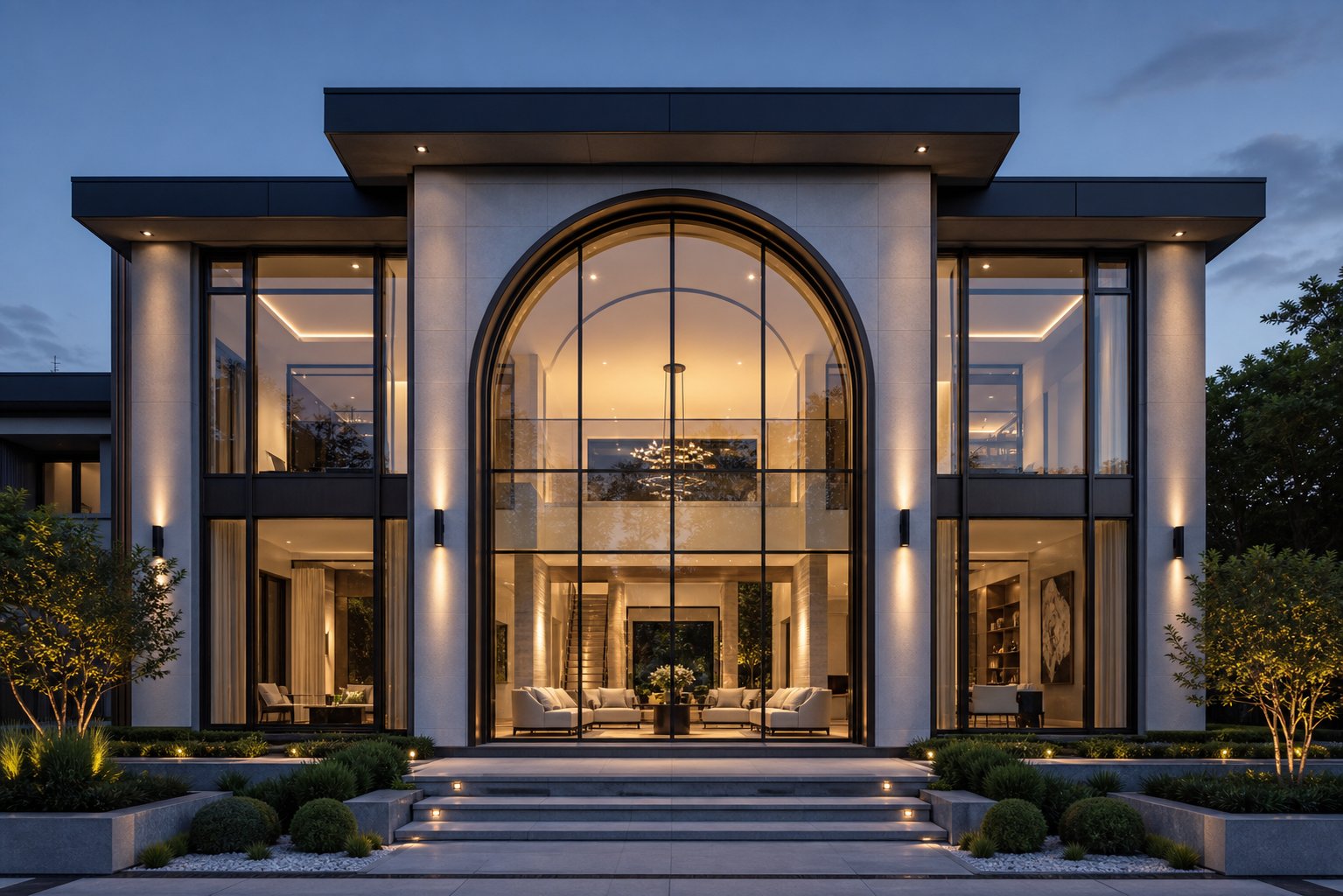
Arched windows rank among the most visually striking aluminium windows designs available. The curve softens a facade, introduces a sense of grandeur, and draws the eye upward — qualities that flat-topped rectangular openings simply cannot achieve. Arches come in several profiles: semicircular for a classical, symmetrical appearance; segmental (a shallow curve) for a subtler lift that suits contemporary homes; and gothic or pointed arches for ecclesiastical or heritage restoration projects.
In residential Australian settings, arched aluminium windows appear most naturally above doorways as highlight panels, as standalone feature windows in double-height living areas, and as paired sets flanking a central entry. The aluminium frame follows the curve seamlessly, with the powder-coated or anodised finish wrapping continuously around the bend without visible joints. From inside, an arched window frames the sky in a way that flat headers cannot — the upper curve becomes part of the view, giving the room a lifted, generous feeling.
Circular and porthole windows occupy a more deliberate niche. A full circle reads as a bold design statement — a punctuation mark on the facade. Smaller circular openings suit bathrooms, powder rooms, and stairwell landings where a playful moment of light is welcome without requiring a large opening. Larger circular windows — 800mm diameter and above — function as genuine feature elements in living rooms or as the centrepiece of a gable end. The continuous aluminium frame creates an unbroken ring that looks precise and deliberate, impossible to replicate cleanly in timber without visible joinery.
Triangular, Trapezoidal, and Custom Geometric Shapes
Triangular windows exist almost exclusively because rooflines demand them. A pitched gable end, a raked ceiling line, or a dormer with an angular profile all create openings that a rectangular window cannot fill. Aluminium frames mitre cleanly at acute angles, producing sharp corners that read as intentional rather than forced. Fixed triangular panels flood loft conversions and mezzanines with light, and because they sit high on the wall, privacy is rarely a concern — frosted glass is unnecessary, leaving clear panes to maximise skyward views.
Trapezoidal windows widen or narrow along their height, following the slope of a roofline or a raked wall section. They appear frequently in contemporary gable-end designs across Australian homes, especially in new builds where architects use the angled form as a deliberate compositional element rather than a structural compromise. A tall, narrow trapezoid on a feature wall draws the eye upward and elongates the room visually. Multiple trapezoidal panels arranged in a row along a sloped ceiling create a dramatic sawtooth rhythm of light and frame.
Beyond these common geometric forms, aluminium’s fabrication flexibility supports polygonal, elliptical, and fully irregular shapes produced through digital templating and CNC machining. 3D laser scanning of existing masonry or structural openings allows fabricators to capture uneven or non-standard apertures precisely, producing frames that fit perfectly into heritage buildings, adaptive reuse projects, or architecturally adventurous new constructions.
The following list summarises each shape, its visual character, and where it fits best architecturally:
- Semicircular arch — a half-moon curve creating classical grandeur; suits Federation homes, entry highlights, and double-height living areas
- Segmental arch — a shallow, subtle curve with less formality; pairs well with contemporary rendered facades and transitional designs
- Full circle / porthole — a bold ring of glass; ideal for stairwells, bathrooms, coastal homes, and playful architectural accents
- Triangle — angular and precise, mirroring roof pitch; built for gable ends, dormers, and loft conversions
- Trapezoid — a tapered form following raked ceilings; suited to modern gable features and sawtooth roof designs
- Polygon / hexagon — multi-angled geometry for statement facades; works in contemporary and artistic residential builds
- Ellipse — an elongated oval softer than a full circle; complements art deco renovations and curved feature walls
- Irregular / bespoke — any shape dictated by site conditions or design intent; required for heritage restorations, adaptive reuse, and non-standard openings
Custom-shaped aluminium windows are achievable through manufacturers offering bespoke fabrication services with digital survey and CNC precision. In the Australian market, suppliers like MEICHEN offer custom aluminium window options including non-standard shapes and configurations for both residential and commercial projects — providing homeowners, builders, and architects a practical path from concept sketch to installed reality. Their range covers the full spectrum of aluminium windows design possibilities discussed throughout this guide, including bespoke shapes that standard catalogues simply do not address.
Shape gives a window its architectural identity. But moving from admiring these forms in pictures to selecting the right one for your project requires a structured decision-making process — one that accounts for room function, orientation, facade proportion, and the practical realities that photographs alone cannot communicate.
Choosing the Right Aluminium Window Design for Your Project
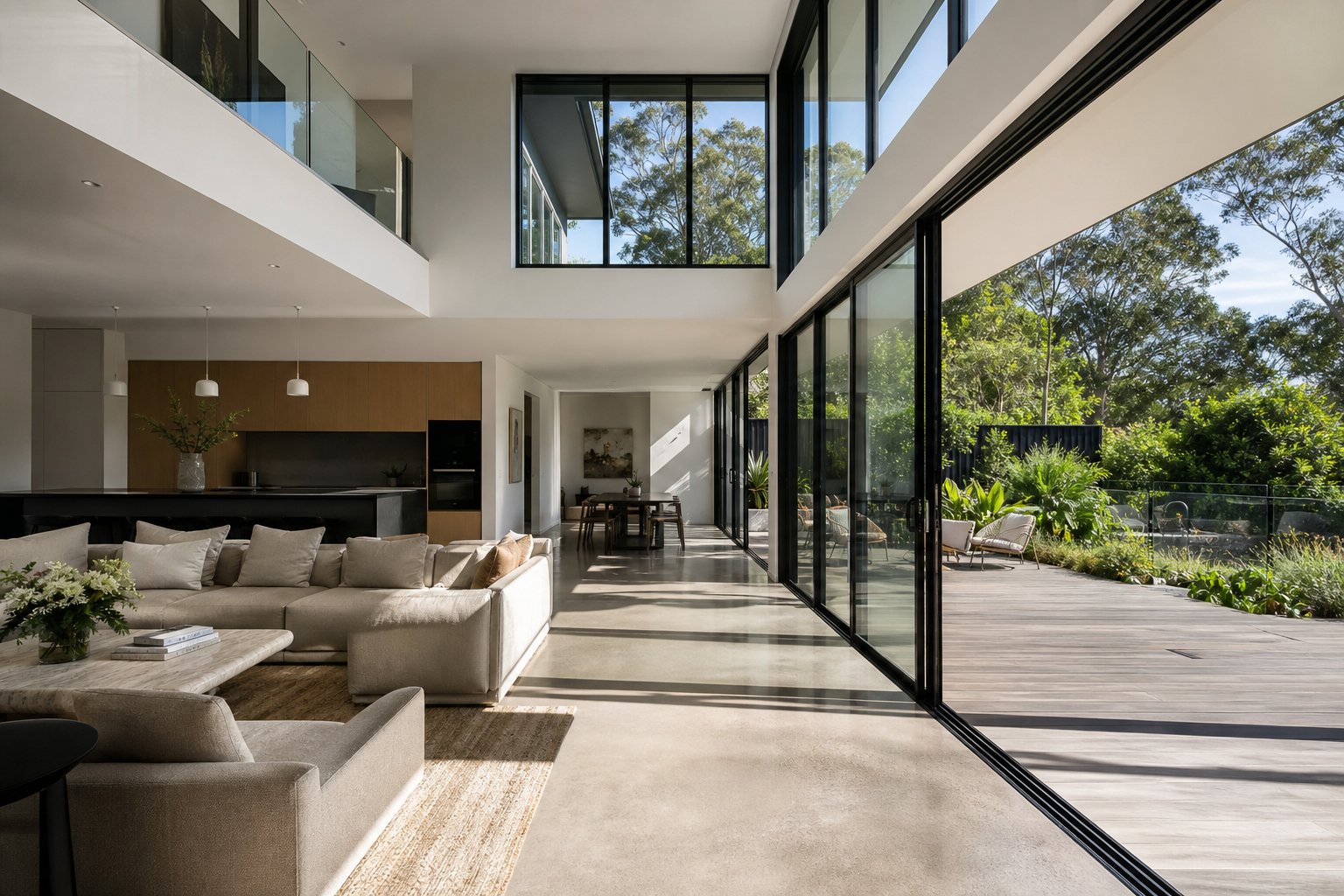
Inspiration is only useful if it leads somewhere. You have scrolled through dozens of aluminium windows pictures, saved your favourites, and formed a mental image of what you want. The gap between that mental image and a signed quote sitting on your kitchen bench is where most projects stall — or worse, where compromises get made without a clear framework guiding them. Turning visual inspiration into a confident aluminum window design decision requires filtering your preferences through the practical realities of your home, your climate, and your budget.
Matching Window Style to Room Function and Orientation
A window that photographs beautifully in a magazine living room may create daily frustrations in your bathroom. Room function should be your first filter, not aesthetics. Kitchens demand operable windows you can crank open with one hand — casement and awning styles that ventilate effectively while cooking generates heat and moisture. Bathrooms need privacy glazing and humidity-resistant operation, making awning windows with obscure glass a practical standout. Living areas prioritise light and views, which points toward large fixed panels flanked by operable casements for airflow. Bedrooms require acoustic performance and light control, so tighter-sealing casement or tilt-and-turn styles with laminated glass serve better than louvres or sliding panels.
Orientation adds a second layer. North-facing windows in Australia receive consistent solar exposure year-round — ideal for passive heating in Melbourne and Hobart winters but potentially overwhelming in Brisbane summers without appropriate solar control glass. West-facing openings cop harsh afternoon sun from October through March, making tinted or low-E glass a functional necessity rather than an aesthetic choice. East-facing bedrooms flood with early light, which suits some homeowners and drives others to heavy curtains that negate the window entirely. Coastal orientations bring salt-laden air that demands marine-grade powder coating or anodised finishes rated for corrosion resistance.
Climate zone matters beyond just orientation. Homes in cyclone-prone regions across northern Queensland, the NT, and northern WA require aluminium window systems tested and certified to relevant wind-load ratings under AS 2047. Bushfire-prone areas need frames and glazing compliant with BAL ratings specified in AS 3959. These are not optional considerations — they are regulatory requirements that narrow your product selection before aesthetics even enter the conversation.
Reading Window Pictures Critically Before Deciding
Not every image tells the truth. Professional property photography uses wide-angle lenses that exaggerate window proportions, artificial lighting that flatters glass reflections, and careful staging that removes the clutter of daily life. Before committing to a style based on photos alone, consider what the image might not be showing you.
Lighting conditions shift everything. Modern aluminium windows photographed at golden hour — that warm, angled light in the first hour after sunrise or before sunset — appear softer and more inviting than they will under the flat overhead sun of midday. A charcoal frame bathed in golden light looks warm. That same frame under overcast skies reads cooler and more industrial. If you are drawn to a particular look in photos, ask yourself what time of day and what light conditions produced that effect — and whether your home’s orientation will replicate it.
Camera angle distorts proportion. A window shot from below appears taller and more dramatic than its actual dimensions. Interior shots taken from the far corner of a large room make windows look proportionally smaller within the wall, while close-up shots emphasise the glass-to-frame ratio. When evaluating aluminium windows pictures for your project, compare stated dimensions rather than relying on photographic scale. A window that looks perfectly proportioned in a three-metre-high living room may overwhelm a standard 2.4-metre ceiling height.
Staging hides context. Most professional window photos are taken on newly completed homes with fresh landscaping, clean renders, and no neighbouring buildings visible. Your reality might include a fence line 1.5 metres from the glass, a busy street reflecting off the panes, or an adjacent roofline that changes the shadow patterns on your facade. Visit display homes or showrooms where you can see installed products in realistic settings before locking in your decision.
Taking the Next Step From Inspiration to Installation
Moving from browsing to buying demands a structured approach. The following checklist walks you through each decision point in logical order, ensuring nothing gets overlooked between your initial spark of inspiration and the final specification.
- Define room-by-room requirements — list every window opening in your project with its room function, privacy needs, and ventilation priority
- Map orientation and climate factors — note which direction each opening faces and flag any regulatory requirements (cyclone ratings, BAL compliance, NCC energy provisions)
- Select window types per opening — match operating styles to room needs using the visual descriptions and comparison table from earlier in this guide
- Choose your profile category — decide between slim-line and standard based on opening size, structural requirements, and the visual weight you want on your facade
- Lock in frame colour and finish — test physical swatches against your actual wall surface in both morning and afternoon light, checking undertone compatibility
- Specify glass type for each window — pair glass choices with frame colours deliberately, considering privacy, thermal performance, and the colour interaction discussed earlier
- Check facade balance as a whole — photograph or sketch your elevations with all proposed windows marked, verifying that proportions, spacing, and styles create a coherent exterior reading
- Request samples and site visits — view real product samples in your actual lighting conditions and visit completed installations if possible
- Confirm compliance and warranty — verify that selected products meet WERS ratings, relevant Australian Standards, and any council or heritage overlay requirements for your site
- Obtain detailed quotations — compare like-for-like specifications across suppliers rather than headline prices alone
This process transforms a subjective preference — “I liked that window in a photo” — into a defensible specification that your builder, glazier, or project manager can quote accurately and install with confidence.
The final step requires finding a manufacturer that offers the full range of styles, profiles, finishes, and custom options discussed throughout this guide. Many suppliers specialise narrowly — they may offer excellent sliding windows but limited custom shapes, or a strong colour range but only standard profile widths. For Australian homeowners and builders ready to match visual inspiration with specification-ready products, MEICHEN’s aluminium window range provides a practical starting point. Their offering spans standard and custom configurations, a comprehensive colour palette, and project integration support for both residential and commercial builds — connecting the full spectrum of aluminuim windows possibilities explored in this article to a tangible path forward.
Pictures get you started. A structured decision process gets you to a result you will not regret in five, ten, or twenty years.
Frequently Asked Questions About Aluminium Windows Pictures and Design
1. What types of aluminium windows are available for Australian homes?
Australian homeowners can choose from seven major aluminium window types: sliding, casement, awning, fixed, louvre, bi-fold, and tilt-and-turn. Each type produces a distinct visual effect on your facade and serves different functional needs. Sliding windows create clean horizontal lines suited to contemporary builds. Casement windows swing outward and produce rhythmic panel patterns. Awning windows hinge at the top for rain-safe ventilation. Fixed windows maximise glass area with no hardware. Louvre windows use tilting slats for precise airflow control in tropical climates. Bi-fold windows fold concertina-style to open entire wall sections. Tilt-and-turn windows offer dual-mode operation hidden behind a flush closed face. Suppliers like MEICHEN offer the full range of these types in custom configurations for residential and commercial projects across Australia.
2. How do I choose the right aluminium window colour for my home exterior?
Start by deciding whether you want your windows to blend with or contrast against your wall colour. Matching frame colour to the wall creates a seamless, unified facade where glass dominates. Contrasting dark frames against light renders turns each window into a bold architectural feature. Check undertones carefully — cool grey renders pair well with black or silver frames, while warm cream or sandstone walls harmonise with bronze or champagne tones. In Australia, powder coating in RAL colours offers over 200 options, with charcoal (RAL 7016), white (RAL 9016), and matt black (RAL 9005) being the most popular residential choices. Always view physical colour swatches against your actual wall surface in both morning and afternoon light before committing, as Australian UV intensity can shift how colours appear compared to indoor showroom lighting.
3. What is the difference between slim-line and standard aluminium window profiles?
Slim-line profiles have sightlines between 20mm and 50mm, maximising the glass-to-frame ratio so the frame nearly disappears. They suit fixed panels, narrow casements, and modern facades where visual openness is the priority. Standard profiles range from 55mm to 75mm and provide greater structural capacity for larger openings like bi-folds, corner windows, and full-height configurations. Standard profiles create deeper shadow lines on facades and more defined borders around each glass panel, which actually benefits heritage homes where visible framing echoes original timber joinery proportions. The choice comes down to whether you want your frames to recede or to read as a deliberate design element on your building.
4. Can aluminium windows be made in custom shapes like arches or circles?
Yes. Aluminium is uniquely suited to custom shapes because its extrusions can be rolled, bent, and welded into virtually any geometry while retaining structural integrity. Common custom shapes include semicircular arches, full circles and portholes, triangles for gable ends, trapezoids following raked ceilings, and fully irregular forms for heritage restorations. Unlike uPVC which becomes brittle in tight radii, and timber which requires complex steam-bending, aluminium profiles extruded from 6063-T5 alloy balance strength and machinability for commercial viability. Australian manufacturers such as MEICHEN offer bespoke fabrication using digital survey and CNC precision, making non-standard shapes accessible for both residential renovations and commercial builds without prohibitive cost.
5. How does glass type affect the appearance of aluminium windows?
Glass accounts for 70 to 85 percent of the visible window area, so its type fundamentally changes how the entire window reads. Clear glass offers maximum transparency and lets the frame colour speak for itself. Frosted glass blocks views while creating a luminous white rectangle that makes the frame carry all visual weight. Tinted glass introduces colour — grey reduces glare, bronze warms interior light and shifts the perceived warmth of the frame colour. Double-glazed units add optical depth through layered reflections, while low-E coatings can introduce subtle colour shifts or increased reflectivity at certain angles. The key insight is that glass and frame interact as a colour system: a charcoal frame with bronze-tinted glass appears warmer than the same frame with clear glass, so both elements need to be specified together.
More Window & Door Guides