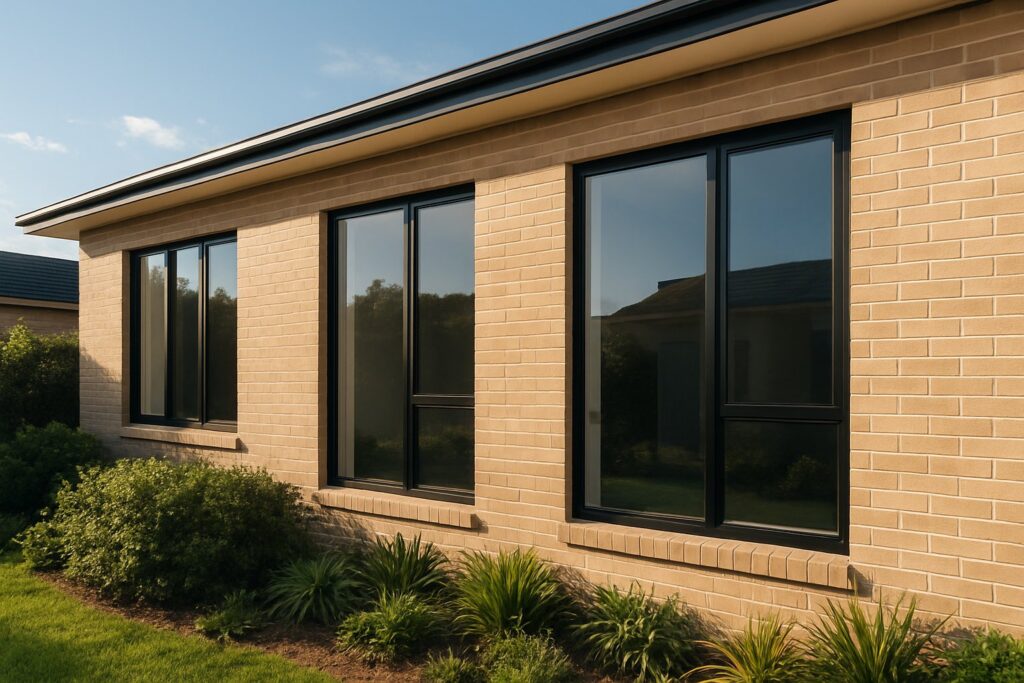
Why Aluminium Window Finish Choice Shapes Your Project Outcome
The frame finish you select for aluminium windows will outlast most other decisions you make during a build or renovation. It determines how frames weather coastal salt air, whether colours hold under relentless UV, how much maintenance you face over twenty-plus years, and ultimately how the building ages. Yet the finish decision rarely gets the attention it deserves.
Why Your Window Finish Decision Deserves More Attention
Search for guidance on powder coating vs anodizing and you will find page after page written for industrial fabricators comparing coatings on machine parts, heatsinks, and handrails. Very little of that advice translates directly to window frames, which sit at unique exposure angles, cycle through thermal stress daily, and interact with seals, weatherstripping, and glazing systems in ways a flat panel never does. Homeowners, architects, and builders deserve a comparison framed around actual window performance rather than generic metal finishing.
This article ranks the top finish options available for aluminium window frames in Australia, assessed through criteria that matter on a building facade: weather resistance, colour longevity, maintenance burden, design flexibility, and long-term value.
Who This Guide Helps
Whether you are specifying windows for a new coastal home, choosing replacement frames for a renovation, or comparing anodized vs powder coat options on a commercial project, this guide gives you a window-specific framework for deciding.
In simple terms: what is anodised aluminium? It is aluminium whose surface has been converted into a hard oxide layer through an electrochemical bath, making the protection part of the metal itself. And what is anodized versus powder coated? Powder coating aluminium involves spraying a dry resin onto the frame and curing it in an oven, creating a painted shell that sits on top of the metal. Both approaches protect. Both look different. Both age differently on a window frame.
Which finish delivers the best balance of longevity, appearance, and value for your specific project and climate?
The answer depends on where you live, what you are building, and how long you expect your windows to perform without intervention. The evaluation framework that follows breaks that question down systematically.
How We Evaluated and Ranked Each Finish Option
Ranking aluminium coating options without explaining the yardstick would be meaningless. A finish that scores well in a laboratory salt-spray cabinet might fail on a north-facing window frame in Darwin, while one that looks average on paper could outperform everything else in a temperate Melbourne suburb. Context shapes results, so every finish in this guide is measured against criteria drawn from real window service conditions rather than abstract manufacturing benchmarks.
Evaluation Criteria for Window Frame Finishes
Each coating of aluminium window profiles was assessed across seven performance areas. These reflect what actually matters once frames are installed and exposed to decades of weather, thermal movement, and daily use:
- Weather and UV resistance – How the aluminium coating handles sustained ultraviolet exposure, driving rain, salt-laden air, and humidity cycling without degrading, chalking, or losing adhesion.
- Colour stability over projected lifespan – Whether the finish retains its original appearance after 10, 20, and 30 years of service, or shifts noticeably in hue, gloss, or texture.
- Maintenance requirements – The effort and cost needed to keep coated aluminum frames looking acceptable, from simple wash-downs to professional restoration or recoating.
- Aesthetic versatility – The breadth of colour, texture, and sheen options available for residential, commercial, and architectural applications.
- Cost-to-value ratio – Upfront finish cost weighed against expected service life, maintenance expense, and potential recoating or replacement costs over the building’s lifetime.
- Compatibility with modern glazing and hardware – How the coating on aluminum interacts with double-glazed units, thermal breaks, weatherstripping, and contemporary hardware systems without causing galvanic issues or seal degradation.
- Environmental credentials – VOC output during application, energy intensity of the curing or conversion process, and recyclability of the finished aluminium at end of life.
How Climate and Application Shaped Our Rankings
Australia puts window finishes through conditions that most global guides simply do not account for. The UV index across much of the country sits at extreme levels for large portions of the year. Coastal properties from the Gold Coast to Perth’s northern suburbs face persistent salt-air exposure that accelerates corrosion. Inland regions experience wide diurnal temperature swings that stress the bond between any coating and its substrate through repeated expansion and contraction cycles.
These factors influenced every ranking. A finish might perform adequately in a mild European climate but degrade noticeably within a few years on a west-facing window frame in coastal Queensland. Because window profiles sit at angles that trap moisture, face direct sun without shade, and undergo thermal cycling that flat wall panels do not, we evaluated each finish specifically for how it performs on exterior window frame extrusions rather than general architectural cladding.
The rankings also account for practical realities: availability of quality applicators in the Australian market, lead times for custom orders, and whether a particular aluminium coating can be reliably matched or repaired if a frame is damaged years after installation. A finish that performs brilliantly but cannot be sourced or serviced locally loses points in a real-world evaluation.
With this framework established, the sections ahead rank each finish option from top performer to specialist choice, starting with the system that delivers the strongest overall package for professional Australian projects.
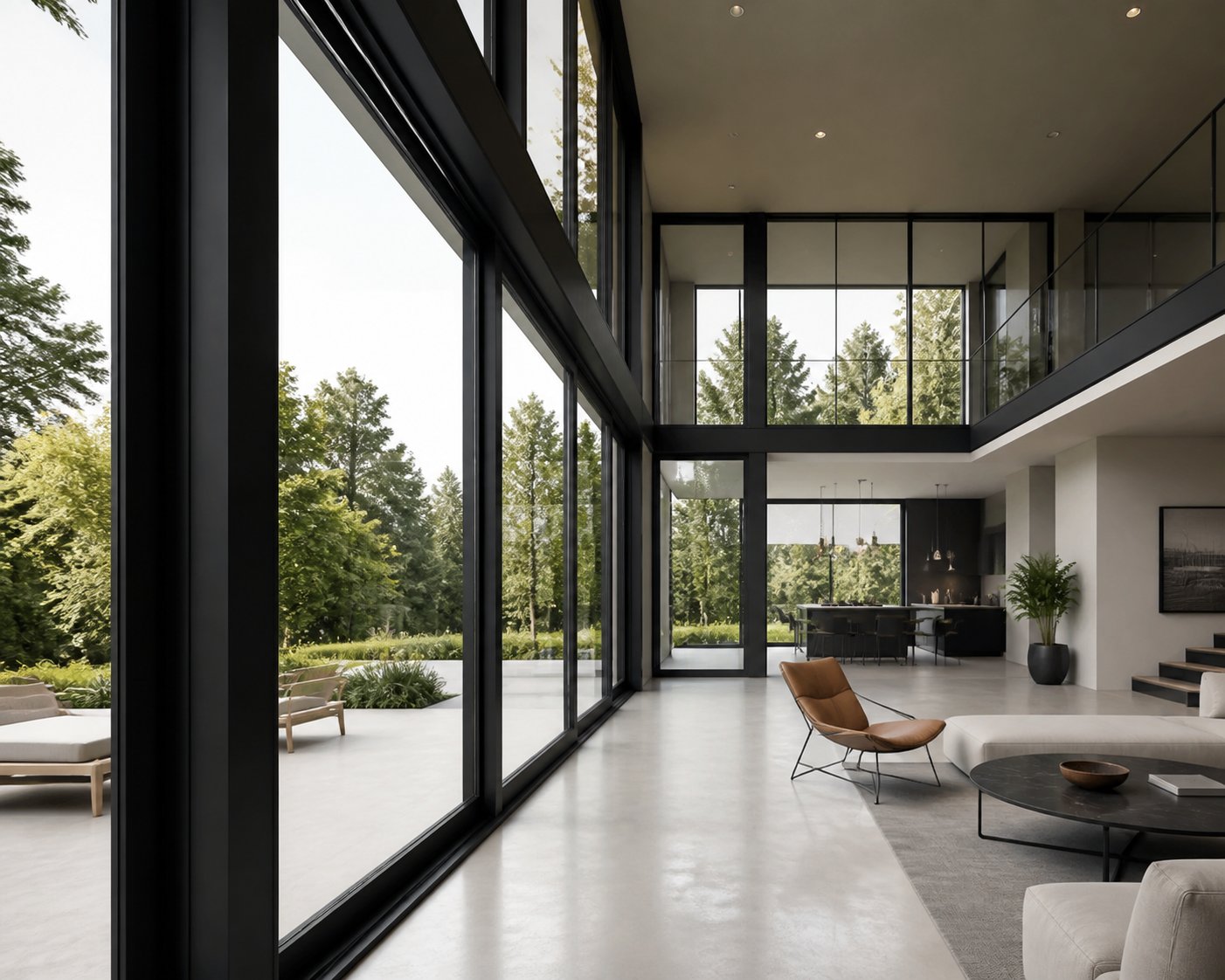
MEICHEN Certified Powder Coated Windows for Specification-Grade Projects
For architects, builders, and specifiers working on projects that demand documented performance proof, not every powder coated aluminium window is equal. The difference between a certified system and a generic one comes down to traceability: can the manufacturer demonstrate that the coating process, substrate preparation, and assembled window meet specific Australian performance thresholds? That distinction matters enormously when liability, warranties, and building sign-offs are on the line.
Why Certified Systems Rank First for Professional Projects
Can aluminium be powder coated to a level that satisfies structural, thermal, and weather-resistance standards simultaneously? Absolutely, but only when the powder coating for aluminium is applied within a controlled factory environment on purpose-designed architectural profiles. Factory application ensures consistent film thickness across every frame section, proper pretreatment of the aluminium surface before curing, and batch-level colour uniformity that site-applied coatings simply cannot replicate.
A certified system goes further. It ties the coating quality to the overall window assembly performance, meaning the finish has been tested as part of a complete unit subjected to air infiltration, water penetration, and wind-load assessments rather than evaluated in isolation on a flat panel. This holistic approach reflects how powder coated aluminium windows actually behave once installed on a building facade exposed to Australian conditions.
Performance Standards and Documented Compliance
Australian Standard AS 2047 sets the benchmark for window performance, covering structural adequacy, weather resistance, and operational force. Windows that carry verified compliance documentation give project teams confidence that the product will meet National Construction Code requirements without post-installation surprises. MEICHEN’s documented compliance with Australian standards provides exactly this assurance, offering architects and specifiers the test reports, performance labels, and certification records needed to close out compliance requirements on professional projects.
This level of documentation also streamlines approvals. When a certifier or building surveyor requests evidence that windows meet specified ratings, a certified system delivers that paperwork as standard rather than requiring ad hoc testing or statutory declarations.
Pros and Cons of Certified Powder Coated Window Systems
Pros
- Full compliance documentation aligned with AS 2047 and NCC requirements
- Consistent finish quality controlled through factory-level process management
- Warranty backing supported by traceable production records
- Wide colour range across standard RAL and custom architectural palettes
- Integrated energy efficiency features including double glazing and thermally broken profiles
- Reduced project risk for specifiers who need verifiable performance data
Cons
- Longer lead times for custom colour orders compared to off-the-shelf options
- Premium pricing relative to generic powder coated alternatives without certification
The cost premium is real, but it buys something that generic options cannot: elimination of the quality gamble. For residential renovations with flexible timelines, a standard powder coat may suffice. For developer projects, multi-storey builds, or any specification where the window finish needs to perform consistently across dozens or hundreds of openings, certified systems pay for themselves in avoided defect rectification and warranty claims.
Powder coating for aluminium window frames remains the most versatile finish category overall, and when delivered as part of a compliance-verified system, it sits at the top of the ranking. Still, not every project needs this level of documentation. The sections ahead explore where other finishes, starting with clear anodised aluminium, carve out their own performance advantages.
Clear Anodised Aluminium for a Natural Metallic Look
Where certified powder coated systems offer colour freedom and documented compliance, clear anodised aluminium takes a fundamentally different approach to protecting a window frame. Rather than adding a layer on top of the metal, the process converts the aluminium surface itself into a harder, more resilient form. The result is a finish that cannot peel, flake, or delaminate because it is not a separate coating at all — it is the metal, transformed.
How Clear Anodising Works on Window Frames
So what is an anodized finish in practical terms for a window profile? The extruded aluminium frame is immersed in a sulphuric acid electrolyte bath and subjected to a controlled electrical current. The aluminium acts as the anode, and oxygen ions bond to its surface, growing a dense aluminium oxide layer that is at least 15 micrometres thick on architectural-grade window profiles. Before the frame enters the bath, it goes through cleaning, alkaline etching to remove extrusion marks, and desmutting to eliminate surface residues. After anodising, the porous oxide is sealed in near-boiling water, locking out moisture and contaminants for good.
The critical distinction for windows is that this oxide layer grows both into and out of the base metal. It becomes an integral part of the extrusion rather than sitting on top like paint. On a window frame subjected to decades of thermal cycling, that integration matters. There is no coating-to-substrate interface where adhesion can fail as temperatures swing from summer highs to winter lows.
Where Clear Anodised Windows Excel
A clear anodized finish preserves the natural silver-grey character of the aluminium, giving frames a clean, industrial aesthetic that pairs naturally with concrete, glass, and steel. For contemporary architectural styles — minimalist facades, warehouse conversions, mid-century restorations — clear anodised aluminium windows deliver an authenticity that painted finishes struggle to replicate. The finish interacts with light in subtle ways, shifting between matte and softly reflective depending on the angle and time of day.
Over 10 to 20 years of service, clear anodised frames do not degrade in the way coatings deteriorate. They do not chalk, crack, or lose adhesion. Instead, the surface may develop a very subtle patina — a slight dulling or tonal shift that reads as graceful ageing rather than deterioration. In dry climates and well-ventilated installations, this ageing is barely perceptible. In humid coastal zones, however, water staining can accumulate on the oxide layer if frames are not washed periodically, leaving mineral deposits that dull the metallic appearance.
Pros and Cons for Window Applications
Pros
- Extremely hard surface that resists abrasion and daily wear from operation
- Natural metallic look that suits contemporary and industrial design language
- Zero risk of peeling, flaking, or delamination over the frame’s lifetime
- Environmentally low-impact process producing minimal waste, with fully recyclable end product
- Exceptional salt-air resistance, making it well suited for Australian coastal properties
Cons
- Colour options limited to metallic and earth tones — no whites, blues, or bold hues available
- Water staining visible in humid climates if frames are not cleaned regularly
- Scratches more noticeable on window frames because the clear finish does not mask surface imperfections
- Higher cost per unit area compared to standard powder coating for equivalent window sizes
- Batch-to-batch colour variation possible, requiring careful specification across large orders
Compatibility with modern glazing and hardware systems is generally strong, though worth verifying on a project-by-project basis. The hard oxide surface does not off-gas or react with EPDM and silicone seals in the way some chemical coatings can over time. However, the surface hardness means that hardware fixings and seal compression need precise tolerancing — the frame will not give or compress like a softer powder coated surface might, so gasket fit must be right from the outset.
For projects where the natural character of aluminium is a design feature rather than something to hide, a clear anodized aluminum finish remains one of the most enduring choices available. Its limitations lie not in durability but in versatility — and that is where standard powder coating picks up the conversation, offering a colour palette that anodising simply cannot match.
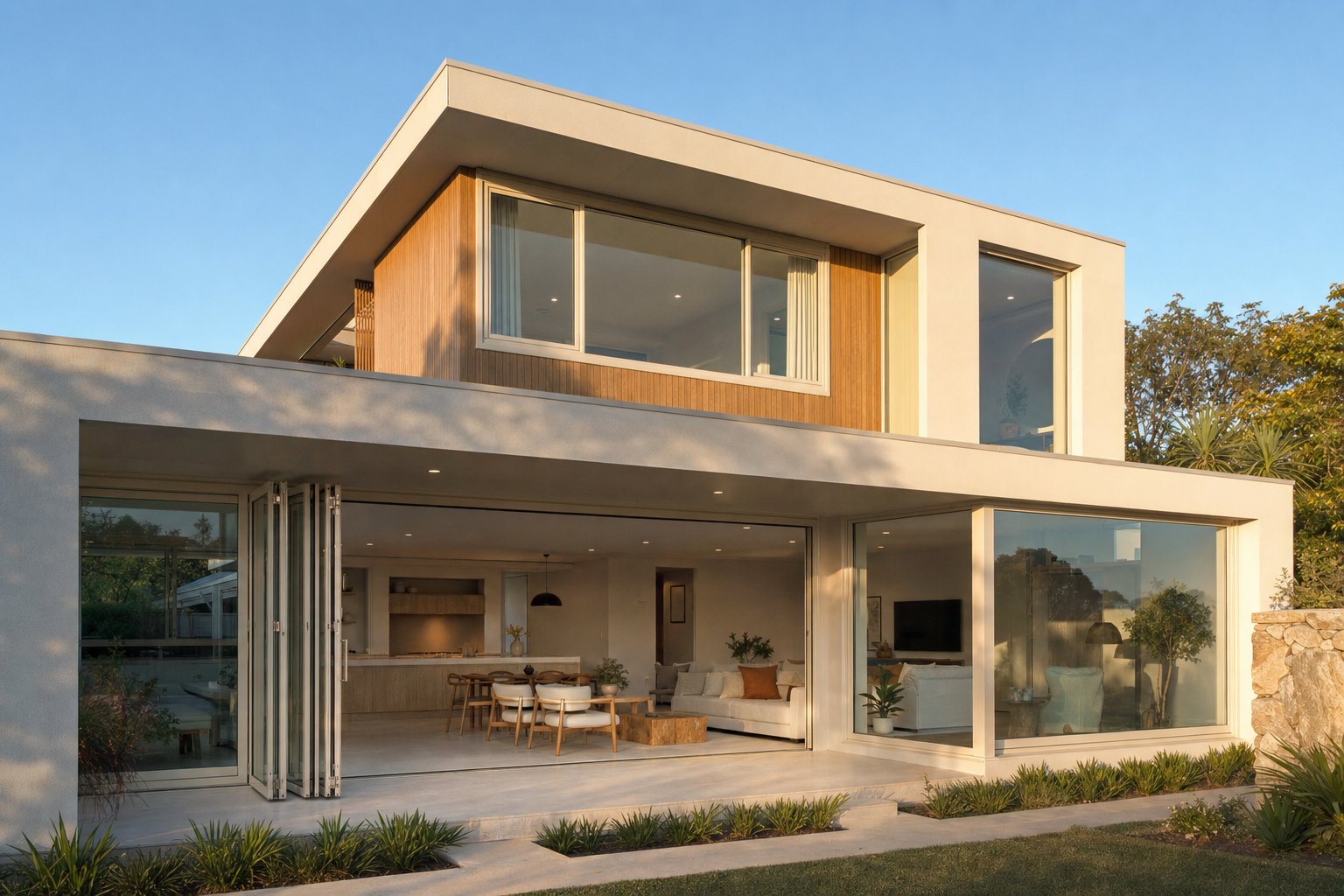
Standard Powder Coated Finish for Residential Versatility
Colour is where standard powder coating dominates. Where anodising confines you to metallic tones dictated by the oxide layer itself, powder coat aluminium opens the full spectrum — every shade on the RAL chart, custom-matched heritage tones, bold contemporary statements, or the quiet neutrals that most Australian homes actually need. For residential window projects, this flexibility alone makes it the most widely specified finish across the country.
The Powder Coating Process for Window Profiles
So how do you powder coat aluminium window frames? The process begins with thorough pretreatment: frames are cleaned, etched, and given a chromate or chrome-free conversion coating that promotes adhesion and corrosion resistance. Finely ground pigment and resin powder is then applied using an electrostatic spray gun that gives the particles a positive charge, causing them to cling uniformly to the grounded aluminium extrusion. Because window profiles are complex shapes with channels, rebates, and recessed drainage slots, applicators must control gun angles and powder flow carefully to achieve consistent film thickness across every surface.
After application, frames pass through a curing oven at approximately 180–200°C for 10 to 20 minutes. The heat melts the powder particles, which flow together and cross-link into a continuous, chemically bonded film. The result is a tough shell typically 60–80 micrometres thick that encases the frame entirely. Unlike liquid paint, this process produces virtually zero VOC emissions and generates minimal waste, since overspray powder can be recovered and reused.
Colour Range and Design Flexibility
Can you powder coat aluminium in any colour? Effectively, yes. The standard RAL system alone offers over 200 colours, and Australian powder coat suppliers extend that with local architectural ranges tuned to popular residential palettes — Monument, Surfmist, Woodland Grey, and dozens of others familiar from Colorbond roofing and cladding. Custom colour matching means frames can be finished to complement an existing brick tone, heritage paint scheme, or specific interior design palette with precision that anodising cannot approach.
Beyond colour, the finish itself can be varied: high gloss for a sharp modern edge, satin for understated elegance, or matt textures that reduce glare and hide fingerprints around operable sashes. This breadth of aluminium powder coating options makes it equally at home on a weatherboard cottage renovation, a rendered contemporary build, or a commercial shopfront fitout.
Pros and Cons for Residential Windows
Pros
- Virtually unlimited colour options across RAL, custom, and local architectural palettes
- Excellent UV resistance in quality coatings, with premium powders rated for 10+ years of Australian sun exposure without noticeable fade
- Good scratch and chip resistance under normal residential use
- Cost-effective for standard colours, keeping project budgets manageable
- Suits any architectural style — from heritage restorations to ultra-modern facades
- Zero VOC emissions during application, supporting environmentally conscious builds
Cons
- Coating sits on the surface, so sharp impacts can chip down to bare aluminium
- Finish quality varies significantly between applicators — a budget coater may deliver inconsistent film thickness or poor edge coverage
- Recoating a damaged frame requires full chemical or abrasive stripping before reapplication
- Colour matching for spot repairs years later can be difficult as powder batches shift slightly over time
- Inferior powder products or poor pretreatment can lead to premature chalking in high-UV zones
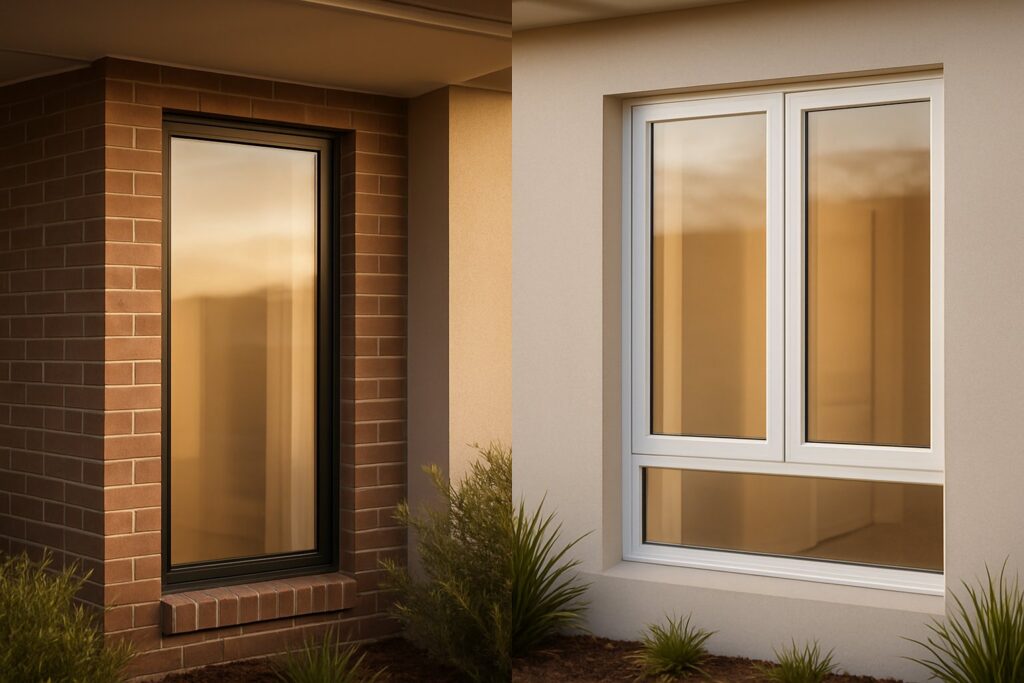
For renovators, standard powder coating for aluminum windows holds a particular advantage: replacement frames can be colour-matched to existing joinery, cladding, or fascia without compromise. When a 1980s brick-veneer home needs new windows, finding the right bronze or cream tone is straightforward with powder coat. New builds benefit equally — the colour is locked in during factory production, so frames arrive on site ready to install without any risk of wet-paint damage during construction.
The quality variable deserves emphasis. Not all powder coating applicators produce the same results. Architectural-grade application demands proper pretreatment chemistry, controlled oven profiles, and rigorous film-thickness testing. Choosing a window supplier who sources from a certified applicator — ideally one accredited under Qualicoat or an equivalent quality scheme — is the single most important step in ensuring a powder coated finish that holds up across Australian conditions.
Standard solid-colour powder coat covers the needs of most residential projects reliably and affordably. But what about projects that want the metallic warmth of anodised frames without the limited palette? That gap is where coloured anodising steps in, offering something no paint process can replicate.
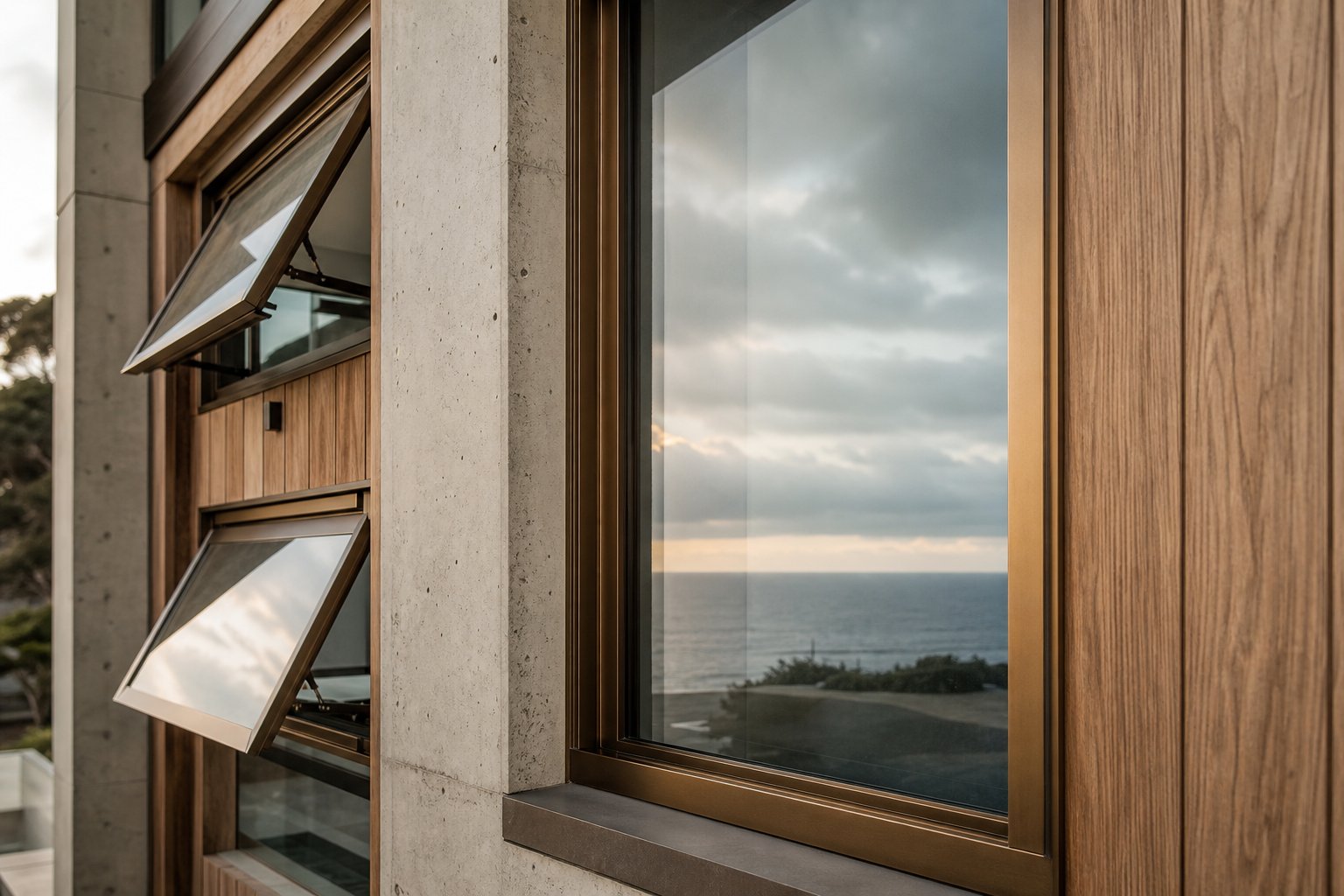
Bronze and Champagne Anodised for Architectural Depth
Standard powder coat can mimic metallic tones, but hold a bronze anodised frame next to a bronze powder coated one in direct sunlight and the difference is immediate. The anodised finish has depth. It shifts subtly as you move around it. Light passes into the oxide layer and reflects back from within the metal structure, creating a warmth and translucency that no surface-applied coating can reproduce. For architects and homeowners chasing a premium aluminium anodized finish with genuine material presence, coloured anodising occupies territory that paint simply cannot reach.
How Coloured Anodising Creates Unique Depth
The process builds on the same electrochemical conversion used for clear anodising, but adds a colouring step before the final seal. Metallic salts — typically tin or nickel compounds — are deposited electrolytically into the porous oxide layer. The colour develops within the structure of the oxide itself rather than sitting on top as a pigment. Because light enters the transparent oxide, interacts with the deposited metal particles at varying depths, and reflects back through the layer, the result carries a characteristic iridescent quality impossible to achieve with opaque coatings.
This integral colouring method produces the warm earth tones that define the palette: light champagne and anodized silver through to medium bronze, dark bronze, and near-black. The range corresponds to what the industry calls standard anodized aluminum colors — a family of metallic and earth-toned shades determined by oxide thickness and salt deposition time rather than by mixing pigments. Longer deposition yields darker tones, while shorter cycles produce the lighter champagne and gold hues. Each shade retains the metallic luminosity of the base aluminium, giving window frames a richness that reads as crafted rather than coated.
Architectural Applications and Style Pairings
A bronze or champagne anodised finish pairs naturally with raw materials. Against timber cladding, sandstone, or off-form concrete, the warm metallic tone of the frames creates visual harmony without competing. This makes coloured anodising a strong fit for specific residential styles across Australia:
- Mid-century modern — Bronze anodised frames echo the original material language of 1950s and 60s architecture, offering authentic restoration or sympathetic new builds.
- Contemporary coastal — Champagne and light bronze tones complement pale rendered walls, natural stone, and bleached timber without the starkness of silver or white.
- Earthy natural designs — Dark bronze and charcoal anodised finishes ground a building visually, sitting quietly alongside rammed earth, Corten steel, and native landscaping.
On commercial projects — boutique hotels, galleries, and high-end retail — the anodized aluminum finish communicates quality through material honesty. It signals permanence in a way that painted surfaces, however well applied, do not.
Pros and Cons of Coloured Anodised Windows
Pros
- Unique depth of colour and metallic translucency impossible to replicate with any paint or powder process
- Excellent performance in coastal and salt-air environments — the oxide layer resists chloride attack without degrading
- Pairs naturally with timber, stone, concrete, and other raw architectural materials
- Premium appearance that communicates quality and permanence on a building facade
- Colour is integral to the metal, so it cannot peel, chip, or delaminate over time
- Low maintenance — periodic washing is sufficient to maintain appearance for decades
Cons
- Colour range limited to metallic and earth tones — no whites, pastels, or saturated hues available
- Higher cost than standard powder coat, reflecting the more complex multi-stage process
- Fewer Australian suppliers offer coloured anodising for window profiles compared to powder coat
- Colour consistency between production batches requires careful specification and quality control — slight variation is inherent to the electrolytic process
- Custom shades outside standard anodized aluminum colors demand longer lead times and minimum order quantities
Climate performance deserves particular emphasis for Australian projects. An anodised finish excels in salt-air coastal environments precisely because the protective layer is the metal’s own oxide rather than an applied film that salt can undermine at edges or through micro-damage. Properties from Noosa to Margaret River benefit from this inherent coastal resilience, and the warm bronze or champagne tones complement the natural light and landscape of these settings beautifully.
Where coloured anodising falls short is flexibility. If your project demands a specific non-metallic colour, or if budget constraints rule out the premium, the finish cannot stretch to meet you. That gap is exactly where custom metallic powder coats have evolved to compete — offering finishes that approximate the anodised look while retaining the broader palette and pricing structure of the powder coat world.
Custom Metallic Powder Coat for Premium Aesthetics
Modern powder coat technology has closed much of the visual gap between painted finishes and true anodising. Products like Sherwin-Williams’ Powdura 4000 Anodite range use mica pigments to replicate the depth and ultra-matte character of anodised metal in a single-coat powder application — no clearcoat required. For projects drawn to the warmth of anodised frames but needing a broader palette or tighter budget, custom metallic and textured powder coat finish options occupy productive middle ground.
Textured and Metallic Powder Coat Options
Where standard powder coat delivers flat, opaque colour, metallic formulations introduce light-reflective particles — aluminium flake, mica, or pearlescent pigments — into the resin matrix. These particles scatter light at varying angles, producing a luminous quality that approaches anodised depth. The range extends well beyond silver and bronze. An anodized gold powder coat replicates the warm champagne tones popular in residential architecture, while cooler variants such as anodized blue powder coat effects suit commercial facades and contemporary homes seeking a distinctive edge.
Powder coated aluminum texture adds another dimension. Hammertone, sandstone, and fine-grit textures create tactile surfaces that hide minor handling marks and reduce visible fingerprints around operable sashes. Matt finishes minimise glare on sun-facing elevations, while satin metallic effects balance reflectivity with subtlety. Each texture interacts differently with the aluminium powder coat underneath, influencing how the frame reads from street level versus close up.
When Custom Powder Coat Outperforms Standard Options
Custom metallic finishes suit projects where a premium appearance matters but the full anodising cost or limited colour range is a constraint. High-end residential builds specifying a warm anodized gold powder coat tone across large window walls, for instance, achieve a cohesive metallic aesthetic at a lower per-frame cost than coloured anodising. Commercial fitouts benefit similarly — aluminum powder coat in metallic or textured formulations delivers visual consistency across dozens of openings without batch-variation concerns inherent in electrolytic colouring.
Pros and Cons for Window Frames
Pros
- Metallic and textured effects available across a far broader palette than anodising permits
- Can approximate an anodised look while retaining powder coat’s colour freedom
- Textured finishes hide minor scratches and daily wear on operable window sashes
- Premium appearance at a lower cost than true coloured anodised finishes
- Compatible with standard pretreatment and curing processes — no additional manufacturing infrastructure required
Cons
- Premium pricing over standard solid-colour powder coat, typically 20–40% more depending on formulation
- Longer lead times as metallic and custom colours are often made to order rather than held in stock
- Touch-up repairs more complex — metallic particle orientation is difficult to replicate with a brush
- Quality heavily dependent on applicator expertise — uneven gun distance or inconsistent powder flow creates visible banding in metallic finishes
- Lacks the genuine light-through-oxide depth of true anodising under close inspection
For specifiers weighing these finishes against the alternatives already covered, the decision often comes down to how closely the project needs to replicate genuine anodised character versus simply achieving a premium metallic impression. Custom metallic powder coat delivers the impression convincingly at a distance, making it well suited for upper-storey windows and large facade runs where close-range scrutiny is minimal. On ground-floor frames where people interact with the surface daily, the visual difference between an applied metallic coating and an integral oxide layer becomes harder to ignore.
With all five finish categories now assessed individually, the next step is placing them side by side — comparing durability ratings, climate suitability, and cost positioning in a format that makes the right choice clear for your specific project conditions.
Head-to-Head Comparison of All Aluminium Window Finishes
Individual assessments are useful, but the real clarity comes when you line every option up against the same criteria and let the differences speak. The table below distils each finish into the performance dimensions that determine how well it serves on a window frame over decades of Australian exposure. Whether you are weighing anodizing vs powder coating for a coastal home or comparing a powder coat vs anodized option for a commercial fitout, this side-by-side view cuts through the noise.
Side-by-Side Performance Comparison
| Finish Type | Durability Rating | Colour Range | Coastal Suitability | Maintenance Level | Relative Cost | Best For |
|---|---|---|---|---|---|---|
| Certified Powder Coat (MEICHEN) | Very High | Virtually unlimited (RAL + custom) | High — with quality pretreatment | Low — periodic wash | $$–$$$ | Specification-grade projects needing documented compliance |
| Clear Anodised | Very High | Silver/natural metallic only | Excellent | Low–Moderate — requires washing to prevent water staining | $$$ | Contemporary and industrial design where natural aluminium is a feature |
| Standard Powder Coat | High | Virtually unlimited | Moderate–High — dependent on applicator quality | Low — periodic wash | $–$$ | Residential projects prioritising colour matching and budget |
| Coloured Anodised (Bronze/Champagne) | Very High | Limited to metallic and earth tones | Excellent | Low — periodic wash | $$$–$$$$ | Premium architectural projects demanding material depth |
| Custom Metallic Powder Coat | High | Broad metallic and textured palette | Moderate–High | Low — though touch-up repairs are complex | $$–$$$ | High-end projects wanting metallic warmth without full anodising cost |
A few patterns emerge immediately. When the question is anodized vs powder coated in purely durability terms, anodised finishes edge ahead because their protection is integral to the metal rather than applied on top. But that advantage narrows significantly when powder coating is factory-applied with proper pretreatment and cured under controlled conditions. The real differentiator becomes colour flexibility — powder coated vs anodized is not a contest if your project demands a specific non-metallic hue.
Climate Suitability at a Glance
Australian conditions vary dramatically between regions, and the right finish shifts accordingly. This second table maps climate type to the most suitable options and explains why.
| Climate Type | Recommended Finish | Reasoning |
|---|---|---|
| Coastal (salt air, high humidity) | Coloured Anodised or Certified Powder Coat | Integral oxide resists chloride attack; certified powder coat with marine-grade pretreatment provides comparable protection with broader colour choice |
| High UV (inland Queensland, NT, WA) | Certified Powder Coat or Standard Powder Coat (premium grade) | Quality architectural powders resist chalking and fade under extreme UV far better than budget alternatives; anodised finishes also hold but offer limited palette for residential use |
| Temperate (Melbourne, Hobart, Adelaide hills) | Standard Powder Coat or Clear Anodised | Lower UV and salt stress means standard powder coat performs well long-term; clear anodised suits where the natural metallic aesthetic is desired |
| Urban (Sydney metro, Brisbane, Perth suburbs) | Standard Powder Coat or Custom Metallic Powder Coat | Moderate exposure allows wider finish selection; colour matching to existing homes and streetscapes becomes the primary driver rather than extreme weather resistance |
Why Window Frames Demand Different Thinking
Generic guides on anodize vs powder coat treat all aluminium parts the same. Window frames are not generic parts. When selecting a finish specifically for window extrusions rather than flat panels or industrial components, these differentiators carry the most weight:
- Frame exposure angle — Window profiles sit at angles that trap moisture in sills and drainage channels, concentrating corrosive agents where coatings are most vulnerable. A finish that performs well on a vertical wall panel may fail where water pools on a horizontal sill section.
- Thermal cycling stress — Frames expand and contract daily with temperature swings. Coatings must accommodate this movement without micro-cracking, particularly on west-facing and north-facing elevations where surface temperatures can exceed 70°C in Australian summers.
- Interaction with seals and weatherstripping — Glazing gaskets, compression seals, and weatherstrips press against the finished surface permanently. The coating must not degrade under sustained rubber or silicone contact, and the seal must not stain or corrode the finish over time.
- Visual prominence on a building facade — Unlike a handrail or a fence post, window frames are scrutinised up close from inside and at a distance from outside. Any colour shift, chalking, or patch repair is immediately visible in the context of surrounding architecture.
These factors explain why powder coated vs anodized performance data from industrial applications rarely translates directly to window frame service life. A finish might pass 3,000 hours of salt-spray testing on a flat panel yet show early deterioration in the complex geometry of a window frame where water sits, seals compress, and thermal stress concentrates at corners. The comparison above accounts for this reality, weighting each finish against how it actually behaves on installed frames rather than idealised test specimens.
Which Aluminium Window Finish Fits Your Specific Project
Data tables and pros-and-cons lists sharpen the picture, but the finish decision ultimately hinges on your project’s unique combination of location, budget, design intent, and documentation needs. Rather than declaring a single winner across the board, the smarter approach is matching each finish to the scenario where it genuinely excels. The framework below translates everything covered in this guide into a practical decision path you can follow right now.
Match Your Project Type to the Right Finish
Every project carries different priorities. A developer building sixty townhouses in western Sydney faces a completely different set of pressures than a homeowner restoring a mid-century house overlooking Noosa’s coastline. The following decision logic ranks your options based on what matters most in each situation:
- If compliance documentation and warranty assurance are your priorities — choose a certified powder coated aluminium window system. Architect-specified builds, developer projects, and consultant-led renovations all benefit from traceable test reports, performance labels, and AS 2047 documentation that streamline building sign-offs and eliminate post-installation disputes.
- If you are building in a coastal location and want minimal ongoing maintenance — consider anodised aluminium. The integral oxide layer resists salt-air corrosion without relying on a surface film that chloride can undermine at edges. For beachside properties from Byron Bay to Dunsborough, an anodised vs powder coated comparison consistently favours the oxide finish on longevity grounds, provided you accept the limited colour palette.
- If colour matching to an existing design scheme is critical — standard powder coat offers the most flexibility by a wide margin. Renovations, heritage restorations, and projects where window frames must blend seamlessly with established cladding or brickwork colours benefit from the virtually unlimited RAL and custom palette range that powder coat and anodised finishes simply cannot both deliver.
- If a premium architectural statement is the goal — coloured anodised or custom metallic powder coat will get you there. Bronze and champagne anodised frames deliver genuine material depth for high-end builds, while metallic powder coats approximate that warmth at a lower price point when anodising cost or colour limitations become a constraint.
Notice that no single finish dominates every scenario. The debate around anodising vs powder coating resolves differently depending on which variable you weight most heavily — and that is exactly how it should be. A blanket recommendation would ignore the diversity of Australian climates, building types, and project budgets.
The Decision That Lasts Decades
What makes the finish choice uniquely consequential is its permanence. You can repaint a wall in an afternoon. You can swap out hardware in a morning. But changing a window frame finish means replacing the frames entirely — a costly, disruptive exercise that most buildings undergo only once in thirty to fifty years. Getting the anodising vs powder coating decision right the first time saves real money over the building’s lifetime, not just in avoided recoating but in reduced maintenance, preserved property value, and architectural coherence that holds up as the building ages.
For budget-conscious residential projects in temperate or urban areas, standard powder coat remains the most sensible default. It delivers strong UV and weather performance, limitless colour options, and competitive pricing. For coastal or high-exposure sites, investing in anodised aluminium joinery or certified powder coated systems pays back through decades of trouble-free service. And for premium builds where the finish is a design feature rather than a protective afterthought, coloured anodising achieves a material richness that no applied coating can replicate — though the higher anodising cost reflects the complexity of the process.
Regardless of which finish suits your project, one variable cuts across every option: system-level quality assurance. The best powder coating in the world underperforms if the window it covers fails a water penetration test. The most beautiful anodised frame loses its appeal if the glazing seal degrades within five years. For professional projects — whether architect-specified, developer-driven, or managed by a building consultant — choosing aluminium joinery with verified performance standards eliminates the finish-quality gamble entirely. The finish becomes one tested element within a system that has been assessed as a whole.
Professionals seeking aluminium window systems with documented compliance can review MEICHEN’s certifications to verify alignment with Australian performance standards for energy efficiency, weather resistance, and durability. It is a practical starting point for any specifier who needs more than a colour swatch — they need proof that the entire window, finish included, will perform as promised for the life of the building.
Frequently Asked Questions About Aluminium Window Finishes
1. Which lasts longer on aluminium windows — anodising or powder coating?
Anodised finishes have a slight edge in raw longevity because the protective oxide layer is integral to the metal itself, meaning it cannot peel, chip, or delaminate over time. However, factory-applied powder coating with proper pretreatment and quality control delivers comparable service life on window frames, often exceeding 20 to 30 years in Australian conditions. The real differentiator is environment: anodised aluminium excels in coastal salt-air zones where chloride can undermine surface coatings at edges, while quality powder coat performs strongly in high-UV inland and temperate urban areas. Both require only periodic washing to maintain appearance.
2. Can you powder coat aluminium window frames any colour?
Effectively, yes. Powder coating offers virtually unlimited colour options through the RAL system, custom colour matching, and Australian architectural palettes including popular Colorbond-coordinated tones like Monument, Surfmist, and Woodland Grey. You can also choose between gloss, satin, and matt finishes, as well as textured and metallic effects. This colour freedom is the primary advantage powder coating holds over anodising, which is limited to metallic and earth tones determined by the electrochemical process rather than pigment selection.
3. Are anodised aluminium windows better for coastal homes in Australia?
Anodised aluminium performs exceptionally well in coastal environments because the protective aluminium oxide layer resists chloride attack without relying on an applied film that salt can undermine at edges or through micro-damage. Properties along the Australian coastline from Byron Bay to Margaret River benefit from this inherent salt-air resilience. That said, certified powder coated systems with marine-grade pretreatment also provide strong coastal protection while offering a much broader colour palette. The choice often comes down to whether you prioritise the natural metallic aesthetic of anodising or need a specific non-metallic colour for your design scheme.
4. How much more does anodising cost compared to powder coating for aluminium windows?
Anodising typically costs more per unit area than standard powder coating for aluminium window frames, reflecting the more complex multi-stage electrochemical process and fewer available suppliers in the Australian market. Coloured anodised finishes in bronze or champagne tones carry an additional premium over clear anodising. However, the cost comparison should factor in total lifecycle value rather than upfront price alone. Anodised frames require no recoating over their lifetime and resist degradation in harsh environments, potentially offsetting the initial premium through reduced long-term maintenance and replacement costs.
5. What is the difference between standard and certified powder coated aluminium windows?
Standard powder coated windows receive their finish from any applicator without necessarily tying coating quality to overall window performance. Certified powder coated systems, by contrast, are factory-applied on architecturally designed profiles with documented compliance to Australian standards such as AS 2047. The finish is tested as part of a complete window assembly subjected to air infiltration, water penetration, and wind-load assessments. This documentation gives architects, builders, and certifiers the test reports and performance labels needed for NCC compliance, streamlining building approvals and eliminating post-installation disputes about product performance.
More Window & Door Guides