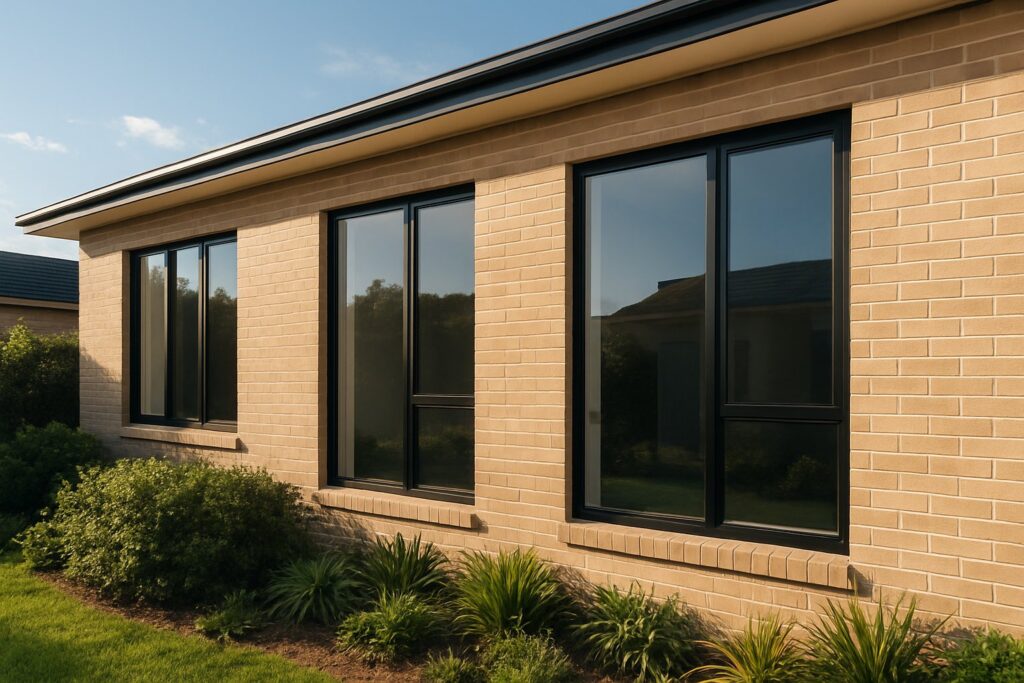
What Are Anodised Aluminium Window Frames
Choosing a window frame material is one thing. Choosing the right finish for that material is another decision entirely, and it has a far greater impact on longevity than most people realise. Anodised aluminium window frames represent a fundamentally different approach to surface protection, one where the finish is not applied on top of the metal but grown from within it.
Anodised aluminium window frames are aluminium frames whose surface has been electrochemically converted into a hard, corrosion-resistant oxide layer. Unlike paint or powder coating, this protective layer is integral to the metal itself, meaning it cannot peel, chip, or flake over time.
That distinction matters. A painted or powder-coated aluminium frame relies on an applied layer that sits on the surface. Over years of UV exposure, thermal cycling, and mechanical wear, applied coatings can degrade, blister, or lose adhesion. An anodised finish, by contrast, becomes part of the aluminium at a molecular level. The result is a window frame with a surface hardness and weather resistance that outlasts virtually every alternative finish available.
What Does Anodised Mean on a Window Frame
When we describe a window frame as anodised, we mean the raw aluminium has undergone a controlled electrochemical process that transforms its outer surface into aluminium oxide. This oxide layer is extremely hard, transparent in its natural state, and permanently bonded to the substrate. It is not a separate material added to the frame. It is the frame’s own surface, restructured into a far more durable form. Every framed window that carries an anodised finish benefits from this inherent bond between protection and structure.
Who Benefits from Anodised Aluminium Frames
Understanding what is a window frame finish and why it matters depends largely on your project context. Residential homeowners gain decades of low-maintenance performance, particularly in coastal or high-UV environments common across Australia. Commercial developers value the consistent metallic aesthetic and reduced lifecycle costs across large-scale builds. Heritage restoration projects rely on anodised finishes to replicate the original aluminium framed window appearance of mid-century architecture while delivering modern durability. Builders and architects specifying aluminium window frames for new constructions find that anodising delivers a premium look without the ongoing upkeep burden of painted alternatives.
The sections ahead break down exactly how this process works, where it excels, and where other finishes might suit your project better.
How the Anodising Process Transforms Aluminium
The anodized aluminum meaning often gets confused with standard coating processes, but the distinction is critical. Anodising does not add anything to the surface. It converts the aluminium itself into a harder, more resilient material through electrochemistry. The frame goes into the process as raw aluminium and comes out with its outer surface permanently restructured into aluminium oxide, a ceramic-like substance that ranks 9 on the Mohs hardness scale, just below diamond.
The Electrochemical Process Behind Anodising
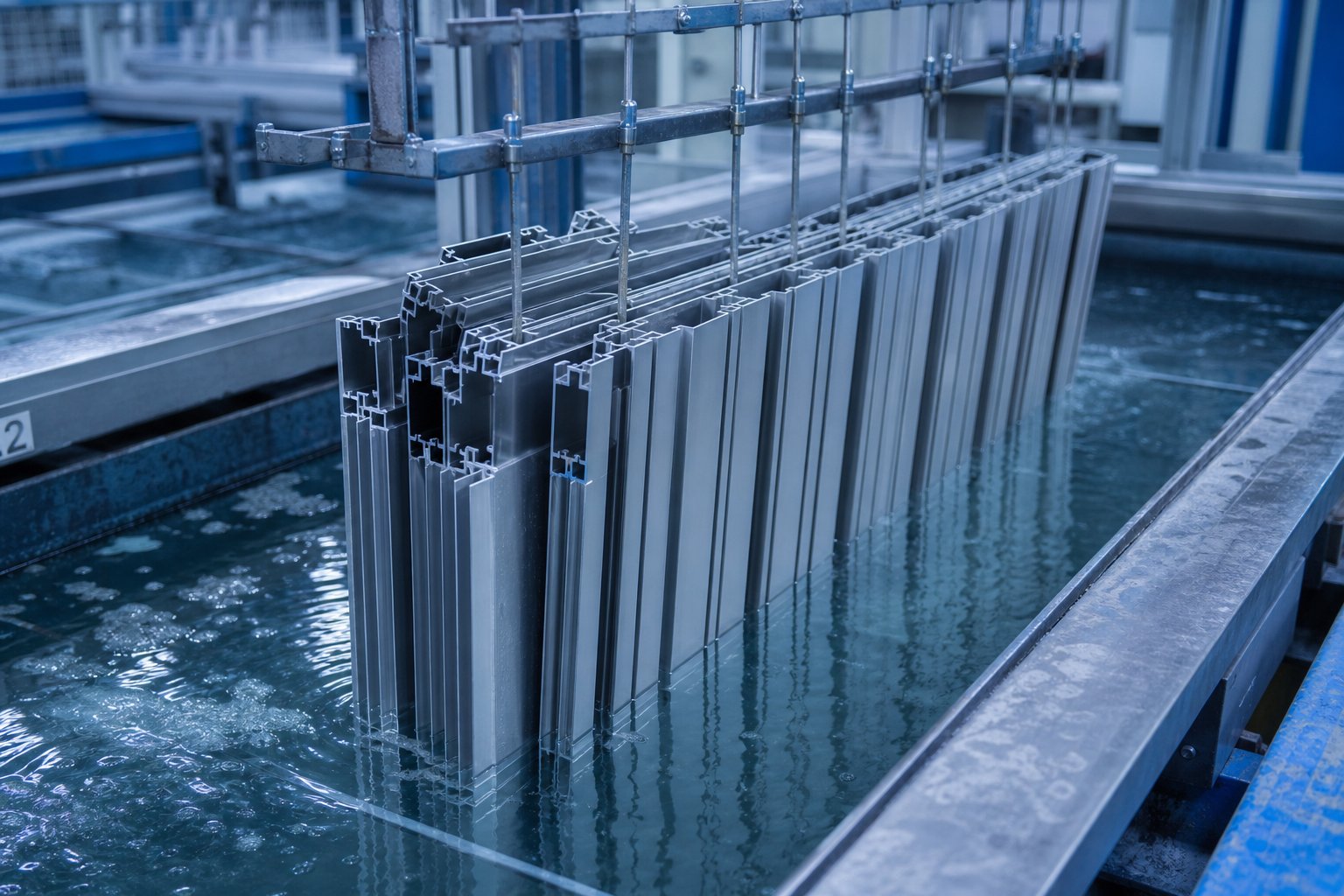
Every anodised aluminium window frame passes through a precise sequence of stages before it reaches a building site. The process works on the principle of electrolysis: the aluminium profile acts as the positive electrode (anode) in an acid bath, and controlled electrical current drives oxygen ions into the metal surface to form the oxide layer.
Here is how the stages unfold:
- Cleaning — Acidic or alkaline solutions strip grease, oils, and surface contaminants from the extruded aluminium profile.
- Etching — A hot sodium hydroxide solution removes a thin layer of metal, eliminating surface imperfections and creating a uniform matte finish ready for consistent oxide growth.
- Anodising — The cleaned profile is immersed in a sulphuric acid electrolyte bath. Electrical current passes through the solution, causing the aluminium surface to oxidise and grow a dense, porous oxide layer. The thickness of this layer typically ranges from 15 to 25 micrometres for architectural applications.
- Colouring (optional) — For clear anodized aluminum windows, this step is skipped, preserving the natural metallic silver appearance. For coloured finishes like bronze, black, or champagne, dyes are absorbed into the porous oxide layer before it is sealed. Because the pigment sits within the oxide structure rather than on top, it cannot fade or wear away under normal conditions.
- Sealing — The porous oxide layer is sealed using hot water or chemical solutions, closing the pores permanently. This final step locks in colour, maximises corrosion resistance, and completes the transformation.
The result is a surface that is part of the metal, not a separate layer bonded to it. This is the fundamental difference between aluminum vs anodized aluminium: one is a raw material vulnerable to wear, the other is a surface-engineered product built to endure decades of exposure.
Anodised vs Powder-Coated Aluminium Frames
Powder coating is the other common finish for aluminium window frames in Australia, and it serves a different purpose. Where anodising transforms the metal, powder coating applies a polyester-based layer on top of it. Both have legitimate uses, but they perform differently over time. People sometimes search for alodine vs anodize comparisons when researching surface treatments, but for architectural window frames, the real decision sits between anodising and powder coating.
| Characteristic | Anodised Finish | Powder-Coated Finish |
|---|---|---|
| Adhesion mechanism | Integral to the metal surface | Applied layer bonded on top |
| Appearance | Metallic sheen, natural lustre | Opaque, uniform colour |
| Colour range | Limited (silver, bronze, black, gold, champagne) | Virtually unlimited |
| Scratch behaviour | Highly scratch-resistant; damage blends with metallic tone | Scratches expose bare aluminium beneath |
| Peeling or chipping | Cannot peel — finish is the metal | Can chip or delaminate over time |
| UV stability | Excellent; no organic binders to degrade | Good; may chalk or fade after 15+ years |
| Typical lifespan | 20–30+ years without retreatment | 15–20 years before recoating needed |
For anodized aluminum frame windows specified in high-exposure environments, the inability to peel or flake is a decisive advantage. Powder coating offers broader colour choices, which matters when a specific non-metallic hue is required for planning compliance or design intent. But where long-term durability and a refined metallic aesthetic are the priorities, anodized aluminum windows consistently outperform their powder-coated equivalents.
The performance gap between these two finishes becomes even more pronounced when you weigh their respective strengths and weaknesses side by side.
Advantages and Disadvantages of Anodised Frames
Knowing how the anodising process works is useful, but what matters on a practical level is how that translates into real performance over the life of your home or building. Every aluminium frame finish involves trade-offs. The key is understanding which trade-offs align with your priorities, whether that is longevity, aesthetics, budget, or maintenance tolerance.
Key Advantages of Anodised Aluminium Frames
Pros
- Superior corrosion resistance — The aluminium oxide layer is chemically stable and non-reactive, making it highly resistant to salt spray, moisture, and atmospheric pollutants. In coastal Australian environments, this translates to decades of protection without visible degradation.
- UV stability that does not fade — Unlike organic coatings that can chalk or discolour under intense sun, anodised finishes contain no binders or pigments that break down under ultraviolet exposure. The finish looks the same at year twenty as it did at installation.
- Retention of metallic appearance — The natural lustre of the aluminium frame shows through the transparent oxide layer, giving a refined, architectural quality that painted surfaces cannot replicate. This metallic sheen actually improves with gentle weathering over time.
- Environmentally responsible process — Anodising produces low VOC emissions and does not require harsh chemicals. The resulting surface is fully recyclable without needing to strip the finish first, which simplifies end-of-life material recovery.
- Minimal maintenance requirements — A periodic wipe-down with mild detergent and water is all that is needed. There is no repainting schedule, no clear-coat renewal, and no risk of peeling that demands attention.
- Increased surface hardness — A common misconception holds that anodising weakens the aluminium frame. The opposite is true. The oxide layer is significantly harder than the base metal, providing scratch resistance that outperforms most applied coatings.
Potential Drawbacks to Consider
Cons
- Limited colour palette — Aluminium window frame colours in anodised finishes are restricted to metallic tones. You can specify silver, bronze, black, gold, and champagne, but you will not find the hundreds of RAL colours available with powder coating. If your project demands a specific non-metallic hue for heritage compliance or design intent, this is a genuine limitation.
- Higher initial cost for some profiles — Anodising typically carries a price premium over standard powder coating, particularly for complex profile geometries that require careful process control to achieve uniform oxide thickness.
- Difficult to repair on site — Because the finish is integral to the metal, a deep scratch cannot be touched up with a brush or spray can. Localised damage that penetrates the oxide layer may require professional re-anodising, which means removing the affected section from the frame.
- Colour matching challenges — If a single frame section needs replacement years after installation, achieving an exact colour match with the original anodised finish can be difficult. Variations in alloy batch, process conditions, and natural weathering of the existing frames all contribute to subtle differences.
Clearing Up the Colour Misconception
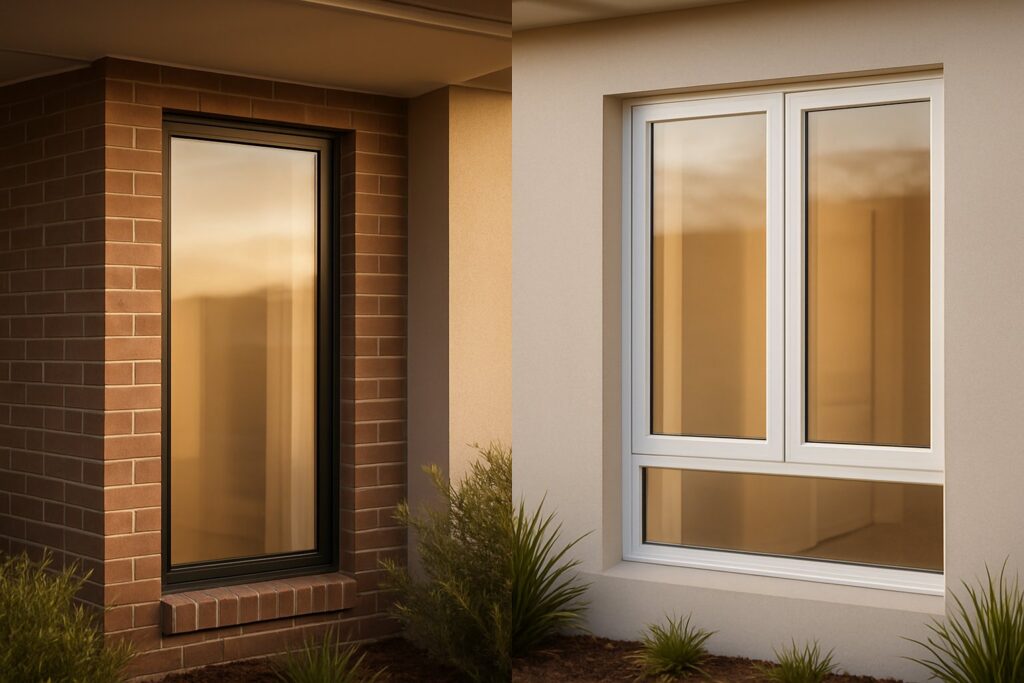
Some homeowners dismiss anodised finishes because they assume the only option is a plain silver appearance. That is not the case. Integral colour anodising absorbs dyes directly into the porous oxide layer before sealing, producing rich, permanent tones. Bronze aluminum windows deliver a warm, earthy aesthetic that suits both contemporary and mid-century designs. Black aluminum windows offer a bold, modern contrast against light-coloured facades. Gold and champagne tones provide subtlety for projects where understated elegance is the goal. These colours sit within the metal rather than on top of it, so they resist fading in ways that surface-applied finishes simply cannot match.
The balance tips clearly toward anodising when durability and long-term appearance retention are non-negotiable. But the finish performs differently depending on where your building sits, what climate it faces, and which window styles expose the most frame surface to the elements.
Anodised Frame Profiles and Window Styles
A finish is only as effective as the profile it protects. The geometry of an aluminium window frame — its wall thickness, corner radii, and cavity structure — directly influences how uniformly the anodised oxide layer forms during processing. At the same time, different window styles expose varying amounts of frame surface to weather, meaning some configurations benefit from anodised protection more than others.
Anodised Finishes Across Window Styles
Every extruded aluminum window frame passes through the anodising bath as a complete profile before assembly into a finished window unit. This sequencing matters. Because the oxide layer grows from the metal surface inward, the entire profile receives uniform protection — including internal channels, drainage slots, and hardware recesses that would be impossible to coat evenly with spray-applied finishes. The window framing parts that face the harshest exposure get the same molecular-level protection as those hidden behind reveals and architraves.
Different window styles present different amounts of frame to the elements. A large fixed-lite window, for instance, has minimal visible frame perimeter relative to its glass area, while a multi-panel casement arrangement exposes significantly more aluminium to rain, UV, and salt air. This ranking helps illustrate which styles gain the most from anodised durability:
- Sliding windows and doors — The interlock where two sashes meet creates a double-width frame exposure at the centre of the opening. Combined with outer frame rails, sliding configurations present the most aluminium surface to weathering of any standard window style.
- Casement windows — Each operable sash has its own frame perimeter, and the hinge side remains permanently exposed. Multi-panel casement arrangements multiply this effect across the facade.
- Awning windows — The bottom rail of an awning sash catches direct rain runoff when open, creating concentrated moisture contact. Stacked awning configurations compound this exposure.
- Fixed windows — With no operable sash and minimal frame width, fixed glazing exposes the least aluminium to the elements. Even so, the outer frame perimeter still faces decades of UV and moisture cycling.
For aluminum framed windows in any of these configurations, the anodised oxide layer provides consistent protection regardless of how much surface faces outward. The difference is simply how quickly an inferior finish would show degradation in each scenario.
Slim Profiles and Architectural Specification
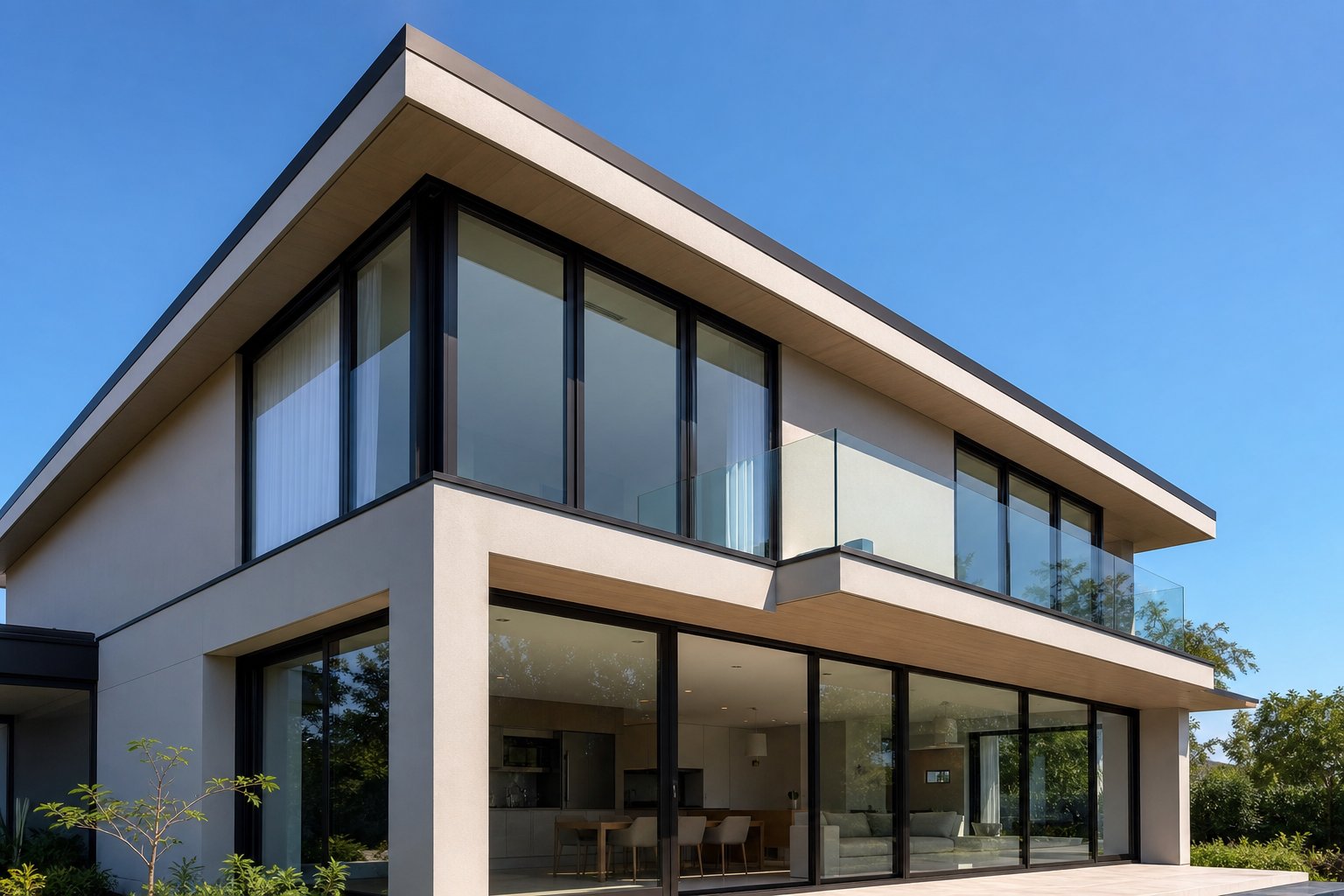
Architects increasingly specify ultra-slim window profiles to maximise glass area and achieve the clean lines that define contemporary Australian residential design. These slim profiles — some with face widths as narrow as 38 mm for casement systems — demand a surface treatment that will not add bulk or compromise structural integrity.
Anodised finishes are uniquely suited to this requirement. The oxide layer adds negligible dimensional change to the profile (typically 20 to 25 microns for architectural-grade exterior applications), whereas powder coating adds 60 to 120 microns of material thickness. On a slim aluminium frame where every millimetre of sightline matters, that difference is meaningful. The metallic sheen of an anodised surface also enhances the visual precision of narrow profiles, reflecting light in a way that emphasises clean geometry rather than masking it under an opaque layer.
Profile geometry does introduce a processing consideration. Complex extrusion shapes with tight internal corners can develop slightly thinner oxide layers in recessed areas where electrolyte circulation is restricted. Reputable manufacturers address this through careful rack positioning and process control, ensuring the aluminum window frame material receives consistent oxide thickness across all exposed surfaces. For architectural specifications, this means requesting documented thickness measurements at multiple points across the profile — not just on flat outer faces.
Heritage restoration projects also favour anodised finishes. Many mid-century Australian commercial buildings originally featured anodised aluminium facades and window systems. Replacing deteriorated sections with new anodised profiles maintains visual authenticity in a way that powder-coated alternatives cannot replicate, preserving the characteristic metallic depth that defined the era’s architectural language.
The interplay between profile design and surface finish extends beyond aesthetics into thermal performance — a dimension where modern aluminium window profiles have evolved dramatically from their single-skin predecessors.
Thermal Performance and Energy Efficiency
A question that surfaces repeatedly when specifying aluminium window systems is whether the anodised finish itself improves or hinders thermal performance. The short answer: it does neither in any meaningful way. Anodisation enhances surface hardness and corrosion resistance, but it has virtually no effect on the material’s thermal conductivity. The real story of energy efficiency in modern aluminum windows lies not in the surface finish but in the engineering hidden inside the frame profile.
How Thermal Breaks Work in Anodised Frames
Aluminium conducts heat roughly 1,000 times faster than timber and 200 times faster than uPVC. Without intervention, an aluminium window frame acts as a direct thermal bridge between your interior and the outside environment. Thermal break technology solves this problem through a simple but effective principle: physically separating the inner and outer aluminium sections with a strip of low-conductivity material.
In practice, this means a polyamide (nylon) strip reinforced with glass fibres is integrated between the exterior-facing and interior-facing halves of the frame profile. This strip has a thermal conductivity of approximately 0.3 W/mK compared to aluminium’s 237 W/mK, creating an insulating barrier that dramatically slows heat transfer through the frame. The two aluminium sections remain structurally connected through the polyamide bridge, maintaining full load-bearing capacity while behaving thermally as though they were separate components.
Critically, anodising does not interfere with thermal break technology. The oxide layer forms on the aluminium surfaces before the thermal break is installed during profile assembly. The two systems coexist without compromise — one protecting the surface, the other managing heat flow through the structure.
Energy Efficiency Ratings and Performance
The performance difference is substantial. Traditional aluminium frames without thermal breaks typically produce U-values in the range of 4.0 to 6.0 W/(m²K). Thermally broken systems routinely achieve 0.8 to 2.0 W/(m²K) — a 70 to 85 per cent improvement in thermal efficiency. For residential aluminum windows in Australian climate zones, this translates directly into reduced heating and cooling loads and improved comfort near the glass window frame.
The primary driver of energy efficiency in an aluminium window is the thermal break system and glazing specification, not the surface finish. An anodised frame with a quality thermal break will perform identically to a powder-coated frame with the same break — the finish protects the surface, while the break controls the heat.
It is worth remembering that a window’s overall energy performance depends on the complete system working together: frame profile, thermal break width, glazing type (double or triple), gas fills, Low-E coatings, and seal integrity. An aluminum frame for glass panels performs best when every component is specified as a coordinated unit. In Australia, the Window Energy Rating Scheme (WERS) provides standardised ratings that account for this whole-of-system performance, giving homeowners and specifiers a reliable basis for comparison regardless of frame finish type.
Thermal performance tells you how the frame handles energy. But energy is only one environmental stress. The climate surrounding your building — salt air, UV intensity, industrial pollutants — determines how hard the frame’s surface finish has to work over its lifetime.
Best Environments for Anodised Aluminium Frames
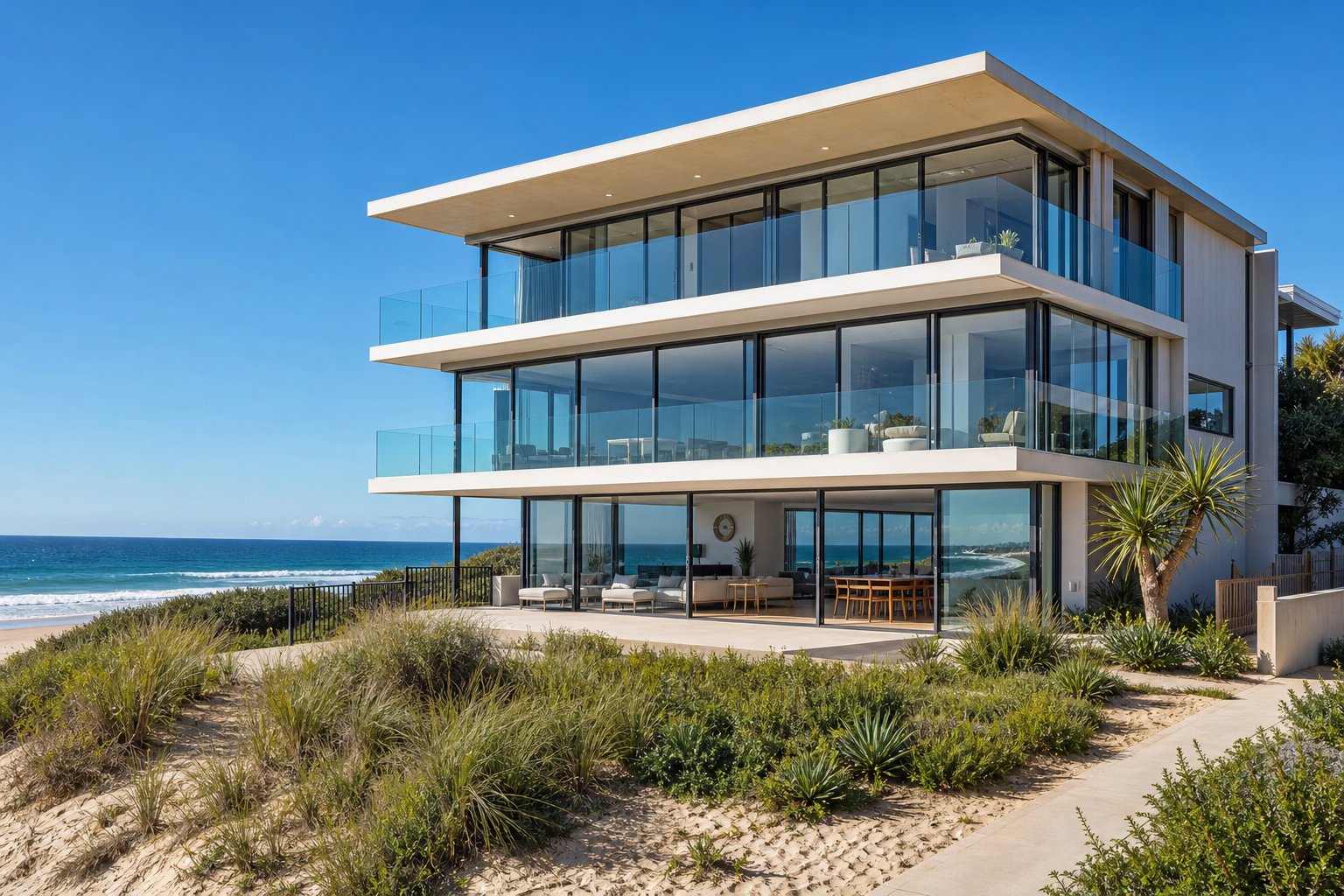
Australia’s geography throws just about every climate challenge at a building envelope. A beachfront home in Noosa faces relentless salt spray. A house in western Sydney endures extreme UV and summer heat. An apartment block near an industrial precinct in Newcastle deals with airborne chemical pollutants. Each of these environments attacks window frame surfaces differently, and the finish you choose determines whether your frames shrug off that punishment or slowly deteriorate under it.
Not every environment demands an anodised finish. But some environments punish anything less.
Coastal and High-UV Environments
Salt air is the single most aggressive natural threat to metal window frames along the Australian coastline. Chloride ions from ocean spray attack aluminium aggressively — significant airborne chloride deposits have been measured more than 80 kilometres from the shore. Unfinished aluminium exposed to this environment develops visible pitting within weeks as the chemistry overwhelms its thin natural oxide layer. Applied coatings face a different risk: if salt works into a chip or scratch in powder coating, filiform corrosion can spread beneath the surface unseen.
Anodised finishes resist this mechanism entirely. The oxide layer is not sitting on top of the metal waiting to be undermined — it is the metal’s restructured surface. There is no edge to lift, no gap for moisture to penetrate. Class I anodised aluminium is tested to withstand 3,000 hours of accelerated salt spray exposure, which correlates to decades of real-world coastal service. For windows in aluminium frames along the Queensland coast, the NSW South Coast, or Perth’s beachside suburbs, this inherent salt resistance makes anodising the logical default.
High-UV regions compound the challenge. Northern Australia, inland Queensland, and much of Western Australia experience some of the highest UV indices on the planet. Organic coatings — including powder coating — contain binders and resins that degrade under sustained ultraviolet bombardment, eventually chalking or losing gloss. Anodised surfaces contain no organic material whatsoever. The aluminium oxide layer is inorganic and UV-inert, meaning it simply does not respond to ultraviolet radiation regardless of intensity or duration. A metal window frame with an anodised finish in Cairns will look the same after fifteen summers as it did after one.
Urban, Industrial, and Inland Climates
Coastal salt gets most of the attention, but urban and industrial atmospheres carry their own corrosive agents. Sulphur dioxide from vehicle exhaust, nitrogen oxides from industrial processes, and particulate pollution all settle on building surfaces. Over years, these deposits create acidic micro-environments on frame surfaces, particularly in areas where moisture collects and drainage is restricted.
Anodised aluminium handles this well. The sealed oxide layer is chemically inert to most atmospheric pollutants, and regular rainfall or periodic cleaning removes deposits before they can cause harm. Metal frame windows in industrial precincts around Wollongong, Gladstone, or Kwinana benefit from this chemical stability. Custom aluminum windows specified for commercial buildings in these zones often default to anodised finishes precisely because the maintenance burden stays low even when air quality does not.
Inland environments — think suburban Melbourne, Canberra, or Adelaide’s inner suburbs — present the least aggressive conditions for any quality finish. Lower salt exposure, moderate UV compared to tropical regions, and cleaner air mean both anodised and high-quality powder-coated frames will perform well over their expected lifespan. In these locations, the choice often comes down to aesthetics rather than survival. If your project requires a specific non-metallic colour for heritage overlay compliance or neighbourhood character guidelines, powder coating gives you that flexibility. If you prefer the natural metallic depth and want the longest possible maintenance-free life, anodising still holds the edge — it simply is not as critical as it would be on the coast.
The aluminium joinery industry in Australia recognises this environmental spectrum, which is why many manufacturers offer both finish types and guide specification based on project location. The table below summarises how anodised finishes perform across different Australian climate contexts:
| Environment Type | Anodised Suitability | Key Benefit | Alternative Consideration |
|---|---|---|---|
| Coastal (within 1 km of ocean) | Excellent — strongly recommended | Integral oxide layer cannot be undermined by salt penetration | Marine-grade powder coating acceptable if specific colour required |
| High-UV (tropical and arid regions) | Excellent | Inorganic surface is completely UV-inert; zero fade or chalking | Premium PVDF powder coatings offer good UV resistance with broader colour range |
| Industrial (chemical/pollution exposure) | Very good | Chemically stable against sulphur dioxide, NOx, and particulate deposits | Powder coating suitable if regular cleaning schedule maintained |
| Urban (moderate pollution, sheltered) | Good | Low maintenance and long-term appearance retention | Either finish performs well; choose based on colour preference |
| Inland (low exposure, temperate) | Good — optional rather than essential | Maximum lifespan with minimal upkeep | Powder coating equally viable; broader design flexibility |
One pattern emerges clearly from this breakdown: the harsher the environment, the stronger the case for anodising. In benign conditions, both finishes deliver acceptable service lives. But when salt, UV, or chemical exposure intensifies, the structural advantage of an integral oxide layer over an applied coating becomes increasingly difficult to argue against.
Choosing the right finish for your climate is the first step. Keeping that finish performing at its best over decades requires understanding what maintenance actually looks like — and what to do if things go wrong.
Maintenance and Restoration of Anodised Frames
Anodised aluminium frames earn their reputation for low maintenance, but low does not mean zero. A basic care routine protects the oxide layer from the handful of threats that can compromise it, while neglect — particularly in aggressive environments — allows preventable damage to accumulate. The good news is that keeping an anodised aluminium frame window looking sharp requires far less effort than maintaining painted timber or even powder-coated alternatives. The challenge comes when damage does occur, because restoration is not as simple as grabbing a tin of touch-up paint.
Routine Cleaning and Damage Prevention
The sealed oxide layer on an anodised frame is chemically stable and self-protecting under normal conditions. Routine cleaning simply removes surface deposits before they can trap moisture or create localised chemical reactions against the window frame metal. The Aluminum Anodizers Council recommends using a mild soap with a gentle abrasive technique, avoiding harsh acidic or alkaline cleaners that can destroy the finish.
A practical schedule looks like this: wash frames every one to three months with a soft cloth or non-abrasive sponge and a pH-neutral detergent diluted in water. In coastal locations, monthly cleaning prevents salt crystal buildup in frame crevices. Inland, quarterly cleaning is typically sufficient. Industry maintenance data confirms that this single habit — regular gentle cleaning — is the highest-return activity for extending frame life from 30 years toward 50.
Beyond cleaning frequency, knowing what to avoid matters just as much as knowing what to do:
- Do use soft microfibre cloths, non-abrasive sponges, and mild dish soap or pH-neutral detergent.
- Do rinse thoroughly with clean water after washing, especially in coastal areas where detergent residue can attract salt.
- Do dry frames after cleaning to prevent water spots in hard-water regions.
- Do clear weep holes and drainage channels quarterly to prevent water pooling inside the frame.
- Do not use alkaline cleaners (pH above 8), bleach, or ammonia-based products — these attack the oxide layer directly.
- Do not use abrasive pads, steel wool, or scouring powders — they scratch through the sealed surface.
- Do not use solvent-based cleaners, which can stain the anodised finish permanently.
- Do not allow mortar, concrete splash, or muriatic acid to sit on the surface — even brief contact with alkaline or acidic construction materials causes irreversible discolouration.
- Do not permit prolonged contact between the aluminium frame and dissimilar metals (steel fixings, copper flashings) without an isolating barrier, as galvanic corrosion will attack the aluminium at the contact point.
That last point deserves emphasis. Galvanic corrosion is one of the most common causes of localised damage on old aluminium window frames, particularly where steel screws or brackets were used without nylon washers or isolation tape during original installation. If you notice white powdery deposits forming around fixings, that is galvanic corrosion already underway — replace the offending fastener with a stainless steel or aluminium alternative and isolate the contact point.
Restoration Options When Finishes Degrade
Over decades, even well-maintained anodised surfaces can show signs of age. Early-stage degradation typically appears as a slight dulling or chalky haze — what the industry calls weathering bloom. This occurs when the sealed oxide surface becomes microscopically etched by acidic pollutants or inadequate original sealing quality. The Aluminum Anodizers Council notes that mild cases can sometimes be improved using a fine-grade synthetic abrasive pad (such as Scotch-Brite) with gentle pressure, restoring some of the original lustre without damaging the underlying oxide.
More advanced degradation — visible pitting, widespread discolouration, or areas where the oxide has been chemically attacked by mortar or acid — cannot be reversed with surface cleaning alone. At this point, three options exist:
- Professional re-anodising — The frame section is removed, the existing oxide is chemically stripped, and the aluminium is re-anodised in a controlled facility. This restores the original finish quality but requires frame removal and is typically only practical for individual sections rather than entire window systems.
- Specialist restoration products — Professional building restoration services can apply protective silicone-based treatments that reduce further degradation and improve appearance on mildly weathered surfaces. These do not recreate the original oxide but slow ongoing deterioration.
- Painting anodised aluminium window frames — This is a last resort when the anodised finish has degraded beyond restoration but the frame structure remains sound. Unlike painting bare metal, painting over anodised aluminium requires specific surface preparation to achieve adhesion. The sealed oxide layer actively resists paint bonding, so an etching primer formulated for anodised surfaces must be applied first. Without this step, paint will peel within months regardless of quality. The process typically involves light abrasion with a fine synthetic pad, solvent cleaning to remove all contaminants, application of an etch primer designed for non-ferrous metals, and then a topcoat system compatible with the primer.
It is worth being realistic about what painting achieves. Once you paint an anodised frame, you lose the integral, maintenance-free nature of the original finish and commit to the same repainting cycle as any painted surface — typically every 7 to 10 years depending on exposure. You also lose the metallic depth that made the anodised finish distinctive. For this reason, painting should only be considered when the alternative is full frame replacement and the budget does not allow it.
The maintenance simplicity of anodised frames is one of their strongest long-term value propositions. But value is not just about upkeep — it is also about what you pay upfront and what you save over the life of the building.
Cost Considerations and Long-Term Value
Durability and low maintenance sound compelling in theory, but every building project operates within a budget. The real question most homeowners and builders face is whether the upfront premium for anodised aluminium window frames pays for itself over time — or whether a less expensive finish delivers acceptable performance for less money. The answer depends entirely on how you define cost: as a single transaction at installation, or as a total investment across the life of the building.
Initial Cost Compared to Other Frame Types
Anodised aluminium sits in the mid-to-upper range of window frame pricing in Australia. It costs more than uPVC and standard powder-coated aluminium, sits roughly comparable to premium timber, and generally comes in below bespoke steel systems. The premium over powder-coated aluminium frames for windows is typically modest — driven by the additional processing steps in the anodising bath rather than material differences — but it compounds across a full house of replacement aluminum windows or a new-build specification with dozens of openings.
Several factors influence where a specific quote lands within that range:
- Frame size and configuration — Larger openings and multi-panel arrangements require more aluminium, more processing time, and more hardware.
- Profile complexity — Slim-line or architecturally detailed profiles cost more to anodise uniformly than simple rectangular sections.
- Colour choice — Clear (natural silver) anodising is the most economical. Bronze, black, and champagne tones add cost due to the dyeing stage.
- Thermal break specification — Thermally broken aluminum window frames carry a premium over non-thermally-broken profiles regardless of surface finish, but the combination of thermal break plus anodising represents the highest-performing specification available.
The table below positions each major frame type against its relative cost, maintenance demand, and expected finish lifespan. These are indicative comparisons rather than fixed dollar figures, since actual pricing varies with supplier, region, and project scale across Australia.
| Frame Type | Relative Initial Cost | Maintenance Frequency | Expected Finish Lifespan |
|---|---|---|---|
| Anodised aluminium | Medium-high | Very low (periodic wash only) | 30–50+ years |
| Powder-coated aluminium | Medium | Low (wash; recoat at 15–20 years) | 15–20 years before recoating |
| Timber | High | High (repaint/reseal every 5–7 years) | 5–10 years per paint cycle |
| uPVC | Low-medium | Very low | 20–30 years (entire frame replacement) |
| Steel | High | High (rust treatment and repaint every 3–5 years) | 3–5 years per paint cycle |
What stands out is the relationship between initial cost and ongoing commitment. The cheapest window frames at purchase — uPVC and basic powder-coated aluminium — either need full replacement sooner or require periodic recoating to maintain protection. Timber and steel demand active, recurring maintenance that carries both labour cost and inconvenience. Anodised aluminium asks for more upfront but then essentially steps out of the maintenance conversation for decades.
Long-Term Value and Total Cost of Ownership
Whole-of-life cost analysis consistently favours aluminium over competing materials. UK research from WindowCost found that over a 60-year assessment period, aluminium is often the cheapest option on a total-cost basis — cheaper than uPVC (which requires two to three full replacements in that timeframe) and significantly cheaper than timber (which accumulates five or more repainting cycles plus potential rot repairs). While those figures reflect UK market conditions, the underlying logic applies equally to Australian builds where labour costs for maintenance and replacement are even higher.
Consider what you avoid with anodised window frames over a 40-year ownership period:
- Zero repainting cycles (timber owners face five to six in the same period)
- Zero recoating (powder-coated frames typically need at least one professional recoat)
- No frame replacement due to finish failure (uPVC frames often need replacing at the 25-year mark when seals fail and profiles warp)
- No corrosion-related structural repairs (steel frames in coastal areas may need full replacement within 15 years)
There is also the property value dimension. Aluminum replacement windows with anodised finishes signal quality to buyers and valuers. They indicate a home that was specified for longevity rather than minimum cost, and they present well at resale without requiring pre-sale cosmetic work. In a market where buyers increasingly scrutinise maintenance liabilities, window frames that look as good at twenty years as they did at installation carry tangible resale value.
For homeowners and project teams ready to move from cost research into actual specification, MEICHEN’s aluminium window systems offer custom finish consultations including anodised options, thermal break configurations, and project-ready pricing tailored to Australian residential and commercial builds.
Understanding what you will spend — and what you will save — is one half of the decision. The other half is knowing how to translate that knowledge into a specification that matches your specific project, climate, and design intent.
Selecting the Right Anodised Aluminium Window Frame for Your Project
Research only delivers value when it translates into a confident specification. You now understand how anodising works, where it excels, what it costs, and how to maintain it. The remaining step is matching all of that knowledge to your specific build — your climate zone, your architectural style, your tolerance for ongoing upkeep, and your budget reality. Getting this right means asking the right questions before a single frame is manufactured.
Matching Your Environment and Style to the Right Finish
Your aluminium window frame specification should flow logically from three inputs: where the building sits, what it looks like, and how much attention you are willing to give it over the next few decades. A beachfront home in Torquay faces a completely different threat profile than a suburban build in Canberra, and the finish decision should reflect that difference rather than defaulting to whatever the supplier stocks most readily.
Use this decision framework as a starting point:
- Coastal or high-UV location — Anodised finishes are strongly recommended. The integral oxide layer resists salt undermining and UV degradation without maintenance intervention. If a specific non-metallic colour is required by council overlay, marine-grade PVDF powder coating is the alternative, but expect a shorter service life before recoating.
- Urban or industrial zone — Anodised finishes perform well against pollution and chemical deposits. Powder coating is also viable here provided a regular cleaning schedule is maintained.
- Inland temperate climate — Either finish delivers acceptable longevity. Choose based on aesthetic preference: metallic depth (anodised) or broad colour range (powder coated).
- Contemporary or industrial architectural style — The metallic sheen of anodised aluminium complements clean lines, slim profiles, and large glass areas. Bronze and black tones suit both modern and mid-century design languages.
- Heritage or character overlay — Check council requirements. Some heritage guidelines mandate specific colours that only powder coating can achieve. Others accept natural metallic tones, making anodised finishes compliant.
- Low maintenance tolerance — If you want to install and forget, anodised wins outright. No repainting, no recoating, no scheduled retreatment for 30 years or more.
Beyond environment and style, the aluminium window framing system you select needs to meet Australian performance standards. When evaluating aluminium window supplies and requesting quotes, the following checklist ensures you are comparing like with like and not leaving critical details to assumption.
- Confirm anodising thickness class — For exterior architectural applications in Australia, specify a minimum of 20 micrometres (Class AA20 under AS 1231). Coastal projects should consider 25 micrometres for additional protection. Ask the supplier for documented thickness test results, not just verbal assurances.
- Verify compliance with AS 2047 — This is the Australian Standard for windows and external glazed doors. It covers structural adequacy, weather resistance, and operation under load. Any aluminium window system installed in Australia must comply regardless of finish type.
- Check AS 1288 glazing compliance — Particularly relevant for door and window frames with large glass panels, this standard governs safety glazing requirements including toughened and laminated glass specifications.
- Request WERS ratings — The Window Energy Rating Scheme provides standardised U-values and Solar Heat Gain Coefficients for the complete window system. Compare these across quotes to ensure thermal performance claims are backed by tested data.
- Ask about thermal break specification — Confirm whether the aluminum frame system uses polyamide thermal breaks, and request the break width. Wider breaks (typically 24 mm to 34 mm) deliver better thermal separation.
- Clarify colour and batch consistency — If ordering multiple windows, confirm that all frames will be anodised in the same batch or that the supplier guarantees colour consistency across batches. Variations between production runs are a known issue with anodised finishes.
- Understand warranty terms — A quality anodised finish should carry a minimum 10-year warranty against defects in the oxide layer. Some manufacturers offer 20-year or longer coverage. Read what voids the warranty — improper cleaning products are a common exclusion.
- Confirm lead times for custom profiles — Anodised finishes, particularly coloured options, often require longer lead times than standard powder-coated stock. Factor this into your project timeline, especially for large residential or commercial builds with staged installations.
Moving from Research to Project Specification
Comparing quotes for aluminium windows for sale across different suppliers can feel overwhelming when specifications vary. The simplest approach is to establish your non-negotiables first — anodising class, thermal break requirement, compliance standards — and then evaluate quotes against that fixed baseline. Price differences between suppliers offering genuinely equivalent specifications are usually modest. Large price gaps almost always indicate a difference in what is being offered, not just margin variation.
Request physical samples before committing. Anodised finishes look different in person than on screen, and the metallic depth varies noticeably between clear, bronze, and black options. Most reputable suppliers will provide sample sections at no cost. Hold them against your facade material — brick, render, cladding, or timber — in natural light to confirm the aesthetic works in context.
For Australian residential and commercial projects, MEICHEN’s aluminium window systems offer a logical next step for readers who have completed their research and want to evaluate specific product options. Their range includes custom anodised finishes, thermally broken profiles, and project support tailored to Australian builds — covering the full path from specification through to delivery and installation coordination.
The windows aluminum frame you choose today will define your building’s facade for decades. Take the time to specify correctly, verify compliance, and select a supplier whose quality controls match the longevity you expect from the finish itself.
Frequently Asked Questions About Anodised Aluminium Window Frames
1. How long do anodised aluminium window frames last?
Anodised aluminium window frames typically last 30 to 50 years or more without requiring retreatment. The electrochemical oxide layer is integral to the metal itself, so it cannot peel, chip, or flake like applied coatings. In coastal and high-UV Australian environments, properly maintained anodised frames retain their appearance and protective qualities for decades longer than powder-coated or painted alternatives, which generally need recoating every 15 to 20 years.
2. Can you paint over anodised aluminium window frames?
Yes, but it requires specific preparation and should be considered a last resort. The sealed oxide layer actively resists paint adhesion, so you must lightly abrade the surface, clean with solvent, and apply an etching primer formulated for non-ferrous metals before topcoating. Without proper preparation, paint will peel within months. Once painted, you lose the maintenance-free benefit of the anodised finish and commit to a standard repainting cycle of 7 to 10 years depending on exposure.
3. What is the difference between anodised and powder-coated aluminium windows?
Anodising converts the aluminium surface into a hard oxide layer that is part of the metal, while powder coating applies a separate polyester-based layer on top. Anodised finishes cannot peel or delaminate and offer superior scratch resistance with a distinctive metallic sheen. Powder coating provides a much wider colour range including non-metallic hues but can chip over time and typically needs recoating after 15 to 20 years. For harsh Australian coastal or high-UV environments, anodising generally delivers longer service life.
4. Are anodised aluminium frames good for coastal areas in Australia?
Anodised aluminium frames are one of the best choices for coastal Australian builds. The integral oxide layer cannot be undermined by salt penetration the way applied coatings can, where chloride ions work into chips or scratches and cause hidden corrosion beneath the surface. Class I anodised aluminium withstands over 3,000 hours of accelerated salt spray testing, correlating to decades of real-world coastal service. For properties within one kilometre of the ocean, anodising is strongly recommended over standard powder coating.
5. Do anodised aluminium windows have good thermal performance?
The anodised finish itself has virtually no effect on thermal performance. Energy efficiency in aluminium windows comes from the thermal break system — polyamide strips that separate the inner and outer frame sections, reducing heat transfer by 70 to 85 per cent compared to non-thermally-broken frames. Anodising does not interfere with thermal break technology, so a thermally broken anodised frame achieves the same U-values (0.8 to 2.0 W/m²K) as an equivalent powder-coated frame. For Australian builds, specifying both anodising and a quality thermal break delivers optimal surface protection and energy efficiency together.
More Window & Door Guides