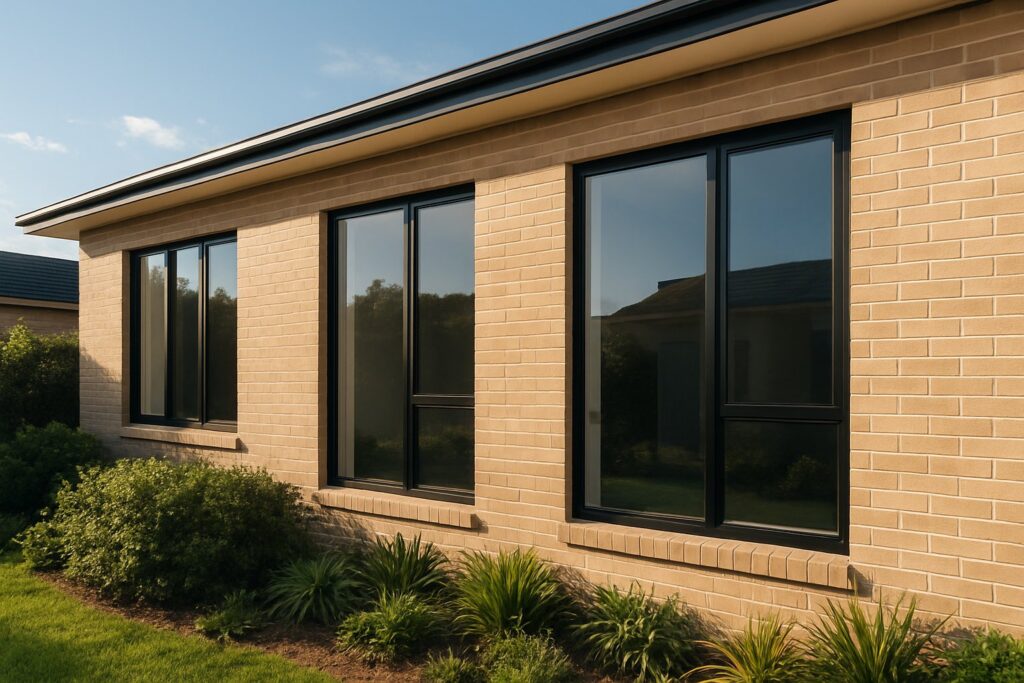
What Are Aluminium Windows and Why Size Matters
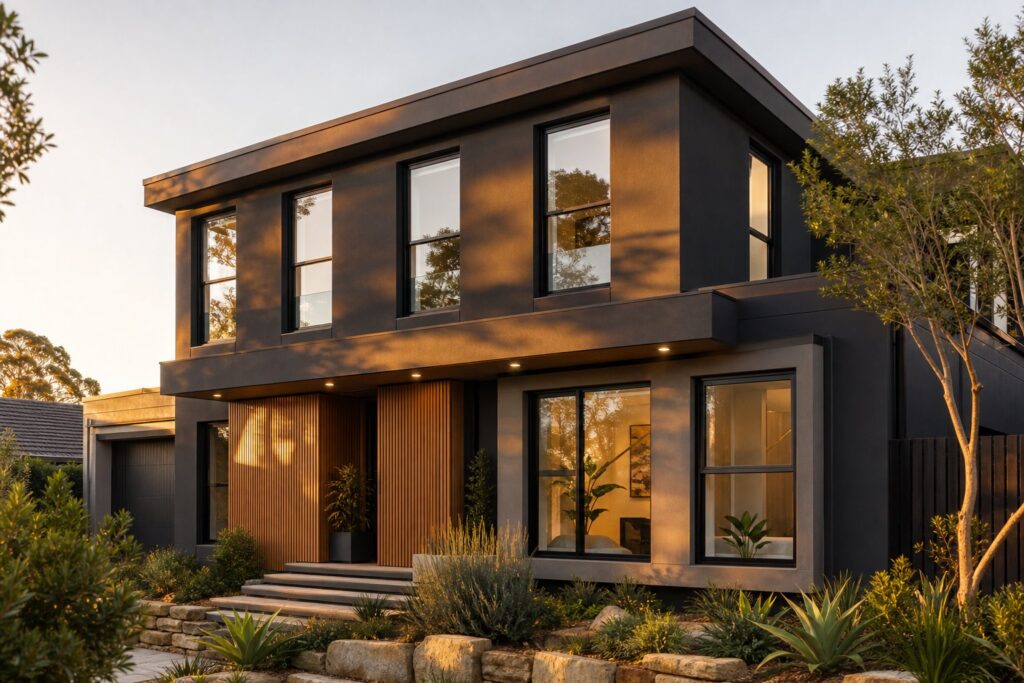
Aluminium windows use extruded metal frames to hold glazing panels in place, combining lightweight strength with slim sightlines that let more glass dominate the opening. They suit everything from compact bathroom awnings to full-height living room sliders. The challenge most homeowners and builders face is that online guides tend to explain window types in isolation or list standard sizes without connecting the two. This article treats aluminium windows types and sizes as a single decision, because in practice they are inseparable.
What Makes Aluminium Windows Different from Other Frame Materials
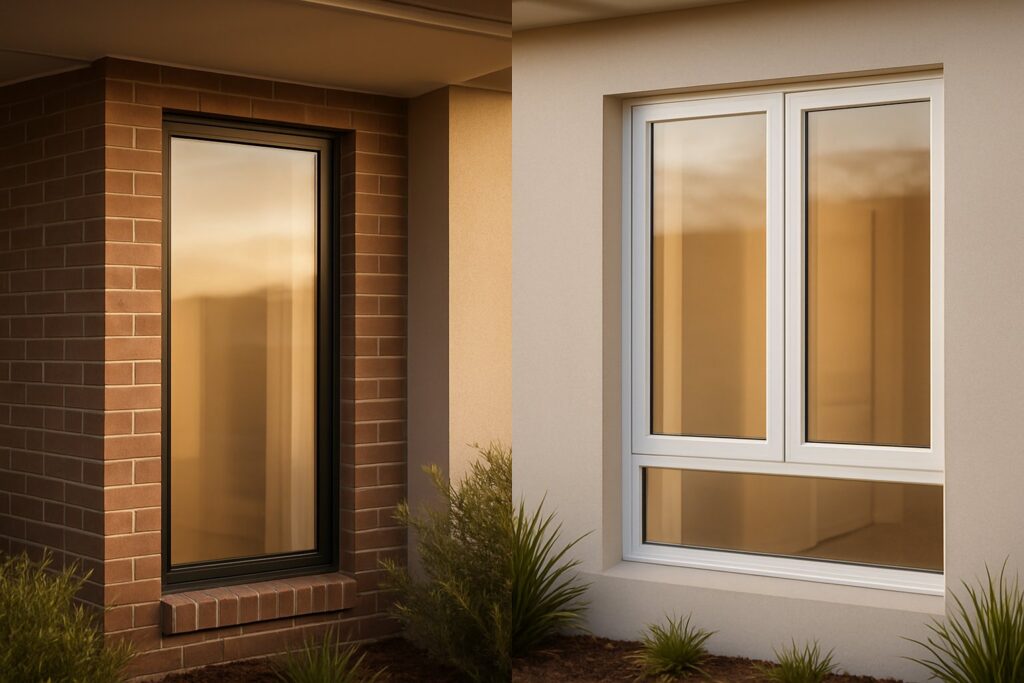
Compared to timber, aluminium frames require no painting, oiling, or sealing to resist moisture and pests. Timber is a natural insulator, but it demands ongoing upkeep and is susceptible to warping in Australia’s harsh UV and humidity conditions. uPVC is cheaper upfront, yet its lifespan sits around 20 to 25 years before discolouration and deformation become problems. Metal windows framed in steel offer narrow sightlines too, but steel is considerably heavier and more expensive, while aluminium achieves a similar aesthetic at roughly 67% less weight. Windows in aluminium deliver a life expectancy of approximately 45 years with minimal maintenance, making them a strong long-term investment for Australian residential and commercial builds alike. Many specifiers searching for alu windows are drawn to this balance of durability, design flexibility, and low lifecycle cost.
Why Type and Size Go Hand in Hand
Every opening mechanism places structural demands on the frame. A casement sash that swings outward on hinges can only span so wide before the hinge load becomes impractical. A horizontal slider can stretch across a broad opening because the glass weight sits on a bottom track rather than hanging from a hinge point. Choosing a window type without understanding its maximum and minimum dimensional limits often results in redesigns, budget blowouts, or compromised performance.
Window type determines the available size range, not the other way around. Start with how the window opens, then confirm what dimensions that mechanism can safely achieve.
This relationship between mechanism and dimension is why the sections ahead cover each aluminium window type alongside its practical size constraints, giving you a single reference to make confident decisions the first time.
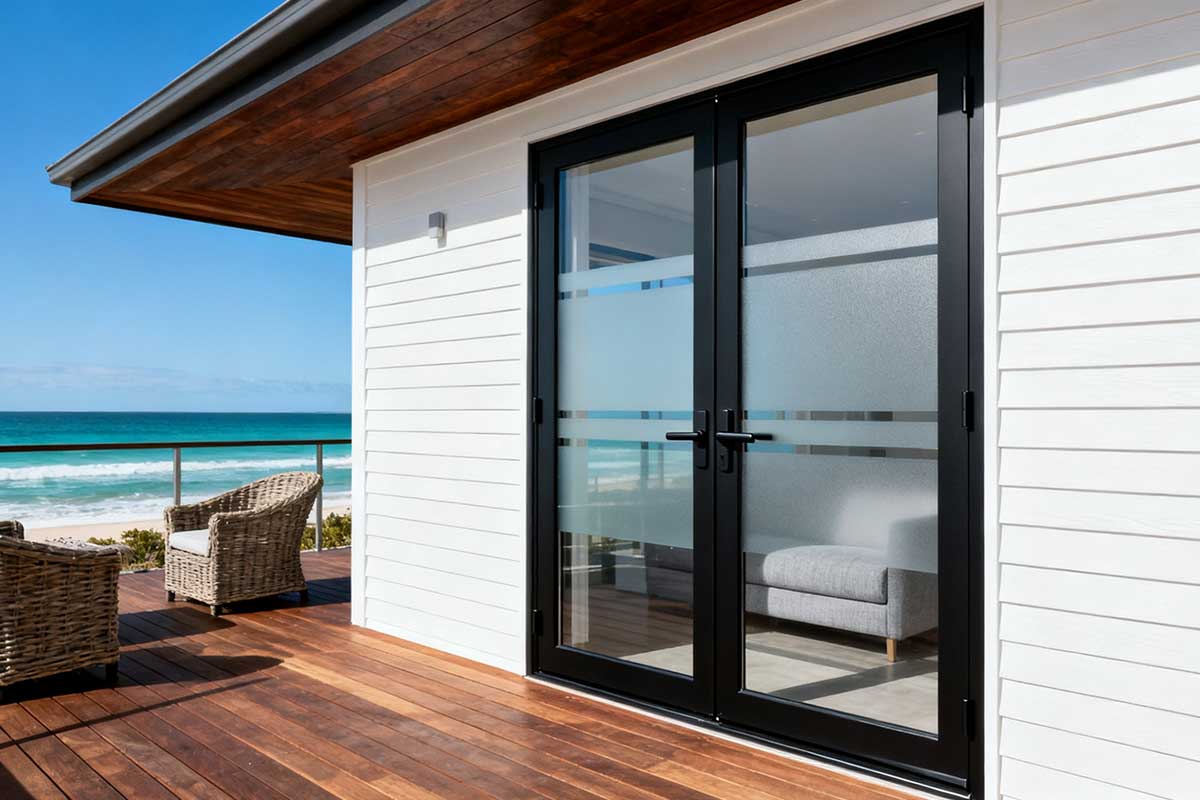
Every Aluminium Window Type Explained by Opening Mechanism
The way a window opens shapes everything else about it: the room it suits, the maximum span it can achieve, and the hardware holding it together. Below is a full breakdown of the types of aluminium windows available in the Australian market, grouped by how the sash moves.
Casement and Awning Windows
An aluminium casement window is hinged on one vertical side and swings outward (or inward, though outward-opening is standard in Australia). Because the entire sash opens like a door, it delivers the largest unobstructed ventilation area of any operable window type. Aluminium casement windows are a go-to choice for bedrooms, living areas, and any room where maximum airflow matters.
- Pros: Excellent ventilation (up to 90% of the opening area), tight seal when closed for strong energy efficiency, easy to clean from inside when fully open, multi-point locking for security.
- Cons: Sash protrudes externally when open (problematic near walkways or decks), hinge load limits practical sash width to roughly 600–900mm per panel, generally more expensive hardware than sliders.
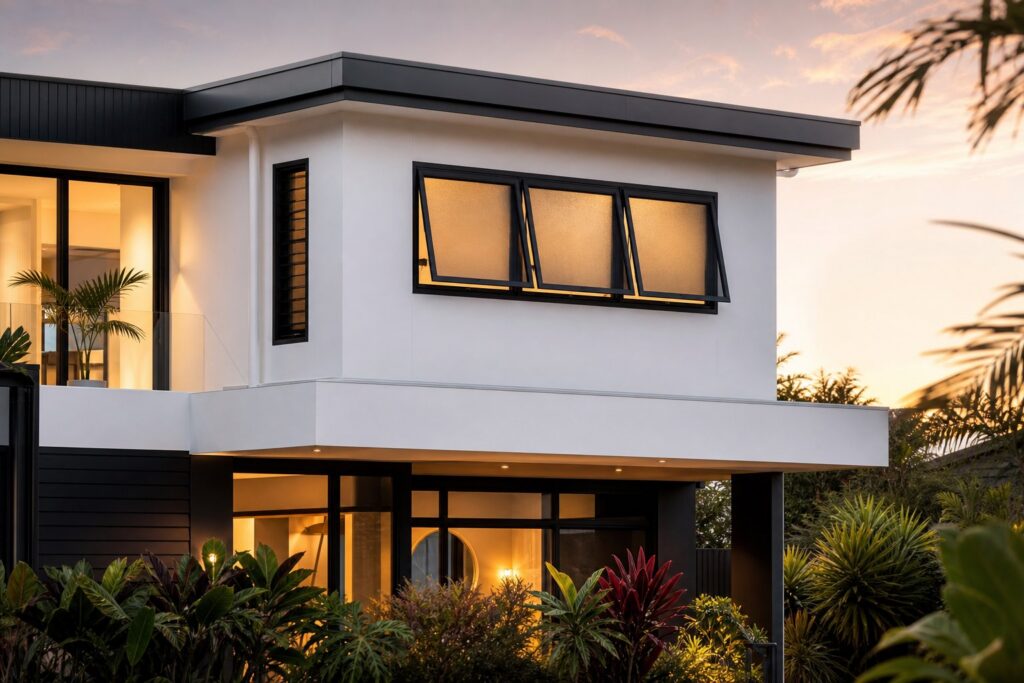
Awning windows share a similar concept but hinge at the top, with the bottom edge pushing outward. This top-hung design sheds rain away from the opening, making awning windows ideal for wet climates or rooms that need ventilation during light showers. They sit higher on walls for privacy in bathrooms and laundries, and their compact swing arc means furniture beneath the sill stays unobstructed.
- Pros: Weather protection while open, excellent for high-set placement, good seal and acoustic performance, can be stacked in rows for a modern facade look.
- Cons: Smaller ventilation area than casement equivalents, protrudes outward (avoid above paths), cleaning the exterior glass is harder on upper storeys.
Sliding and Double-Hung Windows
Horizontal sliding windows run on a bottom track, with one or both sashes gliding sideways. Because no part of the frame swings outward, they suit balconies, pathways, and compact spaces where projection would be a problem. Sliders can span considerably wider than casements — a two-panel slider can comfortably exceed 2400mm in total width.
- Pros: Space-saving (no external projection), simple operation without cranks, wide spans available, mid-range cost.
- Cons: Only 50% of the opening ventilates at once (unless both sashes slide), track can accumulate debris, slightly lower air-tightness than casement seals.
Double-hung windows operate on the same principle but vertically. The upper and lower sashes slide past each other within the frame, offering a traditional aesthetic that suits heritage-style Australian homes. An aluminum single hung window has only the bottom sash operable, while a double-hung lets both move. These aluminium sash windows are particularly useful where external swing clearance is zero and a vertical proportion fits the architecture.
- Pros: No external projection, classic look, double-hung allows top-and-bottom ventilation for passive airflow, easy operation by hand.
- Cons: Maximum 50% opening area, counterbalance mechanisms add complexity, cleaning the outer pane can be difficult without tilt-in hardware.
Fixed, Louvre, and Specialty Configurations
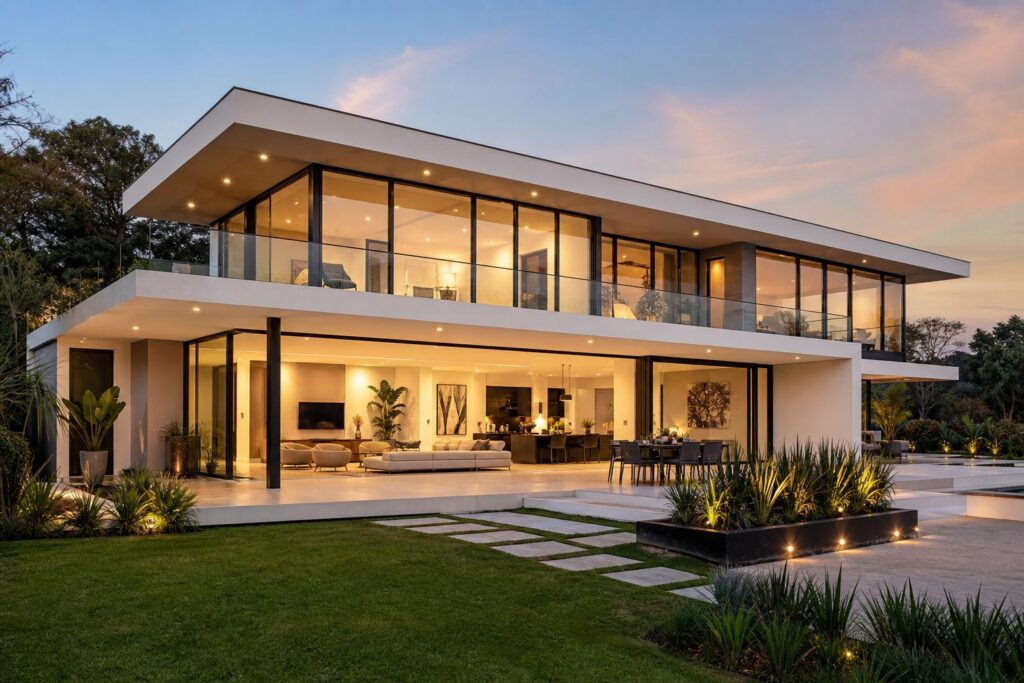
Fixed windows (sometimes called fixed-lite panels) do not open at all. Their purpose is pure daylight and unobstructed views. Without hinges, locks, or tracks, they achieve the largest possible glass spans and the highest thermal and acoustic ratings of any aluminium window configuration. Pair them with operable windows nearby to handle ventilation.
- Pros: Maximum glass area, best insulation and sound reduction, lowest cost per square metre, no moving parts to maintain.
- Cons: Zero ventilation, cannot be used for emergency egress, exterior cleaning requires external access.
Louvre windows use multiple horizontal glass blades set in an aluminium frame, each blade rotating simultaneously via a handle or chain winder. They provide controlled, adjustable airflow and are common in Queensland-style homes, laundries, and pool areas across northern Australia.
- Pros: Near 100% ventilation when fully open, adjustable blade angle for privacy, compact when closed, suits tropical climates.
- Cons: Lower security unless fitted with locking bars, reduced weather sealing compared to sealed sash types, not ideal for air-conditioned rooms.
Beyond these staples, several specialty configurations are gaining ground in Australian residential and commercial projects:
- Pivot windows rotate around a central horizontal or vertical axis, allowing the sash to flip 180 degrees for easy cleaning. Their striking visual impact suits feature walls and stairwells.
- Bi-fold windows use multiple hinged panels that fold back in a concertina action, opening an entire wall section to connect indoor and outdoor spaces. They are popular above kitchen servery benches and alfresco entertaining zones.
- Tilt-and-turn windows combine two actions in one frame: the sash tilts inward from the top for ventilation, or swings inward fully like a casement for cleaning and maximum airflow. Common in European-influenced designs, they offer versatility in multi-storey apartments where external access is limited.
| Window Type | Opening Mechanism | Typical Application | Ventilation Level | Max Practical Span |
|---|---|---|---|---|
| Casement | Side-hinged, swings outward | Bedrooms, living areas | High (up to 90%) | ~900mm per sash |
| Awning | Top-hinged, bottom pushes out | Bathrooms, kitchens, high-set positions | Moderate | ~1500mm wide |
| Sliding | Horizontal track | Living rooms, balconies, wide openings | Moderate (50%) | 2400mm+ total frame |
| Double-hung / Single-hung | Vertical sliding sashes | Heritage homes, bedrooms, streetfront facades | Moderate (50%) | ~1200mm wide |
| Fixed | Non-operable | Feature walls, commercial facades, picture windows | None | 3000mm+ (profile-dependent) |
| Louvre | Rotating horizontal blades | Laundries, bathrooms, tropical homes | Very high (~95%) | ~1200mm wide |
| Pivot | Central axis rotation (180°) | Stairwells, feature walls, high-rise | High | ~1500mm wide |
| Bi-fold | Concertina fold, multiple hinged panels | Servery windows, entertaining areas | Very high (near 100%) | 4000mm+ (multi-panel) |
| Tilt-and-turn | Dual action: top tilt inward or full inward swing | Apartments, multi-storey, European-style homes | High (adjustable) | ~1400mm wide per sash |
Each mechanism listed above carries a structural ceiling on how wide or tall the sash can go before hardware, frame deflection, or glass weight becomes a limiting factor. That ceiling is directly tied to the aluminium profile holding everything together — a variable explored in the next section.
Aluminium Window Frame Profiles and Their Structural Limits
The profile — the extruded aluminium section that forms the frame — is what separates a window that performs safely at a given size from one that flexes, leaks, or fails under load. Two aluminium window frames can look identical from across the room yet differ dramatically in the spans they can support, because profile depth and face width dictate structural capacity. Choosing the wrong profile for a given opening size is one of the most common specification errors in residential builds, and it compromises both safety and long-term performance.
Slim Profile Frames for Modern Minimalist Design
Slim-line aluminium frames for windows — typically classified as 38 to 50 Series profiles — deliver face widths between roughly 35mm and 45mm. That narrow sightline lets glass dominate the facade, which is exactly why architects favour them for contemporary homes where clean lines and maximum daylight matter most. Ultra-slim systems can push sightlines even lower (down to 20–30mm in premium configurations), achieving what designers call “disappearing architecture” — the frame recedes from view entirely.
The trade-off is straightforward: less frame material means less structural depth to resist wind load and support glass weight. Slim profiles work well for moderate panel sizes — think apartment windows, renovation projects, and openings up to around 1.2m² of glass area — but they reach their limits quickly when panels grow larger. They also leave less room for thermal break inserts, which means their insulation performance can trail behind deeper sections.
- Ideal for: Modern apartments, feature windows with moderate spans, renovation projects matching slim steel-frame aesthetics.
- Limitation: Restricted maximum glass panel size and reduced thermal break capacity compared to deeper profiles.
Standard and Heavy-Duty Profiles for Larger Openings
Standard residential systems sit in the 55 to 70 Series range, with face widths of approximately 55mm to 75mm. That extra depth gives aluminum frame windows the structural stiffness to span wider, hold heavier double-glazed units, and accommodate full polyamide thermal break strips. For most Australian homes — especially those specifying double glazing to meet NCC energy requirements — a 60 or 65 Series profile is the workhorse choice, balancing sightline aesthetics with genuine performance.
Heavy-duty and commercial systems push beyond 90 Series. These metal frame windows handle oversized fixed panels, high wind-load zones (cyclone-rated areas in northern Queensland, for example), and multi-storey curtain wall integration. Their deeper cavities accept thicker laminated glass, multi-chamber thermal breaks, and reinforced mullions designed to resist extreme pressure differentials. The visual sightline is wider, but for large-scale glazing the proportions still read as elegantly balanced.
Profile depth also directly influences acoustic performance. Deeper aluminium window frames create space for wider air gaps in insulated glazing units and multi-stage gasket systems that decouple interior and exterior surfaces — critical for homes near busy roads or flight paths.
| Profile Category | Sightline Width | Max Practical Panel Size | Thermal Break Compatible | Ideal Use Case |
|---|---|---|---|---|
| Slim (38–50 Series) | 35–45mm | Up to ~1.2m² glass area | Limited (narrow strip only) | Modern apartments, renovations, minimalist facades |
| Standard (55–70 Series) | 55–75mm | Up to ~2.5m² glass area | Yes (full polyamide thermal break) | Most residential builds, double-glazed casement and awning windows |
| Heavy-Duty (90+ Series) | 75–100mm+ | 3m²+ glass area | Yes (multi-chamber thermal break) | Commercial projects, cyclone zones, oversized fixed panels, high-rise |
Selecting a slim profile for a window that really needs a standard or heavy-duty section does not just reduce energy performance — it introduces deflection under wind load, premature seal failure, and potential safety issues with unsupported glass weight. The profile must match the intended panel dimensions and the environmental loads the window will face. With that structural foundation clear, the next logical step is pinning down the actual dimensions each window type can achieve within these profiles.
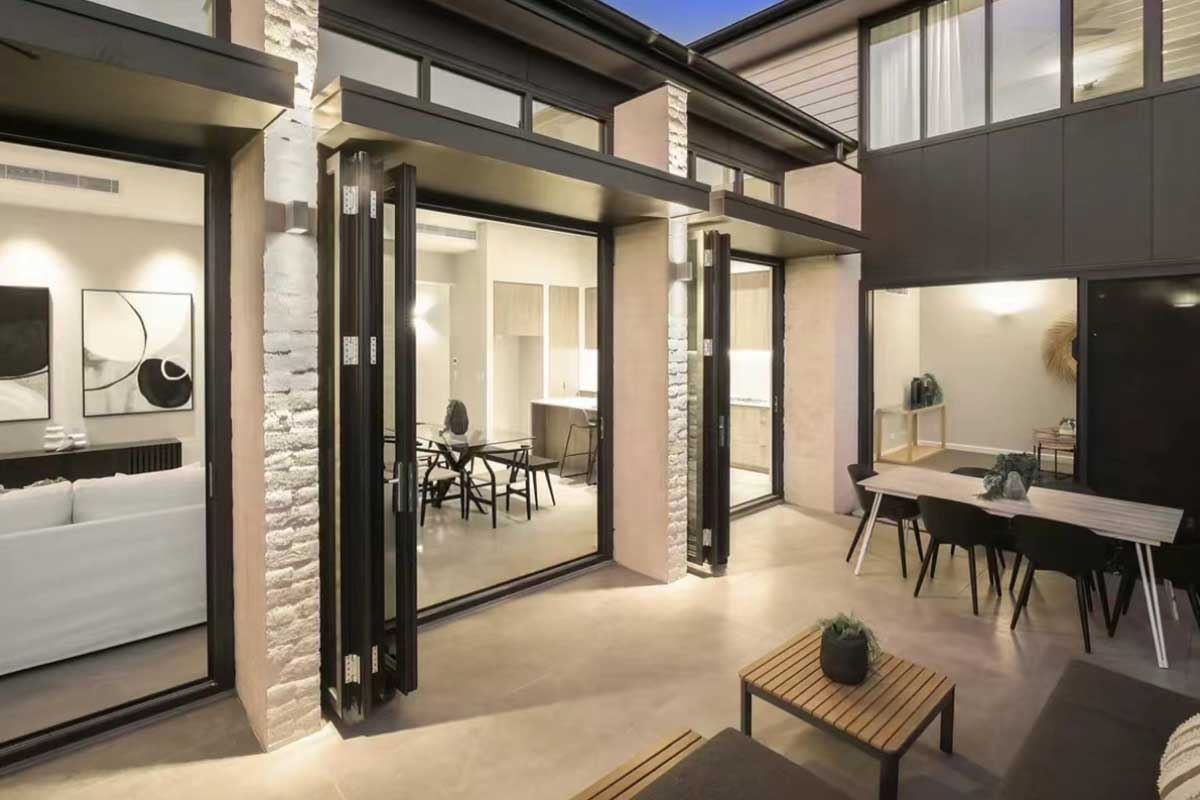
Standard Aluminium Window Sizes for Every Type
Profile depth sets the structural ceiling. But within that ceiling, each aluminium window type has a defined envelope of standard aluminum window sizes that manufacturers produce as stock items — ready to order, quicker to deliver, and less expensive than bespoke alternatives. Knowing these dimensions before you start sketching elevations or measuring existing openings saves time and avoids the surprise of discovering your preferred window widths fall outside what is readily available off the shelf.
Standard Size Ranges for Casement, Sliding, and Awning Windows
In the Australian market, standard aluminium window sizes are expressed in millimetres and typically manufactured in increments that align with common stud-frame openings. The ranges below reflect widely available stock dimensions across multiple manufacturers, though individual suppliers may offer slight variations.
Casement windows — the workhorse of Australian residential builds — generally start at around 500mm wide and reach up to 1000mm per sash, with heights spanning from 600mm to 1800mm. That relatively narrow width reflects the hinge-load limitation discussed earlier. Sliding windows cover a much broader range of window widths because the track carries the weight rather than a hinge point: expect standard options from 900mm to 2100mm wide, with heights between 600mm and 1500mm. Awning windows tend to be more compact, commonly available from 600mm to 1200mm wide and 600mm to 900mm tall — proportions suited to high-set positions above benchtops and in wet areas.
Single-hung and double-hung units share similar sizing envelopes: widths from 600mm to 1200mm and heights from 900mm to 1800mm. Fixed panels, unconstrained by operable hardware, stretch well beyond these figures — standard stock fixed-lite options can reach 1800mm wide and 2400mm tall, or even larger with heavier profiles.
| Window Type | Min Width (mm) | Max Width (mm) | Min Height (mm) | Max Height (mm) | Common Stock Increments |
|---|---|---|---|---|---|
| Casement | 500 | 1000 | 600 | 1800 | ~100mm steps |
| Awning | 600 | 1200 | 600 | 900 | ~150mm steps |
| Sliding (2-panel) | 900 | 2100 | 600 | 1500 | ~150–300mm steps |
| Single-Hung | 600 | 1200 | 900 | 1800 | ~100mm steps |
| Double-Hung | 600 | 1200 | 900 | 1800 | ~100mm steps |
| Fixed Panel | 600 | 1800+ | 600 | 2400+ | Varies by manufacturer |
| Louvre | 400 | 1200 | 600 | 1800 | Blade count determines height |
| Bi-fold (multi-panel) | 1800 | 4000+ | 600 | 2400 | Per-panel width ~600mm |
These ranges represent what you can typically source without entering custom territory. They form the starting point for any aluminum window design process — sketch your opening, check it against the table, and you will know immediately whether a stock solution exists or whether custom fabrication is needed.
Any dimension that falls outside standard size limits triggers custom manufacturing, which adds lead time and cost. Always confirm available stock sizes with your supplier before locking in architectural drawings.
How Standard Sizes Differ Across Australian, UK, US, and European Markets
The word “standard” is region-specific, and assuming one country’s norms apply globally is a common pitfall — particularly for builders sourcing product internationally or homeowners referencing overseas renovation guides.
Australia and the UK both work in metric (millimetres), and their aluminium window size ranges overlap significantly. Australian manufacturers tend to offer increments aligned with 600mm, 900mm, 1200mm, and 1800mm module lines, reflecting local timber and steel stud spacings. UK standard sizes follow similar metric logic but include common sash-window heights like 1500mm and 2100mm that reflect the taller proportions of Georgian and Victorian terrace housing.
The US market operates in imperial measurements. A standard casement there runs from approximately 400mm to 1200mm wide (16″ to 48″) and 600mm to 2100mm tall (24″ to 84″), with sizing denoted in inches and ordered in 4-inch increments. European windows follow DIN standards and metric sizing but favour tilt-and-turn mechanisms, meaning their “standard” range skews toward taller, narrower proportions — often 600mm to 1400mm wide and up to 2200mm tall per sash.
For Australian buyers, the practical takeaway is simple: if you are importing aluminium windows or referencing international aluminum window design catalogues, convert all dimensions to millimetres and cross-check against local stock availability. An opening sized to US increments may not match any off-the-shelf Australian product, pushing you into custom territory unnecessarily. Sticking with local standard sizes keeps delivery fast, cost down, and ensures compliance with AS 2047 testing requirements for Australian conditions.
With the dimensional boundaries of each type mapped out, the next step is matching those sizes to specific rooms — because a window that fits the opening still needs to suit the space it serves.
Room-by-Room Guide to Choosing Window Types and Sizes
A window that fits structurally still needs to fit functionally. The right combination of type and size depends heavily on what happens inside the room — sleeping, cooking, entertaining, or working — and on the environmental pressures acting on the building from outside. Here is a practical breakdown for residential aluminum windows and commercial applications alike.
Bedrooms and Living Areas
Bedrooms have a non-negotiable requirement in Australia: egress compliance. The NCC mandates that habitable rooms provide a minimum openable window area — typically 5% of the floor area for ventilation — and many states apply additional emergency exit sizing. Casement and double-hung windows satisfy this well because their full sash opening gives rescue access that sliders, at only 50% open, may struggle to meet in narrower configurations.
- Recommended types: Casement (side-hung) or double-hung for bedrooms; large sliding or fixed panels flanked by operable sashes for living rooms.
- Ideal size range: Bedrooms — 600mm to 900mm wide casements, 1200mm to 1500mm tall. Living rooms — sliding units 1800mm to 2400mm wide, or fixed panels up to 2400mm tall paired with awning vents.
- Key considerations: Position bedroom sills at 600mm or below to meet egress height requirements. In living areas, aim for a window-to-wall ratio of 20–40% to balance daylight with thermal comfort and furniture placement.
Black aluminum windows have become particularly popular for living room feature glazing, where the dark frame sharpens views and contrasts cleanly against light interior walls — creating a picture-frame effect that draws the eye outdoors.
Bathrooms, Kitchens, and Utility Spaces
Moisture, grease, and privacy dictate the choices here. These rooms rarely need floor-to-ceiling glass; what they need is targeted ventilation positioned high enough to keep neighbours out of view while expelling steam and cooking odours quickly.
- Recommended types: Awning windows (top-hung) for bathrooms and kitchens; louvre windows for laundries and pool areas where maximum airflow matters; high-set fixed panels where light is wanted without operability.
- Ideal size range: Awning — 600mm to 900mm wide, 600mm to 750mm tall, mounted at 1500mm+ sill height for privacy. Louvre — 600mm to 1000mm wide, height determined by blade count. Kitchen windows above benchtops — typically 900mm to 1200mm wide, positioned at 900mm sill height to clear splashbacks.
- Key considerations: Awning windows shed rain while open, making them practical for rooms that need continuous ventilation in wet weather. Bronze aluminum windows suit kitchen and bathroom schemes where warm metallic tones complement timber cabinetry and stone benchtops without the maintenance burden of real brass or copper.
Commercial and Multi-Storey Applications
Office towers, retail frontages, and multi-storey residential developments push well beyond the dimensions that residential profiles handle comfortably. Commercial aluminium windows almost always require heavy-duty profiles (90+ Series) and involve fixed panels integrated into curtain wall or unitised facade systems.
- Recommended types: Fixed panels for maximum transparency and thermal performance; tilt-and-turn for apartments requiring operable access without external projection; bi-fold servery windows at ground-floor hospitality venues.
- Ideal size range: Fixed panels commonly 1500mm to 3000mm wide and up to 3600mm tall in commercial projects. Tilt-and-turn units for apartments — typically 900mm to 1400mm wide, 1200mm to 2200mm tall.
- Key considerations: Wind loads increase with height and exposure. Upper storeys on coastal high-rises or buildings in cyclone-rated regions (northern QLD, NT) demand thicker laminated glazing, heavier frames, and hardware tested to AS 2047 performance classifications for the relevant wind pressure. Council DAs for commercial builds usually require engineering certification of the glazing system.
Climate as a Sizing and Type Filter
Australian conditions vary dramatically from the tropical north to the temperate south, and climate should filter every room-level decision. Coastal homes face salt-laden air that accelerates corrosion on inferior finishes — marine-grade powder coating or anodising is essential, and corrosion-resistant frame treatments protect long-term performance. High-wind zones (cyclone regions, exposed ridge-top sites) favour smaller individual sash sizes because a compact panel resists wind load more effectively than an oversized one on the same profile. In extreme heat areas of inland Australia, minimising west-facing glass area or choosing narrower window widths reduces solar heat gain without sacrificing the room’s connection to natural light.
Matching type and size to room function is the practical half of the equation. The financial half — understanding when standard sizing delivers the best value and when custom fabrication becomes necessary — rounds out the picture.
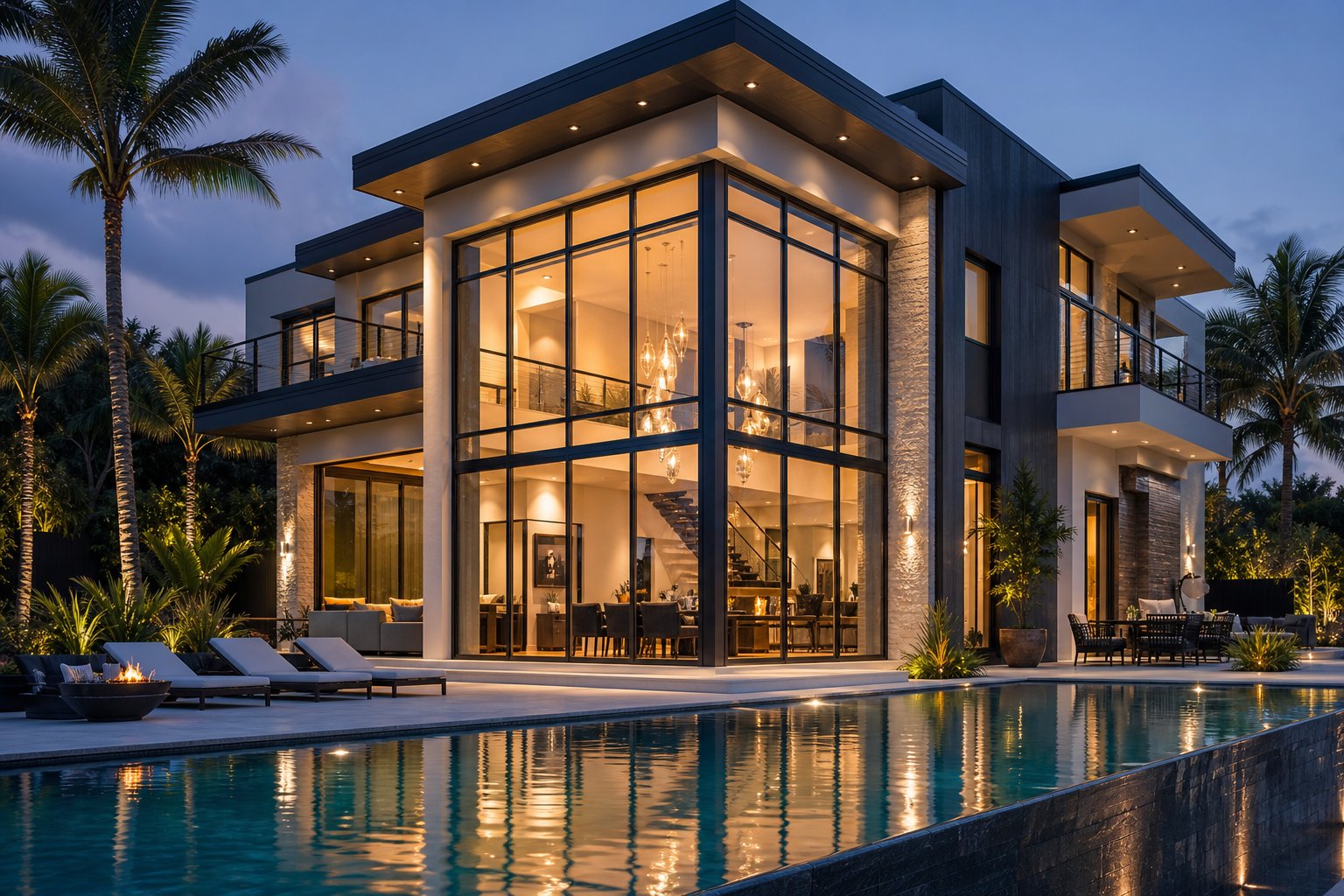
Custom Sizing vs Standard Aluminium Windows
Standard sizes exist for a reason — they keep costs predictable, lead times short, and supply chains simple. But buildings rarely cooperate with neat dimensional tables. Walls settle, architects push boundaries, and heritage overlays demand proportions that no stock catalogue includes. The decision between standard and custom aluminum windows is less about preference and more about whether your opening dimensions, performance needs, and design intent can be satisfied by what is already on the production line.
When Standard Sizes Work and When They Fall Short
For new-build project homes on standard timber or steel stud framing, stock aluminium windows slot in cleanly. The openings are designed around common module lines (600mm, 900mm, 1200mm increments), so dimensions align with what manufacturers keep in their standard range. Builders ordering replacement aluminium windows for homes built in the last 20 to 30 years will often find the same: openings were originally framed to accept readily available sizes, so a like-for-like swap is straightforward.
Standard options fall short in several predictable scenarios:
- Renovation of older homes: Pre-war weatherboard cottages, Queenslanders, and mid-century brick veneer homes often have irregular openings — slightly out of square, non-standard heights, or unusual proportions that evolved before modular sizing became the norm.
- Heritage-listed properties: Council heritage overlays frequently mandate that replacement windows aluminium or otherwise replicate original dimensions and proportions exactly. A 50mm discrepancy from a stock size could trigger a DA rejection.
- Architect-designed homes: Custom metal windows are central to bespoke residential architecture. Oversized fixed panels, floor-to-ceiling sliders, and asymmetric configurations rarely align with off-the-shelf catalogues.
- Irregular structural openings: Curved walls, raked ceilings, and trapezoidal window shapes all demand custom fabrication regardless of size.
If you are searching for aluminium windows for sale and your openings sit comfortably within the standard size table from the previous section, stock options deliver the fastest path from order to installation. The moment any measurement deviates meaningfully from those ranges — or the design calls for non-rectangular geometry — custom manufacturing enters the conversation.
Cost and Lead Time Differences for Custom Orders
Custom aluminium windows cost more than their standard counterparts. That is the universal reality. The premium covers engineering time (calculating structural adequacy for non-standard spans), tooling adjustments, individual quality checks, and the inability to batch-produce identical units at volume. Lead times stretch as well — where a standard window might ship within one to three weeks from a local supplier, a custom order typically adds several additional weeks for design confirmation, fabrication, and finishing.
The gap is not always as dramatic as people assume, though. Manufacturers with flexible production systems — those set up to handle project-specific orders as part of their core workflow rather than treating custom as a special exception — can minimise both the cost uplift and the delivery delay. Automated cutting lines, parametric design software, and integrated powder-coating facilities reduce the per-unit overhead that once made bespoke windows prohibitively expensive.
A few practical guidelines help frame the decision:
- Budget-sensitive projects with repetitive openings: Standard sizes deliver the best value. Order in bulk for further savings.
- Mixed approaches: Many builders use stock windows for secondary rooms (bathrooms, laundries, bedrooms) and reserve custom sizing for hero elements — the living room feature window, the stairwell highlight, or the entry facade.
- Full custom builds: When every opening is unique, engage a manufacturer early in the design phase. Confirming dimensions before structural framing locks in avoids costly rework.
For homeowners and builders searching for aluminium windows near me, the most efficient approach is working with a supplier who handles both standard and custom orders under one roof. This avoids coordinating multiple vendors, ensures consistent frame profiles and colour matching across all windows, and simplifies warranty coverage. MEICHEN’s aluminium window systems, for example, offer standard and custom sizing with project-ready integration for Australian residential and commercial builds — a practical option when your project spans both off-the-shelf and bespoke requirements.
Whether you land on standard, custom, or a hybrid of both, the physical size of the window is only half the performance equation. Larger panels bring greater structural demands on the glass itself — and that relationship between window dimensions and glazing specification is where safety, thermal efficiency, and acoustic comfort converge.
Glass Thickness and Thermal Performance Linked to Window Size
Bigger glass panels look stunning, but they carry physical consequences that directly affect what goes inside the frame. As panel area grows, so does wind load pressure and sheer dead weight — and both demand a glazing specification that keeps occupants safe and energy performance intact. Choosing aluminium windows without understanding this relationship between size and glass requirements risks under-specifying a critical structural element.
Why Larger Windows Need Thicker or Toughened Glass
Glass deflects under wind pressure. Whether the panel is annealed, heat-strengthened, or fully tempered, uniform wind loading causes the same centre-of-glass deflection — the pane physically bows inward or outward. On a small bathroom awning, that deflection is negligible. On a 2.5m² fixed panel in a living room, the movement becomes visible, uncomfortable for occupants, and potentially damaging to the insulated glazing unit’s edge seal.
Weight compounds the issue. A standard 6mm glass lite weighs roughly 15kg per square metre. Scale that to a 3m² panel and the glazing alone exceeds 45kg before you add the second pane and gas-filled cavity of a double-glazed unit. The aluminium frame, hardware, and sealant system must support that mass continuously for decades.
Manufacturers address these forces in two ways:
- Increasing glass thickness: Stepping from 4mm to 6mm, 8mm, or even 10mm adds stiffness and reduces deflection under load. Aluminum double pane windows with larger panels commonly use 6.38mm laminated or 6mm toughened glass rather than standard 4mm annealed.
- Heat treatment: Toughened (tempered) glass is four to five times stronger than annealed glass of the same thickness. Laminated glass bonds two panes with a polyvinyl butyral (PVB) interlayer, holding fragments in place if breakage occurs.
In Australia, AS 1288 mandates safety glazing — toughened or laminated — for any panel with its lowest edge less than 800mm above finished floor level. This applies regardless of window size, but larger low-level panels face both the safety glazing requirement and the structural demands of increased area simultaneously. For these openings, laminated toughened glass often becomes the default specification, addressing both breakage safety and load performance in one solution.
Thermal stress is another factor that scales with panel size. Large panes develop significant temperature differentials between their sun-struck centre and shaded edges, especially during early morning heating. That differential can crack annealed glass at the edge — a risk mitigated by heat-strengthening or toughening during manufacture.
Thermal Break vs Non-Thermal Break Profiles
Aluminium conducts heat roughly 1000 times faster than timber. Without intervention, a solid aluminium frame acts as a thermal bridge — transferring heat straight through the wall from inside to outside (or vice versa in summer). The solution used in high-performance aluminium windows is a thermal break: a strip of glass-fibre-reinforced polyamide (PA66 GF25) mechanically locked between the inner and outer aluminium sections, severing the conductive path.
That polyamide insert has a thermal conductivity of just 0.30 W/(m·K) compared to aluminium’s 160 W/(m·K), effectively creating two separate frames joined by an insulating bridge. The result is a dramatic improvement in whole-window U-values — from around 5.0 W/(m²·K) for a non-thermal-break frame down to 1.4–1.8 W/(m²·K) with standard thermal-break double glazing, or as low as 0.8–1.2 W/(m²·K) with triple-glazed premium systems.
The catch relevant to sizing is this: thermal break profiles are physically wider than their non-thermal-break equivalents. The polyamide strip adds 14mm to 44mm of separation between inner and outer aluminium sections, which increases overall frame depth. In tight renovation openings — particularly in older Australian brick veneer or weatherboard homes where reveal depth is limited — that extra width can mean the difference between a frame that fits the existing cavity and one that requires structural modification.
For new builds targeting NCC Section J energy compliance, thermally broken frames are effectively mandatory in most climate zones. Their slightly larger footprint is designed into the wall cavity from the start. For replacement projects, always measure the available reveal depth before specifying a thermal break system.
Deeper profiles also unlock better acoustic performance. A thermally broken frame accommodates wider glazing units — 24mm to 44mm overall thickness for double glazing, 36mm to 52mm+ for triple glazing — with larger air gaps or gas-filled cavities between panes. Those wider cavities reduce sound transmission significantly, delivering 30–40 dB of noise reduction in well-specified systems. Homes near arterial roads, train lines, or under flight paths benefit enormously from the combination of thermal break frames and thicker insulated glazing units.
It is worth noting the distinction between thermally broken aluminium and aluminum clad wood windows, which take a different approach entirely. Wood clad aluminum windows use a timber core for insulation with an external aluminium skin for weather protection. An aluminum clad window achieves excellent thermal performance through the timber’s natural low conductivity rather than a polyamide bridge, but it reintroduces the maintenance demands of wood on the interior face. Aluminum clad windows suit projects where an interior timber aesthetic is non-negotiable, while fully thermally broken aluminium frames — the more common choice in Australian residential construction — deliver comparable energy performance without ongoing timber upkeep. Metal clad windows of either type outperform non-thermal-break aluminium significantly on U-value, condensation resistance, and occupant comfort.
Glass specification and frame technology work together as a system. Selecting one without the other leads to mismatched performance — a high-grade thermal break frame loses its advantage if paired with thin single glazing, and premium glass cannot compensate for a frame that bleeds heat at the perimeter. With those performance principles established, the practical question becomes how to measure your openings accurately so the window you order actually fits the space it needs to fill.
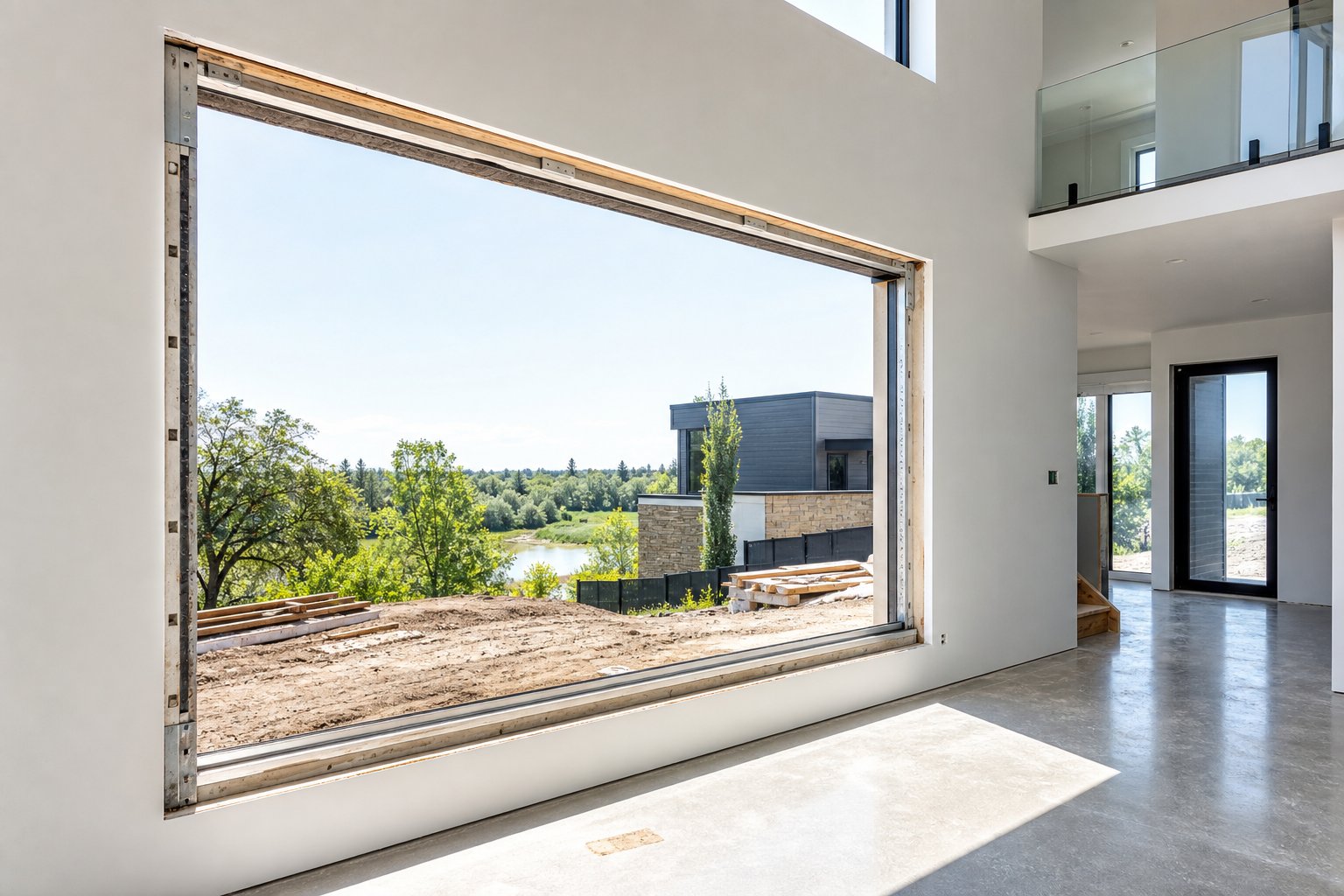
How to Measure for Aluminium Window Replacement or Installation
A perfectly specified aluminium window is useless if the opening it arrives for has been measured incorrectly. Whether you are ordering aluminum replacement windows for a 1970s brick veneer or sizing new openings for a ground-up build, precise measurements determine whether the frame fits cleanly — or whether you are left with costly rework, return shipping, and weeks of delay.
Measuring Existing Openings for Replacement Windows
Openings are rarely perfectly square or consistent in dimension from one edge to the other. Timber frames warp, brick reveals shift as mortar ages, and foundations settle unevenly over decades. That is why the industry-standard approach takes three measurements per axis rather than relying on a single reading.
For width, measure horizontally across the opening at three points: top, middle, and bottom. Measure from jamb face to jamb face — not from trim, architraves, or parting beads. Record all three figures and use the smallest. For height, measure vertically from the high point of the sill to the head of the opening at three points: left side, centre, and right side. Again, take the smallest measurement. Using the smallest dimension ensures the aluminum replacement window will physically fit without binding, even where the opening tapers slightly.
Checking for square is equally important. Measure diagonally from one top corner to the opposite bottom corner, then repeat from the other pair of corners. If the two diagonal readings differ by more than 3mm, the opening is out of square — common in older Australian homes. Minor discrepancies are absorbed during installation with shimming and packing. Larger variances may need the reveal to be built up or trimmed before the aluminum frame window can be fitted level and plumb.
Accounting for Clearances, Reveals, and Building Movement
No window frame should sit hard against the structural opening. A standard installation gap of approximately 6mm to 12mm on each side gives room for shimming the frame level, applying expanding foam or backer-rod insulation, and sealing with flexible caulk. That clearance also accommodates natural thermal expansion of the aluminium and minor building movement over time without transferring stress into the frame.
For older properties — weatherboard cottages, fibro homes, or unrenovated Queenslanders — expect irregularities. Walls may bow, heads may sag, and reveals might vary in depth from one side to the other. In these cases, measure the reveal depth (the distance from the interior wall face to the exterior face) at multiple points to confirm the aluminium joinery will sit flush within the available cavity. Aluminium joinery systems designed for renovation work typically offer adjustable sub-frames or reveal liners that bridge uneven surfaces without visible gaps.
Follow this step-by-step process for accurate results:
- Remove any curtains, blinds, or trim obscuring the opening edges so you can access the structural jambs directly.
- Measure width at the top, middle, and bottom of the opening. Record the smallest figure.
- Measure height at the left, centre, and right. Record the smallest figure.
- Measure both diagonals and compare — a difference greater than 3mm indicates the opening is out of square.
- Measure reveal depth from the interior face to the exterior face at all four corners to confirm the frame profile will fit within the cavity.
- Check the sill for level using a spirit level. Note any fall and which direction it slopes.
- Photograph each opening with a tape measure visible for reference when ordering.
One final dimension to verify: regulatory minimums. Under the NCC’s Deemed-to-Satisfy provisions (F6D7), habitable rooms in Australian homes must provide openable window area equal to at least 5% of the room’s floor area for natural ventilation. Bedrooms also carry emergency egress requirements that mandate minimum clear opening dimensions. Your measured opening — and the window you order to fill it — must satisfy both the physical space available and these regulatory minimums. A replacement window that fits the hole perfectly but reduces openable area below the 5% threshold technically creates a non-compliant room, which can surface during building inspections or future resale.
Accurate measurements feed directly into confident ordering, but measurements alone do not make a decision. With dimensions in hand, the final step is pulling together every variable covered so far — type, profile, size, glazing, and code requirements — into a single decision framework that gets you to the right window without backtracking.
Selecting the Right Aluminium Windows for Your Project
Every variable discussed so far — opening mechanism, profile depth, standard dimensions, glazing requirements, thermal performance, and room function — feeds into a single sequence of decisions. Follow that sequence in the right order and you land on durable aluminium windows suited to your building, your climate, and your budget without costly changes mid-project.
Matching Your Project Requirements to the Right Window
The mistake most people make is starting with aesthetics and reverse-engineering the technical details later. A more reliable path works from the inside out: define what the room needs, confirm what regulations demand, then select the type and size that satisfy both.
- Identify room function and ventilation needs. A bedroom requires egress-compliant openings; a living room prioritises daylight; a bathroom needs targeted moisture extraction high on the wall.
- Check NCC and local council requirements. Confirm minimum openable area (5% of floor area for habitable rooms), emergency egress dimensions, BAL ratings for bushfire zones, and wind classification for cyclone regions.
- Determine the available opening size. Measure the structural opening using the three-point method. Note reveal depth and whether it accommodates a thermally broken profile.
- Select the window type. Match the opening mechanism to the room’s spatial constraints and ventilation target — casement for maximum airflow, slider where projection is impossible, fixed for uninterrupted views.
- Choose the frame profile. Confirm that the profile series (slim, standard, or heavy-duty) supports the required glass area and performance level for the location.
- Specify the glazing. Size and position dictate glass thickness, toughening requirements, and whether double or triple glazing is needed to meet energy targets.
- Confirm standard vs custom. Cross-check final dimensions against available stock sizes. If they fall outside, factor in custom lead time and cost early.
Running through these steps for every opening before placing an order eliminates the guesswork that leads to re-orders, site delays, and compromised performance.
Working with a Specialist Manufacturer
The best aluminum windows are not necessarily the most expensive — they are the ones specified correctly for the job. That level of precision is difficult to achieve when sourcing from a limited stock catalogue or a general hardware retailer with no technical support. A dedicated aluminium windows manufacturer offers the full spectrum of types, custom sizing flexibility, and performance-rated systems under one supply chain, which means consistent profiles, matched colour finishes, and single-source accountability if anything needs adjustment on site.
When evaluating an aluminum window supplier, look for manufacturers who provide clear technical data on profile series, maximum spans, glazing compatibility, and compliance with AS 2047. Ask whether they handle both standard and bespoke orders — this signals production flexibility that benefits projects mixing repetitive openings with one-off feature windows. A reliable aluminum window manufacturer will also offer guidance on thermal break selection, hardware upgrades, and colour options without pushing you toward a one-size-fits-all solution.
For readers ready to move from research to project planning, MEICHEN’s aluminium window systems page is a useful next step — it covers specific window types, custom options, and performance specifications relevant to Australian residential and commercial builds, giving you a practical starting point for quotes and technical conversations.
Durable aluminium windows are a long-term investment that should outlast the mortgage. Taking the time to follow a structured decision process — rather than defaulting to whatever fits the budget this week — pays dividends in comfort, energy efficiency, and resale value for decades to come.
Frequently Asked Questions About Aluminium Windows Types and Sizes
1. What are the most common types of aluminium windows in Australia?
The most common aluminium window types in Australian residential builds are casement (side-hinged, swinging outward for maximum ventilation), awning (top-hinged, ideal for wet areas), horizontal sliding (space-saving with no external projection), and fixed panels (non-operable for unobstructed views). Double-hung, louvre, bi-fold, pivot, and tilt-and-turn windows round out the range. Each type suits different rooms and has distinct size limitations dictated by its opening mechanism and hardware load capacity.
2. What are the standard aluminium window sizes available in Australia?
Australian standard aluminium window sizes are manufactured in metric increments aligned with common stud-frame openings. Casement windows typically range from 500mm to 1000mm wide and 600mm to 1800mm tall. Sliding windows span 900mm to 2100mm wide. Awning windows run 600mm to 1200mm wide and 600mm to 900mm tall. Fixed panels can reach 1800mm wide and 2400mm or more in height. These stock sizes ship faster and cost less than custom orders. Dimensions outside these ranges require custom fabrication, adding lead time and expense.
3. How do I choose between standard and custom sized aluminium windows?
Standard sizes suit new builds with modular framing (600mm, 900mm, 1200mm increments) and replacement projects in homes built within the last 20 to 30 years. Custom sizing becomes necessary for heritage properties with mandated original proportions, architect-designed homes with oversized or irregular openings, older homes with out-of-square reveals, and non-rectangular shapes like raked or curved configurations. Many builders use a hybrid approach — stock windows for secondary rooms and custom sizes for feature elements — balancing cost efficiency with design intent. Manufacturers like MEICHEN offer both standard and custom aluminium window systems under one supply chain for consistent profiles and colour matching.
4. What is the difference between slim and standard aluminium window frame profiles?
Slim aluminium profiles (38-50 Series) have sightline widths of 35-45mm, creating a minimalist look with maximum glass visibility, but they limit panel size to approximately 1.2 square metres and offer restricted thermal break capacity. Standard profiles (55-70 Series) have 55-75mm sightlines, support panels up to 2.5 square metres, and accommodate full polyamide thermal breaks for NCC energy compliance. Heavy-duty profiles (90+ Series) handle commercial-scale panels exceeding 3 square metres with multi-chamber thermal breaks. Choosing the wrong profile for your window size compromises structural integrity, weather sealing, and energy performance.
5. Why does window size affect glass thickness and thermal performance?
As glass panel area increases, wind load pressure and dead weight rise proportionally. A 3 square metre panel at 6mm thickness weighs over 45kg before adding a second pane for double glazing. Larger panels require thicker glass (6mm, 8mm, or 10mm) or heat-treated options (toughened or laminated) to resist deflection and thermal stress cracking. Australian Standard AS 1288 also mandates safety glazing for any panel with its lowest edge below 800mm from floor level. Thermally broken aluminium frames accommodate the wider glazing units (24-44mm for double glazing) needed to achieve strong U-values and acoustic ratings in larger window configurations.
More Window & Door Guides