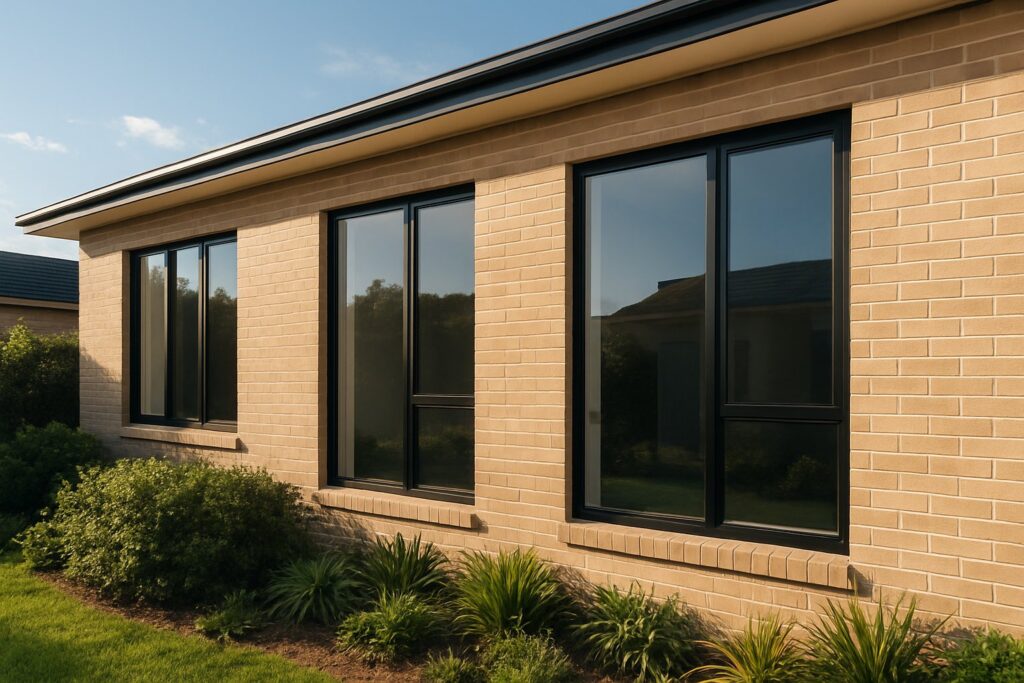
What Makes Aluminium Windows the Go-To Choice in South Africa
Aluminium windows are framing systems built from extruded aluminium alloy profiles, designed to hold single or double-glazed panels within a lightweight yet structurally robust frame. In South Africa, they have become the dominant choice for residential renovations, new builds, and commercial developments because they resist corrosion, require minimal upkeep, and deliver the slimline windows modern architecture demands.
Why Aluminium Dominates the SA Window Market
South Africa throws a lot at a building envelope. Coastal salt spray, intense UV radiation, security threats, and wild temperature swings all test whatever material sits between your walls and the outside world. Aluminium handles every one of these challenges without rusting, warping, or swelling. Unlike steel, it forms a natural oxide layer that shields the base metal from further degradation. Unlike timber, it never needs repainting or sealing. That combination of resilience and low maintenance makes aluminium windows and doors the most cost-effective option over a property’s full lifespan.
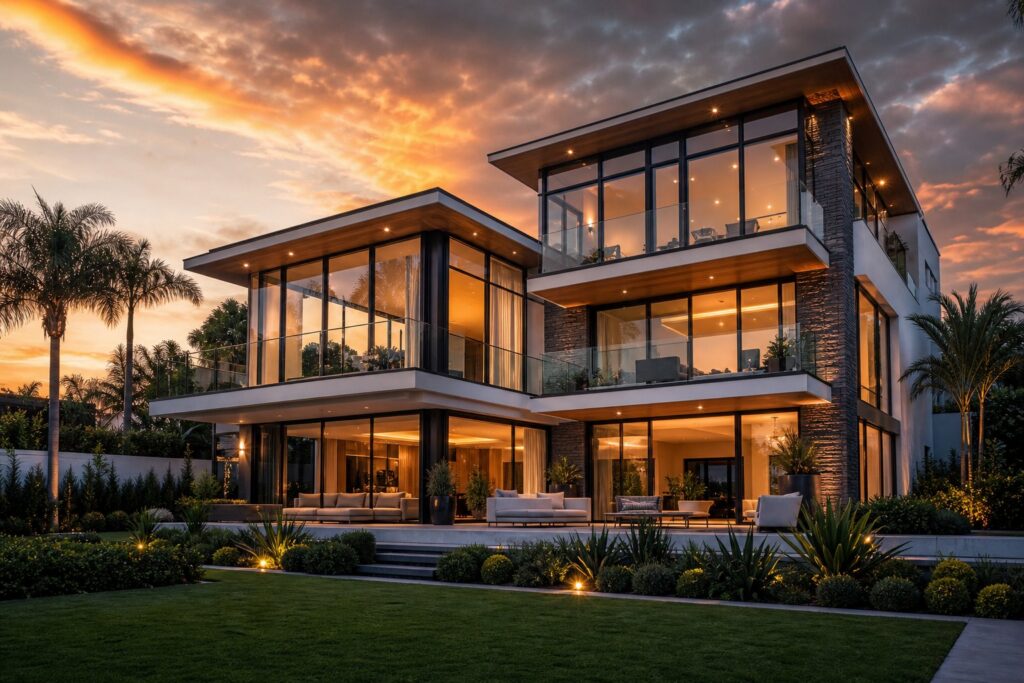
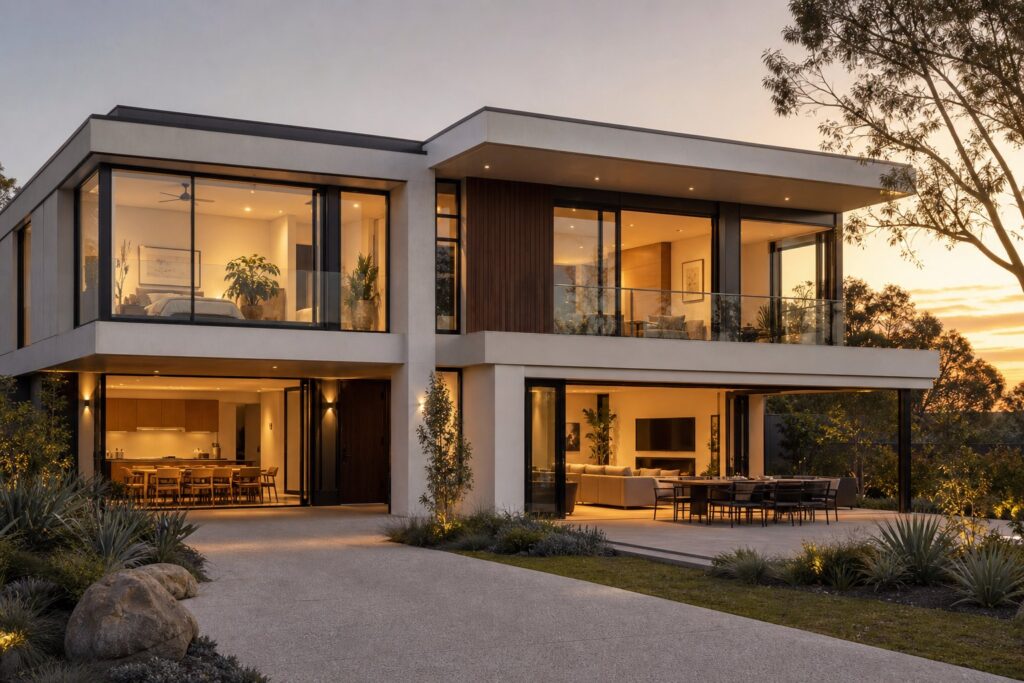
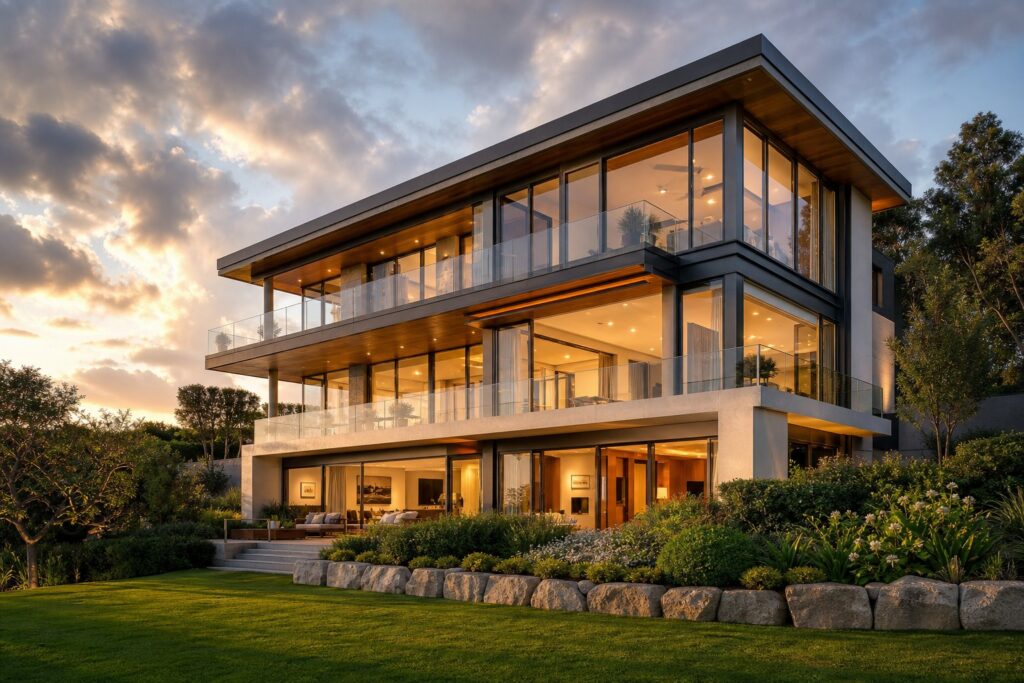
The material also suits the country’s design appetite. Homeowners and architects want clean lines, large glass areas, and seamless indoor-outdoor flow. Aluminium’s strength allows narrow frame profiles that maximise natural light — something thicker uPVC or wooden frames simply cannot replicate at the same scale. Whether you are specifying a full-height fixed panel, a sliding aluminium door, or a bank of casement alu windows across a living area, the framing almost disappears into the view.
Aluminium’s exceptional strength-to-weight ratio allows frames to support glass panels exceeding three to four square metres without heavy structural reinforcement — enabling the expansive, floor-to-ceiling glazing that defines contemporary South African architecture.
Key Properties That Set Aluminium Apart
Several inherent characteristics give aluminium its edge over competing materials:
- Dimensional stability — maintains consistent shape across temperature and humidity extremes, unlike timber or dark-coloured uPVC.
- Corrosion resistance — self-healing oxide layer protects the metal in most environments, with specialist coatings available for harsh coastal zones.
- Design flexibility — powder coating offers virtually unlimited colour choices, while slim profiles accommodate large openings and contemporary aesthetics.
- Recyclability — aluminium is infinitely recyclable without quality loss, appealing to sustainability-focused projects.
- Longevity — quality aluminium windows typically perform for 30 to 50 years with minimal intervention.
These properties form the foundation, but choosing the right aluminium window system for a South African project involves far more than picking a material. Climate zone, glazing type, security spec, and supplier credibility all shape the outcome — and each carries trade-offs most suppliers gloss over.
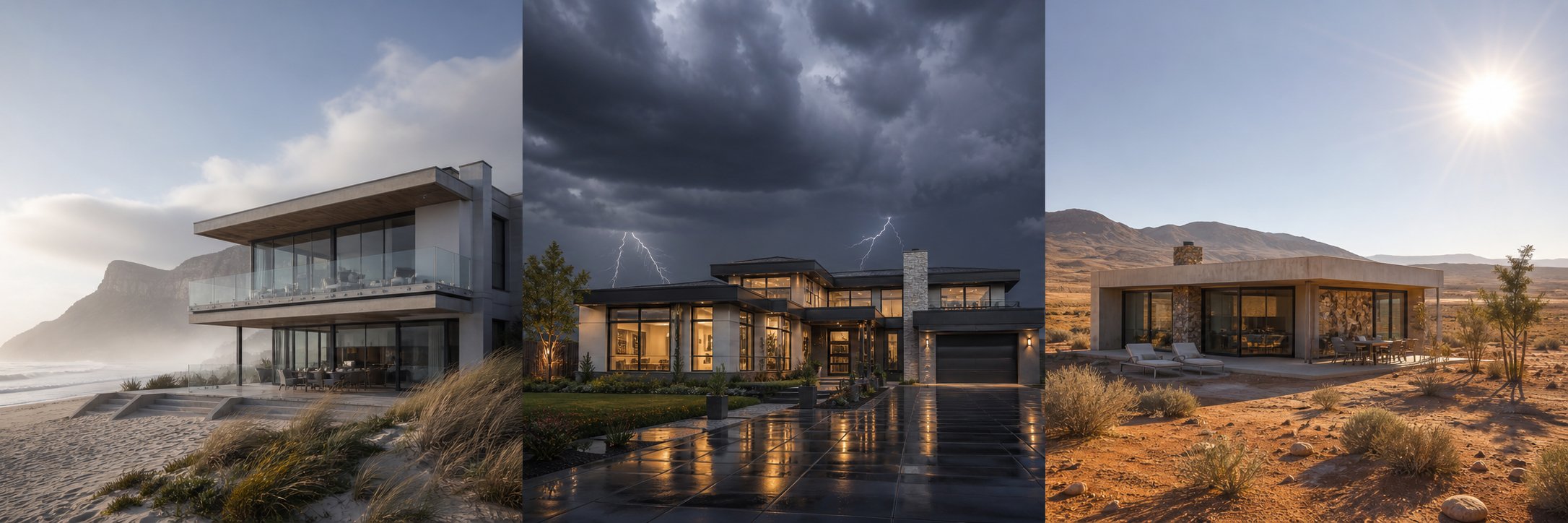
How South Africa’s Climate Zones Shape Your Window Choice
South Africa is not one climate — it is a patchwork of extremes. A window system that performs beautifully in Johannesburg’s dry winters may corrode within a decade in Durban’s salt-laden humidity. The country’s 2,800 kilometres of coastline, a high interior plateau sitting above 1,500 metres, and arid basins baking under relentless sun all place very different demands on aluminium window profiles. Getting this wrong means premature seal failure, condensation damage, or energy bills that climb year after year.
Coastal Regions and Corrosion Resistance
Cape Town, Durban, and the Garden Route share one aggressive enemy: airborne salt. The warm Agulhas current drives humid, salt-laden air inland along the east coast, while the cold Benguela current creates moisture-heavy fog along the west. Standard powder-coated aluminium handles most inland conditions without issue, but coastal installations need enhanced protection.
Look for frames finished with PVDF (polyvinylidene fluoride) coatings or powder coatings certified to Qualicoat Class 2 standards, which deliver superior UV resistance and gloss retention under harsh weathering. These coatings withstand salt spray, humidity, and prolonged sun exposure far longer than standard single-layer finishes. For properties within 500 metres of the shoreline, specifying marine-grade corrosion protection is not optional — it is essential for any aluminium window or alumital window system expected to last beyond its warranty period.
Highveld Temperature Swings and Thermal Performance
Johannesburg sits at 1,740 metres above sea level. Summer afternoons push past 30 degrees Celsius before afternoon thunderstorms roll in, yet winter nights regularly dip near freezing. That daily and seasonal temperature swing creates two problems: thermal transfer through frames and condensation forming on cold interior surfaces during winter mornings.
Thermal break technology solves both. A polyamide strip inserted between the inner and outer aluminium sections interrupts the conductive path, preventing the frame from acting as a bridge that channels cold or heat straight through the wall. Systems engineered for South African conditions, like multi-cavity thermal break profiles, can achieve R-values of approximately 4.0 to 4.2 — strong enough to reduce HVAC reliance by an estimated 20 to 30 percent in residential developments. On the Highveld, where load-shedding makes electric heating unreliable, that passive insulation becomes a practical necessity rather than a luxury upgrade.
Thermal breaks also eliminate the cold spots where condensation forms, protecting interior finishes and reducing mould risk in bedrooms and bathrooms where overnight temperatures drop fastest.
How Frame Profiles Respond to UV and Heat
South Africa receives an average of 2,500 hours of sunshine annually — significantly more than most European countries where many aluprof windows and profile systems originate. Intense UV radiation breaks down inferior coatings, causing chalking, fading, and micro-cracking that exposes the base metal beneath.
Quality aluminium window profiles rated for high-UV environments use coating systems tested against subtropical weathering benchmarks. Qualicoat Class 2 certification, for example, subjects powder coatings to accelerated ageing equivalent to years of subtropical exposure, measuring colour shift, gloss retention, and adhesion after degradation. In the dry Karoo interior, where summer temperatures exceed 40 degrees Celsius and UV intensity is extreme, this level of finish durability separates a 30-year window from a 10-year problem.
| Climate Zone | Key Challenge | Thermal Break Priority | Recommended Coating | Glazing Priority |
|---|---|---|---|---|
| Coastal (Cape Town, Durban, PE) | Salt spray, humidity, wind | Moderate — cooling loads dominate | PVDF or Qualicoat Class 2 | Laminated for wind resistance; Low-E for solar control |
| Highveld (Johannesburg, Pretoria) | Temperature extremes, condensation | High — both heating and cooling needed | Standard powder coat (min. Class 1) | Double glazing with thermal spacer |
| Arid Interior (Karoo, Northern Cape) | Extreme heat, intense UV, dust | Moderate-High — heat gain control | Qualicoat Class 2 for UV resistance | Tinted or Low-E to reduce solar heat gain |
The takeaway is straightforward: always ask your supplier which coating grade and profile system they are quoting. A generic “powder-coated aluminium” specification tells you nothing about whether that frame will hold up in your specific region. Demand the certification details, confirm the thermal break configuration, and match both to the climate zone where the windows will actually live. The glazing sealed into those frames matters just as much — and carries its own set of trade-offs worth understanding before you sign anything.
Glazing Options That Improve Efficiency and Comfort
The frame is only half the equation. Glass accounts for roughly 80 percent of a window’s surface area, which means your glazing choice has a far greater impact on thermal performance, noise levels, and security than the aluminium profile surrounding it. South African homeowners face five main glazing categories, each with distinct strengths — and each carrying cost implications that suppliers rarely break down transparently.
Single vs Double Glazing for SA Homes
Single glazing — a single pane of 4 to 5 mm glass — remains the default in many South African projects purely because of upfront cost. It transmits light well, but it is a poor thermal barrier. Heat passes through a single pane at roughly U-value 5.7 W/m²K, meaning your air conditioning works overtime in summer and your heater battles constant heat loss in winter.
Double glazing (also called an insulated glass unit or IGU) sandwiches two panes around a sealed air or argon gas gap, typically 12 mm wide. That trapped gas layer slashes heat transfer dramatically — argon-filled units achieve around 2.6 W/m²K, while adding a Low-E coating pushes performance down to approximately 1.8 W/m²K. For Highveld homes where winter nights approach zero and summer days exceed 30 degrees, this difference translates directly into reduced reliance on electric heating and cooling — a meaningful advantage during load-shedding when HVAC systems become unreliable.
Double glazing also delivers substantial noise reduction. Standard single glazing attenuates around 25 to 28 dB, while a double-glazed unit with unequal pane thickness (such as 6 mm outer and 4 mm inner) can achieve 35 to 40 dB reduction — enough to turn busy street traffic into a distant murmur.
Laminated and Tinted Glass for Security and Comfort
Laminated safety glass bonds two panes together with a clear polyvinyl butyral (PVB) interlayer. If the glass breaks, fragments adhere to the interlayer rather than scattering into the room. This makes laminated glass the preferred option for security-conscious homeowners — it resists forced entry far longer than standard float glass, buying time during a break-in attempt. The same interlayer absorbs UV radiation and dampens sound transmission, making laminated glazing a multi-purpose upgrade for aluminium glass doors and windows facing the street.
Tinted glass reduces solar heat gain by absorbing a portion of incoming radiation before it enters the room. Bronze and grey tints are most common in South African residential applications. They lower glare and reduce fading of interior furnishings without drastically altering the view. Tinting is particularly effective on north- and west-facing elevations that receive the most direct sun, though it does reduce visible light transmission — a trade-off worth discussing with your glazier before committing.
How Glazing Affects Your Energy Bills
With electricity tariffs climbing year after year and load-shedding disrupting active heating and cooling, passive thermal regulation through glazing becomes a genuine financial strategy rather than a nice-to-have. Low-E (low emissivity) coatings apply a microscopically thin metallic layer to the glass surface that reflects infrared heat back toward its source — keeping warmth inside during winter and blocking solar heat gain during summer. Combined with argon-filled double glazing and thermally broken frames, this approach can meaningfully reduce annual heating and cooling demand, though exact savings depend on window orientation, home insulation, and local climate severity.
The table below compares the main glazing types across the performance factors that matter most for South African conditions:
| Glazing Type | Thermal Performance | Noise Reduction | Security Rating | Typical Application |
|---|---|---|---|---|
| Single clear (4–5 mm) | Poor (U-value ~5.7) | Basic (25–28 dB) | Low | Budget builds, mild climates, rental properties |
| Double glazed — air filled | Good (U-value ~2.8) | Moderate (30–35 dB) | Moderate | Standard residential, Highveld homes |
| Double glazed — argon + Low-E | Excellent (U-value ~1.8) | Good (35–40 dB) | Moderate | Energy-conscious builds, cold climates |
| Laminated safety glass | Moderate (single) to Good (double) | Good to Excellent (40–45 dB) | High | Security-focused homes, aluminium glass door panels, ground-floor windows |
| Tinted glass (bronze/grey) | Moderate — reduces solar gain | Same as base configuration | Same as base configuration | North- and west-facing elevations, glare control |
One practical combination worth highlighting: laminated double glazing with a Low-E coating on the inner pane. This delivers strong thermal insulation, excellent noise reduction, high security resistance, and UV protection in a single unit. It costs more upfront — typically 60 to 100 percent above basic single glazing — but for a long-term home where comfort and safety matter, the payback through lower energy consumption and reduced security hardware makes it a sound investment. An aluminum door with window sidelights benefits from the same glazing strategy, since those glass panels sit at entry points where both thermal leakage and forced-entry risk are highest.
The critical lesson here is that glazing is not a one-size-fits-all decision. Your supplier should be specifying glass based on each window’s orientation, exposure, and the room’s function — not simply quoting the cheapest option across your entire home. That level of detail becomes even more important once security enters the conversation.
Security Features Every SA Homeowner Should Demand
Security is not a line item you add later — it belongs at the core of your window specification from day one. South Africa’s property crime reality means every ground-floor opening is a potential entry point, and the framing system you choose either resists forced entry or it does not. The good news: modern aluminium window engineering has moved far beyond clunky bolt-on burglar bars. Today’s systems integrate protection directly into the profile and hardware, delivering burglar resistant windows that look as clean as any unprotected opening.
Multi-Point Locking and Reinforced Profiles
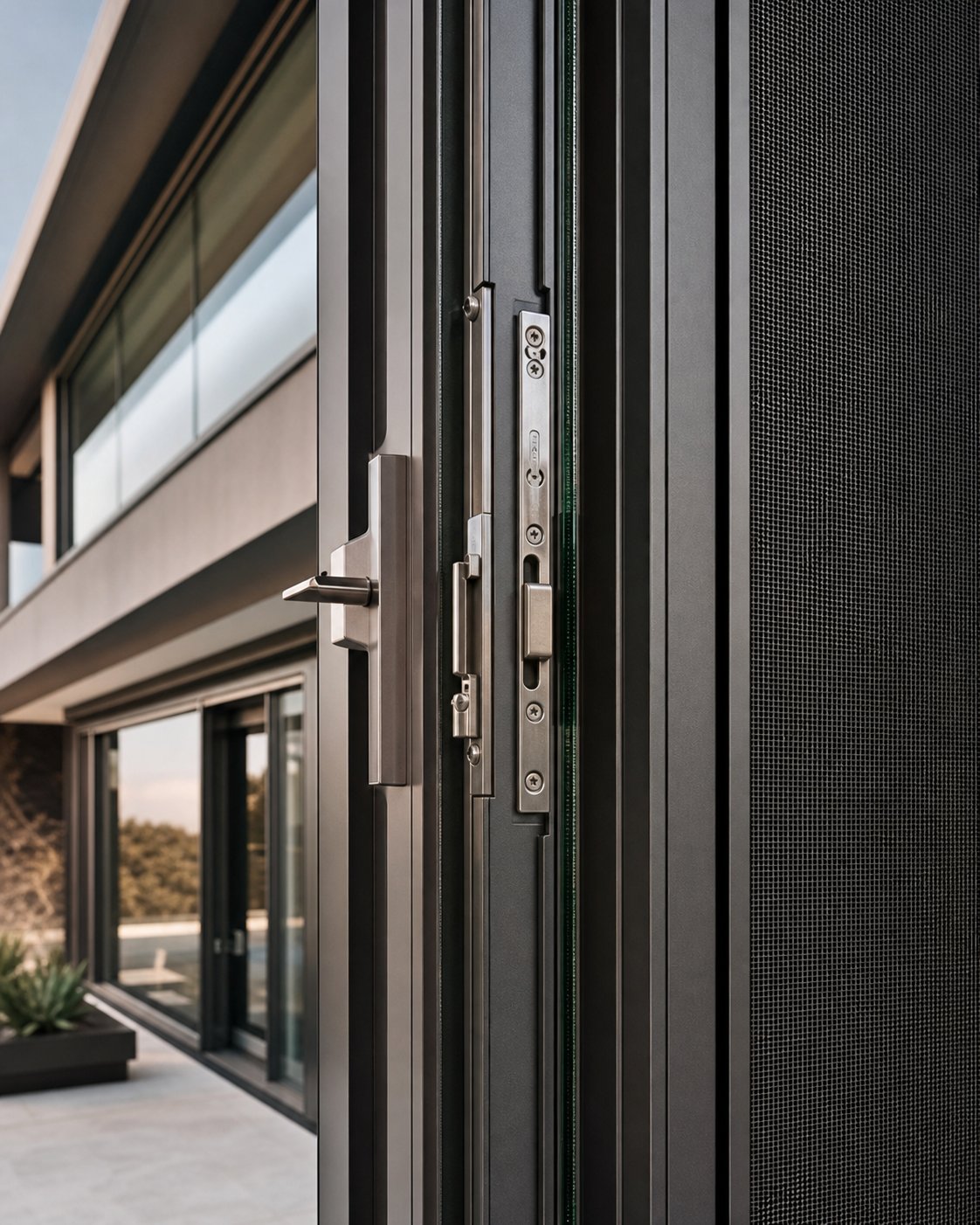
A standard window latch secures the sash at a single point — usually one handle in the centre of the frame. Force applied at the corners or edges can flex the profile enough to pop the latch free. Multi-point locking eliminates that weakness by engaging bolts or hooks at multiple positions along all four sides of the frame simultaneously. One turn of the handle drives locking points into reinforced steel keeps embedded in the outer frame, distributing resistance across the entire perimeter rather than concentrating it at one vulnerable spot.
The frame itself matters just as much as the lock. Reinforced aluminium profiles with hardened steel inserts at strategic locking zones resist prying tools that would deform a standard extrusion. These internal reinforcements add minimal weight to the frame but dramatically increase the time and effort required for forced entry — and time is what matters most, since most break-in attempts are abandoned within 60 seconds if the opening resists initial force.
Integrated Burglar-Resistant Designs vs Aftermarket Bars
Traditional aftermarket burglar bars bolt onto the exterior of the frame after installation. They work, but they create several problems: they obstruct emergency egress, trap occupants during fires, degrade the building’s street-facing appearance, and telegraph to passers-by that the property is in a high-crime area.
Integrated solutions take a different approach. Custom-designed burglar bars built into the aluminium frame during manufacturing sit flush within the profile, providing a physical barrier without disrupting the window’s visual lines. High-transparency stainless steel security screens — particularly marine-grade SU316 mesh — offer near-invisible protection that also blocks insects and prevents pet escapes. These screens maintain multi-point locking even when the window behind them is open for ventilation.
For sliding systems, impact resistant sliding patio doors use laminated safety glass combined with reinforced track hardware and anti-lift blocks to prevent the panel from being forced off its rail. The same engineering principles found in hurricane proof patio doors — where frames must withstand sustained wind-borne debris impacts — apply directly to forced-entry resistance. South African suppliers offering hurricane proof sliding patio doors or equivalent impact-rated systems deliver hardware tested against repeated blunt-force strikes, not just static pressure.
Balancing Ventilation With Security
One of the biggest compromises SA homeowners face is choosing between fresh air and a locked home. You should not need to seal the house to feel safe. Modern aluminium systems solve this through restricted-opening hardware (limiting sash travel to a gap too narrow for body entry), security screens that allow full airflow while blocking physical access, and louvre windows with integrated bars between the blades.
Before signing any quote, verify that your supplier can confirm the following security features:
- Multi-point locking — minimum three locking points per sash, engaging on all four frame sides for doors and large openings
- Reinforced profiles — internal steel or aluminium reinforcement at all hinge and locking zones
- Laminated safety glass — minimum 6.38 mm laminated (two 3 mm panes with PVB interlayer) on all accessible windows
- Anti-lift devices — fitted to all sliding windows and doors to prevent panel removal from the track
- Tamper-resistant fixings — one-way screws or concealed fixings that prevent hardware removal from outside
- Compliance with SANS standards — ask for written confirmation that locking hardware and glass grades meet the relevant SANS 10400 and SANS 1263 requirements for your application
- Emergency egress compliance — at least one bedroom window must allow escape in a fire, even with security hardware fitted
A note on standards: SANS (South African National Standards) classifications exist for both security glazing grades and door or window hardware, but the specific test numbers and performance tiers vary by product category. Do not accept a vague claim of “SANS compliant” — request the exact standard reference and test report number from your supplier. Any reputable manufacturer will provide this without hesitation.
Security hardware adds cost, but it is not a place to compromise. The real question for most homeowners is not whether to specify security features, but how to select the right window sizes and styles that accommodate them without restricting light or ventilation in each room.
Sizes, Styles, and How to Measure for a Perfect Fit
Getting the security spec right is only useful if the window actually fits the opening. A surprising number of installation problems — poor sealing, misaligned hardware, drafts at the edges — trace back to inaccurate measurements or choosing a size that does not match the structural opening. South Africa’s aluminium window market offers a broad range of standard dimensions, but knowing when standard works and when custom sizing becomes necessary can save thousands in rework costs.
Standard SA Window Sizes and When Custom Is Worth It
Most South African aluminium window manufacturers work from a standardised grid. Widths typically step in 300 mm increments — 600, 900, 1200, 1500, 1800, 2100, and 2400 mm — while heights follow the same logic at 600, 900, 1200, 1500, and 1800 mm. Based on standard catalogues available in the SA market, common configurations include:
- Top-hung windows: from 600 x 600 mm up to 2400 x 1800 mm, available in two-pane and four-pane options for larger widths
- Side-hung (casement) windows: from 600 x 900 mm up to 2400 x 1800 mm, with single or double-sash configurations
- Horizontal sliding windows: from 900 x 600 mm up to 2400 x 1500 mm in two-panel and four-panel layouts
- Sidelights and toplights: narrow fixed or opening panels designed to pair with aluminium sliding doors or entrance door frames
These standard sizes suit the majority of residential projects — particularly newer developments where builders design openings around available window dimensions. The cost advantage is straightforward: standard sizes use existing tooling and die sets, meaning shorter lead times and lower unit prices.
Custom sizing becomes worthwhile when you are renovating a period home with non-standard openings, designing an architectural feature wall, or integrating full-height glazing into open-plan living areas. Specialist aluminum door and window manufacturing operations can fabricate virtually any dimension within structural limits, though expect a lead time of two to four weeks beyond standard production and a price premium of 20 to 40 percent depending on complexity.
Choosing the Right Window Style for Each Room
Each window type serves a different functional purpose. Matching the style to the room’s ventilation needs, orientation, and security requirements avoids the common mistake of defaulting to one type across the entire home.
Sliding windows — the alu slider is South Africa’s most popular residential choice for bedrooms and living areas. Two or four panels glide horizontally along a track, requiring no swing clearance. They are space-efficient, easy to operate, and pair naturally with aluminium sliding doors in open-plan layouts to create a unified design language across the elevation. The trade-off: only half the opening area provides ventilation at any time.
Casement (side-hung) windows — hinged on one side and opening outward, casements offer maximum airflow because the entire sash swings clear. They suit living rooms and kitchens where cross-ventilation matters. Their outward swing makes them slightly less accessible from outside, adding a passive security layer.
Awning (top-hung) windows — hinged at the top, opening outward from the bottom. The awning effect allows ventilation during rain without water entering the room, making them ideal for bathrooms, kitchens above countertops, and high-level clerestory positions. They also stack neatly in multi-panel configurations for wide openings.
Fixed windows — do not open at all. They deliver uninterrupted views and excellent thermal and acoustic performance because there are no moving seals to compromise. Use them where light matters but airflow does not: above doors, in stairwells, or as feature panels flanking operable windows.
Louvre windows — horizontal glass blades pivot simultaneously to control airflow volume. They provide excellent ventilation for laundry rooms, garages, and secondary bathrooms while integrating easily with security bars fitted between each blade.
For projects combining aluminum doors and windows across a single facade, maintaining consistent profile depth and colour across all opening types creates visual cohesion. Most SA manufacturers offer matching profiles for their sliding, casement, and fixed systems specifically to achieve this.
Measurement Checklist Before You Order
Whether you are replacing existing windows or specifying for a new build, accurate measurements prevent costly errors. Structural openings are rarely perfectly square — walls settle, brickwork shifts, and plaster builds up unevenly over decades. The following process accounts for these realities:
- Check for square. Measure diagonally from the top-left corner to the bottom-right corner, then from the top-right to the bottom-left. If the two measurements differ by more than 6 mm, the opening is out of square and may need remedial work or a custom-sized frame.
- Measure the width at three points. Take horizontal measurements at the top, middle, and bottom of the opening, measuring between the inner edges of the structural reveals (the masonry or timber surround, not the existing frame). Record all three and use the smallest figure as your ordering width.
- Measure the height at three points. Take vertical measurements on the left side, centre, and right side — from the sill to the head of the structural opening. Again, use the smallest measurement.
- Check the depth. Measure the reveal depth (front to back of the wall opening) to confirm the new frame will sit flush. Standard aluminium frames need a minimum reveal depth of around 75 to 100 mm, though this varies by profile system.
- Allow fitting clearance. Deduct 5 to 10 mm from both the width and height measurements to provide a gap for shimming and sealing during installation. Your installer will pack this gap with compressible foam and finish with silicone or plaster.
- Record the location of each window. Label measurements by room and position (e.g., “master bedroom — north wall, left opening”). Never assume two openings in the same wall are identical — measure each one independently.
- Note any obstructions. Document internal fittings (curtain rails, built-in furniture), external features (burglar bars, shade sails, roof overhangs), and service runs (electrical conduit, plumbing) that could affect installation access or frame positioning.
If you are replacing an existing aluminium or steel frame, measure the structural opening behind the frame rather than the frame itself — the existing unit may have been undersized or shimmed. Removing an internal cover strip or architrave usually exposes the true masonry edge.
For larger residential projects involving custom aluminum doors and integrated window walls, consider engaging a specialist to conduct a professional site measure. The small upfront cost protects against fabrication errors on high-value items where a single mis-cut panel can delay the project by weeks. Reputable aluminum door and window manufacturing suppliers typically offer this as part of their quoting process for orders above a certain threshold.
With measurements locked in and window styles selected room by room, the next decision — one that affects both kerb appeal and long-term thermal performance — is the colour and finish you apply to those frames.
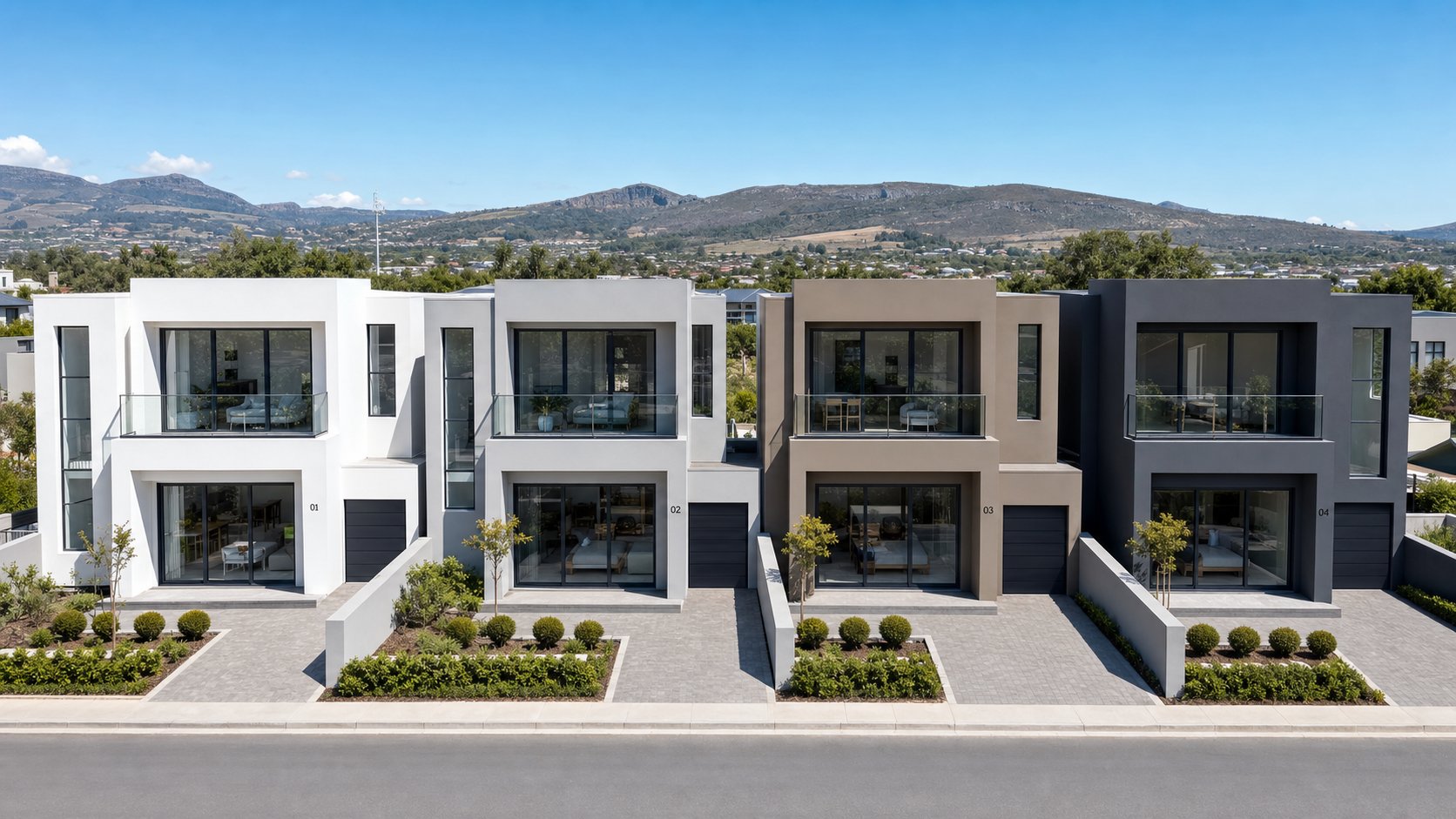
Colour Selection and How It Affects Performance
Frame colour is not purely cosmetic. The shade you choose influences how much heat your aluminium profiles absorb, how often you will need to clean them, and how well the finish holds up after years of South African sun. Most homeowners pick a colour based on what looks good against the brickwork — which is fine — but ignoring the thermal and maintenance implications means living with a trade-off you never agreed to.
Popular Powder-Coat Colours and Their Thermal Impact
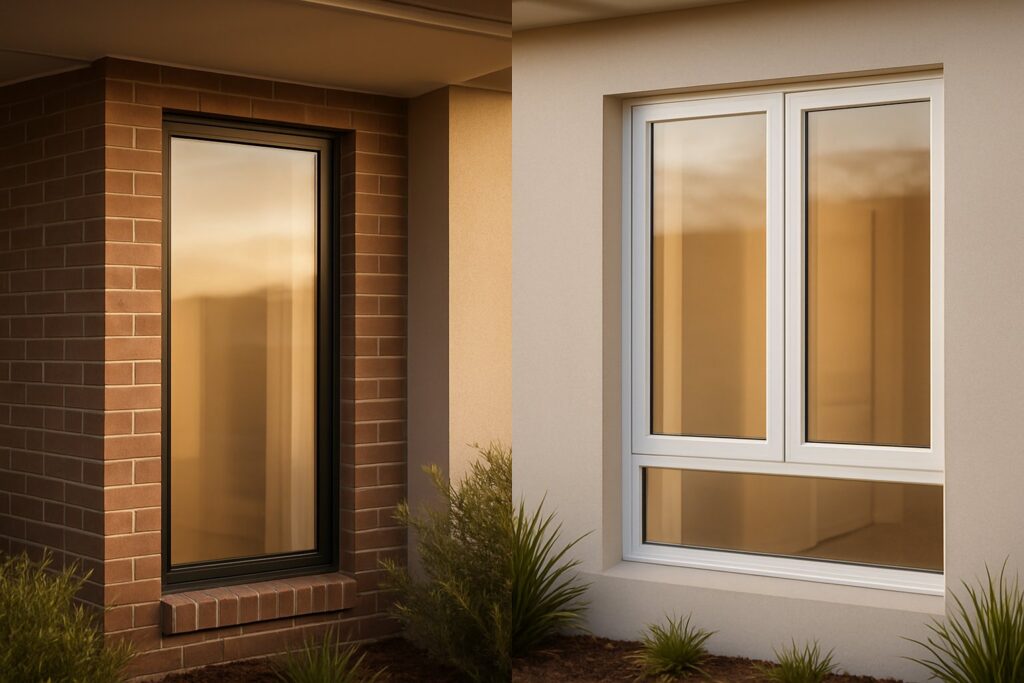
South African suppliers typically stock four standard powder-coat options: Silver (or natural aluminium), White, Bronze, and Charcoal. These cover the vast majority of residential and commercial projects without triggering custom-order lead times. Each colour absorbs solar radiation differently, and that difference matters on elevations exposed to direct sun — particularly north-facing walls in the Southern Hemisphere, where solar intensity is highest year-round.
Darker finishes like Charcoal and Bronze absorb significantly more solar energy than lighter alternatives. On a north-facing exterior, a dark frame can reach surface temperatures well above the ambient air temperature on summer afternoons. That absorbed heat radiates inward, raising indoor temperatures near the window and increasing cooling loads. For outside aluminium doors and full-height glazing panels on sun-drenched elevations, darker colours amplify the very heat gain your glazing specification is trying to control.
Lighter finishes — White and Silver — reflect most incoming sunlight, keeping frame temperatures closer to ambient and reducing conducted heat. The trade-off is visibility of dust and grime, particularly in dry inland areas like Gauteng and the Free State where red soil settles on every surface. White frames in these regions need cleaning every few weeks to maintain their kerb appeal, while Silver hides dust more effectively due to its mid-tone metallic finish.
| Colour | Heat Absorption | Maintenance Needs | Best-Suited Orientation |
|---|---|---|---|
| White | Low — reflects most solar energy | Higher — shows dust and watermarks readily | North-facing and west-facing (sun-exposed elevations) |
| Silver | Low to Moderate — good reflectivity | Moderate — hides dust well, shows fingerprints | Any orientation; versatile all-rounder |
| Bronze | Moderate to High — absorbs warm-spectrum light | Low to Moderate — dust blends with the tone | South-facing or shaded elevations; east-facing with morning sun only |
| Charcoal | High — absorbs most solar radiation | Moderate — shows dust in dry climates but hides watermarks | South-facing, shaded, or well-ventilated areas; avoid large north-facing panels |
For projects specifying aluminum exterior doors or large sliding systems on sun-exposed facades, pairing a lighter frame colour with high-performance glazing delivers far better thermal outcomes than a dark frame fighting against its own heat gain. If you prefer the look of Charcoal or Bronze, consider reserving those finishes for south-facing or shaded elevations where solar absorption works in your favour during winter rather than against your cooling system in summer.
Anodised vs Powder-Coated Finishes for Longevity
Beyond colour choice, the finish type itself determines how your frames age. Two options dominate the market: powder coating and anodising. They protect the aluminium through fundamentally different mechanisms, and each has distinct strengths.
Powder coating applies a dry pigmented powder electrostatically to the aluminium surface, then cures it in an oven to form a thick, uniform protective layer. Quality architectural powder coats — those meeting AS 3715 or equivalent Qualicoat standards — deliver excellent UV resistance, a vast colour range, and a finish that will not peel or flake under normal conditions. Repairs are straightforward: localised chips or scratches can be touched up with a matching liquid coating. This makes powder coating the standard choice for most residential aluminium windows and exterior aluminum doors across South Africa.
Its main vulnerability is filiform corrosion — thread-like corrosion that can develop beneath the coating if surface preparation before application was inadequate. Choosing a reputable fabricator who uses proper chemical pre-treatment before coating virtually eliminates this risk.
Anodising takes a different approach entirely. Rather than adding a layer on top of the metal, anodising thickens the aluminium’s own natural oxide layer through an electrochemical process. The result is a finish that is literally part of the metal — it cannot peel, chip, or delaminate. Anodised aluminium offers superior UV and fade resistance, extremely low maintenance (periodic cleaning with mild detergent is sufficient), and a distinctive metallic sheen that powder coating cannot replicate.
The downsides: anodised finishes are limited to metallic hues — silvers, bronzes, champagnes, and dark greys — with no bright colours available. They are also more susceptible to visible scratching in high-contact areas, and colour matching between production batches can show slight variation. For aluminum doors exterior applications where frames face frequent physical contact (entry doors, high-traffic sliding panels), powder coating’s repairability often makes it the more practical choice.
In practice, most South African residential projects default to powder coating for its colour flexibility and ease of maintenance, reserving anodised finishes for architectural feature elements where that natural metallic depth adds visual distinction. Whichever finish you choose, confirm the coating grade with your supplier — a cheap single-layer powder coat on an outside aluminum door exposed to coastal salt will not perform anything like a certified Class 2 system designed for harsh environments.
Colour and finish lock in the aesthetic and thermal character of your frames for decades. But the performance gap between residential-grade and commercial-grade aluminium systems runs deeper than surface treatment — it sits in the profile engineering itself.
Residential vs Commercial Aluminium Window Systems
Not all aluminium window profiles are engineered equal. A standard residential system and a commercial-grade system may look similar at a glance, but the differences in profile depth, structural capacity, and ancillary performance ratings translate into vastly different real-world behaviour — and vastly different price points. Understanding where that line sits helps you avoid overspending on a suburban home or, more dangerously, underspecifying for a multi-storey coastal apartment.
When Residential-Grade Systems Are Sufficient
Residential aluminium window systems typically use profile depths between 50 and 65 mm. These frames handle standard wind loads for single- and double-storey homes in sheltered inland locations comfortably. They accommodate double glazing up to around 24 mm total thickness, deliver adequate acoustic separation for suburban environments (typically 30 to 35 dB reduction), and accept multi-point locking hardware for security. For the majority of freestanding SA homes — particularly those not exposed to extreme coastal wind or significant traffic noise — residential-grade profiles are entirely fit for purpose and represent the best value proposition.
Where they fall short is structural capacity. A 50 mm frame spanning a 2,400 mm opening on an exposed Cape Town hillside will flex under sustained wind gusts in ways that compromise seal integrity and can even crack glazing over time. Profile deflection under wind load testing is the metric that separates adequate from inadequate — and most residential quotes never mention it.
Commercial Systems and Curtain Wall Integration
Commercial aluminium window systems step up to profile depths of 75 to 120 mm or more. That extra material gives engineers room to incorporate larger thermal break chambers, heavier reinforcement, and deeper glazing rebates capable of holding 32 to 44 mm insulated glass units. The result: higher wind load ratings (often tested to 2.5 to 3 kPa positive and negative pressure), superior acoustic attenuation (38 to 45 dB), and the structural rigidity needed for large-span fixed panels in high-rise applications.
Commercial systems also integrate with aluminium curtain wall assemblies — the non-loadbearing glass facades that define modern office towers and mixed-use developments. A curtain wall system transfers wind and dead loads back to the building’s primary structure via bracket connections at each floor slab, allowing uninterrupted glass from ground level to roofline. Curtain walls systems of this type demand precise engineering for thermal movement, water drainage, and stack-pressure management that residential profiles simply are not designed to address. Commercial aluminum doors serving as entry systems within these facades must match the same structural and fire-rated performance as the surrounding glazed wall.
Fire windows represent another commercial-only territory. In multi-storey residential or mixed-use buildings, the National Building Regulations (SANS 10400-T) require fire-rated glazing in certain boundary and escape-route positions. These fire-rated aluminium window systems use intumescent seals and specially laminated glass to maintain integrity for 30, 60, or even 120 minutes during a blaze — a capability no standard residential frame offers.
Crossover Applications for Multi-Storey Residential
The grey zone lies in projects that are residential in function but commercial in exposure. High-rise apartments above three storeys, beachfront penthouses taking direct onshore gales, and homes flanking major highways all benefit from commercial-grade specifications even though their use classification is residential. In these scenarios, the additional cost — typically 40 to 80 percent above equivalent residential systems — buys measurable gains in wind resistance, noise control, and long-term seal longevity that justify the premium.
For homeowners and specifiers trying to understand how these system tiers are categorised, MEICHEN’s aluminium windows page offers a useful reference point. It maps out residential and commercial window types alongside custom options and performance considerations, giving you a clear framework for comparing what each tier delivers before you engage local suppliers.
| Specification | Residential Systems | Commercial Systems |
|---|---|---|
| Profile Depth | 50–65 mm | 75–120+ mm |
| Wind Load Rating | Up to ~1.5 kPa (suitable for low-rise, sheltered sites) | 2.5–3+ kPa (high-rise, exposed, coastal) |
| Acoustic Performance | 30–35 dB reduction | 38–45 dB reduction |
| Maximum Glazing Thickness | 20–24 mm | 32–44 mm |
| Fire Rating Capability | Not available | 30, 60, 90, or 120 minutes (with fire-rated glass) |
| Curtain Wall Integration | No | Yes — bracket-fixed to floor slabs |
| Typical Cost Bracket (supply only) | Standard | 40–80% premium over residential equivalent |
The decision framework is straightforward: if your project is single- or double-storey, inland, and not exposed to extreme wind or noise, residential-grade systems deliver everything you need at a fair price. The moment you add height, coastal exposure, acoustic sensitivity, or fire compliance into the mix, commercial specifications become a performance necessity rather than an indulgence. Ask your supplier which system tier they are quoting — and why — before you compare bottom-line prices that may be hiding a specification gap you only discover after installation.
Installation Process and Long-Term Maintenance
Specifying the right system tier means nothing if the installation itself is botched. Most performance complaints — water ingress, rattling sashes, drafts at the corners — trace back to fitting errors rather than product defects. Understanding what a proper installation looks like protects you from signing off on work that will cost more to fix later than it would have cost to do correctly the first time.
What Happens During Professional Installation
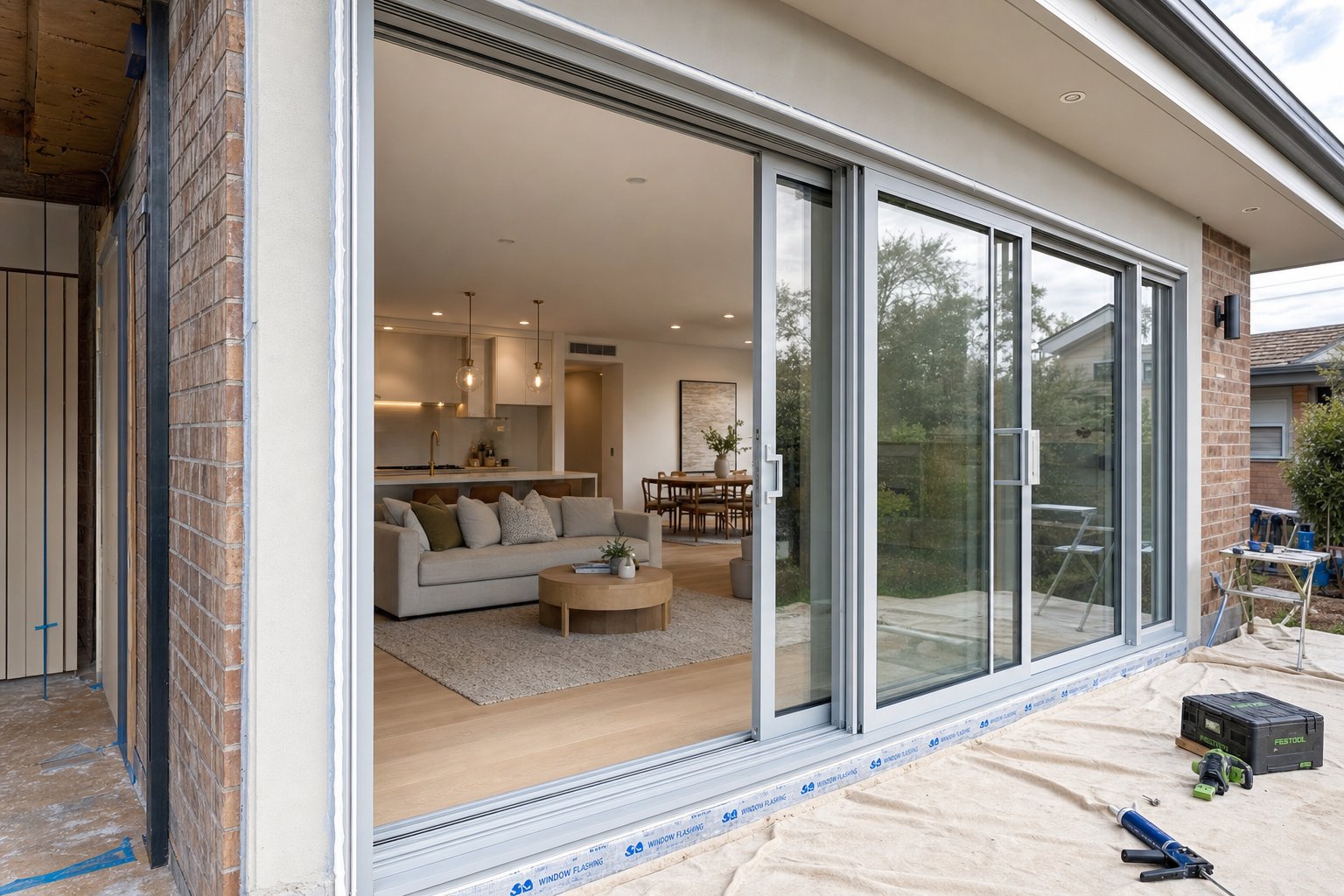
A professional aluminium window installation follows a predictable sequence, whether the job involves a single bathroom opening or a full home’s worth of aluminium doors and windows. The installer removes the existing frame (cutting fixings and seals rather than forcing the unit free, to avoid damaging surrounding masonry), then inspects the structural opening for cracks, moisture damage, or plaster buildup that could prevent the new frame from sitting square. Waterproof flashing tape is applied to the sill and jambs before the new frame goes in — this layer directs any water that penetrates behind the frame back outside rather than into the wall cavity.
The frame is positioned on packers, levelled with a spirit level both horizontally and vertically, then fixed through pre-drilled points into the masonry at top, middle, and bottom on each side. Once secure, the installer fits sashes or sliding panels, tests operation, adjusts rollers or hinges, and confirms that locking hardware engages cleanly. The final step is sealing: exterior-grade silicone closes the gap between frame and wall, while compressible foam backing rod fills deeper voids to prevent sealant from collapsing inward over time.
Preparing Your Home Before Installation Day
A few simple steps on your end speed the job and reduce risk of damage:
- Clear furniture, curtains, and blinds at least one metre from each window opening
- Remove external security bars or shade fittings that obstruct access
- Cover flooring beneath the opening with drop sheets — cutting and drilling produce dust and debris
- Confirm power access for the installer’s tools, particularly if your property runs on a generator schedule during load-shedding
- Notify your security company if sensors or beams near the openings will be temporarily disconnected
For alu doors and large sliding panels, verify that access paths (hallways, gates, driveways) are wide enough for the glazed units to pass through without risk of breakage during delivery.
Seasonal Maintenance to Maximise Lifespan
Quality aluminium windows in South African conditions routinely deliver 30 to 40 years of service — but only if you maintain the moving parts and protective seals that keep them performing. The frames themselves are virtually indestructible; it is the hardware, rubber gaskets, and drainage channels that degrade first.
A simple seasonal routine keeps everything in working order:
- Every quarter: Wipe frames and tracks with a damp cloth and mild detergent. Clear drainage slots of dirt buildup so water exits freely during storms.
- Every six months: Lubricate hinges, rollers, and locking mechanisms with silicone spray (not petroleum-based oils, which attract grit). Check rubber seals for cracking or compression — replace any that no longer spring back when pressed.
- Annually: Inspect the silicone perimeter seal between frame and wall for gaps or peeling. Re-seal where needed. On coastal properties, apply a marine-grade wax to frame surfaces and rinse tracks with fresh water weekly during high-salt months to prevent accelerated corrosion.
- Every three to five years: Have a specialist inspect all aluminium doors and windows for early signs of frame distortion, seal degradation, or hardware wear that is not visible during routine cleaning.
When should you consider replacement rather than repair? Three warning signs indicate a window has reached the end of its useful life: persistent condensation or fogging between double-glazed panes (meaning the IGU seal has failed and cannot be resealed in situ), visible corrosion pitting at frame joints (particularly in coastal areas where salt has penetrated beneath the coating), and sashes that no longer open, close, or lock smoothly despite lubrication and hardware adjustment. Any one of these signals a systemic issue that patch repairs will not resolve long-term.
Treat your aluminium window system the way you treat a car: regular light servicing prevents the catastrophic failures that force expensive full replacements. The difference between a window that lasts 20 years and one that lasts 40 almost always comes down to whether anyone maintained it — not what it cost at installation. That maintenance discipline also gives you a clear picture of your supplier’s product quality over time, which brings us to the question of how to evaluate suppliers before you commit.
How to Choose a Trustworthy Aluminium Window Supplier
Maintenance tells you how a product ages. But the supplier you choose determines whether the product was worth buying in the first place. South Africa has hundreds of aluminium window suppliers ranging from large certified manufacturers to backyard operations working from borrowed extrusion dies. The gap in quality between them is enormous — yet their quotes can look deceptively similar on paper. A structured evaluation framework strips away the marketing polish and reveals what you are actually paying for.
Credentials and Certifications That Matter
Rank potential suppliers against these criteria in priority order before comparing a single price:
- AAAMSA membership and class designation. The Association of Architectural Aluminium Manufacturers of South Africa tests products against wind deflection, water penetration, and air permeability standards (SANS 613). A certified product carries a class rating from A1 to A6 — the higher the number, the greater the performance under environmental load. Coastal projects typically need A4 or A5 ratings. Any aluminium windows manufacturer that cannot produce a current AAAMSA Performance Test Certificate for the specific product they are quoting is asking you to gamble on untested hardware.
- SANS 10400 compliance. South African National Building Regulations require all windows and doors to comply with SANS 10400. Without this compliance, your local council cannot issue an Occupancy Certificate — meaning the building cannot legally be inhabited. This is non-negotiable, yet some budget aluminium window manufacturers skip the certification process entirely and rely on homeowners not knowing the difference.
- Warranty terms and scope. Look for warranties that cover frame integrity, hardware function, powder-coat finish, and sealed glazing units separately — each has a different expected lifespan. A single blanket “5-year warranty” that does not define what is covered is functionally meaningless.
- SAGGA glazing certification. The South African Glass and Glazing Association issues the glazing certificates required as part of the Occupancy Certificate process. Confirm your supplier works with SAGGA-certified glaziers.
- Transparent product information online. Reputable aluminium window suppliers publish system specifications, available window types, custom options, and performance data where you can review them before engaging a sales representative. MEICHEN’s aluminium windows page is a strong example of this approach — it categorises residential and commercial systems clearly, details custom capabilities, and presents performance considerations upfront. Use that level of transparency as your benchmark when evaluating any aluminum window supplier’s online presence.
- Installation credentials. Ask whether the supplier uses their own trained fitting teams or subcontracts to third parties. If subcontracted, confirm who carries liability for installation defects.
How to Compare Quotes Without Sacrificing Quality
Price differences of 20 to 30 percent between quotes for the same project are common — and almost always explained by specification gaps rather than genuine cost efficiency. A detailed analysis of quote structures shows that cheaper offers frequently omit items the homeowner assumes are included.
Before comparing bottom-line figures, confirm every quote specifies:
- The exact profile system name and depth (not just “aluminium frame”)
- Glazing type, thickness, and any coatings (single, double, Low-E, laminated)
- Hardware brand and locking configuration (multi-point or single latch)
- Powder-coat colour and grade (Class 1 or Class 2)
- What installation includes — removal of old frames, waterproofing, waste disposal, making good plasterwork
- Delivery timeline and payment milestones
- Separate warranty durations for frame, hardware, glass, and finish
If any three of these details are missing from a quote, you are not comparing like for like. Request clarification before making a decision based on price alone. A reliable aluminum door supplier or window manufacturer will itemise these without hesitation — vague one-line descriptions are a deliberate choice to obscure what you are actually getting.
Red Flags When Evaluating Window Suppliers
Years of homeowner complaints follow predictable patterns. Watch for these warning signs:
- No AAAMSA certificate available on request. If they cannot show you the test certificate with the specific class rating for the product quoted, walk away.
- Verbal promises not reflected in the written quote. “We’ll sort that out on site” is not a specification — it is a future dispute.
- Abnormally low pricing with no explanation. Cutting 30 percent off the market average usually means thinner profiles, inferior hardware, single-layer coatings, or substandard glazing. The cheapest quote often becomes the most expensive project once remediation costs surface.
- No physical premises or showroom. Legitimate aluminum door manufacturers and aluminium window manufacturers invest in facilities where you can inspect product samples, test hardware operation, and verify finish quality firsthand.
- Pressure to commit immediately. “This price is only valid today” tactics suggest the supplier lacks confidence in their value proposition.
- No reference projects or customer testimonials. Established suppliers welcome site visits to completed installations. Reluctance to provide references signals either inexperience or a history of complaints.
- Unclear responsibility split between supply and installation. Know exactly who you hold accountable if the frame leaks, the sash binds, or the seal fails within warranty — the fabricator, the installer, or both.
The right supplier makes the entire process straightforward: clear specifications, certified products, realistic timelines, and written commitments that match what was discussed verbally. Choosing on price alone is the most expensive decision you can make — because you only discover what was missing after the frames are in the wall and the invoice is paid.
Frequently Asked Questions About Aluminium Windows in South Africa
1. Why are aluminium windows the most popular choice in South Africa?
Aluminium dominates the South African market because it withstands the country’s diverse climate challenges — coastal salt spray, extreme UV radiation, and wide temperature swings — without rusting, warping, or requiring regular repainting. Its high strength-to-weight ratio allows slimline frame profiles that maximise glass area and natural light, which suits contemporary architectural styles. Combined with a lifespan of 30 to 50 years and minimal maintenance requirements, aluminium delivers the lowest total cost of ownership over a building’s lifetime compared to timber, steel, or uPVC alternatives.
2. What is the difference between single and double glazing for aluminium windows in SA?
Single glazing uses one pane of glass (typically 4–5 mm) and offers poor thermal insulation with a U-value around 5.7 W/m²K. Double glazing sandwiches two panes around a sealed air or argon gas cavity, reducing heat transfer to approximately 2.6–1.8 W/m²K depending on the gas fill and coatings used. For South African homeowners — particularly on the Highveld where temperatures swing from near-freezing nights to 30-degree days — double glazing significantly reduces heating and cooling demand. It also cuts noise by 35–40 dB compared to single glazing’s 25–28 dB, making it ideal for homes near busy roads.
3. What security features should I look for in aluminium windows in South Africa?
Essential security features include multi-point locking systems that engage bolts at three or more positions along the frame perimeter, reinforced profiles with internal steel inserts at locking and hinge zones, laminated safety glass (minimum 6.38 mm) on all accessible openings, anti-lift devices on sliding panels, and tamper-resistant concealed fixings. Confirm that all hardware and glazing comply with the relevant SANS 10400 and SANS 1263 standards by requesting the specific test certificates from your supplier. Integrated burglar-resistant designs built into the frame during manufacturing offer cleaner aesthetics and better fire-egress compliance than aftermarket bolt-on bars.
4. How do I choose the right aluminium window supplier in South Africa?
Prioritise suppliers holding current AAAMSA membership with a product class rating appropriate to your climate zone (A4 or above for coastal areas). Verify SANS 10400 compliance, which is legally required for an Occupancy Certificate. Review warranty terms — they should separately cover frame, hardware, finish, and glazing with defined durations for each. Look for transparent online product information showing system specifications, available types, and custom options. Resources like MEICHEN’s aluminium windows page demonstrate the level of detail a reputable supplier should provide. Always compare quotes on a like-for-like basis by confirming profile system, glazing spec, hardware brand, coating grade, and installation inclusions before evaluating price.
5. How does frame colour affect aluminium window performance in South Africa?
Frame colour directly influences heat absorption. Darker finishes like Charcoal and Bronze absorb significantly more solar energy, raising frame surface temperatures well above ambient on sun-exposed elevations and increasing indoor cooling loads. Lighter options — White and Silver — reflect most incoming sunlight, keeping frames cooler and reducing thermal transfer. For north-facing and west-facing walls in South Africa, lighter colours paired with high-performance glazing deliver better energy outcomes. Darker colours work well on south-facing or shaded elevations where winter heat absorption is beneficial. Maintenance also varies: white shows dust quickly in dry inland areas, while silver’s metallic tone conceals grime more effectively.
More Window & Door Guides