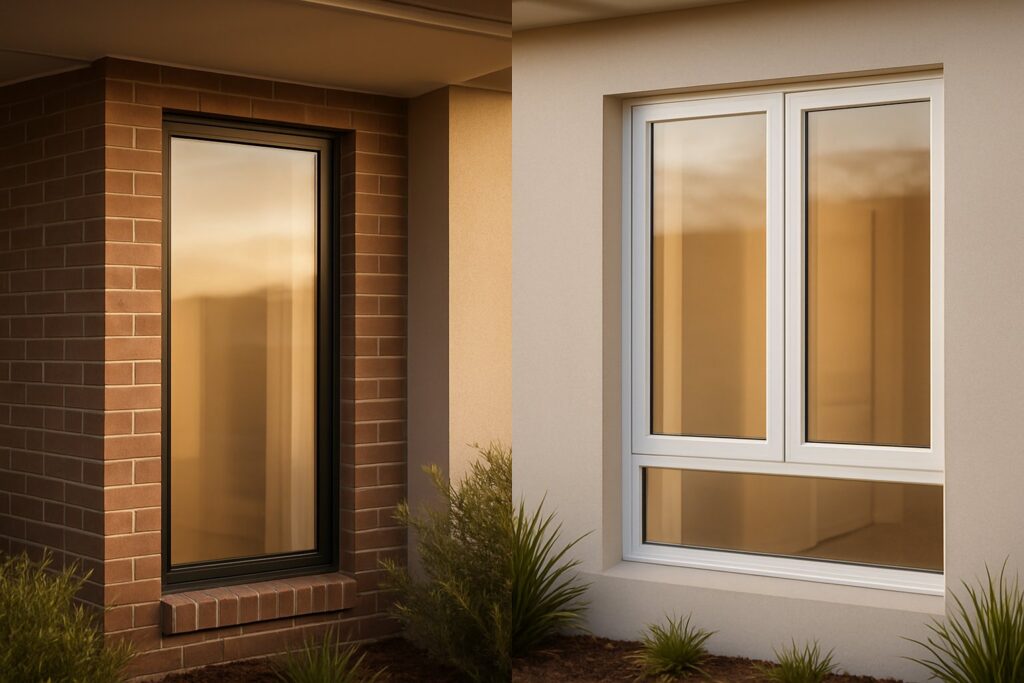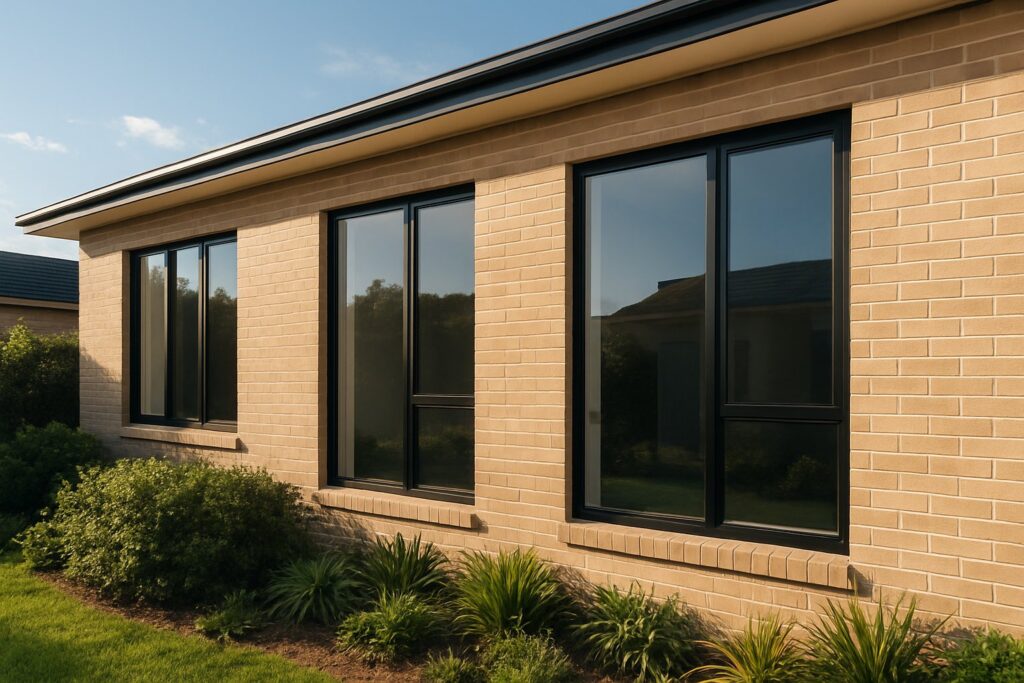
What Are Aluminium Window Drainage Holes and Why They Matter
Spotted tiny slots along the bottom edge of your window frames and wondered whether something is missing? Those openings are doing more work than most people realise. Known in the industry as window weep holes, they form a deliberate escape route for water that finds its way into the frame cavity — keeping it moving outward instead of pooling where it can cause real damage.
Defining Drainage Holes in Aluminium Window Frames
Aluminium window drainage holes are precision-milled or punched openings in the bottom rail of a window frame that allow accumulated rainwater and condensation to drain safely to the exterior, maintaining the frame’s structural integrity and the building’s weather resistance.
Every driven rain event tests a window’s ability to shed water. Rain, wind-blown mist, and even condensation can collect inside the hollow sill sections of an aluminium frame. Without a clear exit path, that moisture stagnates — degrading seals, encouraging mould, and eventually seeping into the surrounding wall structure. As forensic engineering investigations have documented, blocked or non-functioning weep holes commonly lead to wall deterioration, flooring damage, and fungal growth around the window sill.
Why These Small Openings Are Engineered Features
If you have ever been tempted to seal those slots with caulk to stop a draught, resist the urge. Weep holes in windows are not manufacturing oversights — they are calculated design elements. Sealing them traps moisture inside the frame, accelerates hidden corrosion around fasteners, and defeats the tested weather performance the window was designed to deliver.
Aluminium profiles handle drainage differently from timber or uPVC. The material’s rigid, hollow extrusion geometry creates defined internal chambers that can channel water with precision, while its thermal conductivity introduces condensation dynamics that timber frames rarely face. These characteristics demand a drainage strategy tailored specifically to aluminium systems.
So what are weep holes in practical terms? They are the final link in a chain of engineering decisions — profile shape, seal placement, cavity depth, and ventilation — that together keep your home dry. The sections ahead explore the different drainage types available, the Australian standards that govern their design, how climate affects performance, and the straightforward maintenance that keeps them functioning season after season.
Types of Drainage Holes in Aluminium Window Frames
Not every weep hole window system looks the same from the outside. The way water exits an aluminium frame depends on the drainage configuration the manufacturer has engineered into the profile — and that choice affects everything from visual appearance to how easily you can inspect and maintain the openings over time. Three broad categories cover virtually all aluminium window drainage designs used in Australian residential and commercial construction.
Face-Drained Open Slot Systems
Face-drained aluminium windows feature visible rectangular or slotted openings on the front face of the bottom rail. Water that enters the frame cavity through the gasket interface travels downward and exits directly through these external slots, draining outward and away from the building structure.
This is the most straightforward drainage approach. As industry technical guidance explains, face-drained systems are typically specified where the window sits on a stub cill, extension cill, or stone sill — common in commercial buildings, industrial facilities, and older residential construction with narrow wall profiles. The drainage path is short and direct: water hits the cavity floor, gravity pulls it to the lowest point, and it exits through the visible slot.
The practical advantage here is transparency. You can see whether a weephole is clear or blocked without removing any covers or components. A quick visual check during routine cleaning tells you whether the system is working. For facilities managers overseeing dozens or hundreds of windows in a commercial building, that accessibility saves significant maintenance time.
The trade-off is aesthetic. Those visible slots interrupt the clean lines of the aluminium profile, and over time they can collect dust staining on the frame face below the opening. In architectural projects where facade presentation matters, specifiers often look for alternatives.
Secret-Drained and Hooded Designs
Secret-drained systems — also called concealed or base-drained configurations — relocate the drainage exit from the visible front face to the underside of the frame. Water still travels downward through the cavity, but instead of exiting through the front, it drains through the bottom of the outer frame into a sub-cill or concealed channel beneath. The external appearance remains unbroken by visible weepholes.
This approach suits buildings with deeper wall construction — typical brick-and-blockwork cavity walls common across Australian homes. The window sits on an aluminium sub-cill of varying projection, and the drainage path routes through specifically designed holes in the frame base, channelling water into the sub-cill and then away from the building.
Hooded variants take a slightly different approach. Rather than hiding the drainage entirely beneath the frame, they use snap-on cover caps or small hoods over the external slot openings. These baffles shield the drainage point from wind-driven rain re-entry and insect intrusion while keeping the visual impact minimal. Homeowners often prefer this middle ground — the openings exist on the face, but they are discreet enough to disappear from normal viewing distance.
Maintenance requires a bit more effort. With concealed drainage, you cannot simply glance at the frame to confirm clear flow. Inspecting the system means checking beneath the window or removing cover caps to verify that the channel behind them is free from debris and mineral buildup.
Internal Drainage Channel Profiles
High-performance aluminium window systems take drainage engineering further by integrating dedicated pathways within the profile itself. These internal channels collect water from the glazing rebate — the groove where the glass unit sits — and route it downward through purpose-designed chambers to exit points at the frame base.
This design supports pressure-equalised drainage, which is the most effective approach for resisting wind-driven rain. The internal channels are sized and positioned to allow controlled air exchange between the cavity and the exterior, balancing pressure so that water drains purely by gravity rather than being forced inward by wind. The drainage direction runs vertically downward through the profile, making it more rapid and less susceptible to wind-driven backflow than horizontal face-drained slots.
Internal channel systems are typically found in premium residential and architectural-grade aluminium windows — the kind specified for exposed coastal sites, high-rise apartments, or projects where watertightness performance must meet demanding classifications under AS 2047. They represent a higher engineering investment, but deliver measurably better weather resistance in challenging Australian conditions.
The inspection trade-off is real, though. Because everything happens within the profile, verifying drainage performance usually involves a water test — pouring a small amount into the rebate and confirming it exits at the base — rather than a simple visual check.
Comparing the Three Drainage Types
| Type | Visibility | Typical Application | Maintenance Access | Aesthetic Rating |
|---|---|---|---|---|
| Face-drained (open slot) | Visible on exterior face | Commercial, industrial, narrow-wall residential | Easy — direct visual inspection | Low — slots visible on frame face |
| Secret-drained (concealed/hooded) | Hidden beneath frame or behind snap-on caps | Residential, architectural projects, deep cavity walls | Moderate — requires cap removal or under-frame check | High — clean uninterrupted lines |
| Internal drainage channels | Fully concealed within profile | High-performance systems, exposed sites, pressure-equalised designs | Requires water testing to confirm flow | High — no external openings visible |
Choosing between these systems is rarely a purely aesthetic decision. Building construction type, site exposure, maintenance access, and target performance class all influence which drainage configuration makes the most sense. A sheltered single-storey home in suburban Melbourne has different demands from a beachfront apartment block in coastal Queensland.
The real question behind any drainage type is whether it can handle the water volume and wind pressure the site actually experiences — which brings the engineering principle of pressure equalisation into sharper focus.
How Pressure-Equalised Drainage Works in Aluminium Systems
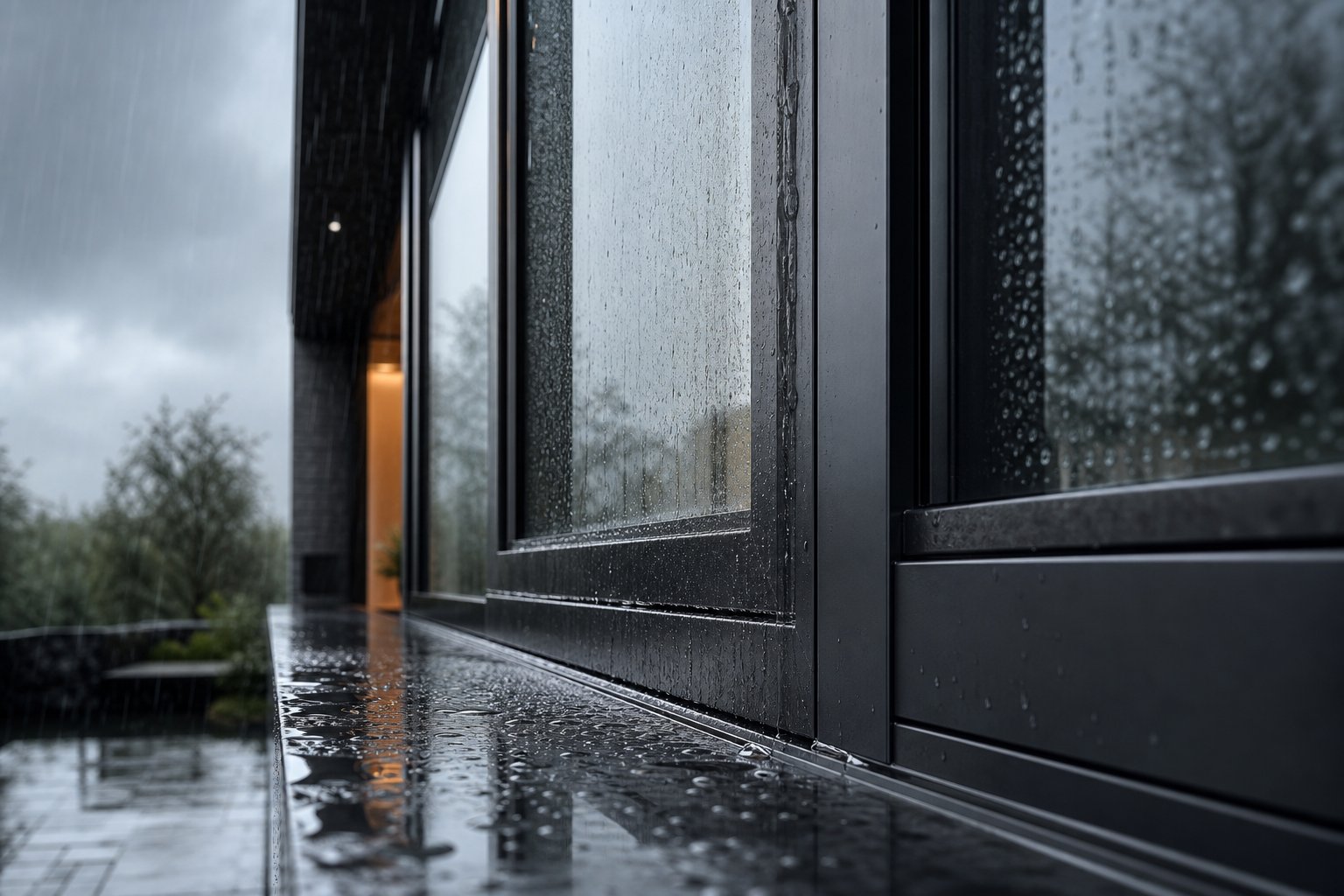
Wind does not simply push against a window — it creates pressure. And that pressure difference between the outside and the frame’s internal cavity is what actually forces water inward through tiny gaps. Pressure-equalised drainage tackles this root cause head-on, making it the most effective water management strategy for weep holes for windows in exposed Australian locations.
The Physics Behind Pressure Equalisation
Picture a storm hitting your window. Wind builds higher air pressure on the exterior face while the cavity behind the outer seal sits at lower pressure. That imbalance creates a suction-like force that draws water through the outer gasket interface and deeper into the frame — potentially toward the interior.
A pressure-equalised system neutralises this force by ventilating the drainage cavity. Strategically placed openings connect the cavity to the outside air, allowing wind pressure to communicate into the chamber. When the pressure inside the cavity matches the pressure outside, the driving force disappears. Water that enters the cavity simply sits there — no longer pushed inward — until gravity pulls it downward through the drainage openings at the frame base.
The system works in layers: an outer rain screen deflects most water, the pressure-equalised chamber removes the inward driving force from whatever gets past, and an inner air seal provides the final thermal and acoustic barrier that should remain dry under normal conditions.
Pressure-equalised drainage removes the wind force that drives water inward by ventilating the frame cavity, allowing water to exit by gravity alone.
Why Gravity Drainage Alone Is Not Enough
Simple face-drained window weeps rely entirely on gravity. Water enters, runs to the lowest point, and exits through slots in the bottom rail. In sheltered positions — a single-storey home on a quiet suburban street — this works perfectly well. The water volume is modest, wind pressure is low, and gravity handles the job without assistance.
Exposed locations tell a different story. Coastal homes in Wollongong, upper-floor apartments in Brisbane, or hillside properties facing prevailing weather all experience sustained wind-driven rain. Under these conditions, gravity drainage alone cannot overcome the pressure differential pushing water deeper into the frame. Water accumulates faster than it can drain, eventually overwhelming seals and entering the building envelope. This is why higher watertightness classifications under AS 2047 testing are achieved almost exclusively by systems incorporating pressure equalisation — they address the actual mechanism of failure rather than just providing an exit route.
How Hole Sizing Affects Pressure Balance
Pressure equalisation is not simply a matter of drilling holes and hoping for the best. The size, number, and placement of drainage openings directly influence whether the system maintains its pressure balance or loses it.
Openings that are too small restrict airflow into the cavity. The chamber cannot equalise quickly enough when gusts hit, and water weep action stalls as the restricted flow creates a bottleneck at the drainage point. On the other hand, openings that are too large allow excessive air exchange that can actually disrupt the equilibrium — the cavity pressure fluctuates rather than stabilising, and in extreme cases wind can blow water back inward through oversized slots.
Manufacturers engineer these dimensions based on the profile’s cavity volume, expected wind loads for the target performance class, and the relationship between vent area and drainage area. It is a calculated balance, not a guess. This precision is one reason why aluminium window drainage holes cannot simply be modified, enlarged, or added after installation without risking the system’s tested performance. The extrusion is designed around the drainage path from the outset — not retrofitted with it as an afterthought.
For Australian homes in high-exposure zones, specifying a window system with genuine pressure-equalised drainage — rather than relying on basic gravity slots — makes the difference between a frame that copes with a severe storm and one that lets water through. The relevant building standards and placement principles that govern these designs carry that engineering logic further.
Building Standards and Drainage Hole Placement Guidelines
Performance engineering is only meaningful when it can be tested, classified, and compared. The sizing and placement of window drain holes in aluminium frames is not arbitrary — it is driven by national and international standards that define how much water a window must withstand under controlled test conditions. Those classifications, in turn, dictate how manufacturers design their drainage systems.
Key Standards Governing Window Drainage Design
In Australia, AS 2047 is the primary standard governing windows and external glazed doors. It sets out performance requirements including watertightness, air infiltration, and structural adequacy — and it references international test methods to verify compliance. The watertightness testing protocol draws on EN 1027, which subjects a window specimen to water spray at progressively increasing air pressure until penetration occurs. Results are then classified according to EN 12208, which assigns a performance class based on the maximum pressure sustained without leakage.
Internationally, BS 6375-1 takes a similar approach: it specifies exposure categories based on building location, height, terrain, and proximity to the coast, then maps those categories to required performance classes for air permeability, watertightness, and wind resistance. The underlying test methodology uses the same increasing-pressure spray regime defined in EN 1027.
Here is the critical point for homeowners and specifiers: none of these standards prescribe a universal slot width or hole count. Instead, they require the finished window assembly to achieve a specific watertightness class under test. How the manufacturer achieves that result — through drainage hole sizing, placement, cavity geometry, and pressure-equalisation design — is an engineering decision left to the profile designer. The standard validates outcomes, not dimensions.
General Placement and Spacing Principles
While exact dimensions vary between profile systems, industry practice follows consistent logic:
- Lowest point drainage: Openings are always positioned at the lowest accessible point of both the glazing rebate (where the glass sits) and the outer frame chamber. Water cannot drain uphill, so every internal cavity must slope toward an exit.
- Multiple drainage points per rail: A single opening creates a single point of failure. Standard practice places at least two drainage points along the bottom rail of each window sash or fixed pane, spaced to prevent water accumulation at either end of the frame.
- Spacing intervals: For longer bottom rails — particularly in wide sliding doors or multi-panel arrangements — additional drainage openings are introduced at regular intervals. The spacing is calculated to ensure the water column between any two drainage points never reaches a depth that would compromise the inner seal.
- Sizing relative to cavity volume: Manufacturers calculate slot dimensions based on the profile’s internal cavity depth, the expected water ingress volume for the target performance class, and the drainage rate needed to prevent pooling under sustained rain. Larger cavities or higher performance targets typically demand wider or more numerous openings.
Internal baffles within the aluminium profile may divide the frame into separate drainage zones. Each zone functions independently — a design choice that prevents water migrating laterally along the full length of the frame before finding an exit. This compartmentalised approach is especially important in wide window assemblies where a single uninterrupted cavity could accumulate significant water volume at one end during wind-driven rain events.
Where Are Window Weep Holes Located on a Typical Frame
Understanding where drainage openings sit on an aluminium window helps during both inspection and installation. On a standard frame, they appear in three key locations:
- Bottom rail exterior face: The most visible location. Face-drained systems place slots here, typically as narrow rectangular openings cut into the front profile of the sill section. This is where water exits the outer chamber to the outside.
- Glazing rebate base: Inside the frame, at the bottom of the channel that holds the glass unit, small drainage slots or holes allow any moisture that bypasses the glazing gaskets to travel downward into the outer drainage chamber rather than pooling around the glass edge seal.
- Mullion intersections: On larger multi-panel windows, vertical mullions create junctions where water can be trapped. Drainage paths at these intersections route water from the mullion cavity down into the bottom rail’s drainage system, preventing isolated pockets of standing water in the frame structure.
Illustration note for content team: A labelled cross-section diagram (window weep hole diagram) showing a typical aluminium bottom rail would benefit readers here. The diagram should identify the glazing rebate drainage slot, the internal cavity or pressure-equalisation chamber, the outer drainage exit on the frame face or base, and the direction of water flow from rebate to exterior. A secondary front-elevation view could mark typical drainage slot positions along the bottom rail, including spacing and mullion junction points.
For Australian installations, the performance class a window must achieve depends on the building’s wind region, terrain category, and the specific opening’s height above ground — factors defined in AS 2047 and linked to wind load calculations from AS/NZS 1170.2. A window specified for a sheltered suburban site in Adelaide faces a lower watertightness requirement than one destined for an exposed upper storey overlooking the ocean at Noosa Heads. The drainage engineering scales accordingly — same principle, different intensity.
These standards establish a performance floor, but real-world conditions layer additional challenges on top of baseline wind and rain exposure. Climate introduces variables — salt, frost, sustained downpours, and extreme gusts — that test drainage systems in ways a laboratory spray rack cannot fully replicate.
Climate-Specific Drainage Design Considerations
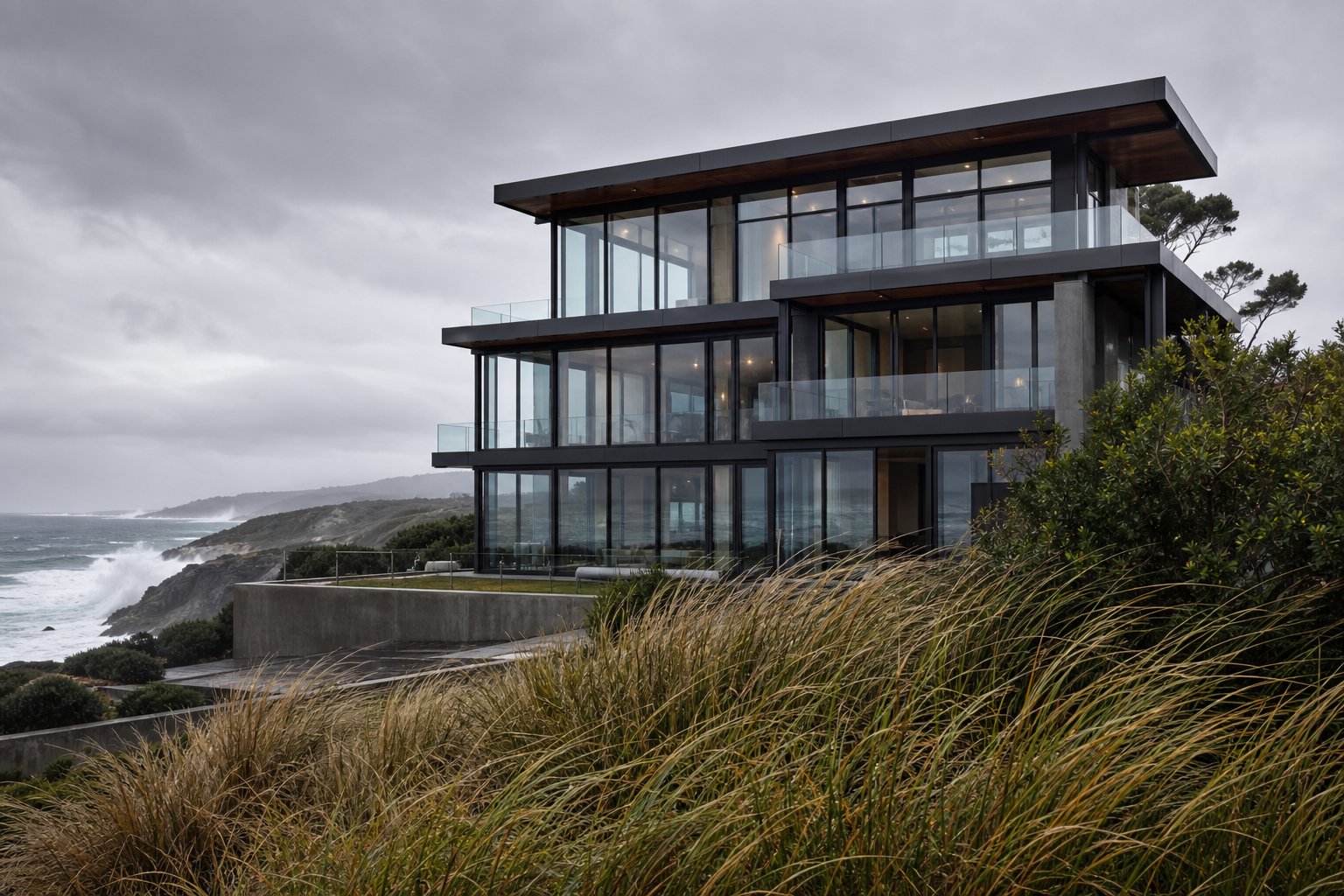
A laboratory test rig applies a controlled spray at a fixed pressure for a set duration. Australian weather does none of those things consistently. From the monsoon deluges of Far North Queensland to the salt-laden gales of the Victorian coastline, real climate conditions push aluminium window drainage holes well beyond baseline performance thresholds. Where you live — and what your weather throws at the building envelope — determines whether a standard drainage configuration copes or fails.
Four broad climate challenges shape how drainage should be specified and maintained across Australian conditions:
- High-rainfall regions — Primary challenge: sustained water volume exceeding drainage capacity. Response: specify systems with larger or more numerous drainage openings, and confirm the target watertightness class accounts for prolonged rather than intermittent exposure.
- Coastal and salt-exposure environments — Primary challenge: progressive salt crystallisation blocking drainage paths. Response: select corrosion-resistant frame finishes, increase cleaning frequency, and use drainage designs with accessible openings for regular maintenance.
- Cold climates with freeze risk — Primary challenge: water remaining in drainage channels freezing and blocking flow. Response: ensure drainage path geometry allows complete water evacuation, and inspect seals for freeze-expansion damage after winter.
- High-wind exposure zones — Primary challenge: wind-driven rain overwhelming gravity-only drainage. Response: specify pressure-equalised systems with performance classes matched to the site’s wind exposure category under AS/NZS 1170.2.
Drainage Demands in High-Rainfall Regions
Parts of tropical and subtropical Australia — Cairns, Townsville, the Sunshine Coast hinterland — receive annual rainfall well above 1,500 mm, with intense bursts that dump hundreds of millimetres in a few hours during storm season. For aluminium windows in these regions, the drainage system faces sustained water loading rather than the brief, moderate exposure typical of drier southern cities.
Under these conditions, drainage capacity matters more than drainage type. A system with two small slots on a 1,200 mm bottom rail might handle a passing shower in Canberra but struggle to keep pace with tropical rain hammering the glass and running into the rebate for hours at a time. Manufacturers addressing high-rainfall applications typically increase the number of drainage points along the rail, use wider slot dimensions, or incorporate deeper internal channels that hold and discharge larger volumes without pooling reaching the inner seal.
Sustained exposure also raises the stakes for sill slope. If the external sill beneath the window does not fall away from the frame — even by just a few degrees — discharged water can pond against the base of the profile, re-entering through the very openings designed to expel it. Installation detailing becomes as critical as the window’s own engineering in high-rainfall areas.
Coastal Salt Exposure and Blockage Risk
Salt air is not simply humid air. It carries fine aerosols of sodium chloride and magnesium chloride inland on prevailing winds — a chemistry that corrosion research has shown to remain aggressive for several kilometres from the shoreline, particularly during onshore weather patterns and storm conditions. For homes along Australia’s extensive coastline — from the Gold Coast to the Mornington Peninsula — this has direct implications for drainage performance.
Aluminium itself resists corrosion far better than steel. The alloy forms a passive oxide layer that protects the underlying metal in most environments. But salt deposits do not need to corrode the frame to cause drainage failure. They accumulate inside the drainage channels and around weep hole openings, crystallising as moisture evaporates. Over months of exposure, that crystalline buildup progressively restricts flow — narrowing the effective opening until water backs up behind it during the next rain event.
The same blockage pattern affects weep holes in vinyl siding and other cladding systems in coastal zones, but aluminium window drainage paths present a unique risk: because the drainage slots are precision-sized to maintain pressure-equalisation balance, even partial blockage alters the system’s aerodynamic behaviour. A slot reduced to half its effective width drains slower and ventilates less efficiently, undermining the very mechanism that keeps wind-driven rain out of the frame cavity.
Properties within a few kilometres of the ocean need quarterly drainage inspections rather than the standard twice-yearly schedule. Rinsing frames and tracks with fresh water — a garden hose is sufficient — dissolves salt deposits before they harden into stubborn crystalline obstructions.
Cold Climates and Freeze-Related Drainage Failure
Australia’s alpine regions, southern tablelands, and elevated inland areas experience regular freeze-thaw cycling through winter. Temperatures drop below zero overnight, thaw during the day, and refreeze the following evening. That pattern repeats for months in places like Orange, Ballarat, the Blue Mountains, and the Snowy Mountains region.
Water sitting in aluminium drainage channels at nightfall can freeze solid. Ice expands by roughly nine per cent in volume — enough to exert significant pressure against gaskets, seal interfaces, and the walls of narrow drainage slots. A single freeze event might cause no visible harm, but repeated freeze-thaw cycles stress seals and weatherstripping progressively, opening micro-gaps that admit more water on the next thaw, which then freezes and expands further. The cycle compounds itself.
Drainage path geometry becomes critical in cold climates. Channels that hold residual water — flat-bottomed troughs or sections without adequate fall toward the exit point — create freeze pockets. Well-designed profiles slope their internal channels steeply enough that water evacuates completely within minutes of rain stopping, leaving nothing behind to freeze overnight. Some high-performance systems also position drainage exits slightly inboard of the outermost frame face, shielding them from direct wind chill that accelerates freezing at the slot opening itself.
For homeowners in frost-prone areas, an autumn inspection before the cold season starts is essential. Confirming that drainage channels are clear and water exits freely gives the system the best chance of surviving winter without ice-related blockage or seal damage.
High-Wind Zones and the Limits of Gravity Drainage
Cyclone-rated regions across northern Australia (Wind Regions B, C, and D under AS/NZS 1170.2) and elevated or exposed coastal sites in any state face sustained wind pressures that make gravity-only drainage inadequate. When wind drives rain horizontally into a window at high velocity, the pressure differential across the outer seal pushes water inward faster than gravity can pull it downward through simple slots.
This is where pressure-equalised systems become non-negotiable rather than merely preferable. The cavity ventilation that equalises internal and external pressure removes the inward driving force, allowing drainage to function even during peak gusts. Windows specified for high-wind zones must achieve watertightness classes that reflect the actual wind pressures the site will experience — a calculation linked to terrain category, building height, shielding, and geographic wind region.
Siding weep holes on the building’s cladding system face similar wind-driven challenges, but window drainage operates under tighter dimensional constraints because the frame cavity is smaller and the seal interfaces are more complex. Specifying a window that achieves the correct performance class for the site — rather than selecting a lower-rated system on price — is the single most effective way to prevent wind-driven water ingress through the frame.
Why Sealing Drainage Holes Is Never the Answer
A persistent myth among homeowners is that blocking weep holes will stop cold draughts whistling through the frame in winter. The logic seems intuitive — seal the opening, stop the airflow. In practice, sealing drainage holes creates far worse problems than a minor draught ever could.
Blocking the openings defeats the pressure-equalisation mechanism entirely. Without ventilation, the cavity can no longer balance pressure with the exterior, and the next wind-driven rain event forces water inward past the outer seal with nothing to stop it. Trapped moisture that cannot escape through the drainage path accumulates inside the frame, degrading gaskets, promoting mould behind the window reveal, and — critically — accelerating galvanic corrosion where steel fasteners contact the aluminium profile. As coastal corrosion research has documented, dissimilar-metal corrosion at fastener points is already one of the primary failure modes in aluminium frames; trapping salt-laden moisture inside the frame cavity dramatically accelerates this process.
Sealed drainage holes also violate the window’s tested performance characteristics. The unit was certified under AS 2047 with those openings functional — blocking them means the installed window no longer performs as tested, and any warranty claim related to water ingress or frame deterioration may be void.
If draughts from drainage openings are genuinely problematic, the correct solution is checking whether baffles or cover caps are damaged or missing — not sealing the openings permanently. Replacement caps restore airflow management without compromising drainage function.
Climate challenges test drainage systems in distinct ways, but they share a common thread: the openings must remain clear and functional regardless of conditions. That functional requirement leads directly to how condensation — the other major source of moisture inside aluminium frames — interacts with the drainage system on a daily basis.
Condensation Management Through Aluminium Frame Drainage
Rain is not the only moisture source aluminium window drainage holes must handle. Inside the frame cavity, a quieter process generates water every cold morning — condensation. Because aluminium conducts heat roughly 1,000 times faster than timber and over 1,100 times faster than PVC, the metal itself becomes the trigger for moisture formation in ways other frame materials rarely experience.
Why Aluminium Frames Are Prone to Condensation
The physics here are straightforward. Aluminium has a thermal conductivity of approximately 200 W/mK — meaning it transfers cold from the exterior surface to the interior surface rapidly. On a winter morning in Melbourne or a crisp night in the Blue Mountains, the inside face of an aluminium frame can drop well below the surrounding wall temperature. When warm, humid indoor air contacts that cold metal surface, the air loses its capacity to hold moisture. Water droplets form — first as a thin film, then as visible beads running down the frame and pooling at the sill.
Modern thermally broken aluminium windows interrupt this heat highway with a non-metallic barrier between the inner and outer frame sections. That break raises the interior surface temperature significantly, reducing condensation risk. But it does not eliminate it entirely. Moisture can still form within the glazing rebate — the channel where the glass unit sits — and inside the frame cavity itself, particularly where the thermal break does not extend to every internal surface.
Rooms with naturally high humidity amplify the problem. Cooking, showering, and drying laundry push indoor relative humidity well above the 30 to 50 per cent range where condensation stays manageable. Bathrooms and kitchens with aluminium-framed windows are the most common locations homeowners notice moisture accumulating at the base of the frame — especially during cooler months when ventilation drops off.
How Drainage Holes Manage Internal Moisture
So what is a weep hole in a window doing about condensation? The same thing it does for rainwater — providing an exit. Condensation that forms inside the glazing rebate or frame cavity trickles downward by gravity to the lowest point of the profile, where drainage slots channel it safely to the exterior. The frame stays dry internally, gaskets remain protected, and moisture never reaches the wall structure behind the window.
Without functional drainage, condensation has nowhere to go. It pools at the base of the rebate, sits against rubber gaskets for hours or days at a time, and gradually degrades those seals. Prolonged contact with standing water causes gasket materials to swell, soften, and lose their compression — exactly the failure that eventually admits rainwater on a stormy day. Meanwhile, moisture wicking into adjacent plasterboard or timber reveals promotes mould growth on wall finishes around the window frame. What starts as a condensation management issue becomes a structural and health problem.
The dual function of drainage holes — handling both external water ingress and internally generated condensation — means they work year-round, not just during rain events. A window might go weeks without seeing rain in a dry Australian winter, yet its drainage system processes condensation every morning the temperature drops low enough. Keeping those openings clear is as much about condensation management as storm protection.
Distinguishing Leaks From Condensation Drainage
Homeowners often mistake condensation behaviour for a window leak, calling installers to report water pooling on the sill when the actual cause is internal moisture draining exactly as designed. The difference matters — one indicates a performance failure, the other indicates the system working correctly. Knowing how to tell the two apart saves unnecessary service calls and helps identify genuine problems early.
A rain leak typically appears during or immediately after rainfall, producing water on the frame or sill regardless of indoor conditions. Condensation drainage, by contrast, shows up on cold mornings — often without a drop of rain outside — and correlates with high indoor humidity from overnight breathing, showering, or closed-up rooms.
Location on the frame offers another clue. Leaks tend to appear at joints, corners, or the top of the frame where water is being driven inward under pressure. Condensation collects at the bottom rail and base of the glazing rebate, the lowest points where gravity concentrates it before it exits through the weep holes.
| Indicator | Rain Leak | Condensation Drainage |
|---|---|---|
| Timing | During or shortly after rainfall | Cold mornings, overnight, or after high-humidity activity |
| Weather conditions | Rain present, often with wind | Cold and still; no rain required |
| Location on frame | Joints, corners, top rail, or mid-frame | Bottom rail, sill area, base of glazing rebate |
| Water volume | Can be substantial during heavy rain; increases with storm intensity | Small amounts — droplets or thin film; consistent day to day |
If water appears only at the base of the frame on cold mornings and stops once the room warms up or ventilation improves, condensation is almost certainly the cause. Improving airflow — opening windows briefly, running exhaust fans, or maintaining indoor humidity below 50 per cent — reduces condensation formation at the source. The drainage holes then handle whatever residual moisture still forms, keeping the frame interior dry.
A genuine leak, however, demands investigation. Blocked drainage, failed seals, incorrect installation detailing, or a watertightness class too low for the site’s exposure can all admit water during rain. Recognising the difference early prevents both over-reaction to normal condensation behaviour and complacency toward real water ingress that needs attention.
Whether managing condensation or shedding storm water, drainage holes only perform their dual role when they remain unobstructed. That ongoing reliability depends on a simple maintenance routine — one that takes minutes but prevents the slow accumulation of debris, mineral scale, and biological matter that quietly compromises drainage over time.
Seasonal Maintenance Schedule for Window Drainage Holes
Debris does not announce itself. A single autumn leaf lodged in a drainage slot, a spider web spun across the opening overnight, a fine crust of mineral deposits left behind after months of coastal mist — each one narrows the drainage path incrementally until the next downpour overwhelms it. Routine inspection catches these issues while they are still trivial, long before they escalate into blocked frames, pooling water, or interior damage.
Recommended Inspection Frequency by Environment
Not every property faces the same exposure. A sheltered brick-veneer home in suburban Adelaide deals with different debris loads than a beachfront house at Byron Bay or a property surrounded by mature eucalypts in the Dandenong Ranges. Matching your inspection schedule to actual site conditions prevents both neglect and wasted effort.
| Environment | Inspection Frequency | Primary Risk | Best Timing |
|---|---|---|---|
| Standard suburban (sheltered) | Twice yearly | Dust, minor debris, insect activity | Early autumn and mid-spring |
| Coastal (within 5 km of shoreline) | Quarterly | Salt crystallisation, sand ingress | End of each season |
| High-rainfall or tropical | Quarterly | Organic debris, mould, sustained water loading | Before and after wet season, plus mid-year |
| Heavily vegetated or bushland | Quarterly | Leaf litter, pollen, insect nests | After leaf-fall peaks, before storm season |
| Frost-prone inland | Twice yearly plus pre-winter check | Residual water freezing in channels | Late autumn (pre-freeze) and early spring |
The twice-yearly baseline — autumn and spring — works for most Australian homes. Autumn catches anything that accumulated over summer before winter rains arrive. Spring confirms the system survived winter without freeze damage or debris buildup from storms. Coastal and vegetated properties simply add two extra checks to stay ahead of their accelerated blockage rates.
Step-by-Step Drainage Cleaning Process
Cleaning weep holes on windows takes less than ten minutes per opening once you know the process. No specialist equipment is required — just a few household items and a gentle touch.
- Visual check: Examine each drainage opening from outside the window. Look for visible debris, cobwebs, insect nests, paint overspray from past renovation work, or white mineral crusting around the slot edges. Note which openings appear partially or fully blocked.
- Clear debris: Use a thin nylon bristle brush, a pipe cleaner, or a short burst of compressed air to gently dislodge obstructions from the drainage slot. Work the bristle into the opening with a slight twisting motion — the goal is to push debris out, not compact it further inward. For stubborn salt deposits on coastal properties, a quick rinse with fresh water from a spray bottle softens the crust before brushing.
- Water test: From inside, pour approximately half a cup of water into the glazing rebate — the channel where the glass meets the frame at the bottom rail. Watch the exterior drainage openings. Water should appear within a few seconds, flowing freely outward. If it trickles slowly or fails to appear, the internal channel is still partially obstructed and needs further attention.
- Check covers and caps: If your windows use hooded drainage or snap-on weep hole covers for windows, carefully remove the caps to inspect the channel behind them. Debris often collects in the sheltered space beneath the hood where it is invisible from outside. Clear this area, then refit the covers securely — they serve as both insect barriers and wind baffles.
- Inspect adjacent seals: While you are at the drainage points, examine the rubber gaskets and weather seals immediately surrounding them. Look for cracking, compression set (the seal no longer springs back), or sections that have pulled away from the frame. Deteriorated seals near drainage openings indicate water may be bypassing the intended drainage path entirely.
Repeat this process on every window. Sliding doors deserve the same attention — their track drainage shares identical principles and vulnerability to blockage.
Tools and Techniques That Protect Your Frame Finish
The temptation to reach for a piece of wire or a small screwdriver when a slot is stubbornly blocked is understandable — and risky. Metal tools scratch through powder-coated and anodised finishes, exposing the raw aluminium beneath. While aluminium resists corrosion well through its natural oxide layer, a scratch creates a point where galvanic corrosion can initiate if dissimilar metals or salt moisture are present. One aggressive cleaning session can start a slow deterioration that only becomes visible years later.
Stick to non-metallic tools:
- Nylon bristle brushes (an old toothbrush works in a pinch)
- Pipe cleaners or flexible bottle-cleaning brushes
- Compressed air canisters (short bursts only — sustained high pressure can force debris deeper)
- Wooden toothpicks for dislodging compacted material at the slot entrance
- Fresh water from a spray bottle for dissolving mineral or salt buildup
Avoid pressure washers entirely. The force drives water into areas it should never reach and can damage seal interfaces. Drilling weep holes in windows to create additional drainage points is also something to leave to professionals — incorrect placement compromises the frame’s pressure-equalisation balance and voids the product’s tested performance certification.
Well-engineered aluminium window systems — such as those from MEICHEN — are designed with accessible drainage paths and removable covers that simplify routine maintenance. When cover caps snap on and off easily and drainage channels follow logical, unobstructed paths to the exterior, a ten-minute seasonal check is all it takes to keep the system performing as intended. For homeowners and builders exploring low-maintenance aluminium window options built around this kind of practical serviceability, MEICHEN’s aluminium window range is worth reviewing at the specification stage.
Consistent maintenance keeps drainage functional under normal conditions. But what happens when something goes wrong despite regular care — when water still pools, draughts still whistle, or dampness persists on the wall below? Those symptoms point to specific causes that a targeted diagnostic approach can identify and resolve.
Troubleshooting Blocked or Failing Drainage Holes
Regular maintenance handles the routine — but not every drainage problem follows a routine pattern. Sometimes water still appears on the sill despite a recent clean. Sometimes a faint whistle cuts through the room during a gale. Sometimes mould creeps down the wall beneath a window that looks perfectly fine from the outside. Each symptom tells a different story about what has gone wrong, and diagnosing correctly saves both time and money.
Symptom-Based Diagnostic Approach
Treating every water issue as a generic “leak” leads to generic solutions — usually another bead of sealant around the perimeter. That approach misses the actual mechanism at play. Weep holes windows rely on work as an integrated system: slots, channels, seals, covers, and external sill geometry all contribute. When any one element fails, the symptom it produces points directly to the cause if you know what to look for.
The five most common drainage-related complaints homeowners report each trace back to a specific failure point. Working through them systematically — rather than guessing — avoids wasted effort and prevents well-meaning fixes that make the problem worse.
Common Blockage Causes and Targeted Fixes
Symptom 1: Water pooling on the internal sill during rain. This is the classic blocked-drainage presentation. Water enters the frame cavity as designed, reaches the drainage slots, and finds no exit. It backs up, overflows the inner seal, and appears on the windowsill inside. The cause is almost always physical obstruction — compacted dirt, leaf litter, insect nests, paint overspray from a past renovation, or even mortar residue from brickwork repairs nearby. The fix is straightforward: clear the blockage using the non-metallic tools and method described in the maintenance section, then pour water into the rebate to confirm free flow. As guidance from Pacific Northwest National Laboratory notes, retesting with water after clearing is essential to verify the channel is fully open — not just the entrance.
Symptom 2: Water appearing at the base of the window in cold weather without rain. No storm, no wind, yet moisture collects at the bottom rail every morning. This is condensation accumulation with impaired drainage. The moisture forms internally — warm humid air meeting cold aluminium surfaces — and normally drains away unnoticed. When slots are partially blocked or internal channels are narrowed by scale buildup, condensation accumulates faster than it exits. Clear the drainage openings and address the humidity source: run exhaust fans during cooking and showering, ventilate bedrooms in the morning, and aim to keep indoor relative humidity below 50 per cent.
Symptom 3: Persistent dampness or mould on the wall below the window. The drainage holes may actually be working — but draining onto a problem. If the external sill is flat, back-sloped, or obstructed by debris or cladding that traps discharged water against the building, moisture wicks into the wall rather than falling clear. Check that the sill slopes away from the frame at a slight fall. Confirm water exiting the drainage slots drops free rather than pooling against render, brickwork, or siding at the base. Clearing the wheep holes themselves will not help if the water has nowhere to go once it exits.
Symptom 4: Whistling or draughts from drainage openings during high wind. Some air movement through drainage slots is normal — it is part of the pressure-equalisation mechanism. But noticeable whistling or a perceptible draught indicates that the slot covers or baffles meant to manage airflow are missing, cracked, or stuck open. Replacement caps are available from window hardware suppliers and press-fit into the standard slot dimensions. The critical point: do not seal the wheep hole permanently to stop the noise. Blocking it disables drainage and pressure equalisation entirely. Replace the cover — do not plug the opening.
Symptom 5: Recurring blockage despite regular cleaning. You cleared the slots last month. They are blocked again. Repetitive obstruction points to an environmental source that standard maintenance cannot outpace. Nearby vegetation shedding fine organic matter, spider or wasp activity exploiting the sheltered openings, or mineral-rich bore water depositing calcium scale inside the channel are the usual culprits. Install stainless steel mesh insect guards over exposed slots — they block pests while allowing water to pass through. Trim vegetation within a metre of the window. For mineral scale, increase cleaning frequency and use a mild vinegar solution to dissolve deposits before they harden. Forensic engineering assessments confirm that insect nesting and dirt obstruction are among the most common weep hole failure modes across both aluminium and PVC frames.
When to Call a Professional
Most drainage issues resolve with the DIY approaches above. But some symptoms indicate damage or installation defects that sit beyond homeowner maintenance:
- The aluminium frame is cracked, bowed, or visibly distorted at the drainage slot — suggesting freeze damage or structural stress that needs professional assessment.
- Interior trim or plasterboard around the window is soft, swollen, or discoloured — rot or moisture saturation has already progressed into the building fabric.
- Mould is visible on the wall cavity side (behind the plaster) — remediation and a moisture source investigation are needed, not just cleaning.
- Water enters from the top or sides of the frame rather than the base — this is not a drainage issue but a seal failure, flashing defect, or installation problem requiring specialist diagnosis.
The table below maps each symptom to its cause and clarifies which situations a homeowner can resolve independently versus those warranting professional intervention.
| Symptom | Likely Cause | DIY Fix | Professional Action Required |
|---|---|---|---|
| Water pooling on internal sill during rain | External drainage holes blocked by debris, paint, or mortar | Clear blockage with nylon brush or compressed air; water-test to confirm flow | No — unless frame is damaged |
| Water at base of window in cold weather, no rain | Condensation buildup with slow or blocked drainage | Clear drainage openings; improve room ventilation and reduce humidity | No |
| Persistent dampness or mould on wall below window | Drainage discharging onto obstructed sill or into wall cavity | Check external sill slope; clear obstructions so water falls away from building | Yes — if mould has entered the wall cavity |
| Whistling or draughts from drainage slots in high wind | Missing or damaged drainage slot covers/baffles | Replace snap-on covers or caps; do not seal holes permanently | No |
| Recurring blockage despite cleaning | Nearby vegetation, insect nesting, or mineral-scale deposits | Install mesh guards; trim vegetation; increase cleaning frequency | No — unless internal channel is physically damaged |
A reliable diagnostic habit — checking symptoms against causes before reaching for the sealant gun — prevents both unnecessary expense and the accidental harm that comes from sealing openings that must stay open. Most drainage complaints resolve in minutes once the actual failure point is identified.
Troubleshooting fixes existing problems. But for homeowners still at the selection stage — choosing new aluminium windows for a build or renovation — the smarter move is specifying drainage performance upfront, so these problems never develop in the first place.

Selecting Aluminium Windows With Effective Drainage Engineering
Drainage performance is one of those quiet indicators that separates a genuinely well-engineered aluminium window from one that simply looks the part. You cannot judge it from a showroom photo or a colour swatch. But it tells you more about the manufacturer’s engineering rigour than almost any other single feature — because getting drainage right requires the profile design, seal placement, cavity geometry, and performance testing to work as a coherent system rather than a collection of parts.
Key Drainage Features to Evaluate in Aluminium Windows
Not every window weep hole arrangement is equal. When comparing aluminium window options — whether for a new build, a renovation, or a commercial project — drainage design deserves the same scrutiny you would give to thermal performance or hardware quality. Look for these features as minimum indicators of a system designed to last:
- Drainage type matched to application: Face-drained systems suit sheltered, easily accessible positions. Pressure-equalised designs are essential for exposed, upper-storey, or coastal installations. The system should reflect your site’s actual conditions, not just the cheapest option to manufacture.
- Sufficient number and sizing of drainage points: At least two drainage openings per bottom rail on standard windows, with additional points on wider frames. Slot dimensions should be calculated for the target watertightness class, not simply punched at a token minimum size.
- Accessible covers for maintenance: Snap-on caps or removable hoods that allow homeowners to inspect and clear drainage channels without tools or specialist knowledge. If you cannot access the weeping hole to check it, you cannot maintain it — and unmaintained drainage fails eventually.
- Tested watertightness classification appropriate to exposure: The window should carry a verified performance class under AS 2047 testing that matches or exceeds the requirements for your building’s wind region, terrain category, and height above ground. A Class N3 window installed where N5 is required will fail under the conditions it actually faces.
- Internal channel geometry that prevents residual pooling: Well-designed profiles slope their internal drainage paths so water evacuates completely rather than sitting in flat troughs waiting to freeze, stagnate, or degrade seals.
- Compartmentalised drainage zones on wide assemblies: Large sliding doors and multi-panel configurations should feature internal baffles that prevent water migrating laterally along the full frame length before reaching an exit point.
Do all windows have weep holes? Virtually every aluminium window designed to meet Australian standards incorporates some form of drainage — but the sophistication varies enormously. Basic systems may include the minimum provisions needed to pass a laboratory test under sheltered conditions. High-performance systems engineer drainage as a core design principle, sized and validated for real-world exposure.
Questions to Ask Your Window Supplier
Suppliers who understand their product’s drainage engineering will answer these questions without hesitation. Those who cannot — or who dismiss drainage as a minor detail — may be offering a system designed to a price point rather than a performance standard.
Put these to any manufacturer or fabricator you are considering:
- What watertightness class does this window achieve under AS 2047 testing, and is that class appropriate for my site’s wind exposure?
- Is the drainage system face-drained, secret-drained, or pressure-equalised — and why was that approach chosen for this profile?
- How many drainage points are provided per frame length, and how were slot dimensions determined?
- Are drainage covers accessible for homeowner maintenance, or do they require professional disassembly to inspect?
- Has the system been tested at pressures relevant to my building’s location — including upper-storey positions or coastal exposure if applicable?
The answers reveal whether drainage has been treated as an afterthought or engineered from the profile’s inception. A supplier confident in their product will welcome these questions. They demonstrate that you understand what separates a window that performs for decades from one that develops problems within a few years.
Matching Drainage Performance to Your Building’s Exposure
Off-the-shelf aluminium windows sold through volume retail channels typically carry watertightness classifications sufficient for sheltered, single-storey suburban installations in low-wind regions. For a standard brick-veneer home on a quiet street in a temperate southern city, that baseline may be perfectly adequate.
But many Australian homes sit outside those sheltered parameters. Upper storeys catch more wind. Coastal properties face salt-laden driving rain. Tropical locations experience sustained deluges that dwarf temperate rainfall intensity. Properties on exposed ridgelines or facing prevailing weather experience wind pressures far above suburban norms. In each case, a window specified to minimal drainage provisions will be tested beyond its design capacity — and water ingress becomes a matter of when, not if.
Project-specific aluminium windows — custom-fabricated to suit a defined site and performance brief — allow the drainage system to be specified for actual conditions rather than generic averages. The profile, slot sizing, pressure-equalisation design, and tested classification all align with what the building will genuinely face over its lifetime. This is where working with a supplier who engineers for Australian climate exposure, rather than importing generic profile systems, makes a measurable difference to long-term building performance.
MEICHEN offers custom aluminium window systems engineered specifically for Australian conditions — including climate-appropriate drainage design, multiple window types from casement to sliding configurations, and specification support for builders and architects working across diverse exposure zones. For homeowners, renovators, and project teams ready to move from understanding drainage principles to specifying windows with that engineering built in, MEICHEN’s aluminium window range provides a clear next step from education to implementation.
Drainage is not glamorous. It does not feature in glossy brochures or drive colour selection conversations. But it is the engineering detail that determines whether your aluminium windows still perform flawlessly in year fifteen the same way they did in year one — quietly shedding water, maintaining pressure balance, and keeping your building envelope dry without ever demanding attention beyond a brief seasonal check.
Frequently Asked Questions About Aluminium Window Drainage Holes
1. What are weep holes in aluminium windows and what do they do?
Weep holes are precision-milled or punched openings in the bottom rail of aluminium window frames. They allow rainwater and condensation that enters the frame cavity to drain safely to the exterior, preventing internal pooling that could damage seals, promote mould growth, or cause water ingress into your wall structure. These openings are engineered features — not defects — and should never be sealed, as blocking them traps moisture inside the frame and defeats the window’s tested weather performance.
2. Can I seal or block my aluminium window drainage holes to stop draughts?
No. Sealing drainage holes defeats the pressure-equalisation mechanism that keeps wind-driven rain out of the frame cavity. Blocked holes trap moisture inside, accelerate hidden corrosion around fasteners, promote mould growth on surrounding wall finishes, and void the window’s AS 2047 performance certification. If you experience draughts from drainage slots, the correct solution is replacing missing or damaged snap-on cover caps that baffle airflow without blocking drainage. MEICHEN’s aluminium window systems use removable covers designed to manage airflow while maintaining full drainage function.
3. How often should I clean and inspect my window weep holes?
For standard suburban homes in sheltered positions, inspect drainage holes twice yearly — in early autumn and mid-spring. Coastal properties within five kilometres of the shoreline, homes in high-rainfall regions, and properties surrounded by heavy vegetation should increase this to quarterly checks. The inspection involves a visual check for debris, clearing any blockages with a nylon brush or pipe cleaner, and pouring water into the glazing rebate to confirm it exits freely through the external openings within seconds.
4. How can I tell if water on my window sill is a leak or just condensation?
A genuine rain leak appears during or immediately after rainfall, often at joints, corners, or the top of the frame, and increases with storm intensity. Condensation drainage appears on cold mornings without rain, typically at the bottom rail and sill area, producing small consistent amounts of moisture that stops once the room warms up or ventilation improves. If water only appears at the frame base in cold weather and correlates with high indoor humidity from cooking or showering, condensation is almost certainly the cause — and it indicates your drainage system is working as designed.
5. Do all aluminium windows have weep holes?
Virtually every aluminium window designed to meet Australian Standard AS 2047 incorporates some form of drainage, but the sophistication varies significantly between products. Basic systems may include minimal face-drained slots adequate for sheltered positions, while high-performance systems use pressure-equalised internal drainage channels engineered for exposed coastal or upper-storey installations. When selecting windows, ask your supplier about the specific watertightness class achieved, the drainage type used, and whether covers are accessible for homeowner maintenance — these details reveal the engineering quality behind the product.
More Window & Door Guides