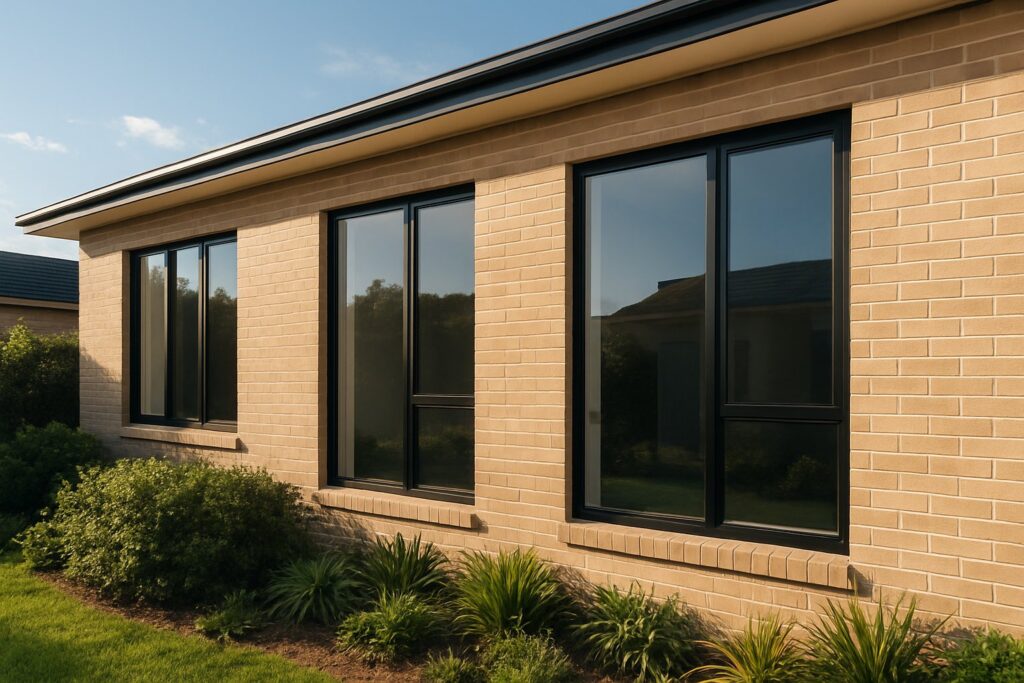
What a 2-Track Aluminium Sliding Window Actually Is
Before you can make sense of any 2 track aluminium sliding window price, you need to understand what you’re actually buying. The term “2 track” refers to the frame’s internal rail system — two parallel grooves machined into the aluminium sill and head, each carrying one glass panel on rollers. One panel slides horizontally past the other along these rails, while both remain contained within a single frame unit.
A common point of confusion: tracks and panels are not the same thing. Tracks are the guiding rails built into the frame. Panels (also called sashes or shutters) are the glazed sections that sit on those tracks and move along them. A 2-track system holds two panels — both can technically slide, though in most residential configurations one panel remains stationary while the other operates.
How the 2-Track Configuration Works
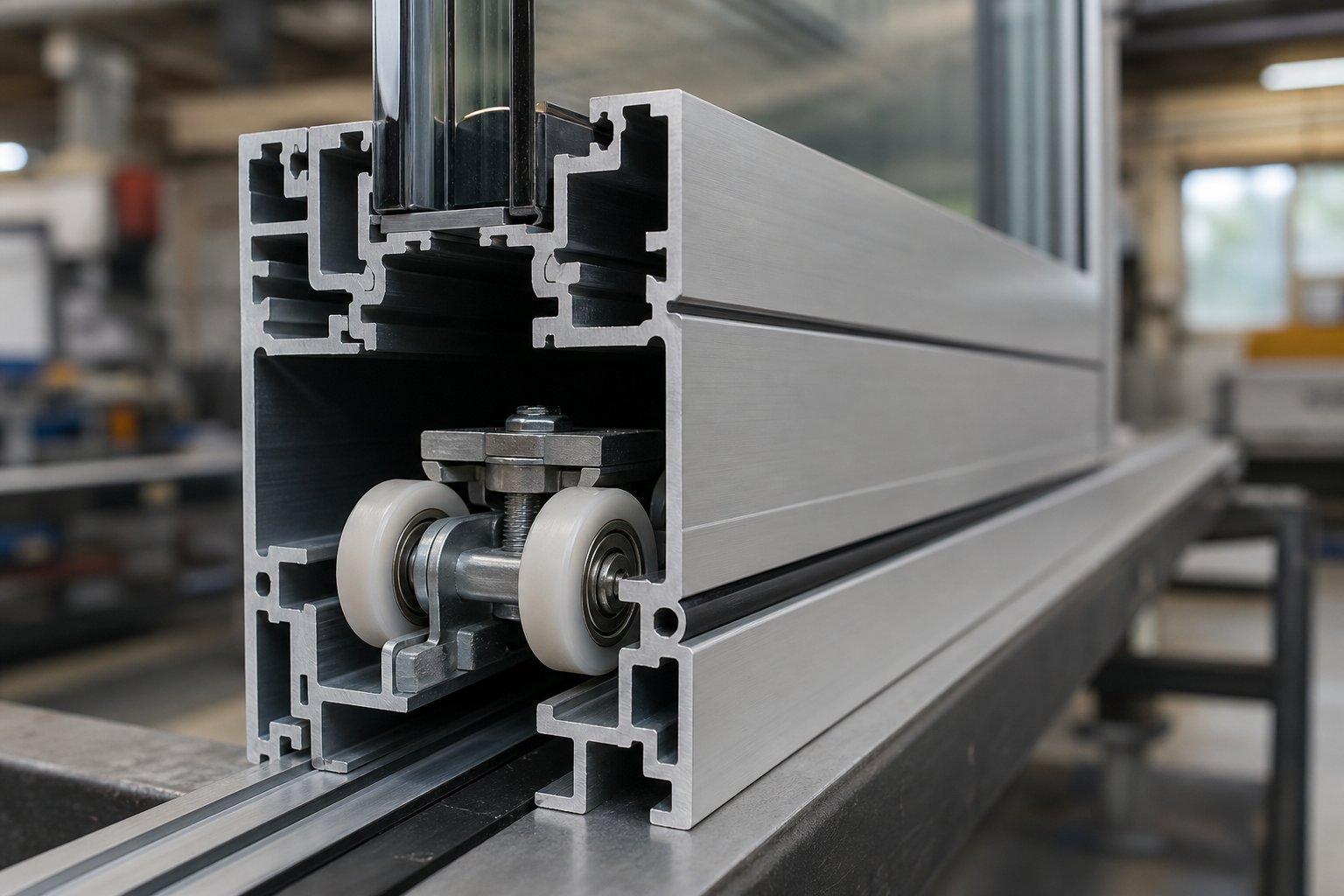
Picture two railway lines running parallel inside the window frame. Each line carries one glass panel fitted with precision rollers at its base. When you push one panel sideways, it glides along its dedicated track and overlaps the adjacent panel. The structural layout is straightforward — an outer aluminium frame houses the two rails, weatherseals sit between the meeting stiles of both panels, and drainage channels in the sill direct any water infiltration outward.
This simplicity is exactly why the sliding window aluminium price at the 2-track level remains accessible for most residential budgets. Fewer moving parts mean simpler fabrication and faster installation.
Ventilation and Opening Capacity
With two panels occupying the full width of the frame, sliding one open exposes roughly 50% of the total opening to airflow. You’ll never get full-width ventilation from a 2-track window — that’s a physical limitation of the configuration. For many rooms, though, half the opening provides more than adequate fresh air circulation.
This 50% ventilation capacity also affects how you evaluate aluminium window sliding price differences between track configurations. More tracks unlock greater opening percentages, but at higher cost — a trade-off worth understanding before requesting quotes.
Where 2-Track Windows Are Most Commonly Used
The 2-track configuration suits standard openings up to approximately 1800 mm wide. It’s the workhorse of residential and light commercial glazing across Australia.
Common residential applications:
- Bedrooms — moderate ventilation with privacy and security
- Living rooms with standard-width openings
- Kitchens where wall space is limited
- Bathrooms and ensuites
- Home offices and study rooms
Common commercial applications:
- Office buildings with repetitive opening sizes
- Retail shopfronts with controlled ventilation needs
- Apartment complexes where cost efficiency across hundreds of units matters
Understanding this foundation — what the aluminium sliding window price actually covers in structural terms — puts you in a far stronger position when quotes start landing on your desk. The real question becomes not just how much, but how much for what specification.
Why Prices Range from Budget to Premium Tiers
Search for aluminium sliding windows price online and you’ll find quotes spanning from around $300 per square metre to well over $1,200 per square metre — supply only. That’s not a pricing error. It reflects entirely different products wearing the same generic label. A budget 2-track window and a premium one share a basic concept, but the materials, engineering, and longevity behind each sit worlds apart.
The same confusion plays out globally. Whether you’re researching aluminium sliding window price in India, aluminium sliding window price in Nigeria, or aluminium sliding window price Philippines, the pattern repeats: massive variation driven by specification differences, not just profit margins.
Budget Tier vs Premium Tier Specifications
At the lower end of the aluminium sliding windows price list, you’ll typically find thin-walled profiles (1.0–1.2 mm wall thickness), basic clear float glass at 4–5 mm, single-wheel plastic rollers, a crescent lock, and a standard white powder coat finish. These windows function, but they’re built to a price point rather than a performance standard.
Premium tiers use heavier aluminium extrusions (1.4–2.0 mm wall thickness) in wider profile series, toughened or double-glazed glass units, stainless steel tandem rollers, multi-point locking, and custom colour finishes including woodgrain effects. The price of aluminium sliding windows at this level reflects genuine engineering — better wind resistance, acoustic performance, thermal control, and a lifespan measured in decades rather than years.
Why Comparing Prices Without Matching Specs Fails
Two quotes can look dramatically different yet both claim to be for a “2-track aluminium sliding window.” One fabricator quotes $380/m² using a lightweight 18 mm series profile with 5 mm clear glass. Another quotes $950/m² for a thermally improved profile with 6.38 mm laminated glass and marine-grade hardware. Comparing these figures directly is meaningless — they’re different products entirely.
The only valid comparison matches specification to specification: same profile series, same glass type and thickness, same hardware grade, same finish, and the same scope of installation. Without that alignment, the cheapest aluminium sliding windows prices on your shortlist may actually represent the most expensive long-term decision.
Regional and Market Factors That Shift Pricing
Even within Australia, the aluminium sliding windows price per square feet (or per square metre, as we measure locally) shifts based on where you are and who you’re buying from. Capital city fabricators carry higher overheads than regional workshops. Online marketplaces may list lower headline prices but exclude installation, flashing, and weathersealing. Direct-from-manufacturer supply for project volumes typically delivers better per-unit rates and tighter specification consistency.
Order volume matters too. A single replacement window costs more per unit than 40 identical windows ordered for a multi-unit development, where economies of scale reduce fabrication setup time and material waste.
| Tier | Price Range (AUD/m², supply only) | Typical Profile | Glass Type | Finish Quality |
|---|---|---|---|---|
| Budget | $300–$500 | Lightweight series, 1.0–1.2 mm wall | 4–5 mm clear float | Standard white powder coat |
| Mid-Range | $500–$800 | Mid-series, 1.4 mm wall | 5–6 mm toughened | Select colour powder coat |
| Premium | $800–$1,200+ | Heavy-duty series, 1.6–2.0 mm wall | Double-glazed or laminated | Custom RAL or woodgrain |
This tier structure explains why a single aluminium sliding windows price figure never tells the full story. The real cost driver isn’t the window category — it’s the specification hiding behind the quote. And that specification breaks down into distinct components, each contributing a measurable percentage to your total spend.
Full Cost Breakdown for Materials, Hardware, and Installation
Every dollar in a 2 track aluminium sliding window price lands somewhere specific. It doesn’t vanish into a generic “window cost” — it pays for raw aluminium, glass, hardware components, and the skilled labour that turns those parts into a finished, installed product. Understanding this breakdown gives you real leverage when evaluating quotes, because you can see exactly which component is being upgraded, downgraded, or quietly omitted.
Here’s where your money goes, ranked by each component’s share of the total aluminium sliding window material price:
- Frame and profile material (aluminium extrusion) — 35% to 45% of total cost
- Glass (type, thickness, and treatment) — 20% to 30%
- Fabrication and installation labour — 15% to 25%
- Hardware (rollers, locks, handles, weatherseals) — 10% to 15%
Each of these categories can be adjusted independently. You might upgrade the glass while keeping budget hardware, or invest in a heavier aluminium sliding window section price tier while opting for standard clear glazing. That modularity is what creates the wide pricing spectrum covered in the previous section — and it’s also what makes informed specification so powerful.
Frame and Profile Material Costs
The aluminium extrusion itself is the single largest cost driver. Profile quality depends on three factors: the alloy grade (6063-T5 is standard for window applications), the wall thickness of the extrusion, and the series designation which determines the overall depth and structural capacity of the frame.
A lightweight profile with 1.0–1.2 mm wall thickness costs significantly less to produce than a 1.6–2.0 mm section. But that saving comes at a price — thinner walls flex more under wind load, offer less screw-holding strength for hardware, and degrade faster in coastal or high-exposure environments. Each 0.2 mm increase in wall thickness can raise the aluminium sliding window channel price by roughly 8% to 12%, compounding across every linear metre of frame in the window.
Powder coating or anodising adds another layer to this cost. Standard white or silver finishes sit at the base level, while custom RAL colours or woodgrain laminates push the frame portion higher. For Australian conditions — particularly UV intensity and salt-air exposure along the coast — a quality powder coat isn’t cosmetic. It’s protective.
Glass Selection and Its Price Impact
Glass accounts for roughly a quarter of the total aluminium sliding glass window price, but the range within that category is enormous. A basic 5 mm clear float pane is the cheapest option — functional, transparent, and meeting minimum requirements for low-risk residential openings.
Step up to 6 mm toughened (tempered) glass and you gain safety compliance under AS 1288 for areas where human impact is possible, plus better wind resistance. The cost increase is moderate — typically 40% to 60% above clear float for the glass component alone. Tinted glass adds solar control properties at a similar premium, reducing heat gain in west-facing openings.
Double-glazed insulated glass units (IGUs) represent the biggest jump. An IGU with two panes separated by an argon-filled cavity can improve thermal performance dramatically, but it also doubles or triples the glass portion of the price and demands a wider frame profile to accommodate the unit’s depth. For homes targeting strong NatHERS ratings or located in climate zones with extreme temperature swings, that investment pays back through reduced energy bills over the window’s lifespan.
Fabrication and Installation Labour
Cutting, assembling, sealing, and installing a sliding window involves skilled labour that typically accounts for 15% to 25% of the final price. Fabrication covers precision cutting of profiles, corner crimping or welding, glazing insertion, hardware fitting, and quality checks before the unit leaves the workshop.
Installation costs vary based on site-specific factors. A straightforward ground-floor replacement in a brick veneer home with standard-sized openings sits at the lower end. Costs climb when installers face upper-storey access requiring scaffolding, non-standard opening sizes needing structural modification, or difficult site access that slows delivery and handling.
Complexity of the opening itself also matters. A simple rectangular cutout is routine. An opening that requires new lintels, packing, or extensive flashing work to meet weatherproofing standards adds time and materials that push labour charges toward the upper boundary. These aren’t optional extras — they’re the difference between a window that performs and one that leaks within its first winter.
The key insight here: every component in this breakdown can be specified independently, and each choice ripples through the total. A quote that looks cheap may simply be stripping cost from one category — thinner profiles, basic glass, or minimal installation scope — rather than offering genuine value. Knowing the proportions helps you spot where corners are being cut and where upgrades deliver real returns.
Comparing 2-Track, 3-Track, and 4-Track Sliding Windows
Each component in a sliding window’s cost breakdown scales with complexity — and nothing adds complexity faster than extra tracks. Moving from a 2-track to a 3-track or 4-track configuration means more aluminium extrusion, more panels, more rollers, wider frame depths, and more fabrication time. The question isn’t simply which costs more. It’s whether the additional spend delivers functional value that matches your opening size and ventilation requirements.
Price Differences Across Track Configurations
A 3 track aluminium sliding window price typically runs 30% to 50% higher than an equivalent 2-track unit in the same profile series and glass specification. The cost increase comes from three places: the additional track rail machined into the frame, the third glass panel with its own set of rollers and seals, and the wider frame depth required to house everything — usually 120 mm to 150 mm compared to 85–100 mm for a 2-track system.
The 4 track aluminium sliding window price pushes further still, often 60% to 90% above the 2-track baseline. Four-track systems demand even deeper frames (150–250 mm), heavier structural support at the lintel, and more complex weathersealing across additional meeting stiles. For buyers researching aluminium sliding window sizes and prices, this progression matters: you’re not just paying for extra glass, you’re paying for the engineering that keeps a wider, heavier system operating smoothly over decades.
In markets like Bangalore and Pune, where residential construction frequently uses wider openings for balcony access, the 3 track aluminium sliding window price in Pune or the 3 track aluminium sliding window price Bangalore reflects local fabrication costs and profile availability — but the proportional jump from 2-track to 3-track remains consistent globally.
Functionality and Ventilation Comparison
The practical payoff for that price increase is opening capacity. A 2-track window maxes out at roughly 50% ventilation — one panel slides, one stays put. A 3-track system with two operable panels stacking to one side opens approximately 66% of the total width. That extra 16 percentage points translates to nearly a full extra metre of clear opening on a 3-metre span.
Four-track configurations offer more variability. Depending on panel arrangement — two fixed and two sliding, or three sliding and one fixed — opening percentages range from 50% to 75%. The flexibility suits large openings where different ventilation scenarios are needed throughout the year, from full airflow in summer to minimal gaps in winter.
Cross-ventilation improves noticeably with wider openings. In Australian climates, particularly across Queensland and northern NSW where humidity drives cooling demand, the ability to open two-thirds or more of a living room window reduces reliance on air conditioning during shoulder seasons. For aluminium sliding doors and windows prices in balcony or patio applications, the ventilation gain often justifies the premium.
Choosing the Right Configuration for Your Opening Size
Matching track count to opening width avoids both overspending and underperforming. A 2-track system handles openings up to approximately 1800 mm wide with ease — standard bedroom and living room windows in most Australian homes. Beyond that width, individual panels become too heavy or too wide to operate smoothly on a single track, and the fixed panel blocks too much of the opening to feel proportionate.
Three-track systems suit openings from 1800 mm to around 3600 mm. This covers most living room feature windows, kitchen servery openings, and standard balcony access points. For spans exceeding 3600 mm — full-width balcony enclosures, indoor-outdoor entertaining areas, or commercial shopfronts — a 4-track configuration provides the structural depth and panel distribution needed to keep everything operating reliably.
For residential and commercial projects where the 2-track configuration fits the brief, purpose-built systems like MEICHEN’s MA100 Sliding Window offer a useful specification reference. Designed for project-based supply to builders, developers, and architects across Australian markets, the MA100 demonstrates how a well-engineered 2-track system handles standard openings with configurable screen, lock, and finish options — without the added cost and frame depth of multi-track alternatives.
The comparison below summarises how aluminium sliding doors and windows prices scale with track count, and where each configuration delivers its best value:
| Track Count | Typical Panel Count | Max Opening % | Ideal Width Range | Relative Price (vs 2-Track) | Best Use Case |
|---|---|---|---|---|---|
| 2-Track | 2 panels | 50% | Up to 1800 mm | Baseline | Standard bedrooms, living rooms, offices |
| 3-Track | 3 panels | 66% | 1800–3600 mm | +30% to +50% | Wide living areas, balcony access, feature windows |
| 4-Track | 4 panels | 50–75% | 3600 mm+ | +60% to +90% | Full balcony enclosures, large entertaining areas, commercial openings |
Track count is a structural decision, not a quality indicator. A well-specified 2-track window in the right opening outperforms an oversized 3-track system crammed into a space that doesn’t need it. The goal is matching configuration to function — and then ensuring the profile series, glass type, and hardware within that configuration deliver the performance your project demands.
How Profile Series and Glass Type Change the Final Price
Matching configuration to function is only half the equation. Within any track count, the profile series you select and the glass you specify are the two variables that shift the aluminium sliding window price per sq ft most dramatically. These aren’t cosmetic upgrades — they determine how the window performs structurally, thermally, and acoustically for its entire service life.
Profile Thickness and Series Explained
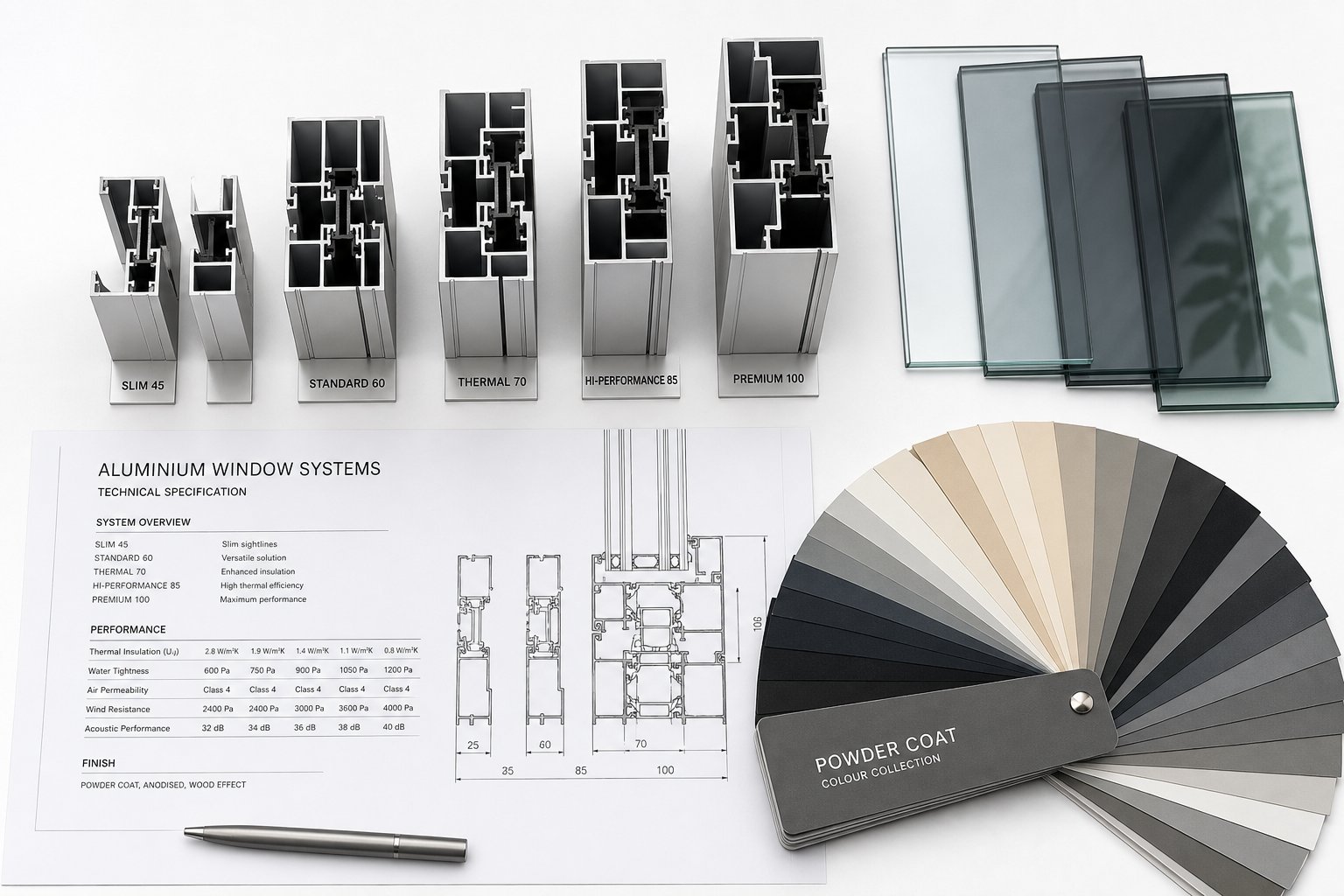
Series numbers on aluminium sliding window profiles refer to the frame depth in millimetres. A lightweight 18 mm series uses narrow, thin-walled extrusions suited to small openings with minimal wind exposure. A 29 mm or heavier commercial series provides substantially more material around the glass pocket, deeper weatherseal grooves, and greater resistance to deflection under load.
The structural difference is measurable. A cheap price aluminium sliding window profile with 1.0 mm wall thickness and shallow frame depth might handle a sheltered ground-floor bedroom in Melbourne. That same profile on a 12th-floor apartment facing coastal winds in the Gold Coast would flex, leak, and eventually fail. Heavier series profiles — 1.4 mm to 2.0 mm wall thickness — cost more per linear metre of extrusion, but they resist wind pressure, hold hardware fasteners more securely, and maintain tighter tolerances over decades of thermal cycling.
For a standard aluminium sliding window 4×4 price (roughly 1200 mm x 1200 mm), stepping from a lightweight series to a mid-weight profile adds approximately $80 to $150 AUD to the supply cost. On a full-house order of 15 to 20 windows, that compounds — but so does the performance gain. Any comprehensive aluminium sliding window price list will show this progression clearly when specifications are itemised rather than bundled into a single line.
Glass Types and Their Cost Implications
Glass sits behind the frame as the second-largest cost contributor, and the options span a wide range of performance and price. Ranked from lowest to highest cost:
- Clear float glass (4–5 mm) — the baseline option, offering transparency and basic weather protection with no thermal or safety enhancement
- Tinted glass (5–6 mm) — absorbs solar radiation to reduce heat gain, adds moderate privacy, typically 20% to 35% above clear float pricing
- Toughened (tempered) glass (5–6 mm) — heat-treated for safety compliance under AS 1288, shatters into small granules on impact, 40% to 60% above clear float
- Laminated glass (6.38 mm) — two panes bonded with an interlayer for security and acoustic control, 50% to 70% above clear float
- Double-glazed insulated glass units (IGUs) — two panes with an argon-filled cavity, delivering significant thermal and acoustic improvement, 100% to 150% above clear float for the glass component alone
Each step up addresses a specific performance need. Toughened glass is mandatory in locations where human impact is likely — beside doors, in bathrooms, or at low heights. Double-glazed units target thermal performance for homes chasing strong NatHERS ratings or battling extreme summer heat in western-facing rooms. The right choice depends on the window’s orientation, exposure, and the performance targets your build requires.
Finish Options and Custom Colour Pricing
Surface treatment is the final variable that adjusts the per-unit cost. Standard powder coat finishes — typically white, black, or monument — sit at the base price because they run in high volumes with minimal setup changes. Most fabricators stock these colours and apply them without surcharge.
Custom RAL colours add 10% to 20% to the frame cost. The premium covers smaller batch processing, additional quality control for colour matching, and sometimes minimum order quantities imposed by the coating facility. Woodgrain sublimation finishes — which replicate timber aesthetics on the aluminium surface — push even higher, often 20% to 30% above standard, due to the multi-step application process involving heat transfer film.
Dual-colour finishes, where the interior and exterior faces receive different treatments, roughly double the coating cost component. This option suits projects where interior design calls for a warm timber-look inside while the exterior maintains a contemporary dark or neutral tone for street appeal.
For coastal Australian projects, the finish isn’t just aesthetic — it’s the window’s first line of defence against salt-air corrosion. Marine-grade powder coating or anodising rated to AS 3715 adds cost but prevents premature degradation that would otherwise void warranties and demand early replacement. The cheapest finish in a corrosive environment is rarely the most economical over a 30-year window lifespan.
Hardware Quality Tiers and Their Impact on Performance
A marine-grade powder coat protects the frame from the outside. But inside the frame — hidden from view — rollers, locks, handles, and weatherseals determine whether your window still glides effortlessly in year ten or becomes a two-handed wrestling match by year three. Hardware accounts for only 10% to 15% of the total 2 track aluminium sliding window price, yet it disproportionately controls daily satisfaction and long-term maintenance costs.
Cheap hardware doesn’t announce itself at installation. It announces itself later — through grinding noises, stiff operation, failed locks, and service calls that quickly exceed what premium components would have cost upfront.
Roller Quality and Its Effect on Window Lifespan
Rollers carry the full weight of the glass panel and guide it along the track every time you open or close the window. The difference between budget and quality rollers isn’t subtle — it’s the difference between smooth, one-finger operation for a decade and a window that starts grinding, sticking, or refusing to close within two to three years.
Single-wheel rollers with plain bearings sit at the budget end. They concentrate the entire sash weight on one contact point per side, which accelerates track wear and makes operation less forgiving if the frame settles even slightly out of square. Nylon wheels in these assemblies can develop flat spots under sustained load, creating a thumping sensation during travel.
Tandem (dual-wheel) rollers with ball bearings represent the quality tier. Two wheels per housing distribute the panel weight across a wider contact area, reducing point-loading on the track and delivering noticeably smoother travel — particularly on wider or heavier sashes where single wheels tend to dig in and drag. Ball bearings maintain low friction even after thousands of cycles, and adjustable housings allow fine-tuning of panel height as the building settles over time.
For coastal Australian homes, material choice matters as much as configuration. Stainless steel axles and corrosion-resistant housings prevent the seized-roller failures common in salt-air environments. A standard steel axle can rust and lock solid within a few years near the coast, turning an otherwise functional window into a maintenance headache.
Lock and Handle Options Across Price Tiers
Locks serve two functions: security and compression. A good lock doesn’t just prevent intrusion — it pulls the meeting stiles together to maintain weatherseal contact, reducing air infiltration and water ingress.
Basic crescent locks (sometimes called snail locks) are the entry-level option. They’re simple, inexpensive, and adequate for low-risk openings. The aluminium sliding window lock price in India and similar markets reflects this simplicity — a few dollars per unit. But crescent locks offer only single-point engagement, meaning the panels are secured at one height only. Tall windows can flex at the top and bottom, compromising both security and sealing.
Multi-point locking systems engage the frame at two or three heights simultaneously. They cost more — typically three to five times the price of a basic crescent lock — but they hold the panel firmly against the weatherseals along its full height. For ground-floor windows or any opening accessible from outside, multi-point locks provide meaningfully better resistance to forced entry while also improving acoustic and thermal performance through tighter compression.
Handles follow a similar progression. Flush-mount recessed handles sit cheaply within the stile but offer limited grip. Ergonomic lever handles with positive-action latching feel better in daily use and integrate more naturally with multi-point lock mechanisms.
Mosquito Net Integration and Add-On Costs
Flyscreen integration is one of the most common add-ons that affects both the aluminium sliding windows with mosquito net price and the window’s everyday functionality. In Australian conditions — where insects are a year-round reality across most climate zones — a well-integrated flyscreen isn’t optional for openable windows.
The simplest approach uses a dedicated third track (or a half-track mounted to the exterior face of the frame) carrying a lightweight aluminium-framed mesh panel. This adds $40 to $100 AUD per window depending on size and mesh quality. Retractable roller screens offer a cleaner aesthetic when the window is closed but cost more and introduce a mechanical component that can fail over time.
For buyers researching aluminium sliding windows with mosquito net price in Pune or aluminium sliding windows with mosquito net price Mumbai, the integrated flyscreen track is often included in the base specification due to local insect pressure. In Australia, it’s typically quoted as a line item — which means it can be accidentally omitted from budget quotes, only to become an essential retrofit later.
Stainless steel mesh (security screen grade) represents the premium end. It provides insect protection, forced-entry resistance, and bushfire ember protection in a single layer — relevant for BAL-rated properties. The cost is substantially higher than fibreglass or aluminium mesh, but it eliminates the need for separate security screens.
Total Cost of Ownership: Why Premium Hardware Pays Back
Ranking hardware components by their impact on long-term satisfaction:
- Rollers — affect daily operation feel and determine whether the window remains easy to use for its full lifespan or degrades into a frustration within years
- Locks — control security, weatherseal compression, and long-term air and water tightness
- Weatherseals — degrade with UV and age; quality seals last 10 to 15 years versus 3 to 5 for budget alternatives
- Handles — influence ergonomic comfort and integrate with lock function
- Flyscreen system — determines insect protection quality and ease of cleaning or replacement
A window fitted with premium tandem rollers, multi-point locks, and quality weatherseals might add $80 to $150 per unit over budget hardware. Replacing failed budget rollers after three years — including the service call, parts, and potential track repair — can easily exceed that difference on a single visit. Multiply across ten or fifteen windows in a home, and the total cost of ownership argument becomes overwhelming.
The hardware hidden inside your window frame is where the 2 track aluminium sliding window price either delivers lasting value or quietly accumulates future repair bills. Specifying it properly requires knowing what to ask for — and knowing what a complete, transparent quote should actually include.
How to Evaluate Quotes and Avoid Overpaying
Knowing what sits inside a window frame is one thing. Getting that knowledge onto paper — in the form of a quote you can actually trust — is another challenge entirely. Whether you’re comparing aluminium sliding window prices from local fabricators or reviewing an aluminium sliding windows price list in Bangalore, Delhi, or Mumbai for an international project, the same principle applies: a quote is only as useful as the specifications it contains.
Vague quotes protect the supplier. Detailed quotes protect you.
What a Complete and Transparent Quote Includes
A professional quote for a 2-track aluminium sliding window should read like a technical specification sheet, not a one-line price. Every element that affects performance, longevity, and cost needs to appear explicitly. If it’s not written down, assume it’s not included.
Essential line items that should appear on any quote worth comparing:
- Profile series designation and wall thickness (e.g., 100 series, 1.6 mm wall)
- Glass type, thickness, and treatment (e.g., 6 mm toughened clear, or double-glazed IGU with Low-E coating)
- Hardware brand and grade — rollers, locks, and handles specified by name or tier
- Finish specification — powder coat colour, coating standard (e.g., AS 3715 for coastal), and whether it’s single or dual-colour
- Flyscreen inclusion — type, mesh material, and track configuration
- Installation scope — what’s included (removal, disposal, flashing, sealing, internal trims) and what’s excluded
- Warranty terms — duration, what’s covered, and who services claims
- Compliance references — AS 2047 testing, BAL rating if applicable, NCC energy requirements
A detailed quote comparison guide from Fenbro reinforces this point: when at least three key specifications are missing from a quote, the bottom-line price becomes meaningless for comparison purposes. You’re not comparing products anymore — you’re comparing guesses.
Red Flags That Signal Low-Quality or Misleading Quotes
Some warning signs are obvious. Others hide behind professional-looking formatting. Watch for these:
Missing specifications disguised as simplicity. A quote that says “aluminium sliding window, powder coated, with glass” tells you almost nothing. Which profile? What glass? What hardware? This vagueness gives the supplier room to substitute cheaper components without technically breaching the agreement.
Prices dramatically below market rate. If three fabricators quote between $650 and $800 per square metre for a mid-range specification and a fourth comes in at $380, something is missing from that fourth quote. Either the specification is substantially lower, installation is excluded, or corners will be cut during fabrication. Buyers searching for the best price aluminium sliding windows often land on these outliers — and discover the true cost later through replacements and repairs.
No hardware brand or grade mentioned. Generic descriptions like “quality rollers” or “standard lock” are meaningless. A professional fabricator specifies the actual component — brand name, model, or at minimum a defined performance tier. If they won’t name it, they’re likely using whatever’s cheapest on the day.
Vague installation terms. “Installation included” without defining scope leaves disputes waiting to happen. Does it cover removal of existing windows? Disposal? Flashing and weathersealing to the reveal? Internal trim reinstatement? Each omission becomes an unexpected extra charge on site day.
No warranty documentation. Verbal promises evaporate. A reliable supplier provides written warranty terms specifying duration, coverage scope, exclusions, and the claims process — for both product and installation separately.
How to Normalise Quotes for Fair Comparison
The only way to compare aluminium sliding window prices fairly is to reduce every quote to a common unit — price per square metre — with matched specifications. This normalisation process strips away the noise of different window sizes, quantities, and bundled extras that make raw totals misleading.
Here’s the method: take the total quoted price for each window, divide by its area in square metres (width x height), and note exactly what’s included at that rate. A quote at $720/m² including toughened glass, tandem rollers, multi-point lock, flyscreen, and full installation is a fundamentally different proposition from a quote at $550/m² covering supply only with clear float glass and basic hardware.
For buyers using an aluminium sliding windows price calculator or building a comparison spreadsheet, the columns that matter most are: price per square metre, profile series, glass specification, hardware tier, finish, installation scope (supply only vs supply and install), and warranty length. Align those columns across three or four quotes and the genuine value differences become immediately visible — regardless of whether you’re evaluating aluminium sliding windows price in India or quotes from fabricators in Sydney and Melbourne.
The cheapest quote rarely stays cheapest. A window that costs 20% less upfront but needs roller replacement in three years, resealing in five, and full hardware overhaul in seven will exceed the premium quote’s total cost well before the end of its expected lifespan.
This long-view calculation — total cost of ownership rather than purchase price alone — is what separates informed buyers from those who chase headline numbers. And it’s the same logic that applies when choosing where to source your windows: the supply channel you buy through shapes not just the price, but the specification consistency, customisation options, and after-sales support you’ll receive for years to come.
Sourcing Reliable 2-Track Aluminium Sliding Windows for Projects
The supply channel you choose determines far more than the number on your invoice. It shapes specification accuracy, lead time reliability, after-sales support, and whether the windows arriving on site actually match what was quoted. Three main channels serve the Australian market — each with distinct trade-offs that suit different buyer profiles and project scales.
Local Fabricators vs Online Marketplaces vs Manufacturers
Local fabricators operate workshops that cut, assemble, and finish windows from aluminium extrusions purchased through system suppliers. They offer face-to-face service and can handle one-off replacements or small renovation jobs quickly. The trade-off is variability — quality depends entirely on the individual workshop’s skill, equipment, and quality control processes. Two fabricators using the same profile system can produce noticeably different results.
Online marketplaces aggregate listings from multiple sellers, making it easy to compare an aluminium sliding windows bunnings price against independent suppliers. Headline prices tend to sit lower because marketplace sellers compete on visibility. But what you gain in apparent savings, you often lose in specification clarity. Product descriptions may omit hardware grades, glass types, or compliance details — exactly the red flags covered in the previous section. Returns and warranty claims can also become complicated when the platform sits between you and the actual manufacturer.
Direct-from-manufacturer supply — where the company designing and extruding the profiles also fabricates and delivers the finished windows — offers the tightest control over quality consistency. A full supply chain manufacturer eliminates the disconnect between system supplier and fabricator, ensuring what’s drawn in the specifications is exactly what gets built. For builders and developers managing multi-unit projects, this single point of accountability simplifies communication and reduces the risk of substitution or misinterpretation.
| Sourcing Channel | Typical Price Level | Customisation Flexibility | Quality Consistency | Best Suited For |
|---|---|---|---|---|
| Manufacturer / Project Supplier | Competitive at volume (best aluminium sliding window price per sq ft manufacturer rates) | High — custom sizes, finishes, hardware, screens | High — single entity controls full process | Builders, developers, architects ordering for entire projects |
| Local Fabricator | Mid-range; varies by workshop | Moderate — limited by system supplier’s range | Variable — depends on individual workshop | Single replacements, small renovations, urgent timelines |
| Online Marketplace | Lowest headline price | Low — standard sizes and specs only | Unpredictable — multiple sellers, inconsistent QC | Budget-conscious single-unit purchases, DIY projects |
Why Project-Based Supply Offers Better Value
Ordering windows for an entire build — rather than purchasing individual units — unlocks pricing and consistency advantages that single-unit buyers simply cannot access. Aluminium sliding doors and windows prices from a manufacturer drop meaningfully at project volumes because fabrication setup costs, cutting waste, and logistics overheads get distributed across dozens or hundreds of units rather than absorbed by one.
Builders who consolidate window orders across a development can achieve savings of 30% or more compared to retail pricing on equivalent specifications. Beyond cost, project-based supply delivers specification consistency — every window across every unit uses identical profiles, glass, hardware, and finishes. That uniformity matters for compliance documentation, warranty management, and the building’s long-term maintenance profile.
For Australian residential and commercial projects, MEICHEN’s MA100 Sliding Window illustrates this model well. Designed specifically for project supply to builders, developers, and architects, the MA100 is a configurable 2-track system where screens, locks, finishes, and city-specific options can be specified per project — giving each development exactly what it needs without the per-unit premium of one-off fabrication. It’s a practical example of how aluminium window sliding price from a manufacturer improves when the supply relationship is structured around project volumes rather than individual transactions.
Key Supplier Capabilities to Evaluate
Not every business calling itself a supplier operates at the same level. Separating a reliable aluminium sliding doors and windows prices supplier from a basic reseller comes down to a handful of capabilities that directly affect your project outcome:
- Product configurability — can they adjust sizes, glass types, hardware tiers, and finishes to your specification, or do they only offer fixed catalogue options?
- Clear specification documentation — do they provide detailed technical data sheets, compliance certificates (AS 2047, WERS ratings), and written warranty terms?
- Screen and lock options — can they integrate flyscreens, security screens, and multi-point locking as part of the base order rather than requiring third-party add-ons?
- Bulk and project order handling — do they have the production capacity, inventory depth, and logistics infrastructure to deliver consistent quality across a full project timeline?
- After-sales support — who handles warranty claims, replacement parts, and technical queries once the windows are installed?
An aluminium sliding doors and windows prices factory that ticks these boxes operates as a project partner rather than a transactional seller. They can assist with value engineering during the design stage — recommending where a heavier profile series is structurally necessary and where a standard specification performs equally well at lower cost. That collaborative input, available from experienced manufacturers but rarely from marketplace sellers, often saves more than any discount code ever could.
Whether you’re comparing aluminium sliding window price per sq ft from a supplier in Sydney or evaluating options for a multi-storey development in Brisbane, the sourcing decision shapes everything downstream. Choose a channel that matches your project’s scale, timeline, and quality expectations — and verify that the supplier’s capabilities extend beyond quoting to actual delivery, compliance, and long-term support.
Frequently Asked Questions About 2 Track Aluminium Sliding Window Pricing
1. How much does a 2 track aluminium sliding window cost per square metre in Australia?
In Australia, a 2 track aluminium sliding window ranges from approximately $300 to $1,200+ per square metre for supply only. Budget options with thin profiles and clear float glass sit at the lower end, while premium units featuring double-glazed IGUs, heavy-duty extrusions, and marine-grade finishes reach the upper range. Installation adds 15% to 25% on top of the supply cost, depending on site access and opening complexity.
2. What is the difference between a 2 track and a 3 track aluminium sliding window?
A 2 track window has two parallel rails carrying two panels, allowing roughly 50% of the opening for ventilation. A 3 track system adds a third rail and panel, opening up to 66% of the width. The 3 track configuration costs 30% to 50% more due to the extra aluminium extrusion, additional glass panel, wider frame depth, and more complex weathersealing. Two-track suits openings up to 1800 mm, while three-track handles spans from 1800 mm to 3600 mm.
3. What factors affect the price of a 2 track aluminium sliding window the most?
Four components drive the total cost: the aluminium frame and profile (35-45% of the price), glass type and thickness (20-30%), fabrication and installation labour (15-25%), and hardware including rollers, locks, and seals (10-15%). Profile wall thickness, glass upgrades like toughened or double-glazed units, custom powder coat colours, and hardware quality tier each independently shift the final figure. Comparing quotes without matching these specifications leads to misleading conclusions.
4. Is it worth paying more for premium hardware in a sliding window?
Premium hardware — particularly tandem ball-bearing rollers and multi-point locks — adds $80 to $150 per window over budget components but delivers significantly better long-term value. Cheap single-wheel rollers often fail within 2 to 3 years, and a single service call to replace them can exceed the original hardware upgrade cost. Quality rollers maintain smooth one-finger operation for 10+ years, while multi-point locks improve both security and weatherseal compression across the panel’s full height.
5. Should I buy aluminium sliding windows from a local fabricator or directly from a manufacturer?
It depends on project scale. Local fabricators suit single replacements or small renovations with quick turnarounds, though quality varies between workshops. For multi-unit developments or full-house orders, manufacturer-direct supply like MEICHEN’s MA100 system offers better per-unit pricing, tighter specification consistency, and single-point accountability across the entire order. Project-based supply from manufacturers can achieve savings of 30% or more compared to retail pricing on equivalent specifications.
More Window & Door Guides