Why Melbourne Homeowners Choose Aluminium Windows
Aluminium windows use extruded aluminium alloy to form the frame that holds glass panes in place. They open, close, lock, and seal the same way any window does, but the frame material itself changes everything about longevity, design range, and maintenance demands. Across Melbourne’s residential and commercial sectors, aluminium frames account for the largest share of window installations, and that dominance has held steady for decades.
The reason is straightforward. Aluminium delivers a strength-to-weight ratio that neither timber nor uPVC can match, allowing thinner frame profiles to support larger glass areas. It resists corrosion naturally, tolerates Melbourne’s wide temperature swings without warping, and accepts powder-coated finishes in hundreds of colours. For a city where architectural styles range from Victorian terraces to cantilevered contemporary builds, that flexibility matters.
Yet choosing aluminium windows for a Melbourne home involves more decisions than most buyers expect. Climate zone, glazing type, frame grade, heritage overlays, and supplier capability all influence whether the finished result performs well or disappoints. This guide breaks down each factor so you can make informed choices rather than relying on assumptions or incomplete advice.
What Makes Aluminium the Preferred Frame Material
At the core, aluminium is lightweight yet structurally rigid. It won’t swell in humidity, crack in frost, or rot after prolonged rain exposure. Unlike timber frames that demand sanding, repainting, and periodic sealing, aluminium requires little more than a soapy wash a couple of times a year to stay in good condition. It is also 100% recyclable, able to be melted down and re-extruded without losing structural properties, which reduces the environmental burden compared to materials that eventually end up in landfill.
From an engineering standpoint, aluminium frames handle larger spans than competing materials at equivalent wall thicknesses. That translates to slimmer sightlines and more glass, letting natural light flood interior spaces. When paired with thermally broken profiles and double glazing, the energy efficiency gap that once separated aluminium from timber narrows significantly, making it a practical choice across Melbourne’s NatHERS climate zones.
Who This Guide Helps
Whether you are a homeowner weighing up aluminium vs timber windows in Melbourne, a builder specifying frames for a new development, or an architect designing around heritage constraints, this article covers the ground you need before committing to a supplier or signing a contract.
- Melbourne’s climate demands and how they shape frame and glazing selection
- Window style options matched to room function and orientation
- Double glazing, Low-E coatings, and thermally broken frame technology
- Colour, finish, and security customisation for residential projects
- Heritage overlay rules and planning permit requirements
- Commercial-grade versus residential-grade frame differences
- Renovation versus new-build project planning
- How to evaluate suppliers and compare quotes effectively
Each section targets a specific gap in knowledge that trips up Melbourne buyers, from underestimating the impact of coastal salt spray to overlooking the distinction between a building permit and a planning permit. The detail that matters most, though, often starts with something buyers rarely consider first: how Melbourne’s specific weather patterns should drive every window decision they make.
How Melbourne’s Climate Shapes Your Window Decisions
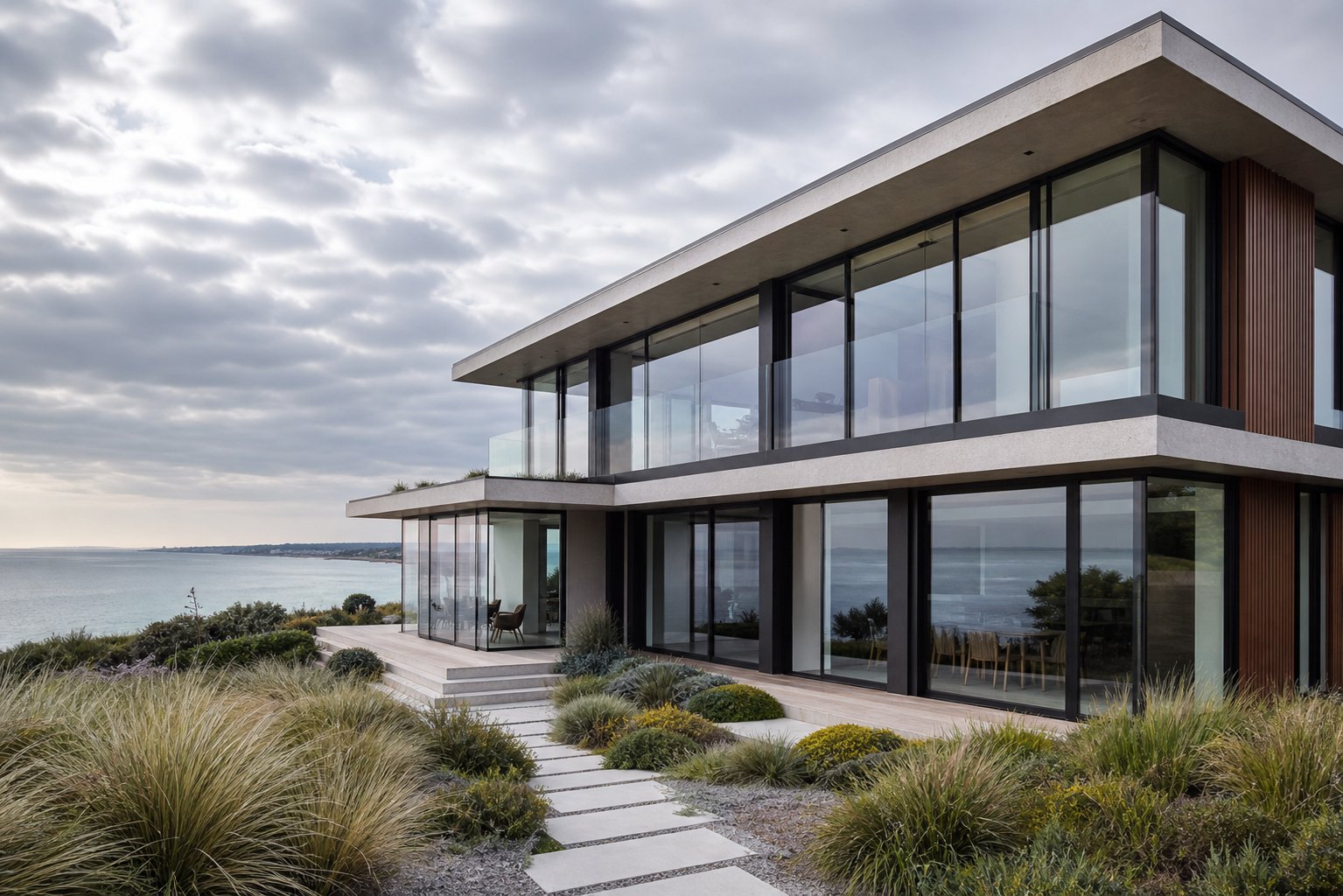
Melbourne’s weather rarely lets you forget it exists. Temperatures that swing from 12°C overnight to 38°C by mid-afternoon, horizontal rain driven by southerly changes, aggressive UV through clear autumn skies, and salt-laden winds pushing well inland from Port Phillip Bay all converge on the same building envelope. Aluminium windows handle this range well as a material, but only when the specification accounts for the specific exposure your suburb delivers.
Buying aluminium windows for coastal Melbourne homes requires different thinking than specifying for a sheltered inner-city terrace or an elevated property on the city’s bushfire-prone fringe. Three climate factors drive most of the specification differences across the metro area: salt spray corrosion, wind load intensity, and bushfire attack level. Get these right, and the frames last decades. Ignore them, and premature failure becomes a matter of when, not if.
Coastal and Bayside Considerations
Salt spray doesn’t stop at the beach. Prevailing south-westerly winds carry fine salt particles kilometres inland from Port Phillip Bay, and suburbs like St Kilda, Brighton, Williamstown, and Frankston sit firmly within what corrosion engineers call a “severe marine” zone. Even areas several streets back from the waterfront experience enough airborne salt to attack unprotected metal surfaces over time.
For aluminium window frames in these locations, the critical defence is the powder coat finish. Standard powder coating provides reasonable protection for suburban locations, but bayside properties demand marine-grade powder coating systems. These typically involve a chromate or chrome-free pre-treatment layer beneath the topcoat, creating a barrier that prevents salt from reaching the aluminium substrate and initiating pitting corrosion.
Homeowners in bayside suburbs should look for salt spray resistant window frames that meet the demands of their specific exposure classification. Key considerations include:
- Marine-grade powder coat with multi-stage pre-treatment
- Stainless steel or marine-grade hardware instead of standard zinc-plated fittings
- Drainage slots designed to prevent salt water pooling in the frame sill
- Regular fresh-water rinsing as part of a maintenance routine, especially during summer when sea breezes peak
The corrosive effects of salty sea spray impact homes many kilometres inland from the coast, not just those on the waterfront. Riverside properties and those in bayside suburbs face accelerated corrosion even without direct exposure to breaking surf. Factoring this into the frame specification from day one costs far less than replacing corroded windows five years down the track.
BAL Ratings for Melbourne’s Outer Suburbs
Melbourne’s urban fringe pushes into heavily vegetated corridors where bushfire risk dictates construction requirements. Properties in the Dandenong Ranges, Eltham, Warrandyte, and parts of the Yarra Valley regularly fall within designated bushfire-prone areas, triggering mandatory compliance with AS 3959: Construction of Buildings in Bushfire Prone Areas.
The Australian Glass and Window Association (AGWA) outlines six Bushfire Attack Levels that determine what your windows must withstand:
- BAL-Low — no specific bushfire construction requirements
- BAL-12.5 — ember attack exposure; basic protection needed
- BAL-19 — increasing radiant heat; tighter seal and screen requirements
- BAL-29 — higher radiant heat and ember load; specific glazing thickness mandated
- BAL-40 — very high radiant heat; significant frame and glass upgrades required
- BAL-FZ (Flame Zone) — direct flame contact possible; most demanding specifications
BAL rated windows for Melbourne outer suburbs typically need to address BAL-12.5 through BAL-29, though some hillside properties in the Dandenongs reach BAL-40. As the rating climbs, so do requirements for glazing thickness, frame sealing against ember ingress, and the use of bushfire-rated screens over openable sections. At BAL-29 and above, tempered or toughened glass becomes mandatory, and external screens must be metal mesh fine enough to block burning embers.
Your site’s BAL classification is determined during the planning stage. Council bushfire mapping or a site-specific assessment by a qualified practitioner will assign the rating that dictates your window specification. Skipping this step leads to compliance failures at inspection and costly retrofitting.
Wind and Temperature Performance
Wind rating is the invisible specification that many homeowners overlook entirely. Every building site in Australia must be assessed for wind load requirements under AS/NZS 1170.2 or AS 4055, and the resulting classification determines the minimum structural rating your windows must carry. For typical housing, this produces an N-rating (non-cyclonic) that the window supplier must verify against their tested performance data.
Across Melbourne, wind rated aluminium windows become especially important for exposed hillside properties in suburbs like Mount Dandenong, Templestowe, and the Bellarine Peninsula, where topography funnels and accelerates prevailing winds. Upper-storey windows and corner windows on elevated sites face significantly higher wind pressures than ground-floor openings on sheltered blocks. The responsibility for nominating accurate wind ratings falls to the builder, architect, or engineer, who must provide these figures in writing to the window supplier.
Temperature performance is equally relevant, though less about structural failure and more about long-term fit and seal integrity. Aluminium expands and contracts with temperature changes. Melbourne’s range, from near-freezing winter mornings to extreme summer heat, means frames cycle through thermal movement repeatedly each year. Correct installation tolerances, adequate clearances, and quality weather seals accommodate this movement without compromising the window’s air infiltration or water penetration performance.
UV exposure rounds out the picture. Melbourne’s UV index regularly hits extreme levels between October and March, degrading seals, fading internal furnishings through unprotected glass, and stressing powder coat finishes on north and west-facing elevations. Specifying UV-resistant seals and considering Low-E glass for these orientations helps the entire window system maintain performance year after year, which brings the conversation naturally toward glazing technology and how it transforms what an aluminium frame can achieve.
Popular Aluminium Window Styles for Melbourne Homes
Glazing technology and climate ratings determine how well a window performs thermally, but the style you choose dictates how you actually live with it every day. How does it open? How much airflow does it deliver? Can you leave it open during a rain shower without mopping the floor afterwards? These practical questions matter more in daily life than numbers on a spec sheet, and the answers differ dramatically depending on which aluminium window style you select for each room.
Melbourne homes tend to combine multiple window types across a single build. A living room that prioritises uninterrupted views and wide openings needs a completely different solution from a bathroom that requires ventilation during winter rain. Understanding the best window styles for Melbourne weather means matching each opening to its purpose rather than defaulting to whatever the builder quotes cheapest.
Sliding and Stacking Windows for Living Spaces
Aluminium sliding windows remain the workhorse of Melbourne residential design. One or more sashes glide horizontally along tracks, requiring zero exterior clearance to operate. That makes them practical for ground-floor rooms facing pathways, decks, or narrow side passages where an outward-swinging sash would block foot traffic.
The real appeal for aluminium sliding windows in Melbourne homes comes down to span. Aluminium’s structural rigidity allows sliding frames to cover wider openings than timber or uPVC equivalents at the same profile depth. Stacking slider configurations, where multiple panels slide and stack behind one another, push this further. A three-panel stacking slider can open two-thirds of the total aperture, creating a wide connection between living areas and outdoor entertaining spaces that suits Melbourne’s indoor-outdoor culture perfectly.
Sliding windows work best in bedrooms, living rooms, and home offices where moderate ventilation is needed without the rain vulnerability of a fully projecting sash. They are easy to fit with flyscreens, simple to operate for children and elderly residents, and have fewer mechanical parts than other styles, which reduces long-term maintenance.
The trade-off is ventilation capacity. Because only half the opening (or two-thirds in a stacking configuration) can be clear at any time, airflow potential is lower than a casement or awning window of the same size. For rooms where maximum cross-ventilation is the priority, other styles outperform sliders.
Awning and Casement Windows for Wet Areas
Melbourne’s autumn and winter deliver frequent rain on prevailing south-westerly winds. Bathrooms, laundries, and kitchens need ventilation year-round regardless of what the sky is doing outside. This is where awning windows for Melbourne bathrooms earn their place in the specification.
Awning windows are hinged at the top and swing outward from the bottom. When open, the glass pane acts like a small canopy, deflecting rain away from the opening while still allowing warm, moist air to escape. You can leave an awning window cracked open during a downpour and come back to a dry sill. That single characteristic makes it the default choice for wet areas, above kitchen sinks, and for any opening that faces prevailing rain.
Casement windows operate differently. Hinged on one side, they swing outward like a door and expose the full opening to airflow. Aluminium casement windows deliver superior ventilation because 100% of the aperture is clear when open, compared to roughly 50% for a slider. They seal tightly when closed, pressing the sash against the frame under the force of the locking mechanism, which creates one of the strongest weather seals of any operable window type.
The ventilation advantage of casement windows suits rooms where moisture, steam, or cooking odours need to evacuate quickly. However, they require clear exterior space to swing open, which limits their use on ground floors adjacent to walkways or where the projecting sash could catch wind during Melbourne’s gusty spring storms. For upper storeys, they perform superbly.
Fixed Panels, Louvres, and Bi-Fold Configurations
Not every window needs to open. Fixed aluminium panels exist purely to deliver light and views, and because they have no moving parts, they offer the tightest seal against air infiltration and water ingress. Feature glazing in stairwells, above front doors, or as large picture windows in living areas commonly uses fixed panels. Aluminium’s slim profile maximises the glass-to-frame ratio, letting the view dominate rather than the frame.
Louvre windows use multiple horizontal glass blades angled within an aluminium frame. They provide adjustable ventilation, allowing you to control airflow by tilting the blades to any angle. In Melbourne, louvres appear most often in bathrooms, pool rooms, and covered outdoor entertaining areas where constant air movement is desirable. Their weakness is thermal performance. Even when closed, louvre windows seal less effectively than casement or awning alternatives, making them a poor choice for climate-controlled living spaces.
Bi-fold windows fold back in concertina fashion, opening an entire wall section when entertaining or connecting a kitchen servery to an outdoor area. Aluminium’s strength supports the multiple hinged panels across wide spans without excessive frame depth. When closed, they provide a clean, modern facade. When open, they dissolve the boundary between inside and out. This style suits Melbourne’s culture of deck entertaining, where summer barbecues and spring brunches demand that seamless transition.
Black Aluminium Frames and Contemporary Design
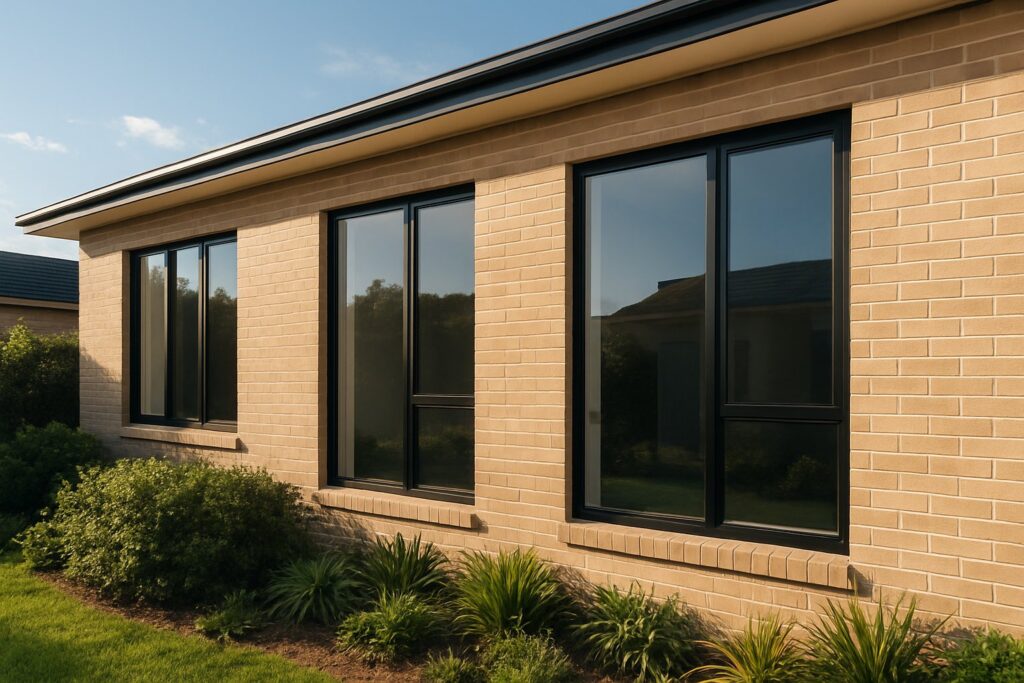
Dark-framed aluminium windows have moved from design-magazine trend to Melbourne mainstream. Black and dark-toned frames create contrast against light interior walls, and rather than dominating a view, they recede into shadow lines that let the outlook become the focal point. Colours like Monument, a dark charcoal from the Colorbond palette, have become one of the most specified dual-finish choices among Melbourne homeowners seeking consistency between window frames, fascia, and roofing.
Black aluminium window frames suit modern design particularly well because slimmer sightlines become visually even slimmer in a dark finish. The eye registers them as shadow rather than structure. Paired with large fixed panels or stacking sliders, dark frames help contemporary Melbourne homes achieve that glass-dominant, minimal facade so prevalent in suburbs like South Yarra, Alphington, and the Mornington Peninsula.
There is a performance consideration worth noting. Darker powder coat colours absorb more solar radiation than lighter finishes. On north and west-facing elevations that receive direct afternoon sun, black frames heat up noticeably. With thermally broken profiles and double glazing, this heat stays largely on the exterior side of the frame, but in non-thermally-broken systems, darker colours can increase the surface temperature felt on the interior frame. Factoring orientation into colour selection, or specifying a thermally broken system, avoids this becoming an issue.
| Style | Best Room Application | Ventilation Rating | Weather Seal Performance |
|---|---|---|---|
| Sliding | Living rooms, bedrooms, home offices | Moderate (50% opening) | Good |
| Awning | Bathrooms, kitchens, laundries | Moderate to high | Excellent (rain protection while open) |
| Casement | Bedrooms, living areas, upper storeys | High (100% opening) | Excellent (compression seal) |
| Fixed Panel | Feature walls, stairwells, highlight glazing | None | Superior (no moving parts) |
| Louvre | Bathrooms, pool rooms, covered outdoor areas | High (adjustable) | Low to moderate |
| Bi-fold | Kitchen serveries, entertainment areas | Very high (full opening) | Good when closed |
Selecting the right style for each opening is half the performance equation. The other half sits behind the frame in the glass itself, where glazing technology turns a basic aluminium window into a genuine thermal barrier. Single pane, double glazed, Low-E coated, argon filled: the options multiply quickly, and understanding what each delivers for Melbourne’s climate zones separates a comfortable home from one that overheats in summer and freezes energy bills in winter.
Double Glazing and Energy Efficiency Explained
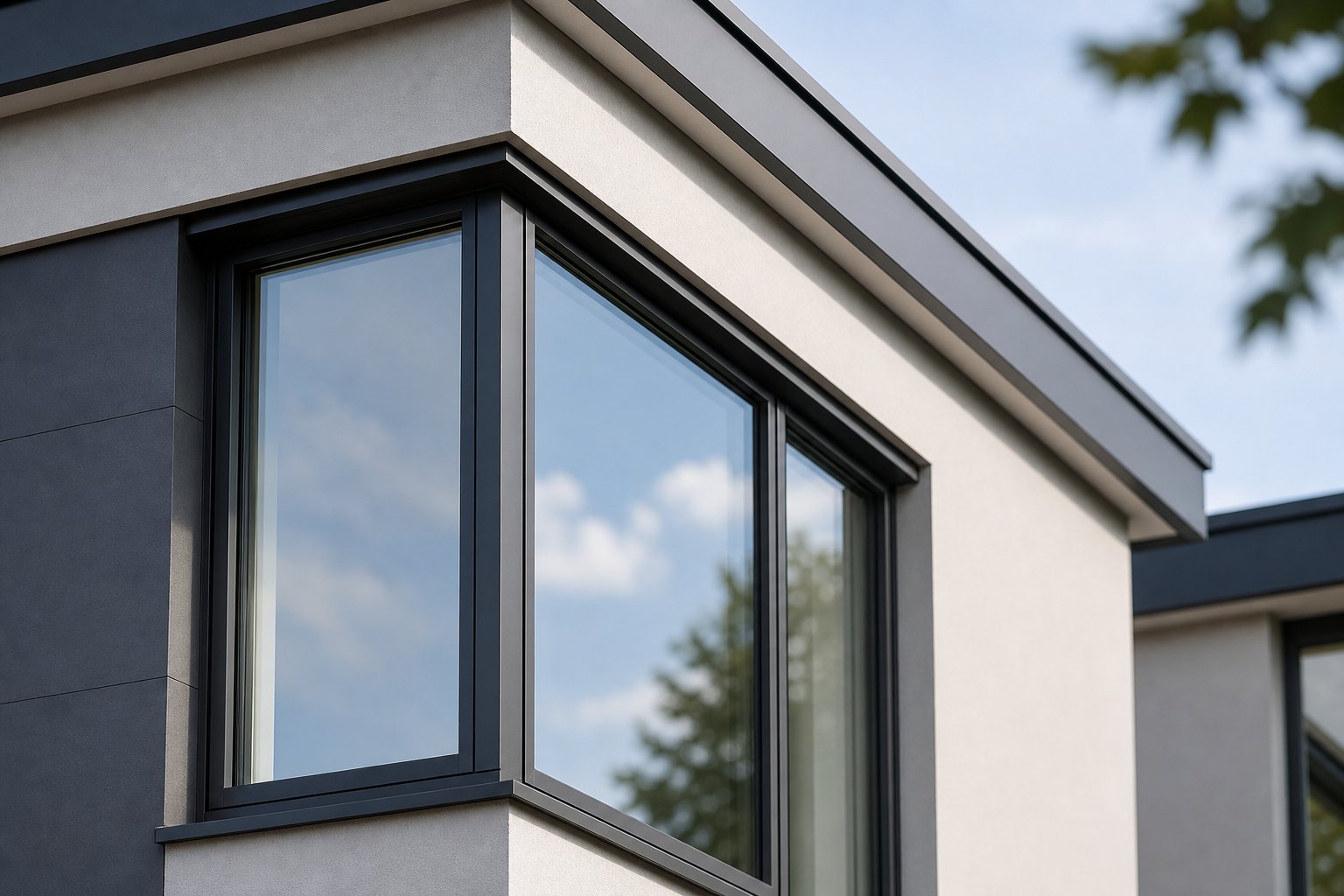
A window frame holds the glass in place, but it is the glass that does the heavy lifting on energy performance. The aluminium frame you select matters for durability, aesthetics, and structural support, yet glazing accounts for the vast majority of the window’s total surface area. That means most heat gain in summer and heat loss in winter moves through the glass, not the frame. Getting the glazing specification right transforms an aluminium window from a basic opening into a genuine thermal barrier suited to Melbourne’s variable climate.
The choices break down into three layers of decision: how many panes of glass, what coatings or fills sit between them, and whether the frame itself includes a thermal break. Each layer compounds the performance of the one before it, and skipping any one of them leaves measurable efficiency on the table.
Glazing accounts for the majority of a window’s energy performance. When budgets are tight, upgrading the glass specification delivers more comfort and energy savings than almost any other single decision in a window project.
Single vs Double Glazed Aluminium Windows
Single glazing uses one pane of glass, typically 4 mm to 6 mm thick. It is cheap to manufacture and still common in older Melbourne homes, but it performs poorly as an insulator. A single pane conducts heat rapidly in both directions. In winter, warmth generated by your heating system migrates straight through the glass to the cold exterior. In summer, radiant heat from direct sun transfers inward almost unimpeded. The result: higher energy bills, less comfortable rooms, and condensation forming on interior glass surfaces during cold mornings.
Double glazed aluminium windows in Melbourne solve these issues by introducing a second pane of glass separated by an air gap, typically ranging from 10 mm to 20 mm wide. That sealed cavity traps a layer of still air or inert gas between the panes, and because still air is a far worse conductor of heat than glass, the rate of heat transfer drops dramatically. The sealed unit also creates a second barrier against noise, making double glazing particularly valuable for homes near busy roads, flight paths, or train corridors across Melbourne’s inner and middle suburbs.
Condensation prevention is another practical benefit. With single glazing, the interior glass surface temperature closely tracks the outside temperature, dropping below the dew point on cold mornings and producing moisture that drips onto sills, promotes mould growth, and damages paintwork. Double glazing keeps the inner pane warmer because the air gap insulates it from the cold outer pane. This warmer surface temperature stays above the dew point in most conditions, eliminating the condensation cycle that plagues older Melbourne homes through winter.
Triple glazing adds a third pane and a second insulating cavity. It delivers the highest thermal and acoustic performance available, but the added weight, frame depth, and cost mean it is uncommon in Melbourne’s temperate climate. Most residential projects achieve excellent performance with double glazing and appropriate coatings without needing to step up to triple.
Understanding Low-E Coatings and Gas Fills
Double glazing on its own slows heat conduction, but Low-emissivity (Low-E) coatings add another dimension of control. A Low-E coating is a microscopically thin metallic oxide layer applied to one surface of the glass during manufacturing. It is virtually invisible to the eye but dramatically reduces the amount of radiant heat that passes through the glass. Think of it like a selective mirror: it lets visible daylight through while reflecting long-wave infrared heat back toward its source.
The position of the coating on the glass determines what it does. For Melbourne’s climate, where both summer cooling and winter heating loads matter, the coating is typically placed on the inner surface of the outer pane (surface two in industry terms). This configuration reflects summer radiant heat back outside before it enters the room, while also reflecting interior warmth back inside during winter. The result is reduced reliance on both heating and cooling systems, which translates directly to lower running costs.
Different Low-E coatings are engineered to allow varying levels of solar heat gain. Homes with north-facing living areas that benefit from passive winter sun might choose a coating that permits moderate solar gain while still controlling summer extremes. West-facing windows, which cop intense afternoon sun in Melbourne’s long summer evenings, benefit from coatings that reject more solar energy. This orientation-specific approach gets the most out of the technology rather than applying a one-size-fits-all solution across the whole house.
Gas fills upgrade the insulating cavity between panes. Standard double glazing seals ordinary air in the gap, which works adequately. Replacing that air with argon gas improves insulation because argon is denser and conducts heat more slowly. Argon is inert, non-toxic, clear, and inexpensive, making it the standard upgrade for energy efficient windows in Melbourne. Krypton gas offers even better thermal performance and works well in narrower cavities, though its higher cost limits it to specialist applications. For most Melbourne residential projects, argon-filled double glazing with Low-E glass aluminium windows delivers the performance sweet spot without excessive cost.
Thermally Broken Frames Explained
Here is where many buyers miss a critical detail. You can specify the best double glazing available, argon filled with advanced Low-E coatings, and still lose performance through the frame itself. Aluminium is an excellent conductor of heat. Without intervention, the frame acts as a thermal bridge, transferring cold or heat straight through the window surround and bypassing all the work the glazing is doing.
Thermally broken aluminium window frames solve this by inserting a reinforced polyamide strip, a specially formulated insulating barrier, between the interior and exterior halves of the frame. This strip physically separates the aluminium sections so heat cannot travel directly from outside to inside through the metal. The frame effectively becomes two separate pieces connected by an insulator rather than a single conductive pathway.
The performance gain is substantial. Architectural Window Systems (AWS) Australia reports that their ThermalHEART thermally broken frame is 33% more efficient than a standard double glazed aluminium framed window. In practical terms, demonstrations using thermometers on cross-sections show a standard aluminium frame registering -4°C on its indoor surface when the outside hits -5°C, essentially no insulation at all. The thermally broken frame in the same test held an interior surface temperature of 15.9°C. That difference is the gap between comfort and cold spots, between dry frames and condensation dripping down walls.
For double glazed aluminium windows in Melbourne, specifying thermally broken frames ensures the glazing investment is not undermined by a frame that conducts heat around it. The combination of thermally broken profiles, argon-filled cavities, and Low-E coatings creates a complete system where every component contributes to thermal resistance rather than working against the others.
Melbourne’s NatHERS Requirements and Your Windows
All of this technology connects directly to compliance. Melbourne sits within NatHERS climate zone 60, and under the NCC 2022 energy efficiency standards, new builds and major renovations must achieve a minimum 7-star NatHERS thermal rating. Windows play a significant role in that rating because they are the primary transit point for heat entering and leaving the building envelope.
Two metrics drive how windows contribute to your energy rating: U-value and Solar Heat Gain Coefficient (SHGC). The U-value measures how much heat transfers through the entire window assembly, frame and glass combined. A lower U-value means less heat passes through, which indicates better insulation. The SHGC measures how much solar radiation passes through the glass as heat. A lower SHGC blocks more solar energy, reducing cooling loads in summer, while a higher SHGC lets more warmth through, helping with passive heating in winter.
Getting the balance right depends on orientation. North-facing windows in Melbourne benefit from a moderate SHGC to capture free winter warmth, paired with external shading to control summer gain. South-facing openings lose heat but gain little solar benefit, so a low U-value matters most. West-facing windows are the hardest to manage because low-angle afternoon sun drives intense heat gain that shading alone cannot fully address, making Low-E coatings with low SHGC essential on these elevations.
Your NatHERS assessor models all of this using simulation software that runs hourly calculations across a full year of local climate data. The energy efficient windows you specify for your Melbourne project directly affect whether the design achieves the mandatory 7-star benchmark or falls short and requires costly redesign. Upgrading from single to double glazing, adding Low-E coatings, or moving to thermally broken frames can each shift the rating meaningfully, which is why glazing decisions should happen early in the design process rather than being treated as a last-minute value-engineering cut.
Performance technology shapes what an aluminium window can deliver thermally and acoustically, but none of it is visible from the street. What neighbours and council planners do see is colour, profile, and proportion, and those visual choices involve their own set of trade-offs that go well beyond picking a shade you like from a colour chart.
Colours, Finishes, and Custom Design Options
Colour is where aluminium windows stop being a building product and start becoming a design statement. Unlike timber, which limits you to whatever stain or paint you apply on site, aluminium accepts factory-applied finishes in virtually any colour, texture, or effect you can specify. The range available for aluminium window powder coat colours in Melbourne runs into hundreds of options across multiple colour systems, giving homeowners and architects a level of control that no other frame material can match.
That freedom comes with trade-offs worth understanding. Frame colour affects more than visual appeal. It influences heat absorption, long-term durability under UV, and even whether your local council will approve the installation in character-sensitive suburbs. Choosing well means balancing personal taste against performance and compliance.
Powder Coating Colours and Durability
Powder coating is the industry-standard finish for aluminium window frames. The process works differently from conventional paint. A dry powder, typically a polyester resin, is electrostatically charged and sprayed onto the aluminium surface, where it clings uniformly to every contour. The coated frame then enters a curing oven where heat fuses the powder into a continuous, chemically bonded film. The result is a finish far tougher than liquid paint: resistant to chipping, scratching, fading, and chemical exposure.
Melbourne’s UV intensity tests any exterior finish. North and west-facing frames cop the most punishment, with the UV index regularly reaching extreme levels between October and March. Quality powder coatings formulated to resist UV degradation and salt spray maintain colour stability for years under these conditions, though all finishes will shift slightly over extended periods. Choosing a reputable coating system from the Dulux or Interpon range, both widely available through Melbourne window manufacturers, provides confidence that the colour you approve on a sample chip is the colour you will still see a decade later.
The most popular aluminium window powder coat colours in Melbourne cluster around neutrals and earth tones, driven partly by taste and partly by the Colorbond palette that dominates Australian roofing and cladding. Homeowners frequently match window frames to existing gutters, fascia, and roofline colours for a cohesive exterior presentation. The top choices reflect this logic:
- Monument — A deep charcoal with subtle warmth. The most specified dark frame colour in Melbourne, it pairs with virtually any cladding material and suits both contemporary and mid-century architecture. Monument colour aluminium windows have become the default for homeowners chasing a modern, bold contrast against lighter walls.
- Surfmist — A warm off-white that reads as neutral rather than stark. Popular for coastal-influenced homes, weatherboard renovations, and Hamptons-style builds where lighter tones keep the facade fresh and open.
- Woodland Grey — A warm mid-grey softer than Monument but darker than Surfmist. It works well with natural timber cladding, stone facades, and bush-setting homes where a dark frame would feel heavy but a pale frame would lack definition.
- Satin Black — True black with a slight sheen. Makes a strong graphic statement on modern facades and pairs well with industrial-influenced architecture, exposed steel, and dark brick.
- Dune — A warm beige-sand tone. Suits heritage renovations, rendered exteriors in cream tones, and Edwardian-era homes where cooler greys would clash with the warm existing palette.
Beyond these standards, the full colour range includes bold greens, blues, reds, metallic effects, and woodgrain sublimation finishes that replicate the appearance of natural timber. Woodgrain finishes use a heat-transfer process to apply a photographic timber pattern over a base powder coat, producing a convincing timber look on an aluminium substrate that never needs sanding, oiling, or repainting. These finishes suit homeowners who want timber aesthetics without timber maintenance demands.
One practical point often missed: darker colours absorb significantly more solar radiation than lighter ones. A Monument or Satin Black frame on a west-facing elevation will reach surface temperatures well above ambient on hot Melbourne afternoons. With thermally broken frames, this heat stays on the exterior side. Without a thermal break, it conducts inward and can be felt on the interior frame surface. If you are selecting dark colours for non-thermally-broken windows, orientating them away from intense afternoon sun or pairing them with appropriate glazing reduces any thermal discomfort.
Security and Hardware Upgrades
The security features built into aluminium window frames have advanced well beyond the basic latch-and-lock mechanisms of previous decades. Modern systems offer multiple layers of protection that address both forced entry resistance and child safety, all while maintaining clean visual lines that do not interrupt the frame profile.
Multipoint locking is the most significant upgrade over basic hardware. Instead of a single lock point where the sash meets the frame, multipoint systems engage two, three, or more locking pins simultaneously when you turn the handle. This distributes force across the entire frame perimeter rather than concentrating it at one vulnerable point, making it dramatically harder to lever a window open from outside. For ground-floor windows and those accessible from flat roofs or balconies, multipoint locks represent a meaningful security improvement over minimum-compliance hardware.
Additional security features available for Melbourne aluminium windows include:
- Key-lockable handles — Prevent the window being opened without a key, useful for ground-floor windows, holiday homes, and rooms accessible by young children
- Restricted opening stays — Limit how far a window can open, particularly important for upper-storey windows in homes with children, meeting Australian building code fall-prevention requirements
- Pry-resistant frame profiles — Reinforced sections at common leverage points that resist jemmy-bar attacks
- Keyed-alike systems — All windows in the house operate from a single key, reducing the number of keys homeowners need to manage
AS2047 sets the baseline compliance requirements for window performance including structural adequacy and weatherproofing, but it does not mandate specific security hardware beyond basic operational function. Upgrading to multipoint locks, restricted stays, and key-lockable handles goes above minimum compliance and represents a deliberate choice to enhance home security. Many Melbourne insurers look favourably on these upgrades, though specific premium reductions vary between providers.
Flyscreen integration is another hardware consideration that affects daily usability. Quality aluminium window systems accept flyscreens as part of the designed assembly rather than as an afterthought. For standard installations, fibreglass mesh screens keep insects out while maintaining airflow. In bushfire-prone Melbourne suburbs rated BAL-12.5 and above, metal mesh bushfire screens replace standard flyscreens, serving dual duty as ember guards and insect barriers. These screens must be non-combustible and fine enough to prevent ember entry, adding a modest cost but satisfying compliance and liveability simultaneously.
Matching Windows to Melbourne Architectural Styles
Melbourne’s streetscapes pack multiple eras of architecture into single blocks. A Victorian terrace might sit beside an Edwardian weatherboard, across from a 1960s cream brick and next to a new contemporary build. Each style speaks its own architectural language, and window frames that ignore that language look discordant regardless of their technical performance.
Custom aluminium windows for Victorian homes in Melbourne require careful attention to proportion and detail. Victorian-era windows were tall and narrow, typically double-hung, with decorative glazing bars dividing the upper sash into multiple panes. Modern aluminium frames can replicate these proportions using slimline profiles and applied or integrated glazing bars that create the divided-lite appearance without the structural limitations of true muntin bars. Colour selection matters here too. Darker heritage colours like dark bronze, or warm neutrals like Dune, typically complement Victorian-era painted timberwork better than stark contemporary blacks.
Edwardian homes share some Victorian proportions but tend toward simpler detailing and larger individual panes. Casement and double-hung windows with minimal glazing bar divisions suit this era. Frame colours in whites, creams, or heritage greens maintain authenticity without drawing excessive attention to the window hardware.
Mid-century homes from the 1950s through 1970s offer more freedom. These properties often featured horizontal window bands, corner windows, and clerestory strips that aluminium handles naturally due to its spanning ability. Anodised finishes in natural silver or bronze were common in this era, and modern anodised aluminium options can match the original aesthetic while delivering far better thermal and acoustic performance through updated glazing.
Contemporary architecture is where aluminium truly dominates. Slim frames, dark colours, floor-to-ceiling fixed panels, and minimal visible hardware align perfectly with the clean-lined, glass-forward design language of modern Melbourne homes. Monument and Satin Black frames with maximum glass area and no decorative elements deliver the look that architects across inner-city and bayside suburbs specify repeatedly.
Neighbourhood Character Overlays (NCOs) add a regulatory dimension to colour and style choices in many Melbourne suburbs. These planning controls, administered by local councils, establish preferred design characteristics for a neighbourhood and can influence window proportions, frame colours, and visible hardware. Before finalising your specification, checking whether your property falls within an NCO or Heritage Overlay is essential, because what looks right architecturally might still require formal approval from your local planning department before installation can proceed.
Navigating Heritage Overlays and Building Permits
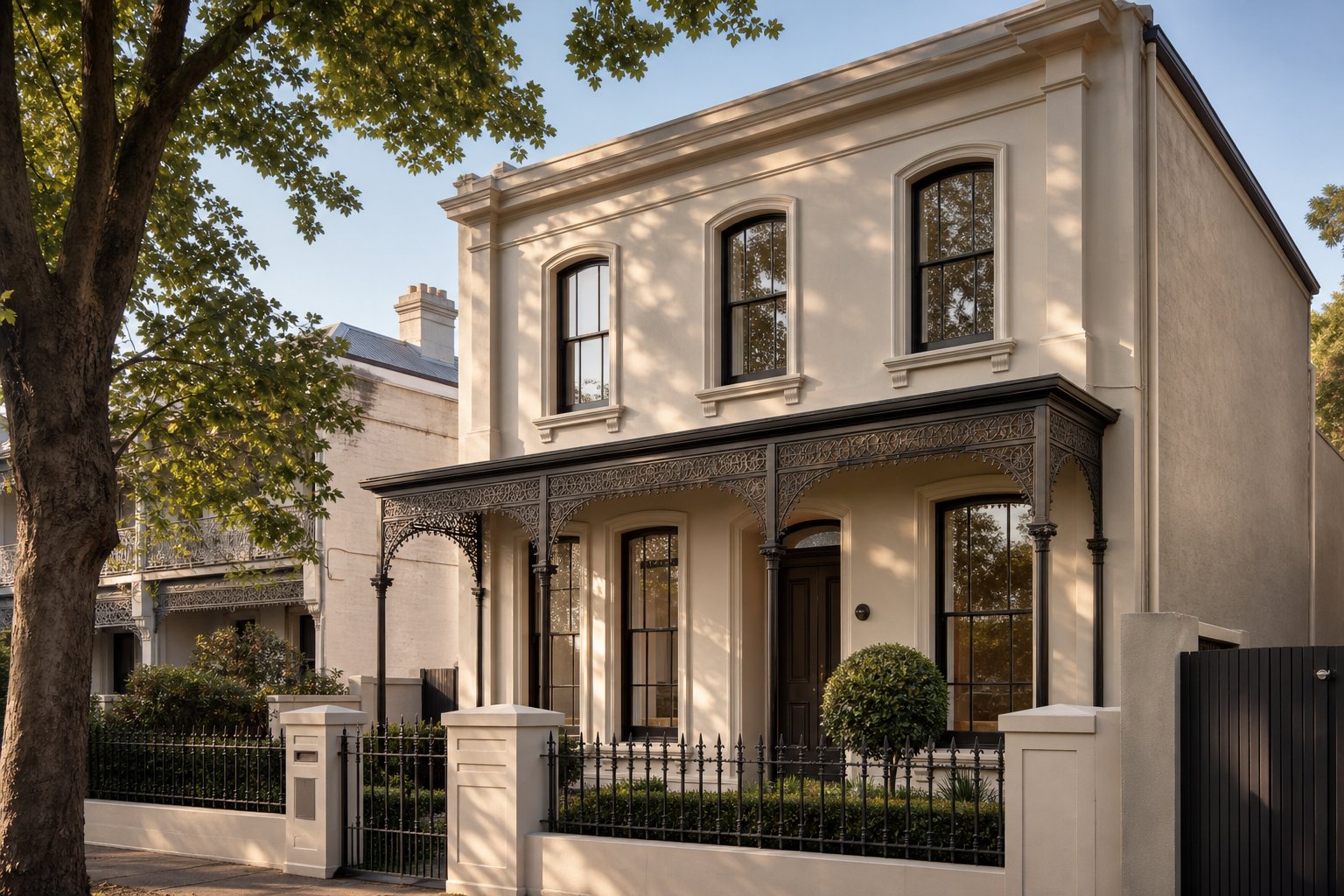
Planning controls catch Melbourne homeowners off guard more often than any technical specification. You can select the perfect frame colour, nail the glazing performance, and specify hardware that matches the era of your home, only to discover that your local council requires formal approval before a single window gets replaced. For properties within heritage overlay zones, and that covers approximately 85% of period homes across inner-city suburbs, the permit process adds a layer of complexity that demands early attention.
Three distinct planning overlays influence window replacement decisions in Melbourne. A Heritage Overlay (HO) applies to individually significant buildings or entire precincts and is the most restrictive. A Neighbourhood Character Overlay (NCO) protects the general feel of a streetscape without necessarily protecting individual buildings. A Design and Development Overlay (DDO) controls built form outcomes like height, setbacks, and sometimes materials. Each operates under different rules, and each affects how freely you can swap existing windows for new aluminium frames.
The most common stumbling point? Assuming that because you are replacing windows rather than building an extension, no approval is needed. That assumption leads to costly surprises, stop-work notices, and in some cases, orders to remove non-compliant installations entirely.
Understanding Melbourne’s Heritage Overlay Zones
Heritage overlays form part of local planning schemes under Clause 43.01 of the Victorian Planning Provisions. They exist to protect buildings and precincts with historical, architectural, or cultural significance. In practical terms, they mean most external changes visible from the street require a planning permit before work begins.
Checking your property’s status is straightforward. The Victorian Government’s VicPlan online mapping tool shows overlay boundaries across every municipality. Your local council’s planning scheme maps offer the same information with additional detail about individual property gradings. Properties within a Heritage Overlay typically receive one of two classifications:
- Contributory — The building contributes to the character of the heritage precinct. External changes must respect the existing architectural language.
- Non-contributory — The building sits within a heritage precinct but does not itself hold heritage value. Controls are less restrictive, though new work should still be sympathetic to the surrounding streetscape.
For contributory properties, replacing windows in heritage listed homes in Melbourne triggers planning permit requirements almost universally when the windows face the street. Rear windows or those not visible from the public realm often fall under more relaxed controls, and some councils treat like-for-like replacement of deteriorated windows with matching materials as exempt. The key word is “matching.” Swapping original timber double-hung windows for a standard aluminium slider does not qualify as like-for-like, regardless of colour.
Council heritage advisers assess applications against established criteria: does the proposed change maintain the significance of the place? Does it respect original proportions, materials, and detailing? Does it preserve the streetscape character? Understanding these questions before you lodge an application shapes a stronger submission and a faster approval timeline, which typically runs 4 to 12 weeks for properly documented proposals.
Aluminium Solutions for Heritage Properties
Aluminium gets a bad reputation in heritage circles, mostly because early aluminium windows from the 1970s and 1980s used chunky profiles that bore no resemblance to traditional timber proportions. Those frames looked obviously modern and broke the visual rhythm of period streetscapes. Modern aluminium technology tells a different story.
Heritage compliant aluminium window frames achieve approval by replicating the sightlines, proportions, and detailing of original timber windows. Slim-profile aluminium systems now match the face widths of traditional double-hung timber frames, meaning the visual weight of the window appears consistent with the era of the building. Applied or integrated glazing bars recreate the divided-lite patterns characteristic of Victorian and Edwardian windows, producing an appearance that reads as traditional from street level while delivering modern thermal and acoustic performance behind the facade.
Several approaches satisfy heritage requirements depending on council expectations:
- Full aluminium with heritage proportions — Custom slim profiles with traditional sash divisions and heritage-appropriate powder coat colours like dark bronze or antique white. Suits precincts where councils accept modern materials provided proportions are correct.
- Timber sub-frame with aluminium outer sash — The visible interior frame remains timber to match existing architraves and reveals, while the external weather-facing components use aluminium for durability. This hybrid approach satisfies councils that insist on timber visibility from inside while gaining aluminium’s maintenance advantages externally.
- Aluminium core with timber cladding — An aluminium structural frame wrapped in timber profiles externally. Provides genuine timber appearance with aluminium strength and weather resistance beneath.
Colour selection plays a significant role in heritage acceptance. Period-appropriate tones, creams, heritage greens, deep reds, and timber-look finishes, demonstrate intent to respect the building’s character. Specifying a contemporary charcoal or black frame on a Victorian terrace’s street-facing elevation will likely trigger objections from council heritage advisers regardless of how slim the profile is.
Building Permits vs Planning Permits
Confusion between these two approvals causes more delays than any technical specification issue. They are separate instruments issued by different authorities for different purposes, and replacing windows may require one, both, or neither depending on your property and scope of work.
A planning permit addresses land use and aesthetics. It is issued by your local council and governs whether the proposed change is appropriate for its context. Heritage overlays, neighbourhood character controls, and design guidelines all sit within the planning permit framework. If your property has an overlay and the windows face the street, you almost certainly need a planning permit for a window replacement.
A building permit addresses structural safety and compliance with the National Construction Code. It is issued by a registered building surveyor, either municipal or private, and certifies that the proposed work meets technical requirements. For windows, this means compliance with AS2047 (performance of windows and external glazed doors) and AS1288 (glass in buildings). The building permit ensures your new windows will resist the wind loads, water penetration, and structural stresses they will face in service.
Critical sequencing applies here: a building permit cannot be issued until any required planning permit is obtained. Starting the building permit process before securing planning approval wastes time and money if the council subsequently requires design changes.
Not every window replacement triggers a building permit. Minor alterations, where you are replacing like-for-like within an existing opening without changing the structural support, may fall under exemptions in the Building Regulations 2018. However, if you are changing the size of an opening, removing structural supports, or installing windows with different performance requirements, a building permit is needed. Your building surveyor can confirm which scenario applies to your project.
For homeowners navigating a window replacement planning permit in Melbourne, the practical sequence looks like this:
- Check overlay status via VicPlan or your council’s planning maps
- Contact council’s planning department or heritage adviser for preliminary advice
- Engage a heritage architect or experienced window supplier who understands heritage requirements
- Prepare and lodge the planning permit application with supporting documentation
- Receive planning approval (typically 4-12 weeks)
- Appoint a building surveyor and apply for a building permit if required
- Proceed with manufacture and installation once all permits are in hand
Skipping step one is where most problems start. A five-minute check on VicPlan can save months of back-and-forth and prevent the costly scenario of installing non-compliant windows that council later requires you to remove. The permit process adds time and cost to a project, but it also protects the streetscape character that contributes to your property’s value in the first place.
Heritage and planning considerations define what your windows can look like from the outside. The next question many homeowners face is a more technical one: should the frames themselves be residential-grade or commercial-grade, and does the distinction actually matter for a house?
Commercial Grade vs Residential Grade Frames
It does matter, and the distinction is more than marketing language. Residential and commercial aluminium window systems are engineered to different structural thresholds, tested to different load parameters, and built with different hardware expectations. Most Melbourne homes sit comfortably within residential-grade territory, but certain situations demand the heavier engineering of a commercial system. Knowing where that line falls prevents both under-specifying, which risks failure, and over-specifying, which wastes money.
Frame Profile Differences Explained
The aluminium window frame thickness comparison between residential and commercial systems starts at the extrusion itself. Residential profiles typically use wall thicknesses between 1.2 mm and 1.6 mm, with frame depths ranging from 45 mm to 65 mm depending on the window type and manufacturer. Commercial profiles step up to wall thicknesses of 1.6 mm to 2.0 mm or greater, with frame depths often exceeding 75 mm.
That extra metal translates directly into structural capacity. Thicker walls resist deflection under wind load, support heavier glass panels, and span wider openings without flexing. Corner joining methods also differ. Residential frames commonly use crimped or screw-fixed mitre joints, which are efficient to manufacture and perfectly adequate for standard openings. Commercial frames typically employ welded or mechanically joined corners with additional reinforcement brackets, producing joints that resist higher torsional forces over longer service lives.
Glass thickness capacity follows the same logic. A residential frame designed for 5 mm single glazing or a standard insulated glass unit (IGU) of around 20 mm total thickness cannot accommodate the 28 mm to 40 mm thick IGUs sometimes needed for high-performance acoustic or thermal glazing. Commercial frame depths provide the rebate space for these heavier, thicker glass packages without compromising seal engagement or drainage.
When to Specify Commercial Grade for Your Home
Most Melbourne houses do not need commercial grade aluminium windows for residential use. Standard residential systems handle typical window sizes, moderate wind zones, and normal usage loads without issue. But several scenarios push a home beyond what residential engineering safely covers:
- Large openings — Floor-to-ceiling glazing, picture windows wider than 2.4 metres, or feature panels that exceed the spanning capacity of residential profiles. The glass weight alone in a 3-metre-wide double-glazed fixed panel demands a frame that will not bow over time.
- High-wind sites — Exposed hillside homes in areas like Mount Dandenong, elevated coastal positions, and upper storeys above three levels face wind pressures that exceed residential frame ratings. Commercial systems tested to higher Pascal values provide the structural margin these sites require.
- Acoustic performance — Homes near arterial roads, tram routes, or rail corridors benefit from acoustic rated aluminium windows that use thicker laminated glass in wider IGUs. These heavier glazing packages need commercial-depth frames for proper support and seal compression. For properties fronting Melbourne roads carrying heavy traffic, the noise reduction difference between a residential and commercial acoustic system can exceed 10 dB, which is perceptible as a halving of loudness.
- Upper-storey installations — Building code requirements for fall prevention, combined with increased wind exposure at height, often push upper-level specifications into commercial territory regardless of opening size.
Upgrading to commercial-grade frames adds cost, typically 25% to 40% more than equivalent residential profiles. Where the upgrade addresses a genuine performance need, it represents good value. Where it is specified across an entire house simply because one or two openings demanded it, the cost escalates without proportional benefit. A practical approach uses commercial frames only where structural calculations, wind ratings, or acoustic requirements dictate, and residential frames everywhere else.
AS2047 Compliance and What It Means
Both residential and commercial aluminium windows sold in Australia must comply with AS2047: Windows and External Glazed Doors in Buildings. This Australian Standard governs structural performance, water penetration resistance, air infiltration limits, and operating force. It applies equally regardless of frame grade; the difference lies in what performance level each product achieves within the standard’s framework.
AS2047 testing subjects windows to simulated wind pressures, water spray under pressure, and cyclic loading that replicates years of real-world use. Each tested product receives certified ratings expressed in Pascals for wind resistance and water penetration. A window rated to 2000 Pa wind resistance suits a sheltered suburban site, while an exposed hillside might demand 3000 Pa or higher. The standard does not prescribe whether a product must be residential or commercial grade; it simply certifies what the product can withstand.
For Melbourne homeowners, AS2047 compliant windows matter for three practical reasons. First, non-compliant windows cannot legally be installed under the National Construction Code, meaning your building surveyor will reject them at inspection. Second, insurance claims relating to water damage or storm failure may be denied if the installed windows lack certification for their site conditions. Third, at resale, a building inspection that identifies non-compliant windows becomes a negotiation point that reduces your property’s value or delays settlement.
Every compliant window carries a performance label, typically affixed to the inside of the frame or head, showing its tested wind and water ratings. A certificate of compliance from the manufacturer, ideally backed by testing through a NATA-accredited laboratory and verified by the Australian Glass and Window Association (AGWA), provides the documentation trail that satisfies building surveyors and insurers alike. Asking to see this paperwork before accepting delivery is not being difficult; it is basic due diligence.
| Metric | Residential Grade | Commercial Grade |
|---|---|---|
| Frame Depth | 45 mm – 65 mm | 75 mm – 125 mm |
| Maximum Span | Up to ~2.4 m (dependent on type) | 3 m+ for fixed panels; wider for sliding |
| Wind Rating | Suitable for N1–N3 (low to moderate exposure) | N3–N6 and beyond (high exposure sites) |
| Acoustic Rating | Rw 25–32 (standard glazing) | Rw 35–45 (laminated/thick IGU packages) |
| Typical Application | Houses, townhouses, low-rise apartments | Large openings, high-rise, road-facing, exposed sites |
Matching the frame grade to your site’s actual demands rather than defaulting to the cheapest or most expensive option ensures you pay for performance where it counts. The grade decision feeds directly into project planning, where the practical differences between renovating existing openings and specifying for a new build shape timelines, budgets, and installation approaches in ways that catch first-time buyers off guard.
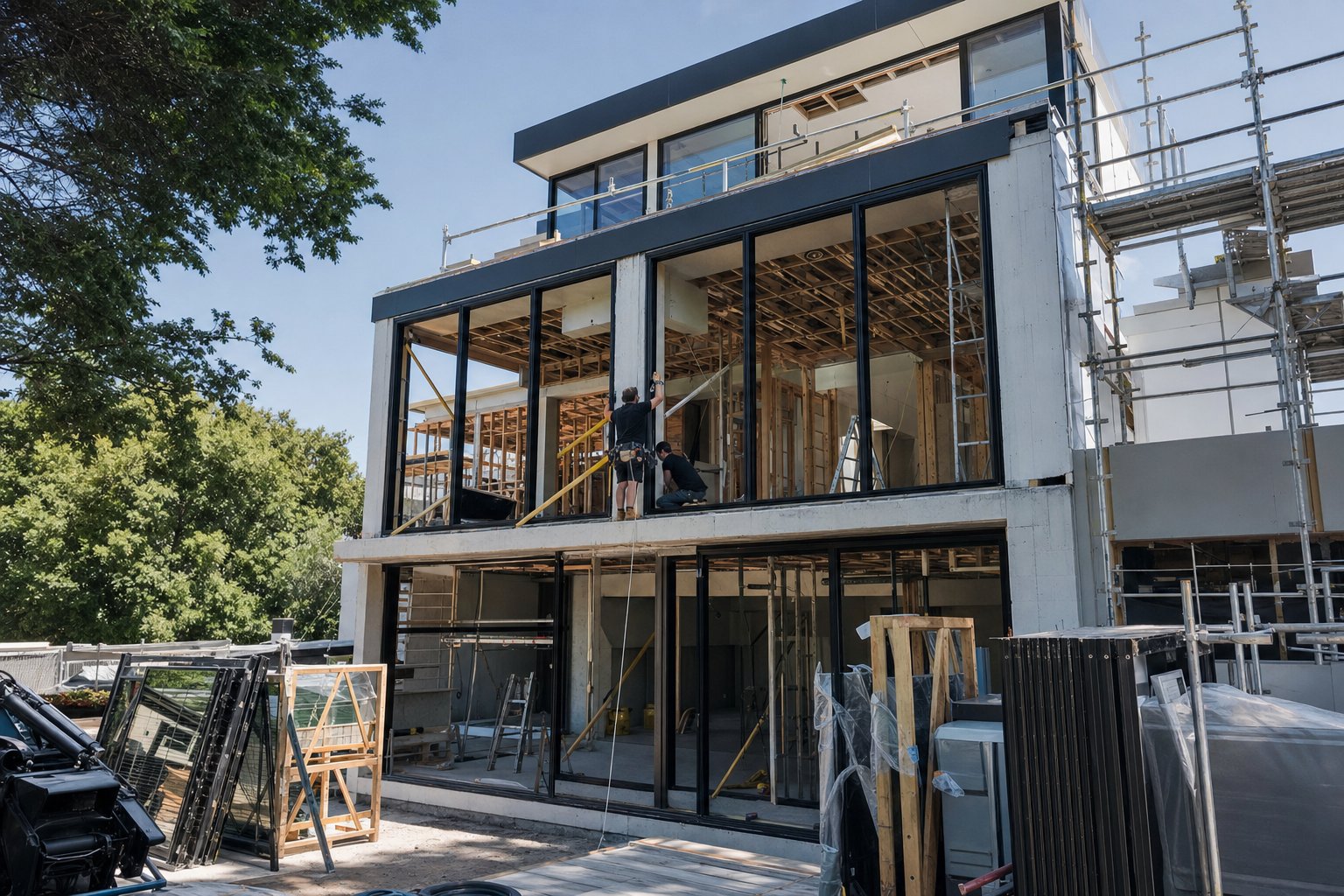
Planning Your Window Project from Start to Finish
Renovation and new construction might end up with the same aluminium windows installed, but the journey to get there looks completely different. The constraints change, the sequencing changes, and the potential for costly surprises shifts dramatically depending on whether you are working with existing openings or designing them from scratch. Understanding these differences early shapes realistic budgets, accurate timelines, and far fewer mid-project headaches.
Replacing old windows with aluminium in Melbourne typically means navigating structural unknowns, uneven reveals, and the challenge of integrating new frames with existing finishes. A new build offers the luxury of designing openings around optimal window sizes from the outset, eliminating most of the complications that renovation projects introduce. Neither path is inherently better, but each demands its own planning approach.
Renovation Challenges and Solutions
An aluminium window replacement during a Melbourne renovation is not as simple as pulling the old frame out and sliding a new one in. Existing openings carry decades of settlement, structural movement, and accumulated tolerance drift. What reads as 900 mm wide on an old plan might measure 903 mm on one side and 897 mm on the other when a laser level hits the reveal. Older Melbourne homes, particularly brick veneer from the 1950s through 1970s and weatherboard properties from earlier periods, are notorious for openings that have shifted out of square over time.
Two primary installation methods address this reality:
Reveal-fit (or insert) installation places the new aluminium frame directly into the existing structural opening after removing the old window. The new frame sits inside the masonry or timber reveal and is shimmed, packed, and anchored to achieve level and plumb regardless of what the opening itself is doing. This method preserves existing external render, brickwork, or cladding around the opening. It is less invasive, faster, and often more cost-effective because external finishes do not need repair. The trade-off is a slightly reduced glass area compared to the original, since the new frame must fit within the existing opening dimensions rather than flush against the structural edge.
Face-fit (or full-frame replacement) removes the old window and any existing sub-frame entirely, then installs the new aluminium frame against the structural face of the wall. External flashings, reveals, and often internal plaster need making good after installation. This method delivers the maximum glass area and allows the installer to address any deterioration in the surrounding structure, waterproof membranes, or cavity drainage that a reveal-fit would simply conceal. It is the appropriate choice when existing frames show structural compromise, moisture damage, or when the homeowner wants to change the opening size.
Older Melbourne homes present unique challenges beyond out-of-square openings. Brick veneer walls with deteriorated weep holes may require remediation before new windows go in, or moisture problems will simply reappear around the new frame. Weatherboard homes sometimes reveal rotted framing timbers once the old window comes out, requiring carpentry repairs before the aluminium frame can anchor properly. Double-brick homes, common in Melbourne’s inner and middle suburbs, demand masonry anchoring rather than timber-frame fixing, and the installer needs appropriate masonry fixings and an understanding of cavity wall construction.
Managing internal and external finishing is the renovation variable that blows budgets when homeowners do not anticipate it. Removing a face-fit window means disturbing internal plaster, skirting, and sometimes architraves. Externally, render or brickwork around the opening may need patching. Budget for a plasterer, painter, and possibly a renderer when specifying face-fit replacement; these allied trades are part of the window installation process even though they are not part of the window quote.
Matching new aluminium windows to existing frames elsewhere in the home adds another consideration. If you are replacing windows in stages, the new frames need to use the same profile system, colour, and hardware as future stages to avoid a patchwork appearance. Confirming that your chosen supplier can guarantee profile and colour availability over your staged timeline prevents the frustrating scenario of mismatched windows on the same facade.
New Build Specification Process
New construction eliminates most renovation headaches by designing openings around the windows rather than forcing windows into existing holes. Architects and designers can optimise opening widths and heights to align with standard or efficient manufacturing sizes, reducing waste and cost while maximising performance. This is the single biggest advantage of a new build aluminium window installation: every opening exists to serve the window, not the other way around.
The specification journey moves through defined stages. It begins with architectural drawings that establish opening sizes, orientations, and performance requirements. At this point, decisions about frame grade, glazing type, and colour should be locked in because they affect structural design, lintel sizing, and NatHERS energy modelling. Changing window specifications after structural design is finalised cascades into rework across multiple disciplines.
Shop drawings follow. These are manufacturer-produced technical drawings that translate architectural intent into fabrication detail. They show exact frame dimensions, hardware locations, glazing thicknesses, seal positions, and how the window interfaces with the surrounding structure. For multi-dwelling developments, shop drawings typically require engineer sign-off before manufacture begins, confirming that the proposed system meets wind load, water penetration, and structural adequacy requirements for the specific site. Single residential homes may not require formal shop drawings depending on the manufacturer and building surveyor, but reputable suppliers still produce them as part of their quality assurance process.
Suppliers like MEICHEN offer custom configuration options across their aluminium window range, with multiple glazing choices and project-based supply for Melbourne residential and commercial builds. This type of end-to-end capability, from specification through manufacturing to delivery coordinated with your build schedule, simplifies the process compared to managing separate suppliers for frames, glass, and hardware independently.
Once shop drawings are approved, manufacturing lead times typically run four to eight weeks depending on complexity, colour, and current demand. Scheduling delivery to align with your build program matters. Windows arrive after the frame is up, roof is on, and external cladding is at least partially installed, but before internal lining begins. Arriving too early means storing vulnerable glass on a construction site. Arriving too late holds up plasterers and painters waiting to finish around the frames.
Installation Timeline Expectations
The window installation process for Melbourne homes varies depending on project scale, access conditions, and whether the work involves replacement or new-build fit-out. A straightforward replacement of five to eight windows in a single-storey house typically takes two to three days from removal through to sealing and clean-up. Larger projects, whole-house replacements of fifteen or more windows, or multi-storey installations with scaffold requirements can extend to a week or more.
Weather affects scheduling. Melbourne’s unpredictable rain and wind mean that window installers cannot always work to fixed dates. Open wall cavities exposed during removal are vulnerable to water ingress, so experienced installers plan around weather forecasts and have temporary protection measures ready. Summer and autumn tend to offer the most reliable installation windows, while winter projects need more contingency built into the program.
Access conditions also shape the timeline. Ground-floor windows on a single-storey home with clear perimeter access are fast. Upper-storey windows requiring scaffolding, windows behind established gardens or fencing, or openings accessible only through internal rooms all add handling time. Discuss access specifics with your installer during the quoting phase so their timeline reflects reality rather than assumptions.
The typical project sequence from initial enquiry through to final handover follows a logical progression:
- Initial enquiry and preliminary discussion of scope, style, and performance requirements
- On-site measure by the supplier or installer, capturing exact opening dimensions and noting site-specific conditions
- Quotation and specification review, including frame grade, glazing type, colour, and hardware selections
- Order confirmation and deposit, locking in manufacturing slot
- Manufacturing period (typically four to eight weeks for custom aluminium windows)
- Delivery scheduling aligned with site readiness and weather outlook
- Removal of existing windows (renovation projects) or preparation of openings (new builds)
- Installation, levelling, anchoring, and preliminary sealing of new frames
- Glazing installation and hardware fitment
- Internal and external finishing, flashings, trims, and final weather sealing
- Final inspection, operation check of all opening sashes, lock testing, and project handover
Preparing your home before installation day reduces disruption. Remove curtains, blinds, and any furniture within a metre of the windows being replaced. Cover floors beneath openings with drop sheets if the installer has not already arranged this. Clear external access paths so installers can move frames in without navigating obstacles. For occupied homes, discuss with your installer which rooms will be exposed during the process and plan accordingly for weather protection and security overnight if the project spans multiple days.
The difference between a project that runs smoothly and one that stalls often comes down to decisions made weeks before the first frame arrives on site. Supplier capability, lead time accuracy, and clear communication about site conditions all feed into timeline reliability. Which brings up the final and arguably most consequential decision in the entire process: selecting the supplier who will actually deliver on the specification you have worked so hard to get right.
Choosing the Right Aluminium Window Supplier
A technically sound specification means nothing if the supplier behind it cannot deliver accurately, on time, and with proper documentation. The best aluminium window supplier in Melbourne is not necessarily the one with the lowest price or the flashiest showroom. It is the one whose capabilities align with your project’s complexity, whose certifications hold up under scrutiny, and whose communication keeps the project moving rather than stalling it.
Melbourne’s window market includes manufacturers who sell direct, glaziers who fabricate from bought-in extrusions, dealers who resell branded systems, and builders who bundle windows into an overall construction contract. Each model has implications for pricing, accountability, and how much control you retain over the final specification. Understanding where your supplier sits in that chain helps you ask the right questions before money changes hands.
What to Look for in a Melbourne Window Supplier
Supplier evaluation starts with non-negotiable credentials and works outward toward capability and fit. MEICHEN, for example, offers a full aluminium window range with custom configurations, extensive colour options, and project-based supply for Melbourne homeowners, builders, and architects. That combination of customisation depth and supply flexibility represents the type of capability you should be benchmarking other suppliers against. Not every supplier offers the full chain from specification support through manufacturing to coordinated delivery, and gaps in that chain create gaps in accountability.
The critical evaluation criteria break down as follows:
AS2047 certification and testing documentation. Every aluminium window installed in Australia must comply with AS2047. But compliance exists on a spectrum. Some suppliers hold current NATA-accredited test reports for their specific products. Others reference generic system testing done by their extrusion supplier years ago. The difference matters. Ask to see the test report that applies to the exact window type, size, and configuration you are ordering. As industry guidance from Paarhammer emphasises, there is genuine risk to builders and architects from falsified or non-existent test reports, or suppliers quoting a different standard than the one that applies.
Warranty structure. Look beyond the headline number. A ten-year warranty sounds generous until you read the fine print and discover it covers only the powder coat finish, not the IGU seal, hardware, or installation workmanship. A strong warranty should cover the frame, glass unit integrity, hardware operation, and powder coat finish as separate line items with clearly stated terms. Coastal properties should confirm whether the warranty applies in marine environments, as some standard warranties exclude salt spray zones unless marine-grade coatings were specified.
Customisation range. Can the supplier produce the exact colour, glazing configuration, hardware package, and frame profile your project requires? Suppliers with limited ranges force you to compromise on specification. Those offering full powder coat colour libraries, multiple glazing options from single through to triple, and hardware upgrades including multipoint locking and restricted stays give you the freedom to specify what each opening actually needs rather than settling for what is available off the shelf.
Lead time reliability. A quoted lead time is only useful if it holds. Ask the supplier about their current manufacturing schedule, how they handle delays, and what their on-time delivery rate looks like. Four to eight weeks is typical for custom aluminium windows in Melbourne, but seasonal demand spikes through spring and summer can push this out without warning if you have not locked in your manufacturing slot early.
Scope of service. Does the supplier handle measurement, manufacturing, and installation, or only one part of the process? A manufacturer-direct supplier who measures, fabricates, and installs carries full accountability for the finished result. If anything goes wrong, there is one phone number to call. Split arrangements, where a glazier measures, a separate manufacturer builds, and a third party installs, create finger-pointing opportunities when problems surface. Neither model is inherently superior, but you need to understand who is responsible for what before signing.
- Can you provide current AS2047 test reports specific to the window type and configuration I am ordering?
- Will I receive a Window Compliance Certificate at project completion?
- What does your warranty cover specifically: frame, IGU, hardware, powder coat, and installation?
- Does the warranty apply in marine or coastal environments?
- What is your current manufacturing lead time, and how do you communicate delays?
- Do you handle measurement, manufacturing, and installation, or is any part subcontracted?
- Can you supply thermally broken frames and double-glazed IGUs with Low-E coatings and argon fills?
- What powder coat colour range is available, and are custom colours possible?
- Do you have experience with heritage overlay compliance and council submissions?
- Can you provide references from recent Melbourne projects of similar scope?
Comparing Quotes Effectively
Price comparison without specification comparison is meaningless. Two quotes for the same house can differ by 30% or more while both being fair reflections of what is offered, simply because they include different products. The cheapest quote often reflects thinner glass, basic hardware, a narrower colour selection, or an installation scope that excludes finishing and disposal of old frames. Comparing headline numbers without reading the detail behind them is how homeowners end up with windows that underperform and a project that costs more in the long run.
To compare window quotes in Melbourne effectively, strip each proposal back to its component specifications and line them up side by side:
| Specification Element | What to Confirm in Each Quote |
|---|---|
| Frame grade | Residential or commercial? Wall thickness and profile depth? |
| Glazing type | Single, double, or triple? IGU thickness and cavity width? |
| Glass coatings | Clear, Low-E, tinted, laminated? Specific product named? |
| Gas fill | Air or argon? Stated in the quote or assumed? |
| Thermal break | Thermally broken or standard aluminium frame? |
| Hardware | Standard latch or multipoint locking? Key-lockable? |
| Powder coat | Standard range or premium? Marine-grade if coastal? |
| Flyscreens | Included or extra? Standard mesh or bushfire rated? |
| Removal and disposal | Old windows removed and taken off site, or left for you? |
| Installation finishing | Internal trims, external flashings, and sealing included? |
| Compliance documentation | Window Compliance Certificate provided at completion? |
Once specifications are aligned, genuine price differences become visible. A supplier quoting thermally broken double-glazed frames with argon fill, multipoint locks, and marine-grade powder coating will legitimately cost more than one quoting standard single-glazed frames with basic hardware. That is not a pricing discrepancy; it is a product difference. The goal is ensuring you are comparing like-for-like before deciding which supplier offers better value at equivalent quality.
Be wary of quotes that omit detail. A single line reading “supply and install 8 aluminium windows” without specifying frame system, glass makeup, hardware type, or colour tells you very little about what you are actually buying. Professional suppliers produce itemised schedules that document every opening with its dimensions, configuration, glazing specification, hardware, and colour. That level of detail protects both parties and eliminates disputes at delivery.
Taking the Next Step
Moving from research to action involves a handful of practical steps that set your project up for a smooth outcome. Start by shortlisting two or three suppliers whose capabilities match your project scope. For a straightforward residential replacement, a manufacturer-direct supplier with proven Melbourne experience and a full service offering from measure through installation covers most needs efficiently. For complex projects involving heritage overlays, commercial-grade requirements, or multi-dwelling developments, confirm that the supplier has specific experience delivering similar work.
Request an on-site measure rather than providing your own dimensions. Openings in existing Melbourne homes are rarely perfectly square, and a professional site measure captures the actual conditions your windows need to fit. This step also gives the supplier a chance to identify site-specific factors, access limitations, structural concerns, or finishing requirements, that affect both pricing accuracy and installation planning.
With detailed quotes in hand and specifications confirmed, the final decision balances capability, communication quality, and value. The supplier who responds clearly, documents thoroughly, and demonstrates genuine understanding of Melbourne’s climate demands, building codes, and architectural diversity is the one most likely to deliver a result that performs as promised for years after the last installer leaves site.
Frequently Asked Questions About Aluminium Windows in Melbourne
1. Are aluminium windows good for Melbourne’s climate?
Aluminium windows suit Melbourne’s climate well due to their corrosion resistance, structural strength, and ability to handle wide temperature swings without warping. However, performance depends heavily on correct specification. Coastal suburbs require marine-grade powder coating to resist salt spray, while outer suburbs in bushfire-prone areas need BAL-rated configurations. Pairing aluminium frames with thermally broken profiles and double glazing addresses both summer heat gain and winter heat loss across Melbourne’s NatHERS climate zone 60, helping homes meet the mandatory 7-star energy rating for new builds and major renovations.
2. How much do double glazed aluminium windows cost compared to single glazed in Melbourne?
Double glazed aluminium windows carry a higher upfront cost than single glazed alternatives, though the exact difference depends on frame grade, glass coatings, gas fills, and whether thermally broken profiles are specified. The investment pays back through reduced heating and cooling bills, less condensation damage to interior finishes, and improved acoustic comfort, particularly for homes near busy Melbourne roads or flight paths. When comparing quotes, ensure both options specify the same frame system, hardware, and installation scope to see the true price difference rather than comparing different product levels.
3. Do I need a planning permit to replace windows in Melbourne?
Whether you need a planning permit depends on your property’s overlay status. Homes within a Heritage Overlay (HO), which covers roughly 85% of period homes in inner Melbourne suburbs, typically require a planning permit for street-facing window replacements. Properties in Neighbourhood Character Overlay or Design and Development Overlay zones may also trigger permit requirements. Check your property’s status on VicPlan before starting any work. Rear windows not visible from the public realm often face fewer restrictions, and like-for-like replacements may qualify as exempt alterations in some municipalities.
4. What is the best aluminium window colour for Melbourne homes?
Monument, a deep charcoal from the Colorbond palette, is currently the most specified dark frame colour across Melbourne for both contemporary and mid-century architecture. Surfmist suits coastal and Hamptons-style builds, while Woodland Grey works well with natural timber cladding and bush settings. Colour choice should account for more than aesthetics: darker frames absorb more solar radiation on north and west-facing elevations, neighbourhood character overlays may restrict options in heritage suburbs, and marine-grade powder coating is essential for bayside properties regardless of colour selected.
5. How long does aluminium window installation take in Melbourne?
A straightforward replacement of five to eight windows in a single-storey Melbourne home typically takes two to three days from removal through to sealing and clean-up. Larger whole-house replacements of fifteen or more windows, or multi-storey projects requiring scaffolding, can extend to a week or more. The full project timeline from initial enquiry to completion generally spans eight to fourteen weeks, accounting for on-site measurement, custom manufacturing (four to eight weeks), and installation scheduling around Melbourne’s unpredictable weather patterns.
More Window & Door Guides