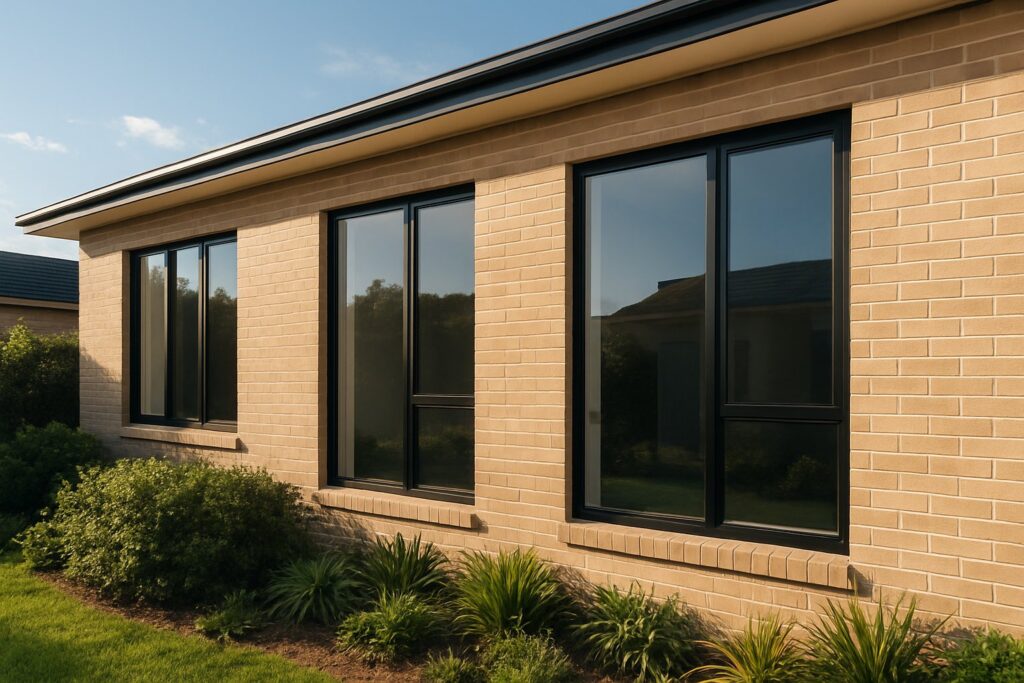
Why North Shore Homeowners Choose Aluminium Windows
Aluminium windows are window systems built around frames made from aluminium alloy, engineered to deliver natural light, ventilation, and weather protection without the bulk or maintenance burden of traditional materials. Across Sydney’s North Shore, they have become the dominant choice for both new builds and renovations, and the reasons go well beyond aesthetics.
Homeowners searching for aluminium windows near me in this part of Sydney face a unique set of environmental pressures: harbour salt air, intense UV, high humidity, and a housing mix that ranges from Federation terraces to contemporary glass-and-steel builds. Aluminium handles all of it. This guide walks through how these frames are constructed, which types suit which rooms, how they compare to alternatives, and what separates a quality installation from one that fails within a decade.
What Makes Aluminium a Preferred Frame Material
Three inherent properties make aluminium alloy stand apart for window applications. It is lightweight, which reduces structural load on walls and lintels. It resists corrosion naturally, forming a stable oxide layer that protects the underlying metal. And it is structurally strong relative to its weight, meaning frames can be made thinner while still supporting large glass panels and resisting wind loads.
These traits translate directly into practical benefits. Aluminium windows and doors require minimal upkeep compared to timber. They do not warp, rot, or attract termites. They accept powder-coated finishes in virtually any colour, and those finishes hold up under harsh sun without cracking or peeling. With a lifespan of 40 to 60 years when properly manufactured and installed, they outlast most competing materials by a wide margin.
Why North Shore Properties Benefit Specifically
The North Shore sits at the intersection of harbour, bushland, and suburban density. Lower North Shore suburbs like Neutral Bay, Cremorne, and Kirribilli feature heritage apartment blocks built between the 1920s and 1950s, many now undergoing careful renovation. The Upper North Shore leans toward larger family homes on established blocks, while pockets closer to the northern beaches cop direct coastal exposure.
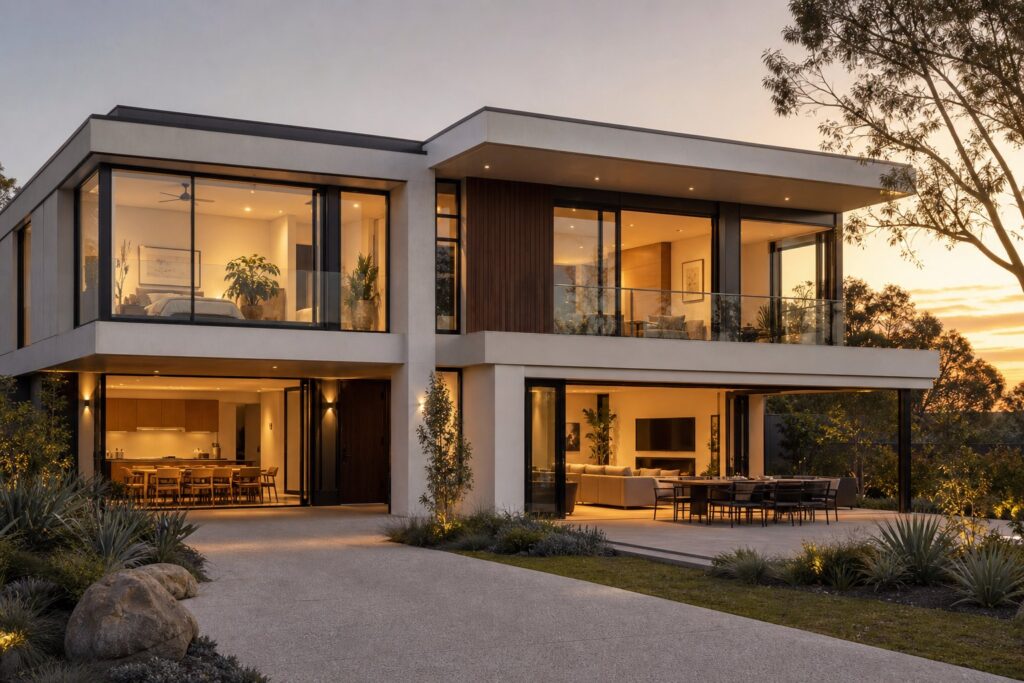
Each scenario demands something slightly different from a window frame, yet aluminium adapts across all of them. Heritage renovations benefit from slim profiles that replicate original steel-frame proportions. Modern harbourside builds exploit aluminium’s ability to span wide openings with minimal visual obstruction. And properties exposed to salt-laden winds rely on powder-coated aluminium’s proven corrosion resistance where timber would deteriorate within years.
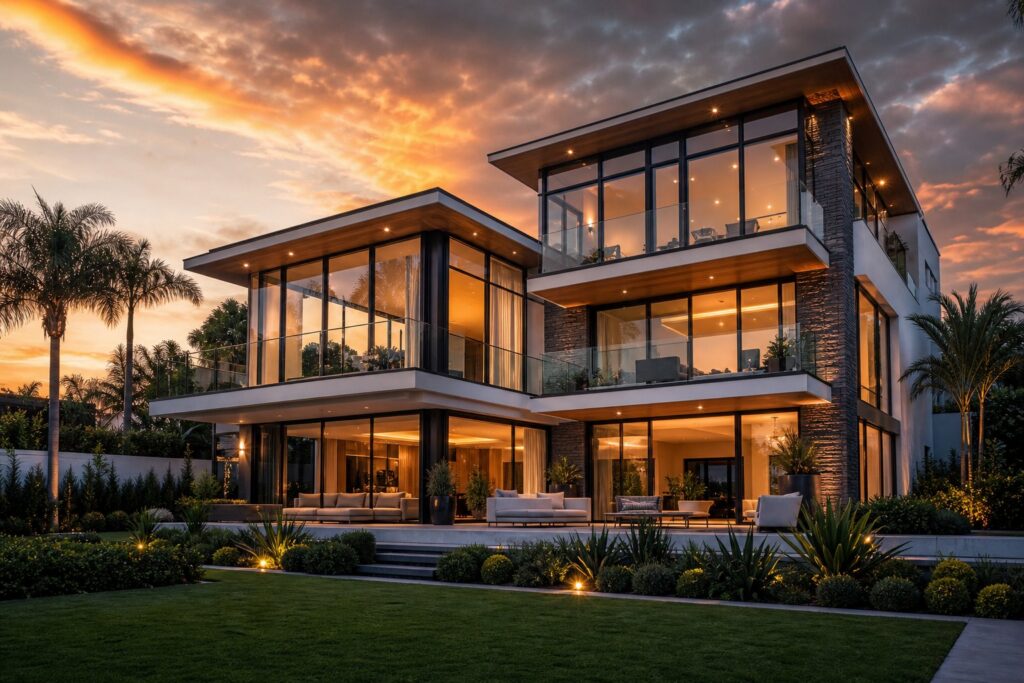
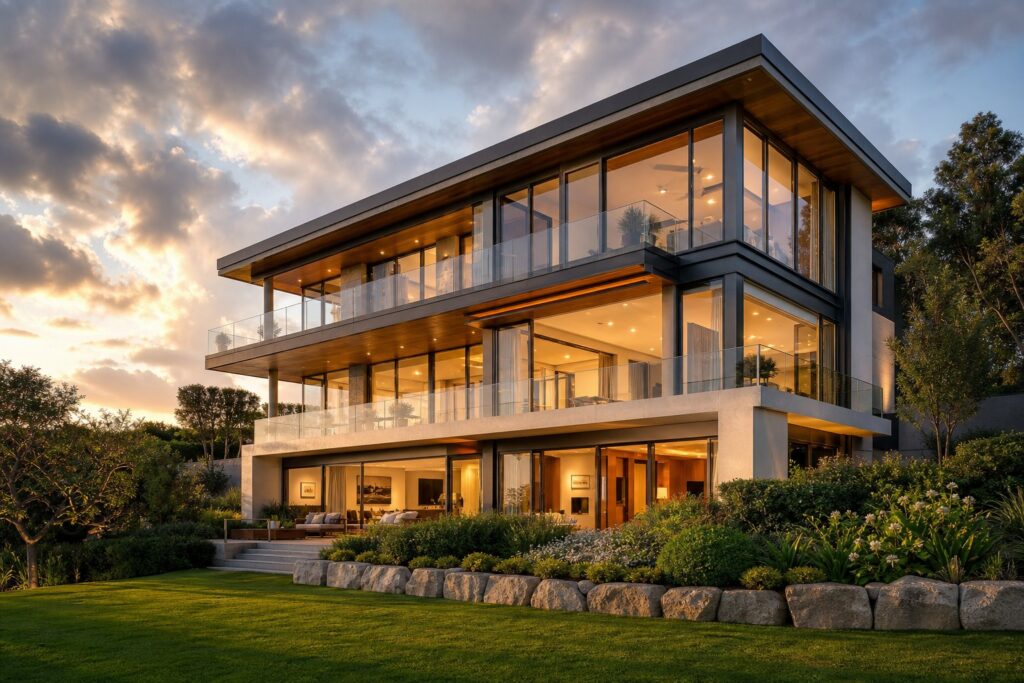
Aluminium’s strength-to-weight ratio allows frame profiles slim enough to nearly disappear, giving North Shore homes the maximum glass area needed to capture harbour views, garden outlooks, and natural light without compromising structural integrity.
That engineering advantage, however, only holds if the frame is designed and manufactured correctly. The difference between a window that lasts decades and one that corrodes, leaks, or rattles comes down to how the aluminium profile is extruded, what thermal technology sits inside it, and how its components work together as a system.
How Modern Aluminium Frames Are Engineered
Not every aluminium window is built the same way, and the gap between a well-engineered frame and a cheap one shows up fast in North Shore conditions. Salt air, UV, wind loads, and temperature swings expose weak points that matter little in a showroom but matter enormously on a harbour-facing wall. The difference starts at the manufacturing stage, long before the frame arrives on site.
Modern windows with aluminum frames begin life as cylindrical aluminium billets, typically made from 6063 alloy. This alloy is chosen for architectural applications because it combines good corrosion resistance with superior extrudability, meaning it flows smoothly through complex die shapes to produce intricate hollow profiles with consistent wall thickness. The extrusion process works by heating these billets to around 400-500°C until the metal becomes malleable, then forcing it through a precision-machined steel die under immense hydraulic pressure. The die’s opening determines the exact cross-sectional geometry of the frame profile, including internal chambers, thermal break cavities, and glazing channels.
Once extruded, the profiles are rapidly cooled, stretched to ensure straightness, and then heat-treated to develop their final strength properties. A T5 or T6 heat treatment temper transforms the soft extruded shape into a rigid structural component. T6-tempered 6063 alloy achieves a tensile strength of approximately 190 MPa, which is more than adequate for residential window spans while keeping profiles slim and lightweight. Cheaper products sometimes skip proper heat treatment or use thinner wall sections to cut costs, and those shortcuts show up as flex, poor seal compression, and premature hardware failure under North Shore wind loads.
Understanding Thermal Break Technology
Aluminium conducts heat efficiently. That property makes it ideal for cookware but creates a problem for window frames, where you want to stop thermal energy from passing between inside and outside. For decades, this conductivity was the main criticism levelled at aluminium windows. Thermal break technology solves it completely.
A thermal break is a continuous strip of insulating material, typically glass-fibre-reinforced polyamide, mechanically crimped between the interior and exterior aluminium sections of the frame. This strip physically separates the two halves so heat cannot bridge directly through the metal. The result is two independent aluminium profiles joined by a material that conducts heat 500 to 1,000 times less efficiently than aluminium itself.
The performance difference is significant. Non-thermally broken aluminium frames typically have U-values around 5.8-7.0 W/m²K, while basic thermally broken systems drop to 2.5-3.5 W/m²K and premium multi-chamber designs can reach 0.8-1.5 W/m²K. Lower U-values mean less heat transfer. For North Shore homes running air conditioning through summer and heating in winter, thermally broken frames reduce energy loss through the window frame itself, cut condensation risk on interior surfaces, and eliminate the cold zones that form near standard aluminium windows on cool mornings.
Thermal break width matters too. Standard residential systems use polyamide inserts between 15 mm and 24 mm wide. High-performance systems push to 35 mm or beyond. Wider breaks create longer thermal pathways and greater insulation, though they also require deeper frame profiles to accommodate them. For aluminum retrofit windows replacing old single-glazed frames in North Shore homes, thermally broken profiles paired with double glazing deliver a dramatic comfort improvement without altering the building’s external appearance.
Frame Profile Design and Sightline Impact
Sightline is the visible width of the frame when you look at the window from inside or outside. Narrower sightlines mean more glass and less frame, which translates to more natural light, better views, and a cleaner aesthetic. This matters particularly on the North Shore, where harbour panoramas, bushland canopy, and landscaped gardens are often the reason people buy into a suburb in the first place.
The engineering challenge is balancing slim visual profiles against structural capacity. A frame still needs to resist wind pressure, support the weight of double-glazed units, house hardware mechanisms, and accommodate weatherseals that keep water out. Aluminium’s high strength-to-weight ratio makes this possible at sightlines that timber and uPVC simply cannot match. Some contemporary aluminium systems achieve face widths under 25 mm on fixed panels, creating near-frameless glass walls.
Profile depth, measured from the exterior face to the interior face, determines how much engineering can be packed into the frame. Deeper profiles accommodate wider thermal breaks, larger glazing cavities for thicker insulated glass units, and more complex internal chamber geometry that adds rigidity without adding visible bulk. A quality frame is a carefully balanced system of interconnected components:
- Extrusion profile — the shaped aluminium sections forming the structural skeleton, engineered with internal chambers for strength and drainage
- Thermal break insert — polyamide strips separating interior and exterior aluminium to prevent heat conduction through the frame
- Weatherseals — compression seals (superior) or brush seals positioned at contact points to block air and water infiltration
- Glazing bead — the snap-in or screw-fixed profile that holds the glass unit securely within the frame
- Drainage system — weep holes and internal channels that direct any water penetration back to the exterior before it reaches the interior
Each component depends on the others. Poor seal compression from thin extrusion walls leads to water ingress. Blocked drainage channels cause pooling that accelerates corrosion on hardware. Inadequate thermal breaks allow condensation that degrades seals from the inside out. This is why the cheapest frames on the market tend to fail as a system rather than in a single point. They cut corners across multiple components simultaneously, and in the salt-air environment of the North Shore, those combined weaknesses compound quickly.
The variety of window types available in aluminium, from casement to bi-fold, each places different demands on profile engineering. How a frame performs depends not just on its material and thermal design, but on which opening configuration it supports and how well that configuration suits the room it serves.
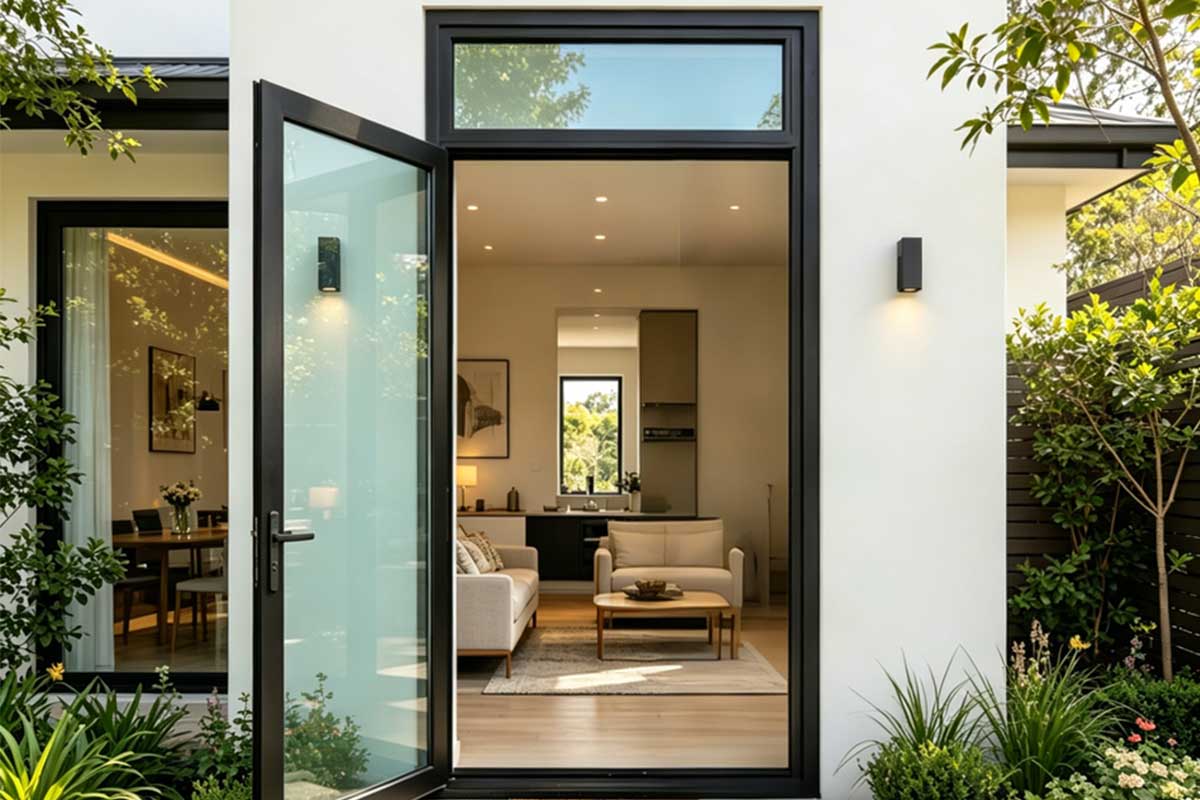
Aluminium Window Types and Their Best Applications
Every opening configuration puts different structural and weather-sealing demands on the frame profile discussed above. Choosing the right type for each position in a North Shore home is less about personal taste and more about matching the opening mechanism to the room’s ventilation needs, orientation, and exposure.
Casement, Awning, and Fixed Windows
Casement windows hinge at the side and swing outward, creating a full unobstructed opening. That makes them excellent for capturing cross-breezes in living rooms and bedrooms facing prevailing north-easterlies. Because the sash pushes out into the airstream, a casement effectively funnels wind into the room, delivering stronger ventilation than any sliding mechanism of the same size. On the North Shore, they work particularly well on upper-storey elevations where wind loads are higher; the compression seal created when the sash closes tight against the frame offers superior air and water resistance compared to sliding contact seals.
Awning windows hinge at the top and push outward from the base. Their genius lies in rain protection: you can leave them open during a shower without water entering the room. This makes them a natural fit for bathrooms, laundries, and any harbour-facing wall where sudden weather changes are common. Paired with fixed panels above or below, awning windows create clean horizontal sightlines while maintaining ventilation options.
Fixed windows do not open at all. They exist purely to maximise light and views with the slimmest possible sightlines and highest structural glazing capacity. North Shore homes with harbour panoramas or bushland outlooks often use large fixed panels as the centrepiece of a living area, flanked by operable casement or awning units to provide airflow when needed.
Sliding, Bi-Fold, and Louvre Windows
Sliding windows move horizontally on tracks, offering ventilation without any sash protruding into interior or exterior space. That space efficiency makes them ideal for bedrooms along boundary walls, kitchens where bench space sits below the sill, and anywhere an outward-opening sash would obstruct a pathway or balcony. Modern aluminium sliding systems use precision rollers and interlock weatherseals to overcome the air-infiltration issues that plagued older designs.
Bi-fold windows stack their panels to one side, creating a wide uninterrupted opening that connects indoor and outdoor zones seamlessly. A kitchen servery window that folds open onto an alfresco area is the classic example, turning a wall into a pass-through in seconds. Aluminium’s strength allows bi-fold panels to span generous widths without sagging or binding over time, which matters when the aluminium door and window system sees daily operation.
Louvre windows use a series of adjustable glass or aluminium blades angled within a frame. Rotating the blades controls exactly how much airflow enters and from which direction, while closed blades provide weather protection. They suit contemporary North Shore builds where precise ventilation control, privacy, and a distinctive street-facing aesthetic are all priorities. Bathrooms, stairwells, and elevated positions exposed to wind benefit most from louvre configurations.
Matching Window Types to Room Function
Selecting the right aluminium window and door configuration for each room means weighing ventilation volume against weather resistance, view maximisation against privacy, and opening size against available wall space. The table below summarises how each type performs across the criteria that matter most for typical North Shore properties:
| Type | Best Rooms | Ventilation Level | View Maximisation | Weather Resistance |
|---|---|---|---|---|
| Casement | Living areas, bedrooms, studies | High — full opening captures airflow | Good — unobstructed when open | Excellent — compression seal when closed |
| Awning | Bathrooms, laundries, kitchens | Moderate — partial opening | Good — clean horizontal lines | Excellent — rain protection while open |
| Fixed | Feature walls, stairwells, high panels | None | Maximum — slimmest frames, largest glass | Excellent — fully sealed unit |
| Sliding | Bedrooms, kitchens, tight spaces | Moderate — 50% opening | Good — minimal frame interruption | Good — relies on interlock seals |
| Bi-fold | Kitchens (servery), entertaining areas | Very high — full wall opening | Maximum when open, good when closed | Moderate — multiple seal points |
| Louvre | Bathrooms, stairwells, contemporary facades | Adjustable — fine control | Limited — blade obstruction | Good — angled blades shed water |
A well-planned North Shore home typically combines three or four of these types across its elevations. Living zones facing the harbour might pair large fixed panels with flanking casements. Bathrooms cop awning or louvre windows for moisture management. Bedrooms along side boundaries get sliders to avoid encroaching on neighbours. The configuration should respond to the specific site rather than defaulting to one type throughout.
Homeowners and project teams exploring specific aluminium window systems, including casement, sliding, awning, and bi-fold configurations, can view project-ready specifications at MEICHEN’s aluminium windows page to compare options suited to North Shore conditions.
Selecting the right type is only half the decision. The other half involves understanding how aluminium stacks up against competing frame materials, particularly when North Shore humidity, salt exposure, and bushfire risk enter the equation.
Aluminium vs Timber uPVC and Composite Frames
No single frame material wins on every criterion. Aluminium dominates coastal and bushfire-prone applications, but timber insulates better naturally, uPVC costs less upfront, and composite tries to split the difference. Understanding where each material excels and where it falls short is the only honest way to decide what belongs on a North Shore home.
Aluminium Compared to Timber Frames
Timber has an undeniable warmth. Its grain, texture, and depth of finish suit heritage homes across the North Shore, particularly Federation and Californian bungalow restorations where council heritage overlays may encourage sympathetic materials. Timber is also a natural insulator, performing well in cool climates without needing a thermal break.
The trade-offs, however, are substantial in this region. North Shore humidity, driven by proximity to the harbour and coastal air, accelerates timber degradation. Timber frames require regular sanding, resealing, and repainting every few years, and without consistent upkeep, they are vulnerable to rot, warping, and termite damage. Properties in leafy upper North Shore suburbs like Wahroonga and Turramurra sit squarely in termite-active zones, making timber a higher-risk proposition. For homeowners considering a metal window replacement to upgrade ageing timber frames, the maintenance savings alone often justify the switch to aluminium within a few years.
Aluminium answers these weaknesses with corrosion resistance, zero rot risk, and a powder-coated finish that holds its colour without recoating. Modern thermally broken aluminium systems also close the insulation gap that once gave timber a clear thermal advantage.
Aluminium Compared to uPVC and Composite
uPVC (unplasticised polyvinyl chloride) offers strong thermal insulation at a lower price point. Its thermal conductivity is roughly 1,000 times lower than aluminium’s, which means even without a thermal break, uPVC frames resist heat transfer effectively. Maintenance is minimal, and the material does not corrode in salt air.
Where uPVC falls short is structural. It lacks aluminium’s strength-to-weight ratio, so frames must be thicker and bulkier to achieve the same wind-load resistance. That extra bulk means wider sightlines, less glass, and a heavier visual presence on the facade. On sun-exposed North Shore elevations, lower-quality uPVC can discolour or warp under sustained UV, and once discolouration sets in, there is no practical way to restore the original appearance. Colour options are also more limited compared to aluminium’s extensive powder-coat palette.
Composite frames combine materials, typically a timber or uPVC core clad in aluminium, attempting to deliver interior warmth with exterior durability. They reduce maintenance compared to raw timber and offer better insulation than standard aluminium. The compromise sits in cost, which tends to be the highest of all four options, and availability, which remains more limited in the Australian market than in North America or Europe. For metal replacement windows in heritage settings where a timber interior finish is council-mandated but external durability matters, composite can be a sensible middle path.
Which Material Suits North Shore Conditions
The North Shore throws four specific challenges at window frames: salt-laden air from the harbour and coast, persistent humidity, intense UV on north and west elevations, and bushfire risk in upper suburbs bordering national park. Each material responds differently to these pressures.
| Criteria | Aluminium | Timber | uPVC | Composite |
|---|---|---|---|---|
| Cost Range (supply and install) | Mid | High | Low to Mid | High |
| Lifespan | 40-60+ years | 20-40 years (with maintenance) | 25-35 years | 30-50 years |
| Maintenance Level | Low — occasional wash | High — regular sealing, painting | Low — periodic cleaning | Moderate — exterior low, interior varies |
| Strength-to-Weight | Excellent — slimmest profiles | Moderate — bulkier for same span | Low — thickest profiles needed | Good — depends on core material |
| Design Flexibility | Extensive — any colour, slim or bold profiles | Good — natural finish or painted | Limited — fewer colours, prone to fading | Good — exterior aluminium palette |
| Coastal Suitability | Excellent — powder coat + marine hardware | Poor — accelerated rot and swelling | Good — naturally corrosion-resistant | Good — aluminium exterior protects |
| Bushfire Rating (BAL compliance) | Excellent — non-combustible | Limited — requires additional treatment | Poor — melts under radiant heat | Varies — depends on cladding material |
Timber wins on natural insulation and character. uPVC wins on upfront thermal performance per dollar spent. Composite wins when you need a timber interior appearance without external maintenance. But when the selection criteria are weighted toward longevity, slim aesthetics, low maintenance, and resistance to the combined assault of salt, humidity, UV, and fire risk that defines the North Shore, aluminium consistently comes out ahead as a system-level solution.
That system-level performance, though, only holds when the aluminium is specified correctly for the specific site conditions. A harbourside apartment in Mosman and a bushland property in St Ives face very different exposure profiles, and the finish, hardware, and compliance requirements shift accordingly.
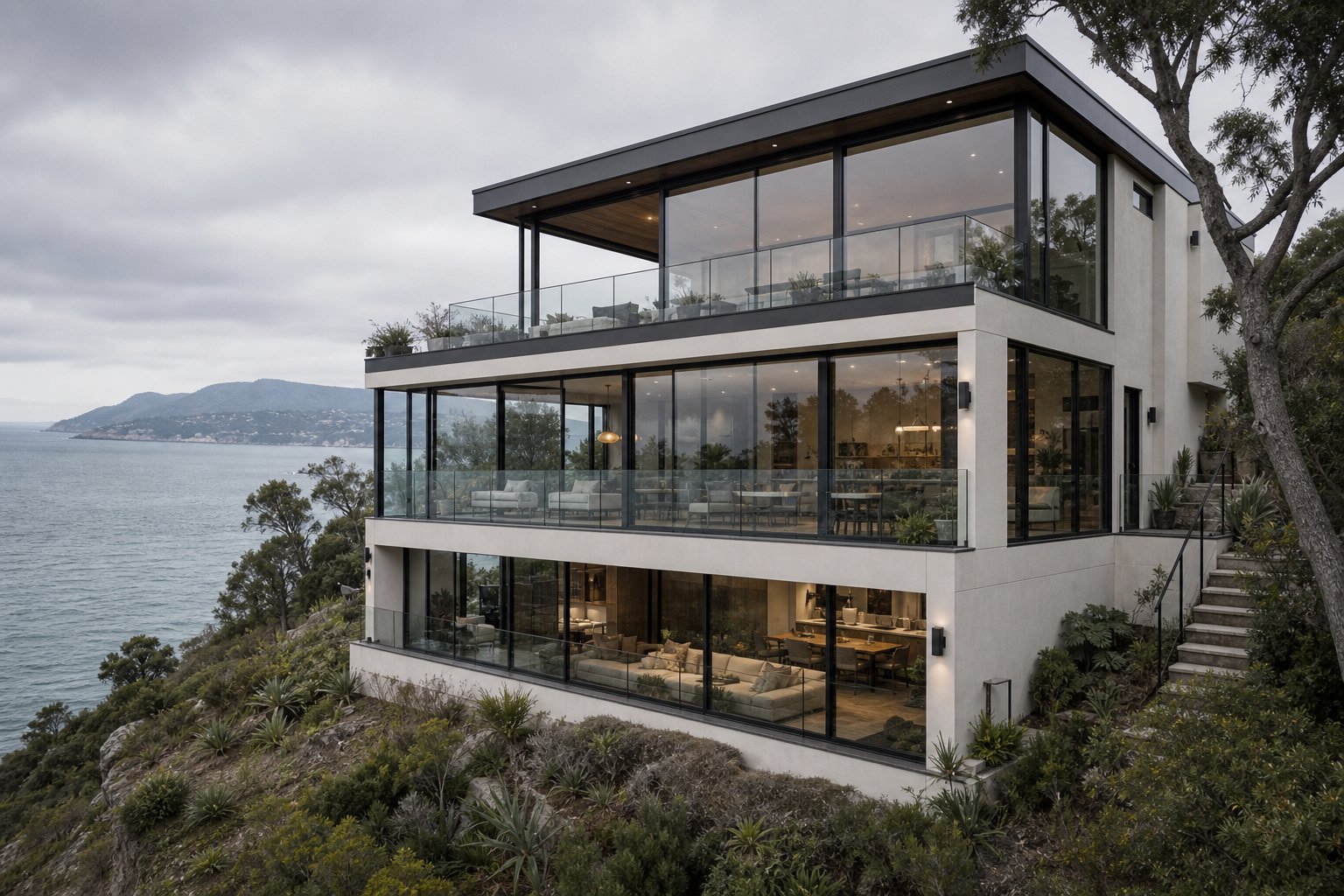
North Shore Climate and Coastal Performance Factors
Exposure profiles vary dramatically across even a few kilometres of the North Shore. A home in Cremorne Point sits barely 50 metres from harbour water, while a property in Pymble backs onto Lane Cove National Park with zero salt exposure but significant bushfire risk. Generic window specifications do not account for these differences, and that oversight is where failures begin.
Coastal and Harbour Proximity Challenges
Salt-laden air is the single most aggressive environmental factor for window frames in lower North Shore suburbs. Fine salt crystals carried by onshore breezes settle on frames, hardware, and tracks, attracting moisture and initiating corrosion that can appear in under 12 months on unprotected materials. Untreated or poorly coated aluminium develops white oxidation pitting, hardware seizes, and tracks grind to a halt.
Properly specified aluminium windows for North Shore coastal positions need three layers of protection working together. First, the powder coating itself must be rated to withstand salt-spray testing, meeting or exceeding the durability requirements of AS3715. Second, all hardware components — hinges, locks, rollers, and fasteners — should be 316-grade marine stainless steel rather than standard zinc-plated fittings that corrode within months of coastal exposure. Third, compression weatherseals rather than brush seals provide a tighter barrier against both salt-laden moisture and wind-driven rain.
Properties within 500 metres of the harbour or northern beaches shoreline sit in the most demanding exposure category. Beyond the frame finish, these homes benefit from seals rated for high UV resistance, since salt and sun together degrade rubber faster than either factor alone. Silicone-based compression seals outlast EPDM rubber in this combined assault, maintaining their elasticity and seal pressure for longer between service intervals.
Local Building Codes and BAL Ratings
While coastal suburbs battle salt, upper North Shore properties bordering bushland face a different compliance requirement: Bushfire Attack Level ratings. Suburbs like St Ives, Turramurra, and Wahroonga fall within designated bushfire-prone land, meaning any new window installation or renovation must meet the BAL rating assigned to the specific site. Ratings range from BAL-LOW through to BAL-FZ (Flame Zone), and each level dictates minimum requirements for frame materials, glazing type, and gap protection.
Aluminium holds a natural advantage here. As a non-combustible material, it satisfies NCC requirements at all BAL levels up to and including BAL-40 without modification. At BAL-FZ, additional measures like bushfire-rated seals and specific glazing configurations are required, but the frame material itself never becomes the limiting factor. Timber frames, by contrast, need chemical treatment or protective cladding to achieve even moderate BAL compliance, and uPVC fails entirely at higher ratings because it melts and deforms under radiant heat.
Heritage conservation adds another layer of regulation. North Sydney Council restricts changes to window openings on heritage items and buildings within conservation areas, meaning replacement frames often need to replicate original proportions and sightlines. Aluminium’s ability to achieve slim profiles that mimic original steel or timber window dimensions makes it one of the few modern materials that can satisfy both heritage appearance requirements and contemporary performance standards simultaneously.
Architectural Styles Across the North Shore
The North Shore is not architecturally homogeneous. Its housing stock spans more than a century of building styles, and aluminium windows succeed here partly because they adapt to all of them through profile selection, colour matching, and custom configuration rather than imposing a single aesthetic.
Federation homes demand windows with proportions sympathetic to their era — typically narrower panes with visible mullions. Slim aluminium profiles in heritage colours like Manor Red or Deep Ocean replicate the look of original steel-framed windows while delivering modern thermal and acoustic performance. Contemporary harbourside builds go the opposite direction, exploiting aluminium’s structural capacity to create floor-to-ceiling glass walls with minimal frame interruption. Between these extremes sits everything from mid-century brick-veneer renovations to new townhouse developments where budget, compliance, and street-front presentation all compete for priority.
- Mosman, Cremorne, Neutral Bay — harbourside apartments, Art Deco blocks, and contemporary waterfront builds requiring marine-grade specifications and slim-profile systems
- Lane Cove, Longueville, Northwood — mix of mid-century homes and modern rebuilds on bushland-edged blocks, often requiring BAL-rated installations
- Wahroonga, Turramurra, St Ives — large Federation and inter-war homes on established blocks within bushfire-prone zones, frequently combining heritage sympathetic profiles with BAL compliance
- Willoughby, Chatswood, Artarmon — medium-density townhouses and apartment developments where design flexibility and acoustic performance drive specification choices
- Northbridge, Castlecrag, Middle Cove — architect-designed homes on steep harbour-view sites where custom configurations and expansive glazing maximise aspect
Each pocket brings its own combination of environmental exposure, council regulation, and architectural expectation. A window system that works brilliantly in a sheltered Killara garden setting may be entirely wrong for an exposed Balmoral slope. Getting the specification right means understanding not just the material, but how the finish, hardware grade, seal type, and compliance rating align with the precise conditions of the site.
That site-specific approach extends to aesthetics as well. The colour and finish of a window frame shapes how the entire facade reads from the street, and the range of options available in powder-coated aluminium opens possibilities that other materials simply cannot match.
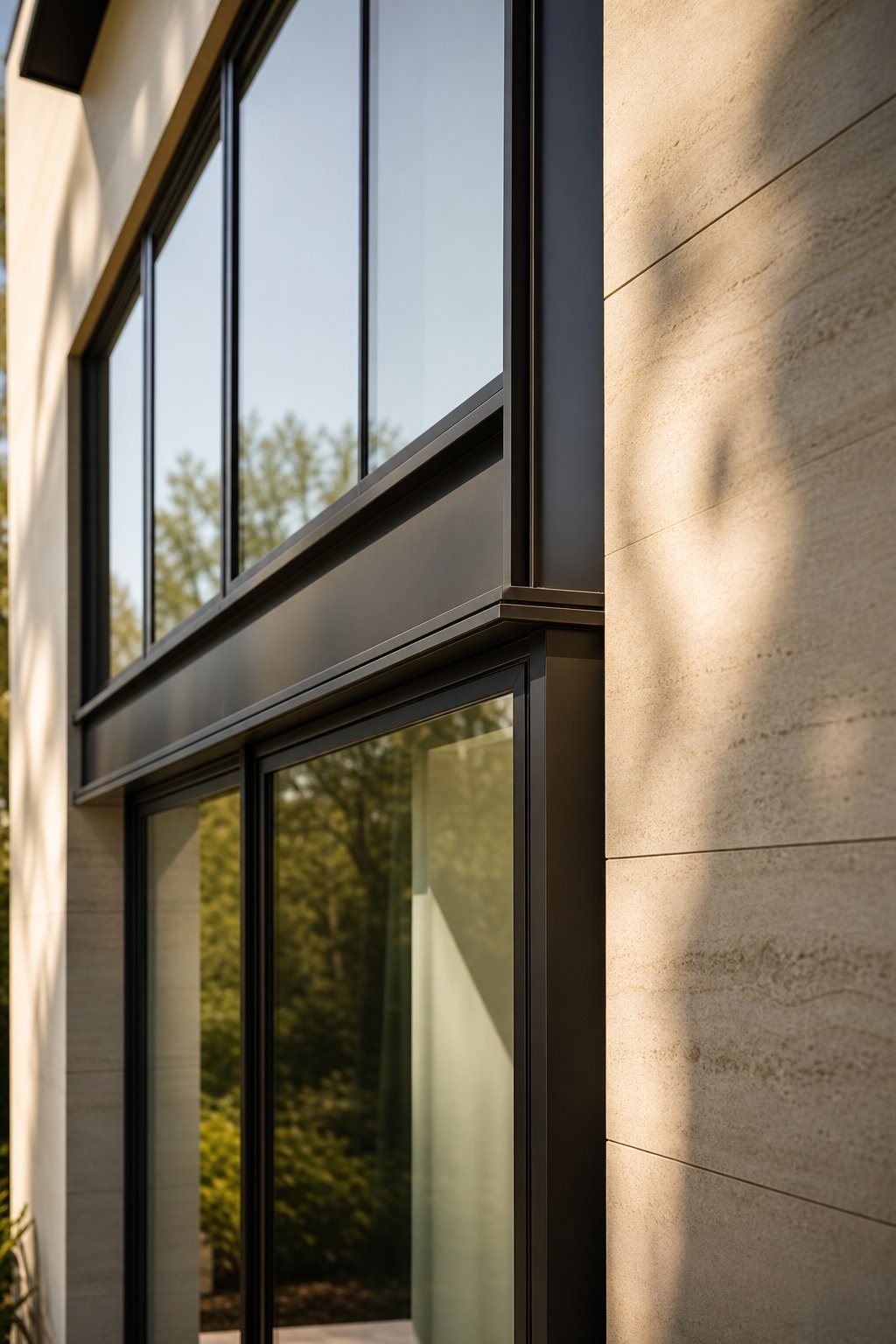
Colour Options, Finishes, and Design Flexibility
A window frame is one of the most visible architectural elements on any facade. It outlines every opening, defines the rhythm of the streetscape, and either harmonises with or clashes against the surrounding materials. On the North Shore, where homes sit on display along harbour ridges and leafy streets, getting the colour and finish right affects not just personal satisfaction but property value and neighbourhood cohesion.
Powder Coating Finishes and Colour Range
Powder coating is what gives aluminium windows their colour and long-term surface protection. Unlike wet paint, which applies as a liquid and can run, sag, or cure unevenly, powder coating uses electrostatically charged dry particles sprayed onto the grounded aluminium profile. The coated frame then enters a curing oven at approximately 200°C, where the powder melts, flows, and chemically cross-links into a hard, uniform finish bonded to the metal surface. The result is a coating that resists chipping, scratching, and peeling far better than conventional paint systems.
Standard colour options typically include white, black, and silver at no additional cost. Beyond these, the palette expands dramatically. The RAL colour system offers over 1,000 shades, and Australian suppliers commonly stock popular Colorbond-matched colours alongside custom options ranging from heritage greens and coastal greys to realistic timber-look finishes created through sublimation printing. Matte, textured, and gloss finishes add another dimension of choice, letting homeowners fine-tune how light interacts with the frame surface.
For North Shore properties, UV stability is a critical differentiator between coatings. North and west-facing elevations absorb intense solar radiation throughout the day, and low-quality coatings chalk and fade within a few years. High-performance powder coatings rated to meet AS3715 maintain their colour integrity for 15 to 20 years or more, even on sun-drenched harbour-facing walls. Dark colours fade more noticeably than lighter shades over time, so properties with heavy sun exposure on the primary elevation sometimes benefit from medium tones that balance boldness with longevity.
How Frame Profiles Affect Home Aesthetics
Colour is only half the visual equation. The physical dimensions of the frame, its face width, mullion thickness, and profile shape, determine whether a window reads as a heavy structural element or a delicate line separating glass from wall.
Contemporary slim-profile aluminium systems achieve up to 94% glass-to-frame ratio, making the frame nearly invisible and letting the glazing dominate the facade. This near-frameless look suits modern harbourside builds where expansive views are the entire point. At the other end of the spectrum, slightly bolder profiles with defined edges and visible mullion bars replicate the proportions of original steel-framed windows found in Federation and inter-war North Shore homes, delivering heritage character without heritage maintenance.
Mullion width, the vertical or horizontal bar dividing adjacent glass panels, deserves particular attention. Wider mullions create a more traditional, segmented appearance. Narrow mullions maintain structural separation while visually receding, preserving sight lines to garden and water views. Aluminium’s strength means mullions can be narrower than in any other frame material while still carrying the glazing weight and wind loads of an exposed coastal position.
Matching Windows to Exterior and Interior Design
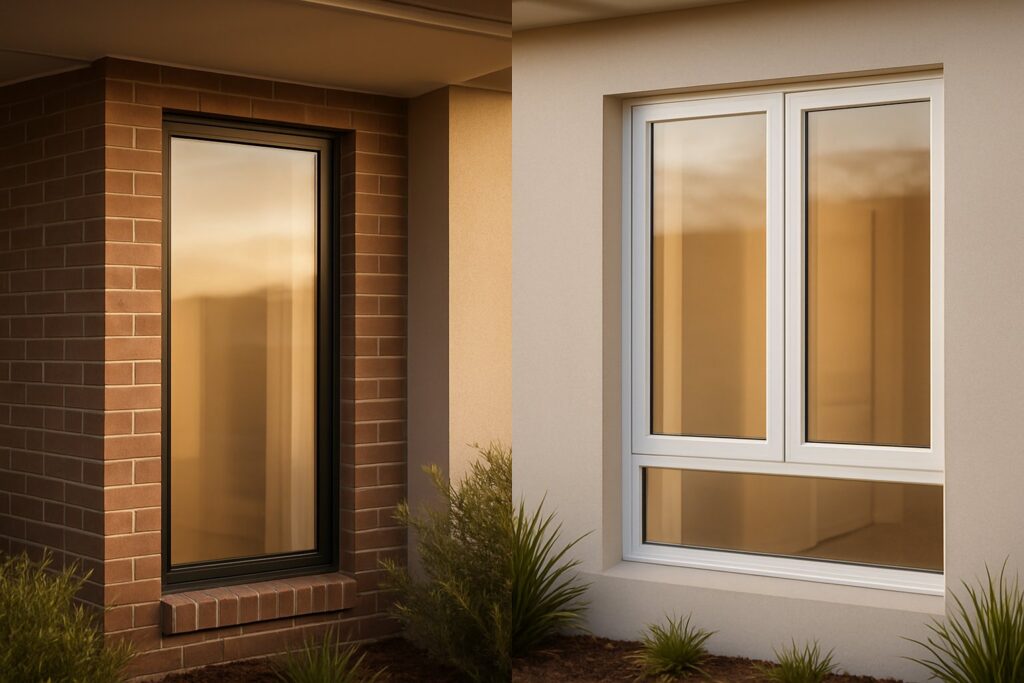
Coordinating frame colour with a home’s fixed external elements, roof sheeting, brick or render tone, fascia, and guttering, creates a cohesive facade rather than a collection of disconnected finishes. The most successful North Shore installations treat window frames as part of a deliberate colour strategy rather than an afterthought.
Popular combinations seen across the region reflect the interplay between local building materials and current design trends:
- Monument (dark charcoal) with sandstone facades — high contrast framing that highlights the stone’s warmth, common in lower North Shore heritage renovations
- Surfmist (warm white) with painted weatherboard — a clean, coastal aesthetic popular in Mosman and Balmoral cottages that keeps facades light and breezy
- Woodland Grey with contemporary render — a softer alternative to black that complements grey and greige rendered walls on modern upper North Shore builds
- Matt Black with mixed cladding — the go-to for architect-designed homes combining timber battens, dark brick, and metal roofing where strong frame definition anchors the composition
- Pale Eucalypt or Wilderness with bushland settings — muted greens that recede into garden surroundings for properties prioritising a connection to landscape over architectural statement
Dual-colour framing takes this further. The exterior face of the frame can be finished in one colour while the interior face wears another, allowing the windows to read as Monument from the street while presenting white or timber-tone profiles inside to match interior joinery. This option adds a premium to the coating process but resolves the common tension between a bold external aesthetic and a lighter interior palette.
Colour choices also carry practical implications beyond appearance. Dark-coloured frames absorb more solar heat than lighter finishes, which can affect seal longevity on sun-exposed faces and may influence thermal comfort near the glass edge. Medium greys tend to be the most forgiving for maintenance, showing less dust than black and less mildew than white. For homes that operate as anytime windows and doors between indoor and outdoor living zones, where frames are constantly on show, that practical resilience matters as much as the initial colour selection.
Choosing a finish is a commitment measured in decades rather than seasons. Unlike rendered walls that can be repainted in a weekend, a window frame colour lives with the home for 20 years or more before recoating becomes necessary. That long horizon makes it worth investing time with physical colour samples viewed against the actual building materials, in morning and afternoon light, before locking in a final specification. The quality indicators that separate a lasting finish from a fading one deserve equal attention, and those indicators extend well beyond colour into the structural and component-level details that define overall window quality.
How to Evaluate Aluminium Window Quality
A powder-coated finish in the perfect colour means nothing if the frame behind it flexes under wind pressure, leaks during a southerly blow, or seizes up within five years. Quality lives in the details that are invisible in a showroom but become painfully obvious once a window is bolted to a salt-exposed North Shore wall. Knowing what to look for before signing a quote separates a 40-year investment from a 10-year headache.
Frame Thickness and Structural Indicators
The wall thickness of the aluminium extrusion is the single most telling indicator of structural intent. It refers to the actual thickness of the metal forming the profile’s walls, not the overall frame depth or face width. Thicker walls mean greater rigidity, better screw-holding capacity for hardware, and superior resistance to the wind loads that upper-storey North Shore installations endure during storm events.
For residential applications, a minimum wall thickness of 1.6 mm is appropriate for most standard-sized openings in sheltered positions. Properties exposed to harbour winds or sitting on elevated ridgelines should specify 1.6 to 2.0 mm profiles, which fall into the heavy-duty residential category. Commercial-grade extrusions at 2.0 to 2.5 mm suit oversized openings, ground-floor shopfronts, or any situation where the unsupported glass span pushes beyond standard residential parameters.
Frame depth matters too. Standard residential profiles typically sit between 50 and 60 mm deep. Heavy-duty frames extend to 70-90 mm, providing more room for thermal breaks, thicker glazing units, and additional weatherseal channels. When comparing quotes for replacement aluminium windows on an older North Shore home, ask specifically about both wall thickness and frame depth. A supplier who cannot answer these questions clearly is likely reselling generic product rather than specifying to your site conditions.
Corner construction is the other structural tell. Screwed corners are the budget approach; they can flex under repeated wind cycling. Welded or crimped corners hold their geometry permanently, maintaining seal compression across the entire frame perimeter throughout the window’s service life.
Hardware, Seals, and Glazing Quality
Hardware fails before frames do. Hinges, rollers, locking mechanisms, and handles bear the operational stress of daily use and the corrosive pressure of coastal air. Quality aluminium windows use 316-grade stainless steel components for all exposed hardware in coastal zones, multi-point locking systems that engage at several positions around the sash perimeter, and adjustable hinges that allow realignment as the building settles over time.
Weatherseals determine whether a closed window actually stops air and water. Two main types exist: compression seals and brush seals. Compression seals use flexible gaskets that deform under pressure when the sash closes, creating an airtight barrier against wind-driven rain. Brush seals use fine bristles that allow some air movement even when closed. For North Shore conditions where horizontal rain accompanies strong southerlies, compression seals are the appropriate specification. Multiple seal lines, two or three around the sash perimeter, provide redundancy that single-seal systems lack.
Glazing choices compound the performance equation. Single glazing belongs to the past for any home concerned with thermal comfort or acoustic privacy. Double glazing with a 12 to 16 mm argon-filled cavity is the current residential standard, delivering measurable reductions in heat transfer and external noise. Laminated glass adds security and superior acoustic dampening, making it valuable for ground-floor windows or properties near busy roads. Low-E coatings, microscopically thin metallic layers applied to the glass surface, reflect radiant heat while admitting visible light, reducing solar heat gain on sun-drenched north and west elevations without darkening the room.
For homes requiring aluminium replacement windows to upgrade from old single-glazed frames, the combination of thermally broken profiles, argon-filled double glazing, and Low-E coatings delivers a step change in comfort and energy performance that justifies the investment within a few years of reduced heating and cooling costs.
Certifications and Standards to Look For
Australian Standards exist to protect homeowners from products that look adequate but fail under real-world conditions. Two standards matter most for aluminium windows.
AS 2047 governs the design, testing, and performance of complete window and door assemblies in external walls. It covers structural adequacy under wind loading, resistance to water penetration, and air infiltration limits. A window tested and certified to AS 2047 has been proven to withstand the specific wind class assigned to your building’s location and height above ground. The National Construction Code references AS 2047 directly, meaning compliance is not optional for any new installation or renovation requiring council approval.
AS 1288 covers glazing selection and installation. It dictates minimum glass thickness based on pane size and wind class, specifies where safety glass (toughened or laminated) must be used, and sets requirements for human impact zones like floor-to-ceiling panels, doors, and bathroom glazing. Together, these two standards form the baseline that every aluminium window on a North Shore property should meet without exception.
Beyond these core standards, look for WERS (Window Energy Rating Scheme) data showing the window’s thermal and solar performance as a complete system, and confirmation that powder coating meets AS 3715 for durability in your exposure category. Any supplier reluctant to provide certification documentation or test reports should raise an immediate red flag.
When comparing quotes from different suppliers, a structured approach prevents important details from slipping through. Use this checklist to ensure each quote covers the same ground:
- Confirm aluminium wall thickness (mm) and alloy grade for all frame profiles quoted
- Verify thermal break presence, material type (polyamide preferred), and width in millimetres
- Check hardware material grade — 316 stainless steel for any property within 1 km of water
- Confirm weatherseal type (compression vs brush) and number of seal lines per sash
- Request glazing specification: glass thickness, type (toughened, laminated, or annealed), Low-E coating position, cavity width, and gas fill
- Ask for AS 2047 test certification for the specific window type and size being quoted
- Confirm powder coating standard (AS 3715) and warranty period for your exposure zone
- Check corner construction method: welded, crimped, or screwed
- Request WERS rating data or U-value and SHGC figures for the complete window system
- Verify warranty terms — separate coverage for frame, hardware, seals, and glazing units
A quote that addresses all ten points gives you a genuine basis for comparison. A quote that lists only a frame colour and a per-window price tells you almost nothing about what you are actually buying. The cheapest number on the page rarely represents the best value when measured across a 30-year ownership horizon, and on the North Shore, where salt air accelerates every weakness, specification shortcuts surface faster than anywhere else in Sydney.
Proper specification gets a window installed correctly. Proper maintenance keeps it performing at that level for decades, and the care requirements for coastal aluminium windows are straightforward but non-negotiable.
Maintenance and Long-Term Care for Aluminium Windows
A correctly specified window only stays correctly performing if it receives basic ongoing attention. The good news is aluminium demands far less effort than timber or composite alternatives. The less good news is that “low maintenance” does not mean “no maintenance,” particularly on the North Shore where salt deposits accumulate silently between rain events and UV hammers seals from September through March.
Cleaning Schedules for Coastal Properties
Cleaning frequency should match your exposure level, not a generic calendar. Homes within 500 metres of the harbour or northern beaches shoreline need a monthly freshwater rinse of all frame surfaces to remove salt deposits before they bond with moisture and begin attacking the coating. This takes five minutes per window with a garden hose. Properties in sheltered inland positions like Roseville or Killara can stretch to quarterly cleans without risk.
When washing frames, use warm water with a mild pH-neutral soap and a soft cloth or sponge. Start at the top, work downward, and rinse thoroughly with clean water. Avoid ammonia-based cleaners, bleach, abrasive scouring pads, or high-pressure washers, all of which strip powder coating and leave the underlying aluminium exposed to accelerated corrosion. For tracks on sliding windows, a vacuum with a crevice attachment clears the debris, dead insects, and grit that cause rollers to grind and seals to wear prematurely.
Hardware deserves separate attention. Once a year, apply a dry silicone spray to hinges, rollers, and locking mechanisms. Avoid oil-based lubricants like WD-40 for ongoing maintenance; they attract dust and grit that eventually gum up moving parts rather than protecting them.
Signs of Wear and When to Act
Not every visible mark indicates a problem, and understanding the difference between cosmetic ageing and performance-threatening deterioration prevents both panic and neglect. Surface oxidation that wipes off with a damp cloth is cosmetic. Pitting that feels rough under your fingertip means the powder coating has failed locally and the aluminium beneath is actively corroding, requiring professional touch-up before it spreads.
Seals deserve the closest monitoring. Visible cracks, hardening, flattening, or gaps in the compression gasket allow air and water to bypass the seal entirely. A simple test works well: close the window on a piece of paper. If the paper pulls out with little resistance, the seal is no longer making proper contact and needs replacing. Draughts around a closed window, water on the sill after rain, or increased street noise all point to seal degradation rather than frame failure.
Hardware stiffness signals a different issue. A window that becomes hard to open tempts occupants to force it, which damages hinges, bends stays, and cracks frame corners over time. Stiffness usually traces back to debris in tracks, corroded pivot points, or misalignment from building settlement. Early intervention here, cleaning and lubricating before forcing, prevents a minor maintenance task from escalating into a hardware replacement job.
Drainage blockages are the silent threat. Every aluminium frame has weep holes along the bottom rail designed to channel water that penetrates the outer seal back to the exterior. When mulch, spider webs, or paint overspray block these slots, water pools inside the frame cavity. Prolonged pooling corrodes hardware, saturates seals from behind, and can eventually leak into the wall cavity.
A seasonal rhythm keeps all of this manageable without turning window care into a chore:
- Before winter — clear all weep holes and drainage channels of debris so heavy rain can exit the frame freely
- Spring — lubricate all hinges, rollers, and locking mechanisms with dry silicone spray; check that windows open and close smoothly after winter inactivity
- After summer — inspect seals on north and west-facing windows for UV-induced hardening or cracking; replace any gasket showing visible deterioration before autumn rains test its integrity
- Ongoing (coastal properties) — monthly freshwater rinse of frames and hardware to remove salt accumulation
Consistent care along these lines extends aluminium window life well beyond the typical 10-year warranty period. Frames that receive regular washing and timely seal or hardware attention routinely last 40 to 60 years without requiring full replacement. The small annual investment in a can of silicone spray and a few hours of cleaning protects a far larger capital investment in the windows themselves, and catches minor issues while they are still minor, before salt, UV, and neglect conspire to turn a simple gasket swap into a costly full-frame aluminium window replacement.
Knowing how to maintain windows is one half of long-term satisfaction. The other half begins earlier, with choosing a supplier who specifies the right system for your site in the first place.
Choosing the Right Aluminium Window Supplier for Your North Shore Project
Specification knowledge and maintenance habits protect a window investment over time, but the quality of that investment is locked in much earlier, at the point where you choose who supplies and installs it. On the North Shore, where salt air punishes every shortcut and council regulations vary suburb to suburb, the gap between a capable supplier and a generic one shows up faster than almost anywhere else in Sydney.
What to Expect From a Quality Aluminium Window Supplier
A reputable aluminium window company does more than quote a price per opening. They operate as a technical partner, translating your project’s site conditions into a system specification that performs for decades. A reliable supplier ensures durable aluminium materials that resist corrosion, proper installation preventing drafts and leaks, compliance with Australian Standards including AS 2047 and AS 1288, and warranties with aftercare support for long-term reassurance.
Several markers separate serious aluminium window companies from those reselling generic product under a local brand name:
- Custom manufacturing capability — the ability to fabricate profiles to non-standard dimensions, accommodate unusual opening configurations, and produce frames that fit heritage openings without packing or trimming
- Full range of window types — casement, awning, sliding, bi-fold, fixed, and louvre systems all available within the same profile suite, ensuring consistent aesthetics across an entire home
- Willingness to provide performance data — U-values, SHGC figures, WERS ratings, AS 2047 test reports, and powder coating warranty documentation supplied proactively rather than reluctantly after repeated requests
- Site measurement services — physical on-site measurement by trained staff who assess not just opening dimensions but exposure conditions, wind class, access constraints, and existing structural details that affect installation method
- Transparency about lead times — honest timelines for custom manufacturing, coating, and installation scheduling rather than optimistic promises that slip repeatedly once the deposit clears
North Shore projects carry requirements that generic suppliers often miss. A harbour-facing apartment in Mosman needs marine-grade 316 stainless hardware and a powder coating specification rated for severe coastal exposure. A bushland property in St Ives needs BAL-rated frames with compliant seals and glazing configurations. A Federation renovation in Willoughby may require heritage-sympathetic profiles that satisfy council overlay controls while still meeting current NCC performance standards. Suppliers experienced with these overlapping demands build them into the specification from the start rather than discovering compliance gaps during installation.
Local knowledge matters in practical terms too. A nearby specialist understands local weather conditions and council regulations, offers faster response for quotes and repairs, and carries accountability built through years of community referrals. When issues arise, dealing directly with the people who designed, manufactured, and installed your windows beats navigating a call centre or chasing a subcontractor who has moved on to the next job.
Moving From Research to Your North Shore Window Project
The decision points covered throughout this guide distil into a sequence that moves from broad understanding to project-specific action. Frame engineering, window type selection, material comparison, climate factors, finish choices, quality evaluation, and maintenance planning all feed into one outcome: a window system matched precisely to your site rather than pulled from a catalogue.
Turning that knowledge into an actual project involves concrete steps:
- Get professional site measurements — not tape-measure approximations but precise assessments that account for square, plumb, structural reveals, and any irregularities in older North Shore homes
- Define your exposure profile — distance from water, orientation, height above ground, bushfire zone, and heritage overlay status all shape the specification before a single frame dimension is discussed
- Request quotes with specific performance criteria — ask for wall thickness, thermal break width, hardware grade, seal type, glazing specification, and relevant Australian Standards compliance rather than accepting a lump-sum number with no technical detail
- Compare on specification, not just price — use the ten-point quality checklist from the evaluation section to ensure every quote covers the same technical ground before making cost comparisons meaningful
- Confirm compliance documentation — AS 2047 test reports, AS 1288 glazing compliance, and AS 3715 coating certification should be available before you commit, not promised after the fact
The cheapest quote rarely represents the best value on the North Shore. Matching window specifications to your site’s exact exposure conditions, compliance requirements, and performance goals protects your investment far more reliably than choosing on price alone and hoping the product holds up against salt air, UV, and time.
Research from real-world fenestration projects confirms this principle. A detailed case study comparing 19 window quotes for an identical project found cost variability of 1:5 and performance variability of 1:2, with the most expensive options not necessarily delivering the highest performance. The lesson translates directly to the Australian residential market: detailed specifications and rigorous quote comparison matter more than brand names or bottom-line pricing.
Homeowners and project teams ready to explore aluminium window specifications, custom configurations, and system options for North Shore builds can visit MEICHEN’s aluminium windows page as a starting point for product selection and project planning. Their range covers the casement, sliding, awning, and bi-fold systems discussed throughout this guide, with custom sizing and finish options suited to the coastal and heritage demands that define this part of Sydney.
Salt air does not wait, UV does not pause, and cheap frames do not improve with age. The research phase is where you build the foundation for a window system that performs decades from now, not just the day it is installed. Invest that time wisely, specify precisely, and choose a supplier who understands what the North Shore demands from every frame they manufacture.
Frequently Asked Questions About Aluminium Windows on the North Shore
1. How long do aluminium windows last in North Shore coastal conditions?
Properly specified aluminium windows with quality powder coating and marine-grade hardware typically last 40 to 60 years on the North Shore. The key factors that determine longevity in coastal areas are the coating quality (must meet AS3715 for severe exposure), hardware grade (316 stainless steel within 1 km of water), and maintenance consistency. Monthly freshwater rinsing for harbour-facing properties prevents salt buildup that would otherwise degrade finishes and hardware within a few years. Without proper specification for coastal exposure, cheaper aluminium frames can show corrosion pitting in under 12 months.
2. What is a thermal break in aluminium windows and why does it matter?
A thermal break is a continuous strip of insulating material, usually glass-fibre-reinforced polyamide, mechanically fixed between the interior and exterior aluminium sections of a window frame. It prevents heat from conducting directly through the metal. Non-thermally broken aluminium frames have U-values around 5.8 to 7.0 W/m2K, while thermally broken systems reduce this to 2.5 to 3.5 W/m2K or lower. For North Shore homes running heating and cooling year-round, thermally broken frames reduce energy loss, eliminate cold spots near windows on cool mornings, and prevent condensation forming on interior frame surfaces during winter.
3. Do aluminium windows meet bushfire requirements for upper North Shore properties?
Aluminium is non-combustible, giving it a natural compliance advantage for Bushfire Attack Level (BAL) ratings. It satisfies NCC requirements at all BAL levels up to and including BAL-40 without modification. At BAL-FZ (Flame Zone), additional measures like bushfire-rated seals and specific glazing configurations are needed, but the frame material itself is never the limiting factor. This is particularly relevant for upper North Shore suburbs like St Ives, Turramurra, and Wahroonga that fall within designated bushfire-prone land. By contrast, uPVC melts under radiant heat and timber requires chemical treatment for even moderate BAL compliance.
4. Which aluminium window type is best for harbour views on the North Shore?
Fixed aluminium windows deliver the slimmest sightlines and largest uninterrupted glass area, making them ideal as the centrepiece for harbour panoramas. Some contemporary aluminium systems achieve face widths under 25 mm on fixed panels, creating near-frameless glass walls with up to 94% glass-to-frame ratio. For practical living, most North Shore harbour-facing designs combine large fixed panels with flanking casement or awning windows that provide ventilation when needed. Casement windows are particularly effective for capturing cross-breezes on upper-storey elevations. MEICHEN’s aluminium window range at meichenwindows.com.au/aluminium-windows/ includes casement, fixed, and bi-fold systems designed for these harbour-view applications.
5. How do I maintain aluminium windows in a salt-air environment?
For properties within 500 metres of the harbour or northern beaches, rinse all frame surfaces with fresh water monthly to remove salt deposits before they bond and attack the coating. Use warm water with mild pH-neutral soap and a soft cloth for deeper cleaning, working top to bottom. Avoid abrasive pads, ammonia-based cleaners, or high-pressure washers. Annually, apply dry silicone spray to hinges, rollers, and locks, and avoid oil-based lubricants that attract grit. Before winter, clear weep holes so rain drains freely. After summer, inspect seals on sun-facing windows for UV hardening. This routine extends window life well beyond warranty periods and prevents minor issues from becoming costly replacements.
More Window & Door Guides