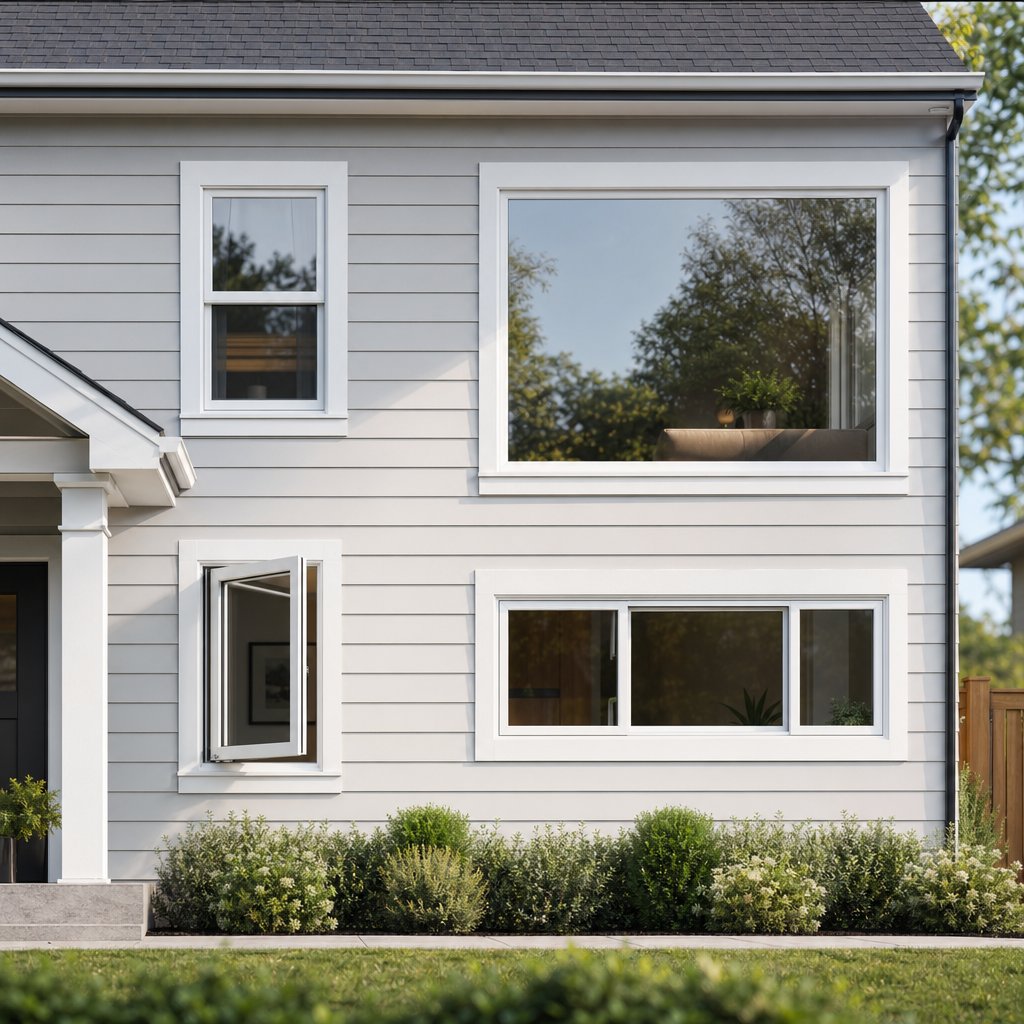
What Does Supply Only Mean for Aluminium Windows
Buying aluminium windows supply only is a straightforward concept that often gets muddled by industry jargon. At its core, it means you purchase fully manufactured, ready-to-install window units from a supplier — and nothing else. No installers show up at your door. No labour is bundled into the price. The product arrives on site, and your team handles the rest.
Supply only means purchasing completed aluminium window units directly from a fabricator or supplier without any installation services included. The buyer takes full responsibility for fitting, typically using their own trade team or a preferred glazier.
This purchasing model serves a specific audience: builders running their own crews, renovation contractors with trusted glaziers on the books, self-builders managing every trade themselves, and property developers coordinating multi-site rollouts. These buyers already have the knowledge and labour resources to handle installation — what they need are quality aluminium window supplies delivered on schedule and to spec.
What Supply Only Actually Means
When you order alu windows on a supply-only basis, you receive fully assembled frames complete with glazing, hardware, and weather seals. The units are manufactured to your exact measurements and specifications. You pay for the product, delivery, and nothing more. There is no installation quote wrapped in, no site visit fee, and no margin on labour. The transparency is part of the appeal — you see exactly what the windows in aluminium cost as a standalone item.
How It Differs from Supply and Fit
A supply-and-fit contract bundles the product and installation into a single package. One company takes responsibility for measuring, manufacturing, delivering, fitting, sealing, and making good. That arrangement suits homeowners who want a hands-off experience.
Supply only strips back to the product alone. You gain cost transparency and scheduling control, but you also accept the responsibility. If your aluminium window measurements are off, or your installer damages a frame during fitting, that sits with you — not the supplier. Metal windows ordered this way typically cannot be returned for sizing errors, so accuracy matters from the start.
The trade-off is clear: more buyer knowledge required, but greater control over costs, timelines, and who handles the work on site. For experienced professionals and hands-on project managers, that trade-off pays off consistently.
The real question isn’t whether supply only works — it’s whether it works for your specific situation, skill set, and project type.
Who Should Buy Aluminium Windows Supply Only
Situation, skill set, project type — these three factors determine whether supply only is a smart move or a costly headache. Certain buyer profiles consistently get the most value from this model, while others are better served by a bundled package. Here’s who benefits and why.
Trade Professionals and Contractors
Glazing contractors and builders are the natural fit for supply-only purchasing. They have installation expertise, site infrastructure, and established workflows. What they lack — and what they need — is a reliable source of commercial aluminium windows and residential aluminium windows manufactured to spec and delivered on programme.
- Glazing contractors — install but don’t fabricate. Supply only lets them source product at trade pricing while controlling their own fitting margin.
- Commercial fit-out contractors — handling multi-unit developments where aluminium doors and windows are specified across dozens of openings. Volume purchasing and coordinated delivery schedules matter more than bundled installation.
- Landlords and property developers — refurbishing rental portfolios or flipping properties. They use the same trusted trades across multiple sites and need consistent product quality without paying retail markups each time.
- Architects and specifiers — selecting custom aluminium windows for client projects where the specification must be precise and the installation contractor is already appointed.
The shared advantage across all these groups is control. Control over cost visibility, scheduling, installer quality, and the final specification of aluminium windows and doors arriving on site.
Self-Builders and Renovation Projects
Residential aluminium windows ordered supply only are increasingly popular with self-builders managing their own new builds or major renovations. These buyers typically coordinate multiple trades across a project timeline — and they don’t want a window company dictating when the glazing gets fitted.
Self-builders gain cost transparency (seeing exactly what the product costs versus labour), flexibility to schedule installation around other trades like rendering or cladding, and the freedom to use a local glazier they trust rather than whoever the supplier sends. For renovation projects replacing old timber or steel frames with modern aluminium, this model keeps budget allocation clear and avoids paying twice for project management.
When Supply Only May Not Be Right
Honesty matters here. Supply only is not the best path for everyone.
- Inexperienced homeowners without trade support — if you don’t have an installer lined up and lack confidence measuring openings, a supply-and-fit contract offers safety nets you’ll likely need.
- Projects requiring structural modifications — when openings need to be enlarged, lintels replaced, or load paths altered, the complexity demands a single provider managing both product and installation.
- Warranty-sensitive buyers — some suppliers limit warranty coverage if installation isn’t performed by an approved contractor. If single-source accountability matters to you, bundled packages reduce finger-pointing risk.
Knowing which camp you fall into saves time, money, and frustration. And for those who are well-suited to the model, the next decision that shapes everything — from thermal performance to how your openings need to be prepared — comes down to the profile system you choose.
Understanding Aluminium Window Profile Systems
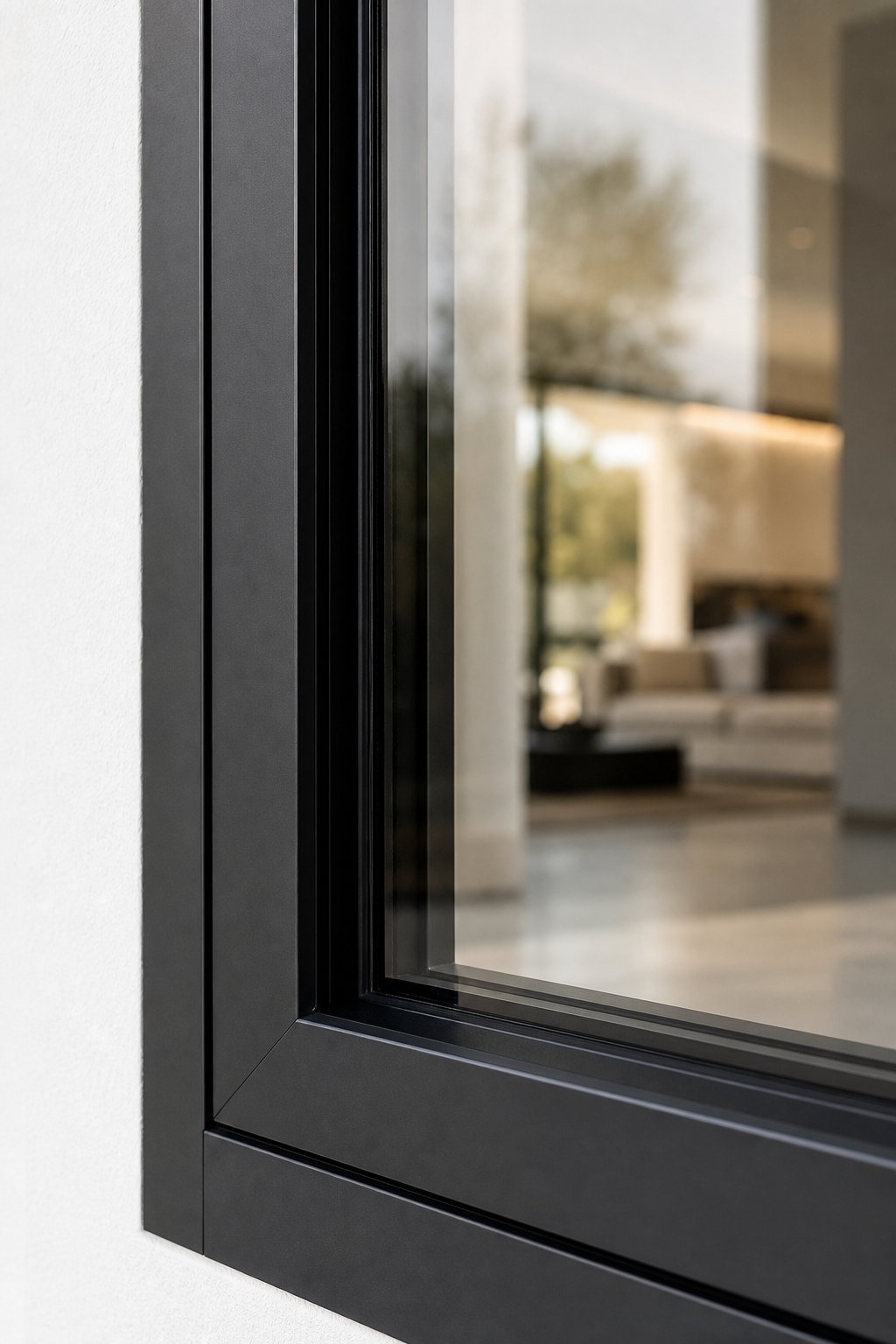
Profile systems are the structural backbone of every aluminium window frame. They determine thermal performance, strength, sightlines, and how much glazing the unit can carry. When you’re ordering supply only, the profile system you select directly influences how your structural openings need to be prepared — so this decision comes early, not late.
In simple terms, an aluminium window profile is the extruded aluminium section that forms the frame and sash of the window. Different profile designs suit different performance goals, building types, and aesthetic preferences. Choosing the right aluminium window systems for your project means understanding two core distinctions: thermal break versus non-thermal break, and residential-grade versus commercial-grade.
Thermal Break vs Non-Thermal Break Profiles
Aluminium conducts heat readily. In a standard non-thermal break profile, the metal frame acts as a continuous bridge between outside and inside temperatures. Summer heat transfers inward; winter warmth escapes outward. For unconditioned spaces like garages or storage areas, that might be acceptable. For habitable rooms, it’s a problem.
Thermal break aluminium window profiles solve this with a polyamide strip — a high-strength plastic barrier mechanically bonded between the interior and exterior aluminium faces. This strip interrupts the conductive path, dramatically reducing heat transfer through the metal window frame itself. According to profile performance data, standard aluminium frames typically have U-values around 5.5–6.5 W/m²K, while thermally broken profiles achieve 2.0–3.5 W/m²K — a reduction in frame heat transfer of 40–60%.
For Australian homes — particularly in climate zones where heating and cooling costs add up — thermally broken aluminium window frames are the default choice for any conditioned living space. They also help reduce condensation on the interior face of the frame during cold mornings, which matters for both comfort and long-term durability.
Residential and Commercial Profile Differences
Not all aluminium window profiles are built for the same job. The split between residential-grade and commercial-grade systems comes down to section depth, structural capacity, and intended application.
Residential aluminium window systems typically use slimmer profile sections — commonly 50–65 mm deep. These prioritise clean sightlines and visual lightness, which suits standard openings in houses, townhouses, and low-rise apartments. They handle typical wind loads and accommodate standard double-glazed units comfortably.
Commercial-grade profiles run deeper — 70 mm to 80 mm or more. That extra depth provides greater structural rigidity for larger spans, heavier glazing packages (including triple glazing), and higher wind-load ratings required in exposed or elevated positions. Metal frame windows in multi-storey commercial buildings, large sliding doors, or cyclone-rated applications almost always demand these heavier sections.
The distinction between residential and commercial systems also extends to hardware durability, testing standards, and wall thickness — with commercial profiles using thicker aluminium (1.5 mm minimum versus 1.2 mm for residential) for added strength and security.
Why Profile Choice Matters for Supply-Only Orders
Here’s where this becomes particularly relevant for supply-only buyers: the aluminium window profile you specify determines the finished frame dimensions. A 50 mm residential system occupies less depth in the reveal than a 75 mm commercial system. That difference affects how your builder prepares structural openings, positions lintels, and details sub-frames or packing.
If you change your mind on profile system after openings are already formed, you may need to rework reveals, adjust packing depths, or accept compromised installation tolerances. Specifying your aluminium window profile upfront — before construction reaches window stage — avoids costly rework and ensures the frames sit properly within the wall build-up.
Profile depth also dictates glazing capacity. A slimmer residential frame may accept a standard double-glazed unit of 20–24 mm but struggle with thicker acoustic or triple-glazed packages. Locking in the profile system early means your glazing specification, structural preparation, and frame dimensions all align from the start — exactly the kind of coordination that supply-only purchasing demands.
Glazing Options and Performance Choices
Profile depth determines what glazing a frame can physically hold — but choosing between those glazing options is where performance, comfort, and cost are really shaped. Supply-only aluminium windows arrive fully glazed. You cannot swap the glass later without disassembling the unit. That makes the glazing specification one of the most consequential decisions you’ll lock in at order stage.
Double Glazing vs Triple Glazing
Most aluminium double glazed windows use an insulated glass unit (IGU) with two panes separated by a gas-filled cavity — typically 20–24 mm overall thickness. This configuration suits the majority of Australian residential applications, delivering solid thermal improvement over single glazing while keeping weight and cost manageable.
Aluminium triple glazed windows add a third pane and a second gas cavity, pushing overall IGU thickness to 36–44 mm. The result is measurably better insulation, superior acoustic dampening, and improved condensation resistance on the interior glass surface. Triple glazing is particularly relevant for projects targeting high NatHERS ratings, homes in cold-climate zones like the Australian Alps or Tasmanian highlands, or buildings on busy roads where noise reduction matters.
The trade-off? Weight and cost. A triple-glazed unit weighs roughly 50% more than its double-glazed equivalent in the same frame size. That extra mass affects handling during installation and can influence structural support requirements for larger openings. Double-glazed aluminium windows remain the standard choice across most temperate Australian climates, while triple glazing earns its premium in specific performance-driven scenarios.
| Factor | Double Glazing | Triple Glazing |
|---|---|---|
| Thermal performance (U-value) | Good — typically 1.4–1.8 W/m²K with low-e and argon | Superior — typically 0.8–1.2 W/m²K with low-e and argon |
| Acoustic insulation | Moderate improvement over single glazing | Noticeably better sound attenuation, especially low-frequency noise |
| Unit weight (per m²) | ~20 kg/m² | ~30 kg/m² |
| Relative cost | Standard baseline | 25–40% more than equivalent double-glazed unit |
Coatings and Gas Fills Explained
Raw glass alone does limited thermal work. The real performance gains in aluminium double glazing come from two additions: low-emissivity (low-e) coatings and inert gas fills.
Low-e coatings are microscopically thin metallic layers applied to one or more glass surfaces within the IGU. They reflect radiant heat back toward its source — keeping solar heat gain out in summer and retaining interior warmth in winter. The coating position within the unit determines whether the glass prioritises solar control or heat retention, and your supplier should recommend placement based on your climate zone and orientation.
Gas fills replace standard air in the cavity between panes. Argon is the industry standard — denser than air, it reduces heat transfer through the IGU by up to 16% compared to an air-filled cavity. Krypton performs even better (up to 27% improvement), but its scarcity makes it roughly 40 times more expensive than argon, which puts it out of practical reach for most projects. Argon-filled double-glazed aluminium windows hit the sweet spot between performance and value.
Properly fabricated argon-filled units lose gas at a negligible rate — well under 1% per year for standard-sized residential windows — so long-term performance remains stable across the service life of the IGU.
Safety Glass Requirements by Position
Australian Standard AS 1288 dictates where safety glass must be used, and these requirements apply regardless of whether you’re ordering supply-only or supply-and-fit. The key positions that trigger mandatory safety glazing include:
- Adjacent to doors — any glazing within 500 mm of a doorway where the glass extends below 1500 mm from floor level
- Low-level glazing — glass with its bottom edge within 500 mm of the floor, where the panel exceeds certain size thresholds
- Overhead glazing — skylights or any glass installed above occupants, requiring laminated glass so that broken shards are contained by the interlayer
- Wet areas — glazing adjacent to showers, baths, and pools
Toughened (tempered) glass is heat-treated to roughly four to five times the strength of standard annealed glass. It shatters into small, relatively harmless granules rather than dangerous shards. Laminated glass bonds two panes with a plastic interlayer — if it breaks, the fragments stick to the interlayer rather than falling. Overhead positions typically require laminated; other safety positions may accept either toughened or laminated depending on the application.
For supply-only buyers, this means flagging safety glass positions in your specification before ordering. Double-glazed aluminium windows destined for a low-level fixed panel beside a sliding door need toughened or laminated glass specified at manufacture — it cannot be added after the unit is assembled. Miss this, and you’ll have non-compliant windows that fail inspection.
Getting the glazing spec right protects performance, compliance, and your budget. But a perfectly specified IGU means nothing if the window measurements are wrong — and that’s where supply-only orders carry their highest risk.
How to Measure and Specify Aluminium Windows Correctly
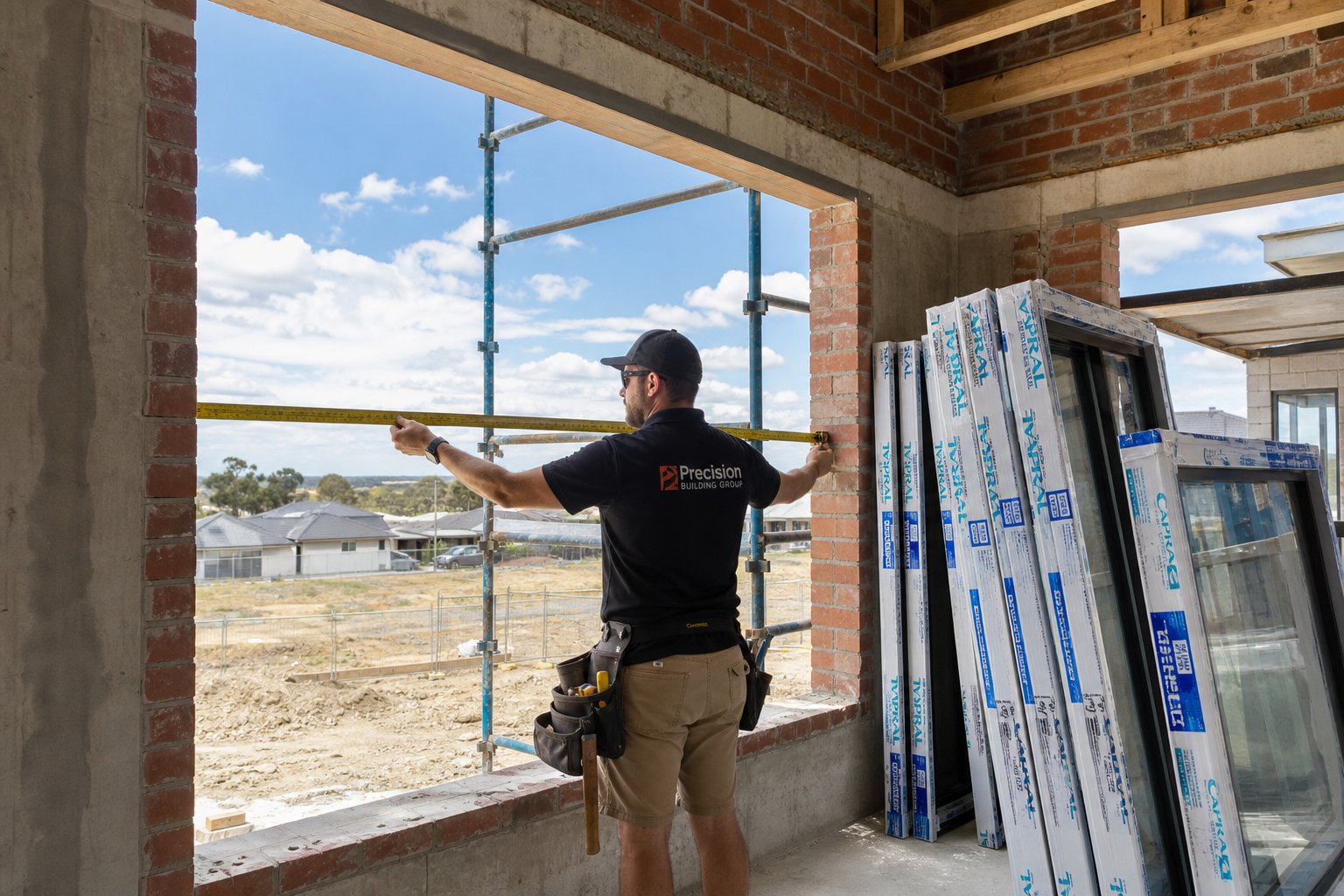
Measurement errors are the single most expensive mistake in supply-only purchasing. Unlike a supply-and-fit arrangement — where the supplier measures and carries the risk — ordering aluminium windows supply only puts full dimensional responsibility on you. Custom-manufactured units cannot be returned because your tape measure was off by 10 mm. Every dollar you saved on labour disappears the moment a window arrives and doesn’t fit its opening.
Getting this right demands understanding two things: how to measure the structural opening accurately, and how to compile a specification detailed enough that the fabricator builds exactly what you need.
How to Measure Structural Openings Accurately
A structural opening is the raw masonry or framed gap in your wall — brick-to-brick, stud-to-stud, or reveal-to-reveal depending on your construction type. The finished frame size of your aluminium window must be smaller than this opening to allow clearance for packing, shimming, and final adjustment during installation. Standard practice in Australia allows 10–15 mm total clearance on width and 10–15 mm on height for new-build openings. Retrofit installations into existing reveals may use tighter tolerances of 5–10 mm, depending on the profile system and your fabricator’s requirements.
The measuring process itself is methodical. Rushing it or cutting corners creates problems no one can solve after manufacture.
- Measure width at three heights — take a reading across the bottom, middle, and top of the opening. Record all three.
- Measure height at three positions — left side, centre, and right side, from head to sill. Record all three.
- Use the smallest dimension — your window must pass through the narrowest and shortest point of the opening. Always order to the smallest recorded measurement, minus your clearance deduction.
- Check for square — measure both diagonals corner-to-corner. If they differ by more than 3 mm, the opening is out of square and may need correction before installation.
- Measure sill depth — confirm the reveal depth accommodates your chosen profile system (50–65 mm for residential, 70–90 mm for thermally broken or commercial frames). Measure at left, centre, and right.
- Confirm clearance deductions with your fabricator — different aluminium window systems have different installation requirements. Never assume; ask.
Always use a rigid steel tape measure. Cloth or fibreglass tapes stretch with use and temperature, introducing errors that compound across a multi-window order.
Building a Complete Window Specification
Accurate dimensions are only half the job. A supply-only order requires a complete specification covering every variable the fabricator needs to manufacture your aluminium casement windows, sliding aluminium windows, awning units, or fixed-lite panels. Missing a single detail can result in hardware on the wrong side or a colour that doesn’t match your interior scheme.
A thorough specification covers:
- Finished frame dimensions — width and height after clearance deduction, confirmed in millimetres
- Opening type — casement, awning, sliding, fixed, or combination configurations
- Hinge or sliding side — viewed from outside (industry standard) or inside (confirm convention with supplier)
- Colour and finish — powder coat colour for exterior and interior separately, using RAL or supplier colour codes
- Glazing specification — double or triple glazed, low-e coating position, gas fill, safety glass where required
- Hardware requirements — handle type, lock grade, restrictors for child safety, colour finish of hardware
- Flyscreen requirements — whether integrated flyscreens are needed and their mesh type
- Relevant compliance — BAL rating for bushfire zones, cyclone rating for northern regions, or specific acoustic requirements
For multi-window projects, a window schedule — a tabulated document listing every opening with its unique specification — keeps communication clear between you, your builder, and the fabricator. Numbering each window and cross-referencing to floor plans eliminates ambiguity.
Common Measurement Mistakes to Avoid
Certain errors recur across supply-only projects regardless of experience level. Being aware of them is the simplest form of insurance.
- Measuring at one point only — openings are rarely perfectly rectangular, especially in older Australian brick veneer or rendered homes. A single width reading misses variations that leave your frame too wide at one position.
- Confusing brick-to-brick with reveal measurements — brick-to-brick is the raw structural opening. The reveal dimension may differ if plastering, renders, or sub-frames are present. Clarify which dimension your supplier expects.
- Ignoring sill or sub-frame depth — if your reveal is too shallow for the profile system, the frame protrudes past the wall face or obstructs internal finishes. An alum sliding window with a deep track profile needs adequate reveal depth confirmed before order.
- Not checking for square — diagonal measurements differing by more than 8 mm mean the opening likely needs correction before the window can be installed properly.
- Specifying hinge side incorrectly — left and right depend on viewing direction. A casement window hinged on the wrong side won’t open as intended and cannot be reversed after fabrication.
- Omitting safety glass positions — aluminium sliding windows or aluminium casement windows adjacent to doors or at low level require safety glazing under AS 1288. This must be specified at manufacture.
The consistent theme across all these pitfalls is finality. Supply-only aluminium window orders are manufactured to your instruction. If that instruction contains an error — dimensional, configurational, or specification-based — the cost of correction falls on you. Measure twice, specify completely, and confirm everything in writing before production begins.
Precision in measurement protects your budget. But understanding what drives that budget — from profile system and glazing to colour selection and order volume — requires a clear picture of how supply-only pricing actually works.
What Affects Aluminium Window Pricing for Supply Only
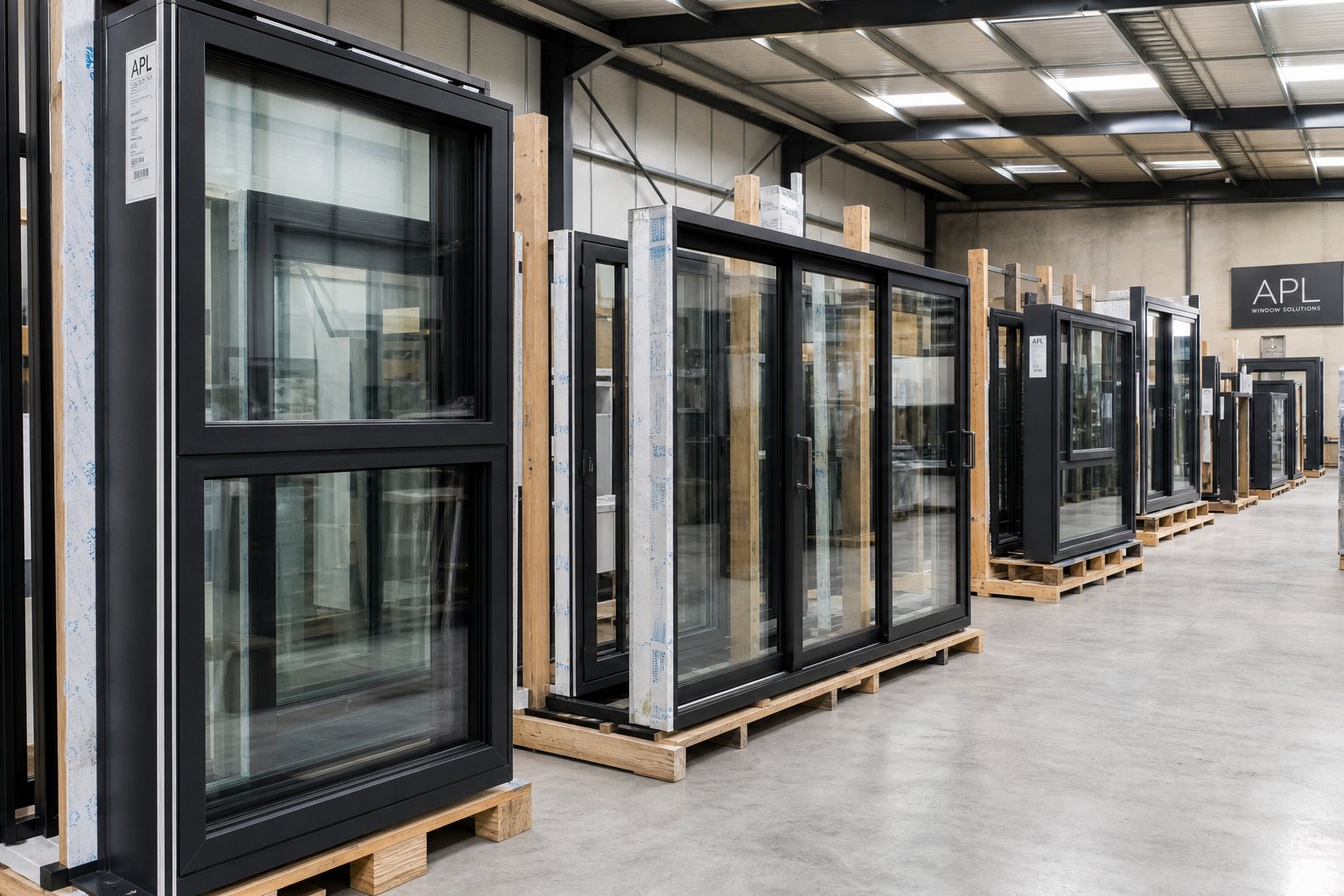
There’s no universal aluminium window price. Supply-only costs shift significantly based on what you’re ordering, how many you need, and the performance characteristics built into each unit. Two windows of identical size can differ by hundreds of dollars depending on profile system, glazing package, and finish — which is precisely why understanding these cost drivers matters before you request quotes.
To give rough context: Australian supply-only pricing for standard aluminium windows ranges from around $150 for a small fixed unit to $790 or more for larger awning or sliding configurations. Premium aluminium windows with thermally broken frames, custom sizing, or high-performance glazing push well beyond that baseline. The cost of aluminium windows ultimately reflects the sum of decisions you make across several interconnected variables.
Key Factors That Drive Window Pricing
Every element of your specification adds or subtracts cost. Here are the primary drivers that shape your final aluminium windows prices:
- Window size and configuration — larger units use more material, and operable windows (casement, awning, sliding) cost more than fixed panels due to additional hardware and fabrication complexity. Multi-sash combinations multiply both.
- Profile system — thermally broken aluminium frames carry a 20–40% premium over non-thermal break systems. Commercial-grade profiles with deeper sections and thicker aluminium walls cost more again.
- Glazing specification — stepping from standard double glazing to triple glazing adds 25–40% to the glass component. Low-e coatings and argon gas fills add less individually but compound across a full order.
- Colour and finish — standard colours (white, black, anthracite grey) are held in stock and carry no premium. Custom RAL colours and marine-grade coatings add cost and lead time (more on this below).
- Hardware grade — basic friction stays and cam locks suit standard residential applications. Commercial-grade multi-point locks, chain winders, or high-security fittings escalate the price per unit.
- Order volume — fabricators achieve efficiencies on larger orders through batch processing, consolidated powder coating runs, and optimised cutting schedules. Discounts of 10–15% are common on whole-project orders compared to piecemeal purchasing.
- Compliance requirements — cyclone-rated hardware, BAL-rated assemblies for bushfire zones, or enhanced acoustic glazing for noise-affected sites each add cost layers that standard units don’t carry.
Project complexity also affects lead times, which indirectly affects pricing. Rush orders or non-standard configurations that interrupt normal production workflows may attract surcharges, while well-planned orders submitted with complete specifications tend to attract the most competitive pricing.
Colour and Finish Cost Implications
Powder coating is how aluminium windows get their colour — paint particles are electrostatically bonded to the frame and oven-cured into a durable finish lasting 25 years or more. The process is standard, but the cost varies considerably based on what you choose.
Most suppliers include a small selection of stock colours at no premium: typically matt black (RAL 9005), anthracite grey (RAL 7016), and white (RAL 9010). Black aluminium windows remain among the most popular choices for contemporary Australian homes, and because that colour runs frequently on coating lines, it carries no surcharge and shorter lead times.
Non-standard RAL colours — anything outside the supplier’s core palette — add roughly 10–20% to the window cost. The premium reflects smaller batch sizes on the coating line, additional masking work, and extended lead times of six to ten weeks versus four to six for stock colours. If you’re specifying a heritage green or custom grey to match existing cladding, factor that uplift into your budget early.
Dual-colour finishes — a different colour on the exterior face versus the interior — typically add 15–25%. The frame must pass through the coating line twice, with masking applied between runs to prevent overspray. It’s a popular choice for matching a dark street-facing exterior to light internal joinery, but the double handling adds real cost. Unlike uPVC dual-colour wraps that can peel over time, powder-coated dual-colour aluminium is a permanent, uniform finish on both faces.
Coastal properties in Australia face an additional consideration. Marine-grade powder coating — formulated to resist salt-air corrosion — adds a further 10% or so but is essential for frames exposed to salt spray within close proximity to the coastline.
Getting Accurate Comparable Quotes
Here’s the honest reality: aluminium windows prices vary by 30–40% between suppliers for identical specifications. Regional market conditions, fabricator overhead, profile system licensing, and coating line capacity all influence what lands on your quote. No online calculator can account for these variables with precision.
The only reliable way to compare is to request multiple quotes built on the same detailed specification. That means identical dimensions, the same profile system, equivalent glazing packages, matching colour codes, and consistent hardware selections across every quote you gather. If one supplier quotes on a basic non-thermal break system while another prices thermally broken frames, you’re comparing different products — not different prices.
A project-capable supplier can make this process far less opaque. MEICHEN’s services team, for example, walks buyers through the real quote drivers — from material calculation and system recommendations to finish options and compliance requirements — so you understand exactly what influences your final price rather than guessing from generic online estimates. That kind of specification-based quoting is particularly valuable for multi-window projects where small per-unit differences compound across dozens of openings.
When evaluating aluminium windows for sale on a supply-only basis, resist the temptation to compare on headline price alone. The cheapest quote may reflect a lower-spec profile, inferior hardware, or surface treatment that won’t hold up in Australian conditions. Equally, the most expensive quote isn’t automatically the best — it may simply reflect higher overhead rather than higher quality. Specification-matched quoting levels the field and reveals where genuine value differences exist.
Getting the price right is one piece of the puzzle. Protecting that investment once the windows are ordered — from specification accuracy through to delivery inspection — demands equal attention to a different set of risks.
Common Mistakes When Ordering Supply Only Windows
Supply-only purchasing shifts risk from the supplier to the buyer. That trade-off is manageable when you know where problems typically occur — but costly when you don’t. Most issues fall into three categories: specification errors that get locked into production, damage that goes undetected at delivery, and warranty gaps that surface months later when something fails.
Specification and Ordering Errors
The most common — and most expensive — mistakes happen before manufacturing even begins. Whether you’re ordering replacement aluminium windows for a renovation or fitting out a new build, these errors recur across projects of every scale:
- Wrong sizes from measurement errors — measuring at a single point, not checking for square, or confusing reveal dimensions with structural opening dimensions. The previous chapter covered measuring methodology in detail, but the point bears repeating: supply-only units manufactured to incorrect dimensions cannot be returned.
- Incompatible hardware selections — specifying a lock style that doesn’t suit the profile system, or requesting chain winders on frames too shallow to house the mechanism. Always confirm hardware compatibility with your supplier before sign-off.
- Colour codes not confirmed in writing — verbal agreements on colour lead to disputes. RAL 7016 and RAL 7021 look similar on screen but differ noticeably on a finished frame. Get the exact colour code documented on your order confirmation and check it matches your original specification.
- Hinge side or sliding direction specified incorrectly — a casement window hinged on the wrong side, or a sliding panel tracking in the wrong direction, cannot be reversed after fabrication.
- Omitting compliance requirements — forgetting to specify BAL-rated hardware for bushfire zones or safety glass in positions required under AS 1288. Non-compliant windows fail inspection regardless of how well they’re installed.
For aluminium window replacement projects — particularly where old aluminium windows are being swapped for modern thermally broken units — an additional trap exists: assuming the new frames will match the old opening dimensions exactly. Older frames often used different profile depths and installation methods. Always measure the raw structural opening after removal of existing frames, not the old frame itself.
Delivery Inspection and Site Storage
Signing a delivery receipt without inspecting the goods is one of the most consequential five-second decisions on a building site. As industry delivery protocols make clear, upon signing you take ownership of the materials “as is” — including any damage, shortages, or incorrect items. If you don’t note problems on the delivery receipt while the driver is present, your supplier has no recourse when filing freight claims on your behalf.
Use this checklist every time replacement windows aluminium or new-build units arrive on site:
- Photograph each pallet or stillage as it comes off the truck — before any wrapping is removed
- Inspect protective packaging for punctures, dents, or crushed corners that suggest impact
- Unwrap and visually check as many frames as time allows — look for scratched powder coating, cracked glass, bent hardware, and damaged corner joints
- Count units against the delivery note and cross-reference to your order confirmation
- Check that colour, configuration, and hinge side match your specification on at least a sample of units
- Mark the delivery receipt with specific notes — “2 units scratched”, “1 short” — before signing. Use “damage pending full inspection” if time prevents complete unwrapping
- Notify your supplier within 24–48 hours of any issues discovered during full unpacking
Site storage matters equally. Aluminium frames are durable, but glazed units leaning unsupported against scaffolding or stacked flat on uneven ground risk cracked seals, bowed frames, and scratched finishes. Store units upright on timber bearers, protected from direct sun and rain, in a location clear of site traffic. Prolonged UV exposure degrades rubber gaskets and seals before windows are even installed — a problem that becomes invisible until draughts or water ingress appear months down the track.
Warranty Considerations Without Bundled Installation
Warranty coverage for supply-only aluminium windows works differently than supply-and-fit packages. Most fabricators warrant their product against manufacturing defects — failed sealed units, powder coating delamination, hardware mechanism faults, and structural failures under normal use. That coverage typically runs 5–10 years on hardware components, 10 years or more on sealed glass units, and up to 25 years on frame finish depending on the supplier and coating system.
The critical distinction: many manufacturers require installation by their own team or an approved contractor to maintain full warranty coverage. When a third-party installer fits the windows, the supplier may limit coverage to product defects only — excluding any issue that could be attributed to incorrect installation. Condensation between panes caused by a damaged seal? Covered if it’s a factory defect. Water ingress because your installer failed to apply appropriate flashing and sealant? Not covered.
For aluminium retrofit windows and replacement aluminium windows, this creates a grey zone. Problems that emerge after installation — draughts, water leaks, operational difficulty — could stem from either manufacturing tolerance issues or fitting errors. Without the supplier’s own installer on the job, proving which side the fault sits on becomes harder.
Protect yourself by:
- Reading the full warranty terms before ordering, not after
- Asking your supplier explicitly what voids coverage when a third party installs
- Confirming whether your chosen installer’s methods meet the supplier’s installation guidelines
- Keeping photographic records of the installation process in case warranty claims arise later
- Retaining all order confirmations, delivery receipts, and specification documents
None of these risks are reasons to avoid supply-only purchasing. They’re reasons to approach it with the same discipline you’d bring to any high-value procurement decision. The buyers who consistently avoid these pitfalls share one trait: they work with suppliers who offer genuine project support rather than just transactional order processing.
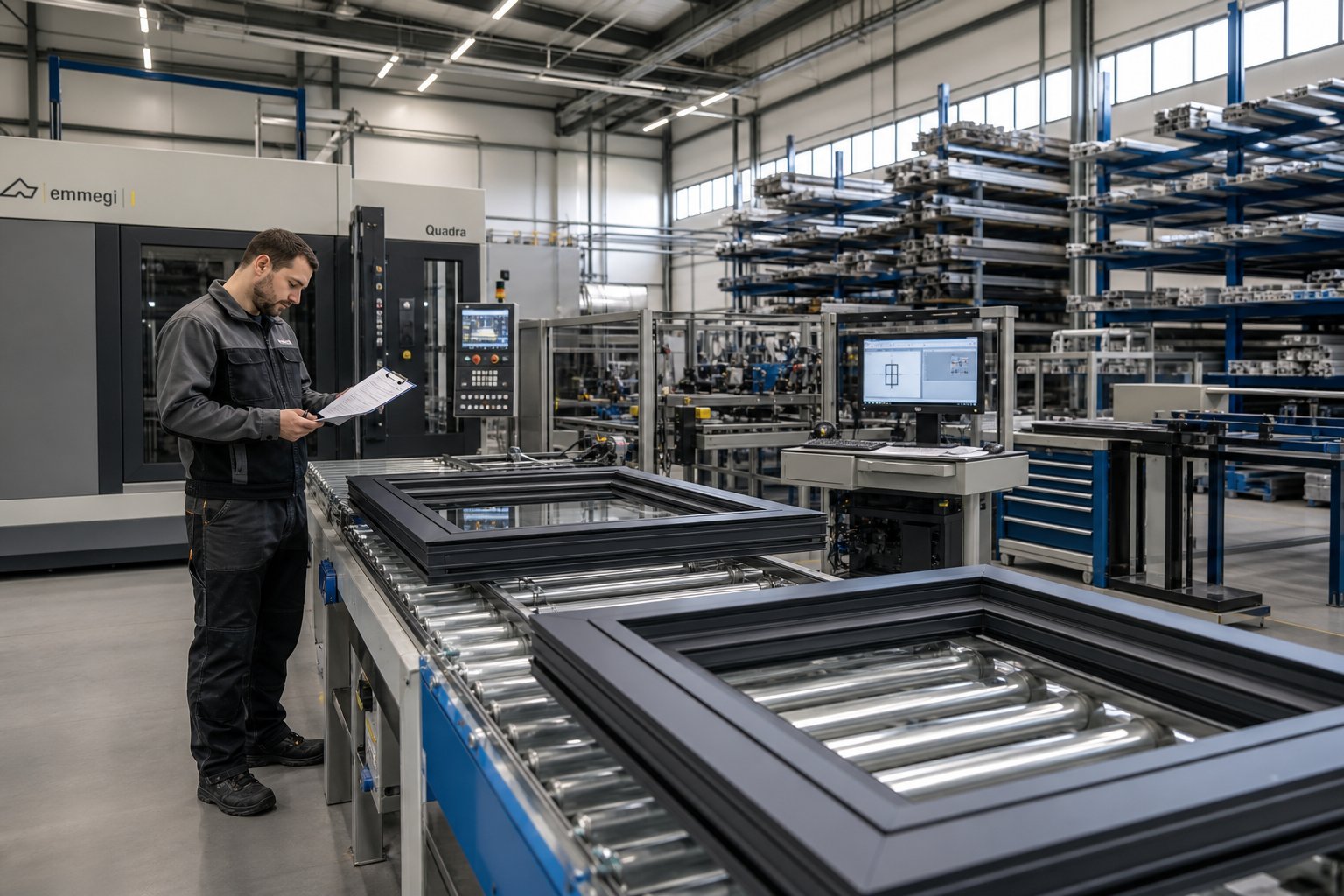
Choosing and Working with the Right Supplier
Project support versus transactional order processing — that distinction separates aluminium window suppliers who reduce your risk from those who simply take your money and ship a product. For single-window replacements, the difference may not matter much. For multi-opening projects where coordination, timing, and technical accuracy drive outcomes, it matters enormously.
What to Look for in a Supply-Only Supplier
Not every aluminium window company operates the same way. Some are pure fabricators focused on volume throughput. Others function as project partners, embedding themselves in your workflow from drawings through to delivery coordination. When evaluating aluminium window suppliers for supply-only work, these capabilities separate the reliable from the risky:
- Fabrication capability and profile range — does the supplier fabricate in-house, or are they reselling from a third-party manufacturer? In-house fabrication typically means tighter quality control and shorter communication loops. Check whether they offer multiple profile systems (residential, commercial, thermally broken) so you’re not forced into a single option regardless of project needs.
- Technical support availability — can you speak to someone who understands aluminium window systems at a technical level? For supply-only orders, you need a supplier who can advise on profile compatibility, glazing capacity, hardware selection, and compliance requirements — not just process a purchase order.
- Willingness to work from architectural drawings — a capable aluminium windows manufacturer should be able to interpret floor plans, elevations, and window schedules directly, translating your architect’s intent into fabrication-ready specifications without requiring you to act as a go-between.
- Lead time transparency — realistic lead times vary by order complexity, colour selection, and current production load. A good supplier communicates these upfront rather than quoting optimistic timelines that blow out mid-project.
- Delivery logistics — particularly for larger orders, how units are packed, transported, and sequenced for delivery matters. Ask whether the supplier coordinates delivery around your construction programme or simply dispatches when production finishes.
- After-sales responsiveness — if a unit arrives with a defect or a specification query surfaces during installation, how quickly does the supplier respond? Ask for references from previous supply-only clients, especially builders or developers who’ve worked with them across multiple projects.
A pattern emerges across these criteria: the best aluminium window suppliers treat your project as a collaboration rather than a transaction. They invest time upfront — reviewing drawings, confirming specifications, flagging potential issues — because it reduces problems downstream for both parties. When searching for aluminium windows near me, prioritise this project-support capability over geographic convenience alone. A supplier two hours away who coordinates properly will outperform a local alum windows manufacturers that simply takes orders and ships product without engagement.
The Ordering Process from Specification to Delivery
Understanding the typical workflow helps you plan realistic timelines and know what’s expected at each stage. A well-structured ordering process for supply-only aluminium windows follows this sequence:
- Initial enquiry and drawing submission — you provide architectural drawings, a window schedule, or measured dimensions along with your performance requirements (thermal, acoustic, compliance). The supplier reviews for completeness and flags missing information.
- Detailed quotation — the supplier returns a specification-based quote covering profile system, glazing package, hardware, colour, and delivery. This should itemise each window type so you can see exactly where costs sit.
- Specification confirmation and sign-off — both parties confirm every detail in writing: dimensions, configurations, colours (by code), hardware selections, hinge sides, safety glass positions, and compliance requirements. This is your last opportunity to catch errors before production.
- Production and quality control — manufacturing proceeds against the confirmed specification. A quality-focused supplier inspects at multiple stages: incoming materials, fabrication accuracy, assembly, glazing installation, hardware fitting, and final product check.
- Coordinated delivery planning — rather than shipping the moment production finishes, the supplier aligns delivery with your site programme. Units are packed in installation sequence where possible, with protective packaging suited to site handling conditions.
For multi-window projects — new builds, apartment developments, commercial fit-outs — this structured process prevents the cascading problems that plague disorganised procurement: wrong sizes, mismatched colours, hardware arriving separately, or windows showing up before the openings are ready.
MEICHEN operates precisely this project-support model, working with builders, developers, architects, and procurement teams from initial drawings through system recommendations, material calculation, manufacturing coordination, quality control, and delivery planning. For supply-only buyers who want a structured, supported process rather than a bare transaction, their services team can walk you through each stage — turning what often feels like a high-risk procurement exercise into a controlled, predictable workflow.
The supply-only model demands more from the buyer, but partnering with the right aluminium windows manufacturer removes much of that burden. The savings remain. The control remains. What disappears is the guesswork — replaced by a clear process, a documented specification, and a supplier invested in getting your project right the first time.
Frequently Asked Questions About Aluminium Windows Supply Only
1. What does supply only mean when buying aluminium windows?
Supply only means you purchase fully manufactured aluminium window units from a fabricator without any installation services included. The windows arrive on site complete with glazing, hardware, and weather seals, ready for your own trade team or preferred glazier to install. You pay for the product and delivery only, giving you full cost transparency and scheduling control over the fitting process.
2. Who should buy aluminium windows supply only instead of supply and fit?
Supply only suits buyers who already have installation capability or trusted trade contacts. This includes builders with their own crews, glazing contractors who install but don’t fabricate, commercial fit-out contractors managing multi-unit developments, property developers with established trade networks, and experienced self-builders coordinating their own projects. If you lack installation support or your project involves complex structural modifications, a supply-and-fit package may be more appropriate.
3. How much do supply only aluminium windows cost in Australia?
Australian supply-only pricing ranges from around $150 for a small fixed unit to $790 or more for larger awning or sliding configurations. Thermally broken frames, custom RAL colours, triple glazing, and compliance requirements like BAL or cyclone ratings push costs higher. Pricing varies significantly between suppliers and regions, so requesting multiple quotes built on identical specifications is the only reliable way to compare. A project-capable supplier like MEICHEN can help you understand the real cost drivers specific to your order.
4. What are the biggest risks of ordering aluminium windows supply only?
The primary risks include measurement errors that result in windows that don’t fit their openings, incorrect specification of hinge side or hardware, failing to confirm colour codes in writing, not inspecting deliveries for transit damage before signing, poor site storage that degrades seals and finishes, and warranty limitations when a third-party installer fits the product. Most of these risks are manageable with disciplined processes — measuring at multiple points, documenting every specification detail, and understanding your supplier’s warranty terms before ordering.
5. Should I choose thermally broken or non-thermal break aluminium window profiles?
For any conditioned living space in Australia, thermally broken profiles are the recommended choice. They use a polyamide barrier between inner and outer aluminium faces to reduce heat transfer by 40-60% compared to standard frames, achieving U-values of 2.0-3.5 W/m2K versus 5.5-6.5 W/m2K for non-thermal break profiles. Non-thermal break profiles may be acceptable for unconditioned spaces like garages or sheds where thermal performance is not a priority and budget is the primary concern.
More Window & Door Guides