Why Aluminum Windows Still Dominate Modern Construction
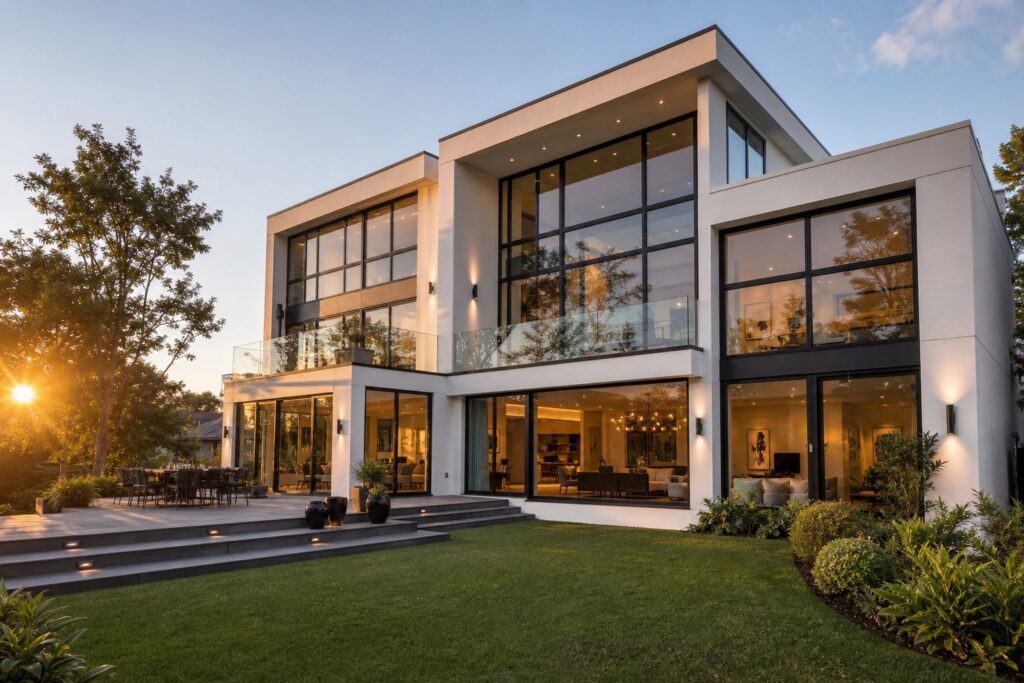
Aluminum windows are window systems built around frames made from extruded aluminum alloy, typically strengthened with small amounts of magnesium and silicon. They’re used in everything from single-family homes to high-rise commercial towers, and they’ve held that range for decades. If you’ve been searching for aluminum windows for sale and wondering whether the material still holds up against vinyl and wood, the short answer is yes, and for reasons that go beyond price.
What Makes Aluminum Windows Different From Other Frame Materials
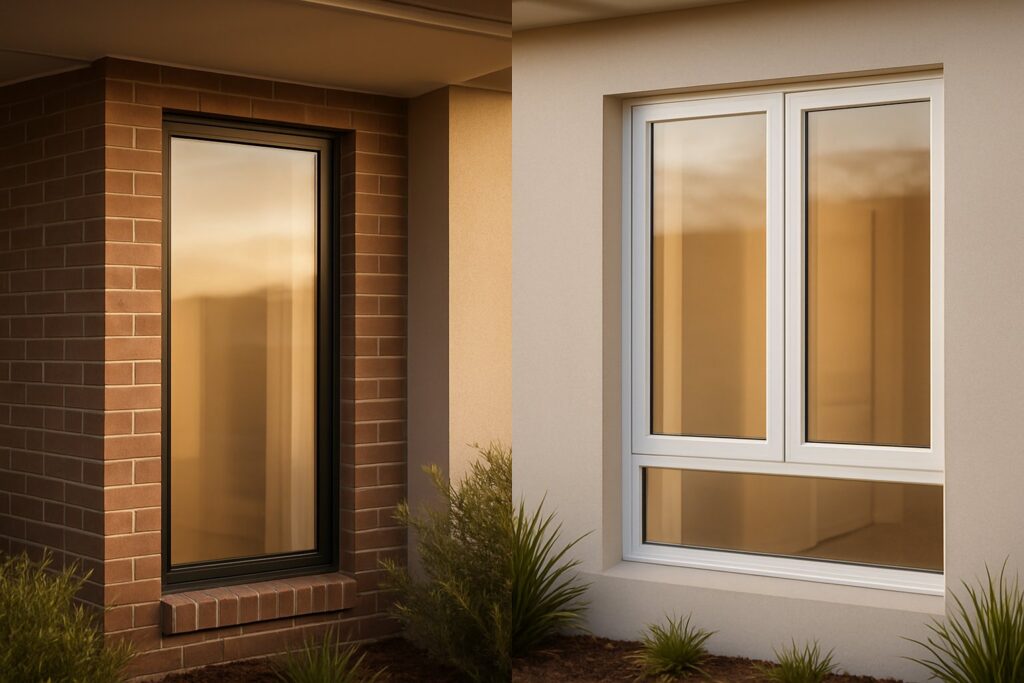
The advantages start with a high strength-to-weight ratio that far exceeds alternative framing materials. That structural strength means aluminum window frames for sale today can support larger glass panels with thinner sightlines, giving you more visible glass and less visible frame. Aluminum is also naturally corrosion resistant. Rather than rusting, it forms a protective oxide layer when exposed to the elements, which is why it performs so well in coastal and high-humidity environments. Add design flexibility into the mix, with a wide range of anodized and powder-coated finishes, and you get a frame material that adapts to nearly any architectural style.
Then there’s the sustainability factor that most buyers overlook entirely.
Aluminum is the only mainstream window frame material that is infinitely recyclable without any loss of quality, making it a cornerstone of circular building design.
Who Should Consider Buying Aluminum Windows
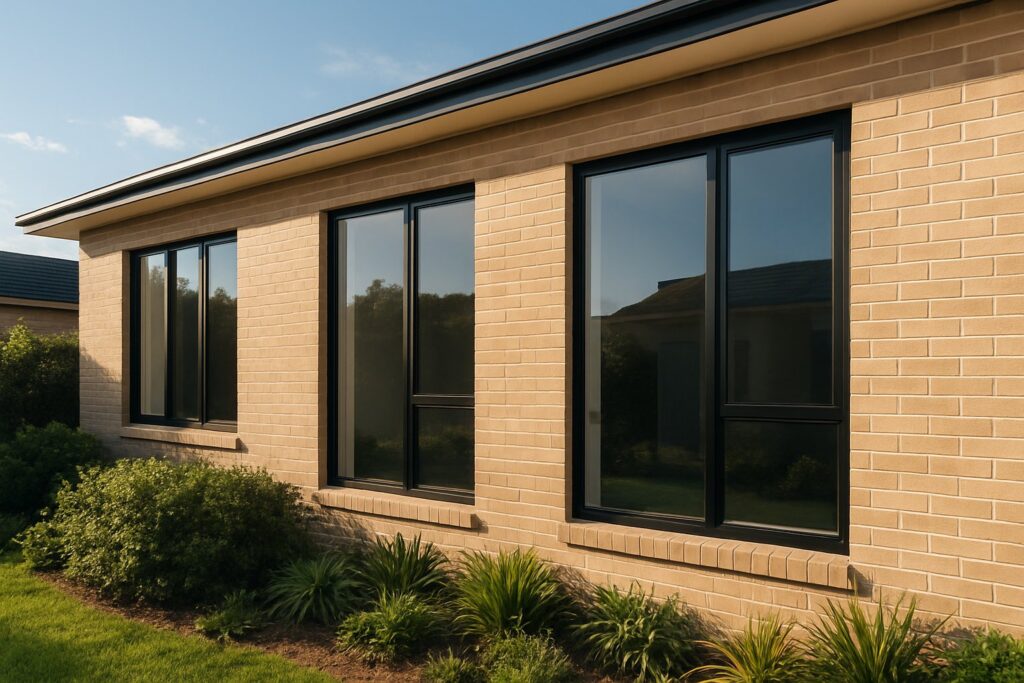
If you’ve already narrowed your search to aluminum frame windows for sale, you’re likely someone who values durability, clean aesthetics, and long-term performance. Aluminum outlasts vinyl by a meaningful margin, with expected lifespans of 20 to 25 years compared to 15 to 20 for vinyl. It handles extreme temperature swings without warping or cracking, and it’s immune to UV solar damage. For homeowners browsing aluminum home windows for sale or builders sourcing aluminum house windows for sale for a new project, these qualities translate into fewer replacements and lower lifetime costs.
That said, choosing the right aluminum window involves more than picking a frame material. The style you select, the energy efficiency features built into the unit, the quality tier you land on, and where you actually buy all shape the outcome. Each of those decisions carries trade-offs that most buyers only discover after the install is done, and that’s exactly what the rest of this guide breaks down, starting with the full range of all aluminum windows for sale and which style fits which situation.
Every Aluminum Window Style and When to Use Each One
Picking aluminum as your frame material is only half the decision. The style of window you choose determines how it operates, how much airflow you get, and how it looks on your facade. Each style interacts with aluminum’s structural properties differently, and that’s where most buyers leave value on the table.
Sliding and Casement Aluminum Windows Explained
Sliding windows operate on a horizontal track, with one or more panels gliding past a fixed pane. They’re a natural fit for wide wall openings in living rooms, patios, and spaces where you don’t want a sash projecting outward. Aluminum’s strength is the reason you’ll find aluminum sliding windows for sale in sizes that vinyl simply can’t match. The frame’s rigidity supports heavier, larger glass panels without sagging or binding over time, which means broader views and cleaner sightlines.
Casement windows take a different approach. Hinged on one side, they swing outward using a crank or push-out handle, opening the entire sash to catch cross breezes. This makes aluminum casement windows for sale some of the best performers for ventilation. Because aluminum allows for slimmer frame profiles than wood or vinyl, casement designs maximize the glass-to-frame ratio, flooding rooms with natural light while maintaining structural integrity. When closed, the sash compresses against the frame to form a tight weatherseal, which also makes casements a strong choice for energy efficiency.
Awning, Jalousie, and Double-Hung Styles
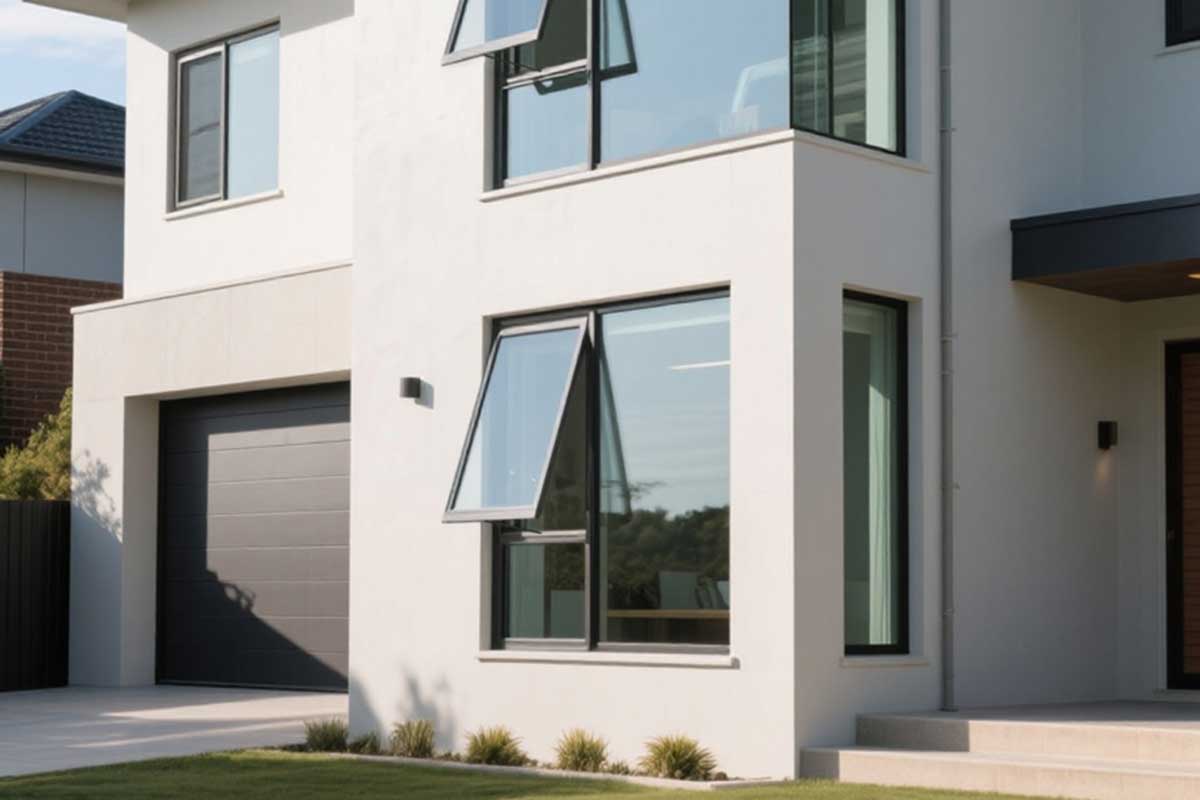
Awning windows are hinged at the top and swing outward from the bottom. That geometry lets you keep them open during light rain without water entering the room, making them ideal for kitchens, bathrooms, and laundry areas where moisture is already a factor. If you’re browsing for an aluminum awning window for sale, you’ll notice these units pair especially well with aluminum framing because the hinge mechanism benefits from a lightweight yet rigid frame that won’t warp under repeated cycling.
Jalousie windows, sometimes called louvre windows, feature multiple horizontal glass slats angled like a venetian blind. They offer exceptional ventilation control and are common in tropical and subtropical climates. Aluminum jalousie windows for sale remain popular in coastal regions where corrosion resistance and maximum airflow matter more than airtight insulation.
Double-hung windows are the classic vertical sliders. Both the upper and lower sashes move, and many models tilt inward for easy cleaning from inside the home. Aluminum double hung windows for sale suit traditional home styles and bedrooms where egress code compliance requires a fully operable opening. The aluminum frame keeps the profile slim even with two moving sashes, avoiding the bulky look that can come with vinyl double-hungs.
Beyond these core styles, aluminum’s structural versatility also supports more expansive configurations. You’ll find aluminum bifold windows for sale that fold multiple panels to one side, creating a near-seamless indoor-outdoor transition. Similarly, aluminum folding windows for sale work well for servery-style openings in kitchens or entertainment areas where you want to open an entire wall section.
Matching Window Style to Room Function
The right style depends on what the room demands. Here’s a side-by-side comparison to help you match function to form:
| Window Style | Operation Type | Best Room / Application | Ventilation Rating | Aluminum Advantage |
|---|---|---|---|---|
| Sliding | Horizontal glide | Living rooms, patios, wide openings | Moderate | Supports larger, heavier glass panels without track distortion |
| Casement | Side-hinged, crank or push-out | Bedrooms, living areas, upper floors | Excellent | Thinner sightlines maximize glass area and natural light |
| Awning | Top-hinged, swings outward | Kitchens, bathrooms, basements | Good | Lightweight rigid frame handles repeated open-close cycles |
| Jalousie / Louvre | Angled glass slats rotate open | Tropical homes, sunrooms, covered porches | Excellent | Corrosion-resistant frame suits humid, salt-air environments |
| Double-Hung | Vertical sliding (both sashes) | Bedrooms, hallways, traditional facades | Good | Slim profile avoids bulky appearance with dual moving sashes |
| Bifold / Folding | Multi-panel fold to one side | Entertainment areas, servery openings | Maximum (fully open) | Strength handles wide spans and heavy folding panel weight |
When you’re deciding between styles, keep these considerations in mind:
- Ventilation priority: casement and jalousie styles open the widest, capturing side breezes that sliding and double-hung designs can miss.
- Weather exposure: awning windows handle rain better than any other operable style because the glass acts as a canopy when open.
- Cleaning access: double-hung tilt-in sashes and casement windows that swing fully open are the easiest to clean from inside, especially on upper floors.
- Space constraints: sliding windows and awning windows don’t project outward, making them practical for rooms facing walkways, decks, or narrow side yards.
- Aesthetic consistency: mixing two or three complementary styles, like pairing a fixed picture window with flanking casements, creates visual interest without sacrificing a unified exterior look.
Style choice shapes daily livability more than most buyers expect. But there’s another layer to the decision that often gets overlooked entirely: whether the window you’re considering is engineered for residential use, commercial use, or somewhere in between, and why that distinction changes what you’re actually getting.
Residential vs Commercial Aluminum Windows Explained
You’ve settled on a style. You know whether you want a casement, a slider, or an awning configuration. But here’s a question most buyers never think to ask: is the window you’re looking at engineered for a house, or for a commercial building? The distinction matters more than you’d expect, and choosing the wrong category can mean failed inspections, wasted budget, or a product that underperforms from day one.
Key Engineering Differences Between Residential and Commercial Frames
Aluminum residential windows for sale are designed around comfort, curb appeal, and ease of use. The frame profiles tend to be slimmer, offering more finish options like powder coat colors and woodgrain textures. They’re built for standard-sized openings in homes, villas, townhouses, and low-rise apartments, where moderate wind loads and everyday operation are the norm.
Aluminum commercial windows for sale are a different animal. These systems use thicker, reinforced aluminum profiles engineered to handle larger glass panels, higher wind pressures, and the kind of heavy daily use you’d see in hotels, office towers, retail centers, and public buildings. The hardware is rated for significantly more open-close cycles, and the frames are deeper to accommodate heavier glazing configurations, including laminated and impact-resistant glass.
Here’s a quick comparison to make the differences concrete:
| Feature | Residential Aluminum Windows | Commercial Aluminum Windows |
|---|---|---|
| Profile Depth | Slimmer, designed for standard openings | Deeper, supports large facades and heavy glass |
| Glass Options | Standard dual-pane, Low-E coatings | Dual/triple-pane, laminated, impact-rated |
| Wind Load Rating | R class (15 psf / 77 mph) to LC class (25 psf / 100 mph) | CW class (30 psf / 109 mph) to AW class (40 psf / 126 mph) |
| Thermal Break | Available, sometimes optional | Frequently standard on modern systems |
| Hardware Grade | Standard residential, moderate cycle rating | Heavy-duty, high-cycle, enhanced locking |
| Typical Price Range | Lower upfront cost, faster lead times | Higher initial cost, lower long-term replacement risk |
The AAMA performance class system in North America grades windows from R (residential) through AW (architectural), with CW and AW classes typically specified for commercial projects. In Australia, AS2047 certification dictates structural and weatherproofing requirements based on building type and exposure. These aren’t suggestions. They’re code-driven mandates that determine which product class your project legally requires.
When a Commercial-Grade Aluminum Window Makes Sense for Homes
There’s a crossover zone that catches many buyers off guard. Light commercial projects like retail storefronts, small offices, and mixed-use buildings can sometimes use either residential or commercial systems depending on local code requirements and the specific wind-load calculations for the site. And it works the other direction too. Luxury homes with floor-to-ceiling glazing, exposed coastal locations, or oversized custom openings often benefit from aluminum frame commercial windows for sale because residential-grade products simply can’t handle the span or the structural demand.
If you’re searching for aluminum commercial windows for sale near me for a project that blurs the line between residential and commercial, the safest approach is to start with your local building code requirements and work backward to the product. Many large developments actually use a hybrid strategy, specifying aluminum framed windows for sale from the residential range for standard rooms and stepping up to commercial-grade systems for lobbies, feature walls, and high-exposure facades.
Getting the residential-versus-commercial call right protects your investment. But even within the right category, there’s a performance variable that separates a mediocre aluminum window from a genuinely efficient one, and it comes down to what’s happening inside the frame itself.
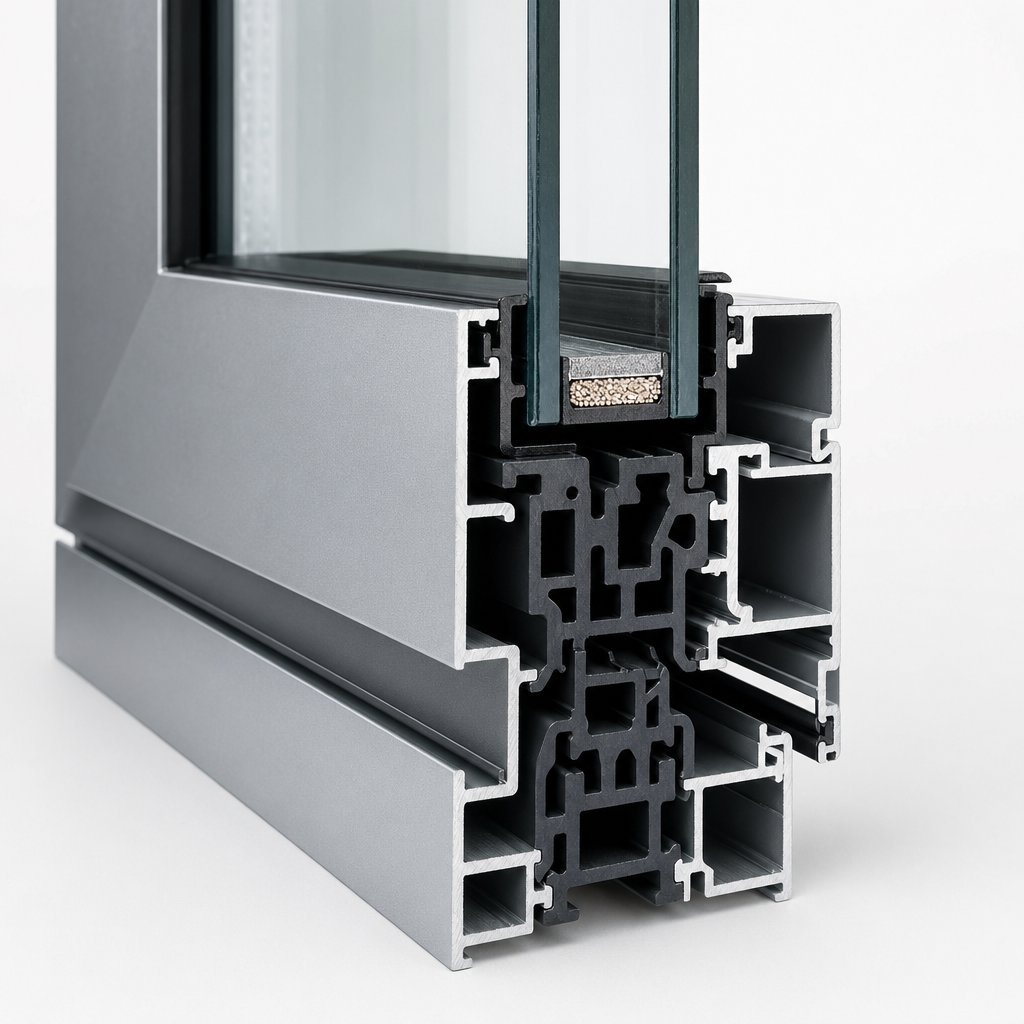
Thermal Break Technology and Aluminum Window Energy Efficiency
If you’ve ever touched an aluminum window frame on a cold morning and felt the chill radiating through it, you already understand the material’s biggest historical weakness. Aluminum conducts heat roughly 1,000 times more efficiently than vinyl. For decades, that thermal conductivity gave aluminum a reputation as an energy liability, and honestly, the older products deserved it. Single pane aluminum windows for sale in the 1970s and 80s had no insulating barrier in the frame, no Low-E glass coatings, and no gas fills. The result was condensation dripping down frames, cold drafts in winter, and energy bills that made homeowners wince.
That reputation stuck. But the technology didn’t stand still.
What Is a Thermal Break and How Does It Work
Imagine slicing an aluminum frame profile in half, then bridging the two halves with a strip of non-conductive material. That’s essentially what a thermal break does. The barrier, typically made from reinforced polyamide (nylon) or polyurethane, sits between the interior and exterior aluminum sections and interrupts the path heat would normally travel through the metal. Think of it like cutting a wire in an electrical circuit: the energy flow stops at the break.
This simple engineering change transforms how the frame performs. Without a thermal break, the entire frame acts as a heat highway, pulling warmth out of your home in winter and pushing it in during summer. With one, the interior face of the frame stays closer to room temperature, which dramatically reduces condensation and improves comfort near the window.
Single-Pane vs Double-Glazed Aluminum Windows
The frame is only half the equation. What’s sitting inside it matters just as much. If you’re comparing an aluminum glass window for sale with single-pane glazing against one with insulated double-pane glass, the performance gap is enormous.
Single-pane aluminum windows offer minimal insulation. They’re still available and can make sense for unconditioned spaces like sheds, garages, or covered patios where climate control isn’t a priority. But for any living space, aluminum dual pane windows for sale are the baseline you should be shopping. Double-glazed units use two panes of glass separated by a sealed air gap, often filled with argon or krypton gas, and coated with a Low-E film that reflects radiant heat. Pair that glass package with a thermally broken aluminum frame, and you’ve eliminated both of the material’s historical weak points in one move.
For buyers who want even more performance, aluminum clad windows for sale and aluminum clad wood windows for sale offer a hybrid approach: a wood or fiberglass interior for maximum insulation, wrapped in an aluminum exterior shell for weather protection and low maintenance. These products combine the thermal advantages of wood with the durability aluminum is known for.
How Modern Aluminum Windows Meet Energy Standards
So can a thermally broken aluminum window actually earn an ENERGY STAR label? Yes. ENERGY STAR qualification is based on two primary metrics: U-factor, which measures how well the window prevents heat from escaping, and Solar Heat Gain Coefficient (SHGC), which measures how much solar radiation passes through the glass. Lower numbers mean better performance in both cases.
Modern thermally broken aluminum windows paired with quality insulated glass typically achieve U-factor values in the range of 0.30 to 0.45 and SHGC values between 0.25 and 0.45, depending on the glass package and thermal break design. Vinyl windows, by comparison, generally land between 0.20 and 0.30 on U-factor. The gap has narrowed considerably. In warmer climate zones where ENERGY STAR thresholds are less demanding, thermally broken aluminum qualifies comfortably. In colder zones, pairing a high-performance thermal break with triple glazing can push aluminum into compliance territory as well.
With modern thermal break technology and advanced glazing, aluminum windows can match or closely approach the energy performance of vinyl frames, a reality that would have been unthinkable just two decades ago.
The real takeaway here isn’t that one frame material is universally better than another. It’s that the energy performance of any aluminum glass window for sale depends on the specific combination of thermal break quality, glass package, and installation integrity. A thermally broken aluminum window with premium Low-E double glazing will outperform a cheap vinyl window with basic glass every time.
Energy efficiency sets the floor for long-term value, but it doesn’t tell you everything about what you’re actually buying. The quality tier of the window, from builder-grade to premium, determines how that efficiency holds up over five, ten, or twenty years of daily use.
Understanding Aluminum Window Quality Tiers
Most product listings group aluminum windows by style or size, but almost none explain the quality tier you’re actually buying. That gap costs people money. Two aluminum casement windows can look nearly identical in a photo, yet one lasts a decade longer, insulates twice as well, and operates smoothly years after the other starts sticking. The difference comes down to which tier it belongs to: builder-grade, mid-range, or premium.
Builder-Grade Aluminum Windows and Their Limitations
When you see cheap aluminum windows for sale at the lowest price points, you’re almost always looking at builder-grade product. These windows use thinner aluminum profile windows for sale with narrower frame depths, basic single-point locking hardware, and a limited palette of standard finishes. The glass package is typically a single-pane or basic dual-pane unit without Low-E coatings or gas fills.
Here’s the critical detail: many builder-grade aluminum windows have no thermal break at all. As covered in the previous section, that means the frame conducts heat directly between indoors and outdoors, leading to condensation, energy loss, and discomfort in any climate-controlled room. For rental properties, sheds, garages, or budget renovations where insulation isn’t the priority, builder-grade can make financial sense. For a primary residence, it’s a false economy. You’ll also find aluminum construction industrial windows for sale cheap in this tier, designed for warehouses and workshops where thermal performance takes a back seat to basic weather protection and cost control.
Mid-Range and Premium Tiers Compared
The mid-range tier is where most homeowner projects land, and for good reason. These windows include thermally broken frames, improved multi-point locking hardware, better weathersealing, and a broader selection of finishes. If you’ve been eyeing black aluminum windows for sale or bronze aluminum windows for sale, those popular color options are typically available starting at this tier. The glass packages step up to insulated dual-pane units with Low-E coatings and argon gas fills, delivering the kind of energy performance that actually qualifies for ENERGY STAR in most climate zones.
Premium aluminum windows push every specification further. Expect heavy-duty thermally broken profiles with deeper frame sections, architectural-grade finishes that carry extended fade and corrosion warranties, and advanced glazing options including triple-pane configurations and laminated safety glass. The hardware is rated for significantly more open-close cycles, often exceeding 40,000 operations, which matters in high-traffic areas. These products target high-end residential builds, architect-specified projects, and situations where the window is a design feature, not just a functional opening.
Here’s how the three tiers stack up across the features that matter most:
| Feature | Builder-Grade | Mid-Range | Premium |
|---|---|---|---|
| Frame Thickness | Thinner profiles, shallow depth | Standard profiles, moderate depth | Heavy-duty profiles, deeper sections |
| Thermal Break | None or minimal | Standard polyamide thermal break | Advanced multi-chamber thermal break |
| Glass Options | Single-pane or basic dual-pane | Dual-pane with Low-E and argon fill | Dual or triple-pane, laminated, tinted |
| Finish Quality | Basic powder coat, limited colors | Quality powder coat, popular colors | Architectural-grade powder coat or anodized |
| Hardware Grade | Single-point lock, basic rollers | Multi-point lock, improved rollers | High-cycle multi-point, concealed hardware |
| Expected Lifespan | 10-15 years | 20-25 years | 30+ years |
How Finish Type Affects Long-Term Value
One detail that separates tiers more than buyers realize is the finish. Builder-grade and mid-range windows almost exclusively use powder coating, where a dry pigment is electrostatically applied and then heat-cured onto the aluminum. It’s durable, available in a wide color range, and cost-effective. Quality varies, though. A premium-grade powder coat rated to resist fading, chalking, and corrosion for 20-plus years is a different product from a budget coat that starts showing wear in five.
Anodized finishes, more common at the premium tier, work differently. Instead of adding a coating on top of the aluminum, anodizing creates a hard oxide layer within the metal’s surface through an electrochemical process. The result is exceptionally scratch-resistant, won’t peel or flake, and develops a distinctive metallic sheen that powder coat can’t replicate. It’s the finish you’ll see specified on architectural projects where appearance and longevity are non-negotiable.
The bottom line: the cheapest aluminum windows for sale and the most expensive ones are made from the same base material, but they share very little else. Knowing which tier matches your project’s actual demands, not just your initial budget, is what separates a purchase you forget about from one you regret. And once you’ve locked in the right quality tier, the next question is how long that investment will actually last and what it takes to keep it performing, especially in your specific climate.
Maintenance, Longevity, and Climate Performance of Aluminum Windows
Knowing your quality tier tells you what to expect on paper. What actually determines whether those expectations hold up is how you care for the windows once they’re installed, and whether the product was specified correctly for your climate in the first place. These two factors, maintenance and environment, interact constantly, and they’re the reason two identical windows can age very differently in two different homes.
Cleaning and Maintaining Aluminum Window Frames
Aluminum is genuinely low-maintenance compared to wood, which needs periodic painting or staining to avoid rot. You won’t be refinishing aluminum frames every few years. But low-maintenance doesn’t mean no-maintenance. Dirt buildup, neglected drainage paths, worn sealant, and unchecked hardware can all shorten the useful life of an otherwise durable window.
The routine is straightforward. Clean frames and glass with mild soap and water periodically so environmental residue doesn’t sit on the finish longer than necessary. Lubricate tracks and moving hardware at least once a year to prevent grinding and stiffness. Inspect weatherstripping for compression or cracking, since seals typically wear out well before the frame does.
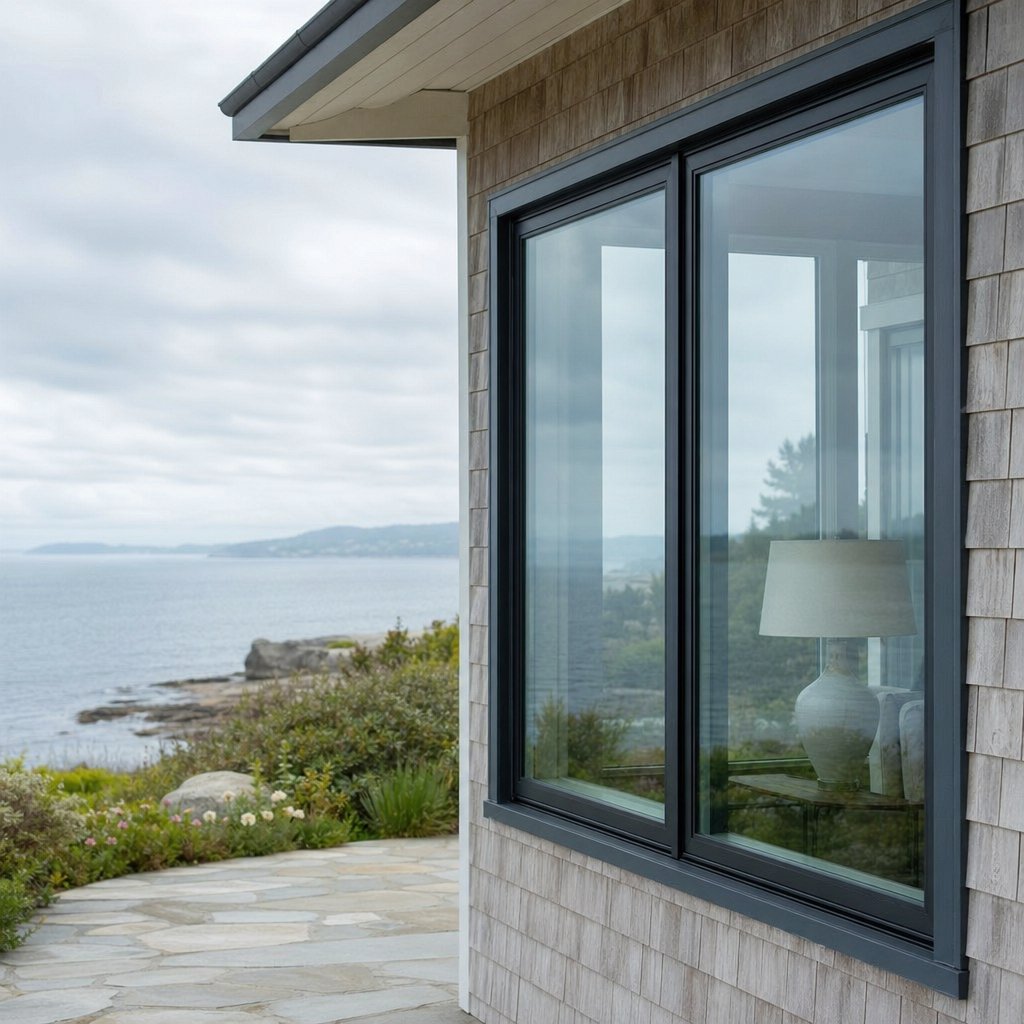
Corrosion prevention deserves its own attention. Aluminum naturally forms a thin oxide layer that protects the underlying metal, but that defense has limits. In coastal and high-humidity environments, salt particles settle on frames and begin breaking down protective finishes, leading to surface discoloration, pitting, and eventually hardware corrosion. If the powder coat gets scratched or chipped, that exposed spot becomes a weak point. Catching it early, when you notice chalking, rough texture, or small discolored patches, is far easier than dealing with deep pitting later.
Here’s a seasonal checklist to keep things on track:
- Spring: clean all frames, glass, and tracks with mild soap and water. Inspect sealant lines and weatherstripping for wear.
- Summer: lubricate rollers, hinges, and locking hardware. Check drainage weep holes to ensure they’re clear.
- Fall: remove debris from tracks and sills before wet weather sets in. Inspect the finish on sun-exposed frames for chalking or fading.
- Winter: test window operation and locking mechanisms. Look for condensation patterns that might indicate seal failure or thermal break issues.
How Climate Affects Aluminum Window Performance
Aluminum thrives in environments that punish other materials. Coastal areas are a prime example. Where salt air corrodes steel and moisture warps wood, aluminum’s oxide layer and powder coat finish hold up with routine rinsing. Hot climates are another strong suit. Vinyl frames can soften, warp, or experience thermal expansion issues under sustained heat, while aluminum stays dimensionally stable. In hurricane-prone regions, aluminum’s strength-to-weight ratio allows it to support impact-rated glass configurations that vinyl frames often can’t handle structurally.
Where aluminum faces challenges is extreme cold, specifically when the frame lacks a thermal break. An unbroken aluminum profile in a freezing climate acts as a conduit for heat loss and a magnet for interior condensation. That’s why thermally broken frames are essential, not optional, for any climate-controlled space in cold regions.
For homeowners with older installations that lack thermal breaks, aluminum storm windows for sale offer a practical upgrade path. Adding a storm window creates a secondary air barrier that reduces drafts and improves insulation without replacing the primary unit. If you’re shopping for old aluminum storm windows for sale or triple track aluminum storm windows for sale on the secondhand market, check the frame condition and weatherstripping carefully. Used aluminum storm windows for sale can be a cost-effective solution, but only if the seals and tracks are still functional. Similarly, aluminum basement windows for sale with storm panel options can improve comfort in below-grade spaces where older single-pane units are common.
Realistic Lifespan Expectations by Quality Tier
So how long will your aluminum windows actually last? A practical range for modern products is around 30 to 45 years, with well-maintained units sometimes exceeding that. But “lasting” needs context. A window can still be standing after three decades yet no longer perform well because the seals have failed, the hardware is worn, or the finish has degraded.
Builder-grade windows, as covered in the previous section, tend to show operational issues within 10 to 15 years. Mid-range thermally broken units hold up for 20 to 25 years before hardware and seals need attention. Premium systems with architectural-grade finishes and high-cycle hardware can push past 30 years with the frame itself still in solid condition. In every tier, the frame outlasts the supporting components. You’ll replace weatherstripping, re-lubricate hardware, and possibly reseal the insulated glass unit long before the aluminum extrusion itself gives out.
Old aluminum windows for sale on the resale market prove this point. You’ll find frames from the 1980s and 90s that are structurally sound but need new seals, hardware, and sometimes reglazing. The aluminum survived. Everything around it didn’t.
Maintenance and climate suitability protect your investment over time, but they don’t help much if you bought from the wrong place to begin with. Where you source your aluminum windows, and how you evaluate that supplier, shapes everything from product quality to warranty coverage and post-sale support.
Where to Find Aluminum Windows for Sale
The supplier you choose affects far more than the price tag. It determines your access to customization, the quality of guidance you receive during specification, and how much support you get if something goes wrong after installation. Whether you’re searching for aluminum windows for sale near me or casting a wider net with aluminum windows for sale online, each purchase channel comes with a distinct set of trade-offs.
Comparing Big-Box Retailers, Dealers, and Direct Suppliers
There are five main channels for buying aluminum windows, and none of them is universally best. The right one depends on your project scope, how much customization you need, and whether you want someone to handle installation or just supply the product.
Direct-from-manufacturer suppliers cut out the middleman, which can reduce cost and give you access to the full product catalog. MEICHEN, for example, offers AS2047-compliant aluminium windows across multiple styles for both residential and commercial projects, with a product hub that lets buyers compare configurations for different project needs. This kind of manufacturer-direct channel works well for builders, developers, and homeowners who know what they want or are willing to invest time in the selection process.
Big-box retailers like Home Depot or Lowe’s offer convenience, in-store financing, and the ability to see display models in person. The trade-off is a narrower product range, limited customization, and sales staff who may not specialize in windows. Specialty window dealers sit at the other end of the spectrum, providing deep product knowledge, broader brand access, and often handling measurement and installation as a package. Online suppliers expand your geographic reach significantly, which is especially useful if you’re sourcing aluminum alloy doors and windows for sale or aluminum sliding doors and windows for sale in configurations that local retailers don’t stock. The downside is that warranty service, returns, and dispute resolution become more complicated when the seller is interstate or overseas.
Local showrooms round out the options. They let you operate hardware, compare finishes side by side, and talk through specifications face to face. For anyone buying a complete aluminum windows and doors for sale package for a renovation or new build, that hands-on experience can prevent costly specification errors.
Here’s how the channels compare across the factors that matter most:
| Purchase Channel | Customization Level | Price Range | Expert Guidance | Installation Support |
|---|---|---|---|---|
| Direct-from-Manufacturer (e.g., MEICHEN) | High — full catalog access | Competitive (no middleman markup) | Product-specific expertise | Varies; often supply-only or referral network |
| Big-Box Retailer | Low to moderate — stocked lines only | Mid-range with financing options | General, not window-specific | Subcontracted installation available |
| Specialty Window Dealer | High — multiple brands and series | Mid to premium | Strong — dedicated window specialists | Typically included or coordinated |
| Online Supplier | Moderate to high — wider geographic range | Variable; shipping adds cost | Limited to phone/email/chat | Rarely included; buyer arranges locally |
| Local Showroom | Moderate to high | Mid to premium | Hands-on, face-to-face | Often bundled with supply |
How to Evaluate an Aluminum Window Supplier
Regardless of which channel you lean toward, the evaluation process is the same. Start with compliance. Any aluminum window for sale should meet the relevant performance standards for your region. In Australia, that means AS2047 certification. In North America, look for AAMA or NFRC ratings. If a supplier can’t provide test reports or certification documentation, that’s your first warning sign.
Ask about warranty structure before you ask about price. A credible supplier will clearly outline what’s covered (frame, glass seal, hardware) and for how long. Check whether they offer both supply-only and supply-and-install options, since flexibility here signals a supplier who works with different buyer types, from DIY renovators to large-scale developers. Verify that their product range actually covers the styles and configurations your project requires. A supplier with a deep catalog of aluminum windows and doors for sale across casement, sliding, awning, and fixed configurations is more likely to get your specification right than one selling a handful of SKUs.
If you’re browsing used aluminum windows for sale near me through secondhand marketplaces or salvage yards, the evaluation shifts. There’s no manufacturer warranty to fall back on, so you’re relying entirely on your own inspection of frame condition, seal integrity, hardware function, and glass clarity. Salvaged units can work for sheds, studios, or non-critical openings, but they’re a gamble for primary living spaces.
Watch for these red flags when vetting any supplier:
- No certification documentation or test reports available on request.
- Vague or verbal-only warranty terms with nothing in writing.
- Pressure to commit before you’ve received a detailed written quote.
- Inability to explain the thermal break status of their products.
- No physical address, showroom, or verifiable project references.
- Pricing that seems dramatically below market without a clear explanation, such as clearance stock or discontinued lines.
Finding the right supplier gets you the right product at a fair price. But the purchase itself is only part of the equation. How that window gets installed, what warranty actually protects it, and when you place the order all influence whether the investment pays off or falls short.
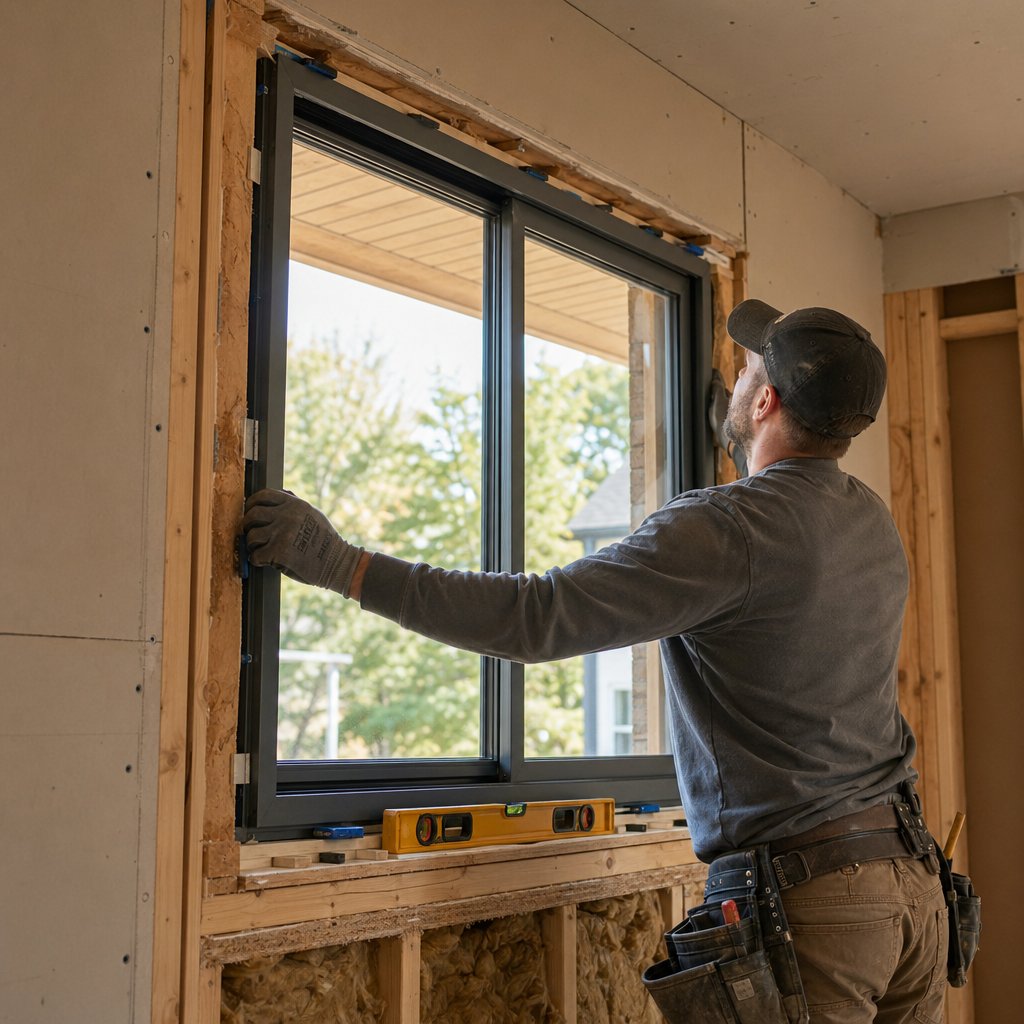
Installation, Warranties, and Smart Buying Timing
You’ve picked the right style, quality tier, and supplier. The product is on order. What happens next determines whether that investment performs as expected or becomes a source of ongoing frustration. Installation quality and warranty coverage are the two factors most buyers spend the least time evaluating, and they’re the two that matter most once the window is in the wall.
New Construction vs Retrofit Aluminum Window Installation
Every aluminum window installation falls into one of two categories, and confusing them leads to problems fast.
New construction windows are designed to be installed while the wall framing is still exposed. They feature a nailing fin, a flat flange around the perimeter of the frame, that gets fastened directly to the studs and then sealed with flashing tape before the exterior cladding goes on. This method creates a continuous weather barrier and is standard for new builds, additions, and major remodels where the contractor is stripping the wall back to the frame anyway.
Retrofit windows, also called replacement windows, are built to fit inside an existing opening without disturbing the surrounding wall. Instead of a nailing fin, they use a Z-bar (flush fin) or block frame that slides into the old frame cavity and gets shimmed, sealed, and secured in place. This approach saves significant time and labor cost because the exterior siding, stucco, or brick stays untouched. If you’re replacing a single aluminum sash window for sale or swapping out a row of aging sliders, retrofit is typically the faster, less invasive path.
The choice between the two isn’t always yours to make. If the existing frame is rotted, warped, or structurally compromised, a retrofit insert won’t solve the underlying problem. You’ll need to go back to the studs. Suppliers like MEICHEN cater to both homeowners and builders, offering aluminium window configurations suited to retrofit replacements and full new-construction specifications, which simplifies sourcing when a project involves both scenarios under one roof.
Should you install them yourself? Handy homeowners can handle a straightforward retrofit replacement, especially on standard-sized openings with no structural surprises. But here’s the honest reality: incorrect installation is the leading cause of water intrusion, air leakage, and premature seal failure. A window that’s out of square by even a few millimeters can bind, leak, or void the manufacturer’s warranty entirely. Most manufacturers require professional installation for full warranty coverage, and that requirement exists for a reason.
Before any installation begins, run through this checklist:
- Verify all opening measurements at three points (top, middle, bottom for width; left, center, right for height) and confirm they match the ordered window dimensions.
- Confirm flashing requirements for your wall type. Stucco, brick, siding, and timber framing each have different flashing details.
- Check whether your local council or building authority requires a permit for window replacement. Many jurisdictions do, especially for changes to opening size or egress compliance.
- Inspect the existing frame and sill for rot, corrosion, or structural damage that would rule out a simple retrofit.
- Ensure drainage weep holes in the new window sill are positioned to direct water outward, not into the wall cavity.
- If sourcing aluminum sliding window parts for sale separately for a repair rather than a full replacement, confirm compatibility with the existing frame series before ordering.
What to Expect From Aluminum Window Warranties
A warranty is only as useful as your understanding of what it actually covers. Most aluminum window warranties aren’t a single blanket guarantee. They’re structured in layers, each with different terms and durations.
The frame warranty covers defects in the aluminum extrusion and finish. On premium-tier products, this is often a lifetime or 25-plus-year guarantee. Mid-range products typically offer 10 to 20 years. Builder-grade may carry as little as 5 years, or a prorated structure where your coverage diminishes over time.
The glass seal warranty covers failure of the insulated glass unit (IGU), the sealed space between panes. When that seal breaks, moisture enters the gap and you get permanent fogging between the glass. Quality warranties cover this for 15 to 20 years, while budget products may only offer 5 to 10.
The hardware warranty covers locks, handles, rollers, hinges, and operators. This is almost always the shortest coverage period, often 5 to 10 years, because hardware is the component most subject to wear. If you’re buying used aluminum windows for sale or used aluminum window awnings for sale, keep in mind that any original warranty is likely expired or non-transferable, so you’re accepting the hardware condition as-is.
A few warranty details that trip buyers up regularly:
- “Lifetime” usually means the lifetime of the original purchaser’s ownership, not the lifetime of the window. Sell the house, and coverage may end or transfer with reduced terms.
- Many warranties exclude damage from improper installation, which circles back to why professional fitting matters.
- Coastal and high-corrosion environments sometimes carry exclusions or shorter coverage periods for finish degradation.
- Aluminum window awnings for sale and aluminum window shutters for sale may carry separate, shorter warranties from the primary window unit, especially if they’re sourced from a different manufacturer.
Read the fine print before you buy, not after a claim gets denied. Ask for the warranty document in writing and compare it across suppliers. A strong warranty package covers frames, glass seals, and hardware with clear terms, includes labor for installation-related defects, and transfers to at least one subsequent homeowner.
Seasonal Timing and Smart Buying Tips
When you order matters almost as much as what you order. The window industry follows predictable seasonal demand cycles, and buying at the right time can save you money, shorten lead times, or both.
Spring and early summer are peak season. Contractors are booked, manufacturers are running at capacity, and lead times stretch. If you need installation during these months, place your order well in advance. Fall is often the sweet spot: demand drops, installers have more availability, and some suppliers offer off-season pricing to keep their schedules full before winter. Replacing windows in fall also means your home is sealed and insulated before the coldest months hit.
Winter is the least popular time to install, but it carries advantages for the right buyer. Crews are more flexible with scheduling, promotional pricing is more common, and if your current windows are failing badly enough to spike your heating bills, waiting until spring costs more in energy than acting now.
A few practical timing tips to keep in your back pocket:
- Custom-sized aluminum windows typically carry 4 to 8 week lead times. Standard sizes ship faster. Factor this into your project timeline.
- If you’re coordinating window installation with a broader renovation, schedule windows early in the sequence. Other trades (plastering, painting, trim) depend on the openings being finished first.
- End-of-financial-year periods can trigger clearance pricing on discontinued lines or overstock, which is worth asking about.
- For large orders covering an entire home or development, negotiate. Volume pricing is standard practice for most manufacturers and dealers.
The buyers who get the most value from their aluminum windows aren’t necessarily the ones who spend the most. They’re the ones who match the right product to the right application, verify that the installation is done correctly, understand exactly what their warranty covers, and time their purchase to work in their favor. That combination, more than any single feature or brand name, is what separates a window that performs for decades from one that disappoints within years.
Frequently Asked Questions About Aluminum Windows for Sale
1. How long do aluminum windows typically last?
Modern aluminum windows generally last between 30 and 45 years when properly maintained, though the actual lifespan depends heavily on the quality tier. Builder-grade units may show operational issues within 10 to 15 years, mid-range thermally broken windows hold up for 20 to 25 years, and premium systems with architectural-grade finishes can exceed 30 years. In every case, hardware, weatherstripping, and glass seals tend to need replacement before the aluminum frame itself deteriorates, so periodic maintenance is key to reaching the upper end of those ranges.
2. Are aluminum windows energy efficient?
Yes, but only when they include a thermal break and quality glazing. Older aluminum windows without thermal breaks conduct heat rapidly and perform poorly. Modern thermally broken aluminum frames paired with Low-E double or triple glazing achieve U-factor values around 0.30 to 0.45 and can meet ENERGY STAR requirements in most climate zones. The thermal break, a polyamide or polyurethane barrier between the interior and exterior frame sections, interrupts heat transfer and virtually eliminates the condensation issues that gave aluminum its outdated reputation.
3. What is the difference between residential and commercial aluminum windows?
Residential aluminum windows use slimmer profiles, offer more aesthetic finish options, and are engineered for standard home openings with moderate wind loads. Commercial aluminum windows feature deeper, heavier-gauge frames designed for larger glass panels, higher wind-pressure ratings (CW or AW class under AAMA standards), and heavy-duty hardware rated for high-cycle use. Some projects fall into a crossover zone where either category may work depending on local building codes, and luxury homes with oversized openings or coastal exposure sometimes benefit from commercial-grade systems.
4. What should I look for when buying aluminum windows?
Start with certification compliance, such as AS2047 in Australia or AAMA and NFRC ratings in North America. Confirm the window includes a thermal break if it will be installed in any climate-controlled space. Review the warranty structure across three layers: frame, glass seal, and hardware. Check the finish quality, since a premium powder coat or anodized finish resists fading and corrosion far longer than a budget coating. Finally, evaluate the supplier’s credibility by requesting written warranty terms, verifying their product range covers your required styles, and confirming whether they offer supply-only or supply-and-install options.
5. Is it better to buy aluminum windows from a dealer or directly from a manufacturer?
Both channels have advantages. Manufacturer-direct suppliers like MEICHEN often provide competitive pricing by eliminating middleman markup, full catalog access for customization, and product-specific expertise. Specialty dealers offer hands-on guidance across multiple brands, often bundle installation, and can be easier for buyers who want a single point of contact for the entire project. Big-box retailers add convenience and financing but limit customization. The best choice depends on your project scope, how much specification support you need, and whether you want installation coordinated through the same supplier.
More Window & Door Guides