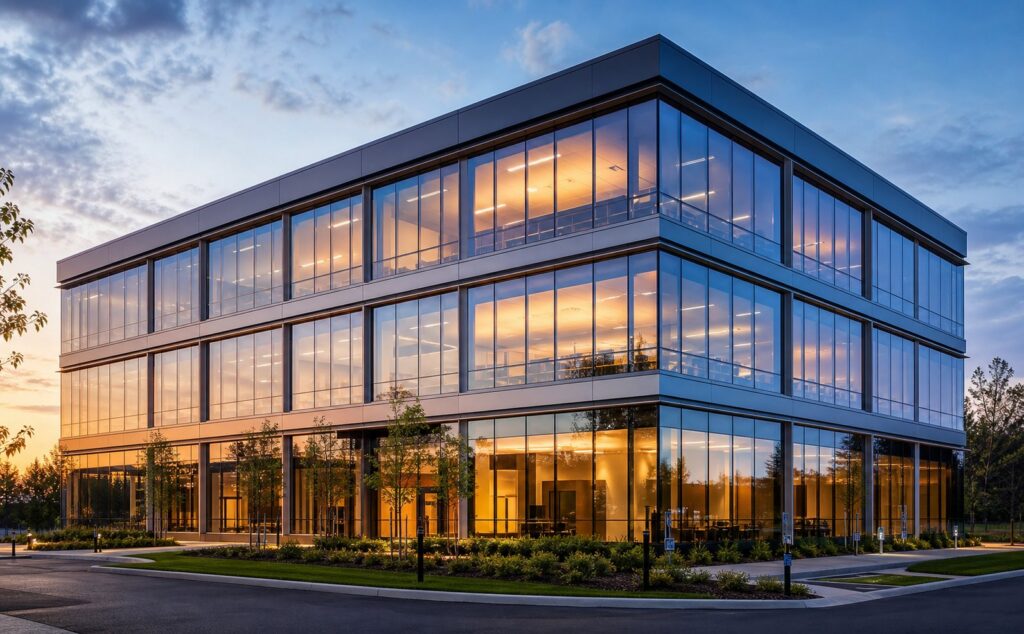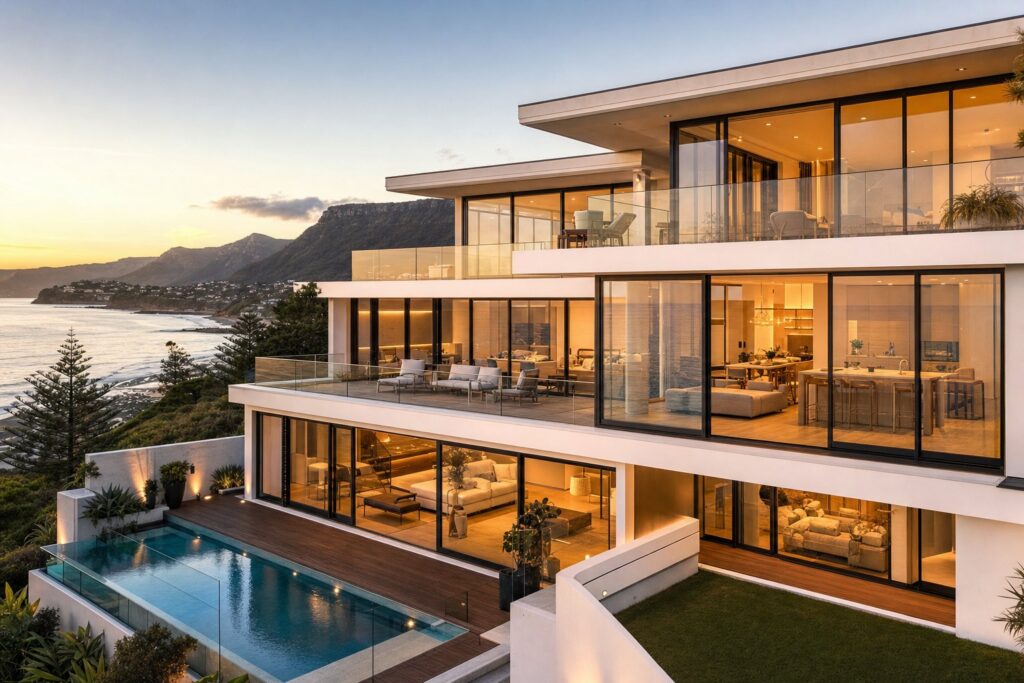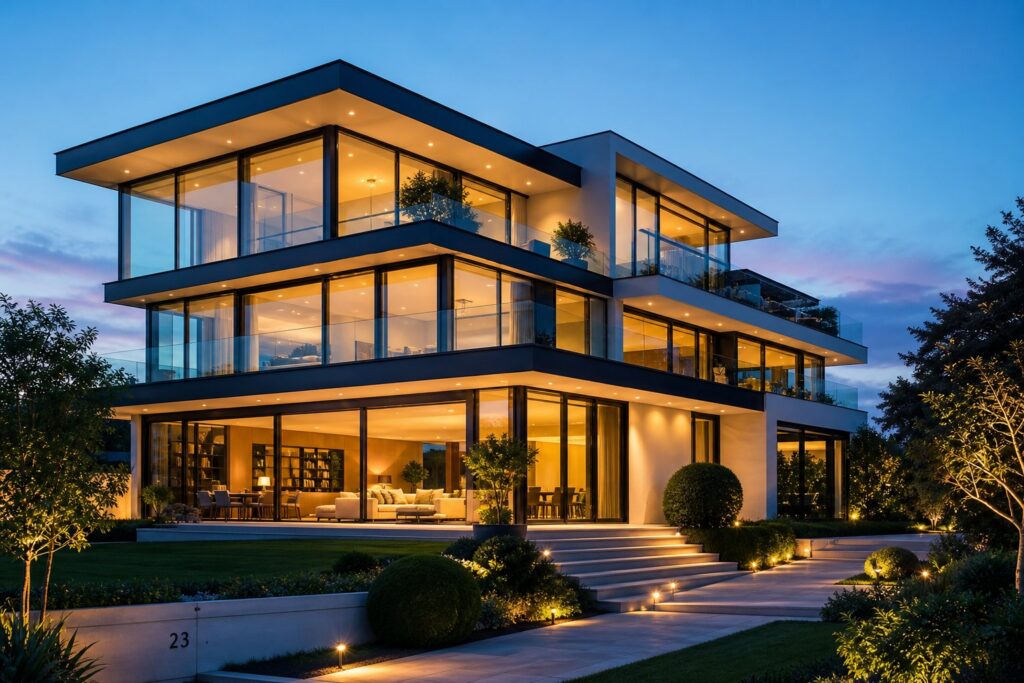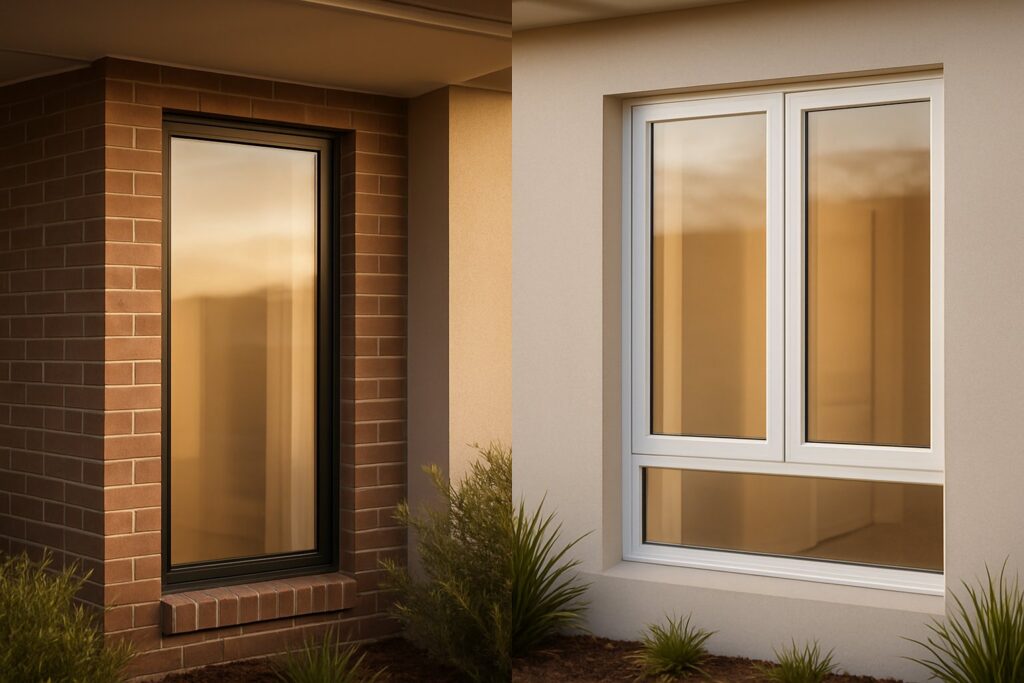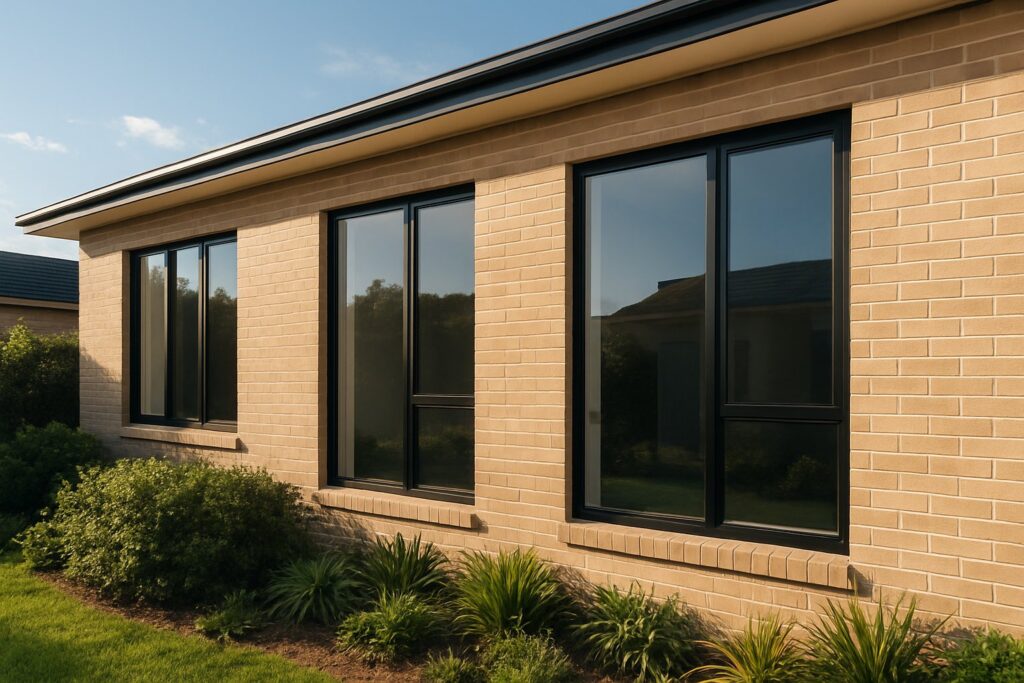
What Is an Aluminium Windows Cost Calculator and Why You Need One
Getting a straight answer on aluminium window pricing in Australia feels nearly impossible. You request a quote, wait days, and receive a lump-sum figure with zero explanation of how it was calculated. An aluminium windows cost calculator exists to cut through that fog, giving homeowners, renovators, and building professionals a structured way to estimate project costs before a single supplier picks up the phone.
At its core, this type of tool takes your project inputs — window sizes, styles, glazing preferences, finish selections — and applies pricing logic to generate an estimate. Homeowners use a window cost calculator to sanity-check contractor quotes. Builders and architects use one to scope budgets during early design stages. Anyone comparing multiple quotes benefits from understanding what actually drives the numbers.
What an Aluminium Window Cost Calculator Actually Does
A dedicated window price calculator for aluminium accounts for variables that matter specifically to this frame material: thermal break complexity, powder-coating colour options, profile thickness, and the engineering required for slim sightlines supporting large glass areas. It separates material cost from labour, disposal, and ancillary expenses so you can see where your money goes rather than staring at a single unexplained total.
Why Generic Window Calculators Fall Short for Aluminium
Most generic window calculator tools online were built around vinyl replacement windows. They assume standard profile depths, limited colour ranges, and basic hardware. Aluminium operates in a completely different pricing universe.
Aluminium’s defining characteristics — ultra-slim sightlines, 40+ year durability, full recyclability, and unlimited powder-coat colour options — create a pricing structure that shares almost nothing with vinyl or timber. A window prices calculator built for those materials will underestimate aluminium costs in some areas and entirely miss cost factors like thermal break technology, marine-grade finishes, and cyclone-rated hardware.
This article teaches you the methodology behind accurate aluminium window estimates. You will not find static price ranges copied from outdated tables. Instead, you will learn how each cost factor works, how to apply multipliers for your specific project, and how to read a quote like someone who understands exactly what they are paying for. Think of it as building your own window replacement cost calculator from first principles — one that reflects real Australian market conditions, labour rates, and compliance requirements.
Key Cost Factors That Drive Aluminium Window Pricing
Every aluminium window price comes down to a stack of individual decisions — some made by you, some dictated by your building’s requirements. Understanding these cost drivers is what separates someone who can read a quote intelligently from someone who simply accepts whatever number lands in their inbox. A reliable cost estimate treats each factor as a separate line item, and so should you.
The cost of aluminium windows in Australia breaks into five distinct industry categories: materials (frame, glass, hardware, seals), labour (installation, fitting, commissioning), supplies (fixings, flashings, sealants, packers), removal (stripping out existing windows, disconnecting any security wiring), and disposal (skip bins, recycling levies, waste transport). For aluminium specifically, the materials category carries more weight than it does for vinyl because the frame engineering itself — thermal breaks, profile geometry, finish systems — involves genuine manufacturing complexity.
Frame Profile and Thermal Break Technology
The aluminium frame is your single largest material cost component, typically accounting for 30% to 45% of the total aluminium window price. Two characteristics drive this cost: profile thickness and thermal break specification.
Profile thickness in Australia generally ranges from 1.6 mm for standard residential applications up to 2.0 mm or heavier for high-performance, large-span, or cyclone-rated installations. Each step up in wall thickness increases raw material usage and extrusion cost. A jump from 1.6 mm to 2.0 mm can add 8% to 12% to the frame cost alone — a meaningful shift when multiplied across a full house of windows.
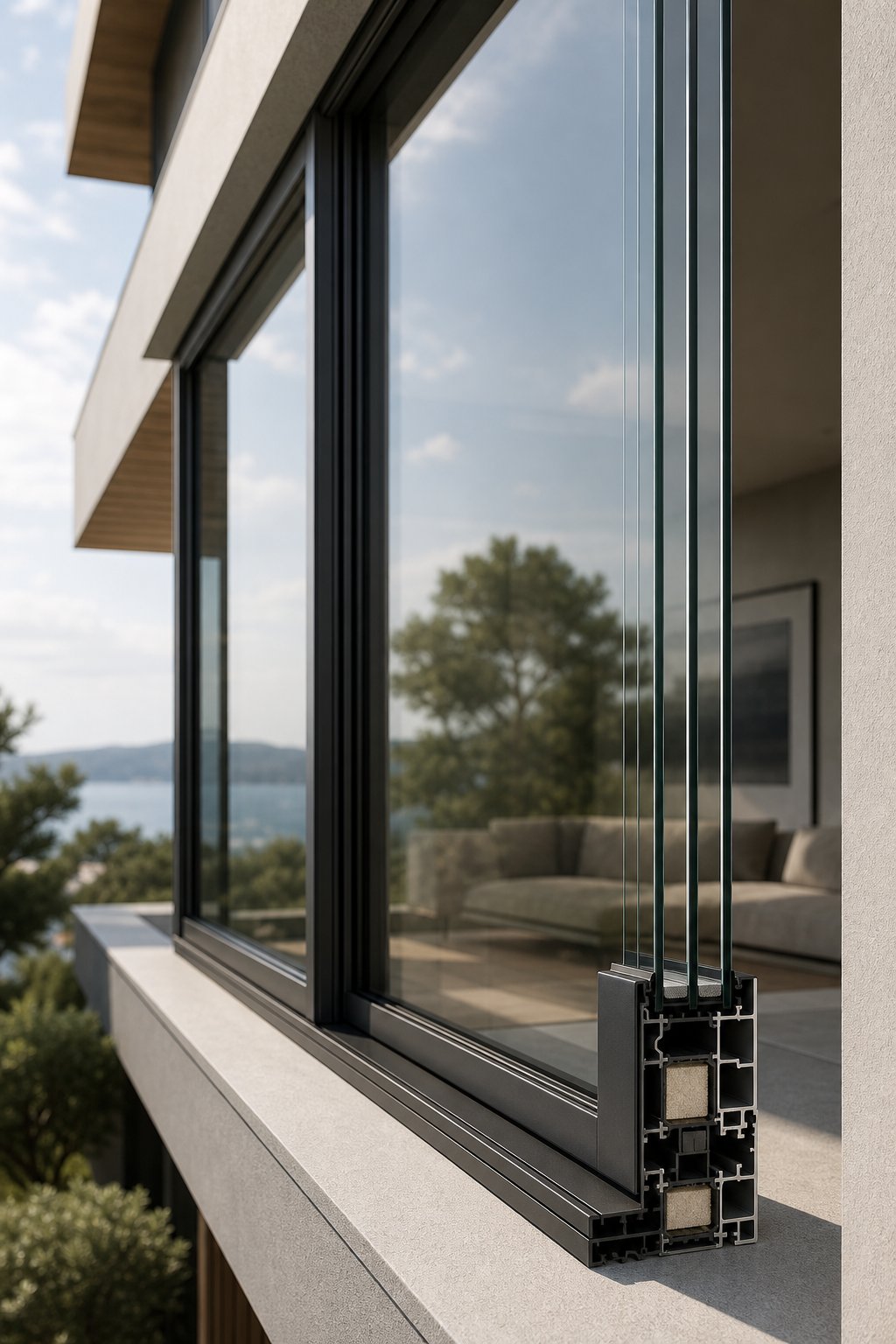
Thermal break technology is where aluminium windows prices diverge most sharply from basic non-insulated frames. A thermally broken frame uses polyamide (PA66) strips to separate the interior and exterior aluminium sections, preventing heat conduction through the metal. This engineering adds 20% to 35% to the frame cost compared to a standard non-broken profile, but it is effectively mandatory for meeting NCC Section J energy efficiency requirements across most Australian climate zones. Premium multi-chamber thermal break systems — required for very high WERS ratings — push costs toward the upper end of that range.
Glazing Options and Their Price Impact
Glass is the second-largest cost factor, representing roughly 25% to 40% of total unit cost depending on specification. The baseline in Australia is a double-glazed insulating glass unit (IGU) with Low-E coating and argon gas fill. This configuration is standard on virtually all quality aluminium windows and typically included in base pricing.
Upgrading to triple glazing adds a third pane and an additional sealed air space, dramatically improving thermal insulation (lower U-values) and acoustic performance. The cost of triple glazed windows runs 20% to 35% above an equivalent double-glazed unit, partly because the heavier glass package also demands a more robust frame to support the extra weight. In Australia, triple glazing makes strongest financial sense in alpine regions, Canberra’s cold winters, or high-noise urban environments where acoustic control justifies the premium.
Other glazing upgrades that shift the estimate include laminated safety glass (required at certain heights and in wet areas under AS 1288), tinted or reflective coatings for solar heat gain control in northern climates, and bushfire-rated glass assemblies for properties in BAL-rated zones. Each of these can add $40 to $120 per square metre of glass area on top of the base IGU cost.
Finish Quality and Hardware Grades
Powder coating is the standard finish system for aluminium windows in Australia. Standard colours — monument, surfmist, matt black, white — are typically included in base aluminium windows prices. Custom colours, textured finishes, or Dulux Duralloy and Interpon marine-grade coatings suitable for coastal salt-air exposure add 10% to 15% per unit. If you are within 500 metres of breaking surf, a marine-grade finish is not optional — it protects your warranty and the frame’s longevity.
Hardware quality is easy to overlook because it represents a smaller percentage of unit cost (10% to 15%), yet it directly determines how well the window seals, operates, and lasts over decades. Budget hardware from unbranded sources might save $30 to $60 per window upfront, but early failure rates are significantly higher. Quality branded mechanisms — multi-point locking systems, stainless steel friction stays, commercial-grade rollers on sliding windows — carry a justified premium and typically deliver 20+ years of reliable operation without replacement.
| Cost Factor | Typical Price Impact (vs Base Config) | When to Upgrade |
|---|---|---|
| Thermally broken frame (PA66) | +20% to +35% | Required for NCC compliance in most climate zones; always recommended for energy performance |
| Profile thickness (1.6 mm to 2.0 mm+) | +8% to +12% per step | Large window spans, high wind zones, cyclone-rated areas (QLD, NT, WA coast) |
| Triple glazing (vs double-glazed IGU) | +20% to +35% | Alpine/cold climates, high-noise locations, maximum energy efficiency targets |
| Laminated safety glass | +$40 to +$80 per m² of glass | Required by AS 1288 at height, wet areas, and for BAL-rated bushfire zones |
| Custom powder-coat colour | +10% to +15% | Architectural colour matching, non-standard finishes, heritage overlays |
| Marine-grade coating | +12% to +18% | Properties within 500 m of coast or in high salt-air exposure zones |
| Premium hardware (branded multi-point locks, SS stays) | +$30 to +$80 per window | High-use windows, security priority, exposed or hard-to-access locations |
| Custom sizing (non-standard dimensions) | +15% to +25% | Renovation/retrofit where openings are non-modular; architectural designs |
Custom sizing deserves specific mention. Standard modular sizes are manufactured efficiently with minimal waste. The moment you move outside those parameters — odd heights, non-standard widths, arched heads — fabrication becomes a one-off exercise. Expect a 15% to 25% uplift per unit for truly custom dimensions, which is why experienced specifiers try to rationalise window sizes across a project wherever possible.
If you are using a double-pane window cost calculator or any estimation tool, verify that it accounts for each factor above as an independent variable. A tool that only asks for window size and quantity will miss the specification-driven cost variation that makes the difference between a $750 window and a $2,000 window of the same dimensions. The configuration choices — not the opening size — are what make aluminium pricing so variable, and understanding them puts genuine negotiating power in your hands.
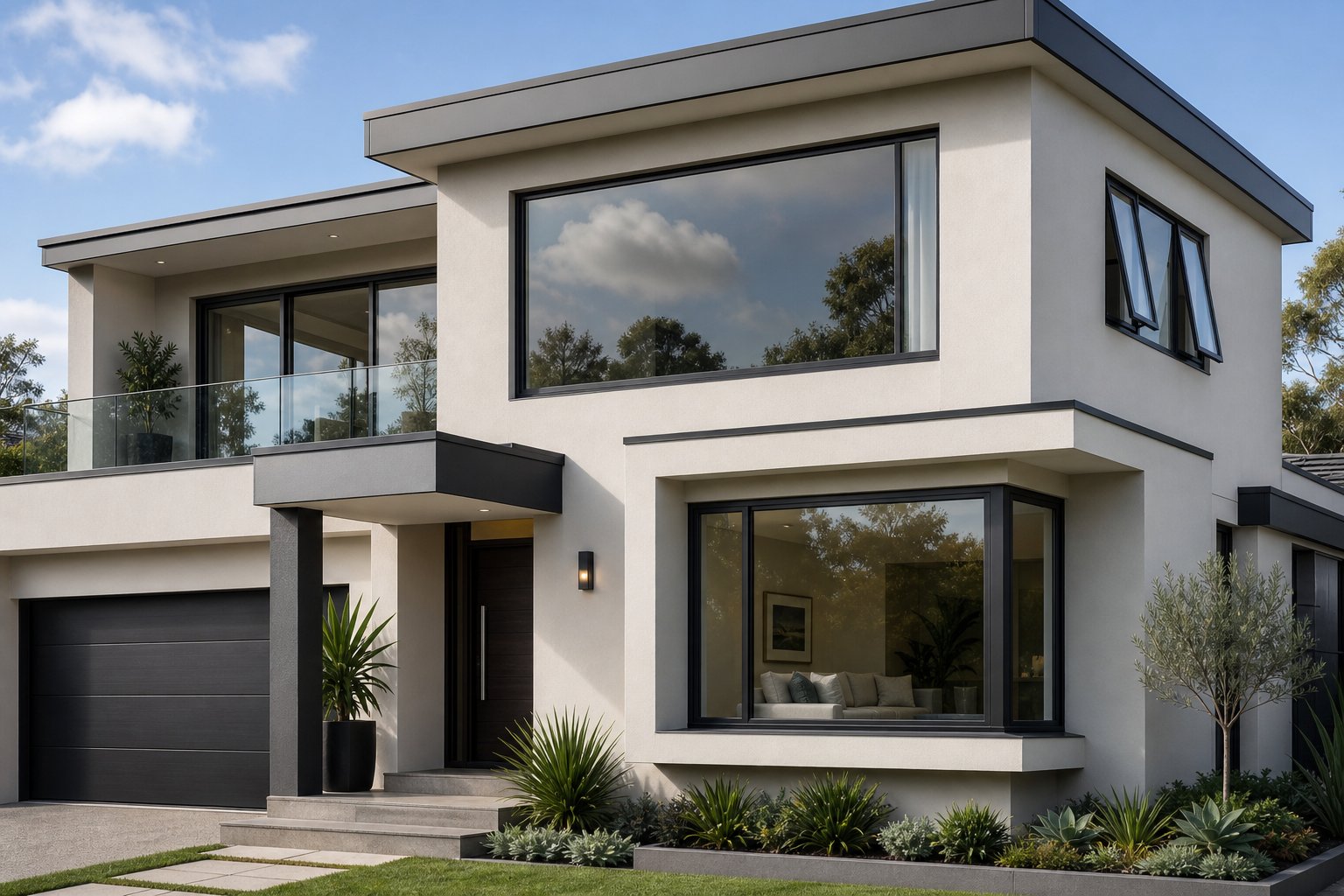
Aluminium Window Costs by Style and Configuration
Configuration choices drive aluminium pricing more than raw dimensions — and window style is the single biggest configuration variable. A fixed pane and a tilt-and-turn window sharing the same 1200 mm x 1500 mm opening can differ in cost by 40% or more, purely because of the engineering, hardware, and weathersealing each style demands. Any serious cost estimation needs style as a primary input, not an afterthought.
The reason is mechanical complexity. Every moving part adds hinges, locks, seals, and fabrication steps. More glass area relative to frame increases structural load. Multi-panel configurations multiply hardware requirements. Understanding these relationships lets you use a window size calculator alongside style selection to generate estimates that actually reflect what fabricators will quote.
| Window Style | Relative Cost Tier | Typical Size Range (mm) | Primary Use Cases |
|---|---|---|---|
| Fixed (picture) | Entry | 600 x 600 to 2400 x 2400 | Feature glazing, highlight windows, stairwells, non-ventilated walls |
| Sliding (2 or 3 panel) | Entry to Mid | 900 x 900 to 3600 x 2100 | Bedrooms, living areas, wide openings, easy operation |
| Awning (top-hung) | Mid | 600 x 600 to 1800 x 1200 | Bathrooms, kitchens, ventilation during rain, high-level openings |
| Casement (side-hung) | Mid to High | 600 x 900 to 1200 x 2100 | Maximum ventilation, bedrooms (egress), architectural facades |
| Tilt-and-turn | High | 600 x 900 to 1400 x 2100 | Multi-storey cleaning access, European-style apartments, high security |
| Bay / Bow | High to Premium | 1800 x 1200 to 3600 x 1800 (overall projection) | Feature rooms, street-facing facades, creating interior seat nooks |
Fixed and Sliding Aluminium Window Pricing
Fixed windows sit at the bottom of the cost curve because they have zero moving parts. No hinges, no locking mechanisms, no friction stays — just frame, glass, and seals. This simplicity makes them the baseline against which every other style is measured. In Australia, a standard fixed aluminium window in a thermally broken frame with double glazing typically starts around $450 to $650 AUD supply-only, depending on size and finish.
Sliding windows add rollers, tracks, interlocking stiles, and weatherpile seals, but the mechanism remains relatively straightforward. A two-panel slider in a standard opening (1800 mm x 1200 mm) generally costs 10% to 20% more than a fixed window of equivalent glass area. Three-panel configurations with a larger sliding sash push closer to mid-range territory. Sliders work well for wide openings where a hinged sash would be impractically heavy, making them a common choice across living rooms and master bedrooms in Australian homes.
Size interacts with cost in a non-linear way for both styles. Doubling the glass area does not double the price, because frame material (the expensive component) increases at a slower rate than glazing. This means larger fixed and sliding windows actually offer better value per square metre than small ones — useful context if you are running numbers through a custom window cost calculator and comparing several sizing options.
Casement and Awning Window Cost Differences
Casement windows hinge at the side and swing outward, requiring friction stays, multi-point locking hardware, and compression seals around the full perimeter. This hardware intensity is why a casement window cost estimator will typically return figures 25% to 40% above an equivalent fixed pane. The trade-off is superior ventilation — a casement opens fully, catching breezes and directing them into the room, which is valuable in Australian climates where passive cooling reduces air conditioning loads.
Awning windows (top-hung) share similar hardware principles but open from the bottom edge outward. They cost slightly less than casements because gravity assists the closing mechanism, allowing lighter-duty stays in many applications. Their real advantage is rain protection: you can leave an awning window open during a shower without water entering, making them the default choice for bathrooms, laundries, and kitchen splashback areas. Expect awning windows to sit roughly 15% to 30% above fixed pricing in most bay window price calculator tools and quotation systems.
Both styles demand precise frame squareness during installation. A frame even 2 mm out of square creates seal compression issues that lead to air leakage and water ingress — a point worth remembering when evaluating installation quotes alongside unit costs.
Bay and Bow Window Premium Pricing Explained
Bay and bow windows occupy the top of the cost spectrum because they combine multiple individual windows into an engineered assembly that projects outward from the wall plane. A typical bay window uses three panels — a central fixed pane flanked by two operable casements or awnings — set at 25 to 45 degree angles. Bow windows extend that concept to four, five, or six panels arranged in a gentle curve.
This structural complexity means a bay window cost calculator needs to account for significantly more than glass and frame. You are pricing custom angled mullions, structural head and sill members capable of supporting the projection’s weight, flashing systems that manage water runoff at non-standard angles, and often a small roof section above the projection. The result: bay windows in aluminium commonly cost 2 to 2.5 times the equivalent flat-wall area, and bow configurations push to 2.5 to 3.5 times due to their curved fabrication requirements.
In Australian dollars, a standard aluminium bay window assembly (approximately 2400 mm wide x 1500 mm high) runs $3,500 to $6,500 AUD supply-only for a thermally broken, double-glazed unit. Bow windows of comparable overall width start higher — $5,000 to $9,000 AUD — because each panel requires individual angle calculations and the curved head/sill sections demand precision fabrication. If you are using a custom window price calculator, ensure it treats bay and bow as multi-unit assemblies rather than single windows, otherwise the output will be wildly undercooked.
Style selection does more than shift your estimate up or down — it fundamentally changes what your project demands in terms of structural support, installation skill, and long-term maintenance. The next logical question is how to take these style-based variables and combine them with your specific measurements into an actual dollar figure you can trust.
How to Manually Calculate Aluminium Window Costs Step by Step
Knowing what drives aluminium window pricing is one thing. Turning that knowledge into an actual dollar estimate for your project is another. Most homeowners rely on online tools or wait for a supplier quote, but you can build your own window estimate calculator using a straightforward methodology — the same logic professionals apply when scoping jobs. This gives you a baseline figure before you ever request formal pricing, and it puts you in a far stronger position to evaluate quotes when they arrive.
The approach below works whether you are pricing a single bathroom awning window or a full-house aluminium window installation across 20+ openings. Each step layers a new cost component onto your running total, building from raw materials through to the finished, operational window.
Step One: Measure and Document Your Window Openings
Accurate measurements are the foundation of every reliable estimate. Errors here cascade through every subsequent calculation, so precision matters more at this stage than anywhere else.
- Measure each opening in three places. Record width at the top, middle, and bottom of the opening. Record height at the left, centre, and right. Use the smallest measurement in each direction — this is your effective opening size. Work in millimetres for consistency with Australian fabrication standards.
- Note the opening type. Is this a new opening in a stud wall, an existing timber frame, a brick reveal, or a concrete lintel situation? Each affects installation complexity and therefore cost.
- Document access conditions. Ground floor with clear access? First floor requiring scaffolding? Inside a tight bathroom with restricted manoeuvring? These details feed directly into labour rate calculations later.
- Create a window schedule. List every opening with its dimensions, location, and the style you intend to specify. This schedule becomes your master reference — essentially a replacement window size calculator tailored to your exact house rather than generic assumptions.
If you are working on an existing home, also record whether there is an existing window to remove, what material it is (timber, aluminium, steel), and whether surrounding finishes (plaster, render, cladding) will need patching after removal. These details inform the removal and making-good costs added in Step Three.
Step Two: Apply Material and Configuration Multipliers
With your window schedule complete, you can now calculate per-unit material cost using a multiplier approach. Start with a base unit cost and adjust it for your specific selections.
- Establish a base unit cost. For a standard thermally broken, double-glazed aluminium fixed window in a common size (roughly 1200 mm x 1200 mm), the current Australian market base sits around $550 to $750 AUD supply-only. This is your reference point.
- Apply the style multiplier. Refer to the style cost tiers discussed earlier. Fixed = 1.0x (baseline). Sliding = 1.1x to 1.2x. Awning = 1.2x to 1.3x. Casement = 1.25x to 1.4x. Tilt-and-turn = 1.5x to 1.7x. Bay/bow = 2.0x to 3.5x (treated as multi-unit assemblies).
- Apply a size factor. For openings smaller than the reference size, reduce by approximately 10% to 15%. For openings significantly larger (say 1800 mm x 1500 mm), add 20% to 40%. Very large custom sizes (exceeding 2400 mm in any direction) add 30% to 60% due to structural glass requirements and heavier frame sections.
- Apply glazing and finish factors. Triple glazing adds 20% to 35%. Laminated safety glass adds $40 to $80 per m² of glass. Custom powder-coat colours add 10% to 15%. Marine-grade coatings add 12% to 18%. Premium hardware adds $30 to $80 per unit.
- Calculate each window’s adjusted material cost. The formula is: Base Cost x Style Multiplier x Size Factor + Glazing Upgrades + Finish Upgrades + Hardware Upgrades = Unit Material Cost.
Running this formula across your full window schedule gives you a total materials figure. This is where a window installation cost calculator starts to take shape — each window gets its own line item rather than being averaged into a vague per-window number that hides the real variation between a small fixed pane and a large casement.
Step Three: Add Labour, Removal, and Ancillary Costs
Material cost alone tells only part of the story. Labour and ancillary expenses typically add 40% to 60% on top of supply-only figures for aluminium window installation projects in Australia.
- Installation labour. Expect $250 to $500 per standard window opening for professional installation in Australian metro areas. Complex or oversized openings (bay windows, full-height glazing) can push to $600 to $1,000 per opening. Regional areas may see slightly lower rates, but travel charges and accommodation for specialist installers can offset those savings. A window installation labor cost calculator should reflect your specific geography.
- Removal and disposal. If replacing existing windows, factor $80 to $180 per opening for removal, depending on the old frame material and whether the reveal needs structural attention. Timber frames with lead paint or asbestos-era putty increase removal costs significantly. Disposal via skip bin typically adds $300 to $600 per project depending on volume.
- Internal and external trim. New aluminium windows almost always require new architraves, reveals, or shadow-line detailing internally, plus external flashings and potentially new sill trims. The labor cost to install window trim runs $60 to $150 per window depending on complexity, material (timber vs aluminium reveal), and finish requirements. Material for trim adds another $40 to $100 per opening.
- Sealants, flashings, and weatherproofing. Budget $30 to $60 per window for sealant, foam backing rod, and flashing tape — items that rarely appear as separate line items in quotes but absolutely exist as real costs.
- Scaffolding (if applicable). Upper-storey installations requiring scaffolding add $500 to $2,000 per elevation depending on height and duration. This is a project-level cost, not a per-window cost.
Your total project formula becomes:
Total Estimated Cost = Sum of All Unit Material Costs + (Installation Labour x Number of Windows) + Total Removal/Disposal + Trim Costs + Scaffolding + Contingency (10%–15%)
That contingency buffer is not optional. Hidden structural issues, unexpected making-good requirements, and minor specification changes during construction are the norm rather than the exception. Reference materials from professional estimating guides consistently recommend a 10% to 20% buffer to offset surprise costs.
Bulk pricing deserves attention if your project involves more than a handful of windows. Fabricators achieve economies of scale when manufacturing multiple units of similar specification — less machine setup time, more efficient material nesting from extrusion stock, and consolidated powder-coating runs. In practice, a project with 10 to 15 windows of rationalised sizes might attract a 5% to 12% discount on material supply compared to ordering the same windows individually. At 20+ windows, discounts of 10% to 18% are common. Larger commercial or multi-residential projects negotiate even deeper. When building your window installation calculator model, apply a bulk discount factor once your total unit count is confirmed — but only against the material component, not labour or ancillary costs, which scale linearly regardless of quantity.
This manual methodology gives you a framework that no static price list can match, because it adapts to your exact specifications, quantities, and site conditions. The figures it generates are estimates, not fixed quotes — but they are informed estimates built from the same logic suppliers use internally. What they cannot capture is how your chosen frame material compares to the alternatives over a full lifecycle, which is where a direct comparison across aluminium, vinyl, timber, fiberglass, and composite becomes essential for validating that your budget is allocated to the right material in the first place.
Aluminium vs Other Frame Materials Price Comparison
Calculating aluminium window costs with precision is only half the equation. The other half is confirming that aluminium is the right material for your project in the first place. Plenty of homeowners wonder how much does a window cost in each material category without ever seeing a genuinely fair comparison — one that accounts for Australian climate demands, realistic maintenance expenses, and total lifecycle cost rather than just the upfront sticker price.
Five frame materials compete for your budget in Australia: aluminium, uPVC (vinyl), timber, fiberglass, and composite. Each occupies a different intersection of cost, performance, and compromise. The table below strips the comparison down to the metrics that actually matter when dollars are on the line.
| Frame Material | Typical Installed Cost (AUD per window) | Expected Lifespan | Maintenance Cost (over 30 years) | Thermal Performance | Best Use Scenarios |
|---|---|---|---|---|---|
| Aluminium (thermally broken) | $900 – $2,500 | 30 – 50+ years | Low ($500 – $1,000 total) | Good (with thermal break) | Modern builds, slim sightlines, coastal areas, commercial, bushfire zones |
| uPVC (vinyl) | $700 – $1,600 | 20 – 35 years | Very low ($200 – $600 total) | Good to very good | Budget renovations, cold climates, low-maintenance priority |
| Timber | $1,200 – $3,500+ | 30 – 60+ years (if maintained) | High ($3,000 – $8,000+ total) | Excellent (natural insulator) | Heritage homes, high-end custom builds, internal aesthetics priority |
| Fiberglass | $1,500 – $3,000 | 30 – 50 years | Low ($400 – $800 total) | Excellent | Extreme climates, maximum thermal performance, long-term investment |
| Composite (timber/polymer blend) | $1,200 – $2,800 | 25 – 40 years | Low to moderate ($600 – $1,500 total) | Good to very good | Cold climates, timber appearance without full timber maintenance |
Aluminium vs Vinyl and Wood Frame Costs
The question of how much does window cost in uPVC versus aluminium comes down to what you are willing to trade. uPVC windows prices in Australia start lower — roughly $700 to $1,600 installed for a standard opening — making them attractive for tight budgets. They insulate well without a thermal break because PVC is inherently a poor heat conductor. Maintenance is minimal: wash them and forget them.
The trade-offs are structural and aesthetic. uPVC frames require bulkier profiles to achieve the same rigidity as aluminium, which means thicker sightlines and less glass area per opening. In Australia’s UV-intense environment, cheaper uPVC can discolour or become brittle within 15 to 20 years, particularly on north and west-facing elevations. You also cannot paint uPVC — the colour you choose at purchase is the colour you live with until replacement.
Timber sits at the opposite extreme. A quality hardwood window delivers unmatched warmth, paintability, and natural insulation. But the cost of double glazing windows in timber frames pushes well above aluminium once you factor in supply, installation, and the ongoing maintenance cycle. Timber demands repainting or re-oiling every 5 to 7 years externally — a cumulative expense that often exceeds the original window cost over a 30-year period. In coastal or humid regions (think northern QLD, Far North NSW), timber also faces accelerated rot and pest risk unless you specify expensive hardwood species like spotted gum or merbau.
Aluminium occupies the middle ground on upfront cost but wins decisively on lifespan-to-maintenance ratio. A thermally broken aluminium frame lasts 30 to 50+ years with nothing more than occasional cleaning and hardware lubrication — no repainting, no warping, no UV degradation if properly powder-coated.
Aluminium vs Fiberglass and Composite Frames
Fiberglass windows deliver outstanding thermal performance and dimensional stability. They expand and contract at nearly the same rate as glass, reducing seal stress over time. For homeowners asking how much do triple glazed windows cost, fiberglass frames handle the heavier glass package without the reinforcement aluminium sometimes requires for very large triple-glazed units.
The challenge in Australia is availability. Fiberglass windows have limited local manufacturing and fewer supplier options compared to aluminium. This scarcity inflates pricing — $1,500 to $3,000 installed — and can extend lead times considerably. Warranty support and replacement part availability also trail behind aluminium’s deeply established Australian supply chain.
Composite frames (blends of timber fibre and polymer resin) aim to deliver timber’s appearance with vinyl’s low maintenance. They perform well thermally and resist moisture better than solid timber. Installed costs of $1,200 to $2,800 per window place them in a similar bracket to aluminium, though with bulkier frame profiles and fewer colour options. Their long-term track record in Australian conditions remains shorter than aluminium’s multi-decade proven performance across every climate zone on the continent.
When Aluminium Is Worth the Premium
Aluminium is not always the cheapest option per window. It earns its place through a combination of factors that no single alternative material matches simultaneously.
- Slim sightlines and maximum glass area: If your design prioritises views, natural light, or a contemporary aesthetic with minimal frame visibility, aluminium’s strength-to-weight ratio is unmatched. No other material achieves the same structural span at 50 mm to 65 mm profile depths.
- Coastal and corrosive environments: Properly finished aluminium (marine-grade powder coating) handles salt air far better than timber and avoids the corrosion vulnerabilities of cheaper uncoated metals. For properties along Australia’s extensive coastline, this durability justifies the cost premium over uPVC, which itself performs well near the coast.
- Bushfire zones (BAL-12.5 to BAL-FZ): Aluminium is non-combustible and meets NCC requirements for bushfire-prone areas where timber and uPVC frames cannot be used without additional protection or are outright prohibited at higher BAL ratings.
- Multi-storey and commercial-scale projects: The structural capacity of aluminium allows larger spans and supports heavier glazing systems without supplementary steel reinforcement — reducing total installed cost on large openings compared to uPVC, which would need internal steel stiffeners.
- Long-term value over 25+ years: When you calculate total cost of ownership (purchase + installation + maintenance + potential replacement), aluminium frequently undercuts timber and matches or beats uPVC for homeowners who plan to stay in their property beyond two decades.
- Design flexibility: Unlimited powder-coat colours, ability to match existing architectural metalwork, and compatibility with integrated screening, security, and automation systems give aluminium an edge in projects where cohesive design matters.
Conversely, if your project is a budget rental renovation in a mild climate zone, uPVC likely makes more sense. If you are restoring a Federation-era home where heritage guidelines mandate timber, aluminium is the wrong choice regardless of its technical merits. Material selection should follow project context, not brand loyalty.
Understanding where aluminium sits against the alternatives validates — or challenges — the estimates your cost calculator produces. But even with the right material locked in, your final project price depends heavily on whether you are fitting windows into new construction or replacing existing ones, and where in Australia the work is happening. Those two variables can swing a total project budget by 30% or more in either direction.
Regional Pricing, New Build vs Retrofit, and Hidden Costs
Two variables can swing your total aluminium window budget by 30% or more, yet most online estimation tools ignore both of them entirely. The first is project type — whether you are installing into new construction or replacing existing windows. The second is geography — where in Australia the work happens. Together, they create pricing divergence that no single national average can capture, and they explain why your neighbour’s windows installation cost estimate bears little resemblance to your own.
New Construction vs Retrofit Replacement Costs
A new window cost calculator for a fresh build and a replacing windows cost calculator for a renovation are solving fundamentally different problems. New construction is simpler from an installation standpoint: the wall is open, the rough opening is framed to exact specifications, and there is nothing to remove. The installer sets the window into a prepared opening, fixes it to the frame, installs flashing that integrates with the weather barrier, and moves on. Labour runs faster and cleaner.
Retrofit replacement is a messier proposition. The old window must come out first — carefully if surrounding render, cladding, or brickwork needs preserving. Industry data indicates new construction installation takes roughly 1 to 2 hours per window, while full-frame replacement extends to 3 to 4 hours due to removal, reveal repair, and integration with existing finishes. That labour gap compounds quickly across a whole house.
Beyond time, retrofit projects carry structural risk. Older Australian homes — fibro, weatherboard, brick veneer built before the 1990s — frequently reveal rotted timber reveals, corroded steel lintels, or inadequate flashing once the old window is extracted. These discoveries are not predictable from the outside, which is why a cost of new windows calculator for retrofit work should always include a 10% to 15% contingency specifically for structural making-good. Capping windows cost — the expense of wrapping existing timber reveals in aluminium cladding rather than replacing them — is another retrofit-specific line item that new builds never encounter. It typically adds $80 to $200 per window depending on reveal depth and condition.
The total installed cost difference between new build and retrofit for identical aluminium windows typically runs 35% to 55% higher for the retrofit scenario, driven almost entirely by labour intensity and remediation requirements rather than material differences.
Why Aluminium Window Prices Vary by Region
Australian pricing is not uniform, and the reasons go deeper than simple supply and demand. Several structural factors create genuine cost variation across states and regions.
Labour market conditions. Installation labour is the most geographically variable cost component. Sydney and Melbourne metro rates for experienced glaziers run $70 to $100 per hour. Perth and Brisbane sit slightly lower at $60 to $85. Regional centres can be cheaper per hour but often carry travel surcharges when specialist installers need to drive two or three hours to reach the site.
Climate-driven compliance requirements. Northern Queensland and the Northern Territory require cyclone-rated windows (often to Importance Level 2 or 3) with heavier frame sections, additional fixings, and rated hardware — adding 15% to 30% to material cost compared to a temperate Melbourne specification. Properties in bushfire-prone areas rated BAL-29 or higher need non-combustible frames with specific glass types under the NCC, which aluminium satisfies but at increased specification cost. An impact windows cost calculator designed for cyclone regions must account for these mandated upgrades that simply do not exist in milder zones.
Energy efficiency mandates. NCC Section J and NatHERS requirements vary by climate zone. Homes in Canberra (climate zone 7) or alpine regions need higher-performing glazing systems — often triple-glazed or at minimum high-performance Low-E double units — to meet minimum energy ratings. Homes in tropical Darwin (climate zone 1) prioritise solar heat gain control over insulation. Each specification pathway has different cost implications.
Supply chain proximity. Most aluminium window fabrication in Australia concentrates along the eastern seaboard. Projects in Perth, regional WA, Tasmania, or the NT face additional freight costs — anywhere from $500 to $3,000 per project depending on volume and distance — that a replacement window calculator rarely includes automatically.
Permits, Inspections, and Hidden Project Expenses
Beyond the window units and their installation, a complete project budget must absorb a collection of ancillary costs that most estimation tools quietly omit. These are real expenses that appear on your final invoice or land as unexpected surprises mid-project.
- Council permits and development applications: Required when altering structural openings, changing window sizes, or working on heritage-listed properties. Fees range from $200 to $1,500 depending on council and project scope.
- Building inspections: Some councils mandate frame-stage inspection before glazing is installed in new openings or structurally modified reveals. Inspection fees typically run $150 to $400 per visit.
- Scaffolding: Any upper-storey installation requiring external access adds $500 to $2,500 per elevation, depending on height, duration of hire, and site access difficulty.
- Waste disposal: Old window removal generates bulky waste. Skip bin hire or waste trailer costs run $300 to $800 per project. Some councils charge additional levies for construction waste disposal.
- Temporary weatherproofing: If openings remain exposed overnight during staged installation, temporary boarding and sealing materials cost $50 to $150 per opening — plus the labour to install and remove them.
- Structural engineer assessment: Required when enlarging openings in load-bearing walls or when existing lintels are found to be undersized or deteriorated. Engineering reports run $400 to $1,200 depending on complexity.
- Lead paint management: Homes built before the mid-1970s may have lead-containing paint around window frames. Testing costs $150 to $350, and safe removal procedures can add $100 to $300 per opening if lead is confirmed.
- Asbestos-related costs: Fibro homes and some older brick-veneer properties have asbestos-containing materials around window reveals. Licensed removal is legally required and adds substantial cost — $500 to $1,500 per opening in severe cases.
To factor these into a total project budget, add them as a separate line below your window supply and installation figures. A realistic approach is to confirm which items definitely apply to your situation (scaffolding for a two-storey home, for example) and allocate firm costs for those, then carry a general contingency of 10% to 15% on your total to absorb items that only reveal themselves once work begins.
These hidden costs explain why two homeowners with identical window specifications and the same number of openings can end up with project totals that differ by thousands of dollars. The windows themselves might be priced identically — it is everything surrounding them that creates the gap. Recognising this reality shifts the conversation toward understanding what tier of aluminium window actually delivers the best value for your specific budget, once all those surrounding costs are accounted for.
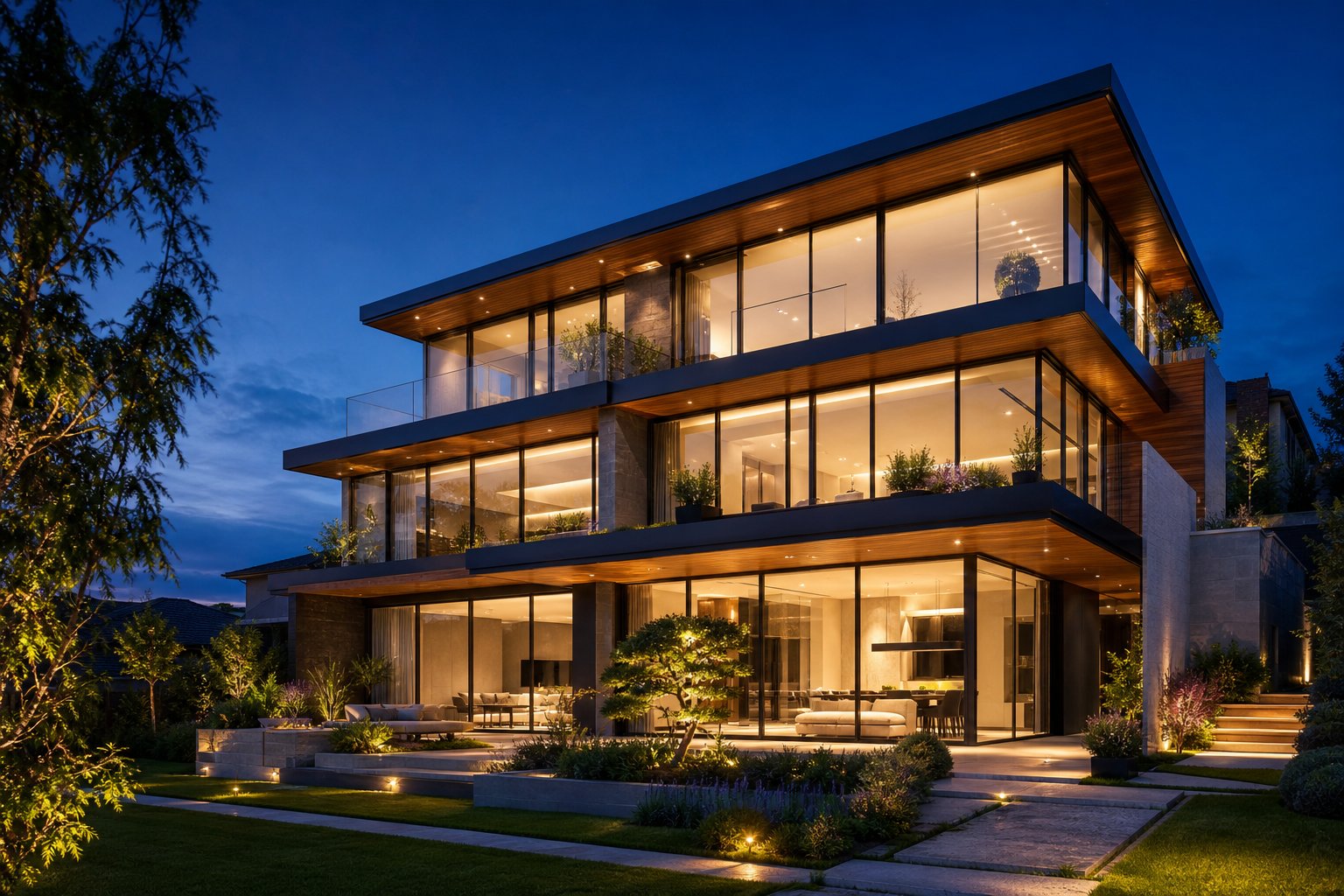
Entry, Mid-Range, and Premium Aluminium Window Tiers Explained
Your total project budget is now taking shape — material costs, labour, ancillary expenses, regional adjustments. The remaining question is which tier of aluminium window delivers the right balance of performance and value for that budget. Not all aluminium windows are created equal, and the difference between an entry-level unit and a premium one goes far beyond the price tag. It shows up in profile engineering, thermal performance, hardware longevity, and how the window holds up a decade from now.
Understanding these tiers helps you generate a realistic window cost estimate rather than comparing unlike products as though they were interchangeable. A $900 aluminium window and a $2,400 aluminium window might share the same opening dimensions, but what you get for that money differs dramatically at every specification level.
| Feature | Entry-Level | Mid-Range | Premium |
|---|---|---|---|
| Profile depth | 50 – 55 mm (standard) | 60 – 65 mm (thermally broken) | 70 – 80 mm (advanced thermal break) |
| Thermal break type | None or basic strip (12 – 16 mm) | PA66 polyamide strip (20 – 24 mm) | Multi-chamber PA66 (24 – 34 mm) |
| Glazing specification | Double-glazed IGU, standard Low-E | Double-glazed IGU, high-performance Low-E + argon | Triple-glazed or high-spec double, advanced coatings + argon/krypton |
| Hardware | Unbranded or generic multi-point locks | Branded hardware (e.g., Centor, Assa Abloy) | Premium European hardware, concealed hinges, soft-close mechanisms |
| Finish options | Standard powder coat (5 – 8 stock colours) | Extended palette (20+ colours), Dulux Duralloy range | Custom colour matching, marine-grade or PVDF coating, dual-colour (different inside/outside) |
| Warranty (frame) | 7 – 10 years | 10 – 15 years | 15 – 25 years (some lifetime structural warranties) |
| Indicative AUD (supply, standard casement ~1200 x 1500 mm) | $650 – $1,000 | $1,000 – $1,800 | $1,800 – $3,000+ |
Entry-Level Aluminium Window Features and Pricing
Entry-level aluminium windows serve a purpose: they suit garages, sheds, investment properties where tenant durability matters more than thermal excellence, or projects where the budget simply cannot stretch further. The aluminium windows cost at this tier reflects thinner profiles, minimal or absent thermal breaks, and generic hardware sourced from unbranded suppliers. You get a functional, durable frame — aluminium is still aluminium — but thermal performance and long-term seal integrity fall short of what modern NCC energy requirements demand for habitable rooms in most climate zones.
Typical U-values for entry-level frames sit around 5.0 to 6.5 W/m²K, meaning substantial heat transfer through the frame itself. For a double pane window cost calculator exercise, these units make the numbers look attractive upfront but generate higher heating and cooling costs year after year.
Mid-Range Aluminium Windows and Their Value Proposition
Mid-range represents the sweet spot for most Australian residential projects. A 60 to 65 mm thermally broken profile with quality PA66 strips delivers frame U-values around 2.5 to 3.5 W/m²K — a massive improvement that genuinely reduces energy bills. Branded hardware operates smoothly for 20+ years without replacement. An extended colour palette means you are not locked into the same six shades every house on the street shares.
This tier satisfies NCC Section J compliance comfortably, achieves solid WERS ratings, and handles coastal proximity (with appropriate finish selection) without compromise. The aluminium windows price at mid-range typically runs 40% to 70% above entry-level — a premium that pays back through energy savings, reduced maintenance, and avoided early replacement within 8 to 12 years in most Australian climates.
Premium Aluminium Windows and When They Pay Off
Premium systems target maximum performance and architectural refinement. Multi-chamber thermal breaks, triple glazing capability, concealed European hardware, and PVDF or dual-colour finishes push these windows into a different class entirely. Frame U-values drop below 2.0 W/m²K. Acoustic performance suits airport flight paths or busy arterial roads. Warranties stretch to 20 years or beyond.
The aluminium window cost at this level makes sense for owner-occupied homes designed for longevity — particularly energy-efficient builds targeting 7+ star NatHERS ratings, architecturally designed homes where slim sightlines and seamless indoor-outdoor transitions define the aesthetic, or coastal properties where marine-grade everything is non-negotiable. Over a 30-year ownership period, premium windows typically avoid any replacement cycle and require near-zero maintenance expenditure, making their total cost of ownership competitive with mid-range units that may need hardware overhauls or seal replacements during that timeframe.
Choosing a tier is ultimately a question of time horizon. If you plan to sell within five years, entry-level might suffice. If this is your long-term home, mid-range or premium delivers compounding returns through lower energy bills, zero maintenance spend, and higher resale value. The tier you select also determines what your quotes should contain — and how to tell whether a supplier is quoting you a genuine mid-range product or dressing up entry-level specifications with a mid-range price.
Questions to Ask When Evaluating Aluminium Window Quotes
Knowing which tier you want and what your project should cost is powerful — but only if you can verify that a supplier’s quote actually delivers what it claims. The gap between a genuine mid-range specification and an entry-level product dressed in mid-range language is invisible to anyone who does not know the right questions to ask. And in an industry where many quotes arrive as single-line lump sums with minimal specification detail, that gap costs Australian homeowners thousands.
Whether you have received an online window quote through a supplier’s website or a handwritten estimate for windows after a site visit, the evaluation process is the same: pull apart the detail, identify what is missing, and ensure you can compare like with like.
Essential Questions to Ask Your Window Supplier
Every double glazing quote you receive should withstand scrutiny on these specific points. If a supplier cannot answer them clearly, their pricing lacks the transparency you need to make an informed decision.
- What aluminium system/profile are you quoting? Ask for the specific system name and manufacturer. Generic descriptions like “thermally broken aluminium” mean nothing without a profile reference you can verify independently.
- What is the whole-window U-value (Uw)? Not just the glass (Ug) — the complete assembly including frame. This is the number that determines real thermal performance and NCC compliance.
- What glazing specification is included? Double or triple glazed? What Low-E coating? Argon or air fill? Toughened or laminated where required by AS 1288?
- What hardware brand and grade are you supplying? Multi-point locks, friction stays, rollers — ask for specifics rather than accepting “quality hardware” as an answer.
- What powder-coat system and warranty applies to the finish? Is it a standard polyester coat, Dulux Duralloy, or marine-grade? What is the coating warranty period?
- What does your installation scope include? Removal of existing windows, disposal, flashing, internal reveals, external trim, sealant, clean-up — each should be explicitly stated as included or excluded.
- What workmanship warranty do you offer beyond the product warranty? Product warranties cover manufacturing defects. A separate installation warranty covers leaks, fit, and seal failures caused by poor fitting.
- How do you handle unforeseen structural issues? Is there an allowance for making-good, or will you receive a variation claim mid-project?
Red Flags in Aluminium Window Quotes
Some warning signs should prompt you to seek clarification — or walk away entirely. A window replacement estimate online or in-person that exhibits these traits is likely hiding cost or quality gaps.
- A single lump-sum price with no itemised breakdown of supply, installation, removal, and ancillary costs
- No system or profile name specified — just “aluminium windows”
- No thermal performance values (Uw) quoted anywhere in the document
- No mention of flashing, weathersealing method, or integration with the building envelope
- Disposal of old windows not addressed — suggesting it will appear as an extra later
- Warranty described as “manufacturer’s standard” without specifying duration or coverage scope
- Pressure to sign immediately with “today only” pricing — a tactic that discourages proper comparison
- No reference to compliance with AS 2047 or NCC Section J requirements
How to Compare Quotes Accurately
The core challenge when you estimate windows from multiple suppliers is normalisation. Two quotes rarely use identical specifications, which makes raw price comparison misleading. A detailed comparison guide from Fenbro highlights that seemingly similar offers can differ by 20% to 30% purely because of specification variations hidden in the fine print.
To normalise quotes for fair comparison, align them on these variables:
- Same glazing specification (double vs triple, coating type, gas fill)
- Same thermal break standard (strip width and material)
- Same hardware grade and brand tier
- Same installation scope (full-frame replacement vs insert, trim included or excluded)
- Same disposal and making-good inclusions
- Same warranty duration for both product and workmanship
If one quote includes premium hardware and marine-grade coating while another uses generic fittings and standard powder coat, the price difference is not a saving — it is a specification gap. Strip both quotes back to their component parts, match the specifications, and only then compare the bottom line. A replacement window price estimator is only as useful as the specification assumptions it builds from.
Project-capable suppliers like MEICHEN provide detailed quote breakdowns covering material calculation, system recommendations, and manufacturing coordination — giving buyers clear visibility into what drives their project cost rather than delivering opaque lump-sum pricing. This level of transparency makes normalisation straightforward because every line item is exposed for comparison rather than buried in a single figure.
Thorough quote evaluation protects your budget and ensures the specification you pay for is the specification you receive. But even the most carefully vetted quote remains an estimate until real project details — drawings, site conditions, confirmed schedules — enter the equation. Bridging that gap between estimate and final project price requires preparation that most homeowners overlook.
Moving From Calculator Estimates to Accurate Project Pricing
Every number you have generated through this methodology — whether manually or via an online window pricing calculator — is an informed estimate, not a fixed price. That distinction matters. Estimates reflect general market conditions and your best understanding of scope. Real project pricing reflects your specific drawings, your site’s structural quirks, your supplier’s current manufacturing capacity, and the installation team’s assessment of access and complexity. The gap between the two can be 10% or 25%, depending on how many unknowns remain unresolved.
This is not a weakness of the calculation approach. It is the nature of custom-manufactured products installed into unique buildings. A replacement window cost calculator gives you the right ballpark and protects you from wildly inflated quotes — but it cannot replace what happens when a qualified supplier reviews your actual project documentation and returns a price built from real measurements, confirmed specifications, and site-verified conditions.
Preparing Your Window Schedule for Accurate Quotes
The single most effective thing you can do before requesting formal quotes is prepare a complete window schedule. This document transforms vague enquiries into precise briefs that suppliers can price accurately on the first round — industry guidance confirms that a clear project brief leads to clearer first quotes than a pile of unfinished drawings ever will. Suppliers respond faster, quotes become easier to compare, and the back-and-forth cycle shrinks considerably.
Your preparation checklist should cover these items in sequence:
- Complete your window schedule. List every opening with its ID (e.g., W01, W02), location (room and elevation), measured dimensions in millimetres, intended window style (fixed, sliding, casement, awning, bay), and any notes about structural constraints or heritage considerations.
- Define your preferred specifications. State your thermal break expectation, glazing preference (double or triple, Low-E type), hardware grade, and finish requirements (standard colour, custom colour, marine-grade). If you are unsure, note which decisions are provisional — suppliers can recommend based on your climate zone and building type.
- Confirm your project type. Specify whether this is new construction or retrofit replacement. For retrofits, note the existing frame material, approximate age of the building, and whether you expect structural remediation in any openings.
- Establish your project timeline. Include your preferred installation window, any hard deadlines (occupancy dates, builder schedules, rental vacancy periods), and how much flexibility exists. Manufacturing lead times for aluminium windows in Australia typically run 4 to 8 weeks, so working backward from your deadline determines when orders need to be placed.
- Document site access. Note storey heights, whether scaffolding will be required, any restricted access points (narrow side passages, heritage fences, shared driveways), and whether the site is occupied during works. These details directly affect installation labour pricing.
- Gather supporting documents. Attach floor plans, elevation drawings, or even clear photographs of each opening if formal architectural drawings are not available. A simple spreadsheet with dimensions and photos gives suppliers enough to produce a meaningful first-round quote.
Arriving at a supplier with this level of preparation signals that you understand the process and expect detailed, transparent pricing in return. It also eliminates the most common cause of quote inaccuracy: assumptions made by the supplier to fill gaps the buyer left open.
From Estimate to Real Project Pricing
Your replacement windows cost calculator output and your prepared schedule together form the foundation for productive supplier conversations. You already know what each window should cost approximately, which specification choices drive the price, and what ancillary expenses to expect. That knowledge makes you a more effective buyer — capable of spotting inconsistencies, questioning unexplained markups, and recognising genuine value when a quote delivers it.
Real project pricing typically follows a specific sequence: initial enquiry with your schedule, first-round quote based on your documented requirements, clarification round where open questions are resolved, revised quote reflecting confirmed specifications, and finally a fixed-price contract for supply and installation. Each stage narrows the accuracy gap until the final figure sits within 2% to 5% of what you will actually pay — far tighter than any window costs calculator can achieve from general inputs alone.
For builders, developers, and architects managing multi-window projects, partnering with a supplier capable of supporting the full process — from drawings and schedules through to system recommendations, material calculation, quality control, and delivery planning — compresses that cycle and reduces the risk of mid-project specification changes inflating costs. MEICHEN’s Services & Solutions operates across exactly that workflow, coordinating manufacturing and logistics so that the price quoted at project commencement holds through to completion rather than drifting as assumptions get corrected on the fly.
The cost of window replacement calculator methodology in this article has given you a framework to estimate, evaluate, and negotiate with confidence. Use it to set your budget boundaries, prepare your documentation thoroughly, and then engage suppliers who can convert your informed estimates into guaranteed project pricing. That is how transparency works in practice — not a single magic number from an online tool, but a structured process where you understand every dollar before you commit to spending it.
Frequently Asked Questions About Aluminium Window Costs
1. How much do aluminium windows cost in Australia?
Aluminium window costs in Australia vary significantly based on specification and style. A standard thermally broken, double-glazed fixed window starts around $450 to $750 AUD supply-only, while installed prices for casement or awning styles typically range from $900 to $2,500 AUD per window. Premium configurations with triple glazing, marine-grade coatings, and European hardware can push beyond $3,000 per unit installed. The final price depends on frame profile thickness, thermal break technology, glazing specification, powder-coat finish, hardware grade, and whether the project is new construction or retrofit replacement.
2. What factors affect the price of aluminium windows the most?
Five primary factors drive aluminium window pricing: window style (fixed windows cost least while bay and bow windows cost 2 to 3.5 times more), thermal break technology (adding 20% to 35% for PA66 polyamide strips), glazing specification (triple glazing adds 20% to 35% over double-glazed units), powder-coat finish quality (marine-grade coatings add 12% to 18%), and custom sizing (non-standard dimensions add 15% to 25%). Installation type also matters heavily — retrofit replacement runs 35% to 55% more than new construction installation due to removal, structural remediation, and making-good requirements.
3. Are aluminium windows more expensive than uPVC or timber?
Aluminium windows sit between uPVC and timber on upfront cost. uPVC typically installs at $700 to $1,600 AUD per window, thermally broken aluminium at $900 to $2,500, and timber at $1,200 to $3,500 or more. However, total cost of ownership over 30 years often favours aluminium because it requires minimal maintenance (just occasional cleaning and hardware lubrication) compared to timber’s $3,000 to $8,000 in repainting costs. Aluminium also outlasts uPVC in Australian UV conditions, where cheaper vinyl can discolour or become brittle within 15 to 20 years on sun-exposed elevations.
4. How can I calculate my aluminium window replacement cost accurately?
Start by measuring each opening in three places (use the smallest measurement), then document the window style needed for each location. Apply a base cost of $550 to $750 AUD for a standard thermally broken double-glazed fixed window, then multiply by style factors (sliding 1.1x to 1.2x, casement 1.25x to 1.4x, bay 2.0x to 3.5x), size adjustments, and specification upgrades. Add installation labour ($250 to $500 per standard opening), removal costs ($80 to $180 per window for retrofits), trim and flashings, and a 10% to 15% contingency. For projects exceeding 10 windows, factor in bulk discounts of 5% to 12% on materials.
5. What should I look for when comparing aluminium window quotes?
Normalise quotes by aligning specifications before comparing prices. Confirm each quote specifies the exact aluminium system and profile name, whole-window U-value (Uw), glazing details (coating type, gas fill, safety glass compliance), hardware brand and grade, powder-coat system and warranty, and full installation scope including removal, disposal, flashing, and trim. Red flags include single lump-sum figures with no itemised breakdown, missing thermal performance data, no mention of weathersealing methodology, and pressure tactics. Project-capable suppliers like MEICHEN provide transparent line-item breakdowns covering material calculation, system recommendations, and manufacturing coordination so you can compare on equal terms.
More Window & Door Guides