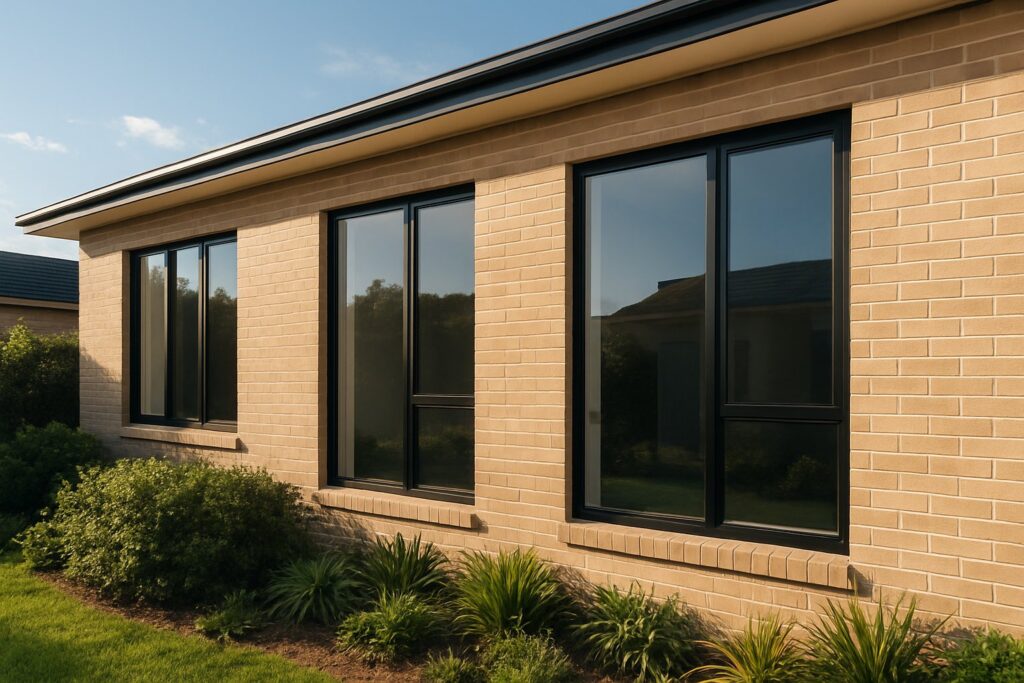
Why Castle Hill Homeowners Are Choosing Aluminium Windows
Aluminium windows are framed by extruded aluminium alloy profiles — lightweight yet remarkably strong sections that hold glass panels in place while resisting corrosion, warping, and UV degradation. That combination of structural performance and near-zero maintenance has made them the default choice across Australian residential and commercial construction for decades. Walk through almost any new housing estate in Sydney and you will see aluminium frames lining every facade, from compact townhouses to sprawling family builds.
Castle Hill sits right at the heart of this trend. Tucked within the Hills District of Western Sydney, this established suburb brings together an unusually broad range of architectural styles — and every one of them stands to gain from well-specified aluminium window systems.
This guide covers everything a homeowner, renovator, or builder needs to know before committing to a window project in the area. Climate suitability, energy performance ratings, window styles matched to local home types, technical frame specs, honest material comparisons, pricing factors, and the step-by-step installation process all get a thorough breakdown. By the final section, you will have the knowledge to make a confident, fully informed decision.
Why Aluminium Windows Dominate Australian Construction
Australia’s building environment is punishing. Intense UV radiation, coastal salt air along the seaboard, extreme heat in western suburbs, and driving rain during storm season demand materials that hold up without constant attention. Aluminium delivers on every front. The 6063 alloy series most commonly used in window profiles offers excellent corrosion resistance, a high strength-to-weight ratio, and the ability to accept durable powder-coat finishes in virtually any colour. Unlike timber, it will not rot or swell. Unlike uPVC, it stays colour-stable under relentless sun exposure. Those qualities explain why aluminium windows dominate both the residential sector — from first-home-buyer apartments to prestige acreage builds — and commercial fitouts across offices, retail, and institutional projects.
Castle Hill’s Unique Position in the Hills District
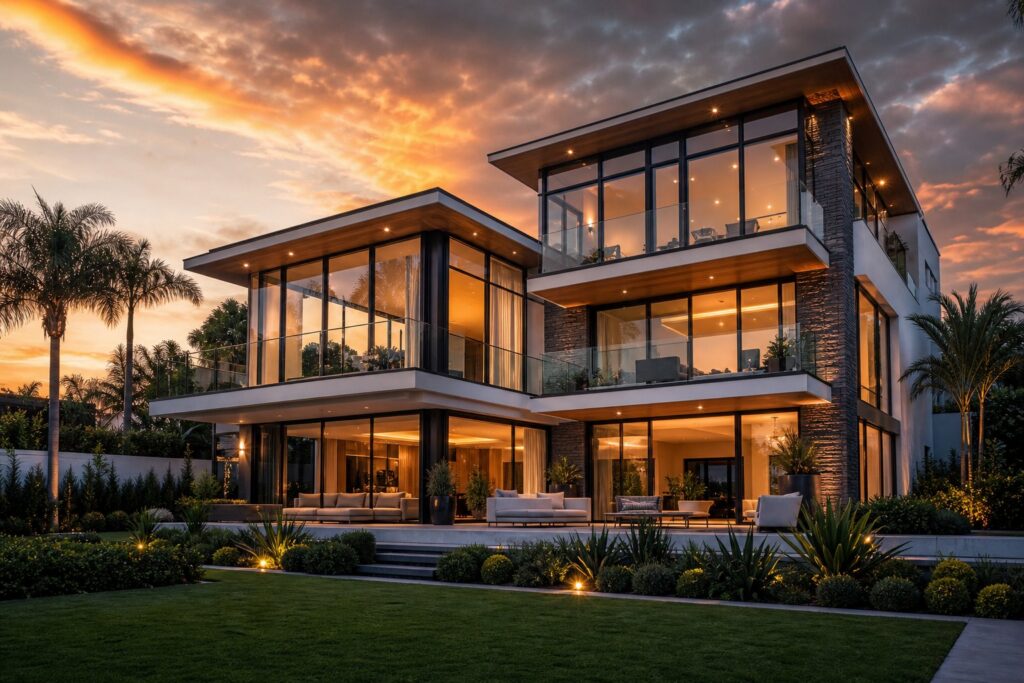
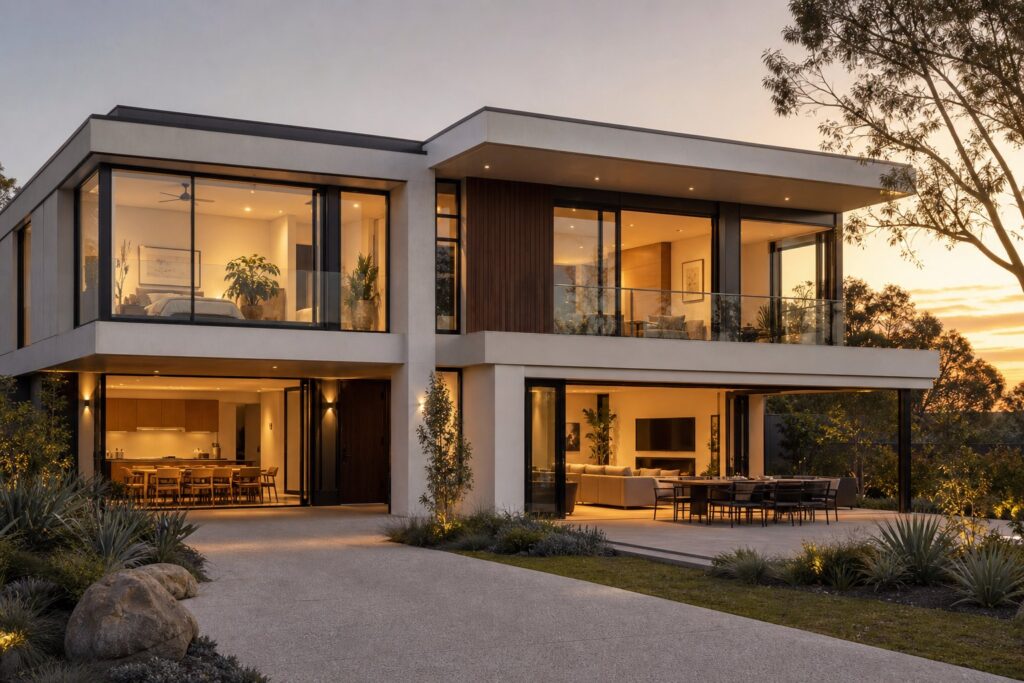
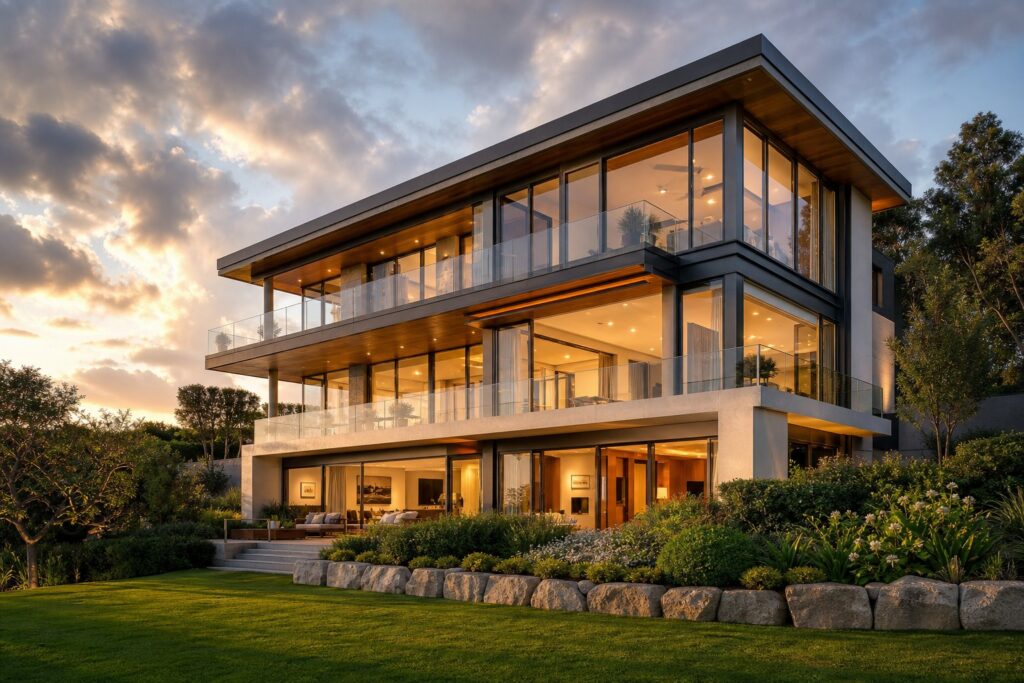
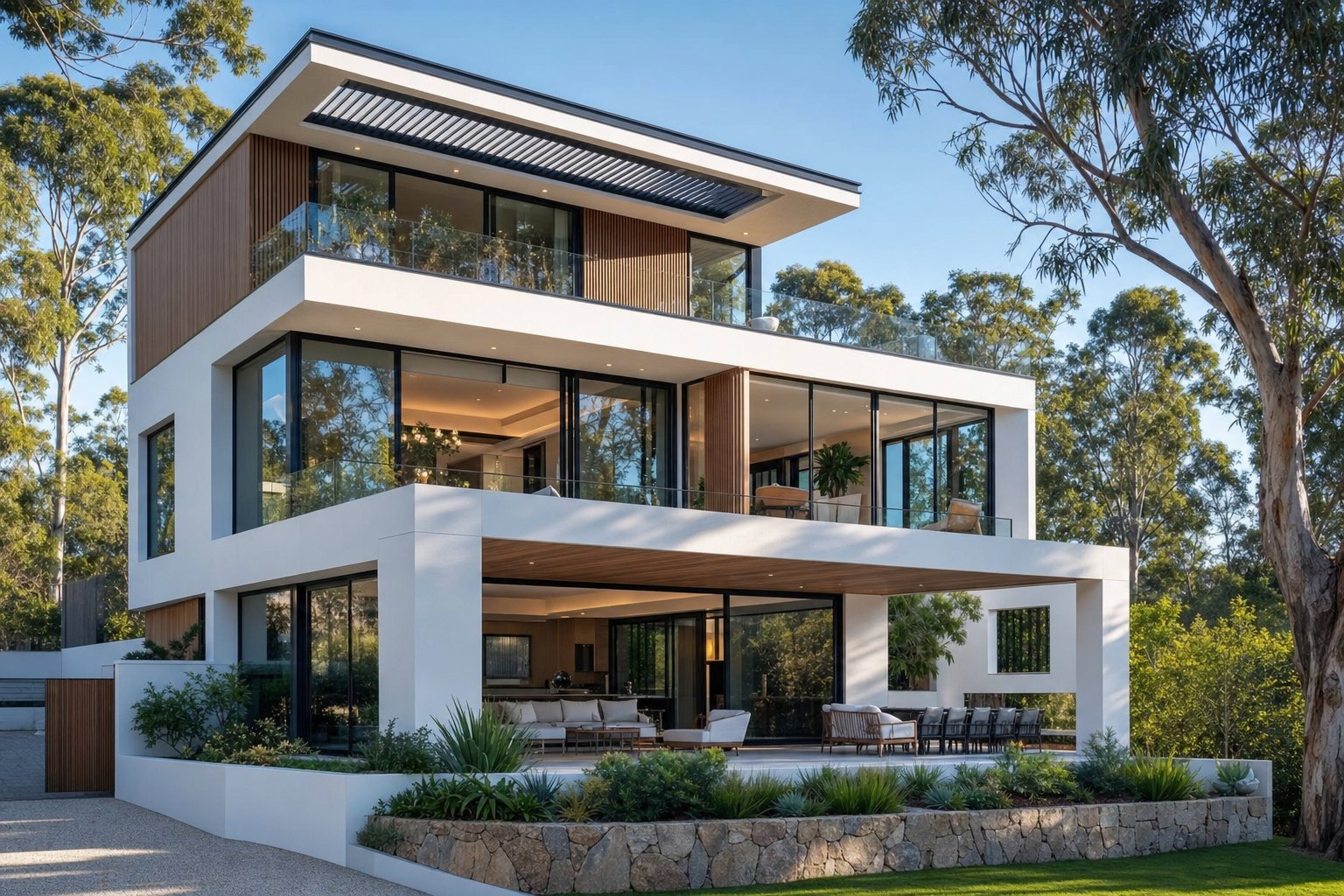
Few suburbs pack as much architectural variety into a single postcode. Federation-era homes line the streets near Old Castle Hill Road, their detailed brickwork and traditional proportions reflecting early twentieth-century craftsmanship. Move a few blocks and you will find interwar bungalows with wide verandahs and double-hung window openings. Head further into the Castle Hill North precinct and the streetscape shifts dramatically — contemporary two-storey and three-storey residences with clean rendered facades, expansive glazing, and open-plan living spaces designed around indoor-outdoor flow.
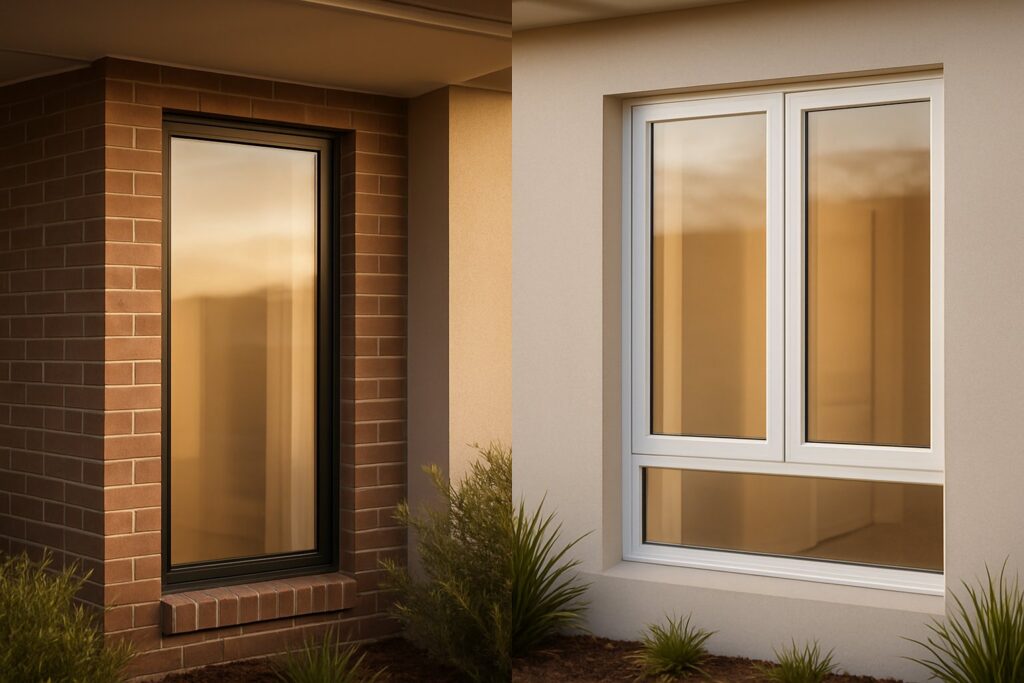
This diversity creates genuinely varied window requirements. A heritage renovation near the town centre calls for slimline profiles that echo traditional timber sightlines, while a modern build in a newer estate might demand floor-to-ceiling bi-fold configurations or large-format fixed panels. Aluminium window systems Western Sydney builders and homeowners rely on are flexible enough to satisfy both ends of that spectrum — and every style in between.
Aluminium windows are the most specified window frame material in Australian new builds, largely due to their exceptional strength-to-weight ratio and unmatched design flexibility across residential and commercial applications.
That flexibility is precisely what makes aluminium the best window frame option for Hills District homes, whether the project involves restoring a century-old cottage or glazing a brand-new duplex. Understanding how local climate, energy ratings, and style choices shape the specification process is the real key to getting it right — and that is exactly where this conversation heads next.
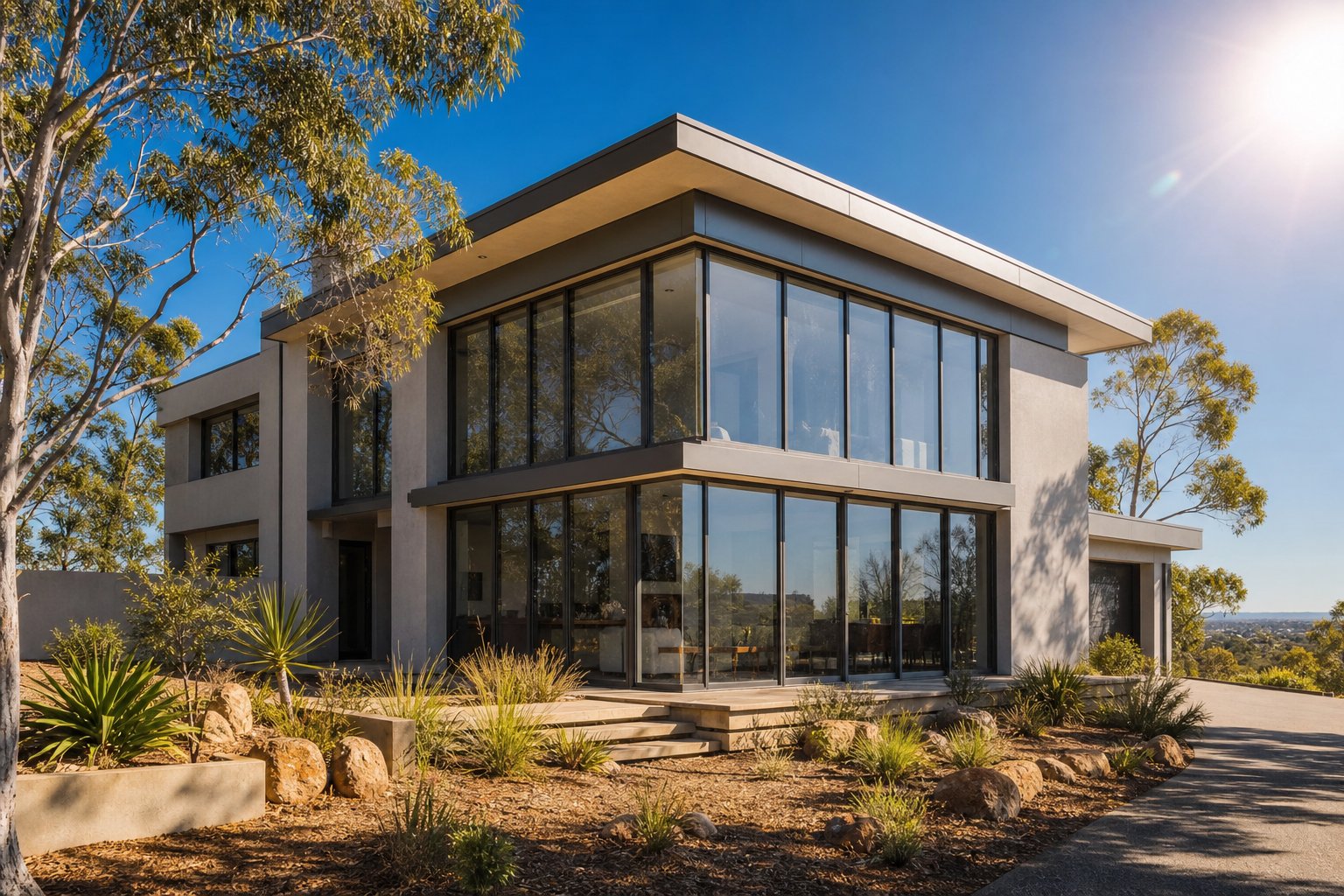
How Castle Hill’s Climate Shapes Your Window Decisions
Picking a window style is one thing. Picking one that actually performs in Castle Hill’s climate is something else entirely. The Hills District sits deep within the Western Sydney basin, well beyond the reach of the moderating sea breezes that keep coastal suburbs comfortable. That geographic reality creates a thermal environment most window marketing materials quietly ignore — and it should be the single biggest factor driving your specification choices.
Western Sydney Heat and Temperature Extremes
Castle Hill homeowners already know summers are fierce, but the data paints a sharper picture. Research published by UNSW and covered by The Conversation found that one in ten summer days in Western Sydney exceeds 35.4°C — a full 5°C hotter than near the coast, where the same threshold sits at just 30.4°C. One in twenty days pushes past 37.8°C. These are not occasional spikes. They are becoming more frequent, with the second 30-year period (1992–2021) recording 120 additional days above 35.4°C compared to the first.
The urban heat island effect compounds the problem. As new housing estates replace farmland and bushland across Western Sydney, built-up surfaces absorb and retain more solar radiation. Castle Hill, surrounded by ongoing development within The Hills Shire, sits squarely within this intensifying heat zone. Meanwhile, winter mornings in the Hills District can dip well below 5°C, creating diurnal temperature swings that stress building envelopes and push heating systems harder.
Windows sit right at the intersection of those extremes. During a 38°C afternoon, a west-facing window becomes a radiator pumping heat indoors. On a 3°C winter morning, that same window bleeds warmth from your living room. The frame material, glazing type, and overall specification determine whether your windows resist those forces or surrender to them.
How Window Performance Affects Energy Bills in the Hills District
Poorly performing windows are not just uncomfortable — they are expensive. According to research featured by ABC News, up to 87 per cent of unwanted heat gain in Australian homes during summer enters through the windows. In winter, windows account for roughly 40 per cent of heat loss. With around 40 per cent of household energy consumption going toward heating and cooling, inefficient glazing translates directly into higher electricity bills — a particularly painful equation in Castle Hill’s climate, where both summer cooling and winter heating demands are significant.
Standard single-glazed aluminium frames deserve honest scrutiny here. Aluminium conducts heat readily, and without intervention, a basic aluminium frame paired with a single pane of glass offers limited resistance to thermal transfer. That does not make aluminium a poor choice for Western Sydney. It means the specification matters enormously. Thermal break technology — where a polyamide strip separates the inner and outer aluminium sections of the frame — dramatically reduces conductivity. Pair a thermally broken frame with double glazing or Low-E coated glass, and the performance gap between aluminium and naturally insulating materials like timber narrows considerably.
The updated National Construction Code now requires new housing to achieve a minimum 7-star NatHERS energy rating, up from the previous 6-star benchmark. Meeting that target in Castle Hill’s climate zone without addressing window performance is nearly impossible. Energy-efficient windows for hot summers in Sydney are no longer a luxury upgrade — they are a baseline expectation built into the regulatory framework.
Bushfire Considerations Near Green Corridors
Castle Hill is not typically associated with bushfire risk in the way Blue Mountains towns are, but pockets of the suburb border bushland reserves and green corridors that carry a real — if localised — threat. Properties adjacent to Fred Caterson Reserve, Cattai Creek corridors, or the remnant bushland along Castle Hill’s northern and western fringes may fall within designated bushfire-prone land, requiring construction to comply with specific Bushfire Attack Level (BAL) ratings.
BAL ratings, defined under Australian Standard AS 3959, classify bushfire exposure from BAL–Low (minimal risk, no specific construction requirements) through to BAL–FZ (Flame Zone, requiring specialist systems). Each level imposes progressively stricter demands on window frames, glazing, seals, and screening. At BAL–29 and above, heat-resistant frames and specialised toughened glazing become essential. Aluminium performs well in this context — its durability, stability under heat, and resistance to ember attack make it a strong candidate for BAL-rated window systems up to BAL–40.
If your Castle Hill property sits near bushland, establishing your BAL rating early in the design or renovation process is critical. The rating dictates not just the window type but the glass thickness, sealing system, and whether ember-resistant metal mesh screens are required. A qualified bushfire consultant or your local council can confirm the classification. Overlooking this step risks failed compliance inspections and, far more importantly, reduced safety for your household.
Climate, energy performance, and bushfire exposure all point to the same conclusion: generic window specifications are not enough for the Hills District. The real question becomes how to read the ratings and technical data that separate a well-specified aluminium window from a poor one — and that is exactly what the energy efficiency standards are designed to answer.
Energy Efficiency Ratings Every Homeowner Should Understand
Energy ratings exist to take the guesswork out of window selection — yet most Castle Hill homeowners never see them explained in plain language. Builders reference star ratings in passing, quotes list U-values without context, and glazing acronyms stack up like alphabet soup. Stripping away the jargon reveals a surprisingly logical system, and understanding it puts you in a far stronger position to evaluate any aluminium window specification placed in front of you.
Understanding WERS Star Ratings and U-Values
The Window Energy Rating Scheme (WERS), managed by the Australian Glass and Window Association, is the national framework for rating whole-of-window energy performance. Rather than testing glass or frames in isolation, WERS evaluates the complete product — frame, glazing, seals, and all — for its annual energy impact on a model house across any Australian climate zone.
Each rated window receives two separate star ratings on a scale of zero to ten: one for heating performance and one for cooling performance. More stars mean better performance. A window might score highly for cooling (blocking solar heat gain in summer) but only moderately for heating (retaining warmth in winter), or vice versa. For Castle Hill, sitting in Western Sydney’s climate zone with scorching summers and genuinely cold winter mornings, both ratings matter. Prioritising cooling stars alone and ignoring heating performance leaves money on the table from May through August.
Beneath the star ratings sit the raw technical metrics. The U-value (expressed as W/m²K) measures how much heat passes through the entire window assembly — frame, edge-of-glass, and centre-of-glass combined. A lower U-value signals better insulation. Non-thermally broken aluminium frames with single glazing can sit at the high end of the U-value scale, meaning substantial heat transfer. Add a thermal break and double glazing, and that number drops significantly.
The second critical metric is the Solar Heat Gain Coefficient (SHGC), which measures how much solar radiation passes through the window as heat. Values range from 0 to 1; a lower SHGC means the window blocks more solar energy. On a 38°C Castle Hill afternoon, a west-facing window with a high SHGC turns your living room into a greenhouse. A lower SHGC specification on that same window keeps the interior noticeably cooler and your air conditioner under less strain.
WERS ratings are designed to integrate directly with NatHERS-accredited software, which means architects and energy assessors can plug real window data into house energy models before construction begins. For Castle Hill homeowners chasing the NCC’s 7-star minimum energy target, specifying WERS-rated aluminium windows is not optional — it is the most reliable path to verified compliance.
Thermal Break Technology Explained
Standard aluminium is an exceptional conductor of heat. That property, brilliant for a frying pan, creates a problem for window frames. Heat travels through an uninterrupted aluminium profile with very little resistance, carrying summer warmth inward and winter warmth outward. Thermal break technology solves this by physically splitting the frame into two separate aluminium sections — one facing outdoors, the other facing indoors — connected by a continuous strip of insulating material.
That insulating strip is typically polyamide reinforced with glass fibre, a material roughly 500 to 1,000 times less thermally conductive than aluminium itself. Mechanically crimped between the outer and inner profiles, the polyamide barrier creates a genuine insulation zone within the frame. The result is dramatic: thermally broken aluminium windows Castle Hill homeowners are increasingly specifying can achieve frame U-values in the range of premium insulating materials, a massive improvement over non-broken profiles.
For Castle Hill’s temperature extremes, the practical benefits extend beyond raw numbers. Thermal break frames stay closer to room temperature on their interior surface, which eliminates the “cold strip” sensation beside windows on winter mornings and reduces condensation risk. During summer, the exterior face absorbs solar heat without conducting it through to the indoor side. HVAC systems cycle less frequently, rooms feel more evenly comfortable, and energy bills reflect the difference.
The growing trend toward thermally broken profiles in the Hills District is not driven by fashion — it is driven by the updated NCC energy targets and by homeowners who have lived through enough Western Sydney summers to know that frame performance is not a detail to compromise on.
Double Glazing and Low-E Glass for Western Sydney
A thermally broken frame handles its share of the equation, but glass accounts for the majority of a window’s total surface area. The glazing you pair with that frame determines the overall performance of the system.
Double glazed aluminium windows for Western Sydney homes use an insulated glass unit (IGU) — two panes of glass separated by a sealed air space, typically filled with dry air or argon gas. That sealed cavity acts as an insulation buffer, slowing conductive and convective heat transfer between the panes. Argon fill boosts the effect because argon is denser than air and conducts heat less efficiently. The difference between a single pane and a well-specified IGU is immediately noticeable in both summer comfort and winter warmth retention.
Glass coatings push performance further. Low-E (low emissivity) glass carries a microscopically thin metallic coating — usually applied to one of the internal surfaces of the IGU — that reflects infrared radiation while still allowing visible light through. In summer, it bounces a significant portion of solar heat energy back outside. In winter, it reflects indoor radiant heat back into the room. For a Castle Hill home with large north or west-facing windows, low-e glass for aluminium window frames is arguably the single most impactful upgrade available.
Other glass types address different priorities. Toned glass absorbs a portion of incoming solar radiation, reducing glare and heat — useful for sun-drenched elevations. Laminated glass bonds two panes around an interlayer of polyvinyl butyral (PVB), delivering superior safety, acoustic performance, and UV filtration. Clear float glass remains the baseline option: affordable and highly transparent, but limited in thermal and acoustic control.
The following table compares common glass types across the performance criteria that matter most for Castle Hill conditions:
| Glass Type | Thermal Performance | Acoustic Performance | UV Protection | Best Application |
|---|---|---|---|---|
| Clear Float (Single Pane) | Basic | Basic | Minimal | Budget projects, low-exposure elevations |
| Toned / Tinted | Moderate | Basic to Moderate | Good | Sun-exposed west and north-facing windows |
| Low-E Coated (in IGU) | Excellent | Good | Very Good | Primary living areas, bedrooms, any orientation |
| Laminated | Moderate | Excellent | Excellent | Noise-affected locations, security-priority areas |
| Laminated Low-E (in IGU) | Excellent | Excellent | Excellent | Premium specification for maximum all-round performance |
Choosing the right combination of frame technology, glass type, and gas fill is where the U-value and SHGC numbers for your aluminium windows in Australia really take shape. A thermally broken aluminium frame paired with an argon-filled Low-E IGU sits at the performance end of the spectrum — and for Castle Hill’s climate, that level of specification is increasingly the standard rather than the exception.
Performance data tells you how well a window manages heat and light. What it does not tell you is which window style suits your home, how different opening mechanisms affect ventilation, or how to match modern aluminium profiles to a Federation-era facade. That is a design conversation — and the answer depends entirely on the type of house you are working with.
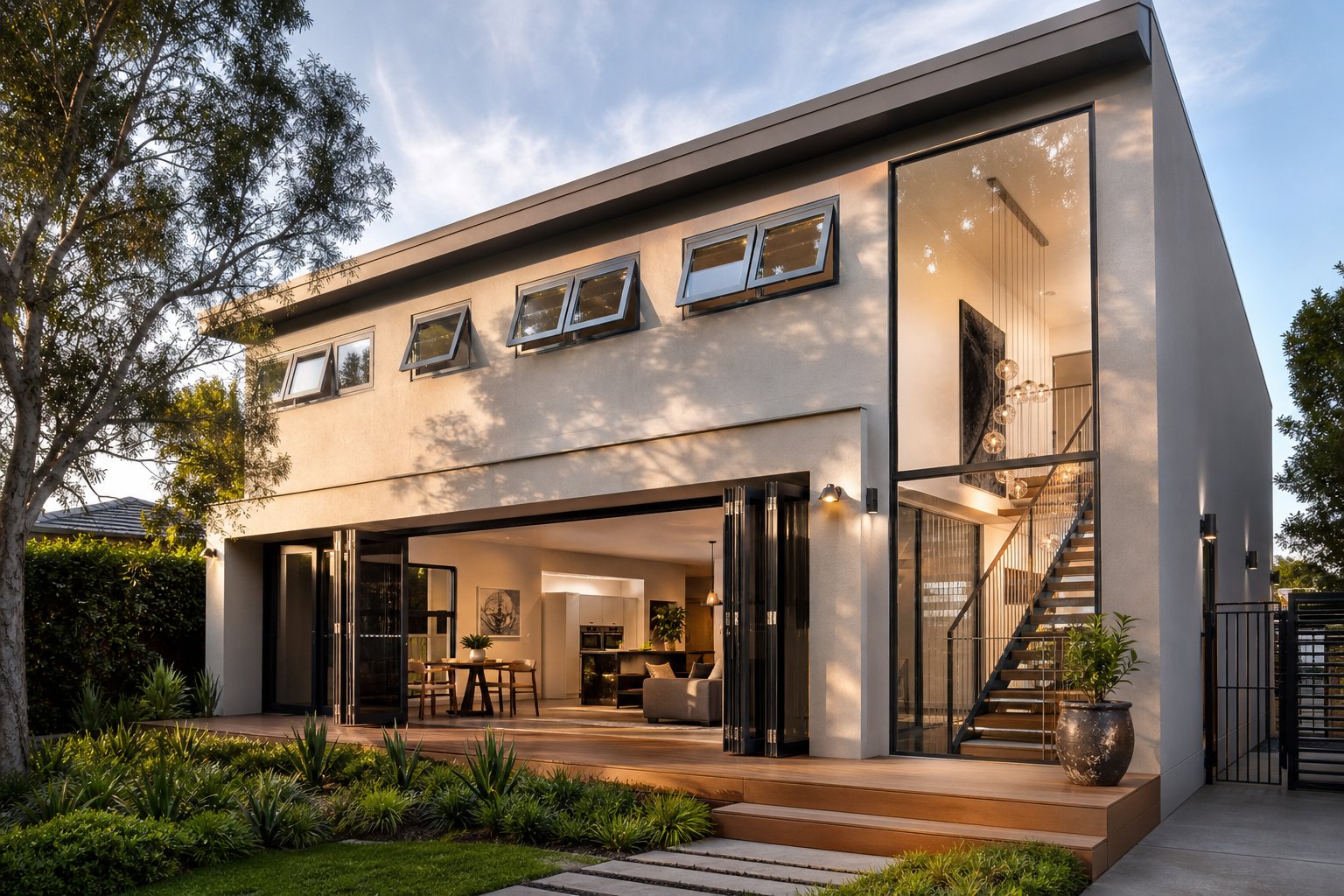
Matching Aluminium Window Styles to Castle Hill Homes
A window can hit every thermal benchmark on paper and still be the wrong choice if it clashes with your home’s architecture or fails to ventilate the room where you need airflow most. Castle Hill’s streetscapes run from century-old Federation cottages to freshly rendered contemporary builds, and each style has its own proportions, facade rhythms, and functional demands. Choosing the right aluminium window type is as much a design decision as a performance one — and the range of styles available makes it possible to get both right.
Sliding and Awning Windows for Modern Builds
Aluminium sliding windows Castle Hill homeowners in newer estates tend to favour are the workhorse of contemporary residential design. The mechanism is straightforward: one or more sashes glide horizontally along a track, requiring zero exterior clearance. That makes them ideal for bedrooms facing pathways, ground-floor rooms adjacent to driveways, or any opening where a projecting sash would obstruct foot traffic. Their clean horizontal lines sit naturally against the flat-roofed, rendered facades common in developments around the Castle Hill North precinct and newer subdivisions off Showground Road.
Sliding windows also benefit from a practical simplicity that keeps long-term maintenance low. Fewer mechanical components mean fewer points of failure — no crank handles to seize, no friction stays to adjust. The aluminium track resists corrosion and tolerates the fine dust that settles over Western Sydney during dry spells. For rooms that need consistent background ventilation, a half-open slider provides reliable airflow without fuss.
Awning windows complement sliders beautifully, especially in kitchens, bathrooms, and laundries. Hinged at the top and opening outward from the bottom, the sash swings away from the wall to create a sheltered gap. Rain deflects off the angled glass rather than driving into the room — a genuinely useful trait during the sudden afternoon downpours Castle Hill gets through its summer storm season. Many contemporary homes pair a bank of awning windows above a kitchen benchtop or use them as highlight windows above a fixed pane, combining ventilation with a generous wash of natural light.
Casement and Double-Hung Windows for Heritage Homes
Closer to Castle Hill’s town centre, the architectural language changes. Federation homes with detailed face brickwork, deep verandahs, and timber fretwork call for window profiles that honour that era’s proportions. Aluminium casement windows answer the brief with a side-hinged sash that swings outward on friction stays — mimicking the operation and sightlines of traditional timber casements while delivering a modern weather seal and corrosion-free frame.
Casement windows for Federation homes in Sydney work particularly well because the entire sash opens, allowing maximum airflow into the room. This full-opening characteristic was a deliberate feature of early Australian residential design, long before air conditioning existed. Reproducing that ventilation capacity in a low-maintenance aluminium frame gives heritage homeowners the performance upgrade without sacrificing the visual character their streetscape depends on.
Double-hung windows bring another layer of traditional authenticity. Two sashes — upper and lower — slide vertically within the frame, and many modern aluminium double-hung units allow both sashes to tilt inward for easy cleaning. The vertical emphasis of a double-hung window suits the taller, narrower openings found in interwar bungalows and Federation-era homes throughout the Hills District. Opening the top sash alone lets warm air escape at ceiling height while cooler air enters through the lower opening — a passive stack ventilation effect that reduces reliance on mechanical cooling during milder weather.
Bi-Fold and Fixed Windows for Open-Plan Living
Open-plan living is practically a design religion in the Hills District. Families want the kitchen flowing into the dining area, the dining area opening onto a covered alfresco, and the alfresco blurring into the backyard. Bi-fold aluminium windows for Hills District homes make that connection physical rather than merely visual. Multiple sashes fold back in a concertina action, stacking neatly to one side and leaving an almost entirely unobstructed opening between indoors and out.
Aluminium’s structural strength is essential here because bi-fold configurations span wide openings — sometimes three metres or more — and every panel needs to track smoothly under its own weight without sagging over time. Lighter materials struggle with those spans. Aluminium handles them comfortably, and the slim frame profiles keep sightlines minimal so the view takes priority over the hardware.
Fixed windows — sometimes called picture windows — serve a different purpose. They do not open at all. Instead, they exist purely to frame a view or flood a room with light. In Castle Hill homes with elevated positions overlooking the Hills District bushland or distant ridgelines, a large fixed aluminium panel turns a blank wall into a living landscape painting. With no moving parts, fixed windows also offer superior energy efficiency and weather sealing, making them an excellent choice for orientations where ventilation is handled by adjacent operable windows.
Louvre windows deserve a mention as well, particularly in subtropical-influenced outdoor rooms and enclosed verandahs. Their horizontal glass blades rotate in unison to control airflow with precision — fully open for maximum ventilation, partially angled to deflect rain while still admitting a breeze, or closed tight for weather protection. They pair well with aluminium frames and are increasingly appearing in covered alfresco areas across newer Hills District builds.
Each window type brings a distinct advantage to the right application. The following summary pairs each style with its ideal home context across Castle Hill:
- Sliding windows — Space-efficient horizontal operation with clean lines; ideal for contemporary estates and rooms with limited exterior clearance.
- Awning windows — Weather-protected ventilation that stays open during rain; perfect for kitchens, bathrooms, and highlight positions in modern and transitional homes.
- Casement windows — Full-opening sash for maximum airflow with traditional proportions; best suited to Federation and Edwardian homes near Castle Hill’s heritage core.
- Double-hung windows — Vertical sliding sashes that replicate classic timber aesthetics; excellent for interwar bungalows and period-style renovations.
- Bi-fold windows — Concertina-folding panels that connect indoor and outdoor living; the go-to choice for open-plan entertaining areas across the Hills District.
- Fixed (picture) windows — Non-operable panels that maximise light and views with the best possible seal; suited to any architectural style where ventilation is handled elsewhere.
- Louvre windows — Adjustable glass blades for precision airflow control; well matched to enclosed verandahs, alfresco zones, and subtropical-influenced designs.
Renovation vs New Build: How the Choice Differs
The best aluminium window styles for renovations are not always the same ones you would specify for a new build, even on the same street. In a new construction project — whether it is a custom home on a subdivided block or a project house in a Castle Hill estate — windows are designed into the plans from day one. Opening sizes, lintel spans, and structural supports are all purpose-built around the chosen window type. That freedom means you can specify wide bi-fold runs, oversized fixed panels, or stacked combinations without worrying about fitting new glass into someone else’s framework.
Renovation projects carry different constraints. Replacing windows in an existing home usually means working within the dimensions of current openings unless you are prepared to modify the surrounding wall structure. A retrofit approach — installing new aluminium frames inside the existing opening — keeps disruption and cost down, though it can slightly reduce the visible glass area. Full-frame replacement, where the old frame is stripped out entirely and the rough opening is exposed, costs more and takes longer but delivers maximum glass area and modern weatherproofing from scratch.
For Castle Hill homeowners renovating Federation or interwar properties, the decision often balances heritage sensitivity with performance goals. Swapping original timber double-hung windows for aluminium equivalents can be done sympathetically — matching the profile proportions, replicating the glazing bar pattern, and selecting a powder-coat colour that echoes the original painted finish. Newer homes undergoing a cosmetic or energy upgrade have more latitude; enlarging an opening to accommodate a wider slider or converting a wall section into a bi-fold servery window is typically more straightforward in brick veneer or lightweight clad construction.
Whichever path you take, confirming whether a development application is required through The Hills Shire Council is a smart early step — particularly for heritage-listed or conservation-area properties where external changes to window sizes or proportions may need approval.
Style and architecture set the visual direction. What often catches homeowners off guard, though, is how much the technical specification behind the frame — its profile dimensions, acoustic rating, and finish durability — shapes everyday liveability once the windows are installed and the builder has packed up.
Acoustic Performance and Frame Specifications Decoded
Traffic hum at six in the morning. The rhythmic clatter of a metro train pulling into the station. A garbage truck grinding its way up a residential street. Castle Hill homeowners living near the North West Metro line, the Windsor Road corridor, or the increasingly busy Showground Road intersection know exactly how sound finds its way indoors — and it almost always enters through the windows. Thermal performance dominates most window conversations, but acoustic performance deserves equal weight for any property affected by transport infrastructure or road noise.
Frame specifications, meanwhile, are the technical detail hiding in plain sight. Two aluminium windows can look identical from the street yet perform completely differently because their internal profiles sit in entirely separate structural categories. Understanding both topics — sound control and frame engineering — gives you a much sharper eye when reviewing quotes and comparing products for your Hills District home.
Acoustic Performance and Noise Reduction Ratings
Two rating systems dominate acoustic conversations in Australian construction. The Weighted Sound Reduction Index (Rw) is the standard used across Australia, New Zealand, and Europe. Expressed as a single number — Rw 32, Rw 38, and so on — it measures how many decibels of airborne sound a window assembly blocks across a range of frequencies weighted to reflect human hearing. Higher numbers mean greater sound reduction. The Sound Transmission Class (STC) serves a similar purpose but follows North American calculation methods. Because the weighting differs, STC and Rw values are not directly interchangeable even when the numbers look similar. For acoustic rated aluminium windows in Castle Hill, Rw is generally the more relevant reference to request from suppliers and manufacturers.
What actually drives acoustic performance in an aluminium window? Several design elements work together rather than any single feature carrying the load:
- Glass thickness and asymmetry — Thicker glass resists vibration more effectively, but using panes of different thicknesses in a double-glazed unit is often more effective than simply adding mass to both. Each pane resonates at a different frequency, disrupting sound transmission more thoroughly.
- Cavity depth in double glazing — The sealed air gap between panes weakens sound energy as it crosses from the outer pane to the inner. Cavities that are too narrow limit the benefit; well-designed insulated glass units balance cavity width with glass selection for optimal acoustic dampening.
- Laminated glass interlayers — The PVB interlayer in laminated glass absorbs vibration energy, making laminated panes particularly effective against low-frequency noise such as traffic rumble and train movement — exactly the noise profile along Castle Hill’s metro corridor.
- Frame sealing and compression — Sound hunts for gaps. Multi-point locking hardware, compression seals, and tight manufacturing tolerances in quality aluminium frames close off the edge-of-frame pathways that sound exploits in poorly fitted windows.
A common misconception is that doubling the glass thickness doubles the noise reduction. In practice, sound behaves on a logarithmic scale. A reduction of 10 dB is generally perceived as roughly halving the loudness. Chasing higher Rw numbers delivers diminishing perceptual returns beyond a certain point, which is why matching the glazing specification to your actual noise source — low-frequency transport rumble versus mid-frequency voices and barking dogs — matters more than simply requesting the highest rating available.
For noise reduction windows near the Metro line in Sydney’s north-west, a double-glazed aluminium window with asymmetric pane thicknesses and at least one laminated pane will typically outperform a symmetric setup of the same total glass mass. Pairing that configuration with a thermally broken frame tightens the overall seal further, because the polyamide barrier also interrupts vibration pathways through the frame itself.
Frame Profile Sizes and What They Mean for Your Home
Aluminium window frame profile sizes determine far more than the visual bulk of the frame on your wall. The profile — the cross-sectional width and depth of the aluminium extrusion — dictates how much glass area you see, how much structural load the frame handles, which hardware it supports, and how it performs under wind pressure. Three broad categories cover most residential and commercial applications, and understanding the differences helps explain why quotes for seemingly similar windows can vary so much.
| Profile Category | Approximate Width | Strength Rating | Best Application | Typical Window Types |
|---|---|---|---|---|
| Slimline | Around 53 mm | Suitable for standard residential openings and moderate wind zones | Bedrooms, bathrooms, and smaller openings where slim sightlines are a design priority | Sliding, awning, fixed |
| Standard Residential | Around 76 mm | Engineered for larger residential openings and higher wind-load requirements | Living areas, wide sliding windows, double-hung, and casement windows in exposed positions | Sliding, casement, double-hung, awning, bi-fold |
| Heavy-Duty / Commercial | 100 mm to 150 mm | High-strength for large spans, high-rise, and commercial-grade performance | Oversized openings, multi-panel bi-folds, shopfronts, and upper-storey windows in high wind zones | Bi-fold, large fixed panels, commercial sliding, curtain wall |
Slimline profiles suit the majority of standard window openings in a typical Castle Hill home. Their narrower sightlines let more glass show, creating a lighter, more contemporary look — a quality that makes them popular in newer builds across the Hills District where large expanses of glazing define the facade aesthetic. The trade-off is structural capacity: slimline frames are not designed for oversized spans or extreme wind-load situations.
Standard residential profiles around 76 mm wide hit the sweet spot for most applications. They accommodate double-glazed IGUs comfortably, accept a wider range of hardware including heavy-duty locks and friction stays, and satisfy the structural requirements of larger window openings common in open-plan living areas. If your Castle Hill renovation involves replacing tired single-glazed aluminium windows with double-glazed thermally broken units, the standard profile is likely where your specification will land.
Heavy-duty and commercial-grade profiles enter the picture when spans exceed typical residential dimensions or when the building’s exposure demands extra strength. A three-metre bi-fold run on a second-storey balcony facing prevailing westerlies, for instance, needs the rigidity only a wider extrusion delivers. The frames are visually chunkier, but the engineering margins they provide are non-negotiable for safety and long-term smooth operation at those scales.
Colour and Finish Options for Aluminium Frames
One of aluminium’s most underrated advantages over other frame materials is colour freedom. Powder coating — an electrostatic application of finely ground pigment particles baked onto the aluminium surface at high temperatures — creates an extremely durable, UV-resistant finish that bonds to the metal rather than sitting on top like conventional paint. The result resists chipping, peeling, and fading through years of Western Sydney sun exposure.
Standard colour palettes from most Australian aluminium window manufacturers typically include whites, blacks, greys (Monument, Woodland Grey, and Basalt are perennial favourites in the Hills District), and a range of neutral tones that align with popular Colorbond roofing and cladding shades. Custom powder-coat colours extend the range dramatically — virtually any RAL or custom colour code can be matched, though non-standard finishes usually add to cost and lead time.
For Castle Hill homeowners matching new aluminium windows to an existing facade, the ability to specify a precise colour takes the guesswork out of integration. A Federation home might call for a heritage cream or deep green that echoes original painted timber joinery. A contemporary build might demand a matt black or charcoal finish that disappears into dark-rendered walls, letting the glass do the talking. Powder coat colours for aluminium windows in Australia are rated for durability under local conditions, and a quality finish backed by a manufacturer warranty should retain its colour and surface integrity for decades without repainting.
Acoustic control, frame engineering, and finish durability are the technical layers that sit behind every aluminium window but rarely get the attention they deserve during the selection process. They shape how the window sounds, feels, and ages in your home long after installation day. The next logical question — one that tends to surface once homeowners start comparing specifications — is how aluminium stacks up head-to-head against the other frame materials competing for the same spot in your wall.
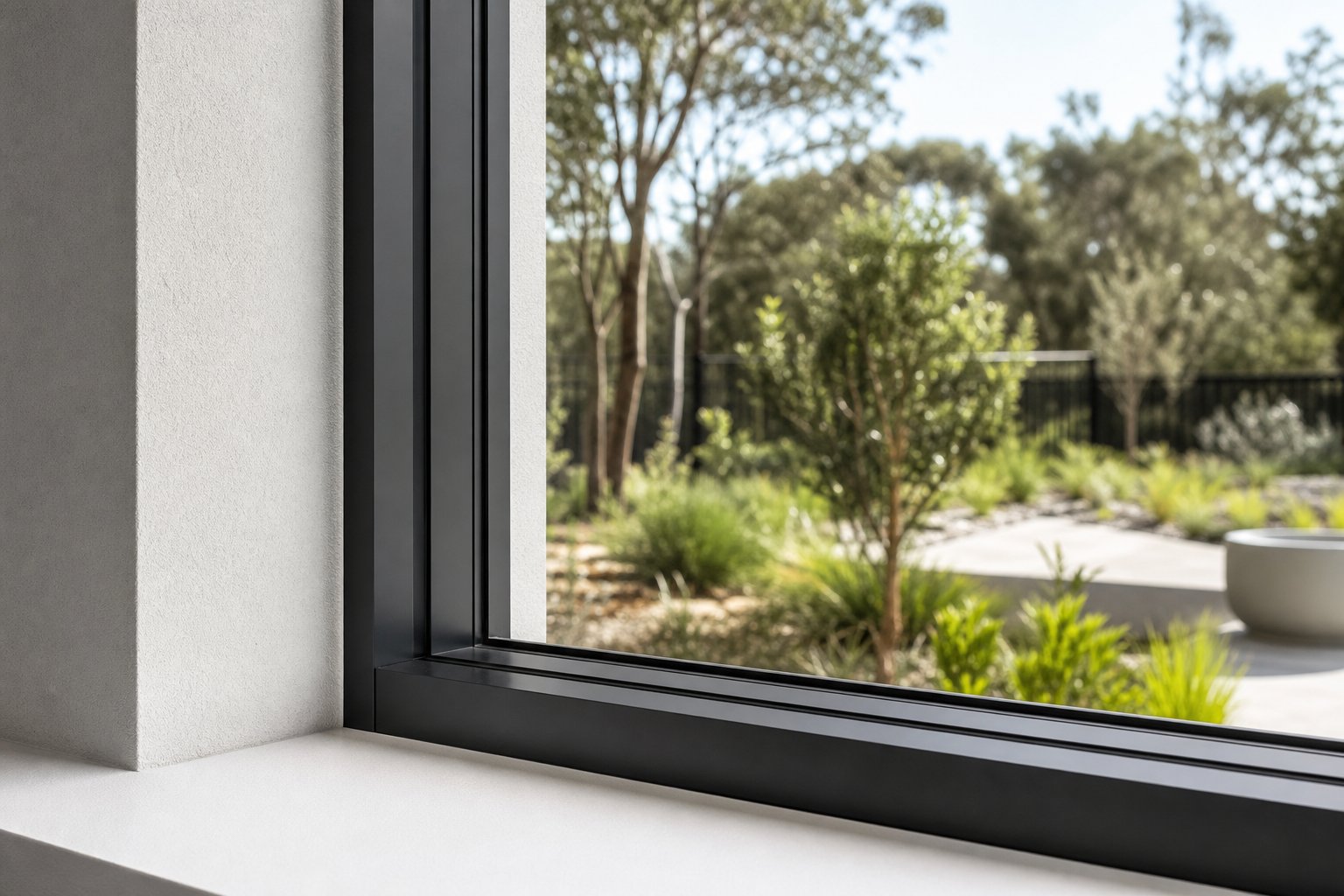
Best Window Frame Material for the Western Sydney Climate
Every frame material has a sales pitch. Timber promises warmth and character. uPVC promises affordability and insulation. Composites promise the best of both worlds. Aluminium promises strength and longevity. The trouble is, sales pitches rarely survive contact with Western Sydney’s climate — the relentless UV, the 38°C summer afternoons, the cold winter dawns, and the storm-driven rain that hammers facades from November through March. What matters is how each material actually performs under those conditions, year after year, with minimal intervention from you.
This is the comparison most window suppliers skip. An honest, side-by-side assessment across the criteria that genuinely affect Castle Hill homeowners — durability, thermal performance, maintenance burden, design versatility, cost positioning, and real-world climate resilience — gives you the foundation to choose with confidence rather than guesswork.
Aluminium vs Timber Frames
Timber holds a deep emotional appeal in Australian housing. There is something undeniably inviting about a natural hardwood frame, its grain visible beneath a coat of paint or stain, its proportions echoing the original joinery in a Federation or interwar home. Beyond aesthetics, timber is a genuinely good insulator. Wood fibres trap air naturally, giving timber frames a lower thermal conductivity than standard aluminium without any additional engineering — a meaningful advantage when you are chasing NatHERS stars.
The catch is durability under stress. Castle Hill’s Western Sydney conditions push timber hard. Summer heat causes expansion, winter cold triggers contraction, and the diurnal temperature swings common in the Hills District accelerate that cycle. Over time, timber frames can warp, crack, or develop gaps in the seal between frame and sash. Moisture penetration — whether from driving rain or condensation — invites rot and fungal decay, particularly in bathroom and laundry windows where humidity levels are high. Maintaining timber in good condition demands regular sanding, repainting, or re-staining, often on a cycle of every few years. Skip a season and deterioration gains momentum fast.
Aluminium vs timber windows in Castle Hill ultimately comes down to a trade-off between natural insulation and lifecycle effort. Timber insulates better in its raw state, but thermally broken aluminium closes that gap substantially while offering corrosion resistance, dimensional stability, and a maintenance profile that amounts to little more than occasional cleaning. For heritage-sensitive renovations where authentic material character is paramount, timber may still be the right call — provided the owner budgets for ongoing upkeep. For most other applications, aluminium delivers comparable or superior long-term performance with a fraction of the maintenance commitment.
Aluminium vs uPVC Frames
uPVC (unplasticised polyvinyl chloride) has carved out a solid position in the Australian window market, largely on the strength of two attributes: natural thermal insulation and competitive pricing. The cellular structure of uPVC profiles traps air within the frame, delivering thermal resistance that rivals or exceeds timber without any external treatment. For homeowners focused purely on energy ratings, a uPVC frame can look attractive on paper.
Structural limitations tell a different story. uPVC is inherently less rigid than aluminium, which means frames need to be thicker and bulkier to achieve the same structural integrity. The result is wider sightlines — the visible frame area between the glass and the wall — that reduce the glass-to-frame ratio and block more natural light. For a Castle Hill home designed around generous glazing and clean facade lines, that visual trade-off matters. Aluminium vs uPVC window frames in Sydney often comes down to whether you prioritise raw insulation numbers or the slim, contemporary profiles that aluminium makes possible.
UV stability is the other critical differentiator in Western Sydney. Prolonged sun exposure can cause uPVC to discolour over time, shifting from bright white toward a yellowish hue that is difficult to reverse. Some manufacturers have improved UV stabilisers significantly, but the fundamental vulnerability remains. Aluminium’s powder-coat finish, by contrast, is engineered specifically to resist UV degradation, maintaining its colour and surface integrity through decades of Australian sun without recoating. In a suburb where north and west-facing facades cop relentless afternoon exposure for half the year, that resilience counts for more than it might in a milder coastal location.
Aluminium also supports larger pane sizes and wider spans than uPVC, making it the stronger candidate for bi-fold configurations, oversized fixed panels, and any opening where structural performance under wind load is a design requirement. Where uPVC holds its ground is in pure insulation value and entry-level pricing — both legitimate advantages for budget-conscious projects where maximum glazing spans and slim profiles are not priorities.
Aluminium vs Composite Frames
Composite windows — typically a timber core clad with an external aluminium skin — represent a premium attempt to combine the best properties of both materials. The timber interior provides natural insulation and a warm visual finish inside the home, while the aluminium exterior handles weather exposure, UV radiation, and low-maintenance durability on the facade side.
The concept is genuinely appealing, and composite vs aluminium windows in Australia is a question that surfaces regularly in architect-designed custom builds. In practice, though, the cost-to-benefit equation is steep. Composite frames sit at the top of the pricing spectrum — well above standard aluminium and often above timber — and the manufacturing complexity means lead times can stretch longer. The timber interior, while beautiful, still requires some attention to finish and humidity management, particularly in wet areas. And for Castle Hill homes where the interior frame is rarely the visual centrepiece (think sliding windows behind a kitchen splashback or awning windows high on a laundry wall), the premium for an exposed timber interior may not deliver proportional value.
Where composites genuinely shine is in prestige living areas with deep reveal details — a study with floor-to-ceiling fixed glass overlooking a garden, or a master bedroom suite where the window frame doubles as an architectural feature. For those applications, the dual-material approach justifies the investment. For the broader window package across a typical Castle Hill home, thermally broken aluminium achieves comparable thermal performance at a more accessible price point and with less ongoing care.
The following table sets out a balanced comparison across the criteria that matter most for Hills District homes:
| Material | Durability | Thermal Performance | Maintenance | Design Flexibility | Cost Range | Suitability for Western Sydney Climate |
|---|---|---|---|---|---|---|
| Aluminium (thermally broken) | Excellent — resists corrosion, warping, and UV degradation | Good to Excellent (with thermal break and appropriate glazing) | Very Low — occasional cleaning only | Excellent — slimmest profiles, widest span capability, extensive colour range | Mid-range | Excellent — engineered for Australian heat, UV, and storm exposure |
| Timber | Moderate — vulnerable to rot, warping, and insect damage without ongoing care | Good to Excellent (natural insulator) | High — regular sanding, painting, or staining required | Good — traditional profiles and paintable surfaces, but limited span capability | Mid-range to Premium | Moderate — heat cycling and moisture stress accelerate deterioration |
| uPVC | Good — no rot or corrosion, but can become brittle or discolour with prolonged UV | Good to Excellent (inherent insulation properties) | Low — wipe-clean surface, no painting needed | Limited — bulkier profiles, restricted span widths, fewer colour options | Budget to Mid-range | Moderate — UV discolouration risk in high-exposure positions |
| Composite (timber-aluminium) | Very Good — aluminium exterior protects timber interior from weather | Excellent (timber core provides strong natural insulation) | Low to Moderate — exterior is low-care, interior timber may need periodic attention | Good — warm interior aesthetic with weather-resistant exterior | Premium | Very Good — aluminium shell handles external conditions well |
No single material wins every column, and anyone claiming otherwise is selling rather than advising. Timber and uPVC hold genuine thermal advantages in their base state. Composite frames offer a beautiful dual-character finish for those willing to invest. Aluminium’s strength lies in the combination of durability, design freedom, lifecycle cost, and proven performance under exactly the conditions Castle Hill throws at a building envelope — qualities that explain why it remains the most widely specified frame material in Australian construction.
Knowing which material suits your home is one half of the equation. The other half — understanding what drives the price of your chosen specification and how the buying process actually unfolds — tends to be the part that catches homeowners off guard once they start requesting quotes.
Understanding Pricing Factors and the Aluminium Window Installation Process
Two quotes land in your inbox for what looks like the same window — and one is dramatically higher than the other. Before assuming someone is overcharging, it helps to understand exactly what goes into the number. Aluminium window pricing is not a single line item. It is a stack of individual specification choices, each one nudging the final figure up or down. The homeowners who feel most confident during this stage are the ones who can read a quote and see precisely which decisions are driving the cost.
What Influences Aluminium Window Pricing
No two window projects carry the same price tag, even on the same street in Castle Hill. The variation comes down to a combination of design, performance, and site-specific factors that every homeowner should recognise before comparing quotes. Here are the key cost drivers that explain what affects aluminium window pricing in Sydney and across the Hills District:
- Window type and operating style — A fixed panel with no moving parts costs less to manufacture than a bi-fold system with multiple hinged sashes, precision tracks, and heavy-duty rollers. Sliding and awning windows generally sit in the mid-range, while louvre and bi-fold configurations push higher due to mechanical complexity.
- Window size and quantity — Larger openings require more material and heavier glass, and they demand stronger structural profiles to handle wind loads. Ordering a full house package typically brings a better per-unit rate than replacing a single window.
- Single glazing vs double glazing — An insulated glass unit with an argon-filled cavity and Low-E coating costs more than a single pane of clear float glass. The performance difference, as covered earlier, is substantial — and so is the price step.
- Thermal break vs standard frame — Thermally broken profiles involve additional manufacturing processes and specialised polyamide components. That engineering investment shows up in the quote but pays back through energy savings over the window’s lifetime.
- Powder-coat colour — Standard colours from an existing palette are priced into the base specification. Custom colour matching — a specific RAL code or a non-standard Colorbond shade — adds a surcharge and may extend lead times.
- Hardware selection — Basic locking mechanisms and handles differ in price from premium multi-point locks, keyed-alike cylinders, or heavy-duty stainless steel friction stays rated for coastal or high-use applications.
- BAL-rated requirements — Properties within bushfire-prone zones need frames, glazing, seals, and screening that comply with the relevant Bushfire Attack Level. Meeting BAL-29 or BAL-40 specifications introduces additional material and testing costs that standard windows do not carry.
- Access and installation difficulty — Ground-floor windows with clear site access are simpler and quicker to install than second-storey openings requiring scaffolding or windows in tight spots behind established landscaping. Difficult access adds labour time and equipment costs.
Project homes built through volume builders typically use a standardised window schedule — pre-selected sizes, standard profiles, and a limited colour palette — which keeps costs within a predictable band. Custom builds and architect-designed homes flip that model. Every window may be a different size, style, or specification, and the pricing reflects that bespoke approach. Neither is inherently better; they simply serve different priorities and budgets. Understanding this distinction helps Castle Hill homeowners set realistic expectations before the first quote arrives.
The Installation Process From Measurement to Completion
The aluminium window installation process in Castle Hill follows a structured sequence that typically spans several weeks from first contact to final sign-off. Rushing any stage — particularly measurement or manufacturing — risks costly errors that are far harder to fix once frames are locked into the wall. Here is how a professional project generally unfolds:
- Initial consultation and site measure — A specialist visits your property to assess existing conditions, discuss your goals, and take precise measurements of every opening. For renovation projects, this includes inspecting the condition of existing frames, lintels, and surrounding wall structure. Expect this visit to take a couple of hours for a typical home with ten to fifteen windows.
- Design and specification — Based on the site measure, you work with the supplier to finalise window types, frame profiles, glazing selections, hardware, and colour. This is the stage where energy ratings, acoustic requirements, and BAL compliance get locked into the specification.
- Quotation — A detailed quote breaks down the cost by window, covering supply and installation separately so you can see where the money goes. A thorough aluminium window quote guide for homeowners: check that it itemises glass type, profile category, thermal break inclusion, colour, hardware, and any extras like flyscreens or security mesh.
- Manufacturing — Once the quote is accepted and a deposit is paid, your windows enter the production queue. Standard orders typically require a few weeks; complex or custom specifications may need longer. Quality manufacturers provide estimated delivery timelines at this stage.
- Delivery — Finished windows are delivered to site, usually wrapped and palletised to prevent transit damage. For renovation projects, coordinating delivery with the installation crew avoids windows sitting exposed on site longer than necessary.
- Installation — Professional installers fit each window, ensuring plumb and level alignment, proper sealing around the frame perimeter, and correct hardware operation. A straightforward window takes one to two hours; larger or more complex units — bi-folds, oversized fixed panels, upper-storey openings requiring scaffolding — take longer. A whole-house project with twelve to twenty windows typically wraps up within one to three days of on-site work.
- Post-installation inspection and handover — A final walkthrough with the installer confirms that every window operates smoothly, seals are intact, and finishes are undamaged. You should receive warranty documentation, care and maintenance instructions, and clear contact details for any follow-up service needs.
Weather can influence scheduling, particularly during Western Sydney’s storm-prone summer months. Reputable installers monitor forecasts and will reschedule rather than risk exposing an open wall cavity to rain mid-installation — a short delay that protects your home far better than pressing ahead in poor conditions.
Renovation Window Replacement vs New Build Specification
The path to new aluminium windows looks quite different depending on whether you are upgrading an existing Castle Hill home or specifying for a new construction project. Each scenario carries its own set of practical considerations, and understanding them early saves time, money, and frustration.
For replacement aluminium windows in the Hills District, the starting point is the condition of your existing frames. If the current aluminium or timber frames are structurally sound, level, and free from significant damage, a retrofit or insert installation may be possible — where new frames slot into the existing opening without disturbing the surrounding wall, interior trim, or exterior cladding. This approach minimises disruption and keeps labour costs down, though the new frame sits inside the old opening footprint, which can reduce the visible glass area slightly.
When existing frames are damaged, rotted (in the case of timber), or structurally compromised, full-frame replacement becomes necessary. The old frame is stripped out entirely, exposing the rough opening and the surrounding wall structure. This method allows for modern weatherproofing, fresh flashing, and the maximum glass area the opening permits — but it involves more labour, potential patching of internal and external finishes, and a longer installation timeline per window.
New build specification is a different exercise altogether. Windows are designed into the architectural plans from the outset, with opening sizes, lintel spans, and structural supports purpose-built around the chosen products. There is no old frame to work within and no existing wall finish to protect. Builders coordinate window delivery with the construction schedule so frames arrive on site at the right stage — typically after the wall frames and roof are up but before internal lining begins. This integration means the manufacturing and delivery timeline needs to align with the broader build program, and delays in window production can hold up other trades.
For Castle Hill homeowners renovating older properties, a few additional considerations come into play. Changing the size or position of window openings in a load-bearing wall may require engineering certification and council approval through The Hills Shire. Heritage-listed properties or homes within conservation areas may face additional restrictions on external changes to window proportions and materials. And in practical terms, coordinating window replacement with other renovation works — external rendering, internal plastering, painting — often delivers better value and a cleaner finished result than tackling each trade in isolation.
Whether it is a single bathroom window swap or a full-house specification for a new build, the buying process rewards preparation. Homeowners who arrive at the quoting stage with a clear understanding of their glazing, frame, and performance priorities consistently end up with a better-specified product — and fewer surprises when the invoice arrives. What often gets overlooked in the excitement of choosing styles and comparing prices, though, is what happens after the windows go in: how they age, how little — or how much — they demand from you over the years, and whether the material you chose can genuinely go the distance in Castle Hill’s conditions.
Sustainability and Long-Term Maintenance of Aluminium Windows
A window’s real cost is not the number on the invoice. It is the sum of what you pay upfront, what you spend maintaining it over the years, and what the material gives back — or takes — from the environment at the end of its life. Aluminium tells a surprisingly compelling story on all three fronts, and it is a story that rarely gets told on the typical window supplier’s website. For Castle Hill homeowners weighing long-term value alongside upfront specification, the sustainability and maintenance profile of aluminium frames deserves a closer look than most people give it.
Aluminium Recyclability and Environmental Impact
Aluminium is one of the most recyclable building materials on the planet. Unlike many construction products that degrade in quality each time they are reprocessed, aluminium can be recycled indefinitely without losing its structural or aesthetic properties. The alloy that forms your window frame today can become a window frame again decades from now — same strength, same finish potential, same corrosion resistance. That closed-loop characteristic sets it apart from timber (which cannot be recycled into new structural framing) and uPVC (which faces practical limitations on how many times it can be reprocessed before quality deteriorates).
The energy equation is equally striking. Producing recycled aluminium requires roughly 95 per cent less energy than smelting virgin aluminium from bauxite ore. Primary aluminium production is energy-intensive — mining, refining, and smelting all demand substantial power inputs and generate significant greenhouse gas emissions. Recycling sidesteps the most environmentally costly stages of that supply chain, dramatically reducing the carbon footprint of every tonne of aluminium that re-enters the manufacturing stream.
Australia plays a notable role in this cycle. The country is one of the world’s largest bauxite producers and has well-established aluminium recycling infrastructure. When a set of aluminium windows reaches the end of its service life — which, as we will see, is a very long time away — the frames hold genuine scrap value. They do not end up in landfill the way deteriorated timber or degraded uPVC often does. Instead, they feed back into the materials economy, making recyclable aluminium window frames in Australia a genuinely circular product in practice, not just in marketing language.
Does that make aluminium a perfect environmental material? Not quite. The energy cost of virgin production remains high, and the mining of bauxite carries its own ecological footprint in terms of land disruption and water use. But when assessed across a full lifecycle — decades of service followed by complete recyclability — aluminium’s environmental credentials compare favourably to alternatives that demand more frequent replacement or offer limited end-of-life recovery.
Maintenance Requirements for Castle Hill Conditions
If you have ever owned timber windows, you know the rhythm: sand, prime, paint, repeat. Every few years, without fail. Aluminium breaks that cycle entirely. The powder-coat finish baked onto quality aluminium frames is engineered to resist UV degradation, chalking, and colour fade under exactly the kind of sun exposure Castle Hill delivers year-round. There is no repainting schedule. No staining. No sealing.
That said, “low maintenance” does not mean “no maintenance.” Western Sydney’s climate deposits fine dust, pollen, and occasional grime from nearby construction activity onto every exterior surface. A small amount of regular attention keeps aluminium windows performing and looking their best for the long haul. Here is a practical seasonal maintenance checklist for Castle Hill homeowners:
- Every three to four months — Wash frames and glass with warm water and a mild, non-abrasive detergent. A soft cloth or sponge is all you need. Avoid harsh chemical cleaners or scouring pads that could damage the powder-coat surface.
- Every six months — Clear sliding tracks and sills of accumulated dirt, grit, and leaf debris. A vacuum with a brush attachment handles this quickly. Wipe tracks clean and check that drainage slots are not blocked.
- Annually — Inspect rubber seals and weatherstrips around each sash for cracking, compression loss, or displacement. Seals are the first line of defence against drafts and water ingress, and replacing a worn seal is inexpensive compared to dealing with water damage.
- Annually — Lubricate moving hardware — hinges, friction stays, rollers, and locking mechanisms — with a light silicone-based spray. Avoid petroleum-based lubricants, which attract dust and can gum up over time.
- Annually — Examine the powder-coat finish for any chips or scratches, particularly on ground-floor windows exposed to garden equipment or foot traffic. Small touch-ups with manufacturer-matched paint prevent exposed aluminium from developing surface oxidation.
That is the entire maintenance commitment — a few hours across the year. Compare it to the sanding, priming, and repainting cycle timber demands, or the vigilance required to catch early signs of uPVC discolouration before it becomes permanent, and the practical appeal of aluminium window maintenance in Castle Hill becomes obvious.
Lifespan and Long-Term Value
How long do aluminium windows last in Sydney’s conditions? Quality aluminium windows, properly manufactured and professionally installed, routinely deliver service lives of 30 years or more. Many outlast that estimate comfortably. The aluminium alloy itself does not rot, rust, or succumb to termite damage — three failure modes that shorten the lives of timber frames in Western Sydney’s warm, humid summers. It does not become brittle under UV exposure the way some polymer-based materials can over extended periods. And the dimensional stability of aluminium means frames maintain their shape and seal integrity through decades of Castle Hill’s punishing temperature swings without warping or distorting.
Longevity translates directly into value. A window that lasts 30-plus years without structural deterioration, repainting, or component failure costs far less per year of service than a cheaper alternative that needs replacement or major refurbishment at the 15 or 20-year mark. Factor in the energy savings from well-specified thermally broken and double-glazed aluminium systems — reduced air-conditioning loads in summer, lower heating bills in winter — and the lifecycle economics become even more favourable.
There is also a property value dimension worth considering. Homes with modern, well-maintained aluminium window systems present better to the market than those with visibly aged, single-glazed, or deteriorating frames. In a suburb like Castle Hill, where the property market is competitive and buyers increasingly scrutinise energy efficiency and presentation, the condition of your windows contributes tangibly to street appeal and perceived home quality.
Sustainability, minimal upkeep, and a service life measured in decades rather than years — these are the qualities that make aluminium a sound long-term investment for sustainable window materials in Western Sydney. They are also the qualities that tend to recede into the background once the windows are installed and simply doing their job, quietly and reliably, behind the scenes. Bringing all of these threads together — climate, ratings, styles, specs, materials, pricing, and longevity — is where the final decision takes shape.
Planning Your Next Steps With Confidence
You have covered a lot of ground. Climate data, energy rating systems, window styles matched to local architecture, frame profiles, acoustic specifications, material comparisons, pricing variables, installation stages, and the long-term sustainability case for aluminium — each layer builds on the last. The question now is not whether you have enough information. It is how to translate that knowledge into a clear, prioritised action plan for your own Castle Hill home.
Every aluminium window project starts with the same fork in the road: chase the lowest price or invest in the right specification. The difference between those two paths compounds over years of Western Sydney summers and winters, showing up in your energy bills, your comfort, and eventually your property value. One insight from this entire guide deserves to sit above the rest.
Key Takeaways for Your Aluminium Window Project
Choosing the right aluminium window specification for Castle Hill’s Western Sydney climate is more important than choosing the cheapest option. A well-specified window pays for itself through lower energy costs, reduced maintenance, and a service life measured in decades — while a poorly specified one costs you twice: once at purchase and again every time your air conditioner struggles to compensate for what the glass and frame cannot handle.
That principle runs through every chapter of this guide. Here is a concise summary of the top considerations to carry into your aluminium window buying journey in Castle Hill:
- Specify for your climate first — Castle Hill sits in the Western Sydney heat basin, not the temperate coastal fringe. Standard single-glazed aluminium frames without thermal breaks underperform in this environment. Thermally broken frames paired with double glazing and Low-E coated glass should be your baseline, not your upgrade.
- Understand WERS ratings before comparing quotes — Ask for both heating and cooling star ratings, and check the U-value and SHGC figures. A window that scores well for cooling but poorly for heating still leaves you exposed during Hills District winters. Both metrics matter for year-round comfort and NCC compliance.
- Match the window style to your home and its era — Sliding and awning windows suit contemporary builds. Casement and double-hung profiles honour Federation and interwar proportions. Bi-folds and large fixed panels serve open-plan living. The wrong style undermines both aesthetics and function, regardless of how well the window performs thermally.
- Consider acoustic performance if you live near transport corridors — Properties close to the North West Metro line, Windsor Road, or Showground Road benefit significantly from asymmetric double glazing with laminated panes. Request Rw ratings and discuss your specific noise exposure with your supplier.
- Check BAL requirements early — If your property borders bushland reserves or green corridors, confirm your Bushfire Attack Level before finalising any window specification. BAL compliance affects frame type, glazing, seals, and screening — and retrofitting compliance after installation is far more expensive than specifying correctly from the start.
- Read quotes line by line — Understand which cost drivers are shaping the number: glazing type, thermal break inclusion, profile category, hardware grade, colour selection, and installation complexity. Two quotes for seemingly identical windows can differ dramatically because the specifications behind them are not the same.
- Think in decades, not just dollars — Aluminium’s recyclability, minimal maintenance demands, and service life of 30 years or more make it a strong lifecycle investment. The cheapest window on the market today may be the most expensive one you ever own if it needs replacing in ten years.
These are not abstract principles. They are practical filters you can apply the moment you start requesting quotes, reviewing product data sheets, or discussing specifications with a builder or window supplier. The homeowners in Castle Hill who end up happiest with their windows are consistently the ones who walked into the process knowing what to ask for — and why.
Exploring Aluminium Window Solutions for Your Castle Hill Home
Education is the first step. Exploration is the next. Armed with a clear understanding of climate-appropriate specification, energy ratings, style options, and what drives pricing, you are in a strong position to start evaluating real products against the criteria that matter for your particular project.
For Castle Hill homeowners, builders, architects, and project teams ready to move from research into product exploration, MEICHEN’s Aluminium Windows page provides a practical next destination. The page covers aluminium window systems across a range of types — sliding, awning, casement, bi-fold, fixed, and more — along with custom configuration options, hardware selections, colour and finish choices, and performance considerations relevant to Australian residential and commercial builds. Whether you are upgrading a handful of windows in an established Hills District home or specifying a complete glazing package for a new build, it is a resource designed to bridge the gap between knowing what you need and finding products that deliver it.
The design flexibility, frame profiles, and specification depth discussed throughout this guide all come into sharper focus when you can see how they translate into actual product systems. MEICHEN’s aluminium window range addresses the very topics covered here — thermal performance, style versatility, finish durability, and project-ready integration — making it a logical place to continue your research before committing to a final specification.
Your Castle Hill home window upgrade planning does not need to feel overwhelming. You already understand the climate demands, the rating systems, the material trade-offs, and the process from measurement through to installation. That knowledge is your most valuable tool. Use it to ask sharper questions, read quotes with confidence, and choose a specification that genuinely serves your home — not just today, but for the decades of Western Sydney weather still to come.
Frequently Asked Questions About Aluminium Windows in Castle Hill
1. Are aluminium windows a good choice for Western Sydney’s extreme heat?
Aluminium windows perform exceptionally well in Western Sydney when specified correctly for the climate. Standard aluminium frames conduct heat readily, so pairing them with thermal break technology and double glazing is essential for Castle Hill’s conditions, where summer temperatures regularly exceed 35°C. Thermally broken aluminium profiles use a polyamide barrier between the inner and outer frame sections, dramatically reducing heat transfer. Combined with Low-E coated insulated glass units, these systems keep interiors cooler in summer and warmer in winter, significantly reducing air-conditioning and heating loads. The updated National Construction Code now requires a minimum 7-star NatHERS energy rating for new homes, making climate-appropriate window specification a regulatory necessity rather than an optional upgrade.
2. How long do aluminium windows last compared to timber and uPVC?
Quality aluminium windows routinely deliver service lives of 30 years or more in Australian conditions, often exceeding that estimate. The aluminium alloy resists rust, rot, termite damage, and UV degradation — failure modes that shorten the lifespan of timber and uPVC frames in Western Sydney’s demanding climate. Timber frames are vulnerable to warping, cracking, and moisture decay without regular sanding, priming, and repainting every few years. uPVC can become brittle or discolour under prolonged UV exposure, a genuine concern for sun-drenched Castle Hill facades. Aluminium’s powder-coat finish maintains its colour and integrity for decades without recoating, and the frames themselves can be fully recycled at end of life without any loss in material quality.
3. What WERS rating should I look for when buying aluminium windows in the Hills District?
WERS provides two separate star ratings on a zero-to-ten scale — one for heating performance and one for cooling performance. For Castle Hill’s climate, both ratings matter because the suburb experiences scorching summers and cold winter mornings. Prioritise windows with strong cooling stars to manage Western Sydney’s intense solar heat gain, but do not neglect the heating rating, which affects comfort and energy costs from May through August. Beyond star ratings, check the U-value (lower means better insulation) and Solar Heat Gain Coefficient or SHGC (lower means the window blocks more solar radiation). Thermally broken aluminium frames paired with argon-filled Low-E insulated glass units consistently achieve strong WERS performance across both metrics.
4. Do I need BAL-rated aluminium windows for my Castle Hill property?
Not every Castle Hill property requires BAL-rated windows, but homes adjacent to bushland reserves such as Fred Caterson Reserve, Cattai Creek corridors, or remnant bushland along the suburb’s northern and western fringes may fall within designated bushfire-prone land. BAL ratings under Australian Standard AS 3959 range from BAL-Low through to BAL-FZ (Flame Zone), with each level imposing stricter requirements on window frames, glazing, seals, and screening. Aluminium’s heat resistance and durability make it well suited for BAL-rated applications up to BAL-40. Confirming your property’s BAL classification through a bushfire consultant or The Hills Shire Council early in the design process is critical, as compliance requirements directly shape your window specification and budget.
5. Which aluminium window styles suit Federation and heritage homes in Castle Hill?
Casement and double-hung aluminium windows are the strongest matches for Castle Hill’s Federation-era and interwar homes. Casement windows feature a side-hinged sash that swings outward, replicating the operation and proportions of traditional timber casements while delivering modern weather sealing and corrosion-free performance. Double-hung windows, with vertically sliding upper and lower sashes, suit the taller, narrower openings characteristic of period architecture throughout the Hills District. Both styles can be specified with slimline aluminium profiles and powder-coat finishes that echo original painted timber joinery — heritage cream, deep green, or similar tones. For heritage-listed properties or homes in conservation areas, checking with The Hills Shire Council about any restrictions on external window changes before finalising your specification is a smart early step. MEICHEN’s aluminium window range at meichenwindows.com.au/aluminium-windows/ includes customisable style and colour options suited to both heritage and contemporary Castle Hill homes.
More Window & Door Guides