What Actually Determines Aluminium Window Prices in Melbourne
Search for how much aluminium windows cost in Melbourne and you will find national averages that have almost nothing to do with what a local supplier will actually quote you. Melbourne’s market sits at the intersection of strict Victorian building compliance, a climate that swings between 40-degree summers and single-digit winter mornings, and labour rates that reflect a city where tradies are perpetually in demand. The result is a pricing landscape shaped by local realities, not generic figures pulled from interstate or overseas data.
This aluminium window cost guide for Melbourne walks through every factor that moves a quote up or down, from the type of window you choose through to hidden installation fees most buyers only discover after they have signed. Whether you are budgeting a full home renovation or comparing supplier quotes for a single room, the framework here will help you understand exactly what you are paying for.
Why Melbourne Aluminium Window Prices Vary So Much
Two identical-looking aluminium windows can carry wildly different price tags depending on what sits behind the frame. The key Melbourne aluminium window price factors include:
- Frame profile and powder coat colour — standard mill-finish versus premium architectural colours
- Glass specification — single glazing, double glazing, tinted, Low-E coated, or laminated
- Hardware grade — basic latches versus multi-point locking systems
- Security features — keyed locks, restrictors, and compliance with Australian Standards
- Flyscreen inclusion — integrated flyscreens versus separate purchase
- Window type and size — sliding, awning, casement, fixed, and louvre configurations
- Standard versus custom manufacturing
- Installation scope — supply only versus full supply and install with making good
Each of these levers can shift a per-window price by hundreds of dollars. A basic sliding window in a standard size bears little resemblance, cost-wise, to a custom-sized awning window with double glazing and a marine-grade finish for a bayside property.
Who This Guide Helps
Homeowners renovating older Melbourne properties face different pricing dynamics than owner-builders specifying windows for a new build. Renovators often need custom sizing for non-standard openings, while new builds benefit from bulk ordering and standard rough openings. Architects and building designers specifying for clients need to understand how compliance requirements in specific Melbourne postcodes influence specification and therefore budget. Each scenario is covered in the sections ahead, with practical guidance on reading quotes, understanding what is excluded, and avoiding the budget blowouts that catch unprepared buyers off guard.
Price Ranges by Window Type and Size for Melbourne Homes
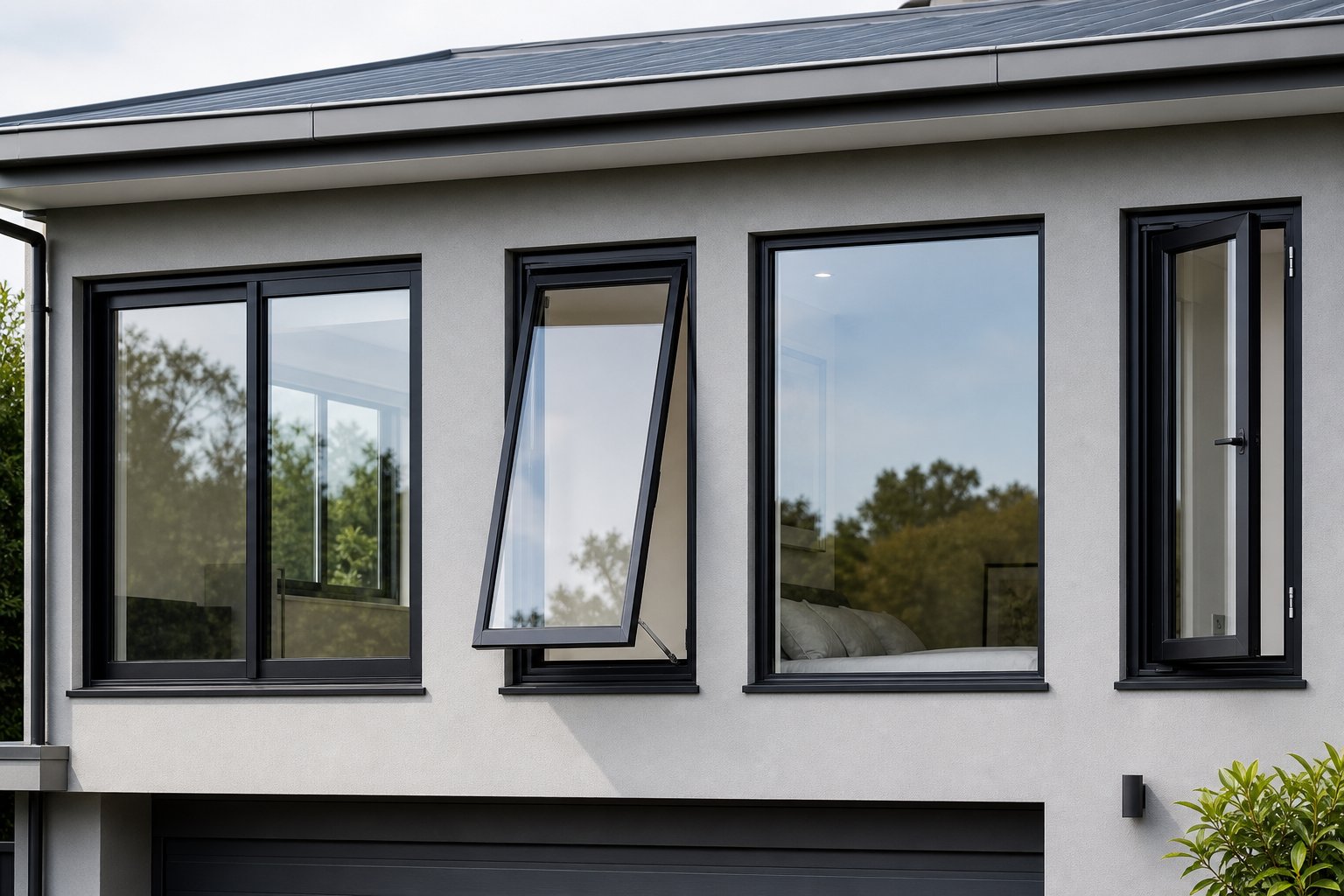
The style of window you select has as much influence on your final cost as the glazing or frame finish. A fixed pane with no moving parts costs considerably less to manufacture than an operable window with hinges, seals, and locking hardware. Understanding these differences by type gives you a realistic starting point before you even request a quote.
Sliding Window Price Ranges
Sliding windows dominate Melbourne homes for good reason. They are space-efficient, easy to operate, and represent the most affordable operable aluminium window type per square metre. Because sliders move along a horizontal track rather than swinging outward, they suit tight spaces beside walkways, decks, and fences — a common constraint on Melbourne’s narrower suburban blocks.
For standard-size aluminium sliding windows, supply-only pricing typically starts around $165 for a compact unit (approximately 514mm x 610mm) and climbs to around $680 for a larger panel (approximately 2057mm x 2650mm). These figures reflect off-the-shelf stock sizes without custom powder coating or upgraded glazing. The aluminium sliding window price in Melbourne will shift upward once you factor in non-standard dimensions, double glazing, or architectural colour choices — but as a baseline, sliders consistently sit at the lower end of the cost spectrum for operable windows.
Awning, Casement, and Fixed Window Costs
Fixed aluminium windows carry the lowest price tags overall because they contain no hardware, no seals around operable sashes, and no moving parts that add complexity during fabrication. A small fixed window (600mm x 600mm) can start from around $150 supply only, while larger formats around 1800mm x 1810mm reach approximately $755. Their limitation is obvious — no ventilation — so they work best as highlight windows, picture windows, or paired alongside operable types.
Awning windows cost more than both fixed and sliding options. The top-hinged design requires quality friction stays or chain winders, weather seals along three edges of the sash, and more precise fabrication tolerances to maintain a weathertight closure. Expect supply-only pricing from roughly $220 for a small awning unit up to around $788 for larger configurations. The awning window cost per square metre in Melbourne tends to sit noticeably higher than sliders of equivalent size because of this added mechanical complexity.
Casement windows — side-hinged and opening outward — fall into a similar price bracket to awning types. They share the same hardware demands: multi-point locks, robust hinges, and comprehensive perimeter seals. The casement vs sliding window price comparison typically shows casements costing 20 to 40 percent more than an equivalent-sized slider, driven entirely by hardware and fabrication requirements rather than material volume.
How Size Affects Your Per-Window Cost
A question that catches many Melbourne buyers off guard: if a window is twice the size, does it cost twice as much? Almost never. Window pricing follows a non-linear curve because certain costs remain fixed regardless of dimensions. Every window requires the same fabrication setup, the same corner joints, similar hardware fittings, and the same quality-control steps. What scales with size is the aluminium extrusion length and glass area — but those raw materials represent only a portion of the total manufacturing cost.
In practical terms, this means a small window carries a higher cost per square metre than a large one. A 600mm x 600mm fixed window at $150 works out to roughly $417 per square metre of glass area, while an 1800mm x 1810mm fixed window at $755 drops to around $232 per square metre. The lesson for budgeting is clear: consolidating openings into fewer, larger windows can be more cost-effective per square metre than specifying many small ones, provided the design allows it.
The table below maps common aluminium window sizes and prices in Melbourne across each type, giving you a relative cost framework for your project:
| Window Type | Typical Size Range | Relative Cost | Best-Use Scenario |
|---|---|---|---|
| Fixed | 600 x 600mm to 2100 x 1210mm | $ | Highlight windows, picture windows, areas where ventilation is not needed |
| Sliding | 514 x 610mm to 2057 x 2650mm | $$ | Bedrooms, living areas, tight spaces beside walkways or boundaries |
| Awning | 514 x 850mm to 1200 x 2650mm | $$$ | Bathrooms, kitchens, areas needing ventilation with rain protection |
| Casement | 600 x 600mm to 1200 x 2100mm | $$$ | Living rooms, feature windows requiring maximum airflow |
| Louvre | 600 x 900mm to 600 x 1800mm | $$$ | Wet areas, laundries, tropical-style ventilation in covered outdoor zones |
Keep in mind that these relative indicators reflect supply-only pricing for standard configurations. The gap between types widens further once you specify double glazing, custom colours, or security hardware — upgrades that apply equally across all styles but compound on the already-higher base cost of operable window types. Whether a fixed aluminium window at the budget end or a fully specified awning unit at the upper end suits your project depends on what each opening actually needs to do, a decision that intersects directly with whether you are buying standard off-the-shelf units or going custom.
Standard Off-the-Shelf vs Custom-Manufactured Windows
That choice between stock and bespoke is one of the biggest pricing forks in any Melbourne window project — and it is rarely as straightforward as “standard is cheaper.” The custom vs off-the-shelf aluminium windows cost gap depends heavily on your specific situation: the age of your home, the size of your openings, and what compliance demands apply to your site.
Off-the-Shelf Windows and When They Work
Standard size aluminium windows in Melbourne are available from hardware chains, trade suppliers, and stock distributors in a set range of predetermined dimensions. They are manufactured in bulk, warehoused, and ready for immediate purchase — which keeps prices at the lowest possible entry point.
For projects where openings happen to align with common catalogue sizes, stock windows make practical and financial sense. New-build volume homes are typically designed around standard dimensions precisely for this reason: the builder specifies rough openings to match available stock, avoiding custom fabrication entirely. If you are replacing a window in a home built after the mid-1990s, there is a reasonable chance your openings conform to standard sizes.
The trade-off is flexibility. Off-the-shelf aluminium windows typically come with:
- A limited palette of colours — usually mill-finish silver, white, and perhaps black or grey
- Standard clear single glazing only, with no option for double glazing, Low-E coatings, or acoustic glass
- Basic hardware — functional but not high-security or architecturally graded
- Fixed dimensions that cannot be adjusted, even by a few millimetres
- No integrated flyscreens or security screens in most cases
For a straightforward bedroom or laundry window where budget control outweighs specification, these limitations may be perfectly acceptable. The savings are real and immediate — no waiting on manufacturing lead times, no custom fabrication costs, and no minimum order quantities to satisfy.
Custom-Manufactured Windows and the Price Premium
Made-to-order aluminium windows in Melbourne carry a price premium for reasons that go beyond simple sizing. Every custom unit requires individual engineering: the frame is cut to bespoke dimensions, corner joints are assembled to suit that specific configuration, and the glass is ordered to exact measurements rather than pulled from standard sheet sizes.
Several factors drive the higher custom aluminium windows Melbourne price:
- Bespoke sizing — fabrication to exact millimetre dimensions means no economies of repetition
- Profile selection — access to the full range of frame systems, from slim architectural sightlines to heavy-duty commercial-grade profiles
- Speciality glazing — double glazing, Low-E coatings, laminated safety glass, or acoustic-rated configurations become available
- Non-standard colours — any powder coat colour from the full RAL or Dulux range, including wood-grain textured finishes, rather than the handful of stock options
- Compliance engineering — windows specified to meet BAL ratings, NCC energy requirements, or structural wind load calculations for exposed sites
- Hardware upgrades — multi-point locking, keyed restrictors, chain winders, and heavy-duty friction stays
For renovations in older Melbourne homes — Victorian terraces in Fitzroy, Edwardian weatherboards in Northcote, post-war brick veneers in Bentleigh — non-standard openings are the norm rather than the exception. Custom manufacturing is often the only viable path because these homes were built to dimensions that bear no relationship to modern catalogue sizes. Forcing a stock window into an opening that does not match means either modifying the wall to suit the window or accepting visible gaps filled with timber packing — neither of which produces a quality result.
Lead times for custom work also factor into project planning. Where stock windows can be collected same-day, custom aluminium windows typically require four to eight weeks for fabrication depending on complexity, glazing type, and powder coating requirements. That timeline needs building into your renovation schedule from the outset.
When Custom Is Actually More Cost-Effective
Here is where the pricing conversation gets interesting. Custom windows cost more per unit than stock equivalents — that much is clear. But total project cost tells a different story in several common Melbourne scenarios.
Consider an older weatherboard home with window openings that sit 30mm narrower than the nearest standard size. You have two options: buy the smaller stock window and pack around it (requiring additional timber framing, plastering, and painting on both sides), or order a custom window that fits the existing opening precisely. Once you add up the builder’s time, materials, and finishing work to accommodate a poorly-fitting stock unit, the custom option often breaks even or costs less overall.
The same logic applies to:
- Heritage overlay zones — inner Melbourne councils often require replacement windows to match original proportions, ruling out standard sizes entirely and making site modification impractical due to planning restrictions
- BAL-rated properties — homes in bushfire-prone corridors like Warrandyte and the Kinglake ranges need compliant glazing systems that simply do not exist in off-the-shelf form
- Structural openings — where moving a lintel or modifying a load-bearing wall to suit a stock window would require engineering certification, council permits, and structural work costing thousands
- Multi-unit configurations — combining fixed panels with operable sashes in a single assembly requires custom manufacturing regardless of individual panel sizes
The table below breaks down the practical differences between standard and custom aluminium windows across the factors that matter most to Melbourne buyers:
| Factor | Standard Off-the-Shelf | Custom-Manufactured |
|---|---|---|
| Lead Time | Immediate to 1 week | 4 to 8 weeks typical |
| Colour Range | 3 to 5 stock colours | Full powder coat palette (hundreds of options) |
| Glazing Options | Standard clear single glass | Single, double, Low-E, tinted, laminated, acoustic |
| Size Flexibility | Fixed catalogue dimensions only | Any dimension to exact millimetre specification |
| Hardware Choices | Basic standard locks and handles | Full range including multi-point, keyed, chain winders |
| Compliance Capability | General residential use only | BAL-rated, NCC-compliant, engineer-certified options |
| Relative Cost (Supply Only) | Lower per unit | Higher per unit, but potentially lower total project cost |
| Best Suited To | New builds with standard openings, budget renovations | Older homes, heritage zones, high-performance requirements |
The key takeaway for Melbourne buyers weighing this decision: per-window cost alone is a misleading comparison. A cheaper window that requires expensive site modifications to install is not actually cheaper. Factor in the full scope — removal, framing adjustments, making good, and finishing — before concluding that stock represents better value. In many Melbourne renovation scenarios, particularly in the inner and middle suburbs where pre-war housing stock dominates, custom manufacturing is not a luxury upgrade but a practical necessity that frequently delivers a lower total project cost than forcing standard units into non-standard homes.
Installation Costs and Hidden Fees Melbourne Buyers Overlook
The price tag on the window itself is only part of the story. Many Melbourne buyers fixate on supply-only figures — the per-window cost from a manufacturer or supplier — and then experience genuine shock when the final invoice arrives. The gap between what the window costs and what the completed project costs is where budgets unravel, and it is a gap that very few pricing guides bother to explain.
Supply vs Installation Cost Split
Think of your aluminium window supply and install price in Melbourne as two distinct line items that together form your real spend. The window product — frame, glass, hardware, flyscreen — represents the supply component. Everything else that happens on site falls under installation: labour, removal of old units, waste disposal, and the finishing work needed to leave your walls looking presentable.
Melbourne glaziers and window installers typically charge between $80 and $110 per hour for labour alone, excluding materials. A straightforward ground-floor replacement in an accessible brick veneer home might take one to two hours per window. But that baseline shifts considerably depending on site conditions:
- Access difficulty — windows behind established gardens, on narrow side passages, or above single-storey extensions require more time and sometimes additional equipment
- Building height — second-storey installations demand scaffolding or elevated work platforms, adding both hire costs and setup time
- Old window removal — extracting timber-framed windows from a 1940s weatherboard is a different job entirely from popping out an aluminium slider in a 1990s brick veneer. Older frames may be painted shut, nailed into structural timber, or integrated with plaster reveals that crumble on removal
- Number of windows — installers price more efficiently for multiple windows in a single visit, so per-window labour drops on larger projects
For a typical Melbourne replacement project, installation labour and associated site work can add 40 to 60 percent on top of the supply-only window cost. On complex renovations — particularly upper-storey work in period homes — that figure climbs higher still. The aluminium window installation cost in Melbourne is not a fixed percentage; it flexes with every complication your site presents.
Hidden Costs Most Buyers Miss
Beyond the obvious labour charges, a series of ancillary costs lurk in most window replacement projects. These rarely appear in the headline quote from a supplier, and some installers exclude them from their pricing unless specifically asked. Here is what catches Melbourne homeowners off guard:
- Scaffolding or elevated work platform hire — essential for any window above ground-floor level. Scaffold hire for a standard residential setup can run from $500 to $1,500 depending on height, duration, and site access. Even a simple mobile scaffold for a single upper-storey window adds several hundred dollars to the job.
- After-hours and weekend surcharges — if your apartment complex or body corporate restricts work to specific hours, or if you need installation outside standard weekday windows, expect a 25 to 50 percent premium on labour rates.
- Disposal fees for old window frames and glass — glass cannot go in standard skip bins and requires separate handling. Timber frames with lead paint (common in pre-1970s Melbourne homes) carry hazardous waste disposal requirements. Budget $50 to $150 per window for responsible removal and recycling.
- Plastering and painting to make good internal reveals — removing an old window almost always damages surrounding plaster or render. Internal reveals need patching, sanding, and repainting. External reveals may need re-rendering. This work often falls to a plasterer and painter rather than the window installer, adding separate trades and their associated call-out fees.
- Flashing and waterproofing — correct installation requires head flashings above the window and appropriate sealant to prevent moisture ingress. Skipping this step saves a few dollars today and costs thousands in water damage remediation later. Some quotes include flashings; many do not.
- Building permit costs for structural modifications — if you are enlarging an opening, combining two windows into one, or cutting into a load-bearing wall, your council will require a building permit. In Melbourne, these run from several hundred to over a thousand dollars depending on the scope, plus the cost of an engineer’s certification for any structural alterations.
- Temporary weather protection — if old windows are removed before new ones arrive (common when custom units have a four-to-eight-week lead time), the openings need temporary sealing against Melbourne’s unpredictable weather. Plastic sheeting, temporary hoarding, or plywood covers add labour and materials to the timeline.
Each of these items is individually modest in some cases. Collectively, they represent a significant chunk of your total spend — and they are precisely the line items that distinguish a thorough, transparent quote from one that appears cheaper on paper but balloons on invoice day.
Total Project Cost Estimation
Building a realistic budget for your Melbourne window project means starting with the supply cost, layering in installation labour, and then adding a contingency buffer for the hidden costs outlined above. A practical approach:
Take your total supply-only window cost (the sum of all units you need), then add 50 to 80 percent for a standard ground-floor replacement project covering labour, removal, making good, and disposal. For upper-storey work, heritage properties, or projects involving structural modifications, add 80 to 120 percent or more above supply cost. These are not precise formulas — every site is different — but they give you a range that avoids the nasty surprise of a final bill double what you anticipated.
The window replacement labour cost in Melbourne varies enough between suburbs and installer experience levels that obtaining at least three itemised quotes is essential. The critical word there is itemised. A single lump-sum figure tells you nothing about what is included and what has been conveniently omitted. When one quote comes in significantly lower than the others, it rarely means you have found a bargain — it almost always means something has been left out.
Comparing quotes on window price alone, without understanding what is and is not included in each figure, is the single most common cause of budget blowouts on Melbourne window projects.
Ask every supplier and installer to break their quote into supply, labour, removal, disposal, making good, and any ancillary items. Only then can you compare on a genuine like-for-like basis — a skill that becomes even more important when you factor in Melbourne’s climate and compliance requirements, which can push specifications (and therefore costs) well beyond basic configurations.
Melbourne Climate and Building Compliance Factors That Affect Price
Melbourne is not one climate. A bayside home in Brighton faces salt-laden air that corrodes exposed metal, while a property in Tarneit cops relentless westerly winds with little shelter. A home backing onto bushland in Warrandyte carries an entirely different risk profile than a terrace in Carlton. These environmental realities dictate window specification — and specification dictates cost. Two homes a 30-minute drive apart can require materially different aluminium window systems, and the pricing gap between a basic inland installation and a fully compliant coastal or bushfire-zone specification can be substantial.
Melbourne Climate Demands on Window Specification
Melbourne sits within Climate Zone 7 under the NatHERS framework — cool temperate, with genuine heating demand in winter and meaningful cooling loads in summer. That dual requirement means windows need to perform thermally in both directions: limiting heat loss on cold mornings and managing solar gain on 40-degree afternoons.
Beyond temperature, geography within Greater Melbourne creates distinct exposure conditions that push aluminium window specifications — and prices — higher:
- Coastal salt air (Brighton, Sandringham, Frankston, Williamstown) — salt-laden marine environments accelerate corrosion on standard powder coat finishes. Properties within a few kilometres of the coast often require marine-grade powder coating systems such as Dulux Alphatec or equivalent corrosion-resistant coatings. These premium finishes add meaningfully to per-window cost compared to standard Duralloy finishes suited to inland suburbs.
- Western suburb wind exposure (Werribee, Point Cook, Tarneit, Melton) — flat, open terrain and prevailing westerlies create higher wind load requirements. Windows in these areas may need heavier-duty frame profiles and upgraded weather seals to maintain performance under sustained pressure, nudging costs above what an identical window would cost in a sheltered inner-suburban setting.
- Cold-zone fringe areas (Kinglake, Macedon Ranges, Upper Yarra) — locations at elevation experience colder winters than inner Melbourne, making thermal performance non-negotiable. The cost of adequate glazing in these pockets is simply higher because the climate demands it.
The coastal aluminium windows Melbourne cost premium alone can add 15 to 25 percent above standard inland pricing once you account for marine-grade coatings and upgraded seals — a surcharge that reflects genuine material and process differences, not marketing.
NCC and Victorian Building Compliance Requirements
Every new home and significant renovation in Victoria must comply with the National Construction Code. For windows, the practical consequence is straightforward: aluminium windows in Melbourne building regulations now effectively mandate thermal performance levels that push buyers toward double glazing or thermally broken frames — both meaningful cost adders over basic single-glazed aluminium.
The current requirement is a minimum 7-star NatHERS energy rating for new residential buildings, lifted from the previous 6-star benchmark. In Melbourne’s Climate Zone 7, achieving that rating with single-glazed aluminium windows is extremely difficult without compromising on window area or relying heavily on other building envelope measures to compensate. In practice, most energy assessors modelling NCC-compliant aluminium windows in Victoria specify either:
- Thermally broken aluminium frames with double glazing — achieving whole-window U-values in the 1.8 to 2.5 W/m²K range
- Low-E coated glass with argon-filled cavities for improved thermal resistance
- Tuned Solar Heat Gain Coefficients (SHGC) by orientation — lower on west-facing glass to limit summer overheating, potentially higher on north-facing glass to capture winter warmth
These are not optional upgrades for new builds — they are compliance necessities. And they carry real cost implications. A thermally broken aluminium frame costs more to manufacture than a standard non-broken profile due to the added polyamide or polyurethane strip that separates the inner and outer frame sections. Double glazing roughly doubles the glass cost compared to single pane. The combined premium for NCC-compliant aluminium windows versus a basic single-glazed unit can be 40 to 70 percent higher on a per-window basis.
For renovations, the trigger is scope. Minor like-for-like replacements may not require full NCC compliance, but substantial alterations — new openings, extensions, or changes affecting more than a certain percentage of the building envelope — typically do. Your building surveyor determines where that line falls for your specific project.
BAL Ratings for Bushfire-Prone Areas
Melbourne’s urban fringe bleeds into some of Victoria’s most bushfire-prone landscapes. Suburbs along the Kinglake corridor, through Warrandyte, Eltham, Hurstbridge, and into the Yarra Ranges carry Bushfire Attack Level (BAL) designations under AS 3959. These ratings — ranging from BAL-12.5 through BAL-FZ (Flame Zone) — dictate exactly what window systems are permitted, and the pricing impact is substantial.
BAL-rated aluminium windows in Melbourne command a significant price premium because compliance affects every component of the window assembly:
- Glass type — higher BAL ratings require toughened or tempered glass. BAL-40 and BAL-FZ typically mandate specific glass thicknesses and may require wired or mesh-protected configurations.
- Frame construction — aluminium itself resists combustion (a genuine advantage over timber in these zones), but the entire assembly including seals, gaskets, and hardware must meet the relevant rating.
- Seal and gasket materials — standard rubber seals may not meet ember protection requirements. Bushfire-rated systems use intumescent seals or specific material grades that prevent ember intrusion.
- Screen requirements — bushfire-rated mesh screens with specific aperture sizes are often mandatory, adding another cost layer beyond standard flyscreens.
- Testing and certification — BAL-compliant window systems must be tested and certified as a complete assembly, not just individual components. This limits supplier options to those carrying the appropriate certifications.
For a home in a BAL-29 or BAL-40 zone, the window specification essentially eliminates standard off-the-shelf options entirely. Every unit must be custom-manufactured to the compliant specification, and the supply pool narrows to fabricators holding the relevant test certifications. Less competition, more complex manufacturing, and stringent material requirements all push the BAL-rated aluminium windows Melbourne price well above what an equivalent window costs in a non-designated area.
Your site’s location within Greater Melbourne can mandate a window specification — and therefore a price bracket — before you have made a single design choice. Climate exposure, NCC energy compliance, and BAL ratings are non-negotiable cost drivers that no amount of shopping around can eliminate.
Understanding which of these factors applies to your property is the essential first step in building a realistic budget. A quote that ignores your site’s compliance context is not a quote — it is a guess. And that distinction matters even more when you start looking at the glazing options themselves, where the gap between basic and high-performance glass represents the single largest specification variable in any Melbourne aluminium window project.
How Glazing Choices Impact Both Cost and Energy Performance
Glazing is where the real money moves on any Melbourne aluminium window project. Frame type, hardware, and powder coating all shift the price, but the glass specification alone can double the cost of a window — or halve your energy bills over its lifetime. Choosing between single and double glazing, and then layering on coatings or laminates, is the decision that most dramatically separates a budget-tier installation from a high-performance one.
Single vs Double Glazing Cost Difference
Single-glazed aluminium windows remain the cheapest option at point of sale. A single pane of clear glass in a standard aluminium frame is the baseline configuration in every supplier catalogue, and it is what most off-the-shelf units ship with. But for Melbourne homes, this baseline is increasingly inadequate — and increasingly non-compliant.
Upgrading to double glazing adds a meaningful premium. Current market data places double glazed aluminium windows in the $300 to $1,250 per square metre range depending on frame type and glass specification, compared with $150 to $400 per square metre for equivalent single-glazed units. That is a substantial per-window uplift — particularly across a full house of 10 to 15 openings. For a medium-sized Melbourne home with aluminium frames and Low-E double glazing, total window costs can land in the $15,000 to $22,000 range supply and install.
The single vs double glazing cost in Melbourne is no longer purely a performance discussion, though. Under current NCC requirements for Climate Zone 7, achieving a compliant energy rating with single-glazed aluminium is near-impossible on most residential designs. Double glazing has shifted from an optional upgrade to the practical default for new builds and significant renovations. The real question is no longer whether to double glaze, but what type of double glazing delivers the best value for your specific orientation and exposure.
Low-E Coatings, Tinting, and Laminated Options
Beyond the basic clear-on-clear double glazed unit, several glass upgrades target specific performance needs — each adding its own cost layer to the double glazed aluminium windows price in Melbourne.
Low-E glass carries a thin metallic coating that reduces heat transfer through the window. According to Your Home (Australian Government), low-emissivity coatings significantly improve both U-value and SHGC. High-transmission Low-E allows winter solar gain while blocking heat escape — ideal for north-facing glass in Melbourne. Low-transmission Low-E reduces summer heat gain on west-facing elevations. Budget roughly 15 to 20 percent above standard double glazing for Low-E glass aluminium windows in Melbourne, a premium that compounds across multiple openings but delivers measurable thermal improvement.
Tinted glass adds colour to reduce visible light and solar heat gain. Grey, bronze, and green tones are common for west and east-facing windows where afternoon or morning sun creates glare and overheating. Tinting modifies SHGC without changing U-value, so it addresses heat gain rather than heat loss. The cost uplift is modest — typically less than Low-E — but the trade-off is reduced natural light, which may trigger increased artificial lighting costs.
Laminated glass sandwiches a plastic interlayer between two glass sheets, providing safety (holding fragments together on breakage), UV filtering, and meaningful noise reduction. For Melbourne properties beneath flight paths through suburbs like Keilor, Tullamarine, and Essendon, or fronting arterial roads like Punt Road or Hoddle Street, acoustic-rated laminated glazing is often the only path to acceptable indoor noise levels. Expect a 25 to 35 percent premium over standard double glazing for acoustic laminated configurations — a significant per-window addition, but one that directly affects livability in noise-affected locations.
These options are not mutually exclusive. A west-facing bedroom window near a busy road might combine Low-E coating with an acoustic laminated inner pane in a double-glazed unit, stacking premiums but addressing multiple performance requirements simultaneously.
Thermal Performance and Long-Term Value
The upfront cost gap between basic and high-performance glazing is real, but so is the ongoing cost of living behind underperforming glass. In Melbourne’s climate, where homes need heating for five or six months and cooling for two or three, windows are a primary pathway for energy loss and gain.
The metric that matters here is the U-value — a measure of how readily heat flows through the entire window assembly. Lower numbers mean better insulation. A standard single-glazed aluminium window carries a U-value of approximately 6.9 W/m²K, while double glazing with the same aluminium frame drops that to around 4.2 W/m²K. Add argon gas fill and a Low-E coating, and you reach the 2.5 to 3.0 range. Thermally broken frames push it lower still.
What those numbers translate to in practice: the Australian Government’s Your Home resource notes that up to 40 percent of a home’s heating energy can be lost through windows, and energy efficient glazing can reduce required air-conditioning capacity by up to 30 percent. In a Melbourne home running a ducted heating system through winter and split-system cooling through summer, that reduction represents hundreds of dollars annually — year after year, for the 20 to 30 year lifespan of the window.
Energy efficient aluminium windows in Melbourne cost more upfront, but the payback arithmetic is straightforward. Industry data suggests a typical return period of five to seven years through energy savings alone on double-glazed upgrades in moderate climates. Melbourne’s dual heating-and-cooling demand can tighten that timeline further for well-oriented homes.
The cheapest aluminium window upfront is rarely the cheapest window over its lifetime. A single-glazed unit that saves $300 at purchase can cost that difference back in energy losses within two to three Melbourne winters — then keep costing you every year after.
This long-term equation is precisely why glazing specification deserves more attention than any other line item in your window quote. It is also why comparing aluminium window prices without specifying the glass type produces meaningless numbers — a point that becomes even more relevant when you realise that renovation projects and new builds face entirely different pricing structures for identical window specifications.
Renovation and Replacement vs New Build Pricing Differences
A homeowner replacing windows in a 1960s brick veneer in Oakleigh and a builder ordering 30 units for a new townhouse development in Craigieburn are buying the same product category — aluminium windows — but operating in completely different pricing universes. The per-window cost each pays bears almost no resemblance to the other, and the reasons go well beyond volume discounts. Understanding window replacement vs new build pricing in Melbourne is essential for setting expectations that match your actual project type.
Replacement Window Pricing Considerations
Renovation projects inherit costs that simply do not exist in new construction. Before a single new window goes in, the old one has to come out — and what sounds like a simple swap rarely is.
In older Melbourne homes, original timber or steel-framed windows are often embedded directly into the wall structure. Extracting them risks damage to surrounding brickwork, plaster reveals, and external render. Hidden rot in surrounding timber framing, out-of-square openings caused by decades of settling, and crumbling mortar around lintels are common discoveries that only emerge once the old unit is removed. Each adds unplanned cost and time to the job.
The replacement aluminium windows cost in Melbourne climbs further when you layer in these renovation-specific realities:
- Custom sizing is the norm, not the exception — pre-1990s Melbourne homes were built to dimensions that rarely align with modern standard window sizes. Victorian terraces in Fitzroy, Edwardian weatherboards in Carlton, and post-war brick veneers in South Melbourne all feature openings that require made-to-measure units.
- Heritage overlay compliance — inner Melbourne councils covering suburbs like Fitzroy, Carlton, and South Melbourne impose planning controls on street-facing windows. Replacement units must match original proportions, sightlines, and sometimes materials, limiting your options and often requiring heritage consultant reports as part of the approval process.
- Structural assessment — enlarging or modifying window openings in load-bearing walls demands an engineer’s certification and potentially a building permit. Even a like-for-like replacement can uncover structural deficiencies that must be rectified before the new window is installed.
- Making good — internal plaster patching, external render repair, painting, and trim replacement are standard on renovation projects. These finishing trades add separate call-out fees and often cannot begin until the window installer has completed their work.
- Matching existing aesthetics — if you are replacing three windows but keeping seven others, the new units need to match the existing fenestration in colour, profile, and proportions. This constraint can rule out cheaper standard options and push you toward specific profile systems or custom powder coat colours to achieve visual consistency.
Collectively, these factors mean the aluminium windows for renovations Melbourne price frequently runs 50 to 100 percent higher per window than what an equivalent unit costs in a new build — and that premium has nothing to do with the window itself. It is entirely driven by the complexity of working within an existing structure.
New Build Window Budgeting
New construction flips nearly every cost lever in the buyer’s favour. The builder or architect designs rough openings to match available window sizes — eliminating custom fabrication. Walls are open framing when windows arrive, so installation is straightforward: slot in, fix, flash, seal. No removal, no making good, no surprises hidden behind old plaster.
The new build aluminium window package cost in Melbourne benefits from several structural advantages:
- Bulk ordering — a 25-window order for a new home attracts volume pricing that a three-window renovation replacement never will. Fabricators offer tiered pricing, and the per-unit cost drops meaningfully at scale.
- Standard dimensions — designing to catalogue sizes avoids custom manufacturing premiums entirely. The builder specifies openings around the window, not the other way around.
- Single-stage installation — windows go in during the lock-up stage alongside other trades. No scaffolding hire for access (the scaffolding is already there for construction), no separate mobilisation fees, no weather protection for open holes.
- Package deals — most volume builders and many project builders include windows as part of an overall construction package, negotiating rates with preferred suppliers that individual homeowners cannot access.
The flip side for new-build buyers is transparency. Because windows are bundled into an overall building contract, extracting the actual per-window cost for comparison is difficult. A builder quoting $450,000 for a turnkey home is not going to break out that $8,500 of that figure represents 22 aluminium windows. This bundling makes direct per-window comparison between new-build package pricing and standalone renovation quotes misleading — you are comparing a wholesale component buried in a larger contract against a retail transaction with full service margins.
When Renovation Costs Exceed New Build Rates
The price gap is not a minor variance. In specific scenarios, replacement window pricing per unit can exceed new-build equivalents by two or three times. Renovators who budget using new-build figures found online — or worse, supply-only catalogue prices — set themselves up for a serious shortfall.
The scenarios where this gap widens most dramatically include:
- Upper-storey replacements requiring scaffolding — adding $500 to $1,500 in access costs that simply do not exist on a new build where scaffold is already erected
- Heritage overlay zones where planning applications, heritage consultant fees, and specific profile requirements add weeks of lead time and thousands in compliance costs
- Steel-framed window removal in 1950s to 1970s homes — the most complex and labour-intensive extraction scenario, often described as the most expensive building type to reglaze
- Non-standard opening sizes requiring custom manufacturing plus site modifications to achieve weathertight installation
- Projects requiring temporary weather protection during the gap between old window removal and new window delivery
The table below maps these cost differences across the key categories that separate renovation pricing from new-build pricing:
| Cost Category | Renovation / Replacement | New Build |
|---|---|---|
| Old window removal | Required — $50 to $200+ per window depending on frame type and wall construction | Not applicable |
| Making good (plaster, render, paint) | Required — $150 to $500+ per window for internal and external reveals | Not applicable — reveals are built fresh around new windows |
| Custom sizing | Usually required for pre-1990s homes with non-standard openings | Rarely required — openings designed to standard window sizes |
| Bulk discounts | Limited — typical renovation replaces 3 to 8 windows | Significant — 15 to 30+ windows ordered as a package |
| Installation access | Often restricted by landscaping, fencing, or building proximity — may need scaffolding | Open site with construction scaffold already in place |
| Heritage / planning compliance | May require planning permit, heritage report, and specific design constraints | Addressed at design stage — no retrospective constraints |
| Structural modifications | Potential engineer’s certification and building permit if openings change | Engineered from outset — no additional certification cost |
| Waste disposal | Old frames, glass, and potentially hazardous materials (lead paint) require handling | Minimal — only construction offcuts |
| Typical per-window total cost (installed) | 1.5x to 3x supply-only cost | 1.2x to 1.5x supply-only cost |
None of this means renovation buyers are being overcharged. The work is genuinely more complex, more time-consuming, and carries more risk than installing into a purpose-built opening on a clean construction site. Realistic expectations here protect you from two common traps: rejecting a fair quote because it seems expensive relative to online averages (which are almost always new-build derived), or accepting an unusually cheap quote that excludes half the work your project actually requires.
Knowing which pricing scenario applies to your project is one thing. Knowing how to read the quotes that arrive — and spotting what has been deliberately left out — is what separates informed buyers from those who discover hidden costs on invoice day.
How to Read and Compare Melbourne Window Supplier Quotes
Quotes land in your inbox, and the numbers look different — sometimes wildly different. One comes in 30 percent below the others. Another is twice the length with line items you have never heard of. The temptation is to pick the lowest figure and move on. But as industry quoting specialists note, prices for seemingly similar window solutions can differ by 20 to 30 percent or more — and those differences almost always trace back to what is included rather than what the window costs. Understanding what to look for in a window quote in Melbourne separates buyers who get genuine value from those who get a nasty invoice surprise at project end.
What a Complete Quote Should Include
A legitimate aluminium window supplier quote in Melbourne should read like a detailed project specification, not a one-line price. If you cannot tell exactly what you are getting from the document in front of you, the quote is incomplete. At minimum, every quote should itemise:
- Window dimensions and type — exact measurements in millimetres for each opening, plus the window style (sliding, awning, casement, fixed)
- Frame profile and colour — the specific aluminium profile system and powder coat finish, not just “aluminium frame, white”
- Glass specification — single or double glazed, glass thickness, Low-E coating, tint, argon fill, laminated or toughened where applicable
- Hardware specification — lock type, handle style, friction stays or chain winders, restrictors
- Flyscreen inclusion — whether standard flyscreens or security screens are included or priced separately
- Delivery costs — site delivery fees, especially for multi-storey or restricted-access locations
- Installation labour — hours or fixed price, clearly separated from supply cost
- Removal of existing windows — whether extraction of old frames is covered and what method is used
- Making good — plastering, rendering, painting, and trim work to internal and external reveals
- Warranty terms — product warranty, installation warranty, and seal warranty with durations and conditions specified
- Estimated lead time — production timeframe from order confirmation to delivery, including any powder coating or glazing lead times
That is a long list, and many quotes will not cover all of it unprompted. But as detailed quoting guides confirm, the total price is actually the least important number on a window quote — what matters is what sits behind that number. Two quotes at the same dollar figure can represent wildly different value depending on inclusions and exclusions.
Red Flags in Window Quotes
Not every low quote is a bargain, and not every detailed quote is overpriced. But certain patterns should trigger immediate caution when you are reviewing aluminium window supplier quotes in Melbourne:
Vague glass descriptions. A quote that says “double glazed” without specifying glass thickness, coatings, gas fill, or U-value is hiding something — or the supplier genuinely does not know what they are quoting. Either scenario is a problem. You need specifics to compare on performance, not just price.
Unspecified frame profiles. “Aluminium frame” tells you nothing. Which profile system? What installation depth? Is it thermally broken or standard? Different systems carry different performance characteristics and cost structures. A supplier that cannot name the profile is either using the cheapest available or has not yet decided — and both possibilities should concern you.
Exclusion of installation or removal. A supply-only price presented alongside fully installed quotes makes comparison impossible. Some suppliers quote supply only by default, leaving you to source and coordinate installation separately. That is a legitimate business model, but it must be clearly stated — and you need to add realistic installation costs before comparing against all-inclusive quotes.
No warranty documentation. Verbal warranty promises carry no weight when something fails three years down the track. If the quote does not specify warranty terms in writing — covering product, installation, and seals separately — press for written documentation before proceeding.
Unusually low pricing. When one quote comes in 30 to 40 percent below the others, something is missing. Common explanations include retrofit installation instead of full-frame replacement, basic single glazing where others have quoted double, no exterior finishing or trim, subcontracted installation crews with limited accountability, or shorter warranty terms. The cheapest quote is almost never the best value — investigate what has been excluded before celebrating the saving.
High-pressure tactics. “Today only” pricing or discounts that expire before you have had time to compare are a red flag in any industry. Reputable Melbourne window suppliers give you adequate time to evaluate. A fair quote should remain valid for at least 30 days.
Comparing Quotes on a Like-for-Like Basis
The best way to get window quotes in Melbourne that you can actually compare is to standardise your request before suppliers respond. Provide each company with the same window schedule: identical dimensions, types, and performance requirements for every opening. This forces quotes into a comparable format and eliminates the guesswork of normalising different specifications after the fact.
When quotes arrive based on the same brief, comparison becomes straightforward. Line up each document side by side and check:
- Are all window types and sizes matching your original schedule?
- Is the glazing specification identical across quotes — same glass thickness, same coatings, same gas fill?
- Does each quote include the same scope of installation work — removal, fitting, flashing, making good?
- Are warranty terms comparable in duration and coverage?
- Are lead times realistic and clearly stated?
Where scope differs, calculate what the excluded items would cost if sourced separately. A quote that omits making good might look $2,000 cheaper — until you engage a plasterer and painter to finish the job at $300 to $500 per window. Only once every quote represents the same total scope can you compare final numbers meaningfully.
This process is considerably easier when your supplier operates with full project capability rather than just selling product off a shelf. Suppliers who work from your drawings and window schedules, provide system recommendations matched to your compliance requirements, calculate materials accurately, and coordinate delivery planning around your build timeline give you quotes that are inherently more complete and comparable. MEICHEN’s services process, for instance, covers this full arc — from initial drawings through to system selection, material calculation, and delivery coordination — which reflects the kind of transparent, project-capable approach that produces quotes you can actually evaluate with confidence.
That level of supplier engagement matters because it eliminates the information asymmetry that makes comparing aluminium window quotes in Melbourne so frustrating for most buyers. When a supplier has reviewed your specific project requirements, their quote reflects genuine costs rather than generic estimates. And when three suppliers have each done that work properly, the differences between their quotes become meaningful signals about value rather than noise caused by mismatched scope.
A quote you cannot fully understand is a quote you cannot fairly compare. If any line item is unclear, ask for clarification before making a decision — legitimate suppliers welcome the question.
Armed with properly itemised, like-for-like quotes, the final step is knowing when aluminium is genuinely your best option — and building a budget that accounts for everything this guide has covered, from compliance costs through to the contingency buffer that protects you from the unexpected.
Making the Right Choice and Planning Your Budget
Aluminium is the dominant frame material in Melbourne for sound reasons — it is durable, recyclable, dimensionally stable, and suits the clean aesthetic most homeowners want. But honesty demands acknowledging that it is not the right answer for every project. Knowing where aluminium excels and where another material serves you better is part of making an informed purchasing decision rather than defaulting to the most common option.
When Aluminium Windows Are Not the Best Choice
Three scenarios come up regularly in Melbourne where a different frame material genuinely outperforms aluminium — not on aesthetics or price alone, but on suitability for the specific application.
Heritage overlays requiring traditional materials. Inner Melbourne councils in suburbs like Fitzroy, Carlton, Parkville, and parts of Williamstown often mandate timber-framed windows on street-facing elevations within heritage overlay zones. The planning requirement is not about performance — it is about preserving the visual character of period streetscapes. No amount of powder coating or profile selection makes aluminium look like a Victorian-era timber sash. If your property sits under an HO designation and you are replacing visible fenestration, timber may not be a preference but a planning condition. The aluminium vs timber windows Melbourne price comparison becomes irrelevant when only one material is permitted.
Maximum thermal performance on a moderate budget. uPVC frames achieve frame U-values of 1.5 to 2.5 W/m²K compared to 2.5 to 4.0 W/m²K for thermally broken aluminium — and standard aluminium without a thermal break sits at a poor 5.5 to 7.0 W/m²K. For homeowners prioritising thermal comfort and energy bill reduction above all else, uPVC delivers superior insulation at comparable or slightly lower installed cost. Melbourne’s cold winters make this advantage tangible: a uPVC frame stays closer to room temperature on a 5-degree night, reducing condensation and heat loss through the frame itself. The trade-off is wider sightlines and fewer colour options — uPVC profiles are bulkier than aluminium equivalents, and the range of finishes, while growing, does not match aluminium’s full powder coat palette.
Coastal properties where corrosion is the primary concern. Aluminium performs well in most environments, but properties directly exposed to salt spray — within a few hundred metres of the waterline in suburbs like St Kilda, Elwood, or Altona — face accelerated corrosion risk unless marine-grade coatings are specified. uPVC is completely inert to salt air, requiring no special finish or ongoing treatment. For a bayside home where low maintenance and absolute corrosion immunity matter more than slim profiles, uPVC eliminates a failure mode that aluminium can only mitigate through premium coatings.
Composite frames represent a smaller niche in the Melbourne market — typically timber interior with aluminium exterior cladding. They combine the warmth and paintability of timber inside with the durability of aluminium outside. The cost premium is significant, and local availability is more limited than either standalone material, but for high-end projects seeking both performance and interior aesthetics, composites fill a gap neither aluminium nor uPVC covers alone.
None of these alternatives invalidate aluminium as a choice. For the vast majority of Melbourne residential projects — new builds, standard renovations, commercial applications, and any scenario where slim sightlines, colour versatility, or architectural expression matters — aluminium remains the practical default. The point is simply that best value aluminium windows in Melbourne means choosing aluminium where it genuinely fits, not where another material would serve you better.
Practical Budgeting Steps for Your Melbourne Project
Every section of this guide feeds into one practical outcome: building a budget that reflects what your project will actually cost, not what a generic online estimate suggests. Here is how to budget for aluminium windows in Melbourne with confidence, distilled into a sequence you can follow from first thought to signed contract.
- Define your window types and sizes. Walk through your home or review your plans and list every opening. Record the type needed (sliding, awning, casement, fixed) and measure the rough opening dimensions. This becomes your window schedule — the document you send to every supplier for consistent quoting.
- Determine compliance requirements for your specific location. Check whether your property falls within a heritage overlay, a bushfire-prone area (BAL rating), or a coastal exposure zone. Contact your local council or building surveyor if unsure. These designations dictate minimum specifications and therefore minimum costs before any design preferences enter the conversation.
- Decide on glazing specification. For new builds and significant renovations in Melbourne’s Climate Zone 7, double glazing with Low-E coating is the practical baseline for NCC compliance. Determine whether any openings need acoustic performance (near roads or flight paths), specific SHGC values (west-facing glass), or safety glazing (low-level panels, bathrooms).
- Obtain at minimum three itemised quotes. Send your window schedule to at least three suppliers and request fully itemised quotes covering supply, installation, removal, making good, and warranty. Avoid accepting lump-sum figures without breakdowns — they make meaningful comparison impossible.
- Compare on a like-for-like basis. Line up your quotes against the same scope. Check that each covers identical glazing specifications, the same installation scope, equivalent hardware grades, and comparable warranty terms. Where a quote excludes items others include, price those items separately before comparing totals.
- Budget a contingency buffer for hidden costs. Add 10 to 20 percent above your quoted total for standard ground-floor projects, or 20 to 30 percent for upper-storey work, heritage properties, or projects where structural surprises are possible. This buffer covers the unforeseen discoveries — out-of-square openings, concealed rot, additional making-good — that no quote can fully anticipate until work begins.
This aluminium window project budgeting Melbourne process is not complicated, but it is thorough. Each step eliminates a category of surprise. Skip the compliance check, and you discover mid-project that your windows need upgrading to meet BAL requirements. Skip the like-for-like comparison, and you sign with the cheapest quote only to find half the work is excluded. The discipline is in the preparation, not the arithmetic.
Getting Started with Accurate Pricing
Every price range, rule of thumb, and comparison framework in this guide serves one purpose: helping you engage with suppliers from a position of knowledge rather than uncertainty. But no article replaces a project-specific quote. Your home, your openings, your compliance context, and your performance requirements are unique — and accurate pricing can only emerge from a process that accounts for all of them.
Accurate aluminium window pricing in Melbourne requires project-specific quoting based on your actual dimensions, site conditions, and compliance requirements. Generic online estimates — including the indicative ranges in this guide — are a starting point for budgeting, not a substitute for a detailed quote from a capable supplier who has reviewed your project.
The readiness steps above — a defined window schedule, clarity on compliance, and a decided glazing specification — are exactly what a project-capable supplier needs to produce a meaningful quote. MEICHEN’s services process is built around this workflow: they work from your drawings and window schedules to provide system recommendations, material calculations, and coordinated delivery planning. That end-to-end approach means the quote you receive reflects genuine project costs rather than placeholder estimates that shift later.
Whether you engage MEICHEN or another supplier, the principle holds: a supplier who asks detailed questions about your project before quoting is a supplier whose numbers you can trust. One who quotes sight-unseen from a phone description is guessing — and you will pay the difference between their guess and reality when the invoice arrives.
Approach your Melbourne aluminium window project the way this guide is structured: understand the cost drivers, know your compliance obligations, specify what you actually need, and then compare quotes that cover the full scope. That process — not a single dollar figure from a website — is how you arrive at a price that holds from first quote to final payment.
Frequently Asked Questions About Aluminium Window Prices in Melbourne
1. How much do aluminium windows cost in Melbourne for a typical home?
Melbourne aluminium window costs depend heavily on window type, glazing, and whether you need supply only or full installation. Supply-only pricing for standard sliding windows starts around $165 for small units and reaches $680 for larger panels. Fixed windows range from approximately $150 to $755 depending on size. For a complete project including double glazing, installation, removal of old windows, and making good, expect total costs of 1.5 to 3 times the supply-only figure for renovations. A medium-sized home with Low-E double glazed aluminium windows typically lands between $15,000 and $22,000 supply and install. Project-capable suppliers like MEICHEN (meichenwindows.com.au/services/) can provide accurate project-specific quotes based on your actual drawings and window schedules.
2. Are custom aluminium windows worth the extra cost over standard off-the-shelf options?
Custom aluminium windows carry a higher per-unit price than stock alternatives, but total project cost often tells a different story. For Melbourne homes built before the 1990s, openings rarely match modern standard sizes. Forcing a stock window into a non-standard opening requires timber packing, plastering, and painting on both sides — costs that can equal or exceed the custom manufacturing premium. Custom windows also unlock double glazing, full powder coat colour ranges, thermally broken frames, and BAL-compliant configurations unavailable in off-the-shelf form. In heritage overlay zones across inner Melbourne or bushfire-prone fringe suburbs, custom manufacturing is frequently the only compliant option rather than a luxury upgrade.
3. What hidden costs should I expect when replacing aluminium windows in Melbourne?
Beyond the window price and basic installation labour, Melbourne replacement projects commonly incur: scaffolding hire for upper-storey access ($500 to $1,500), disposal fees for old frames and glass ($50 to $150 per window), plastering and painting to repair internal and external reveals ($150 to $500 per window), head flashings and waterproofing, building permits if structural openings are modified, and temporary weather protection if custom windows have a lead time. Collectively, these ancillary costs can add 50 to 120 percent above the supply-only window price. Always request fully itemised quotes that separate supply, labour, removal, making good, and disposal so you can compare on a genuine like-for-like basis.
4. Is double glazing mandatory for aluminium windows in Melbourne?
For new builds and significant renovations, the National Construction Code now requires a minimum 7-star NatHERS energy rating. In Melbourne’s Climate Zone 7, achieving compliance with single-glazed aluminium is extremely difficult without severely limiting window area. Thermally broken aluminium frames with double glazing, Low-E coatings, and argon gas fill have become the practical standard for compliant builds. Minor like-for-like window replacements may not trigger full NCC compliance, but your building surveyor determines where that threshold falls. The upfront cost premium for double glazing — roughly 40 to 70 percent above single-glazed equivalents — is offset by energy savings that typically pay back within five to seven years in Melbourne’s dual heating-and-cooling climate.
5. How do I compare aluminium window quotes from different Melbourne suppliers?
Start by sending every supplier the same window schedule with identical dimensions, types, and performance requirements. This forces quotes into a comparable format. Then check each quote for: exact glass specification (thickness, coatings, gas fill), frame profile system named specifically, full installation scope (removal, fitting, flashing, making good), warranty terms with durations, and realistic lead times. When one quote appears significantly cheaper, investigate what has been excluded rather than assuming you have found a bargain. Suppliers who work from your drawings and provide system recommendations, material calculations, and delivery planning — such as the process offered through MEICHEN’s services (meichenwindows.com.au/services/) — produce inherently more complete and comparable quotes than those offering generic estimates over the phone.
More Window & Door Guides