What Aluminium Window Systems Actually Are
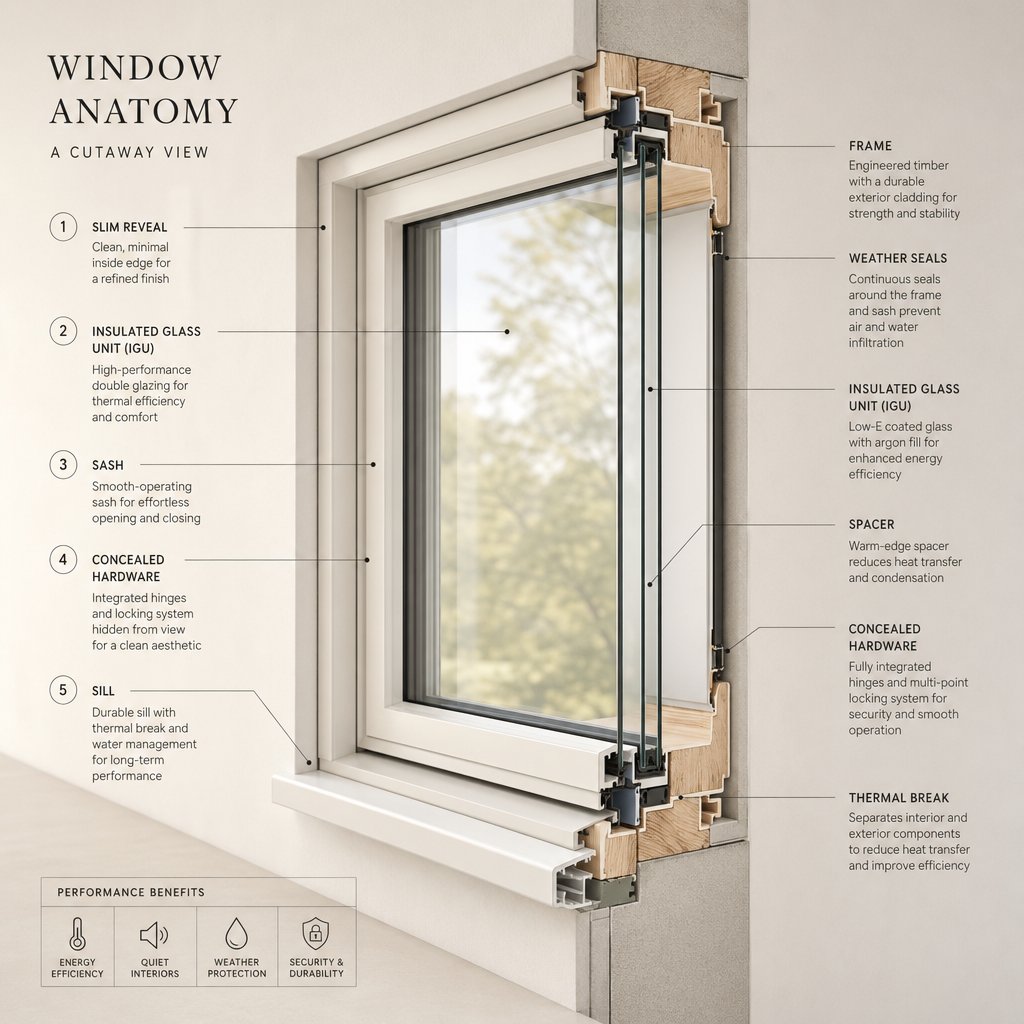
An aluminium window system is an engineered assembly where every component — extruded profiles, thermal breaks, gaskets, drainage channels, hardware, and glazing retention — is designed, tested, and manufactured to perform as a single unified envelope. It is not simply an aluminium frame for windows with off-the-shelf parts bolted together. Each element is purpose-developed to interact with the others, delivering consistent thermal, acoustic, and structural results that loose-fit combinations cannot replicate.
What Makes It a System Rather Than Just a Window
The word “system” carries weight. A standard aluminium window might source its seals from one manufacturer, its hardware from another, and its profiles from a third. That patchwork approach introduces risk: mismatched tolerances, inconsistent thermal performance, and higher likelihood of air or water leaks over time. Aluminium window systems eliminate that gamble. The profiles, gaskets, locking mechanisms, and drainage pathways are all developed as a complete, unified product with every interface point accounted for. Think of it less like buying a window and more like specifying a performance package — one that has been pressure-tested, cycle-tested, and rated as a whole rather than in isolated pieces.
Core Components of an Aluminium Window System
Understanding the anatomy helps when reading specifications or comparing quotes. Here are the aluminium window components that form the assembly:
- Extruded profiles — the structural aluminium sections (frame, sash, mullion, transom) that carry loads and define sightlines
- Thermal barrier — insulating material (typically polyamide) inserted between inner and outer profile faces to interrupt heat transfer
- Gaskets and weather seals — compression seals that close the gap between glass and frame, and between sash and frame, preventing air and water ingress
- Integrated hardware — handles, hinges, espagnolette locking systems, and restrictors engineered to fit the profile geometry
- Glazing system — glazing beads, setting blocks, and spacer bars that secure single, double, or triple-glazed units within the sash
- Drainage channels — concealed pathways within the aluminium window framing that direct any moisture that breaches the outer seal safely back to the exterior
The frame is the fixed perimeter secured to the building structure. The sash is the operable part that opens and closes. Mullions divide the window vertically; transoms divide it horizontally. Glazing beads clip or screw into the sash to hold the glass unit in place, and they can be removed for future reglazing without replacing the entire frame. Weather seals sit in continuous grooves, forming multiple lines of defence against the elements.
Who Specifies These Systems and Why
Architects choose aluminium window systems because they offer structural capability in slender sightlines — more glass, less frame. Builders prefer them because system-level engineering means fewer coordination headaches on site; aluminium window frames arrive ready to install with compatible parts already integrated. Informed homeowners increasingly request them for longevity and low maintenance over decades. In Australia, where UV exposure, coastal salt air, and bushfire compliance all factor into material selection, a properly specified system delivers predictable performance across harsh and varied conditions.
That predictability, however, depends on what sits inside the profile — specifically, the thermal break technology that makes aluminium viable as an energy-efficient framing material in the first place.
Thermal Break Technology and Why It Matters
Aluminium is roughly 1,000 times more thermally conductive than timber. Left uninterrupted, a solid aluminium window profile would act as a highway for heat — pulling conditioned air out in winter and radiating solar gain inward in summer. That single property kept aluminium out of serious energy-efficiency conversations for decades. Thermal break technology changed the equation entirely.
Why Aluminium Needs a Thermal Barrier
Raw aluminium has a thermal conductivity of approximately 160 W/(m·K). Compare that to uPVC at around 0.16 W/(m·K) or timber at roughly 0.13 W/(m·K), and the challenge becomes obvious. Without intervention, a standard aluminium frame can drive whole-window U-values above 5.0 W/(m²·K) — well beyond what the National Construction Code permits for most climate zones in Australia. The solution is physical separation: splitting the aluminium window profile into two distinct halves (interior and exterior) and bridging them with a material that conducts heat poorly. That bridge is the thermal break.
How Polyamide Strips Interrupt Heat Flow
The most widely used thermal barrier material in aluminium window profiles is polyamide 6.6 reinforced with 25% glass fibre (PA66 GF25). Its thermal conductivity sits at roughly 0.30 W/(m·K) — over 500 times lower than the aluminium it separates. Inserted between the inner and outer profile faces, polyamide strips create a continuous insulating plane that forces heat to travel through the low-conductivity barrier rather than racing through metal.
Two manufacturing methods dominate the industry. In the pour-and-debridge approach, liquid polyurethane is dispensed into a channel between aluminium extrusions, cured in place, then mechanically debridged to eliminate metal-to-metal contact. The alternative — crimped-in polyamide strips — uses pre-extruded PA66 struts that are rolled into knurled grooves on each profile half. Both are proven technologies. Pour-and-debridge offers slightly lower thermal conductivity (particularly with foam polyurethane formulations), while crimped polyamide strips are the more common choice across aluminum window profiles found in residential and mid-rise commercial systems.
What Profile Depth Tells You About Thermal Performance
Profile depth matters because it determines how much room exists for the thermal barrier and internal air chambers. A shallow 50 mm profile might accommodate a single 14–20 mm thermal break, delivering frame U-values in the 2.0–2.5 W/(m·K) range. Step up to a 70–80 mm deep profile with multi-chamber geometry and a 34–44 mm thermal separation, and frame U-values can drop below 1.2 W/(m·K). Premium systems targeting Passive House certification — like configurations comparable to the Reynaers MasterLine 8 Uw value triple glazing setup — push whole-window U-values under 0.8 W/(m²·K) by combining deep polyamide breaks with triple-glazed units and warm-edge spacers.
As a general rule, every additional 10 mm of thermal break depth lowers the frame U-value meaningfully — but the relationship is not linear. Gains flatten beyond 35–40 mm, meaning profile geometry and chamber design matter as much as raw barrier width once you pass that threshold.
Here is the honest trade-off: even a well-designed thermally broken aluminium frame typically returns a slightly higher frame U-value than an equivalent timber or multi-chamber uPVC section. The difference is usually 0.1–0.3 W/(m²·K). Yet aluminium sightlines are substantially narrower — often 20–30 mm slimmer per profile face. That slenderness means more glazed area per opening, and since modern insulated glass units achieve lower U-values than any frame material, the net result often favours aluminium at the whole-window level. For aluminum double pane windows, this balance delivers strong performance without the visual bulk; for aluminum single pane windows (used in mild climates or non-habitable spaces), the thermal break still prevents condensation and surface temperature issues that plague unbroken metal frames.
Profile depth, barrier material, and chamber count collectively set the thermal ceiling of the system. But thermal performance is only one axis. How a window opens — its operating mechanism — determines ventilation capacity, weather resistance, and suitability for specific building positions, which varies significantly across system types.
Types of Aluminium Window Systems by Operation
Every operable window in a building represents a decision about airflow, weather exposure, escape access, and maintenance. The operating mechanism is not cosmetic — it dictates how the sash interacts with the frame, where seals compress, how water drains, and ultimately how well the unit performs in its specific location. Aluminium window systems accommodate virtually every configuration, from completely sealed fixed panels through to complex multi-function hardware. Choosing the right type for each opening is what separates thoughtful specification from generic installs.
Fixed and Casement Configurations
Fixed lights are the simplest form — no moving parts, no hardware beyond the glazing bead. Because there is no operable sash, fixed panels deliver the lowest air leakage rates and the best acoustic isolation of any configuration. They suit locations where ventilation is handled elsewhere: above stairwells, flanking entry doors, or forming large picture windows framing a view. Their limitation is obvious: zero airflow.
Casement windows are the workhorse of Australian residential construction. A side-hung casement swings outward on friction stays or butt hinges, opening to roughly 90 degrees and providing full-face ventilation across the entire sash area. This makes them one of the highest-performing venting window types for natural cross-breeze. They also create a tight compression seal when closed — the sash presses into the frame gaskets rather than sliding across them — which translates to lower air infiltration rates than any sliding configuration. Top-hung casements (sometimes called projected windows) operate on the same compression principle but hinge at the head, limiting the opening angle and directing airflow upward.
In Australia, side-hung casements are commonly specified for bedrooms and living areas where compliance with emergency egress requirements under the NCC matters. The full opening provides adequate clear area for escape in a fire scenario, provided the sash dimensions meet minimum thresholds.
Pivot, Awning, and Tilt-Turn Mechanisms
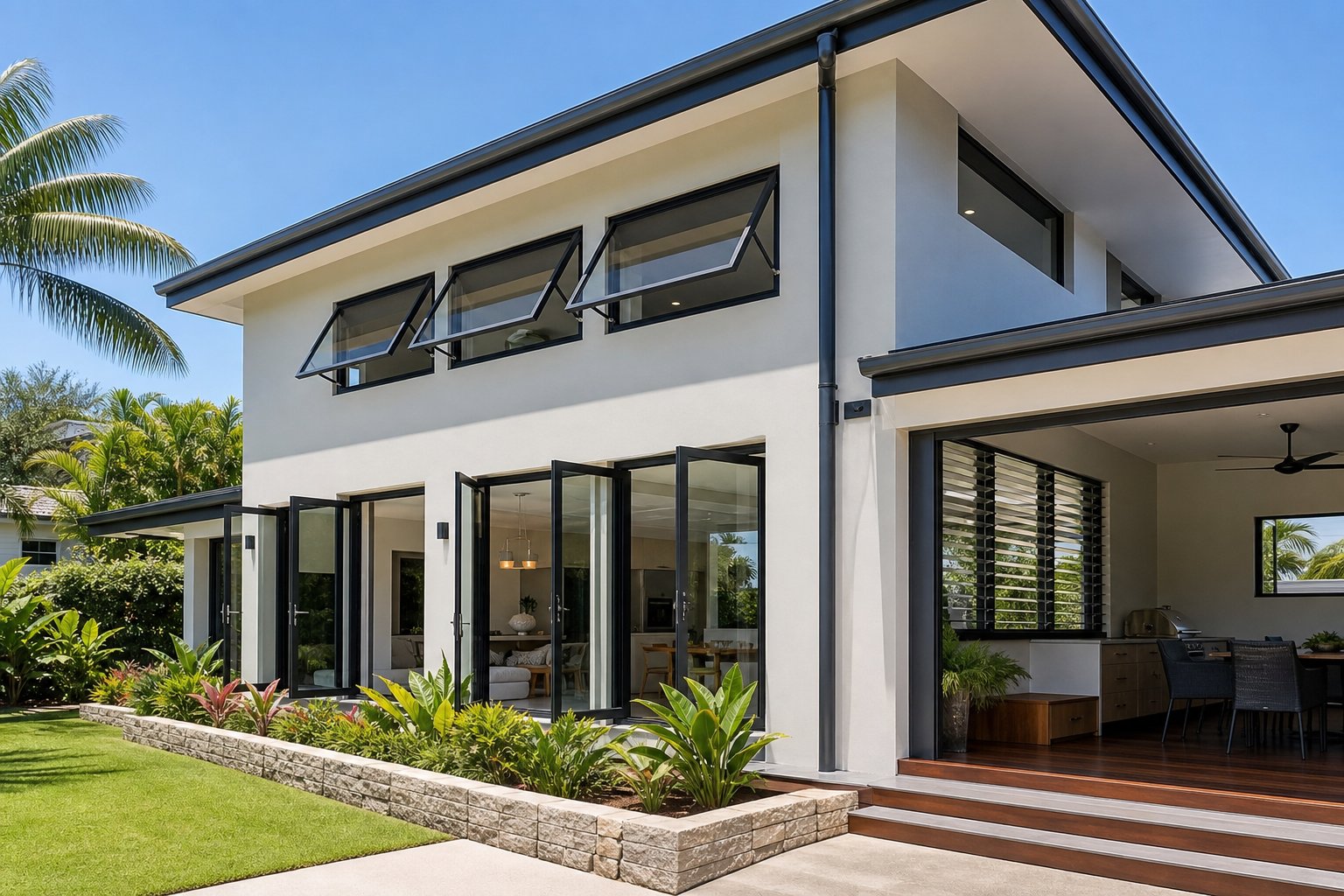
Awning windows are hinged at the top and swing outward at the base. Their standout advantage is climate-specific: they can remain open during light rain because the outward-tilting sash acts as a canopy, deflecting water away from the interior. Across coastal Queensland, the NSW coast, and much of Victoria, where sudden rain squalls interrupt otherwise mild days, awning windows allow buildings to maintain ventilation without risk of water entry. They also stack neatly in vertical banks, and even small vent windows positioned above benchtops or splashbacks provide useful airflow in kitchens and bathrooms without sacrificing wall space.
A pivot window rotates on a central axis — either horizontal or vertical — allowing the sash to spin within the frame. Horizontal-pivot configurations are particularly common in high-rise buildings because the pivoting window can be rotated 180 degrees for safe cleaning from inside the building. No part of the sash projects beyond the facade line during cleaning, which eliminates the safety risks associated with outward-opening sashes at height. Vertical-pivot types provide a similar function but suit narrower, taller openings. The trade-off with both is that only roughly half the opening area is free at any point, so ventilation capacity is moderate.
Tilt-and-turn windows combine two functions in a single piece of hardware. Turn the handle one way and the sash opens inward like a side-hung casement — providing full-area ventilation and easy cleaning. Turn it another way and the sash tilts inward at the top only, creating a controlled gap for background ventilation with improved security. This dual-mode operation originated in European system design and is increasingly specified in Australian projects targeting Passive House performance or enhanced acoustic environments near roads and flight paths, where controlled ventilation matters more than maximum airflow.
Sliding, Louvre, and Specialty Types
Sliding windows operate on tracks, with one or more sashes gliding horizontally past each other. Their great strength is spatial efficiency — no sash projects inward or outward, making them ideal for openings adjacent to pathways, decks, or balconies with limited clearance. Sliding panels are also available in very large sizes because the frame bears the glass weight on rollers rather than on hinges. However, because the sash seals by contact pressure against pile weatherstrips rather than compression gaskets, sliding windows generally exhibit higher air leakage than hinged types. They suit protected or semi-exposed locations better than high-wind sites.
Aluminium louvre windows use multiple horizontal glass blades set in aluminium carriers, each pivoting simultaneously via a linked operating mechanism. Their ventilation capacity is exceptional — up to 95% of the frame opening is free air when fully open — making them the go-to choice in tropical and subtropical climates from Cairns to Brisbane. They perform well in covered outdoor areas, pool enclosures, and utility spaces where maximum air movement is the priority. Their limitation is thermal and acoustic performance: multiple blade edges create more potential leak paths, so they rarely achieve the U-values or sound ratings of sealed casement or tilt-turn types.
Curtain wall windows sit within a structural glazing grid that forms the entire external envelope of a building — the framing itself is the wall, not a component inserted into a masonry or stud opening. A curtain wall window is typically fixed or incorporates discrete operable panels within the grid for ventilation. This category sits firmly in commercial and high-end architectural territory, requiring engineering input for wind load, thermal movement, and structural deflection. It is mentioned here because many aluminium window system manufacturers offer curtain wall profiles within their broader product range, sharing thermal break and gasket technology with their residential lines.
| Type | Best Application | Ventilation Capacity | Key Consideration |
|---|---|---|---|
| Fixed | Views, stairwells, non-ventilated facades | None | Best acoustic and thermal seal; no escape compliance |
| Casement (side-hung) | Living areas, bedrooms, egress-rated openings | High (full sash area) | Requires external clearance; strong compression seal |
| Awning (top-hung) | Wet climates, kitchens, bathrooms, splashback zones | Moderate | Can remain open in rain; limited opening angle |
| Tilt-and-turn | Noise-affected sites, Passive House projects, upper-floor apartments | Variable (tilt = low; turn = high) | Dual-mode operation; inward opening requires interior clearance |
| Pivot (horizontal/vertical) | High-rise facades, cleaning access, architectural statements | Moderate | Safe 180-degree rotation for maintenance at height |
| Sliding | Balconies, tight pathways, wide spans | Moderate (max 50% open) | No projection; higher air leakage than hinged types |
| Louvre | Tropical climates, pool areas, covered outdoor rooms | Very high (up to 95% free area) | Lower thermal and acoustic ratings; suit protected locations |
| Curtain wall | Commercial facades, multi-storey glass envelopes | Depends on integrated operable panels | Engineering-intensive; forms the building skin itself |
Selecting the right operating type is only half the equation. How aluminium stacks up against competing frame materials — in terms of structural span, sightline width, environmental footprint, and cost — shapes the broader specification decision that follows.
Aluminium Compared to Other Frame Materials
Picking a frame material is a trade-off exercise. No single option wins every category, and anyone claiming otherwise is selling something. Aluminium, uPVC, timber, composite, and steel each bring genuine strengths alongside real compromises. What matters is matching those trade-offs to the project’s priorities — span requirements, maintenance appetite, budget constraints, environmental goals, and desired aesthetics.
Structural Performance and Sightline Comparison
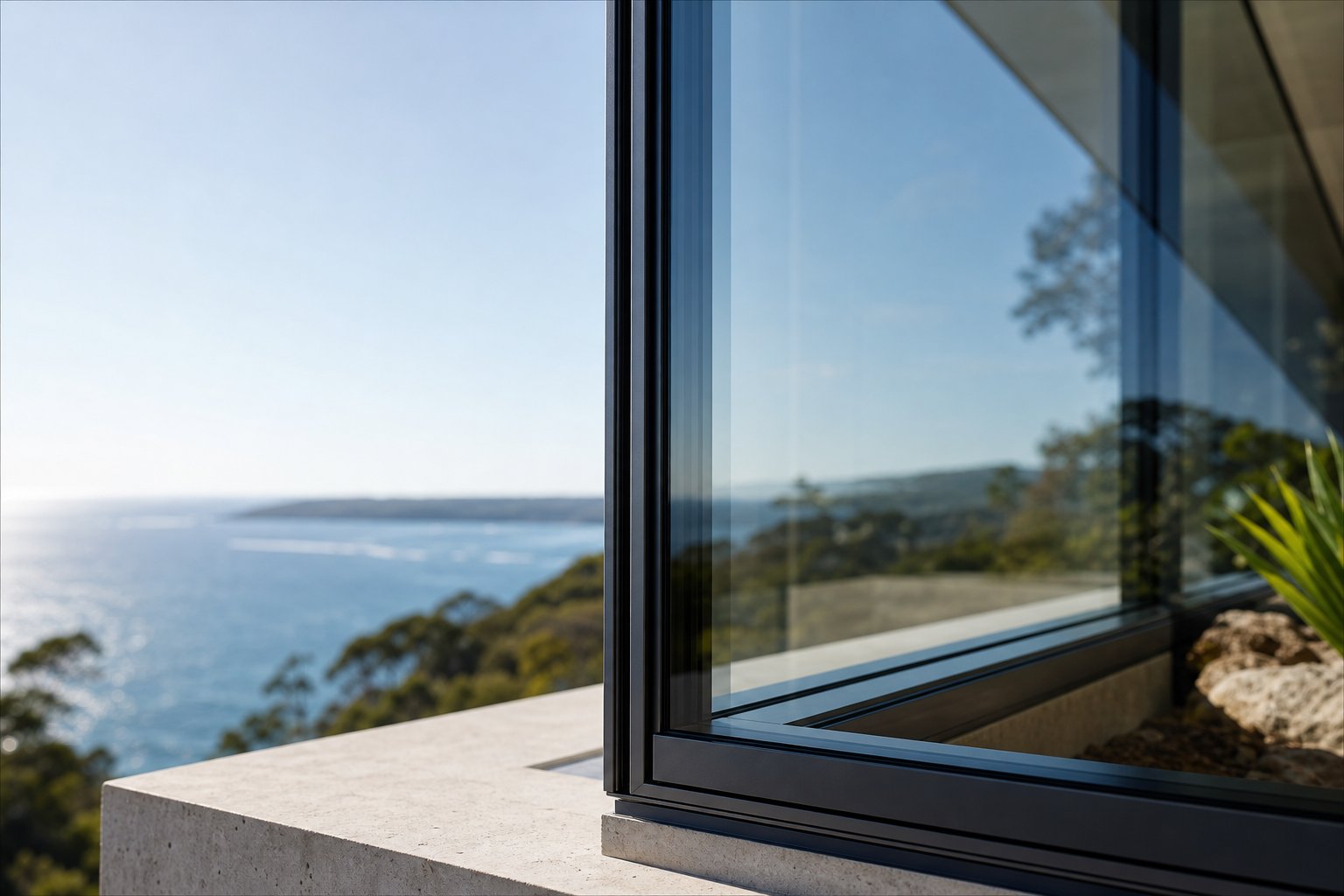
Aluminium’s strength-to-weight ratio is where it separates from the pack. A metal window frame in aluminium can span wider openings with less material than any polymer-based alternative. Where uPVC profiles need to reach 70 mm or more in width (often with internal steel reinforcement) to achieve adequate rigidity, slimline aluminium windows achieve equivalent or greater structural performance at 35–50 mm. That difference might sound minor on paper, but across a full-height window wall it translates to roughly 20% more visible glass area.
This is why architects repeatedly specify slim profile windows in aluminium for contemporary facades — the slender windows create an impression of near-frameless glazing while still handling wind loads that would buckle a uPVC section of the same width. Steel matches aluminium for sightline slimness (and occasionally betters it), but at significantly higher weight, cost, and fabrication complexity. Timber sits between the two polymer options, typically requiring 55–65 mm profiles that deliver warmth and character but less glass area per opening. Ultra slim aluminium windows push frame visibility below 30 mm in some fixed-light configurations, something no other material achieves without structural compromise.
For projects chasing maximum daylight — think floor-to-ceiling slimline windows in a double-storey living space overlooking the coast — aluminium and steel are the only realistic contenders. The rest simply cannot go slim enough without sacrificing wind load ratings or long-term rigidity.
Thermal and Environmental Trade-Offs
Honesty first: aluminium conducts heat far more readily than timber or uPVC. Even with a quality thermal break, a thermally broken aluminium frame typically returns a U-value around 1.4–1.8 W/(m²·K), whereas uPVC and timber frames sit closer to 1.2–1.4 W/(m²·K). That gap is real, though narrower than many assume — and as discussed earlier, slimmer aluminium sightlines compensate by admitting more insulated glass area into each opening, often levelling or reversing the whole-window result.
The environmental story is more nuanced. Primary aluminium production is energy-intensive — roughly 8.6 kg CO2 per kg of aluminium using current European averages, dropping to around 4 kg with hydroelectric smelting. That upfront embodied energy is higher than uPVC or timber. However, aluminium is 100% recyclable without any loss of material properties, and recycling requires only about 5% of the energy used in primary production. Unlike uPVC, which degrades after repeated recycling cycles, aluminium can be reclaimed and re-extruded indefinitely. Over a 40–60 year lifespan, that end-of-life value is a genuine differentiator — particularly as the proportion of recycled content in new aluminium systems continues to rise.
Timber offers a compelling carbon story through sequestration during growth, but demands regular maintenance (repainting every 4–7 years) that carries its own chemical and labour footprint. Composite frames blend materials for improved thermal performance but create recycling headaches because separating bonded timber and aluminium at end-of-life is difficult and rarely economically viable.
Cost Positioning Across Frame Materials
Aluminium sits in the premium tier alongside steel and hardwood timber. In the Australian market, metal frame windows in aluminium typically carry a 20–30% price premium over equivalent uPVC units at the point of purchase. Steel commands a further premium above aluminium due to custom fabrication requirements. Timber (hardwood) matches or exceeds aluminium pricing when factory finishes and joinery detailing are factored in, while composite systems fall somewhere between uPVC and aluminium depending on specification.
Upfront cost alone tells an incomplete story. With a lifespan of 40–50+ years and virtually zero maintenance beyond occasional cleaning and hardware lubrication, aluminium’s cost-per-year of ownership often undercuts uPVC — which typically requires full replacement at the 25–35 year mark. Slim windows in aluminium also tend to hold or enhance property value more effectively than bulkier alternatives, particularly on contemporary builds where architectural cohesion matters to resale.
| Material | Typical Lifespan | Sightline Width | Recyclability | Maintenance Level | Relative Cost |
|---|---|---|---|---|---|
| Aluminium (thermally broken) | 40–50+ years | 35–50 mm | 100%, infinite cycles | Minimal | $$$ |
| uPVC | 25–35 years | 70–80 mm | Limited (degrades after ~10 cycles) | Minimal | $$ |
| Timber (hardwood) | 50–60 years | 55–65 mm | Biodegradable / reusable | High (repaint every 4–7 years) | $$$ |
| Composite (timber-aluminium) | 35–45 years | 55–70 mm | Difficult (bonded materials) | Low–moderate | $$$ |
| Steel | 50+ years | 30–45 mm | Highly recyclable | Moderate (corrosion protection) | $$$$ |
Cost, sightlines, and environmental credentials position aluminium for a certain kind of project. But raw material comparisons only tell half the story — how these systems actually perform under measurable testing conditions, from thermal ratings through to wind load resistance, is what professionals rely on when writing specifications.
Performance Metrics and Industry Standards
Numbers settle arguments. When specifying windows with aluminium frame construction, opinions about aesthetics or brand loyalty become secondary to measurable performance data. Three categories of metrics govern specification decisions — thermal, acoustic, and structural — and each comes with its own testing frameworks, rating systems, and certification pathways. Understanding what these numbers actually represent (and where their limits lie) separates informed specifiers from those relying on sales brochures.
Thermal Metrics That Drive Specification Decisions
Thermal performance in aluminium window design hinges on three interrelated metrics. The most commonly referenced is the U-value (measured in W/m²·K), which quantifies how much heat passes through a window assembly per square metre for every degree of temperature difference between inside and outside. Lower numbers indicate better insulation. A whole-window U-value (Uw) accounts for the combined performance of frame, glass, and spacer — making it far more useful than component-level figures quoted in isolation.
Solar Heat Gain Coefficient (SHGC) measures how much solar radiation passes through the glazing as heat. In Australia, where summer cooling loads often dominate energy budgets, SHGC matters as much as U-value. A low SHGC (say 0.25–0.35) blocks solar heat effectively for west-facing openings in Brisbane or Perth, while a higher SHGC (0.55–0.65) admits useful passive solar warmth for south-facing glass in Melbourne or Hobart during winter. The aluminium frame itself does not directly influence SHGC — this metric is driven by glass coatings and tint — but frame-to-glass ratio matters because slimmer profiles admit more glazed area, amplifying whatever solar strategy the glass provides.
Condensation Resistance Factor (CRF) indicates how well the interior surface temperature of the frame and glass resists dropping below dew point. For windows with aluminium frame profiles, this is directly tied to thermal break quality. A well-broken system keeps interior frame surfaces warm enough to avoid moisture forming — critical in cold-climate zones like the Snowy Mountains, alpine Victoria, or Tasmanian highlands where interior humidity meets exterior cold.
Acoustic Ratings and Glazing Configurations
Sound reduction is measured differently depending on the standard referenced. In Australia and Europe, the weighted sound reduction index (Rw) is the primary metric — a single-number rating expressed in decibels that indicates how much airborne sound a window system attenuates across a range of frequencies. North American specifications use Sound Transmission Class (STC) instead. The two are not directly interchangeable despite appearing similar numerically, because their frequency weighting and calculation methods differ.
What drives acoustic performance in practice is glazing configuration rather than frame material alone. Asymmetric glass thicknesses (for example, 6 mm outer pane paired with a 10 mm inner pane) prevent both panes from resonating at the same frequency, disrupting sound transmission. Wider air gaps between panes improve low-frequency attenuation — a 16–20 mm cavity outperforms a 12 mm space for traffic rumble. Laminated glass with a PVB or acoustic resin interlayer dampens vibration across a broader frequency spectrum, making it particularly effective near busy roads, rail corridors, or flight paths.
Commercial fixed windows and sealed configurations naturally deliver the highest acoustic ratings because there are no operable gaps. Projects located near airports or arterial roads — think properties under flight paths in Sydney’s inner west or along Melbourne’s CityLink corridor — often specify Rw 35–42 using carefully configured double or triple glazing within thermally broken aluminium frames. The frame’s contribution is indirect but real: tighter gasket compression, stiffer profiles that resist vibration, and seamless window-to-wall integration all reduce the flanking paths where sound would otherwise leak around the glass.
Structural Testing and Certification Standards
Structural performance covers three measurable resistances: wind load (expressed in Pascals), water penetration pressure (also in Pascals), and air infiltration rate (measured in L/s·m² at a reference pressure). These are not theoretical — they simulate real-world forces a window encounters during storms, driving rain, and sustained pressure differences between interior and exterior environments.
In Australia, AS 2047 is the governing standard for windows and external glazed doors. It mandates that products be tested for structural adequacy, water resistance, and air infiltration limits based on their installed height and geographic wind region. Compliance is verified through performance labels affixed to the frame and certificates issued following testing at NATA-accredited laboratories. This is system-level certification — the complete assembled window is tested, not just individual components in isolation.
That distinction matters. A component-level rating might tell you how a hinge performs under cyclic load or how a gasket material resists UV degradation. System-level certification tells you how those components work together under simultaneous wind, water, and pressure conditions. Professionals specifying for commercial window frames on exposed multi-storey buildings or glass wall windows facing cyclone-rated regions need system-level data, not piecemeal component sheets.
Broader international frameworks serve different markets but follow similar logic:
- AS 2047 (Australia) — validates structural performance, water penetration resistance, air infiltration, and operating force for windows and external glazed doors installed in Australian conditions
- BS EN 14351-1 (Europe/UK) — covers CE marking requirements for windows and doors, testing air permeability, watertightness, wind resistance, thermal transmittance, and acoustic performance
- AAMA ratings (North America) — classifies windows by performance grade (R, LC, CW, AW) based on design pressure, water resistance, and structural test pressure; useful for projects referencing US-manufactured systems
- Passive House Institute (PHI) certification — verifies that a window system achieves whole-window Uw values suitable for ultra-low-energy buildings, typically below 0.80 W/(m²·K) for cool-temperate climates
- AS 1288 (Australia) — governs glass selection, thickness, and type based on wind load, human impact safety, and fall-from-height risk; complements AS 2047 for glazing specification
- BAL rating compliance (Australia) — determines glazing and frame requirements for bushfire-prone areas; fireproof windows and bushfire-rated assemblies must meet BAL-rated specifications under AS 3959
For specifiers, the takeaway is straightforward: always request system-level test data relevant to your project’s jurisdiction and exposure conditions. A transparent aluminium windows specification process means the supplier can provide full test reports — not just marketing summaries — showing exactly how the assembled system performed under controlled, independently verified conditions.
Performance metrics define what a system can do. But the same aluminium profile platform often spans two distinctly different market tiers — residential and commercial — with each demanding different structural depths, hardware ratings, and cycle-test thresholds that reflect how the building will actually be used.
Residential Grade Versus Commercial Grade Systems
The same base metal, the same thermal break chemistry, often the same manufacturer — yet residential and commercial aluminium window systems are engineered to very different thresholds. Confusing the two leads to either over-specification (spending more than a project needs) or under-specification (failing compliance when it matters most). The distinction is not a marketing label. It reflects measurable differences in structural depth, glass weight capacity, hardware endurance, and tested performance under extreme conditions.
Profile Depth and Structural Capacity Differences
Residential systems typically use profiles in the 45–65 mm depth range with wall thicknesses around 1.4–1.6 mm. These sections suit openings up to approximately 1,200 mm wide for operable sashes in low-rise settings — single-storey homes, townhouses, and low-density apartment buildings where wind loads remain moderate. Commercial aluminium windows step up to 70–100 mm profile depths with wall thicknesses of 1.8–2.5 mm or more. That additional material allows longer unsupported spans, heavier glass units (including 10.38 mm laminated or 28 mm triple-glazed IGUs), and narrower deflection limits under pressure.
Reinforcement also differs. Residential profiles rely on the inherent rigidity of their extruded geometry — internal chambers and fins create structural stiffness without added components. Commercial window frames frequently incorporate steel or aluminium reinforcement tubes within the profile cavity, enabling spans exceeding 2,400 mm without excessive deflection. This is what allows floor-to-ceiling panels on the third storey of an exposed coastal hotel to resist design wind pressures that would visibly flex a residential-grade section.
Hardware tells a similar story. Residential hinges and locking points are typically rated for 10,000–20,000 operating cycles — sufficient for a bedroom window opened once or twice daily over decades. Windows for commercial buildings demand heavy-duty hardware rated to 50,000 cycles or more, reflecting the reality of public-access buildings, hotels, and office environments where multiple occupants operate the same window daily.
Three variables determine which grade a project requires: building height and its corresponding wind region under AS 2047, site exposure rating (shielding from surrounding structures and terrain), and individual opening size. A three-storey building on an exposed coastal site with 1,800 mm wide openings sits firmly in commercial territory — regardless of whether the building’s use is technically residential.
When Projects Require Commercial-Grade Systems
Building codes do not always draw the line neatly. In Australia, AS 2047 classifies windows by tested performance against design wind pressure rather than by building type alone. A penthouse apartment exposed to direct ocean wind at 30 metres above ground faces the same pressures as an office tower at equivalent height. The window system must meet the load — the occupancy label is irrelevant.
As a practical guide, commercial-grade specification is typically warranted when:
- The building exceeds two storeys in an exposed or moderately exposed location
- Individual opening sizes exceed 1,500 mm in either dimension for operable sashes
- Glass weight per panel exceeds 40 kg (common with acoustic-grade laminated units)
- The building serves public or high-traffic use — hotels, hospitals, schools, retail
- Cyclone-rated regions in northern Australia demand higher structural design pressures
Mid-range systems bridge both markets effectively. Several aluminium system platforms offer profile depths around 65–75 mm that satisfy high-end residential projects (luxury homes with oversized openings, multi-storey seaside builds) while also meeting low-rise commercial requirements. These crossover systems suit projects like boutique retail, medical suites, or three-storey apartment buildings where residential-grade falls short but full commercial specification is unnecessary and cost-prohibitive.
Industrial windows represent a further step up again — typically heavier-gauge framing for factories, warehouses, and processing environments where impact resistance, chemical exposure, or extreme temperature differentials drive the specification beyond standard commercial thresholds.
Storefront and Curtain Wall as Specialist Categories
Beyond standard commercial windows, two specialist categories deserve separate understanding. Storefront systems are single-span aluminium framing assemblies anchored at head and sill, designed for ground-level and low-rise commercial facades. A typical storefront window uses profiles 115–165 mm deep and is limited to frame heights of approximately 3.0–4.2 metres. Water management is simpler — the entire elevation weeps at the sill — which makes these systems cost-effective but limits their suitability to protected or semi-exposed positions, ideally below the fourth floor with overhead weather protection.
Curtain wall systems operate on a fundamentally different principle. Rather than fitting into a structural opening, the curtain wall is the building envelope — spanning multiple storeys, anchored at floor slab connections, and engineered to handle wind loads, thermal expansion, and seismic movement simultaneously. Profile depths reach 150–250 mm, each lite of glass drains independently, and the system can accommodate metal panels, stone cladding, or louvres alongside glazed sections. The cost and engineering complexity reflect this capability.
For specifiers, the decision tree is straightforward: storefront windows suit ground-floor retail, showrooms, and entry lobbies where spans are moderate and exposure is sheltered. Curtain wall suits multi-storey facades where the glazing system must span between floor slabs and resist high wind pressures without reliance on surrounding wall structure. Many projects combine both — curtain wall above the podium, storefront at street level — to balance performance with budget.
Grade selection sets the structural and performance baseline. The next layer of decision-making is visual — specifically, which colour and surface finish the aluminium will carry for the next four or five decades of service.
Colour and Surface Finish Options for Aluminium Windows
A finish is not decoration — it is the first line of defence between the aluminium substrate and decades of UV bombardment, salt air, pollution, and thermal cycling. Get the finish specification wrong, and a window system that performs flawlessly in structural and thermal terms will look tired within a few years. Get it right, and the visual presentation holds for 30 years or more with minimal intervention. Three categories dominate the market, each with distinct characteristics, durability profiles, and aesthetic ranges.
Powder Coating Grades and Durability Classes
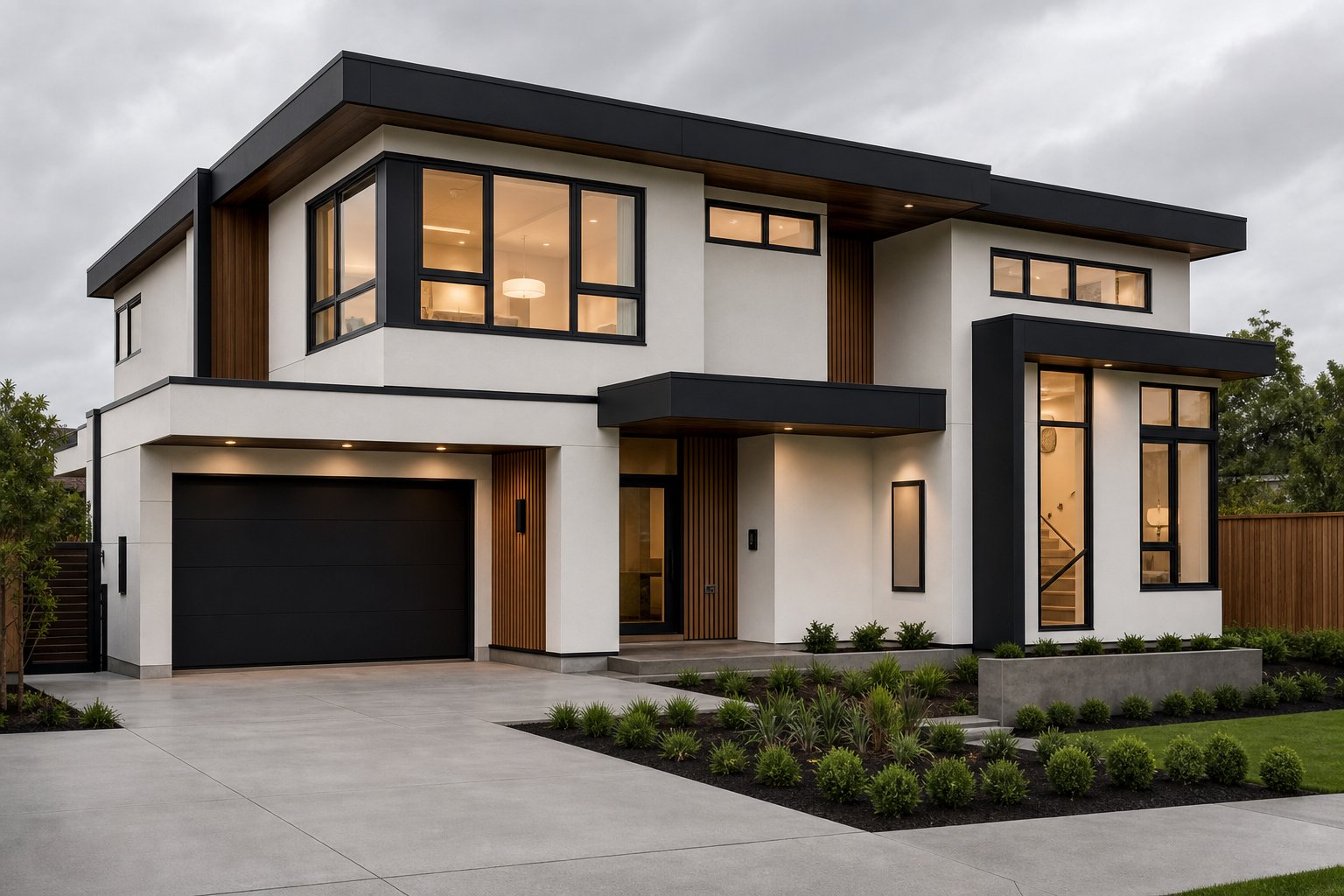
Powder coating is the most widely specified finish for aluminium window systems in Australia. Unlike liquid paint, powder is applied as a dry electrostatic charge and cured in an oven, forming a continuous film with no solvent emissions. The result is a hard, consistent finish available across the entire RAL colour spectrum — including popular choices like grey aluminium windows in RAL 7016 (anthracite grey) and RAL 9005 (jet black) — as well as custom-matched colours for specific architectural palettes.
Not all powder coatings perform equally, and this is where Qualicoat durability classes matter. Qualicoat is an international quality label that sets testing standards for coatings applied to architectural aluminium. Two classes are relevant to window specification:
- Class 1 — good colour and gloss retention under standard outdoor exposure; requires minimum 50% gloss retention after the equivalent of one year of Florida-benchmark weathering; suits most residential and sheltered commercial applications
- Class 2 — superior colour and gloss retention under extreme exposure; requires minimum 50% gloss retention after three years of equivalent Florida weathering; recommended for coastal properties, north-facing facades with intense solar load, and high-profile projects where long-term appearance is critical
In practical terms, Class 1 coatings carry manufacturer warranties of 15–20 years against significant fading, chalking, or peeling. Class 2 extends that to 25–30 years — and the real-world performance often exceeds warranty terms. For Australian coastal sites exposed to salt-laden air (anywhere within a few kilometres of the shoreline), Class 2 is strongly recommended. Industrial environments with chemical pollutants warrant the same upgrade. The price difference between classes is modest relative to total window cost, making it a sensible insurance policy on any exposed project.
Softtone matt and textured finishes have grown rapidly in popularity, moving away from the high-gloss look that dominated earlier decades. These finishes reduce glare, hide minor surface imperfections, and deliver a contemporary aesthetic that complements rendered facades and natural stone cladding. They use the same Qualicoat-rated powder chemistry — the texture is achieved through additives that control flow during curing, not through lower-grade materials.
Anodising Versus Powder Coating
Anodising is fundamentally different from any applied coating. Rather than laying a layer of material on top of the aluminium, the anodising process grows a protective oxide layer from within the metal itself through electrochemical conversion. The aluminium is immersed in an acid electrolyte bath, and electrical current drives oxygen ions into the surface, creating a hard aluminium oxide layer that is integral to the substrate. It cannot peel, flake, or delaminate because it is the metal surface, transformed.
The resulting finish is translucent, giving anodised aluminium a depth and metallic richness that opaque powder coating cannot replicate. Colour range is more limited — natural silver, champagne, bronze, and dark bronze through to black — but those tones are achieved through the oxide structure itself, not applied pigment. Anodised surfaces are harder than powder coating, offering superior abrasion resistance in high-traffic areas. They are also unaffected by UV, meaning colour shift from sun exposure is essentially zero.
The trade-off is chemical resistance. Anodised surfaces can be attacked by acidic pollutants over time, particularly in industrial zones or areas with heavy construction dust. Powder coating handles chemical exposure better. For window systems, anodising tends to suit mid-rise commercial facades, shopfronts, and architectural feature windows where the metallic appearance is desired, while powder coating dominates residential markets due to its broader colour palette and strong warranty offerings.
Coating thickness directly affects longevity. Architectural anodising for exterior use should be specified at a minimum of 20 microns (Class AA25 per AS 1231 in Australia). Thinner coatings — sometimes applied to cut cost — deteriorate rapidly in coastal or urban environments and are not fit for external window applications.
Dual-Colour and Specialty Finish Options
Dual-colour finishing allows different colours on the interior and exterior faces of the same profile. A common specification uses a bold external colour (charcoal, black, or a heritage tone) to suit the streetscape while maintaining a lighter internal finish (white, light grey, or timber-look) to complement interior décor. This flexibility is possible because modern aluminium window systems use thermally broken profiles — the thermal barrier physically separates the inner and outer aluminium faces, allowing each to be powder coated independently before assembly.
Sublimation transfer printing extends the palette further. Wood-grain and timber-look finishes are applied by wrapping powder-coated profiles in a printed film and heat-curing it, bonding the pattern permanently into the coating surface. The result is remarkably convincing at close range and delivers the visual warmth of timber without any maintenance penalty. These specialty finishes pair well with windows capping details on renovation projects, where new aluminium frames overlay existing timber structures and need to visually integrate with retained heritage elements.
Colour choice carries a functional consequence beyond aesthetics. Darker finishes absorb more solar radiation, raising the surface temperature of the aluminium. On a 40-degree summer day in western Sydney, a black profile can reach surface temperatures exceeding 80 degrees Celsius. This increases thermal expansion — aluminium expands roughly 24 micrometres per metre per degree Celsius — and the system must be designed with adequate movement allowance in fixings and seals. Lighter colours reduce this effect. Specifiers working with very large spans or continuous ribbon windows in dark tones should verify that the system’s expansion joints and fixing details can accommodate the thermal movement without stressing seals or causing visible bowing.
When evaluating finish options, whether comparing entries on a Kawneer colour chart, reviewing Kawneer finishes, or assessing another system supplier’s range, the specification questions remain consistent regardless of brand. Here are the key questions to put to any supplier before committing:
- What Qualicoat class is the powder coating rated to, and can you provide certification?
- What warranty period is offered against fading, chalking, and peeling — and what are the exclusion conditions?
- Is the finish tested and warranted for coastal (C4–C5) or industrial corrosion categories per ISO 12944?
- For anodised finishes, what oxide thickness is specified and does it meet the minimum 20 microns for exterior architectural use?
- Are dual-colour and sublimation options available without extended lead times?
- What cleaning and maintenance schedule does the warranty require to remain valid?
- Does the finish selection affect thermal movement calculations for the specified profile length?
Getting clear answers to these questions before fabrication begins avoids disputes later. A well-specified finish is the one that still looks right after 25 years on an exposed facade — and that outcome depends as much on asking the right questions upfront as on the chemistry of the coating itself.
Finish selection locks in the visual identity of a project for decades. But appearance only holds if installation is executed correctly — because even the best-specified and best-finished system delivers poor results when the coordination between fabricator, builder, and site falls apart during the fit-out stage.
Installation Planning and Project Coordination
A window system is only as good as its installation. That statement sounds obvious, yet the gap between specification quality and site execution remains the single largest source of performance failure in aluminium window projects across Australia. A thermally broken frame rated to Uw 1.4 delivers nothing close to that number if the opening is out of square, the seals are compressed unevenly, or the building wrap terminates short of the frame edge. The problem is rarely the product — it is the process between factory and finished wall.
Structural Opening Preparation and Tolerances
Before any aluminium frame arrives on site, the structural opening must be ready to receive it. “Ready” means square, level, plumb, and sized within tolerance. For most aluminium window systems, the rough opening should be 10–15 mm larger than the frame on each side — enough for packers, shimming, and perimeter sealant, but not so generous that fixings lose purchase or thermal bridges form through excessive fill.
Checking diagonals confirms squareness. If the two diagonal measurements differ by more than 3 mm across the opening, the frame will sit unevenly, causing sash binding, uneven gasket compression, and potential water tracking along the low side. In new-build timber or steel framing, this check happens after the structural frame is signed off and before building wrap is applied. In retrofit scenarios — replacing windows in existing brick veneer or rendered walls — the challenge multiplies. Existing openings are rarely square after decades of settlement, and the reveals may need packing, trimming, or re-rendering before the new frame can sit correctly.
Moisture matters at this stage too. Aluminium window suppliers typically specify that reveals be dry and free of loose material. Concrete or masonry reveals still curing can off-gas moisture that interferes with sealant adhesion, while crumbling mortar joints compromise fixing anchors over time.
Fixing Methods and Weatherproofing Integration
Two primary fixing approaches secure aluminium frames to the building structure. Direct mechanical fixings — screws or bolts driven through the frame’s outer flange or reveal face into the structural substrate — provide the simplest connection. These work well in timber framing and light-gauge steel, where the fixing engages directly with the stud. Bracket systems use L-shaped or Z-shaped metal brackets screwed to the frame and separately anchored to the structure, allowing positional adjustment before final tightening. Brackets suit masonry and concrete reveals where drilling through the profile face is impractical or where the frame needs to sit proud of the structural plane (common when external insulation wraps the building).
Regardless of method, fixings must be spaced at intervals recommended by the aluminium windows fabrication documentation — typically 150 mm from each corner and no more than 600 mm apart along the frame perimeter. Over-tightening distorts the profile, which affects sash operation and gasket seating. Under-tightening allows the frame to shift under wind pressure, breaking sealant lines over time.
Weatherproofing integration is where most failures hide. The window must connect to the building’s water-resistive barrier (WRB) — whether that is a self-adhered membrane, mechanically fixed building wrap, or rendered external wall — in a shingle-lapped sequence that directs any water behind the cladding away from the frame. The critical principle: the head flashing and upper WRB lap over the top of the window, while the jamb and sill membranes tuck under the frame flange. Getting this sequencing backwards — or leaving gaps — creates a funnel rather than a shield.
Sill drainage deserves particular attention. Australian conditions deliver intense short-duration rain events, and any water that reaches the sill pan must drain outward freely. A properly sloped sub-sill, combined with end-dams and back-dam, prevents pooling. The exterior sealant line at the sill should remain unbonded at drain points — sealing the sill completely traps moisture and guarantees eventual failure.
For retrofit projects, the challenge compounds. Existing building wraps may not extend to the new frame line, requiring splice membranes or liquid-applied flashing to bridge the gap. Older homes built without any WRB — common in pre-1990s Australian brick veneer construction — need a localised barrier created around each opening to manage water before the new window goes in.
Why Fabricator-Builder Coordination Determines Outcomes
Installation sits at the intersection of multiple trades: structural framing, waterproofing, insulation, cladding, and interior finishing. Poor sequencing between these trades is the root cause of most on-site window problems — not faulty product. Windows delivered before the wrap is complete risk water damage to interiors. Windows arriving after cladding has progressed force costly rework. Oversized or undersized openings discovered at installation waste days.
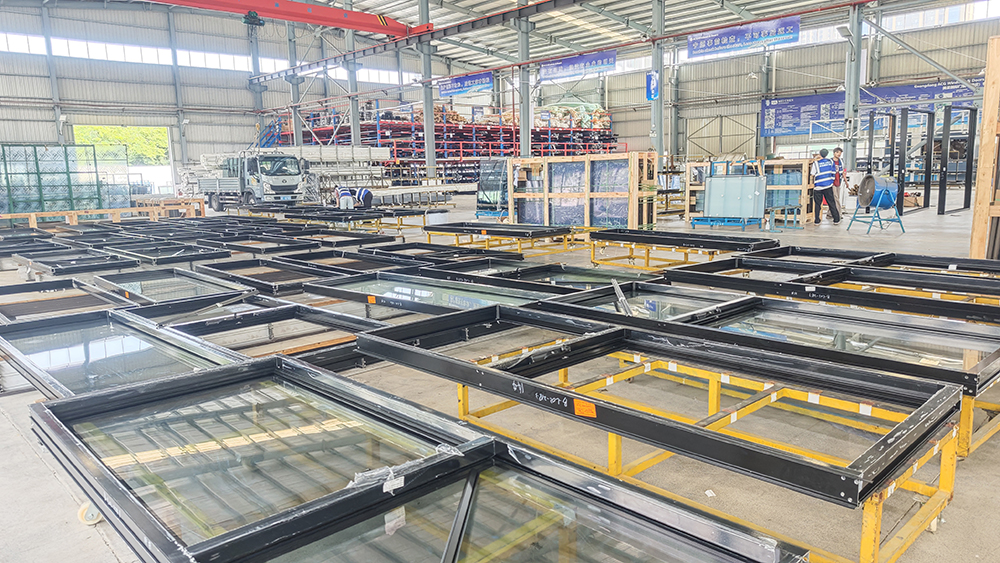
This is where the relationship between the aluminium windows manufacturers and the building team becomes decisive. Commercial aluminum window manufacturers working on large-scale projects often embed coordination into their delivery model — providing shop drawings for sign-off, confirming opening schedules against frame sizes, staging deliveries floor-by-floor to match construction sequencing, and supplying fixing and flashing details specific to the wall build-up. Residential window frame suppliers vary widely in this capability. Some deliver frames to site with minimal documentation; others provide full project support from measurement verification through to staged logistics.
The difference in outcome is substantial. When the fabricator and builder share a coordinated schedule — openings confirmed, lead times locked, delivery dates matched to waterproofing completion — installation becomes a straightforward fit rather than a site-managed improvisation. When that coordination is absent, installers improvise with packers, oversize sealant beads, and workarounds that compromise long-term performance.
For builders, developers, and procurement teams managing multi-dwelling or commercial programmes, partnering with a project-capable aluminium window supplier who manages the process from drawings through to delivery planning eliminates the coordination gap entirely. MEICHEN’s project support services operate on exactly this model — covering system recommendations, manufacturing coordination, quality control, logistics sequencing, and material scheduling so that frames arrive when the building is genuinely ready for them. That structure turns installation from a risk point into a controlled stage of the programme.
Even among experienced alum windows manufacturers, this level of integrated support is not universal. When evaluating potential partners, ask specifically about their process for confirming opening schedules, managing lead time against your construction programme, and resolving dimensional discrepancies before fabrication — not after delivery. The answers reveal whether you are buying a product or gaining a project partner.
Installation quality locks in the performance the system was engineered to deliver. But performance is not static — it degrades or holds depending on how the system is maintained across its operational life, which introduces a different kind of value calculation entirely.
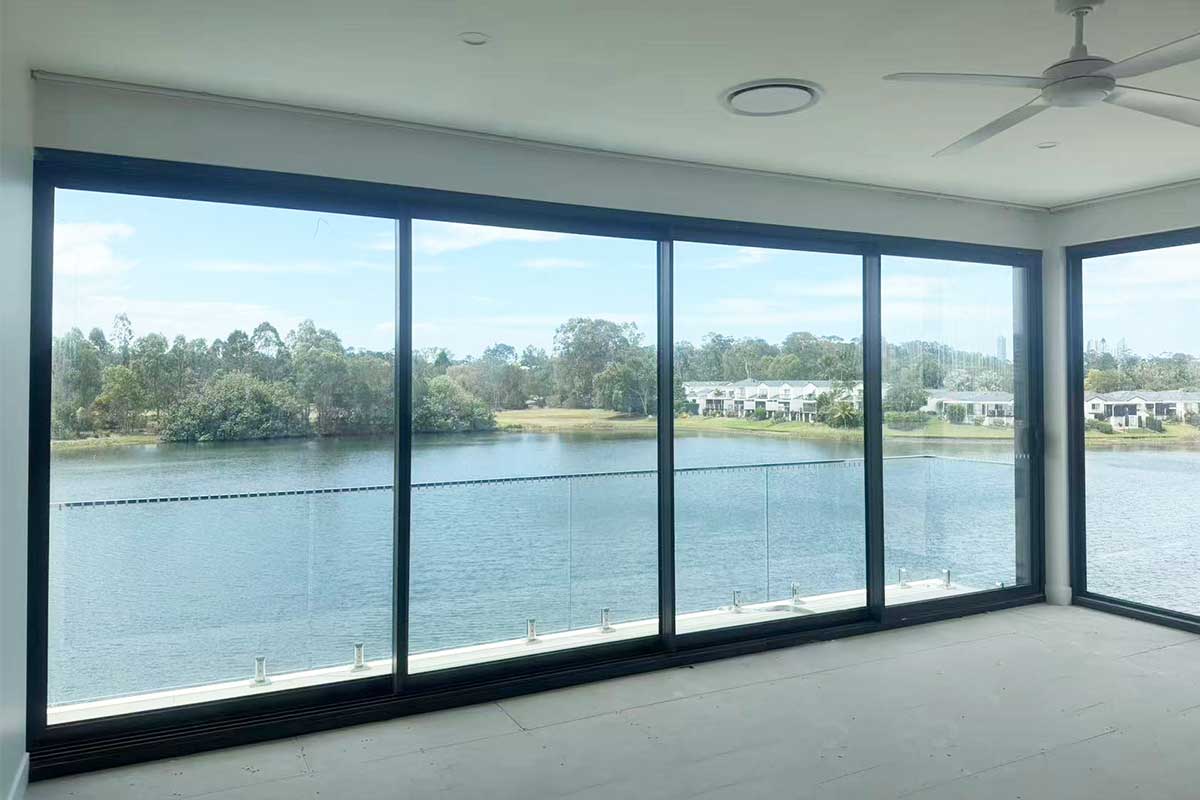
Maintenance, Lifecycle, and Long-Term Value of Aluminium Windows
A well-installed aluminium window system does not demand much attention. That is one of its strongest selling points — but “low maintenance” is not the same as “no maintenance.” Left entirely alone for a decade, even premium aluminium windows and doors will develop sluggish hardware, blocked drainage paths, and gasket compression that no longer seals properly. The difference between a system that lasts 25 years and one that lasts 50 comes down to a few straightforward tasks repeated at sensible intervals.
Routine Maintenance for Maximum Lifespan
The baseline is simple: clean the frames and glass every three to six months using warm water, a mild detergent, and a soft cloth or non-abrasive sponge. Avoid solvent-based cleaners or anything containing ammonia — these can attack powder-coated surfaces and degrade gasket rubber over time. In coastal locations (anywhere within 5 km of the shoreline in Australia), increase cleaning frequency to quarterly or even monthly during salt-heavy winter storms. Salt deposits left on profiles accelerate localised corrosion of fixings and can pit anodised surfaces if neglected across multiple seasons.
Beyond surface cleaning, three areas need periodic attention:
- Hardware lubrication — apply a silicone-based spray or light machine oil to hinges, locking points, and opening mechanisms every 6–12 months. Wipe off excess immediately. This prevents metal-on-metal wear, keeps friction stays operating smoothly, and reduces the force needed to operate the sash — which in turn protects the locking hardware from fatigue.
- Drainage slot inspection — every aluminium window frame includes weep slots or pressure-equalisation channels along the sill that direct captured moisture back to the exterior. These slots are typically 5–8 mm wide and prone to blockage from dust, insect debris, and paint overspray. Check them at least annually and clear any obstruction with a thin piece of wire or compressed air. Blocked drainage is the leading cause of water damage in otherwise sound systems.
- Gasket and seal condition — compression seals (EPDM or silicone rubber) maintain their elasticity for 15–25 years depending on UV exposure and temperature cycling. Signs of degradation include visible cracking, permanent compression set (the seal no longer springs back when the sash is opened), or increased air noise when the window is closed. Replacement gaskets are available from system suppliers and can usually be retro-fitted into existing profile grooves without removing the frame — making this a service task, not a replacement event.
Hardware has a longer but finite service life. Friction stays, espagnolette locking rods, and hinge pins are rated for specific cycle counts. In a residential setting, 20,000 cycles equates to roughly 25–30 years of daily use. Replacing worn stays or adjusting locking point alignment at the 15–20 year mark extends the usable life of the entire system without touching the frame or glass. This is a meaningful advantage over uPVC, where hardware failure often coincides with frame degradation — making component-level repair uneconomical.
Powder coating performance over decades depends heavily on the initial specification. A Qualicoat Class 2 finish in a standard residential environment typically shows minimal colour shift for 25–30 years. After this point, chalking (a powdery surface residue caused by UV breakdown of the resin binder) may become noticeable, particularly on dark colours facing north or west. The coating remains protective even when chalking — it just looks faded. Touch-up or re-coating is possible but rarely necessary if the original specification was appropriate to the exposure conditions. Most reputable manufacturers warrant their finishes for 15–25 years, with Class 2 coastal-rated coatings sitting at the upper end.
Lifecycle Cost Versus Upfront Price
Aluminium window systems carry a higher purchase price than uPVC — typically 20–30% more for equivalent sizes in the Australian market. That gap is real and visible on any project budget. But framing the comparison as “upfront cost” alone distorts the picture. A whole-life cost analysis over 40–60 years tells a different story.
uPVC frames have a practical lifespan of 25–35 years. Once seals fail or profiles warp — and they cannot be refinished or structurally repaired — full replacement is the only option. Over a 50-year ownership period, that means at least one complete replacement cycle: new frames, new glass, new installation labour, plus disposal of the old units. Aluminium, with a verified lifespan of 40–50+ years and individual components (gaskets, hardware) that can be serviced independently, avoids that wholesale replacement cost entirely.
Timber demands a different kind of ongoing investment. Repainting or re-staining every 4–7 years carries labour and material costs that compound across decades. Over 40 years, a timber window might absorb five or six repainting cycles at $150–$300 per window per cycle — a cumulative spend that often exceeds the original price difference between timber and aluminium. And if a paint cycle is missed or poorly executed, moisture enters the timber substrate, rot follows, and structural repair or replacement becomes necessary far earlier than the material’s theoretical lifespan suggests.
Custom aluminum windows in premium aluminium systems represent a higher initial outlay again, but their bespoke dimensions and system-matched componentry mean zero compromise on fit — which translates to better seal performance, lower energy loss, and fewer call-backs over the building’s life. An aluminum replacement window programme using the same system platform as the original installation can source matching profiles decades later, avoiding the mismatched-frame problem that plagues uPVC retrofits where the original system has been discontinued.
The recyclability argument adds a final, often overlooked dimension to lifecycle value. Aluminium retains its material properties through an unlimited number of recycling cycles — unlike uPVC, which degrades with each reprocessing pass. The Aluminum Association notes that roughly 75% of all aluminium ever produced remains in active use today, and recycling aluminium requires only about 5% of the energy needed for primary production. When an aluminium window finally reaches end of life — after 40, 50, or even 60 years of service — the metal has genuine scrap value. It re-enters the supply chain as feedstock for new extrusions rather than occupying landfill. In an era where embodied carbon and circular economy principles increasingly influence specification decisions, that closed-loop story carries weight with architects, developers, and procurement teams targeting sustainability credentials.
Choosing a Supply Partner for Long-Term Support
Lifecycle value does not materialise in isolation. It depends on the continued availability of compatible gaskets, hardware, and profile sections — which in turn depends on the supplier relationship outlasting the initial delivery.
A project-capable supplier supports the full arc: initial system recommendations matched to climate and exposure, material calculations for accurate quoting, manufacturing coordination that delivers on programme, and — critically — ongoing access to replacement components and technical support years after the original installation. This is what distinguishes a transactional purchase from a genuine partnership. When a developer returns to the same supplier for stage two of a multi-phase project, or when a building manager needs replacement gaskets fifteen years after handover, the relationship either delivers or it does not.
For builders, architects, and procurement teams managing portfolios of work, MEICHEN’s services and solutions model is structured around exactly this continuity — from drawings and system selection through to quality control, logistics, and long-term material sourcing for future project stages. That approach ensures the aluminium window system specified today remains serviceable and supported well beyond its warranty period.
Premium aluminium windows are not the cheapest option at the point of purchase. They are, however, frequently the cheapest option at the point of ownership — measured across the decades that a building actually stands, operates, and eventually recycles its materials back into something new.
Frequently Asked Questions About Aluminium Window Systems
1. What is the difference between an aluminium window system and a standard aluminium window?
A standard aluminium window may source its profiles, seals, and hardware from different manufacturers, creating potential tolerance mismatches and inconsistent performance. An aluminium window system is a complete, engineered assembly where every component — extruded profiles, thermal breaks, gaskets, drainage channels, and hardware — is designed, tested, and manufactured to function as a single performance unit. System-level engineering means every interface point is accounted for, delivering verified thermal, acoustic, and structural results that loose-fit combinations cannot guarantee. This integrated approach reduces installation risk and provides consistent long-term performance backed by system-level certification under standards like AS 2047.
2. How do thermal breaks in aluminium windows work and why are they necessary?
Raw aluminium conducts heat approximately 1,000 times faster than timber, which would make unbroken aluminium frames extremely poor insulators. Thermal breaks solve this by physically splitting the profile into interior and exterior halves, bridged by a low-conductivity material — typically polyamide 6.6 reinforced with glass fibre (PA66 GF25). This barrier has a thermal conductivity over 500 times lower than aluminium, forcing heat to travel through the insulating strip rather than racing through metal. Profile depth determines how much space exists for the thermal barrier: deeper profiles (70-80 mm) with wider thermal breaks (34-44 mm) achieve frame U-values below 1.2 W/(m²·K), while shallower profiles deliver more moderate performance. Without thermal breaks, aluminium windows would fail to meet National Construction Code energy efficiency requirements in most Australian climate zones.
3. How long do aluminium window systems last compared to uPVC and timber?
Aluminium window systems have a verified lifespan of 40-50+ years with minimal maintenance — primarily periodic cleaning, hardware lubrication, and occasional gasket replacement. uPVC frames typically last 25-35 years before seal failure or profile warping necessitates full replacement, as they cannot be refinished or structurally repaired. Timber windows can match aluminium’s longevity (50-60 years for hardwood) but require repainting every 4-7 years, and missed maintenance cycles allow moisture ingress that leads to rot. Over a 50-year ownership period, aluminium’s cost-per-year often undercuts both alternatives when factoring in replacement cycles for uPVC and cumulative repainting costs for timber. Aluminium also retains genuine scrap value at end of life due to its infinite recyclability.
4. What is the difference between residential and commercial grade aluminium window systems?
The distinction reflects measurable engineering differences, not just marketing labels. Residential systems use profiles 45-65 mm deep with 1.4-1.6 mm wall thickness, suited to openings up to approximately 1,200 mm wide in low-rise, moderate-wind settings. Commercial systems step up to 70-100 mm profile depths with 1.8-2.5 mm wall thickness, handling heavier glass units, longer unsupported spans, and higher wind pressures. Hardware ratings also differ significantly: residential hinges are rated for 10,000-20,000 cycles, while commercial hardware handles 50,000+ cycles. The determining factors are building height, site exposure rating, and individual opening size — not building use. A coastal penthouse exposed to high winds requires commercial-grade specification regardless of its residential occupancy.
5. What powder coating class should I specify for aluminium windows in coastal Australia?
For any aluminium window installation within 5 km of the Australian coastline, Qualicoat Class 2 powder coating is strongly recommended. Class 2 provides superior colour and gloss retention under extreme UV and salt exposure, requiring minimum 50% gloss retention after three years of accelerated weathering — compared to one year for Class 1. In practice, Class 2 finishes carry manufacturer warranties of 25-30 years against significant fading, chalking, or peeling, versus 15-20 years for Class 1. The price difference between classes is modest relative to total window cost, making it a practical insurance policy. Additionally, verify the finish is tested and warranted for C4-C5 corrosion categories per ISO 12944, and confirm the cleaning schedule required to maintain warranty validity in salt-spray environments.
More Window & Door Guides