What Sets Perth’s Aluminium Window Supply Market Apart
Search for aluminium window suppliers in Perth WA and you will find dozens of businesses competing for your attention. What most of them won’t tell you upfront is that they occupy very different positions in the supply chain, and that distinction shapes everything from pricing to customisation to how long you wait for delivery.
What Aluminium Window Suppliers Actually Do
The term “supplier” covers at least four different business models. Manufacturers extrude raw aluminium profiles and design the window systems themselves. Local aluminium window fabricators Perth buyers deal with most often purchase those profile systems, then cut, assemble, glaze, and finish windows to order in their own workshops. Distributors hold stock lines and ship standard sizes with minimal technical support. Resellers sit furthest from the product, representing another company’s range without manufacturing anything themselves.
Why does this matter? A fabricator can adjust frame dimensions, swap hardware, and coordinate production around your build schedule. A reseller takes your order and passes it along. The level of technical support, quality control, and flexibility you receive depends entirely on which type of business you are actually talking to, and many Perth buyers never think to ask.
There is a fundamental difference between buying off-the-shelf stock windows in standard sizes and ordering fabricated-to-order aluminium frames built to your project’s exact specifications. Stock windows ship faster but limit your options. Custom aluminium windows Perth suppliers fabricate to order give you precise sizing, specific glass configurations, and hardware choices, but require longer lead times and clearer upfront planning.
Why Perth Has a Distinct Supplier Landscape
Perth’s geographic isolation from eastern-state manufacturing hubs created a market where local fabrication thrives alongside national brands. Freight costs and transit times from Sydney or Melbourne make locally made product genuinely competitive on turnaround, especially for custom work. At the same time, national system suppliers like Capral maintain a strong presence through authorised fabricator networks across WA.
The result is a mix you won’t find in Brisbane or Melbourne: smaller, owner-operated fabricators offering hands-on project involvement competing directly with larger operations running high-volume production lines. Understanding Perth aluminium window manufacturers vs resellers in this landscape helps you match the right supplier model to your project’s complexity.
This article is built as a buyer-education resource. No product catalogues, no spec sheets dressed up as advice. Instead, it walks through what actually drives your quote, what compliance issues Perth’s climate and geography create, and how to evaluate whether a supplier can genuinely deliver on your project, not just take your deposit.
That evaluation starts with knowing what types of aluminium windows are available and which ones suit your home’s orientation and local conditions.
Aluminium Window Types Available from Perth Suppliers
Every aluminium window style handles airflow, weather sealing, and space differently. In a city where summer temperatures regularly push past 35 degrees and the afternoon sea breeze (the Fremantle Doctor) sweeps in from the south-west at 20 to 30 km/h, the window type you choose directly affects how comfortable your home feels and how hard your air conditioning works.
Perth suppliers typically offer six core styles. Each suits different rooms, orientations, and lifestyle priorities.
Awning and Casement Windows for Ventilation Control
Aluminium awning windows Perth homes rely on are top-hinged and swing outward. This design sheds rain while the window stays open, making them a practical choice for bathrooms, kitchens, and any room where you want airflow during light showers. Awning windows with compression seals also resist wind-driven salt spray better than brush-sealed alternatives, which matters if your home faces prevailing south-westerly breezes.
Casement windows aluminium Perth fabricators produce work on side hinges instead, swinging outward like a small door. They catch lateral breezes more effectively than awning styles because the open sash acts as a scoop, directing air into the room. Casement windows suit living areas and bedrooms on the east or south sides of a home, where you want maximum ventilation without direct afternoon sun blasting through a wide opening.
Sliding and Bi-Fold Options for Indoor-Outdoor Living
Sliding aluminium windows for Perth homes remain popular because they are space-efficient, low-maintenance, and suit the wide openings typical of open-plan living areas. They glide horizontally on tracks without protruding into the room or outdoor space, which makes them ideal for areas beside decks, paths, or furniture.
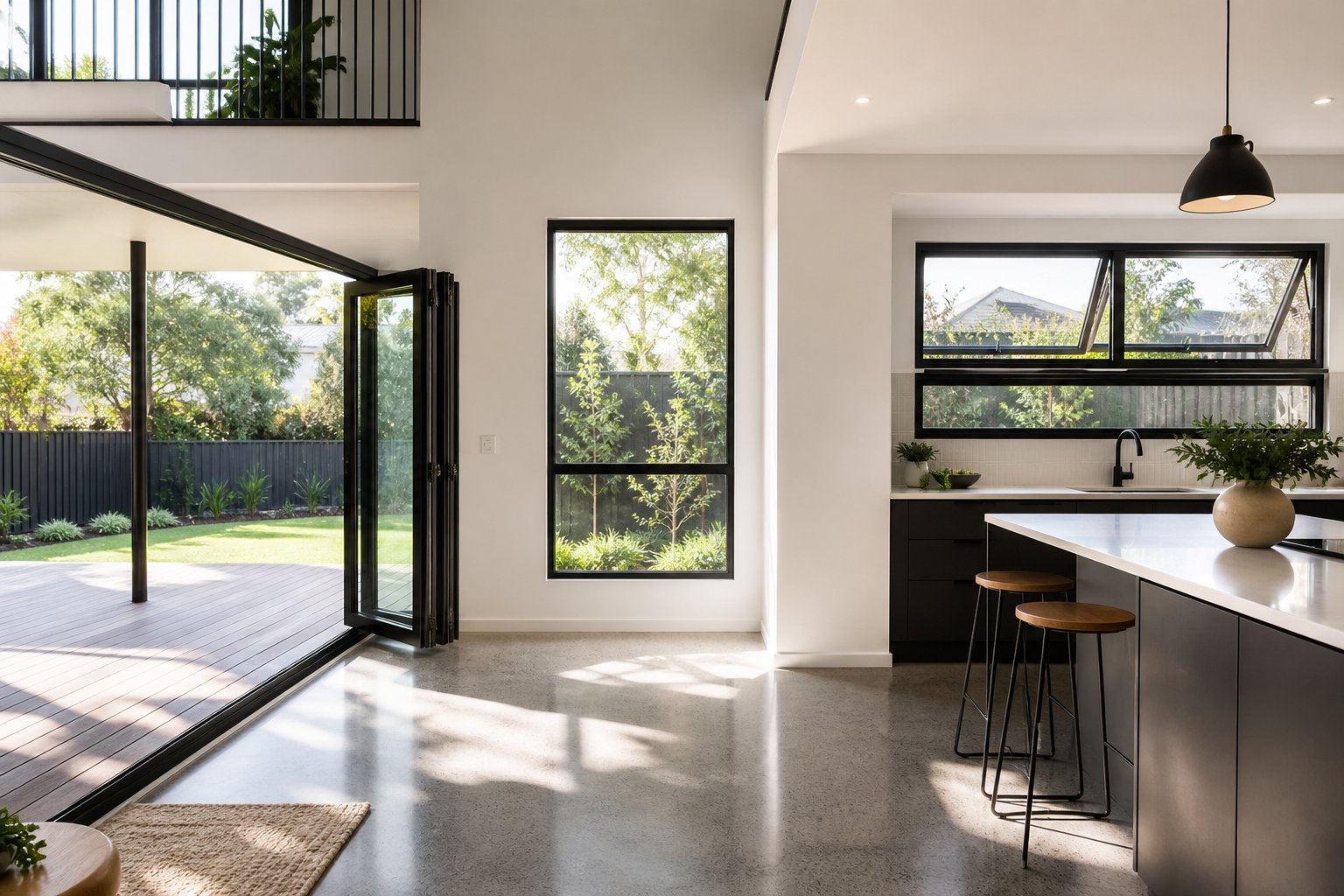
Bi-fold aluminium windows Perth suppliers offer take the indoor-outdoor concept further. Multiple hinged panels fold neatly to one side, opening an entire wall section to your alfresco area. They work best on the north or west-facing entertaining zones common in Perth homes, where you want the flexibility to open up completely on mild evenings and close down tightly when summer heat or winter storms roll in. Hardware quality matters here: specify stainless-steel tracks and nylon rollers if you are anywhere near the coast, as standard metal rollers can seize within a few years in salty conditions.
Fixed and Louvre Windows for Light and Airflow
Fixed windows do not open at all. Their job is to flood a room with natural light and frame views without compromising security or thermal performance. They pair well with awning or casement windows in a stacked or side-by-side configuration, giving you both illumination and ventilation in one wall.
Louvre windows use horizontal adjustable blades to fine-tune airflow. You can angle them to capture Perth’s sea breezes while deflecting rain, and close them nearly flat for weather protection. They excel in bathrooms, laundries, and upper-storey bedrooms where exhausting hot air quickly is the priority.
Choosing the best aluminium window styles for Perth climate conditions comes down to matching each room’s orientation and function to the right operating mechanism:
- Awning — ideal above kitchen sinks and in wet areas where ventilation during rain is needed.
- Casement — suits bedrooms and living rooms on south or east elevations for maximum breeze capture.
- Sliding — works best for wide openings beside outdoor living areas where space is tight.
- Bi-fold — transforms entertaining zones by opening entire wall sections to alfresco spaces.
- Fixed — delivers uninterrupted light and views in hallways, stairwells, and feature walls.
- Louvre — provides adjustable airflow control for bathrooms, laundries, and upper-level rooms.
Window type is only half the equation, though. The frame material and glass specification paired with that aluminium profile determine how well the window actually performs against Perth’s heat, UV exposure, and coastal conditions.
Aluminium vs Timber vs uPVC Frames in Perth Conditions
Perth’s climate does not treat all window frame materials equally. A combination of intense UV radiation, summer days regularly exceeding 35 degrees, salt-laden coastal air carried inland by south-westerly breezes, and significant day-to-night temperature swings creates a punishing environment that exposes weaknesses in frame materials faster than milder Australian cities. Understanding how aluminium, timber, and uPVC hold up under these specific pressures is the best window frame material for Perth coastal homes decision you can make before requesting quotes.
How Perth’s Climate Punishes Different Frame Materials
Three forces do most of the damage in Perth: UV degradation, thermal cycling, and salt corrosion. Each material responds differently.
Aluminium is structurally indifferent to heat and UV. It will not warp, crack, or become brittle after decades of sun exposure. Its vulnerability is corrosion, particularly in suburbs within five kilometres of the coast where salt particles settle on surfaces. Quality powder coating with marine-grade specifications handles this effectively, but only if specified correctly at the quote stage. A standard powder coat rated to AS 3715 will perform well in inland suburbs like Joondalup or Midland, while coastal locations such as Cottesloe, Scarborough, or Fremantle demand enhanced marine-grade finishes.
Timber is a natural insulator and looks stunning in heritage or character homes. The problem in Perth is maintenance intensity. Intense summer sun breaks down paint and stain coatings rapidly, particularly on north and west-facing elevations. Recoating cycles drop from every seven to ten years in temperate climates down to every three to five years on exposed Perth facades. Timber also swells and contracts with moisture variation, and while Perth is relatively dry, coastal humidity and occasional winter storms can stress joints and seals over time.
uPVC resists corrosion entirely and never needs repainting. It performs well thermally due to multi-chambered air pockets within the profile. The concern in Perth is long-term UV stability. Lower-quality uPVC can discolour, become chalky, or lose rigidity after extended exposure to Perth’s extreme solar radiation. High-quality, Australian-certified uPVC products include UV stabilisers that mitigate this, but the material still cannot match aluminium’s structural strength, which limits maximum panel sizes and restricts slim sightline designs popular in contemporary Perth architecture.
Thermal Break Technology and Why It Matters Here
The traditional knock against aluminium frames has always been thermal conductivity. Metal transfers heat efficiently, which means an unbroken aluminium profile can feel hot to the touch in summer and radiate stored heat into your home well after sunset. In Perth’s cooling-dominated climate, where air conditioning accounts for a major share of household energy costs, this is a genuine performance issue rather than a minor inconvenience.
Thermal break aluminium windows Perth suppliers now offer solve this problem with an insulating barrier, typically a polyamide strip reinforced with glass fibre, mechanically crimped between the interior and exterior aluminium sections. This strip is 500 to 1,000 times less thermally conductive than aluminium, effectively splitting the frame into two independent thermal zones. Heat from the exterior face cannot conduct directly to the interior face.
The practical result: thermally broken aluminium achieves U-values comparable to uPVC while retaining aluminium’s slim profiles, structural strength, and design flexibility. Non-thermally broken aluminium frames typically sit around 5.8 to 7.0 W/m²K, whereas quality thermally broken systems drop to 2.5 to 3.5 W/m²K or lower depending on the break width and system design. For Perth homes relying on reverse-cycle air conditioning through five or six months of warm weather, this difference translates directly into reduced energy consumption and more consistent indoor comfort near window areas.
The table below summarises how each material stacks up across the criteria that matter most in Perth’s conditions:
| Criteria | Aluminium (Thermally Broken) | Timber | uPVC |
|---|---|---|---|
| Durability in coastal conditions | Excellent with marine-grade powder coating; resists structural degradation from salt air | Poor to moderate; requires frequent recoating and joint maintenance in salt-spray zones | Excellent; naturally immune to corrosion without additional treatment |
| UV resistance | Excellent; powder coating with UV inhibitors maintains colour and integrity for decades | Low; coatings break down quickly under Perth’s intense UV, exposing raw timber | Good if UV-stabilised; lower-quality products may discolour or become brittle over time |
| Maintenance frequency | Low; periodic cleaning and hardware lubrication every 12 months | High; repainting or re-staining every 3 to 5 years on exposed elevations | Very low; occasional wipe-down with soapy water |
| Thermal performance | Very good with thermal break; U-values of 2.5 to 3.5 W/m²K typical | Good naturally; timber is a low-conductivity material | Good; multi-chambered profiles provide inherent insulation |
| Cost range (supply only, per m²) | $800 to $1,500+ AUD | $900 to $1,800+ AUD | $600 to $1,200 AUD |
| Expected lifespan | 30 to 45 years | 20 to 30 years (climate and maintenance dependent) | 25 to 35 years |
Aluminium dominates Perth’s residential and commercial window market despite its higher conductivity in non-thermally-broken form because it delivers the combination builders and homeowners actually need here: corrosion resistance that can be specified to site conditions, slim profiles that support large glass areas, structural strength for oversized panels, and a lifespan that outlasts the alternatives. Thermal break technology removed its one significant weakness, making aluminium vs timber windows Perth climate comparisons heavily favour the metal frame for most applications. uPVC vs aluminium windows Western Australia buyers weigh up comes down to whether budget constraints or design flexibility matters more, since both materials now offer strong thermal performance when properly specified.
Material choice sets the frame’s performance ceiling, but the glass sitting inside that frame determines how much heat, noise, and UV actually enters your home. And in Perth’s BCA Climate Zone 5, where cooling loads dominate energy bills, glass specification is where the real performance gains hide.
Glass Options and Energy Ratings for Perth Aluminium Windows
Your aluminium frame is the skeleton. The glass is the organ that does the heavy lifting: controlling heat gain, filtering UV, managing noise, and influencing how much your air conditioner runs from October through April. In BCA Climate Zone 5, where Perth sits, cooling loads dominate household energy use. That makes glass specification the single biggest performance lever most buyers overlook when comparing quotes from aluminium window suppliers.
Here is a quick reference for the main glass types Perth suppliers pair with aluminium frames and what each one primarily achieves in local conditions:
- Single glazed (clear) — lowest upfront cost; minimal thermal or acoustic insulation; suits sheds, garages, and budget-constrained internal openings only.
- Double glazed (IGU) — two panes separated by an air or argon-filled gap; dramatically reduces heat transfer and external noise; the baseline for energy efficient aluminium windows Perth climate zone 5 projects.
- Laminated — two glass sheets bonded with a PVB interlayer; absorbs sound energy, blocks UV, and holds together on impact; ideal for security-conscious or noise-affected locations.
- Tinted — body-coloured glass that reduces visible light transmission and solar heat gain; effective on west-facing elevations where afternoon sun drives cooling loads.
- Low-E coated — a microscopically thin metallic coating that reflects infrared radiation; keeps radiant heat outside in summer and inside during winter; pairs with double glazing for maximum benefit.
Double Glazing Performance in Perth’s Cooling-Dominated Climate
Double glazed aluminium windows Perth builders now specify as standard use an insulating glass unit (IGU) typically constructed as 5 mm or 6 mm glass, a 12 mm to 16 mm argon-filled cavity, and a second pane. That gas-filled gap is not just dead air. Argon is denser than air and reduces heat transfer significantly compared to single-pane glass, cutting cooling energy demand measurably through Perth’s long summers.
The wider the cavity, the better the thermal performance up to a point, around 16 mm to 20 mm, before convection currents within the gap begin to erode gains. Perth suppliers offering thinner 6 mm cavities in their standard product may price lower, but you lose much of the insulating benefit. Ask specifically about cavity width when comparing quotes.
Double glazing also tackles a problem many Perth homeowners underestimate: noise. Suburbs near Perth Airport flight paths, the Mitchell and Kwinana Freeways, or the Joondalup and Armadale train lines deal with consistent low-frequency rumble. Noise enters a home primarily through its windows, and double glazing with asymmetrical pane thicknesses, say 6 mm outer and 4 mm inner, disrupts sound wave resonance more effectively than matched panes. Laminated glass in the outer pane boosts this further. If noise reduction windows Perth suburbs near transport corridors demand are a priority for your project, specify acoustic-rated IGUs rather than standard thermal units.
Tinted and Low-E Glass for UV and Heat Control
Perth’s extreme UV index, regularly hitting 11 or higher in summer, fades furnishings, damages flooring, and pumps radiant heat through unprotected glass. Tinted glass with a visible light transmission (VLT) of 20 to 50 percent physically absorbs a portion of solar radiation before it enters the room. It works well on west-facing windows where late afternoon sun strikes at low angles, but it also reduces natural light, which can darken interiors on overcast winter days.
Low-E glass aluminium windows Perth suppliers increasingly recommend takes a smarter approach. The low-emissivity coating is virtually invisible yet reflects a large proportion of infrared heat back toward its source. In summer, it bounces solar heat outward. In the mild Perth winter, it reflects interior warmth back inside. When combined with double glazing, Low-E coatings reduce cooling loads without the daylight penalty of heavy tinting. For most Perth homes, a Low-E IGU outperforms standard tinted glass on a cost-per-energy-saving basis across the full year.
Understanding WERS Ratings When Comparing Quotes
The Window Energy Rating Scheme (WERS), managed by the Australian Glass and Window Association, rates whole-of-window energy performance on a zero to ten star scale. Cooling and heating performance are rated separately, which matters in Perth because you want high cooling stars above all else. A window scoring eight stars for cooling will reduce your home’s annual energy demand far more than the same star count for heating ever would in this climate.
Two technical values sit beneath those star ratings, and you should ask any supplier about both:
- U-value (Uw) — measures how much heat passes through the entire window assembly, including frame and glass. Lower numbers mean less heat transfer. WERS rated windows Perth projects target should aim for Uw values below 4.0 W/m²K, and thermally broken aluminium frames with Low-E double glazing can achieve 2.5 to 3.5 W/m²K.
- SHGC (Solar Heat Gain Coefficient) — measures the fraction of solar radiation that enters through the window. In Perth, a lower SHGC on west and north-facing windows reduces cooling loads. Values between 0.25 and 0.40 suit most Perth orientations, though south-facing glass can accept a higher SHGC since direct sun exposure is minimal.
When a supplier quotes you a window, ask them to provide the WERS certificate or at minimum the Uw and SHGC values for the specific system and glass combination they are quoting. Without these numbers, you cannot meaningfully compare two quotes on performance, only on price. A $50 per window saving on a product with a poor SHGC will cost you far more in running expenses over a decade of Perth summers.
Glass and frame performance both respond to measurable standards. But Perth throws additional compliance requirements at certain locations that no amount of star ratings alone can satisfy: bushfire zones in the hills and salt-spray exposure along the coast each impose their own specifications that must be addressed before a window can legally be installed.
Bushfire Ratings and Coastal Corrosion Considerations
Perth sprawls from dense coastal suburbs to semi-rural lots backing onto jarrah forest in the Darling Range. That geographic range creates two distinct environmental hazards that directly dictate what your aluminium windows must be built to withstand: bushfire in the hills and eastern fringe, and salt corrosion along the coast. Neither is optional. Both carry compliance obligations under Australian Standards, and both affect what your supplier quotes you.
BAL Ratings and Bushfire-Prone Perth Suburbs
Bushfire Attack Level (BAL) is a classification defined under Australian Standard AS 3959 that measures a building’s potential exposure to ember attack, radiant heat, and direct flame contact. Your property’s BAL rating determines the construction requirements for every external element, including windows, doors, glazing, seals, and screens.
Perth suburbs in the hills district, Mundaring, Kalamunda, Roleystone, Parkerville, Stoneville, and areas stretching through the semi-rural fringes of Chittering, Bullsbrook, and the Swan Valley edges commonly fall within designated bushfire-prone areas. The WA Department of Fire and Emergency Services maintains the official map, and your local government can confirm whether your lot is designated.
Here is what each relevant BAL category means for your aluminium window specifications:
- BAL-12.5 — primarily ember attack risk. Windows require tighter seals to prevent ember entry, metal mesh screens (corrosion-resistant steel, bronze, or aluminium with maximum 2 mm aperture), and toughened safety glass if screens are not fitted.
- BAL-19 — moderate radiant heat exposure added to ember risk. Frame performance requirements increase, seals must resist sustained heat, and glazing upgrades to minimum 5 mm toughened safety glass become standard.
- BAL-29 — high radiant heat plus intense ember attack. Heat-resistant aluminium frames with increased wall thickness, specialised glazing (often 6 mm toughened), and precision-engineered sealing systems are essential to reduce glass failure and ember penetration.
- BAL-40 — very high heat with likely flame proximity. Requires robust aluminium frames, thicker toughened glazing configurations (including double-glazed options for enhanced performance), compliant ember-resistant screening, and all components performing together as an integrated system.
BAL rated aluminium windows Perth hills homeowners need are not simply standard windows with a sticker. The frame section, glass thickness, seal material, hardware metal, and screen specification all change as the rating climbs. A supplier quoting bushfire rated windows Perth suppliers should provide must specify which BAL their product satisfies, and which sections of AS 3959 it has been tested against.
Before you request quotes, determine your BAL rating so every supplier prices from the same compliance baseline:
- Check the DFES Map of Bushfire Prone Areas to confirm whether your lot sits within a designated zone.
- Contact your local government planning department to confirm any additional overlay requirements or conditions on your lot.
- Engage an accredited Level 1 BAL Assessor through the Fire Protection Association Australia to conduct a site-specific assessment considering slope, vegetation type, and proximity to the building.
- Obtain the formal BAL determination report, which will assign your property a specific rating from BAL-LOW through BAL-FZ.
- Provide this report to every window supplier when requesting quotes so they can specify compliant products and price accordingly, rather than quoting generic products that may not meet your legal requirements.
Coastal Corrosion Protection for Seaside Homes
Perth’s coastline runs from Two Rocks in the north through to Rockingham and Mandurah in the south, with prevailing south-westerly winds pushing salt-laden air several kilometres inland. Properties within roughly five kilometres of the coast face accelerated corrosion on exposed metal surfaces, and aluminium window frames are no exception.
Untreated or poorly finished aluminium develops pitting and white oxidation when exposed to persistent salt spray. The protective layer is the powder coating or anodising applied to the frame surface. For corrosion resistant window frames Perth beach suburbs demand, your supplier should offer finishes certified to enhanced durability standards. Under AS 3715, powder coatings are rated by exposure category. Coastal Perth properties typically require a minimum “severe marine” or equivalent specification, which uses thicker coating films (60 to 80 microns) and specialised pre-treatment processes that prevent salt from reaching the underlying aluminium.
Marine grade aluminium windows Perth coastal projects specify may alternatively use anodising, an electrochemical process that converts the aluminium surface into a hard, corrosion-resistant oxide layer. Anodising at 20 to 25 microns provides excellent salt resistance and a distinctive metallic finish, though it limits colour choice compared to powder coating.
When evaluating suppliers for a coastal project, ask specifically:
- What pre-treatment process is used before powder coating? (Multi-stage chromate-free conversion coatings offer the best adhesion and corrosion resistance.)
- What film thickness do they apply, and is it certified to meet severe marine exposure categories?
- Does the powder coat warranty cover coastal installations, or does the fine print exclude properties within a certain distance from the ocean?
- Are hardware components (rollers, hinges, locking mechanisms) also rated for marine environments, or only the frame itself?
A supplier who quotes standard inland-rated finishes for a Scarborough or Trigg project is either cutting corners or unfamiliar with site-specific requirements. Either way, you will pay the price in premature coating failure within five to ten years.
BAL compliance and corrosion specifications both add cost and narrow your supplier options, but they also reveal how Perth’s aluminium window supply chain actually operates beneath the surface. Where profiles come from, how fabrication works, and whether your supplier controls the process or simply orders from someone else all determine whether those compliance requirements are met reliably or become your problem after installation.
How Perth’s Aluminium Window Supply Chain Works
Knowing your BAL rating or corrosion category is one thing. Getting a supplier to deliver product that genuinely meets those specifications is another, and the reliability of that delivery depends heavily on where your windows actually come from. The supply chain behind aluminium windows in Perth is not a single pipeline. It is a layered system of profile manufacturers, fabrication workshops, hardware importers, and finishing plants, and the supplier you deal with may control some, all, or none of those steps.
Local Fabrication vs Imported Frames and What It Means for You
Most aluminium windows installed in Perth homes start life as extruded aluminium sections. Raw aluminium billets are heated and forced through precision dies to create profiles with specific cross-sectional shapes, channels for glazing, drainage slots, and hardware pockets all formed in one continuous process. In Australia, major extruders like Capral Aluminium produce window system profiles domestically, while other suppliers import extruded sections from overseas mills.
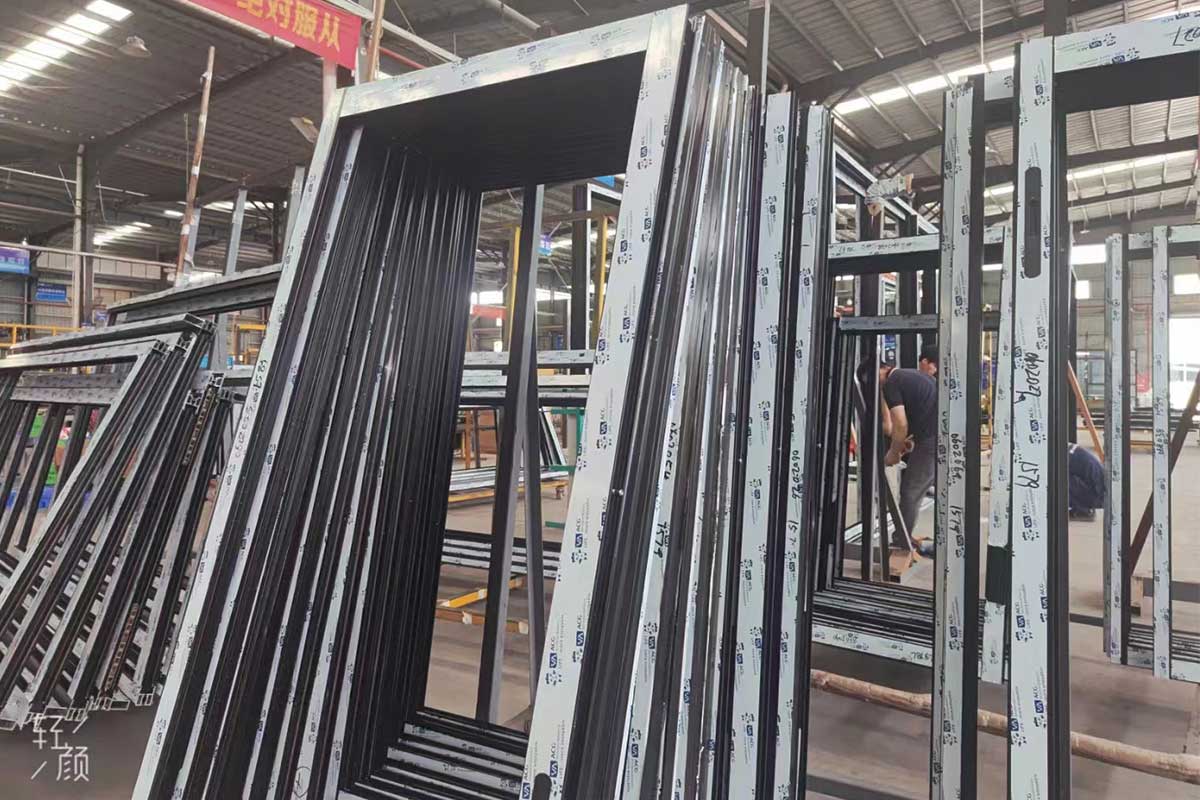
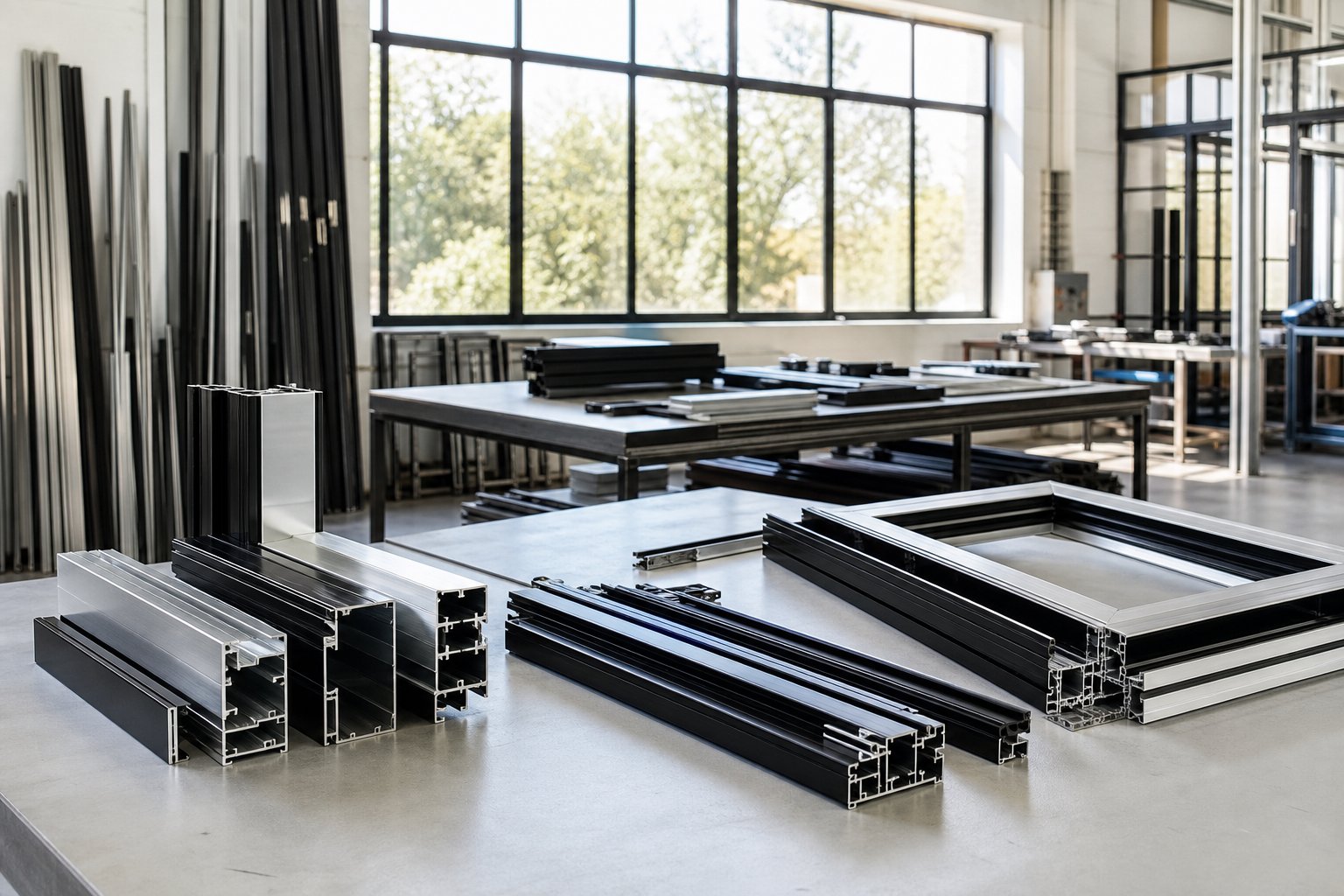
Perth fabricators purchase these profile systems, whether locally extruded or imported, and then cut, machine, assemble, glaze, and finish windows to order in their own workshops. This fabrication step is where customisation happens. A fabricator working from raw profile stock can build to exact millimetre dimensions, accommodate unusual opening shapes, and respond to specification changes mid-project. Aluminium window fabrication Perth lead times depend on this local capacity. A well-equipped fabricator with stock profiles on hand can typically turn around standard residential orders in two to four weeks. Complex projects or custom aluminium window profiles Perth WA buyers need for non-standard openings may push to six or eight weeks.
Imported fully-assembled windows are the other end of the spectrum. Some Perth suppliers bring in complete window units from overseas factories, offering lower unit costs but minimal ability to modify sizes, hardware, or glass after the order is placed. Lead times stretch to eight to fourteen weeks once shipping is factored in, and quality control sits largely outside the local supplier’s hands. If a unit arrives damaged or out-of-spec, you wait again.
The middle ground, and where most established Perth suppliers sit, is local fabrication using nationally supplied profile systems. This model gives you the engineering rigour of a tested window system designed for Australian conditions and compliance, combined with the flexibility and responsiveness of a local workshop building to your schedule.
Residential vs Commercial Window Systems Explained
Not all aluminium window profiles are interchangeable. The industry divides systems into residential and commercial grades, and the distinction affects strength, maximum panel sizes, testing standards, and cost.
Residential aluminium window systems Perth homes use are designed for standard openings in houses, townhouses, and low-rise apartments. Profile sections are lighter, typically 44 mm to 52 mm frame depths, optimised for openings up to around 2,400 mm wide and 1,800 mm high depending on the system and wind region. They meet AS 2047 performance requirements for residential buildings, covering air infiltration, water penetration, and structural adequacy for the relevant wind classification.
Commercial aluminium window suppliers Perth builders engage for larger projects use heavier-section profiles, often 65 mm to 100 mm or more in frame depth, engineered for bigger spans, higher wind loads, and more demanding cycling requirements. These systems suit multi-storey apartment buildings, office towers, hotels, retail frontages, and any application where opening sizes exceed residential limits or where the building’s height increases wind exposure.
The practical distinction for a homeowner or renovator: if your architect has specified floor-to-ceiling glazing, oversized sliding panels, or windows on upper storeys of a three-level home, residential systems may not be structurally adequate. Your supplier needs to identify where a residential system ends and a commercial system begins for your specific project. Some Perth suppliers serve only the residential market. Others handle both. A handful specialise exclusively in commercial aluminium window suppliers Perth developers and builders rely on for large-scale work. Asking which systems a supplier fabricates and what their maximum tested panel sizes are will quickly tell you whether they can handle your project’s demands.
Key Industry Terms Every Buyer Should Know
Conversations with fabricators and suppliers move faster when you speak the same language. The terminology is not complicated once explained in plain terms, but jargon on a quote can obscure what you are actually paying for.
| Term | Plain-Language Definition |
|---|---|
| Thermal break | An insulating strip (usually reinforced polyamide) inserted between the inner and outer aluminium sections of a frame to stop heat transferring through the metal. Essential for energy performance in Perth’s cooling-dominated climate. |
| Reveal | The distance between the face of the wall and the window frame, measured at the sides and top of the opening. Determines how the window sits within your brickwork or cladding. |
| Mullion | A vertical structural member dividing a window opening into two or more sections. Mullions carry load and separate individual glass panels within a larger frame assembly. |
| Transom | A horizontal structural member that divides a window opening into upper and lower sections. Often used to separate an operable lower window from a fixed highlight panel above. |
| Sash | The moving part of the window, the frame that holds the glass and opens or closes. An awning window has a top-hinged sash; a casement has a side-hinged sash. |
| Glazing bead | The small aluminium profile that clips into the sash or frame to hold the glass pane in place. It can be removed for glass replacement without disassembling the entire window. |
| Friction stay | A hardware arm that controls how far an awning or casement sash opens and holds it in position. Quality stainless-steel friction stays resist coastal corrosion far better than standard zinc-plated options. |
| Cremone bolt / multi-point lock | A locking mechanism operated by a single handle that engages at multiple points around the sash perimeter. Provides superior weather sealing and security compared to single-point latches. |
Understanding these terms strips the mystery from supplier quotes and technical drawings. When a quote lists “mullion to divide opening” or “transom at 2,100 mm,” you know exactly what is being described and can question anything that does not match your expectations.
This vocabulary also helps when evaluating whether a supplier genuinely understands your project or is simply filling in a template. A supplier who asks about reveal depths, confirms mullion placement with you, and specifies hardware by brand and type is demonstrating project-level engagement. One who quotes a generic line item without these details may be leaving critical decisions unresolved until installation day, when changes become expensive. That difference in supplier capability, and what to look for when shortlisting, is where the real risk in your purchasing decision sits.
How to Evaluate and Shortlist Aluminium Window Suppliers
Supplier capability is not something you discover on delivery day. It is something you verify before a single dollar changes hands. Knowing how to choose aluminium window supplier Perth projects actually depend on means looking past the showroom and into the operational detail: what credentials back their claims, what questions expose gaps, and whether their service model can absorb the complexity your project generates.
Questions to Ask Before Committing to a Supplier
A confident supplier welcomes scrutiny. One who deflects, delays, or answers in generalities is telling you something worth hearing. Before committing, run through these evaluation criteria in order of importance:
- AS 2047 compliance documentation — can the supplier produce test reports for the specific window configurations you need, not just generic system data? This confirms structural adequacy, water penetration resistance, and air infiltration performance under Australian conditions.
- Powder coating warranty aluminium windows Perth coastal buyers need — what does the finish warranty actually cover, for how long, and does it apply to your site’s exposure category? A ten-year warranty that excludes properties within five kilometres of the coast is effectively worthless in Scarborough or Trigg.
- Hardware brand and grade — are hinges, locks, and rollers specified by name, or left as a generic line item? Reputable suppliers nominate specific hardware brands (such as Centor, Doric, or Assa Abloy) because they stand behind the components’ longevity. Stainless-steel hardware should be standard for coastal sites.
- Production lead times for your scope — not a vague estimate, but a calculated timeline based on your configuration complexity, finish colour, and current workshop load. Realistic answers require the supplier to have assessed your job, not guessed.
- Shop drawing and schedule review capability — does the supplier produce detailed fabrication drawings for your approval before manufacturing begins, or do they expect you to supply finalised documentation with no engineering input?
- Quality control process — what inspection checkpoints exist between order confirmation and dispatch? Ask for specifics: dimensional checks after cutting, seal integrity after glazing, finish inspection before packaging.
- Project references — every capable supplier has completed work similar to yours. If they cannot name a comparable project or connect you with a previous client, treat that silence as information.
Aluminium window supplier credentials Perth buyers should verify extend beyond product certifications. They include the supplier’s track record of meeting stated lead times, their willingness to document commitments in writing, and their process for resolving defects or specification mismatches after delivery.
Why Full-Service Suppliers Reduce Project Risk
A supplier who simply takes an order and ships product leaves you to manage every coordination gap yourself: confirming that frame dimensions match structural openings, ensuring glass specifications align with your energy rating pathway, scheduling delivery around wet trades and lock-up timelines. Each gap is a potential delay or rework cost.
A full service aluminium window supplier Perth builders increasingly prefer operates differently. They engage from the project’s documentation phase, reviewing architectural drawings, recommending appropriate profile systems for your wind region and BAL requirements, calculating material quantities to minimise waste, coordinating manufacturing schedules against your construction programme, running quality checks before dispatch, and planning logistics so product arrives when your site is ready, not six weeks early or two weeks late.
This consolidated approach mirrors what the construction industry broadly recognises as a risk-reduction strategy: fewer coordination interfaces mean fewer opportunities for miscommunication, specification drift, and scheduling conflict. When one partner owns the process from system recommendation through to delivery, accountability is clear and problems surface early enough to solve without programme impact.
MEICHEN’s services page illustrates what this scope looks like in practice, mapping each stage from drawings and schedules through material calculation, manufacturing coordination, quality control, and delivery planning. For builders, developers, and homeowners evaluating Perth suppliers, it provides a useful benchmark for what comprehensive project support actually includes, so you can measure other suppliers against the same standard.
The suppliers who pass this evaluation, those with verifiable credentials, transparent processes, and a service model that matches your project’s complexity, are the ones worth progressing to the quoting stage. And that stage brings its own set of variables most buyers are unprepared for.
Getting Quotes and Understanding Price Drivers
You have shortlisted suppliers with the right credentials and service depth. The next step, requesting formal quotes, is where most buyers hand over control without realising it. A vague quote request produces a vague price, and vague prices have a habit of growing once production starts and assumptions get replaced by reality. Aluminium window quotes Perth what to expect comes down to this: the quality of information you provide determines the accuracy of the number you receive back.
What Information to Prepare Before Requesting Quotes
Suppliers cannot price what they have to guess at. Every assumption a fabricator makes on your behalf is a potential cost variation later. The more complete your brief, the tighter their pricing and the fewer surprises once manufacturing is underway. Before contacting any supplier, work through this preparation checklist:
- Compile architectural drawings and window schedules — provide plans showing each opening’s location, and a schedule listing dimensions, operation types, and any special requirements. Elevations without schedules create guesswork; schedules without elevations lose context.
- Confirm exact opening sizes and note which dimensions are fixed — rough openings, frame sizes, and daylight openings are not the same measurement. Specify which you are providing so the supplier prices the right product, not an interpretation of it.
- Define the operation type for every opening — awning, casement, sliding, bi-fold, fixed, or louvre. A fixed unit priced where an operable window belongs will make a quote look artificially low until the real scope emerges.
- State your glass specification requirements — single glazed, double glazed, Low-E, tinted, laminated, or acoustic-rated. Include cavity width preferences and any WERS performance targets your energy assessor has set.
- Nominate your powder coat colour and finish grade — standard colours from a supplier’s existing range price differently to custom RAL-matched finishes. Specify whether you need marine-grade coating for coastal exposure or standard inland-rated finishes.
- Provide your BAL rating if applicable — this single piece of information changes frame thickness, glass type, seal specification, and screening requirements. Without it, the supplier either excludes bushfire compliance entirely or guesses conservatively, inflating the price.
- Include site access details and delivery address — tight laneways, upper-storey installations requiring crane access, or remote building sites all affect logistics cost. Tell suppliers upfront rather than discovering a delivery surcharge later.
- Share your construction programme timeline — specify when you need product on site, so the supplier can confirm whether their production schedule aligns with your build sequence.
This preparation takes an afternoon. Skipping it can cost weeks of back-and-forth clarification and quotes that bear little resemblance to your final invoice.
Understanding What Drives Price Differences Between Suppliers
Two quotes for what appears to be the same set of windows can vary by 20 to 40 percent. That gap rarely means one supplier is ripping you off and another is offering a bargain. It usually means they are pricing different things. Aluminium window pricing Perth factors that create legitimate variation include:
Window type and configuration complexity. A fixed panel costs less to fabricate than an operable casement of the same size, which in turn costs less than a bi-fold with multiple panels. Every hinge, lock, and friction stay adds labour and componentry.
Glass specification. Single glazing versus a Low-E double-glazed IGU with argon fill can double the glass cost per opening. Laminated or acoustic-rated combinations push higher again. This is often the biggest single line-item difference between quotes.
Powder coat colour and finish standard. Standard colours held in batch stock price at the base rate. A custom colour requiring a dedicated spray run adds a premium, typically $30 to $80 per opening depending on scope. Marine-grade pre-treatment for coastal durability adds further.
BAL and compliance requirements. Bushfire-rated assemblies demand thicker frames, upgraded glazing, specialised seals, and ember-guard screening. Each step up from BAL-12.5 through BAL-40 adds material and testing cost that should appear explicitly in a quote rather than buried in a single line.
Custom sizing versus standard modules. Fabricating to your exact millimetre dimensions costs more than ordering from a supplier’s pre-set size range. The premium reflects additional cutting, machining, and setup time.
Hardware grade. Budget zinc-plated hardware prices below stainless steel, but the performance gap in Perth’s coastal and high-UV environment makes the cheapest option a false economy. Compare quotes on hardware brand, not just hardware cost.
How to get accurate aluminium window quotes Perth projects depend on is straightforward: ensure every supplier prices against identical specifications. Ask each one to itemise their quote by frame system, glazing, hardware, finish, and delivery so you can see exactly where cost differences originate rather than comparing lump-sum figures that may reflect entirely different products.
Lead times and ordering strategy. Aluminium window lead times Perth builds must account for typically range from three to five weeks for standard residential configurations through to eight or twelve weeks for custom sizes, non-standard finishes, or BAL-rated assemblies. Seasonal demand peaks in spring and summer compress availability further, making early ordering essential if your lock-up target falls between October and February. For renovation projects, factor in an additional two to four weeks of buffer. A supplier quoting four weeks in June may quote seven in November from the same workshop at higher capacity.
Plan your ordering timeline relative to your build by counting backwards from your lock-up date. If your builder needs windows on site by week 16, and your supplier’s current lead time is six weeks, you need confirmed and approved shop drawings no later than week eight, which means your quote and order process should start no later than week four or five. Compressing this timeline forces rush charges or, worse, compromises specification accuracy.
A supplier whose process covers the full cycle from drawings through to delivery coordination gives you visibility into where your order sits at every stage. MEICHEN’s services page maps this workflow transparently, showing how project-based supply structures quotes around real variables like system recommendation, material calculation, manufacturing scheduling, quality control, and logistics rather than generic price lists. For builders, developers, and procurement teams ready to discuss specific project scope, it provides a practical starting point for understanding how an experienced supplier builds a quote that holds up from approval through to site delivery.
Frequently Asked Questions About Aluminium Window Suppliers in Perth
1. What is the difference between an aluminium window manufacturer and a fabricator in Perth?
Manufacturers extrude raw aluminium profiles and design window systems from scratch, while fabricators purchase those profile systems and then cut, assemble, glaze, and finish windows to order in local workshops. Most Perth buyers deal with fabricators, who offer greater customisation flexibility and shorter lead times than resellers or distributors. Fabricators can adjust frame dimensions, swap hardware, and coordinate production around your build schedule, whereas resellers simply pass your order to another company with limited technical input.
2. How long does it take to get custom aluminium windows made in Perth?
Standard residential aluminium window orders from a well-equipped Perth fabricator with stock profiles typically take two to four weeks. Custom sizes, non-standard finishes, or BAL-rated assemblies can extend lead times to six to twelve weeks. Seasonal demand peaks between October and February compress availability further, so early ordering is essential for builds targeting lock-up during warmer months. Imported fully-assembled windows stretch to eight to fourteen weeks once international shipping is factored in. A full-service supplier like MEICHEN can provide timeline visibility from drawings through to delivery coordination, helping you plan ordering around your construction programme.
3. Do I need BAL-rated aluminium windows for my Perth home?
You need BAL-rated windows if your property sits within a designated bushfire-prone area. Perth suburbs in the hills district — Mundaring, Kalamunda, Roleystone, Parkerville, and semi-rural fringes like Chittering and Bullsbrook — commonly require compliance. Check the WA Department of Fire and Emergency Services Map of Bushfire Prone Areas to confirm your lot’s status, then engage an accredited Level 1 BAL Assessor for a site-specific determination. Provide the resulting BAL report to every window supplier so they can quote compliant products accurately rather than guessing at specifications.
4. What glass type is best for aluminium windows in Perth’s climate?
For most Perth homes in BCA Climate Zone 5, a Low-E double-glazed insulating glass unit (IGU) with argon fill delivers the strongest performance. It reduces solar heat gain through west and north-facing windows without the daylight penalty of heavy tinting, while the argon-filled cavity cuts heat transfer significantly compared to single glazing. Look for WERS cooling star ratings of seven or above, U-values below 4.0 W/m²K, and SHGC values between 0.25 and 0.40 on sun-exposed orientations. For homes near airports, freeways, or train lines, acoustic-rated IGUs with asymmetrical pane thicknesses provide additional noise reduction.
5. Why do aluminium window quotes vary so much between Perth suppliers?
Price gaps of 20 to 40 percent between quotes typically reflect differences in what is being priced rather than one supplier overcharging. Key drivers include window operation type, glass specification (single versus Low-E double glazed), powder coat colour and marine-grade finish requirements, BAL compliance level, custom sizing versus standard modules, and hardware grade. To compare accurately, ask each supplier to itemise their quote by frame system, glazing, hardware, finish, and delivery. Providing complete documentation upfront — architectural drawings, window schedules, BAL reports, and site access details — ensures every supplier prices the same scope rather than filling gaps with assumptions.
More Window & Door Guides