What Aluminium Window Stays Are and Why They Matter
That small metal arm holding your casement window open at just the right angle? It has a name, a specific job, and a surprisingly complex relationship with the aluminium frame it’s bolted to.
What Is an Aluminium Window Stay
An aluminium window stay is a hardware fitting that holds a casement or awning window sash at a set opening angle, providing controlled ventilation while preventing the sash from swinging freely under wind load.
So how do aluminium window stays work in practice? A metal arm connects the opening sash to the fixed frame, either through a friction mechanism that resists movement or through a traditional peg-and-hole track that locks at predefined positions. The stay bears lateral force from wind pressure and keeps the sash stable wherever you set it. Without one, a casement window is at the mercy of the next gust.
The modern friction stay represents an evolution of the older casement arm design. Rather than lifting a metal arm off a pin and repositioning it hole by hole, a friction stay uses internal nylon pads or clutch elements to generate adjustable resistance, letting the window hold at any angle within its range. This is the mechanism you’ll find on most contemporary aluminium windows across Australian homes.
Stay vs Restrictor – Key Differences
The window stay vs window restrictor difference trips up a lot of homeowners. A stay holds the window where you place it. A restrictor limits how far the window can open in the first place. One controls position; the other controls maximum travel. Some hardware combines both functions, particularly in multi-storey homes where child safety is a concern, but the underlying purposes remain distinct.
This article walks through the full picture: types of stays and where each fits, why aluminium outperforms other materials in certain environments, how to size and measure correctly, safety regulations you need to meet, installation principles, aluminium-specific troubleshooting, and a maintenance routine that prevents the corrosion problem flagged in the title. Each section builds on the last, moving from understanding through to hands-on action.
Types of Aluminium Window Stays Explained
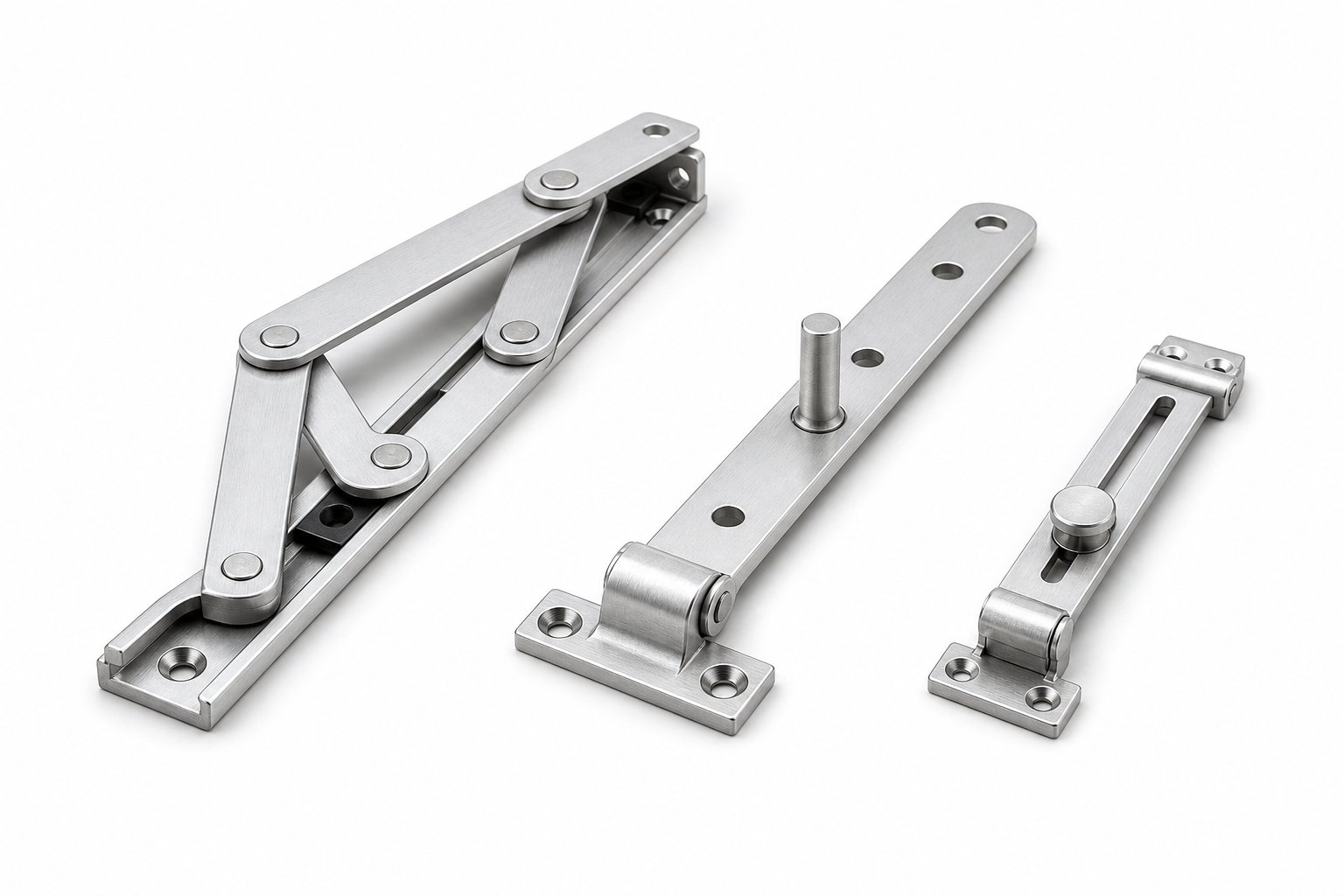
Knowing what a stay does is one thing. Picking the right category for your specific window configuration is where most homeowners and even some builders get stuck. The types of aluminium window stays on the market serve distinct purposes, and mismatching a stay to a window style leads to poor performance, premature wear, or both.
Friction Stays for Casement and Awning Windows
Friction stays are the dominant choice for modern aluminium casement and awning windows across Australia. A side-hung friction stay mounts along the top and bottom of the frame, allowing the sash to swing outward from its vertical hinge edge. Opening angles typically range from 30 to 90 degrees depending on arm length and design. Top-hung friction stays work the same way but suit awning-style windows, where the sash pivots outward from a hinge along the upper frame rail.
What makes friction stays the best window stay for awning windows? The internal resistance mechanism counteracts gravity pulling the sash closed, holding it at whatever angle you choose without pins or latches. Wind buffeting doesn’t slam the window shut, and you get stepless adjustment rather than fixed positions. For most residential aluminium windows installed in the last two decades, this is what you’ll find.
Traditional Arm Stays and Peg-Hole Systems
The peg hole window stay system predates friction technology and still appears on period homes and heritage restorations. A flat metal arm, usually riveted at one end to the sash, slides along a slotted track mounted on the sill or frame. A peg drops into one of several pre-drilled holes to lock the window at fixed opening intervals.
The friction stay vs casement arm stay comparison comes down to flexibility versus simplicity. Arm stays offer defined locking points and a traditional look, but they can’t hold at intermediate angles. They suit timber-framed casements and heritage aluminium windows where aesthetics must match a specific period. For standard modern aluminium frames, friction stays outperform them in every practical measure.
Ventilation Restrictors and Safety Stays
An aluminium ventilation restrictor stay limits the sash to a narrow opening gap, typically 100 mm or less, to prevent falls while still allowing airflow. These are critical in multi-storey applications where child safety regulations apply. Some designs combine a restrictor function with a key-lockable override, letting adults release the stay for full opening or emergency egress while keeping children safe during everyday use.
Sash stays for vertical sliding windows serve a similar hold-open role but operate on a different axis. Spring-loaded or friction-based, they prevent the sash from dropping under its own weight in double-hung configurations.
| Stay Type | Mechanism | Best Window Configuration | Typical Arm Lengths |
|---|---|---|---|
| Side-hung friction stay | Internal friction pads, stepless hold | Side-hung casement | 250 mm – 600 mm |
| Top-hung friction stay | Internal friction pads, gravity-assisted | Awning (top-hung) | 200 mm – 500 mm |
| Traditional casement arm stay | Peg and slotted track, fixed positions | Heritage casement | 200 mm – 350 mm |
| Ventilation restrictor stay | Keyed or cable limiter, max gap control | Upper-storey casement or awning | 100 mm max gap |
| Sash stay (vertical slider) | Spring or friction channel | Double-hung sliding sash | N/A (channel-mounted) |
Each category addresses a different combination of window style, safety requirement, and user expectation. The real performance differences, though, emerge at the material level, where the choice between aluminium, stainless steel, and zinc alloy determines how long your hardware lasts in Australian conditions.
Why Aluminium Is Chosen Over Other Stay Materials
Material selection dictates whether your window hardware survives five years or fifteen in Australian conditions. The best window stay material for coastal areas isn’t simply the strongest or cheapest option. It’s the one that resists degradation in your specific environment without creating new problems for the frame it’s attached to.
Why Aluminium Outperforms in Coastal Conditions
Aluminium forms a thin but remarkably hard oxide layer the instant it contacts oxygen. Unlike iron-based rust, which flakes away and exposes fresh metal underneath, this aluminium oxide film is self-healing. Scratch it, and it regenerates within milliseconds. That natural barrier is what makes corrosion resistant window stays possible without heavy coatings or constant maintenance.
For homes along the NSW coast, Queensland’s salt-air corridors, or anywhere within a few kilometres of the ocean, this property matters enormously. Salt spray attacks unprotected metals aggressively, yet aluminium’s oxide layer remains stable in pH ranges between 4 and 9, covering the vast majority of atmospheric conditions Australian windows face. Add anodising or powder coating on top and the protection deepens further, extending service life by decades in marine-adjacent environments.
Weight is the other factor. Aluminium stays weigh roughly one-third of equivalent stainless steel components. Less mass on the sash means less load on friction mechanisms, less frame stress, and smoother operation over time. It’s a material that does its job without taxing the window system around it.
Aluminium vs Stainless Steel vs Zinc Alloy Stays
Stainless steel stays carry a reputation for toughness, and in certain applications that reputation holds. Grade 316 stainless resists chloride pitting far better than the more common 304 grade, which can seize within months in direct salt spray zones. But stainless is heavier, more expensive, and visually distinct from an aluminium frame, creating an aesthetic mismatch on modern window profiles.
Zinc alloy (zamak) stays sit at the budget end. They’re cast cheaply and finish well, but their corrosion resistance in humid Australian climates is limited. Surface coatings chip over time, exposing the base metal to moisture. For inland, low-humidity installations they’re adequate. For anything coastal or high-exposure, they’re a false economy.
The comparison between aluminium vs stainless steel window stays ultimately depends on environment and frame material. On an aluminium-framed window, an aluminium stay matches the thermal expansion rate of the frame, moves with it through seasonal temperature swings, and avoids the hidden danger that trips up even experienced installers: galvanic corrosion.
| Property | Aluminium (Anodised) | Stainless Steel (316) | Zinc Alloy (Zamak) |
|---|---|---|---|
| Corrosion resistance | Excellent (self-healing oxide layer) | Very good (requires molybdenum grade for salt air) | Moderate (relies on surface coating) |
| Weight | Low (~2.7 g/cm³) | High (~8.0 g/cm³) | Medium (~6.6 g/cm³) |
| Indicative cost range | Mid ($25–$60 AUD per pair) | High ($45–$90 AUD per pair) | Low ($12–$30 AUD per pair) |
| Best environment | Coastal, humid, general residential | Heavy industrial, extreme marine | Inland, sheltered, low humidity |
| Frame compatibility | Ideal for aluminium frames | Requires isolation on aluminium frames | Acceptable on timber and uPVC |
The table highlights a critical point most hardware guides overlook entirely: frame compatibility isn’t just about fit. It’s about electrochemistry.
Galvanic corrosion in aluminium window hardware occurs when two dissimilar metals sit in electrical contact and moisture acts as an electrolyte. Bolt a stainless steel stay directly onto an aluminium frame without isolation, and you’ve built a battery. The aluminium becomes the anode, electrons flow toward the more noble stainless steel, and the frame degrades at an accelerated rate. In coastal areas where salt moisture completes the circuit, this reaction can consume the aluminium around fastener holes within 12 to 18 months.
Prevention requires either matching metals (aluminium stay on aluminium frame) or physically isolating dissimilar ones with nylon bushings, dielectric washers, or barrier compounds at every contact point. It’s a detail that saves hundreds of dollars in frame repairs down the track, and it directly influences how you should size and install your stays for long-term reliability.
How to Measure and Select the Right Stay Length
Choosing the right material is only half the equation. A perfectly corrosion-resistant aluminium stay still fails if the arm length can’t support your sash weight or deliver the opening angle you need. So what size window stay do I need? The answer lives in three measurements most hardware guides never explain together: sash dimensions, sash weight, and mounting position on the frame.
How Arm Length Controls Opening Angle
Think of the stay arm as a lever. A longer arm traces a wider arc as it unfolds, pushing the sash further from the frame. A shorter arm runs out of travel sooner, capping the window at a narrower angle. This window stay length and opening angle relationship is straightforward geometry, but the practical implications matter.
For routine ventilation where you want the sash cracked open 15 to 30 degrees, a shorter stay suffices. For top-hung awning windows used as smoke exhaust in fire situations, opening angles of 45 to 60 degrees demand longer arms that provide the leverage and sweep required. Chain or push-bar window openers on awning sashes under 800 mm in height can typically achieve 70 degrees with the correct stay length.
The general sizing bands run like this: stays in the 200 mm to 300 mm range suit smaller bathroom and utility windows. Mid-range stays of 300 mm to 400 mm cover standard residential casements. Large or heavy sashes, particularly those with double glazing, need stays of 400 mm to 600 mm to deliver adequate opening angle and structural support.
Measuring Your Window for the Correct Stay Size
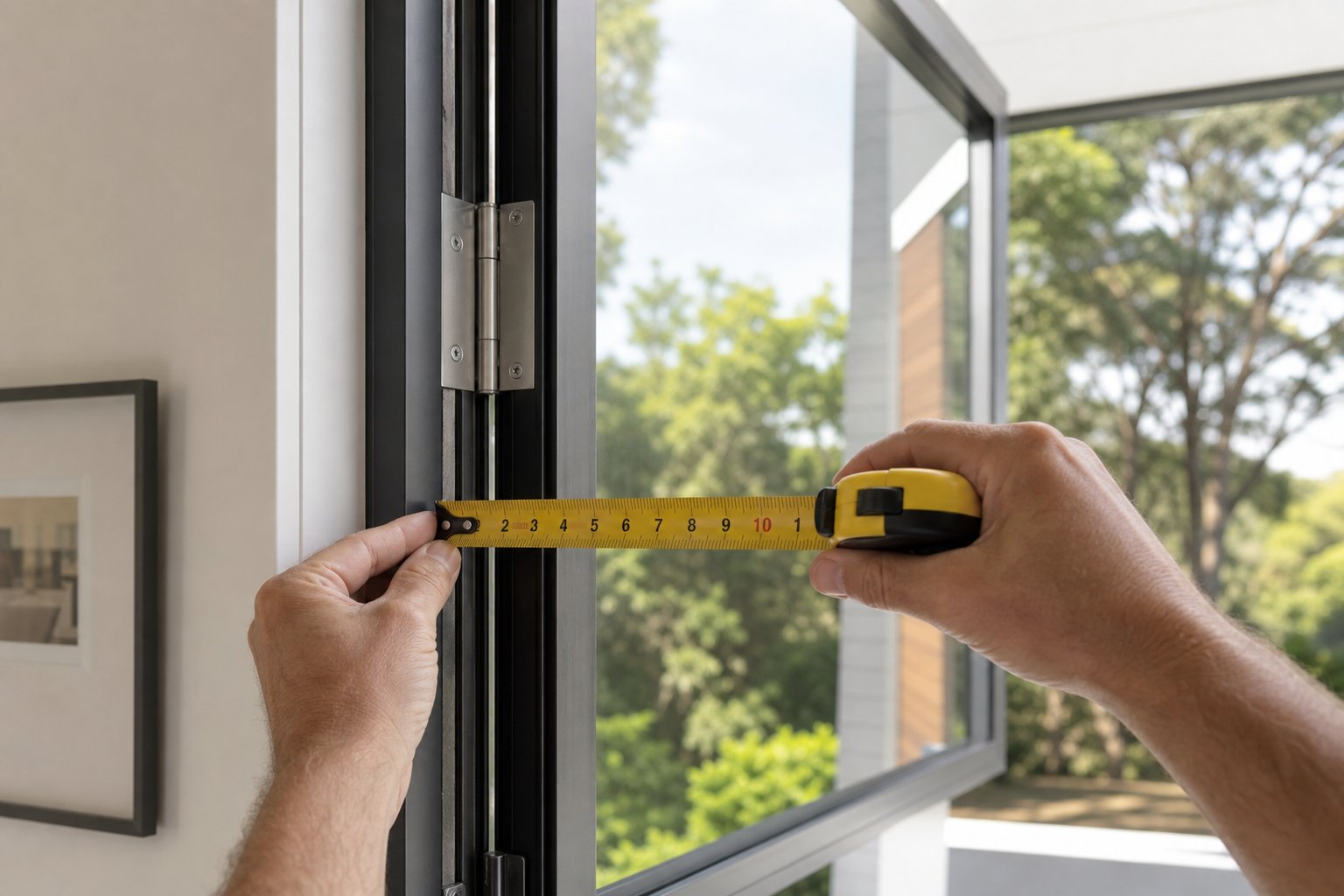
Knowing how to measure window stay arm length correctly prevents the two most common ordering mistakes: buying stays too short to reach full opening, or too long to fold flat when the window closes. Here’s the process:
- Measure the overall width of the window sash from the outer edge of one stile to the other. This is the primary dimension that determines minimum stay length, as the arm must span enough of the sash to distribute load evenly.
- Measure the sash height from top rail to bottom rail. Taller sashes generate more wind-load leverage and may require a longer, heavier-rated stay even if the width seems modest.
- Check the sash thickness. Friction stays are designed for specific profile depths, typically 13 mm or 17 mm stack heights for standard residential aluminium frames. Using the wrong stack height means the stay won’t sit flush against the frame.
- Identify the hinge edge. The stay mounts on the opposite side to the window handle, running along the frame and sash on the hinge side. Measure the clear distance available along this edge, accounting for any reveal mouldings or packers that might obstruct full arm extension.
- Position the stay body 300 mm from the bottom of the window frame. This is the 300mm window stay positioning rule, and it exists to distribute the sash’s hanging weight across the frame profile rather than concentrating stress at a single point near the corner.
That 300 mm measurement isn’t arbitrary, but it isn’t universal either. On windows under 600 mm in height, the positioning shifts inward to maintain proportional load distribution. On very tall sashes exceeding 1200 mm, a second stay or reinforced top-corner mounting may be necessary to prevent the lower frame rail from flexing under the cantilevered weight. The underlying principle stays constant: spread the load, protect the frame.
Weight Considerations and Load Ratings
Friction stay sizing for sash weight is the factor most DIYers overlook entirely. Every friction stay carries a load rating expressed in kilograms, and exceeding it causes the mechanism to sag, lose its holding friction, and eventually fail at the pivot point.
As a general guideline, lighter sashes up to around 12 kg suit stays in the 200 mm to 300 mm range. Medium-weight sashes between 12 and 20 kg call for stays of 300 mm to 400 mm with reinforced pivot assemblies. Heavy sashes above 20 kg, common with double-glazed aluminium units, require 400 mm to 500 mm stays rated for commercial loads.
If you can’t weigh the sash directly, estimate from the glass area. A single pane of 4 mm float glass weighs roughly 10 kg per square metre. A double-glazed unit with two 4 mm panes and a 12 mm air gap roughly doubles that. Add the aluminium sash frame itself, typically 2 to 4 kg depending on profile size, and you have a working figure to match against the stay’s rated capacity.
Getting the size right protects more than just the stay. An undersized arm overloads the fastener points, accelerates thread wear in the aluminium frame, and creates exactly the stripped-screw problem that’s expensive to repair. Correct sizing upfront is the cheapest insurance against hardware failure, and it sets the stage for a clean installation that meets safety standards from day one.
Safety Standards and Building Regulations for Window Stays
Sizing your stays correctly is a mechanical decision. Meeting Australian safety requirements is a legal one. The National Construction Code sets clear expectations around how windows behave in occupied buildings, and the hardware you choose, including the type of stay or restrictor fitted, determines whether your installation is compliant or a liability waiting for an inspection.
For builders, architects, and homeowners tackling window upgrades, understanding window stay child safety regulations in Australia isn’t optional. It’s the difference between a signed-off project and a costly rectification order.
Child Safety and Fall Prevention Requirements
The core regulatory trigger is straightforward: any openable window where the floor below the sill is 2 metres or more above the ground outside must include fall prevention measures if the window opening sits less than 1700 mm above the internal floor. That covers most standard-height windows in bedrooms, living areas, and hallways on upper storeys. Ground-floor windows typically fall outside this requirement unless they face a retaining wall or sloped site that creates the 2 metre drop.
The window restrictor fall prevention standard requires one of two protective approaches:
- A restrictor device that limits the window opening to no more than 125 mm, preventing a child’s body from passing through the gap
- A screen or barrier capable of withstanding 250 Newtons of outward force without failing, enough to resist a small child pushing or leaning against it
For aluminium window stays, this means that any stay fitted to a qualifying upper-storey window must either incorporate a built-in restrictor function or work alongside a separate limiting device. A standard friction stay without restriction allows full opening, which won’t satisfy the NCC in a bedroom two storeys up. The stay itself isn’t non-compliant, but the overall window assembly is if nothing prevents a child from pushing the sash past that 125 mm gap.
Integrated restrictor stays solve this neatly. These units function as a normal friction stay during restricted mode, holding the sash at any point within the 125 mm travel. An adult override, usually a key-lockable mechanism or recessed release button, disengages the limiter when full opening is required. This dual-function approach satisfies the key lockable window stay building code requirement while keeping hardware count low and maintaining a clean frame profile.
Fire Egress and Emergency Override Compliance
Here’s where the regulation creates a deliberate tension. The same window that must restrict to 125 mm for child safety also needs to open wide enough for an adult to escape during a fire. These two requirements aren’t contradictory, but they demand hardware that can switch between modes reliably under stress.
Fire egress window opening requirements in the NCC specify that bedrooms and habitable rooms must have at least one window capable of providing an emergency escape path. The opening must be large enough and low enough for an occupant to climb through. A permanently restricted window fails this test. A window with a non-overridable restrictor traps occupants in exactly the scenario where escape matters most.
The solution mandated by the code is a controlled override. Restrictor stays and separate limiting devices must include a release mechanism that an adult can operate quickly without tools in an emergency. Key-lockable systems meet this standard provided the key is accessible in the room, though some jurisdictions and fire engineers prefer tool-free override designs that eliminate the risk of a missing key during a crisis.
This dual requirement shapes how you select and install aluminium window stays on upper-level windows:
- Stays must allow full opening angle for egress when the restrictor is overridden
- The override mechanism must be operable by an adult but resistant to child tampering
- Restrictor mode must default to engaged, so the window returns to restricted operation after being closed and reopened
- Hardware must maintain structural integrity under both restricted and fully open loading conditions
- Windows designated as emergency egress points must open to a clear width and height sufficient for an adult to pass through, which directly influences the minimum stay arm length selected
- Key-lockable restrictors should have keys stored within the room, not on a separate keyring that may be inaccessible during an emergency
Schools, childcare facilities, hospitals, and multi-storey residential apartments face the strictest interpretation of these requirements. In these environments, window safety hardware is typically specified during the design phase rather than retrofitted, and the stays selected must carry documentation confirming compliance with relevant Australian Standards including AS 2047 for windows and AS 1288 for glazing in buildings.
For homeowners retrofitting stays on existing aluminium windows, the practical takeaway is this: if your window is above ground floor and accessible to children, a basic friction stay alone won’t satisfy the code. You need either an integrated restrictor stay with emergency override or a separate compliant restrictor device paired with your stay. Either way, the hardware must balance two competing demands, keeping children safe during everyday use and keeping escape routes open when seconds count.
Getting the regulatory side right protects more than your compliance paperwork. It determines the installation approach, the fastener positions, and the frame preparation needed to support hardware that performs reliably under both restricted and emergency conditions.
How to Install an Aluminium Window Stay Correctly
Compliance gives you the what. Installation is the how. A stay that meets every safety requirement still fails if it’s fixed with the wrong screws, positioned poorly on the frame, or torqued until the aluminium threads strip out. This aluminium window stay positioning guide covers the fastener decisions, measurement principles, and frame-matching details that separate a lasting installation from a callback waiting to happen.
Before you pick up a drill, gather everything in one place:
- Cordless drill with clutch settings for torque control
- Drill bits sized for pilot holes (typically 2.5 mm to 3.2 mm for standard stay screws)
- Centre punch to prevent bit wander on aluminium
- Spirit level or combination square
- Pencil and tape measure
- Correct screws for your frame material (see below)
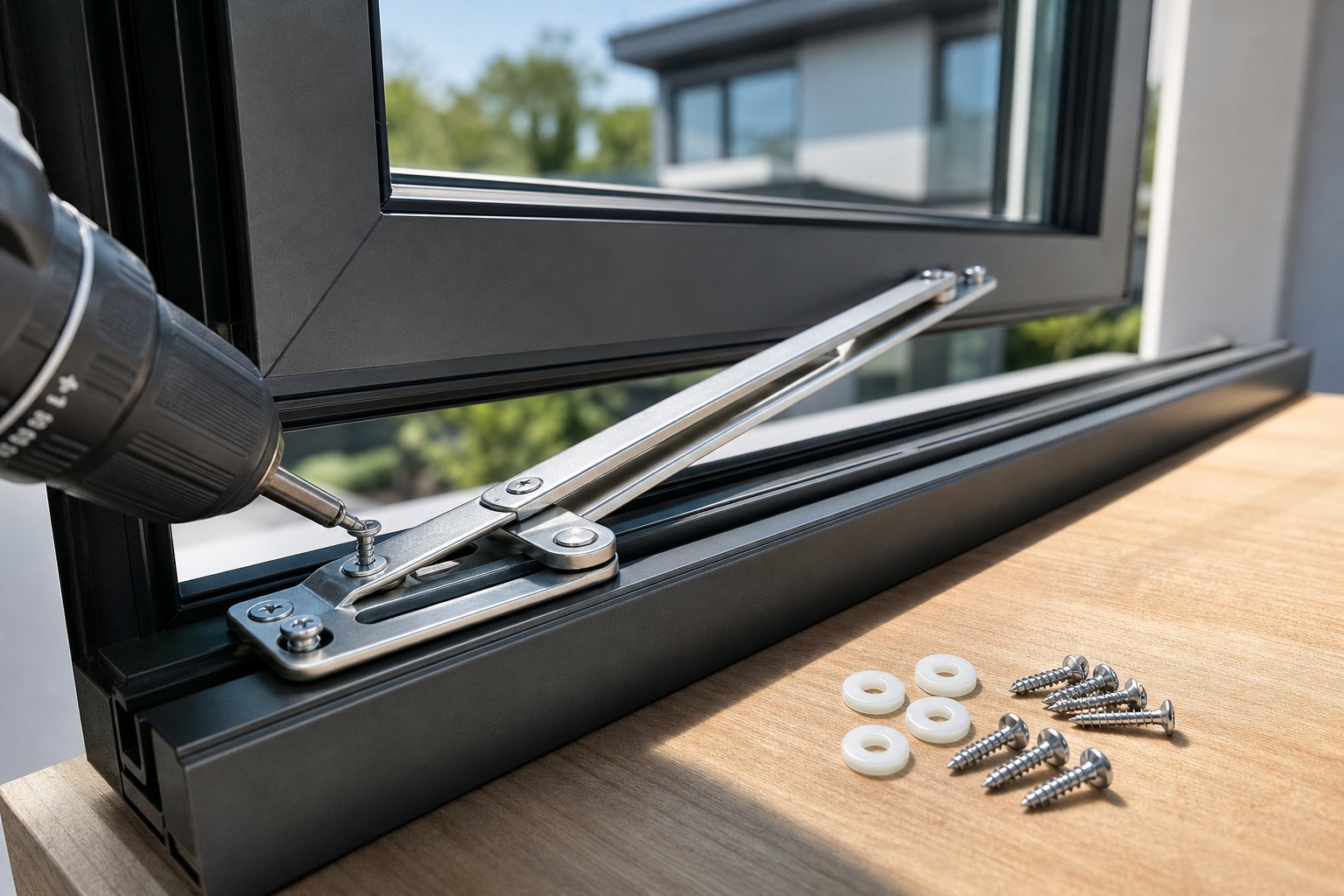
- Nylon isolation washers if pairing dissimilar metals
- Light-duty thread-locking compound (optional, for vibration-prone locations)
- Neutral-cure silicone sealant for external-face penetrations
Correct Screw Selection and Pilot Holes for Aluminium
Aluminium is softer than steel. That single fact drives every fastener decision. Use the wrong screw type or skip the pilot hole, and you’ll chew out the thread channel before the stay is even finger-tight.
For aluminium frames, the correct screws for aluminium window frame installations are self-tapping screws with a coarse thread pitch and a sharp point designed for thin metal. These cut their own thread into the aluminium wall without requiring a pre-tapped hole. Choose countersunk heads so the stay sits flush against the frame profile. Stainless steel screws are common, but remember the galvanic corrosion risk discussed earlier. Where possible, select aluminium-bodied screws or stainless fasteners with a factory-applied isolation coating to prevent electrochemical attack at the fixing point.
The pilot hole size for aluminium window stay screws should be slightly smaller than the screw’s core diameter, not its outer thread diameter. For a typical 4 mm self-tapping screw, a 2.8 mm to 3.0 mm pilot hole works well. This gives the threads enough material to bite into without splitting or deforming the thin-walled aluminium profile. Use a centre punch at each marked position before drilling. Aluminium is slippery under a spinning bit, and even a small wander puts your hole off-centre from the stay’s countersink.
Torque is the final hazard. Over-tightening strips the soft threads instantly, and once stripped, you’re looking at helicoil inserts or oversized fixings to recover. Set your drill’s clutch to a low torque setting and finish the last half-turn by hand with a screwdriver. The screw should be snug against the stay’s mounting plate with no play, but not driven to the point where the frame profile deforms inward.
Positioning the Stay on the Frame and Sash
Correct positioning determines whether the stay operates smoothly or binds at the extremes of its travel. The long arm of the friction stay mounts to the sash; the shorter track section fixes to the frame. Their alignment must follow the hinge line so the pivot axis matches the window’s rotation.
The 300 mm rule from the previous sizing section applies here directly: position the stay body approximately 300 mm from the bottom of the window frame. This distributes the sash’s cantilevered weight across a structurally sound section of the profile rather than concentrating stress near a corner joint where welded mitres are weakest. On smaller sashes below 600 mm in height, shift the stay inward proportionally. On tall sashes, consider twin stays spaced evenly.
Mark all screw positions with the window closed and the stay held in its natural folded position. Open the sash partially to confirm the arm extends without fouling the reveal, weather seals, or adjacent frame members. Adjust if needed before committing any screws. Fix the pivot point first, then work outward to the frame and sash end fixings. This sequence lets you catch misalignment early without pulling screws from soft aluminium.
Frame Material Compatibility Considerations
Aluminium stays don’t only go on aluminium frames. Understanding how to approach window stay installation on timber frame profiles and uPVC sections avoids the wrong fastener destroying the wrong substrate.
Aluminium frame: Self-tapping screws with pilot holes as described above. Match the screw material to the frame or isolate with nylon washers. Ensure screws engage the internal steel reinforcement where present in commercial-grade profiles.
Timber frame: Use wood screws with a gauge appropriate to the stay’s hole pattern. Pilot holes should be slightly smaller than the screw’s core diameter to prevent splitting, particularly in hardwood species like Tasmanian oak or jarrah common in Australian window joinery. Countersink cleanly to protect the paint finish beneath the stay.
uPVC frame: Standard uPVC window screws at 4.8 mm gauge are the industry norm. Drive into the steel reinforcement inside the plastic profile wherever possible, as uPVC alone offers limited pull-out resistance for a loaded stay. Avoid over-torquing, which cracks the plastic rather than stripping it.
Regardless of frame material, seal any screws that penetrate through to the external face with neutral-cure silicone to prevent water tracking into the frame cavity. This is especially important on aluminium profiles where trapped moisture accelerates crevice corrosion from the inside out.
Quality aluminium window systems from manufacturers like MEICHEN are designed with stay mounting points already factored into the frame profile, with pre-punched fixing locations and reinforced internal walls at hardware positions. This kind of engineering simplifies installation significantly and ensures optimal compatibility between the stay and the frame it serves, eliminating much of the guesswork around pilot hole placement and screw engagement depth.
Even with perfect positioning and fastener selection, aluminium stays can develop problems over time. Oxidation builds in the friction mechanism, thermal expansion binds the arm during summer, and screws loosen under repeated cycling. Knowing how to diagnose and fix these aluminium-specific issues prevents a minor maintenance task from becoming a full hardware replacement.
Common Mistakes and Aluminium-Specific Troubleshooting
Most troubleshooting guides treat window stay problems as generic hardware faults. Tighten this, oil that, replace if nothing works. But aluminium introduces its own failure modes, ones rooted in electrochemistry, soft-metal mechanics, and thermal behaviour that steel or zinc hardware simply doesn’t share. If your aluminium window stay is stiff to open, drooping under load, or binding on hot days, the cause is almost certainly aluminium-specific, and the fix needs to be too.
Fixing Oxidation Stiffness in Friction Mechanisms
That chalky white residue building up along the stay’s sliding surfaces isn’t dirt. It’s aluminium oxide forming between the friction pads and the track channel. In humid coastal environments, this oxide layer thickens beyond its normal protective film and begins generating resistance that makes the mechanism feel seized.
Knowing how to lubricate aluminium friction stay hardware correctly starts with cleaning first. Wipe the track and sliding arm with a soft cloth dampened in warm water with a few drops of mild detergent. Avoid anything alkaline or acidic, as both attack the protective oxide layer rather than just clearing surface buildup. Once clean and dry, apply a silicone-based spray lubricant along the full length of the friction channel. Open and close the window five or six times to distribute the lubricant evenly through the mechanism.
Never use petroleum-based grease. It attracts dust, gums up friction pads, and accelerates the stiffness cycle you’re trying to break. Silicone stays clean, repels moisture, and won’t degrade nylon friction elements inside the stay.
Preventing Galvanic Corrosion Between Metals
If you notice a white powdery crust specifically around screw holes, or the aluminium frame appears to be pitting and flaking near the stay fixings, you’re looking at galvanic corrosion. This isn’t age-related wear. It’s an electrochemical reaction triggered by dissimilar metals in contact with moisture acting as the electrolyte.
The most common culprit is plain stainless steel screws driven directly into an aluminium frame with no isolation. Stainless steel sits higher on the galvanic series, making the aluminium the sacrificial anode in the pairing. Coastal salt spray accelerates this dramatically, sometimes consuming frame material around fixings within a single year.
Prevention is straightforward: use aluminium-bodied fasteners where available, or isolate stainless screws with nylon washers and a dab of dielectric compound at each contact point. If corrosion is already present, remove the affected screws, clean the pitted holes with a nylon brush, apply a zinc-rich primer to the exposed aluminium, and refit with properly isolated fasteners. Ignoring this issue leads directly to the next problem.
Adjusting Friction Tension on Worn Stays
A window stay drooping and not holding open is usually a friction pad issue, not a structural failure. The internal nylon or PTFE pads that generate holding resistance compress over time, especially on heavy double-glazed sashes that push the stay’s load rating. The sash slowly drifts closed under its own weight, or slams shut in a breeze.
Many quality friction stays include an adjustment screw at the pivot point. Tightening this screw a quarter-turn at a time increases pad compression and restores holding force. Test after each adjustment by setting the window at 45 degrees and releasing. If it holds without creeping, you’ve found the sweet spot. If no adjustment mechanism exists, the friction pads are spent and the stay needs full replacement.
For a stripped screw hole aluminium window frame fix, you have two reliable options. A helicoil thread insert restores the original screw size by cutting a new thread into the damaged hole and accepting a standard fastener. Alternatively, step up to an oversized screw, typically one gauge larger, with a fresh pilot hole drilled slightly off-centre from the damaged thread. Both approaches recover full pull-out strength without replacing the entire frame section.
Thermal expansion window stay binding rounds out the seasonal issues. Aluminium expands at roughly 23 micrometres per metre per degree Celsius. On a north-facing window absorbing direct sun in a Queensland summer, frame temperatures can reach 60°C or more. The stay’s track channel and the frame profile expand at similar rates if both are aluminium, but any slight misalignment introduced during a cool-weather installation tightens under heat. The arm catches, sticks, or refuses to fold flat.
The fix is preventive: during installation, leave a 0.5 mm to 1 mm clearance gap between the end of the stay track and any frame stop or reveal. This thermal margin absorbs summer expansion without creating binding. If binding is already occurring, loosen the track fixings slightly, operate the window through its full range during the hottest part of the day, and re-tighten once the arm moves freely at peak temperature.
| Symptom | Likely Cause | Recommended Fix |
|---|---|---|
| Stay arm stiff or seized | Oxide buildup in friction channel | Clean with mild detergent, apply silicone-based lubricant |
| White pitting around screw holes | Galvanic corrosion from dissimilar metal fasteners | Replace screws with isolated or matched-metal fixings; prime damaged areas |
| Screws spinning freely, no grip | Stripped aluminium threads from over-torquing | Install helicoil insert or step up to oversized screw with fresh pilot hole |
| Sash drifts closed or won’t hold position | Worn friction pads losing compression | Tighten adjustment screw at pivot; replace stay if no adjuster exists |
| Stay binds or catches in warm weather | Thermal expansion closing clearance gaps | Loosen track fixings, reposition with 0.5–1 mm thermal gap at track ends |
| Creaking or grinding during operation | Dry friction surfaces, debris in track | Clean track, lubricate with silicone spray, check for trapped grit |
Each of these issues compounds if left unaddressed. A stiff stay gets forced open, stripping screws. Stripped screws get over-torqued replacements, which chew out fresh threads. Galvanic corrosion weakens the frame around fixings until the stay can’t hold at all. The pattern is predictable, and the intervention point is early maintenance rather than emergency replacement. That maintenance routine, including when a stay has crossed the line from repairable to done, is where long-term cost control lives.

How to Maintain Aluminium Window Stays and Know When to Upgrade
Catching problems early is the theme of the previous section. Keeping them from developing at all is where a simple aluminium window stay lubrication schedule and seasonal inspection habit pay for themselves many times over. The effort is minimal. The payoff is hardware that operates smoothly for a decade or more without the compounding failures that turn a $40 stay into a $400 frame repair.
Annual Maintenance Checklist for Window Stays
Knowing how to maintain aluminium window stays doesn’t require special tools or training. It requires consistency. A twice-yearly routine covers most residential situations, with an extra pass for coastal or high-exposure properties where salt and humidity accelerate wear.
- Every 6 months (spring and autumn): Wipe the full length of each stay arm and track with a soft cloth dampened in warm water and a pH-neutral detergent. Avoid abrasive pads or alkaline cleaners that damage anodised or powder-coated finishes.
- Every 6 months: Apply a light coat of silicone-based lubricant to the friction channel, pivot points, and any exposed sliding surfaces. Open and close the window several times to work it through the mechanism.
- Every 12 months: Inspect all fixing screws for tightness. Look for any play between the stay and frame that wasn’t there previously.
- Every 12 months: Check for white oxidation powder, pitting around screw holes, or discolouration that suggests galvanic corrosion has started.
- Every 12 months: Test holding friction by opening the window to 45 degrees and releasing. If the sash creeps or drifts closed, adjust the tension screw or note the stay for replacement.
- Coastal properties (quarterly): Rinse frames and hardware with fresh water to flush salt deposits before they crystallise in the friction track.
That quarterly rinse for coastal homes is the single most effective habit for preventing the corrosion cycle described throughout this article. Salt left sitting in the friction channel creates the exact conditions for accelerated oxide buildup and, if dissimilar metal fasteners are present, galvanic attack on the frame.
When to Replace Rather Than Repair
Adjustment and lubrication solve most early-stage issues. But there’s a point where continued repair becomes false economy, and recognising the signs window stay needs replacement prevents a slow-motion hardware failure from becoming a safety risk.
Replace rather than repair when you observe any of the following:
- Permanent arm deformation: If the stay arm is visibly bent, twisted, or has taken a set that prevents it from folding flat when closed, the metal has yielded past its elastic limit. No adjustment restores original geometry.
- Visible fatigue cracking: Hairline cracks at the pivot point or along the arm indicate metal fatigue from repeated cycling. A cracked stay can fail suddenly under wind load, potentially allowing the sash to detach from the frame.
- Friction mechanism completely spent: If the tension adjuster is already at maximum and the sash still won’t hold position, the internal pads are compressed beyond recovery.
- Severe corrosion at pivot or track: Surface oxidation is treatable. Deep pitting that has eaten into the structural cross-section of the arm or track compromises load-bearing capacity.
- Stripped or enlarged fixing holes: Once the frame around the screw holes can no longer grip any fastener securely, even with helicoil repair, the stay’s mounting integrity is gone.
- Sash droops more than 5 degrees when opened: This indicates the stay can no longer support the sash weight safely. Continued use risks the sash detaching entirely.
Any single item from that list justifies immediate replacement. Multiple items appearing together suggest the stay has reached end of life, not just end of adjustment range.
Choosing Quality Window Systems for Long-Term Performance
The best maintenance burden is the one you never carry. Purpose-designed aluminium window systems with factory-integrated hardware reduce long-term upkeep because the stays, hinges, and restrictors are matched to the frame profile, load-tested as an assembly, and positioned during fabrication rather than retrofitted on site. There’s no guesswork about screw engagement depth, no galvanic mismatch between fastener and frame, and no thermal binding from poorly placed track ends.
For homeowners and builders planning new installations or full window replacements, this integration is worth prioritising. MEICHEN’s aluminium window range offers exactly this approach, with hardware solutions designed and tested for Australian conditions including coastal salt exposure, high UV loads, and the thermal cycling that characterises our climate. Factory-fitted stays eliminate aftermarket compatibility problems and deliver consistent friction performance from day one, backed by a system warranty rather than piecemeal hardware guarantees.
Whether you’re maintaining existing stays or considering a full upgrade, the principle is the same: matched components, correct materials, and regular attention keep aluminium window hardware performing reliably for the life of the building.
Frequently Asked Questions About Aluminium Window Stays
1. What is the difference between a window stay and a window restrictor?
A window stay holds the sash at a chosen opening angle, giving you control over ventilation position. A window restrictor limits the maximum distance the window can open, typically to 125 mm or less for child safety compliance. Some hardware combines both functions with a key-lockable override, allowing restricted mode for everyday use and full opening for cleaning or emergency egress. Choosing the right option depends on your storey height, window location, and whether Australian NCC fall-prevention regulations apply to your property.
2. How do I know what size aluminium window stay I need?
Correct sizing depends on three factors: sash width, sash weight, and desired opening angle. Measure the sash width from stile to stile, then estimate the sash weight based on glass area and frame mass. Lighter sashes up to 12 kg suit 200 mm to 300 mm stays, medium sashes between 12 and 20 kg need 300 mm to 400 mm arms, and heavy double-glazed units above 20 kg require 400 mm to 600 mm stays rated for commercial loads. A longer arm delivers a wider opening angle, so match arm length to both the weight capacity needed and the ventilation opening you want to achieve.
3. Why are my aluminium window stays corroding around the screw holes?
White pitting and powdery residue around fixings is almost always galvanic corrosion caused by dissimilar metals in direct contact. When stainless steel screws sit in an aluminium frame without isolation, moisture acts as an electrolyte and the aluminium becomes the sacrificial anode, degrading rapidly. Coastal salt spray accelerates this reaction significantly. The fix involves removing affected screws, cleaning pitted areas, applying zinc-rich primer, and refitting with either aluminium-bodied fasteners or stainless screws isolated with nylon washers and dielectric compound at every contact point.
4. How often should I lubricate aluminium window stays?
For most Australian residential properties, a twice-yearly lubrication schedule in spring and autumn keeps friction mechanisms operating smoothly. Coastal homes within a few kilometres of the ocean should add a quarterly freshwater rinse to flush salt deposits from the friction track before applying silicone-based lubricant. Always clean the stay arm and channel with warm water and pH-neutral detergent before lubricating. Avoid petroleum-based grease, which attracts dust and gums up internal friction pads, worsening the stiffness it is meant to prevent.
5. Do aluminium window stays need to comply with Australian building regulations?
Yes, if the window is on an upper storey where the outside ground level is 2 metres or more below the sill and the window opening sits less than 1700 mm above the internal floor. Under the National Construction Code, such windows must include fall-prevention hardware limiting the opening to 125 mm maximum, or a barrier rated to 250 Newtons. A standard friction stay alone does not satisfy this requirement. You need either an integrated restrictor stay with adult override or a separate compliant restrictor device, and the hardware must still allow full emergency egress opening when overridden.
More Window & Door Guides